Feeds:
Posts
Comments

Archive for the ‘Creativity’ Category

Even though the Guelaguetza is over, textiles continue to be on my mind — actually I can never get enough of them!  So, a few days ago I walked down to the Museo Textil de Oaxaca to see the current exhibition, “Tormentos y Sueños” by Carolyn Kallenborn.  While not a Oaxaqueña, the respect she has for and inspiration she draws from the weavers and textile traditions of Oaxaca are obvious.

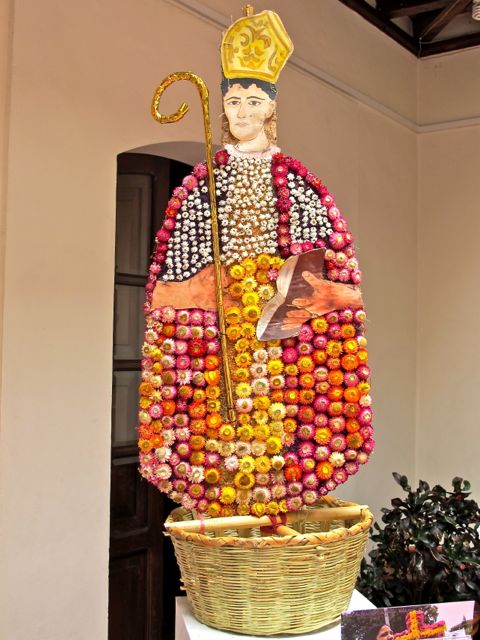
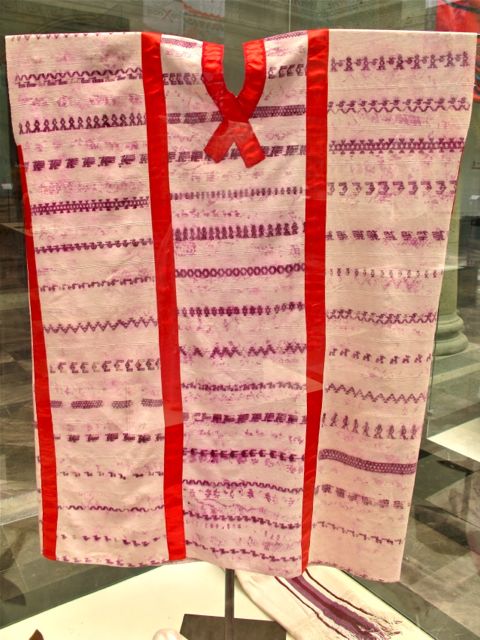
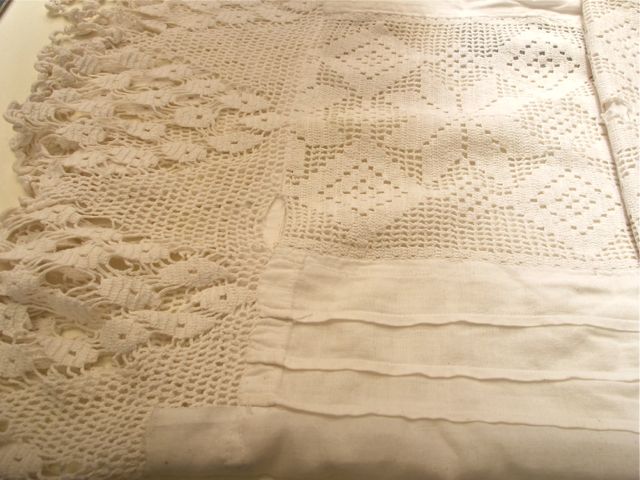
Kallenborn explains, “The pieces in this exhibit speak to the beauty and interaction between opposites.” (my translation)  The works are at once, complex and simple, using detail and negative space — much like storms and dreams.  Photographing a whole piece proved too much for my novice skills, thus I hope close-ups of these four pieces will whet your appetite.

If you are, or will be, in Oaxaca, I encourage you to see the whole!  The exhibit runs through November 9, 2012.

Read Full Post »

Oh those beautiful braids of many of the dancers in Guelaguetza!  How do they do it?  In Reyes Etla, trapped between a yellow caution tape barrier and the folding chairs of the Tuxtepec delegation (the pineapple dancers), the answer was revealed…

Number 1:  You can’t do it yourself!

Woman standing braiding a hair extension into a seated woman's hair.

Number 2:  Hair extensions!  (Who knew???)

Close-up of hands braiding ribbons into hair

Number 3:  Practiced hands.

Hands braiding ribbons into hair.

Number 4:  Patience.

Hands braiding ribbons into hair.

But, it’s well worth the effort!

Hands finishing long braid, with red and blue ribbons, that extends beyond top of chair.

Read Full Post »

The textiles of Oaxaca are currently on center stage, both literally and figuratively, during these 10 days of Guelaguetza festivities.  And perhaps, besides drawing in much-needed tourist pesos, the Guelaguetza plays an important role in the appreciation and preservation of Oaxaca’s textile traditions.

Delegation from San Andrés Huaxpaltepec, District of Jamiltepec, in the Costa region of the state of Oaxaca.

However, the textile traditions of Lebanon have not fared so well.  According to the article, The End of the silk road, by Ana Marie Lucas and posted to Now Lebanon, silk production, which dates back to the Middle Ages, is on death’s doorstep.  Only two artisanal workshops remaining today.  However, along with the Italian Embassy, the Mexican Embassy, Alfredo Harp Helú Foundation, and Textile Museum of Oaxaca are coming to the rescue.

“We wanted to share our experience with the Lebanese,” Mexican Ambassador Jorge Alvarez Fuentes told NOW Extra. “When I saw the House of the Artisan closed and in need of more attention I thought this was the perfect place to exhibit both Mexican and Lebanese items,” he explained.

“Aside from the exhibition, we wanted to organize two conferences and a workshop of how to dye the silk with natural pigments. This way many people will be able to see how the Phoenicians could extract the purple dye from the Murex shell,” he added.

According to Héctor Meneses, head of the Textiles Museum in Oaxaca, there are surprising similarities between the Lebanese and Mexican traditions in terms of pigment extraction. Mexicans extracted the red dye from a species of snail, very similar to the purple dye extracted by the Phoenicians from the Murex shell. “The difference is that in Mexico, this process is still alive and it’s being used,” he said during a conference.  [Read full article HERE]

FYI:   Alfredo Harp Helú is a Mexican businessman who, like his cousin Carlos Slim Helú (world’s richest man), is of Lebanese extraction.  Harp Helú maintains a residence in Oaxaca and, besides his foundation funding the Textile Museum, he and his foundation are involved in several other philanthropic projects in the state of Oaxaca.

h/t to Margie Barclay for the article.

Read Full Post »

And, then there was the Festival de los 7 Moles opening buffet lunch set amidst the beauty and tranquility of the Jardín Etnobotánico.  Serendipity and synchronicity brought us there… running into a friend, conversation, investigation (see pots below), and her enthusiasm and powers of persuasion (gracias, Rosa!) had us purchasing tickets on the spot.

While kitchen staff prepared the serving platters and bowls…

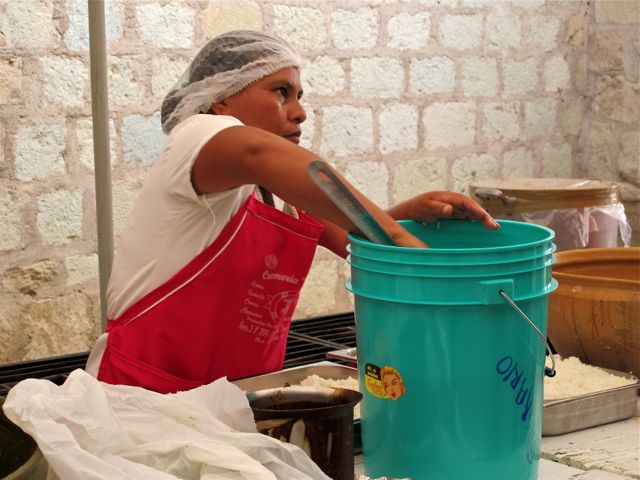
Woman in apron and wearing hairnet, scoops cooked rice out of a large bucket.

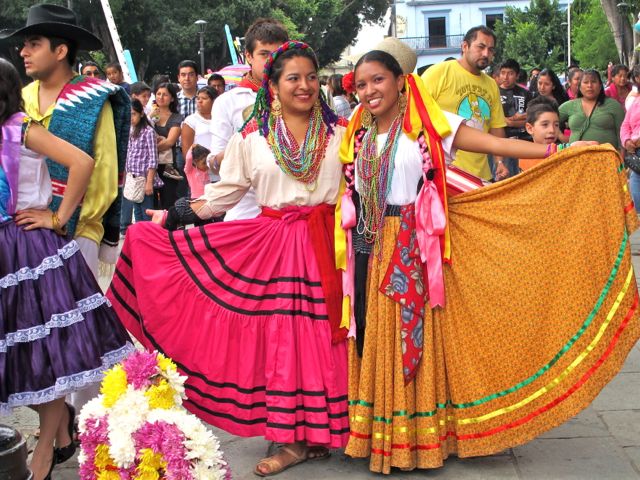
Dancers gathered on the Alameda for a calenda that would lead people the luncheon.

Two women displaying their long  colorful full skirts

They included a number of small children…

Woman squatting down and clasping hands with a toddler-age boy - both in indigenous dress

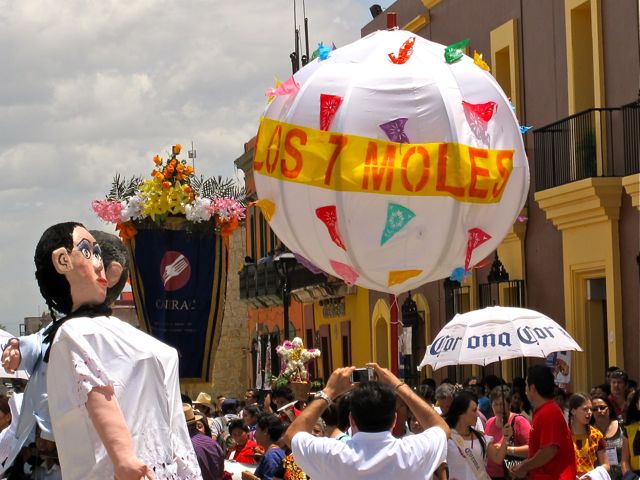
The calenda, including the requisite marmota (giant cloth balloon), monos (giant puppets), band, dancers with canastas (see yesterday’s post), and the sponsoring banner of CANIRAC (national association of the restaurant and food industries), made its way up the Alcalá…

Procession with marmota, monos, and banner

before turning onto Constitución and entering the Jardín, where wait staff and divine moles awaited.

Wait staff, wearing black, white, and grey gathered next to table.

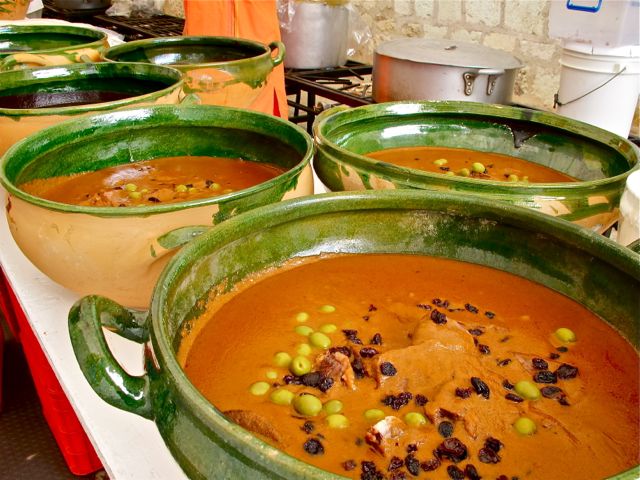
Yummm, mole negro

Large green pottery bowls filled with black mole.

Mole amarillo

Green pottery bowls of red colored moles

Mole coloradito

Green ceramic pot with red mole.

Mole verde

Green mole in green ceramic pot

There was also mole chichilo, mole manchamanteles, and mole rojo.  I tried them all!!!  And, I haven’t even mentioned the cervesa, mezcal, aguas, and appetizers of quesillo, chicharon, and tacos filled with guacamole and chapulines (grasshoppers).  You’ll have to switch over to Chris’s blog to see those and much more.  Oh, and for dessert, a scoop of each of my favorite nieves (sherbet); leche quemada (burned milk) and tuna (cactus fruit).

A day filled with light, color, music, fabulous food, and, most of all, wonderful friends — the recipe for a perfect day!

(ps)  There are almost 50 restaurants around town that will be featuring mole as part of this 12-day festival.

Read Full Post »

It didn’t start that way; I awoke to horrifying news from Colorado.  Thank goodness blogger buddy Chris called and the heart that beats in Oaxaca beckoned.

First stop was the “Al Son del Valle,” an exhibition of canastas from 17  villages in the central valleys of Oaxaca.  These are baskets that are carried on the heads of women during calendas (parades); you may remember them from previous posts on the convites in Teotitlán del Valle.  The art of crafting canastas and the traditions and culture they represent have been proudly and lovingly passed down through the generations.

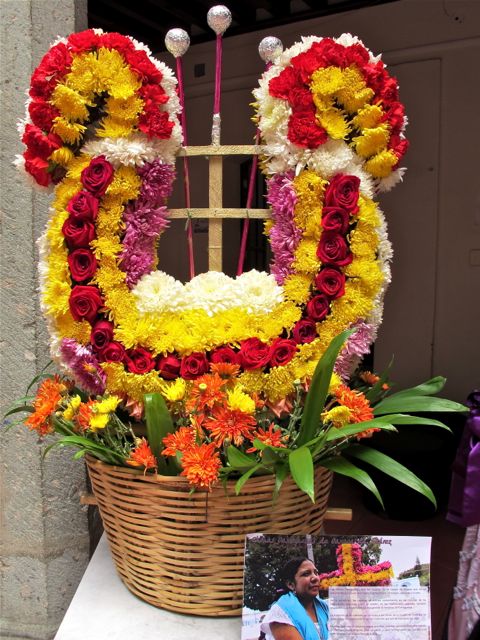
San Antonino Castillo Velasco canasta decorated with Flor Inmortal, the flower that never dies.

Canasta from San Mateo Macuilxóchitl

From San Jerónimo Tlacochahuaya, these canastas are lit and become pinwheels of fireworks at the end of a calenda.

Canasta of Las Chinas Oaxaqueñas of the city of Oaxaca

Canasta from Tlacolula de Matamoros.

Canasta from Zimatlán de Álvarez made of crepe paper.

Muchas gracias, Oaxaca, I needed that!

Read Full Post »

This year marks the 80th anniversary of the modern Guelaguetza festival in Oaxaca.  The calendar is filled with official Guelaguetza activities and other events that take advantage of the massive annual influx of tourists (especially from other parts of Mexico).  The colorful and distinctive costumes worn by the Guelaguetza delegations from each of the 8 regions of the state of Oaxaca play a major role in wowing visitors and residents — including, me!
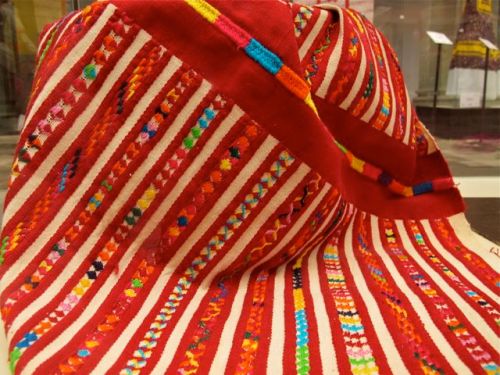
Huipil de San Andrés Chicahuaxtla, Putla Villa de Guerrero, Oax.

As a result, the “Oaxaca Xaba Lulá” exhibition has been mounted in the Government Palace.

Traje de la Villa Sola de Vega, Oax.

These are only a fraction of the items on exhibit and the photos were chosen primarily because they showed the least amount of reflection on the plexiglass display cases.  It is a beautiful, but challenging to photograph, setting!

Huipil de San Bartolomé, Ayautla, Teotitlán, Oax.

The collection of trajes típicos (typical costumes) representing the 8 regions of Oaxaca runs through the end of the month.

Rebozo de San Juan Colorado, Jamiltepec, Oax.

The dresses, hats and accessories were donated by Oaxacan citizens from different regions of the state and were made in the traditional way, with many using natural dyes.
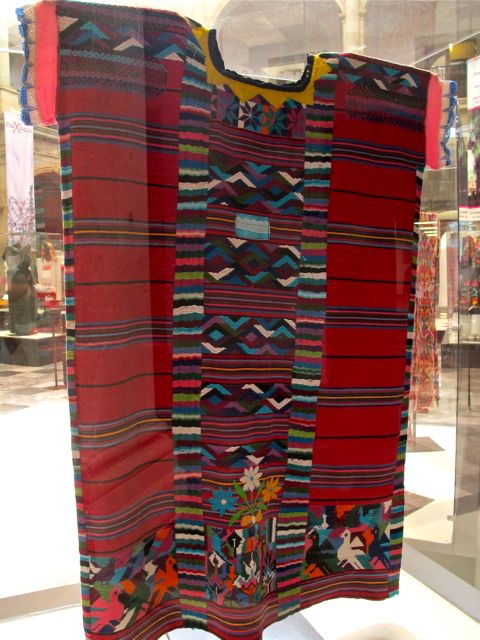
Huipil de Gala de San Lucas Ojitlán, Tuxtepec, Oax.

At the July 6 opening, José Zorrilla de San Martin Diego (Minister of Tourism and Economic Development), explained that they reflect a cultural essence that has prevailed for centuries in customs and traditions of the people of Oaxaca.
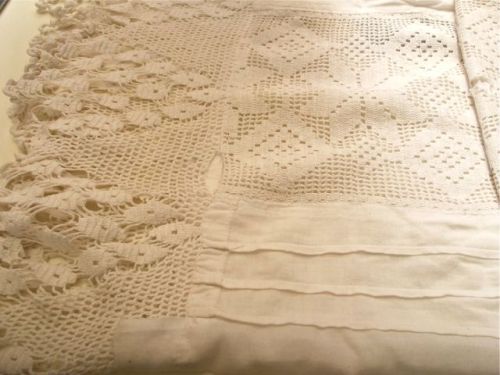
Funda de San Jerónimo Tecoátl, Teotitlán. Oax.

He observed that the Oaxacan costumes are a reflection of the depth of the culture, traditions, and ancestral weaving techniques that have been passed from generation to generation of Oaxacan hands.

Traje de Santa María Tlahuitoltepec, Mixe, Oax.

“The huipiles display in all their splendor the details that form a labyrinth of colors, a tiny universe that reflects the vastness of fertile nature and the symbolism that characterizes our native land and which graces the greatest festival of Oaxacaños,” Zorrilla de San Martin Diego very poetically suggested.
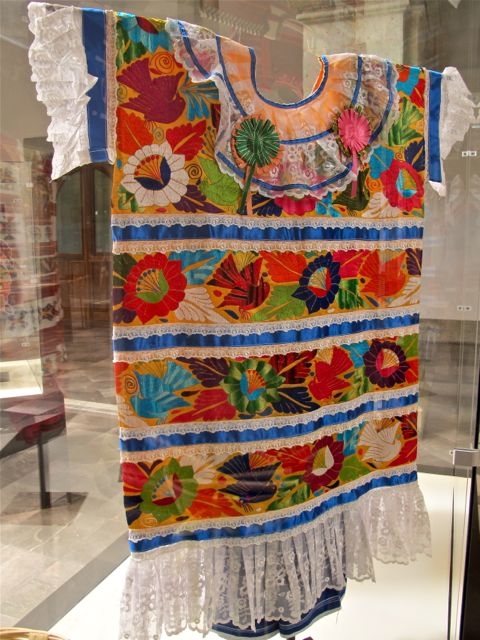
Huipil de Jalapa de Díaz, Tuxtepec, Oax.

Needless to say, during the next two weeks, I’m going to try to hit as many of the fairs, parades, dances, and exhibitions as possible.  Stay tuned…

Save

Read Full Post »

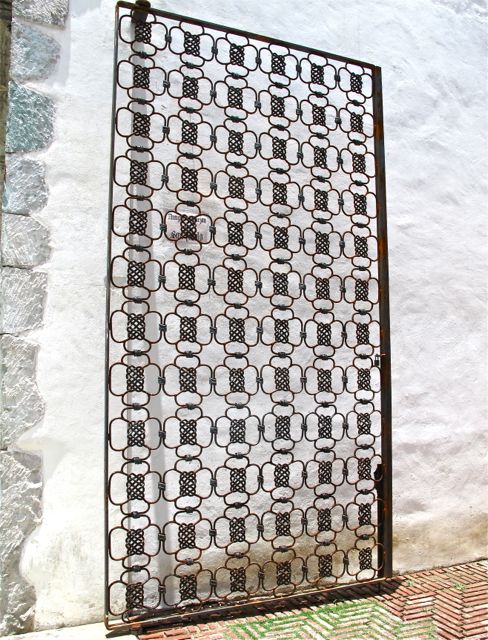
Intricately designed and executed iron gates have been installed at either end of Antiguo Callejón de San Pablo, ushering visitors into the “Old meets new” grounds of the Centro Académico y Cultural San Pablo.

Iron gate

Oaxaca’s favorite son and Mexico’s foremost living artist, Francisco Toledo, narrates a video documenting the construction of the gates.  It’s in Spanish, but even if you don’t understand the language, it’s worth watching, anyway.

By the way, today is Toledo’s 70th birthday.  ¡Feliz cumpleaños, maestro!

Read Full Post »

The word "ask" spray painted on wall.

Painted on wall: a cross followed by words "adiccion o conviccion?"

Shadow on wall that looks like a podium; words written "I love Phaooluchiiz. Signed by Fapely"

Who do you love?

Read Full Post »

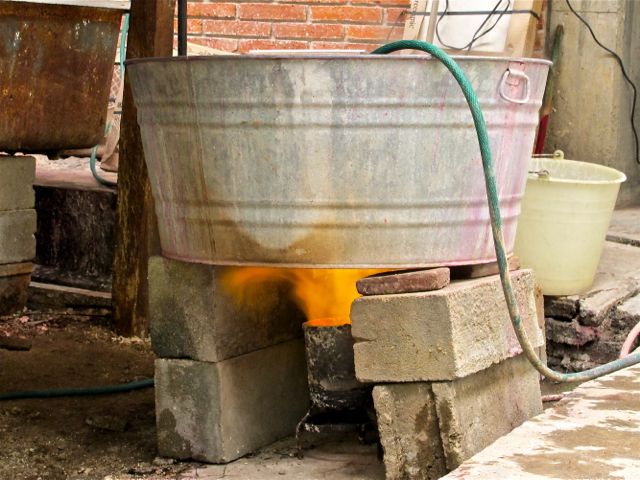
Have I mentioned there is a weaving business that operates out of the apartment complex where I live?   Most of the operations have recently moved offsite — apparently, not so the dying.

I returned home on Tuesday to find a fire roaring…

Large metal pot propped up concrete blocks over a fire

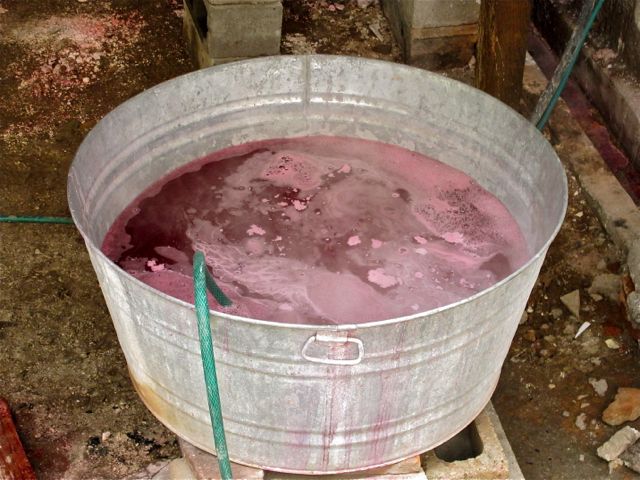
A dye bath roiling…

Galvanized metal bucket filled with roiling red dye bath

Luci and Luís rinsing and removing excess water from newly dyed cotton yarn…

A man and woman wearing rubber boots walking on wet yard

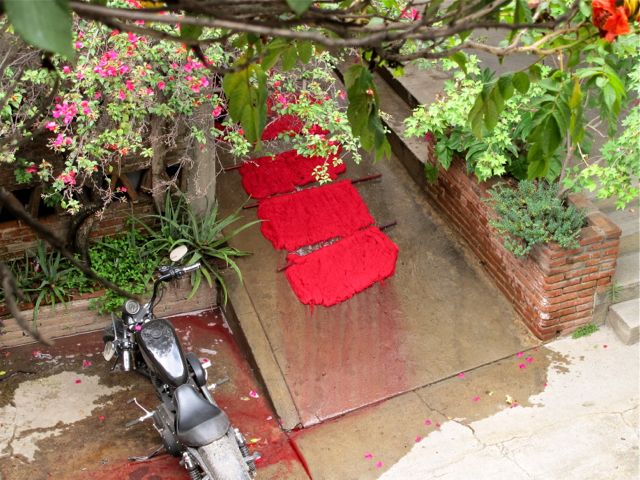
And, a new view from Casita Colibrí…

Red newly dyed yarn laid out on cement sloped slab; tree leaves in foreground

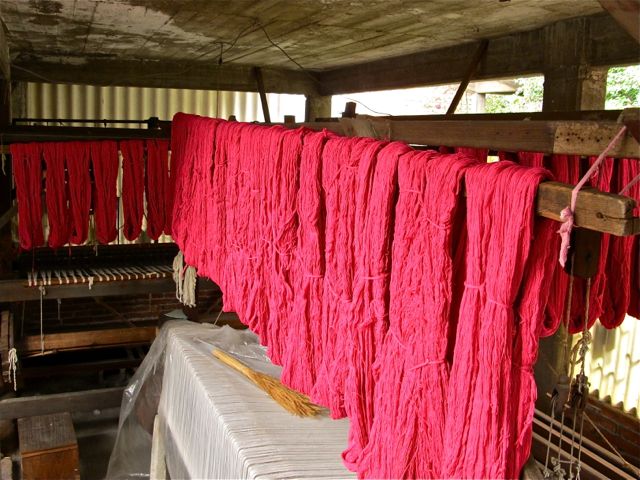
Hanks now just “hanging out” above the looms…

Hanks of pinkish/red yarn hanging above looms

Read Full Post »

Google Mexico doodles today’s election…

Googe doodle with voting booths, Mexican flag...

Click on the Doodle for election news.

Read Full Post »

Wanna see me pull a rabbit out of my hat?

Creature with long nose with rabbit in hat

Happy first day of summer.

Creatures painted on wall

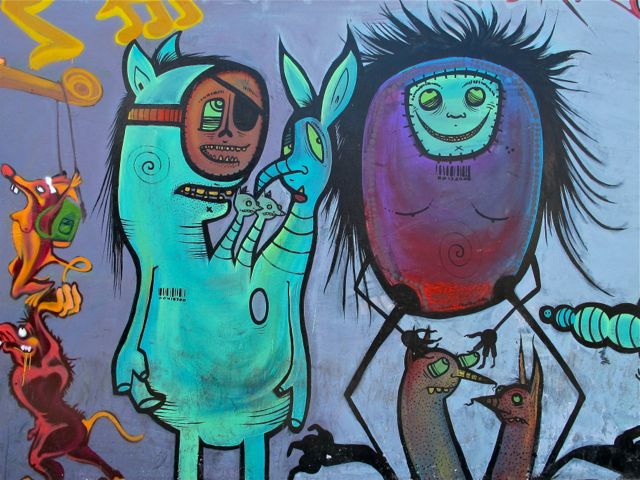
From the walls of Oaxaca…

Creatures painted on wall

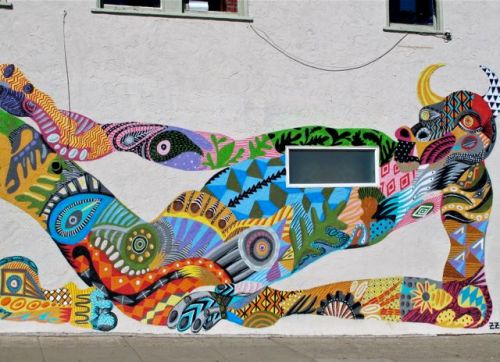
To the walls of Mill Valley…

Reclining bull painted on side of wall

by artist, Zio Zieler

Enjoy!!!

Save

Read Full Post »
As hoped, I managed to make my way to the Mexican Consulate in San Francisco for .  It’s the exhibit (I mentioned a few days ago) that celebrates the Zapotec artists of Oaxaca from Rufino Tamayo and Francisco Toledo to those they encouraged and influenced.

On the consulate’s ground floor the scene was a familiar one — signage and conversations en español; the eagle, serpent and green, white, and red of the Mexican flag prominently displayed; waiting room filled with patiently waiting people — a sliver of Mexico in San Francisco.  Climbing the two flights of stairs (elevator was broken) up to the third floor, a friend and I found the exhibit…

This slideshow requires JavaScript.

According to the article, Oaxacan surrealism hits the SF Mexican consulate, the consulate’s cultural affairs attache, Marimar Suárez Peñalva, hopes the gallery and its exhibitions will offer Mexican expats an opportunity to connect with the creativity, not just the bureaucracy (my word), of their culture.  However, I don’t know how many of those waiting on the first floor make it up to the third floor; early in the afternoon, we had the gallery to ourselves.

And yes, works by Tamayo and Toledo are included, but I thought I’d feature some of the lesser known artists.  By the way, did you notice the name, Alejandro Santiago Ramírez?  This is the same Alejandro Santiago of the 2501 Migrantes sculptures that I’ve previously written about.

Read Full Post »
I’m again in the San Francisco Bay Area, visiting family and friends and taking care of the odds and ends of still maintaining a presence here, while living in Oaxaca.  We’ve had clear blue skies and sun and, except for the high-speed pace and exorbitant price of food, it “almost” feels like home.  Hey, I even bought some resin chairs for my son’s backyard and ate some of the best Mexican food ever (in the USA) at Doña Tomás in Oakland.  (FYI:  The Callos con Sopa de Elote — puréed corn soup with seared day boat scallops and fingerling potatoes, roasted poblano chiles and cilantro, served with arroz achiote — was divine.)

To also keep from getting too homesick for Oaxaca, there are a currently a couple of exhibits in San Francisco I plan to see while here.  I found out about The Magic Surrealists of Oaxaca, Mexico from the Oaxacan surrealism hits the SF Mexican consulate article in the SFBG, which explains…

Aquatint etching

Francisco Toledo’s aquatint etching “Self Portrait”

The Zapotec identity … is one of the unifiers of the exhibit, which contains the works of not only [Rufino] Tamayo and [Francisco] Toledo but also artists who were inspired by their work like Justina Fuentes Zárate, she of the reclining mermaid and arresting red dress. Perhaps the works don’t look similar, but they represent the diversity and breadth of the work to come out of the surrealist Zapotec tradition in Oaxaca.

And, then I read the NPR story, In Mexico, Mixed Genders And ‘Muxes’, about a Galería de la Raza exhibit.

Parade of Muxes in traje of Juchitán

Photo from the exhibit

Searching for Queertopia revisits the experiences of Alexander Hernandez’s participation and Neil Rivas’ visual documentation of what is called, the Vela de ‘Las Intrépidas.’ This event, a 3-day celebration, is held annually in the town of Juchitán de Zaragoza, Oaxaca, México, in honor of its Muxe community.

Hmmm… maybe I’ll take the ferry over to “The City” tomorrow.

Read Full Post »

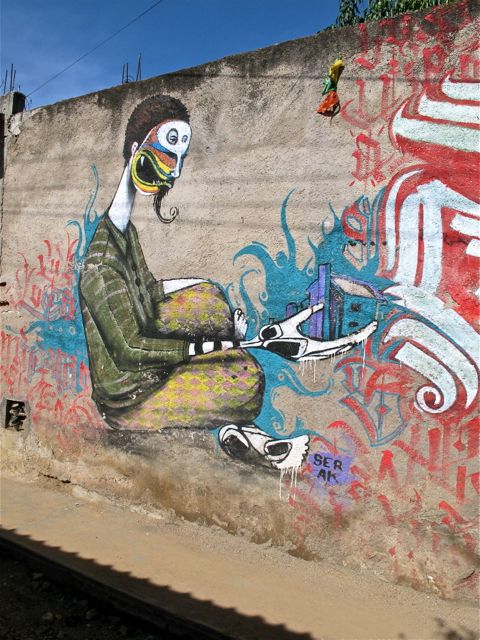
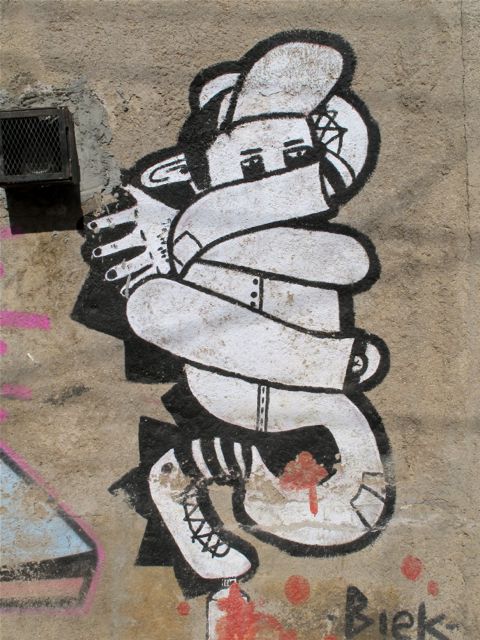
Walking back from grocery shopping, with a lighter than usual load, I took a detour and stumbled on this wall only two blocks from home.

colorful mural on wall

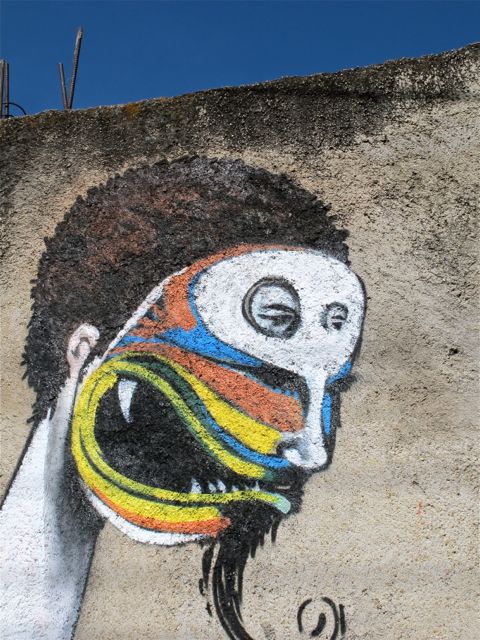
Closeup of colorfully painted face on wall

Black and white wall art of boy with cap wrapped in arms

Doing a little research, I found a video of it being painted…

Graphic design, Oaxacan style!

Read Full Post »

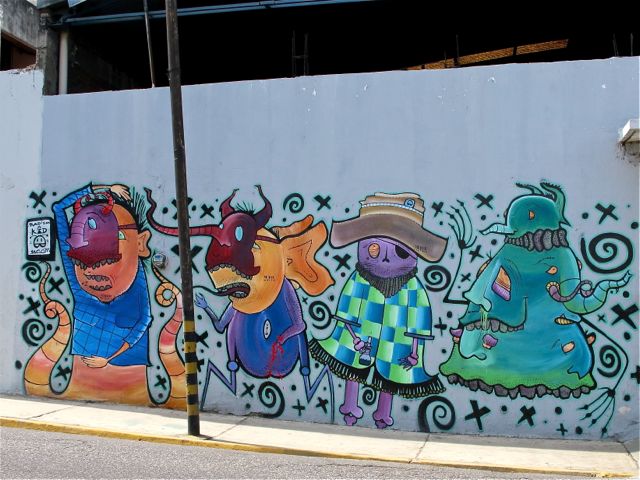
Just another day, just another walk.

Colorful street art mural of imaginary characters

Just another wall of street art.

Close up of colorful street art face with mask.

Just another April Fools Day (2012) mural.

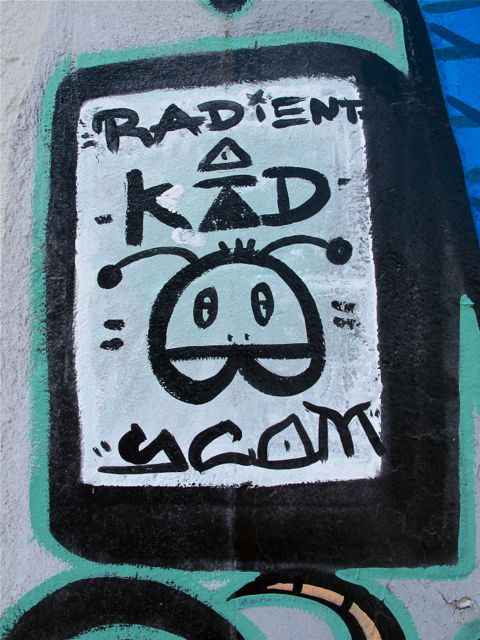
Signature on mural:  Radient; Kad; Ycom

Muchisimas gracias, KAD, for bringing a smile…

Close up of mural with the word "void" written vertically in an oval.

and leading us into the void.

Read Full Post »
« Newer Posts - Older Posts »