Feeds:
Posts
Comments

Posts Tagged ‘Tlacolula de Matamoros’

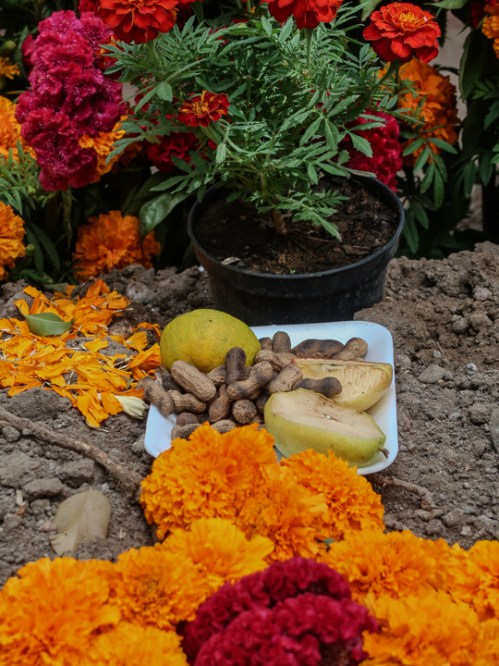
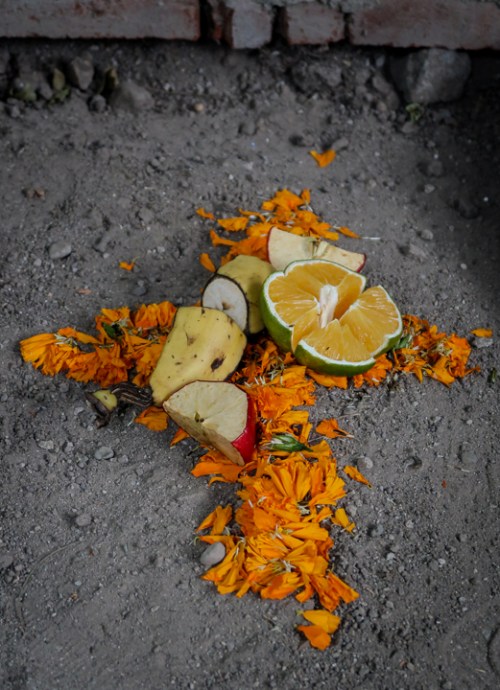
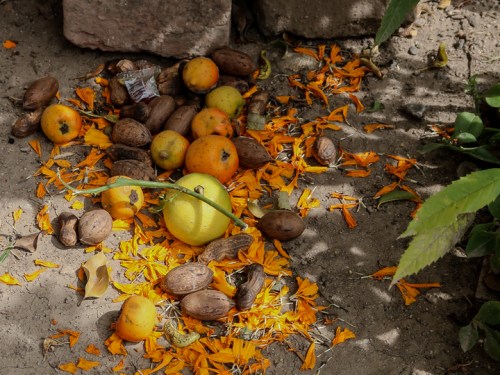
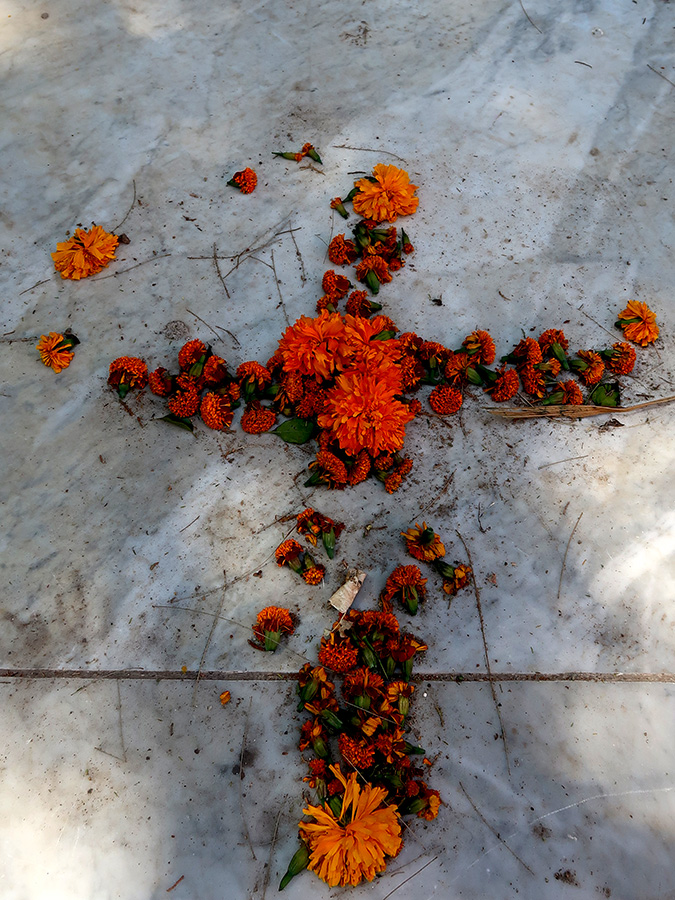
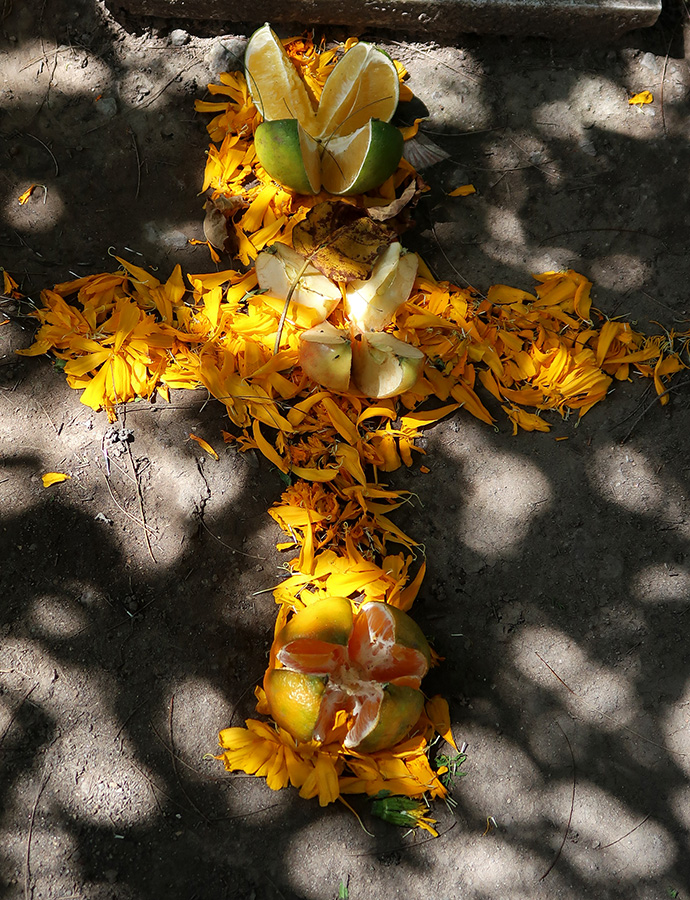
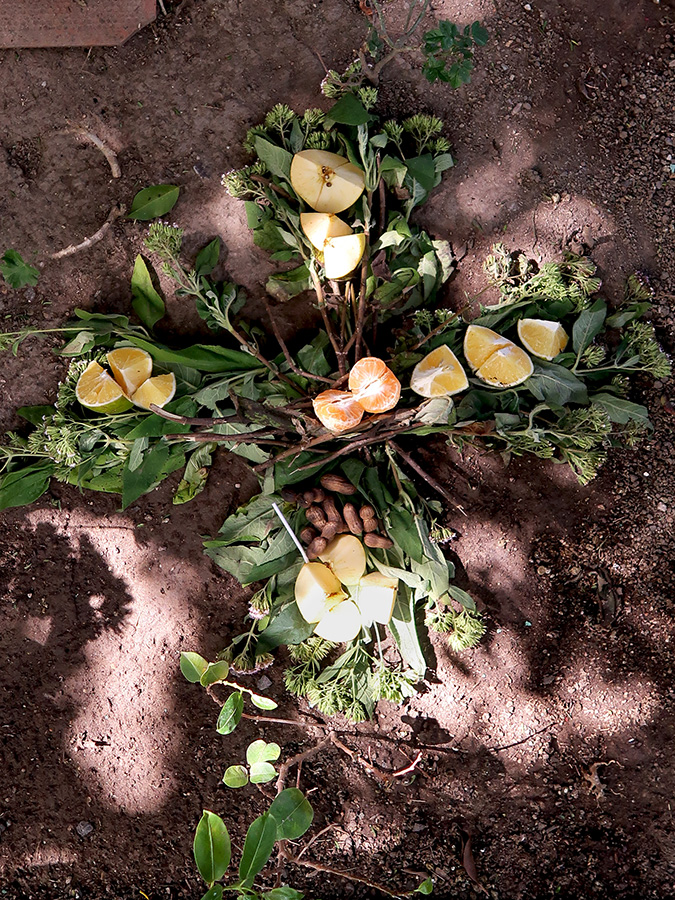
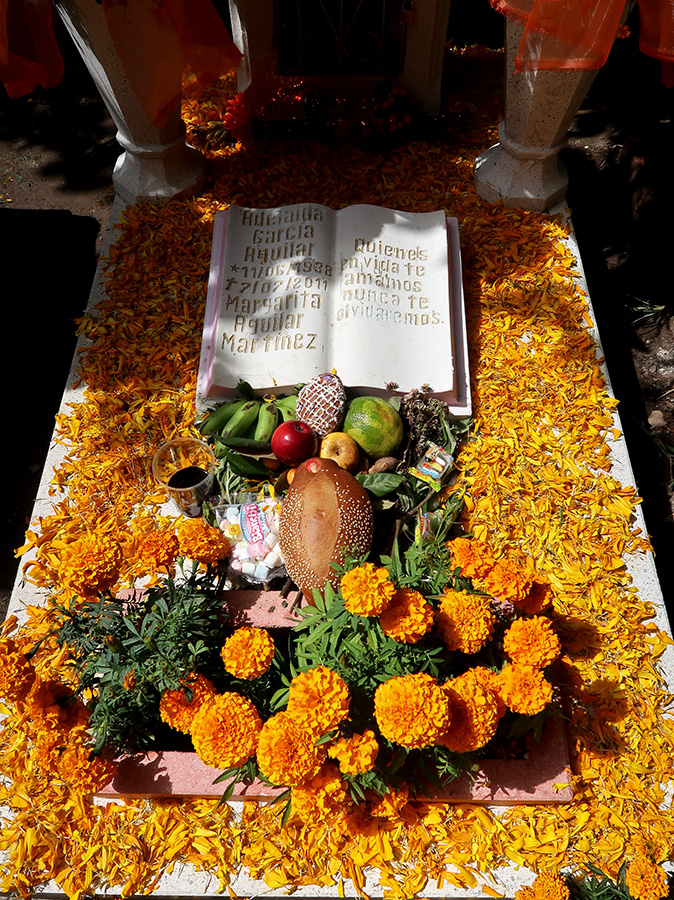
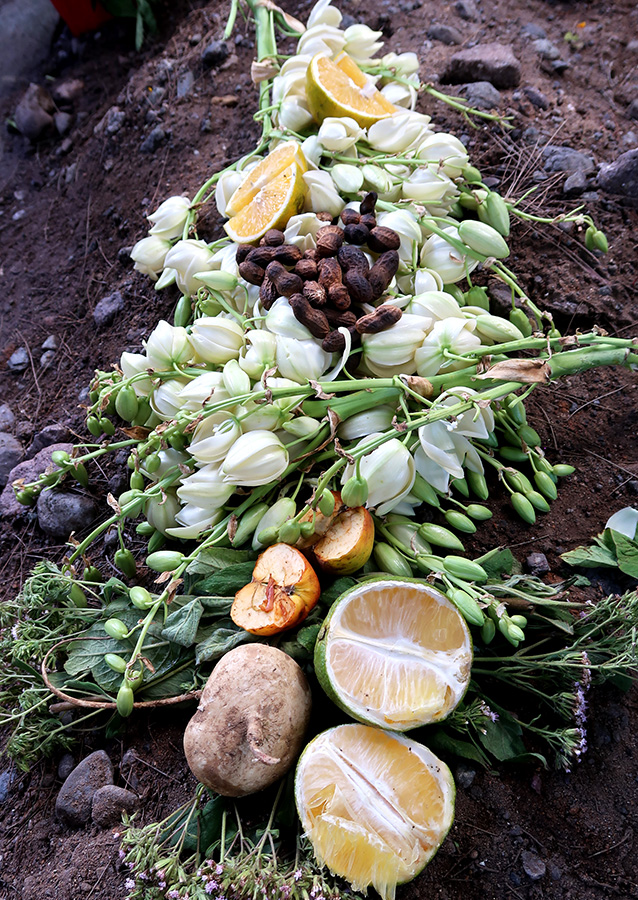
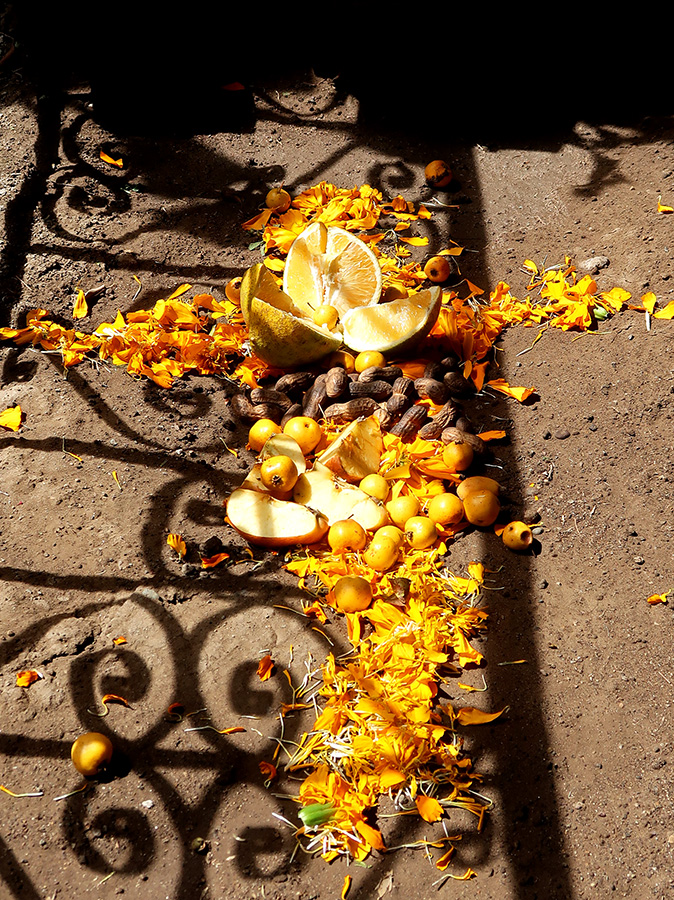
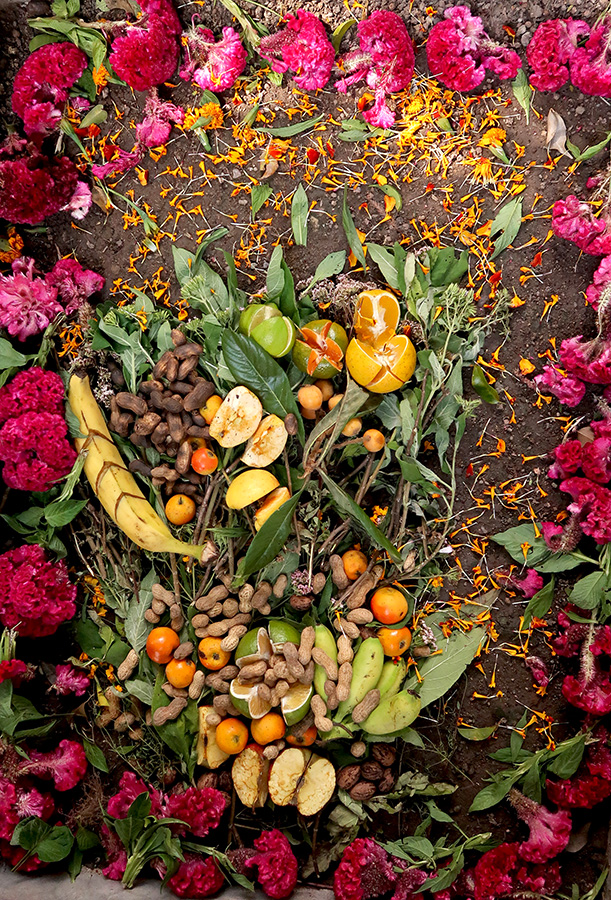
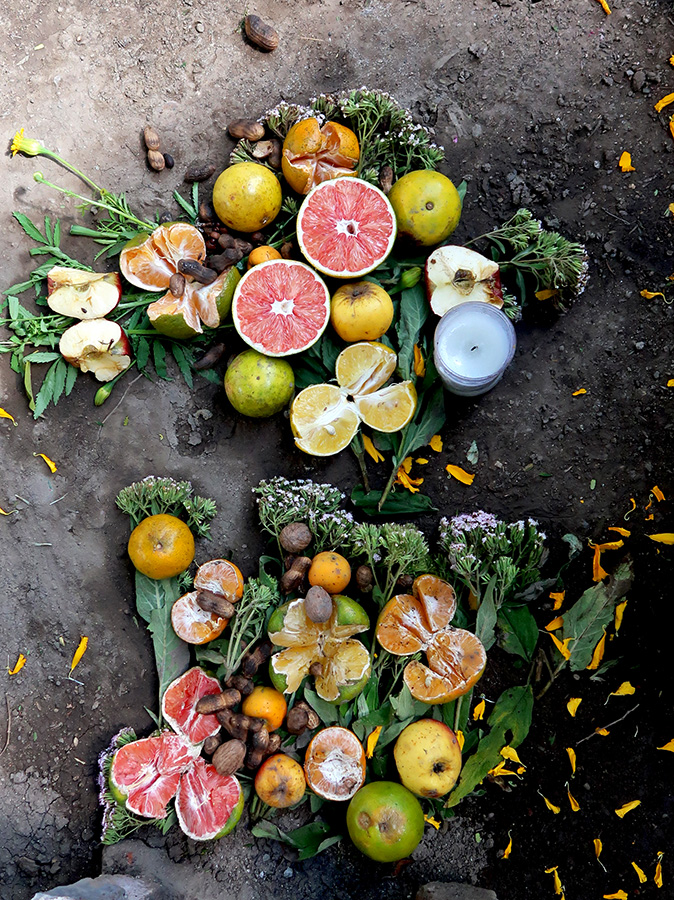
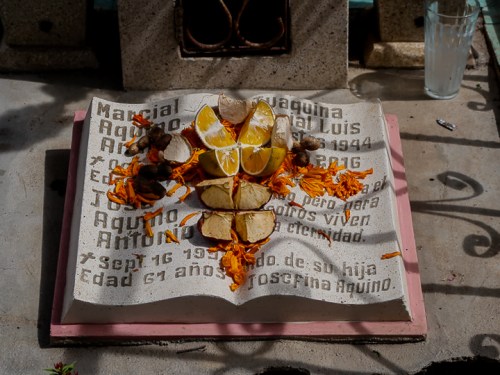
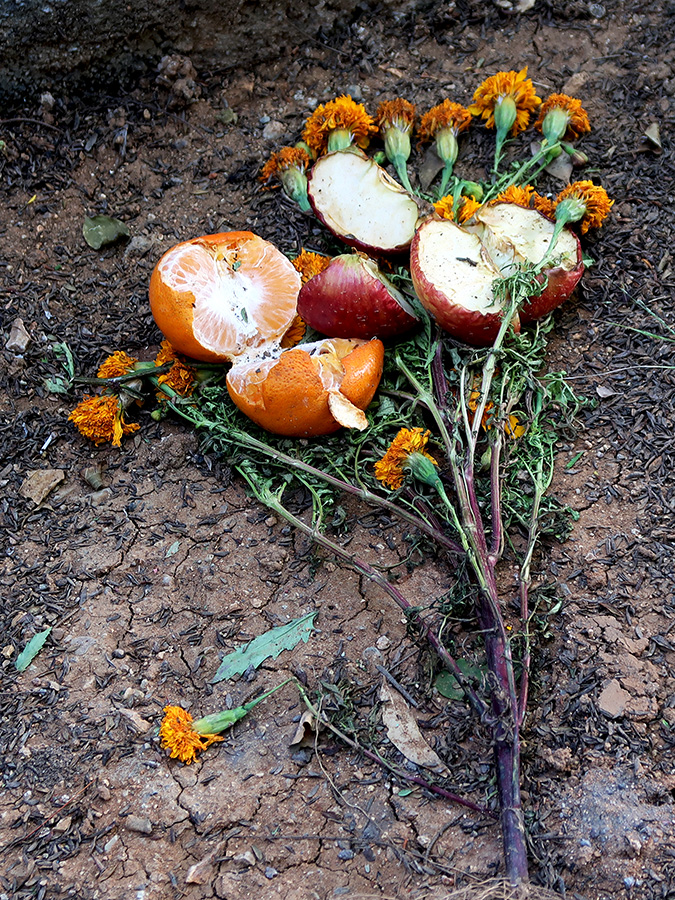
During Día de Muertos (Day of the Dead), under the sun dappled light filtering through graceful several centuries old ahuehuete trees in the panteón of Tlacolula de Matamoros, the living offer the scent of cempasúchil (marigolds) to guide their departed home. And, to nourish them during their journey between the worlds of the living and the dead, fruit (thoughtfully opened), along with nuts and beverages are provided.

The fruit and flowers during Día de Muertos also beckon me to this Zapotec village in the Valley of Oaxaca and they nourish my soul.

Read Full Post »

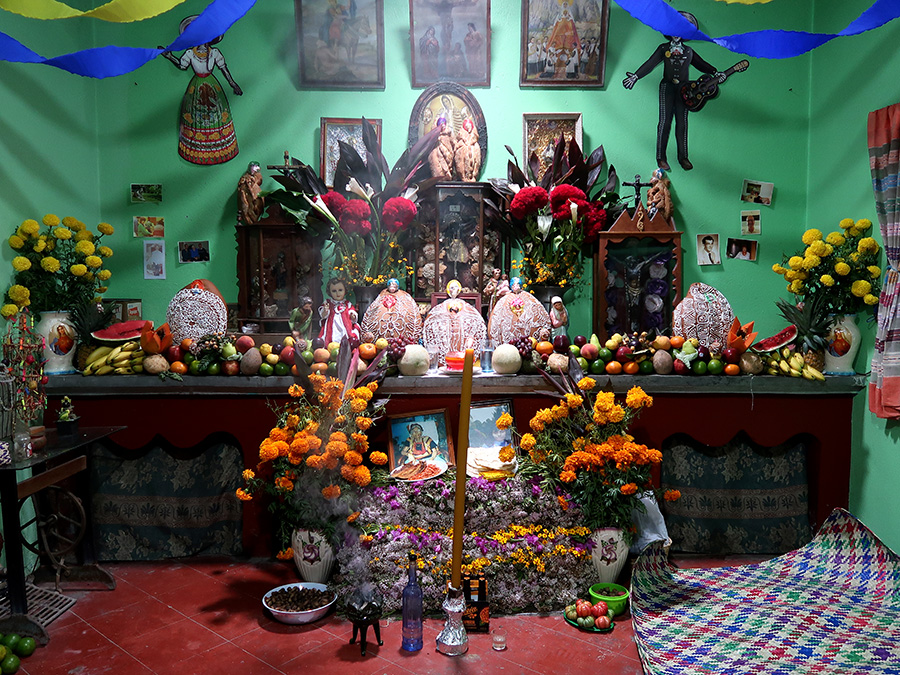
There is a duality surrounding the celebration of Día de Muertos (Days of the Dead) in Oaxaca. While most every home and many public buildings and businesses construct altars with ofrendas brimming with flowers, candles, bread, chocolate, fruit, nuts, beverages, copal incense, and often photos of the departed, there is a distinct difference between the traditions of the more mestizo communities (Oaxaca city and the Etlas, for example) and those of the indigenous communities. The former often includes raucous comparsas (parades) called muerteadas with costumes, masks, painted faces, music, and “adult beverages.” According to the book, Day of the Dead: When Two Worlds Meet in Oaxaca, the muerteada allows the dead “to ‘occupy’ a living body, either a muerteada participant or an audience member, for a time, and therefore enjoy the entertainment directly rather than vicariously.”

However, in the indigenous villages these days are more solemn, filled with ritual, and are family oriented. I lean toward this more spiritual observance, so I escaped the craziness of the daily comparsas and drunken crowds in the city and went to stay in the Zapotec village of Teotitlán del Valle with my compadres (including comadre K) and to shop in Tlacolula for pan de muertos (bread), candles, and flowers to take to the ofrendas of families K and I have a relationship with in Teotitlán and San Pablo Villa de Mitla.

Tlacolula de Matamoros – Vendors of caña (sugar cane) used to create an arch over ofrendas.
Tlacolula de Matamoros – Ofrenda in the Templo de Santa María de la Asunción.
Tlacolula de Matamoros – Tapete de arena (sand painting) in Templo de Santa María de la Asunción.
San Pablo Villa de Mitla – Store front.
San Pablo Villa de Mitla – Ofrenda on home altar.
San Pablo Villa de Mitla – Detail from a public ofrenda.
Teotitlán del Valle – Ofrenda (offerings) on home altar.
Teotitlán del Valle – Tamales amarillo traditionally served on November 1.
Teotitlán del Valle – Panteón (cemetery) early evening on November 2.

While the Día de Muertos observances may differ, the bottom line in both city and pueblo is to provide a welcome worthy of both the living as hosts and the dead as honored guests.

Read Full Post »

Under the sun dappled light filtering through the 500 year old ahuehuete trees, there was stillness and peace.

November 2, 2022 in the panteón of Tlacolula de Matamoros.

Read Full Post »

No sooner had I returned to Oaxaca than I left again. However, this time it was to spend only a few days in Teotitlán del Valle for Guadalupe’s feast day and the celebration ending the three year commitment by the dancers of the Danza de la Pluma Promesa 2019-2021. (More about that in a later post.) In addition, after almost a two year absence, I also managed to spend a few hours in Tlacolula de Matamoros and San Pablo Villa de Mitla.

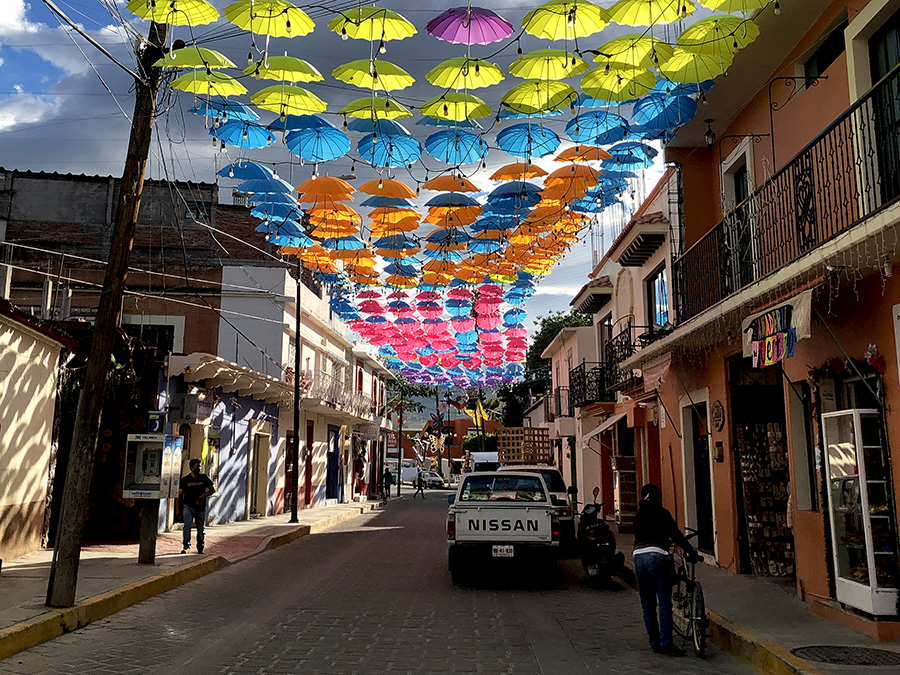
Umbrellas of Mitla – December 13, 2021
Nacimiento of Tlacolula – December 13, 2021
Papel picado of Teotitlán – December 12, 2021

My friend K and I took local buses and I am happy to report everyone on the buses was masked and we even had to disembark at a checkpoint before entering Mitla. Once we and the interior of the bus were disinfected, we reboarded and headed into the town.

Read Full Post »

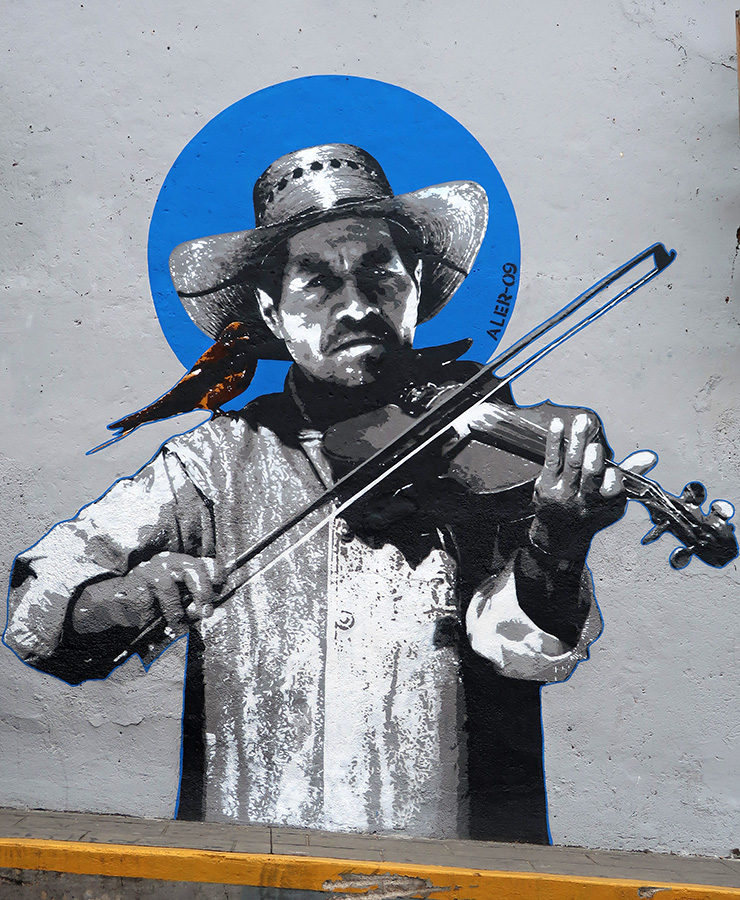
While I continue to sort through, delete, and process the hundreds of Día de Muertos photos, how about a little more art from the walls of Oaxaca, seen during the last month?

Stencil on a wall in Oaxaca city by artist Efedefroy.

Wall in Tlacolula de Matamoros by the Chiapas artist, Dyg’nojoch.

Stencil in Oaxaca city by the artist, Aler.

Seen in Zaachila by unknown artist.

How can one not smile, think a little, and be somewhat intrigued when walking passed art like this?

(ps) If anyone knows who this last piece is by, let me know, so I can give her/him credit.

Read Full Post »

The difuntos have begun arriving and, like every year on November 1, I escape the tourist craziness of the city to spend time in the tranquility of the panteón in Tlacolula de Matamoros. Under the dappled sunlight of early afternoon, families clean, bring flowers, and celebrate. The departed must have nourishment for their travel between the world of the living and dead, thus fruit, nuts, bread, and beverages are placed on the graves.

The difuntos also seem to appreciate artistry.

Read Full Post »

If it’s Sunday, it must be market day in Tlacolula de Matamoros. However, yesterday wasn’t just any Sunday. The second Sunday in October marks the community’s most important feast day — honoring El Señor de Tlacolula.

Marmota at rest in the church atrium.

As with all patronal festivals, this one lasts several days. In addition to Sunday’s masses, the highlights were a calenda through the streets on Friday featuring marmotas (giant and tiny), several bands, the image of Christ, and women carrying baskets atop their heads. On Saturday night here was a castillo and fireworks.

Order of delegations for the calenda.

In the back of my mind, I knew it would be crowded, but I was amazed at how many people had already poured into Tlacolula by 9:30 AM. It was hard to navigate one’s way to the market as, besides masses of people, a carnival had been set up along the main street and a side street or two.

IMG_7773

Señor de Tlacolula decorations at the entrance to Templo de la Virgen de la Asunción.

The church, Templo de la Virgen de la Asunción, was teeming with an overflow crowd of the faithful listening to mass being said from the side chapel of El Señor de Tlacolula. Legend has it that when this sculpture of Jesus, being brought south by muleteers in the sixteenth century, arrived in Tlacolula for a rest stop, overnight it gained so much weight that in the morning it could no longer be lifted. A miracle! Thus it was decided a chapel should be built to house the sculpture right on the spot.

Capilla de Señor de Tlacolula, the faithful wait to touch the image.

What a chapel it is! A feast for the eyes from floor to ceiling, filled with gold and silver gilding, carved angels and saints, paintings, and mirrors. On this day, pews had been removed so worshipers could have a personal interaction with the Lord of Tlacolula. In addition, an altar and hundreds of folding chairs had been set up in the atrium for an outdoor mass.

In the atrium, the altar on a replica of the church.

The art of the fiesta has been debased almost everywhere else, but not in Mexico. There are few places in the world where it is possible to take part in a spectacle like our great religious fiestas with their violent primary colors, their bizarre costumes and dances, their fireworks and ceremonies and their inexhaustible welter of surprises: the fruit, candy, toys and other objects sold on these days in the plazas and open-air markets. Octavio Paz, The Labyrinth of Solitude.

Mural on outside wall of the market.

Read Full Post »
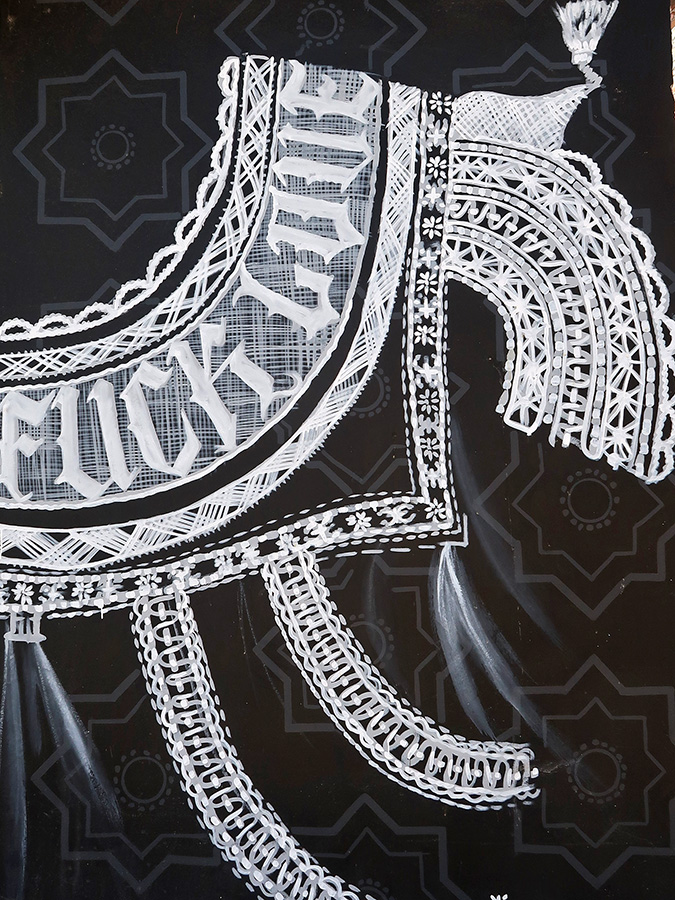
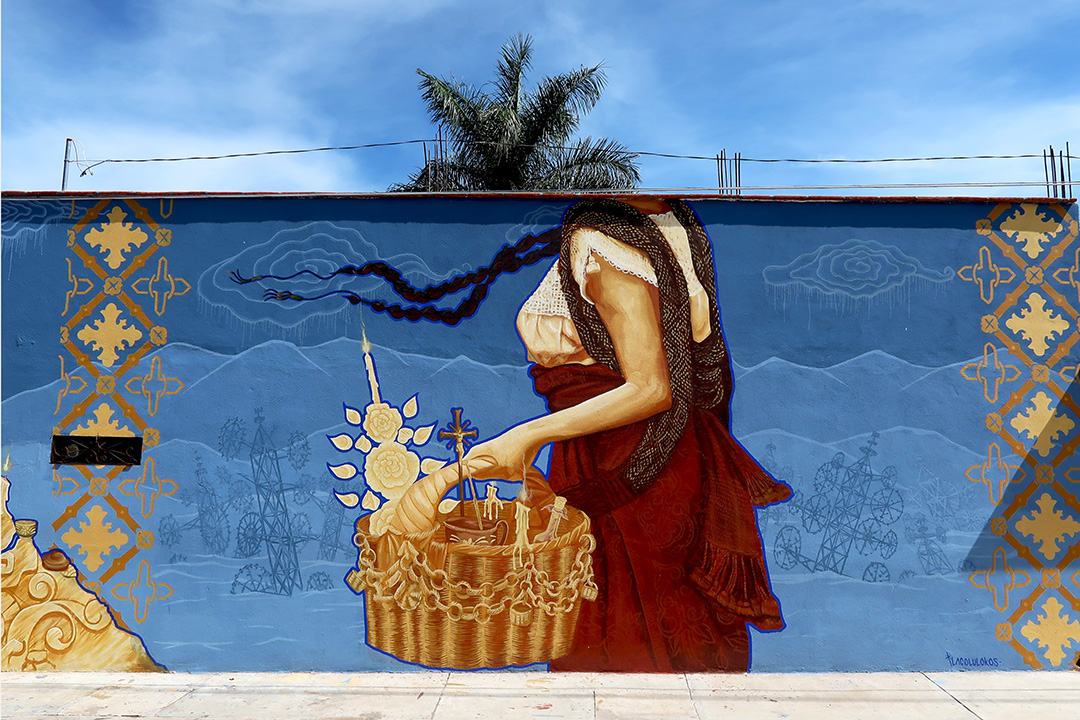
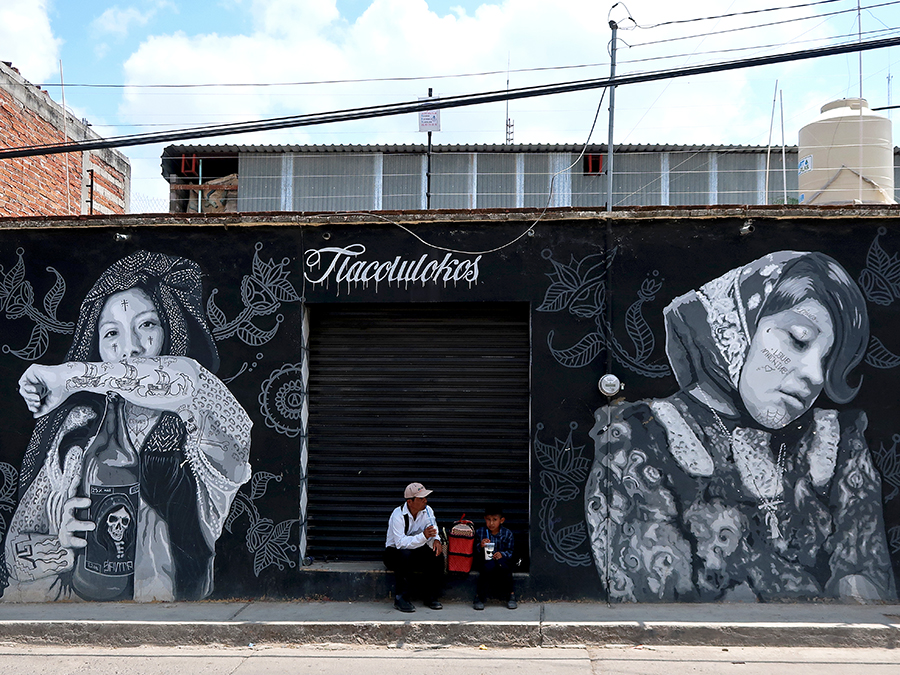
The artistry and message of my favorite mural painting collective, the Tlacolulokos, continues to be revealed on the walls of Tlacolula de Matamoros. Today, on a brief visit, blogger buddy Chris and I stumbled on three of their masterpieces. The first one I’d previously seen and blogged about in 2017 under the title, Who tells your story. However, the second mural was new to both of us.

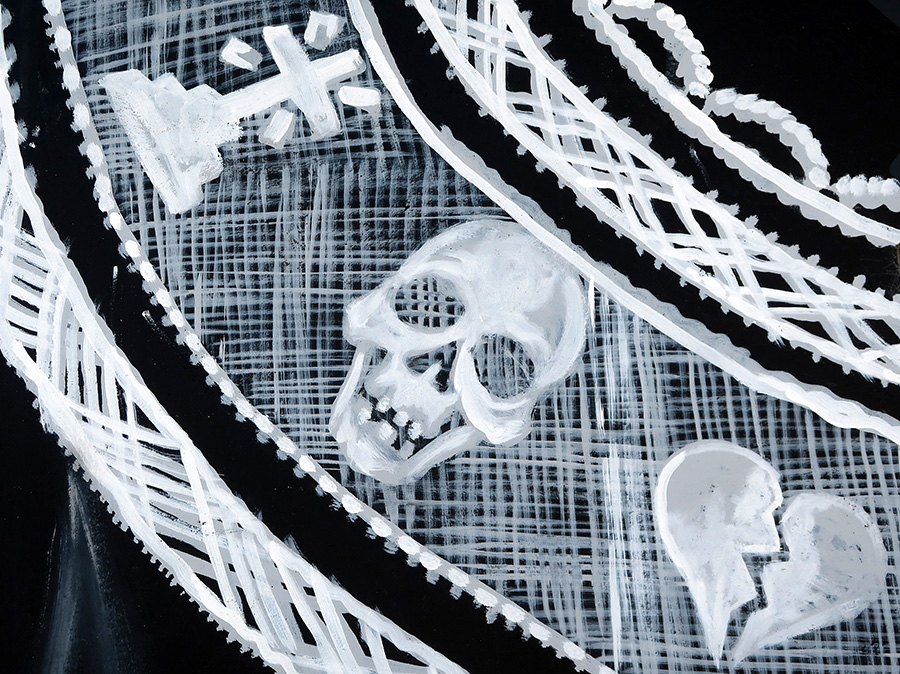
A blouse divided.

A broken heart — not your usual randa de aguja (needlework technique) blouse detail.

Their message, not mine.

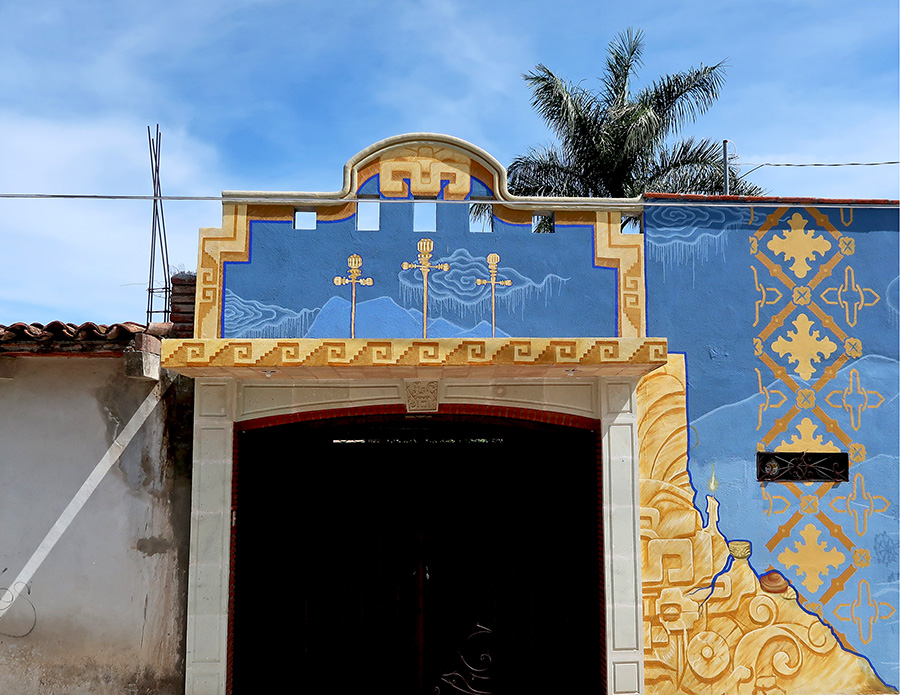
The third mural was a couple of houses down and presents a more historic and celebratory entrance.

Spanish swords and Mitla grecas provide driveway decoration.

A headless woman woman in traditional Tlacolula costume walks toward the entrance.

Thoughts of an upcoming festival castillo, agains the backdrop of the valley’s mountains, dance in her missing head.

Her carrizo shopping basket is filled with purchases for the festival.

From the first Tlacolulokos mural I saw in 2014 to their Tokiolula mural through today, their art continues to speak to me, teach me, and inspire me to really see the people and culture around me.

Read Full Post »

I returned to Teotitlán del Valle late Friday afternoon to view the convite of of unmarried women of the village and Grupo de la Danza de la Pluma 2019-2021 danzantes (dancers) process through town — an invitation to further festivities honoring La Preciosa Sangre de Nuestro Señor Jesucristo. Though that wasn’t the only activity on my agenda; I would be spending the weekend with my amiga K, who was house-sitting for another amiga N. It would be a weekend in the countryside for this city gal!

I arrived late afternoon on Friday…

Canastas (baskets) lined up in front awaiting the procession under the gaze of the sacred mountain, El Picacho.

Grupo de Promesa de la Danza de Pluma 2019-21 arriving in front of the church, waiting to process.

Guys who launch the cohetes (all bang, no bling rockets) announcing the procession.

The convite begins — unmarried women of Teotitlán del Valle carrying the aforementioned canastas (baskets).

After the convite, an early evening encounter with a burro as mi amiga K and I walked to Restaurante y Galería Tierra Antigua .

Saturday…

Early morning view of the campo in Teotitlán del Valle.

Breakfast gathering of cocineras (cooks) and friends in the cocina de humo at Restaurante y Galería Tierra Antigua.

Encounter with a bull while walking back to the house.

Returning to the church to watch the late afternoon performance of the Danza de la Pluma.

Following the Danza de la Pluma, late night watching the toritos, castillo, and fireworks in front of the church.

Sunday…

During mass, shopping baskets parked in the church atrium.

Off to market day in Tlacolula de Matamoros. The upside down St. Peter encountered in the Señor de Tlacolula chapel.

Taekwondo competition in front of the municipal buildings in Tlacolula de Matamoros.

Returning to Teotitlán del Valle, still life in front of the sacred mountain, El Picacho, seen while walking back to the church in the afternoon.

Final Danza de la Pluma performance in the church atrium at the 2019 Fiesta de la Preciosa Sangre de Cristo.

It was a lively, delicious, and exhausting weekend. Did I mention, I walked an average of 4.5 miles per day?  Wouldn’t have missed it for the world! Muchisimas gracias to all who made it an unforgettable weekend!

Read Full Post »

I returned to Casita Colibrí early Friday morning, weary from Aeromexico’s red eye from San Francisco.  After emptying the suitcases, bed beckoned!  No need to drag myself to the market, as neighbor and gal pal, K, welcomed me home with a delicious dinner.  Saturday, was spent putting things away, tending to the garden, and raiding the freezer for a tamal to go along with leftover salad from the night before.  However by Sunday I was recovered enough to accompany K on her weekly pilgrimage to market day in Tlacolula de Matamoros.

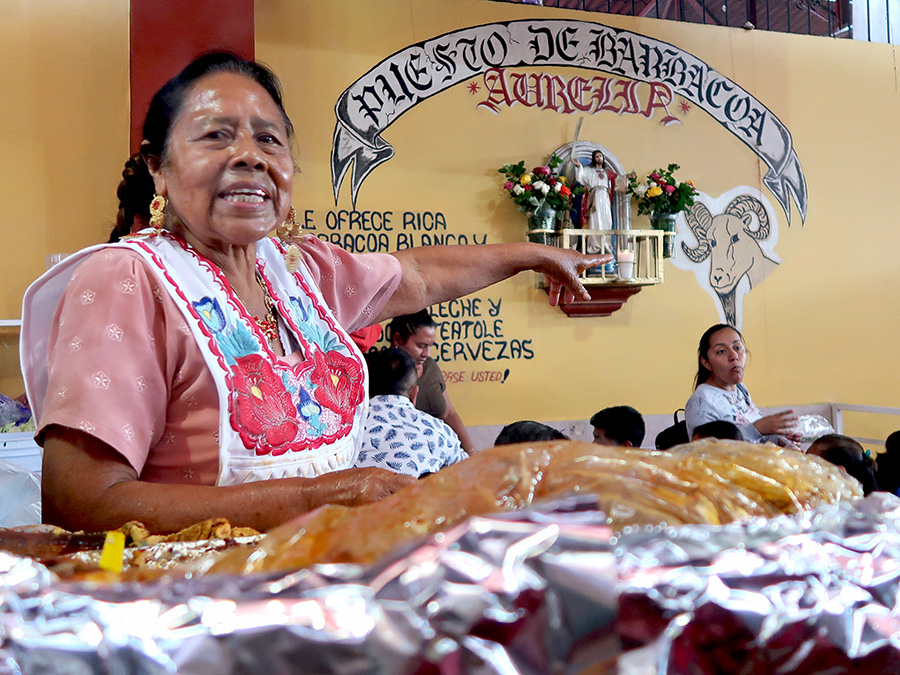
Doña Aurelia, cocinera at her Puesto de Barbacoa. A yummy way to begin the day!

A stop in the Capilla del Señor de Tlacolula of the Parroquia de la Virgen de la Asunción for a reminder from Señor de la Paciencia (Lord of Patience).

The bell tower of the Parroquia de la Virgen de la Asuncón, Tlacolula de Matamoros.  It always pays to look up.

“The sense of responsibility is latent in the human being, with sensitivity we should look for it from childhood, channel it in adolescence, perfect it in the youth to understand and better serve society.”

Far from the madding crowd in search of a baño.

Aprons on and baskets in hand: Marketing on market day in Tlacolula de Matamoros.

What better way to get back into the swing of things in Oaxaca.  Chicken soup for this soul!  Gracias a mi amiga.

Read Full Post »
Home soon and looking forward to returning to these sights…

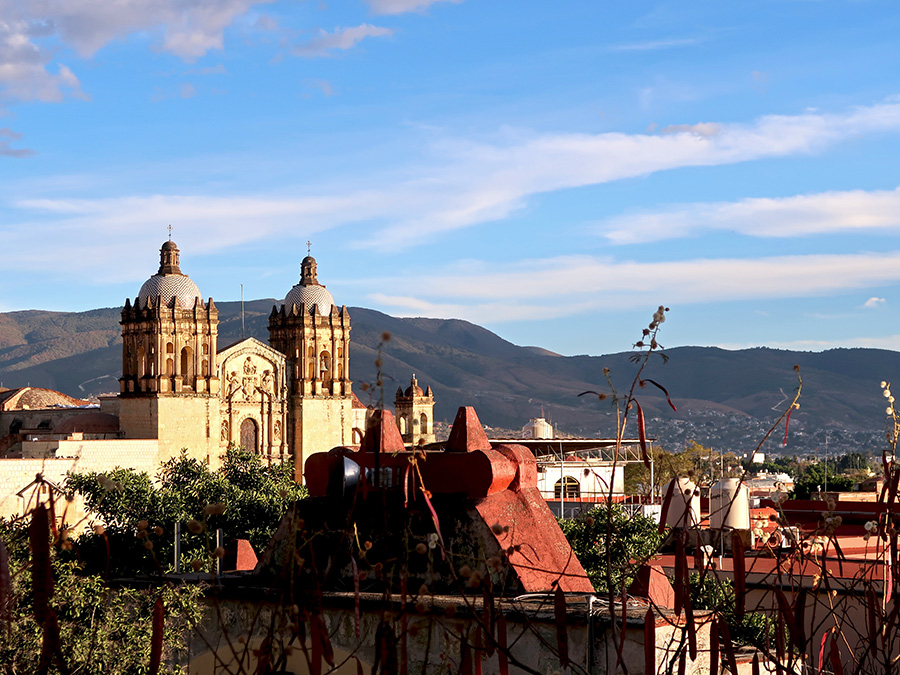
View of Santo Domingo de Guzmán.

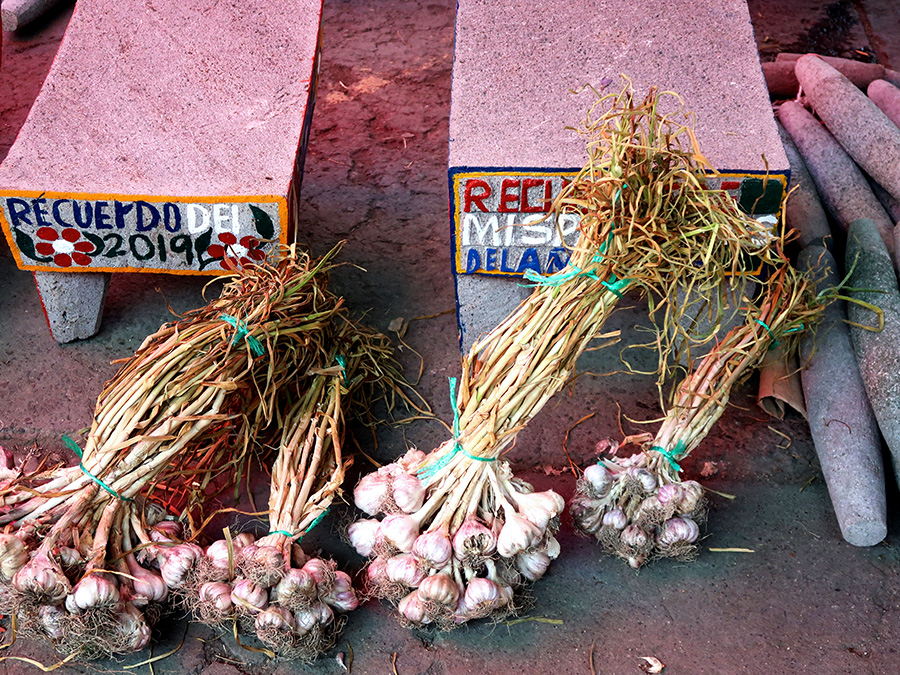
Metates and garlic — market day in Tlacolula de Matamoros.

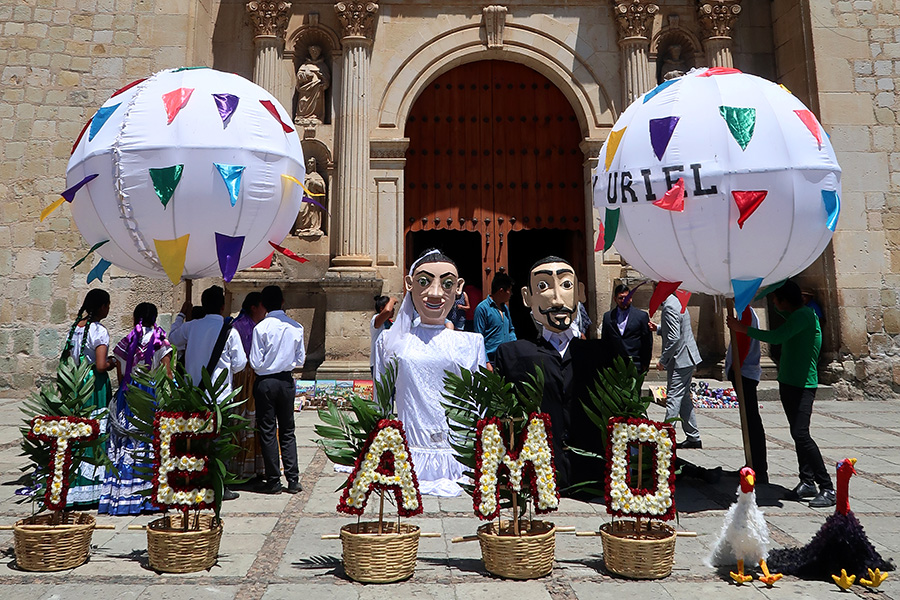
Monos and marmotas waiting for a wedding at Santa Domingo de Guzmán.

Oaxaca, I love you.


Read Full Post »
We have just had a hint at the rainy season to come.  Monday night brought an hours-long torrential downpour with major flooding, trees and telephone lines down, and power outages.  The electricity at Casita Colibrí stayed on and all plants in the garden remained upright and intact.  However, my street turned into a raging river and water was cascading off the terrace like a waterfall.

IMG_3811

Rooftop rain pipes/spouts in Tlacolula de Matamoros

This herd of elephants might have come in handy!  Looking up at this scene, I couldn’t help remembering one of my children’s favorite books, “Stand Back,” Said the Elephant, “I’m Going to Sneeze!” — and couldn’t help laughing.

Read Full Post »

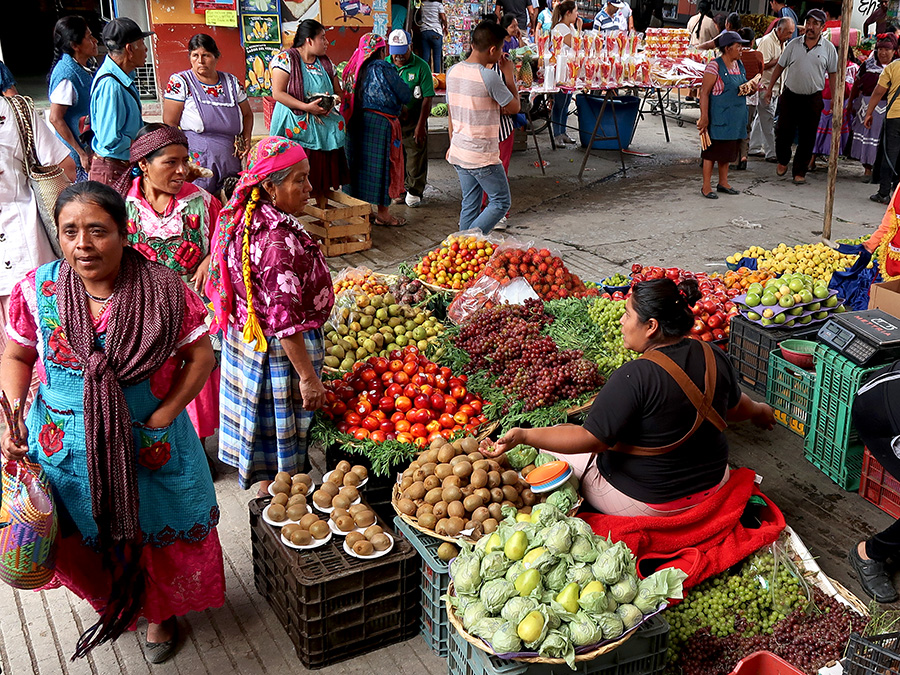
Today found me (courtesy of blogger buddy Chris) savoring market day in Tlacolula de Matamoros.  The Sunday market is one of the oldest continuous tianguis in Mesoamerica, a commercial center for the neighboring communities, and a beehive of energy and activity.

There is food…

IMG_3770

Chiles and more

IMG_3775

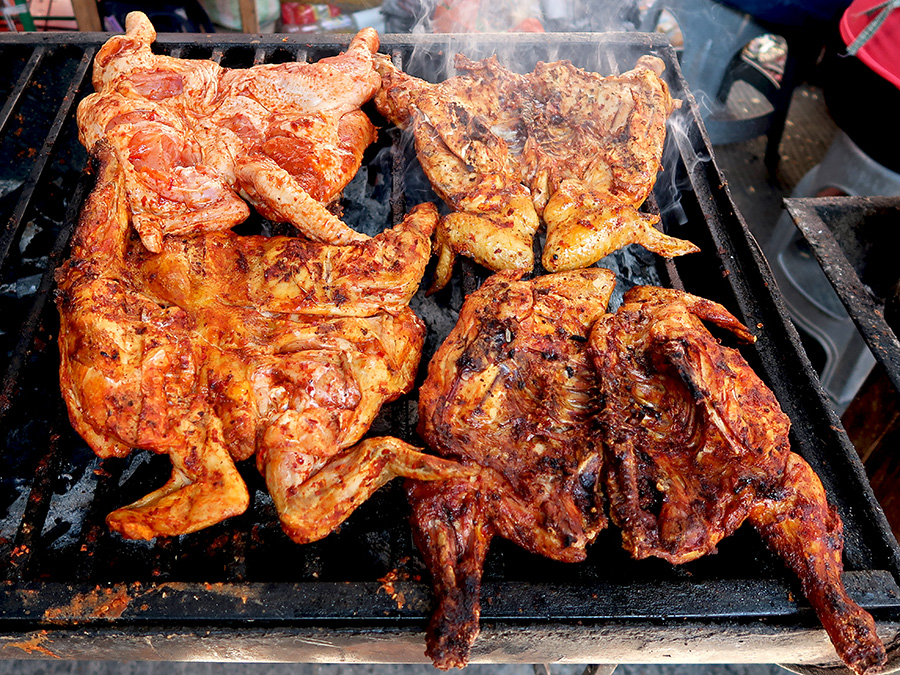
Chickens roasting on an open fire

IMG_3767

A bounty of fruit

Necessary cooking equipment, Oaxaca style…

IMG_3799

Gourds for measuring and serving, palm fans for fanning the cooking flames, and brushes for moving ingredients about the comal

IMG_3804

Metate for grinding corn, chocolate, dyes, etc.

IMG_3808

Molcajetes necessary for crushing and grinding herbs, spices, and making the best salsas and guacamole

And, most of all, people…

IMG_3776

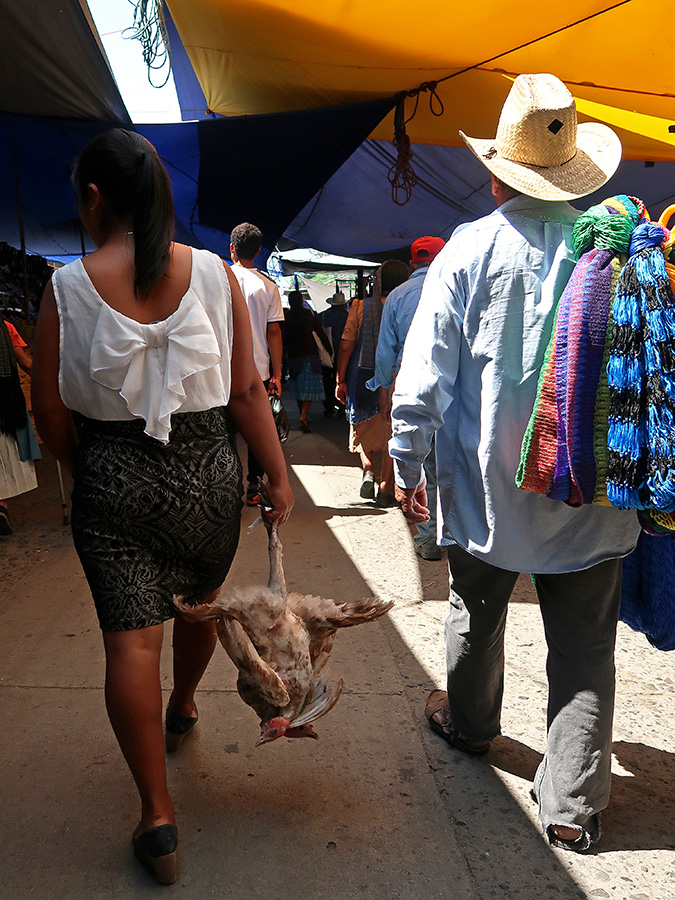
Poultry shopper and hammock seller

IMG_3781

Tortilla vendors

IMG_3787

Garlic vendor

Market day in Tlacolula is chicken soup for my soul.

Read Full Post »

Looking back and appreciating life in Oaxaca, 2018.

IMG_4678 WolfMoon & Pistachio_Jan

January – View through the terrace pistachio tree of full Wolf Moon.

IMG_3305_Feb

February – Guest helping to harvest Waje dinner at Rancho 314 urban farm in Santa Cruz Xoxocotlán.

IMG_5975_Mar

March – Reyna Mendoza Ruiz demonstrating metate technique at El Sabor Zapoteco cooking class in Teotitlán del Valle.

IMG_6800_Apr

April – Pit for cooking agave piñas to make mezcal at the palenque of Faustino Garcia in San Baltazar Chichicapa(m).

IMG_7641_May

May – Tlacolulokos mural in Tlacolula de Matamoros.

IMG_7855_Jun

June – Summer afternoon on the Zócalo in Oaxaca city.

IMG_8430_Jul

July – Feria del Barro Rojo in San Marcos Tlapazola.

IMG_0019_Aug

August – Fundación En Via microfinance tour to San Miguel del Valle.

IMG_0478_Sep

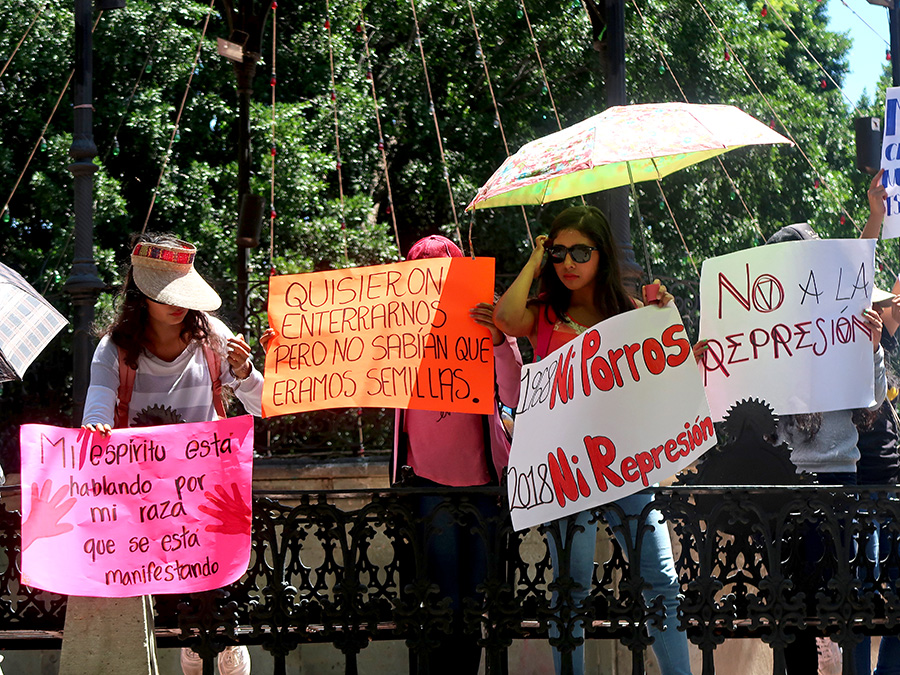
September – Protest by students from the Escuela Normal Bilingüe e Intercultural de Oaxaca.

IMG_1042_Oct

October – Celebrating el Señor del Rayo at the Catedral de Nuestra Señora de la Asunción.

IMG_2044_Nov

November – At the home/workshop of filigree maestro, José Jorge García García.

IMG_4062_Dec

December – Pop-up sale in Oaxaca city by the Las Sanjuaneras weavers from San Juan Colorado.

Feliz año nuevo y muchisimas gracias to all my wonderful blog readers from near and far!  Thank you for reading, for commenting, for sharing, for the opportunity to meet some of you, and for inspiring me to continue.  Onward to 2019!!!

Read Full Post »

Under the dappled sunlight filtering through the 500 year old ahuehuete trees in the panteón of Tlacolula de Matamoros, lovingly placed fruit and nuts nourish the souls.  (Click on images to enlarge)


In the afternoon, when the light and shadows dance on the graves, beautiful still lifes greet the departed, their living family, friends, and visitors.  It is a tranquil setting to contemplate the words of Octavio Paz (The Labyrinth of Solitude, the other Mexico, and essays, Grove Press, 1985, p. 54)

The opposition between life and death was not so absolute to the ancient Mexicans as it is to us.  Life extended into death, and vice versa. Death was not the natural end of life but one phase of an infinite cycle.

Read Full Post »

Older Posts »