Day three of cut roses from the Mercado de Abastos. Gracias a Kalisa!

Crown of Thorns… new addition to the rooftop garden from the weekly Sunday plant sale in the Jardín Morelos.

Winter may be coming, but there are always flowers blooming in Oaxaca.
Posted in Casita Colibrí, Flora, Gardens, Travel & Tourism, tagged Casita Colibrí, Crown of Thorns, flowers, garden, Mexico, Oaxaca, photos, roses on November 11, 2018| 6 Comments »
Day three of cut roses from the Mercado de Abastos. Gracias a Kalisa!
Crown of Thorns… new addition to the rooftop garden from the weekly Sunday plant sale in the Jardín Morelos.
Winter may be coming, but there are always flowers blooming in Oaxaca.
Posted in Celebrations, Creativity, Culture, Food, food festival, Holidays, Travel & Tourism, tagged bread of the dead, Day of the Dead, day of the dead bread, Día de los Muertos, feria, Mexico, Oaxaca, pan de muerto, photos, popular travel destinations, San Pablo Villa de Mitla, Villa Díaz Ordaz, Villa de Zaachila, Villa Hidalgo Yalalag on November 9, 2018| 11 Comments »
Several pan de muerto festivals sprung up in the valley of Oaxaca during Día de los Muertos — including a Festival del Pan de Muerto in Villa Díaz Ordaz, a Feria del Pan de Muerto Adornado in Villa de Zaachila, and a Feria del Pan y Chocolate in the city of Oaxaca. While the intention of these fairs is to attract tourists, both foreign and domestic, the primary market remains ofrendas (offerings) to the difuntos (departed) — who must be fed during their brief return to visit with their loved ones.
And, like apron styles, pan de muerto (bread of the dead) varies from village to village, be it sold at a feria, mercado, or neighborhood panadería.
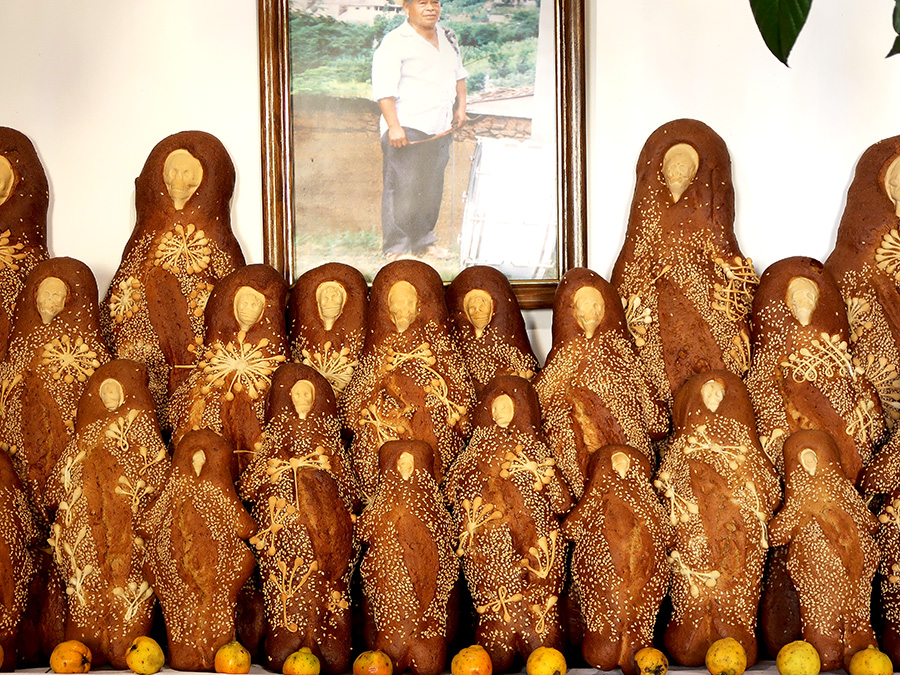
Panadería Yalalag in Oaxaca city.

San Pablo Villa de Mitla.

San Pablo Villa de Mitla.

Mercado, 20 de noviembre, Oaxaca city.

Villa de Zaachila.

Villa de Zaachila.
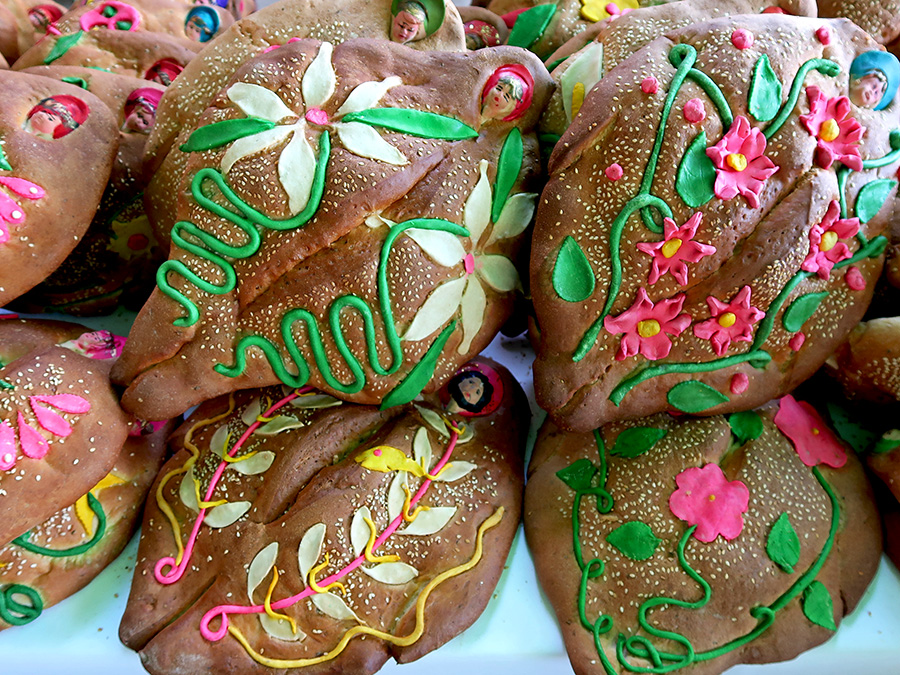
Villa de Zaachila.

Villa de Zaachila
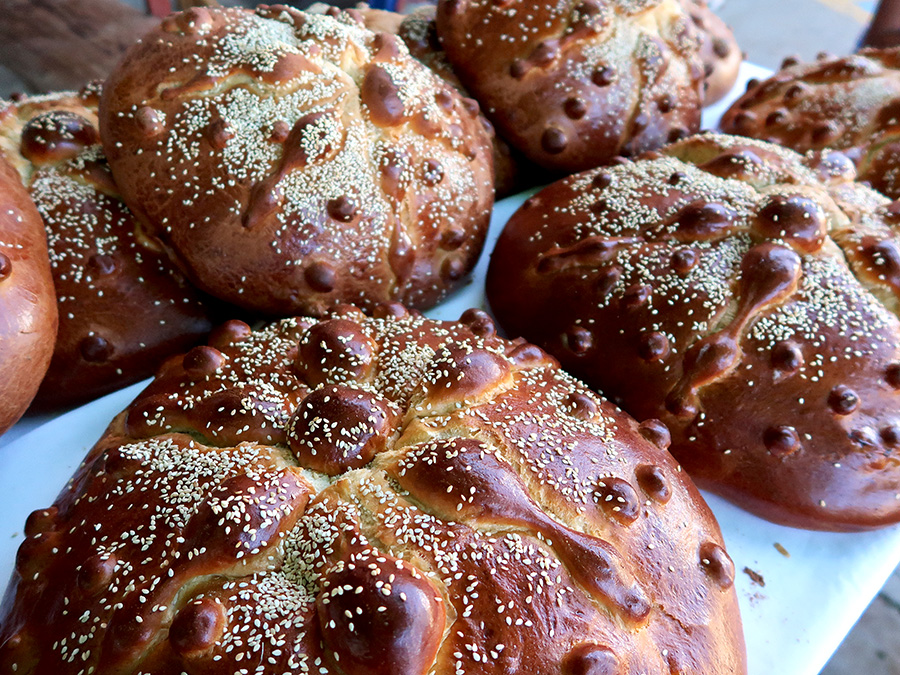
Villa de Zaachila.
Though my difuntos have departed and my altar has been disassembled, I couldn’t consign my beautiful (but stale) pan de muerto offerings to the garbage can.

Pan de muerto from Yalalag, Mitla, and Zaachila.
So, here they remain in a basket on my counter — until they disintegrate or the hormigas (ants) enjoy a feast.
Posted in Celebrations, Creativity, Culture, Food, Travel & Tourism, tagged cemetery, Day of the Dead, Día de los Muertos, death, fruit, graves, Mexico, nuts, Oaxaca, Octavio Paz quote, panteón, photos, Tlacolula de Matamoros, tombs on November 3, 2018| 8 Comments »
Under the dappled sunlight filtering through the 500 year old ahuehuete trees in the panteón of Tlacolula de Matamoros, lovingly placed fruit and nuts nourish the souls. (Click on images to enlarge)


In the afternoon, when the light and shadows dance on the graves, beautiful still lifes greet the departed, their living family, friends, and visitors. It is a tranquil setting to contemplate the words of Octavio Paz (The Labyrinth of Solitude, the other Mexico, and essays, Grove Press, 1985, p. 54)
The opposition between life and death was not so absolute to the ancient Mexicans as it is to us. Life extended into death, and vice versa. Death was not the natural end of life but one phase of an infinite cycle.
Posted in Agriculture, Celebrations, Culture, Food, Travel & Tourism, tagged Day of the Dead, Día de los Muertos, farm to table, food, Mexico, Oaxaca, photos, popular travel destinations, tamales, Teotitlán del Valle on November 1, 2018| 8 Comments »
Today, at 3:00 PM in Teotitlán del Valle, as leaves in the mountains and fields rustled, the arrival of the difuntos (departed) was announced with the sound of cohetes (rockets) and church bells. Incense burners were lit and placed in front of ofrendas in each home’s altar room — the smoke and scent of copal helping to guide the spirits home for their yearly twenty-four hour visit.
Tonight they will feast on tamales amarillos — special tamales that are traditionally served three times a year in Teotitlán — in July for the Fiesta de la Preciosa Sangre de Cristo, in October for the Fiesta de la Virgen del Rosario, and today, November first, in honor of the returning difuntos.

As we have done for many years, blogger buddy Chris and I came to the home of Zacarías Ruiz and Emilia Gonzalez with our offering of pan de muertos and a bottle of mezcal to place on their altar — paying our respects to their difuntos. In turn, we were offered mezcal and cervesas (beer), followed by the aforementioned tamales amarillos.
The tamales were days in the making. Several of the family’s organic free range chickens were sacrificed; corn from their milpa was nixtamalized to make a silky smooth masa; and the ingredients for mole amarillo were toasted, chopped, blended, and boiled. The final preparation began at 3:30 this morning — 250 tamales were assembled, filled, and wrapped in fresh green leaves from their milpa and placed in the steaming pots. The results were to die for!
For me, more than painted faces and parades, this is what makes experiencing Día de los Muertos in Oaxaca so special.
Posted in Casita Colibrí, Celebrations, Creativity, Culture, Travel & Tourism, tagged altars, calaveritas, Catrinas, cempasuchitl, Día de los Muertos, flowers, incense, marigolds, Mexico, Oaxaca, ofrenda, papel picado, photographs, photos, sugar skulls, veruche on October 31, 2018| 17 Comments »
As my grandchildren finished their trick or treating up in el norte, I put the final touches on my Día de los Muertos ofrenda (offering) here in Oaxaca.

A yellow (the color of death in pre-hispanic southern Mexico) cloth covers two chests; papel picado (cut tissue paper), signifying the union between life and death, has been added, along with the traditional flowers of Day of the Dead — cempasúchil and veruche (domesticated and wild marigolds), their scent to guide the spirits, and cockscomb to symbolize mourning. Visitors brought the sunflower and, since my grandfather, father, and father-in-law were avid gardeners, it is for them!
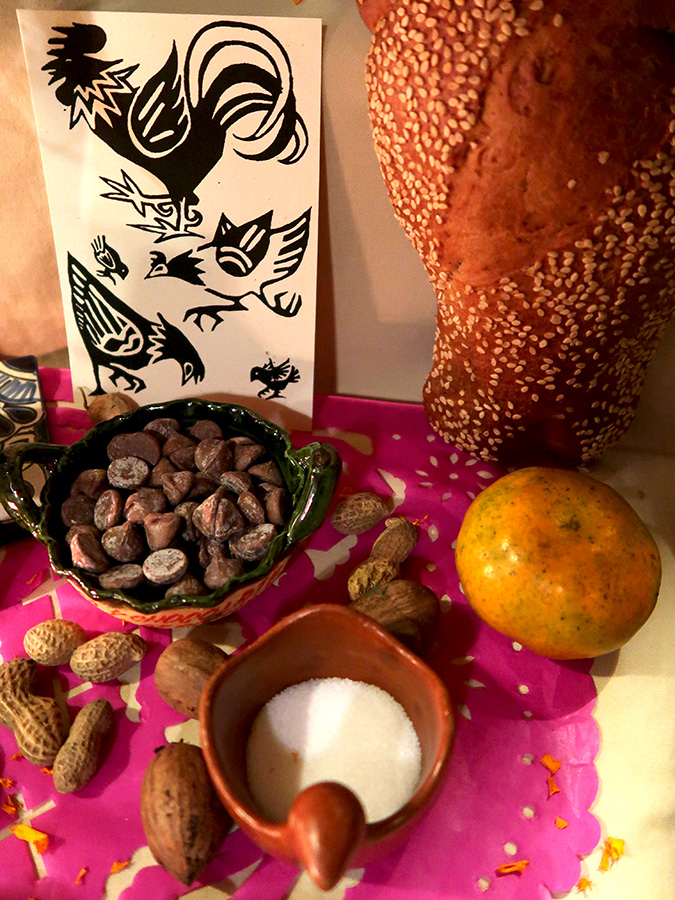
There is salt to make sure the souls stay pure and chocolate, peanuts, pecans, apples, mandarin oranges, and pan de muertos (Day of the Dead bread) to nourish them.

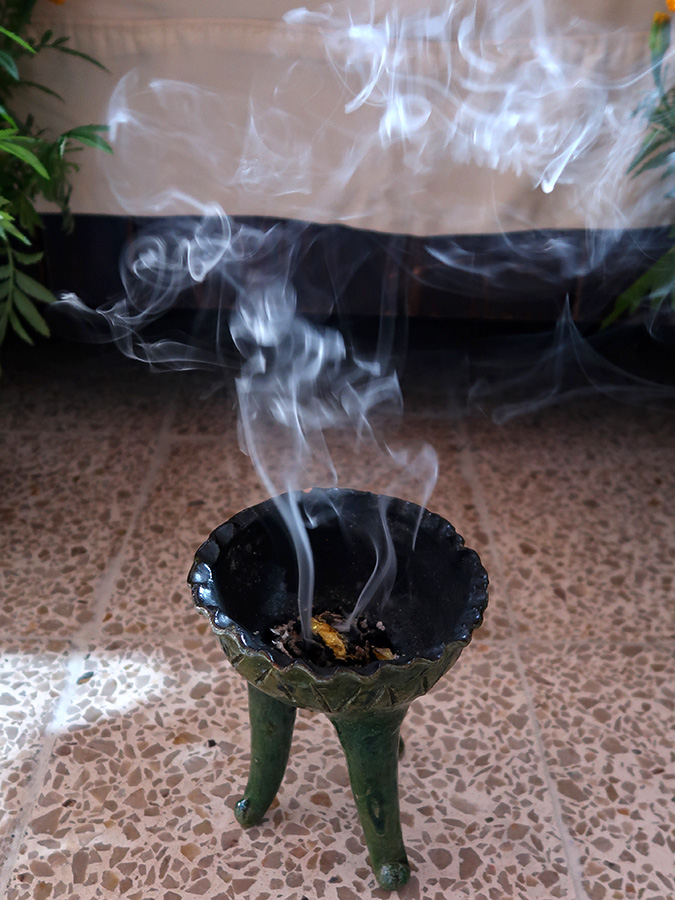
The sweet smell of copal incense and its smoke help guide my loved ones to the feast I have prepared. And, there is water to quench their thirst, as they travel between worlds, not to mention mezcal and cervesa (beer).
But, most important of all, there are the tangible remembrances of my departed — photos and some of their favorite things.
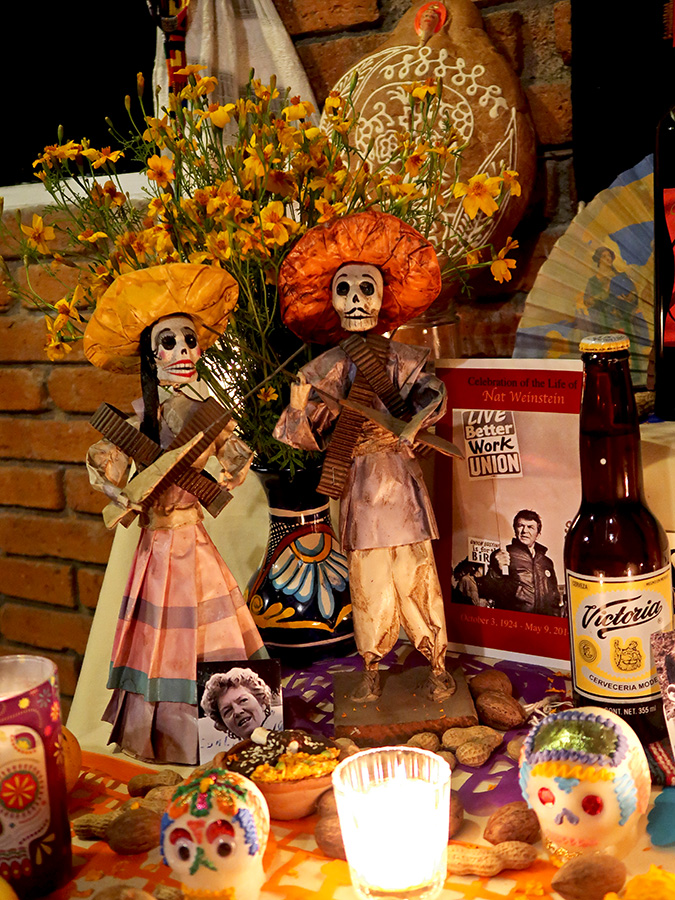
Revolutionary catrina and catrin for my revolutionary comadre and compadre, Sylvia and Nat.

Yarn and a crochet hook for my dear grandmother who many of the abuelas (grandmothers) in Oaxaca remind me of — always wearing an apron, never wearing pants, and incredibly adept with crochet and embroidery thread. And, for my adored grandfather, a San Francisco Giants baseball cap. My grandparents moved next door at the same time the Giants moved from New York to San Francisco and grandpa and I listened to many games together on his transistor radio, as I helped him in the garden.
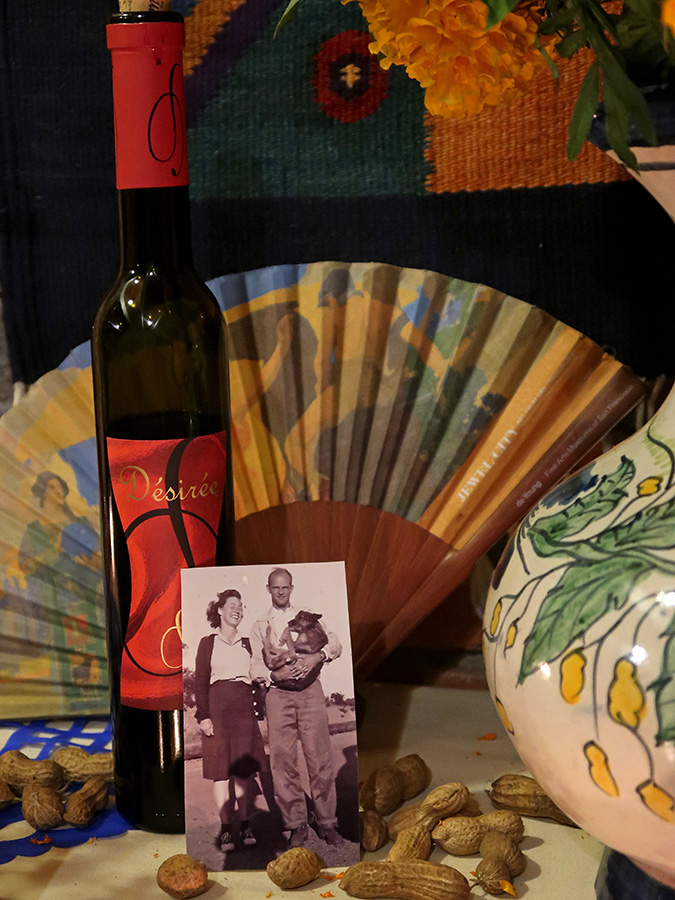
There are other cherished friends and relatives on my altar, but pride of place goes to my parents. For my father, who was killed when I was only two and a half, there is beer (below the above photo) — alas Victoria not Burgermeister! And for my mother, a fan to cool herself as she dances and a bottle of port to sip before she sleeps.

It’s been a two-day labor of love as I wanted everything to be perfect for my difutos (departed) to find their way and feel welcome in my Oaxaca home.
Posted in Celebrations, Creativity, Culture, Holidays, Travel & Tourism, tagged calacas, Catrinas, Day of the Dead, Día de los Muertos, faces, Mexico, murals, Oaxaca, photos, popular travel destinations, skeletons, skulls, street art, Villa de Zaachila, wall art on October 30, 2018| 4 Comments »
Not all the Día de los Muertos murals in Villa de Zaachila were finished, some were still works in progress…

with ladders and paints standing by…

waiting for their artists to pick up the brush…
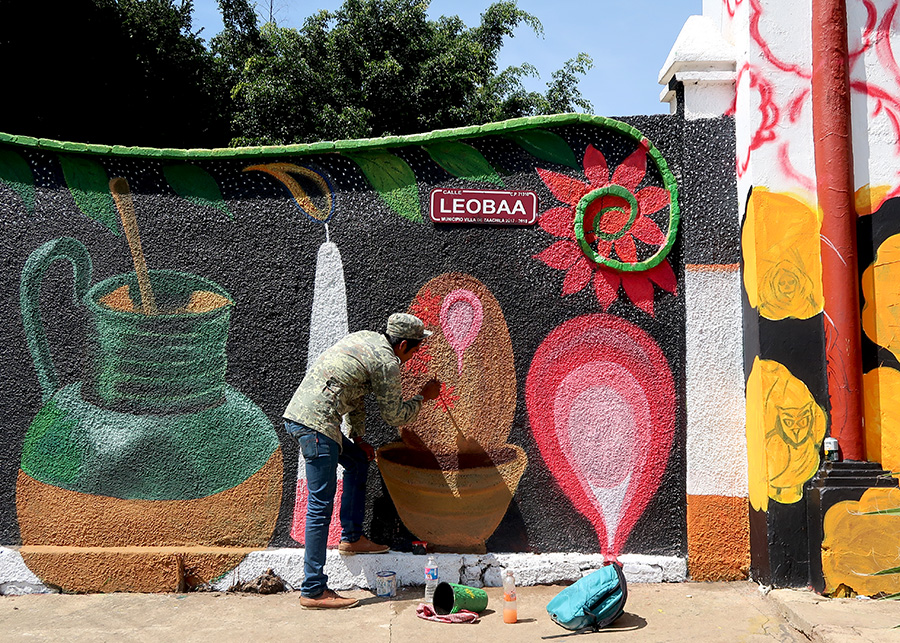
or spray can, as the case may be.

I first saw many of the murals in the summer of 2017 and was happy to see they are still intact, albeit some are a little faded. Celebrated by the community, the new murals join the old and become a part of the landscape of the village.
Posted in Celebrations, Creativity, Culture, Holidays, Travel & Tourism, tagged calacas, Day of the Dead, Día de los Muertos, Mexico, murals, Oaxaca, photos, popular travel destinations, skulls, street art, Villa de Zaachila, wall art on October 27, 2018| 2 Comments »
A regalito (little gift) to my calaca and calavera loving grandson from today’s visit to Villa de Zaachila for their first Feria del Pan de Muerto, Mole, Chocolate y Espuma.


From murals along the outer side of the panteón (cemetery) in Villa de Zaachila. Click to enlarge images.
Posted in Creativity, Culture, Travel & Tourism, tagged art, Barrio de Jalatlaco, Mexico, murals, Oaxaca, photos, popular travel destinations, Spray Kings, street art, wall art on October 25, 2018| 11 Comments »
This morning, on the way to my Oaxaca Lending Library cataloging shift (once a librarian, always a librarian), I made a detour through Jalatlaco, where the murals always give one pause.
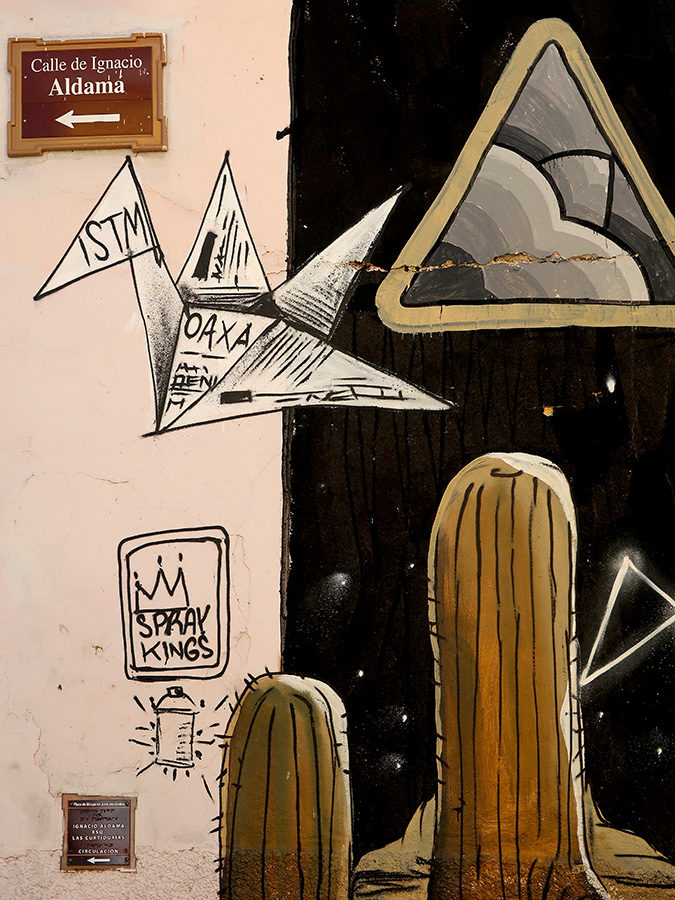
I was on my way to Clinica Hospital Florencia to check on my 92 year old neighbor who had a pacemaker installed yesterday afternoon (once a nurse, always a nurse).

Like Oaxaca, she is strong…
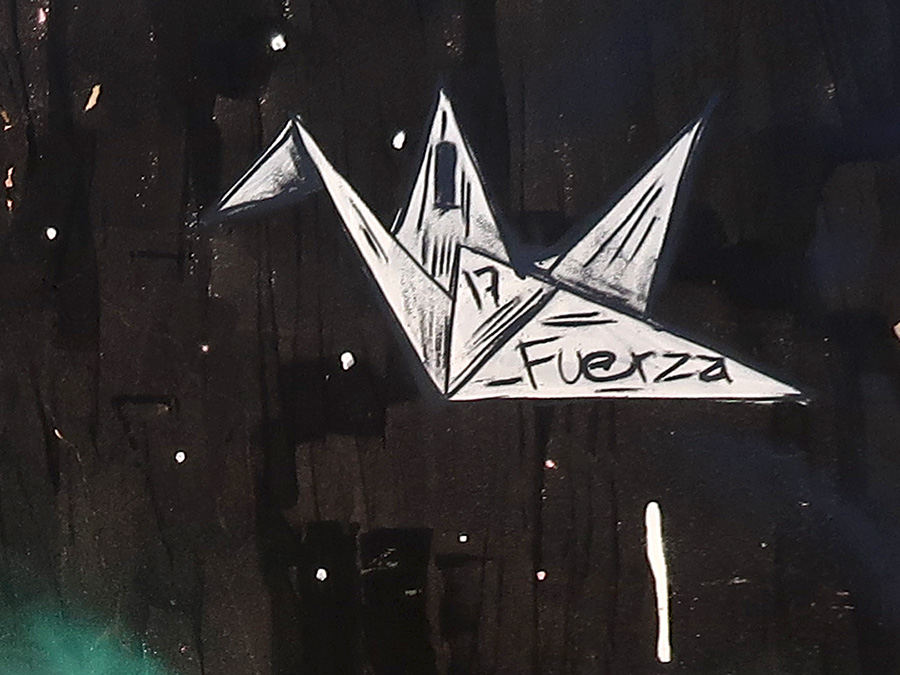
She is proud…

And, she is back home after only 24 hours and feeling GREAT!!!
Posted in Celebrations, Culture, Flora, Holidays, Travel & Tourism, tagged cempasúchil, Day of the Dead, Día de los Muertos, Día de Muertos, flowers, marigolds, Mexico, Oaxaca, photos, zócalo on October 22, 2018| 6 Comments »
Today the sun (finally) came out and hundreds (thousands?) of pots of cempasúchil (aka, cempoalxóchitl, cempaxochitl, cempoal, zempoal, flor de muertos) arrived in the city center.

This was a photo op not only for yours truly but also the local press, as they trailed after the wife of Oaxaca’s governor while she viewed the unloading…
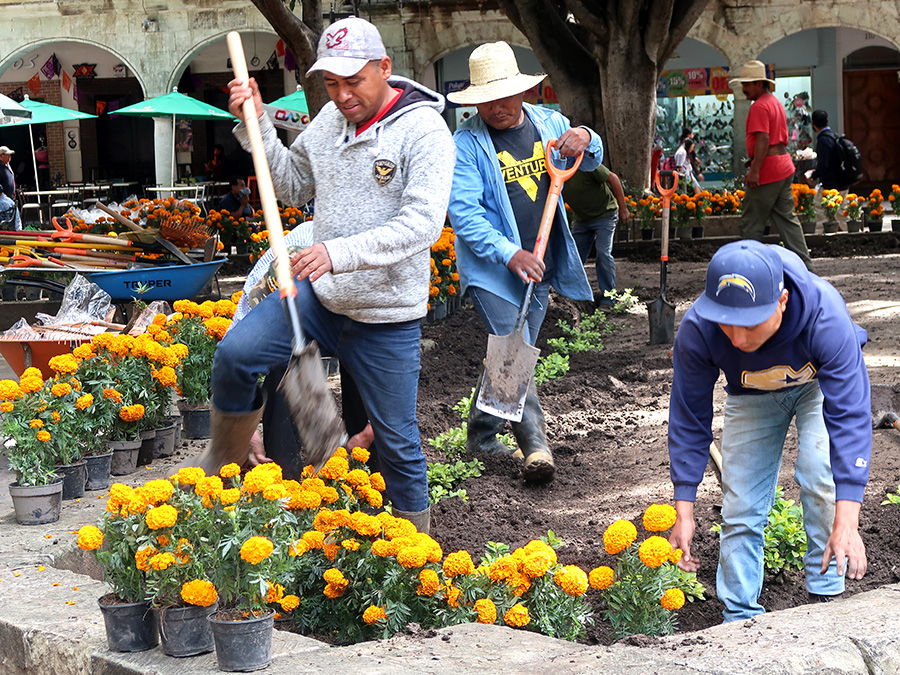
and planting of the iconic Día de los Muertos flowers in the beds of the Zócalo and Alameda.

The color and fragrance of the cempasúchil provide a lovely setting to sit and contemplate the world (and check your cell phone).

Oaxaca is putting on her best to welcome her difuntos (deceased) along with the thousands of tourists who will soon be arriving.
Posted in Agriculture, Casita Colibrí, Creativity, Flora, Gardens, Textiles, Travel & Tourism, tagged algodón, Casita Colibrí, cotton, cotton bolls, coyuche, flowers, garden, Katyi Ya'a, photos, plants, textile traditions, textiles on October 19, 2018| 10 Comments »
Not all cotton bolls are white…
Roberta French, who built my apartment complex in Oaxaca many decades ago, established a textile weaving business and planted coyuche (koyuchi), a natural brown cotton. She is no longer with us, but her plant survives and grows up onto my balcony. This time of year, the yellow, pink, and rose flowers bloom, die, form pods, and brown cotton fluff results.

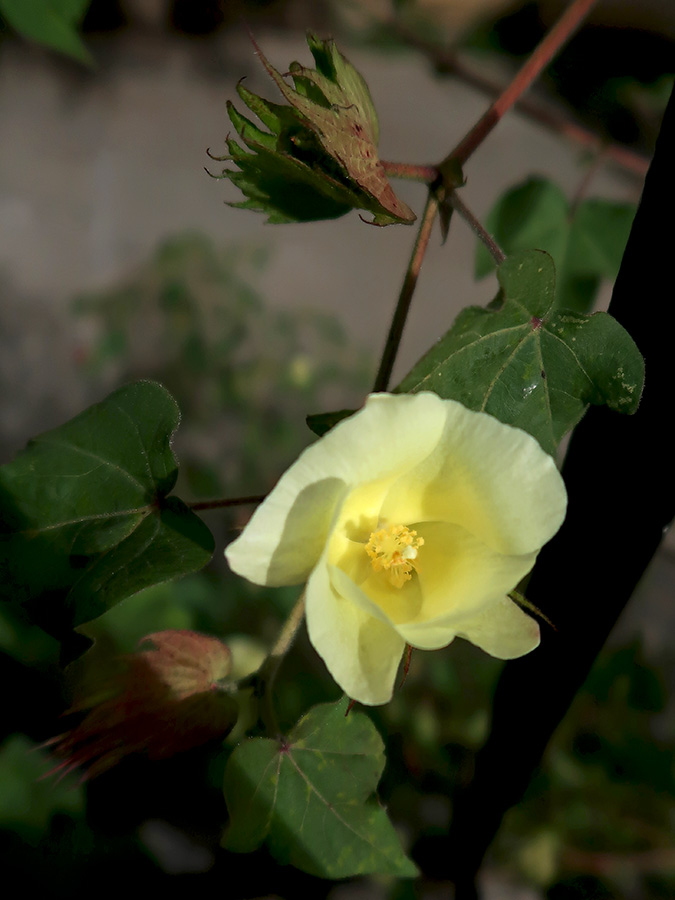


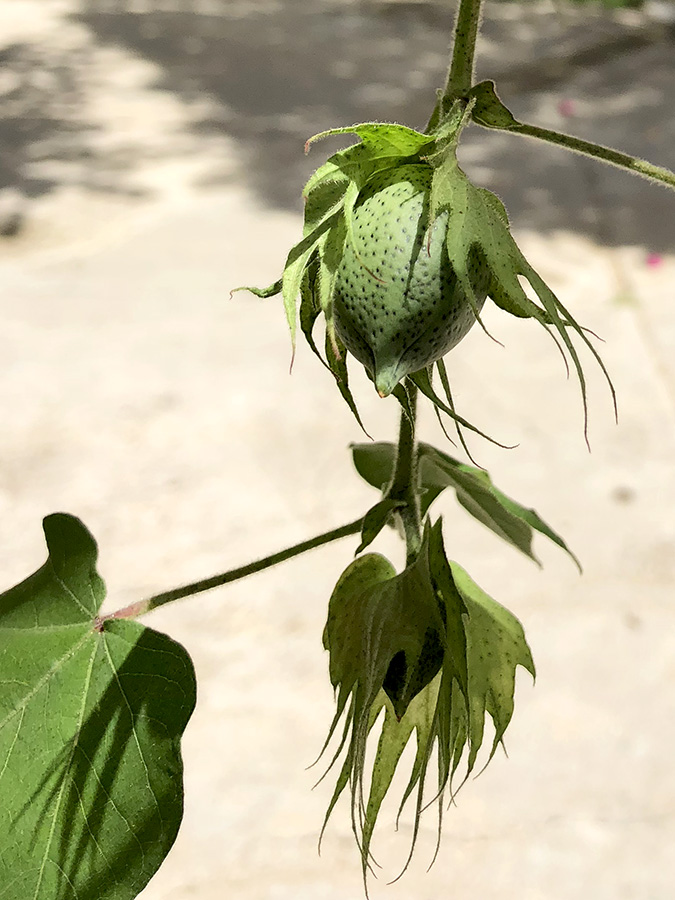

And the results? Here, at my apartment complex, the plant is solely decorative. However, the traditional way of growing, spinning, and weaving brown cotton is still practiced in some communities in coastal Oaxaca, Mexico. And, I have been lucky enough to have been gifted an old huipil woven of coyuche and acquired a new one at an expo-venta here in Oaxaca city. If you would like more information on coyuche and its cultivation and weaving, I recommend checking out the Katyi Ya’a collective.
Posted in Celebrations, Culture, People, Travel & Tourism, Weather, tagged dancers, Danza de la Pluma, danzantes, Mexico, Oaxaca, photos, popular travel destinations, rain, Teotitlán del Valle, traditions, Zapotec culture on October 10, 2018| 2 Comments »
Monday afternoon, in the middle of a fiesta at the home of Danza de la Pluma danzante Juan Pablo González Gutiérrez, a torrential downpour came to Teotitlán del Valle.

As I’ve mentioned, rain has been scarce this rainy season — a serious situation for a community that relies on subsistence farming.

So, despite the fact that the dirt road in front of the house became a muddy rushing river and festivities had to be put on hold for awhile as rain blew in through openings in the tented patio, this deluge was good news and people were smiling.

Everyone, including Juan Pablo, waited patiently for the life-giving rain to let up.

It eventually did and he was able to dance.
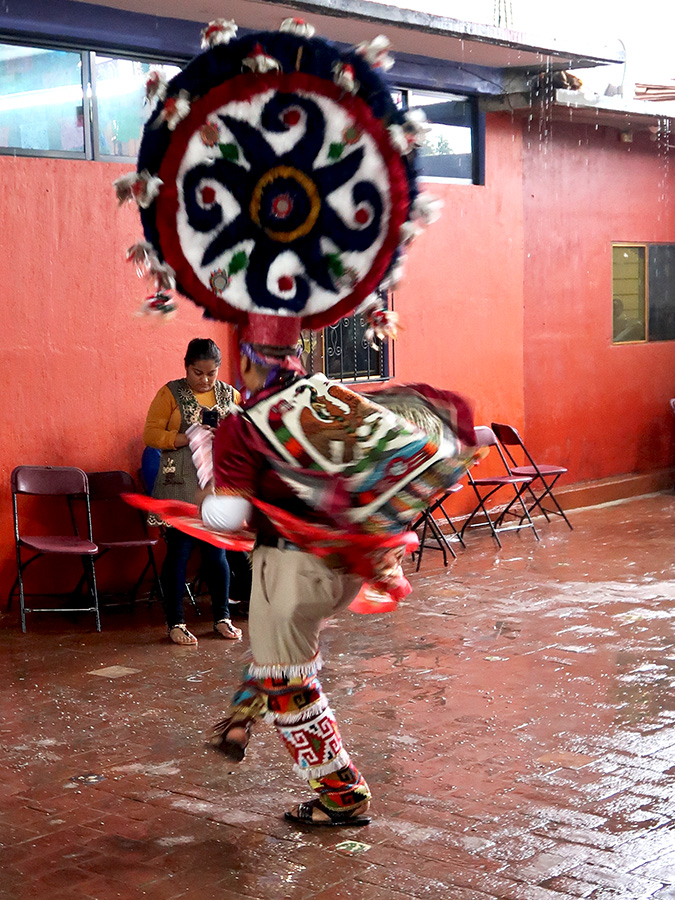
On a wet patio, surrounded by 100+ proud family members, fellow danzantes, and guests, he performed his solo dance.
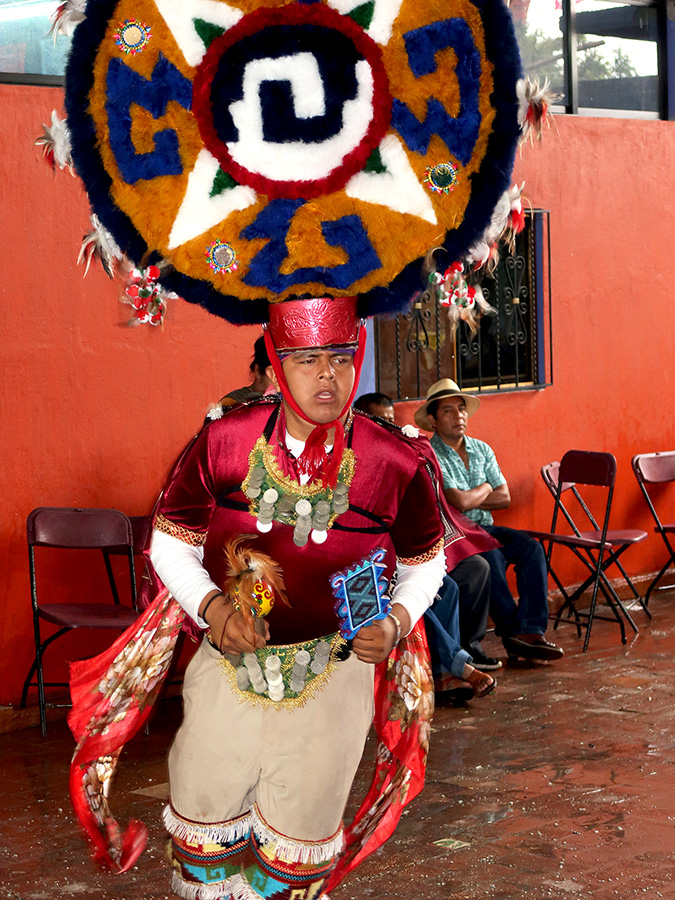
Blogger buddy Chris and I felt so incredibly honored to have been invited. It was a truly memorable experience that we will treasure always. Muchisimas gracias to Juan and his family and all the members of the Danza de la Pluma Promesa 2016-18 for being so warm and welcoming to us over the past couple of years. We are going to miss you!
Posted in Creativity, Culture, Travel & Tourism, tagged Chauiztle Stencil, Gran OM, Kloer Kloerk, Mexico, murals, Oaxaca, street art, wall art on October 6, 2018| 3 Comments »
While the caption says, “Welcome to Oaxaca,” those clenched fists raised in protest illustrate how the overwhelming majority of women in the United States feel today.

New mural at the corner of Allende and Tinoco y Palacios by Gran OM, Chauiztle Stencil, and Kloer Kloerk.
Posted in Food, People, Restaurants, Travel & Tourism, tagged Celia Florian, cocinceras, food, Las Quince Letras, Mexico, Oaxaca, photos, restaurants, Tierra Antigua, women cooks on October 1, 2018| 5 Comments »
At the risk of alienating readers who were drooling with envy over yesterday’s Chiles en nogada post, I bring you today’s lunch. This time I was dining with friends, which makes already delicious food taste even better.

Tres cocinera (3 cooks): Celia Florian, Carina Santiago, Kalisa Wells
Comida at Las Quince Letras where mis amigas Carina Santiago of restaurant and gallery Tierra Antigua in Teotitlán del Valle, Kalisa Wells (cocinera and new neighbor), and I were joined by the restaurant’s delightful owner/chef and ambassador extraordinaire of Oaxaca gastronomy, Celia Florian. (An aside: Celia and I were on the same flight from Mexico City to Oaxaca on Saturday night and I apologize to the other passengers for briefly blocking the aisle as we greeted each other with hugs.)
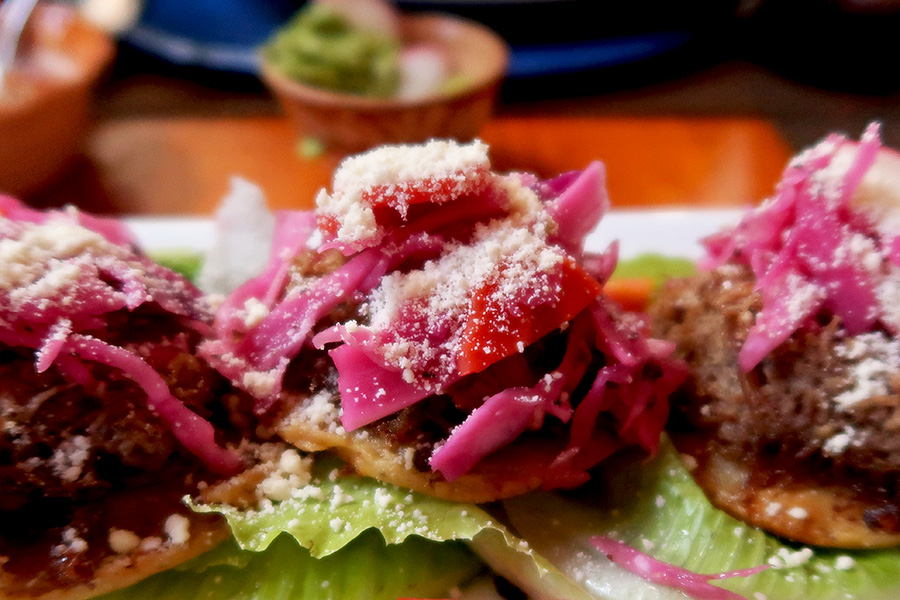
Appetizer of Garnachas Istmeña

Aguacate relleno

Chile de agua vinagreta

Dessert of warm pastel de elote
What a delicious and delightful way to spend my second day back home in Oaxaca.
Posted in Celebrations, Food, Holidays, Travel & Tourism, tagged Chiles en Nogada, El Mes de la Patria, Mexican Independence, Mexico, Oaxaca, patriotic decorations, photos, popular travel destinations, Restaurante Catedral on September 30, 2018| 3 Comments »
I returned to Oaxaca very late last night and just in the nick of time. As I previously noted, chiles en nogada is prepared during the month of September — El Mes de la Patria celebrating Mexico’s independence from Spain — and I was keeping my fingers crossed that it would still be available. Thus, today (the LAST day of September) on my way back from Mercado Benito Juárez (a necessary restocking the empty larder shopping trip), when I saw the prominent “chiles en nogada” sign in front of Restaurante Catedral and heard the hostess explain to a small group of tourists that today was the last day they would be serving it, I had to seize the opportunity.
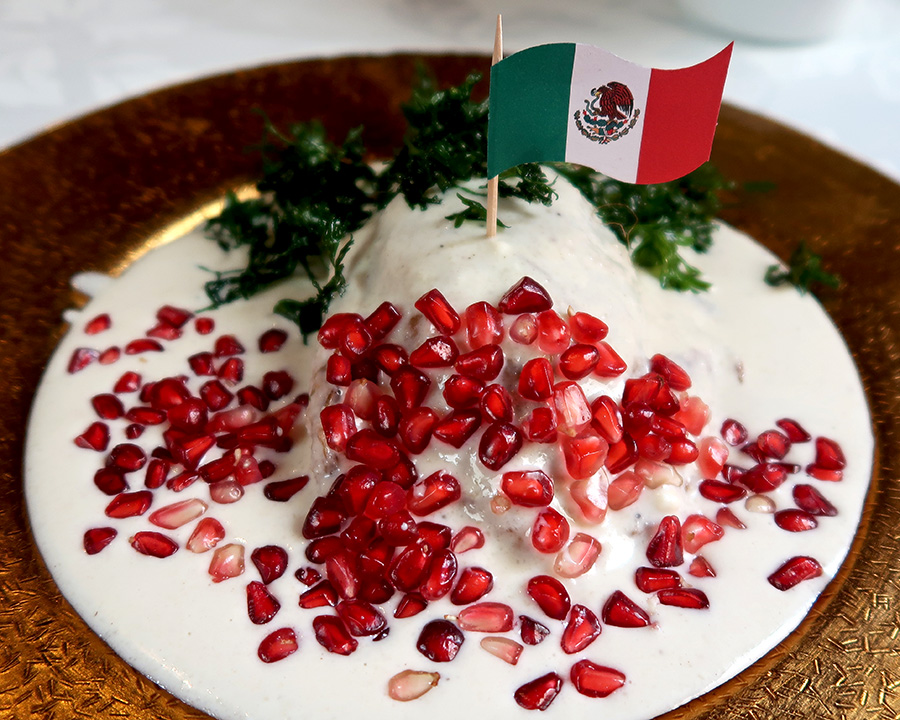
Just color me happily sated by the green, white, and red of the poblano chile stuffed with a special fruit and meat picadillo, blanketed with a smooth slightly sweet walnut sauce, and garnished with parsley and pomegranate seeds. So, mis amig@s (you know who you are) you are off the hook!
Posted in Creativity, Culture, People, Textiles, Travel & Tourism, tagged blouses, blusa, clothing, huipil, indigenous textiles, Mexico, Moisés Martínez Velasco, Natalia Toledo, Oaxaca, photos, San Pablo Tijaltepec, San Pedro Cajonos on September 25, 2018| 4 Comments »
I have returned to my hometown for my 50th high school reunion. (How could I possibly be that old?!) Whenever I come up to the USA, I make a point of bringing a little Oaxaca love with me. So, this trip I brought my three newest textile treasures to wear.
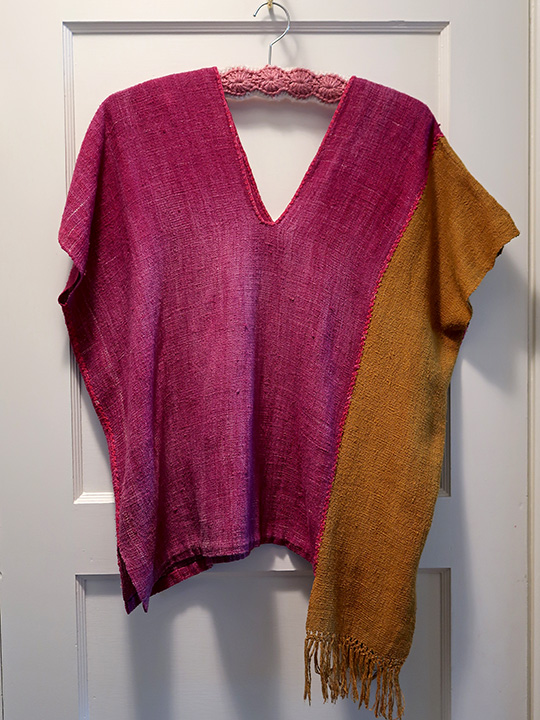
First, a modern asymmetric take on a traditional huipil — designed, dyed, and woven on a backstrap loom by Moisés Martínez Velasco from San Pedro Cajonos in the Villa Alta region of the Sierra Norte. Villagers cultivate and harvest the silk worms and spin the silk used in making this beautiful piece.
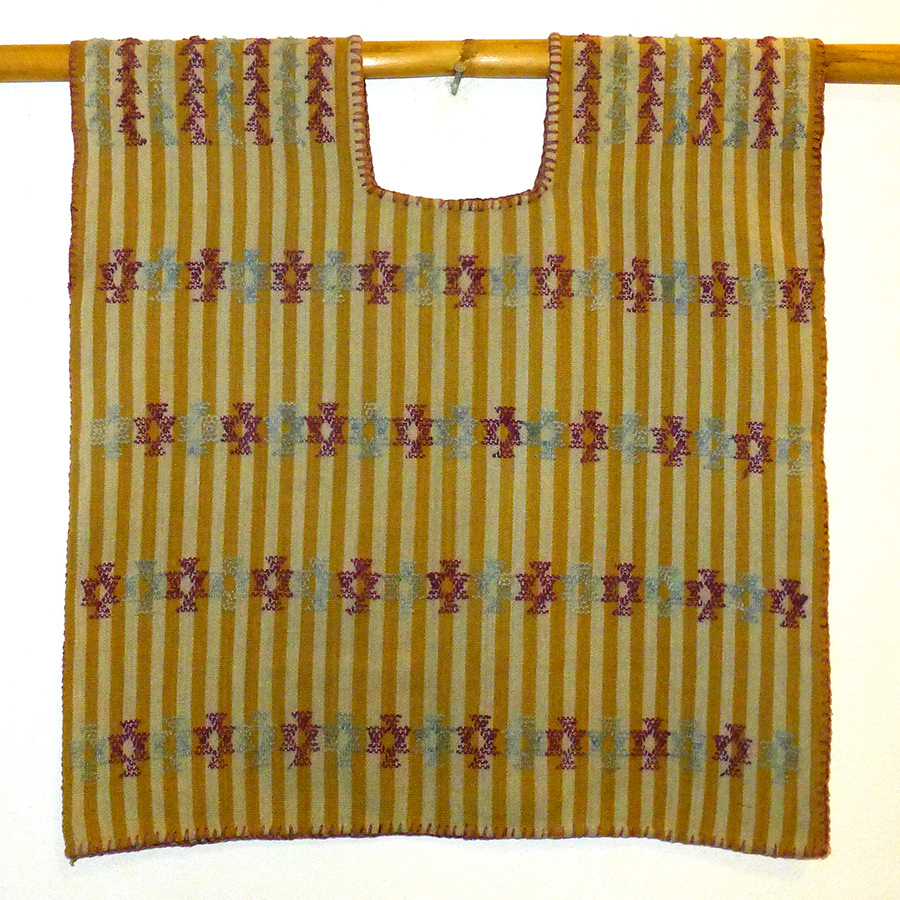
I also packed a recently purchased traditional blusa from the Mixtec village of San Pablo Tijaltepec. The blouses from this village are made from cotton manta and hand-embroidered with images of birds, animals, plants, and elements of nature in geometric patterns. The blouses take up to one and a half months to make. I wore it to the reunion picnic on Sunday and it received several compliments.

And, last but not least, I brought this elegant silk huipil with cotton chain-stitch hand embroidery designed by celebrated poet, Natalia Toledo. Honoring the traditional huipiles of her birthplace in Juchitán de Zaragoza in the Isthmus of Tehuantepec region of Oaxaca, yet bringing her own design esthetic to her label Teka, this woman of many talents works with seamstresses and embroiderers from the Isthmus and Central Valleys of Oaxaca to create one-of-a-kind pieces. I wore this to Saturday night’s reunion at the base of the Golden Gate Bridge beside the San Francisco Bay — and it was perfect!
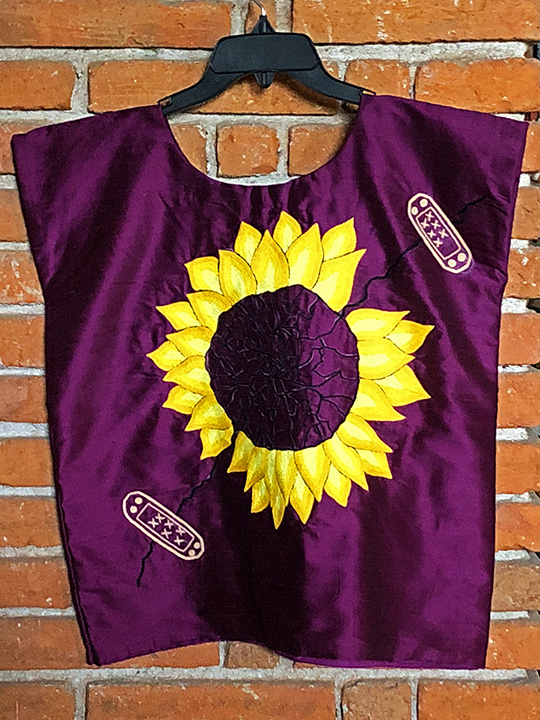
Besides the designs, colors (lately, I seem to be binging on burgundy), and handmade aspect of the work, I especially appreciate that I was able to meet and purchase each piece directly from its creator.


 Mexican Peso Converter
 View From Casita Colibrí