Feeds:
Posts
Comments

Archive for the ‘Creativity’ Category

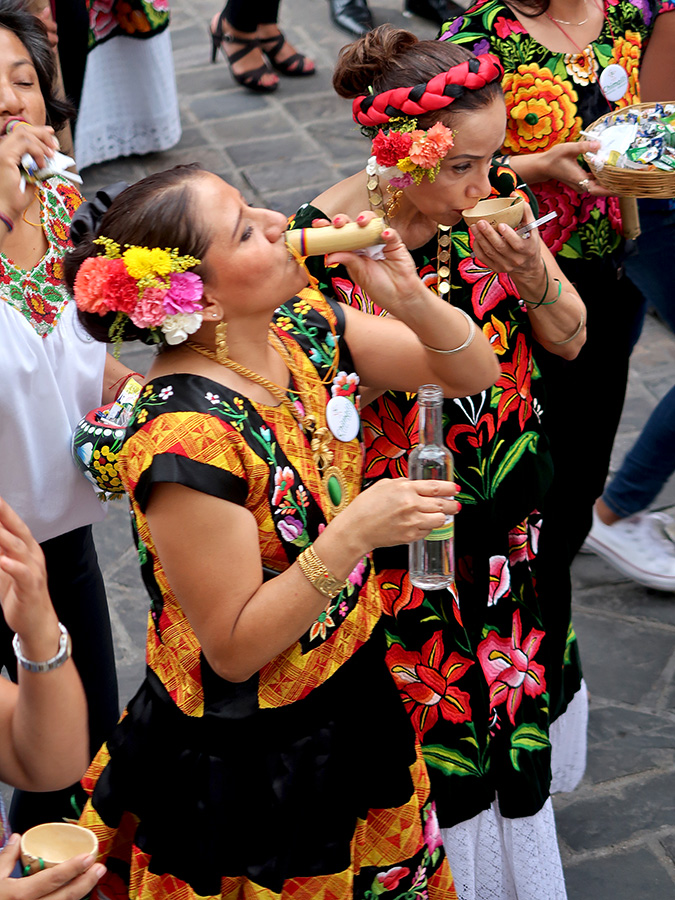
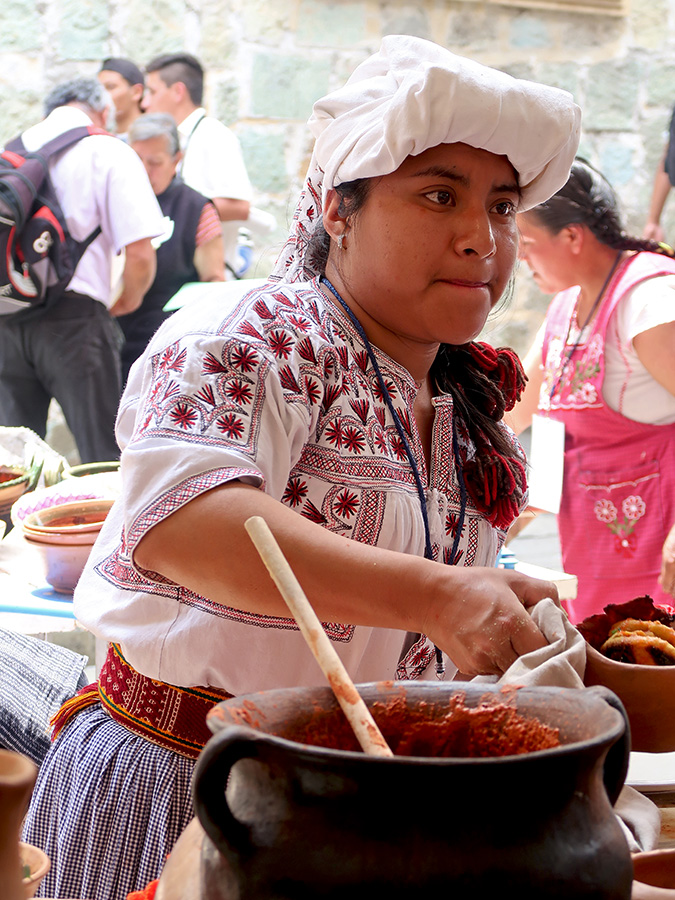
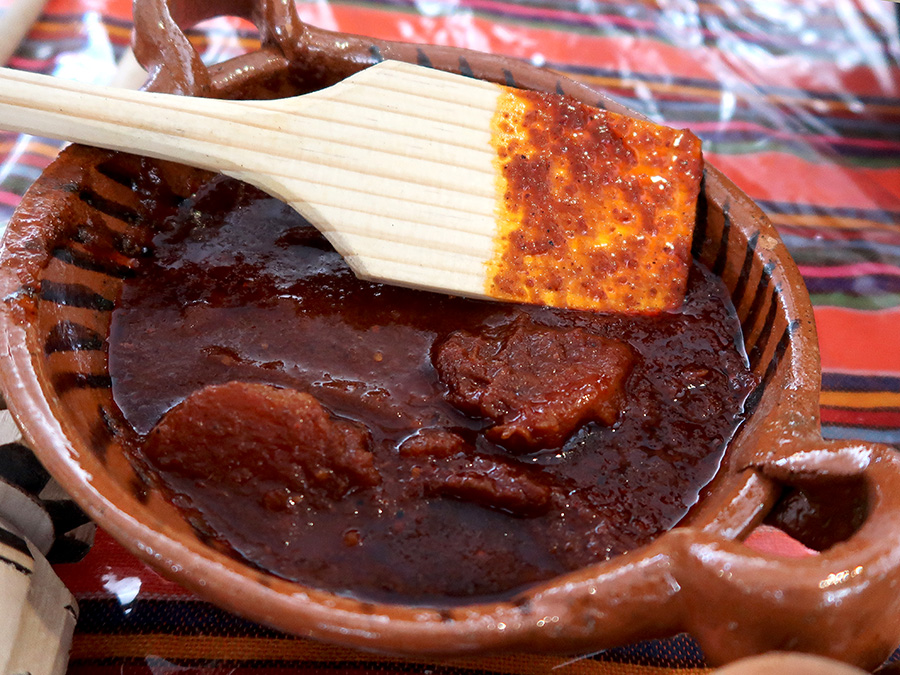
I couldn’t resist posting more from the Encuentro de Cocineras Tradicionales de Oaxaca 2018 to tempt you to put next year’s gathering of traditional Oaxacan cooks on your calendar.

Amazing traditional cooks from the state of Oaxaca served up taste tempting fare in the Plaza de la Danza for four full, and I mean FULL days, April 25-28.

And, should one be inspired to immediately head to one’s own kitchen, the Mercado Oaxaca set up in the courtyard of the Facultad de Bellas Artes (across from the Plaza de la Danza) offered mouth-watering fresh fruits and vegetables, herbs, dried chiles, honeys, vinegars, and so much more.  I came away with a luscious cantaloupe.

In addition, to assist one in the preparation and serving of one’s own delicious meals, Arte de la Mesa presented vendors, next door in the courtyard of the Palacio Municipal, selling “made in Oaxaca” glassware, utensils, pottery, placemats, tablecloths, and dish towels, aprons, metates and molcajetes, among other kitchenware.

Do you see the piggy-face molcajete?  I bought it and have spent hours and hours, not to mention muscle power, seasoning it.  If you don’t believe me, use your favorite search engine to check out the various methods — there are no shortcuts!

Read Full Post »

Even if it looks like the world is crumbling around you…

IMG_7371

On Reforma, at the corner of Constitucion in Oaxaca — courtesy of The Positive Affect project.

Read Full Post »

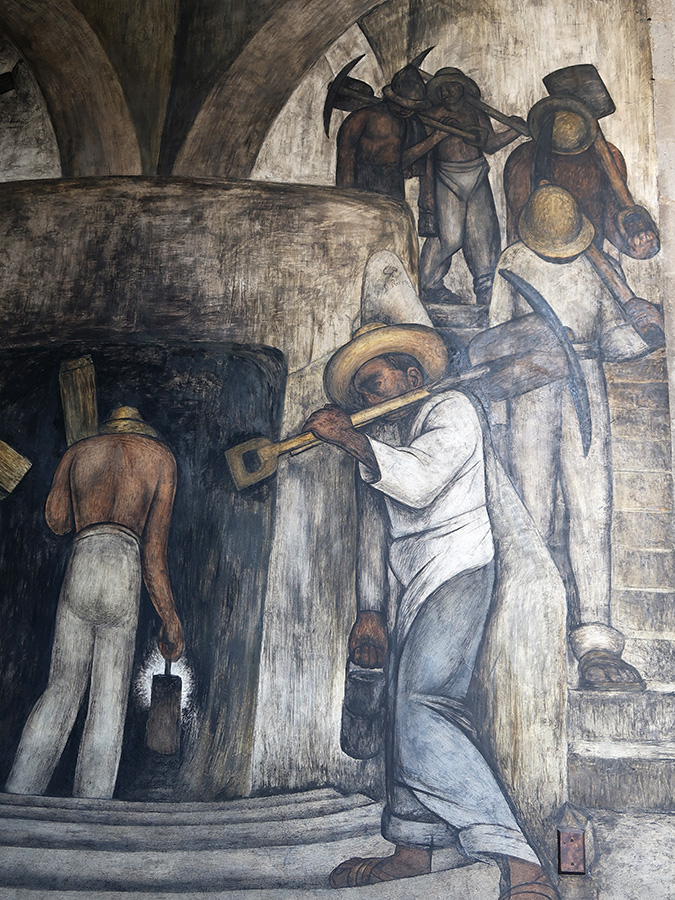
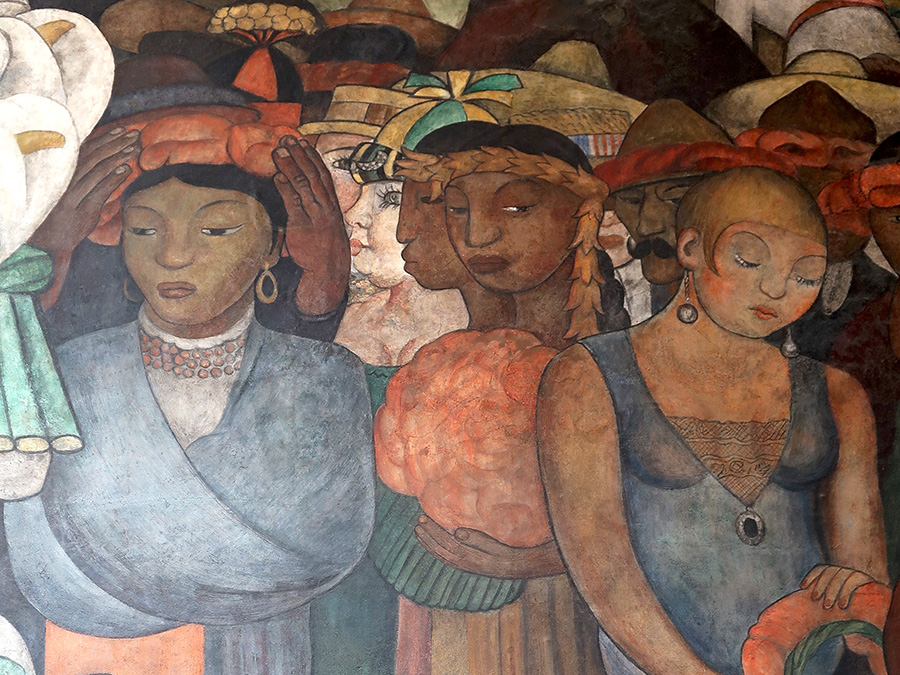
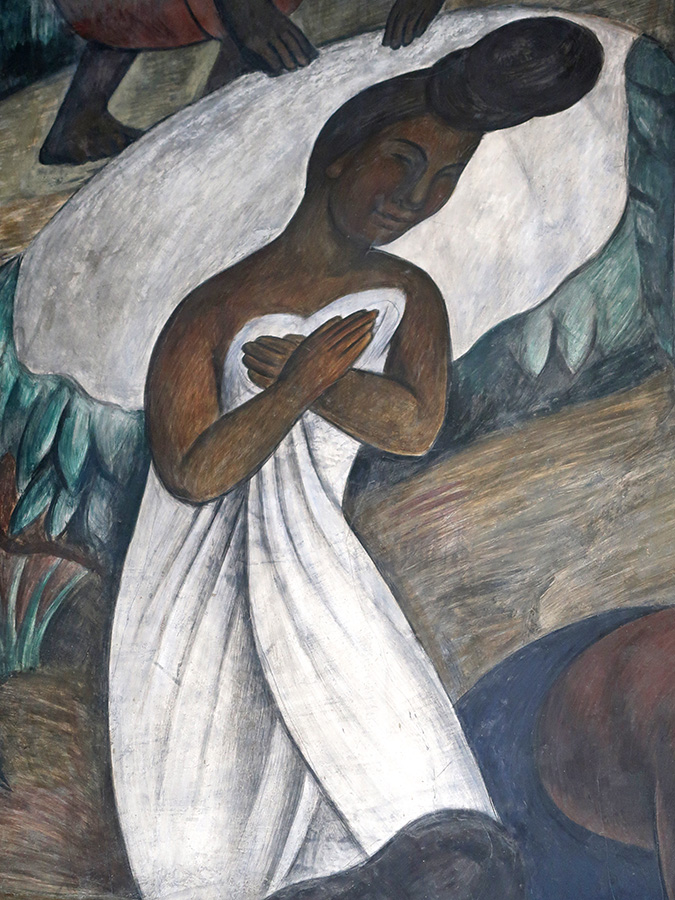
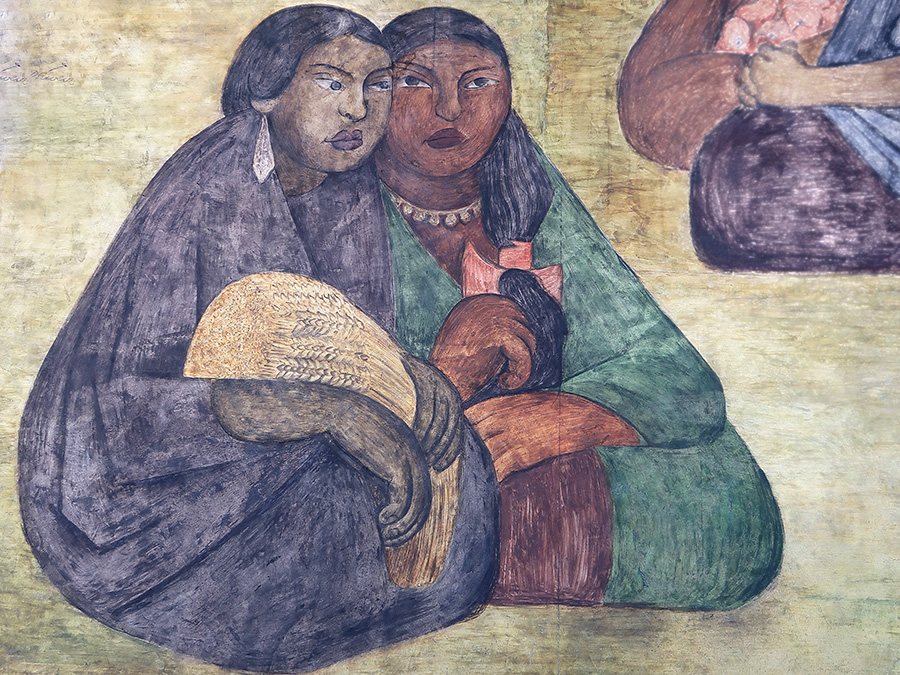
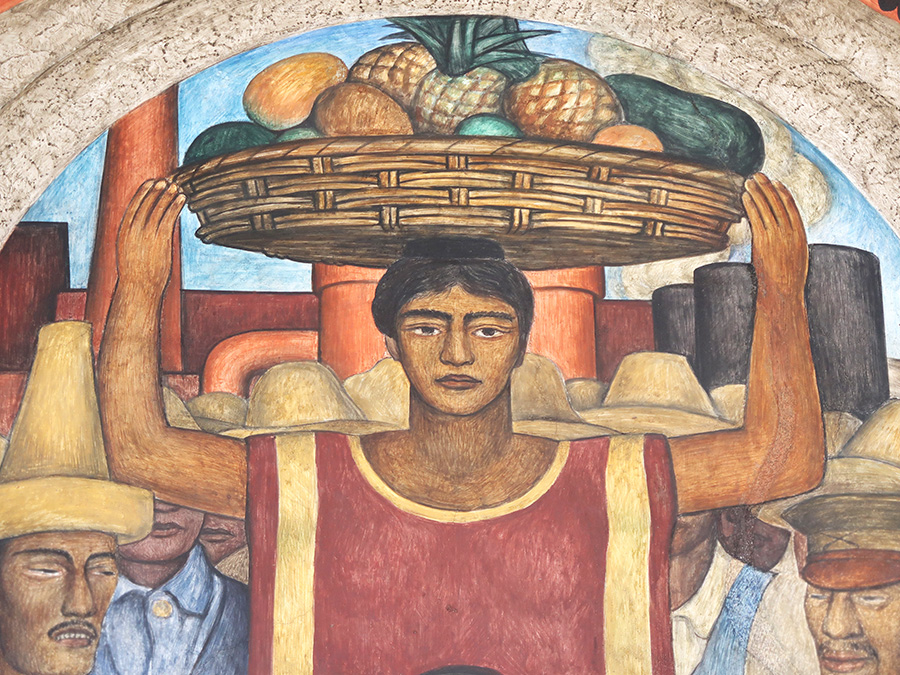
Today is International Workers’ Day, also known as May Day, and in cities and towns all over the world (except the USA, but that’s another story), workers and the dignity of the work they do is being celebrated.  It’s a federal holiday in Mexico and as I write, I can hear loudspeakers from the various marches taking place in Oaxaca city.  Given that non-citizens are forbidden by the Mexican Constitution from participating in political activity, I’m staying home.  However, to honor the workers of the world, I’m looking back to my visit to the Secretaría de Educación Pública (Secretariat of Public Education) building in Mexico City and the murals of Diego Rivera.

IMG_5480

IMG_5503

IMG_5548

IMG_5512

IMG_5490

IMG_5479

…Let the winds lift your banners from far lands
With a message of strife and of hope:
Raise the Maypole aloft with its garlands
That gathers your cause in its scope….

…Stand fast, then, Oh Workers, your ground,
Together pull, strong and united:
Link your hands like a chain the world round,
If you will that your hopes be requited.

When the World’s Workers, sisters and brothers,
Shall build, in the new coming years,
A lair house of life—not for others,
For the earth and its fulness is theirs.

 Walter Crane, The Workers’ Maypole, 1894

¡Feliz Día del Trabajo a tod@s!  Happy International Workers’ Day to all!

Read Full Post »

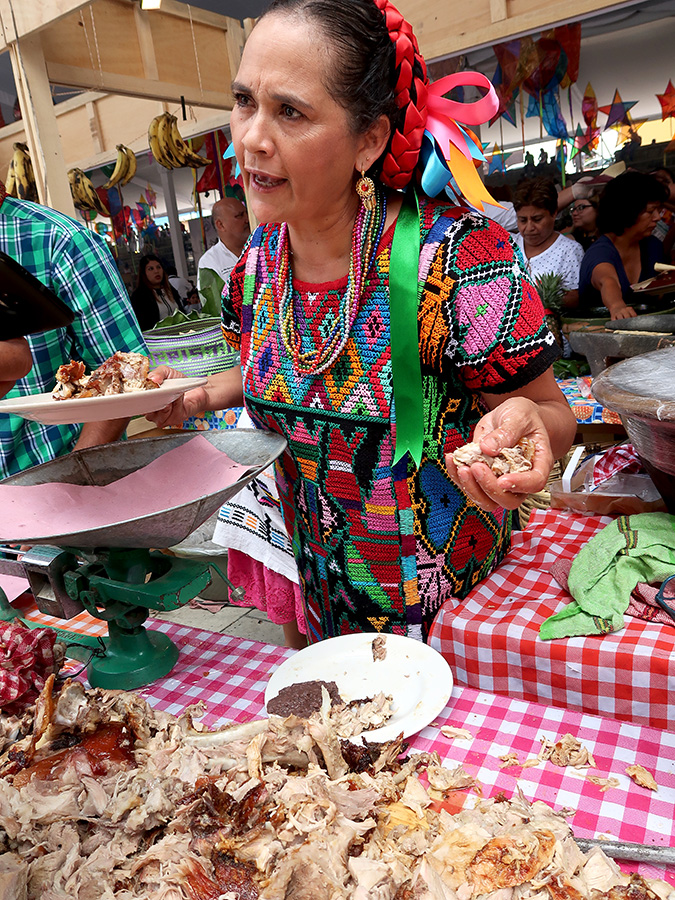
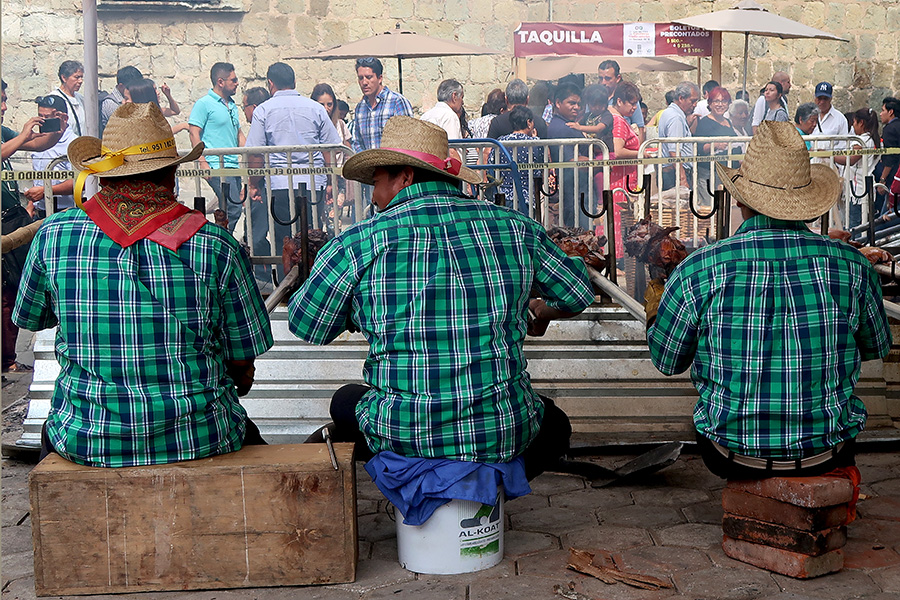
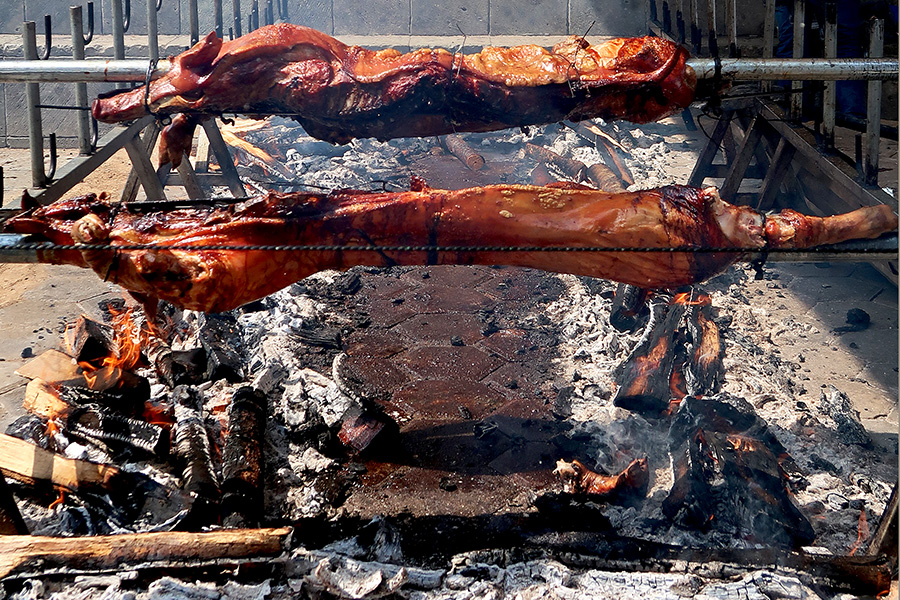
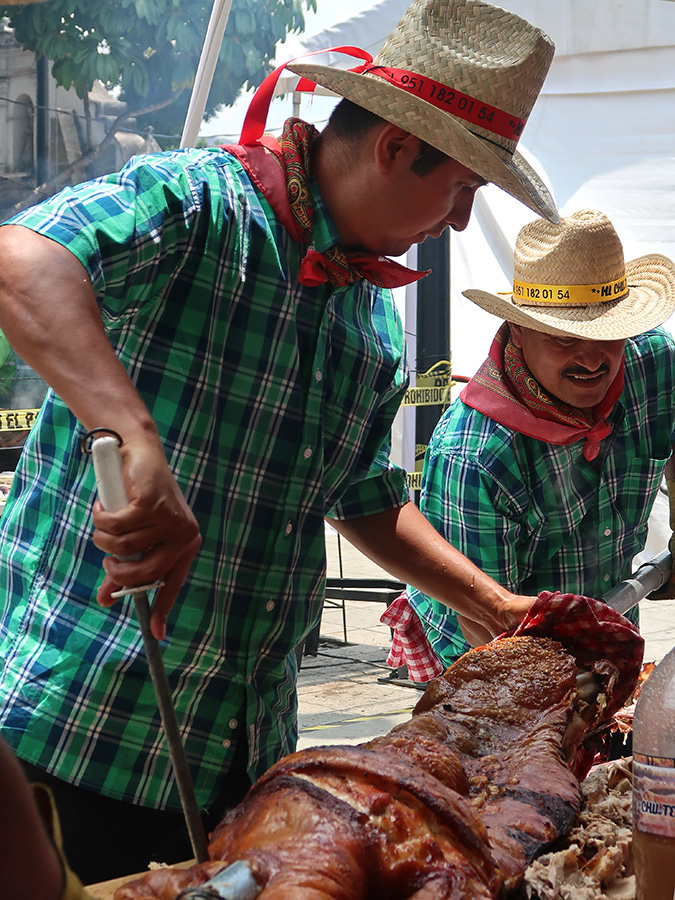
Though today is the fourth and final day of this year’s Encuentro de Cocineras Tradicionales de Oaxaca 2018, diners continue to line up around the stall of Rosario Cruz Cobos for her Cochino a la Cubana — piggies roasted over a wood fire — fiesta food from San José Chiltepec in the Papaloapan region of Oaxaca.

IMG_7252

IMG_7222

IMG_7318 (1)

IMG_7224

IMG_7248

IMG_7239 (1) crop

IMG_7250

Mouth-watering and succulent, it is well worth the wait!

Read Full Post »

What can I say?  Lately, I have been having way too much fun to blog.  A Gran Convite on Tuesday evening kicked off the festivities celebrating Oaxaca’s 486 birthday and inviting one and all to the previously mentioned, 2nd Encuentro de Cocineras Tradicionales de Oaxaca opening the following day.  Beginning at the Cruz de la Piedra, the parade came to a sparkling climax in front of the Cathedral.

IMG_7026_crop

IMG_7057

IMG_7092

IMG_7105

IMG_7210

Wednesday began with an early morning ringing of the Cathedral’s bells (and several other churches, I’m pretty sure) and the booms and bangs of cohetes announcing Oaxaca’s official birthday.  Then the event that I had been hungrily awaiting — the opening of the four-day gathering of Oaxaca’s traditional cooks at the Plaza de la Danza.  It was worth the wait!

IMG_7234

Mixtec ritual of Aromas y Sabores del Alma using basil and rosemary to open Encuentro de Cocineras Tradicionales de Oaxaca.

IMG_7253

Machacado mixe, Caldo mixe from Santa María Tlahuitoltepec in the Sierra Norte.

IMG_7230

Chileajo amarillo from Huayuapan de León in the Mixteca.

IMG_7251

Ingredients on display by Carina Santiago of Tierra Antigua restaurant in Teotitlán del Valle, in Oaxaca’s Valles Centrales.

IMG_7243

Cochino a la cubana from the Papaloapan region of Oaxaca being served by cocinera Rosario Cruz Cobos.

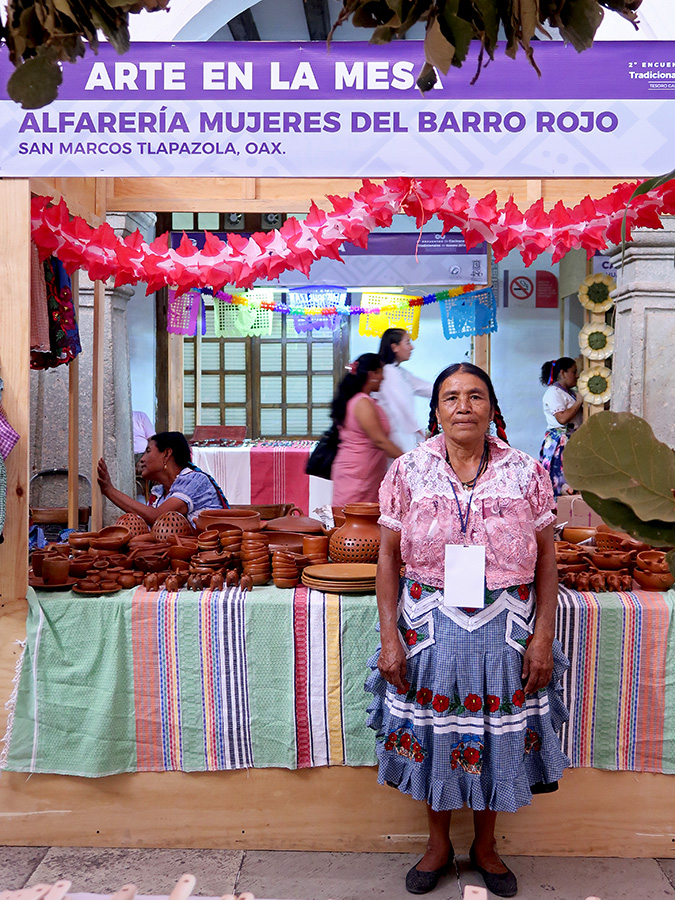
There is also an expo-venta of Oaxacan artesanía at the Palacio Municipal adjacent to the Plaza de la Danza.

IMG_7259

Some of the best red clay pottery from San Marcos Tlapazola for sale.

I took yesterday off to do my volunteer gig at the Oaxaca Lending Library, but I’m returning to the Encuentro today, right after I post this.  My stomach is already rumbling!

Read Full Post »

It’s been all about boys in my family — two sons, a stepson, and a grandson.  That is, until eleven months ago when finally a girl — my granddaughter — made her much welcomed entrance into the world.  Of course she is adorable, but so were her brother, dad, and uncles.  However, I must admit that clothes shopping for a little girl is so much more fun, especially here in Oaxaca.

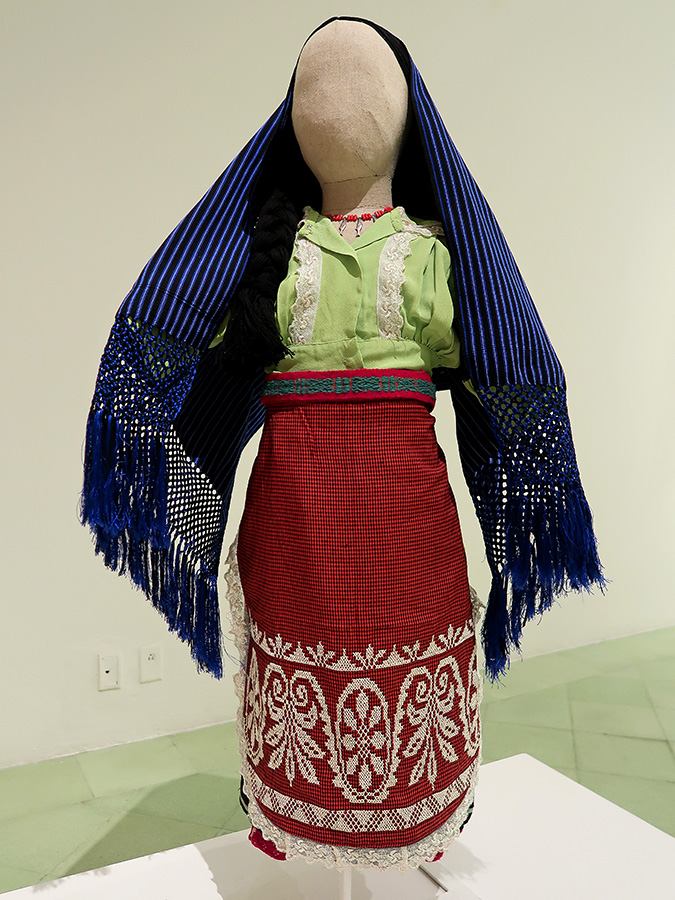
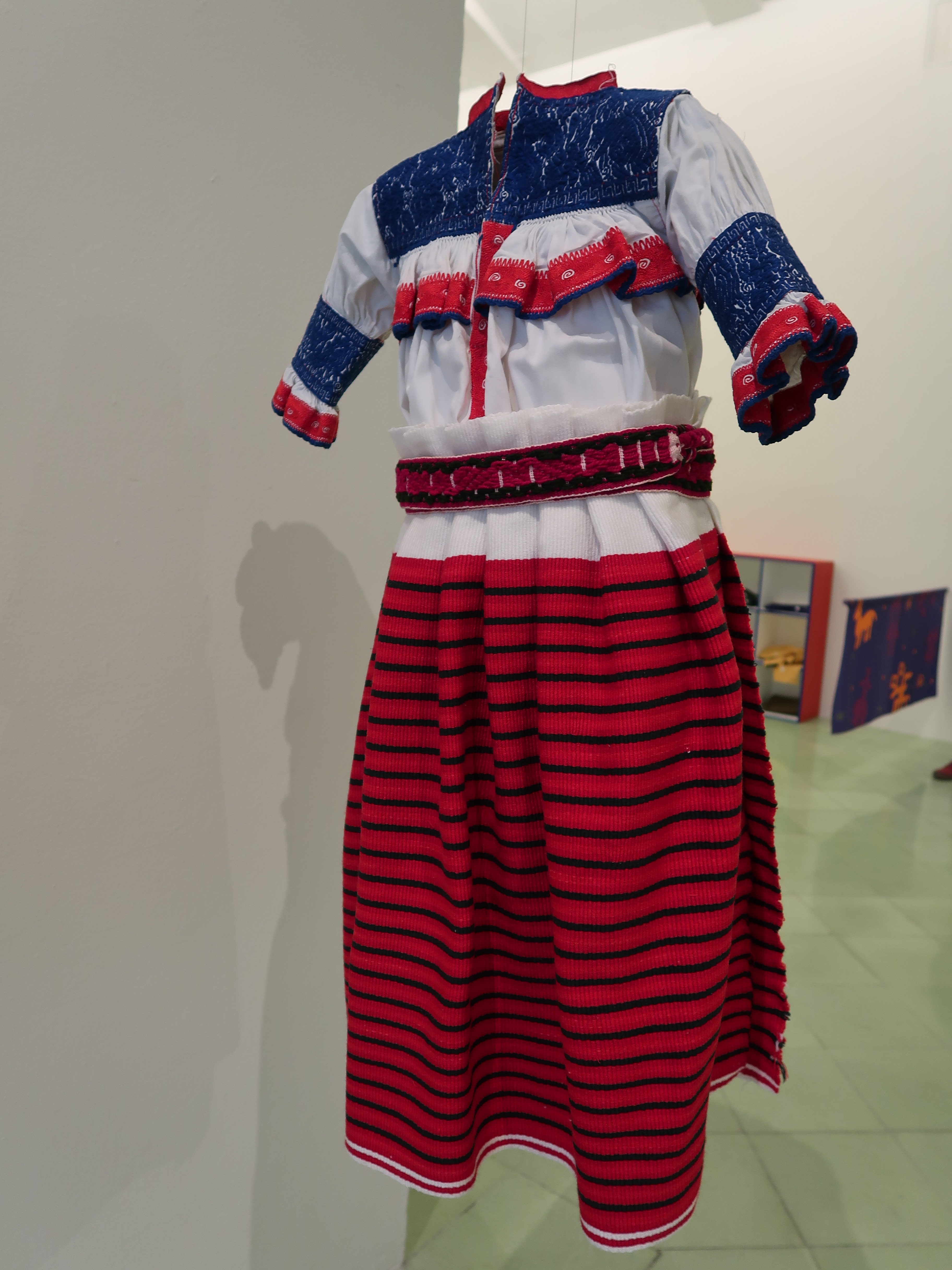
Naturally, I had to go to the current Museo Textil de Oaxaca exhibition, Vestir hijos con amor (Dressing children with love) — very timely for the upcoming Día del Niño on April 30

Cotton baby hat – probably Santiago Mexquititlán, Querétaro, Mexico (c. 1960) Otomí village.

Woven baby hat – San Lucas Tolimán, Guatemala (c. 1990s) Tz’utuoil community.

The curator’s note explains that the textiles shown “are not the sumptuous accoutrements of an ancient aristocracy, but children’s clothing of the poorest people in Mexico and Guatemala… made of cotton and wool.”
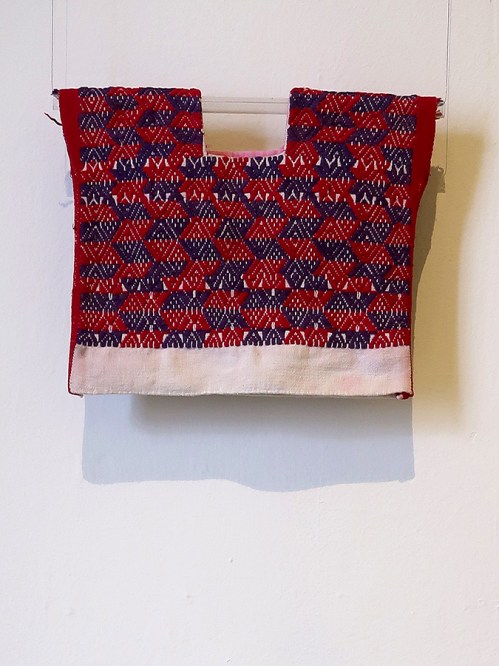
Girl’s huipil from Palín, Guatemala (c. 1980s). Community speaks Pokomam, a Mayan language.
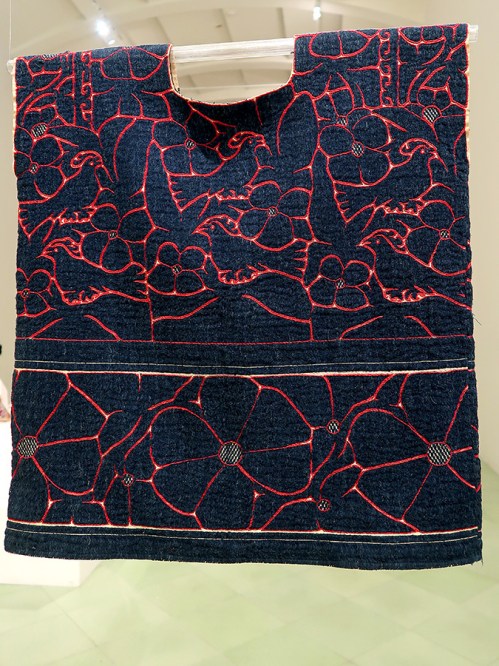
Girl’s huipil from San Bartolomé Ayautla, Oaxaca, Mexico. (c. 1950s) Mazateco community.

“In setting up this exhibit, we have tried to show how textiles intended for children make visible the love felt for them by the first nations of this land.”

Girl’s clothing from Pátzcuaro, Michoacán, Mexico. (c. 1940s) Purépecha village.
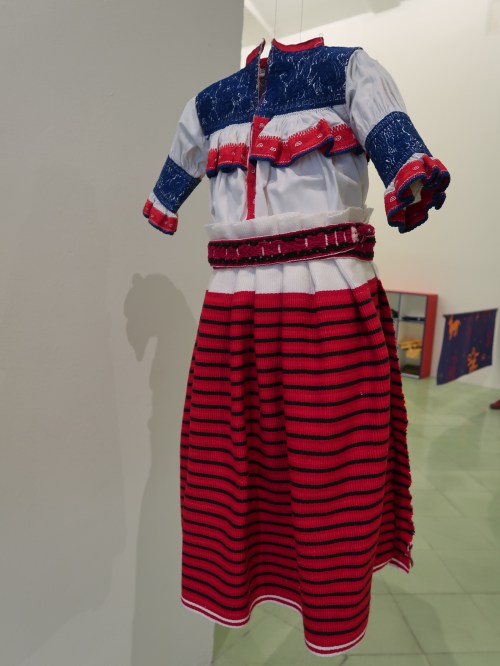
Costume of baptism – Chachahuantla, Puebla, Mexico (1999-2017) Community speaks Náhuatl.

Venustiano Carranza, Chiapas, Mexico (c. 1950s). Tsotsil village.

Huipil of black velvet with cotton embroidery from districts of Juchitán and Tehuantepec, Oaxaca, Mexico. (c. 1950-1960) Zapotec communities.
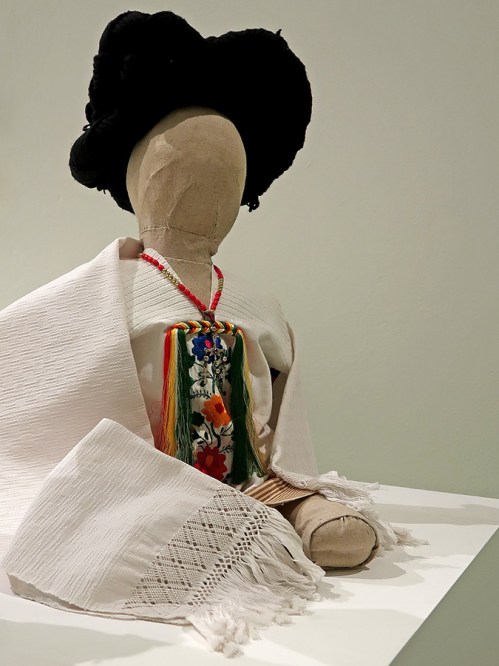
Villa Hidalgo Yalálag, Oaxaca, Mexico (c. 1990). Zapotec village.

Villa Hidalgo Yalálag, Oaxaca, Mexico (c. 1990). Zapotec village. Embroidery detail using rayon threads.

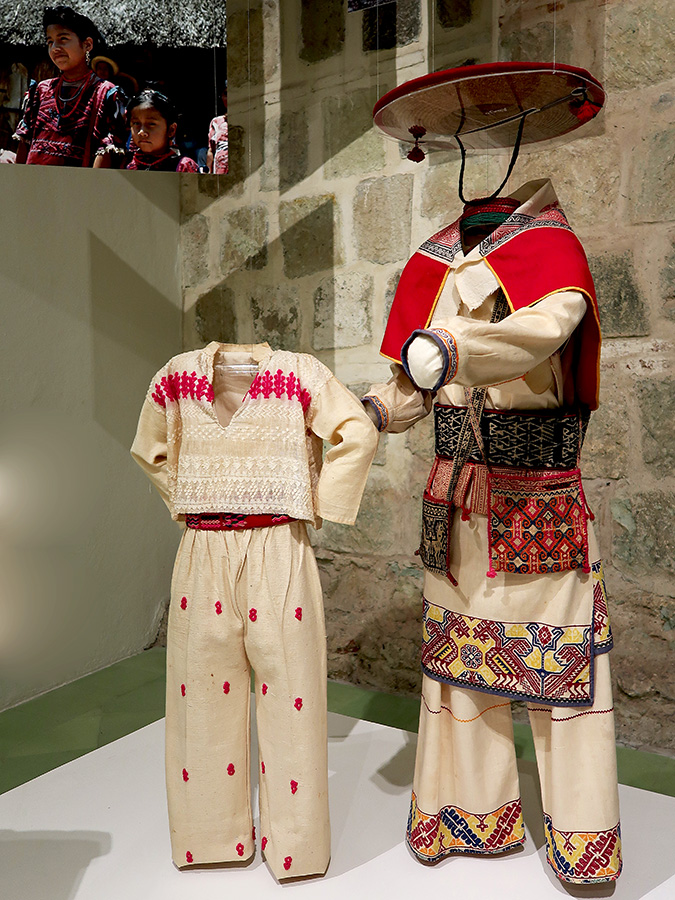
It isn’t just the girls who are dressed with love in these indigenous communities.  The clothing of the boys is also just as lovingly detailed and decorated.

Boy’s clothing from San Andrés Tzicuilan, Puebla, Mexico. (c. 1988-1993) Community speaks Náhuatl.
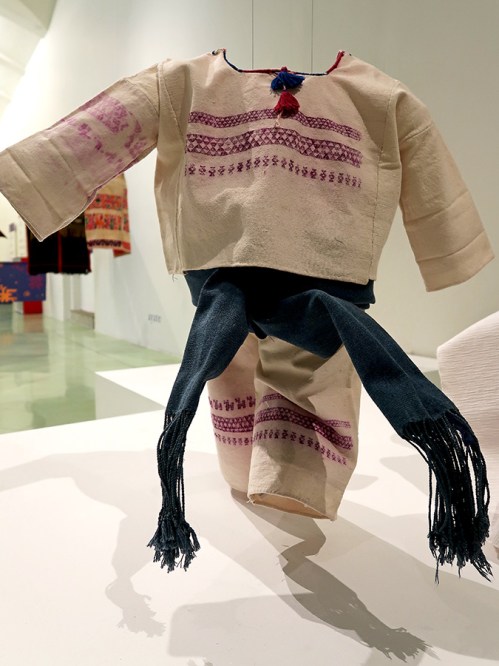
Boy’s clothing from Santiago Ixtayutla, Oaxaca, Mexico. (c. 1990s) Mixtec village.

(R) Boy’s clothing from Venustiano Carranza, Chiapas, Mexico. (c. 1950s). Tsotsil village. (L) Teen boy’s clothing from Sierra Madre Occidental to the north of Jalisco and east of Nayarit. (c. 1930s) Wixárika (Huichol) community.
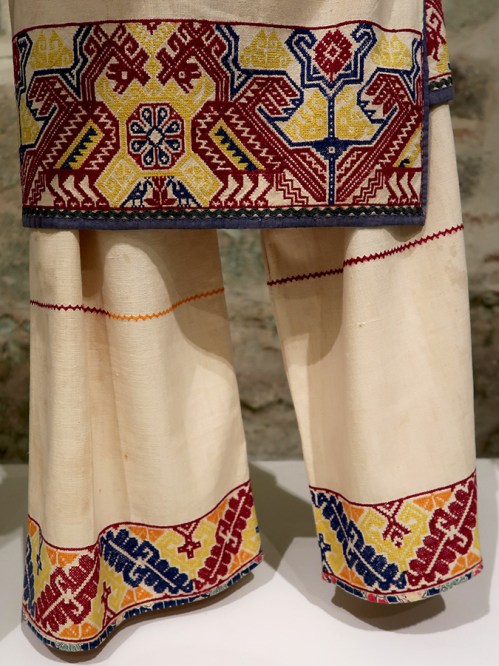
Detail from teen boy’s clothing from Sierra Madre Occidental to the north of Jalisco and east of Nayarit. (c. 1930s) Wixárika (Huichol) community.

There are so many more pieces to see and there is even an interactive component for children — a play area where they can assemble and decorate textile pieces.  The Museo Textil de Oaxaca is located at Hidalgo 917, at the corner of Fiallo and the exhibition, in the Caracol room, runs until July 1, 2018.

Read Full Post »

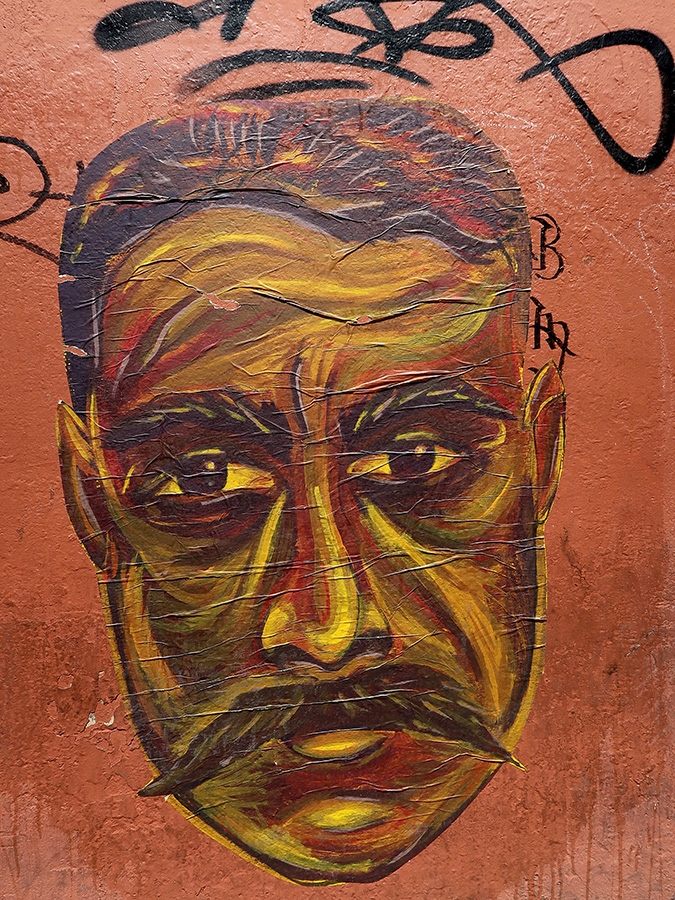
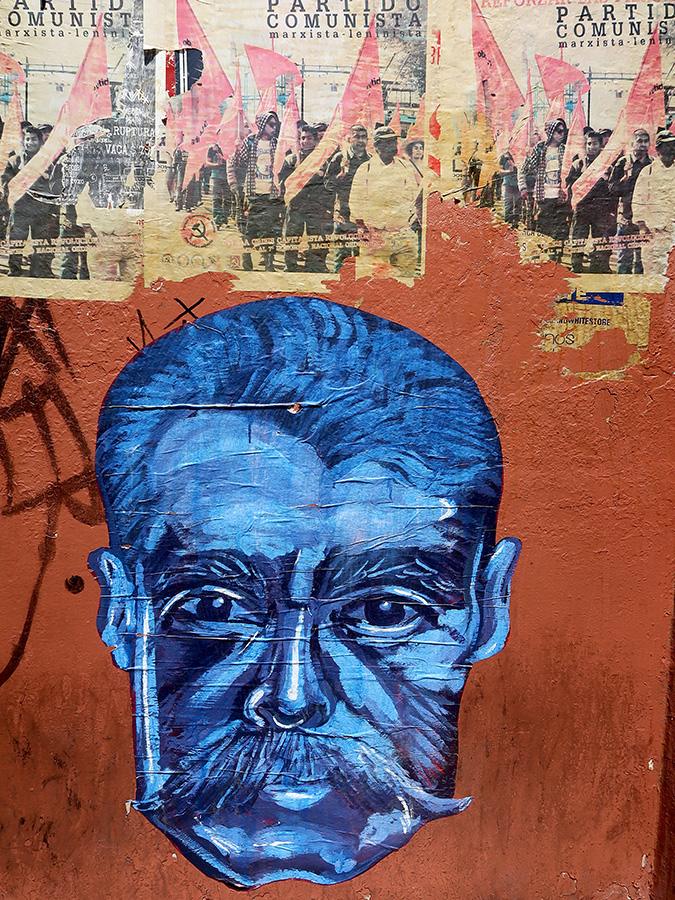
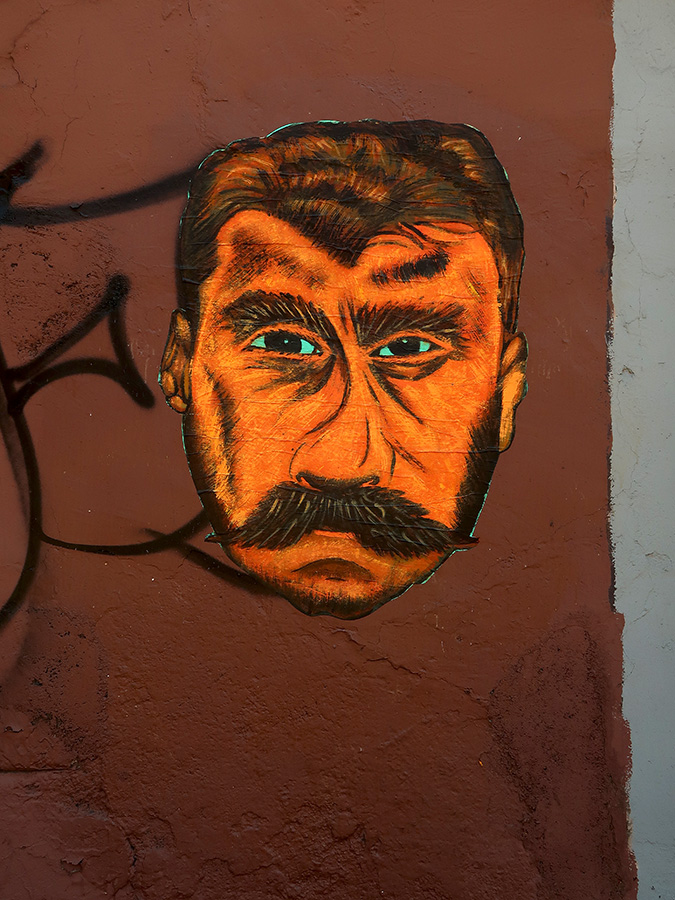
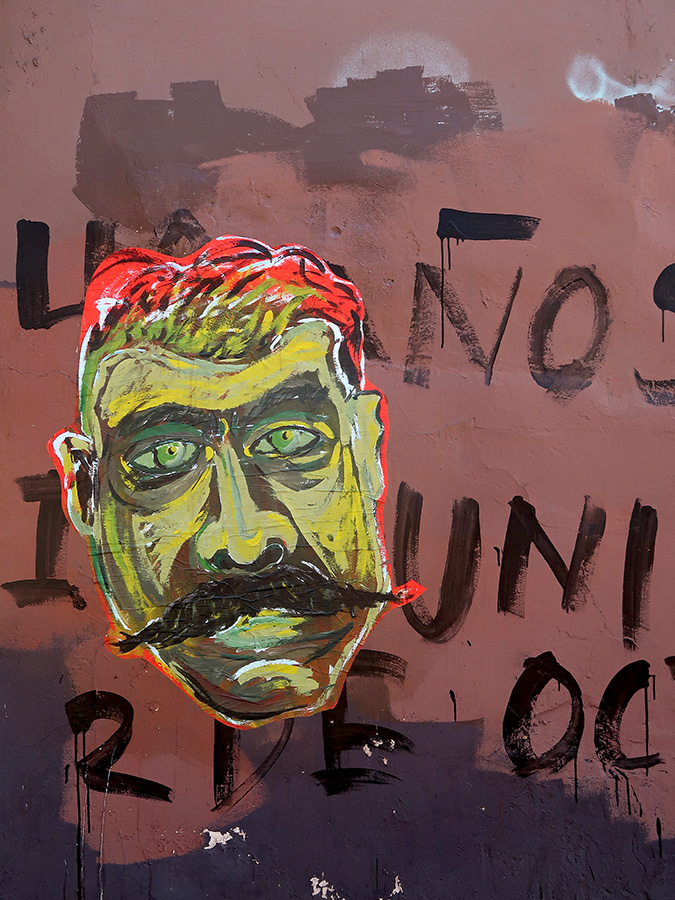
From boys to men, there are fierce faces watching from the walls in my neighborhood.

IMG_6779

IMG_6781

IMG_6778

IMG_6780

IMG_6785

IMG_6786

IMG_6783

Color from La Unión Revolucionaria de Trabajadores del Arte (URTARTE).

Read Full Post »

Faces at Manuel Sabino Crespo and Mariano Matamoros…

IMG_6751

Man in a green hat – Crespo at Matamoros

IMG_6750

Man in a red hat – Matamoros at Crespo

The art of standing on the corner in Oaxaca.

Read Full Post »

… and danger!

IMG_6067

Doorways propped up with 2x4s, yellow caution tape, and continuing aftershocks — this is one of the many buildings in Oaxaca that has me walking on the opposite, even if sunny, side of the street.

Read Full Post »

On Calle de Ignacio Allende at the corner of Tinoco y Palacios, a new mural is ready to take you on a magic carpet ride.

IMG_5909

Well, you don’t know what we can find
Why don’t you come with me little girl
On a magic carpet ride
You don’t know what we can see
Why don’t you tell your dreams to me
Fantasy will set you free
Close your eyes girl
Look inside girl
Let the sound take you away

Magic Carpet Ride, written by Normal Cook, Robert Manuel Clivilles, and David Bryon Cole; performed by Steppenwolf.


Hopefully, this mural won’t be slapped with “pintura no autorizada” signs like its predecessor.

Read Full Post »

I was recently in Mexico City, where I spent hours at the Secretaría de Educación Pública (Secretariat of Public Education) building marveling at the three floors of murals by Diego Rivera.  And so, in honor of International Women’s Day, some of the women in the murals…

IMG_5550_copy

IMG_5484

IMG_5542

IMG_5477

IMG_5499

IMG_5508_copy

IMG_5545

IMG_5500

IMG_5547

IMG_5555

IMG_5498

Happy International Women’s Day to the women of the world!  May your strength, creativity, intelligence, and love prevail.

Read Full Post »
Congratulations to Coco — winner of the 2018 Academy Award for Original Song, “Remember Me” (“Recuérdame”), and winner for best Animated Feature Film.  Most of all, felicidades to all the bisabuelas (great-grandmothers) and abuelitas (grandmothers) who inspired the character of Coco with their strength, pride, and love.

IMG_4989

Carnaval 2018, San Martín Tilcajete, Oaxaca

And, bravo to Guillermo del Toro (Best Director) and The Shape of Water (Best Movie) — ¡Viva México!

Read Full Post »
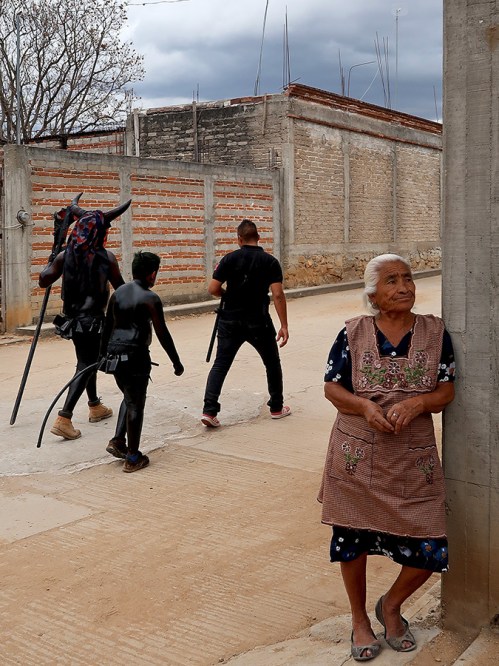
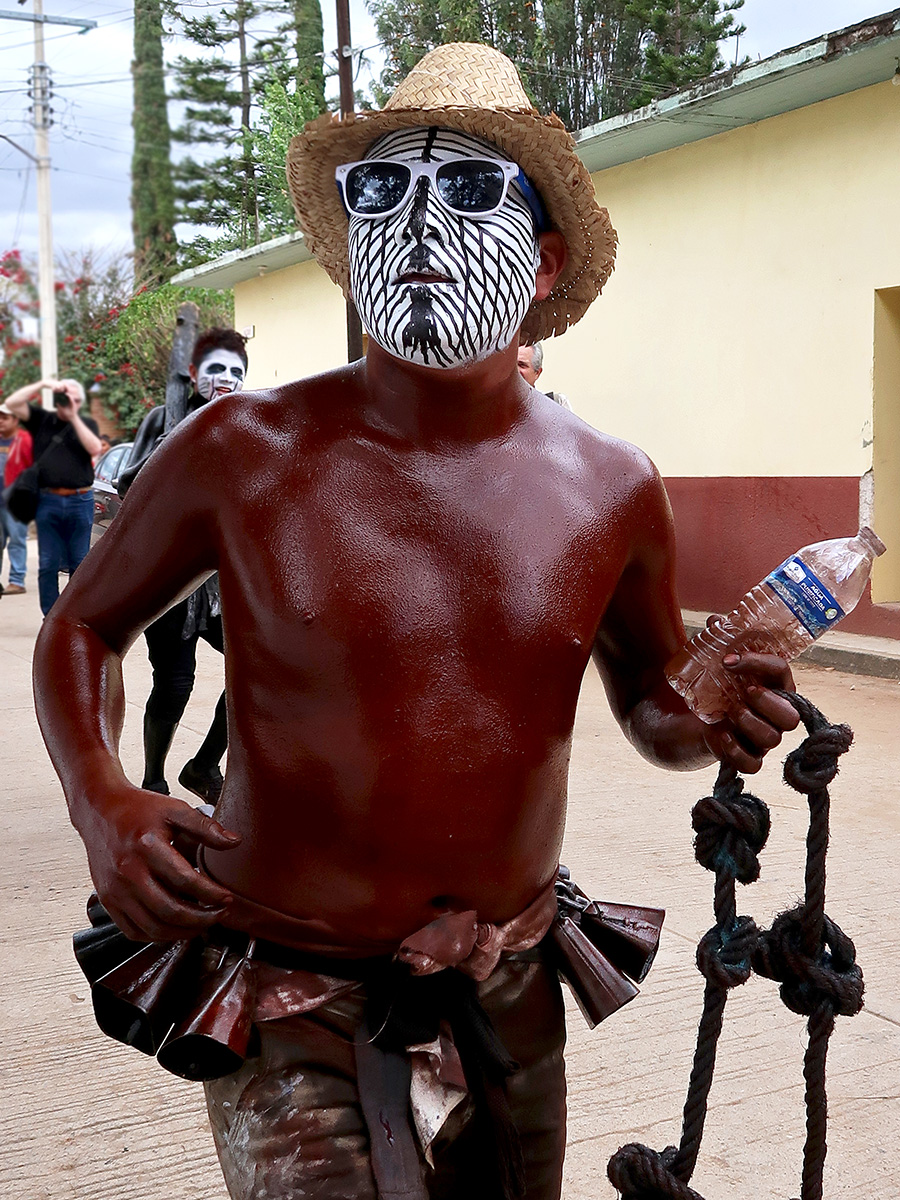
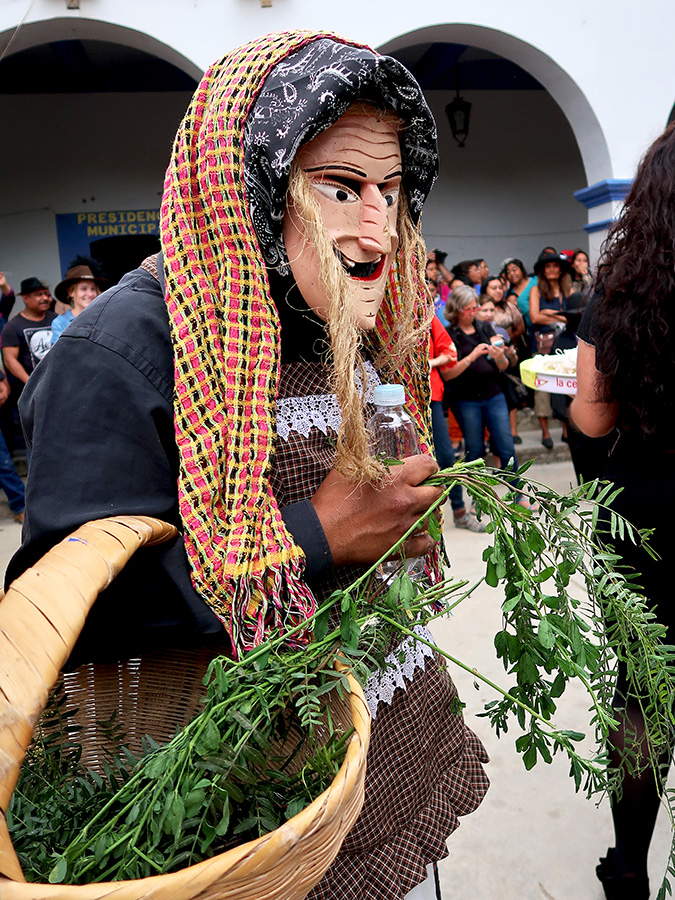
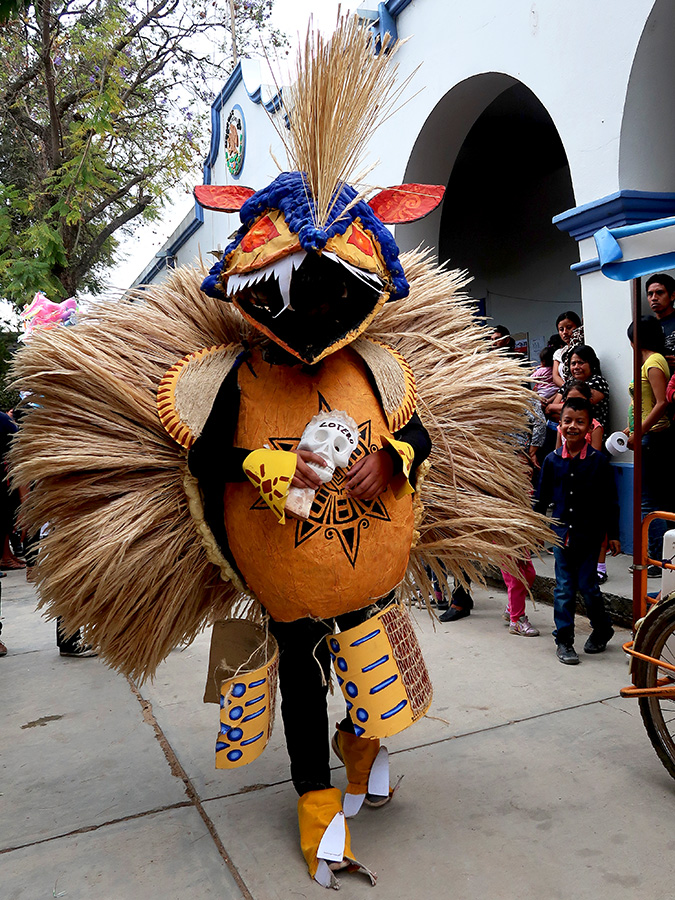
Día de Carnaval (aka, Fat Tuesday, Mardi Gras, Carnival), a day to let the good times roll before the sacrifices of the Lenten season, has come and gone.  And, again, blogger buddy Chris and I headed out to the surreal celebration in San Martín Tilcajete.  Driving into the village, one soon hears, rather than sees, that this isn’t a normal day in this wood carving village 17 miles south of the city — the streets are alive with the sound of cow bells.  Roaming the dirt back roads and paved main street, los encabezados (guys covered in motor oil or paint) come running past — with cow bells tied around their waist — making mischief and startling the unaware.

IMG_4902_landIMG_5042IMG_5031

IMG_4903

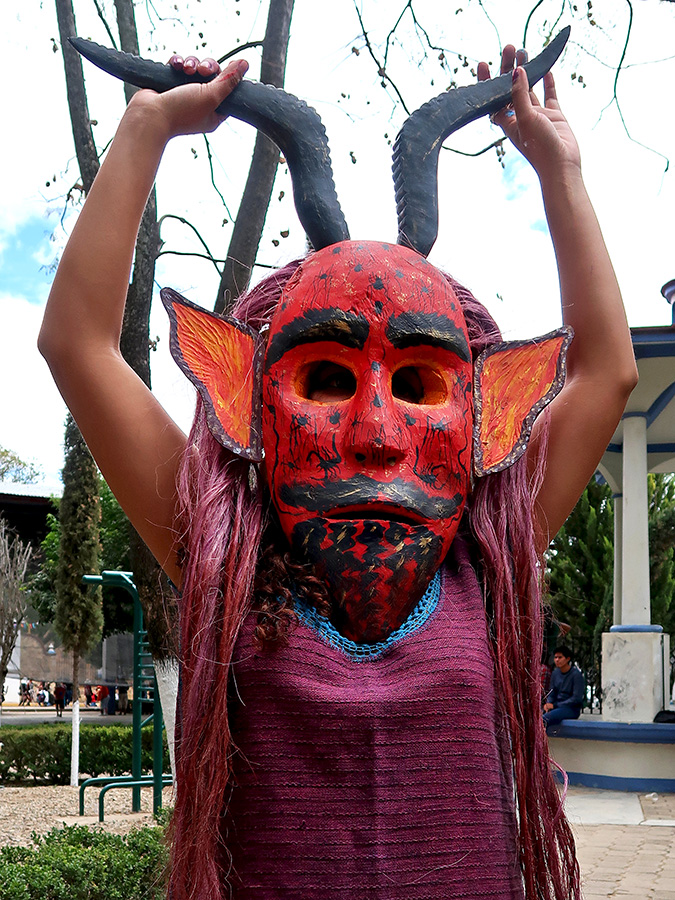
Masks, all the better to hide one’s identity when making fun of the powers that be, are an international carnaval tradition.  Thus, in this village, known for its fantastically painted wood carvings, wooden masks play a big role in the celebration — including several by our friend Jesus Sosa Calvo and his family at Matlacihua Arte.

IMG_4919

IMG_5058

IMG_4907

IMG_5055

IMG_4978

This is a town where creativity reigns supreme and the costumes seem to get more whimsical and weirder every year.

IMG_4960

IMG_5020

IMG_5052

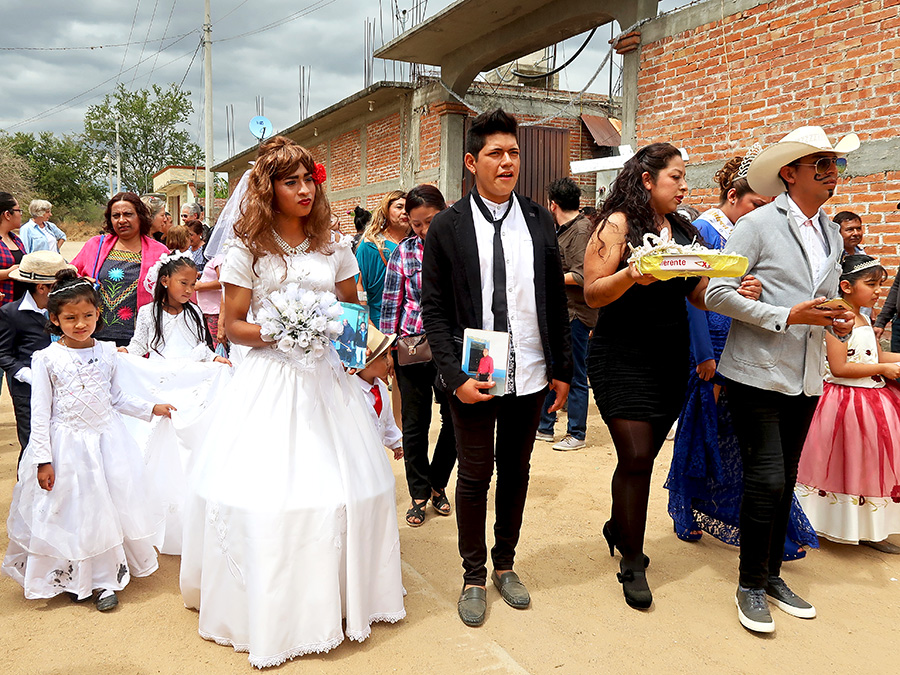
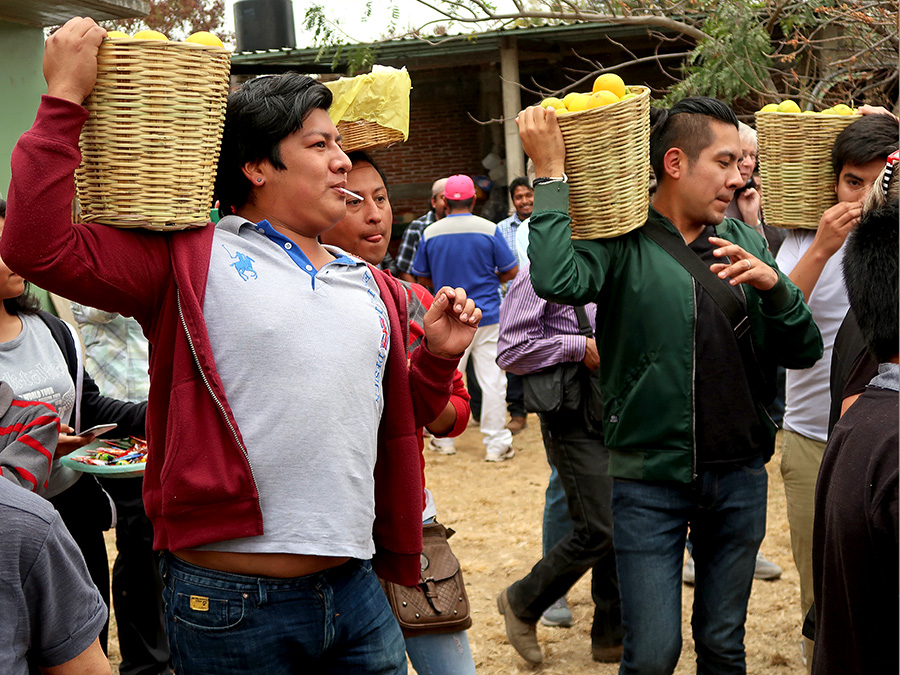
Oh, and did I mention there is a wedding?  Well, actually a parody of a traditional village wedding.  There is much pomp and circumstance, hilarity, and music — not to mention, breakfast and lunch for wedding guests — as participants move from the house of the mayor, to the home of the bride, and to City Hall for the civil ceremony.  Dancing in the plaza follows and then, at some predetermined time, there is a procession through the streets before arriving at another house where the happy “couple” kneel before “priest” for the religious ceremony.

IMG_4994

IMG_4970

IMG_4981

IMG_5011

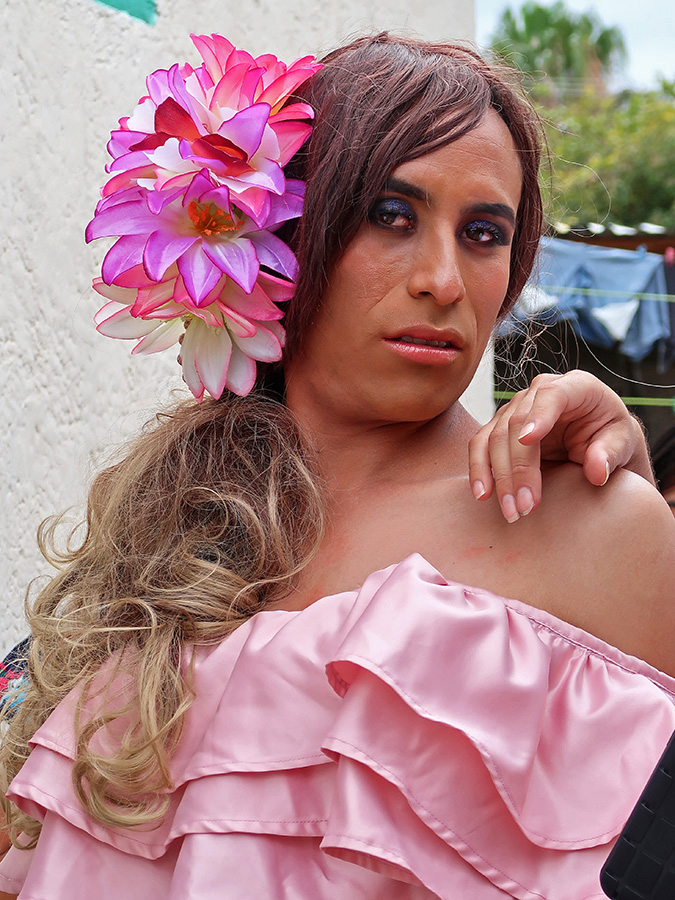
And, you might want to take a second look at those beautiful wedding guests with the smoldering eyes and modeling the gorgeous gowns.  They are not what they seem — and that includes the bride.

IMG_4972 (1)

IMG_4940

IMG_4946

IMG_4937

The Spanish brought the Carnaval tradition to Mexico because, like many other seasonal celebrations, it conveniently coincided with indigenous festivals celebrating the “lost days” of the Mesoamerican calendar, “when faces were covered to repel or confuse evil.”  Evidently it caught on, “because it was one time when normal rules could be broken…”  And, San Martín Tilcajete certainly knows how!!!

By the way, many from the creative team of the movie Coco came to enjoy the festivities and renew acquaintances in this town that provided the inspiration for the alebrijes in the film.  “De Oaxaca tomamos los alebrijes, la celebración del Día de los Muertos, toda esa energía y colores están en los paisajes de la película. Quise ser lo más fiel en esta investi­gación y plasmarlo en la cin­ta…”  (“From Oaxaca we take the alebrijes, the celebration of the Day of the Dead, all the energy and colors are in the landscapes of the film…”) (NVI Noticias, 2/14/2018)

Read Full Post »
Mural on Calle Berriozábal by young Welsh artist, Harry Hambley — aka, Ketnipz.

IMG_2462

IMG_2465

IMG_2463

As we say in Mexico, Feliz día del amor y la amistad — Happy day of love and friendship!

Read Full Post »

Without a doubt, blogging about living in Oaxaca has brought a myriad of fascinating, knowledgeable, and just plain fun people into my life.  Thus, after meeting through my blog a couple of years ago, Kalisa Wells and I finally met in person last week at a textile talk at the Oaxaca Lending Library.  Given that we both love textiles, we arranged to rendezvous a couple of days later at a Museo Textil de Oaxaca expo-venta.

IMG_4879

While I was acquainted with the work of most of the artisans from Oaxaca on display, I was unfamiliar with the weaving of Ahuirán, Michoacán.  Kalisa has a long history with traveling, living, and loving Mexico — including Michoacán.

IMG_4881

So, with great enthusiasm, she whisked me off to the booth of Purépecha weaver Cecelia Bautista Caballero and her daughters, Ángeles Rodriguez Bautista and Araceli Rodriguez Bautista — where Kalisa was greeted like a long lost sister and I was warmly welcomed.

IMG_4884_copy

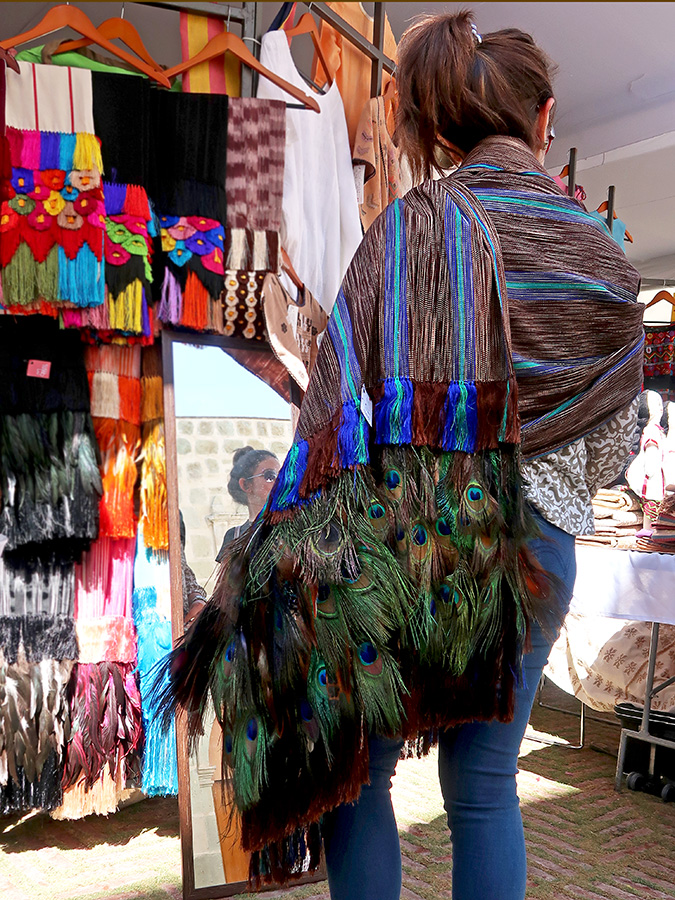
Among other innovations, Cecilia brought back the pre-Hispanic Purépecha tradition of using feathers in weaving.  Multiple layers of individual feathers are hand sewn into the fringe of many of her beautiful backstrap woven rebozos (shawls) — providing an ethereal elegance to these staples of women’s attire in Mexico.

IMG_4891

One of the daughters soon had us draped in these works of art, where we drew a crowd — some of whom also couldn’t resist being wrapped in the beauty of these exquisite pieces.  Meeting new people almost always leads to learning new things and experiencing culture in more personal ways.

Read Full Post »

« Newer Posts - Older Posts »