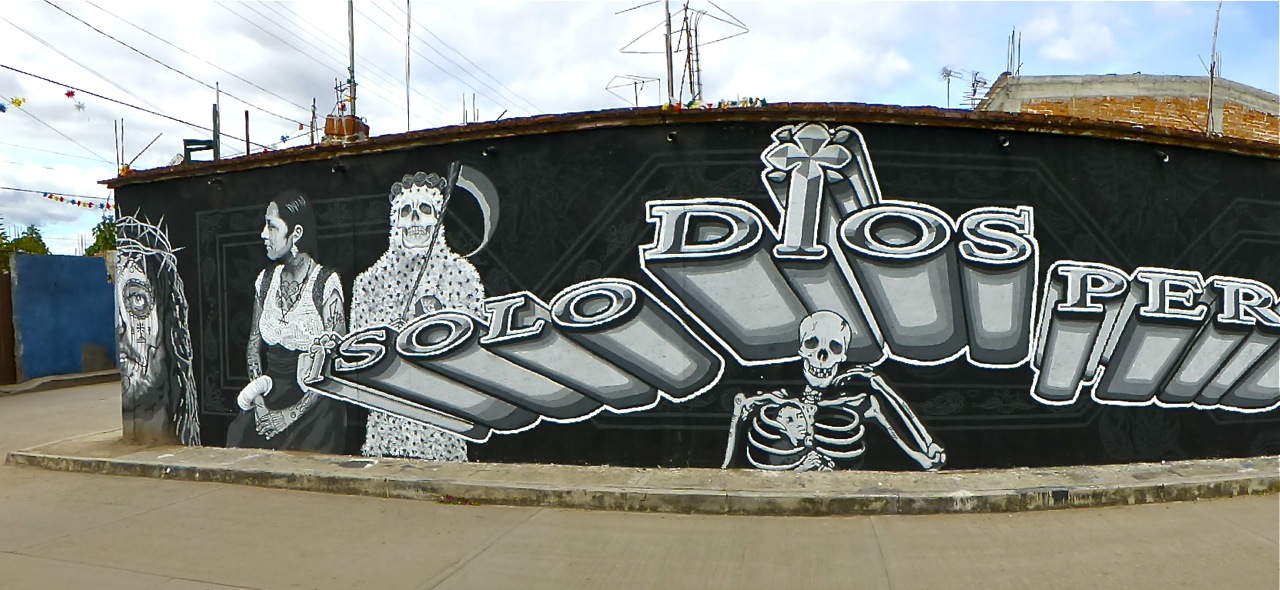
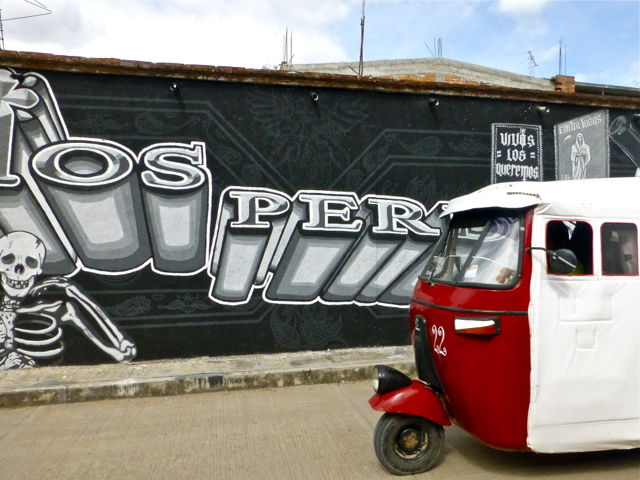
Seen on the same wall in Tlacolula de Matamoros where we were stopped in our tracks by the Tlacolula never dies mural in August. Both were conceived and created by the Tlacolulokos colective.
The artists are known for fusing iconic Mexican imagery with political and social commentary and can be found on Facebook.
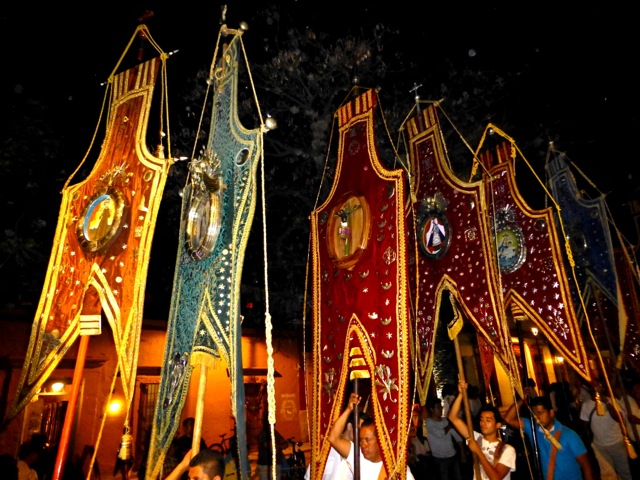
These traditional religious standards voice today’s messages, “against all governments” and “alive we want them.” The latter refers to the disappeared and murdered students from the Escuela Normal Rural Raúl Isidro Burgos, teachers’ college in Ayotzinapa, Guerrero, one of whom, Christian Tomás Colón Garnica, is from Tlacolula.
Finally over the flu, I flew to the east coast, arriving along with an arctic cold front. Brrr… it was -14ºF early yesterday morning!!! However, here on a frigid New York Friday…
Instead of writing this blog post, I should be rendezvousing with gal pals at the de Young Museum for the Keith Haring exhibition. However, this season it is a more perfect world for the flu virus. Grrrr…
Thus, in the spirit of public art and social commentary, images from EmBe seen on calle Tinoco y Palacios in Oaxaca:
“One day, riding the subway, I saw this empty black panel where an advertisement was supposed to go. I immediately realized that this was the perfect place to draw. I went back above ground to a card shop and bought a box of white chalk, went back down and did a drawing on it. It was perfect–soft black paper; chalk drew on it really easily.”
“I kept seeing more and more of these black spaces, and I drew on them whenever I saw one. Because they were so fragile, people left them alone and respected them; they didn’t rub them out or try to mess them up. It gave them this other power. It was this chalk-white fragile thing in the middle of all this power and tension and violence that the subway was. People were completely enthralled.”2
“I was always totally amazed that the people I would meet while I was doing them were really, really concerned with what they meant. The first thing anyone asked me, no matter how old, no matter who they were, was what does it mean?”3
“The context of where you do something is going to have an effect. The subway drawings were, as much as they were drawings, performances. It was where I learned how to draw in public. You draw in front of people. For me it was a whole sort of philosophical and sociological experiment. When I drew, I drew in the daytime which meant there were always people watching. There were always confrontations, whether it was with people that were interested in looking at it, or people that wanted to tell you you shouldn’t be drawing there…”
“I was learning, watching people’s reactions and interactions with the drawings and with me and looking at it as a phenomenon. Having this incredible feedback from people, which is one of the main things that kept me going so long, was the participation of the people that were watching me and the kinds of comments and questions and observations that were coming from every range of person you could imagine, from little kids to old ladies to art historians.“
Muchisimas gracias to all my wonderful 2014 blog readers! I am blown away that people from 125 countries have stopped by View from Casita Colibrí this year. Your presence, comments, and encouragement have been SO very much appreciated.
¡Feliz año nuevo a tod@s! I can’t wait to see what 2015 will bring.
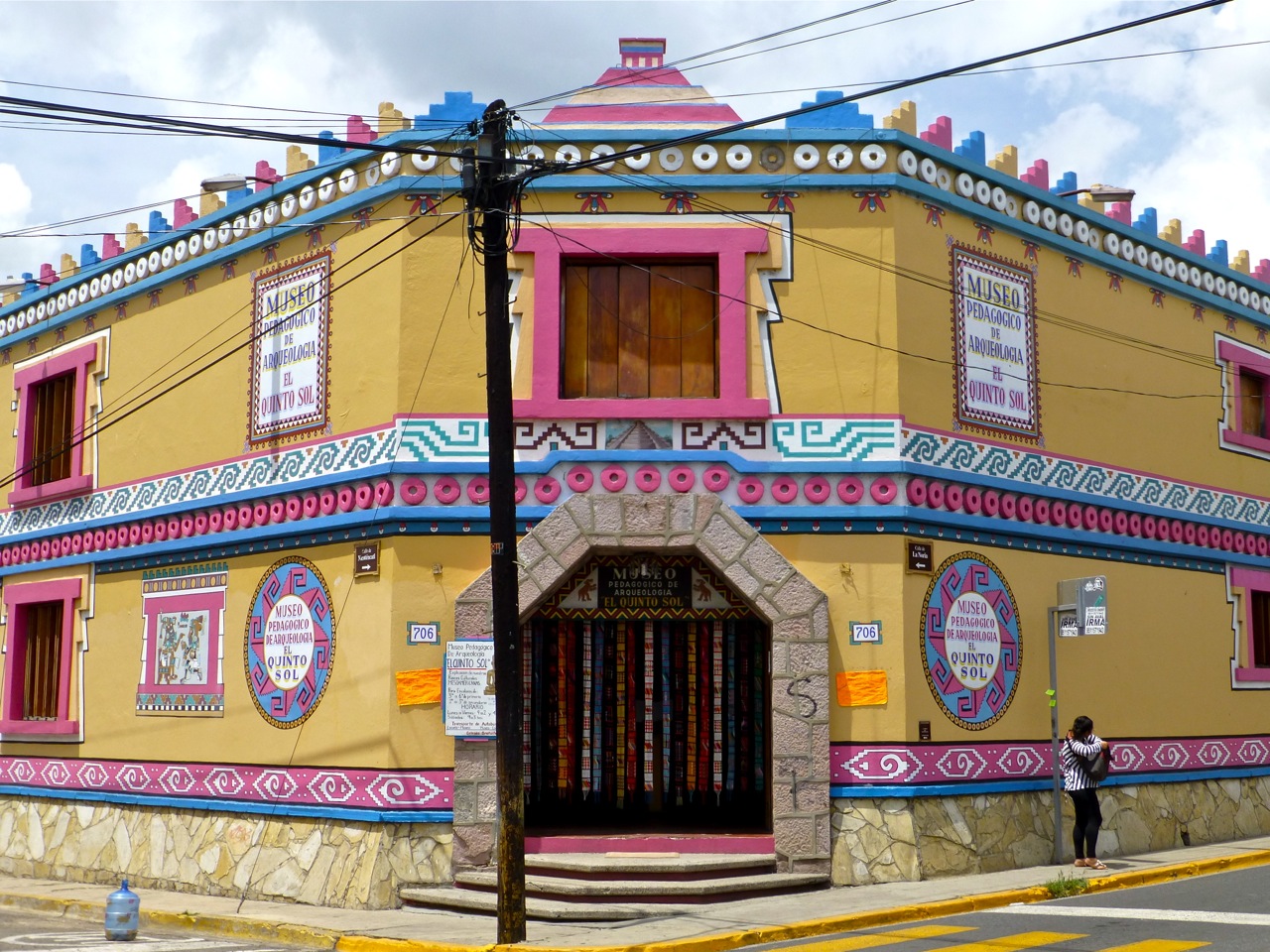
Oaxaca is one of the most child friendly places you will ever visit. Kids are welcome most everywhere — it’s part of the culture — and there is much for them to see and do, including El Quinto Sol, an archaeological museum for children.
I’ve been meaning to write about this colorful, yet hidden, gem since a friend and I discovered it in 2008 on an early Sunday morning ramble. It was closed for remodeling, but we managed to peek in and vowed to return.
Of course, we didn’t write down the address or name and all I remembered was that it was somewhere south of the zócalo. It took several expeditions once I moved to Oaxaca before I found El Quinto Sol again.
According to the museum’s brochure, this delightful and educational museum was the brainchild of Oaxaqueño, Manuel Ramirez Salvador and first opened March 19, 2000 in order to teach, preserve, and appreciate the “great heritage bequeathed by our Mesoamerican ancestors.”
Not only a museum, there is also a fabulous “old school” toy store, El Cri-Cri, named for the “grillito cantor” (the singing cricket), a character created by the beloved Francisco Gabilondo Soler. There are no plastic, battery-powered games and toys in sight and I guarantee those “of a certain age” will be reminiscing and exclaiming, “Ooh, I used to have one of these!” and “Ahh, I always wanted one of those!”
By all means, pay El Quinto Sol a visit — even if unaccompanied by a child.
Address: Xicotencatl No. 706 (at the corner of La Noria)
Telephone: 951.514.3579
Hours: Monday through Friday, 9:00 AM – 2:00 PM and 4:00 – 6:00 PM
Saturday, 10:00 AM – 6:00 PM. Closed on Sunday
It’s a quiet Nochebuena (Christmas Eve) in my childhood home here in Mill Valley. There are no sparklers to wave, no nacimiento stands in the town plaza, and no posadas are likely to knock on the front door tonight. However, there is a fire burning in the fireplace, stockings hang from the mantle, and a Douglas Fir is standing in the living room wearing four generations of family Christmas treasures.
‘Twas the night before Christmas and all through la casa Not a creature was stirring, Caramba! ¿Que pasa?
Los ninos were all tucked away in their camas, Some in vestidos and some in pajamas. While Mama worked late in her little cocina, El viejo was down at the corner cantina.
The stockings were hanging con mucho cuidado, In hopes that St. Nicholas would feel obligado To bring all the children, both buenos y malos, A Nice batch of dulces and other regalos.
Outside in the yard, there arouse such a grito, That I jumped to my feet, like a frightened cabrito.
I went to the window and looked out afuera, And who in the world, do you think que era?
Saint Nick in a sleigh and a big red sombrero Came dashing along like a crazy bombero!
And pulling his sleigh instead of venados, Were eight little burros approaching volados.
I watched as they came, and this little hombre Was shouting and whistling and calling by nombre.
Then standing erect with his hand on his pecho He flew to the top of our very own techo. With his round little belly like a bowl of jalea, He struggled to squeeze down our old chimenea.
Then huffing and puffing, at last in our sala, With soot smeared all over his red suit de gala.
He filled the stockings with lovely regalos, For none of the children had been very malos.
Then chuckling aloud and seeming contento, He turned like a flash and was gone like the viento.
And I heard him exclaim and this is VERDAD, Merry Christmas to all, And to All ¡Feliz Navidad!
Carlsberg and Stella Artois… What is it about beer and Christmas?
According to an article in yesterday’s Noticias, the continued occupation of the zócalo by the teachers and the ambulantes has forced this year’s 117th annual festival to relocate. Ahhh… only in Oaxaca!
On December 23, the 130 participants and their carved radishes, totomoxtle figures, and flor inmortal scenes will be found on the Andador Turístico (aka,Macedonio Alcalá).
Hotels are expecting an 85% occupancy rate, but the business owners along the Alcalá are concerned the Rabanos crowds will block entrances to their shops. However, I’m wondering if it might improve the viewing traffic flow. If you are in Oaxaca, please let me know — I headed north to the rain and snow of el norte to spend the holidays with mi familia.
Photos from last year’s Noche de Rabanos.
Update (as of Dec. 21): Ambulantes, though not teachers, have cleared out and Rabanos WILL be held on the zócalo.
In Mexico, it’s not just a one-day event. Wednesday afternoon, while Chris and I were giving our previously mentioned presentation at the Oaxaca Lending Library, only blocks away festivities began with a religious ceremony at the Shrineof Our Lady ofGuadalupeon the side ofLlano Park. It was followed that night with a calenda through the streets of the city. Yesterday, Guadalupe’s children, the little Juan Diegos and their peasant sisters, were brought by parents (and grandparents) to the Templo de Nuestra Señora de Guadalupe (at the north end of Llano Park), where they waited patiently in long lines to enter the church to be blessed and then be photographed in “Guadalupe” scenes.
However, on the streets of Oaxaca, Guadalupe is seen everywhere and everyday…
The other big news from Rome, that Oaxaqueños are celebrating, is the Wealth ofOaxacacraftpresent inthe Vatican Museum — a Christmas tree and Nativity scene decorated with artesania crafted by 142 Oaxacan familiesfrom25municipalities in the state. Theexhibition was inaugurated onDecember 10and will run throughFebruary 2015 — should you be planning a trip to Italy!
As a background to the December 12, Fiesta a la Virgen de Guadalupe performance of the Danza de la Pluma in Teotitlán del Valle, mañana (Dec. 10, 2014) at 5:00 PM at the Oaxaca Lending Library, Chris (of Oaxaca-The Year After fame) and I are doing a presentation about the Danza de la Pluma in Teotitlán del Valle.
From the library’s description of the talk, “The Danza de la Pluma or Dance of the Conquistadors is one of the most famous dances performed in Oaxaca. Join Shannon and Chris for a presentation filled with photos and video of their many times observing and chronicling this beautiful dance.”
Alas, it’s not free. Besides memberships, presentations like this are what keeps the library afloat. The cost is 70 pesos for OLL members and 100 pesos for non-members. Hope to see you there!
Along with blogger buddy Chris, I’ve been immersed in putting together a presentation for the Oaxaca Lending Library on the Danza de la Pluma, as it’s performed in Teotitlán del Valle. On the superficial level, the Danza relates the story of the Conquest. But, as is the genius of art, it reaches into our hearts and souls and explores and communicates the truths we feel.
And so, this brief video from classmates of the 43 missing Ayotzinapa students touched me deeply.
The ballet needs to tell its own story in such a way it can be received without having to be translated into language. –Twyla Tharp
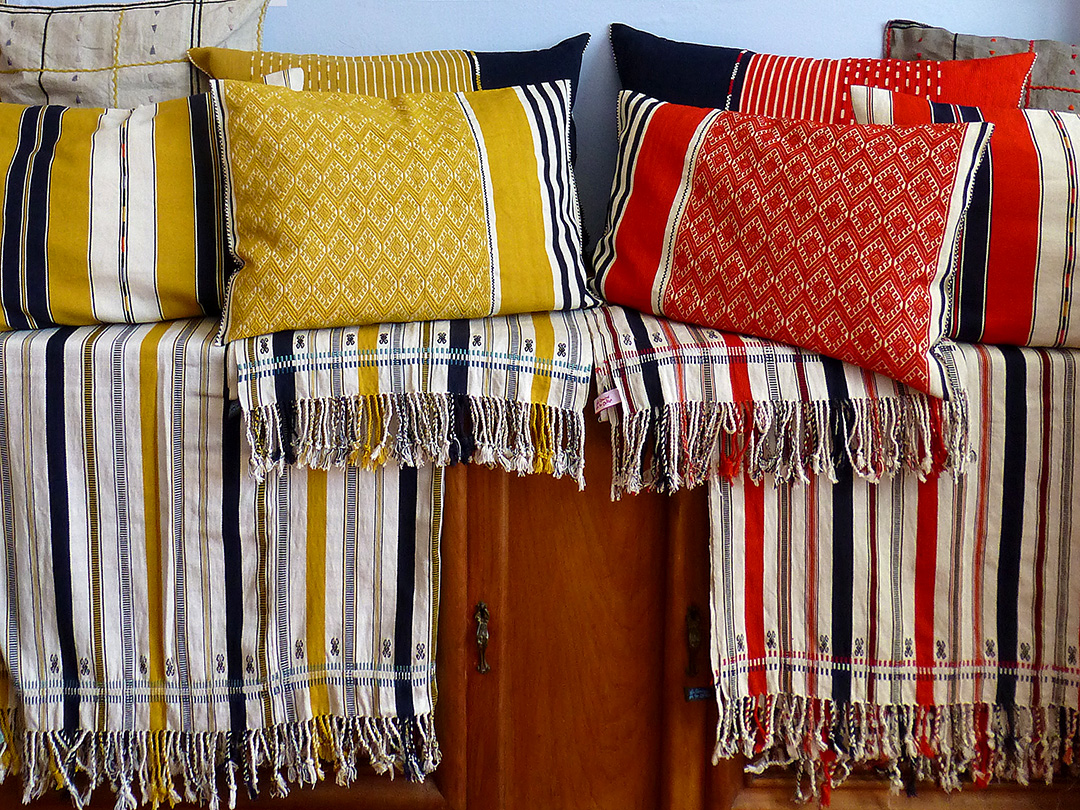
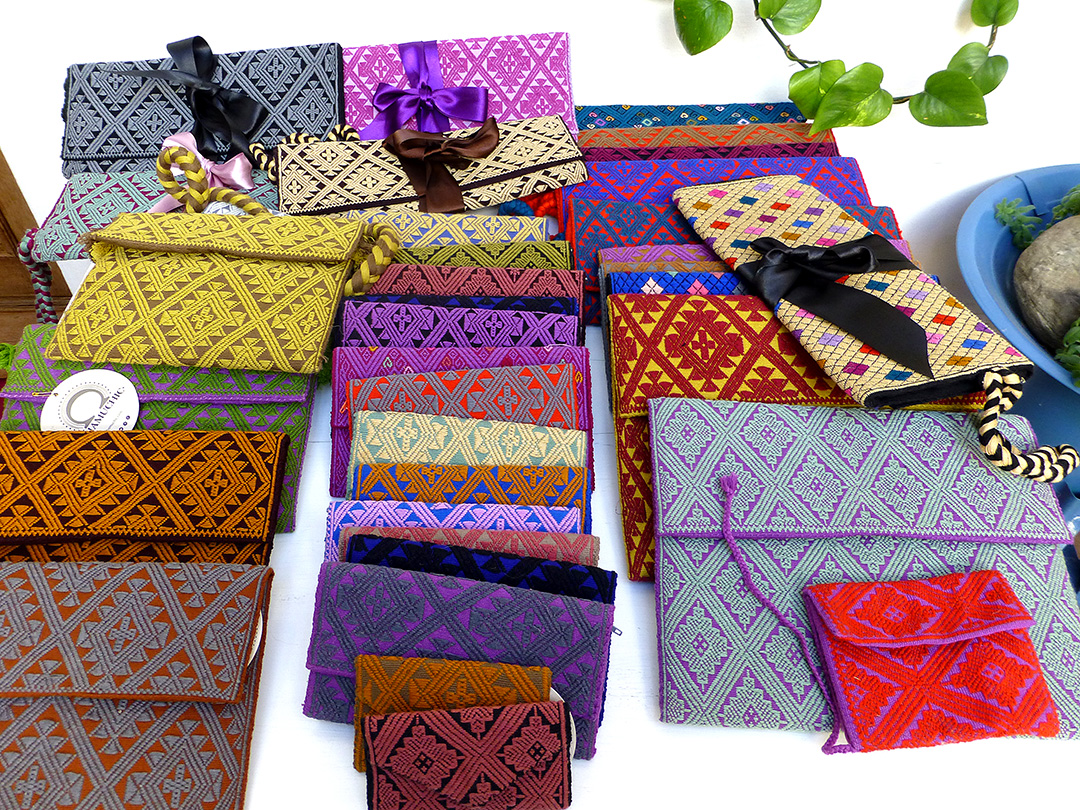
and Chamuchic, two weaving collectives from Chiapas. Their colors and designs are sophisticated and I wanted them all!
Alas, the budget limited me to two pillow covers that have joined two solid colored brocaded covers that I bought at a similar expoventa a year and a half ago.
As if Thursday’s Thanksgiving of 2 turkeys, 2 styles of stuffing, 2 kinds of cranberry sauce, 2 types of potatoes (sweet and garlic mashed), and 2 desserts (pumpkin pie and chocolate cake) weren’t enough…. Believe it or not, Friday night, eating was again on the minds of neighbors (and co-Thanksgiving Day cooks) David and Marilyn and I, as we walked over to the Plaza de la Danza for the kickoff cena (dinner) of Oaxaca’s annual El Saber del Sabor gastronomy festival.
The transformation of the Plaza de la Danza began on Wednesday.
By Friday night’s dinner, it had morphed into an elegant banquet hall, with an open air rotisserie pit.
Fifty traditional cooks from the eight regions of Oaxaca offered guests a sample of the culinary wealth of the state.
The results were dazzling and delicious. All for only 300 pesos (a little over $20 US)!
On a clear cold night, with the Basílica de la Soledad looming above, there was also mezcal and music to warm body and spirit!
Following Thursday night’s inaugural banquet, the festival moves to Oaxaca’s upscale restaurants and other venues where, along with workshops and lectures, seventeen renowned chefs from around Mexico will be offering specially created gourmet menus. El Saber del Sabor closes tomorrow afternoon with a tribute to chef Pedro Ortega of Grupo Estoril, accompanied by a comida prepared by Ortega and three other distinguished chefs. Yummm… Alas, at 1500 pesos, it’s a little too pricey for me.
In previous years, El Saber del Sabor was held in late August and early September. I don’t know why this year it was moved to the end of November, but I do know Friday night was a little chilly for an outside venue and, for gringos, it was way too close to Thanksgiving — the gluttony was almost (but not quite) too much!
Seating for twenty-two has been scavenged from around the apartment complex, tables (three of which are borrowed) are covered with oilcloth and set with plastic cutlery, cranberry sauce has been made, stock for gravy is simmering on the stove top, and the turkey has been stuffed and is currently roasting in my little oven.
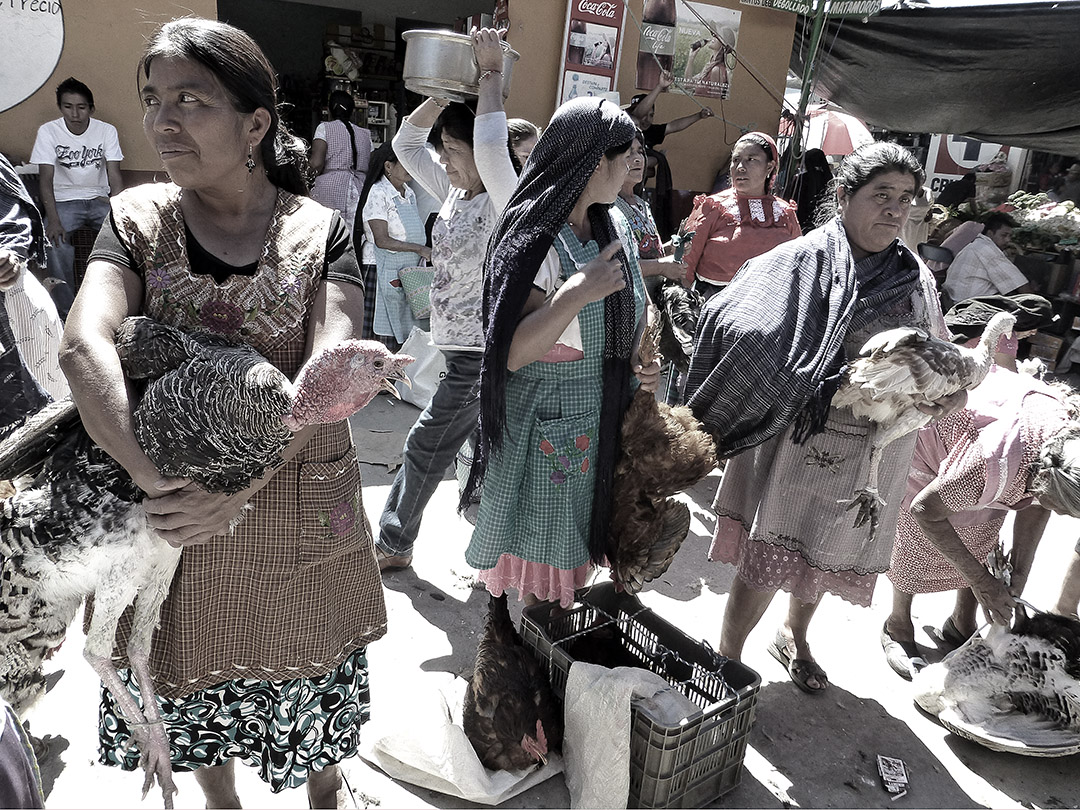
Turkey sellers on market day in Tlacolula de Matamoros, Oaxaca – Oct. 26, 2014.
Neighbors, a former neighbor, and the latter’s Oaxaqueño coworkers will be bringing another turkey, more stuffing, potatoes (mashed and sweet), pumpkin pies, and beverages. Now to put together a playlist which, naturally, will include Arlo Guthrie’s, Alice’s Restaurant Alice’s Restaurant Massacree — a turkey day family tradition since 1967.
Inevitably our guests will ask, “So what exactly does Thanksgiving celebrate?” Do we continue to pass along the myth or do we explain the inconvenient truth, “that the first official Thanksgiving Day celebrated the massacre of 700 Indian men, women and children during one of their religious ceremonies.”
Then there is the question, “How is this holiday celebrated in the USA?” The following holiday rituals will no doubt be described: Many televisions will be tuned to the annual Macy’s Thanksgiving Day parade of giant balloons and traditional turkey day football (North American) games. And, as soon as the last piece of pie has been eaten, growing numbers people will be racing to the nearest shopping mall or computer to take advantage of early-bird “Black Friday” pre-Christmas sales.
However, in between the above, there is always dining table conversation — catching-up stories, old and new jokes, loving reminiscences, and the occasional arguments over politics and/or religion. But, as the folks at the Presente.org Team wrote in an email to their subscribers this morning, for Latinos in the USA, “Thanksgiving dinner might be hard when you’re sitting across the table from a loved one who was left out of the President’s executive action. When the subject comes up, don’t drown your sorrows in a bottomless pitcher of gravy. We created a graphic to help you have that tricky conversation.”
Besides my wonderful family, friends, and blog readers, I am extremely grateful to be a guest in a country where, amidst the beauty and warmth of its people and land, it’s almost impossible to ignore awkward and difficult truths. ¡Feliz Día de Acción de Gracias a tod@s!

















 Mexican Peso Converter

 View From Casita Colibrí