Feeds:
Posts
Comments

Archive for the ‘Flora’ Category

It’s the time of year when late afternoon winds come up, landing patterns change to often bring planes very low over the city, and the occasional top heavy plant topples over.

Tuesday morning I came out on the terrace to find my Euphorbia Trigona down. Prone, though it was, neither it nor its beautiful old maceta (flowerpot) suffered any damage. Both are now safely cradled in a wrought iron plant stand.

Read Full Post »

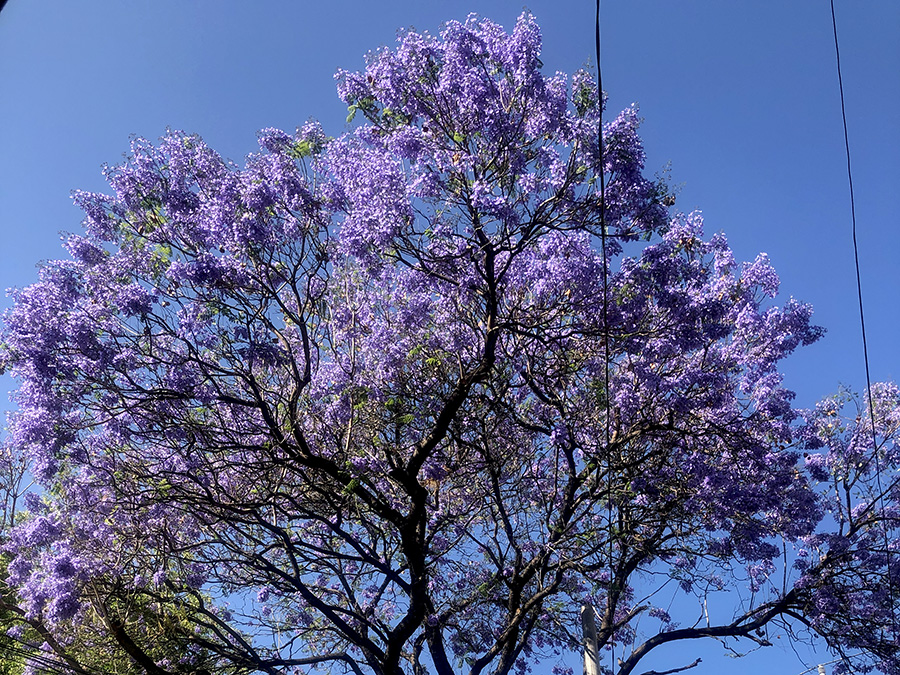
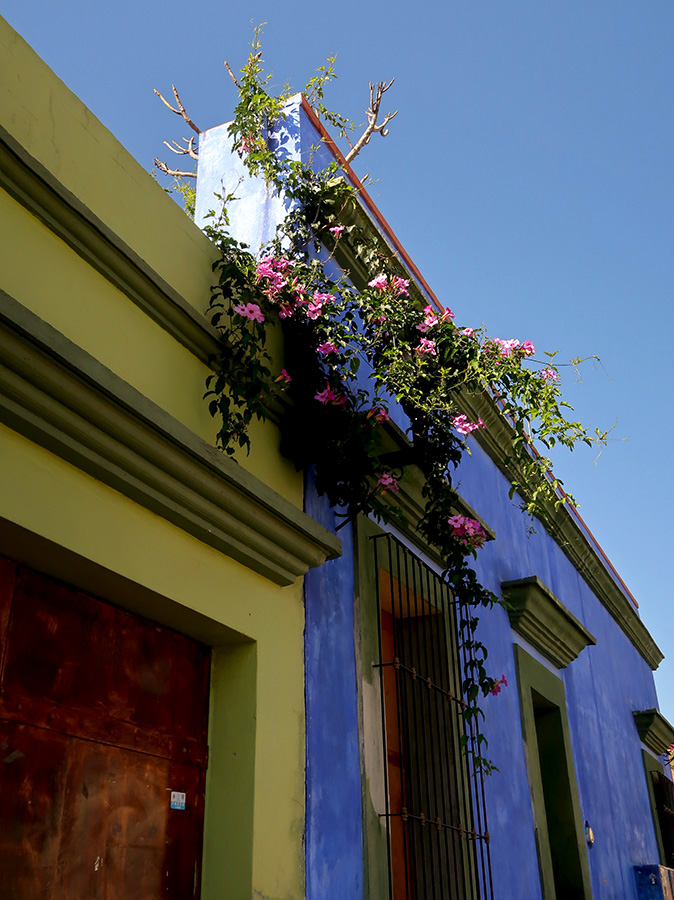
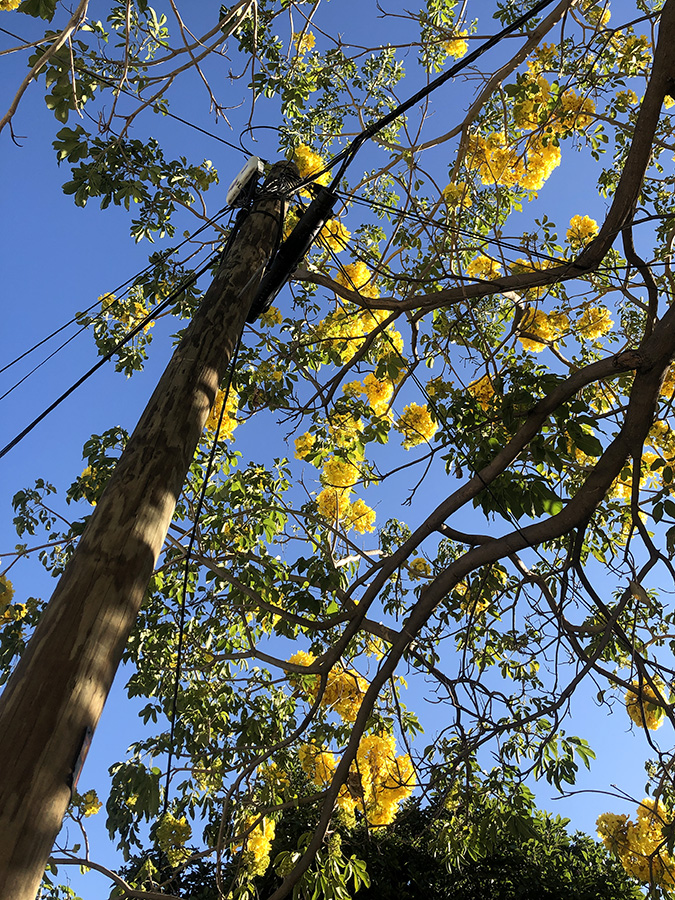
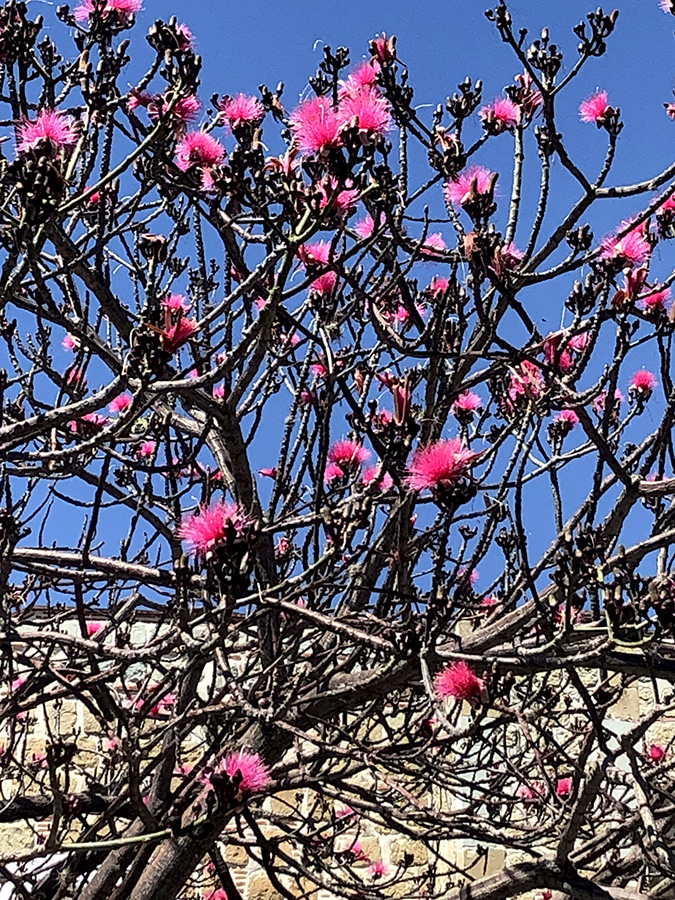
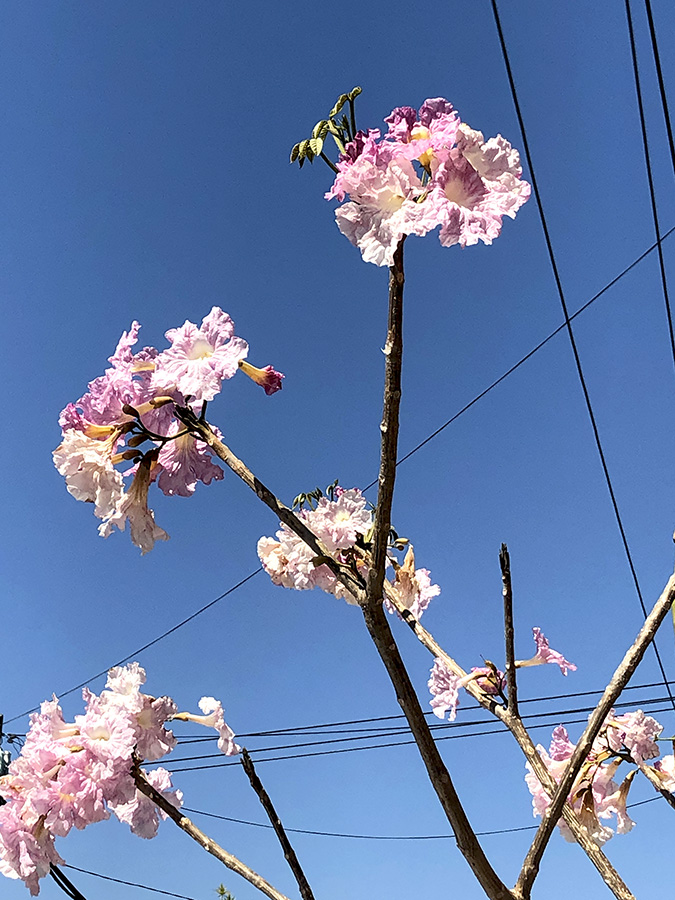
It is the time of year when the temperatures begin to reach 90º F and the Primavera amarillas, Jacarandas, Clavellinas, and Palo de rosas trees bloom.

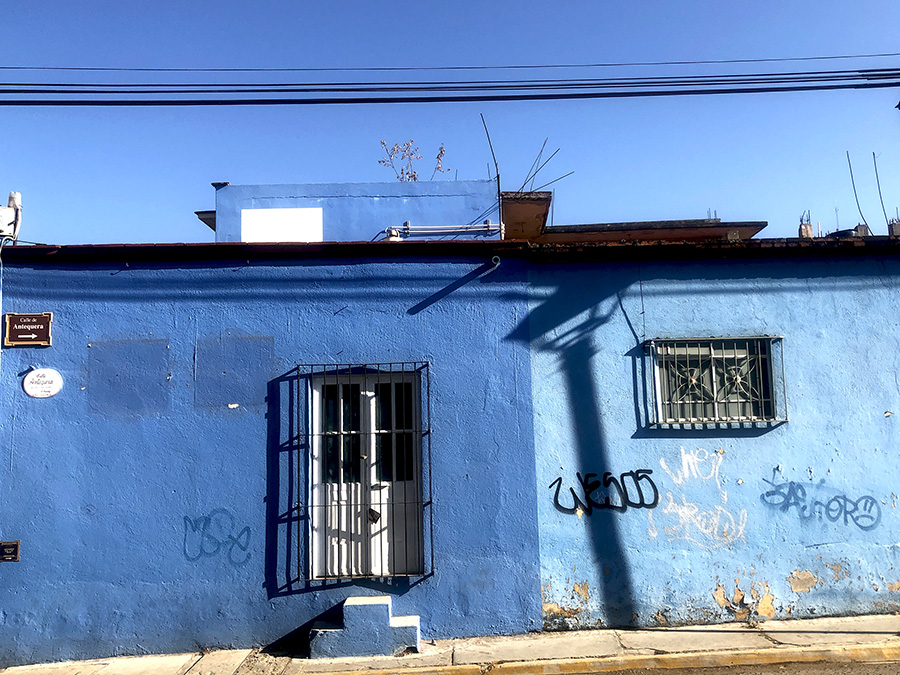
It’s almost spring and Oaxaca has entered her sky blue period.

Read Full Post »

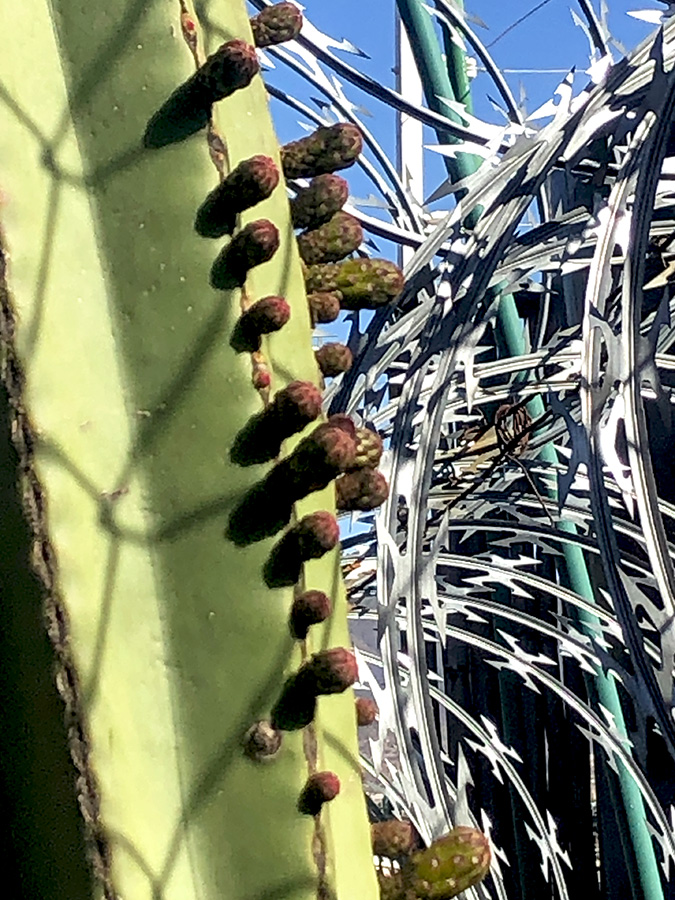
This article, Tourists are welcome in Oaxaca, Mexico. Their increasingly bad behavior is not, is one of the reasons these images from my garden express how I’m feeling these days.

Then there is the fact that I haven’t set foot out of the city for exactly one year. Color me prickly and awaiting the vaccine.

Read Full Post »

Four years ago today, we were marching in the streets of Oaxaca — part of a worldwide post inauguration day response to the dark days we could see coming following the results of the US election. Alas, it was far worse than our imaginations could take us. What a difference four years makes! At yesterday’s inauguration we watched as a young woman in a dazzling yellow coat, with her brilliant words and luminous spirit, captured the dark and replaced it with trust in our power to bring light to an imperfect country. Thank you Amanda Gorman for your inspiring words and presence.

When day comes, we ask ourselves, where can we find light in this never ending shade?

And so we lift our gaze, not to what stands between us, but what stands before us

For there was always light.
If only we’re brave enough to see it.
If only we’re brave enough to be it.

Quotations from The Hill We Climb, a poem written and read by Amanda Gorman at the inauguration of President Joe Biden and Vice President Kamela Harris.

Read Full Post »

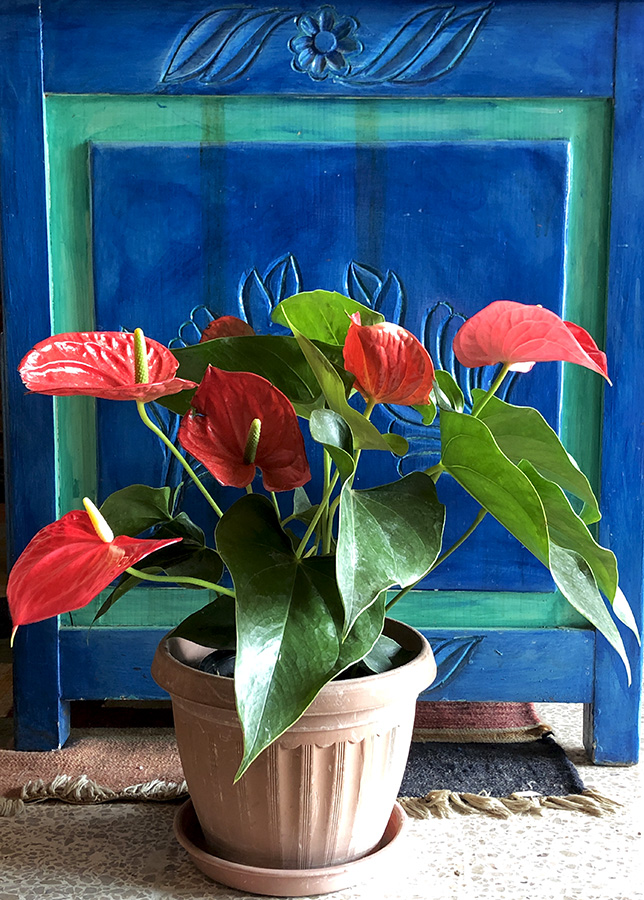
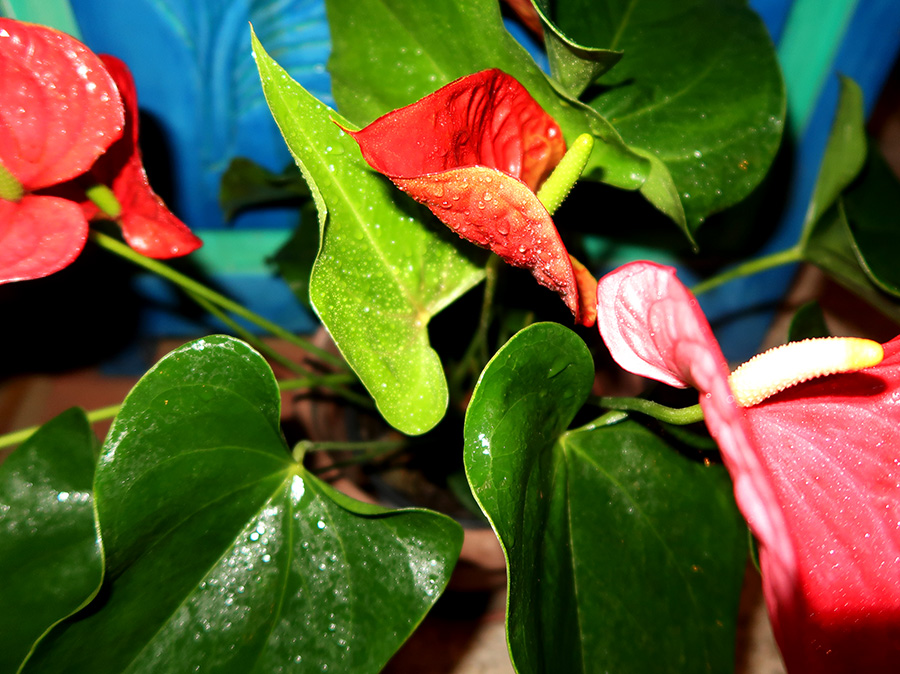
When I was twelve years old, I met one of my (still) best friends. While my family’s garden consisted of roses, camellias, fruit trees, colorful annuals, and lawn and our indoor plants were limited to African violets, hers had Japanese inspired landscaping outside and tropical plants inside. After all, they had been to Hawaii! The orchids and anthurium seemed so exotic and I was impressed. Eventually, over the years, orchids became one of my houseplants of choice but, for some reason (maybe cost?), I’ve never had an anthurium until now.

While shopping for poinsettias last month at my favorite seasonal plant pop-up shop (1/2 block up from Mercado Sánchez Pascuas on Tinoco y Palacios), I saw this anthurium (anterio en español), the price was 1/5th the cost in el norte, and couldn’t resist.

My goal is to find a talavera pot for the anthurium (aka, flamingo flower, tailflower, painter’s palette, and laceleaf). In the meantime, set against my beautiful old hand-carved and painted desk from Michoacán, my Christmas gift to myself brings a smile — much needed during these challenging times. And, according to Wikipedia, it is “effective in removing formaldehyde, xylene, toluene, and ammonia from the air” — though I suspect that’s not a problem here at Casita Colibrí.

Read Full Post »

Poinsettia, also known as Nochebuena

While there may be no life-size nacimiento (Nativity scene) or towering Christmas tree standing in Oaxaca’s zócalo this year, mine in miniature have been retrieved from the storage closet and sit atop the sideboard of my great room.

In this challenging holiday season, may this newly remastered version of “Pancho Claus” by Chicano musical legend Eduardo “Lalo” Guerrero and sung by Irma Garza bring you a chuckle or two on this Christmas Eve — known in Mexico as Nochebuena.

Pancho Claus

‘Twas the night before Christmas and all through the casa
Mama she was busy preparing the masa
To make the tamales for the tamalada

And all the ingredients for the enchiladas

Papa in the front room with all the muchachas
Was dancing the mambo and doing the cha cha
My brothers and sisters were out in the hall
Listening to Elvis singing rock ‘n roll

When all of a sudden there came such a racket
I jumped out of bed and I put on my jacket
I looked out the window and in front of the house
Was my old uncle Pedro as drunk as a louse
He ran in the casa he grabbed the guitarra
He let out a yell and played “Guadalajara”

I was starting to wonder as I lay there alone
How old Santa Claus was to visit my home
With all of this noise they would scare him away
When all of a sudden I hear someone say
Hey Pablo, Chuchito Hey! Arriba! Gordito, Jose
Get up there you bums or you don’t get no hay

And then to my wondering eyes did appear
Eight cute little donkeys instead of reindeer
They pulled a carreta that was full of toys
For all of us good little girls and boys

The fat little driver waved his big sombrero
And said Merry Christmas! Feliz Año Nuevo!
That means “Happy New Year”
And then I hear him sing

I am Santa’s cousin from south of the border
My name’s Pancho Claus and I bring you your order
I hear him exclaim as he drove past the porches
“Merry Christmas to all and to all Buenas Noches”

Even my Olive tree is decorated with ubiquitous tin ornaments

From my home to yours, I wish you good health and Felices Fiestas!

Read Full Post »

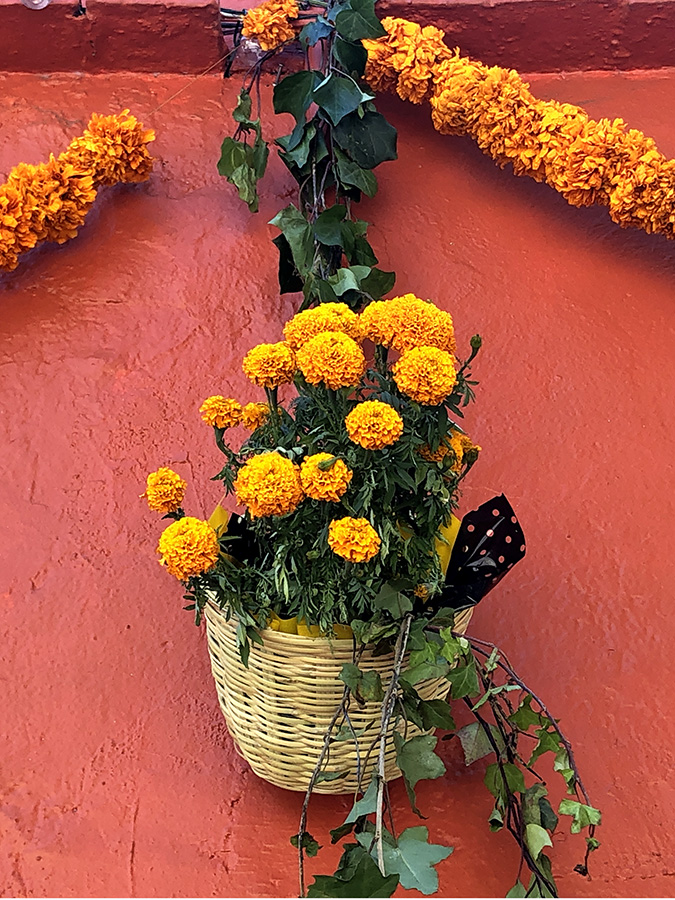
Cempasúchil (marigolds), the flowers synonymous with Day of the Dead, have begun appearing throughout the city. Alas, not in the quantity we are used to.

As I have written previously, because of the acceleration of the Covid-19 cases, the City of Oaxaca will not permit public Day of the Dead celebrations and events.

So it’s a subdued Día de Muertos season we are living.

While the yellows and oranges of the marigolds seem to mirror the semáforo amarillo and naranja (yellow and orange Covid-19 traffic lights) we are bouncing between, they brighten the days and impart a familiar and welcome scent.

Read Full Post »

Walking around, I often like to make up stories about the people, places, and things I see.

Woof, woof — I’ve overcome my vertigo!
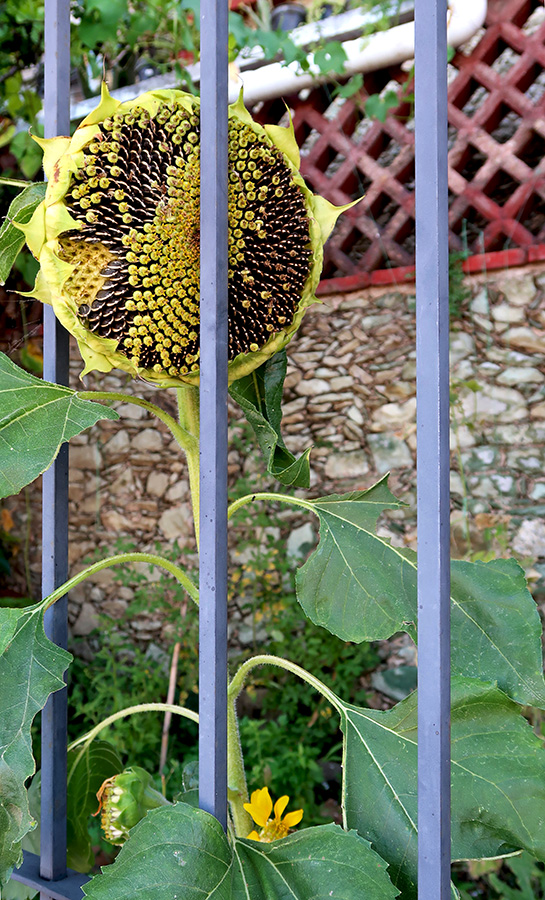
Trapped behind bars, what did I do to deserve this?
Who colorized the shadow puppet rabbit?

These three images from last Sunday’s walk along Panorámica del Fortín, seem to beg for a tall tale or two.

Read Full Post »

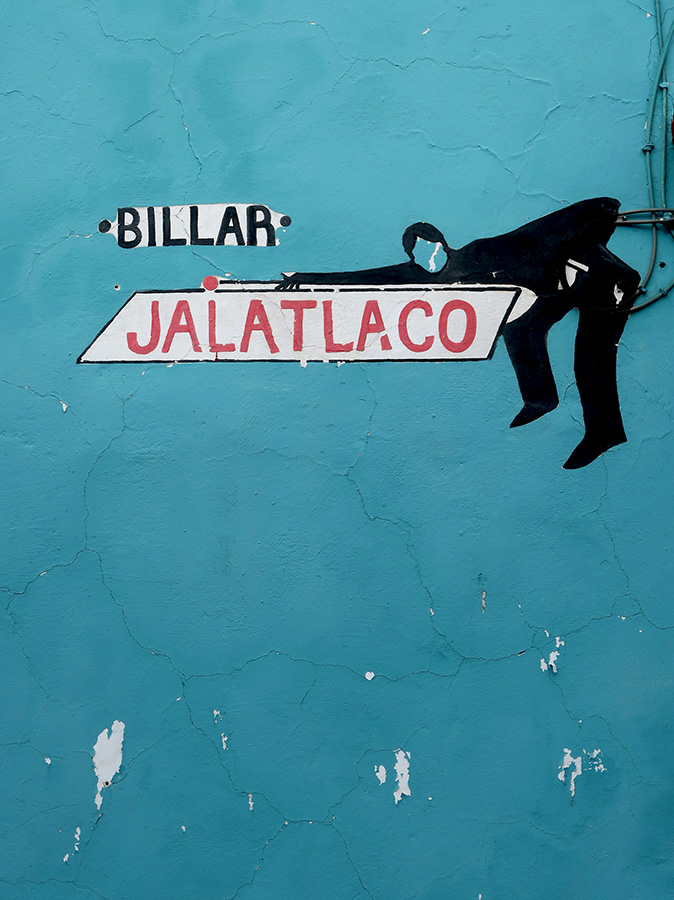
Another Sunday, another walk through Barrio de Jalatlaco…

Billar Jalatlaco pool hall.

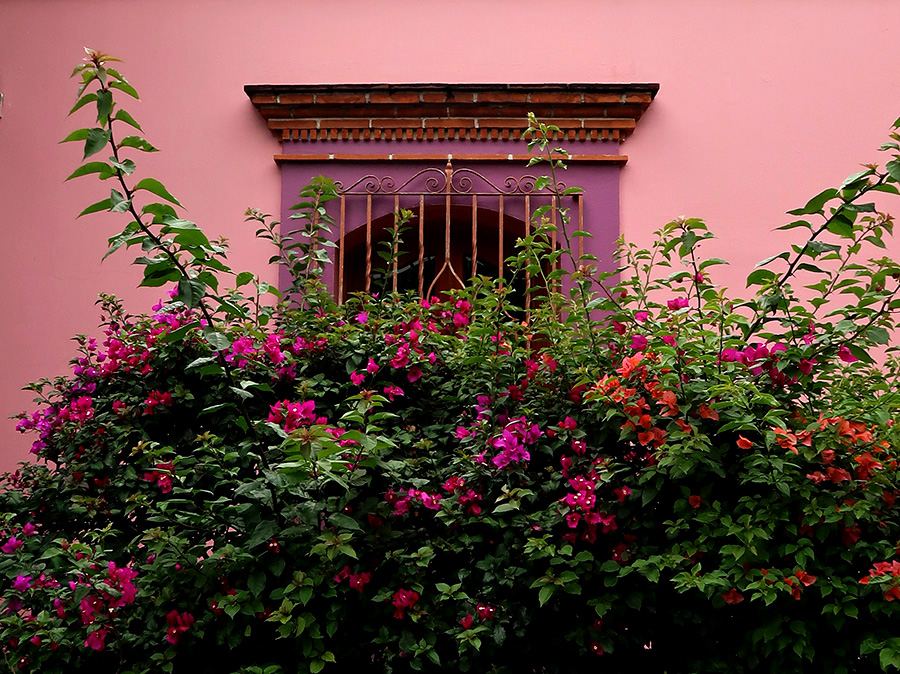
Bougainvillea in Barrio de Jalatlaco.

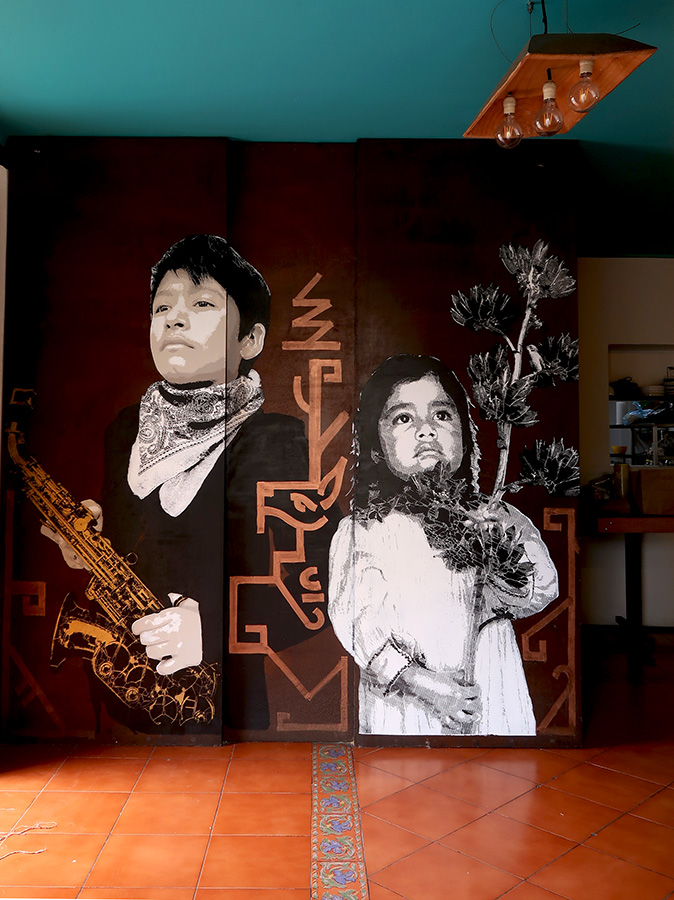
Inside the door of El Tendajón, the work appears to be by Lapiztola.

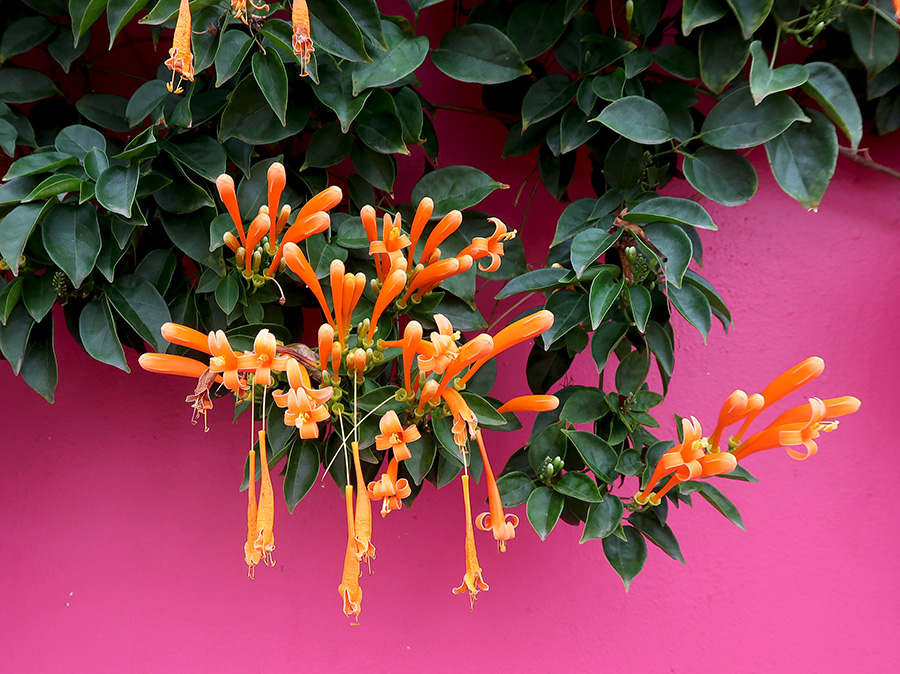
Orange trumpet vine in Barrio de Jalatlaco.

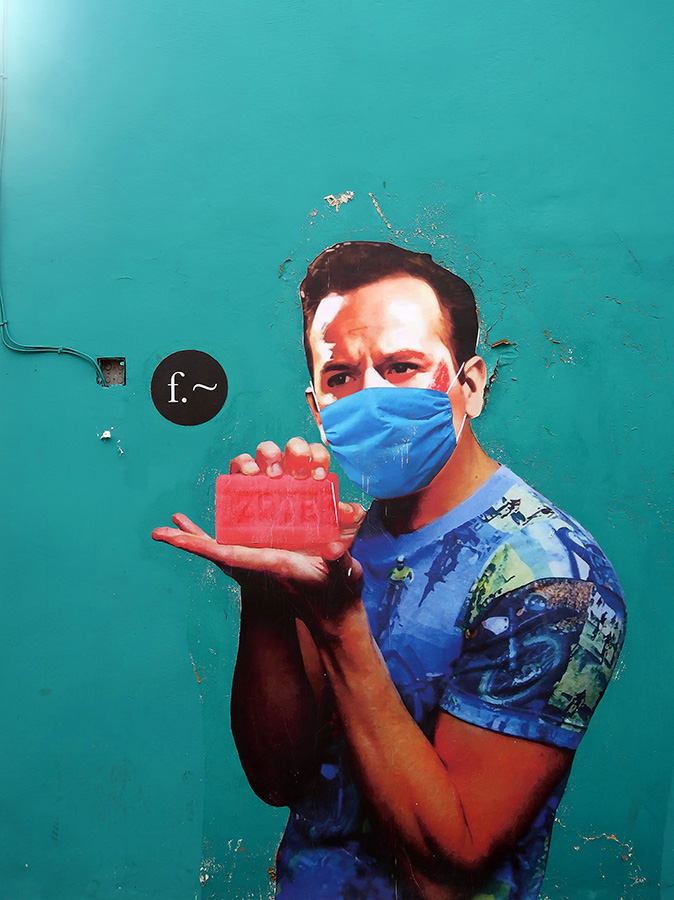
Wear a mask and wash your hands with ZOTE soap — by Efedefroy.

Read Full Post »

The weather was picture perfect for the last Sunday of summer morning walk.

Looking across Jardín Conzatti.

Corner of Reforma and Jacobo Dalevuelta.

Mexican flag still flying above Teatro Macedonio Alcalá in honor of el mes de la patria.

And now, we welcome autumn.

Read Full Post »

Entering La Cosecha Oaxaca farmer’s market, look to the left and you will see…

… murals by Ulises Martinez celebrating the gift of maíz.

Read Full Post »

The flowers within and mountains beyond.

“I am large; I contain multitudes.” — Walt Whitman, Leaves of Grass

Read Full Post »

Conventional wisdom in Oaxaca: “For everything bad, drink mezcal; for everything good, you also should.”

Lest we forget, the walls of Oaxaca are always there to remind us.

My copitas (little cups) by maestro Vicente Hernandez are always ready for a gotita (a little drop) or two on good days, bad days, and especially days when friends stop by.

Day trips to my favorite mezcal making villages and their mezcaleros, like Berta Vásquez (above) in San Baltazar Chichicapam, were frequent enough to keep the liquor cabinet stocked with a variety of artisanal mezcal made from one or more kinds of maguey (AKA, agave) — arroqueño, barril, cuixe, espadín, jabalí, tepeztate, tobalá, and tobasiche, to name a few!

Alas, since Covid-19 hit the scene, many of the villages are closed to outsiders and, even if they were open, I wouldn’t go — for their health and safety and mine.

However, mezcal aficionado and tour guide Alvin Starkman came to the rescue. Through him, I was able to buy five bottles of mezcal from several different villages and he delivered!

In the event you are trying to read the labels, left to right: Tobalá, Manuel Méndez, San Dionisio Ocotopec; Mezcal destilado con mota (yes, it’s a thing), Rodolfo López Sosa, San Juan del Río; Arroqueño, Fortunato Hernandez, San Baltazar, Chichicapam; Tepeztate, Manuel Méndez, San Dionisio Ocotepec; Espadín, Celso Martinez, Santiago Matatlán.

¡Para todo mal, mezcal; y para todo bien, tambíen!

(ps) This just in! Mezcal Tour Supports Advancement of Indigenous Women — an article about the wonderful ongoing work the above mentioned Alvin Starkman, his wife Arlene, and Mezcal Educational Excursions of Oaxaca are doing.

Read Full Post »

This morning as dawn broke, a pitahaya bloomed in Oaxaca. Tipped off by my neighbor, I ran upstairs with my camera — before coffee, no less!

The eight inches across flower was definitely worth it because, alas, by late morning this beauty will have wilted. It will dry, eventually drop off, and fruit will begin to form on the section hiding behind the flower and from which it emerged.

In a few months, there will be a red luscious dragon fruit, like this one on a neighboring stalk. I miss the pitahayas that used to climb the chain link fence surrounding my terrace.

By the way, if you are confused about the difference between pitahaya and pitaya (as I used to be), this page from the Mexican government gives the most complete explanation I’ve seen. It’s worth running through a translator if you don’t read Spanish.

My entry in Cee’s Flower of the Day photo challenge.

Read Full Post »

When the rains come and the three African Tulip trees (Spathodea campanulata, Tulipán africano, Flame trees, Flame of the Forest) in my apartment complex begin blooming, even grey days are brightened.

As the name suggests, Tulipán africano are native to Africa and I was first captivated by them in the early 1980s when I watched the PBS series, The Flame Trees of Thika, based on the Elspeth Huxley memoir about her early years in Kenya.

Beginning the late 1800s, these ornamental beauties were introduced to other parts of the world — thriving and even becoming invasive in many areas of the tropics.

Bursting with brilliance and providing food and shelter to a multitude of hummingbirds battling for territory and mates, these creations of Mother Nature always beckon me to stop, gaze, and marvel.

Read Full Post »

« Newer Posts - Older Posts »