There is magic on the walls of Oaxaca.


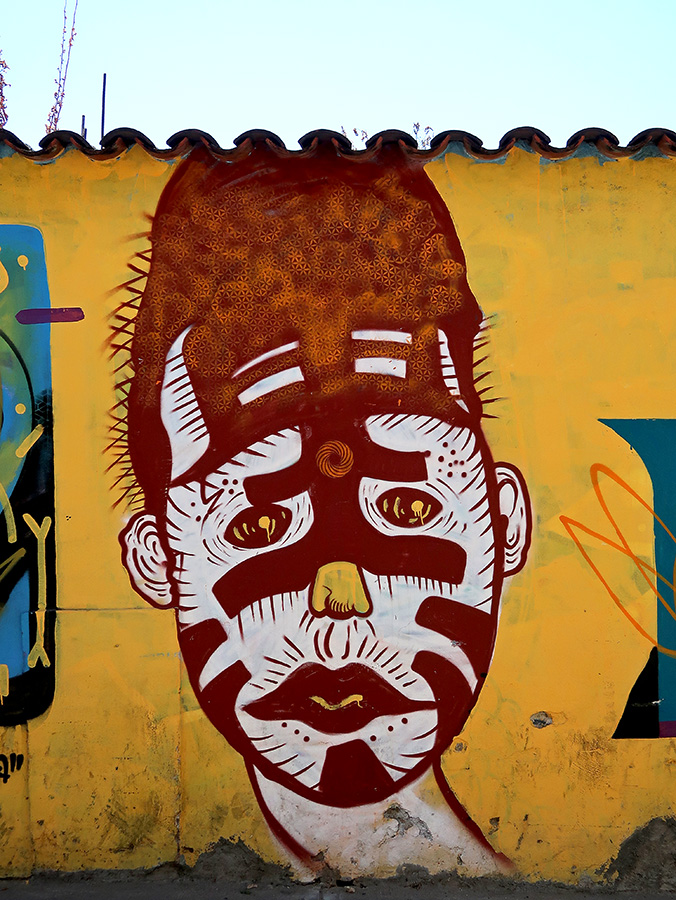

You never know what you will see when you take another route home.
Posted in Creativity, Culture, Travel & Tourism, tagged graffiti, Mexico, murals, Oaxaca, photos, popular travel destinations, street art, wall art on April 4, 2019| 6 Comments »
There is magic on the walls of Oaxaca.
You never know what you will see when you take another route home.
Posted in Buildings, Celebrations, Creativity, Culture, Religion, Travel & Tourism, tagged abandoned buildings, Black and white photography, Día de la Samaritana, decorations, Mexico, Oaxaca, paper flowers, photos, popular travel destinations on April 2, 2019| Leave a Comment »
Even leftover decorations from a Día de la Samaritana agua station in front of an abandoned building are beautiful in their own way.
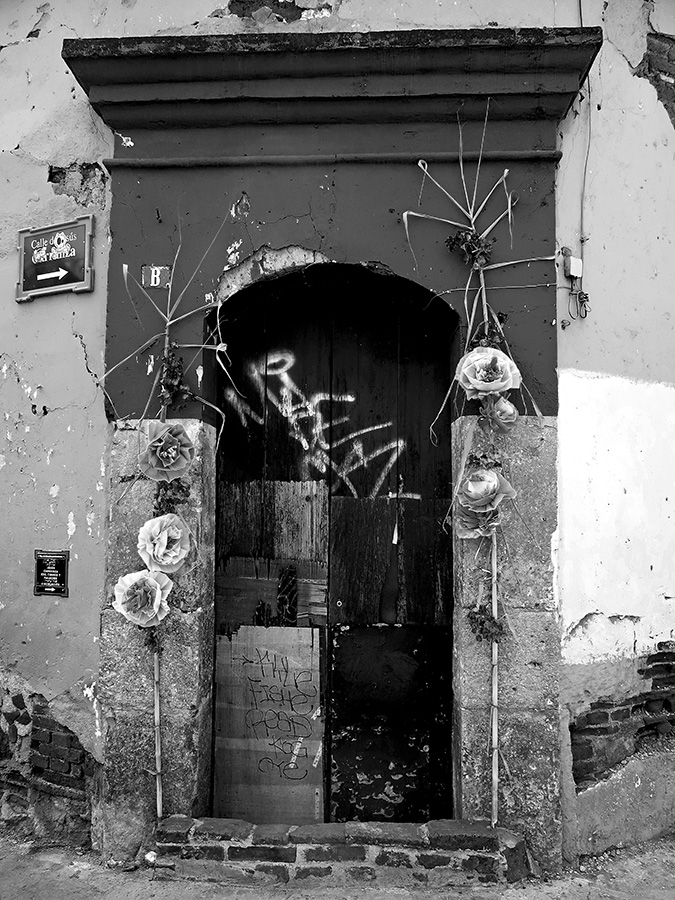
Seen on García Vigil at the corner of Jesús Carranza.
Posted in Beverages, Celebrations, Creativity, Culture, Food, Religion, Travel & Tourism, tagged agua fresca, bougainvillea, bugambilia, Día de la Samaritana, Good Samaritan day, Lent, Mexico, Oaxaca, photos, popular travel destinations on March 30, 2019| 14 Comments »
If you are in Oaxaca and it’s the fourth Friday of Lent, it must be Día de la Samaritana, an “only in Oaxaca” celebration. This Day of the Good Samaritan was inspired by the Gospel of John story in the New Testament where a tired and thirsty Jesus, on his way to Galilee, asks a Samaritan woman at Jacob’s Well in Sychar for some water.
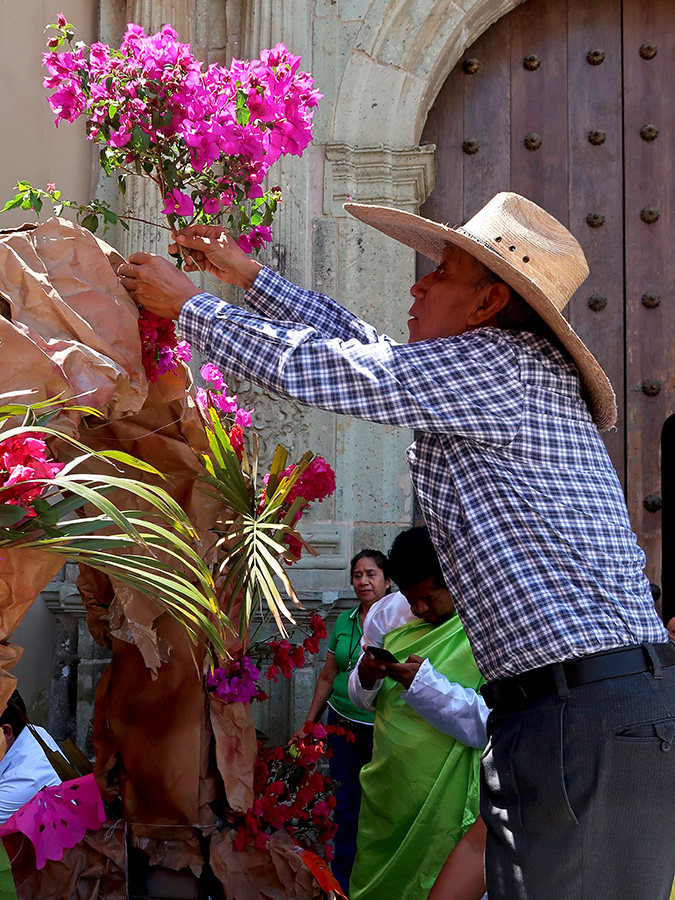
Decorating a well outside the Cathedral
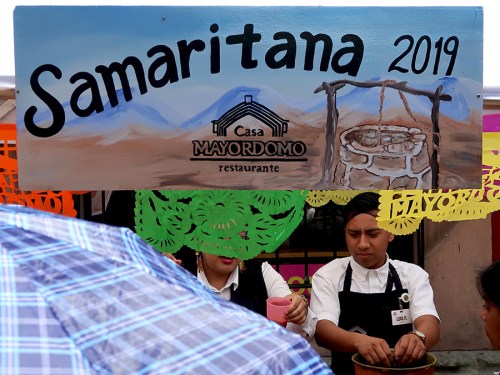
Sign proclaiming the day, seen on the Alcalá
His request was highly unusual because, according to the Old Testament, “Jews regarded the Samaritans as foreigners and their attitude was often hostile.” The woman complied with his request and the rest is history.
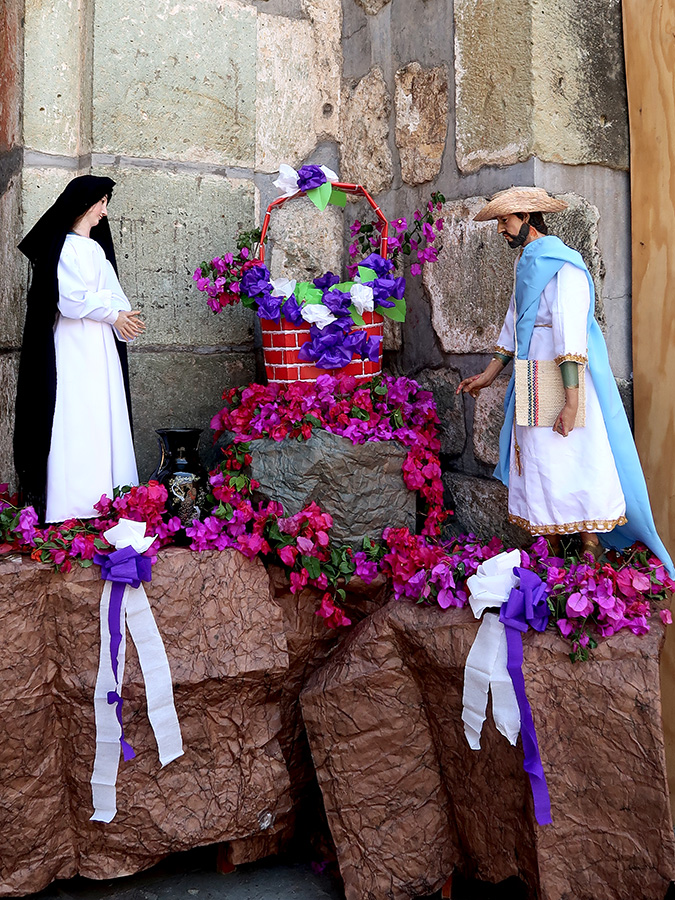
Scene at the well outside Templo de San José

Live actors waiting to reenact the scene
Celebrating the Good Samaritan in Oaxaca began in the atriums of churches at the end of the 19th century and is a popular and much-loved tradition. Thus I joined thousands of Oaxaqueños and visitors, clutching cups, and wandering from one decorated agua station to another sampling their offerings.

Samaritana station serving nieve at the Municipal Palace

One of scores of agua stations on the Alcalá
People of all ages, from small children to grandparents, lined up at bougainvillea and palm decorated booths in front of churches, restaurants, businesses, schools, and even the city’s municipal office building for the traditional Día de la Samaritana free aguas.

Hand painted ollas in front of Templo de Sangre de Cristo

Hand painted jicara gourds waiting to be filled with tejate
These “water stations” are often decorated in a violet shade of purple, the color of Lent, symbolizing penance and royalty. And, the ollas (pots) holding the aguas seem to get more decorative every year.
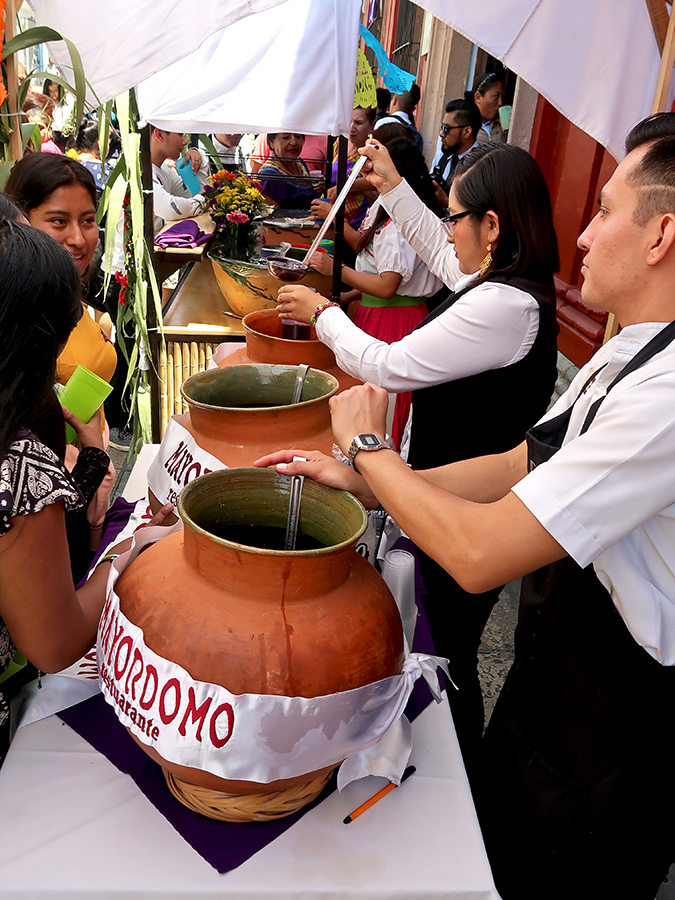
Agua stations along the Alcalá
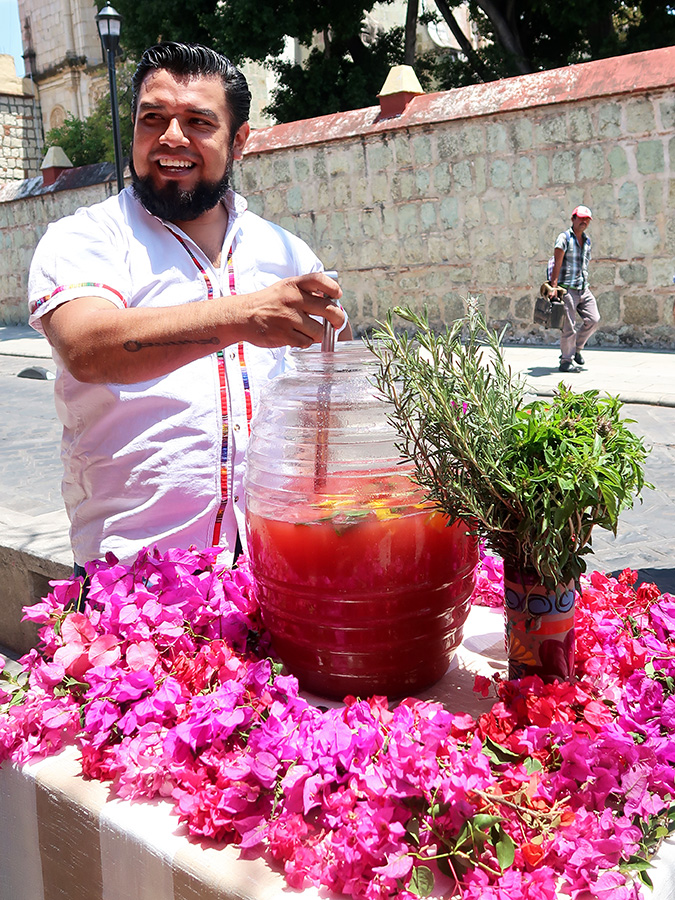
Watermelon and mint agua station on García Vigil
We are not talking plain water, these are divinely flavored aguas frescas made with fresh fruits, herbs, flowers, and more — jamaica (hibiscus), horchata, chilacayote (squash), tamarindo, sandia (watermelon), tejate, and nieve (sorbet). Even taxi drivers played the role of Good Samaritans.
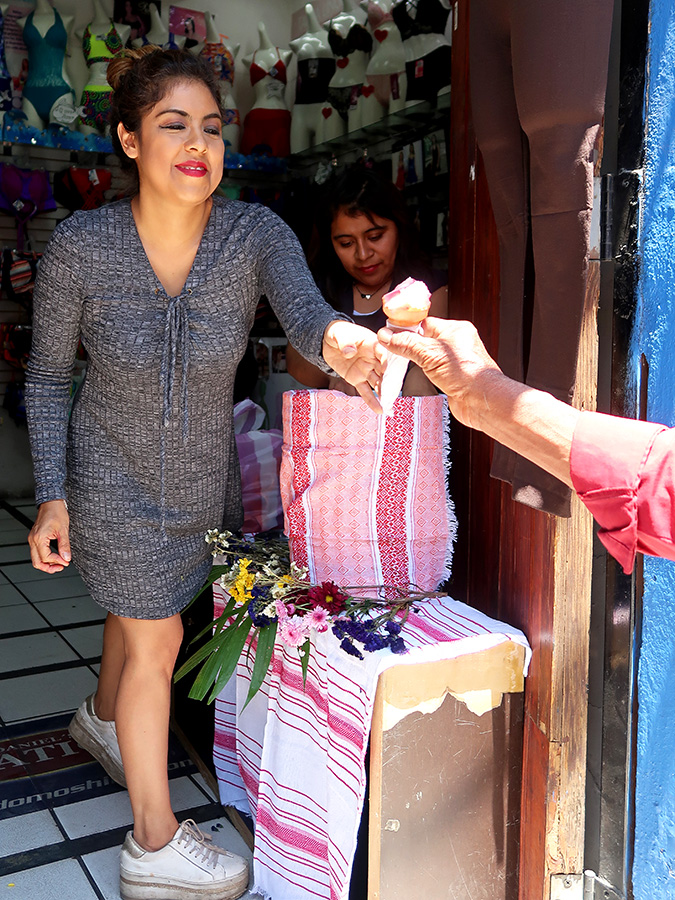
Nieve station in doorway of lingerie store on Independencia
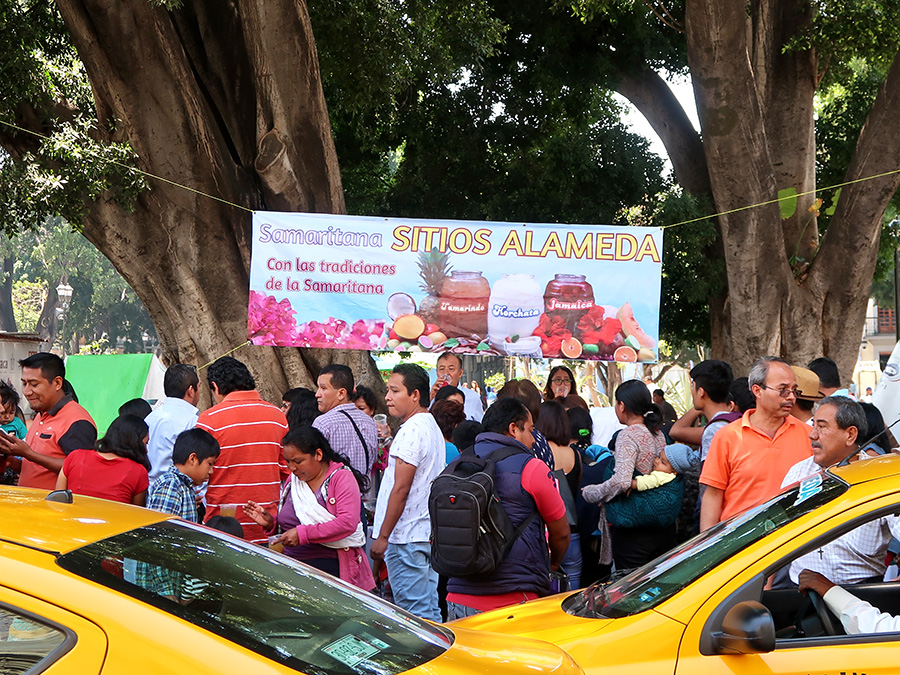
Taxi drivers host agua station on the Alameda
In previous years, the aftermath hath wrought mountains of garbage — cans overflowing with plastic and styrofoam. However, this year, in the name of the environment, an appeal was made for people to bring their own cups. And, I think a majority complied!
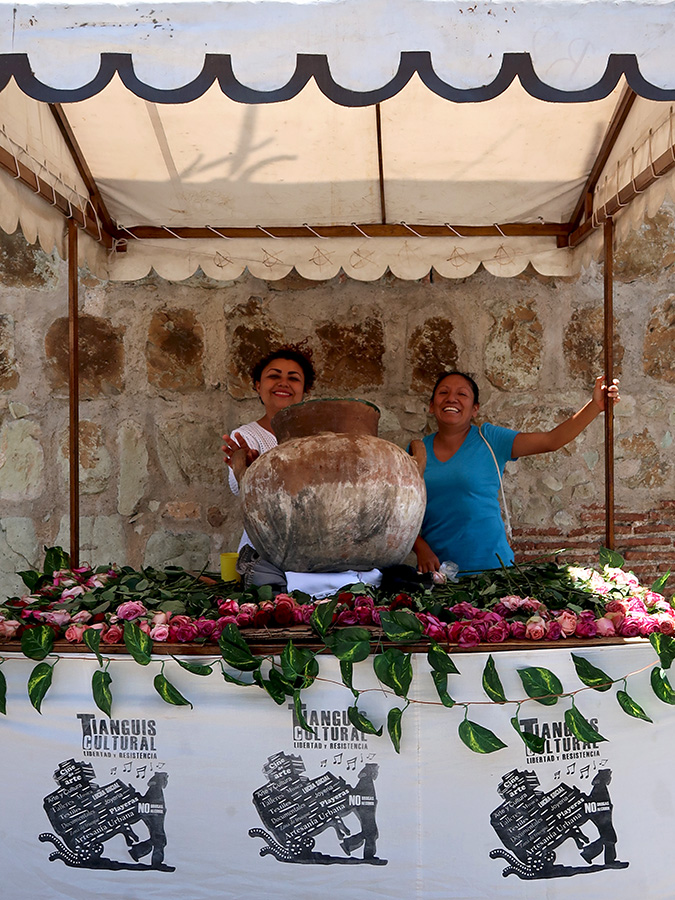
On the Alcalá above Santo Domingo
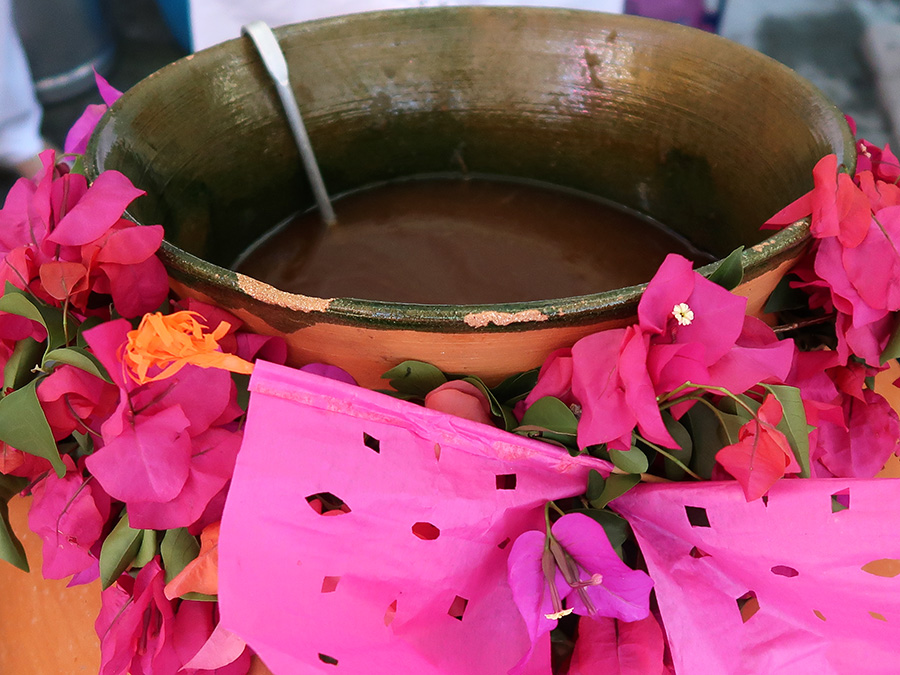
An olla with Agua de chilacayote (type of squash)
And me? After almost two hours, three aguas (watermelon with mint, cucumber with mint, and chilacayote), a nieve of leche quemada and tuna, and being surrounded by smiling people enjoying this celebration of generosity, I returned home with my heart full of love and gratitude for the traditions of Oaxaca.
Posted in Beverages, Culture, Food, People, Restaurants, Travel & Tourism, tagged Cafébre, coffee, Don Juanito Taquería and Pozolería, food tours, Kay and Dean Michaels, Los Danzantes restaurant, mescal, Mexico, mezcal, Mezquite Gastronomía, Oaxaca, Oaxaca Eats Food Tours, photos, restaurant tours, Tierra del Sol restaurant on March 26, 2019| 18 Comments »
A foodie blog post is overdue and so I present to you, Oaxaca Eats Food Tours, the brainchild of Kay and Dean Michaels. Loving and appreciating Oaxaca and wanting to share it, they saw a niche and proceeded to fill it beginning in August 2018. The goals that guide their enterprise are:
And so, a few weeks ago, I joined several others at the designated gathering spot (in our case, in front of the now departed OAXACA sign across from Santo Domingo) where Dean and Kay greeted us, introduced the tour guides and presented us with our “Tour Activity Sheet” that included an itinerary listing the restaurants we would be visiting and the dishes they would be offering — very handy for this blogger, when reconstructing the day.
Our first stop (if you don’t count a brief visit to a nearby cart for a few whet-your-whistle sips of tejate in keepsake small traditionally painted red jícara cups) was the rooftop terrace of Mezquite Gastronomía, a restaurant that has become one of my favorites of late.
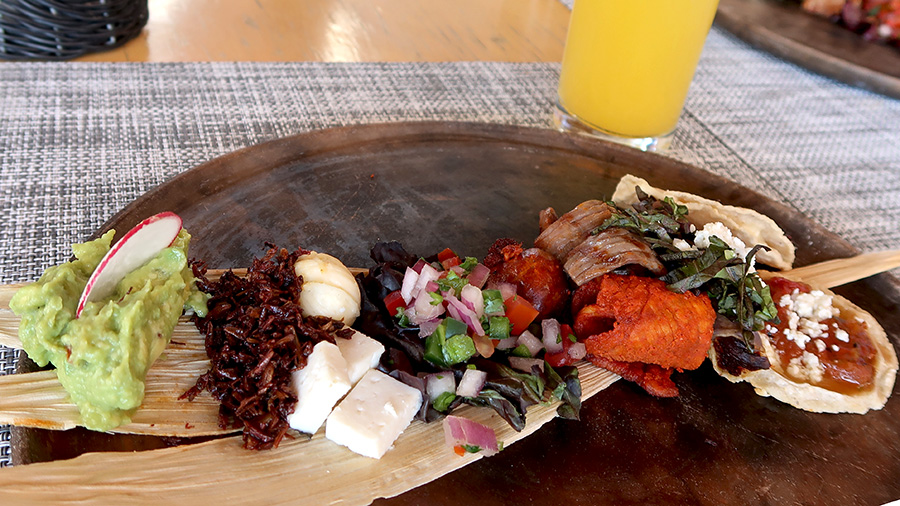
Botana Oaxaqueña – guacamole, chapulines, quesillo, queso fresco, pico del gallo, chicken taquito, cecina, tesajo, chorizo, quesadilla, memela
Upon our arrival, a tall glass of fresh squeezed orange agua fresca, a platter filled with traditional Oaxacan appetizers, and a refreshing mezcal cocktail was set before each of us. Our waiter described each item and its preparation, while our tour coordinators translated and, during the meal, added a little history and a few anecdotes of their own, and answered any and all questions. They were a font of knowledge.

Perro Oaxaqueño – mezcal cocktail featuring grapefruit
Next on the tour’s itinerary was Los Danzantes, another restaurant I have been to many times. However, one of the fun parts of Oaxaca Eats, is tasting menu items you have never before ordered — because there are already too many dishes that sound delicious. In this case for me, tuna with a sesame tostadito and quesillo and queso wrapped in a hierba santa leaf.
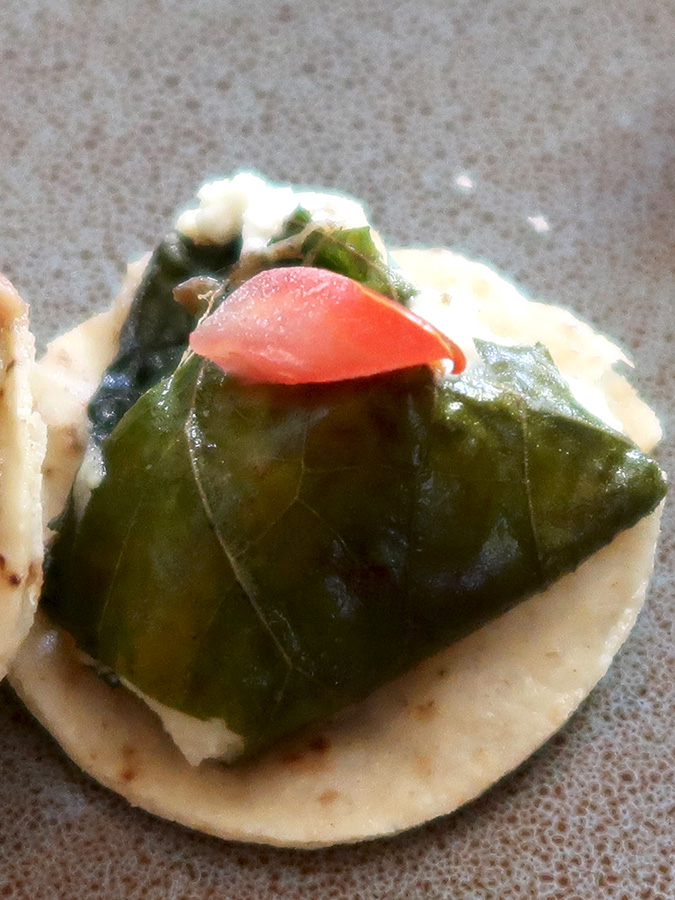
Quesillo and queso in a hierba santa leaf
Besides a vaso veladora of one of the restaurant’s tasty mezcals, we were also served a Zegacola, a locally made artisanal alternative cola beverage. While I’m not a fan of soft drinks, this wasn’t nearly as cloying, actually had some flavor, and didn’t leave the impression it could remove the rust from a junkyard car.

Tall glass of Zegacola next to a vaso veladora of mezcal
Our third stop was at a restaurant I have never before been to, though I pass by it frequently — the Centro Histórico branch of Tierra del Sol. It was here that the preparation became a participatory event. We were presented with tray containing a score of ingredients and instructed to choose those that were to be made into our salsa. I suspect there were no bad choices or combinations!

Table side grinding chiles in a molcajete for our salsa
In addition to the delicious, though a bit picante, salsa we had created, we were served a tetela filled with beans, chile, and an avocado leaf, along with three different moles, oh my! And there was an agua fresca of guanábana, a mezcal cocktail with pineapple and celery, AND two copitas (yes, two!) of mezcal — an espadín and a tobalá — from the palenque of maestra (yes, a woman!) Berta Vázquez in San Baltazar Chichicapam.

Mole Mixteco with chicken, Huachimole with pork, and Mole de Laurel with beef
Are you full? Sorry, there was more! A several block walk took us up to Don Juanito Taquería and Pozolería. By this time, we, too, were looking at each other in wide-eyed wonder and asking, could we possibly eat any more? But we could and we did. Besides, who could resist Doña Epifania’s charm and tales of the restaurant’s long history (since 1966).

Epifania Albino Robles, wife of owner Felix Leoza, explaining Don Juanito’s history and the preparation of each plate
Did I mention, it was a very hot day? I can’t begin to describe how refreshing the agua fresca of pineapple and hierba buena was! As if we hadn’t already eaten enough, in addition to tostaditos with guacamole and red and green salsas, we were served a beef tostada, beef taco al vapor, and their renown pozole.

Pozole (beef and pork) de la Casa
Believe it or not, it still wasn’t time to part company. Our final destination was Cafébre, where a self-described coffee geek regaled us with her coffee knowledge and enthusiasm, all the while brewing coffee to exacting specifications — cup one using a Melitta filter pour-over technique and cup two using an AeroPress plunger-like device. I think we were all seriously surprised at how the taste of the same coffee beans could vary so much depending on the brewing technique.

Brewing coffee using Melitta filter technique
The sweetness of the day was sealed with a creamy maracuyá flavored cheese cake which, as unbelievable as it sounds, we all finished. By this time, Kay and Dean had rejoined us, we lingered, and then finally said our thank you’s and farewells and waddled back to our respective homes and hotels — sated and sleepy. Four hours of delicious dining is exhausting!!!
Posted in Celebrations, Creativity, Culture, People, Textiles, Travel & Tourism, tagged artisans, backstrap loom, baskets, bodypaint, canastas, carding wool, Día del Artesano, light fixtures, looms, mandiles, Mexico, murals, Nativity scene, Oaxaca, photos, popular travel destinations, street art, wall art on March 20, 2019| 8 Comments »
Yesterday, Mexico celebrated el Día del Artesano (Day of the Artisan). Alas, I’m a day late in recognizing the men and women whose artistry in carrying on traditions and renewing and enriching them with their own creative spirit contributes to Oaxaca’s vibrant cultural life and economy. However, the entire month of March has been designated “month of the artisan,” so here are several of the artesanas and artesanos who I have had the honor and joy of knowing and visiting over the past year.

Emilia Gonzalez, wool spinning and dying in Teotitlán del Valle

Juan Manuel García Esperanza, silver filigree, Ciudad de Oaxaca
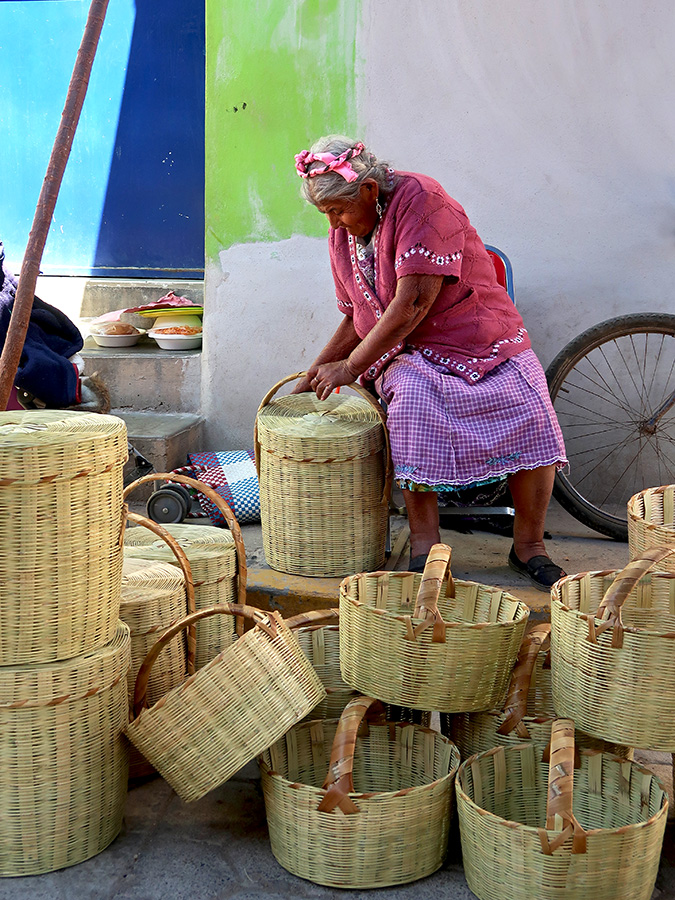
Carrizo basket maker from San Juan Guelavía

Barro rojo (red clay) potters from San Marcos Tlapazola

Mural painters in San Martín Tilcajete

Weaver from Santo Tomás Jalieza

Eligio Zárate, potter, Santa María Atzompa
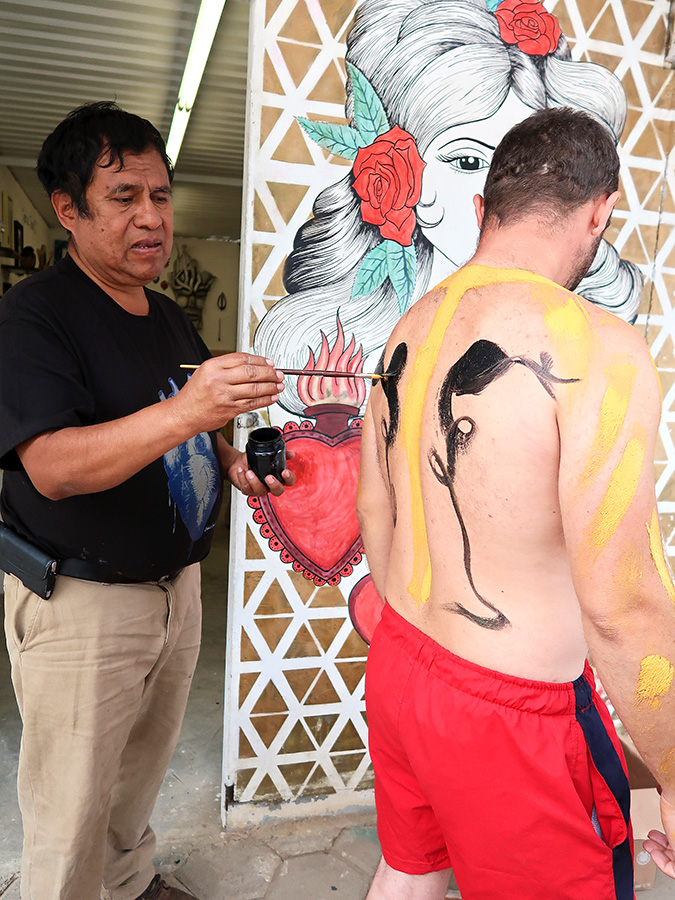
Jesús Sosa Calvo, wood carver and painter, San Martín Tilcaje
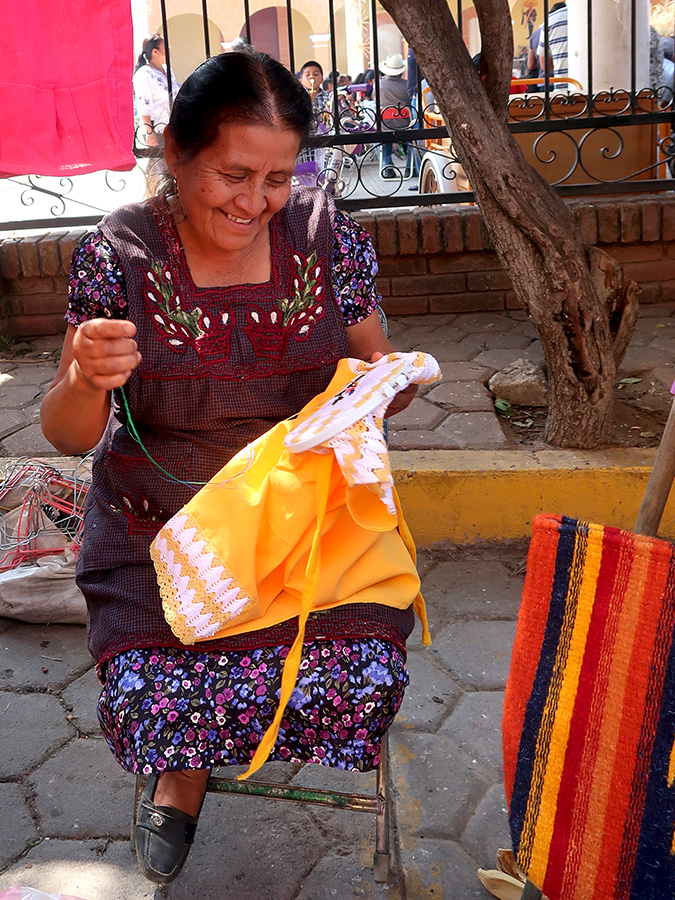
Seamstress, embroiderer, crocheter, Sra. Gutiérrez from Teotitlán del Valle

Don Luís, weaver, Ciudad de Oaxaca
A very special thank you to Don Luís, whose weaving studio shares a wall with my apartment and I have the pleasure of seeing and hearing most every day. The rhythmic sounds of his loom are one of the songs on the soundtrack of my Oaxaca life.
Posted in Celebrations, Creativity, Culture, Religion, Travel & Tourism, tagged Black and white photography, bodypaint, Carnaval, Carnival, Fat Tuesday, Jacobo Ángeles, Mardi Gras, mascaras, masks, Mexico, Oaxaca, photos, San Martín Tilcajete on March 6, 2019| 2 Comments »
Scenes from the streets of San Martín Tilcajete during yesterday’s Carnaval craziness.


“Color is descriptive. Black and white is interpretive.” – Eliott Erwitt
Posted in Celebrations, Creativity, Culture, Holidays, Travel & Tourism, tagged Barrio de San Pablo Zaachila, Carnaval, Carnival, costumes, Fat Tuesday, Mardi Gras, mascaras, masks, men dressed as women, Mexico, Muestra de Carnavales de los Valles Centrales, Oaxaca, painted bodies, parade, photos, San Jacinto Chilateca, San Martín Tilcajete, Santa Ana Zegache, Santa María Coyotepec, Shrove Tuesday on March 3, 2019| 2 Comments »
Given that Oaxaca loves parades and processions (the numbers of Muertos comparsas and Guelaguetza desfiles seem to grow every year), yesterday the 1st Muestra de Carnavales de los Valles Centrales took over the Macedonio Alcalá walking street with costumes, devils, painted bodies, cowbells, bands, masked men, mezcal, and more.

Santa Ana Zegache

Santa Ana Zegache
In an effort to promote tourism in the villages, residents and visitors were treated to sampling the variety of Carnaval traditions from five of the Valley of Oaxaca’s communities.
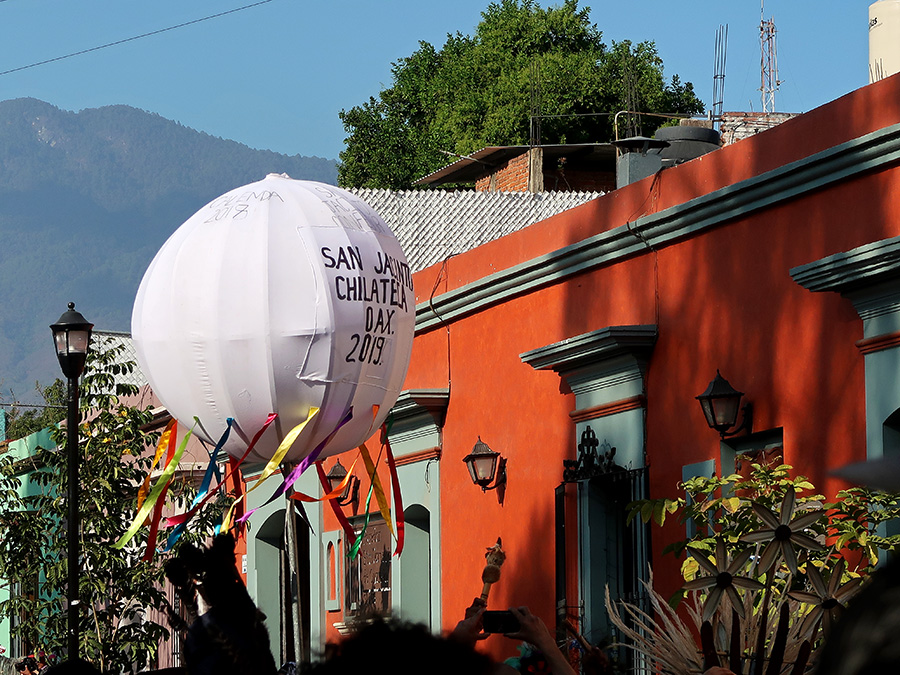
San Jacinto Chilteca
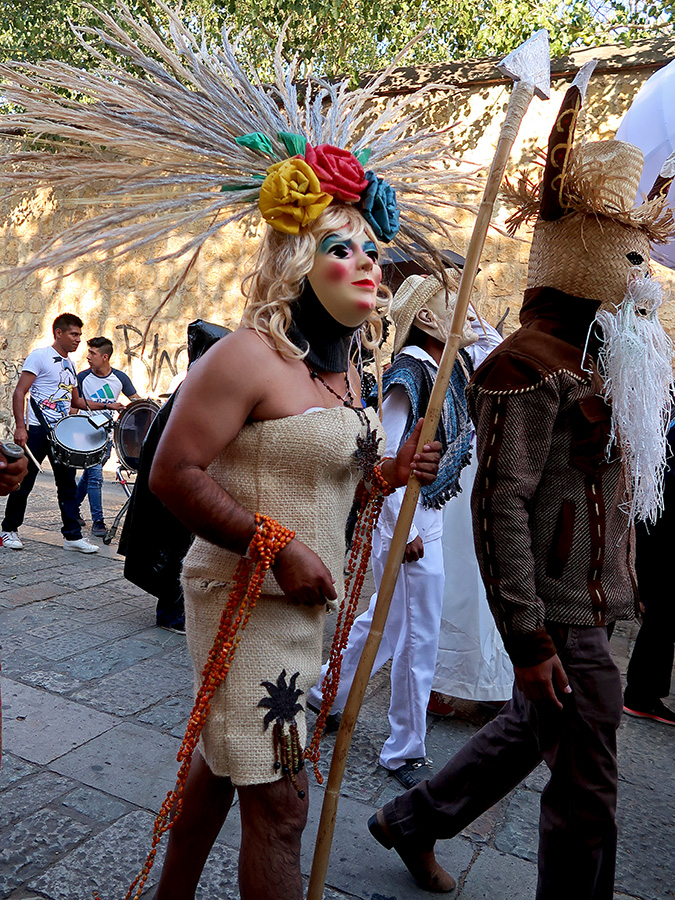
San Jacinto Chilteca
The Spanish brought the tradition of Carnaval to Mexico. However, like many other seasonal celebrations, it conveniently coincided with indigenous festivals celebrating the “lost days” of the Mesoamerican calendar, “when faces were covered to repel or confuse evil.”

Santa María Coyotepec

Santa María Coyotepec
Apparently, it caught on “because it was one time when normal rules could be broken especially with the use of masks to hide identities from the authorities.”
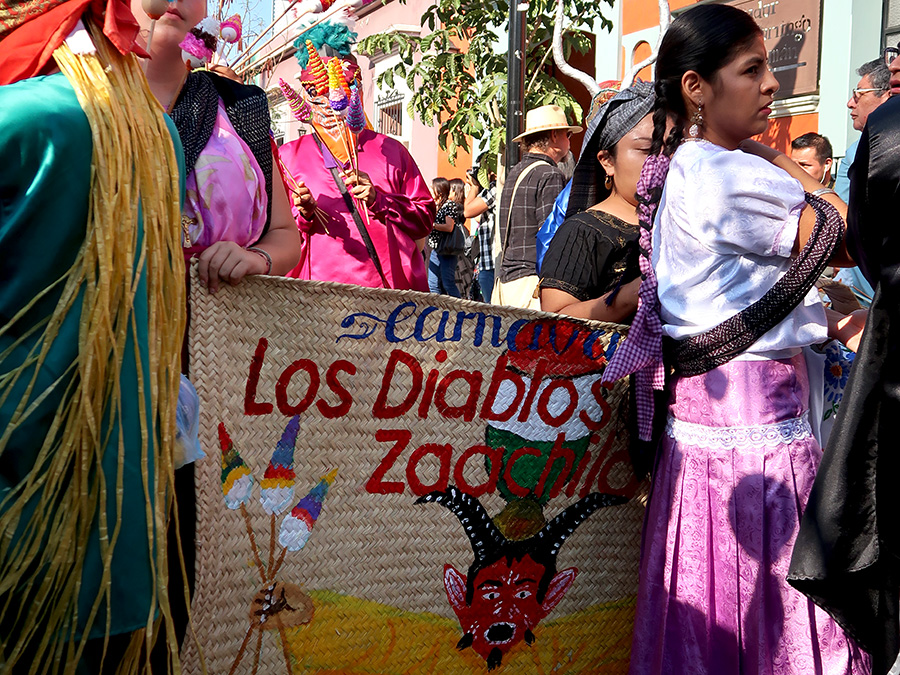
Barrio de San Pablo Zaachila
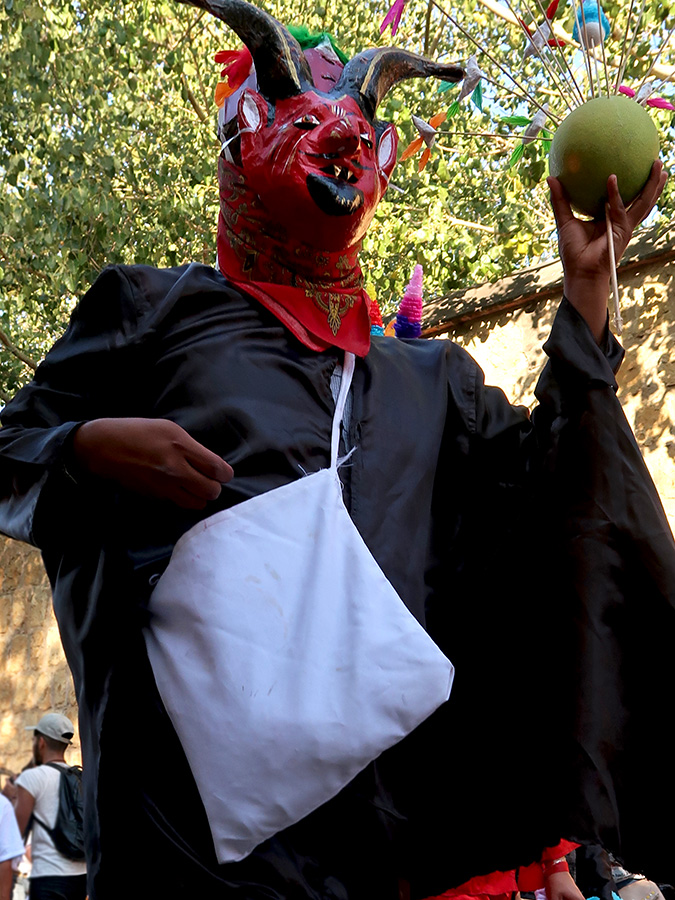
Barrio de San Pablo Zaachila
This Día de Carnaval (aka, Fat Tuesday, Mardi Gras, Shrove Tuesday, Carnival), like previous years, we will be heading out to San Martín Tilcajete.

San Martín Tilcajete

San Martín Tilcajete
However, now I’m thinking we might want to add another stop (or four?) to our itinerary. We shall see…
Posted in Archaeology, Culture, Travel & Tourism, tagged archaeological zone, Black and white photography, Mexico, Oaxaca, photos, popular travel destinations, Suchilquitongo on February 27, 2019| 2 Comments »
Visiting friends equals playing tour guide and exploring the sights, sounds, and tastes of Oaxaca. Thus, last Thursday off we went to the new-to-me, little known, and hard to find north-of-the-city archeological site of Suchilquitongo.
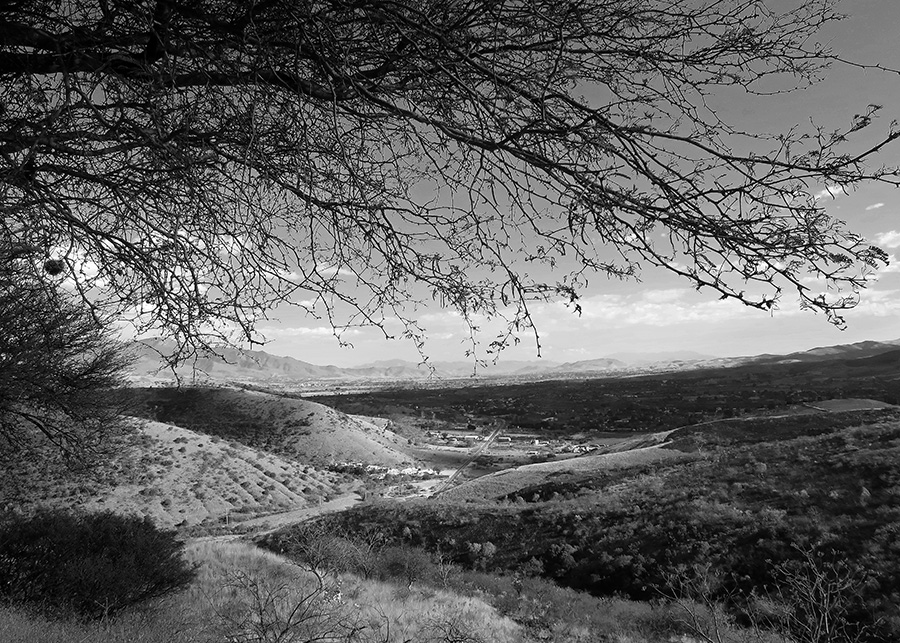


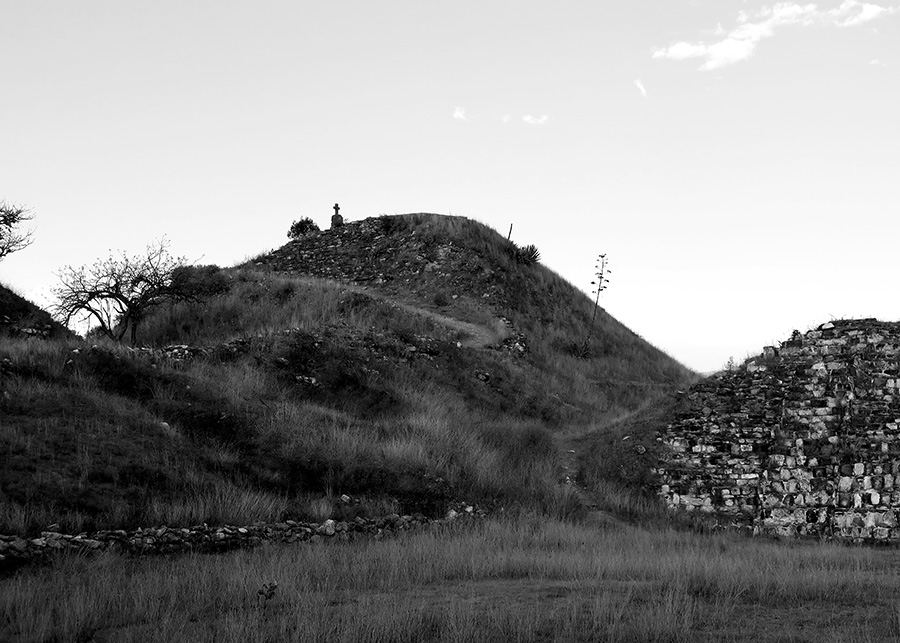
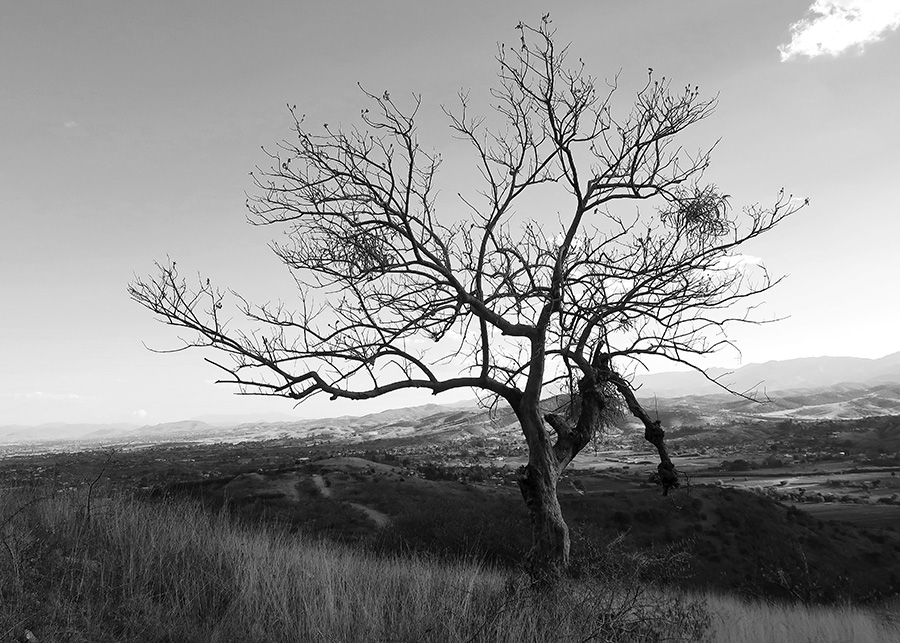
While the site is small and the excavated tomb is closed, for the views alone, it was well worth the trip.
Posted in Agriculture, Animals, Beverages, Creativity, Culture, Flora, Science & Nature, Travel & Tourism, tagged agave, bats, flowers, hummingbirds, Lapiztola, mague, Mal de Amor palenque, Mexico, murals, Oaxaca, photos, popular travel destinations, quiote, Santiago Matatlán, wall art on February 24, 2019| 5 Comments »
Let us all raise a glass to the hummingbirds and bats of Oaxaca.
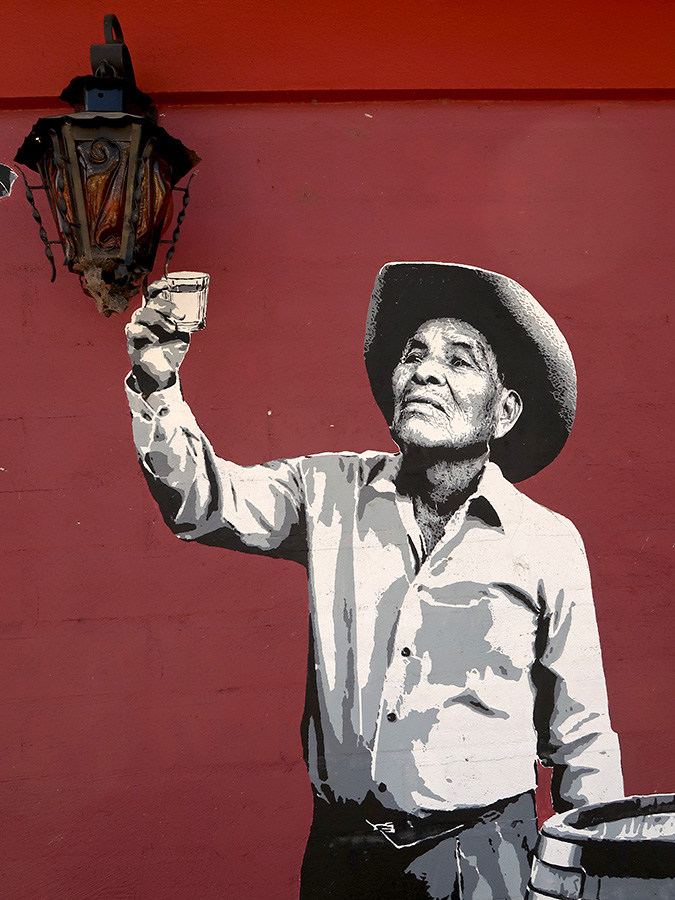
Without the work they do pollinating the flowers on the quiotes (stalks) that shoot up from the agave,
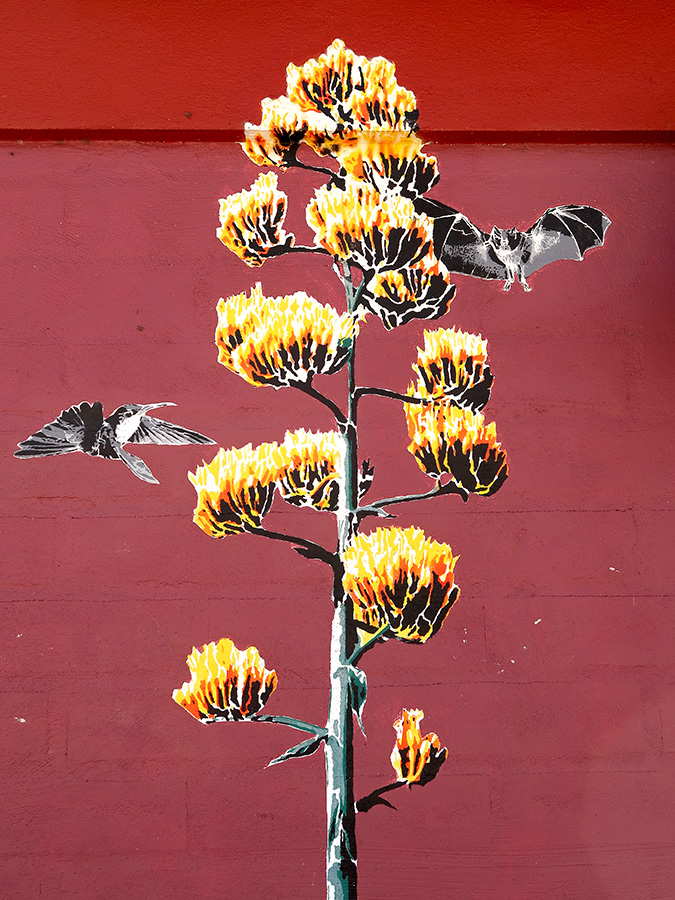
there would be no maguey piñas to harvest and cook…
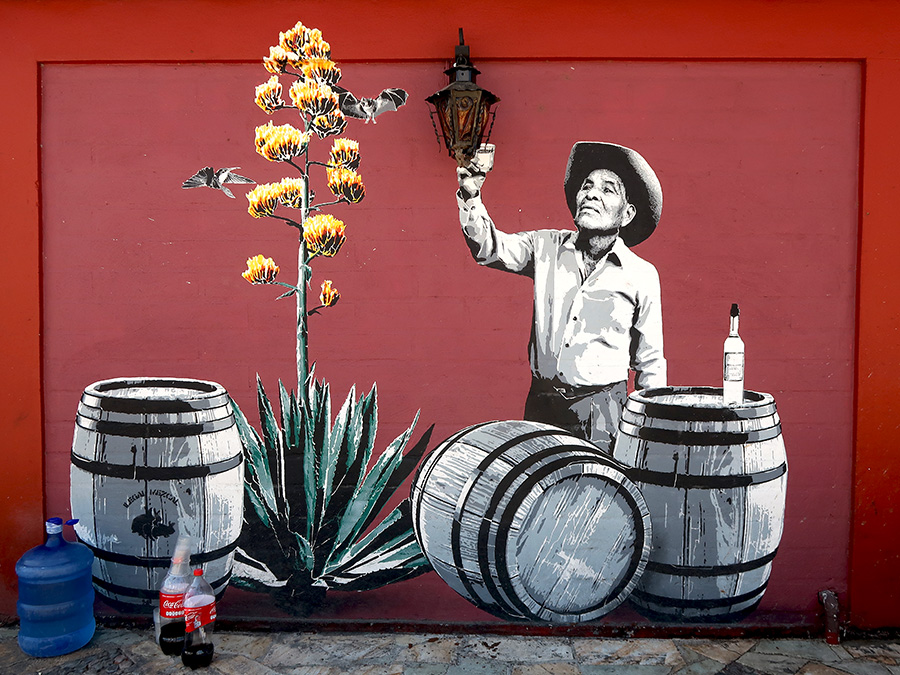
and no mezcal to drink!
*Mural by Lapiztola on the side of the Palenque Mal de Amor (makers of Ilegal mezcal) 2+ miles north of Santiago Matatlán, Oaxaca. Check out their other mural at the palenque HERE.
Posted in Celebrations, Culture, Education, Language, Travel & Tourism, tagged costumes, Día Internacional de la Lengua Materna, ethnolinguistic groups, indigenous peoples, International Mother Language Day, language, lengua materna, Mexico, Mother Tongue, native tongues, Oaxaca, photos, traje, UNESCO, United Nations on February 19, 2019| 7 Comments »
2019 has been proclaimed the International Year of Indigenous Languages by the United Nations. The issue of “lenguas maternas” (mother tongues) has a particular resonance in Oaxaca, as the state is home to 16 distinct ethnolinguistic groups: Amuzgos, Chatino, Chinanteco, Chocho, Chontal, Cuicateco, Huave, Ixcateco, Mazateco, Mixe, Mixteco, Náhuatl, Popoloca, Triqui, Zapoteco, and Zoque.

As anyone who has visited the villages of Oaxaca has discovered, sometimes the abuelos and abuelas only speak their mother tongue, not Spanish. To honor and celebrate them, their ancestors, and their children and grandchildren, today on the zócalo, Oaxaca celebrated those languages with songs, poetry, and recitations.
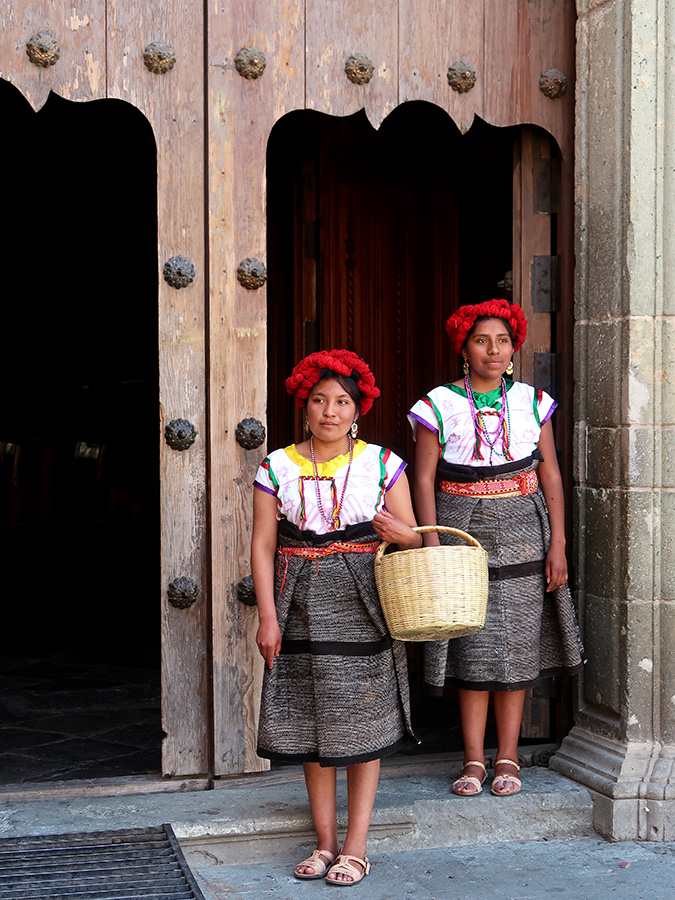
However, like indigenous languages throughout the world, Mexico’s indigenous languages are in danger of disappearing. The importance of passing these languages and the world views they express to the younger generations cannot be underestimated.

Thus here in Oaxaca, on February 21, 2019, Mother Language Day, you can walk “The roads of the feathered serpent: revaluing one of the variants of the Zapotec Valley of Oaxaca” and “Meet the Zapotec of Teotitlán through storytelling and other activities!” at the Biblioteca Infantil (Children’s Library).
Posted in Creativity, Culture, Exhibitions, Museums, People, Textiles, Travel & Tourism, tagged Chachahuantla blusa, Linda Hanna, Mexico, Museo Estatal de Arte Popular Oaxaca (MEAPO), Oaxaca, photos, Rosas y Revelaciones, San Antonino Castillo Velasco dress, San Miguel del Valle mandil, San Pedro Zipiajo blusa, Tenancingo rebozo, Teotitlán del Valle ruana, Virgen de Guadalupe, Virgin of Guadalupe, Zinacatán tunic on February 16, 2019| 6 Comments »
The devotion to the Virgin of Guadalupe captured the imagination of fiber artist Linda Hanna when, as an early teen, she visited Mexico with her family and saw believers crawling on their knees up to the Basilica of Our Lady of Guadalupe.

Blouse by Teresa Silvia Tzintzun, San Pedro Zipiajo, Michoacán (Purepecha).

Detail of blouse by Teresa Silvia Tzintzun, San Pedro Zipiajo, Michoacán (Purepecha).
The Virgin’s appeal continued to deepen when Linda moved to Oaxaca in 1997. Thus the seeds/threads of the exhibition, “Rosas y Revelaciones: Homage to the Virgin of Guadalupe by Mexican Textile Artists” were sown/sewn.

Blouse by Marcolina Salvador Hidalgo, Chachahuantla, Puebla (Nahua).

Detail of blouse by Marcolina Salvador Hidalgo, Chachahuantla, Puebla (Nahua).
The legend of La Virgen de Guadalupe is known to every Mexican, every person of Mexican descent, and probably every foreigner who calls Mexico home. The image of this dark-skinned Virgin who spoke Náhuatl is as imprinted on the national consciousness as she was on Juan Diego’s legendary tilma (cloak).

Dress by María Guadalupe Santiago Sánchez, San Antonino Castillo Velazco, Oaxaca (Zapoteco).

Detail of dress by María Guadalupe Santiago Sánchez, San Antonino Castillo Velazco, Oaxaca (Zapoteco).
Her image has continued to appear on cloth, albeit with human, not divine, intervention. Both Father Miguel Hidalgo in the Mexican War of Independence and Emiliano Zapata, one hundred years later, during the Mexican Revolution, led their troops under the banner of Our Lady of Guadalupe.

Man’s tunic by Pascuala Vásquez Hernández, Zinacatán, Chiapas (Tzotzil, Maya).

Shawl by Adolfo García Díaz & Delvina Salinas Cruz, Tenancingo, Estado de México.
The Rosas y Revelaciones textile exhibition presents work from 52 communities in ten states in Mexico (Chiapas, Colima, Guerrero, Jalisco, Mexico, Michoacán, Oaxaca, Puebla, Tlaxacala, and Yucatán) — with the majority being from Oaxaca.

Apron by Valeria García Hernández, San Miguel del Valle, Oaxaca (Zapoteco).

Detail of apron by Valeria García Hernández, San Miguel del Valle, Oaxaca (Zapoteco).
Linda explained that she gave the artists free rein to let their imagination and expertise be their guide. I suspect these words by Guadalupe Ángela, from her poem, “Virgen de la Creación” (Madonna of Creation) composed for the exhibition, echo their prayers for inspiration and guidance:
Madonna of Creation
pull the image from me, the beauty.
Make it cedar, make it textile, make it
a landscape. May the needle and thread be touched
by you.

Ruana by Erasto (Tito) Mendoza Ruiz, Teotitlán del Valle, Oaxaca (Zapoteco).
When you go, be sure to take the time to watch the video interviews with some of the artisans — the seriousness, devotion, and honor they felt at being selected to participate in this incredibly special project is extremely moving. The show is currently at the Museo Estatal de Arte Popular Oaxaca (MEAPO) (closed on Mondays) in San Bartolo Coyotepec, Oaxaca and runs through March 17, 2019 (extended until April 28, 2019) — after which it will be prepared to tour. Its first stop will be at the Museo Nacional de Culturas Populares in Coyoacán, Mexico City — in time for Día de la Virgen de Guadalupe on December 12, 2019.
(ps) Linda is hoping the exhibition will develop wings and fly throughout Mexico and eventually to the USA. If you have contacts in the museum world who might be interested in hosting this exhibition, please be sure to contact Linda Hanna at Casa Linda.
Posted in Celebrations, Creativity, Culture, Holidays, Travel & Tourism, tagged balloons, Día del Amor y la Amistad, hearts, Mexico, papel picado, photos, Valentine's Day on February 13, 2019| Leave a Comment »
The signs of Valentine’s Day are everywhere…

Ready for the fiesta on the patio of my apartment complex.

Tin hearts on display at the Museo Estatal de Arte Popular de Oaxaca (MEAPO) shop in San San Bartolo Coyotepec.
While it may be a holiday imported from Europe, Mexico embraces the celebration.

Dining room ceiling of Los Huamuches, between Santo Tomás Jalieza and San Martín Tilcajete.

Balloons on the zócalo in Oaxaca de Juárez.
Wishing you ¡Feliz Día del Amor y la Amistad!

Bougainvillea on a cross at the palenque of Faustino García Vásquez, San Baltazar Chichicápam.

Ready for the fiesta on the patio of my apartment complex.
Happy Day of Love and Friendship to all!
Posted in Creativity, Culture, Textiles, Travel & Tourism, tagged coyuche, expo-venta, huipil, indigenous textiles, Khadi Oaxaca, Mexico, Museo Textil de Oaxaca, Oaxaca, photos, rebozos, shawls, Textile Museum of Oaxaca on February 3, 2019| 3 Comments »
Friday, February first, the opening of the Museo Textil de Oaxaca expo-venta (show and sale) beckoned. Textiles from the Yucatán, Veracruz, Puebla, the State of Mexico, Michoacán, and (of course) Oaxaca filled tables and display racks. It’s hard not to feel overwhelmed by the color and beauty and workmanship, but I’m learning. I take my time, make several rounds of the booths, and then see what calls me back.
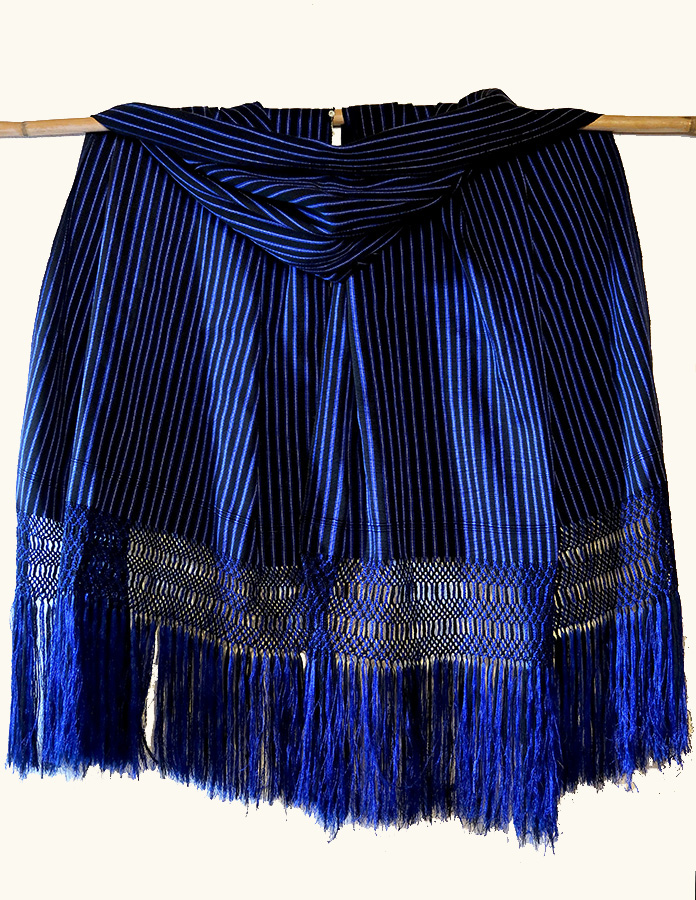
So, what did I return to? The rebozos (shawls) from Ahuirán, Michoacán.
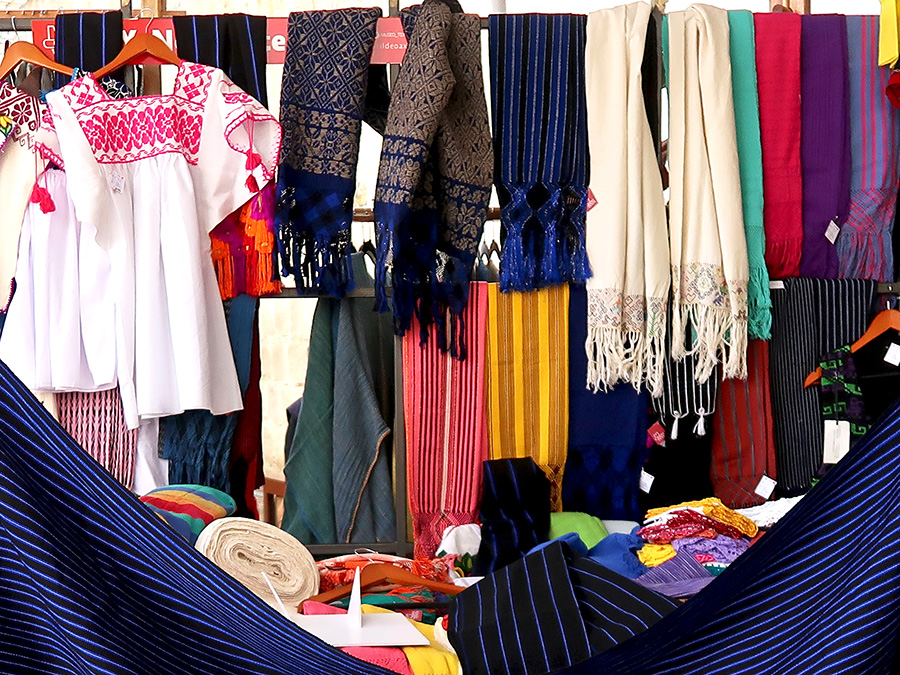


And, what did I buy? One of their traditional black and blue cotton and rayon rebozos.
Then there was Khadi Oaxaca — “a social-entrepreneur initiative that supports the village of San Sebastian Rio Hondo, Oaxaca, Mexico, to economically develop in a sustainable way.” They spin, dye, and weave coyuche — a brownish cotton grown in Oaxaca and, working with designers, fashion modern takes on this traditional cloth. They even sell bolts of fabric so you can design your own!


What called out to me? A lovely huipil with a subtle, but intricate, design. I love the way the natural color of the coyuche takes the dye.

I also kept coming came back to the stall filled with the spectacular textiles from San Bartolomé Ayutla, Oaxaca. Alas (or, thank goodness), I was out of money. Next time…

The expo-venta runs through tomorrow (Feb. 4) on the patio of Centro Cultural San Pablo, next door to the Museo Textil de Oaxaca.
Posted in Culture, History, Politics, Protests, Travel & Tourism, tagged Can the Triquis Go Home? article, David Bacon, huipil, indigenous peoples, Mexico, Movimiento Unificador de Lucha Triqui (MULT), Oaxaca, photos, red, Triqui on February 2, 2019| Leave a Comment »
The zócalo is a sea of red today. It is the 38th anniversary of the founding of the Movimiento Unificador de Lucha Triqui (MULT) — one of the organizations of Triqui from the Mixteca Baja region of Oaxaca. They have come to (yet again) present their demands to the government.

For background (in English) on the plight of the Triqui in Oaxaca and the many who have been forced by violence in their communities to migrate to California, check out David Bacon’s article, Can the Triquis Go Home? Unfortunately, I don’t think much has changed since it was written in 2012.


 Mexican Peso Converter
 View From Casita Colibrí

Women in struggle
Posted in Creativity, Culture, Politics, Protests, Travel & Tourism, tagged Armarte, art, Día Internacional de la Mujer, International Women's Day, marches, Mexico, Oaxaca, photos, political art, political commentary, protest, stencil art, street art, urban art, wall art, women's rights on March 11, 2019| 2 Comments »
Armed with their art, the women of Armarte OAX have taken to the streets to raise their voices in struggle.
And, they aren’t alone in Oaxaca…
In the early evening of International Women’s Day, thousands of women “reclaimed” some of the most dangerous streets of the city demanding an end to street harassment, punishment for rapists, the cessation of violence against women, and safe abortion.
Struggle, the other “women’s work.”
Share this:
Read Full Post »