Feeds:
Posts
Comments

Posts Tagged ‘popular travel destinations’

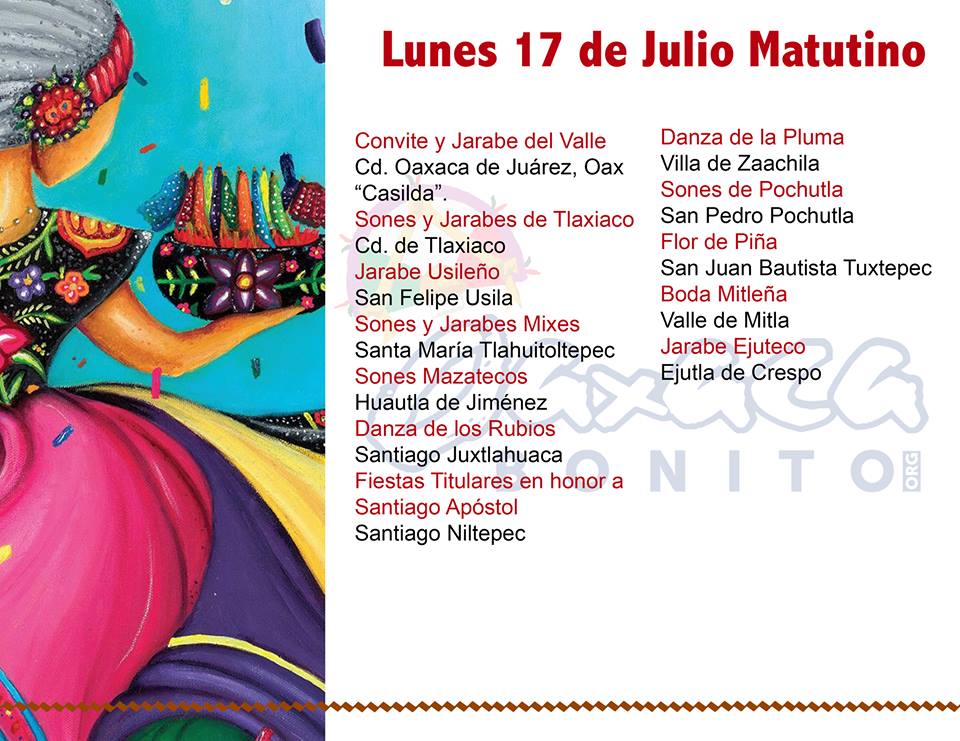
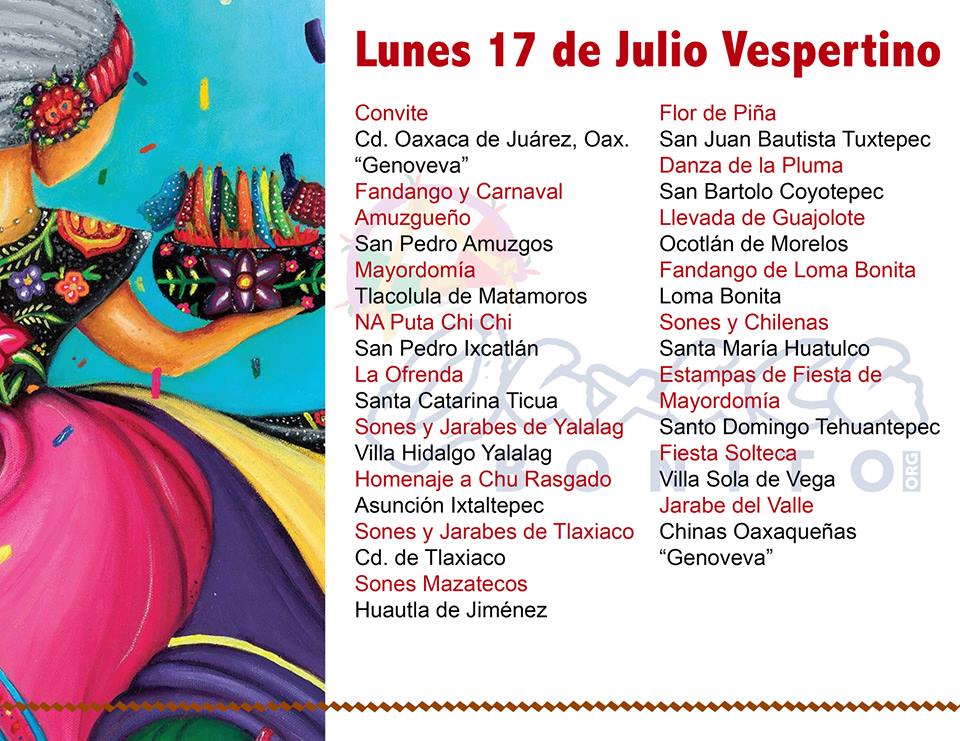
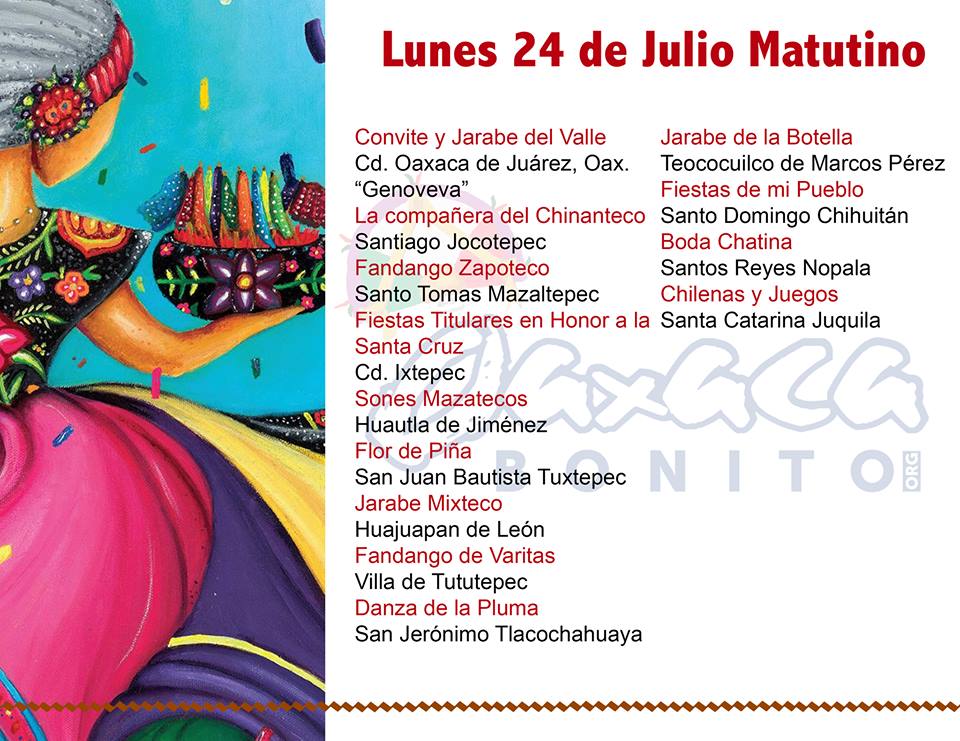
To watch last week’s Desfile de Delegaciones (Parade of Delegations), Donají…La Leyenda, and both the morning and evening Guelaguetza performances at the Auditorio Guelaguetza on Cerro del Fortín:  http://www.viveoaxaca.org/2017/07/EnVivo2017.html.

This week, the same link should be live streaming tonight’s Desfile, tomorrow night’s Donají, and both Guelaguetza performances on Monday.  If not, check the CORTV TV en Vivo link:  http://www.cortv.oaxaca.gob.mx/tv-en-vivo/.

July 22, 2017 at 6:00 PM – Desfile de Delegaciones

July 23, 2017 at 8:00 PM – Donají… La Leyenda

July 24, 2017 at 10:00 AM – Guelaguetza 2017 morning performance

July 24, 2017 at 5:00 PM – Guelaguetza 2017 evening performance

(Times given are USA Central Daylight Savings Time)

This week’s list of delegations:

July 24 morning

July 24 evening

¡Desfruta!  (Enjoy!)

Read Full Post »

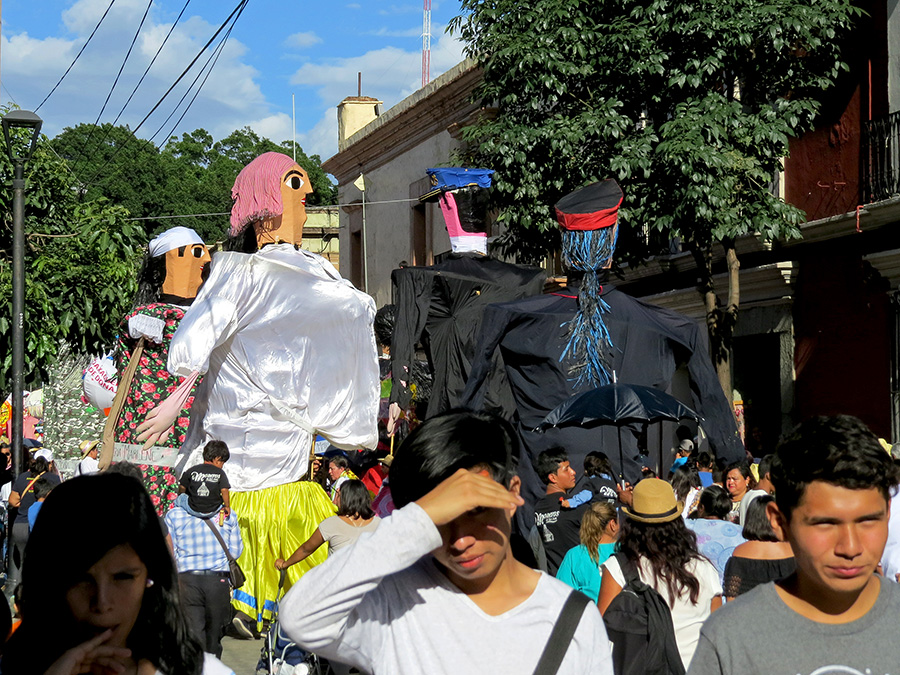
Another day, another parade.  Today, the Gran Calenda del Mercado de Abastos (parade of the markets) passed within a block and a half of Casita Colibrí.  I couldn’t miss it — the cacophony of multiple bands, cohetes (rockets), and honking horns announced its arrival in my ‘hood!  In the words of Octavio Paz, from The Labyrinth of Solitude

“The solitary Mexican loves fiestas and public gatherings.”

IMG_3690

“The art of the fiesta has been debased almost everywhere else, but not in Mexico.”

IMG_3707

“Our poverty can be measured by the frequency and luxuriousness of our holidays.”

IMG_3761

“Do they forget themselves and show their true faces?  Nobody knows.  The important thing is to go out, open a way, get drunk on noise, people, colors.”

IMG_3726

“In the confusion that it generates, society is dissolved, is drowned, insofar as it is an organism ruled according to certain laws and principles.”

IMG_3785

“Everything is united: good and evil, day and night, the sacred and the profane.  Everything merges, loses shape and individuality and returns to the primordial mass.”

IMG_3738

“The fiesta is a cosmic experiment, an experiment in disorder, reuniting contradictory elements and principles in order to bring about a renascence of life.”

Read Full Post »

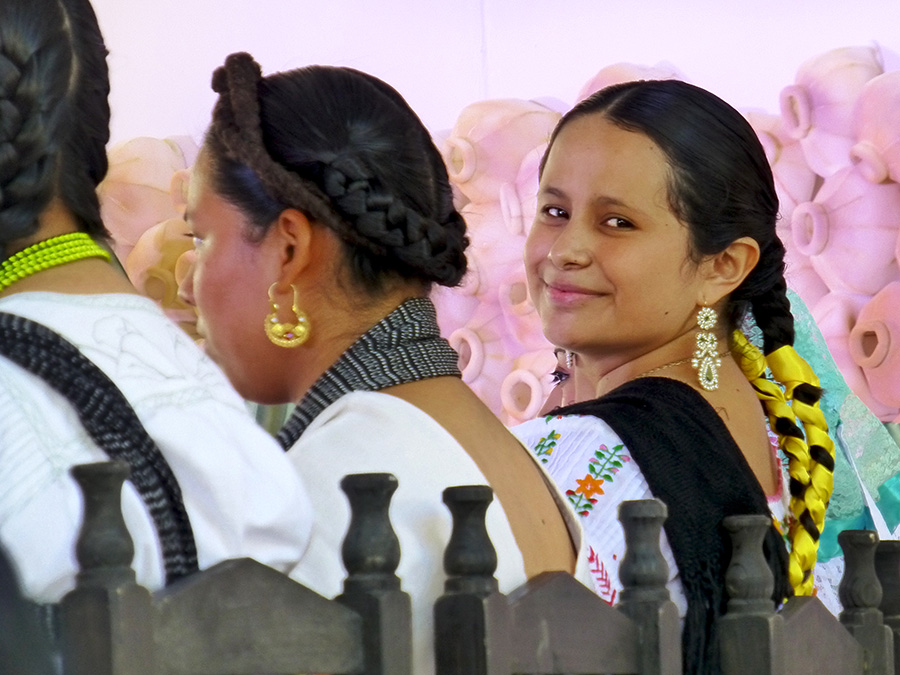
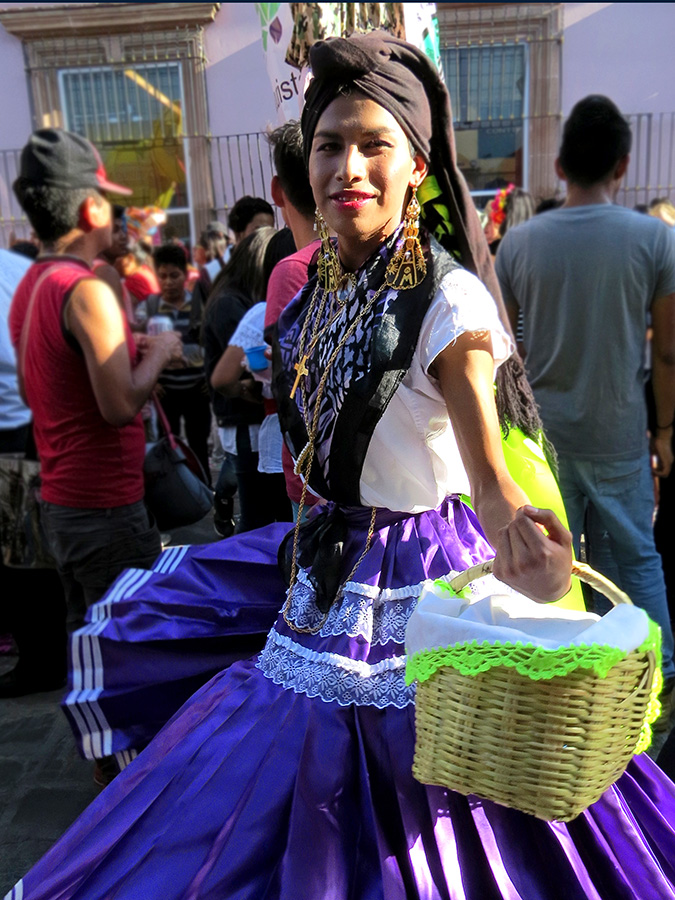
On Friday, Diosa Centéotl was selected to reign over the Guelaguetza festivities.  The eight regions of the state of Oaxaca were all represented by the 33 contestants competing for the honor.  (My photos of each of the contestants are from the morning phase of the competition.)

First a little history…  According to the pamphlet that was distributed to the hundreds of locals, family and friends of contestants, and tourists attending the competition at Jardín el Pañuelito, the little “pocket” garden along the side of Santo Domingo de Guzmán:

“In the pre-Hispanic worldview, Goddess Centéotl possessed the divine power to germinate corn and all the plants of the milpa:  tomato, squash, chile, quelites, beans, and other vegetables that constituted the Mesoamerican diet….”

“For that reason, prayers, dances, music and flowers were offered in each planting cycle…”

“[Later] the relationship between peoples, nature and the gods was manifested through a liturgical calendar carried out with much scrupulousness by both priests and the common people, for the survival of all was at stake, since a failed crop condemned them to famine, disease and moral suffering.”

“By contrast, an abundant harvest filled the people with happiness and they understood that the Goddess of Fertility – Centéotl – had listened to their requests.”  — my translation from the Spanish

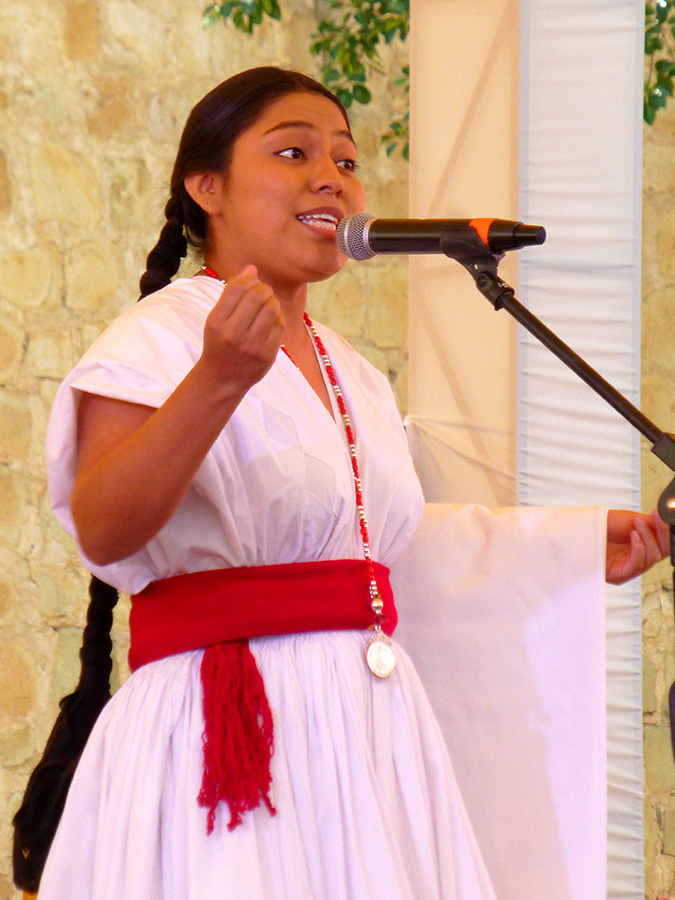
The competition to be Diosa Centéotl is not a Miss Universe/Miss America style beauty pageant.  Dressed in the typical costumes of their villages or neighborhoods, these young women had to communicate their knowledge of their communities. They were required to give two 4-minute oral presentations in front of five judges:  Jorge Bueno Sánchez (city chronicler), Celia Florián (chef/owner of Las Quince Letras), María Concepción Villalobos (coauthor of Centéotl en los Lunes del Cerro), María Concepción Guzmán Concha (textile expert), and Claudio Sánchez Islas (writer and journalist).

In the morning session of the competition, each was required to speak about their traditional cuisine, crafts, festivals, customs, myths and legends, or tourist attractions. During the afternoon stage, each had to discuss the history, composition, elaboration, and utility of their costumes.  In addition, as Oaxaca has sixteen distinct ethnolinguistic groups, contestants from the various indigenous communities spoke several lines in their materna lengua (mother tongue).

It is in the dignity, pride, and poise expressed by each of the contestants where we see the essence of their beauty expressed.  And the winner is…

Rebeca Itahí Ortiz Santibañez, San Melchor Betaza

Rebeca Itahí Ortiz Santibañez, from San Melchor Betaza in the Sierra Norte region of the state.  At being selected she exclaimed, “Doxhkenho dazhan” —  Muchas gracias in Zapoteco.

(ps)  If anyone has or can find a list of all the contestants, I would really love to add their names and communities to each photo.  I think they all deserve to be recognized.

Read Full Post »

While there have been pre-Guelaguetza calendas for the past couple of weeks, for me, the festivities really begin tomorrow — with the Festival de los Moles.  Last year, at least 20+ moles were presented at the “all you can eat” buffet in the Jardín Etnobotánico.  Ticket in hand, I’m ready!

P1200532 (1)In addition, tomorrow Diosa Centéotl (Corn Goddess) will be selected to preside over La Guelaguetza.  Beginning at 10:00 AM, contestants from the eight regions of the state of Oaxaca will showcase and explain the costumes and traditions of their communities, both in Spanish and their materna lengua (mother tongue).

P1200562

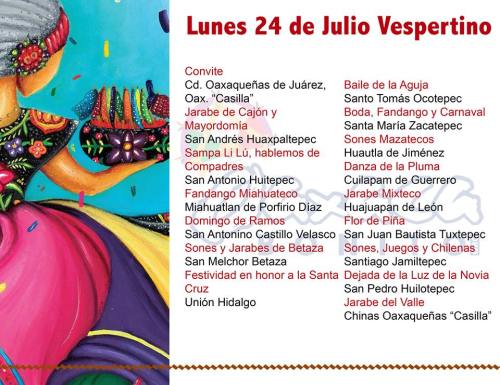
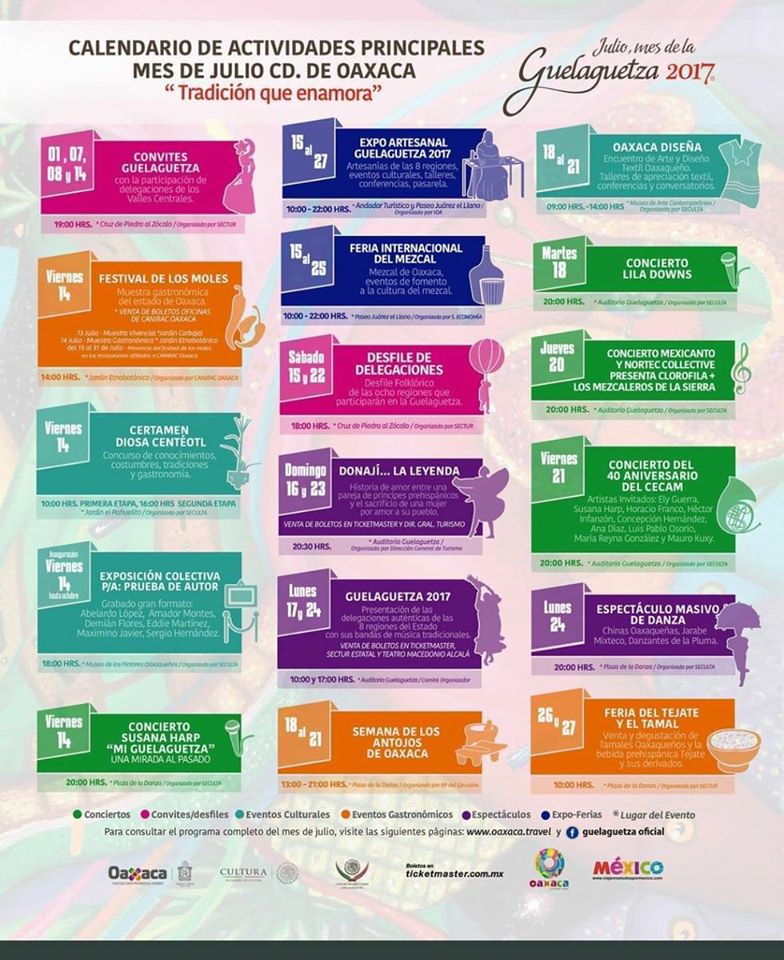
The schedule of activities during these next two weeks is always jam-packed, entertaining, and exhausting.  If you don’t believe me, take a look at the official schedule below.

Calendario Guelaguetza2017

That’s not all, folks!  There are additional Guelaguetza dance performances, expo-ventas, and fairs in the surrounding villages.  And, best of all, residents and visitors will not be navigating along sidewalks piled with garbage.  A temporary Guelaguetza truce to the almost two-week dispute that has prevented garbage from being delivered to dump, was agreed to last night.

P1270416

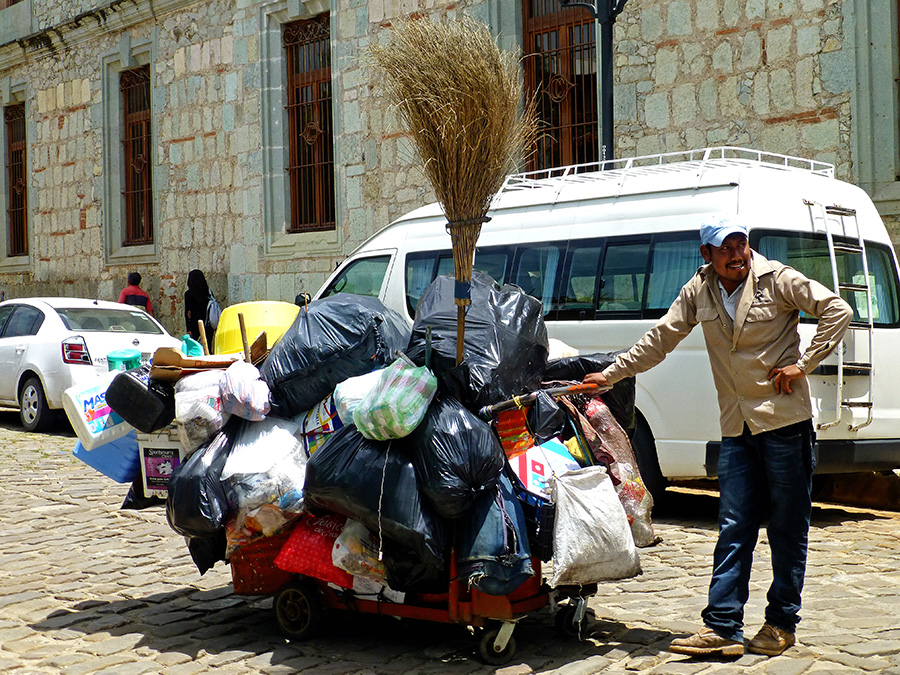
This afternoon, this guy’s garbage cart was SO full, he was having a hard time pulling it over the cobblestones.  He is my hero of the day!

Read Full Post »

On day 2 of introducing B to the sights, sounds, and flavors of Oaxaca, I turned to the professionals at Discover Oaxaca for assistance.  I had met the owners Suzanne Barbezat (author of Frida At Home) and her Oaxaqueño husband, Benito  Hernández, several years ago through friends and knew they were licensed guides.  And, as coincidence would have it, they were good friends of B’s god-daughter and her Oaxaquaño husband in California.  The choice was easy and the rave reviews on TripAdvisor were icing on the cake.

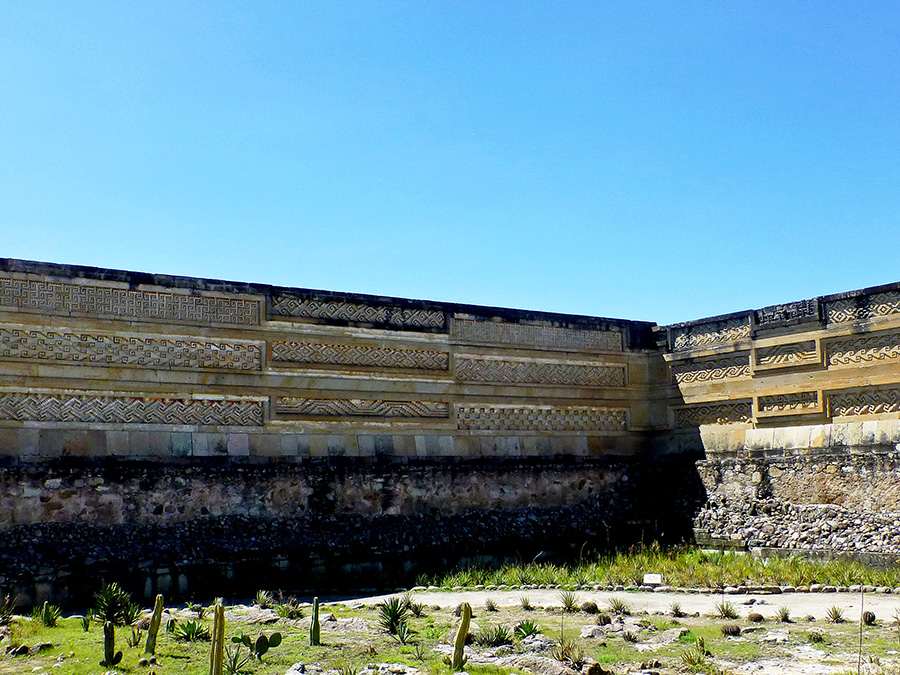
Thus, Wednesday began with Benito picking us up in a comfortable, spacious, and air-conditioned van.  Our day’s first destination was Mitla, the second most important archeological site in Oaxaca and home to amazingly intricate grecas (fretwork).  However, as we headed east on Mexican highway 190, Benito was a fountain of knowledge — much of which was new to me.  This was going to be good!

2aP1260763

Grecas (fretwork)on the outside of the Palace at the archaeological site at Mitla.

For almost an hour and a half, Benito led us through the site — always explaining, answering our questions, and letting us marvel at what was before us.  We could have stayed for at least another hour, but we headed back west on 190, to Yagul, an archeological site I had previously never visited.  Several friends told me they experienced a deeply spiritual sense and that it was a must see.  We barely skimmed the surface (definitely a place to return to), but the sun was hot, archeological overload was setting in, and hunger beckoned.
P1260776

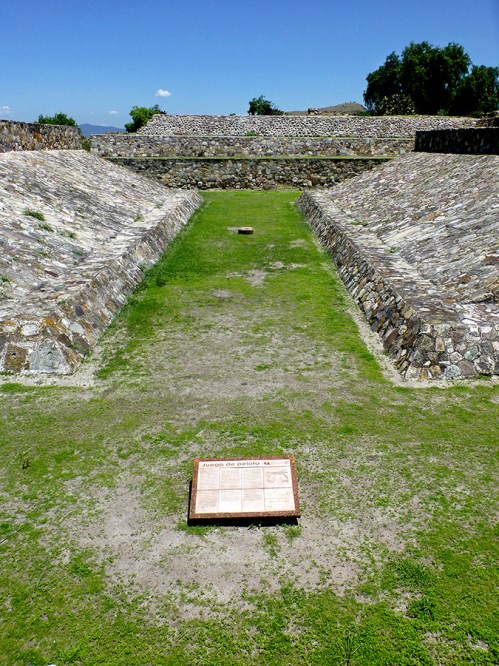
Ballcourt at Yagul — the biggest in the valley of Oaxaca.

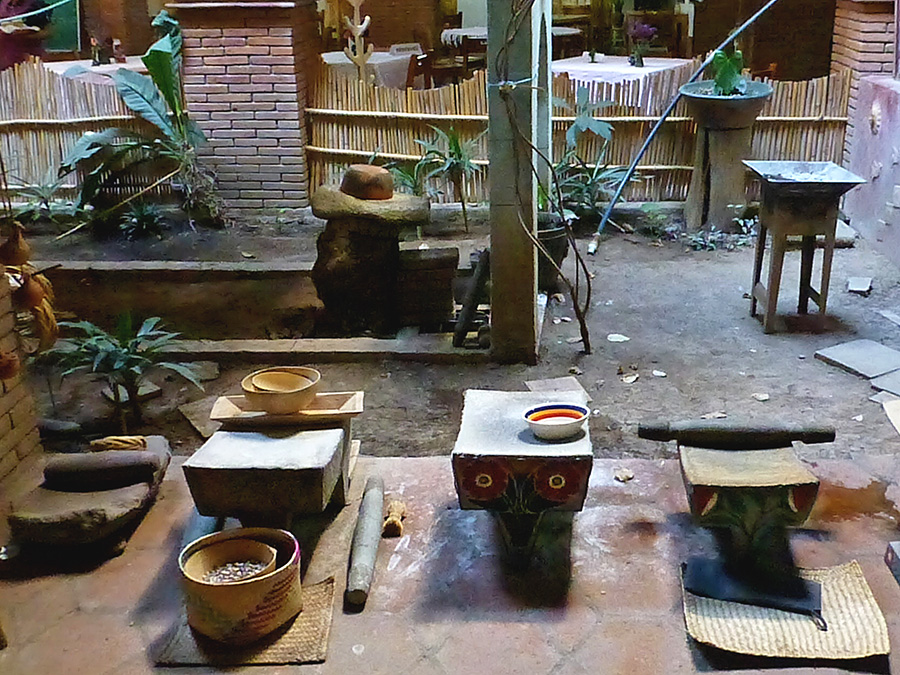
Next stop, Restaurante Tlamanalli in Teotitlán del Valle — the renown restaurant of Zapotec cooks, Abigail Mendoza and her sisters.  Using time honored methods and recipes refined over generations, the Mendoza sisters have elevated and brought worldwide recognition and respect for their traditional cuisine.  It was a delicious and tranquil interlude.
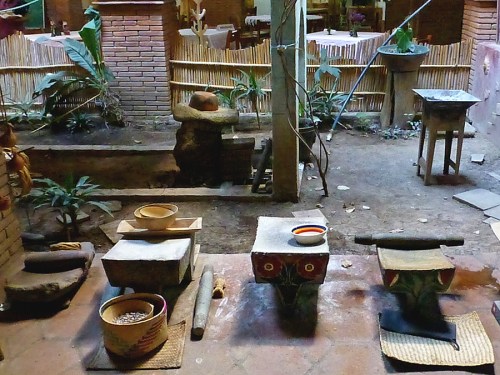
P1250077_land

Metates used at Restaurante Tlamanalli to grind ingredients for mole and more.

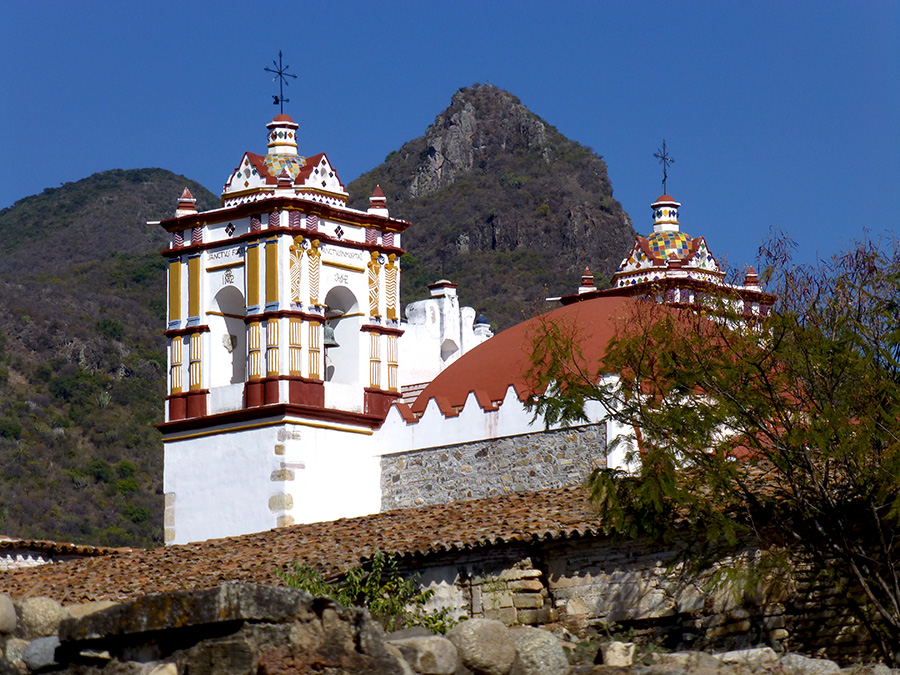
Tearing ourselves away, Benito, B, and I climbed back into the van and drove to the center of the village to see Templo de la Preciosa Sangre de Cristo, another of the countless churches throughout Mexico built on top of a sacred indigenous site.
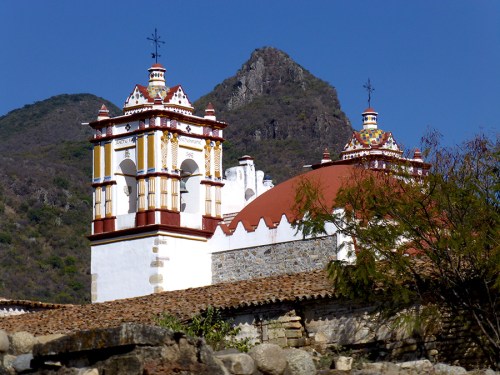
P1000657

Templo de la Preciosa Sangre de Cristo, sits atop Zapotec ruins at the base of Picacho, the sacred mountain in Teotitlán del Valle.

My intent, during our visit to this village, known for its weaving with wool, had been to visit several of the weavers I know — including Fidel Cruz Lazo, Antonio Ruiz Gonzalez, his brother Sergio Ruiz Gonzalez, and the family of Samuel Bautista Lazo.  However, we were running short of time, and B had been following my adventures with the family of Juana and Porfirio Gutierrez Contreras and had poured over the family’s website, so stopping at their home and workshop was a priority for him.  Porfirio was back in the USA, but Juana and her husband Antoño gave their always excellent explanation and demonstration of their work with natural dyes.  And, yes, B couldn’t resist purchasing a wonderful rug (though not the one pictured below)!

P1250593

Woven wool tapete (rug) by Porfirio Gutiérrez Contreras.

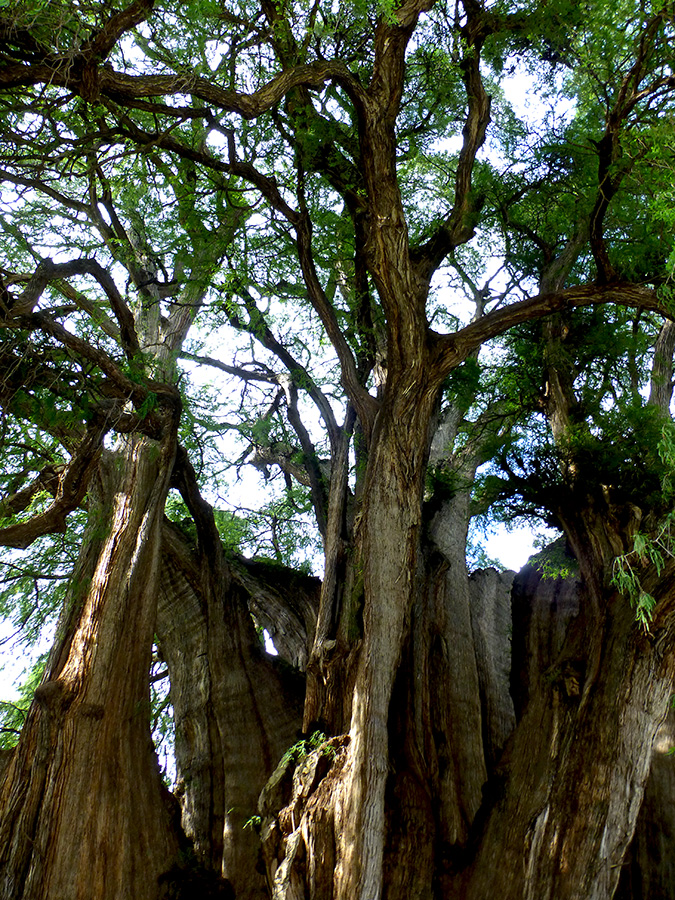
On the way back to Oaxaca city, our last stop for the day was at Santa María del Tule to see the world famous Árbol del Tule.  This Montezuma cypress (Taxodium mucronatum; Ahuehuete in Nahuatl) has the largest trunk of any tree in the world, is thought to be between 1,200 and 3,000 years old, and is home to hundreds, if not thousands, of birds.  It is quite a sight to hear, let alone see.
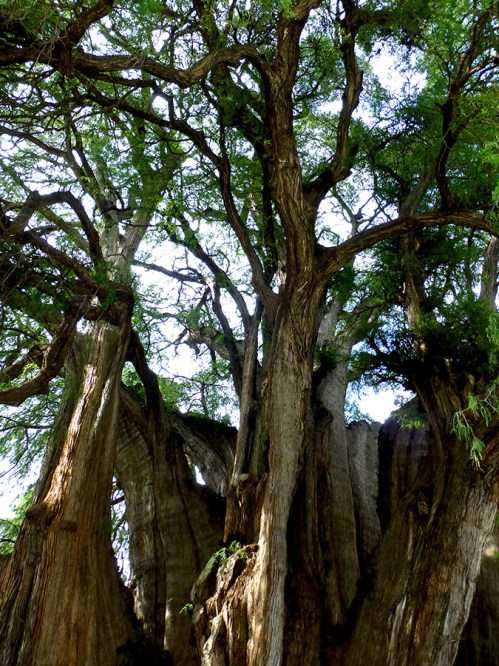
2eP1260805

Looking up at the Árbol de Tule in Santa María del Tule, Oaxaca.

We left Oaxaca city at 9:15 AM and didn’t return until almost 6:00 PM.  It was a full, informative, and terrific day.  Next up, day 3 —  another delightful day out of the city with Benito.

Save

Read Full Post »
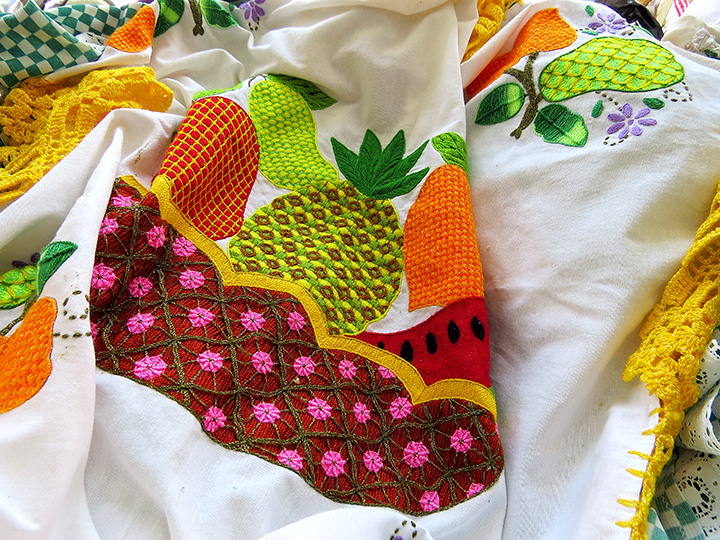
Many thanks to Surviving Mexico for considering “View from Casita Colibrí” a blog about Mexico worth reading! The feeling is mutual, as I continue to enjoy reading about their “adventures and disasters” living in Mexico. 😉

C.E. Flores's avatarSurviving Mexico

Shannon writes at Casita Colibrí, another long-time favorite of mine.

IMG_5418_2What brought you to Mexico?

Even though I grew up in California, my first trip to Mexico was in 2007, when I came to Oaxaca to visit a friend. I immediately fell in love with Oaxaca, returned a couple more times, and considered eventually retiring there. The privately funded library where I’d been the director for almost 13 years lost its funding and closed in spring 2009.Full-time jobs for librarian/archivists in the San Francisco Bay Area were almost non-existent. Faced with the choice of working multiple part-time and substitute jobs to barely keep my head above water, versus renting my house and moving to Oaxaca to live a downsized and simplified life, in a culturally rich, full of life city, I opted for the latter.

What was the inspiration behind the name of your blog?

Casita Colibrí is…

View original post 871 more words

Read Full Post »

The Guelaguetza 2017 delegations were announced late this morning.  While there will be four presentations of the Danza de la Pluma, this year Teotitlán del Valle will not be one of them and I’m disappointed —  this group of danzantes de promesa are SO good, they were such a hit last year, and I don’t know how much more “traditional” you can get.  In addition, social media tweets and comments in Oaxaca are flying fast and furious regarding the absence of Santiago Pinotepa Nacional and Juchitán de Zaragoza.  However, the good news is that there are some new groups this year, including Santiago Niltepec, Santo Domingo Chihuitán, Santa Catarina Ticua, and Santa María Huatulco — and their supporters are thrilled.

July 17 morning

July 17 evening

July 24 morning

July 24 evening

Reserved seat tickets have been sold out for weeks.  However, if you don’t mind standing in line for hours, tickets for the “free” sections in the upper level of the Guelaguetza Auditorium are available before each of the four performances.  In addition, it will, no doubt, be shown on local TV and live-streamed on the internet.  I will post the link, when it becomes available.

Read Full Post »

Recently, as previously mentioned, a friend came to visit for a week.  It was B’s first time in Oaxaca and we packed a lot of sightseeing and delicious dining into just six days.  B is an architect and, among other things, is an archeology buff, so those interests helped shape our itinerary (as in, not a shopping expedition).  Naturally, the six days sailed by, but the sailing was so smooth and flowed so well that it occurred to me a blog post chronicling our adventures might be helpful to future visitors and hosts.

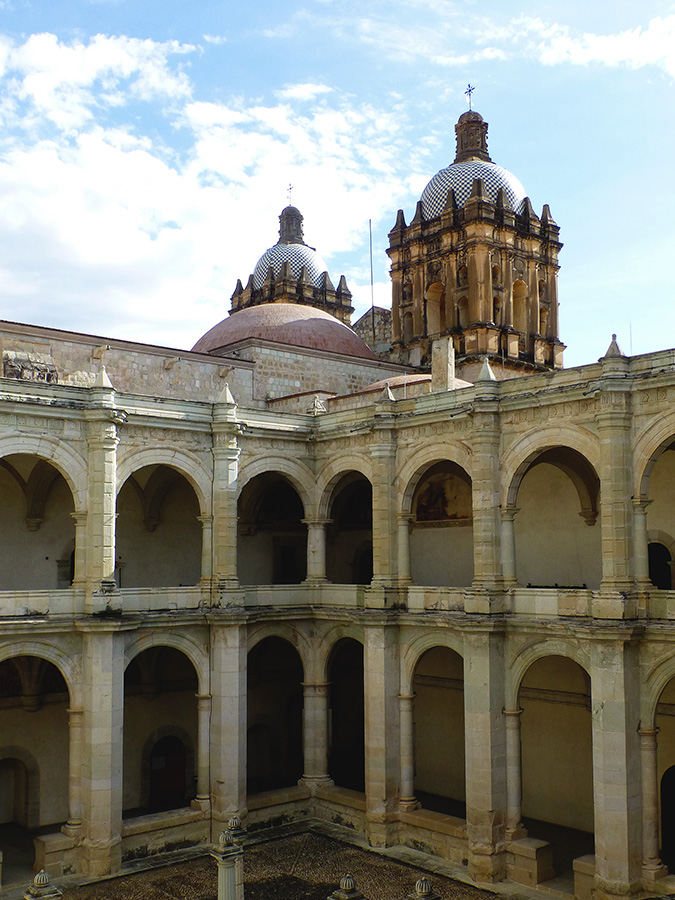
B arrived on a Monday night, so Day 1 began the next morning, when we rendezvoused on my terrace so he could begin to get his bearings as I pointed out landmarks.  Our first stop was to gaze at the gold and gilt interior and up at the impressive family tree that decorates much of the ceiling of Santo Domingo de Guzmán.

1aP1260747_cropPort

Santo Domingo de Guzmán and its former monastery.

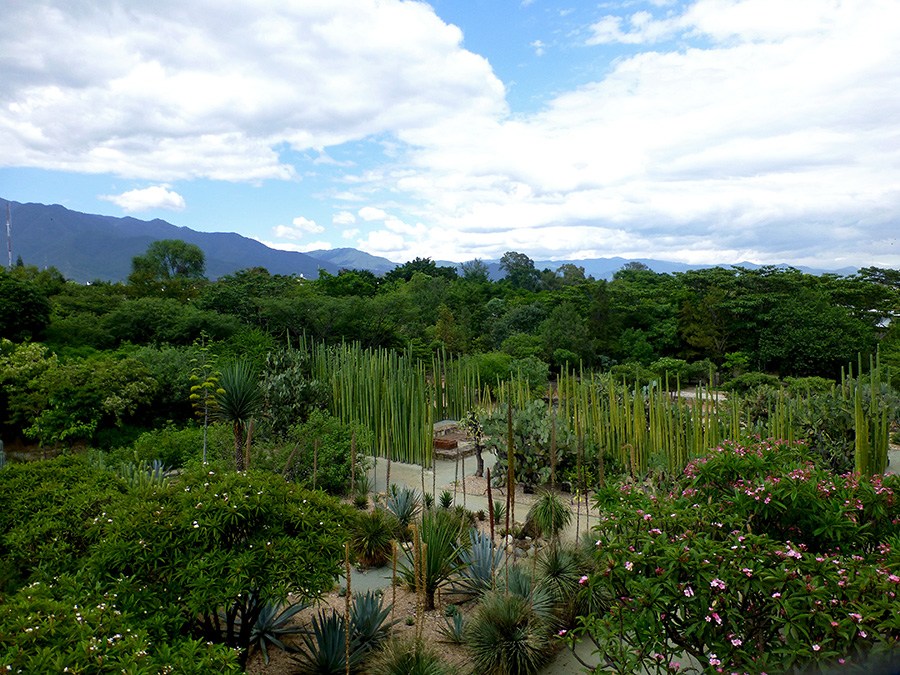
After being thoroughly wowed, we went next door to the former monastery, now the Museo de las Culturas de Oaxaca.  Arranged in historical epochs, the 20+ rooms are an historical treasure trove that include treasures excavated from Tomb 7 at Monte Albán.  Also on the extensive grounds is the glorious Jardín Etnobotánico, an impressive ethnobotanic garden of plants native to the state of Oaxaca.  While we had no time to take a tour of the garden (the only way to visit), the views from the museum are spectacular.

1bP1260738_crop

Looking down on the Jardín Etnobotánico from the Museo de las Cultures de Oaxaca

Leaving the museum, we strolled down Oaxaca’s walking street, Macedonio Alcalá (aka, Andador Turistico), across the zocaló, past the Palacio de Gobierno, to the Mercado Benito Juárez.  Besides the fact that I was almost out of coffee beans and needed to stop by El Grano de Oro to replenish my supply, in my humble opinion, the mercado is a “must see” for any visitor.  Feeling a bit parched and ready for a break, we pulled up stools at Casilda Aguas Regionales and had to choose from their dazzling selection of fresh aguas. Refreshed, we resumed exploring the aisles of fruits and vegetables, fish and meats, clothing and jewelry, fresh flowers and souvenirs, mezcal and quesillo, and more.

1cP1260093

Aguas lined up on the counter of Casilda Aguas Regionales

Hungry, tired, and on sensory overload, we walked back up the Alcalá to the tranquility, innovative architectural design, and savory flavors of Los Danzantes — the complementary mezcalito was an added bonus!  Our late afternoon comida was a leisurely affair, as we reviewed the day and made plans for the next.  B worried that we might be lingering too long, but I assured him, unlike the USA, restaurants in Mexico don’t rush diners.

1dP1270013_copy

Retractable ceiling and modern take on adobe walls at Oaxaca’s Los Danzantes restaurant

It was a lovely and delicious way to end the day.  Stay tuned for Day 2, as we headed out of the city….

Save

Read Full Post »

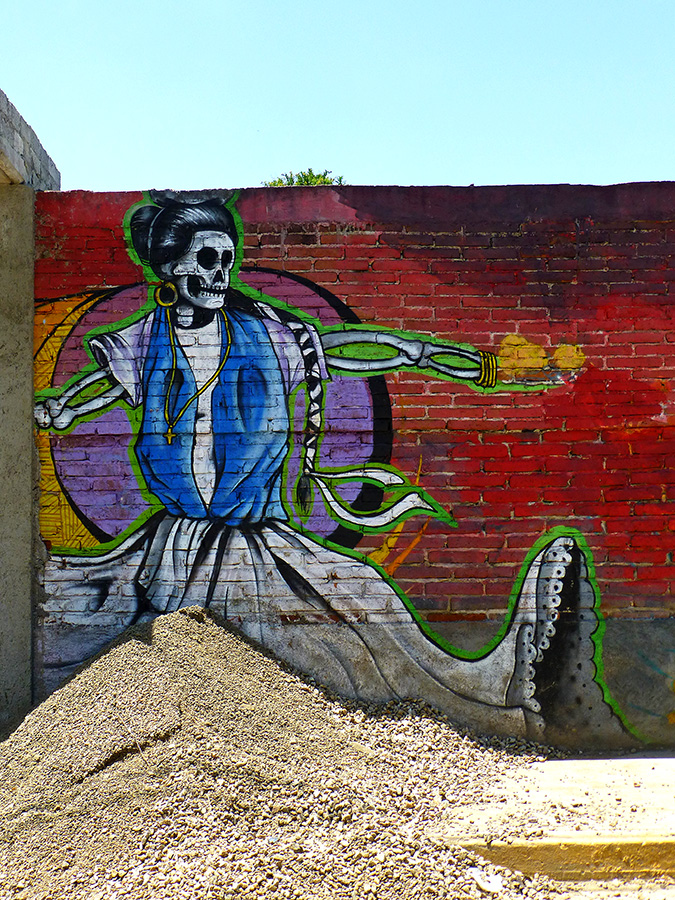
One of the great things about having friends come to visit, is going places and doing things not on the usual agenda.  Thus, last week, while accompanying my friend B on a private tour of sights outside Oaxaca city, the guide asked if we knew about the Muertos murals in Villa de Zaachila and would we like to see them.  Absolutely, we said!

In late October, prior to Día de Muertos, young artists are invited to paint Day of the Dead related murals on the walls of Calle Coquiza, the street that connects the church, Santa María Natividad, to the municipal cemetery.  Customs, beliefs, and legends provide the inspiration, as well as day-to-day activities.

P1260838

Flor de Piña dancers welcome residents and visitors to step through the doorway to the land beyond.

P1260849

Where electric meters serve as faces.

P1260844

And, telephone poles add a third dimension to the design.

P1260850

Painted pitchers and candles nestle in vegetation escaping from under a portón.

P1260874

And, a dancer frolics in sand waiting to be mixed into concrete for construction next door.

P1260853

Skeletons use an electric meter to get a leg up in climbing the conduit.

P1260857

Trees provide shade, as Pan de Muertos is baked in an outdoor oven.

P1260878

Leaves flutter above, as Bu’pu del Valle (chocolate atole) is frothed with a molinillo before being served in traditional hand-painted jicaras.

P1260862

Flowers tumble over the wall to adorn a catrina portrait’s hat.

The murals along the walls of Calle Coquiza remain throughout the year — until replaced by the next Día de Muertos artists’ offerings.  In addition, during Day of the Dead, this Calzada de los Muertos (Road of the Dead) is paved with sand paintings.  It is definitely going on my Muertos “must see” itinerary.

Read Full Post »

A razor wire (aka, concertina wire) frame for an African Tulip tree blossom.

P1260711

The rainy season not only brings lush greens, it brings the brilliant red-orange of the Árbol de tulipán to Oaxaca.

Read Full Post »

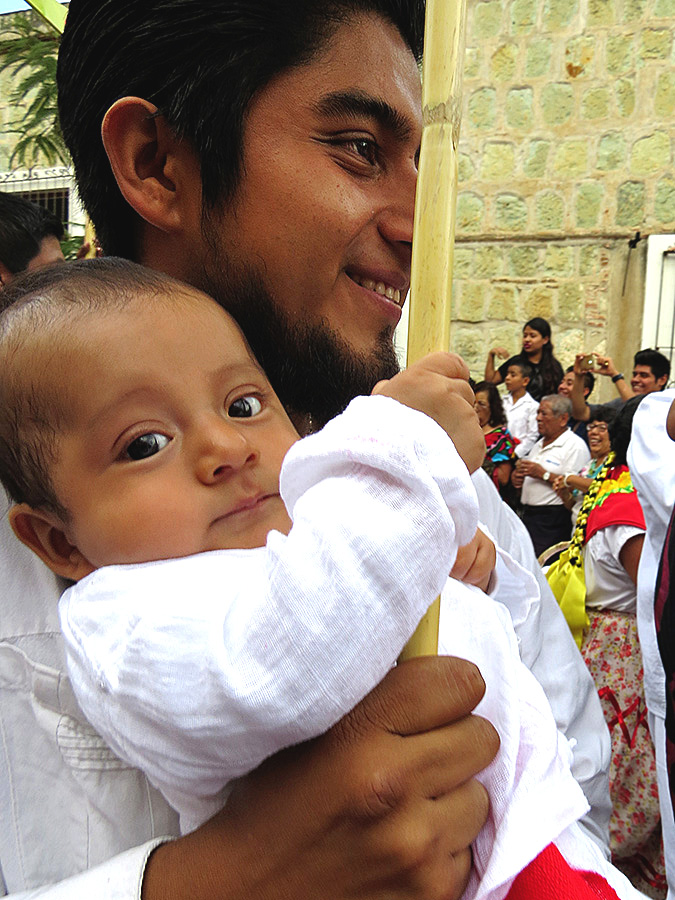
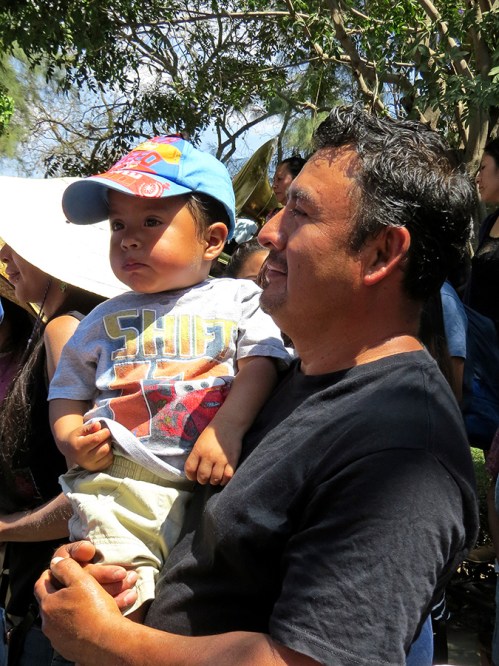
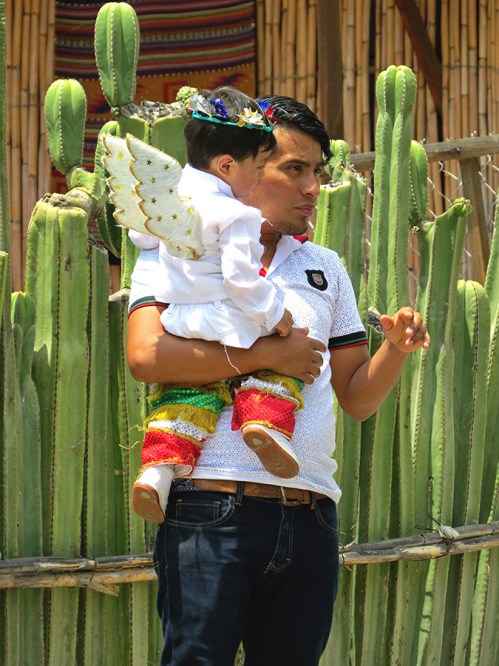
Fathers of Oaxaca playing a leading role in introducing the next generation to the music, dance, and respect for the traditions of Oaxaca…

IMG_1929 (1)

Learning to carry a marmota in La Guelaguetza parade of delegations in Oaxaca city – July 2016

IMG_1950

Following La Guelaguetza parade of delegations in Oaxaca city – July 2016

IMG_2912

Watching masked dancers at the mock wedding during Carnaval in San Martín Tilcajete – February 2017

IMG_3197

Giving angels a lift during the Lunes Santo procession in Teotitlán del Valle – April 2017

Happy Father’s Day to all the loving fathers (biological and adoptive), stepfathers, grandfathers, godfathers, and father figures everywhere, may you continue to do what you do.

¡Feliz Día del Padre!

Read Full Post »

Walking along the sidewalks of Oaxaca…

P1260601

P1260602

P1260698

P1260188

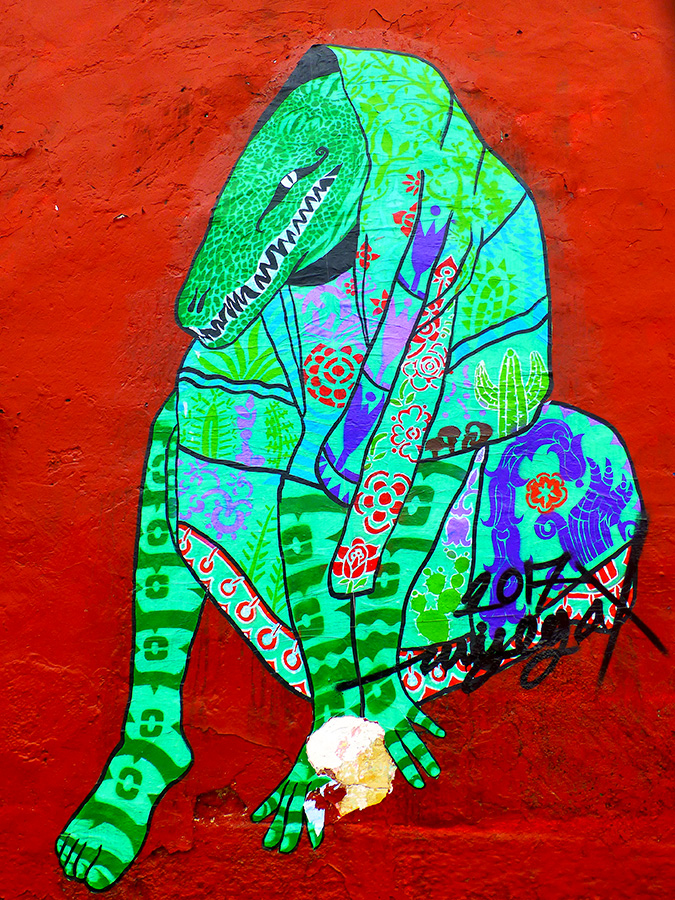
I get the feeling I’m being watched… by Oaxaca’s revolutionary street art.

Read Full Post »

We live in perilous times…P1250005

The signs are everywhere…P1260098

This guy can’t be the only one riding to the rescue.P1250841

We all must do our part.

Save

Save

Read Full Post »
Sorry folks, the bus doesn’t stop here.  Why?  You ask.  Doesn’t red mean “stop”?  Not here.  Not now.  There is DANGER; this edifice is in a bad state!

P1260143

And, make sure to produce, disseminate, and teach about the dangers of buildings in hazardous states of disrepair.  As Mother Nature has reminded us twice within the past week, this is earthquake country.

Save

Read Full Post »

Tomorrow, May 18, museums worldwide will be celebrating International Museum Day with special events around this year’s theme, “Museums and contested histories: Saying the unspeakable in museums.”  According to the IMD website, The objective of International Museum Day is to raise awareness of the fact that, “Museums are an important means of cultural exchange, enrichment of cultures and development of mutual understanding, cooperation and peace among peoples.” 

While Oaxaca has many wonderful museums, textile lover that I am, I would like to honor the day by looking back at several exhibitions I had the pleasure of viewing at the Museo Textil de Oaxaca — and a current one, too!

IMG_9302

Tormentos y suenos” (Storms and dreams) by Carolyn Kallenborn – August 3, 2012

Exhibitions ranged from works by individual textile artists to themed shows displaying textiles from the museum’s permanent collection and those on loan.

P1050404

“Transcomunalidad. interventions and collaborations with stilt communities and craftsmen” exhibition by Laura Anderson Barbata – March 1, 2013

Item labels and detailed descriptive booklets have been extremely helpful and, in the case of collections by individual collectors, their field notes were fascinating.

P1050633

“Irmgard Weitlaner Johnson: a life dedicated to textiles” – Costal (bag) was acquired by Irmgard in 1949, is said to be one of the most well preserved examples from the Valle del Mezquital, Hidalgo and, given the design, is thought to have been a wedding gift. – Nov. 21, 2014

The museum not only collects, preserves, and exhibits, it also holds workshops, lectures, expo-ventas (exposition and sales), and has provided a platform for issues of importance to textile artists, especially from the indigenous communities of the state of Oaxaca.

P1080922

El Delirio del color Oaxaca en los años 1960″ – Huipil mazatecas from the Tuxtepec district – Apr. 19, 2015

Exhibition openings often have included receptions, with an occasional performance art presentation thrown in.

P1190533

“Hilo Rojo 3047” an autobiographical installation by Ornilla Ridone – May 21, 2016

Museums can be a place to help shape community identity and bring different community groups together, a catalyst for regeneration through the creation of new venues and civic spaces, and a resource for developing the skills and confidence of members of those communities.  — Museums Association

P1260051

“Tekstil” current exhibition by textile artist Trine Ellitsgaard – Piece titled “Serpiente y abanicos” (Serpent and fans) – May 6, 2017

In observance of this year’s International Museum Day, the Museo Textil de Oaxaca invites textile artists and designers, academics, students, and the general public to participate in a conversation exploring the questions, “What is plagiarism? What is a copy? What is collaborating? Is ‘to collaborate’ synonymous with ‘to employ’? What has been the role of the copy in the development of craft goods?”   May 18, 10:00 AM to 2:00 PM in the Claustro of the Centro Cultural San Pablo — next door to the Textile Museum.

Read Full Post »

« Newer Posts - Older Posts »