Feeds:
Posts
Comments

Posts Tagged ‘popular travel destinations’

The 120th edition of the “only in Oaxaca” Noche de Rábanos is coming.  Tomorrow (December 23) the zócalo will be filled with radishes carved into religious, cultural, and fantastical creations.

Scenes from last year…

And, it’s not just a night of radishes, there will also be flor inmortal (a type of dried flower) and totomoxtle (corn husk) artisan creations on display and competing for prizes.  Not to be missed!

Read Full Post »

All is quiet now, but for the last few days (and nights!) there has been no solitude for Soledad, or her neighbors (of which I am one).  For several days leading up to December 18, the feast day of the Queen of Oaxaca, La Santísima Virgen de La Soledad (Virgin of Solitude), Oaxaca has been celebrating.  For those unaware of this virgencita, Soledad is adored and venerated in a manner similar to the Virgin of Guadalupe and is carried through the streets of Oaxaca (both city and state) during many religious celebrations.
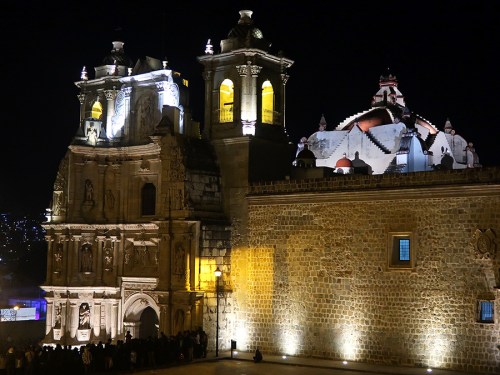
Basílica de Nuestra Señora de la Soledad

She resides in the church dedicated to her, the Basílica de Nuestra Señora de la Soledad.  Designed by Father Fernando Méndez, construction began in 1682, it was sanctioned by the Viceroy Tomas Aquino Manrique de la Cerda, and consecrated in 1690 by Bishop Isidro Siraña y Cuenca.
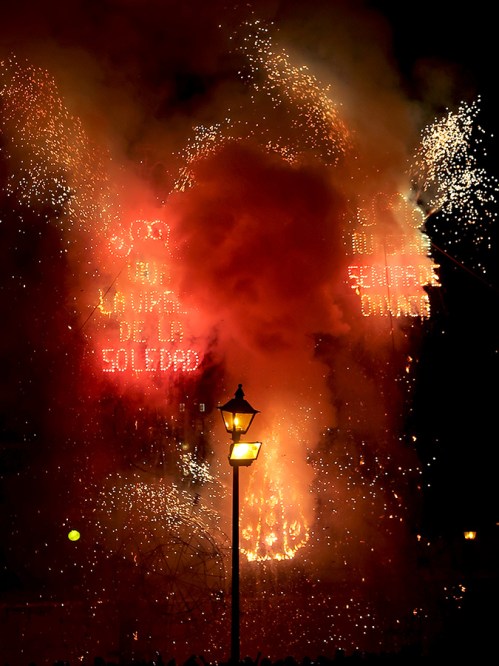
Castillo spelling out, “Viva La Virgen de la Soledad” (Long live the Virgin of Solitude) and “Nuestra Senora de Oaxaca” (Our Lady of Oaxaca).

Being that this is Mexico and Catholicism is tempered (enriched) with indigenous practice, the night of December 17, after religious rites and rituals were performed at said Basilica, there were fireworks in the church atrium, including toritos and a castillo, in honor of La Reina de Oaxaca.  Despite the late hour, I managed to leave the comfort of my rooftop and head over to the Plaza de la Danza to watch — and they were spectacular, as always.
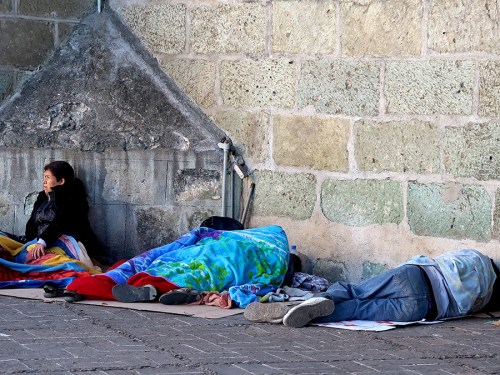
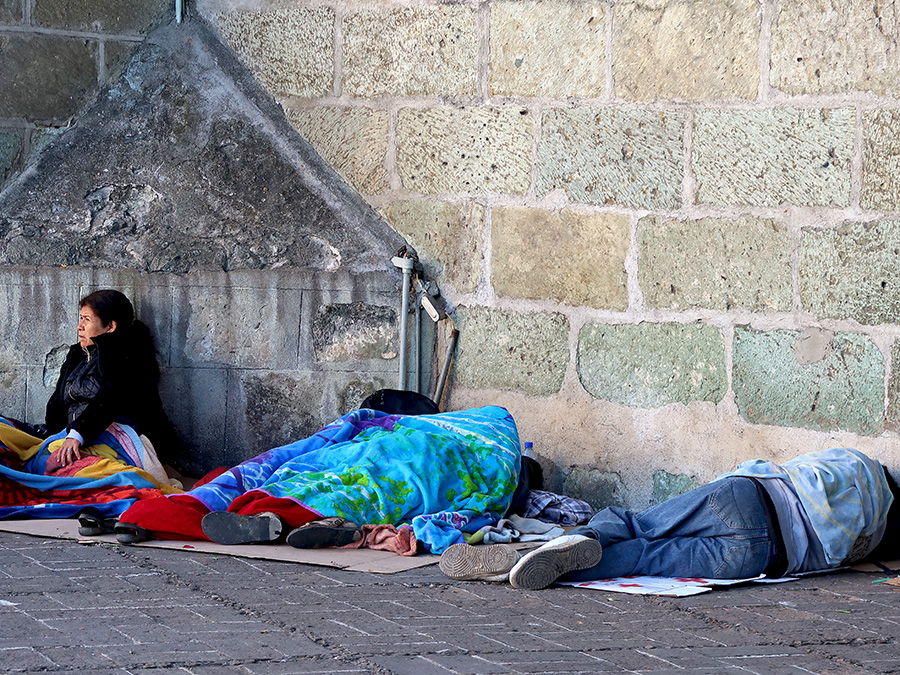
Many of the faithful spent the night in the Basilica’s atrium.

Alas, I didn’t have any energy left to stay and hear the Universidad Autónoma Benito Juárez de Oaxaca (Benito Juárez Autonomous University of Oaxaca) Tuna band serenade Soledad with a concert inside the Basilica at midnight.  Silly me!  I was dozing off to sleep at midnight when the Basilica’s bells began chiming furiously and cohetes (rockets) sounded and I woke with a start.  Next year, I’m staying up!

Prayers before the La Virgen de la Soledad.

Sleep finally returned, only to be interrupted about 4:15 AM with more cohetes and a band and then again around 6:30 AM.  Needless to say, I gave up on sleep and got up.  All during the night La Virgen was not alone.  The faithful, coming from near and far, spent the night in the atrium of the church, food stalls set up on the stairs leading down to the church fed one and all, and live music entertained her all night long.

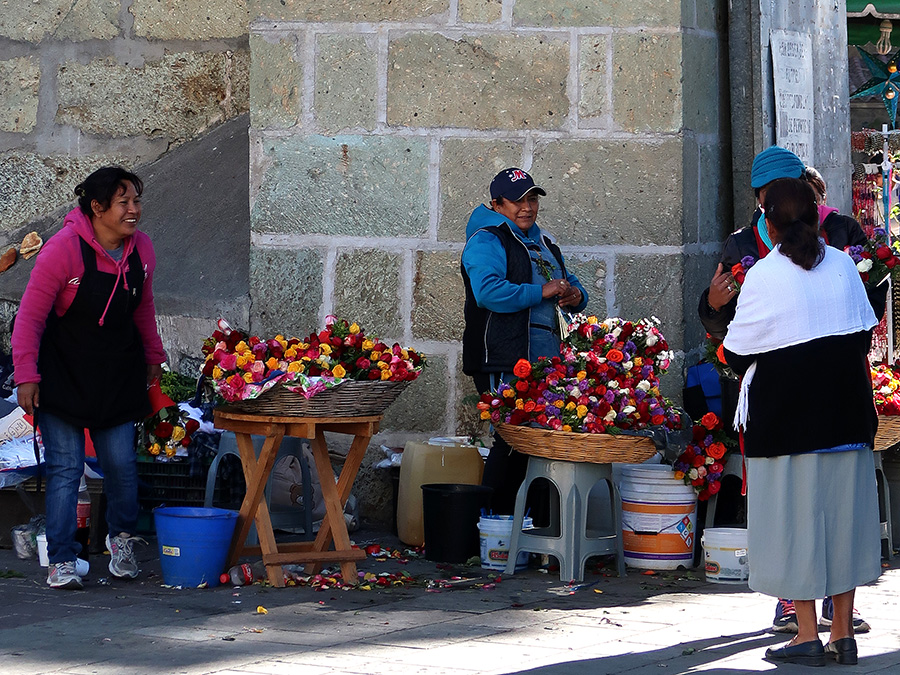
The ever-present vendors selling flowers to the faithful.

Like most, her story has several versions.  According to one legend, in 1620 a mule train bound for Guatemala camped outside the city of Oaxaca, discovered an extra mule which did not belong to anyone in the group.  The mule refused to move and when prodded rolled over and died.  When the pack it carried was opened, it was found to contain the statue of La Virgen de la Soledad. Taking this as a sign from heaven, the inhabitants built a shrine, later a church, and finally the imposing Basilica.

Food vendors lined the stairs down to the Basilica’s atrium.

In another story, a muleteer from Veracruz, en route to Guatemala, noticed he had one too many mules in his pack upon his arrival in Oaxaca.  Outside the San Sebastian hermitage, the mule collapsed under the burden it was carrying.  All attempts by the muleteer to get it back on its feet were futile; to avoid punishment, he notified the authorities.  When he lifted the load off the mule, it got up but then immediate died.  The burden was inspected and an image of the Virgin, accompanied by Christ, along with a sign that said, “The Virgin by the Cross.”  Faced with this momentous event, Bishop Bartolome Bohorquez ordered a sanctuary to be built in honor of the divinity.

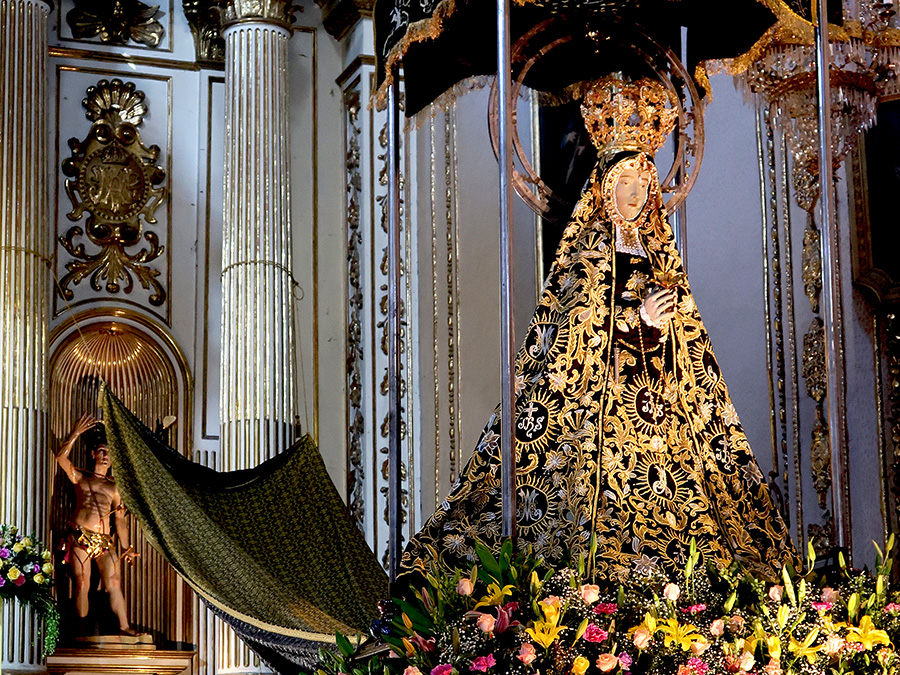
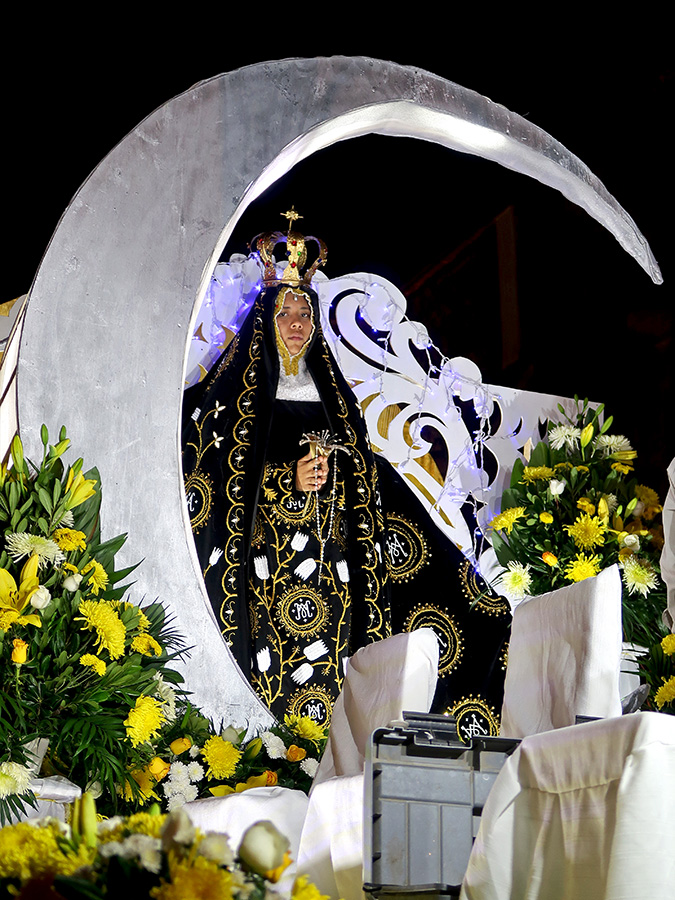
La Santísima Virgen de La Soledad inside the Basilica wearing her gold, diamond, and pearl encrusted vestments.

Still another legend:  a heavily laden burro of mysterious origin appeared outside of town in 1534, fell to the ground, spilling its load next to a rock (still on-site) containing the beautifully carved Virgin (thought to be carved in Guatemala or the Philippines) and a chapel was built on the spot.  However, apparently there was an adobe shrine to the Virgin of Solitude atop Cerro Fortín as early as 1532 — and the rock may have even been moved from the mountain in 1617 to the current site (immediately to the right as you enter the Basilica).

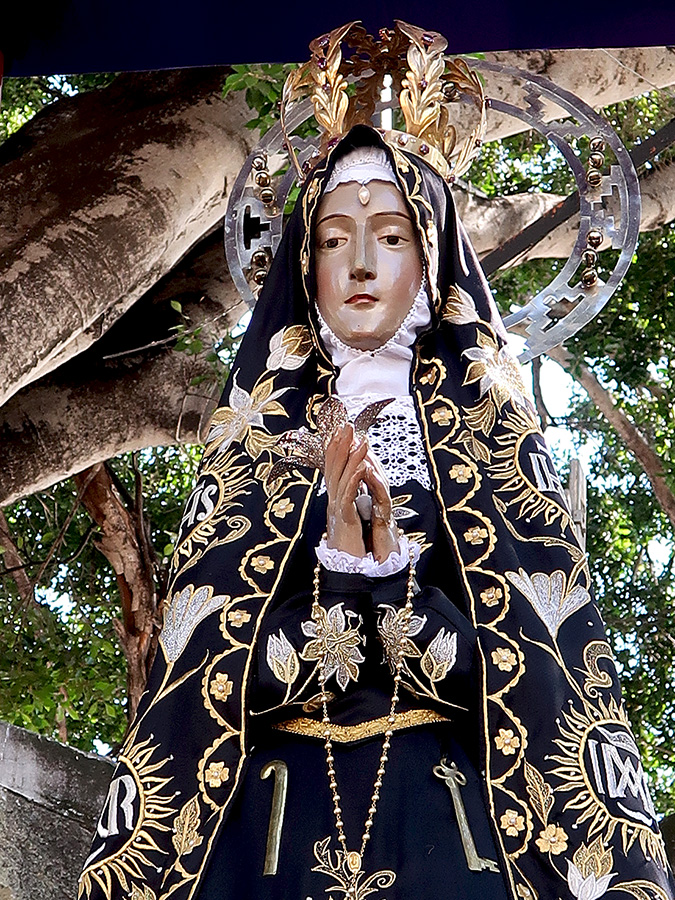
La Santísima Virgen de La Soledad (body double) under the tree in the atrium of the Basilica — wearing the traveling attire.

Her vestments are encrusted with pearls and 600 diamonds — and she wears a 4-lb gold crown.  As all that bling is quite heavy and valuable, she has a body double who wears a velvet mantle and crown that aren’t quite so ostentatious.  It is she who is carried through the streets during processions and has been residing in the church atrium during the festivities in her honor.

All was not completely serious yesterday at the Basilica — there was also entertainment.  In the late afternoon, Soledad was treated to a command performance by the Cuadrilla de Mascaritas from Asunción Nochixtlán, in the Mixteca.  I had never seen nor heard of this dance before.  According to this article (in Spanish), in 1865, a year after the defeat of the Franco-Austrian army at Las Tres Cruces (between Santo Domingo Yanhuitlán and Asunción Nochixtlán) by the joint forces of the Mixtecs and General Porfirio Diáz, Mixtecos commemorated the victory with the mascaritas dance, which ridiculed the supposedly invincible enemy.  I learn something new every day!

Read Full Post »

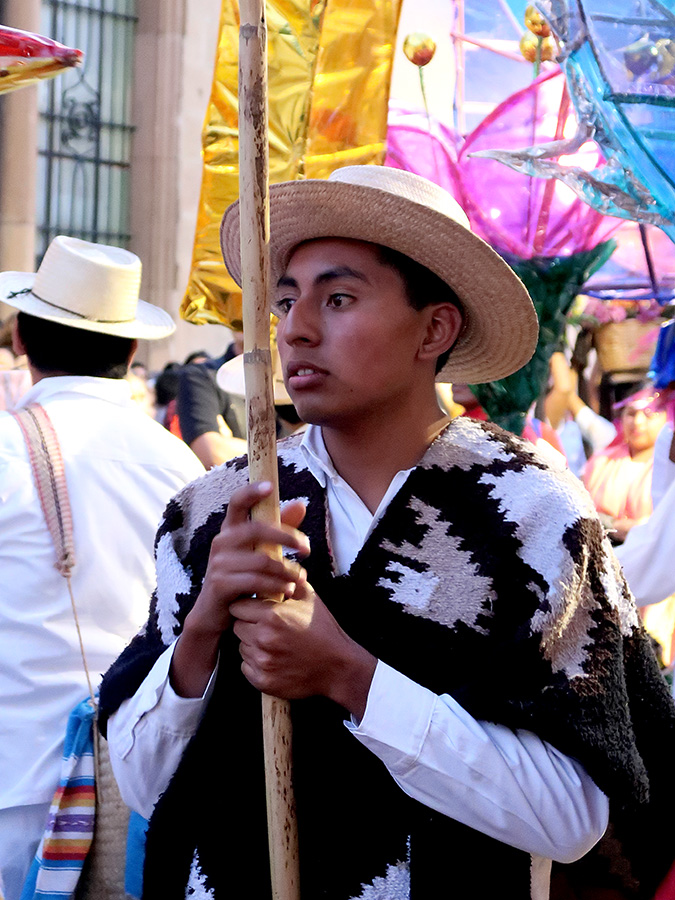
Tonight, the streets of Oaxaca are alive with the sound of music and cohetes (rockets) as a calenda (parade) in honor of Nuestra Señora de la Soledad (Our Lady of Solitude) celebrates the approach of the feast day of the mother, queen, and patroness of Oaxaca.

IMG_3724

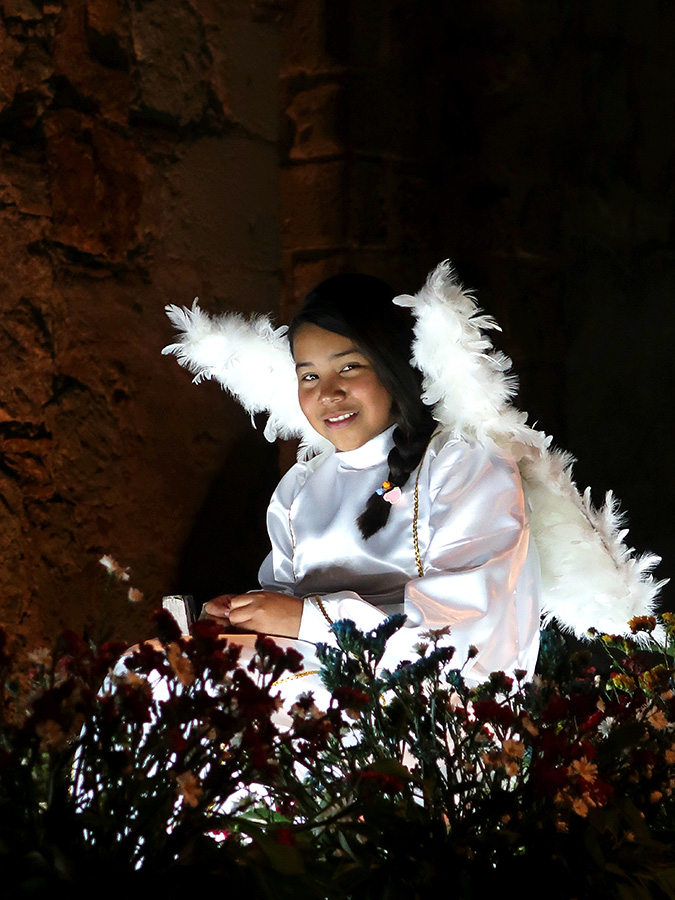
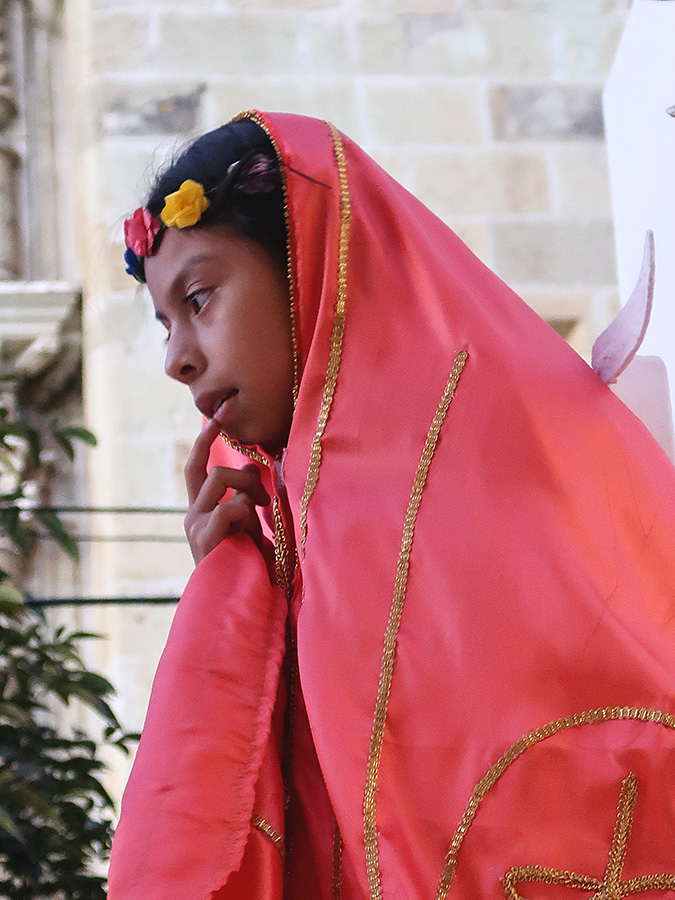
A young Soledad making the rounds on a float.

IMG_3729

Accompanied by an angel.

IMG_3717

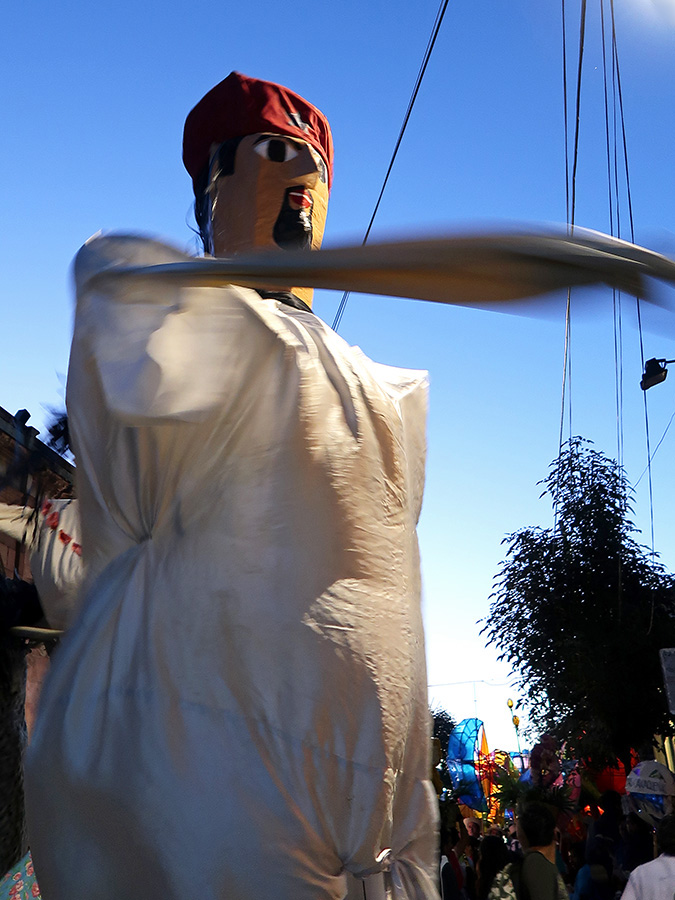
Monos taking a break in front of the Basilica de la Soledad.

There will be no solitude for Soledad during the next couple of days and nights.  If you don’t believe me, check out her festival schedule.

virgen de la soledad programa 2017

Read Full Post »

There may be a population explosion of Casita Colibrí’s namesake…

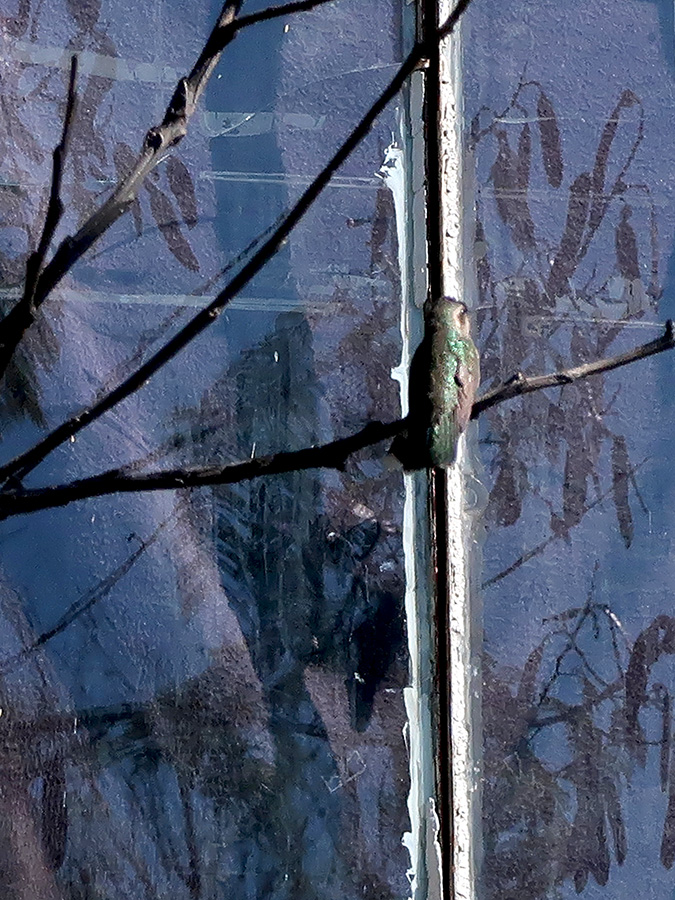
Hummingbird nest under construction on the far spindle branch of a tree near my balcony.

Mama waiting until the coast is clear — in front of a Guaje tree reflection on my neighbor’s window.

She comes, she sits briefly to test its strength and expansion potential, then is off again in search of more materials.

Next up, she and we await the show male colibríes will put on — hoping to strike her fancy.

The librarian in me can’t help but offer a few references:

Read Full Post »

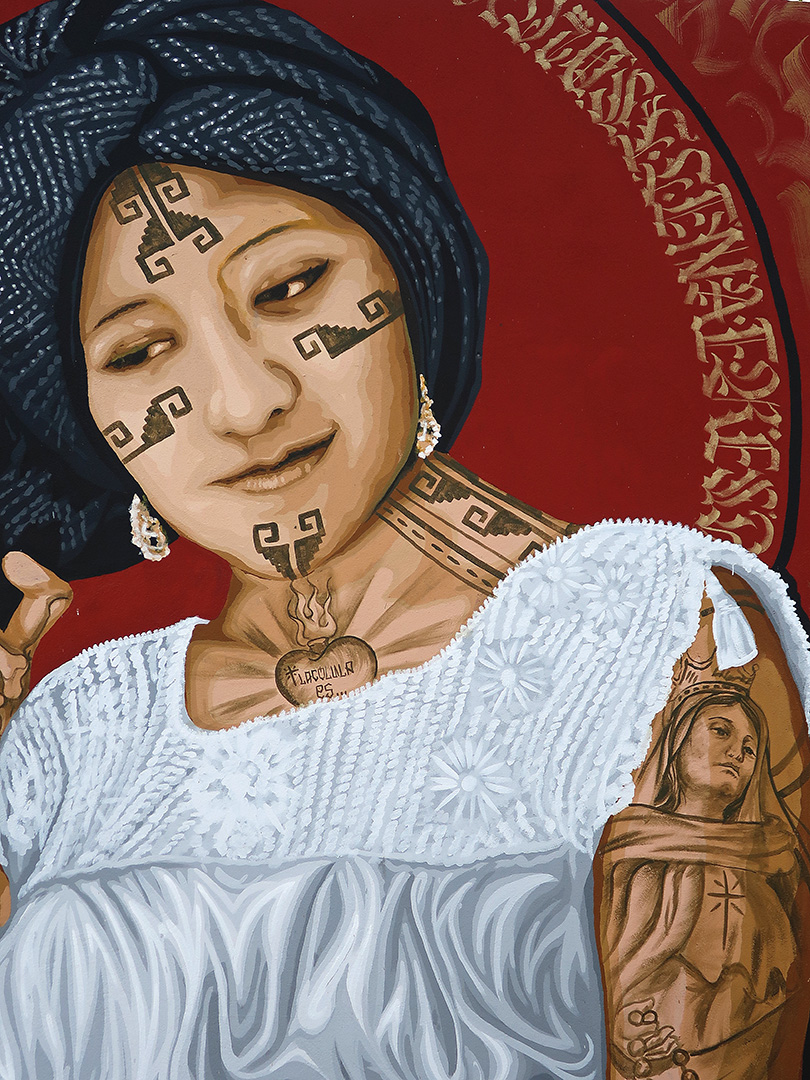
Last week in Tlacolula, as friends and I were studying the “¡Solo Dios perdona!” mural by the Tlacolulokos collective, the storekeeper next door advised us that if we liked that one, we should check out another spectacular Tlacolulokos mural a few blocks away.  So we did.

IMG_2505

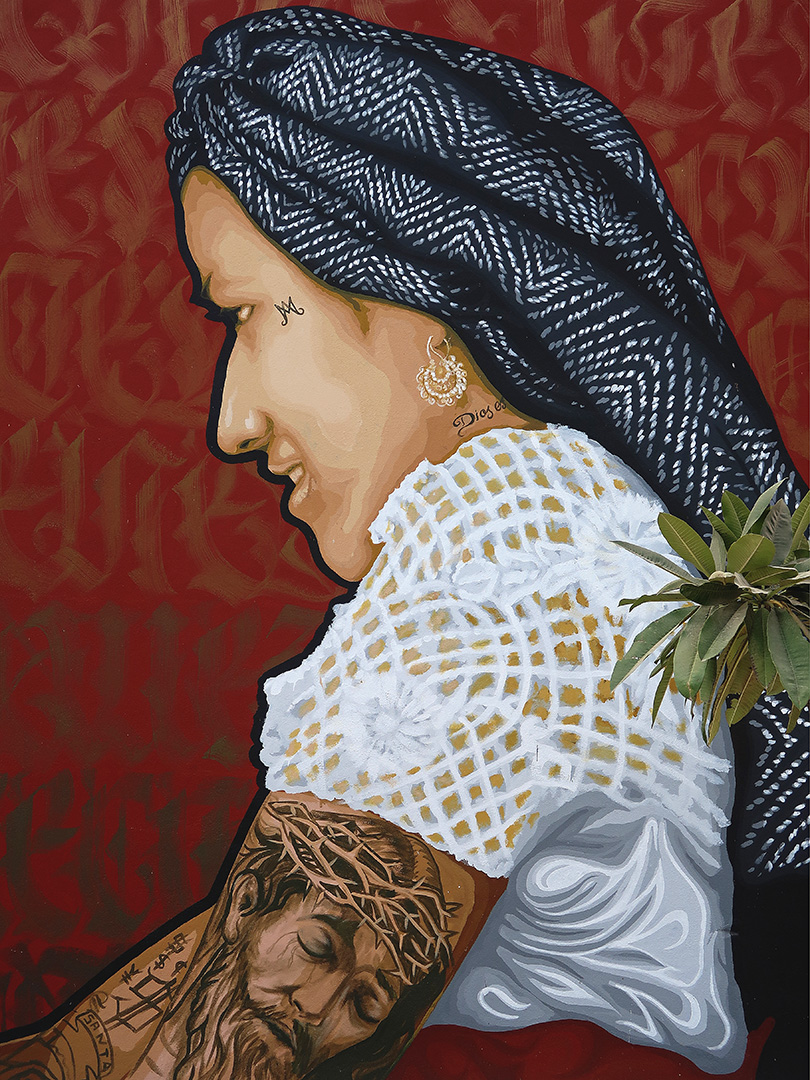
He was right — it was indeed stunning in SO many ways!  We came face-to-face with three strong, proud, and beautiful Zapotec women of Tlacolula wearing their stories.

IMG_2506

There was the traditional white blouse with its crocheted yolk, the black and white rebozo twisted into a head covering, and there were the prized gold and pearl earrings.

IMG_2508

But, so too were the tattoos of iconic Catholic imagery of Virgen María and Jésus wearing his crown of thorns juxtaposed with pre-Conquest grecas of Mitla, a Spanish galleon, and the heart-dagger of betrayal.  This is one powerful mural!  And, the story doesn’t end here in Oaxaca.

IMG_2510

It is estimated that 250,000 Zapotecs live in the greater Los Angeles area — “making it the largest concentration of Oaxacans outside of Oaxaca thus earning its unofficial title among Oaxacan in the United States as Oaxacalifornia.”  (The Voice of Indigenous Resistance in Oaxacalifornia)  Thus it was appropriate that Cosijoesa Cernas and Dario Canul of the Tlacolulokos collective were invited to create eight massive murals, “Visualizing Language: Oaxaca in L.A” for an exhibition at the Los Angeles Public Library.  They hang “below murals by Dean Cornwell, whose depictions of California’s history, completed in 1933, ignore Native Californian cultures and ‘fail to recognize the suffering of native peoples during the European conquest, as well as their exclusion from society…'” (New Murals Celebrate the Culture of Oaxaca in L.A.)

The murals at the Downtown Central Library in Los Angeles will be on exhibit in the library’s rotunda until January 31, 2018.

Read Full Post »

In Oaxaca, the sound of rockets and music in the streets means there must be a calenda — and early last evening, one seemed to be only a few blocks away.

It was the ideal excuse for putting off emptying my massive wooden kitchen counter for the termite extermination crew’s arrival the next morning.

To what, or who, did I owe this timely interruption?  Saint Cecilia!  November 22 is her feast day and, at least in Mexico, festivals to the saints aren’t just one day events — hence  yesterday’s mass at Iglesia de San Felipe Neri, followed by the calenda.

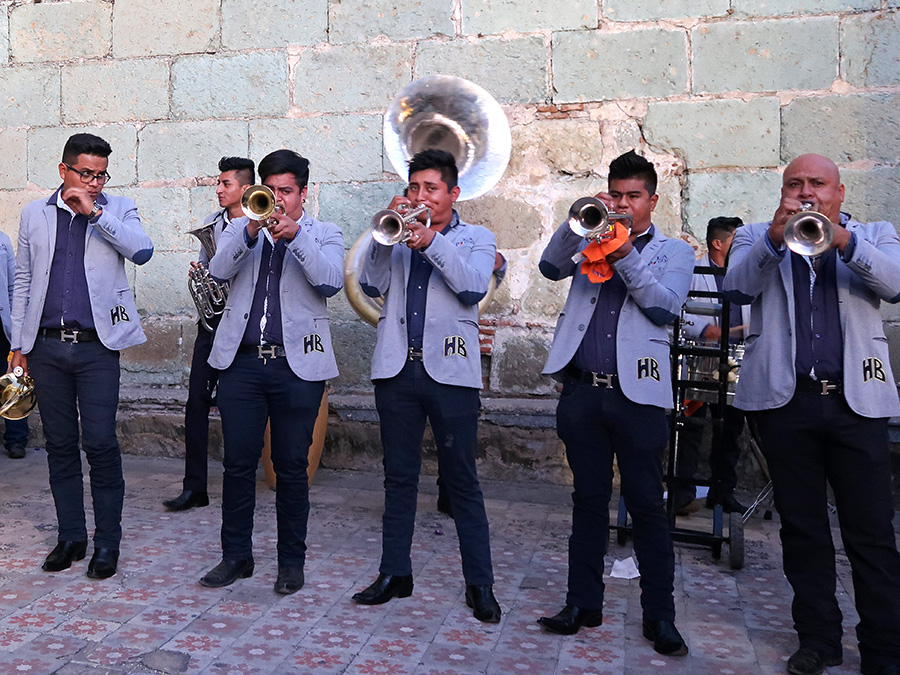
And, by the way, Santa Cecilia isn’t just any saint, she is the patrona de los músicos (patron of musicians) and so, of course, there were two bands playing in the church atrium.

Alas, though the party was only just getting started, given the chore that awaited me at home, I forced myself to leave after a half and hour.  However there is more on Santa Cecilia’s dance card today and tomorrow…


Read Full Post »

The transportation workers of the CTM (Confederación de Trabajadores de México) pretty much shut down main roads into and out of the city on Tuesday (just ask blogger buddy Chris) and Sección XXII of the teachers’ union yesterday blocked streets, today picketed government offices, and are now moving full force into the zócalo and surrounding streets.

IMG_2396

IMG_2398

IMG_2395

IMG_2400

Sigh, but don’t cry for Oaxaca.  Ten thousand years of history, this valley and her people will survive.  Listen and watch Lila Downs sing La Martiniana and remember its words…

Porque si lloras yo peno,
en cambio si tú me cantas, mi vida,
yo siempre vivo, yo nunca muero.
~~~
Because if you cry, I’ll be filled with sorrow
Instead, if you sing to me
I will live forever, I’ll never die.

Save

Save

Read Full Post »

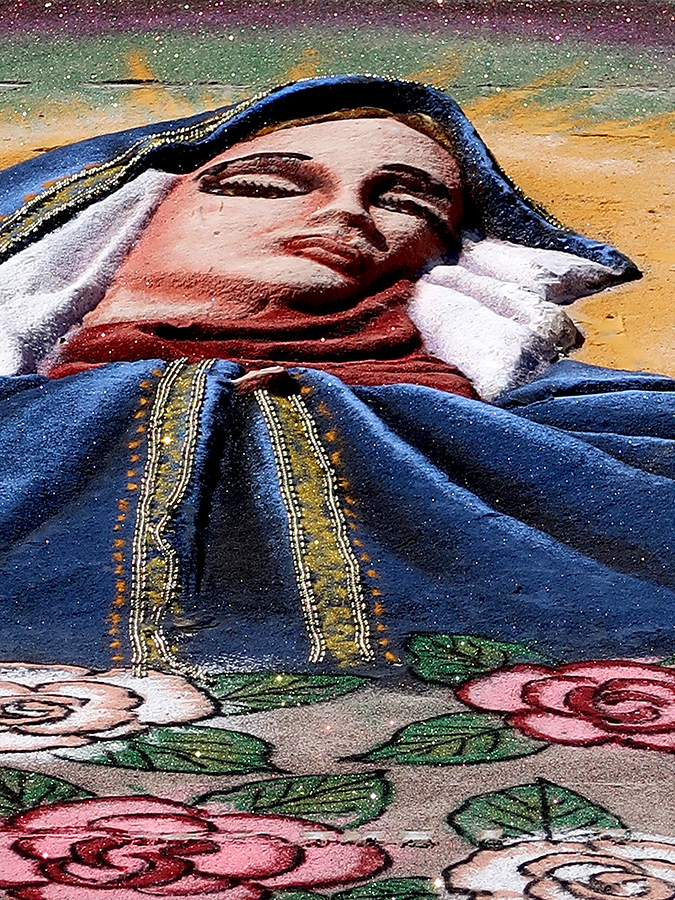
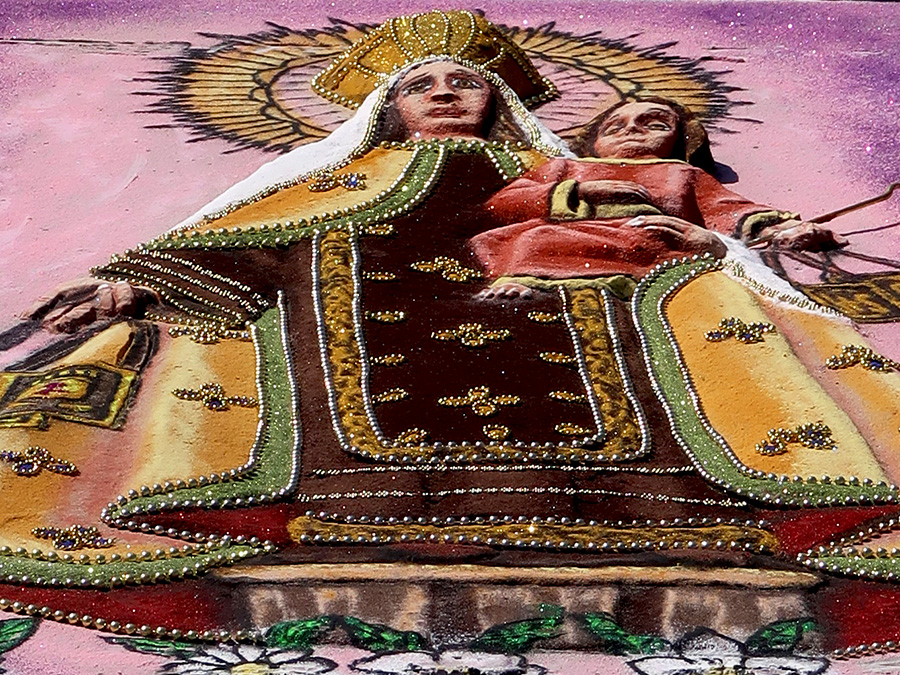
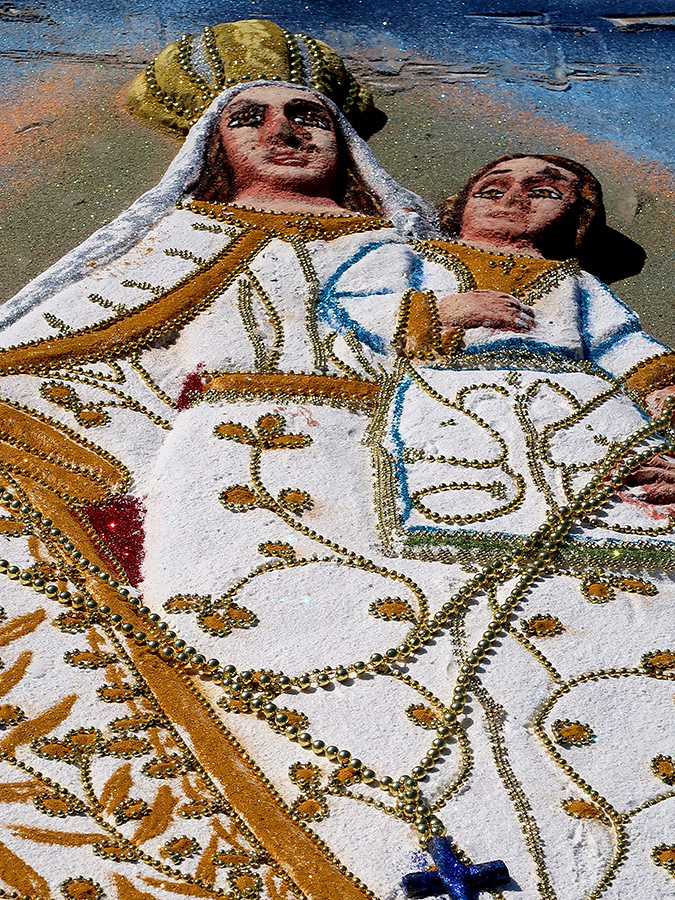
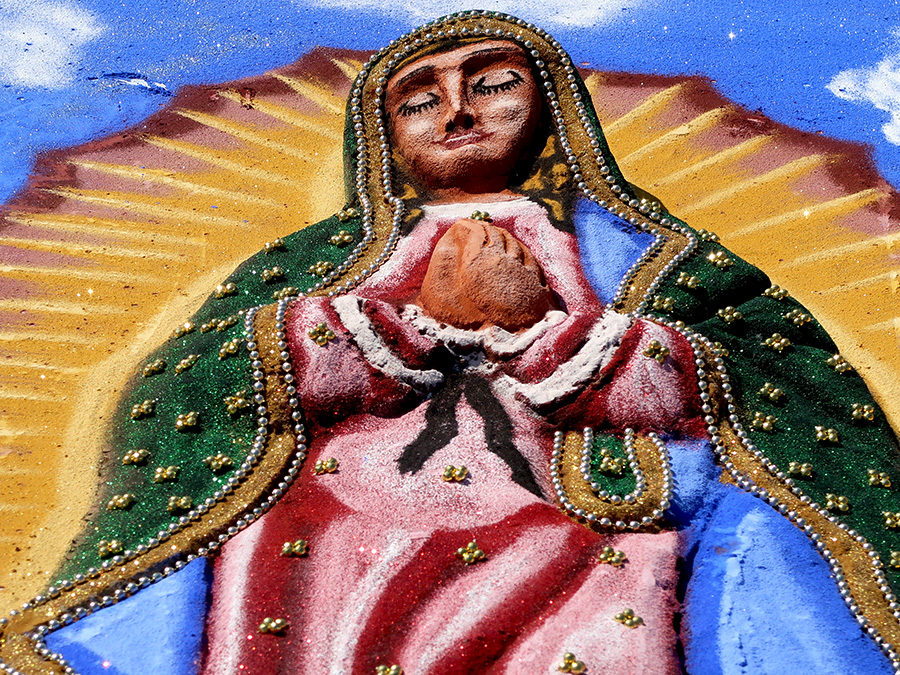
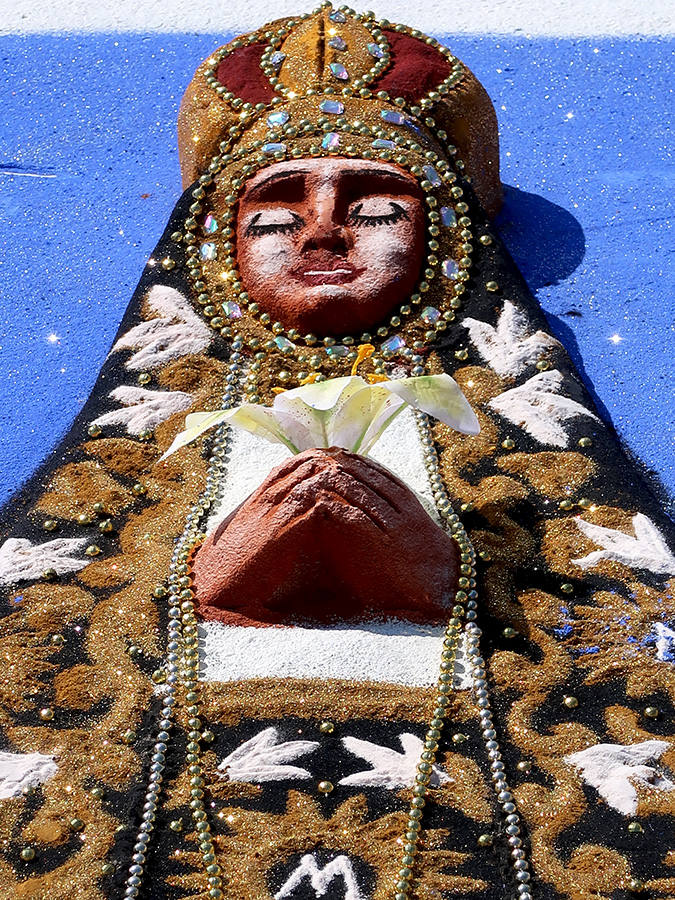
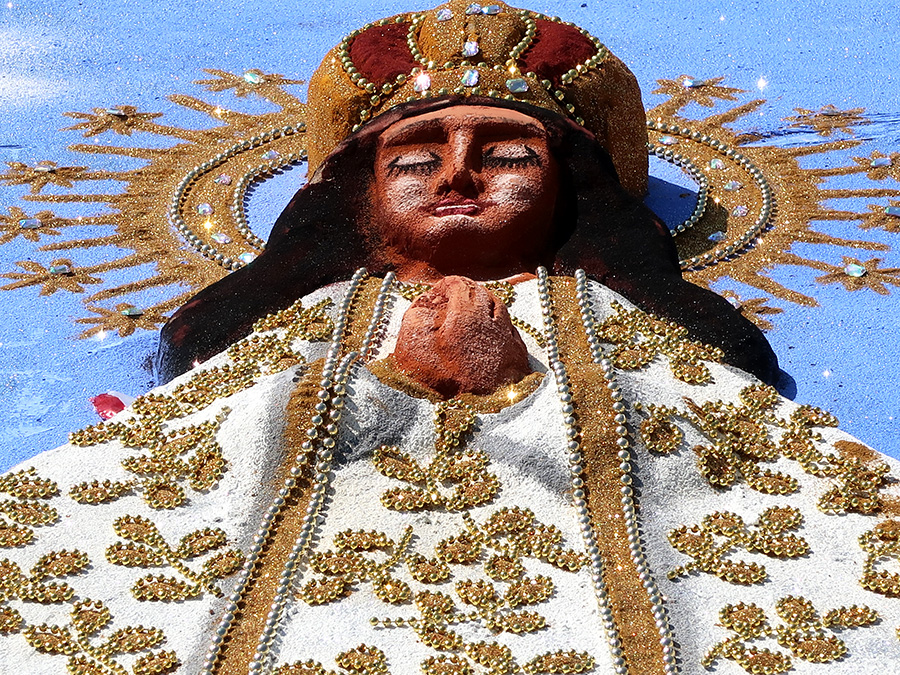
Tapetes de arena (rugs of sand) are a traditional feature of the celebration in Oaxaca of Día de Muertos.  When I first arrived to live here, they were drawn in front of the Cathedral.  Next, they moved for a year or two to the Government Palace and for the last several years they have graced the Plaza de la Danza.  This year’s offerings were the work of twelve artisans and feature the most beloved and revered of the Jesús and María señores y señoras in Oaxaca.  This post will highlight the ladies…

IMG_1720

Virgen Dolorosa — Our Lady of Sorrows

IMG_1702

Virgen del Carmen — Our Lady of Mount Carmel

IMG_1704

Sra. Virgen del Rosario — Our Lady of the Rosary

Interestingly, in previous years the themes of the sand paintings in these public spaces have been Día de Muertos related.  I’m not sure of why the change this year to religious imagery.  Indigenous Day of the Dead celebrations pre-date the arrival of the Spanish and the All Saints Day of the Catholic church.  And in Oaxaca, one of the most indigenous states in Mexico, as Shawn D. Haley points out in his book, Day of the Dead: When Two Worlds Meet in Oaxaca, “there is little of the Spanish influence to be found in the Oaxacan Day of the Dead.  The Spanish version… is bleak and dismal…. For the Oaxaqueñans, these days are… joyous and exuberant.  It is not a mourning of lost loved ones, but a celebration, a reunion with the dead.”

IMG_1707

Santa María de Guadalupe — Our Lady of Guadalupe

IMG_1711

Nuestra Señora de la Solidad — Our Lady of Solitude

IMG_1724

Inmaculada Concepción de Juquila — Virgin of Juquila

For more of these sand paintings, check out the recent post by blogger buddy Chris.  By the way, the feast days for these last three señoras are coming up in December.  First on the calendar is Juquila on December 8, then comes Guadalupe on December 12,  and, finally, Oaxaca’s patron saint, Soledad on December 18.  There will be special masses, processions, and rockets. December is a noisy month!

But first, we must welcome the difuntos (departed) who begin arriving tonight.

Save

Read Full Post »

Calacas dressed for work and catrinas dressed to the nines, for my skeleton-loving grandson.

From the sidewalks, courtyards, and balconies of Oaxaca, October 2017 — ready for the Day of the Dead.

Read Full Post »

Today is the culmination of the ten days of festivities celebrating El Señor del Rayo — an only-in-Oaxaca observance.  Early Saturday evening, on my way to an event at the Museo Textil, I ran into a calenda (parade) of his.  I was going in the opposite direction and felt like I was swimming upstream.  What to do?  Stop, take a few photos, and enjoy the music and dancing until it passed by, of course!

El Señor del Rayo is a wood-carved Christ on the Cross figure that was brought from Spain in the 16th century, a gift to Oaxaca from Charles V.  The image was placed in the temple of San Juan de Dios, a church with adobe walls and a straw (or possibly wood) roof.  According to religious lore, lightning struck the church and everything was destroyed, save for this figurine.  A miracle!  The statue became known as El Señor del Rayo (the Lord of Lightning), was given his own chapel (the furthest capilla from the main entrance on the left) in the newly built Catedral de Nuestra Señora de la Asunción, and has been much venerated ever since.

El Señor has a body double as the original, given it’s importance and value, remains behind glass in his chapel (first photo above).  Today, the line of faithful waiting to worship him stretched into the aisle leading to his chapel.  Restoration work was done on his replica earlier this year, but it is back on the main altar and available to travel through the streets during this afternoon’s procession, along with the estandartes (religious banners) currently leaning up against the inner walls of the Cathedral.

Tonight, like all good Oaxaca celebrations, be they religious or secular, there will be pirotécnicos — fireworks and all things pyrotechnic, including a castillo.  For the uninitiated, a castillo is a multi-story erector set like structure with moving parts that is wired with colorful explosive charges.  Another noisy night in Oaxaca!

By the way, in previous years, the inside of the Cathedral was festooned from bottom to top with lilies — greeting all who enter with Divine beauty and fragrance.  However, this year there are many fewer floral decorations and no lilies.  I’m wondering if the lily-growing region was affected by the hurricanes and/or earthquakes….

Read Full Post »

Residents and visitors, alike, have been in mourning for a couple of years — ever since Margie Barclay retired from publishing her extremely popular and informative Oaxaca Calendar.  While others, like Que Pasa Oaxaca, have tried to pick up the slack, nothing else has quite measured up until now.  There is a new calendar in town — OaxacaEvents!!!

OaxEventsCalendar

As you can see, it’s visually easy on the eyes and I can assure you it’s also easy to use.  For example, clicking the “View” arrow links to event details.  Though the default is “All,” by clicking on a menu bar selection, you can specify a type of event for which you want to see listings (Music, Art, Dance/Theater, Food/Drink, Sports/Fitness, Learning, Groups/Mtgs, or Festivals).  You can also elect to see event listings for a particular date, use the search feature, and (drum roll, please), if you know of an event that isn’t shown, you can “submit an event” — harnessing the power of crowd-sourcing!  Pretty cool, yes?

The OaxacaEvents calendar is a volunteer effort by Dottie Bellinger and Teri Gunderson in partnership with the Oaxaca Lending Library.  If you’re in the neighborhood, please be sure to thank them, including Margie Barclay who briefly came out of “calendar retirement” to lend her expertise in the initial setup.

Save

Read Full Post »

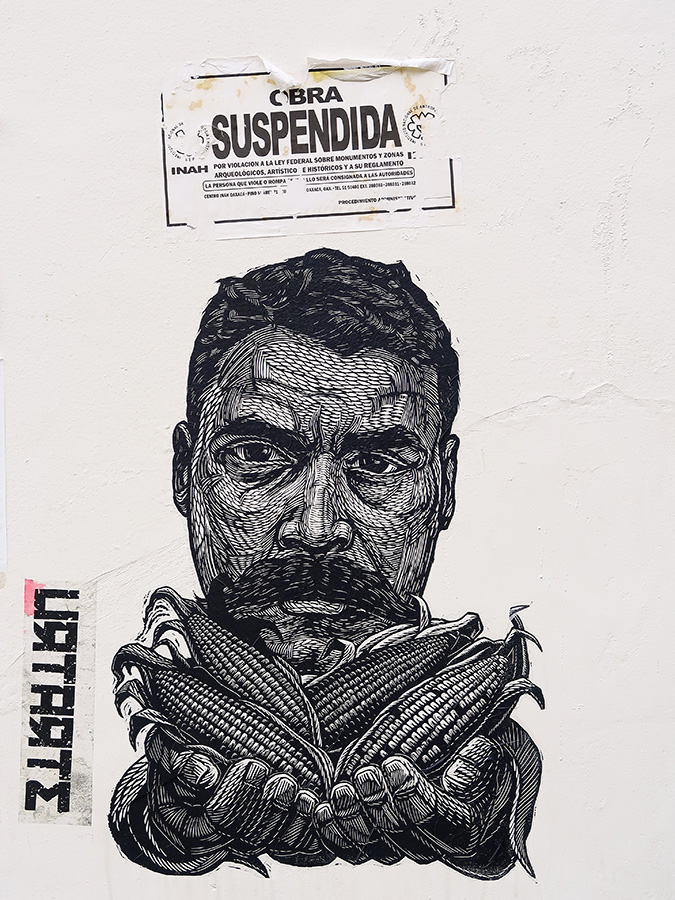
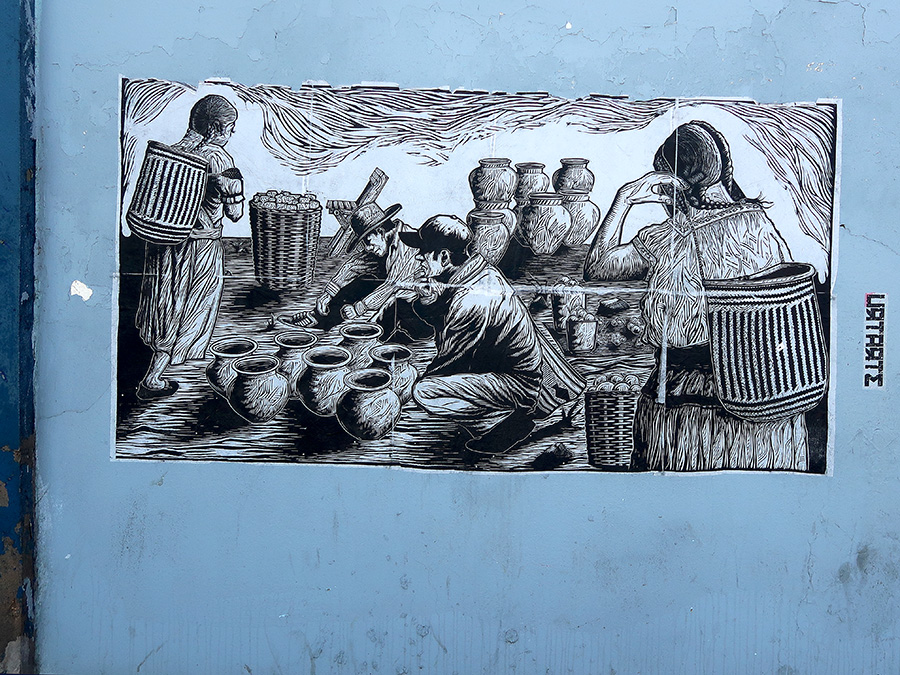
URTARTE — La Unión Revolucionaria de Trabajadores del Arte (the Revolutionary Union of Art Workers).  You have no doubt seen their work around the city of Oaxaca.

The black and white lines of resistance defending heritage corn from an invasion by the moneyed interests of el norte.

IMG_0760

Demanding justice for the 43 student teachers from Escuela Normal Rural Raúl Isidro Burgos in Ayotzinapa, Guerrero — still disappeared after three years.

IMG_0758

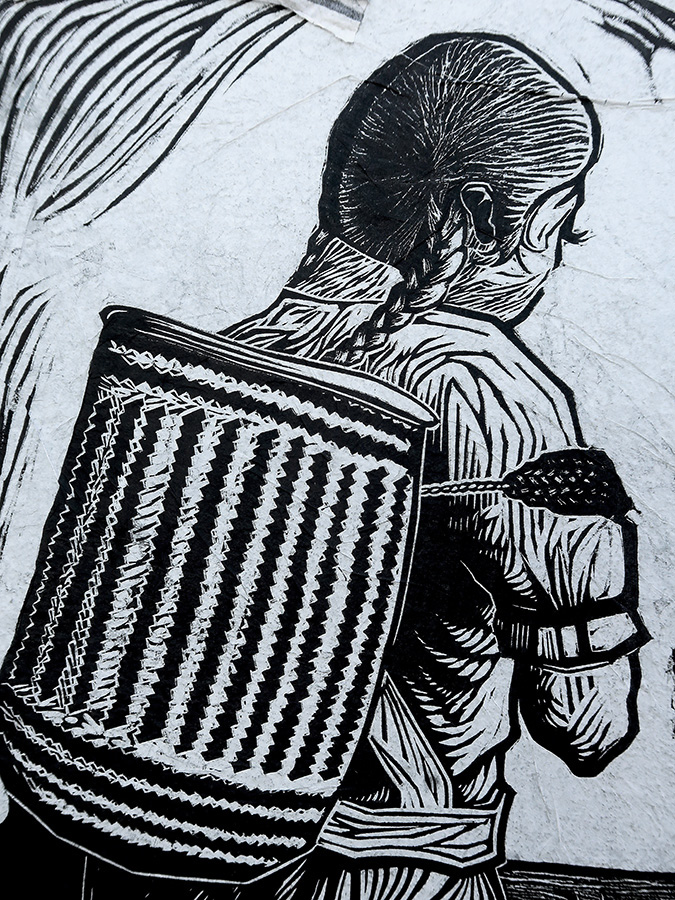
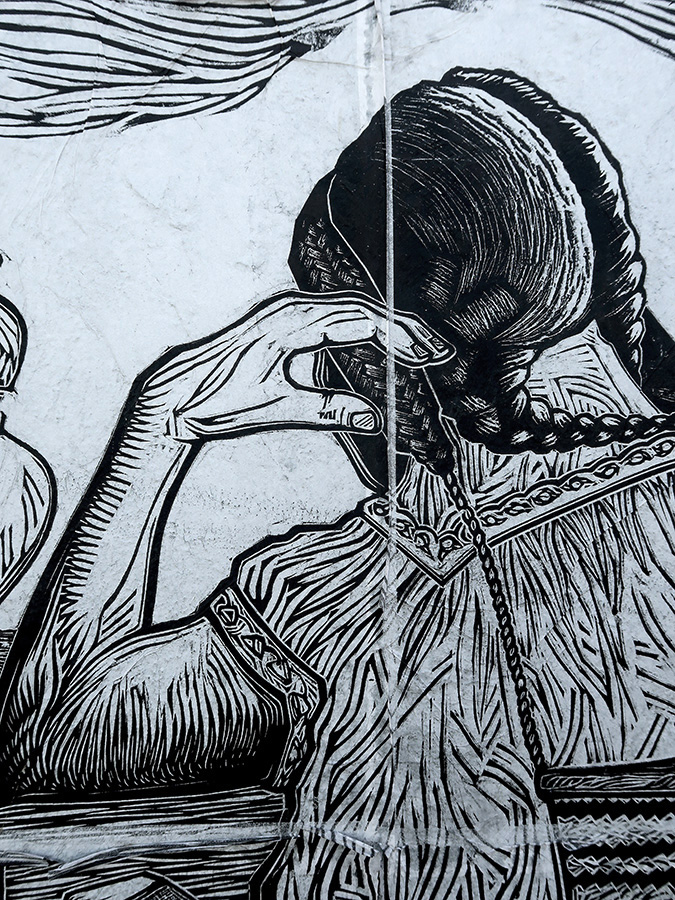
And yesterday I discovered this masterpiece…

IMG_1180

Celebrating the creativity, hard work, and dignity of the women and men living in the villages of Oaxaca.

IMG_1184_copy

IMG_1182_copy

IMG_1183_copy

A reminder of the people whose roots run deep into the soil and who make Oaxaca such an exceptional place.

Save

Read Full Post »

Día de Muertos is coming…

That means the departed will soon return to eat, drink, and be merry with their living loved ones.

Due to earthquake damage the Panteón General in the city is closed, but the traditional evening of the dead will take place at the Panteón Xochimilco.

As the schedule of over 100 cultural activities (between October 28 and November 4) states, despite earthquakes and hurricanes, “Oaxaca is more alive than ever!”

Read Full Post »

Lunch coming down out of the mountains in Colorado…

IMG_0587

Tacos at Carniceria Sonora in Clifton, CO

Back in Oaxaca in time for a comida of September’s traditional dish…

IMG_0712

Chiles en Nogada at Las Quince Letras Restaurante in Oaxaca de Juárez

And, not to be left out, Argiope showing off her freshly caught brunch…

IMG_1112_crop

Flies or bees or one of each on the terrace at Casita Colibrí

Gals, be they human or arachnid, have got to eat!

Read Full Post »

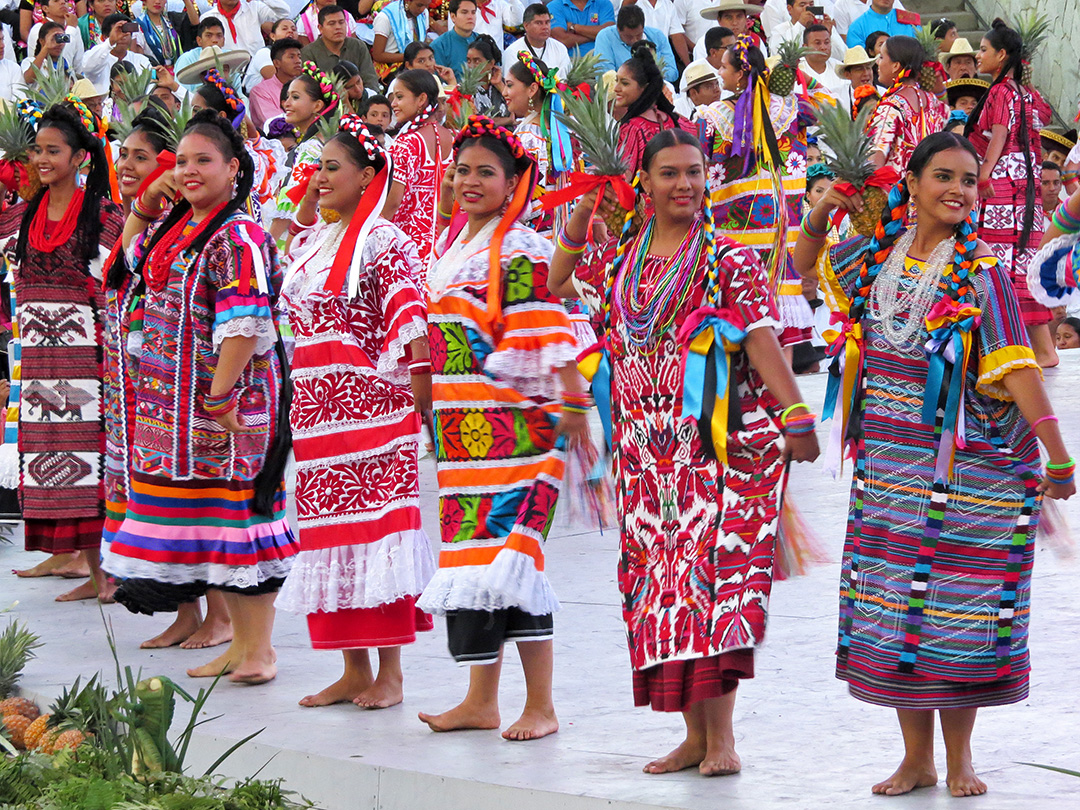
Since its creation in 1958, the Baile Flor de Piña (aka, the Pineapple Dance) has been bringing audiences to their feet at the Guelaguetza every July.  The energy and choreography is a cross between the Rockettes and Busby Berkeley, but the costumes are pure Oaxaca — the Mazateca and Chinanteca huipiles are a showcase of color, design, weaving, and embroidery from the Papaloapan region.

IMG_5038

Flor de Piña, La Guelaguetza – July 2015

The Mazatec and Chinantec peoples are 2 of the 16 indigenous groups living in the state of Oaxaca.  For those who are as captivated by their textiles as I am, the Museo Estatal de Arte Popular Oaxaca (MEAPO) in San Bartolo Coyotepec currently has a fabulous exhibition, La Piel de Mi Raza, which features more than 55 Chinanteco and Mazateco textiles from the Papaloapan — some over 200 years old.

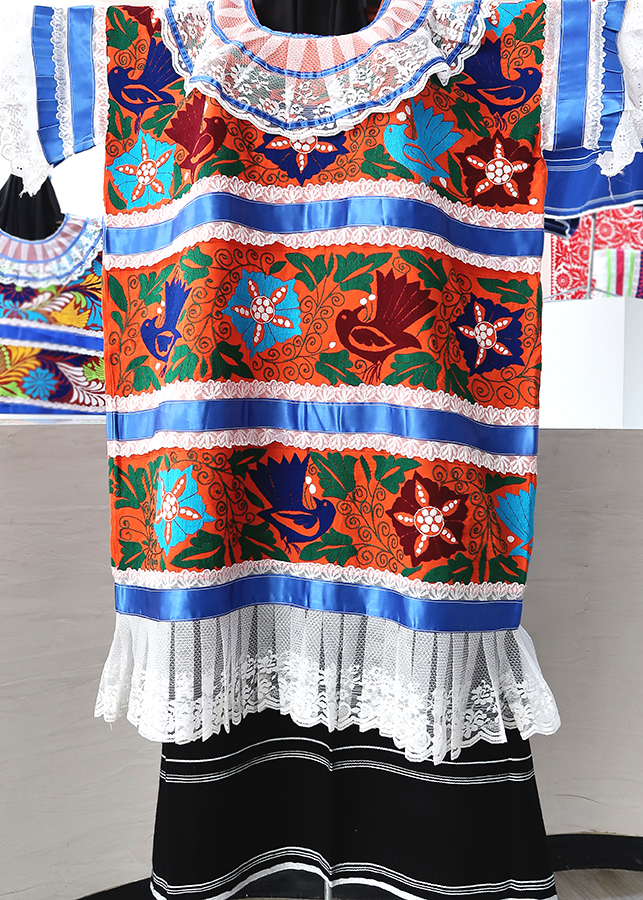
Mazateca huipiles are recognized by their hand-embroidered bird and flower motifs.

IMG_1063

Mazateca huipiles

IMG_1074

“Everyday” Mazateca huipil from San Miguel Soyaltepec

IMG_1064

“Dressy” Mazateca huipil from San Felipe Jalapa de Díaz

IMG_1080_copy

“Everyday” Mazateca huipil from San Miguel Soyaltepec

IMG_1067

Antique Mazateca huipil from San Pedro Ixcatlán

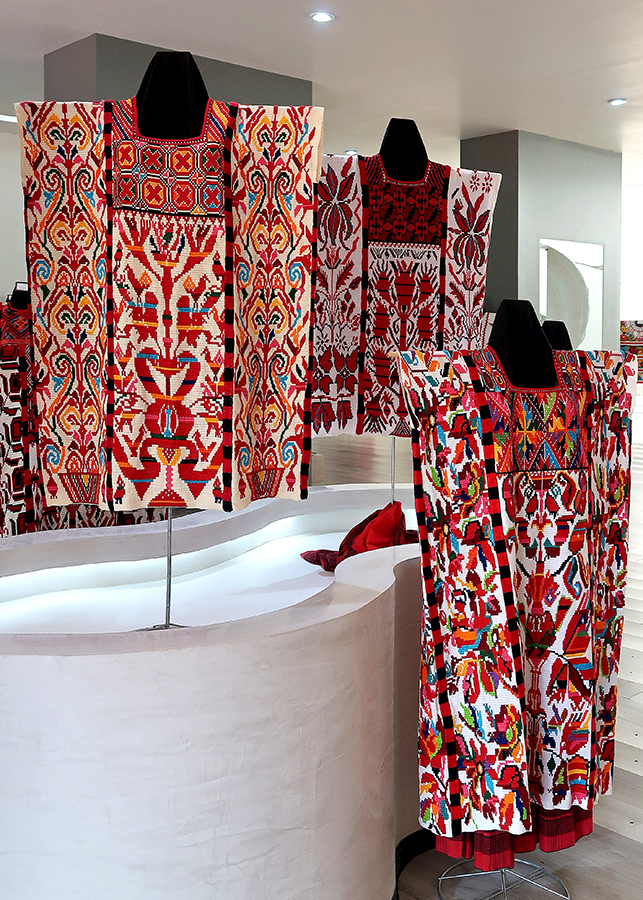
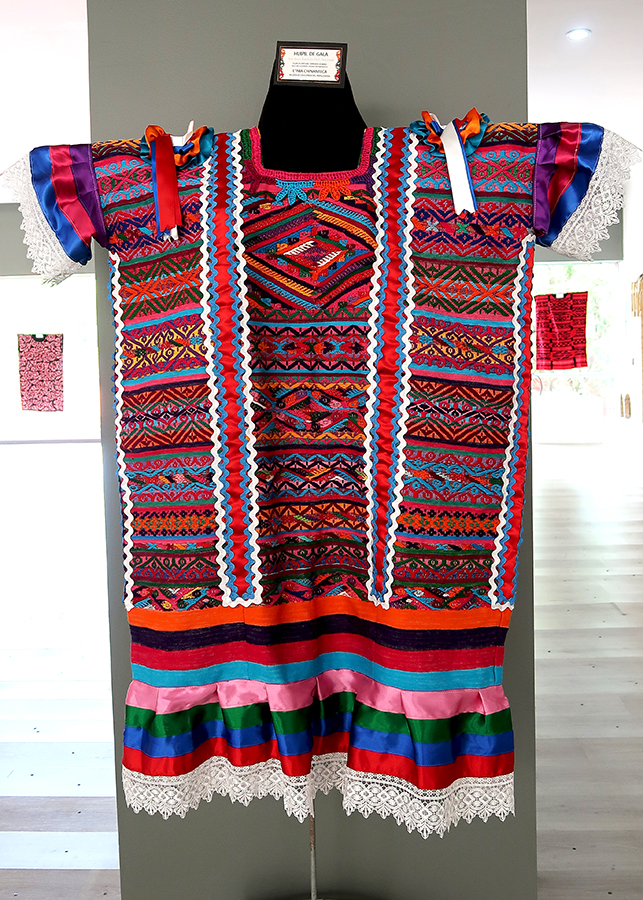
The Chinanteca huipiles are woven on backstrap looms with the bird, tree, Quetzalcoatl, and geometric designs embroidered or brocade woven into the piece.

IMG_1076

Chinanteca huipiles

IMG_1101

“Dressy” Chinanteca huipil from San Juan Bautista Valle Nacional

IMG_1091

Antique Chinanteca huipil from San Felipe Usila

IMG_1086

“Dressy” Chinanteca huipil from San Felipe Usila

IMG_1094

Antique Chinanteca huipil from San Felipe Usila

The exhibition is located in the upstairs gallery of MEAPO and runs until November 10, 2017.  By the way, if you haven’t been to the Museo recently, you are in for a surprise — the first floor has been divided into several galleries, allowing for multiple exhibits and providing for a more intimate experience.

And, for the fascinating and controversial background of the Flor de Piña, read Stephanie Schneiderman’s article, Baile Flor de Piña & Guelaguetza: Cultural Preservation.

Read Full Post »

« Newer Posts - Older Posts »