Feeds:
Posts
Comments

Posts Tagged ‘Mexico’

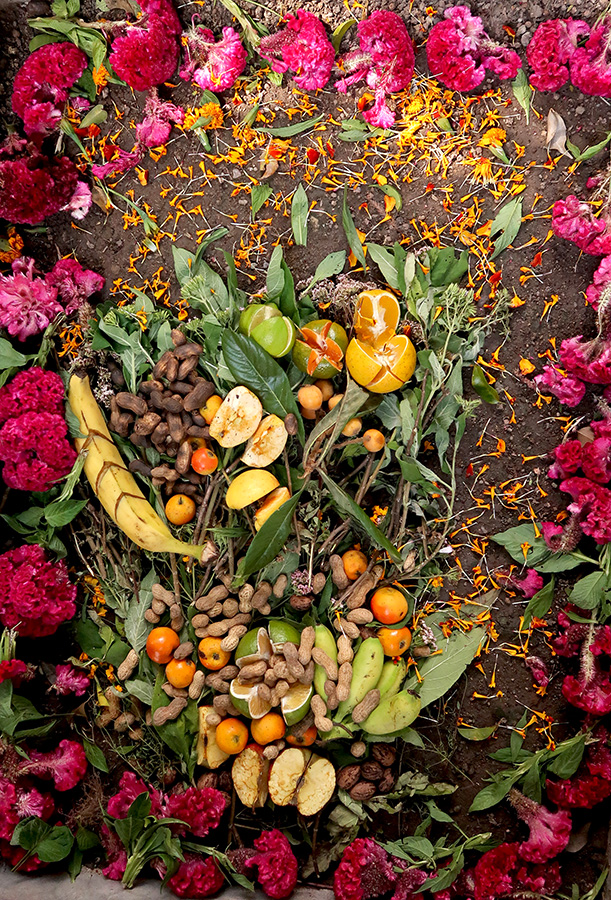
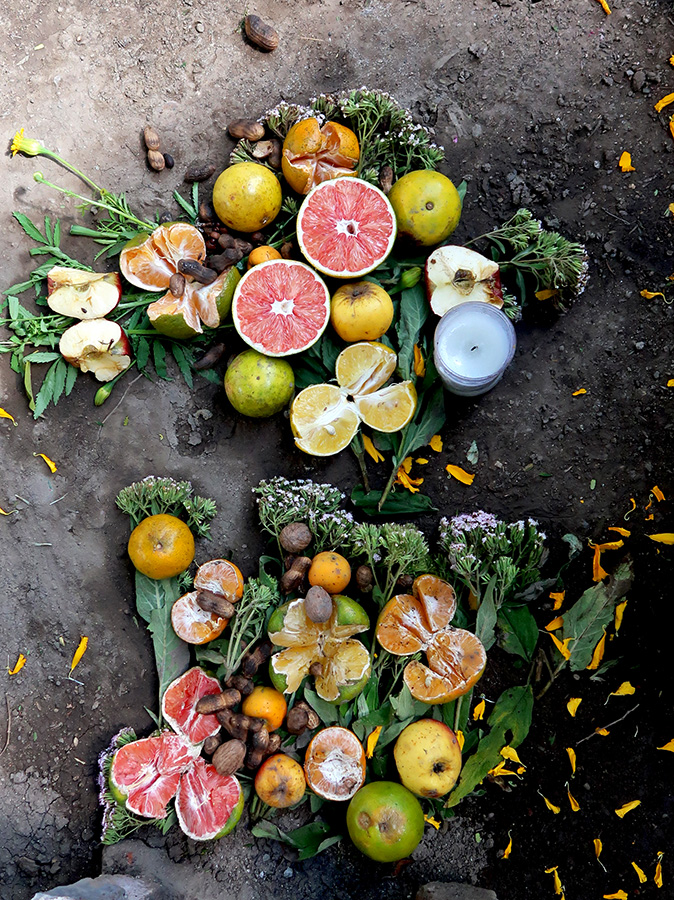
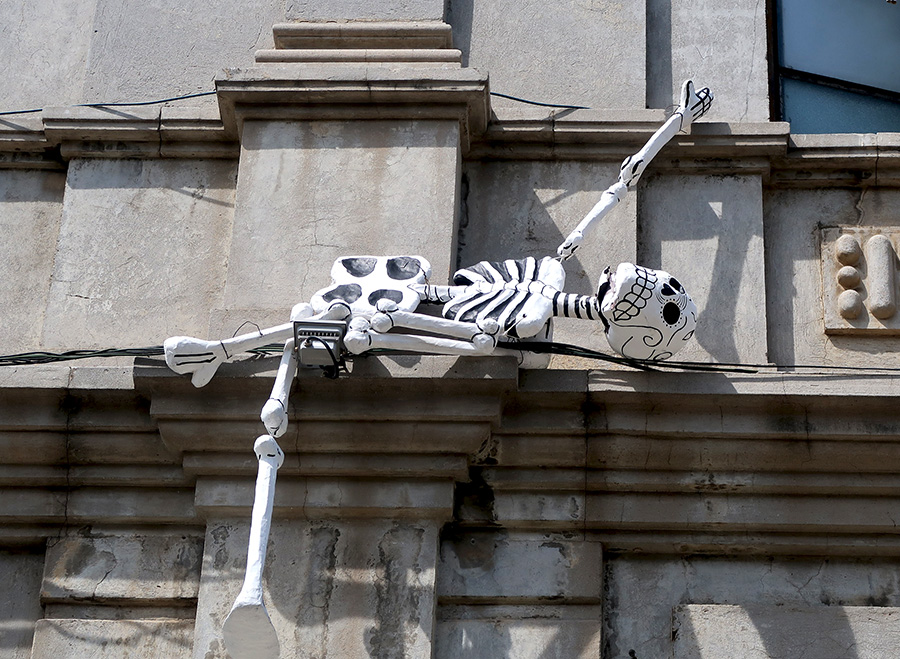
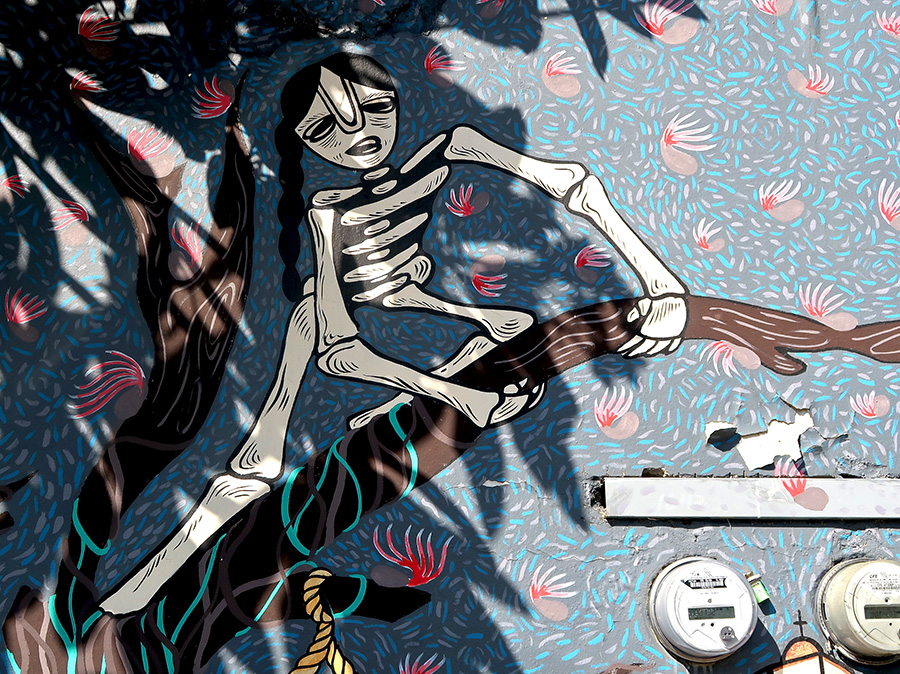
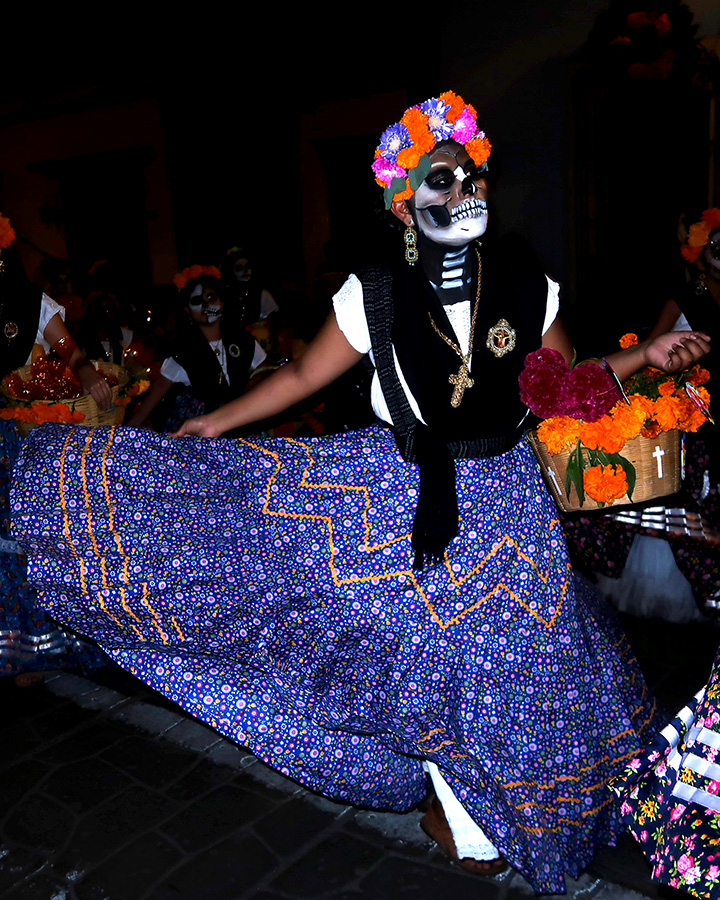
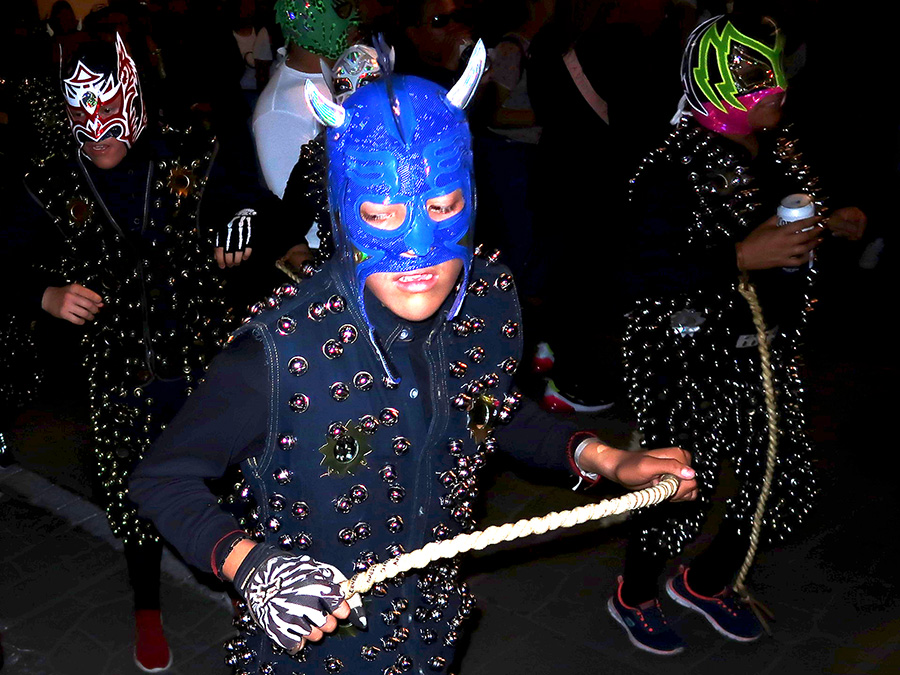
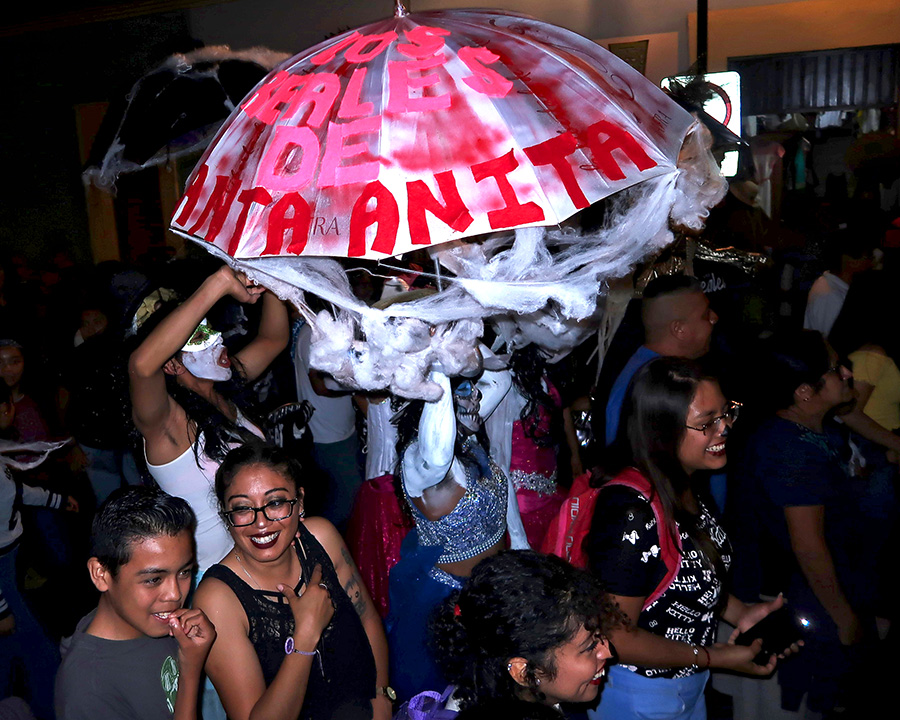
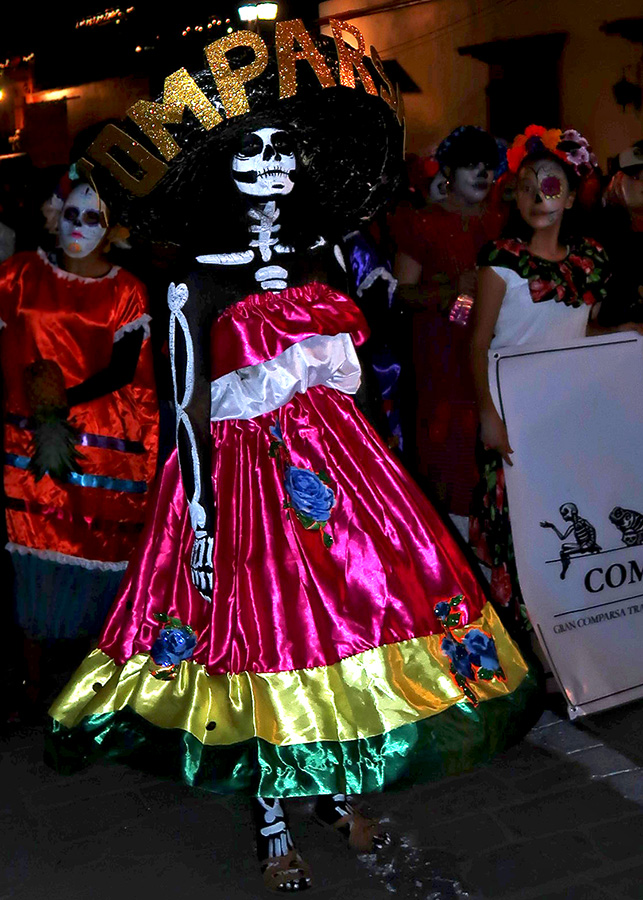
Calaveras, calacas, catrins, and catrinas, oh my!  (Click images to enlarge.)

In the city and villages, walls and windows, sitting and standing, happy and sad — they are everywhere in Oaxaca!

Read Full Post »

Tonight, the living began welcoming the dead with a Gran Comparsa through the streets of Oaxaca, beginning at Parque Juárez El Llano and ending at the Plaza de la Danza — the latter, almost on my doorstep! Visitors and Oaxaqueños, young and old, lined the parade route in anticipation.

With bands leading the way, catrinas in regional dress and dancers in traditional muerteada attire whirled and twirled, high-stepped and jumped, and moved and grooved their way through the streets.

Día de Muertos observances are different in the indigenous villages — the mood is more formal and each village has customs and rituals that tradition dictates must be followed. Even the dates and times the difuntos arrive to join their living families can differ. However, in both ciudad and pueblo, the goal is to bring together the living and their dead to eat, drink, and reminisce.

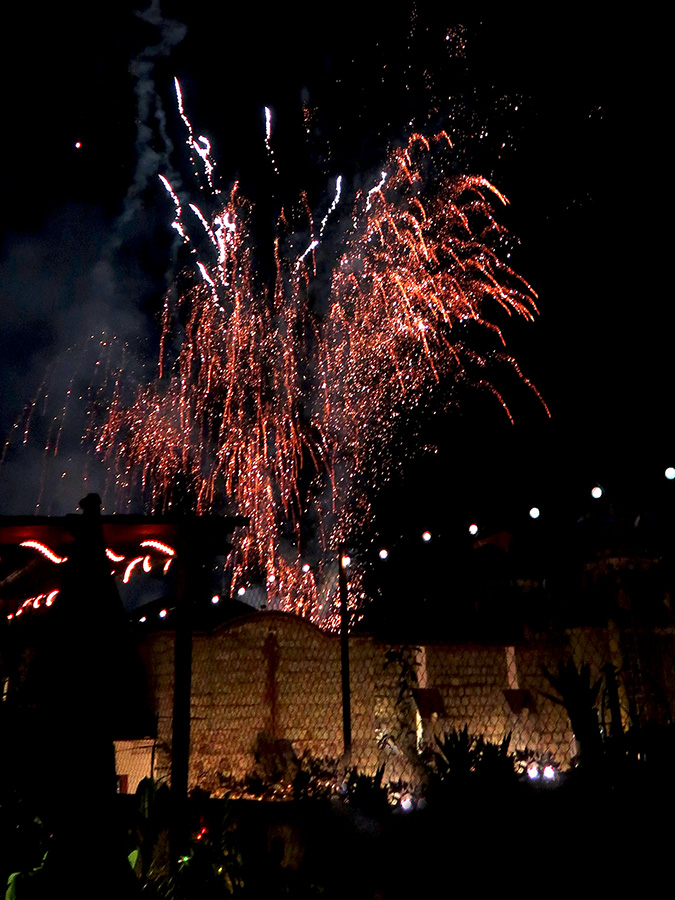
After the comparsa passed, I walked around the corner to Casita Colibrí. However, no sooner had I downloaded my photos, the unmistakable sound of fireworks being launched from the Plaza de la Danza called me out onto my terrace. The music and partying continued until 10:30 PM.

The celebrations have only just begun! Click HERE for the very long list of Día de Muertos cultural events in the City of Oaxaca. And, below are some of the activities happening in many of the villages outside the city. (Click on image to enlarge.)

Read Full Post »

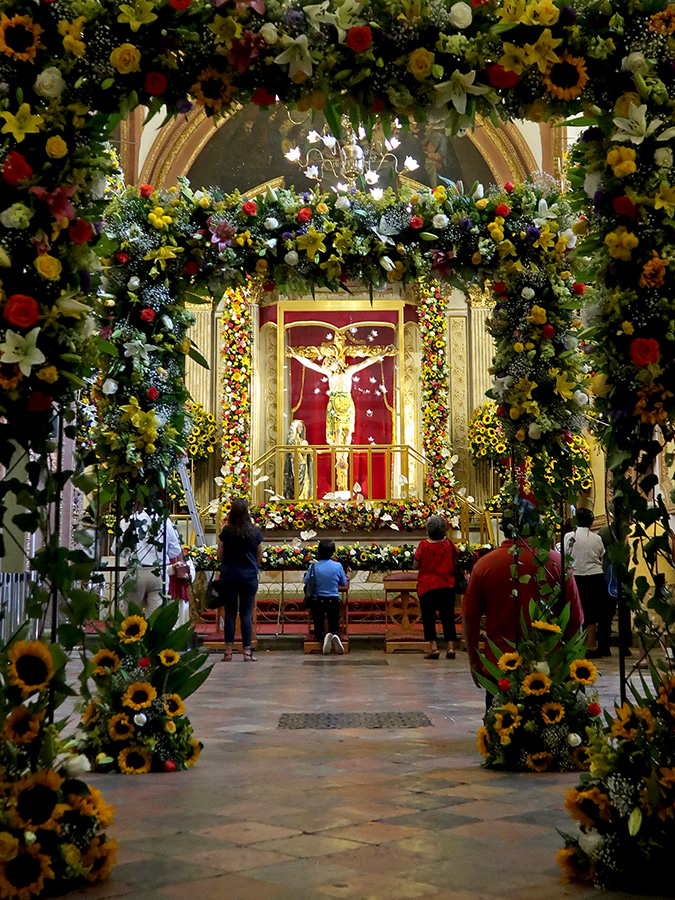
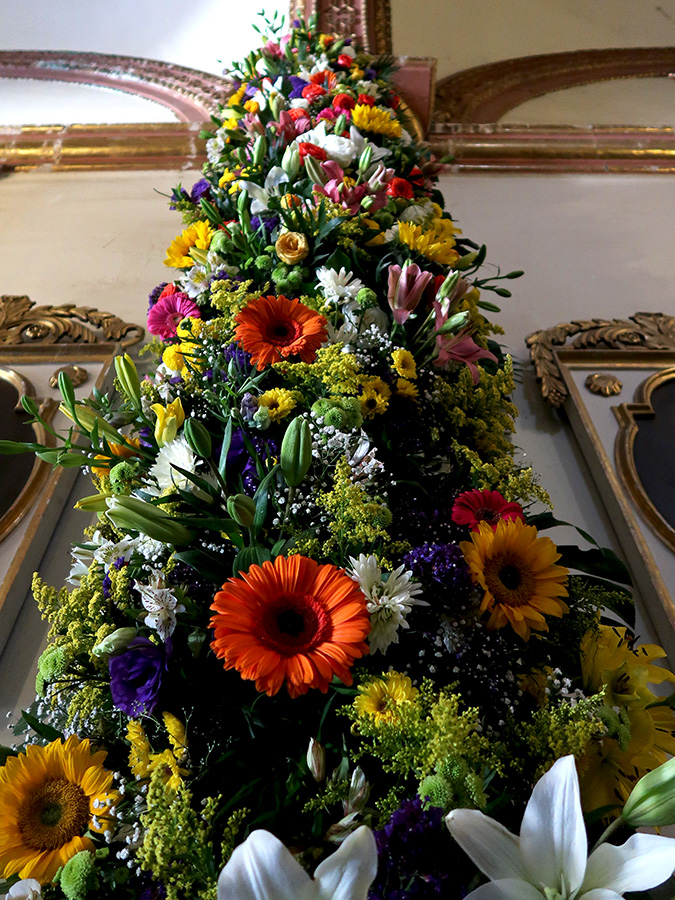
On October 21, after running errands, I made a beeline to the Catedral de Nuestra Señora de la Asunción. As I had hoped, it was all dressed up and ready for Señor del Rayo’s day on October 23.

Pews had been removed from his chapel (last capilla on the left) to allow the faithful to process past his glass enclosed home. Many stopped to light a candle at a couple of tables placed outside his chapel for that purpose.

By the way, El Señor has a body double. The original, given it’s importance and value, remains protected in the chapel. His replica was standing in a place of honor on the Cathedral’s main altar.

If you are not from Oaxaca, you may be asking, who is El Señor del Rayo? He is a wood-carved Christ on the Cross figure that was brought from Spain in the 16th century — a gift to Oaxaca from Charles V. The image was placed in the temple of San Juan de Dios, a church with adobe walls and a straw (or possibly wood) roof. According to legend, lightning struck the church and everything was destroyed, save for this figurine. It was a miracle so momentous that the figurine became known as El Señor del Rayo (the Lord of Lightning) and was given its own chapel in Oaxaca’s newly built Catedral de Nuestra Señora de la Asunción.

Like La Guelaguetza, Noche de Rabanós (Night of the Radishes), and Día de la Samaritana (Good Samaritan Day), this is an only in Oaxaca celebration and Oaxaqueños honor El Señor del Rayo with a special fervor, reverence, and pride. Thus, when I returned to the Cathedral at noon on October 23, it was standing room only — not an empty pew in sight, not even in the numerous side chapels.

Like most important festivities in Oaxaca, be they religious or secular, the Lord of Lightning’s celebration was heralded with a calenda (parade) on October 21 and concluded a little before midnight on October 23 with a castillo and fireworks — despite a several hour surprise downpour earlier in the evening. The show always goes on in Oaxaca!

Read Full Post »

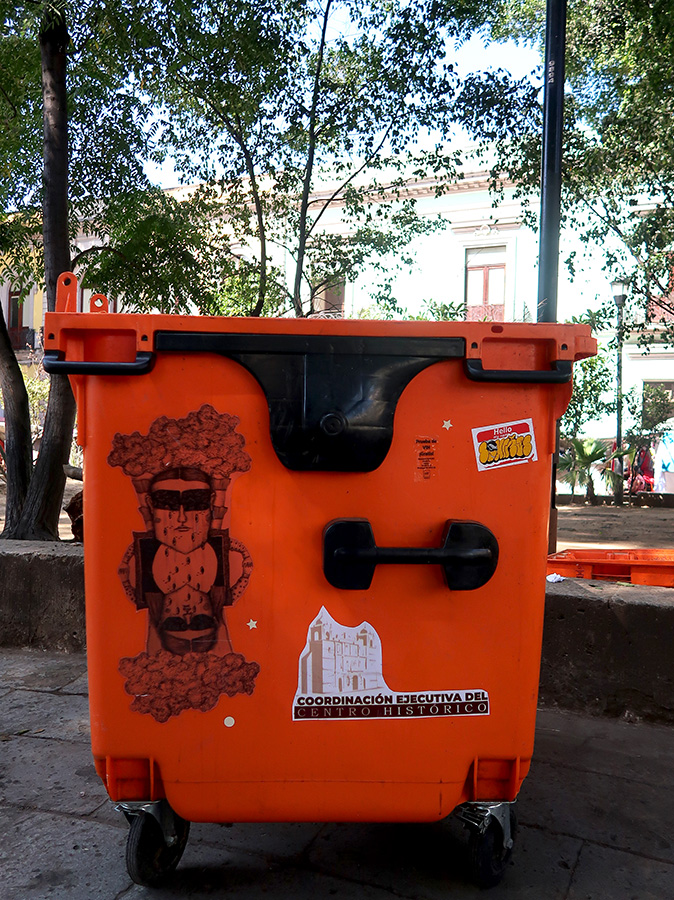
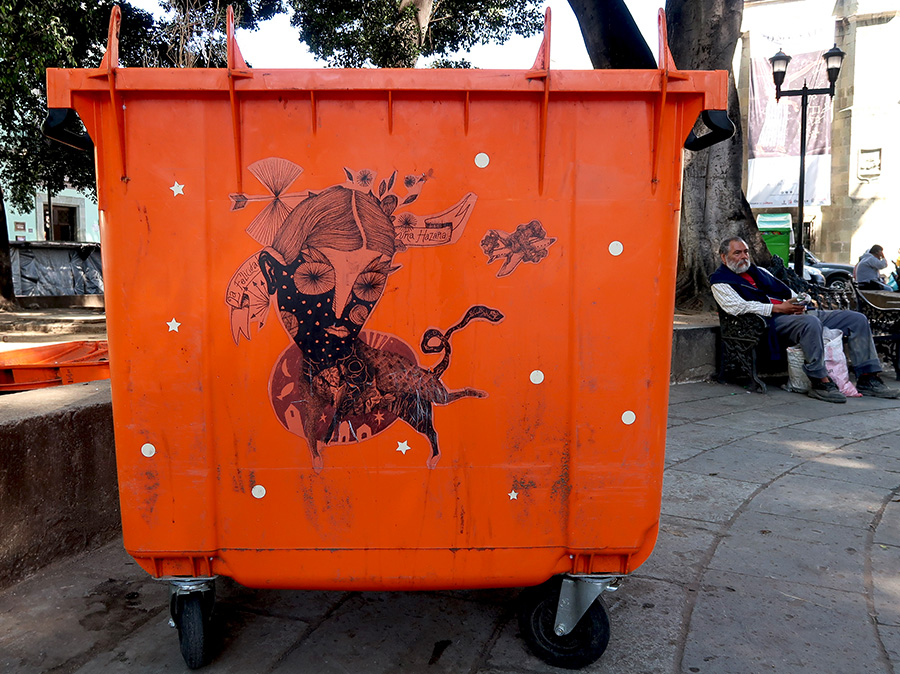
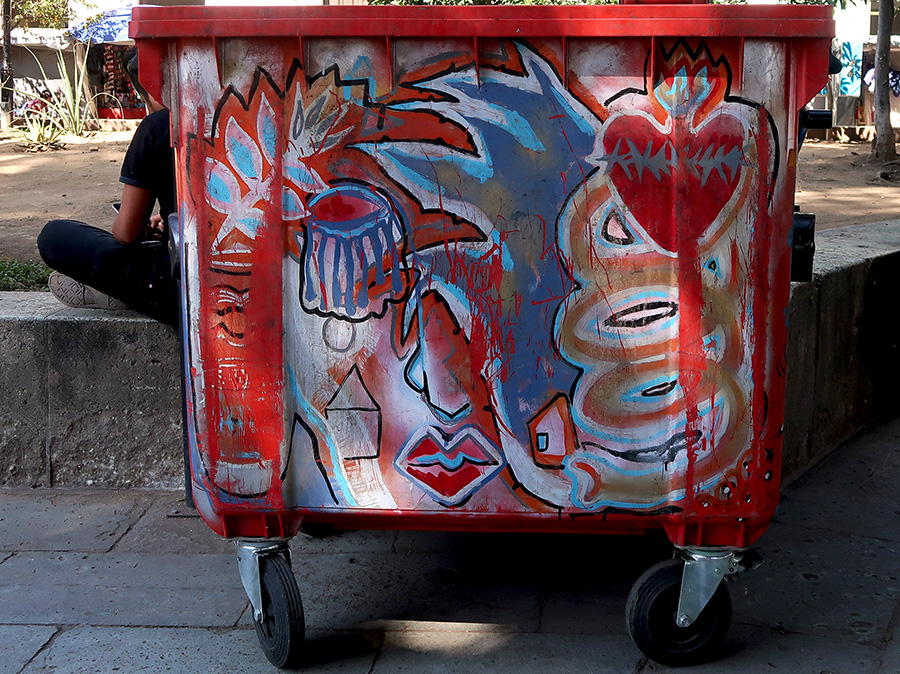
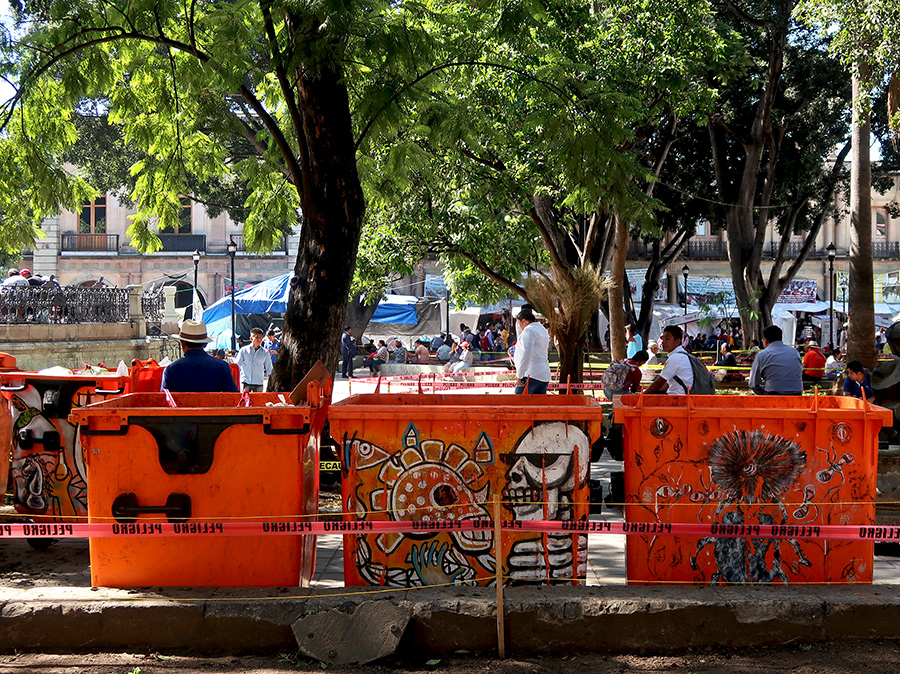
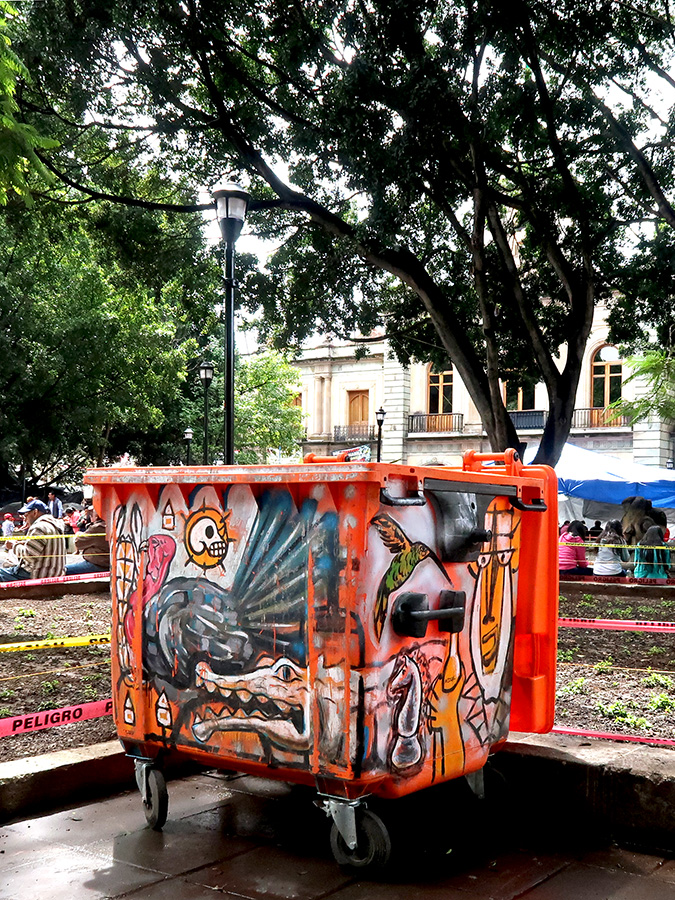
The art of the trash bin in black and orange…

Full color…

Fronts, sides, and backs…

Whimsical, symbolic, and abstract…

Garbage art on the zócalo has gone forth and multiplied.

Read Full Post »

Located in the main entrance to the 20 de noviembre market, the mural by César Villegas González raises THE issue we should keep in the forefront of our minds when we set out to go grocery shopping.

Alimentación mortal — Food that can be deadly?

Or, Comida de los Dioses — Food of the Gods?

I choose to take a ride on the magical metate!

The mural was inaugurated in March 2019 as part of the “Vive tu Mercado 2019” program which seeks to promote the cultural and gastronomic riches found in the city’s mercados.

Read Full Post »

If it’s Sunday, it must be market day in Tlacolula de Matamoros. However, yesterday wasn’t just any Sunday. The second Sunday in October marks the community’s most important feast day — honoring El Señor de Tlacolula.

Marmota at rest in the church atrium.

As with all patronal festivals, this one lasts several days. In addition to Sunday’s masses, the highlights were a calenda through the streets on Friday featuring marmotas (giant and tiny), several bands, the image of Christ, and women carrying baskets atop their heads. On Saturday night here was a castillo and fireworks.

Order of delegations for the calenda.

In the back of my mind, I knew it would be crowded, but I was amazed at how many people had already poured into Tlacolula by 9:30 AM. It was hard to navigate one’s way to the market as, besides masses of people, a carnival had been set up along the main street and a side street or two.

IMG_7773

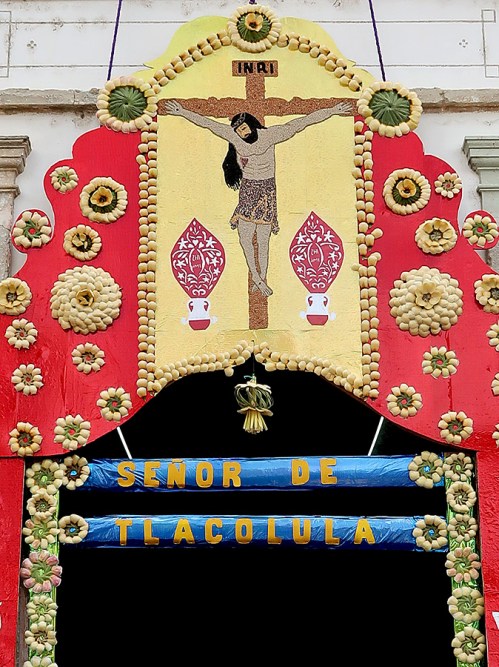
Señor de Tlacolula decorations at the entrance to Templo de la Virgen de la Asunción.

The church, Templo de la Virgen de la Asunción, was teeming with an overflow crowd of the faithful listening to mass being said from the side chapel of El Señor de Tlacolula. Legend has it that when this sculpture of Jesus, being brought south by muleteers in the sixteenth century, arrived in Tlacolula for a rest stop, overnight it gained so much weight that in the morning it could no longer be lifted. A miracle! Thus it was decided a chapel should be built to house the sculpture right on the spot.

Capilla de Señor de Tlacolula, the faithful wait to touch the image.

What a chapel it is! A feast for the eyes from floor to ceiling, filled with gold and silver gilding, carved angels and saints, paintings, and mirrors. On this day, pews had been removed so worshipers could have a personal interaction with the Lord of Tlacolula. In addition, an altar and hundreds of folding chairs had been set up in the atrium for an outdoor mass.

In the atrium, the altar on a replica of the church.

The art of the fiesta has been debased almost everywhere else, but not in Mexico. There are few places in the world where it is possible to take part in a spectacle like our great religious fiestas with their violent primary colors, their bizarre costumes and dances, their fireworks and ceremonies and their inexhaustible welter of surprises: the fruit, candy, toys and other objects sold on these days in the plazas and open-air markets. Octavio Paz, The Labyrinth of Solitude.

Mural on outside wall of the market.

Read Full Post »

Now that the Zócalo has been cleared of street vendors

A not so wretched refuse bin stands out.

Read Full Post »

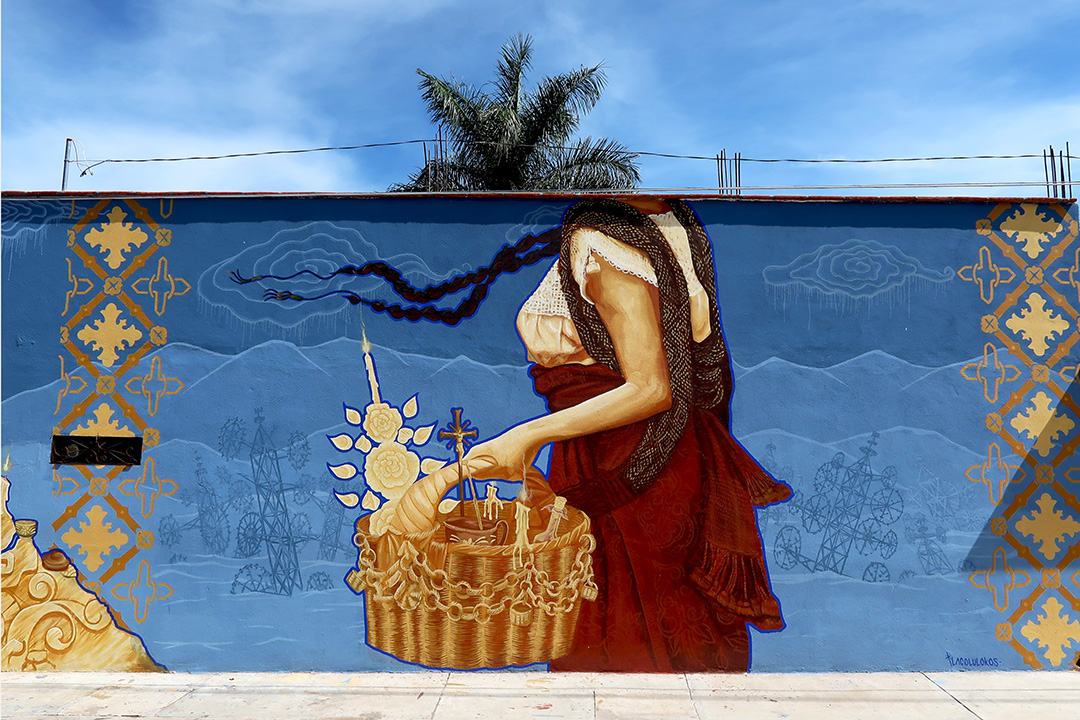
The artistry and message of my favorite mural painting collective, the Tlacolulokos, continues to be revealed on the walls of Tlacolula de Matamoros. Today, on a brief visit, blogger buddy Chris and I stumbled on three of their masterpieces. The first one I’d previously seen and blogged about in 2017 under the title, Who tells your story. However, the second mural was new to both of us.

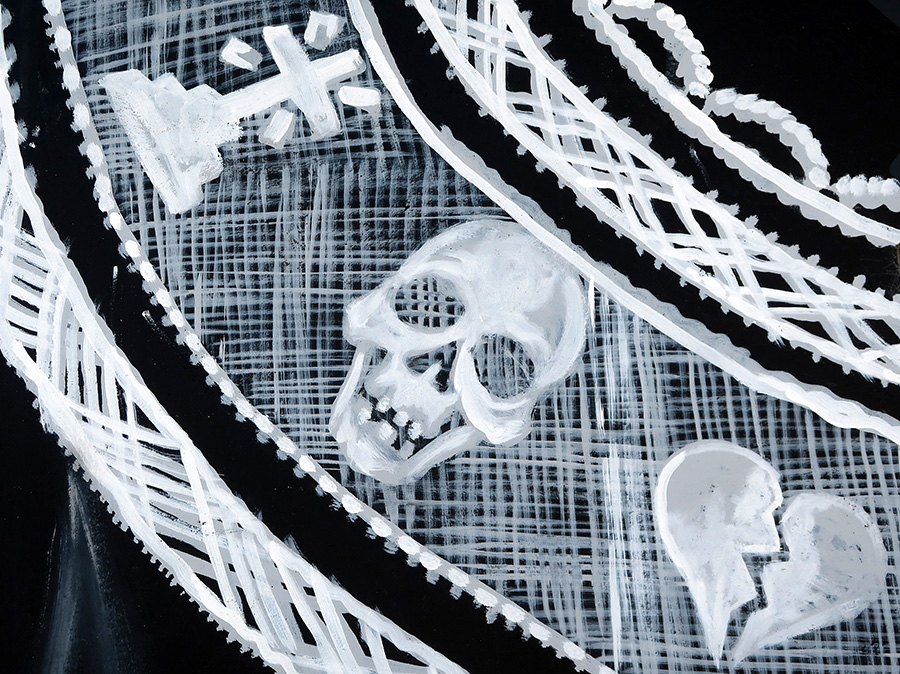
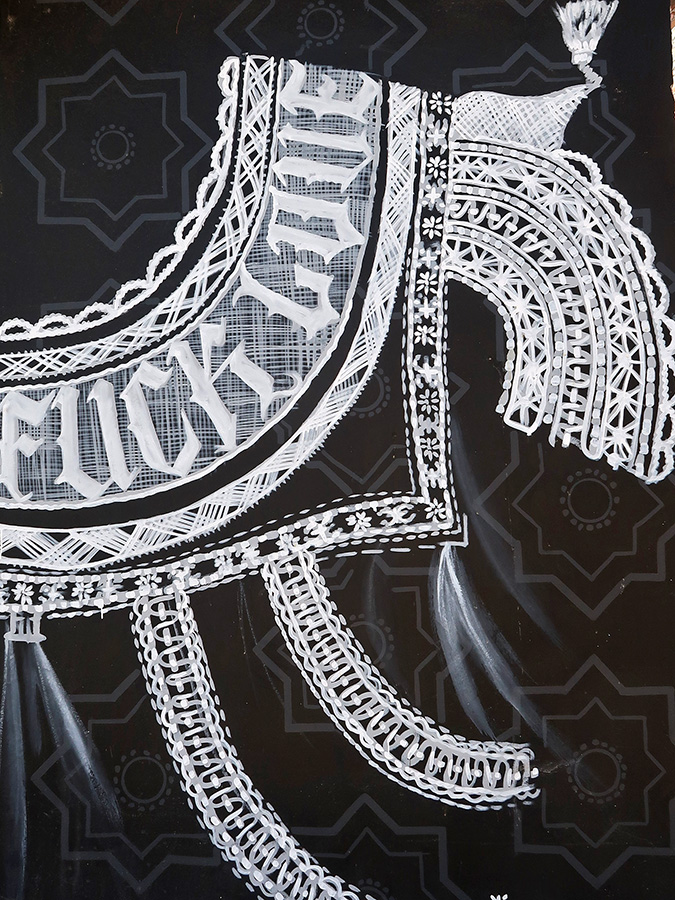
A blouse divided.

A broken heart — not your usual randa de aguja (needlework technique) blouse detail.

Their message, not mine.

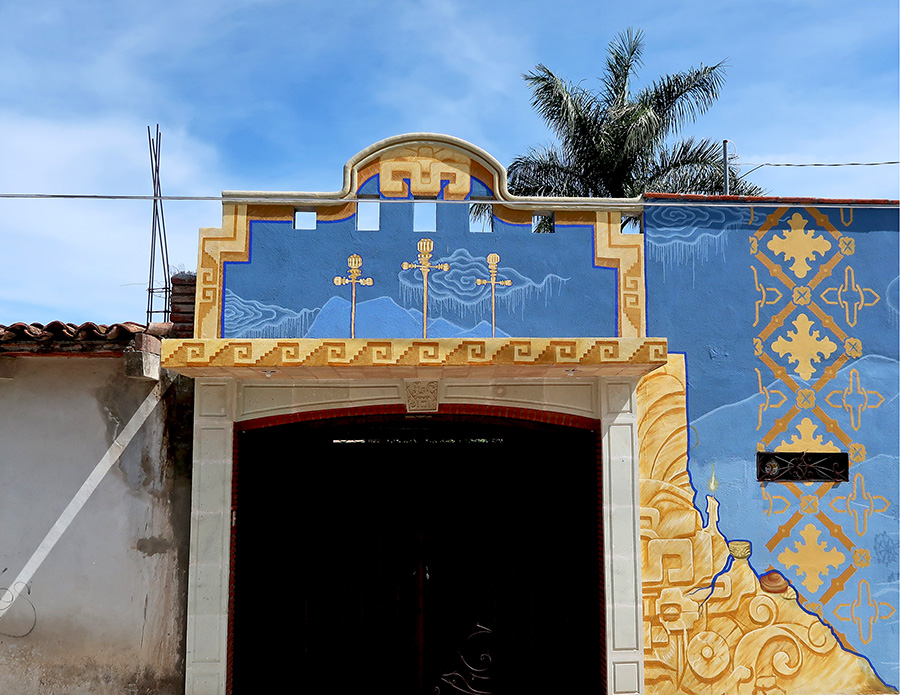
The third mural was a couple of houses down and presents a more historic and celebratory entrance.

Spanish swords and Mitla grecas provide driveway decoration.

A headless woman woman in traditional Tlacolula costume walks toward the entrance.

Thoughts of an upcoming festival castillo, agains the backdrop of the valley’s mountains, dance in her missing head.

Her carrizo shopping basket is filled with purchases for the festival.

From the first Tlacolulokos mural I saw in 2014 to their Tokiolula mural through today, their art continues to speak to me, teach me, and inspire me to really see the people and culture around me.

Read Full Post »

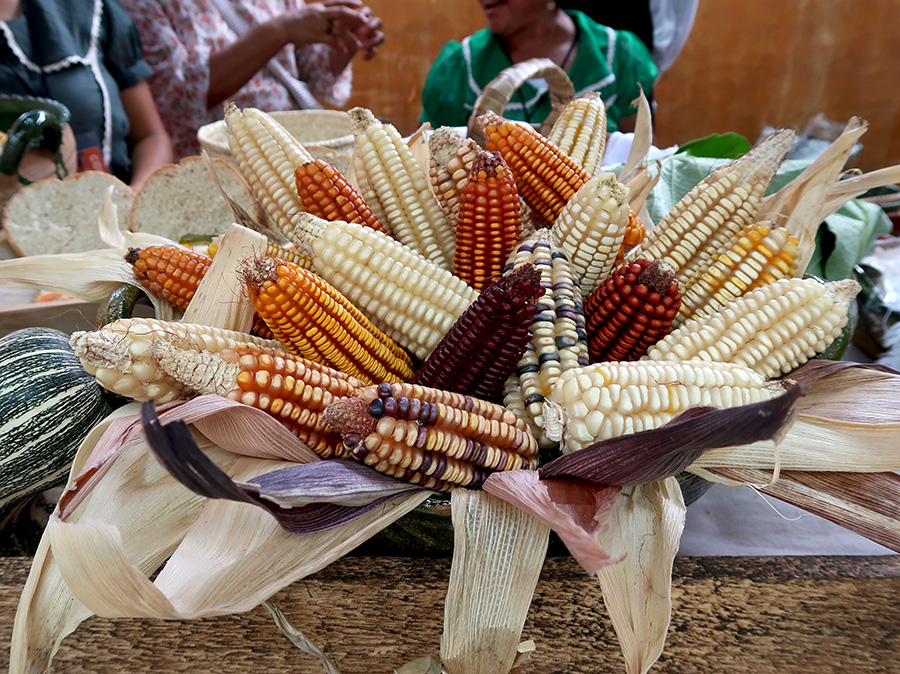
On this Día Nacional del Maíz (National Day of Corn), in honor of the late Maestro Francisco Toledo, who led a fight to defend the native corn from genetically modified corn, a series of activities was held in four of the cultural spaces he bequeathed to Oaxaca. Understanding in Mexico, corn is life, my amiga and I braved the much-needed rain (that has now been falling for 24 hours) to participate in the activities.

Pasaporte Día del Maíz

Our first stop was at the Centro Fotográfico Manuel Álvarez Bravo (photographic center), where each visitor was photographed in front of a display of maíz and the mobile unit of the Centro de las Artes de San Agustín (CaSa) made special commemorative prints.

IMG_5069

Backdrop for photos at the Centro Fotográfico Manuel Álvarez Bravo

Next on the itinerary was the library, Fonoteca Eduardo Mata, where a video about the issue of transgenic corn was shown, corn masks were given, and we recieved a second stamp in our Pasaporte Día Nacional del Maíz.

IMG_5073

Raised beds of corn in the Ethnobotanic Garden

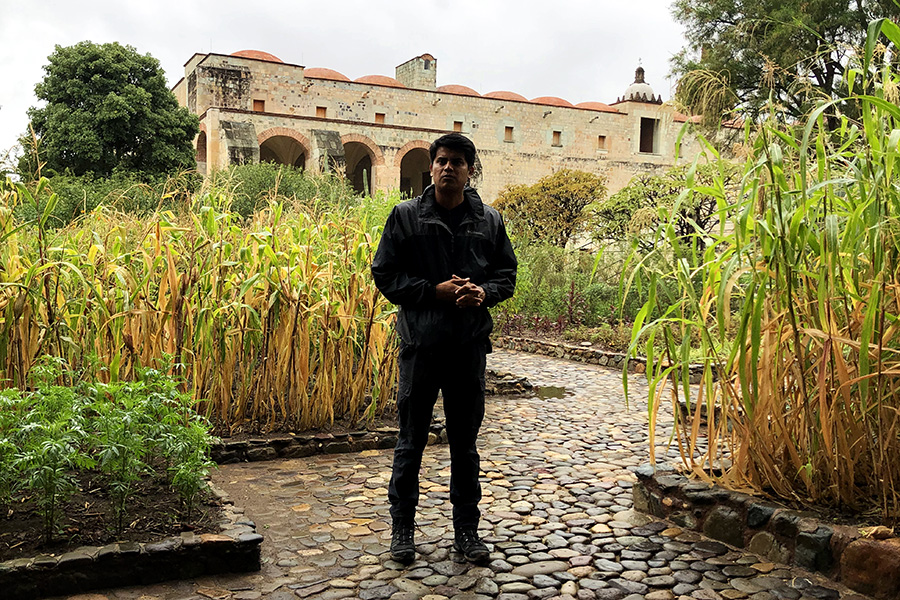
We then proceeded to the Jardín Etnobotánico (Ethnobotanic Garden), where we were introduced to two raised beds of maíz — one the silvestre abuelita (wild grandmother) and one her cultivated descendant that we rely on today.

IMG_5078

Serving pozol from an olla at IAGO

Our final stop of the day was at the Instituto de Arte Gráficas de Oaxaca (IAGO) where we were rewarded with many gifts — including a t-shirt or sweatshirt, a small flower pot of corn stalks, and a comida of tamales, nicuatole, and pozol (a prehispanic corn beverage).

IMG_6840

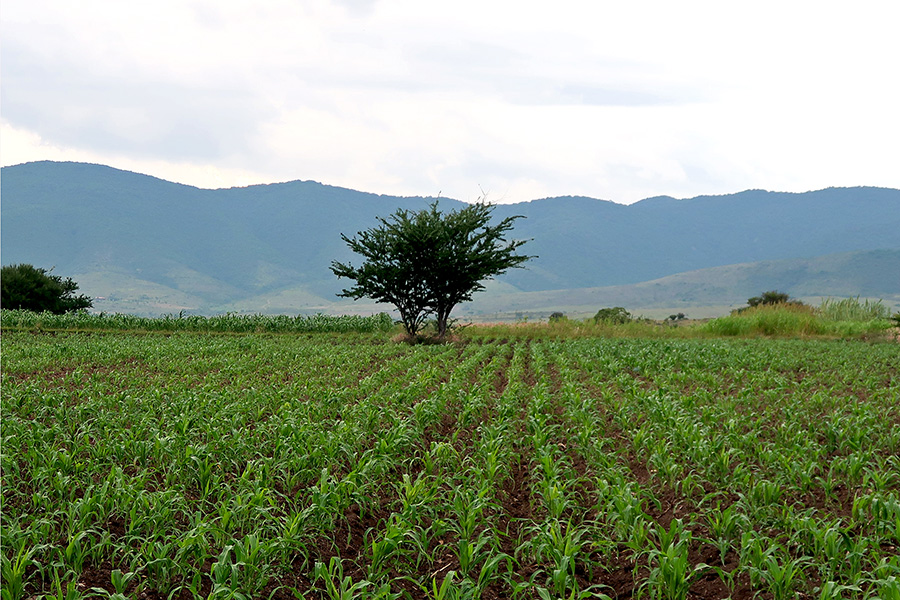
Field of corn in Teotitlán del Valle

Everyone should be honoring this day and giving thanks to the original peoples of Oaxaca for cultivating maíz 10,000 years ago.

Read Full Post »

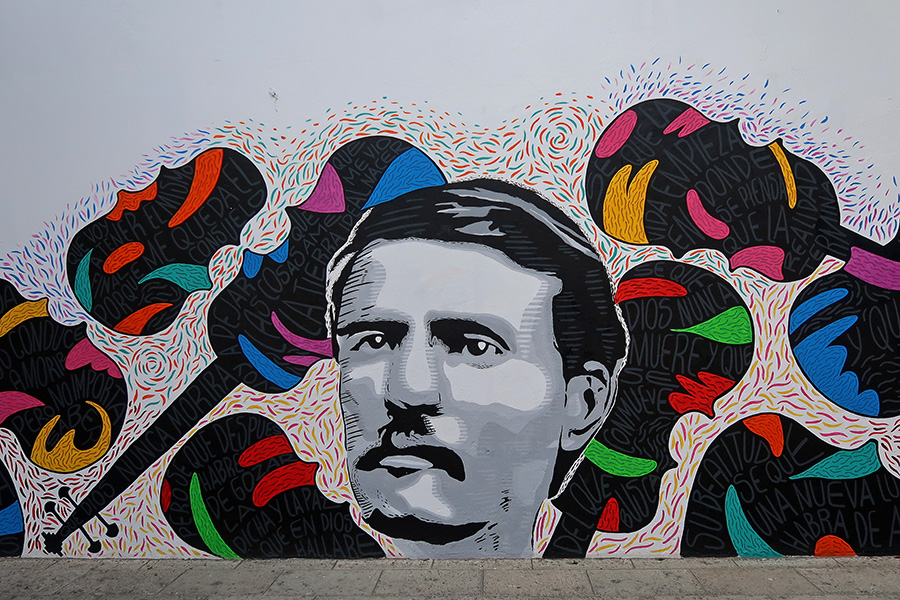
A mural celebrating the life and music of composer and violinist Macedonio Alcalá has joined a bust of fellow Oaxaqueño composer Álvaro Carillo in the Jardín Carbajal (Macedonio Alcalá at Cosijopi).  The mural by Uriel Barragán (Bouler) was unveiled August 22, 2019 in commemoration of the 150th anniversary of the death Macedonio Alcalá. The composer is best known for his piece, “Dios nunca muere” (God Never Dies) — a song that has become Oaxaca’s unofficial anthem and provided the artist with the theme of the mural.

Mural of composer Macedonio Alcalá

According to one legend: While Macedonio Alcalá was convalescing from a serious illness, he was visited by a group of indigenous people from Tlacolula de Matamoros, who asked him to compose a waltz for their festival of the Virgen de la Asunción. Subsequently, the flutist José Maqueo went to see him, and noticing the poverty stricken situation of Macedonio Alcalá, without him noticing Maqueo left twelve pesos under the pillow. The next day the composer found the money and told his wife: “Look, God never dies, always comforts the afflicted,” and he immediately began writing “Dios nunca muere.”

Whether it’s true or not, it’s a lovely story to accompany a lovely waltz.

Read Full Post »

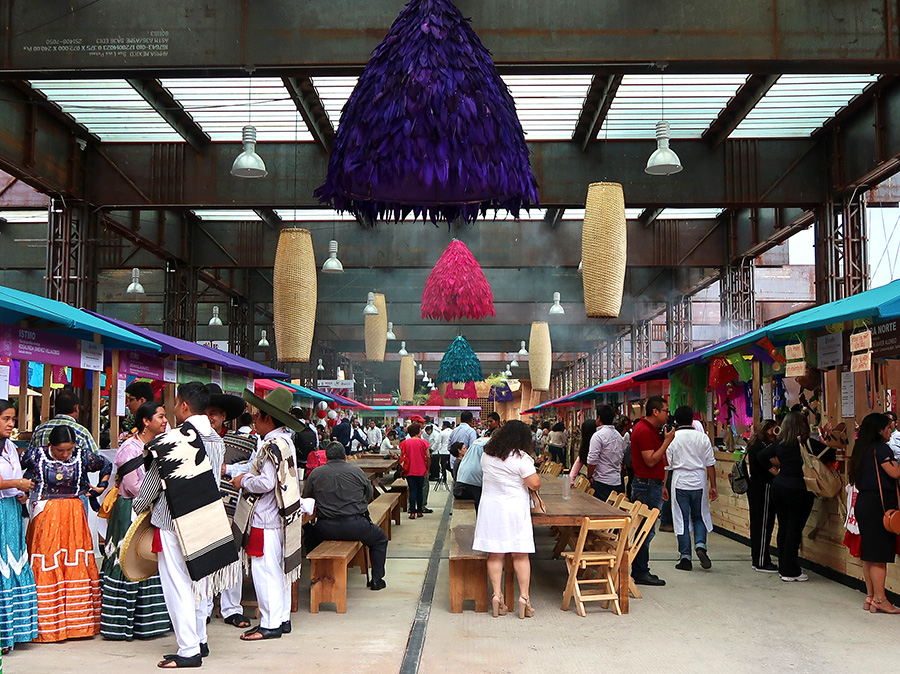
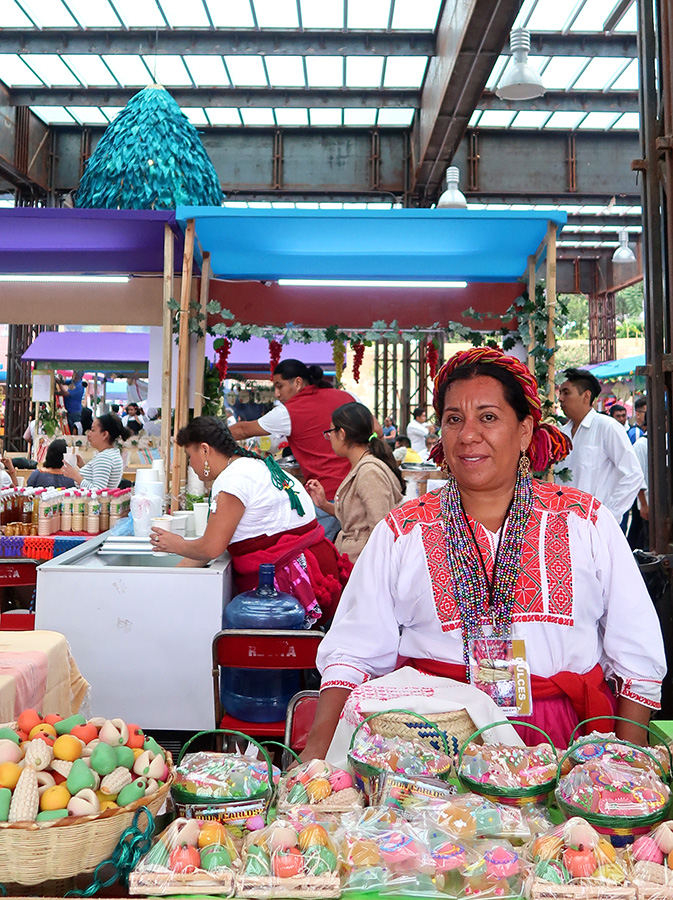
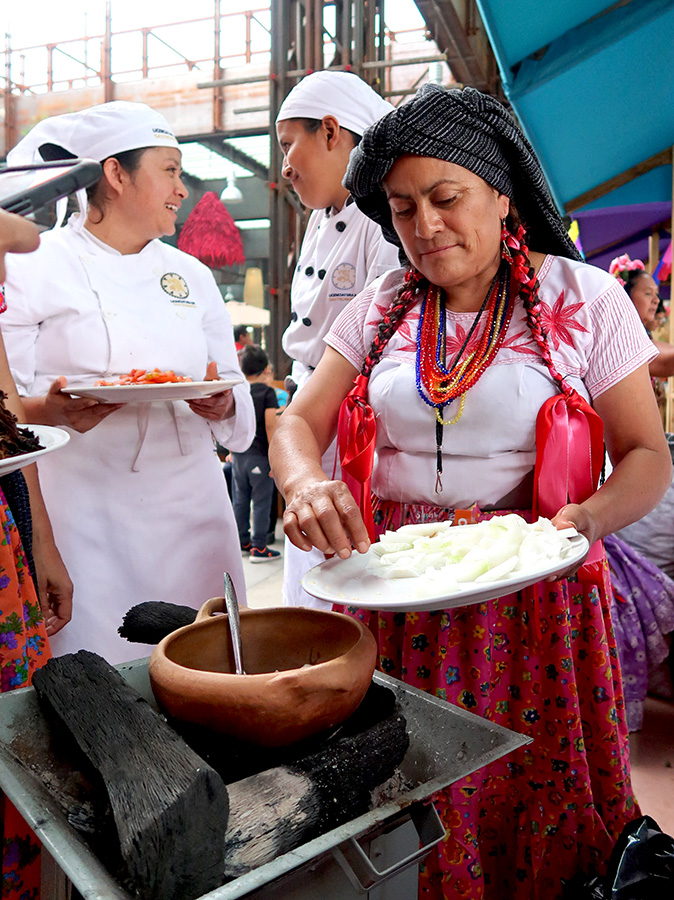
The long-awaited 3er Encuentro de Cocineras Tradicionales de Oaxaca (3rd Gathering of Traditional Oaxacan Cooks) opened yesterday in the Centro Cultural y de Convenciones de Oaxaca (CCCO) — the new convention center.

While not nearly as convenient for yours truly as the previous two, which were held only a block away in the Plaza de la Danza, the Cocineras event had rapidly outgrown the old space and this site was more than adequate.

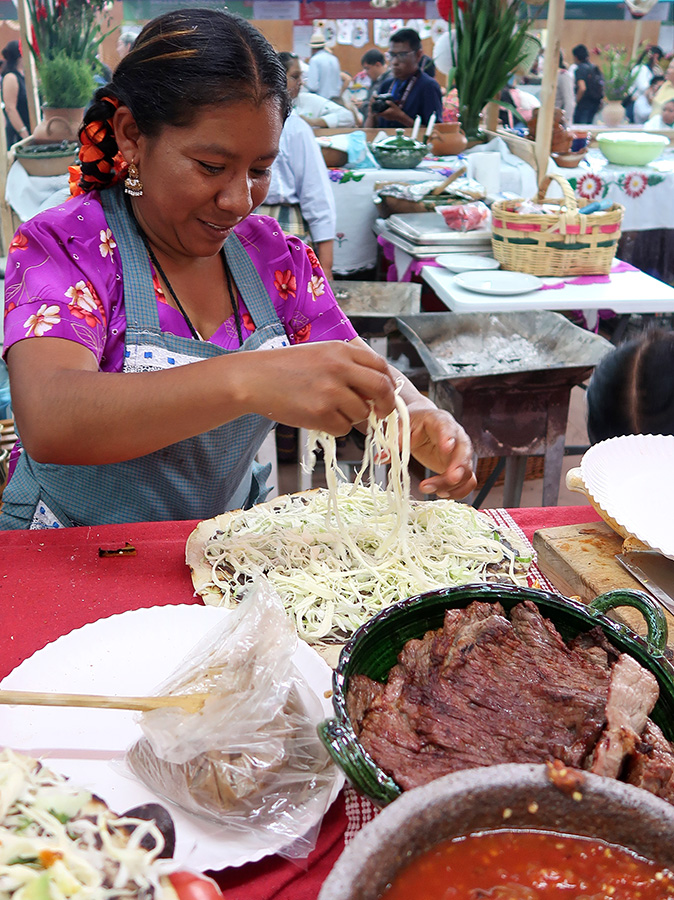
The gathering showcases 60 cooks, representing the 8 regions of the state, preparing more than 200 typical Oaxacan dishes — including desserts and beverages. Prices for each dish are reasonable and there is plenty of seating.

In addition to dining and drooling, there are cooking and craft workshops, educational conferences, and area where one can purchase kitchen and table related products, along with various packaged foodstuffs.

By the way, even the Zapotec God of Rain, Cocijo, blessed the opening with a much-needed downpour, but the rain didn’t dampen any spirits!

The Encuentro de Cocineras Tradicionales runs through Sunday, September 22, food stalls are open from 1:00 to 8:00 PM daily, and entrance is free.

Read Full Post »

Overnight, as the calendar page turned from August to September, green, white, and red appeared around the city. The colors of the Mexican flag festooned buildings — both public and private and flags began flying from rooftops.
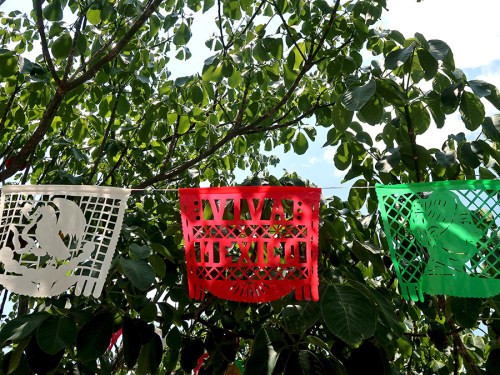
Papel picado hanging above Plazuela Labastida.

Vendor carts, selling all things patriotic, noisy, and green, white, and red, began appearing on busy street corners and green, white, and red lights were strung above major streets and in the zócalo. September is El Mes de Patria — an entire month of celebrating Mexico’s independence from Spain.
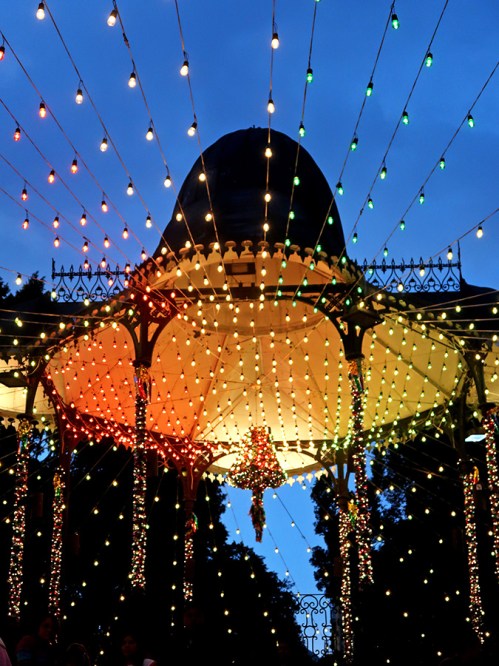
Kiosk in the zócalo.

September 16 is Día de la Independencia (Independence Day) marking Don Miguel Hidalgo y Costilla’s call to arms (Grito de Dolores) announcing the start of a ten-year long war for independence. However, all over Mexico, re-enactments “El Grito” (the Cry of Dolores) are staged at 11:00 PM on September 15 —  by mayors from municipal city halls, governors from state building balconies, and by the President of Mexico from the the National Palace. September 16 is marked with military parades.

Camera scaffolding in front of Oaxaca’s Government Palace.

As an article in yesterday’s El Imparcial proudly proclaimed, Oaxaqueños like Antonio de León, Carlos María Bustamante, José María Murguía y Galardi, and Manuel Sabino Crespo “contributed their sacrifice and courage to the creation of a free, sovereign and guaranteed homeland.” (my translation) By the way, for those who live in or have visited Oaxaca: Do those names ring a bell?
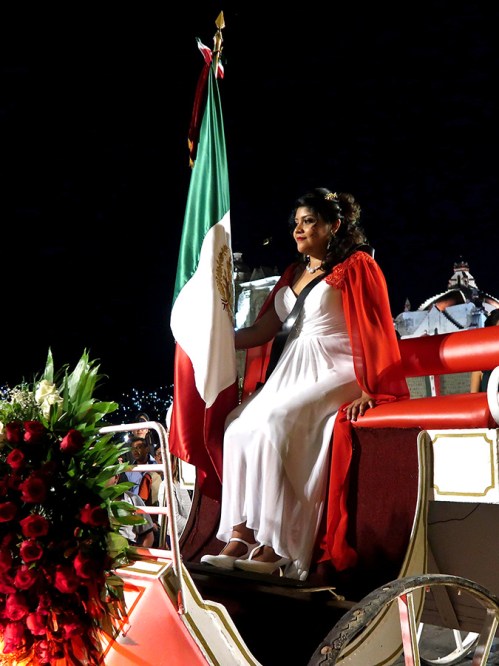
Señorita América on her way to sing the Himno Nacional (Mexican National Anthem) in the zócolo after the governor gives the Grito.

Last night’s Grito was the first given by Mexico’s new President, Andreas Manuel Lopez Obrador (aka, AMLO). The media pointed out that he gave 20 “Vivas” from the balcony of the Palacio Nacional, while his predecessor only gave 11. Among the added “Long live’s” were, “¡Vivan las comunidades indígenas!” and “¡Viva la grandeza cultural de México!”

Long live the independence! Long live Miguel Hidalgo y Costilla! Long live Morelos! Long live Josefa Ortiz de Domínguez! Long live Ignacio Allende! Long live Leona Vicar! Long live anonymous heroes! Long live the heroic people of Mexico! Long live the indigenous communities! Long live freedom! Long live justice! Long live democracy! Long live our sovereignty! Long live the universal fraternity! Long live peace! Long live the cultural greatness of Mexico! Long live Mexico! Long live Mexico! Long live Mexico!

And, there was more Oaxaca pride present in the nation’s capital as the Banda del Centro de Capacitación Musical y Desarrollo (CECAM), a youth band from the Mixe village of Santa María Tlahuitoltepec, Oaxaca, performed following the Grito.

Read Full Post »
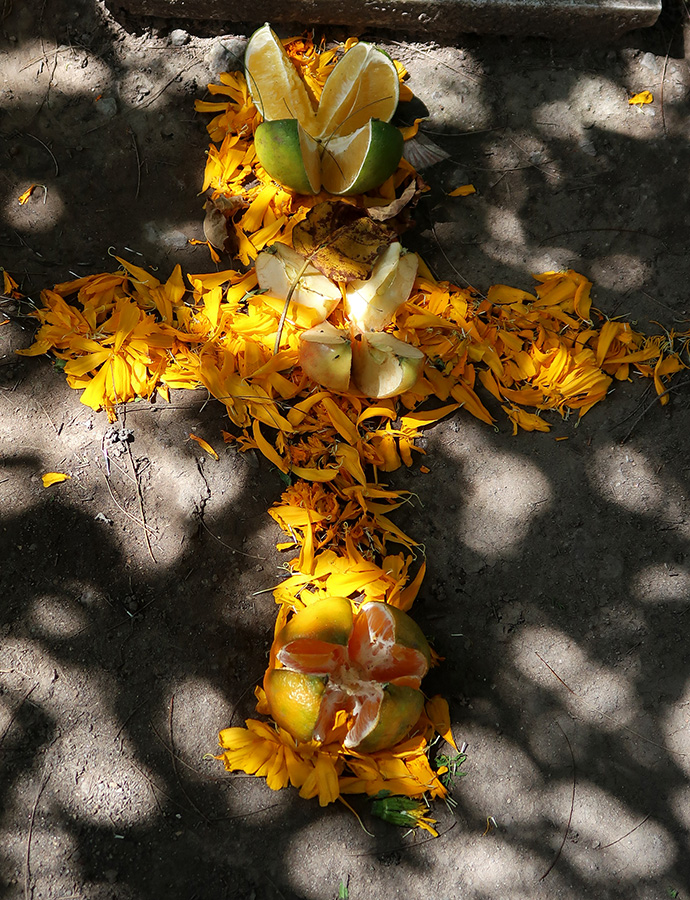
Who knew that there was an amazing garden, built on a former garbage dump, and open to the public in Xoxocotlán? Not me, until a friend mentioned it and invited me on a field trip to visit.

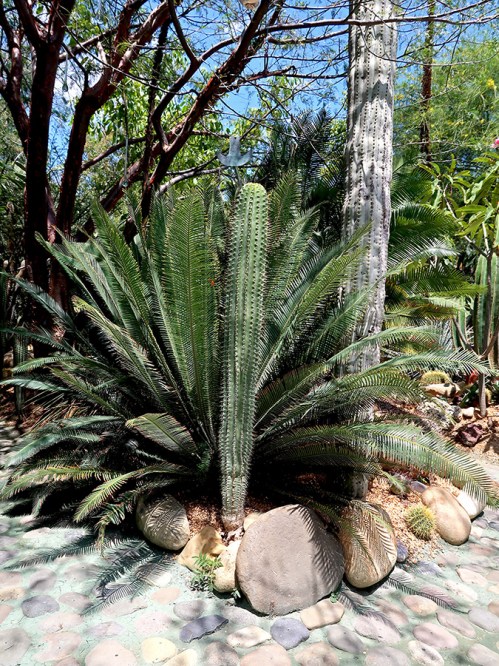
Thus, a few days ago, I found myself at Vives Verdes — a delightful labor of love — a marriage of plants, recycling, art, education, and the environment.

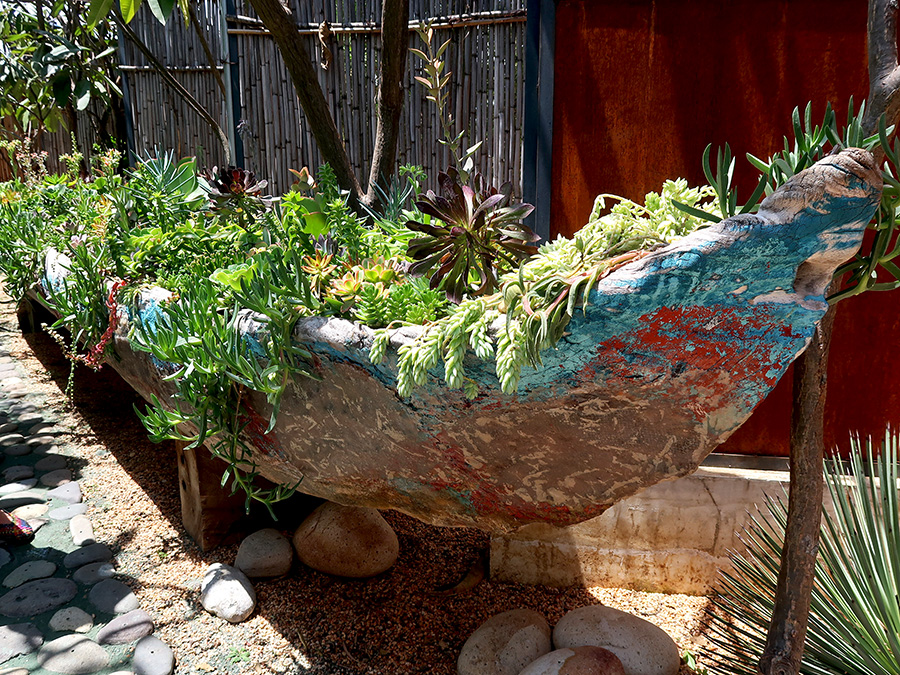
Nine years ago architect, Francisco Martínez began a project of landscaping a healing, artistic, and environmental garden — not only utilizing plants, but also converting found objects into planters and whimsical art.

Vives Verdes incorporates more than 200 species and 2000 plants — mostly from Oaxaca, but also from other arid climates throughout the world.

A water catchment system utilizing paths, beds, and ponds irrigate the garden and no chemicals are used.

Vives Verde is open to the public and school groups. It is located in the Las Culturas neighborhood of Santa Cruz Xoxocotlán, Oaxaca.

Read Full Post »

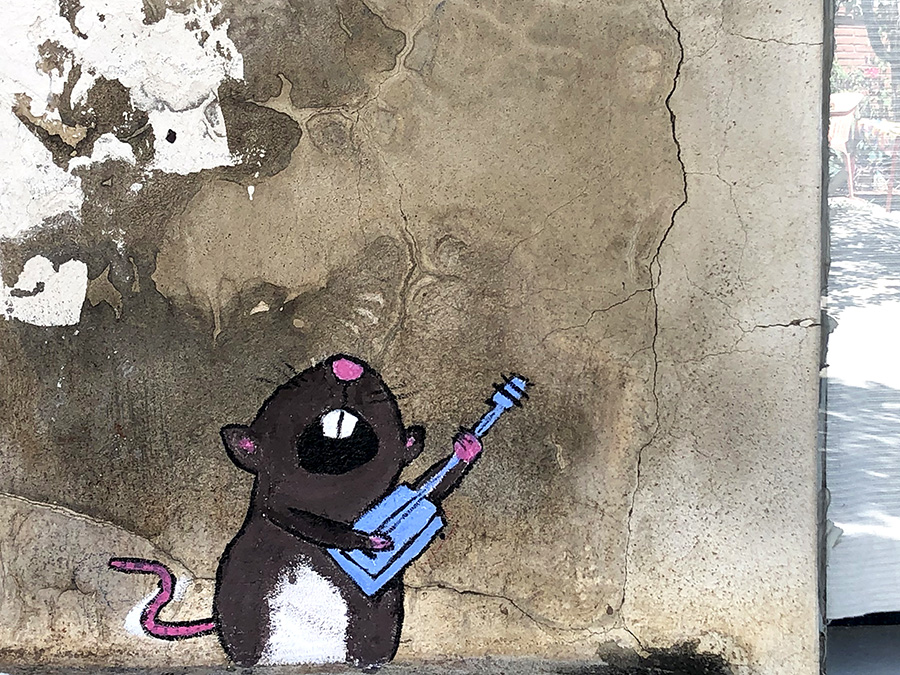
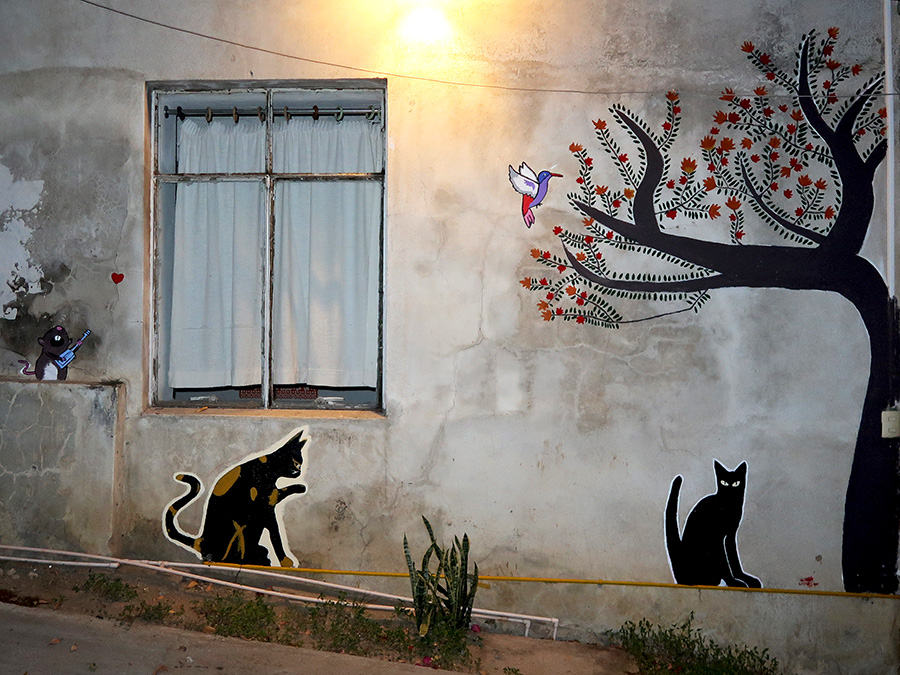
I can’t think of a better way to honor the memory of Maestro Toledo, than to acknowledge, encourage, and celebrate young artistic talent. “Disguise the new water pipes,” she (the dueña) said.

And, so, Ulises, the 18 year old handyman/mozo in our apartment complex complied — and we were all impressed.

From what we gathered, Ulises had no formal artistic training. Yet, next thing we knew, courtesy of Uli, a rat had invaded our compound!

Soon thereafter, Uli had added Mara and Notte (our resident gatitos/cats), a tree, and a colibri/hummingbird to the scene.

Uli continued to explore his talent.

And, we now have a fierce, but lovely, jaguar on the scene! If only, every young person had the opportunity to explore their inner talent.

Read Full Post »

Oaxaca is in mourning. Last night, word of the passing of one of her greatest champions, Maestro Francisco Toledo was announced by Mexico’s president — an indication of the importance and esteem the Maestro is held. Born in Juchitán, Oaxaca on July 17, 1940, Toledo died in Oaxaca city on September 5, 2019, at age 79.

This morning outside the Instituto de Artes Gráficas de Oaxaca (IAGO), which he founded and funded.

Besides being a world renown artist, he was a fighter for social justice and the environment, a very generous philanthropist, and crusader for the respect of indigenous peoples and character of Oaxaca. People are still chuckling over the unique form of protest he led when a McDonald’s threatened to open in the zocaló.

This morning, inside the Instituto de Artes Gráficas de Oaxaca (IAGO).

We awoke this morning to see the gigantic Mexican flag that flutters above the city of Oaxaca flying at half staff and large black bows, indicating a family in mourning, had been fastened above many of the institutions that benefited from Toledo’s philanthropy.

Biblioteca Pública Central Margarita Maza de Juárez – Oaxaca’s main public library.

The streets of Oaxaca are little more subdued today — less laughter, music muted, and even the traffic doesn’t seem as chaotic.

On the sidewalk outside the Instituto de Artes Gráficas de Oaxaca (IAGO).

A public tribute to the Maestro is scheduled for 2:00 PM today at the Teatro Macedonio Alcalá.

Read Full Post »

« Newer Posts - Older Posts »