Feeds:
Posts
Comments

Posts Tagged ‘Señorita América’

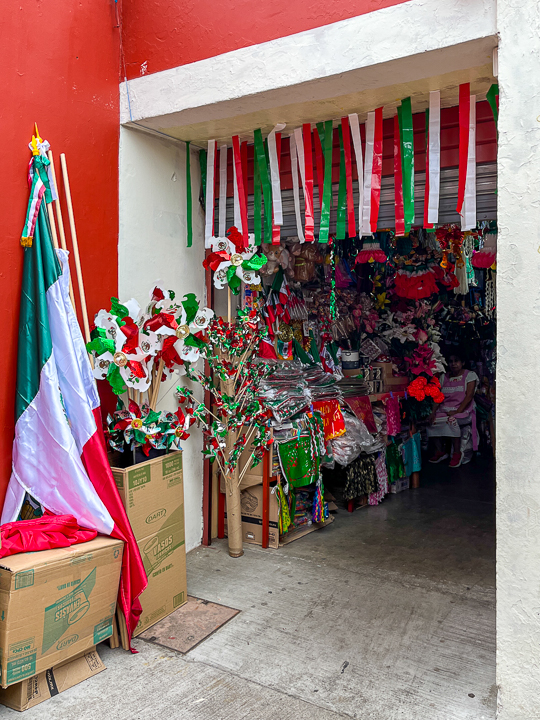
August hadn’t even come to a close when the green, white, and red colors of the Mexican flag began appearing in shops, streets, and restaurants. Why? September is el Mes de la Patria (the month of the homeland), Mexico’s month long celebration of her independence from Spain. It was eleven years of armed struggle and political battles that is said to have begun on September 16, 1810 with Don Miguel Hidalgo y Costilla’s call to arms (Grito de Dolores). It finally came to a close on September 27, 1821 when the Ejército Trigarante, also known as Ejército de las Tres Garantías (Army of Three Guarantees), the combined troops of Agustín de Iturbide and Vicente Guerrero, triumphantly marched into Mexico City.
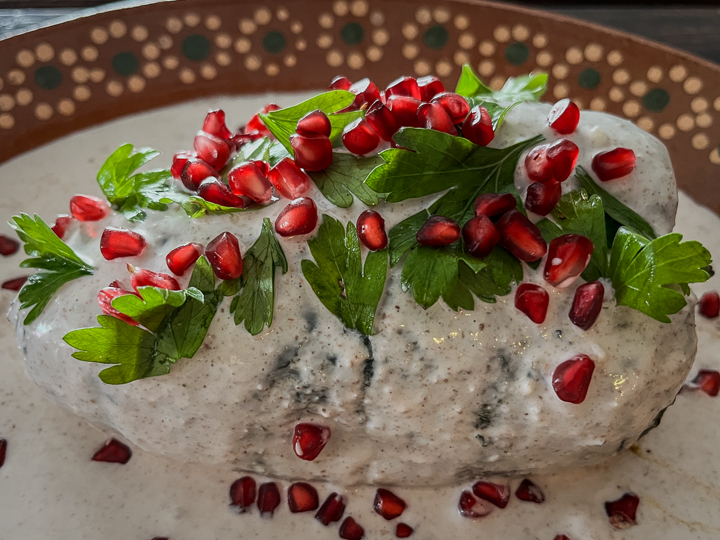
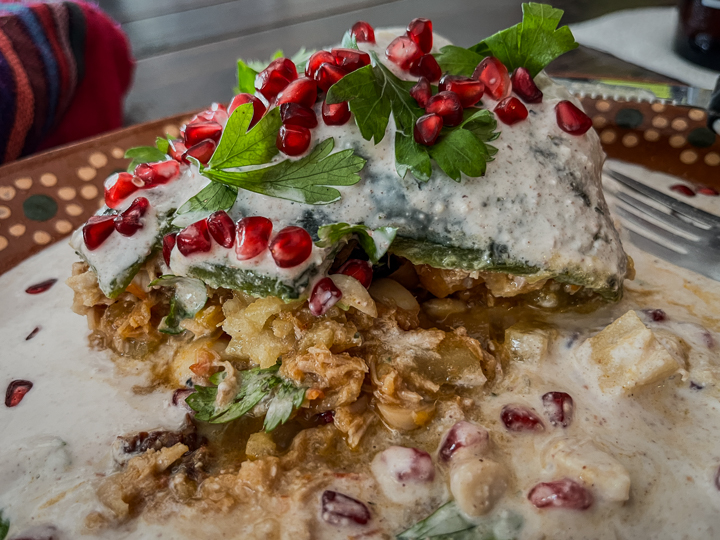
August 31, 2026 – Chiles en nogada, the season’s traditional dish, at Los Curtidores in Barrio de Jalatlaco.
August 31, 2026 – In the middle of enjoying my Chiles en nogada.
August 23, 2026 – Matamoros side entrance to el mercado de la Merced.
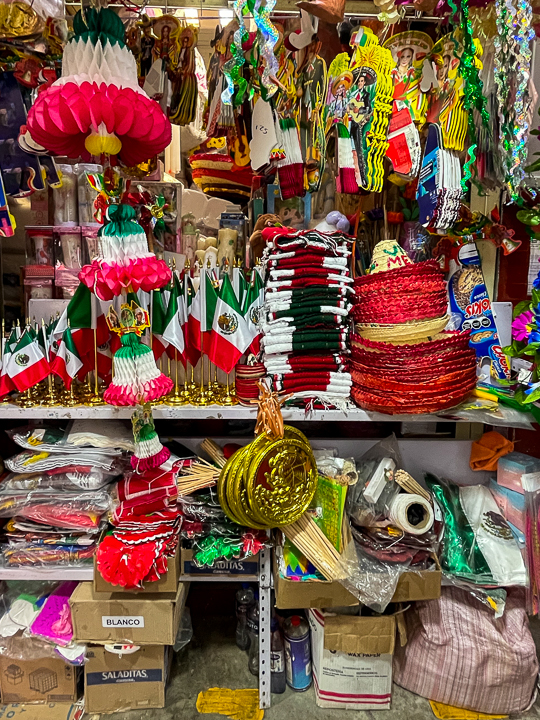
August 23, 2026 – Inside el mercado de la Merced.
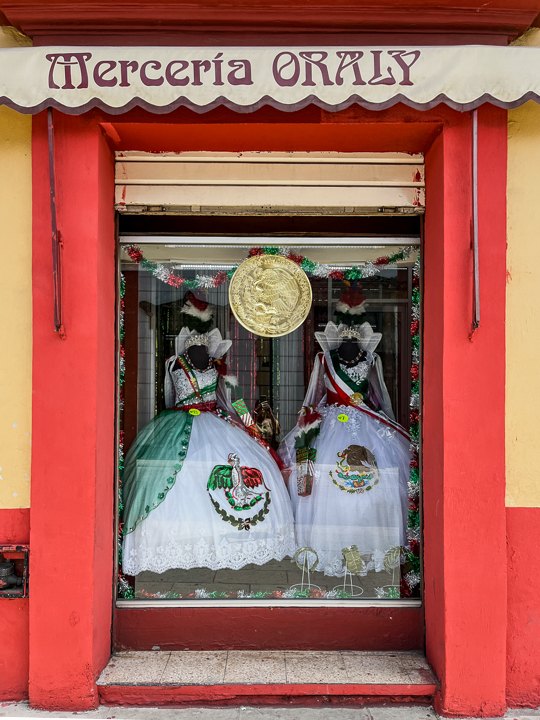
August 26, 2026 – Señorita América dresses and accessories for sale.

Who is Señorita América? The answer from the Tradiciones de Oaxaca Facebook page (Google translation):

Oaxaca’s most beautiful tradition: “Señorita América and Her Chorus” 🇲🇽🌟 “Señorita América and Her Chorus” is an Oaxacan tradition—unique in all of Mexico—that fills our patriotic celebrations with color and pride.

Every September 15th, the chosen young woman has the honor of singing the Mexican National Anthem during the “Grito de Independencia” (Cry of Independence) and, the following day, leading the September 16th parade. 🌺🌼

💚🤍❤️ Dressed in white and accompanied by her chorus members in green and red—the colors of our flag—“América” requires not only an exceptional voice but also the ability to proudly represent her community.

📜 A legacy dating back to the 19th century This tradition was born to celebrate and preserve indigenous values, representing the “American woman” as a symbol of freedom and unity for all the peoples of the continent who were once conquered and later achieved their independence.

🚜 In the past, “América” would travel through the parade seated on a throne atop a wooden cart pulled by a team of oxen; today, she rides on colorful floats, yet the spirit of yesteryear remains unchanged.

🌟 For the young woman who receives this title, it is an experience etched in her heart—a source of pride for her family and a testament to her love for her country, her state, and her community.

¡Viva México! ¡Viva Oaxaca! ¡Buen provecho!

Read Full Post »

Overnight, as the calendar page turned from August to September, green, white, and red appeared around the city. The colors of the Mexican flag festooned buildings — both public and private and flags began flying from rooftops.

Papel picado hanging above Plazuela Labastida.

Vendor carts, selling all things patriotic, noisy, and green, white, and red, began appearing on busy street corners and green, white, and red lights were strung above major streets and in the zócalo. September is El Mes de Patria — an entire month of celebrating Mexico’s independence from Spain.

Kiosk in the zócalo.

September 16 is Día de la Independencia (Independence Day) marking Don Miguel Hidalgo y Costilla’s call to arms (Grito de Dolores) announcing the start of a ten-year long war for independence. However, all over Mexico, re-enactments “El Grito” (the Cry of Dolores) are staged at 11:00 PM on September 15 —  by mayors from municipal city halls, governors from state building balconies, and by the President of Mexico from the the National Palace. September 16 is marked with military parades.

Camera scaffolding in front of Oaxaca’s Government Palace.

As an article in yesterday’s El Imparcial proudly proclaimed, Oaxaqueños like Antonio de León, Carlos María Bustamante, José María Murguía y Galardi, and Manuel Sabino Crespo “contributed their sacrifice and courage to the creation of a free, sovereign and guaranteed homeland.” (my translation) By the way, for those who live in or have visited Oaxaca: Do those names ring a bell?

Señorita América on her way to sing the Himno Nacional (Mexican National Anthem) in the zócolo after the governor gives the Grito.

Last night’s Grito was the first given by Mexico’s new President, Andreas Manuel Lopez Obrador (aka, AMLO). The media pointed out that he gave 20 “Vivas” from the balcony of the Palacio Nacional, while his predecessor only gave 11. Among the added “Long live’s” were, “¡Vivan las comunidades indígenas!” and “¡Viva la grandeza cultural de México!”

Long live the independence! Long live Miguel Hidalgo y Costilla! Long live Morelos! Long live Josefa Ortiz de Domínguez! Long live Ignacio Allende! Long live Leona Vicar! Long live anonymous heroes! Long live the heroic people of Mexico! Long live the indigenous communities! Long live freedom! Long live justice! Long live democracy! Long live our sovereignty! Long live the universal fraternity! Long live peace! Long live the cultural greatness of Mexico! Long live Mexico! Long live Mexico! Long live Mexico!

And, there was more Oaxaca pride present in the nation’s capital as the Banda del Centro de Capacitación Musical y Desarrollo (CECAM), a youth band from the Mixe village of Santa María Tlahuitoltepec, Oaxaca, performed following the Grito.

Read Full Post »