Feeds:
Posts
Comments

Archive for the ‘Travel & Tourism’ Category

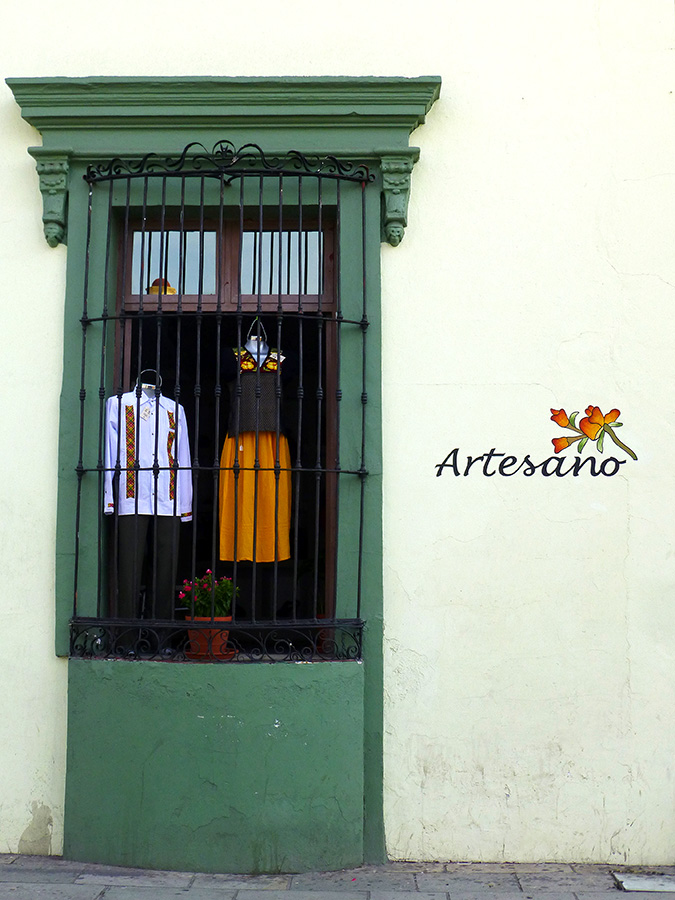
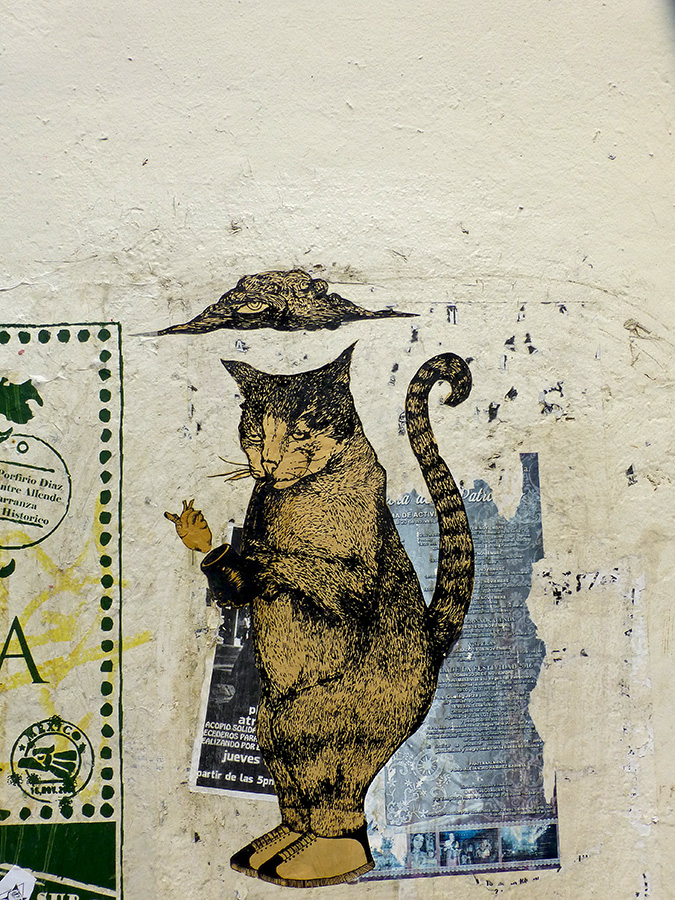
Walking along the sidewalks of Oaxaca…

P1260601

P1260602

P1260698

P1260188

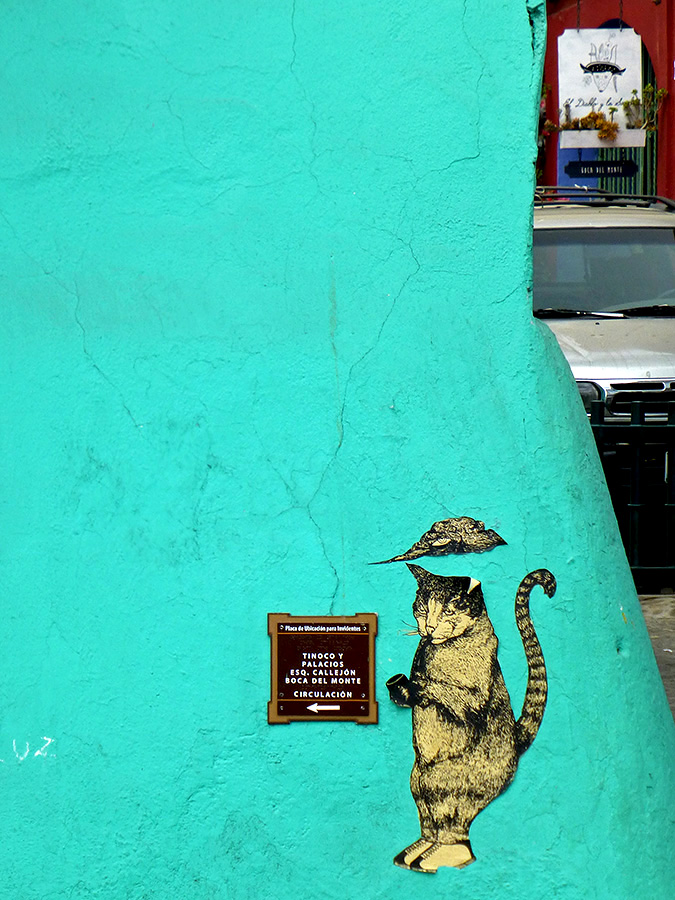
I get the feeling I’m being watched… by Oaxaca’s revolutionary street art.

Read Full Post »

Late afternoon and middle of the night thunder, lightning, gusting winds, torrential downpours, and gentle showers — the rainy season has arrived and appears to be hanging around.  This is good news, as there has been an Historical Drought in Oaxaca.  What a difference a month makes…

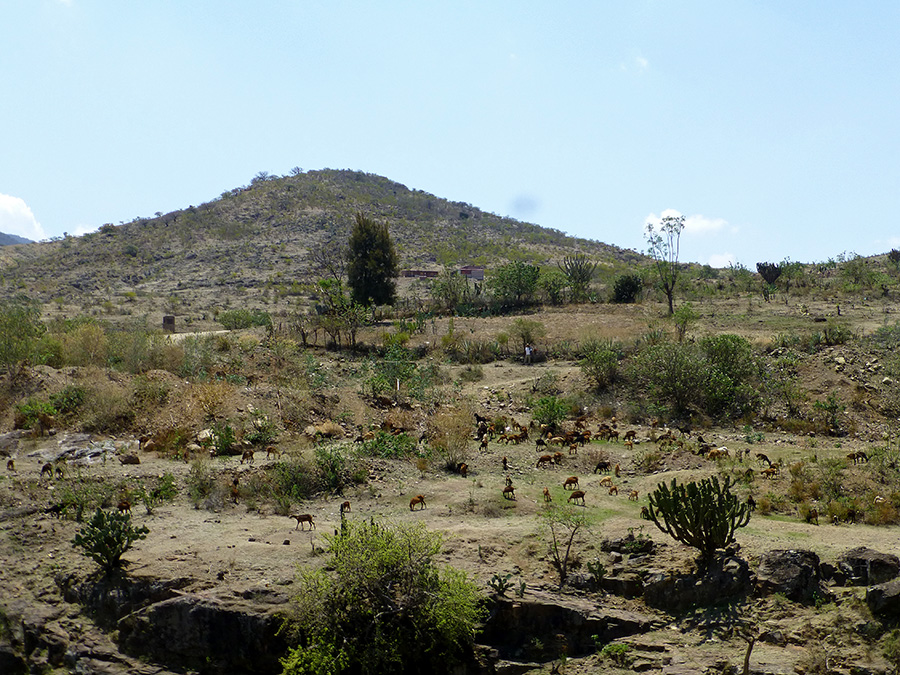
P1260018

Goats scrounging for food in Teotitlán del Valle – May 3, 2017

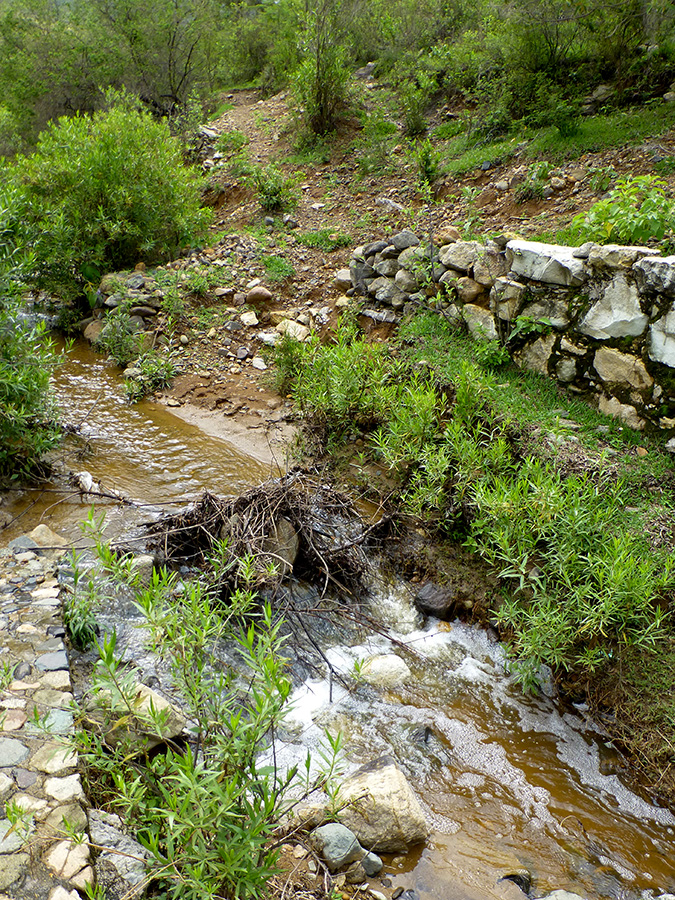
P1260453

Streams have begun running in Teotitlán – June 6, 2017

P1260441

Cerro Picacho and surrounding mountains have already turned green – June 6, 2017

P1260460

Splashes of green now dot the rocky landscape at La Cuevita in Teotitlán – June 6, 2017

P1260347

A green Teotitlán del Valle with a dam that is filling is a beautiful sight

This is good news, as this is an agricultural village and state.


Save

Read Full Post »

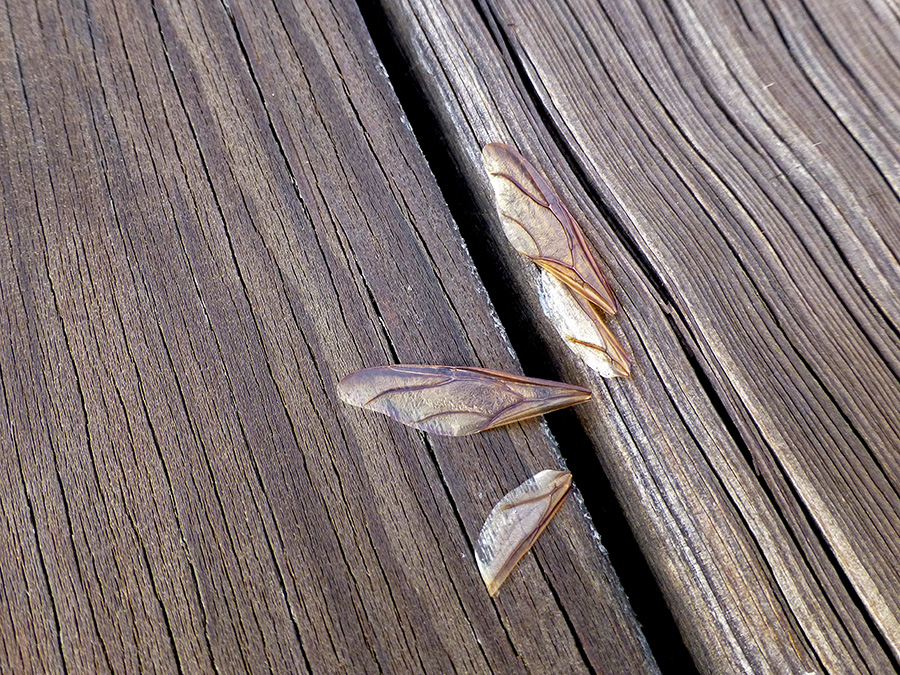
Along with much-needed rain and sparkling green cantera, tropical storm Beatriz also brought the one-day-a-year appearance of chicatanas (aka, tzicatana, tzicatl).

P1260204

What, you might ask are chicatanas?  They are giant flying ants that emerge with the first rains of the season — and by giant, I mean about 4 cm from the head to the tip of the wings for the females.  (As in much of the insect world, males are smaller.)  Known by the Nahuatl long before the arrival of the Spanish, they were mentioned in the 16th-century Florentine Codex which talked about the tzicatana living below ground and cultivating fungus to eat.

P1260212

By this morning, the rain had stopped and when I returned from an early errand, I found chicatanas — queens (wings) and soldiers (wingless with vicious front pincers) — crawling around on my terrace and balcony.  There were probably many more earlier, but I had been in a hurry and hadn’t noticed.  By 10:30 AM they were gone.

P1260194

Oh, and have I mentioned that they are a delicacy and a great source of protein?  I’ve had chicatana salsa and chicatana mole several times.  Below is Mole de Chicatanas I sampled during the Mole Festival in 2014.  It’s from the Sierra Sur region of Oaxaca and made with chicatanas, pork ribs or loin, chile costeño, peanuts, and much more.  It was yummy (and I was a picky eater as a child!), so I had it again at last year’s festival.

If you won’t take my word, check out this Bizarre Foods episode set in Oaxaca.  (Chicatanas start at 1 min. 40 sec.)  By the way, these are the dreaded leaf-cutter ants.  However, it is the much smaller workers who can strip a tree overnight and are the bane of gardeners here.  At least their queens and soldiers are good for something!

Post script:  On a somber note, tropical storm Beatriz also brought flooding, mudslides, more downed trees, collapsed roads, and a current death toll of three.

Read Full Post »

Rain has been falling in the city for over 24 hours, as Tropical Storm Beatriz slowly moves up Oaxaca’s coast and up and over Sierra Madre del Sur mountains.  According to the National Hurricane Center, “over a foot of rain is possible in Mexico’s Oaxaca state through Friday with isolated amounts up to 20 inches possible.”

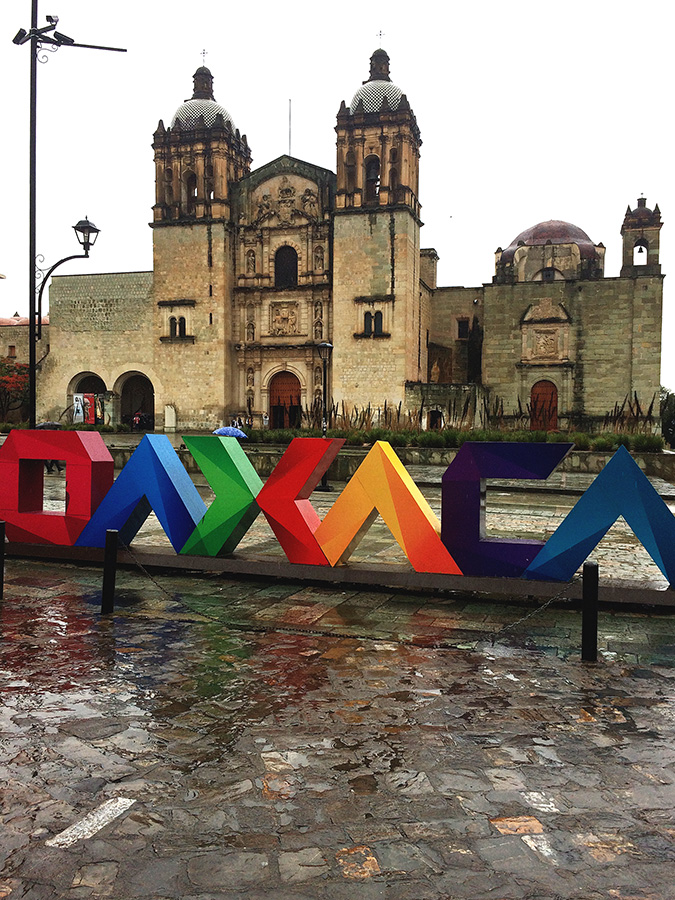
At various times in her past, because of the native green stone used to construct her buildings and pave her sidewalks, Oaxaca has been known as la Verde Antequera — the Emerald City.Oaxaca letters in front of Santo Domingo

Walking through the streets on a rainy day, it’s easy to see where she got her nickname.

While Beatriz may be causing headaches on the coast, the campesinos (and all who depend on them) in the Valle de Oaxaca, are rejoicing.

Read Full Post »

We live in perilous times…P1250005

The signs are everywhere…P1260098

This guy can’t be the only one riding to the rescue.P1250841

We all must do our part.

Save

Save

Read Full Post »

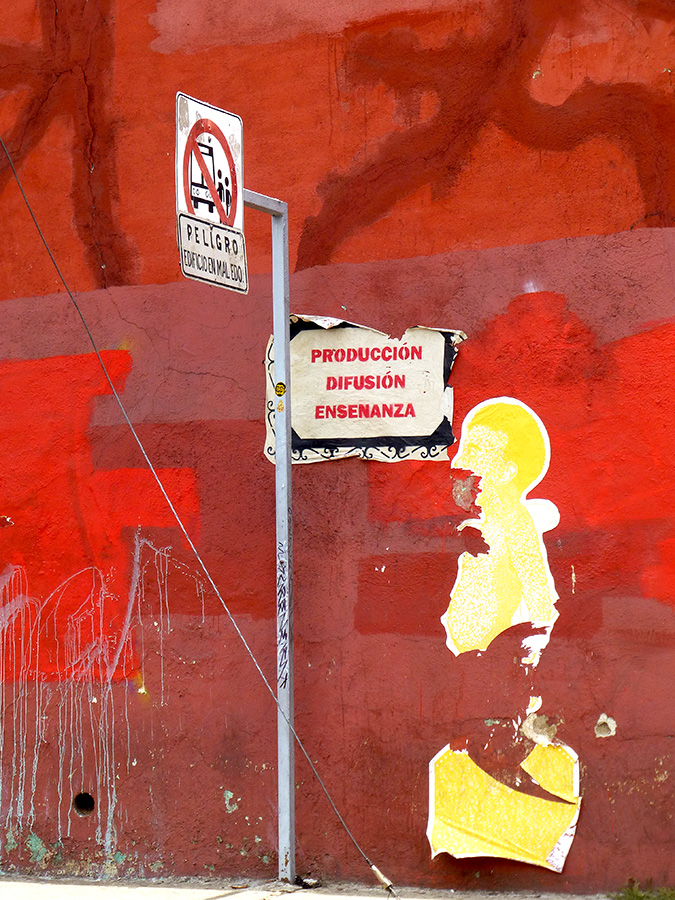
Sorry folks, the bus doesn’t stop here.  Why?  You ask.  Doesn’t red mean “stop”?  Not here.  Not now.  There is DANGER; this edifice is in a bad state!

P1260143

And, make sure to produce, disseminate, and teach about the dangers of buildings in hazardous states of disrepair.  As Mother Nature has reminded us twice within the past week, this is earthquake country.

Save

Read Full Post »

In front of Santo Domingo de Guzman…

P1260140

Enjoy the day.  It’s a jungle out there!

Read Full Post »

Tomorrow, May 18, museums worldwide will be celebrating International Museum Day with special events around this year’s theme, “Museums and contested histories: Saying the unspeakable in museums.”  According to the IMD website, The objective of International Museum Day is to raise awareness of the fact that, “Museums are an important means of cultural exchange, enrichment of cultures and development of mutual understanding, cooperation and peace among peoples.” 

While Oaxaca has many wonderful museums, textile lover that I am, I would like to honor the day by looking back at several exhibitions I had the pleasure of viewing at the Museo Textil de Oaxaca — and a current one, too!

IMG_9302

Tormentos y suenos” (Storms and dreams) by Carolyn Kallenborn – August 3, 2012

Exhibitions ranged from works by individual textile artists to themed shows displaying textiles from the museum’s permanent collection and those on loan.

P1050404

“Transcomunalidad. interventions and collaborations with stilt communities and craftsmen” exhibition by Laura Anderson Barbata – March 1, 2013

Item labels and detailed descriptive booklets have been extremely helpful and, in the case of collections by individual collectors, their field notes were fascinating.

P1050633

“Irmgard Weitlaner Johnson: a life dedicated to textiles” – Costal (bag) was acquired by Irmgard in 1949, is said to be one of the most well preserved examples from the Valle del Mezquital, Hidalgo and, given the design, is thought to have been a wedding gift. – Nov. 21, 2014

The museum not only collects, preserves, and exhibits, it also holds workshops, lectures, expo-ventas (exposition and sales), and has provided a platform for issues of importance to textile artists, especially from the indigenous communities of the state of Oaxaca.

P1080922

El Delirio del color Oaxaca en los años 1960″ – Huipil mazatecas from the Tuxtepec district – Apr. 19, 2015

Exhibition openings often have included receptions, with an occasional performance art presentation thrown in.

P1190533

“Hilo Rojo 3047” an autobiographical installation by Ornilla Ridone – May 21, 2016

Museums can be a place to help shape community identity and bring different community groups together, a catalyst for regeneration through the creation of new venues and civic spaces, and a resource for developing the skills and confidence of members of those communities.  — Museums Association

P1260051

“Tekstil” current exhibition by textile artist Trine Ellitsgaard – Piece titled “Serpiente y abanicos” (Serpent and fans) – May 6, 2017

In observance of this year’s International Museum Day, the Museo Textil de Oaxaca invites textile artists and designers, academics, students, and the general public to participate in a conversation exploring the questions, “What is plagiarism? What is a copy? What is collaborating? Is ‘to collaborate’ synonymous with ‘to employ’? What has been the role of the copy in the development of craft goods?”   May 18, 10:00 AM to 2:00 PM in the Claustro of the Centro Cultural San Pablo — next door to the Textile Museum.

Read Full Post »

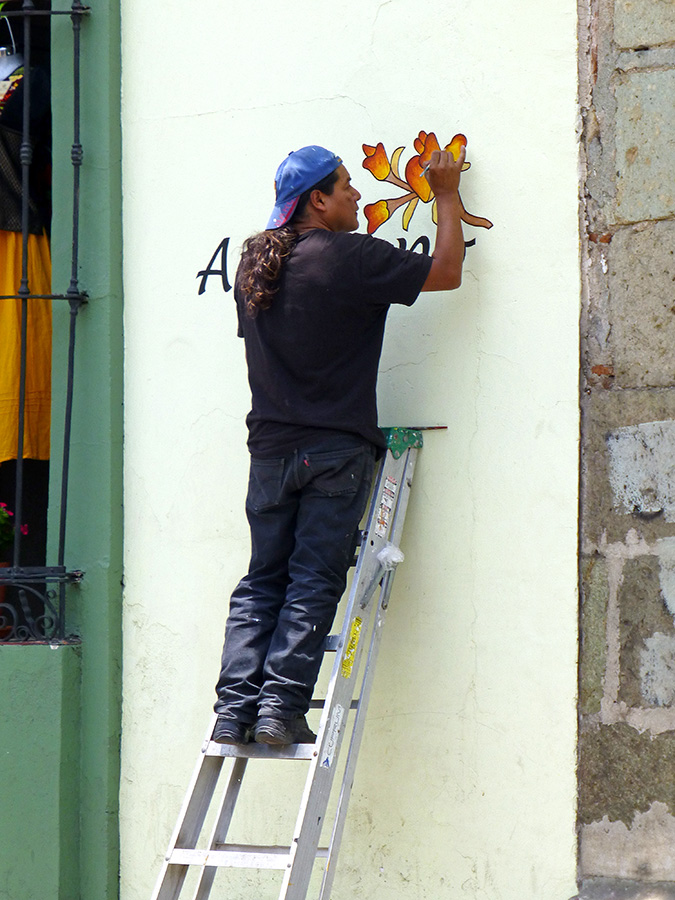
Thinking of all the sign painters I used to know back in the day, up in el norte.

At a time ruled by the industry and advanced technologies of all kinds, it’s easy to forget that once many things were done by hand. One of these things would be sign painting…. However, like many crafts and trades, hand-made sign painting was taken over by computers and printers, which promised cheaper and quicker solutions to its curious customers hungry for the wonders of the new era. As a result, these creatives lost their jobs, like many of their fellow draughtsmen and handymen.The Nostalgia of the Sign Painting

But, here in Oaxaca…

P1260079

We’ve got the ladder, the brush, and the artist.

P1260080_land

The hand-painted artistry continues and leads to…

P1260089

The creation of a beautiful and unique sign on Av. José María Morelos in Col. Centro.

P1260088

¡Vive los artesanos!

Update:  The sign painter (rotulista), Arturo, can be reached at:  951-201-3527

Save

Save

Save

Read Full Post »

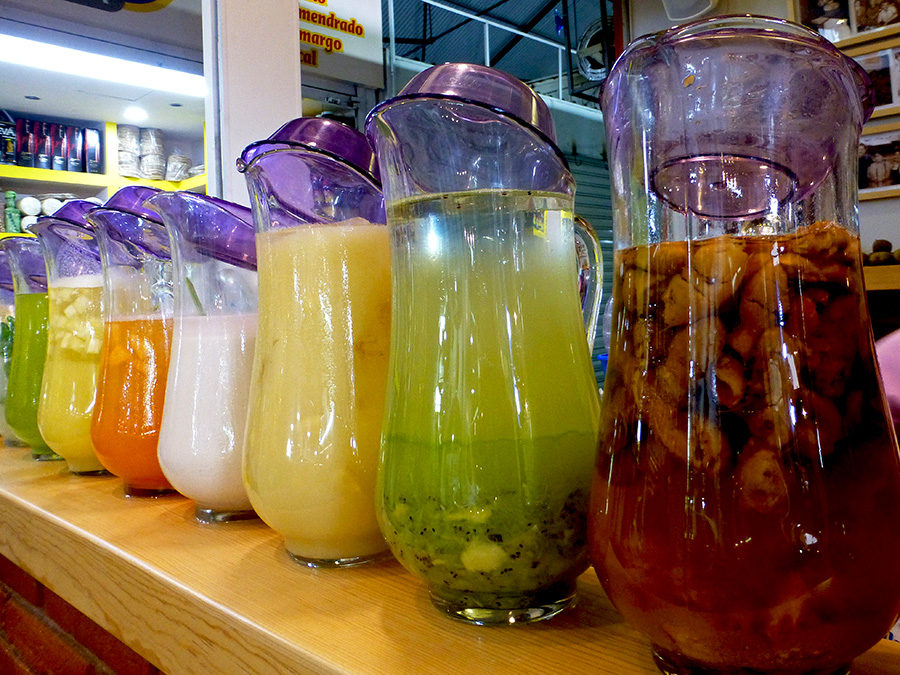
Nothing like stopping in Mercado Benito Juárez at Casilda Aguas Regionales midway through a morning filled with errands.  The posted list of fruit drinks is mind boggling:  Horchata, horchata con tuna, guanabana, melón, limón, sandía, jamaica, limón on chía, tamarindo, piña guayaba, kiwi, coco, crema de coco, durazno, ciruela, lichie, mandarina, mango, and maracuya.P1260091

Translated:  Rice-based drink, rice-based drink with prickly pear cactus fruit, soursop, cantaloupe, lime, watermelon, hibiscus, lime with chia, tamarind, pineapple, guava, kiwi, coconut, coconut cream, peach, plum, lychee, mandarin orange, mango, and passion fruit.

P1260092

What to choose?  While I love horchata con tuna, I chose the unlisted limón con hoja santa (2nd from left in top photo) reeled off by the waitress.  It was a lime with “sacred leaf” kind of day.  Ahhh… the pause that refreshes!

Read Full Post »

“What’s your name,” Coraline asked the cat. “Look, I’m Coraline. Okay?”
“Cats don’t have names,” it said.
“No?” said Coraline.
“No,” said the cat. “Now you people have names. That’s because you don’t know who you are. We know who we are, so we don’t need names.”Neil Gaiman, Coraline

P1250132

The problem with cats is that they get the exact same look on their face whether they see a moth or an axe-murderer.Paula Poundstone
P1250353
“Curiosity killed the cat,” Fesgao remarked, his dark eyes unreadable.
Aly rolled her eyes. Why did everyone say that to her? “People always forget the rest of the saying,” she complained. “‘And satisfaction brought it back.”Tamora Pierce, Trickster’s Choice

Read Full Post »

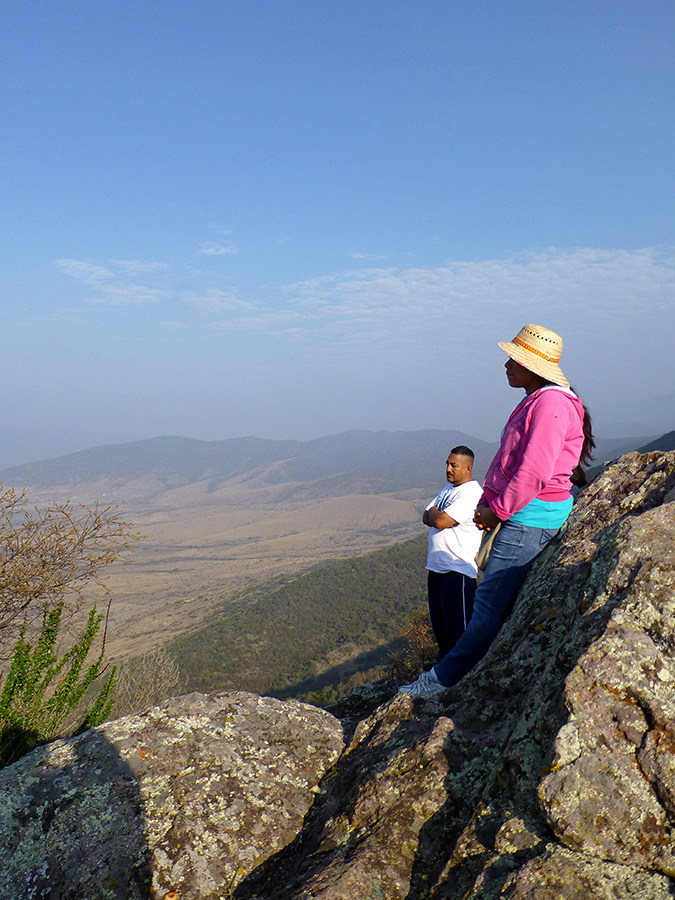
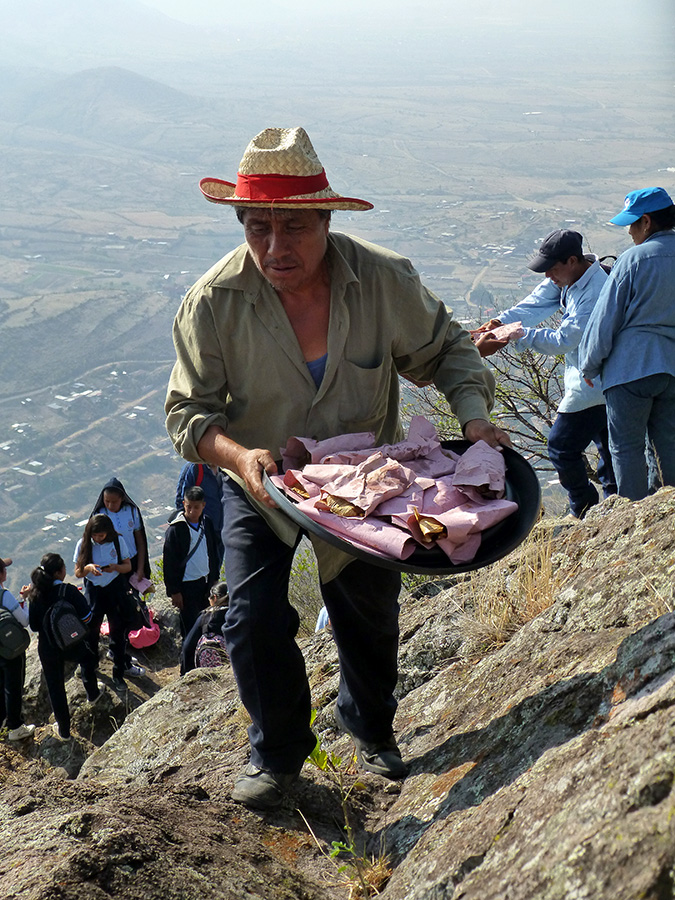
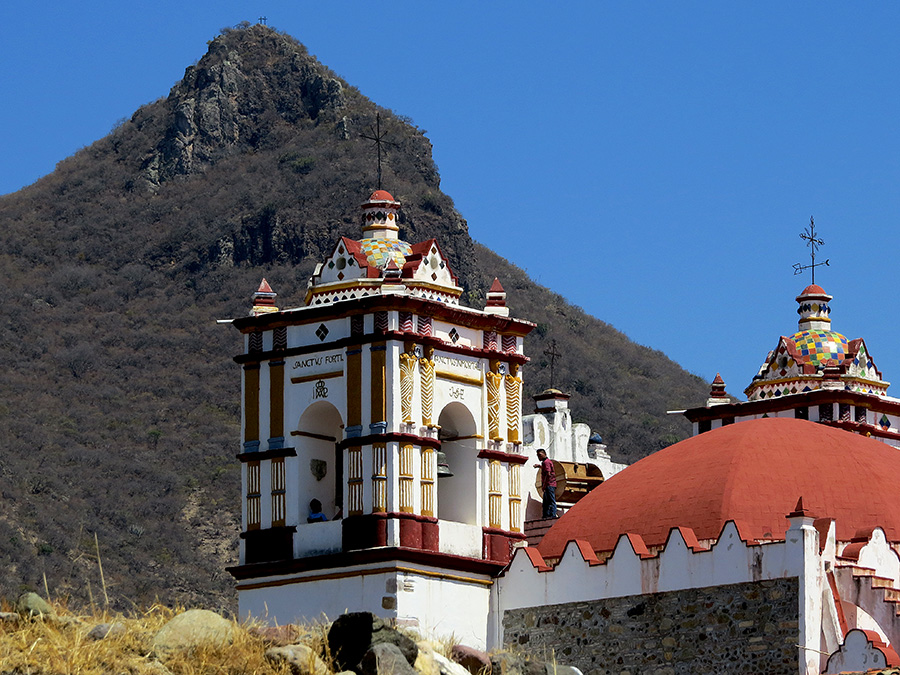
Yesterday, I did it again!  After a year’s hiatus, on Día de la Santa Cruz I returned for the ritual pilgrimage to the top of El Picacho, the sacred mountain that watches over Teotitlán del Valle.  To avoid hiking in the worst of May’s high temperatures, our ascent began at 5:30 in the morning.  Yes, it was dark, with not even moonlight to guide our way.  Thank goodness for the flashlight app on my smart phone.  However, by 6:30 AM dawn was breaking and our artificial lights were extinguished.  Our hardy band arrived at the summit about 7:30 AM to the ritual round of handshaking that accompanies greetings and farewells in the village.

P1250981_crop

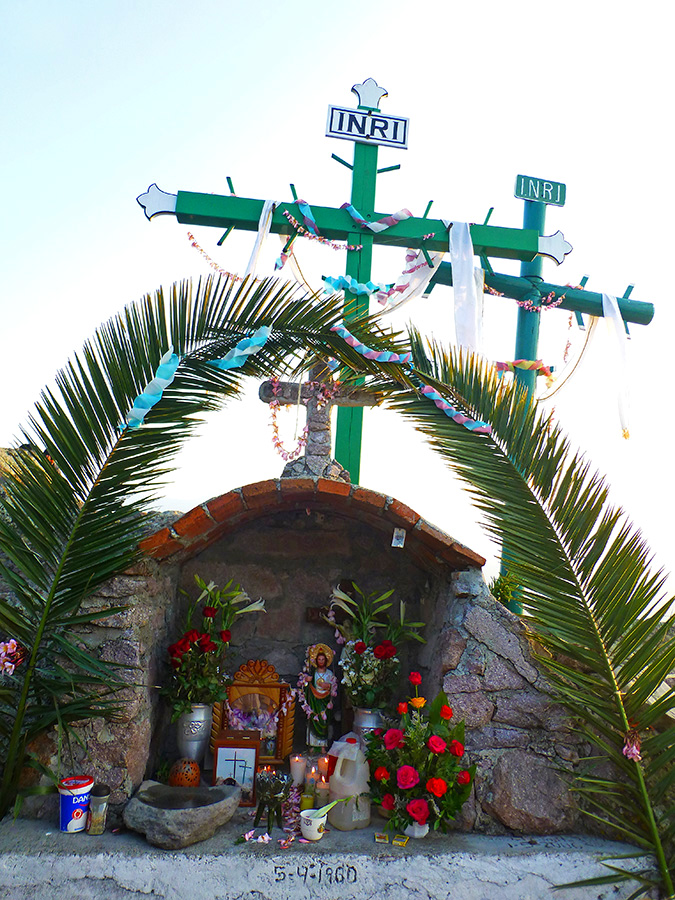
The three crosses mark the summit

P1250980

Pilgrims perched on the rocky outcroppings that make up the peak.

P1250984

The views were spectacular no matter which way one chose to look.

P1250977_copy

An altar greeted pilgrims at the peak.

P1250998

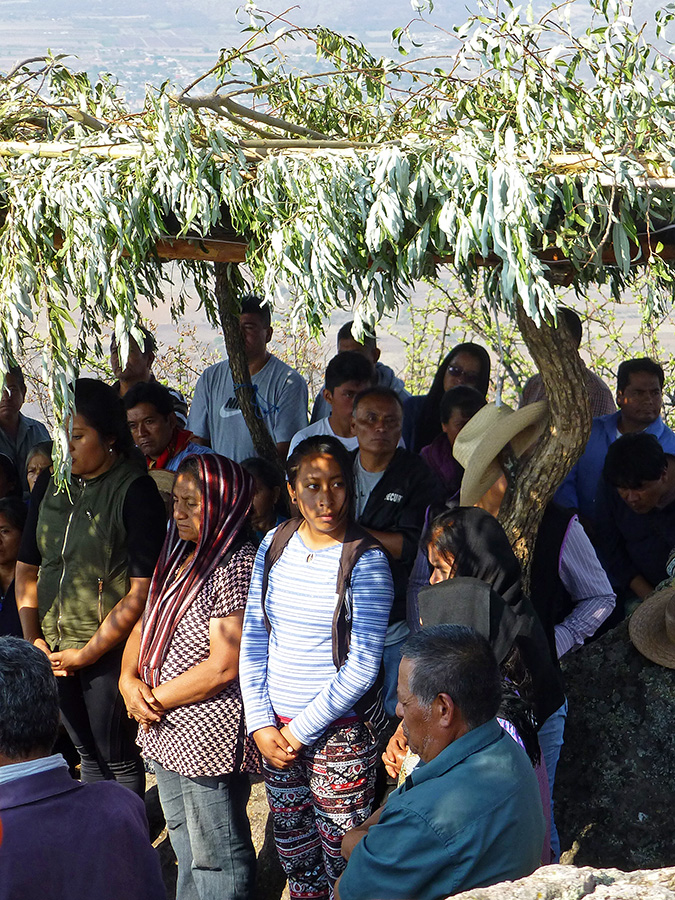
At 8:30 AM, an hour-long mass was celebrated and, perhaps a first, some of it was in Zapoteco.

P1250997

As the mass began, the cicadas (cigarras or chicharras, en español) began their song — one even perched on the fabric swag festooning the crosses.

P1260004

Mass over, Procopio Contreras, the young priest (first from Teotitlán) took off his vestments and posed for photos.

P1260006

Mountain top delivery of tamales de mole amarillo followed the mass.

P1260012

Along with a cup of agua de jamaica, we took our tamales into the shade, where bromeliads clung to tree branches.

After a lazy comida filled with conversation between new friends and with our strength renewed, we (3 Teotitecos, 1 Belgian, and me) descended the mountain.

While the day may be designated Día de la Santa Cruz and a mass said on top of Picacho, this day has pre-Hispanic roots in ceremonies related to the sowing season.  In the early days of May (by our calendar), prayers and rituals were dedicated to Cosijo, the Zapotec god of lightening, thunder, and rain — later to Tláloc, the Aztec god of rain — thus fertility and water for the growing of crops.  Hmmm…  On May 2, lightening flashed and thunder roared, but Mother Nature only delivered a few drops in the village.  However, on May 3, once the daylong festivities atop the mountain concluded, three hours of a good hard rain fell in Teotitlán del Valle.  The gods must have heard the prayers.

h/t  Zeferino Mendoza

Save

Save

Read Full Post »

Cooking with Juana…  Mangos ripening just out of reach.

Sunlight filtering through the leaves of the granada (pomegranate) tree.

A pomelo (grapefruit) waiting to drop.

There is something to be said for outdoor kitchens.

Save

Save

Read Full Post »

Dear Readers, if your answer is “yes” to the above question, I would like to ask you to participate in a survey by my friend, Zeferino Mendoza.
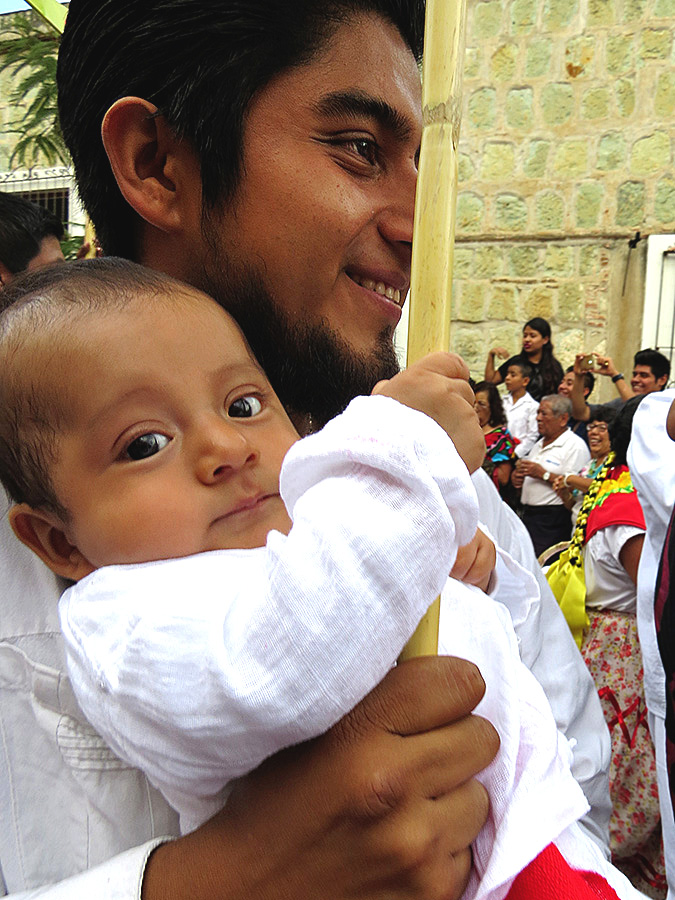
Zeferino is a Zapotec weaver from Teotitlán, where he participates in the village’s system of cargo (community service), speaks and teaches Zapotec, and studies Cultural Management and Sustainable Development at the Universidad Autónoma Benito Juárez de Oaxaca.  He is currently working on a thesis about cultural tourism and believes:

that the culture of Teotitlán deserves to serve as a sustainable development of the village…. This time I need to survey the range, the advantages and disadvantages of the village to hold and promote cultural tourism.”  My thesis is a diagnosis of its cultural potential to highlight the attractions, services and activities…. I eventually, will do some research among the Zapotec people, its artisans, cooks, and guides so we can have a broader idea about the practice of tourism.

This survey is for an academic study in order to better promote tourism in the village of Teotitlán del Valle, Oaxaca.  Please send your numbered answers directly to:  gestionculturalteotitlan@gmail.com  And, if you have friends who have visited Teotitlán, please consider forwarding the survey to them.

1. Your age:    a) less than 30        b) between 30 a 60        c) 60 and over

2. Where are you from?______________________________________________

3. Gender:     a)  Male       b)  Female

4. How much are you willing to spend or did you spend?

a)  $ 500-1,000 Mexican pesos

b)  $ 1,000-5,000 Mexican pesos

c)  $ 5,000-10,000 Mexican pesos

d)  More than $ 10,000 Mexican pesos

5. When are you planning to visit or did you visit?__________________________

6. Would you recommend visiting Teotitlán del Valle to friends/family?

a)  Yes    b)  No   c)  Maybe

7. What brought you to visit Teotitlán?

a) a guide-book    b) a recommendation from a friend

c) Other: ___________________________________________________________

8. What draws you to visit Teotitlán del Valle?

a) Museum   b) Weaving    c) Hiking   c) Riding horses   d) Restaurants

e) Other: ___________________________________________________________

9. What other kinds of activities interest to you?

__________________________________________________________________

10. What aspects of culture would you like to know more about?

__________________________________________________________________

11. What aspect of culture or customer service did you enjoy the most?

__________________________________________________________________

12. What kind of problems have you experienced during your stay that have not been resolved to your satisfaction?

__________________________________________________________________

13. Have you enjoyed your visit?    a) Yes      b) No

c)  Other: ___________________________________________________________

14. Did you find everything as you expected about the village?     a) Yes     b)  No

c)  Other: ___________________________________________________________

15. Was it your first time in Teotitlán?   a) Yes    b) No

c) Other: ____________________________________________________________

16. What questions or suggestions do you have?

__________________________________________________________________

__________________________________________________________________

__________________________________________________________________

__________________________________________________________________

__________________________________________________________________

If you have any questions about the survey, please email Zeferino:  gestionculturalteotitlan@gmail.com

Save

Save

Save

Save

Save

Save

Read Full Post »
When I left off, it was early evening on Jueves Santo (Holy Thursday) in Teotitlán del Valle and the church doors were to be left open all night.  Sometime after dark, the statue of Jesus was removed from the church and incarcerated behind a petate (woven palm) mat.

P1250662

All during the night, the faithful waited their turn to visit the incarcerated Jesus.

P1250673

On Viernes Santo (Good Friday) morning, as the last of the villagers had paid their respects, the petate mat was removed.

P1250685

At the same time, in the esplanade in front of the rug market, a pulpit was constructed and decorated with tapetes — on loan from the nearby vendors.

IMG_3273

At 10:30 AM, a procession of Mary, Mary Magdalene, and St. John left the church, enroute to the esplanade.

IMG_3289

Then Jesus, bearing the cross, began his journey to the esplanade.

IMG_3292

Accompanied by throngs of faithful and the Roman Centurion, he wound his way through the streets along a different route from Mary.

IMG_3299

Jesus entered the plaza between the Municipal Building and the new Cultural Center.

IMG_3303

While Mary entered the plaza from the opposite direction — between the museum and the rug vendor stalls.

IMG_3319

Mary and Jesus stood facing one another.  They inched closer, as the priest continued his recitation, and at a designated moment, the statues were tilted so they could touch in farewell — this was the encuentro (encounter).

IMG_3333

Everyone joined together in a single procession back to the church.

IMG_3344Centurion

The Centurion returned to the church, as well, and couldn’t stop smiling.

IMG_3352

Jesus, Mary, Mary Magdalene, and St. John made their way back to the village church, Templo de la Preciosa Sangre de Cristo.

P1250699

Following several hours spent under the unrelenting brilliant sun, most villagers made their way across the street to the mercado for a refreshing nieve (water or milk based ice cream).  Maybe that was why the Centurion was smiling.

Townspeople returned home for a traditional meal of salted fish and white beans — sustenance for what was to come — an evening Mass of the Crucifixion, followed by a second parallel procession to the cemetery, where another encuentro took place, and culminated in another joint procession back to the church.  Alas, I was exhausted, and chose bed over the evening’s events.

Read Full Post »

« Newer Posts - Older Posts »