As 2025 moves from the front windshield to the rear view mirror, instead of focusing on the (metaphoric) traffic nightmares of speed demons, red light runners, and auto wrecks that can lead to what Reading the Pictures refers to as “carnage fatigue,” I’d like to follow their example and look back at those experiences and sights that brought me joy — my “rebuke to narcissism and the cult of personality [preferring] togetherness as the new order.”
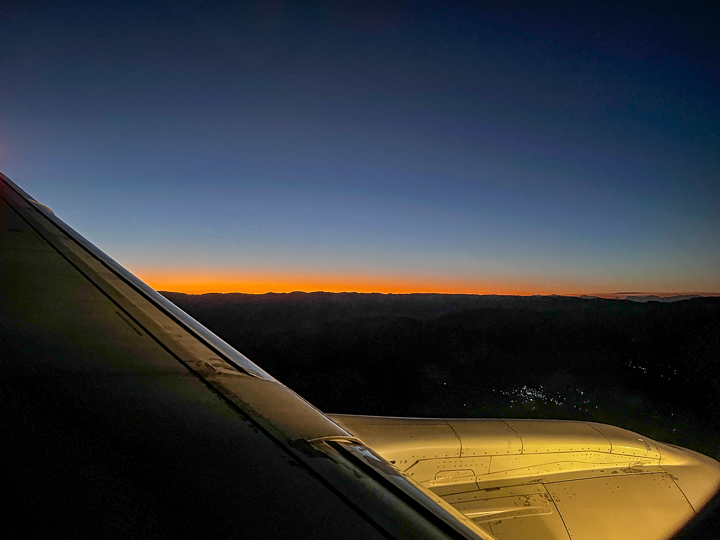
January 2025 – After a one year absence, returning to my Oaxaca community.
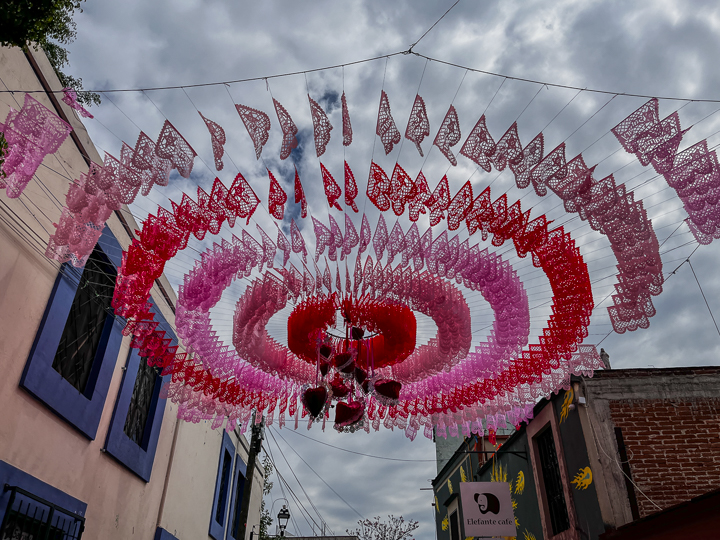
February 2025 – El Día del Amor y la Amistad (Valentine’s Day) decorations in my Jalatlaco neighborhood.
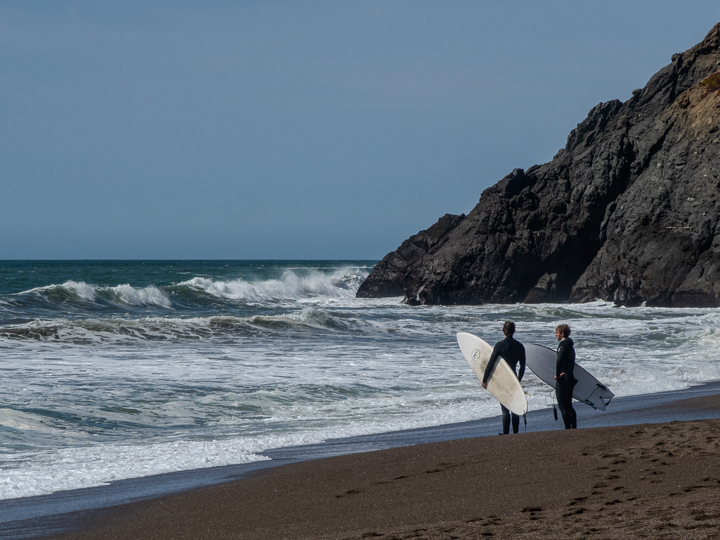
March 2025 – Back to the San Francisco Bay Area and a chilly, but stunning day on the Marin Headlands at Rodeo Beach with a best friend since age 12.
April 2025 – Taking part in the nationwide and massive “Hands Off” protests at the Marin Civic Center.
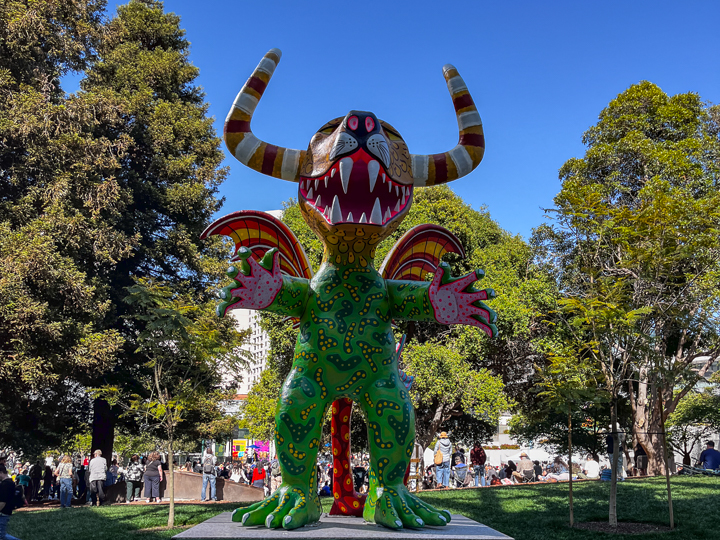
May 2025 – Attending La Santa Cecilia free concert in San Francisco’s Yerba Buena Gardens and being surrounded by enlarged replicas of alebrijes by Oaxacan artisans.
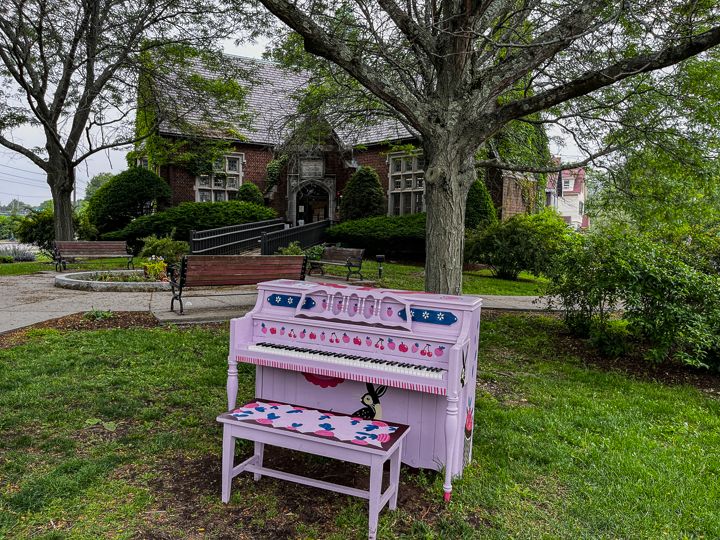
May 2025 – During my East Coast trip to visit family and friends, I stumbled on one of the Newton Artful Pianos in front of the Auburndale Public Library in Massachusetts.
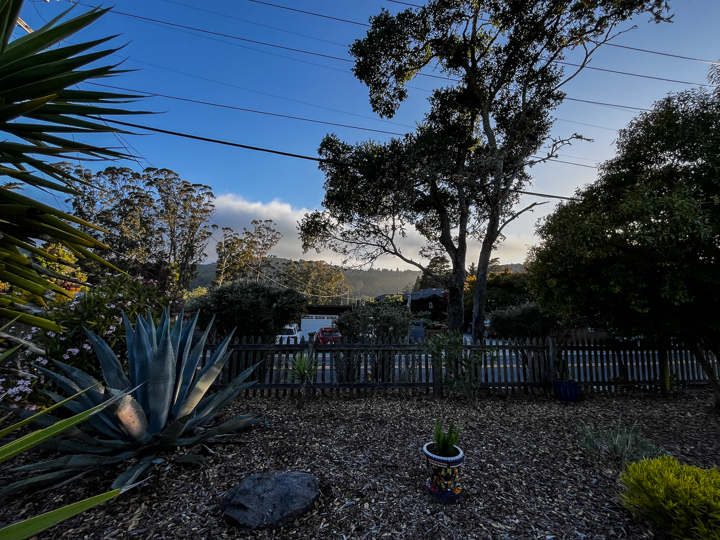
July 2025 – Back in my childhood home watching the fog roll in.
August 2025 – And, then there were the occasional dramatic sunsets — sometimes rivaling those of Oaxaca.
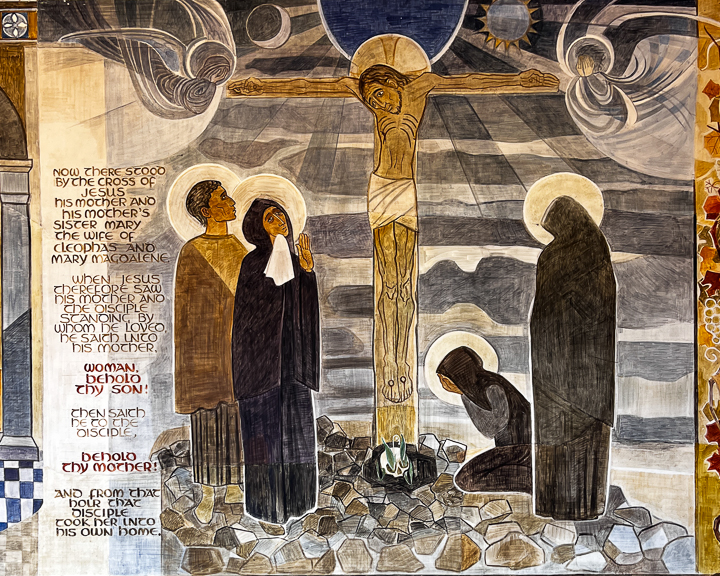
September 2025 – Walking around San Francisco with a Oaxaca/SF gal pal, we came upon a beautiful and massive mural by Lucienne Bloch in the atrium of Episcopal Church of St. Mary the Virgin.
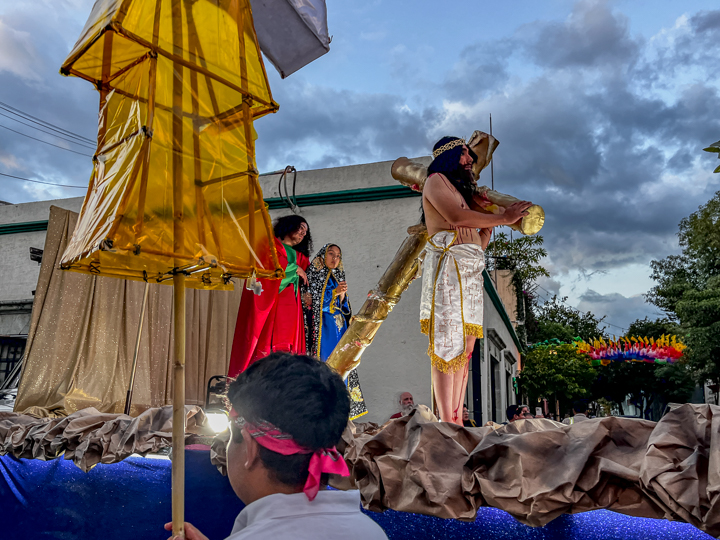
October 2025 – Back in Oaxaca, turning a corner and finding a calenda in honor of el Señor del Rayo filling the street.
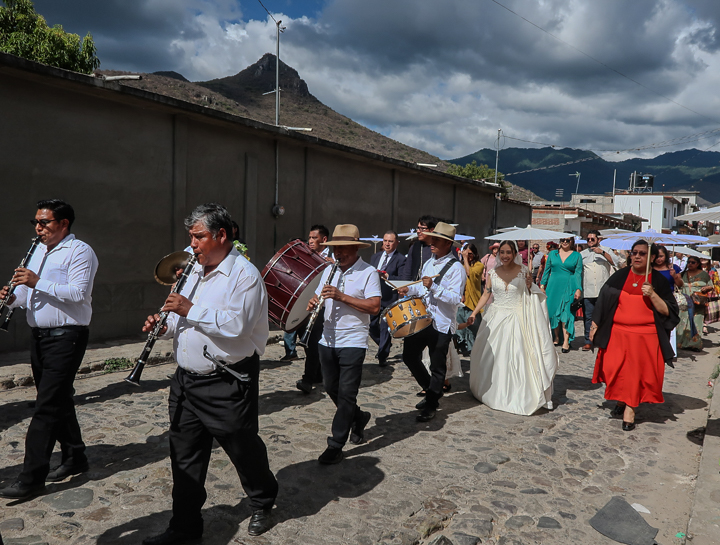
November 2025 – Being part of the wedding procession of dear friends in Teotitlán del Valle.
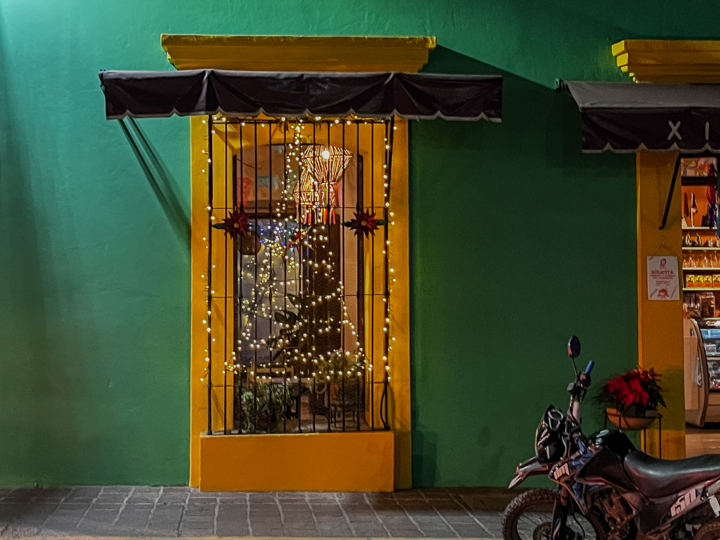
December 2025 – Christmas decorations in the window of Xiguela Café in Barrio de Jalatlaco.
¡Feliz Año Nuevo! My wish for 2026 is that you experience many moments of joy and they help sustain and embolden you through the greed-fueled chaos that tries to engulf and silence us. Muchisimas gracias for reading!
From restaurants to street food to home cooks, for the last seven weeks I have been making up for eight months away from my favorite Oaxacan food.
Molcajete de Aguachile – Asador Bacanora, Oaxaca de Juárez
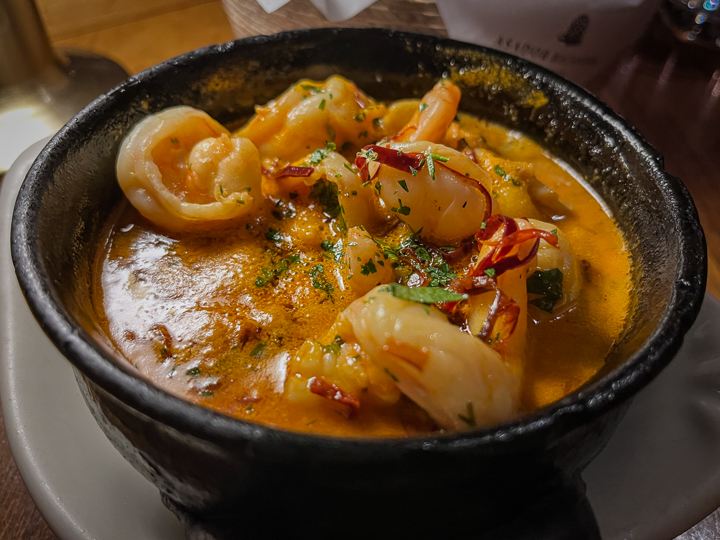
Camarones al Mezcal – Asador Bacanora, Oaxaca de Juárez
Sopa de Flor de Calabaza & Quesadilla – Tlamanalli, Teotitlán del Valle
Camaron Baja – Taco Sireno, Oaxaca de Juárez
Empanada de Amarillo filling – El Buen Sasón, San Antonino Castillo Velasco
Empanada de Amarillo – El Buen Sasón, San Antonino Castillo Velasco
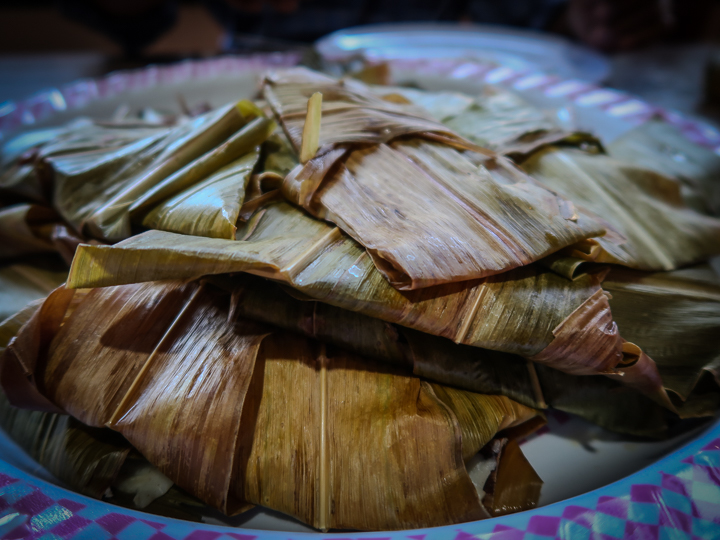
Tamales de Mole Amarillo – Emilia Gonzalez Martinez, Teotitlán del Valle
Unwrapped Tamal de Mole Amarillo – Emilia Gonzalez Martinez, Teotitlán del Valle
Mole Negro simmering on stove – Emilia Gonzalez Martinez, Teotitlán del Valle
Mole Negro served over hen with rice – Emilia Gonzalez Martinez, Teotitlán del Valle
And then there was Barbacoa de Chivo at Adolfa’s stall in the Tlacolula de Matamoros mercado. It smelled so good and I was so hungry, I forgot to take a photo! However, most of the time I’ve been dining at home on tamales from the gal around the corner and my own version of empanadas made with hot-off-the-comal tortillas from the gal across the street.
July is “mes de la Guelaguetza” in Oaxaca. Alas, I am still in el norte and missing the festivities — though not the crowds! However, you can join me, from the comfort of your home, in viewing both last Saturday’s and today’s Desfile de Delegaciones (Parade of Delegations) and the July 22 and July 29 matutina (morning) and vespertina (evening) Lunes del Cerro dance performances on CORTV’s YouTube channel. I will be sure to be watching today’s desfile and the Monday (July 29) morning transmission live, as the Grupo Danza de la Pluma Promesa 2022-2024 from Teotitlán del Valle is one of the delegations.
Danza de la Pluma Promesa 2022-2024 — from their first public performance at the festival honoring Preciosa Sangre de Nuestro Señor Jesucristo in Teotitlán de Valle.
As many of you know, blogger buddy Chris and I have helped sponsor dancers for nine years and it has been a great honor and privilege to get to know several of the dancers and their families in Teotitlán del Valle.
No one exemplified the old adage, “Good things come in small packages” more than Leonor Lazo González. I met Leonor in February 2008 during my second trip to the Zapotec village of Teotitlán del Valle. I’d met her son, Samuel Bautista Lazo, during my first visit to Oaxaca the previous year and he was anxious and very proud to introduce me to his family.
February 2008 – Leonor with Mario Bautista (husband) and sons Celestino and Samuel Bautista Lazo.
From that very first meeting I could tell that, while diminutive in stature, Leonor had an enormous presence that radiated strength, inner peace, and joy. And, she had a smile that could light up the universe!
March 2023 – Leonor in the Holy Monday procession.
March 2013 – Leonor with family during Holy Week.
Once I moved to Oaxaca and began spending a lot of time in Teotitlán, I always looked forward to seeing her at her stall in the mercado, running into her during a village celebration, or stopping by the family home.
August 2016 – Leonor with Samuel dying yarn.
August 2016 – Leonor stirring dye bath.
August 2016 – Samuel, Leonor, and yours truly with my new rug created by the family.
In the words of her son, she was, “a loving warrior, a great mother, teacher, artist, healer, weaver and business savvy, daughter of the abuelas of the Pleiades.”
December 2017 – Leonor feeding one of her baby goats.
With great sadness, I must speak of Leonor in the past tense. After a long and valiant battle, she has moved on in her journey. As Sam wrote announcing her passing, “she will be at peace wherever consciousness goes after life and that her legacy will continue and that she will live in our memories and will continue to come back to be celebrated with life every year for Na’ tugul, day of the dead.” Rest in peace and power, dear Leonor.
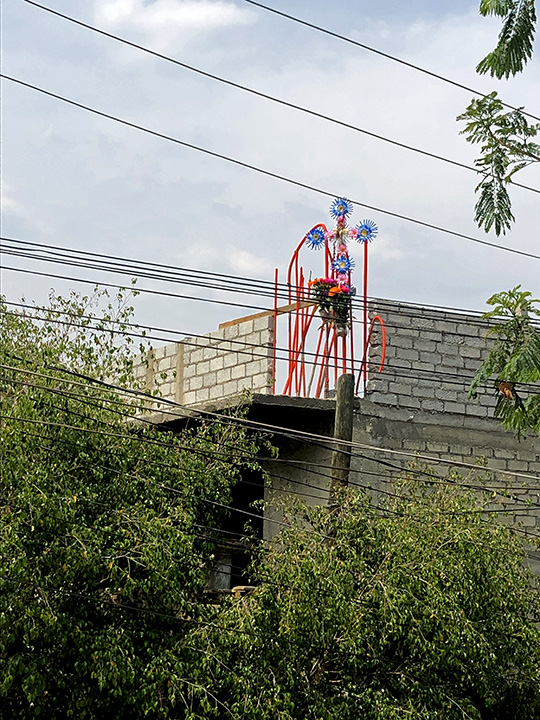
Yesterday, May 3, Mexico celebrated Día de la Santa Cruz (Day of the Holy Cross). Tradition calls for workers to erect crosses festooned with flowers at the highest point on construction sites. According to Mexconnect, in 1960, Pope John XXIII removed Día de la Santa Cruz from the liturgical calendar, but Mexico being Mexico and construction workers being construction workers, they ignored the Pope. Eventually, understanding the relationship of forces, he gave Mexico a special dispensation to celebrate on this day.
In the Zapotec village of Teotitlán del Valle, the custom is to climb their sacred mountain, el Picacho (Quie Guia Betz in Zapotec). The trail winds along the face of the mountain with almost no shade. It’s a challenge, but the vistas and community spirit at the top makes it well worth it. As I sit here (still) in el norte at the foot of Mt. Tamalpais, my sacred mountain — mountain of my childhood dreams, teen driving lessons, and place of retreat — I’m remembering the last time I climbed el Picacho…
Jean-Baptiste Racine’s quote, “Life is a comedy to those who think, a tragedy to those who feel” comes to mind when I reflect on 2023. Looking at the state of the world, I think many of us have spent the year vacillating between laughing and crying. However, on this New Year’s Eve, I prefer to remember the celebrations and places I experienced with family and friends, old and new. These are the times that nourish my soul and empower me to welcome 2024.
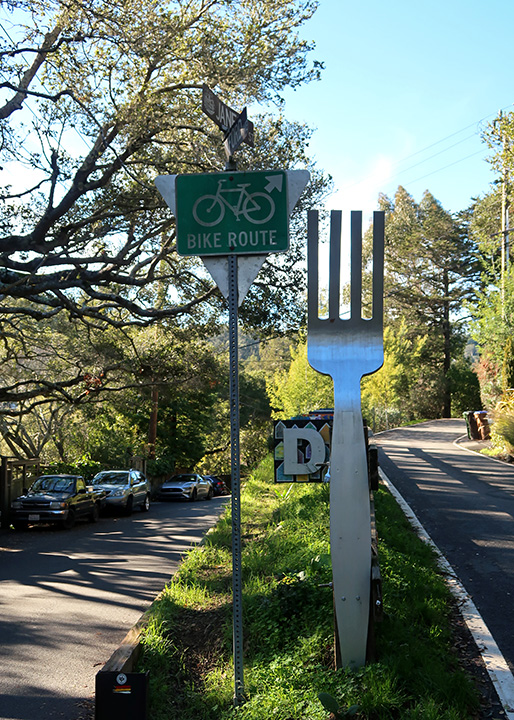
January 2023 – Mill Valley, CA. “Fork in the road.” I took the high road.
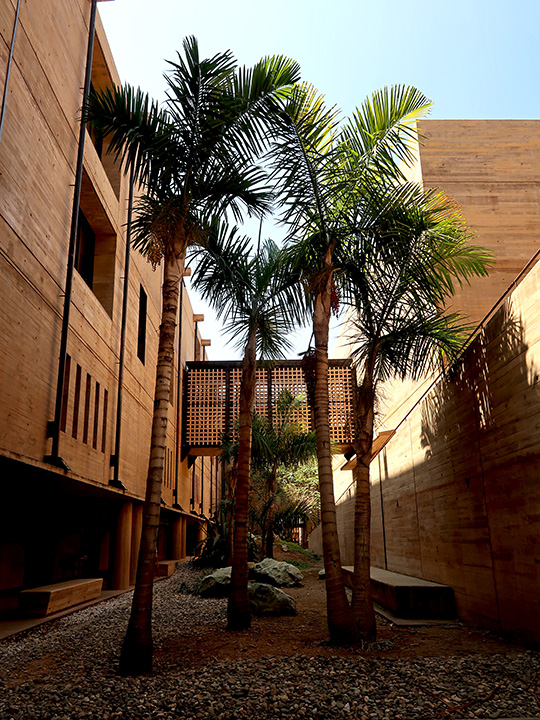
February 2023 – Oaxaca de Juárez. Archivo Histórico del Estado de Oaxaca.
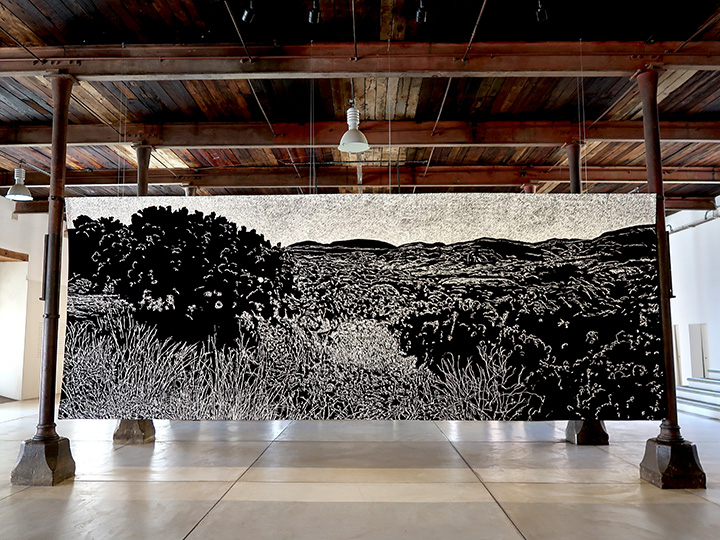
March 2023 – San Agustín Etla, Oaxaca. “Seamus Heaney & Jan Hendrix en Yagul” exhibition at Centro de las Artes de San Agustín (CASA).
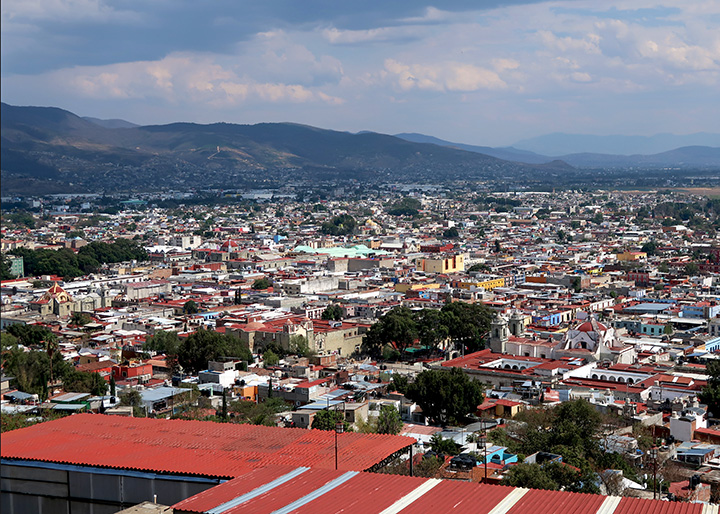
April 2023 – Oaxaca de Juárez. View from El Mirador Restaurante.
May 2023 – Oaxaca de Juárez. Cross on construction site in honor of Día de la Santa Cruz.
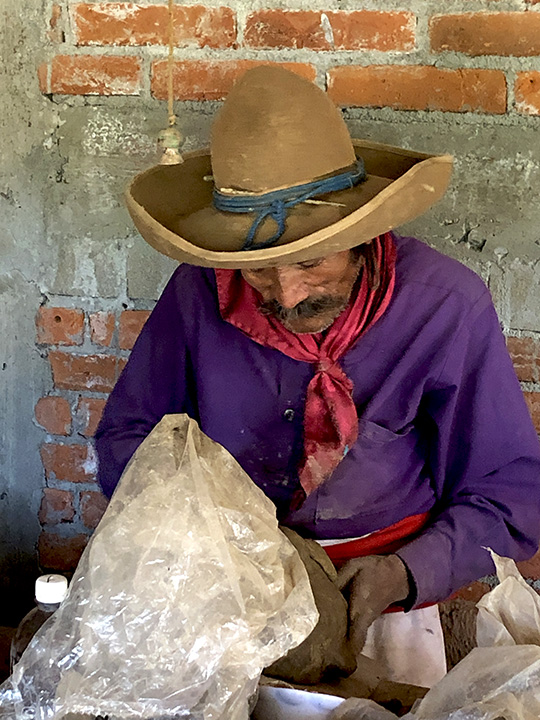
June 2023 – San Antonino Castillo Velasco, Oaxaca. Don José Garcia Antonío (aka, the blind potter).
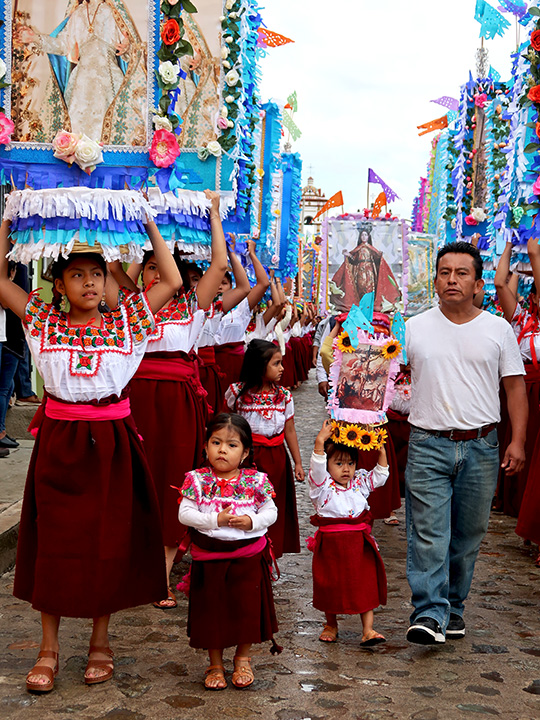
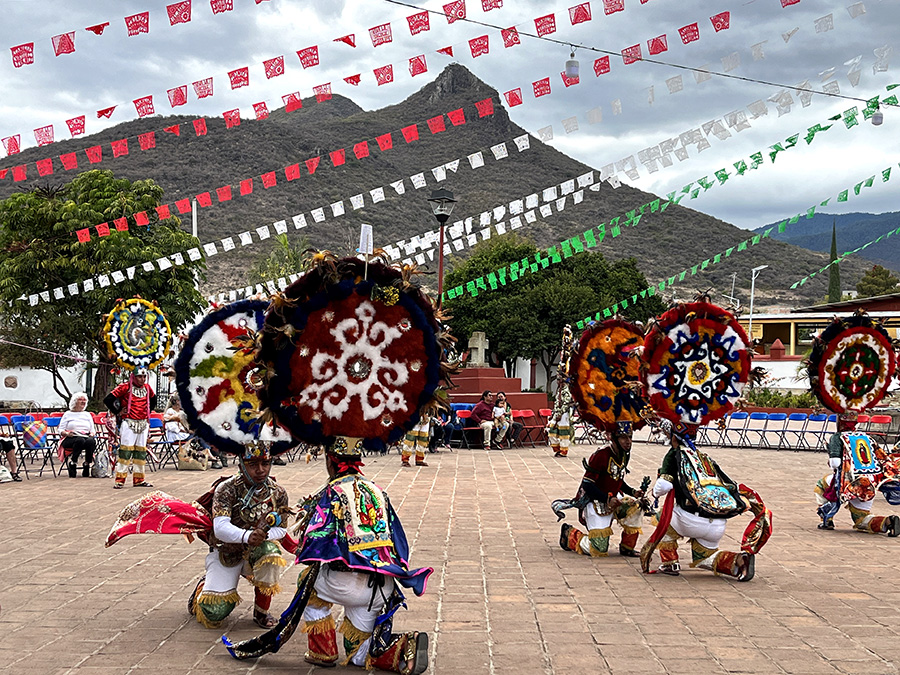
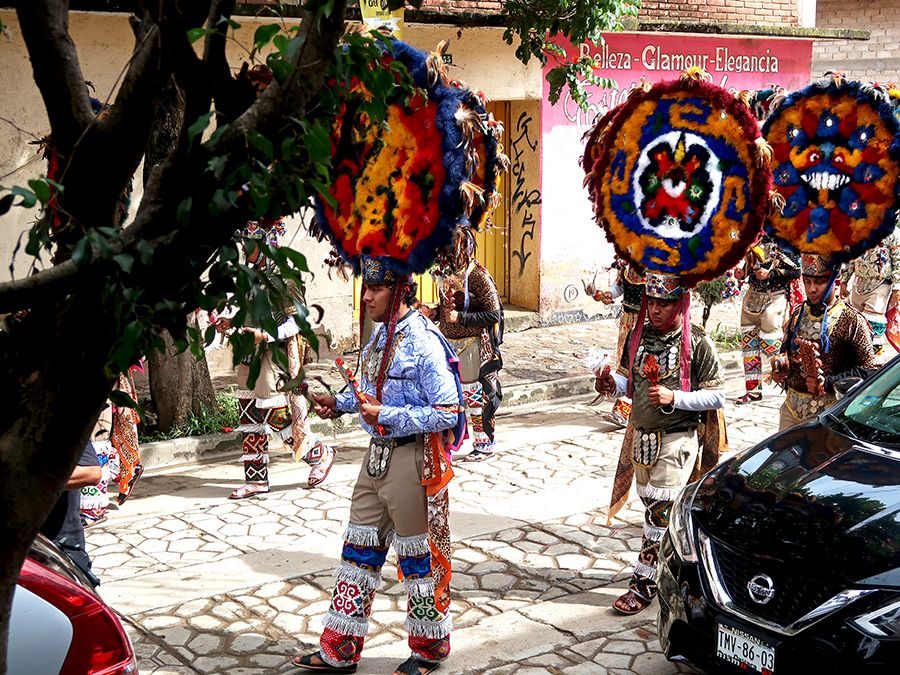
July 2023 – Teotitlán del Valle, Oaxaca. Convite welcoming people to the festival honoring La Preciosa Sangre de Nuestro Señor Jesucristo.
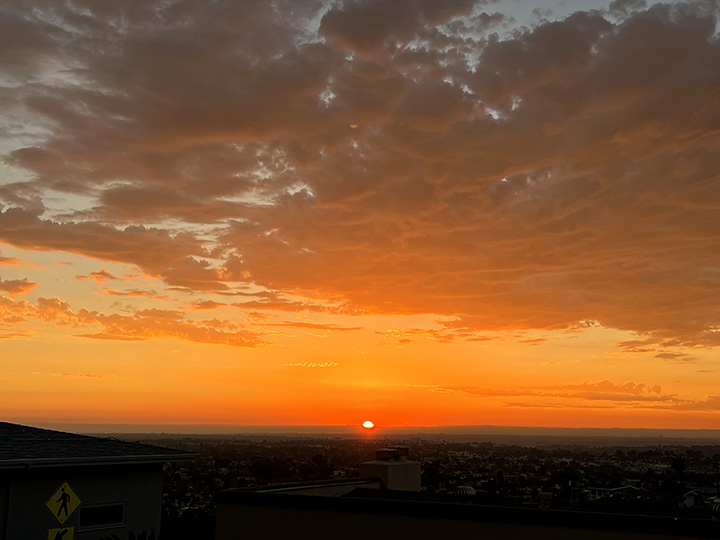
August 2023 – La Mesa, CA. Sunset over the Pacific Ocean.
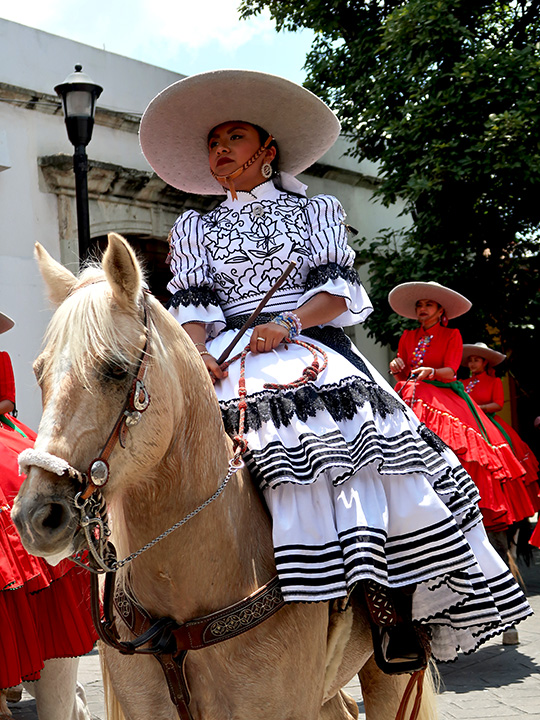
September 2023 – Oaxaca de Juárez. Escaramuzas riding in the Mexican Independence Day parade.
October 2023 – Oaxaca de Juárez. “Nelson” one of the Oaxaca Guerreros baseball team’s mascots.
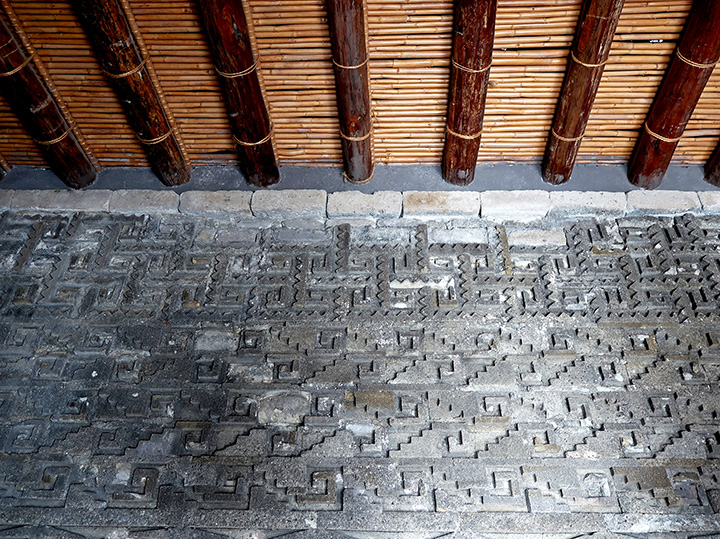
November 2023 – Villa de Mitla, Oaxaca. Interior wall and ceiling in the “Church Group” at the Mitla archeological site.
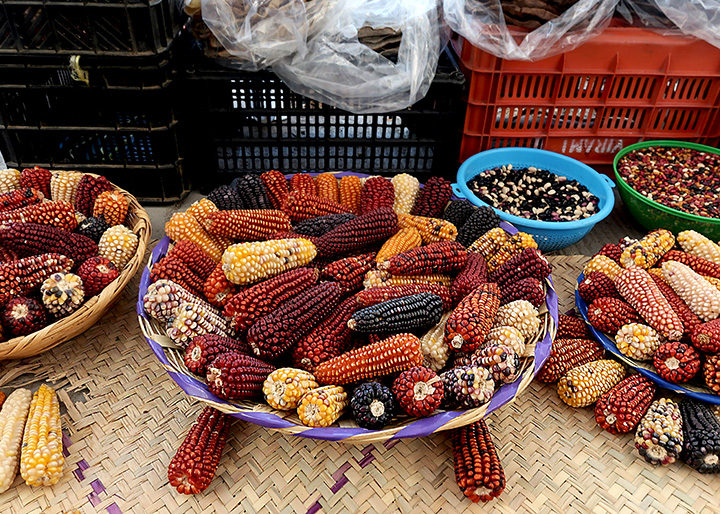
December 2023 – Unión Zapata, Oaxaca. Feria de la Agrobiodiversidad en Oaxaca.
Many thanks to all the wonderful readers of my blog; I am constantly amazed and gratified you choose to stop by. On this New Year’s Eve, with a renewed appreciation for the small things that bring joy and give life meaning, I wish you all, ¡Feliz Año Nuevo!
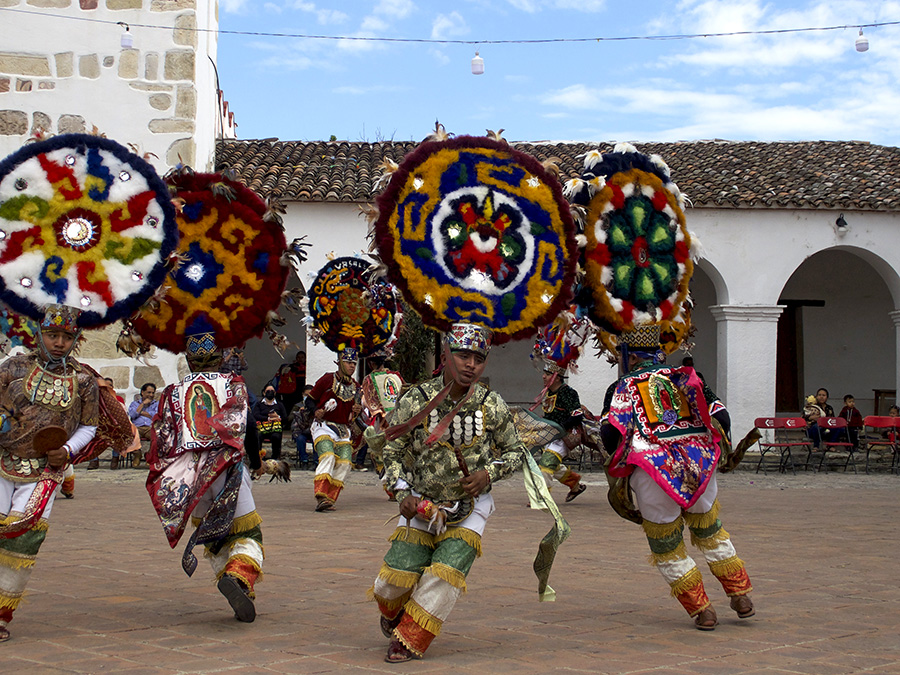
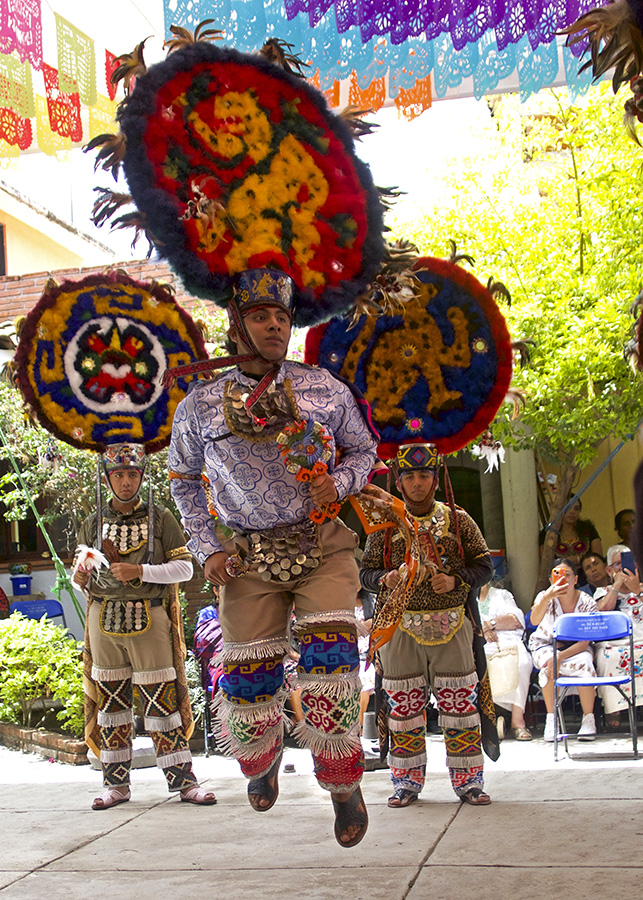
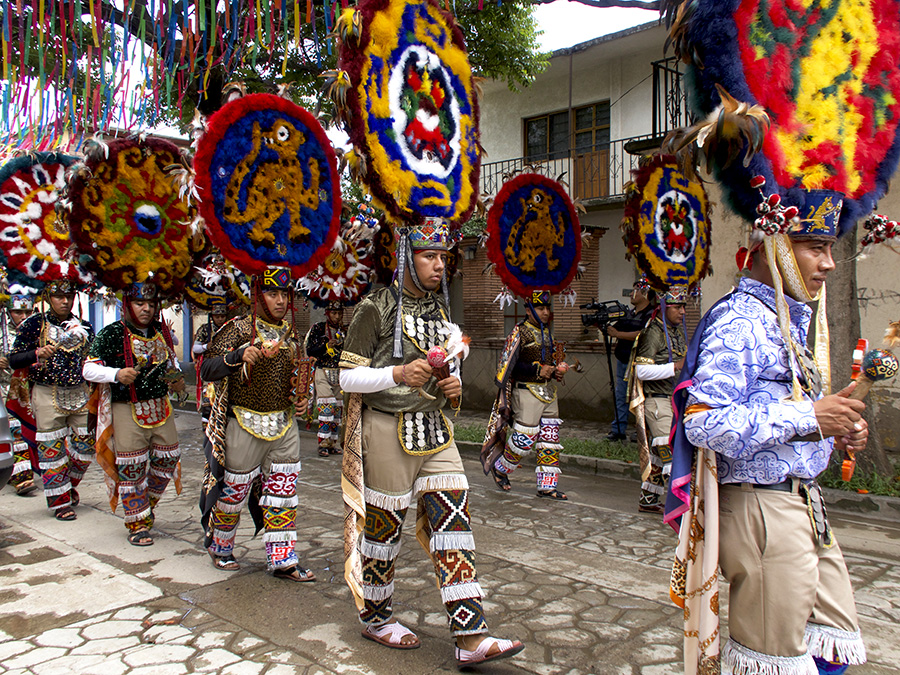
All over Mexico on December 12th the country pauses to honor and celebrate the Virgin de Guadalupe, also known as the Queen of Mexico, Empress of America, and patron saint of Mexico. And, there is no place I would rather be on this day than in Teotitlán del Valle watching the Danza de la Pluma. The dance is a ritual reenactment of the battles between the Aztec and the Spanish conquistadors. In this Zapotec village, the dancers make a 3-year religious commitment to perform it at the four major religious festivals each year, including Guadalupe.
Members of the Danza de la Pluma Promesa 2022-2024 entering the atrium of Templo de la Preciosa Sangre de Cristo.
Malinche, Moctezuma, Doña Marina, and danzantes.
Dancing under the watchful gaze of the sacred mountain, Cerro Picacho, Quie Guia Betz in Zapotec.
Danzantes “leaning in” during one of the 40+ dances of the Danza de la Pluma.
Moctezuma preparing to leap during one of the dances.
Members of the Danza de la Pluma Promesa 2022-2024 and their band.
A profound muchisimas gracias to the people of Teotitlán del Valle for always being so warm and welcoming.
There is a duality surrounding the celebration of Día de Muertos (Days of the Dead) in Oaxaca. While most every home and many public buildings and businesses construct altars with ofrendas brimming with flowers, candles, bread, chocolate, fruit, nuts, beverages, copal incense, and often photos of the departed, there is a distinct difference between the traditions of the more mestizo communities (Oaxaca city and the Etlas, for example) and those of the indigenous communities. The former often includes raucous comparsas (parades) called muerteadas with costumes, masks, painted faces, music, and “adult beverages.” According to the book, Day of the Dead: When Two Worlds Meet in Oaxaca, the muerteada allows the dead “to ‘occupy’ a living body, either a muerteada participant or an audience member, for a time, and therefore enjoy the entertainment directly rather than vicariously.”
However, in the indigenous villages these days are more solemn, filled with ritual, and are family oriented. I lean toward this more spiritual observance, so I escaped the craziness of the daily comparsas and drunken crowds in the city and went to stay in the Zapotec village of Teotitlán del Valle with my compadres (including comadre K) and to shop in Tlacolula for pan de muertos (bread), candles, and flowers to take to the ofrendas of families K and I have a relationship with in Teotitlán and San Pablo Villa de Mitla.
Tlacolula de Matamoros – Vendors of caña (sugar cane) used to create an arch over ofrendas.
Tlacolula de Matamoros – Ofrenda in the Templo de Santa María de la Asunción.
Tlacolula de Matamoros – Tapete de arena (sand painting) in Templo de Santa María de la Asunción.
San Pablo Villa de Mitla – Store front.
San Pablo Villa de Mitla – Ofrenda on home altar.
San Pablo Villa de Mitla – Detail from a public ofrenda.
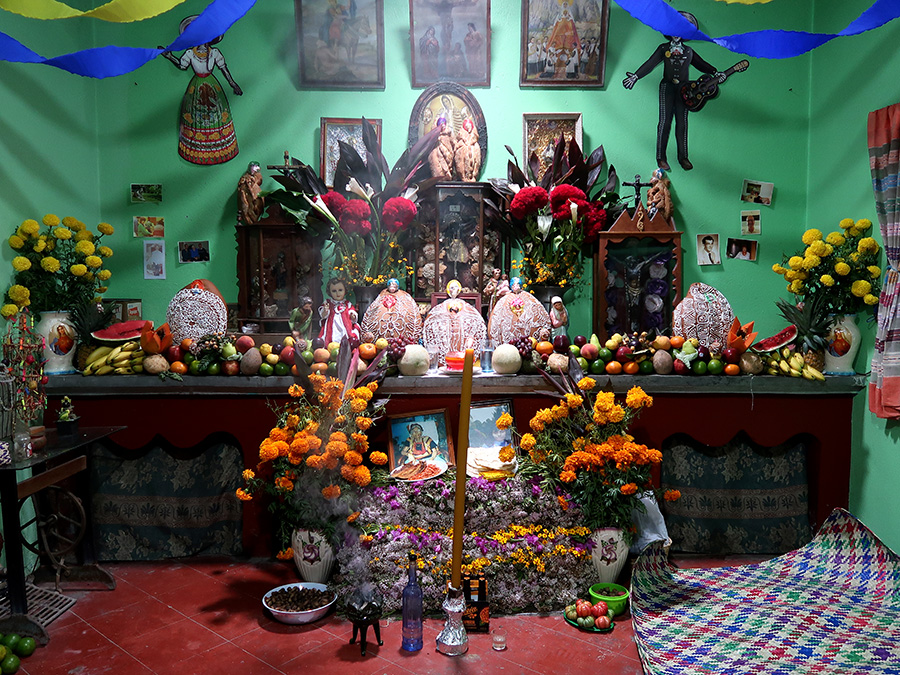
Teotitlán del Valle – Ofrenda (offerings) on home altar.
Teotitlán del Valle – Tamales amarillo traditionally served on November 1.
Teotitlán del Valle – Panteón (cemetery) early evening on November 2.
While the Día de Muertos observances may differ, the bottom line in both city and pueblo is to provide a welcome worthy of both the living as hosts and the dead as honored guests.
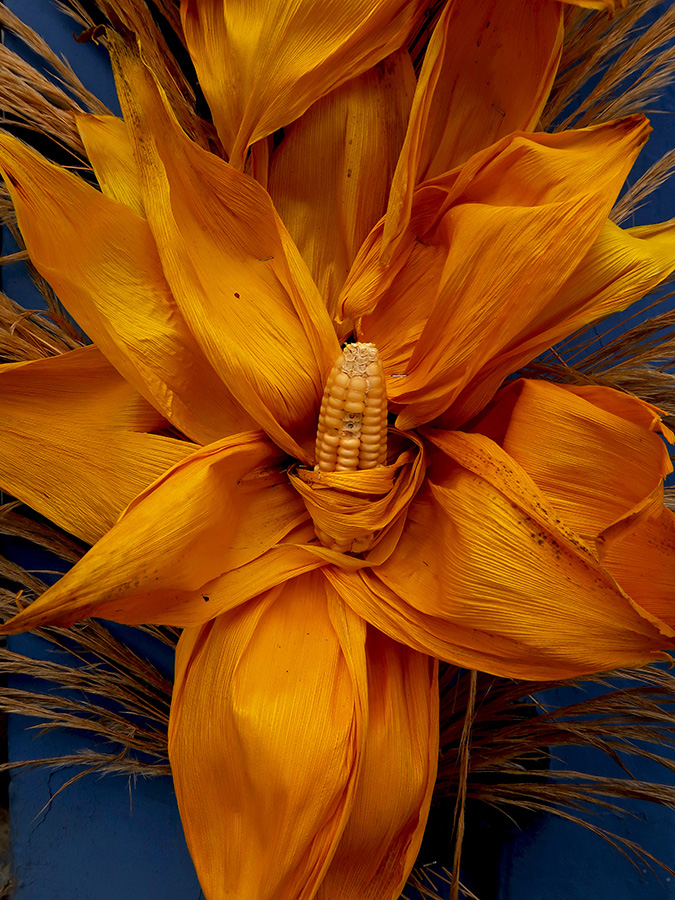
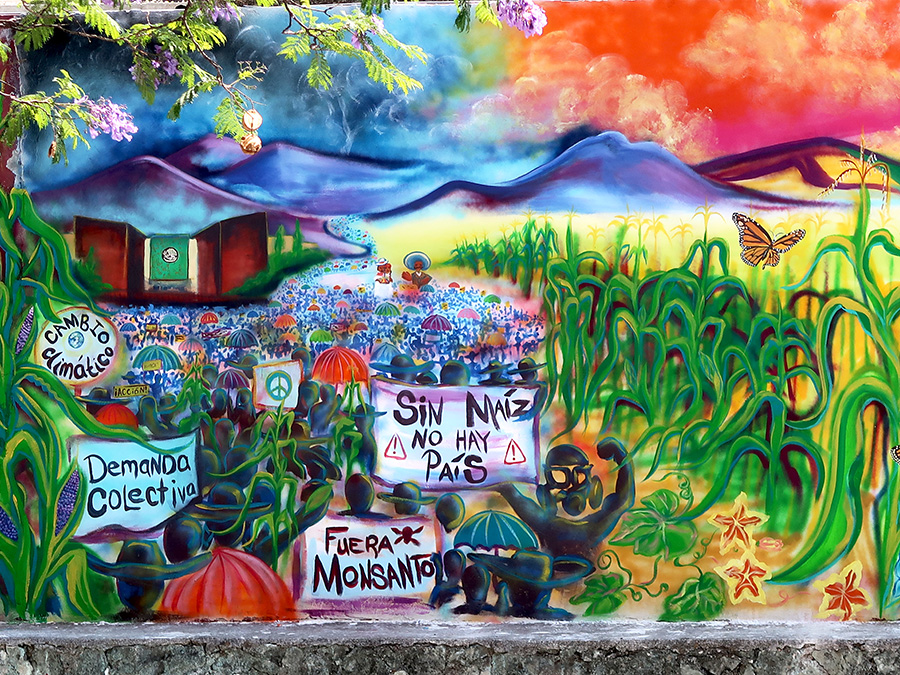
Today, September 29, Mexico celebrates Día Nacional del Maíz — a day honoring the sacred maíz, symbol of the country and base food crop for most of the nation. In Oaxaca, one never has to look far to see corn and not just in fields. Corn is depicted in murals, featured in decorations, and (of course) on most every dining table, most every day.
Decoration outside a shop in Oaxaca city.
Mural at Mercado Sánchez Pascuas in Oaxaca city – “Without corn, there is no country.”
Mural in San Martín Tilcajete.
My favorite tamales from the milpa and hands of Emilia Gonzalez Martinez in Teotitlán del Valle.
In the words of cocinera tradicional Carina Santiago, at the beginning of the trailer (below) for the tremendous documentary, Los Guardianes del Maíz / The Keepers of Corn, “Corn was not domesticated by man, man was domesticated by corn.”
Trailer for Los Guardianes del Maíz / The Keepers of Corn documentary.
In Teotitlán del Valle, as part of their three year commitment, each member of the Danza de la Pluma group and, especially their family, is responsible for taking a turn hosting one of the four yearly festivals. It includes several days of serving traditional foods at sit-down breakfasts, lunches, and dinners to the danzantes, band, families, godparents, village officials, and church leaders. For Danza de la Pluma Promesa 2022-2024 danzante, Capitán 2, Hugo Santiago Jimenez’s family, this entailed months of preparation, three pigs and one bull meeting their maker, and days of cooking for over 300 people.
Grupo Danza de la Pluma Promesa 2022-2024 entering Casa Santiago.
Hot chocolate with traditional breads.Grinding chocolate on metates for atole de espuma.Atole de espuma waiting to be served.Hugo Santiago Jimenez and Félix Contreras Ruiz eating higadito.
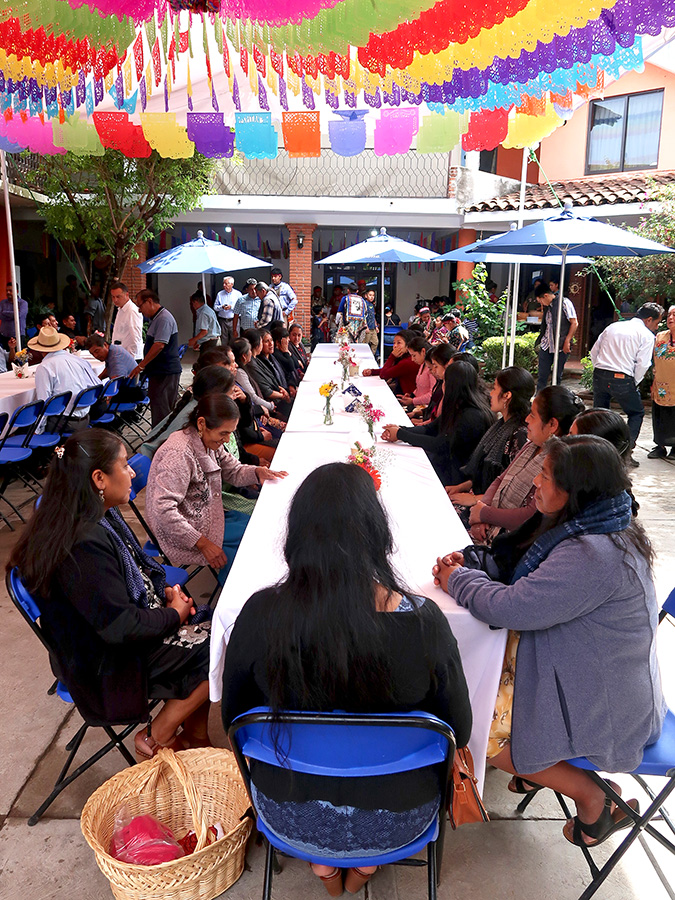
The women’s table waiting for breakfast at Casa Santiago. Yes, there is a men’s table — separate tables is traditional.
Two days before winging my way to California, I had the privilege of attending the breakfast given by Hugo’s family at the family compound, Casa Santiago. After the meal, tables were folded, chairs were moved to surround the courtyard, danzantes took their places, the band began to play, and Hugo and his fellow Capitán, Félix Contreras Ruiz commenced to dance. Following their dance, the entire group performed and then, led by the band, they took to Teotitlán’s main street to process up to the atrium of the church where they would perform the Danza de la Pluma for almost eight hours.
Papel picado at the fiesta hosted by the family of Capitán 2, Hugo Santiago Jimenez, at Casa Santiago.
Some of the women behind the days of feasting.
Hugo Santiago Jimenez dances in the courtyard of Casa Santiago.
Family watching as Hugo Santiago Jimenez dances in the courtyard of Casa Santiago.
Band leads the way back to the Templo de la Preciosa Sangre de Cristo.
Grupo Danza de la Pluma Promesa 2022-2024 processing back to the Templo de la Preciosa Sangre de Cristo.
Muchisimas gracias to the people of Teotitlán del Valle and, especially, Hugo and his family for inviting me and for being so welcoming and gracious. And, to my readers, CORTV will be streaming tomorrow (July 24, 2023) evening’s Danza de la Pluma performance by Teotitlán’s danzantes at La Guelaguetza (5 PM Mexico; 4 PM PDT; 7 PM EDT).
This spring has brought some wild weather to Oaxaca. It began with the previously blogged about freak hailstorm in April and this past week, besides the usual late afternoon rain, the city experienced two more hailstorms — definitely not normal. They are very localized, with nearby towns remaining dry or receiving only a few showers.
Late yesterday afternoon, while the city continued to bask in sunshine, Teotitlán del Valle only 23 miles away was hit with its first violent hailstorm in many years. One minute all was calm as friends and I sat outside at Restaurante y Galería Tierra Antigua sipping mezcal. However, within minutes, the sky darkened, wind began to blow, and the heavens opened.
Almost without warning, hailstones, some the size of two peso coins, began pelting us. Needless to say, we grabbed our belongings and copitas of mezcal, as quickly as we could, and ran inside the restaurant. Once all the customers were safely inside, staff scrambled to close doors and windows. Then all watched as the force of Cocijo, the Zapotec god of rain and lightening, among other powerful forces, took center stage. It was an awesome 15+ minute performance! And, thankfully, save for some shredded foliage, there didn’t appear to be any damage.
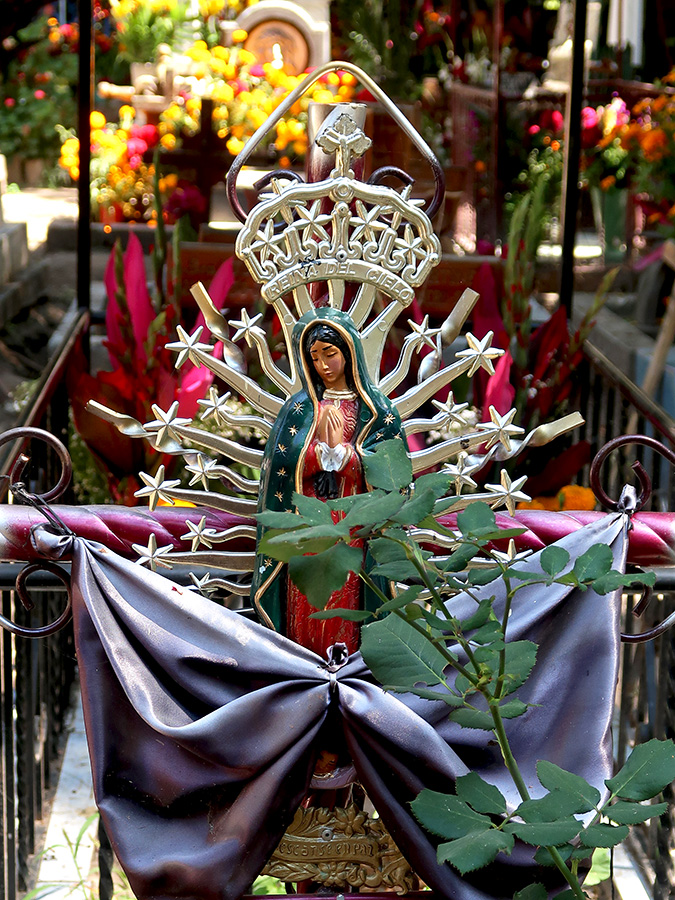
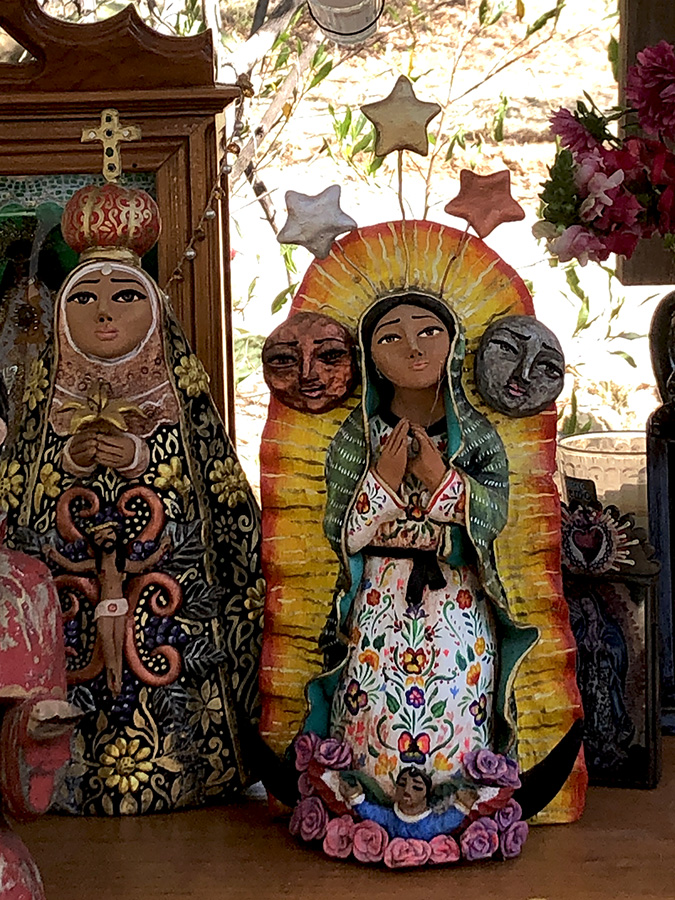
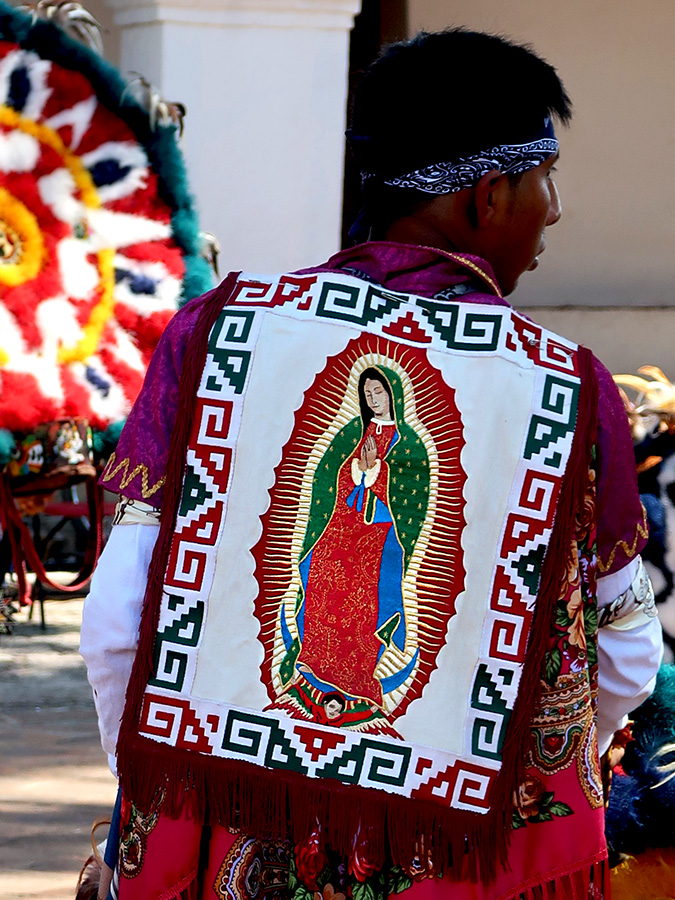
In Oaxaca, at any time of year, images of la Virgen de Guadalupe (Our Lady of Guadalupe) are never far away.
April 8, 2022 – Wall of a building on Calz. de la República, Oaxaca city.
March 24, 2022 – Wall inside Casa Ocho Regiones, Oaxaca city.
November 2, 2022 – Cemetery in Tlacolula de Matamoros.
February 3, 2022 – Guadalupe (on the right) at the restaurant Almú in San Martín Tilcajete.
However, today, December 12, is Día de la Virgen de Guadalupe and she and her image are being celebrated — including by the danzantes of Danza de la Pluma Promesa 2022-2024 in Teotitlán del Valle.
The legend of La Virgen de Guadalupe is known to every Mexican, every person of Mexican descent, and probably every foreigner who calls Mexico home. The image of this dark-skinned Virgin Mary who spoke Náhuatl is as imprinted on the national consciousness as she was on Juan Diego’s legendary tilma (cloak).
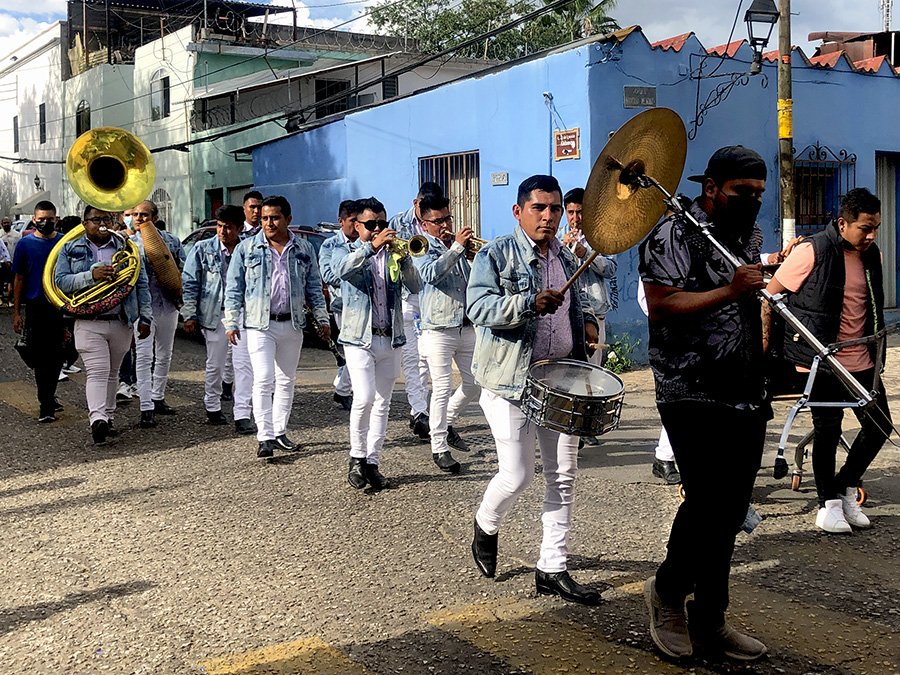
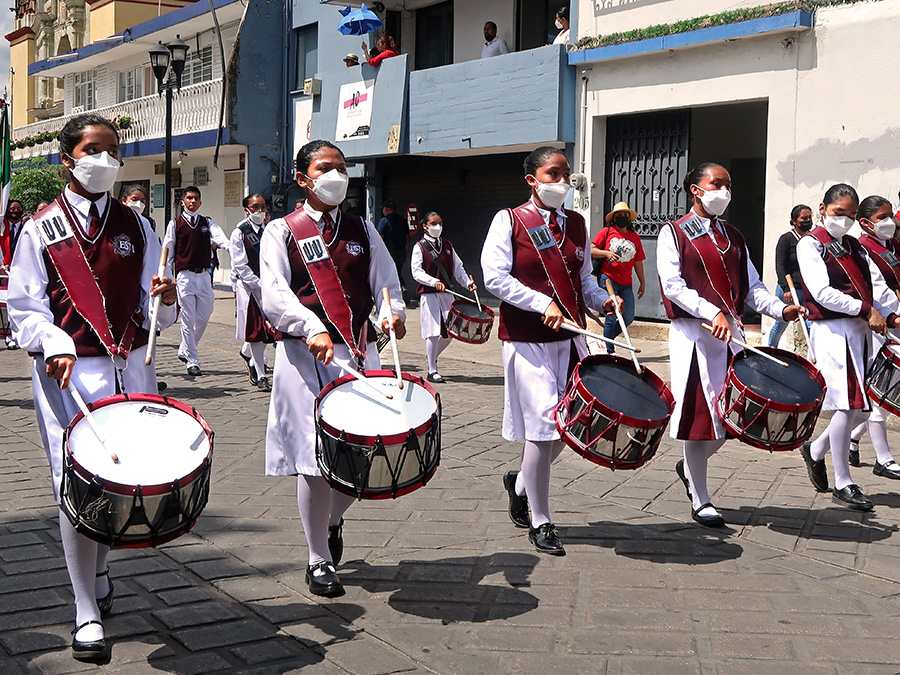
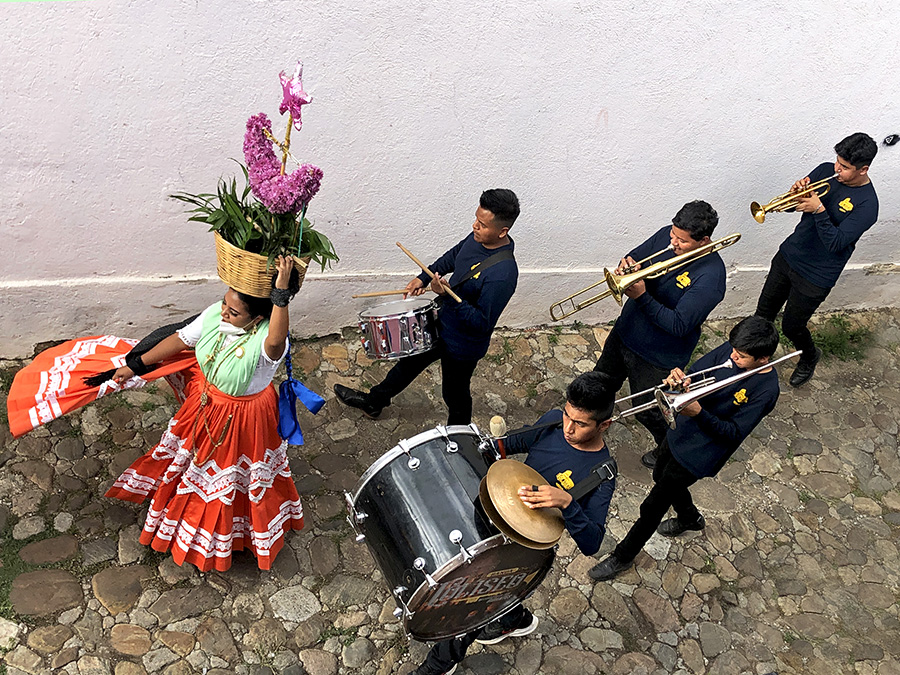
Why I love Oaxaca, reason number 2,022 — music is heard everywhere and seemingly all the time. November 22 is Día de Santa Cecilia who, among other things, is the patron saint of musicians.
July 4, 2022 – Convite for the Preciosa Sangre de Cristo patronal festival in Teotitlán del Valle
July 23, 2022 – Guelaguetza Desfile Magesterial in Barrio de Jalatlaco
July 9, 2022 – Calenda celebrating the anniversary of La Mano Magica Galería in Oaxaca de Juárez
September 16, 2022 – Independence Day parade in Oaxaca de Juárez
August 25, 2022 – 35th birthday celebration in Barrio de Jalatlaco
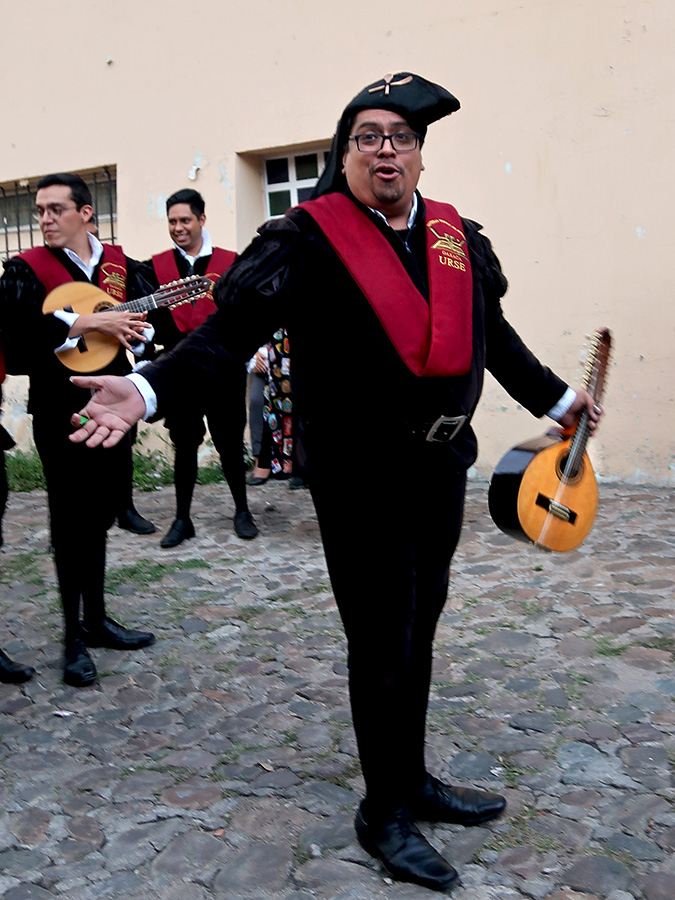
August 20, 2022 – Strolling Tuna Band from URSE in Barrio de Jalatlaco
And, since this post honors musicians, how about a little music…
Traditional teponaxtles and chirimía played outside the panteón of San Antonino Castillo Velasco on Palm Sunday 2022 and brass band in Barrio de Jalatlaco, Oaxaca de Juárez on the 6th Friday of Lent, Viernes de Dolores 2022.
A big muchisimas gracias to musicians all over the world who provide the soundtrack of our lives.
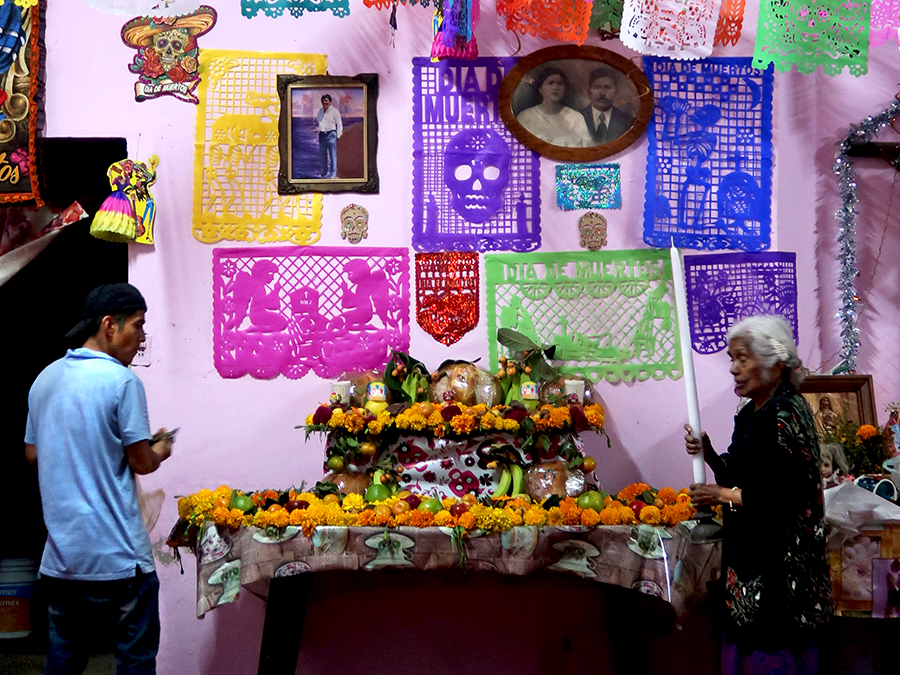
Every Día de Muertos, I love seeing the artistry of public ofrendas, feel honored being welcomed into the homes of friends and placing pan de muertos on their very personal ofrendas, and enjoy assembling my own ofrenda to departed loved ones. (Click on each image to see the details.)
Mitla – Ofrenda in the home of master weaver Arturo Hernandez Quero.
Mitla – Public ofrenda in the main plaza. Note the intricately decorated pan de muertos.
Teotitlán del Valle – Ofrenda of the weaver Pedro Montaño and cocinera Carina Santiago family in the Tierra Antigua restaurant and gallery.
Teotitlán del Valle – Ofrenda in the family home of weaver Zacarias Ruiz and Emilia Gonzalez.
Barrio de Jalatlaco – Private ofrenda open for public viewing at the corner of 5 de mayo and La Alianza.
Barrio de Jalatlaco – Family adding the finishing touches to their ofrenda. (They graciously gave me permission to take the photo.)
Casita Colibrí – My ofrenda in the daylight.
Casita Colibrí – My ofrenda at night awaiting the arrival of my departed.
I love the spicy and welcoming scents of cempasúchitl (marigolds), lacy flor de muerto from the Sierra Norte, pan de muertos, and incense of copal.






































 Mexican Peso Converter

 View From Casita Colibrí