Feeds:
Posts
Comments

Posts Tagged ‘Mexico’

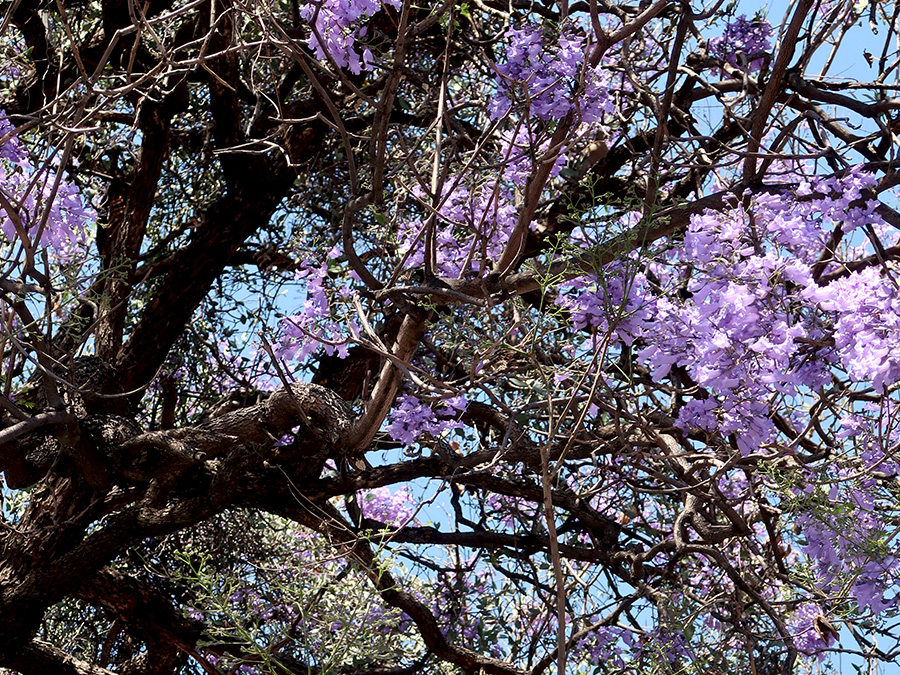
From gnarled tree limbs throughout the city…

IMG_3358_land

purple blossoms have emerged.

IMG_3357

Set against clear blue skies, it’s jacaranda time…

IMG_3360

a not-so-subtle sign that spring is on its way.

Posted to Thursday Tree Love

Read Full Post »

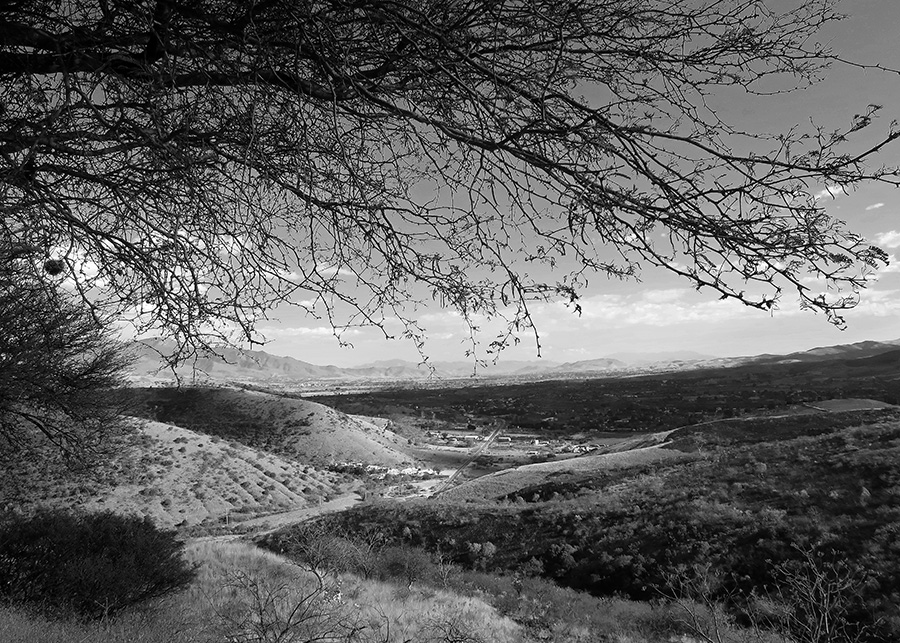
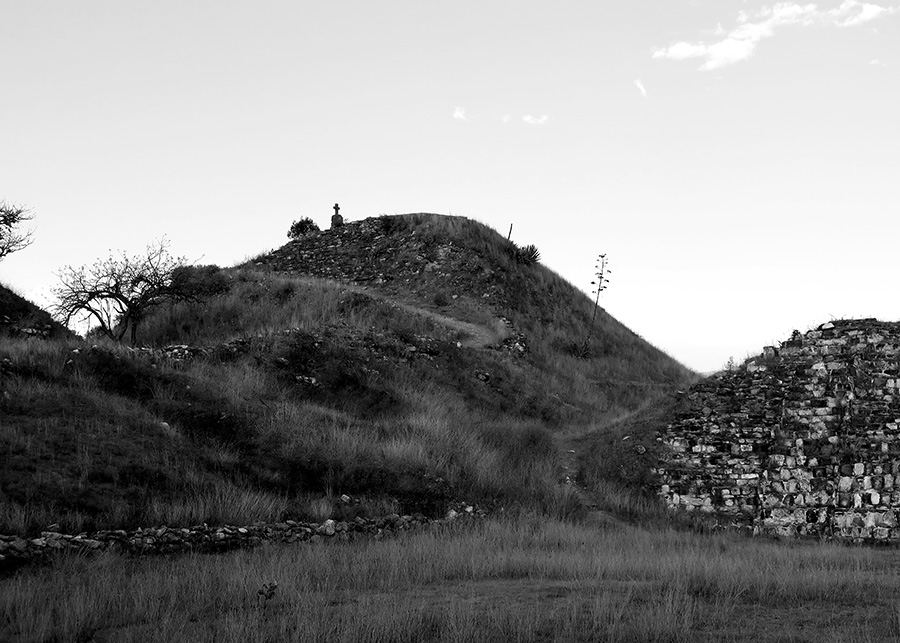
Visiting friends equals playing tour guide and exploring the sights, sounds, and tastes of Oaxaca.  Thus, last Thursday off we went to the new-to-me, little known, and hard to find north-of-the-city archeological site of Suchilquitongo.

IMG_3264_b&w

IMG_3265

IMG_3260IMG_3271_b&w

IMG_3272_b&w

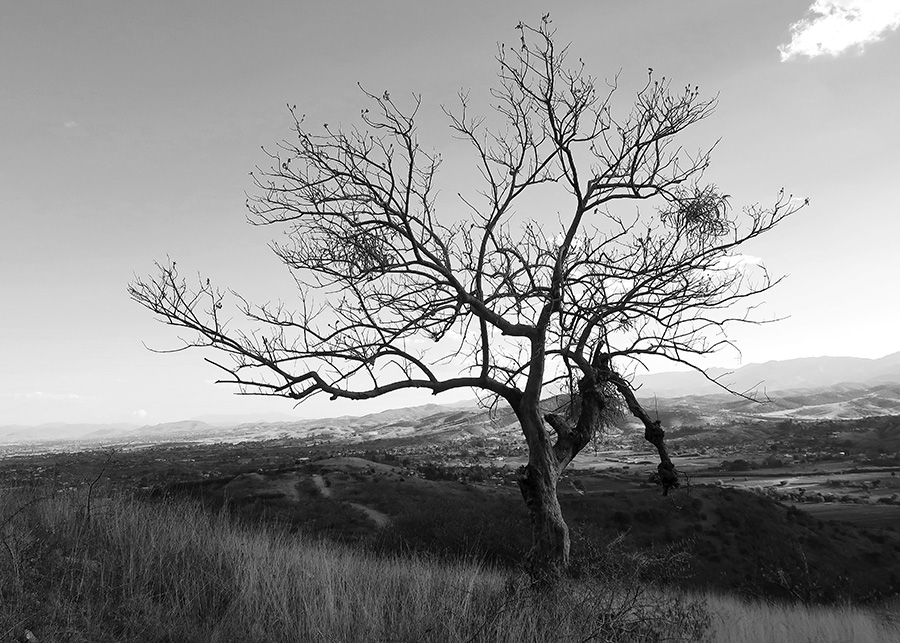
While the site is small and the excavated tomb is closed, for the views alone, it was well worth the trip.

Read Full Post »

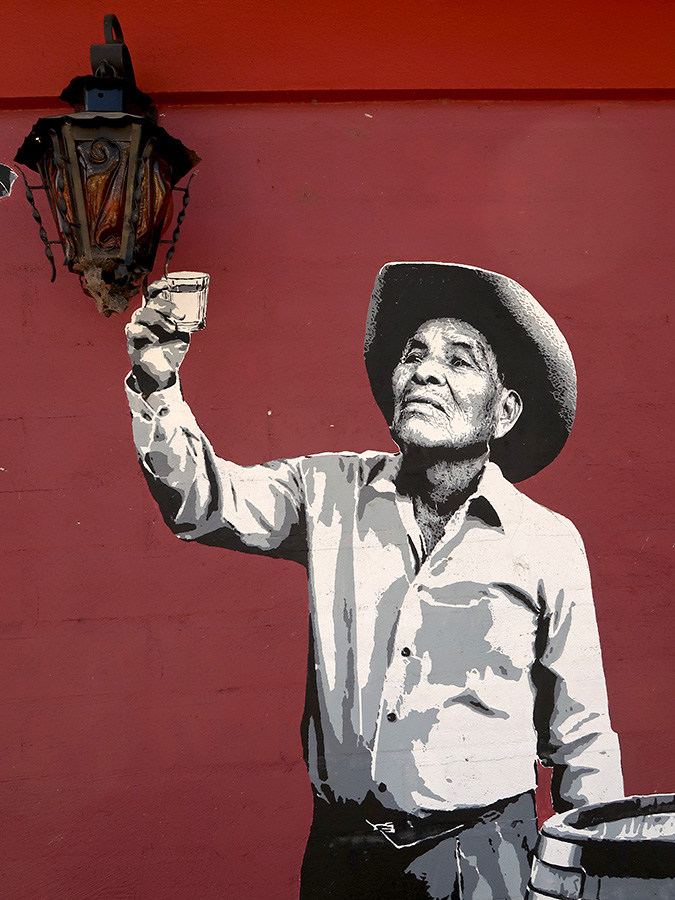
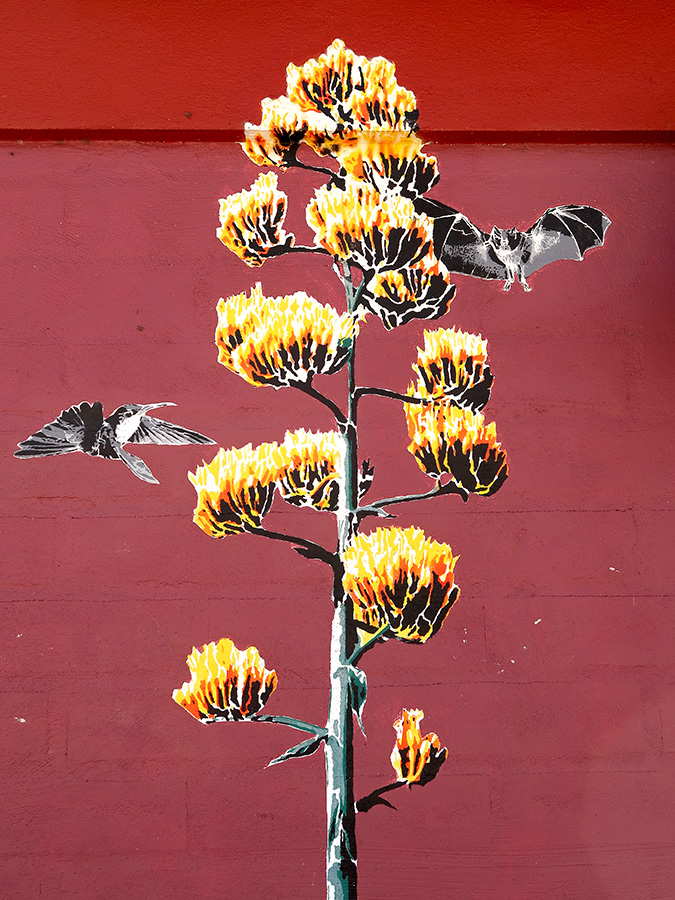
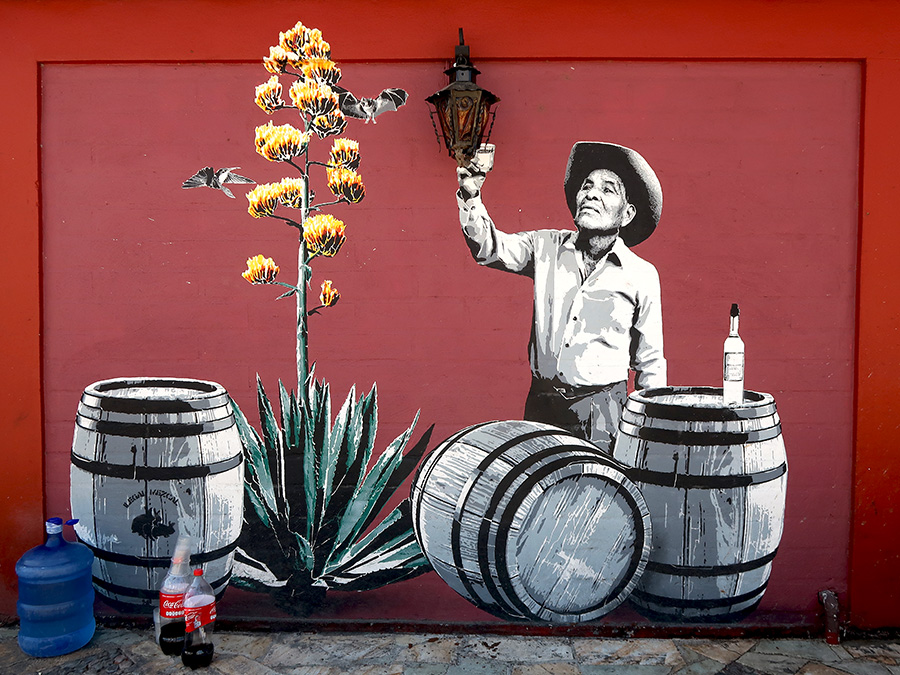
Let us all raise a glass to the hummingbirds and bats of Oaxaca.

IMG_3135

Without the work they do pollinating the flowers on the quiotes (stalks) that shoot up from the agave,

IMG_3137

there would be no maguey piñas to harvest and cook…

IMG_3133

and no mezcal to drink!

*Mural by Lapiztola on the side of the Palenque Mal de Amor (makers of Ilegal mezcal) 2+ miles north of Santiago Matatlán, Oaxaca.  Check out their other mural at the palenque HERE.


Read Full Post »

2019 has been proclaimed the International Year of Indigenous Languages by the United Nations.  The issue of “lenguas maternas” (mother tongues) has a particular resonance in Oaxaca, as the state is home to 16 distinct ethnolinguistic groups:  Amuzgos, Chatino, Chinanteco, Chocho, Chontal, Cuicateco, Huave, Ixcateco, Mazateco, Mixe, Mixteco, Náhuatl, Popoloca, Triqui, Zapoteco, and Zoque.

IMG_3235

As anyone who has visited the villages of Oaxaca has discovered, sometimes the abuelos and abuelas only speak their mother tongue, not Spanish.  To honor and celebrate them, their ancestors, and their children and grandchildren, today on the zócalo, Oaxaca celebrated those languages with songs, poetry, and recitations.

IMG_3238

However, like indigenous languages throughout the world, Mexico’s indigenous languages are in danger of disappearing.  The importance of passing these languages and the world views they express to the younger generations cannot be underestimated.

IMG_3230

Thus here in Oaxaca, on February 21, 2019, Mother Language Day, you can walk The roads of the feathered serpent: revaluing one of the variants of the Zapotec Valley of Oaxaca” and “Meet the Zapotec of Teotitlán through storytelling and other activities!” at the Biblioteca Infantil (Children’s Library). 

Read Full Post »

The devotion to the Virgin of Guadalupe captured the imagination of fiber artist Linda Hanna when, as an early teen, she visited Mexico with her family and saw believers crawling on their knees up to the Basilica of Our Lady of Guadalupe.

Blouse by Teresa Silvia Tzintzun, San Pedro Zipiajo, Michoacán (Purepecha).
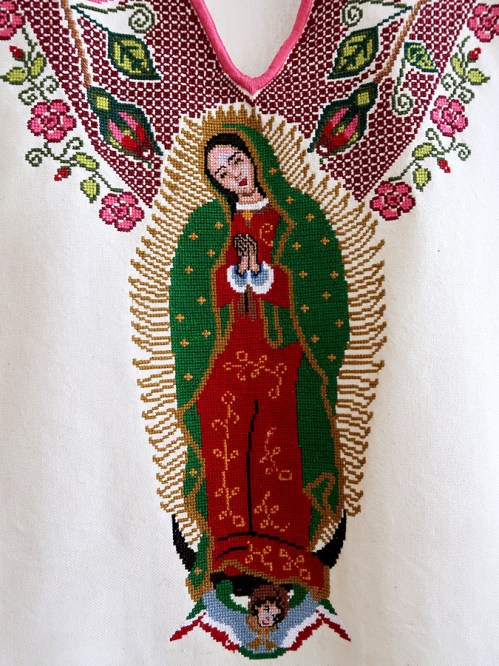
Detail of blouse by Teresa Silvia Tzintzun, San Pedro Zipiajo, Michoacán (Purepecha).

The Virgin’s appeal continued to deepen when Linda moved to Oaxaca in 1997.  Thus the seeds/threads of the exhibition, “Rosas y Revelaciones: Homage to the Virgin of Guadalupe by Mexican Textile Artists” were sown/sewn.
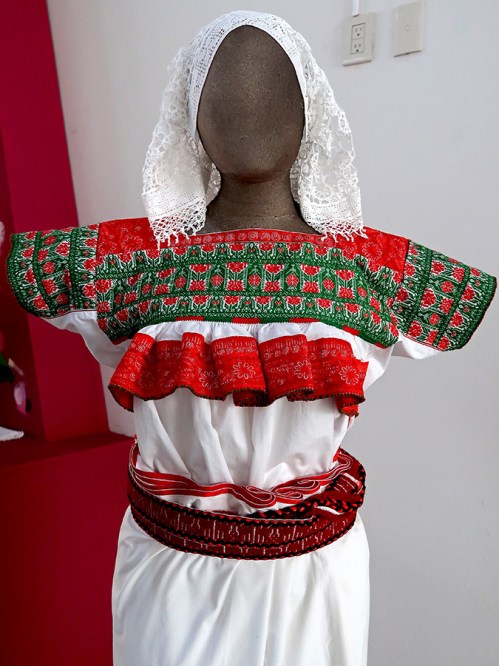
Blouse by Marcolina Salvador Hidalgo, Chachahuantla, Puebla (Nahua).
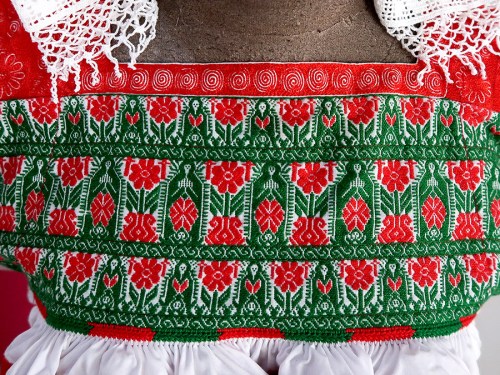
Detail of blouse by Marcolina Salvador Hidalgo, Chachahuantla, Puebla (Nahua).

The legend of La Virgen de Guadalupe is known to every Mexican, every person of Mexican descent, and probably every foreigner who calls Mexico home.  The image of this dark-skinned Virgin who spoke Náhuatl is as imprinted on the national consciousness as she was on Juan Diego’s legendary tilma (cloak).

Dress by María Guadalupe Santiago Sánchez, San Antonino Castillo Velazco, Oaxaca (Zapoteco).

Detail of dress by María Guadalupe Santiago Sánchez, San Antonino Castillo Velazco, Oaxaca (Zapoteco).

Her image has continued to appear on cloth, albeit with human, not divine, intervention.  Both Father Miguel Hidalgo in the Mexican War of Independence and Emiliano Zapata, one hundred years later, during the Mexican Revolution, led their troops under the banner of Our Lady of Guadalupe.

Man’s tunic by Pascuala Vásquez Hernández, Zinacatán, Chiapas (Tzotzil, Maya).

Shawl by Adolfo García Díaz & Delvina Salinas Cruz, Tenancingo, Estado de México.

The Rosas y Revelaciones textile exhibition presents work from 52 communities in ten states in Mexico (Chiapas, Colima, Guerrero, Jalisco, Mexico, Michoacán, Oaxaca, Puebla, Tlaxacala, and Yucatán) — with the majority being from Oaxaca.

Apron by Valeria García Hernández, San Miguel del Valle, Oaxaca (Zapoteco).
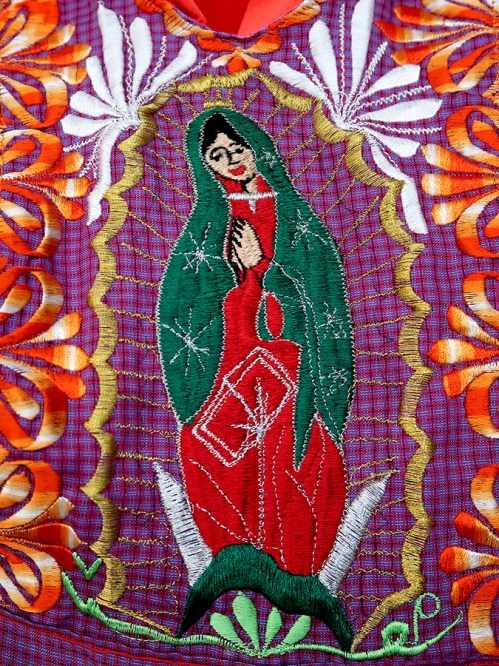
Detail of apron by Valeria García Hernández, San Miguel del Valle, Oaxaca (Zapoteco).

Linda explained that she gave the artists free rein to let their imagination and expertise be their guide. I suspect these words by Guadalupe Ángela, from her poem, “Virgen de la Creación” (Madonna of Creation) composed for the exhibition, echo their prayers for inspiration and guidance:

Madonna of Creation
pull the image from me, the beauty.
Make it cedar, make it textile, make it
a landscape.  May the needle and thread be touched
by you.
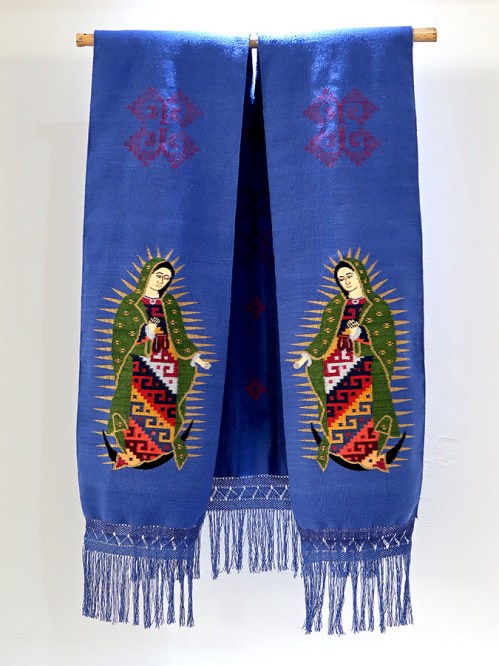
Ruana by Erasto (Tito) Mendoza Ruiz, Teotitlán del Valle, Oaxaca (Zapoteco).

When you go, be sure to take the time to watch the video interviews with some of the artisans — the seriousness, devotion, and honor they felt at being selected to participate in this incredibly special project is extremely moving.  The show is currently at the Museo Estatal de Arte Popular Oaxaca (MEAPO) (closed on Mondays) in San Bartolo Coyotepec, Oaxaca and runs through March 17, 2019 (extended until April 28, 2019) — after which it will be prepared to tour.  Its first stop will be at the Museo Nacional de Culturas Populares in Coyoacán, Mexico City — in time for Día de la Virgen de Guadalupe on December 12, 2019.

(ps)  Linda is hoping the exhibition will develop wings and fly throughout Mexico and eventually to the USA.  If you have contacts in the museum world who might be interested in hosting this exhibition, please be sure to contact Linda Hanna at Casa Linda.

Read Full Post »

The signs of Valentine’s Day are everywhere…

IMG_3226

Ready for the fiesta on the patio of my apartment complex.

IMG_3195

Tin hearts on display at the Museo Estatal de Arte Popular de Oaxaca (MEAPO) shop in San San Bartolo Coyotepec.

While it may be a holiday imported from Europe, Mexico embraces the celebration.

IMG_3191

Dining room ceiling of Los Huamuches, between Santo Tomás Jalieza and San Martín Tilcajete.

IMG_3220

Balloons on the zócalo in Oaxaca de Juárez.

Wishing you ¡Feliz Día del Amor y la Amistad!

IMG_3164

Bougainvillea on a cross at the palenque of Faustino García Vásquez, San Baltazar Chichicápam.

IMG_3224

Ready for the fiesta on the patio of my apartment complex.

Happy Day of Love and Friendship to all!

Read Full Post »

When I’m in el norte, I usually turn down invitations to eat at Mexican restaurants.  However, over the years, I’ve learned to follow the advice of the late great Nat King Cole and “I’ll never say ‘never again’ again.”  Thus, last month, on a stormy Friday at the height of northbound commute traffic, my stepson, his wife, and I ventured up to Yountville, in the heart of Northern California’s wine country, to try out La Calenda, the newly opened Oaxaca inspired restaurant by Michelin star chef Thomas Keller.

I admit, I was extremely leery of this project when I first learned of it.  In fact, upon reading an article in the SF Chronicle, I wrote on Facebook,  “Hmmm… How about using his celebrity and empire to help finance one of the numerous talented Oaxacan chefs to open a Oaxacan restaurant in Yountville?”  Little did I know that Keller had made inquiries in Oaxaca and wound up hiring Kaelin Trilling as the executive chef.  Kaelin is the born-and-raised-in-Oaxaca son of cookbook author, cooking instructor, and Oaxaca resident, Susana Trilling.  A good start and so I jumped at the chance to give it a try.

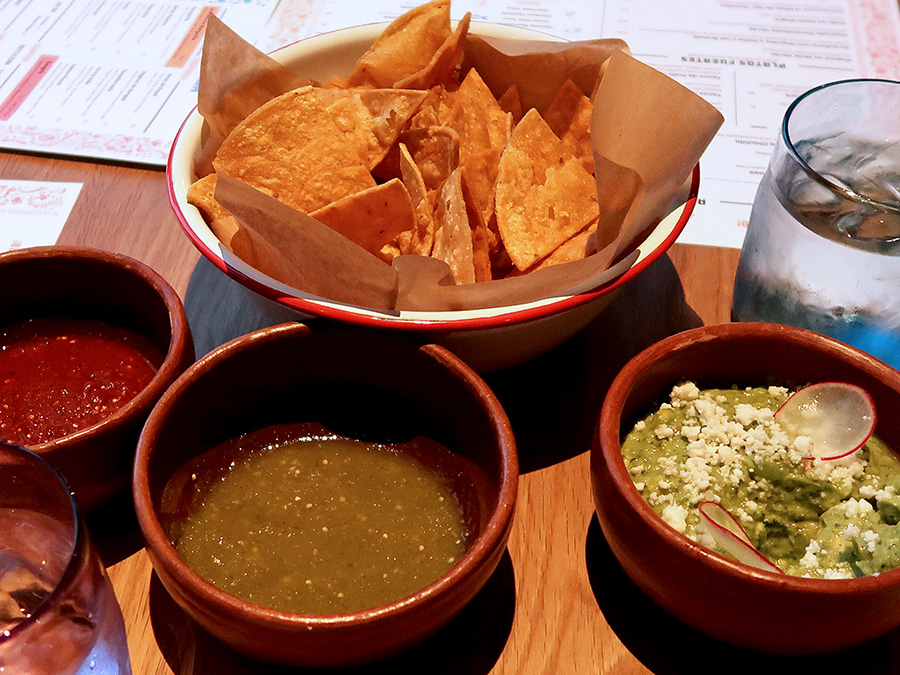
Flavorful and picante salsas, fresh guacamole, and crispy warm totopos.

The menu features traditional Oaxacan cuisine, but also includes nods to other regions of Mexico.  I have to say, they had me at the tortillas!

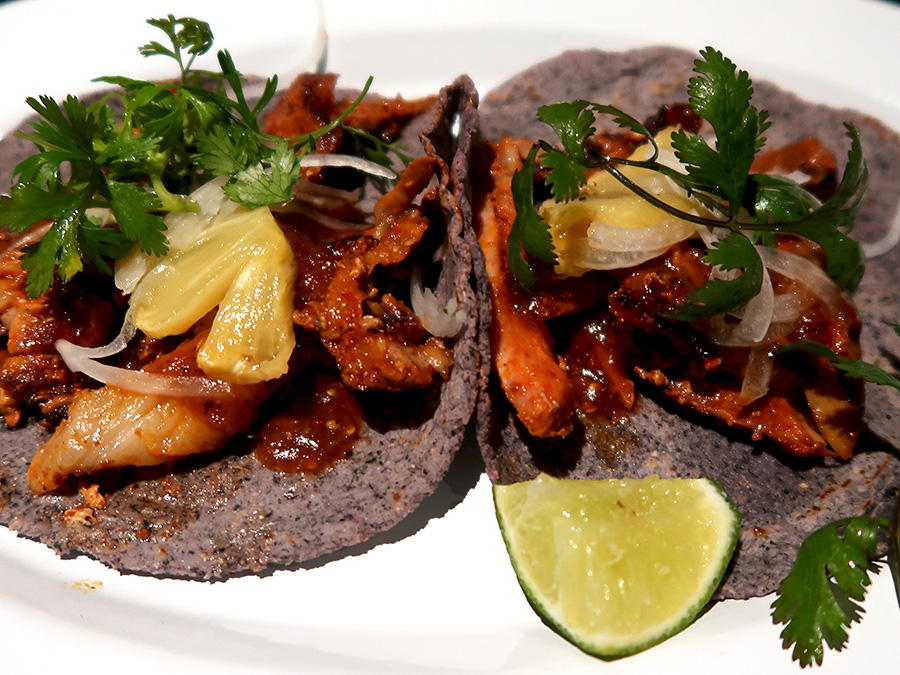
Tacos al Pastor – a Lebanese-Mexican dish that has become traditional in Central Mexico.

Sourcing corn from Mexico and nixtamalizing it on-site, the blue corn tortillas, handmade and hot off the comal, brought me right back to Oaxaca.

Tacos de carnitas – pork, cilantro, onions, with a squeeze or two of lime.

Oh, and did I mention the black mole?  Silky smooth, with the rich complex flavors I have come to love and appreciate.  Though we didn’t order the braised beef cheek in mole chichilo, we asked for a taste, which was promptly provided.  I explained to my family that this Oaxacan mole is made from chilhuacle negro, mulatto, and pasilla chiles; blackened tortillas and seeds of the chiles; and avocado leaves, the latter imparting a subtle anise flavor.  It is only served on special occasions, such as weddings, christenings, and when the crops have been harvested, etc.  It was delicious and, as they should be, the flavors were multilayered.  Next time…

Pollo (chicken) in mole negro.

Everything on the menu tempted us and we ordered way more food than I thought we could possibly eat — but it was so good, we did!  (Photos are only a sample of what the three of us tucked into.)  And, the mezcal cocktails we ordered certainly got the evening off to a delightful start!

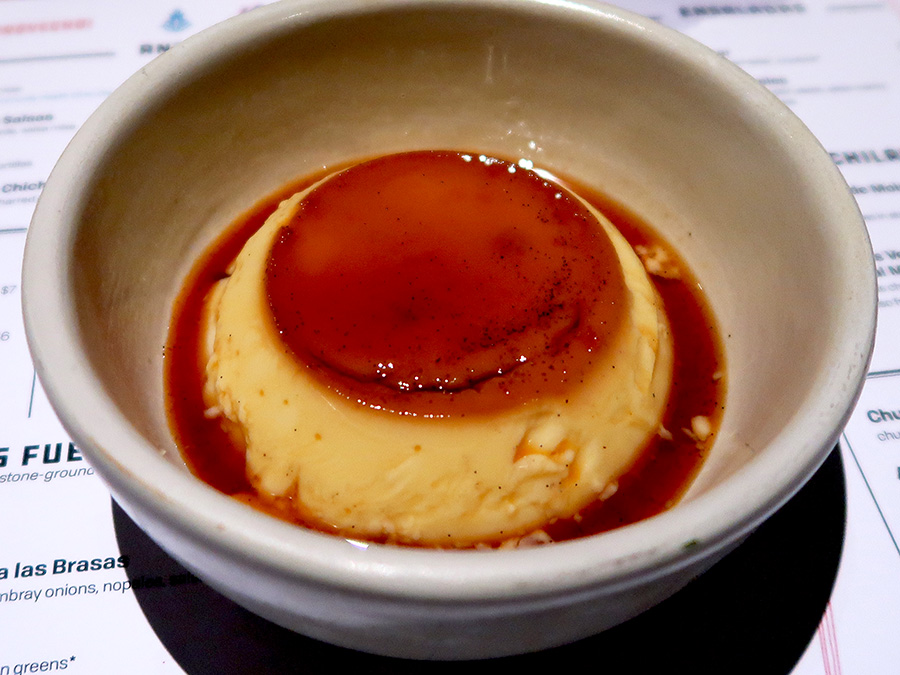
Traditional flan with caramel sauce — creamy, smooth, and divine!

When we went to La Calenda, I was nearing the end of a month-long visit in el norte and the sight of barro rojo (red clay) bowls from Oaxaca and glassware from Xaquixe Glass (the same glasses that sit on my Casita Colibrí kitchen shelf), along with the smells and flavors, had tears welling up, as a wave of homesickness came over me.  But, then it passed and the joy of feeling “at home” even in Yountville, California set in.  And, more good news:  The prices, were extremely reasonable for the quality and location — in the ballpark of upscale restaurants in Oaxaca, as opposed to upscale in the San Francisco Bay Area.

img_2816

Seeing stars at the entrance to La Calenda.

(ps)  Though I’ve had this blog post in the hopper for a few weeks (ever since my return to Oaxaca), it was the recent article by food writer, Cristina Potters, The Traditional Mexican Kitchen :: Is It Authentic, or What?, that prompted me to finish and post it.  La Calenda can definitely be described as having its roots in the traditional.

Read Full Post »

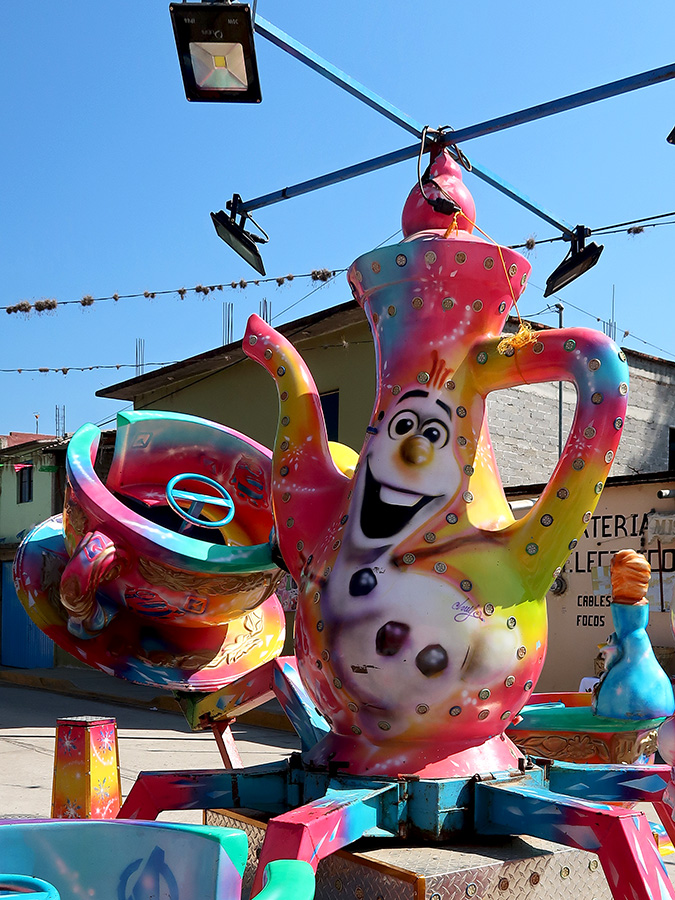
Colorful but creaky carnival rides with familiar figures for the kiddos always seem to be a part of fairs and festivals in Oaxaca.

IMG_3108

IMG_3109

IMG_3110

These from the Feria del Carrizo in San Juan Guelavía.

Read Full Post »
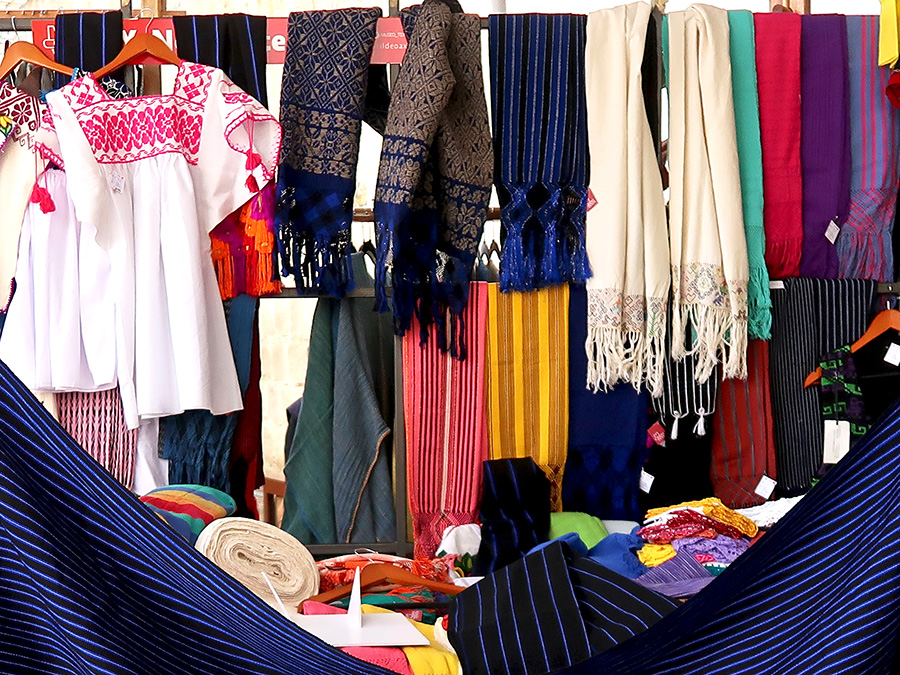
Friday, February first, the opening of the Museo Textil de Oaxaca expo-venta (show and sale) beckoned.  Textiles from the Yucatán, Veracruz, Puebla, the State of Mexico, Michoacán, and (of course) Oaxaca filled tables and display racks.  It’s hard not to feel overwhelmed by the color and beauty and workmanship, but I’m learning.  I take my time, make several rounds of the booths, and then see what calls me back.

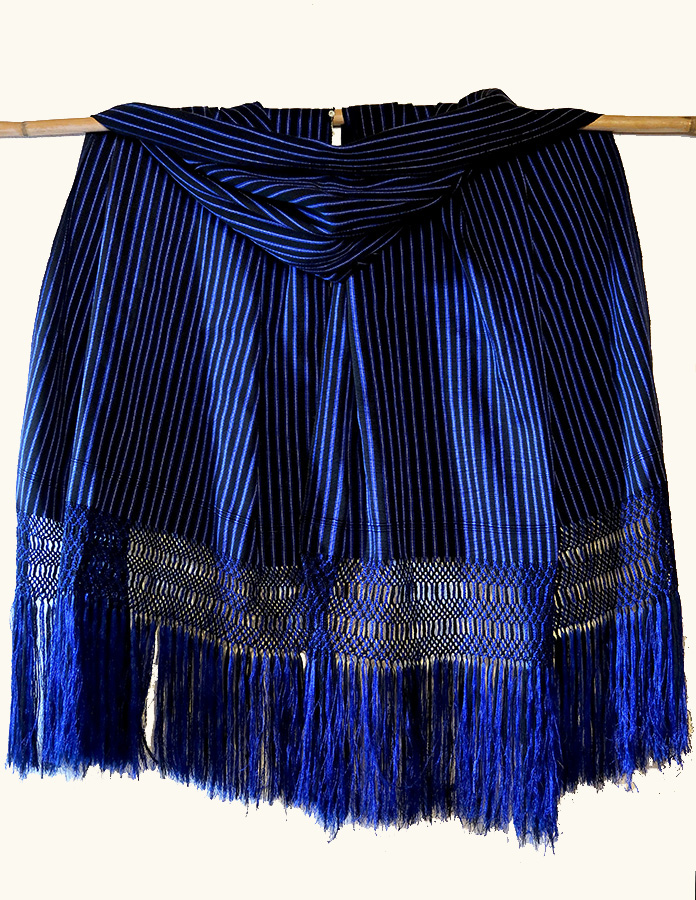
So, what did I return to?  The rebozos (shawls) from Ahuirán, Michoacán.

IMG_3044

IMG_3058

IMG_3057

And, what did I buy?  One of their traditional black and blue cotton and rayon rebozos.

IMG_3097_copy

Then there was Khadi Oaxaca — “a social-entrepreneur initiative that supports the village of San Sebastian Rio Hondo, Oaxaca, Mexico, to economically develop in a sustainable way.”  They spin, dye, and weave coyuche — a brownish cotton grown in Oaxaca and, working with designers, fashion modern takes on this traditional cloth.  They even sell bolts of fabric so you can design your own!

IMG_3051

IMG_3048

IMG_3052

What called out to me?  A lovely huipil with a subtle, but intricate, design.  I love the way the natural color of the coyuche takes the dye.

IMG_3095_copy

I also kept coming came back to the stall filled with the spectacular textiles from San Bartolomé Ayutla, Oaxaca.  Alas (or, thank goodness), I was out of money.  Next time…

IMG_3055

The expo-venta runs through tomorrow (Feb. 4) on the patio of Centro Cultural San Pablo, next door to the Museo Textil de Oaxaca.

Read Full Post »

The zócalo is a sea of red today.  It is the 38th anniversary of the founding of the Movimiento Unificador de Lucha Triqui (MULT) — one of the organizations of Triqui from the Mixteca Baja region of Oaxaca. They have come to (yet again) present their demands to the government.

IMG_3106

For background (in English) on the plight of the Triqui in Oaxaca and the many who have been forced by violence in their communities to migrate to California, check out David Bacon’s article, Can the Triquis Go Home?  Unfortunately, I don’t think much has changed since it was written in 2012.

Read Full Post »
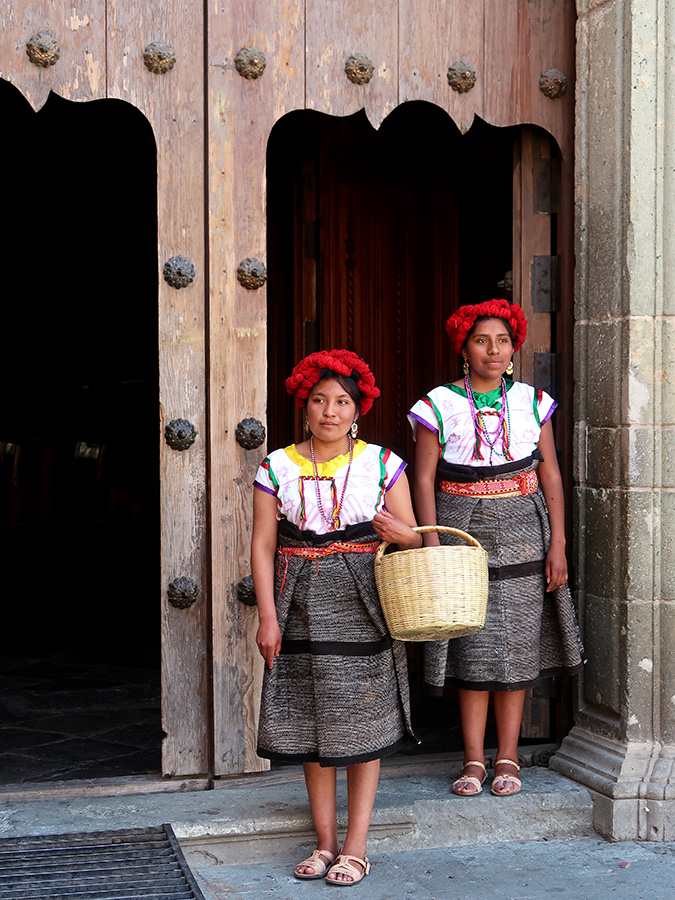
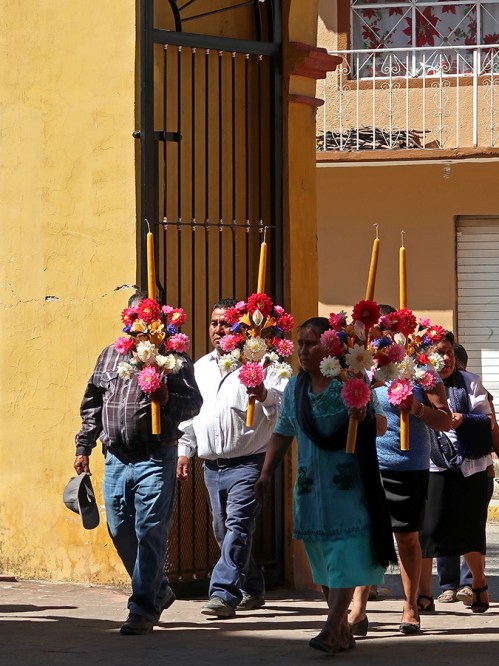
On Sunday in San Juan Guelavía for the Feria del Carrizo in the municipal plaza, the sounds of a procession drew me next door to the church.

img_3014_port

A procession!  I’m not sure if the occasion had anything to to with patron saint, San Juan Bautista.  However, what I do know is that I love being surprised and delighted by Oaxaca — a place I am proud to now call home.

Read Full Post »

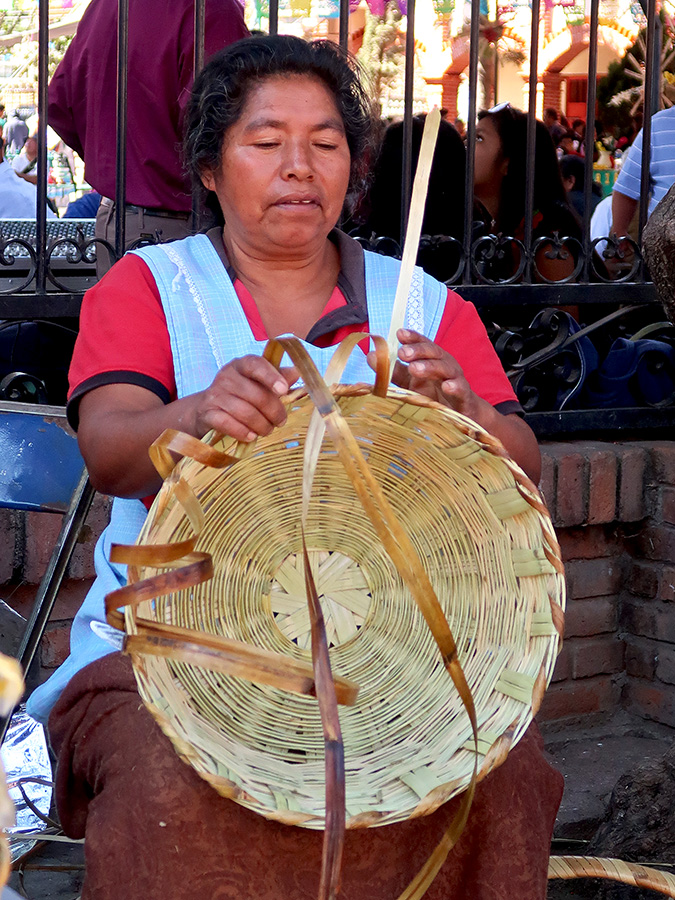
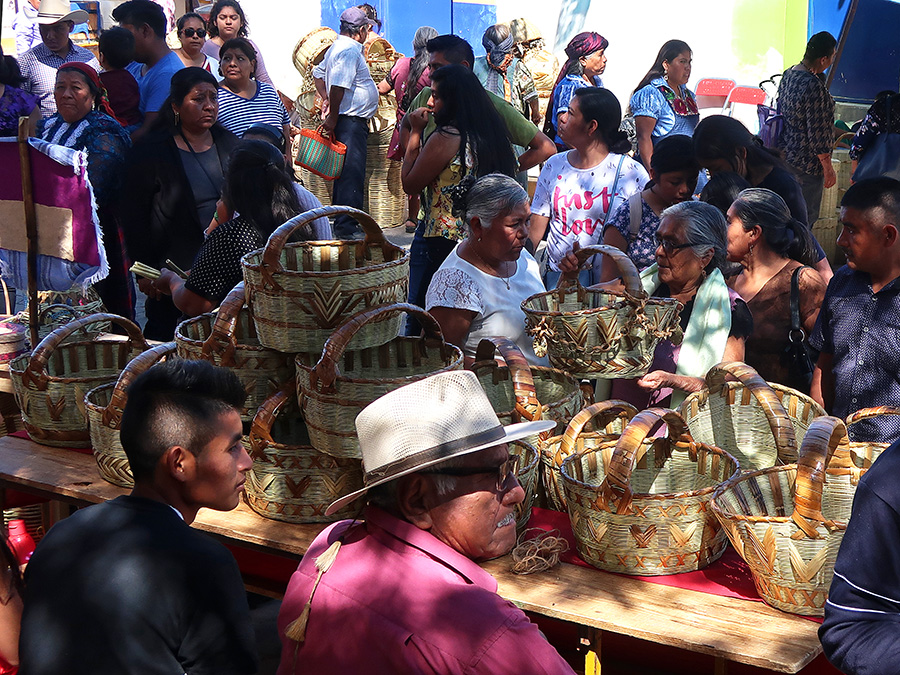
Yesterday took us to San Juan Guelavía for the eighth annual Feria del Carrizo.  I missed it last year (I was up in el norte) and it was good to be back.  The feria just keeps getting bigger and better and its continued success is good news for the community.  And, I got to reconnect with Teresa Hipolito who wove two lampshades for me in 2015!

img_3002

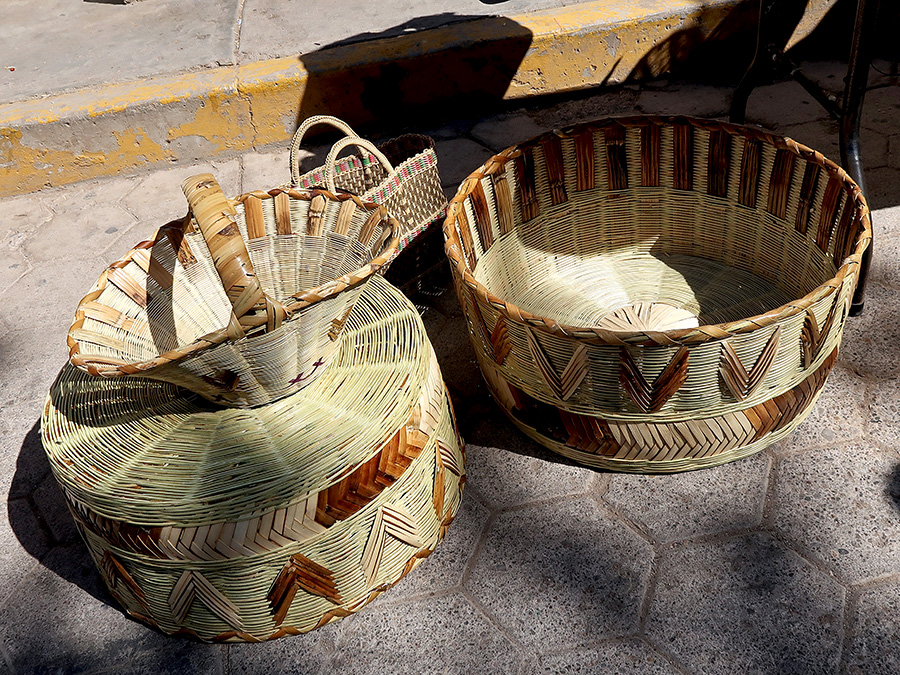
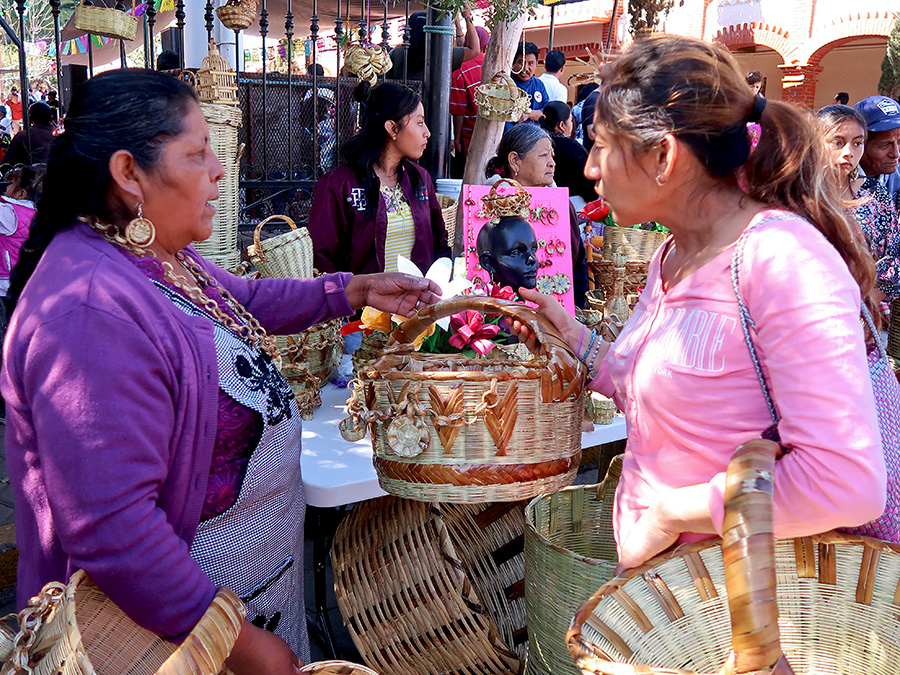
Because plastic baskets have gained popularity as the shopping basket of choice, the village saw a severe decline in the demand for their handcrafted baskets made from carrizo (Arundo donax, Spanish cane, Giant cane, Wild Cane, and Colorado River weed) — a tall perennial cane that grows along river banks in Oaxaca.

img_2990img_2996

Baskets woven from carrizo have been used as carriers and storage bins since before the Spanish set foot on the soil that became Mexico.  Thus, San Juan Guelavía decided to hold a fair to help rescue the craft of weaving their beautiful and traditionally utilitarian creations from carrizo and give a much-needed boost to the economy.

img_3022

img_2994

Besides baskets and bird cages, the artisans have branched out to weaving lampshades, decorative bottle covers (they make great gifts, especially when filled with mezcal), fashioning toys, earrings, and much more.

img_3025

As with most ferias and special events in Oaxaca, there was music, folkloric dance groups from schools in the area, craft vendors from nearby villages, mouthwatering food…

img_3035

img_3005

… and absolutely adorable children.

img_3010

img_3037

img_3028

In a village of about three thousand, there are currently about thirty families who work with carrizo — that’s a large percentage of the population!  And, the very good news is that the skills and pride are being passed down to the younger generation.

img_2989

The fair is held the last Sunday of January and the first Sunday of February.  If you missed it yesterday, it is definitely worth a visit next Sunday — perhaps on your way to or from Tlacolula’s weekly market.  San Juan Guelavía is about 40 minutes east of the city.  By the way, there are a couple of workshops along the road that leads into town that are also worth a stop.

(ps)  For more cute kids photos from the feria, see Oaxaca-The Year After.

Read Full Post »

If it’s Saturday, it must be wedding day in Oaxaca.

img_2979

They are scheduled one right after another at several of the churches, especially those on Macedonio Alcalá (the walking street).

img_2981

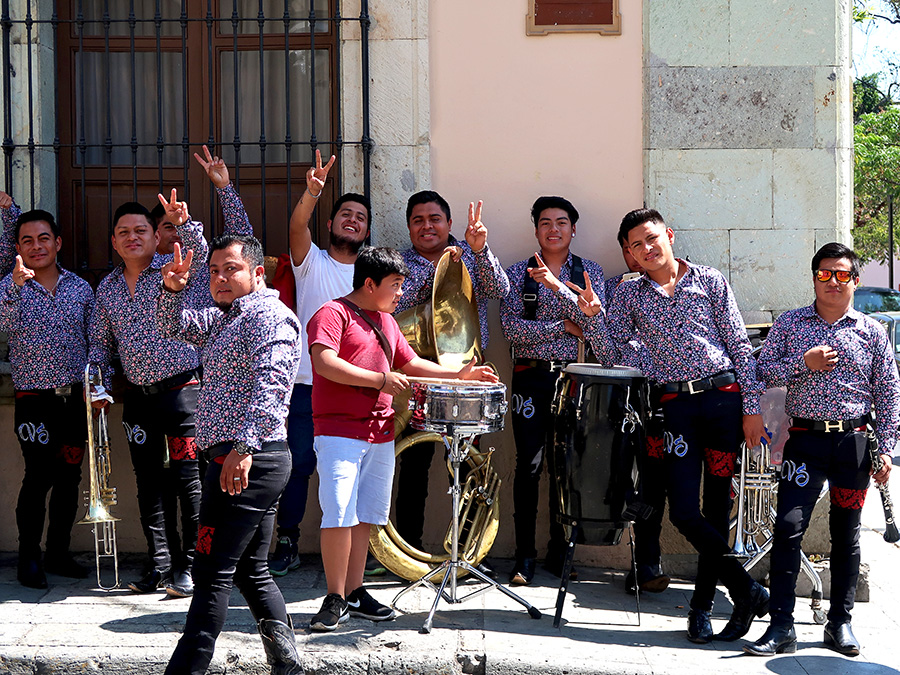
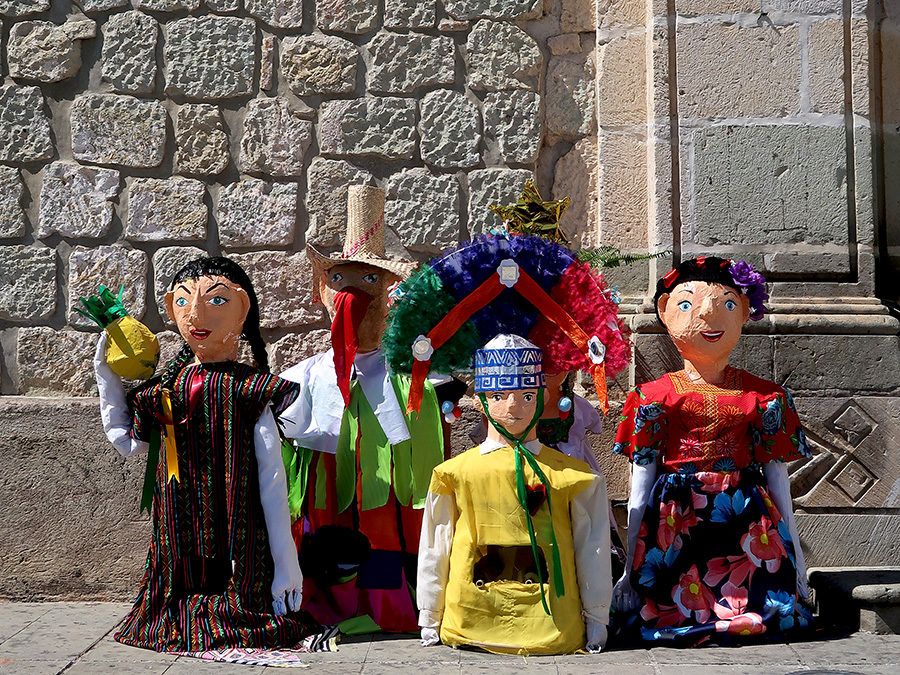
As a result, there is a lot of waiting by the wedding parties, bands, and monos.

img_2977

All dressed up with someplace to go!

Read Full Post »

How lucky can a gal get?

img_2938

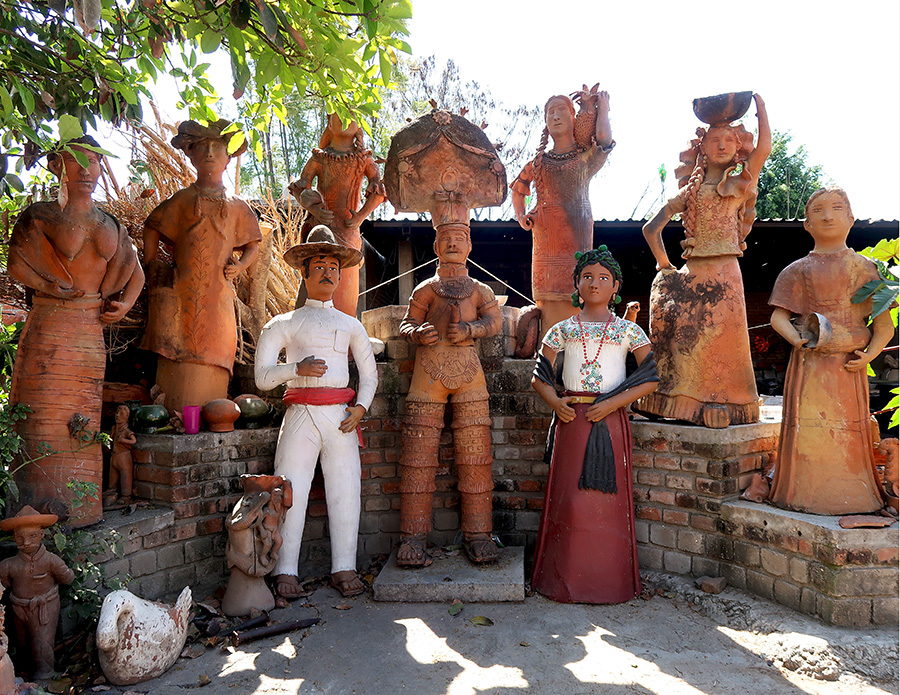
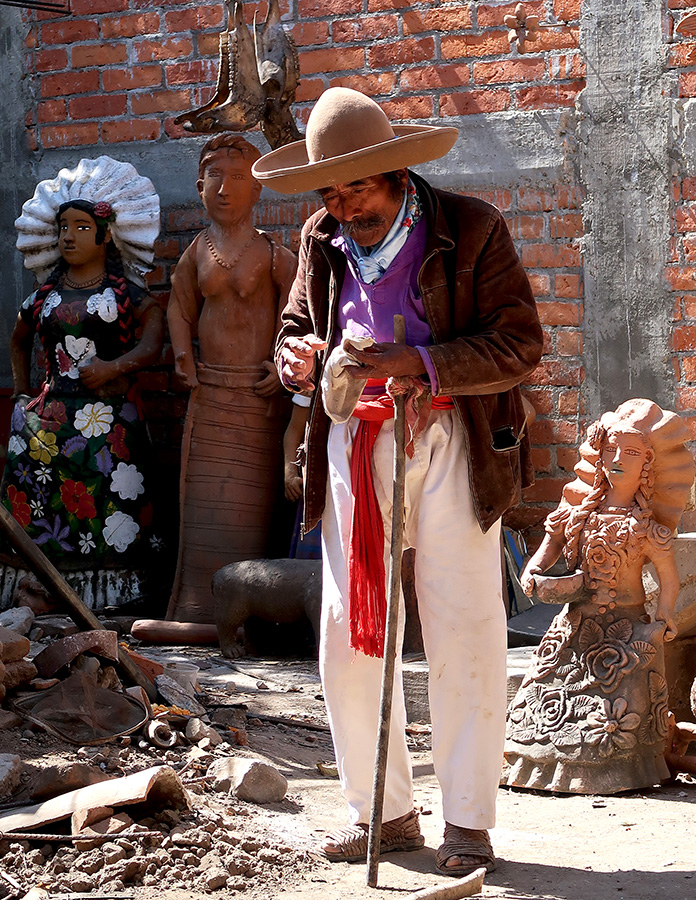
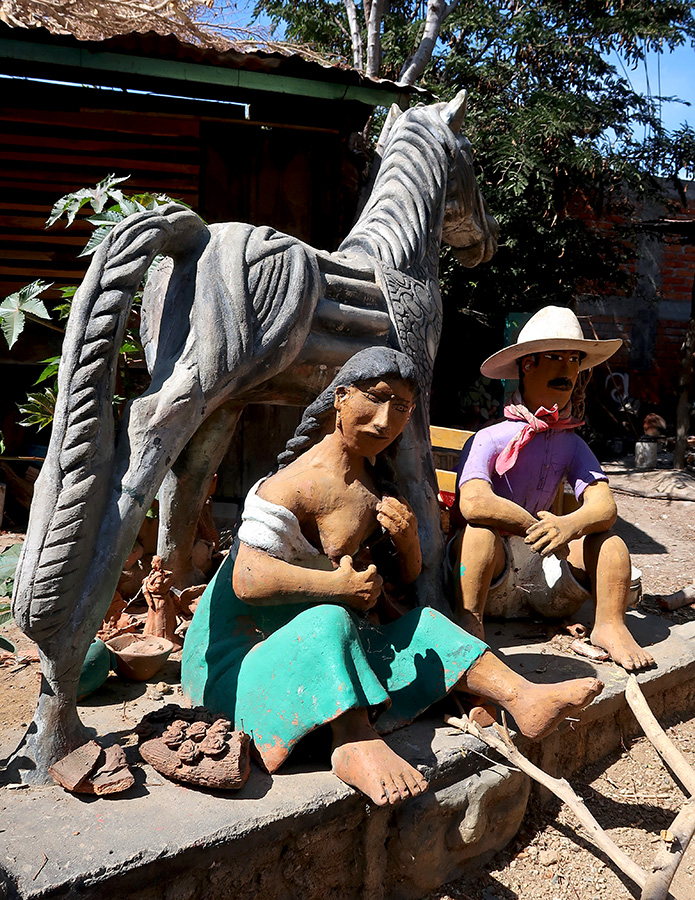
On day five back in Oaxaca, a last-minute invitation found me venturing behind an unassuming red iron door at Libertad 24, San Antonino Castillo Velasco and being greeted by welcoming figures of all shapes and sizes gathered throughout a large earthen courtyard.

This is the home and workshop of Grand Maestro, José García Antonio, also known as the blind potter.

img_2942

Losing his sight to glaucoma, he continues to sculpt sensual and evocative figures from the local barro (clay).

img_2945

He was married to his beloved wife, Santa Teresita Mendoza Reyna Sanchez, in 1987.

img_2941

Her face and body are etched in his memory and continue to provide a model for many of his female figures.

img_2934

The twinkle in those all-seeing sightless eyes and the artistry in those gifted hands give form and life to his creations in clay.

“It would seem that the hearts of the potters of Oaxaca are made of clay. Their emotions, intuitions, joys, fears and fantasies flow through their bloodstream until arriving at the hands which knead the clay and, as if by magic, transform it into exquisite ceramic sculptures.” (quoted from “The Great Masters of Mexican Folk Art.”)

Read Full Post »

Day one back in Oaxaca…

img_2829

Warm sun, blue sky, and rocking horses parked on Calle de Mariano Abasolo.

img_2824

Vendor from Puebla with a truck full of dramatic wooden dancing horses from Zacatecas.

img_2827_copy

It’s good to be home!

Read Full Post »

« Newer Posts - Older Posts »