Life and death is a family affair…
November 1 and 3, 2012 in the panteón municipal, San Antonino Castillo Velasco.
The Y-shaped valley of Oaxaca is about 700 square kilometers, not all that big when compared to California’s Sacramento Valley, which is approximately 2,570 square kilometers. Yet, unlike the “sameness” one encounters in Sacramento Valley towns (sorry, CA), one can’t help but be struck by the unique identity of each of the Zapotec villages that are only kilometers apart. One specializes in red clay pots, another in black pottery, and another in green glazed ceramics. There are villages of woodcarvers near weavers of cotton and others of wool, never mind the fashion trends!
Thus, it should come as no surprise that Day of the Dead celebrations and cemeteries differ, often dramatically, from village to village. And so, from the whitewashed graves of Santiago Apóstol and the candlelight of Santa María Atzompa (today’s earlier post), we came to the carved wooden crosses in the Panteón Municipal of the Villa de Zaachila.
Along with livestock, produce, and household goods, wood gathered from the hills surrounding Zaachila is a major part of Zaachila’s weekly Thursday tianguis (open air market). It’s one of my favorites!
Posted in Celebrations, Culture, Holidays, Religion, Travel & Tourism | Tagged cemetery, Day of the Dead, Día de los Muertos, Mexico, Oaxaca, panteón, photographs, photos, popular travel destinations, Zaachila | Leave a Comment »
With only a couple of days left in November and the Christmas holiday season already making its presence known, it’s now or never to finish sorting through this year’s Día de los Muertos photos — my thoughts and impressions will take the remains of this lifetime, and then some, to process.
To an outsider, especially one whose worldview was shaped by a Judeo-Christian culture, Day of the Dead is often seen through the lens of juxtaposition.
The “unbearable lightness of being” in Santiago Apóstol…

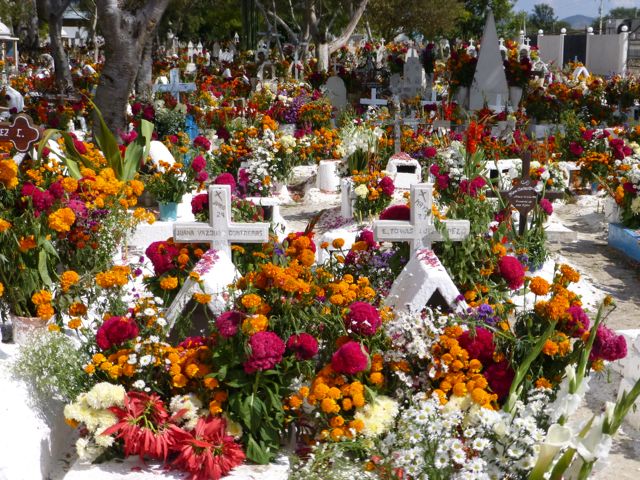
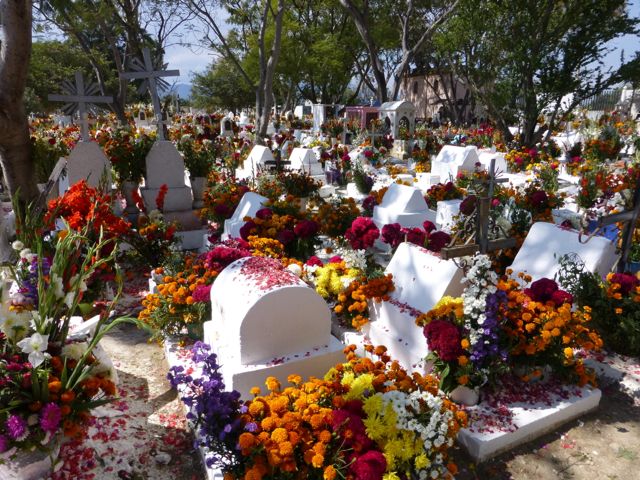

The blurred otherworldly darkness of Santa María Atzompa…

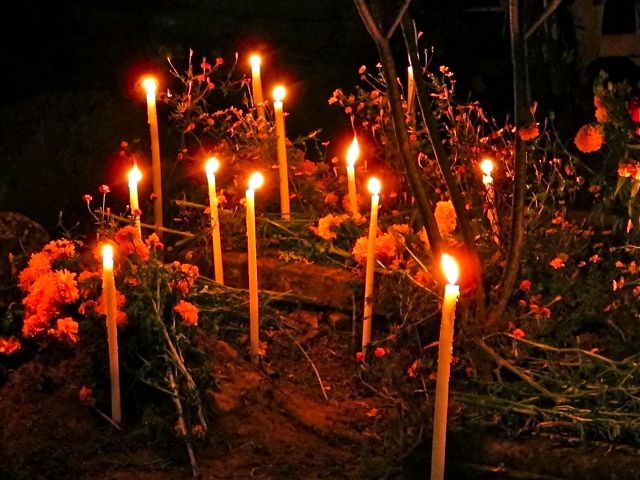

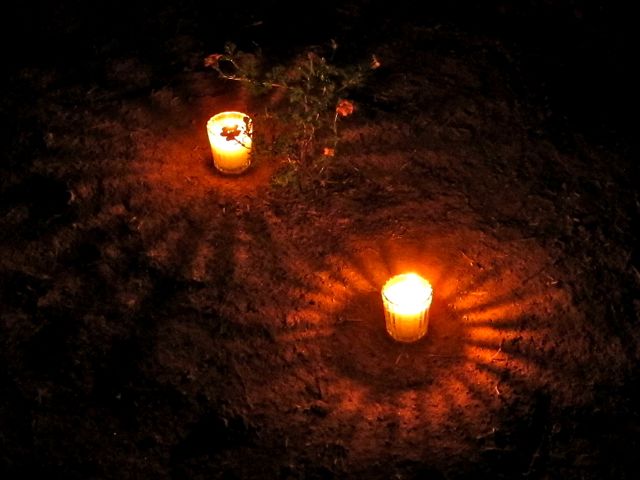
However, light becomes dark becomes light becomes dark, as day becomes night becomes day becomes night, as life becomes death becomes life becomes death… dualism beginning to vanish.
Posted in Celebrations, Culture, Holidays, Religion, Travel & Tourism | Tagged cemetery, Day of the Dead, Día de los Muertos, dualism, Mexico, Oaxaca, panteón, photographs, photos, popular travel destinations, religion, Santa María Atzompa, Santiago Apóstol | 1 Comment »
Today, the truck arrived, the wheelbarrows were loaded, and the gardening crew began filling the flower beds of Oaxaca’s zócalo…
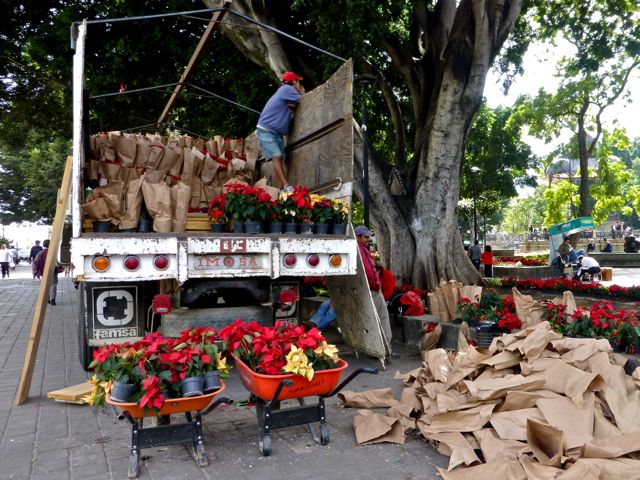
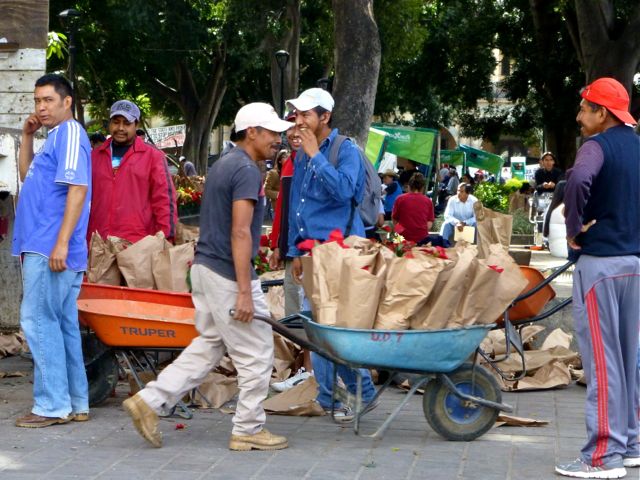
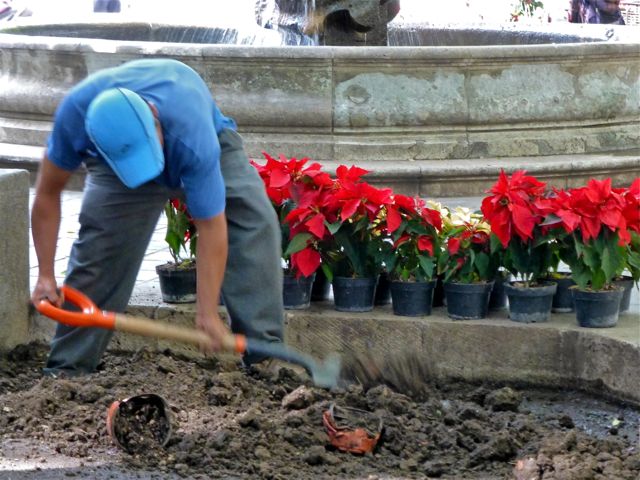
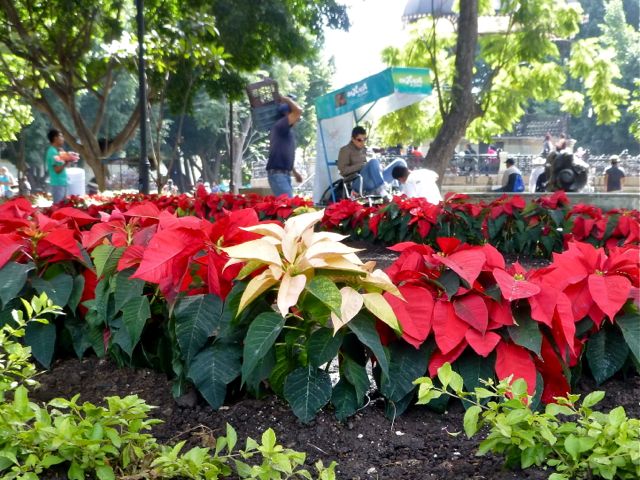
Navidad is coming to Oaxaca!
Posted in Gardens, Holidays, Parks & Plazas, Travel & Tourism | Tagged Christmas, flowers, garden, gardeners, holiday decorations, Mexico, Oaxaca, photographs, photos, plants, poinsettias, popular travel destinations, zócalo | 4 Comments »
November 25, 2012 marks the sixth anniversary of the bloody attack by the Federal Preventive Police on the teachers and members of the Popular Assembly of the Peoples of Oaxaca (APPO) in the zócalo of the city of Oaxaca. I wasn’t here during the 5-month long struggle, but its repercussions continue to reverberate.
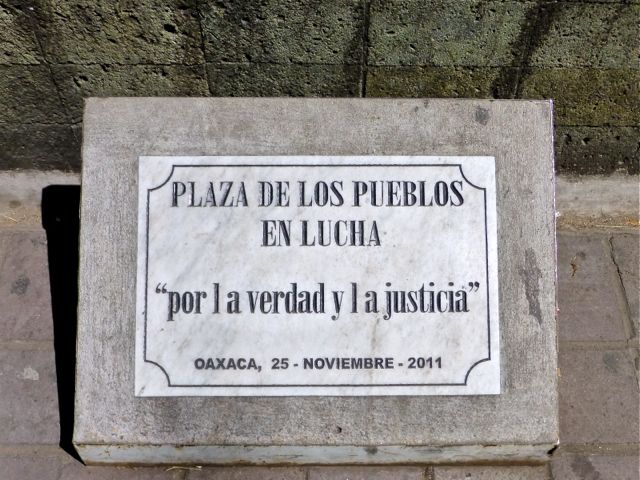
Last year a plaque was unveiled by organizations representing victims, survivors, human rights, and social activists. Located where the Alameda de León meets the zócalo, it symbolically renames the zócalo, “Plaza of the peoples in struggle; for truth and justice.”

Truth and justice have not been attained, assassins go unpunished, many of the same issues remain, and Oaxaca’s economy still hasn’t rebounded. Today, the Survivors and Former Political Prisoners of Oaxaca in Defense of Human Rights (SEPODDH) mounted a photo exhibition across from the Government Palace.
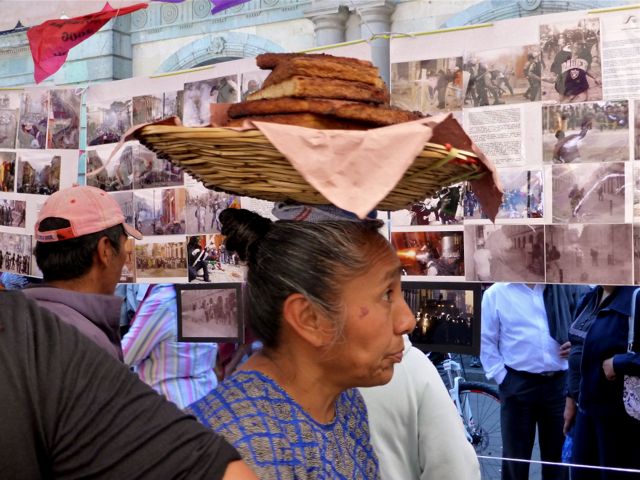
Adults, children, and even vendors stopped to look and, for many, remember those days and nights six years ago.
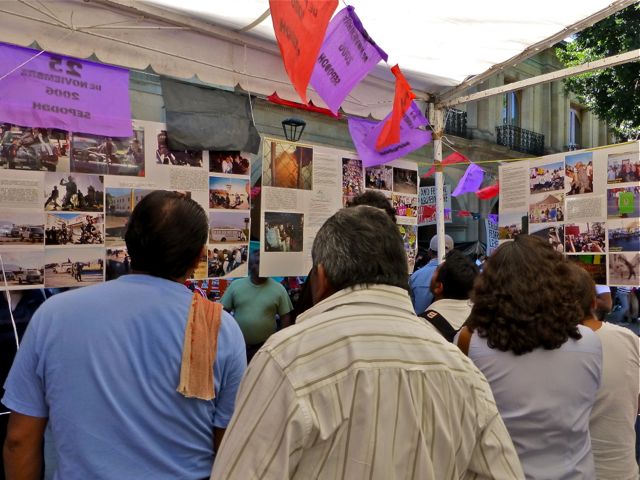
Somber and unsmiling, they stood silently, gazed at the photos, and read the captions. The only hint of levity was SEPODDH’s mascota, who sat beside a collection bucket.
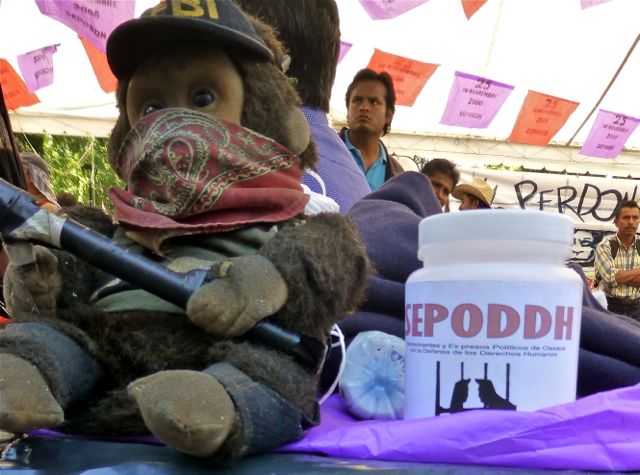
Section 22 of the teachers’ union held another march and rallied in the zócalo, but today these photos spoke much louder than the words coming from the loud-speakers.
Posted in Culture, History, Parks & Plazas, Politics, Protests, Violence | Tagged APPO, federal preventive police, historical photos, history, Mexico, Oaxaca, photo exhibition, photographs, photos, politics, protests, SEPODDH, social activists | Leave a Comment »
Signs reading, “Buen Fin” began to appear on shop windows around town last week. How nice, I thought, with a 3-day weekend coming up (Monday, 11/19 was Mexican Revolution commemoration day), the stores are wishing one and all a “Good Weekend.”
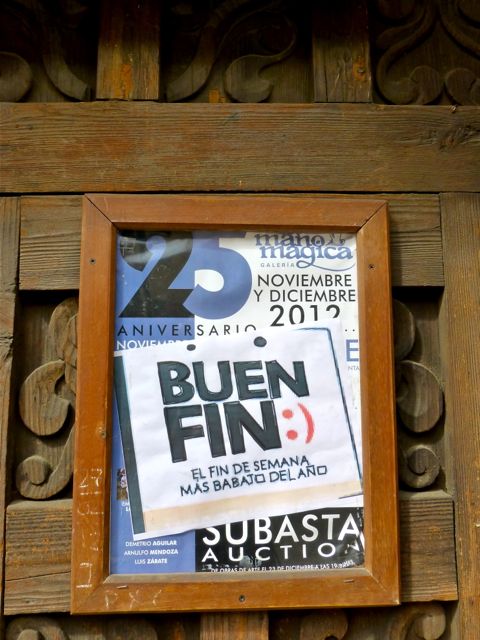
I’d only glanced and didn’t come close enough to read the smaller and more important print, “Weekend: Cheapest of the Year.” What’s it all about? Last year’s LA Times article, “A ‘Black Friday’ shopping ritual coming to Mexico?” explains it all.
Apparently, I’ve been oblivious or this newest US export has taken a while to make its way all the way down to Oaxaca. But, make its way down to Oaxaca, it has! According to Monday’s Noticias, “This weekend hundreds of Oaxacans went to department stores and shops of all kinds in the city, to stock up on essentials and electronic products, mainly taking advantage of ‘Good Weekend’ promotions.”
Depressing, is all I can say…
Posted in Celebrations, Culture, Economics, Holidays, Signs, Travel & Tourism | Tagged Buen Fin, Mexico, Oaxaca, photography, photos, sales, shopping | 2 Comments »
After 6+ months of being Under construction,

today, the waiting is over!

This morning, Oaxaca’s governor, the city’s mayor, and the head of the Ministry of Tourism and Economic Development opened the newly constructed entrance on Independencia…

and welcomed vendors and shoppers to the newly renovated Mercado IV Centenario.
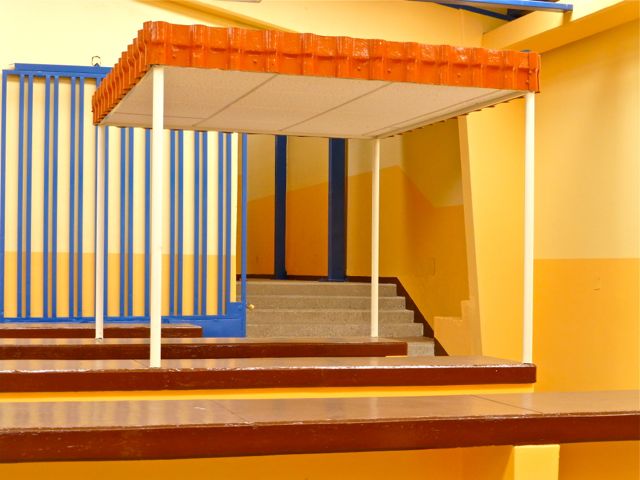
New stalls, with improved electrical and sanitation systems are part of this renovation project.

Vendors, including one of my favorite vegetable sellers, began moving their goods from the temporary site in Jardín Morelos to their new stalls.
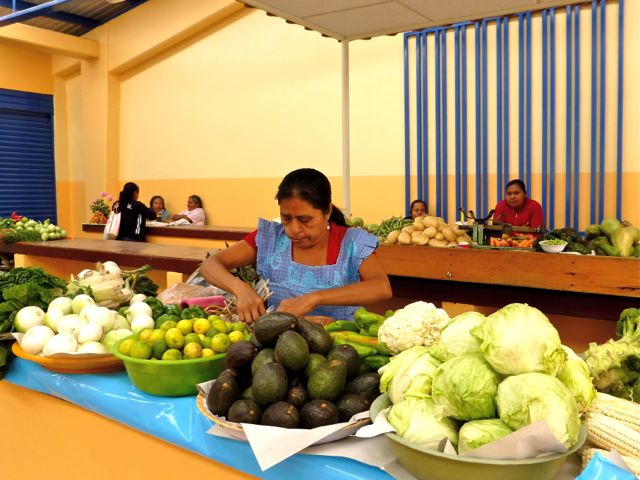
After only a few hours, my vendedora de frutas already looked happily ensconced in her new digs!

There are still a few stalls waiting to be filled…

Any takers???
Posted in Buildings, Food, Markets | Tagged building renovation, grocery shopping, markets, Mercado IV Centenario, mercados, Mexico, Oaxaca, photographs, photos, renovation, vendors | 3 Comments »
They say, “politics makes strange bedfellow.” Rivers do too, as US, Mexico reach pact on Colorado River water sale. Hopefully, Mexico isn’t getting the short end of the stick, like Southern California’s Imperial Irrigation District is accusing its SoCal neighbor, the Metropolitan Water District, of handing it.
Having grown up and spending most of my life in Northern California and suffering through a couple of major droughts that included water rationing, while water flowed south to fill LA’s swimming pools and water its lawns, the only answer to stave off the upcoming worldwide “water wars,” is the recognition that water is a precious resource that must be conserved and not wasted.
Hmmm… I wonder how these neighbors on the 500 block of Avenida Morelos get along?


The mezcalería is the newest addition to the ‘hood and for some reason it tickled me that the vegetarian restaurant is the only thing standing between it and the Baptist church.
Posted in Buildings, Churches, Museums, Nature & Science, Neighborhoods, Politics, Restaurants, Science & Nature, Travel & Tourism | Tagged churches, climate, Colorado River, Colorado River agreement, environment, environmentalism, Flor de Loto, Iglesia Evangelica Bautista, In Situ Torrentera, Mexico, mezcalería, Museo de Arte Prehispanico de Mexico Rufino Tamayo, museum, Oaxaca, photographs, photos, restaurants, water, water wars | 2 Comments »
Felicitaciones to Oaxaca’s favorite daughter, Lila Downs! Her CD, Pecados y Milagros, won Best Folkloric album at the Latin Grammys on Thursday night. When the album first came out, her promotional tour brought her to the Guelaguetza Auditorium, just up the hill, and we got to experience the spectacular show she put on in front of the hometown crowd.
And, at the Latin Grammys, she pulled out all the “spectacle” stops when she, Celso Piña, and Totó la Momposina performed, “Zapata Se Queda” from the album. (Yes, THAT Zapata!)
The thank you by Lila Downs, posted on her website:
¡GRACIAS por creer en el folklor! Gracias por darnos ánimos cuando andamos tristes, por hacer con su cariño y palabras de buena fe que sigamos creyendo en Zapata, en México, en la tradición, en nuestros pueblos… ¡En la magia y la fe interminable de Latinoamérica!
(Thank you for believing in the folklore! Thank you for giving us courage when we’re sad, to make with love and words of good faith that continue to believe in Zapata, in Mexico, in tradition, in our towns …In magic and the endless faith of Latin America!)
I strongly encourage you to check out the CD, Pecados y Milagros. It really conveys the life, the love, the history, and the reverence that is the essence of Oaxaca.
Also, there’s a terrific review of her Latin Grammy performance at Examiner.com.
Posted in Creativity, Culture, Music, People | Tagged Celso Piña, Latin Grammys, Lila Downs, Mexico, music, Oaxaca, Pecados y Milagros, singers, Totó la Momposina, video, Zapata Se Queda | 9 Comments »
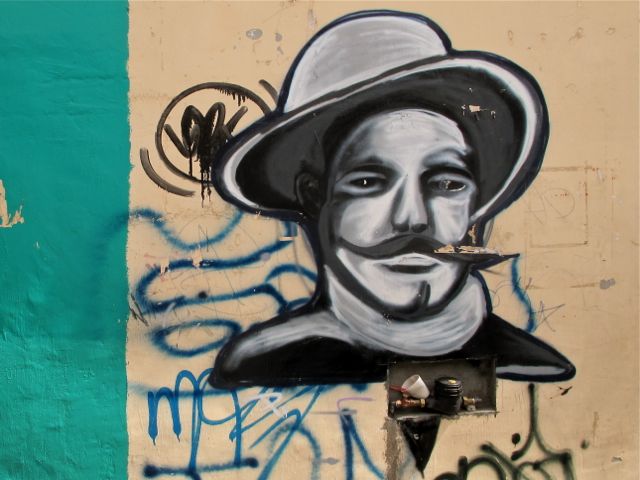
Zapata and Villa live! Their iconic bigotes (mustaches) have taken on a life of their own on the streets of Oaxaca…

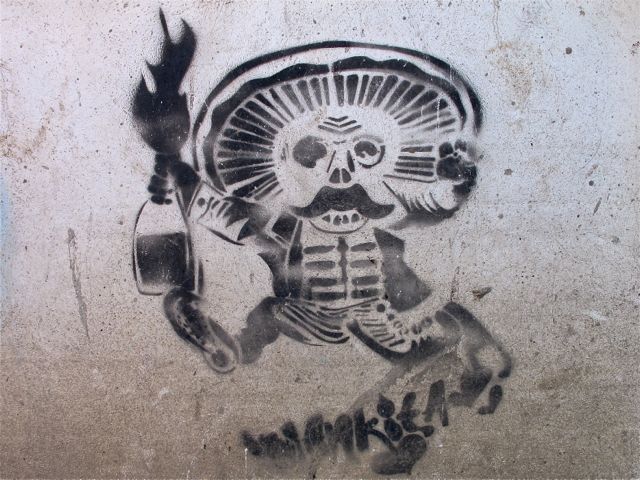

Posted in Creativity, Culture, History, People, Travel & Tourism | Tagged bigote, Emiliano Zapata, graffiti, Mexico, mustache, Oaxaca, Pancho Villa, photographs, photos, popular travel destinations, street art, wall art | 6 Comments »
View from Casita Colibrí yesterday morning. Ahhh…
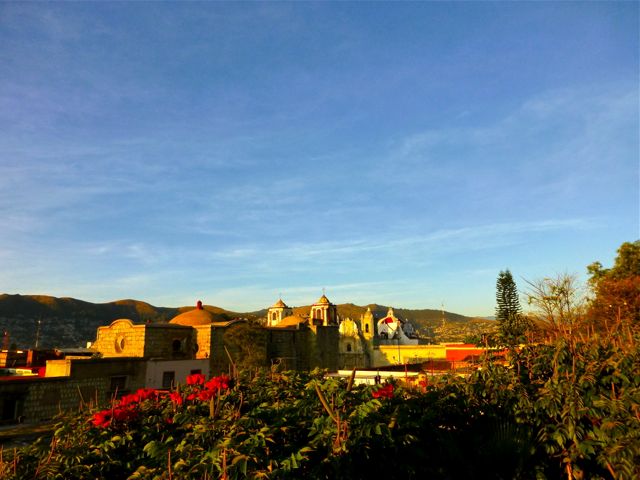
Posted in Churches, Gardens, Home | Tagged African Tulip trees, Basilica de la Soledad, Casita Colibrí, Mexico, Oaxaca, photographs, photos, Templo de San José | 3 Comments »
Last night I walked down to Oaxaca’s Palacio de Gobierno at the south end of the zócalo. This former government palace is now a museum and I was headed up to the second floor to see two more Oaxaca FilmFest3 films. I was early, the building was mostly empty, and so I took the opportunity to really study the mural that graces the walls of the main staircase. Painted in 1980 by Arturo García Bustos, the mural depicts the history of Oaxaca.
Coming up the stairs, to the left, the customs and lifestyle of the Mixtecs, Zapotecs, and Aztecs of pre-Hispanic times unfold.

As you ascend further, on the right wall the Spanish conquest is portrayed.

However, it is the center section of the mural that grabs the attention. Best seen when one reaches the top, here Bustos, pulls out all the stops in representing the one hundred years from the War of Independence through the Reform Movement to the Mexican Revolution.

Featured in the upper right corner of this panel, wearing his signature red bandanna, is War of Independence hero, José María Morelos y Pavón. He can also be seen in the lower right with a printing press, in his role as publisher of Oaxaca’s first newspaper, El Correo del Sur. On the upper left is anarchist and Mexican revolutionary hero, Ricardo Flores Magón. He is also pictured holding a banner reading, Tierra y Libertad (Land and Liberty). Flores Magón is the namesake of the street that borders the west side of the Government Palace.
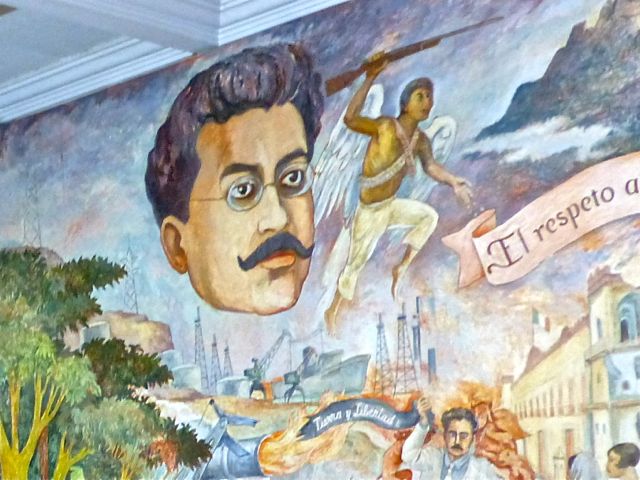
However, front and center is Oaxaca’s favorite son, Zapotec, former governor of Oaxaca, and Mexico’s much beloved five-term president, Benito Juárez. He and his Oaxaqueña wife, Margarita Maza, hover prominently above his Reform Movement cabinet. The full text of the ribbon is a quote by Juárez, “El respeto al derecho ajeno es la paz” (Respect for the rights of others is peace). It appears on the State of Oaxaca’s coat of arms.

Juárez is also pictured along with the cabinet and third from his right stands another Oaxaqueño, the young, menacing-looking, and far from beloved by the 99%, Porfirio Díaz, trademark epaulettes and all — a portend of things to come.

Following his death in 1872, the city and municipality of Oaxaca honored Benito Juárez by changing its name to Oaxaca de Juárez.
Posted in Buildings, Culture, History, People, Travel & Tourism | Tagged art, Arturo García Bustos, Benito Juárez, Government Palace, José María Morelos y Pavón, Margarita Maza, Mexico, mural, Oaxaca, painting, Palacio de Gobierno, photographs, photos, popular travel destinations, Porfirio Díaz, Ricardo Flores Magon | 8 Comments »
Still recovering from last week’s Día de los Muertos celebrations, another marathon of activities is upon us — last night the third Oaxaca FilmFest opened. With 10 days, 25 venues, 300 films, 5 days of academic programs, among many other events, I can see it’s going to be no rest for the weary!
So, with Golden Key passes (approx. US$11.50) hanging from our necks, last night my indomitable 86-year old neighbor and I walked down to the festival’s headquarters at Plaza San Jerónimo on the Alcalá for the opening night cocktail party. Gringos and international filmmakers mingled with a predominantly young and hip Oaxaqueño crowd. Needless to say, cervesas, mezcal, and horchata flowed freely, accompanied by yummy (though less plentiful) botanas.
We eventually wound our way over to Teatro Juárez to hear founder and artistic director, Ramiz Adeeb Azar, welcome an almost full house, open the festival, and introduce the three opening night films: shorts, Postmodern Times from Austria and The Game from Poland and feature length film, Tilt from Bulgaria and Germany. All three were gripping, thought provoking, and held the audience’s attention. (Chris, they all passed the Low Cough Principle test.) It was a good start!

Ramiz Adeeb Azar
During the course of the evening, we spoke with two American screenwriters, who each have scripts entered in a Script Competition, and American filmmaker Matt Dunnerstick, whose film, The Custom Mary, will be screened tonight and again later in the festival. It’s truly an international festival and (at least last night) all the films were subtitled in both Spanish and English, as is all the program material.
I can’t believe how much bigger and more professional this festival has gotten in only three years. I attended in 2010, the first year, and coming off eight years of volunteering at the Mill Valley Film Festival and attending for many more, I was underwhelmed and thus ignored last year’s Oaxaca FilmFest. All I can say is, you’ve come a long way, baby! I’m glad I’ve got my Golden Key pass and, like these folks, I will be intently studying my program booklet and scheduling grid.

I’ll see you at the movies!!!
Posted in Creativity, Culture, People, Travel & Tourism | Tagged entertainment, film, film festivals, Filmfest3, Matt Dunnerstick, Mexico, movies, Oaxaca, Oaxaca Film Festival, photographs, photos, popular travel destinations, Postmodern Times, Ramiz Adeeb Azar, The Game, Tilt | 2 Comments »
In addition to graveside gatherings and decoration, altars, parades, sugar skulls, sand paintings, marigolds, and Day of the Dead bread, painted faces are another distinctive feature of Día de Muertos celebrations. They are most likely seen hanging around cemeteries and dancing through the streets but, like everything else here, you just never know…
From Meaning of Dia de los Muertos Face Painting:
The day of the dead in Mexico is a fascinating mixture of Spanish Catholic and native Aztec traditions and beliefs. Skulls and skeletons were an important part of All Saints Day festivals in medieval Europe, especially since the Black Death ravaged the population of Europe in the 1300s. Across Europe artists, playwrights and poets mused on the theme of ‘memento mori’ (remember death) and the ‘dance of the dead’. Many artworks and books from the time depict dancing skeletons, or portraits with a skull to ‘remember death’.
At the same time, in Mexico, the Aztec culture believed life on earth to be something of an illusion – death was a positive step forward into a higher level of conscience. For the Aztecs skulls were a positive symbol, not only of death but also of rebirth.
Read full article here.
Posted in Celebrations, Creativity, Culture, Holidays, Religion, Travel & Tourism | Tagged calaveras, Catrinas, cemetery, Day of the Dead, Día de los Muertos, face painting, Mexico, Oaxaca, panteón, Panteón General, photographs, photos, San Antonino Castillo Velasco | 2 Comments »


 Mexican Peso Converter
 View From Casita Colibrí