In my last blog post, I mentioned Teotitlán del Valle does not go on Daylight Saving Time. And, they are not alone! As the article, Clocks don’t change where sun keeps time, most of Mexico didn’t adopt DST until 1996 and given the autonomy guaranteed to indigenous communities, “70% of the entire indigenous population of Oaxaca” have chosen to follow the sun — the “King of the Sky.”
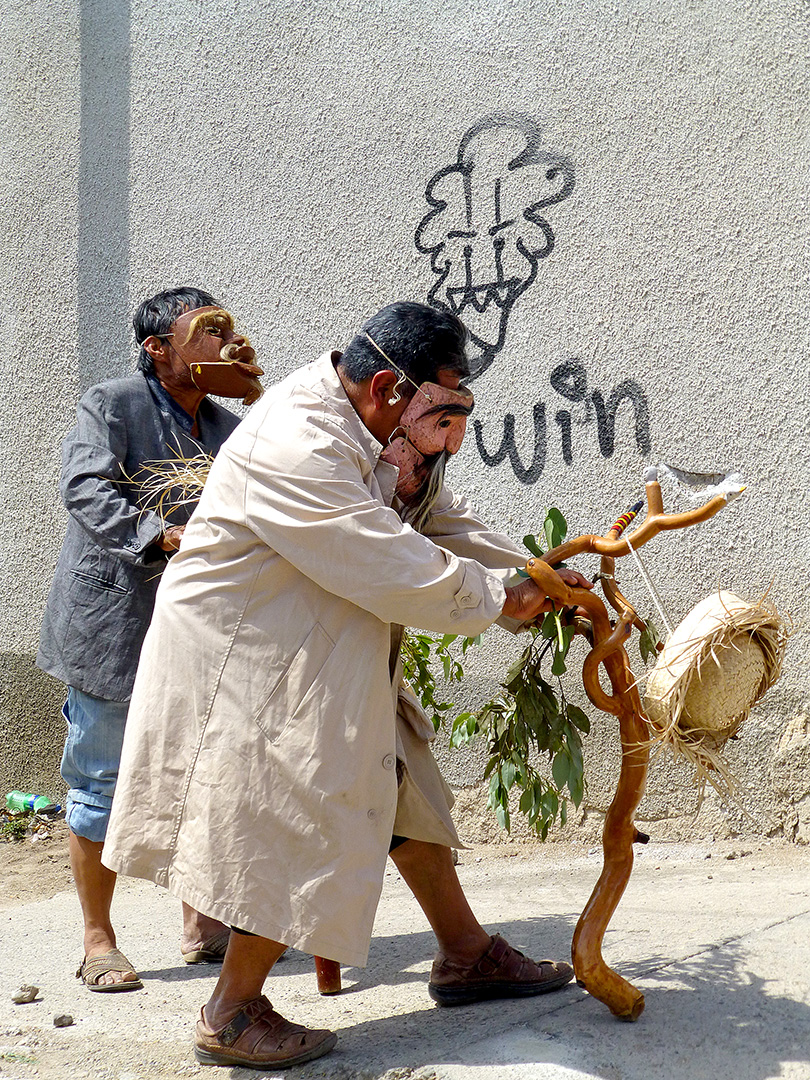
Ojala, blogger buddy Chris (who doesn’t change his watch to DST either) and I will be returning to Teotitlán del Valle for the final day (into night) of the Baile de Los Viejitos, (the Dance of the Old Men) this time hosted by el quinto (5th) sección. However, before we go, a few more scenes from Tuesday’s fiesta, put on by the segunda (2nd) sección.
I say, “ojala, ” because several marches and blockades are currently in progress throughout Oaxaca and on the carreteras into and out of the city. Alas, the video I shot on Tuesday of the Baile de los Viejitos may be as close as I come to the dancing action until next year.
It’s Carnaval time in Teotitlán del Valle. Yes, I know, Easter was last Sunday and Lent is over. However, like many other things (e.g., not going on Daylight Saving Time), this Zapotec village does things their own way. Thus, instead of celebrating Carnaval the day before Lent begins, they celebrate for the five days following Easter! As I’ve written about previously, Carnaval in Teotitlán is a major production that indeed takes a village; young and old, female and male all have parts to play in the festivities that include music, masked men, mezcal, and mouthwatering mole.
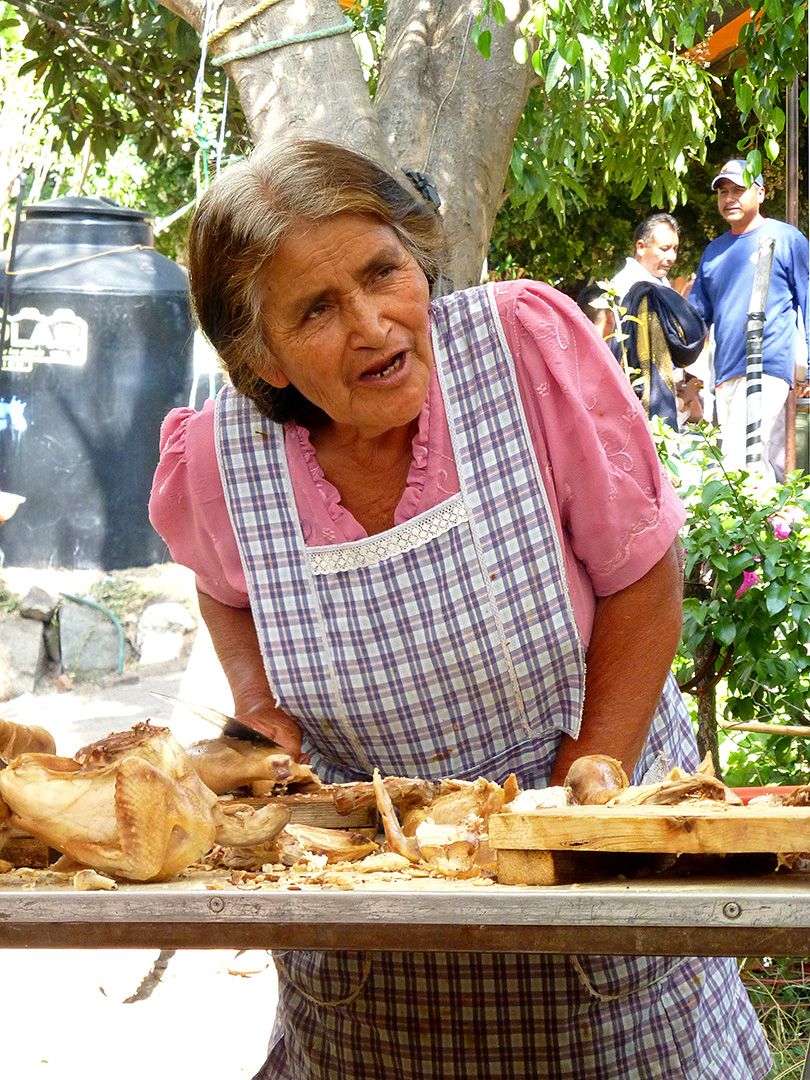
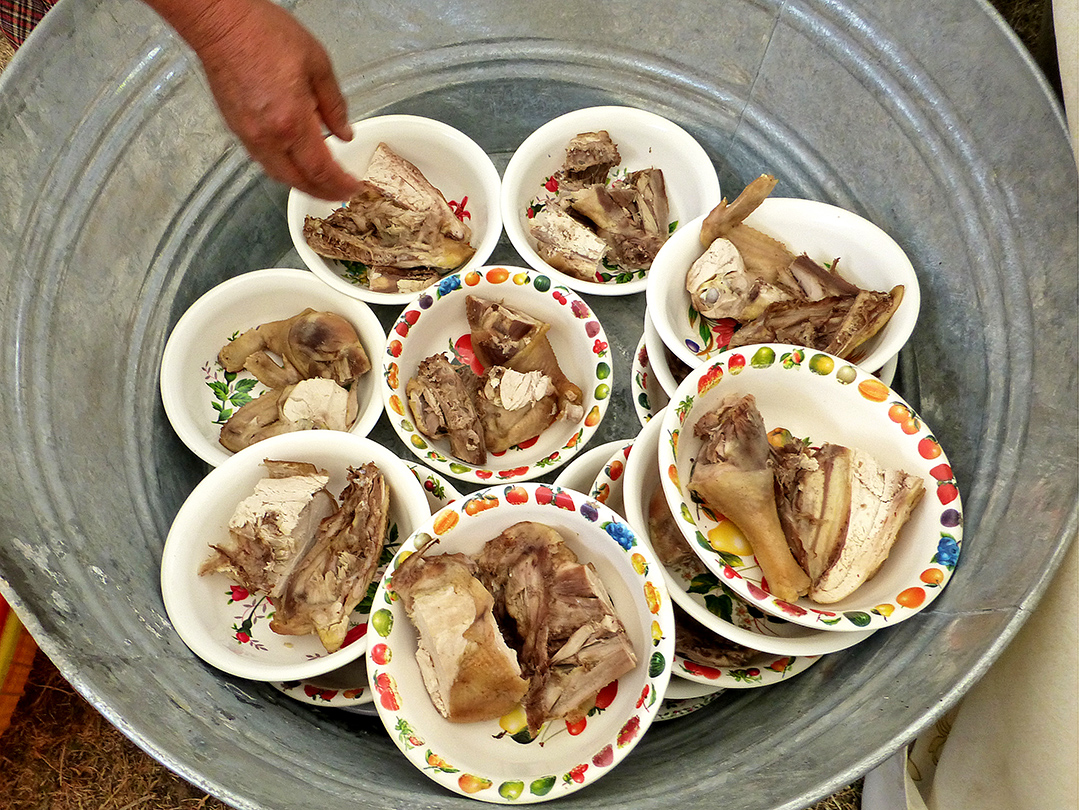
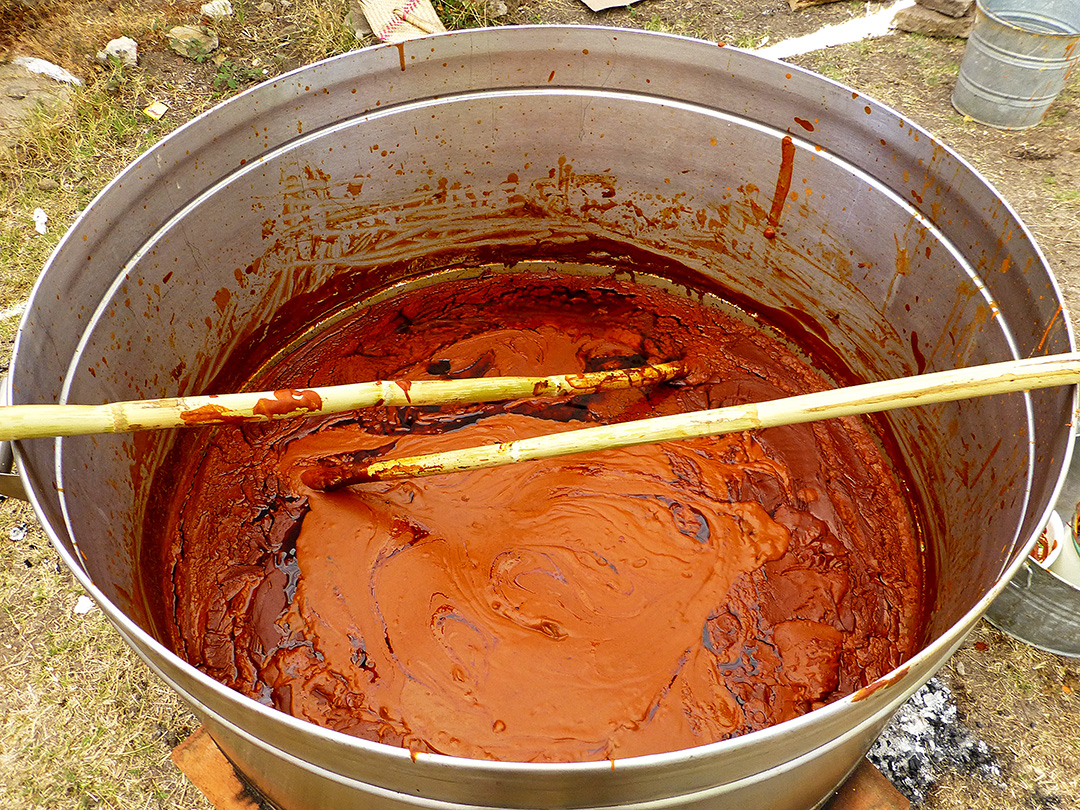
Yesterday, rather than sitting with the men and scattering of male and female extranjeros, gal pal J and I hung out with the women and children in the outdoor kitchen that had been set up in the back of the large earthen courtyard. There the women prepared enough chicken, mole amarillo, and tortillas to feed one hundred!
The seemingly always well-behaved kids played and took care of the babies while their mamas and abuelas worked.
Muchisimas gracias to the women and children of Teotitlán del Valle’s Segunda Sección for being so gracious and welcoming.
Today’s Google Doodle solves a little mystery leftover from my brief March visit to Mexico City. Staying in Colonia Cuauhtemoc, making my way to Insurgentes metro stop took me across Paseo de la Reforma and past this beguiling sculpture.
I circumnavigated the sculpture on several occasions in an unsuccessful attempt at finding a plaque identifying the artist. Thanks to today’s Google Doodle, now I know. Titled, How Doth the Little Crocodile (also known simply as, Crocodile), it is by the late surrealist artist, writer, expat, and women’s liberation activist, Leonora Carrington, whose 98th birthday is being honored today. The sculpture’s title comes from the Lewis Carroll poem by the same name.
Carrington led an extraordinary and fascinating life that was touched by many of the most important events and influential people of the twentieth century. In 2000, she donated the sculpture to Mexico City, her adopted home for the latter part of her life, and it was moved to its current location in 2006. How lucky for all whose paths cross this whimsical creation with its smiling jaws!
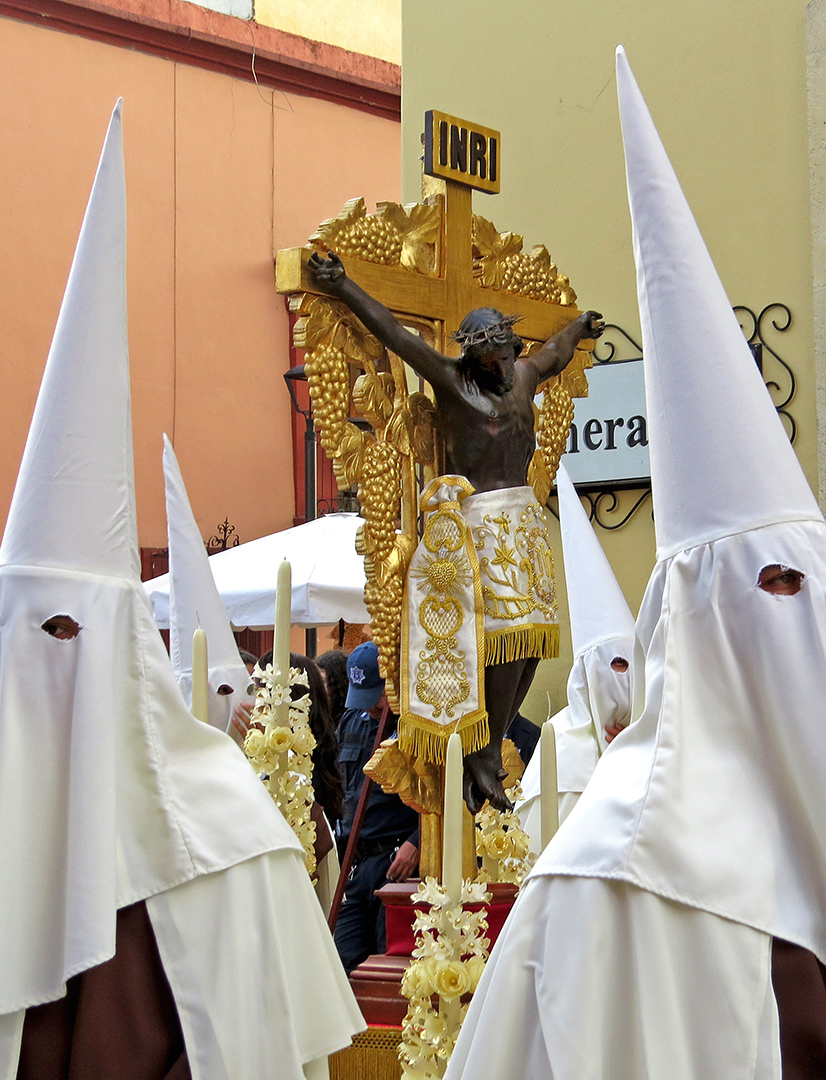
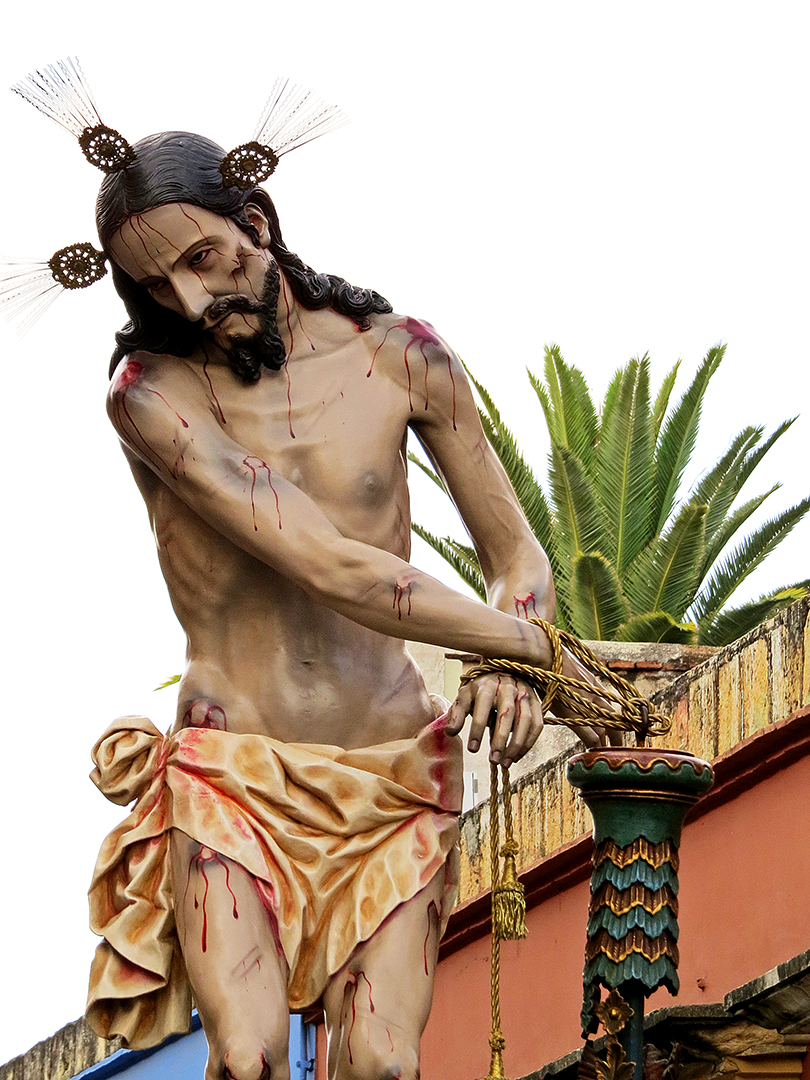
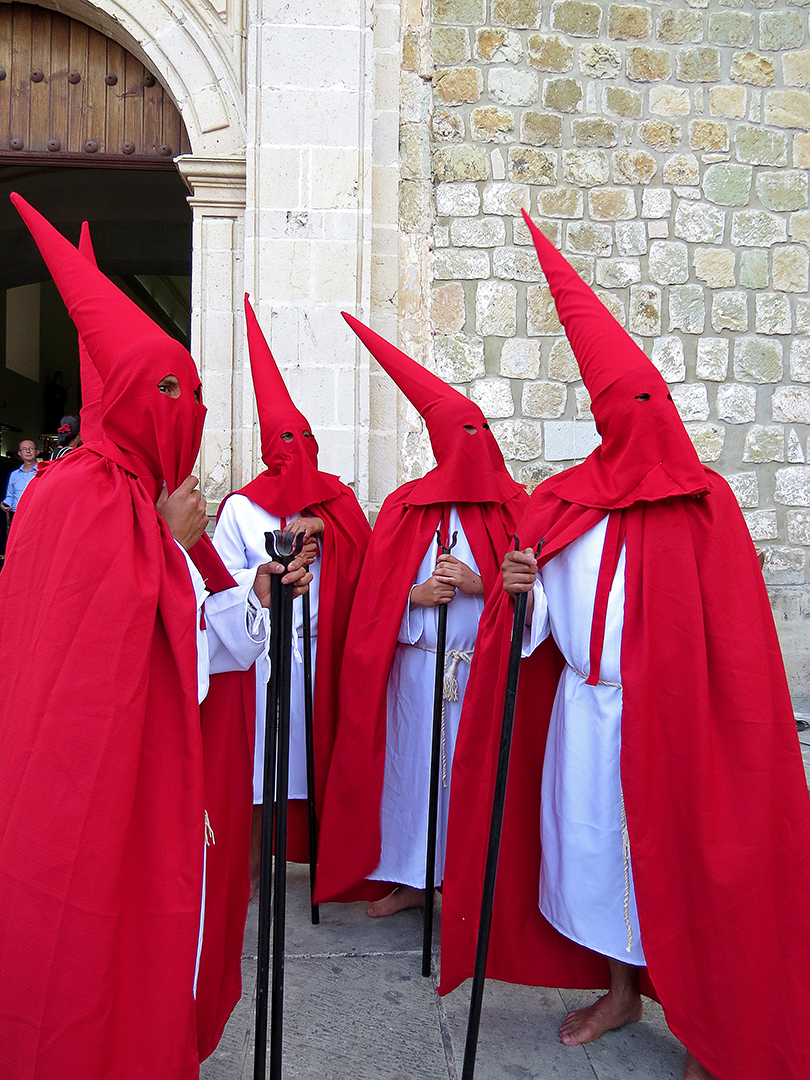
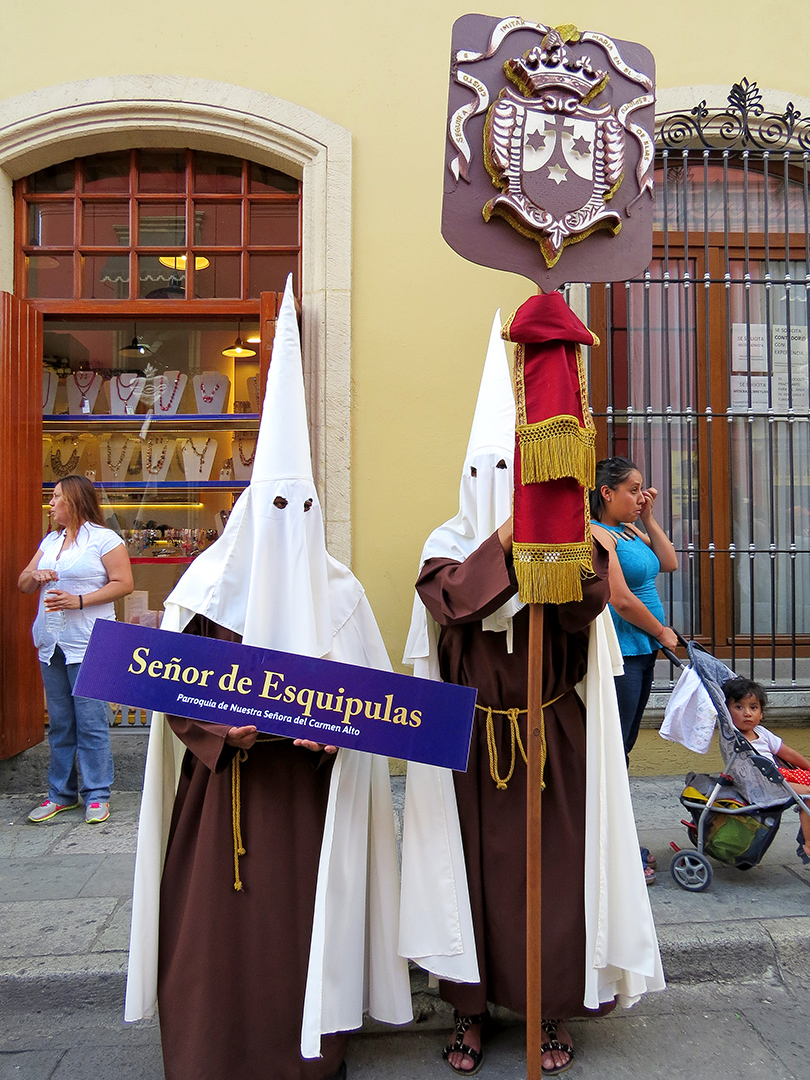
I wasn’t brought up in the Virgin and crucified Christ tradition. No baggage, no boredom — perhaps that is why I find the multiplicity of María and Jesús images so fascinating. Thus, I can’t resist a little “up close and personal” at the Procession of Silence.
Señor de Esquipulas – Parroquia de Nuestra Señora del Carmen Alto
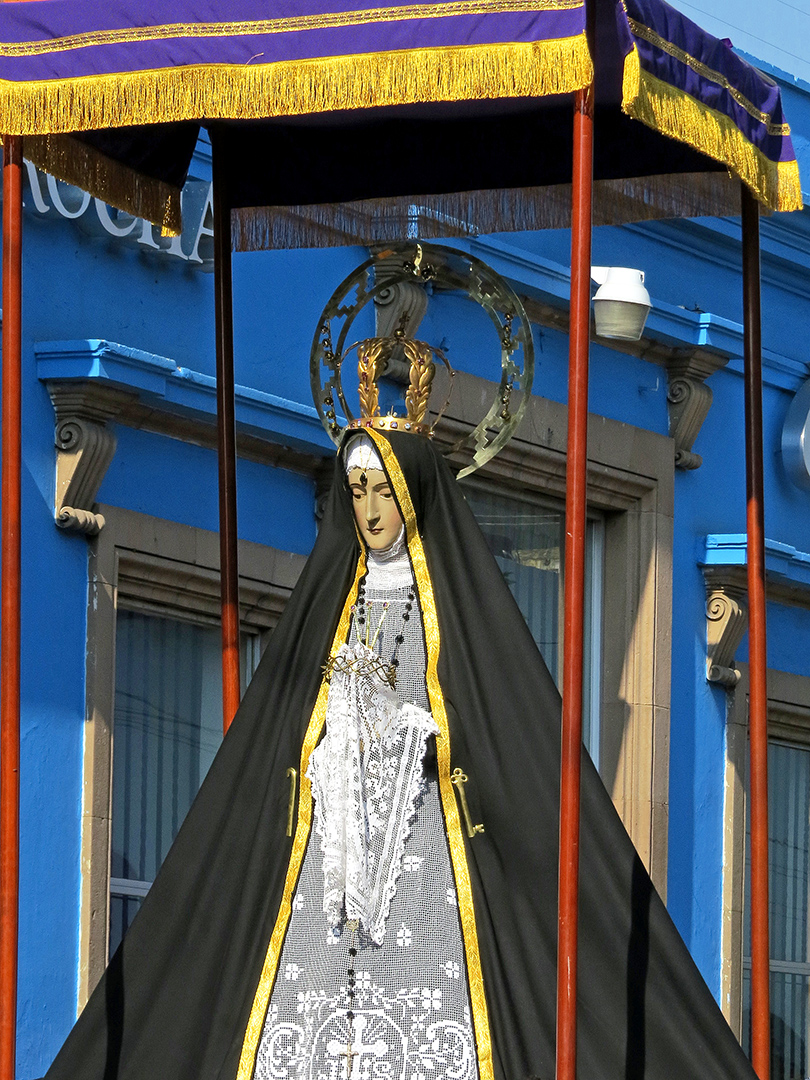
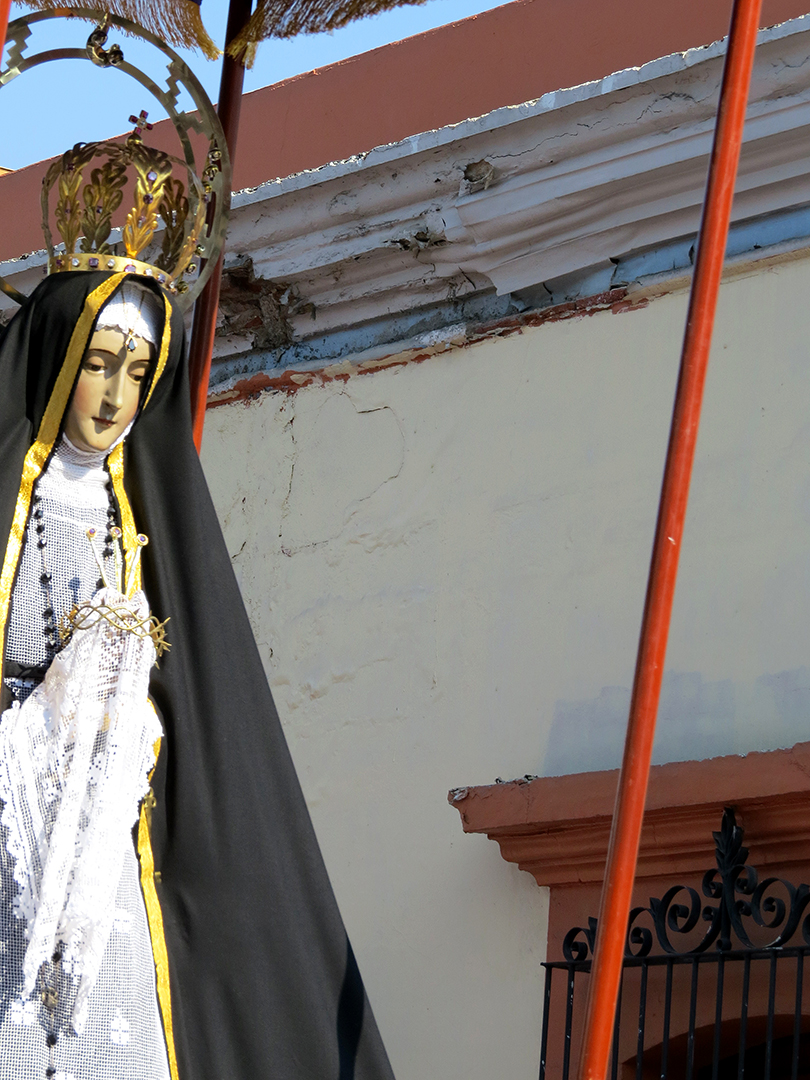
Nuestra Señora de Los Dolores – Parroquia de Santo Tomas Xochimilco
Señor de Las Tres Caídas – Parroquia de Santo Tomás Xochimilco
La Piedad
Jesús con la Cruz a Cuestas – Capellanía de Nuestra Señora del Patracinio
Nuestra Señora de los Dolores – Capellanía de Nuestra Señora del Patrocinio
Señor de La Columna (front) – Templo de Santo Domingo de Guzmán
Señor de La Columna (back) – Templo de Santo Domingo de Guzmán
The rituals and images continue to remain alien to me, but I can’t help but appreciate them as cultural expressions.
As far as I’m concerned, Señor de la Humildad y Paciencia was the patron saint of Friday’s, Procession of Silence. He waited for hours inside the Templo de la Preciosa Sangre de Cristo, while we waited for hours outside, for the procession to begin.
At least he was sitting down. For the penitents, their lot was a lot of standing around.
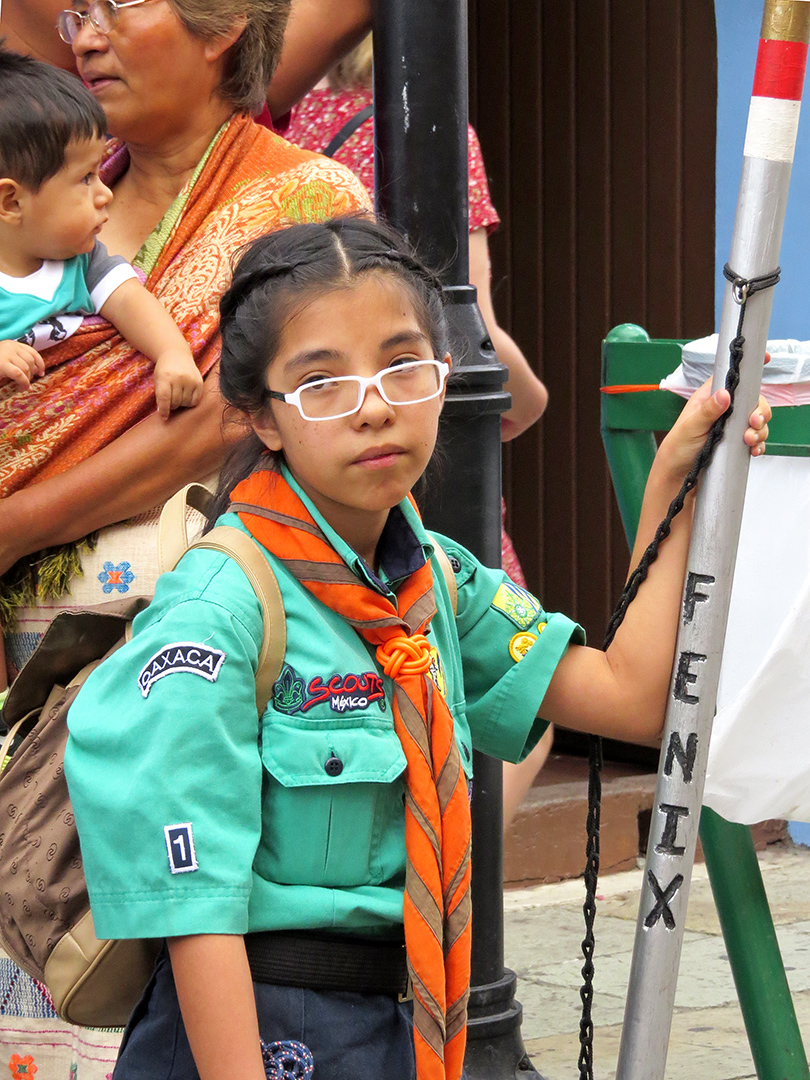
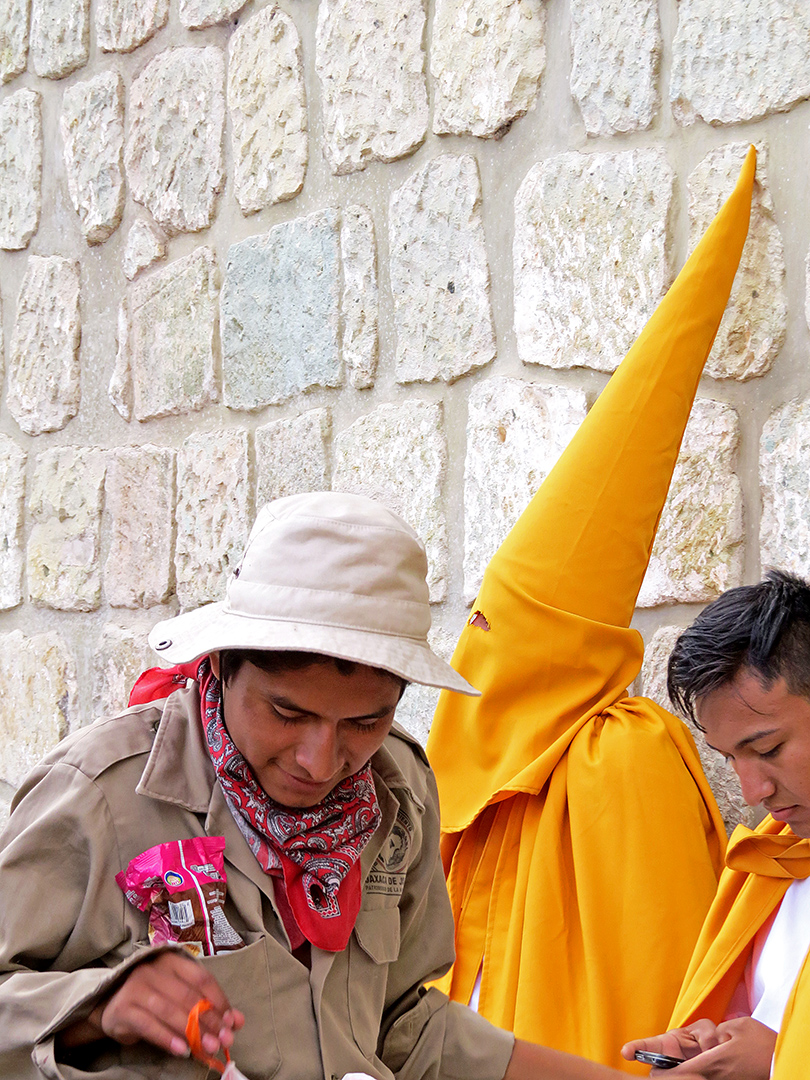
Some of the participants passed the time joking around (and occasionally teasing this gringa blogger), others looked incredibly bored, but all remained patiently stationed in place. After all, in the words of one guy’s t-shirt, “don’t panic,” it will eventually start.
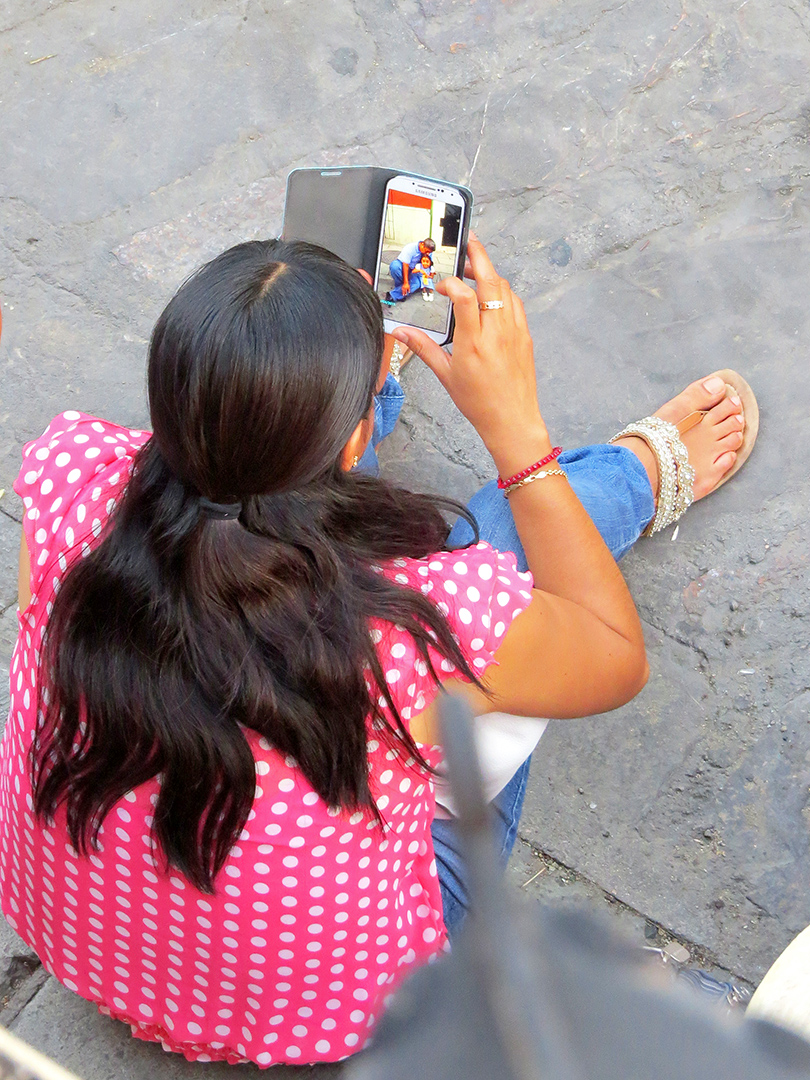
Then, there is always one’s cell phone to provide a bit of distraction.
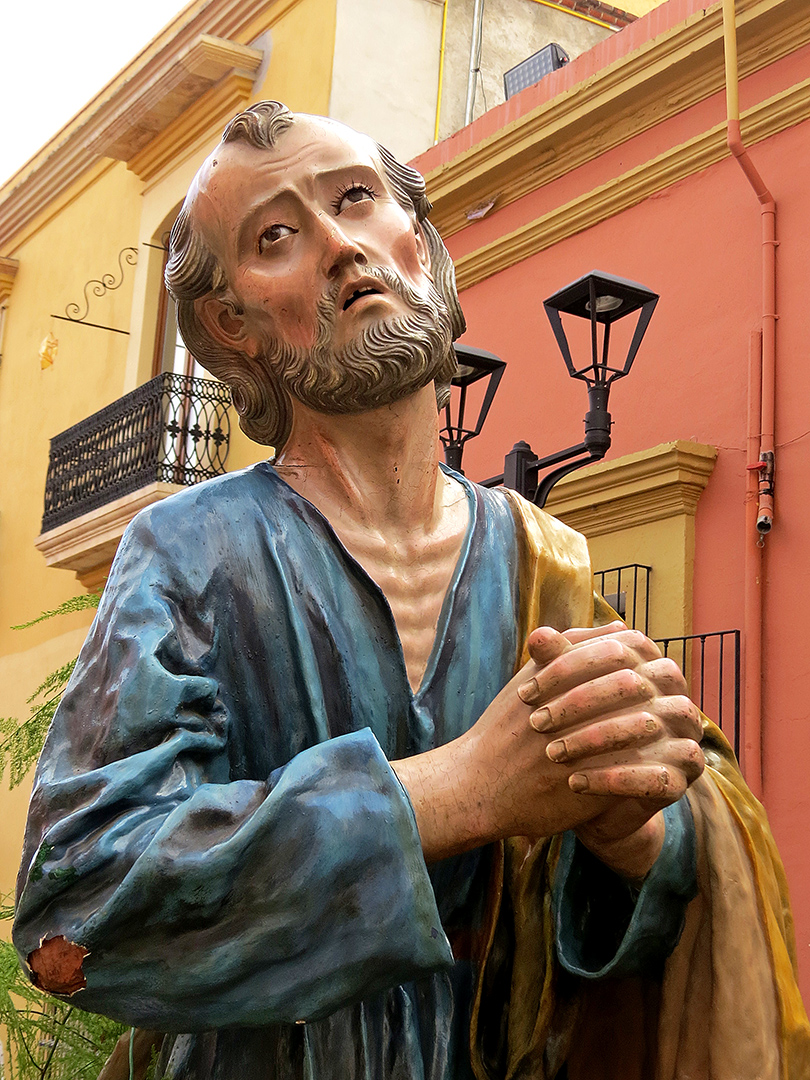
The 6 PM start time for the procession came and went, as did the daylight and my hope for taking any decent photographs of the actual procession. (One of these days, I will master night photography of moving objects, she says, hopefully!) It looked like even San Pedro was looking to the heavens for divine intervention to get the show on the road.
About 6:45 PM, with lights flashing, a small phalanx of motorcycle police signaled our prayers had been answered and a hush fell over the multitudes lining the sidewalks, streets, and balconies — the Procesión del Silencío had finally begun.
Good Friday morning, the streets of Oaxaca are quiet, and solitude seems to be the order of the day. The only sounds that could be heard coming from the streets in my ‘hood were prayers being sung as Our Lady of Solitude left her eponymous home at the Basílica de Nuestra Señora de la Soledad.
As you can see, alone, Oaxaca’s patron saint was not; acolytes carried and accompanied her on her morning stroll.
A crystal clear, brilliant blue sky provided a backdrop for her sojourn.
Slowly she made her way down Independencia en-route to the Cathedral.
She was one of the first to arrive at this ritual Viernes Santo gathering.
The guys took over and maneuvered her into position at the side of the Cathedral, as the faithful awaited.
There, she would soon be joined by other images of the Santísima Virgen and Jesús from many of the numerous churches in the Historic District.
After at least two hours of prayers and songs and more prayers, Soledad returned to the Basilica, perhaps to rest (like me) before again taking to the streets for this evening’s Procession of Silence.
Another magical Domingo de Ramos spent in San Antonino Castillo Velasco. Experiencing Palm Sunday in this small Zapotec village never fails to nourish the soul.
A band played outside the panteón as villagers, from niños and niñas to abuelas and abuelos, arrived bringing their biggest and most beautiful fruits and vegetables, breads and baked goods, carved wooden toys and embroidered clothing, not to mention, goats, chickens, rabbits, and even a pig or two. Three silver-haired abuelas inspected each donation; their faces expressing gratitude and appreciation for each offering, as they affixed a price tag. Following the procession to the templo and a mass, all would be sold to raise money for the work of the church.
These were offerings to San Salvador, who sat proudly atop el Señor del Burrito, who was up to his ears in produce and bread.
At 11:00 AM, after prayers were offered in gratitude and for continued abundance in this fertile valley, led by the beat of two tambors and the high-pitched lilt of a chirimía, a procession to the church began. Palm crosses were distributed to villagers and visitors, alike, and many carried (or led, in the case of the livestock) the offerings that had been collected.
Once secured, it took twenty men to hoist and carry the bounty-laden anda, with San Salvador and the burro, a ritual reenactment of the Biblical story of Jesus entering Jerusalem riding on a burro to celebrate the Passover. As the procession made its way to the church, the rhythmic sounds were occasionally overpowered by shouts warning the men of topes (speed bumps) and low hanging telephone wires that must be navigated, and then there were the stairs leading up to the church atrium.
I cannot begin to express how warm and welcoming the people of San Antonino Castillo Velasco were. Countless times, as I was taking photos, officials encouraged me to come closer and villagers ushered me to the front. How many magical experiences can one person have?
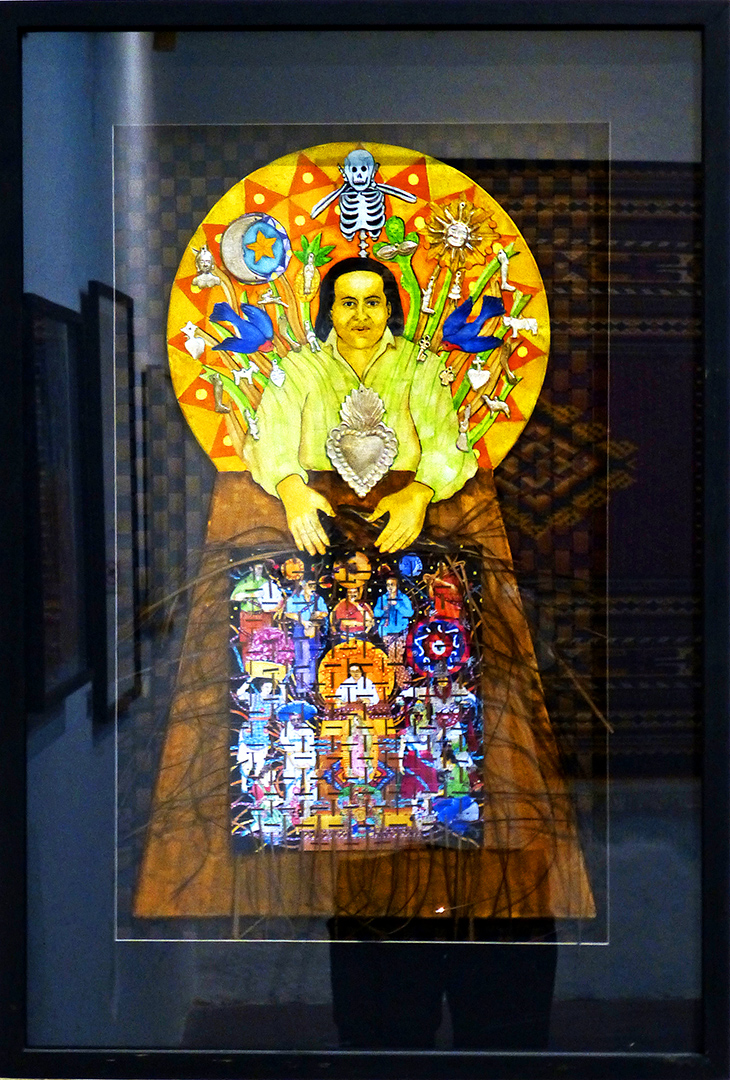
Tejedor de los sueños by Charles Barth (alas, with reflections from other pieces)
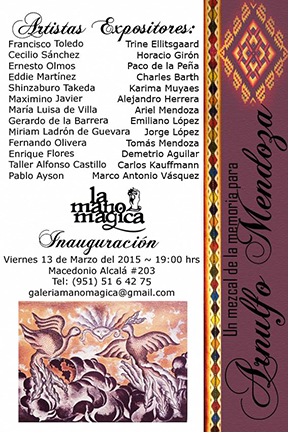
To honor his life, an exhibit of works by his friends, colleagues, and family was inaugurated at La Mano Mágica on March 13, 2015.
His older son, Gabriel Mendoza Gagnier, curated this amazing collection of paintings, weaving, and artesanía.
Homenaje a un gran artista: Arnulfo Mendoza by Taller Alfonso Castillo
Detail from Homenaje a un gran artista: Arnulfo Mendoza by Taller Alfonso Castillo
Templo de la Preciosa Sangre de Cristo, Teotitlán del Valle detail from Homenaje a un gran artista: Arnulfo Mendoza by Taller Alfonso Castillo
Arnulfo at work detail from Homenaje a un gran artista: Arnulfo Mendoza by Taller Alfonso Castillo
Assisted by Arnulfo’s companion, Yukiko, the opening featured, not only amazing art, but also mezcal, tamales, and surprise entertainment by Carnaval dancers from San Martín Tilcajete, wearing masks carved by some of the well-known carvers from the village, including Inocenio Vásquez and Jésus Sosa Calvo.
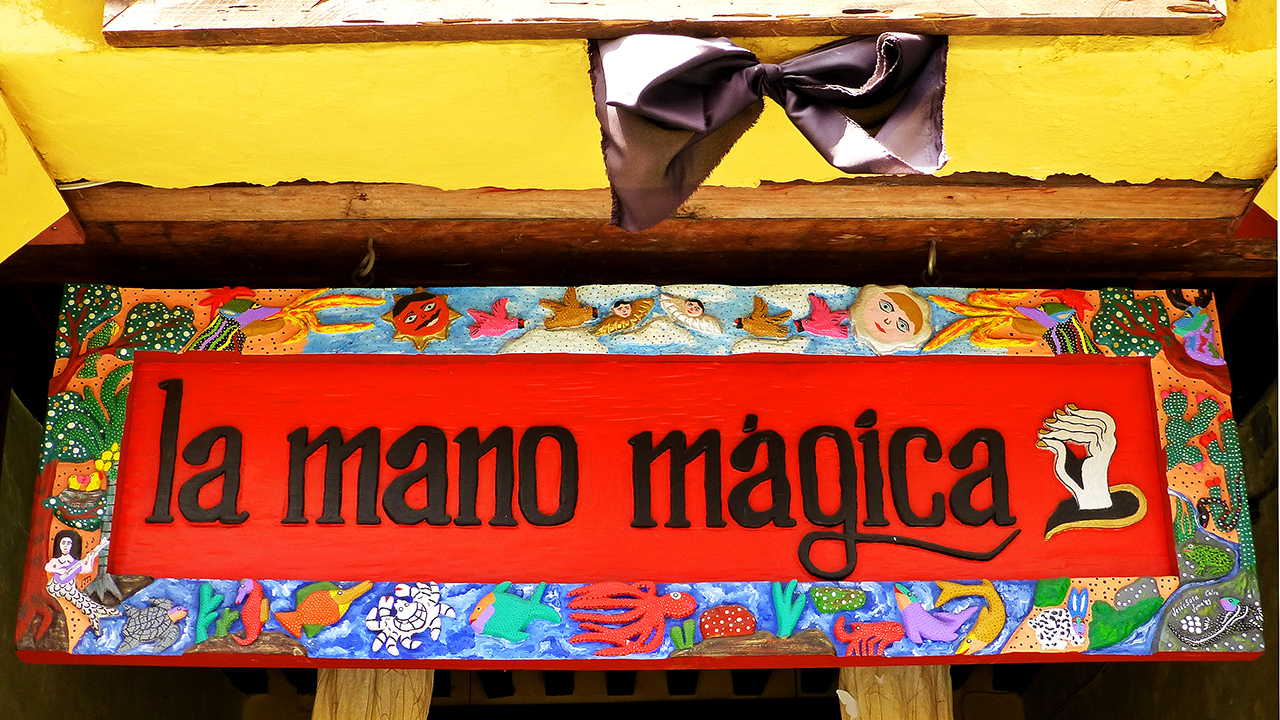
Jésus Sosa Calvo had carved the signature entry sign for La Mano Mágica and recently, unasked, came by to freshen up the paint that had faded over the years under the intense Oaxaca sun.
While, in the words of Manuel Matus Manzo, Arnulfo Mendoza may have gone on “to meet the Jaguar and the god Murcielago,” the dreams of his magical hands remain.
Arnulfo Mendoza by Familia Aguilar
Diamante by Arnulfo Mendoza
Finally, this beautiful poem by Alberto Blanco from the exhibit’s catalog…
Mitades a Arnulfo
I La mitad de la tierra no sueña con la luna. La mitad de la luna
no sueña con el sol.
Si la luna es la trama, y si el sol es la urdimbre, esa tierra es la tela donde acaso se vive.
II La vida es la comedia ya la muerte es el drama, pero el textil de siempre es la urdimbre y la trama.
La mitad de la vida,
la mitad de la muerte:
una tela tejida
con un hilo de suerte.
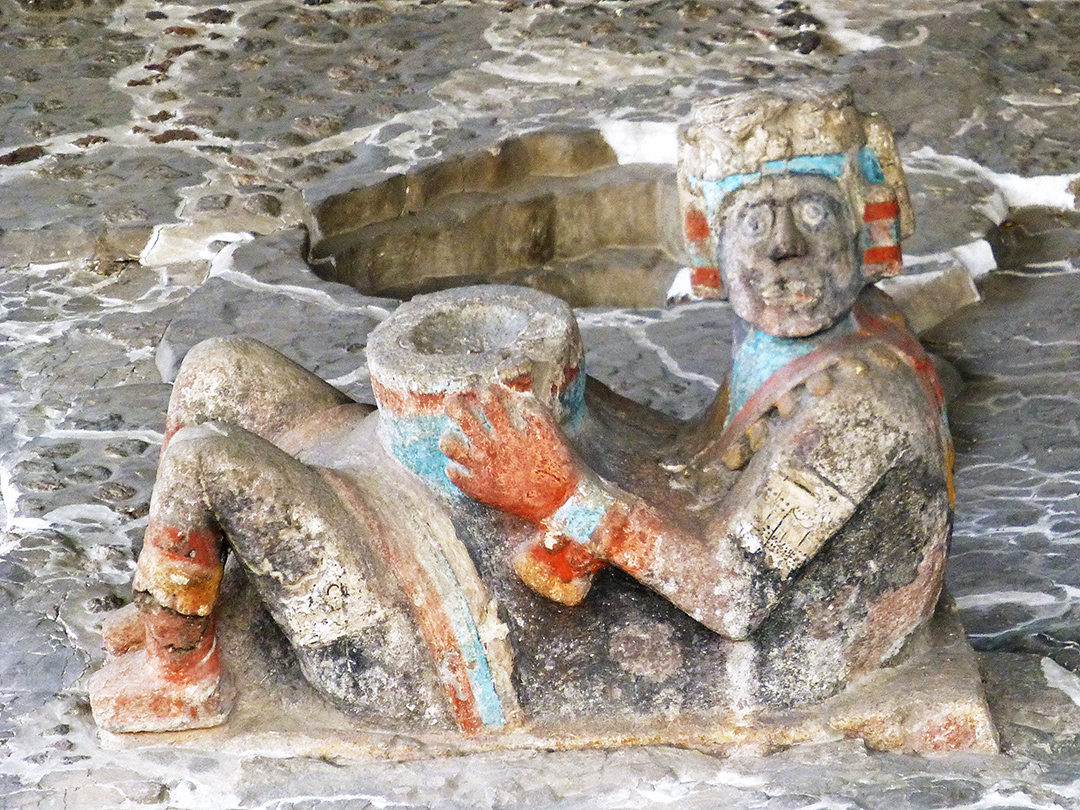
Last week, while in Mexico City, I paid my respects to Tláloc, the Aztec rain deity, both at the Templo Mayor and Museo Nacional de Antropología (National Anthropology Museum).
Tláloc — Templo Mayor, Mexico City
I’m now back in Oaxaca and, for the third day in a row, Tláloc is making his presence known. And, rain is in the forecast for the next several days.
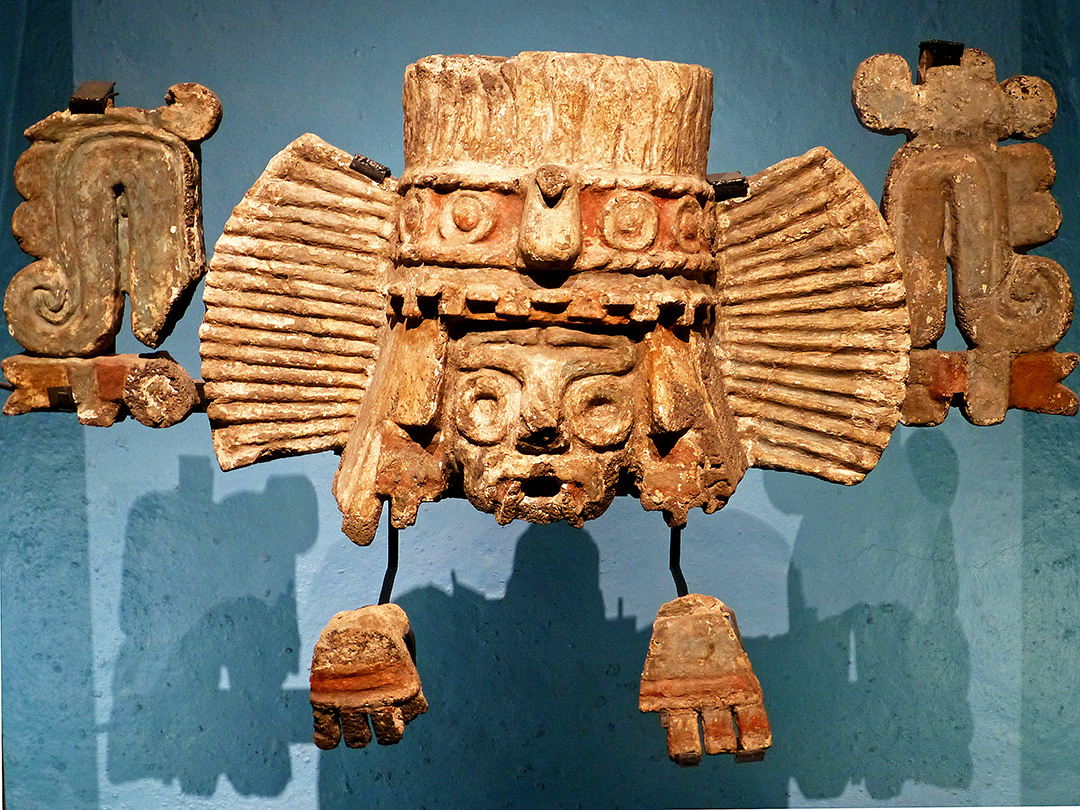
Fragments of a Tláloc brazier — Museo Nacional de Antropología, Mexico City
Thunder is rumbling and, out of the corner of my eye, I see flashes of lightning to the east. It may be the “dry season,” but Tláloc is speaking and we are listening.
Pot with image of Tláloc — Museo Nacional de Antropología, Mexico City
Perhaps drought-stricken California might want to build a temple to this supreme god of the rains — not to mention, institute mandatory water rationing!
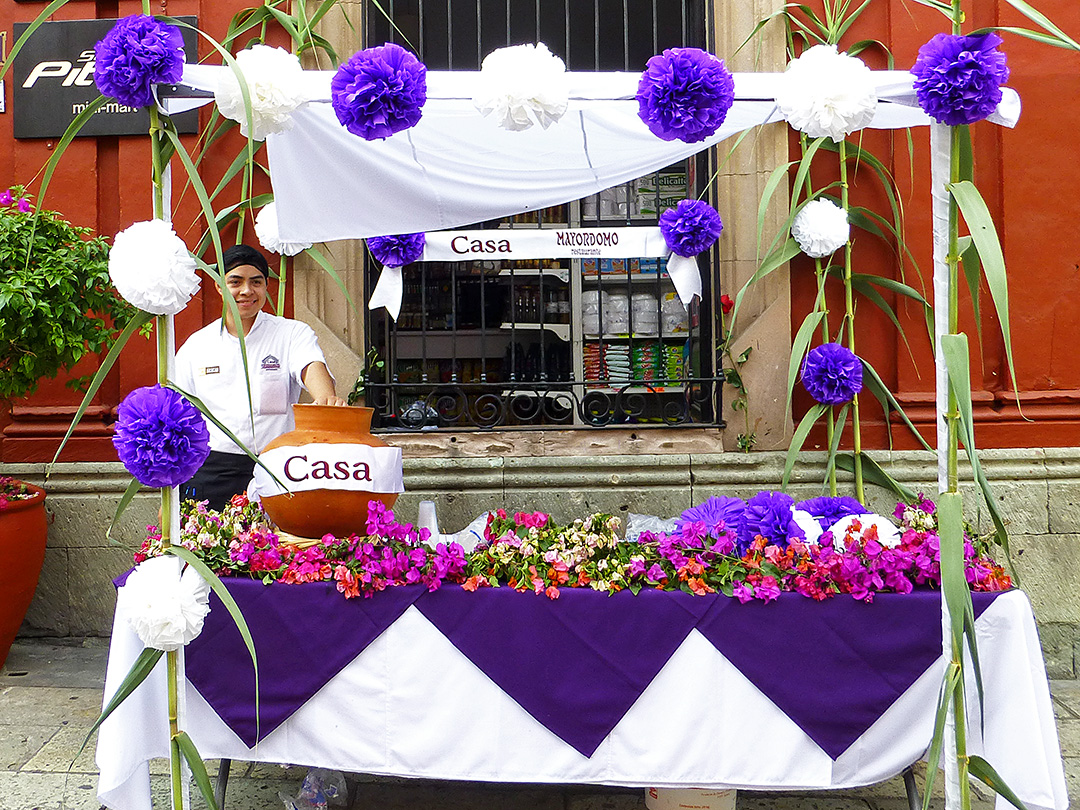
Yesterday was the fourth Friday of Lent and, if you are in Oaxaca, that means Día de la Samaritana, where, believer or not, you will be offered aguas from doorways and street-side tables set up in front of churches, restaurants, hotels, government agencies, and private homes.
I got a late start; unseasonable rain was threatening and the grey sky had made it hard to leave my cozy apartment.
But, what can I say? Horchata, sandia, guayaba, coco, chilacayota, chía con limón, and even tejate and nieves were offered with smiles, free of charge, to all passersby.
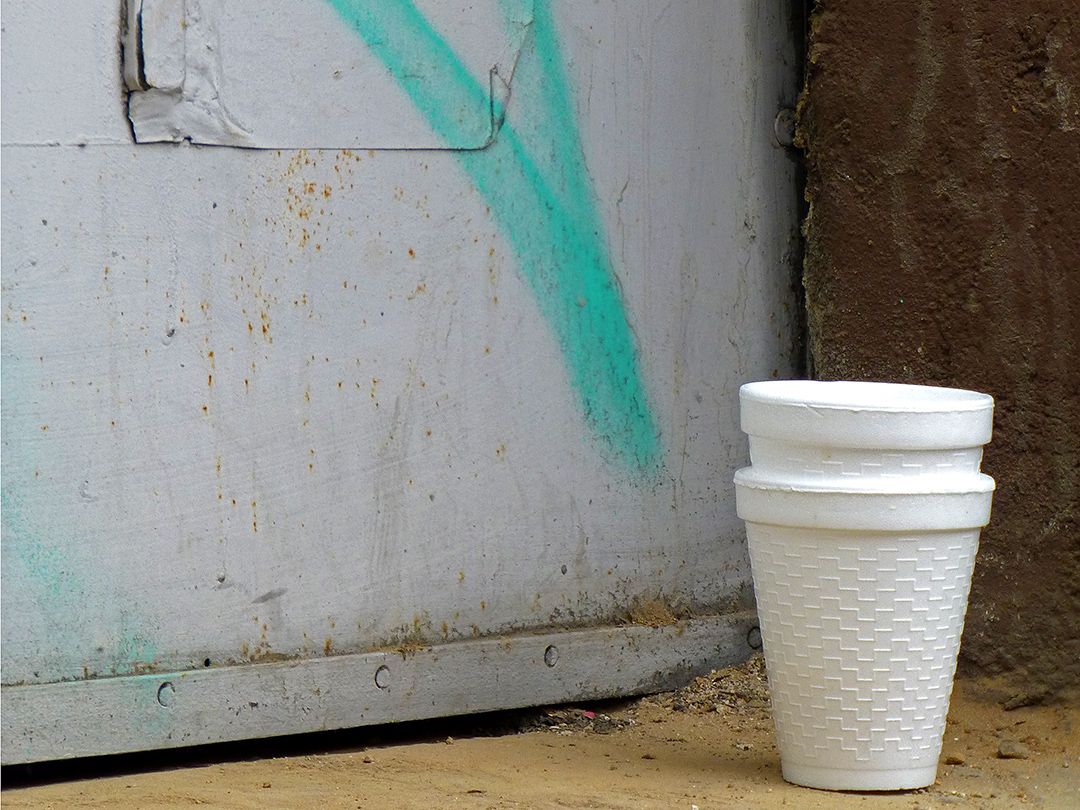
Within a block, I happily and gratefully accepted a large plastic cup of horchata; another one followed, and later, a styrofoam cup of chilacayota.
It had begun at noon, but by 2 PM, all that remained were branches of Bougainvillea, empty ollas (pots), ladles with nothing to dip into…
Two weeks ago, we returned to San Juan Guelavía to pick up my new custom-made lampshades. Again, Teresa and her family welcomed us with open arms. A couple of plastic chairs were positioned in the shade under the tree and Dulce, Teresa’s daughter, snuggled up beside me, as abuela and abuelo continued working.
Teresa briefly disappeared, but soon re-emerged, from the gate hidden in the carrizo fence, carrying my new hand-woven carrizo lampshades! After many oohs and aahs, expressions of “muchisimas gracias” by me over and over, and big smiles all around, blogger buddy Chris posed us for the requisite photo-op.
After paying for my new treasures and many more “many thanks,” shades were put in the trunk and we slid into the front seats of the car, and headed back to the city. Once home, I called Cristian, my electrician and scheduled the installation of the lampshades. The smaller was hung outside my front door…
and the larger beneath the pergola on the terrace.
I love how the light glows through the finely woven carrizo. I’m a very satisfied customer!
March 8 is International Women’s Day — established by V. I. Lenin in 1922 (I’ll wager this is news to most), revived by women in the USA in 1968, and recognized by the United Nations in 1975. We may have come a long way, but the struggle for equal rights, respect, freedom from violence, and control of our own bodies continues.
However, the hard work, warmth, strength, creativity, and dignity of the women of Oaxaca continues to inspire me.
¡Feliz día internacional de la mujer! But, as news around the world and the Inequality in Charts reminds us, LA LUCHA CONTINÚA…
































 Mexican Peso Converter


