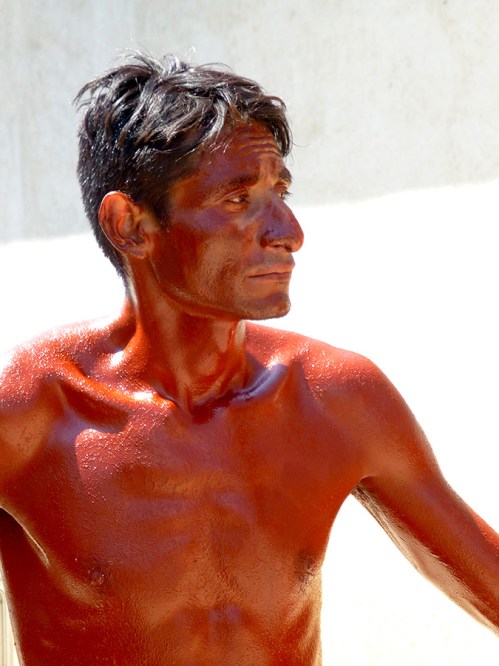
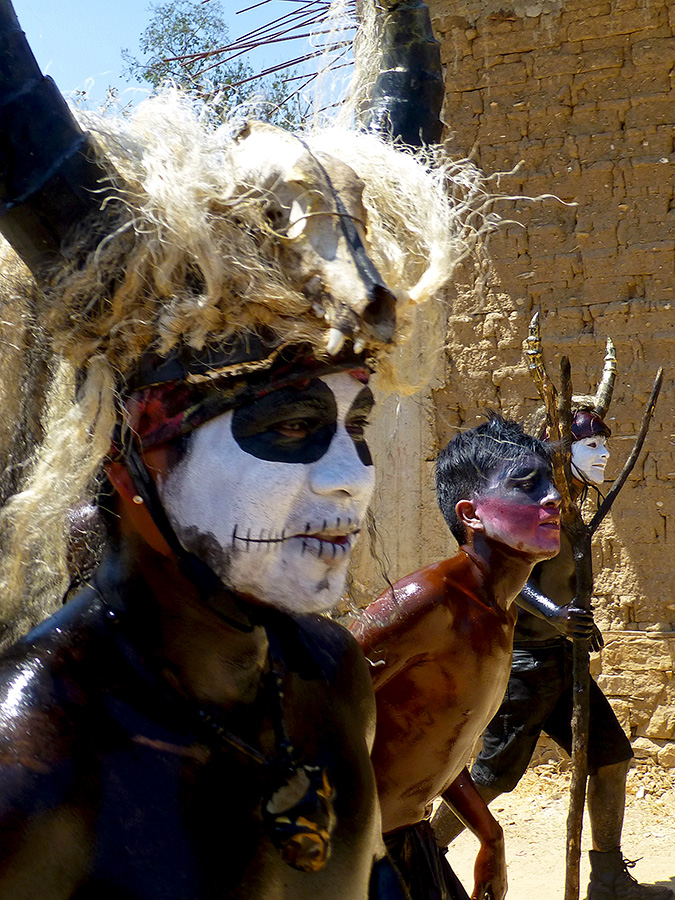
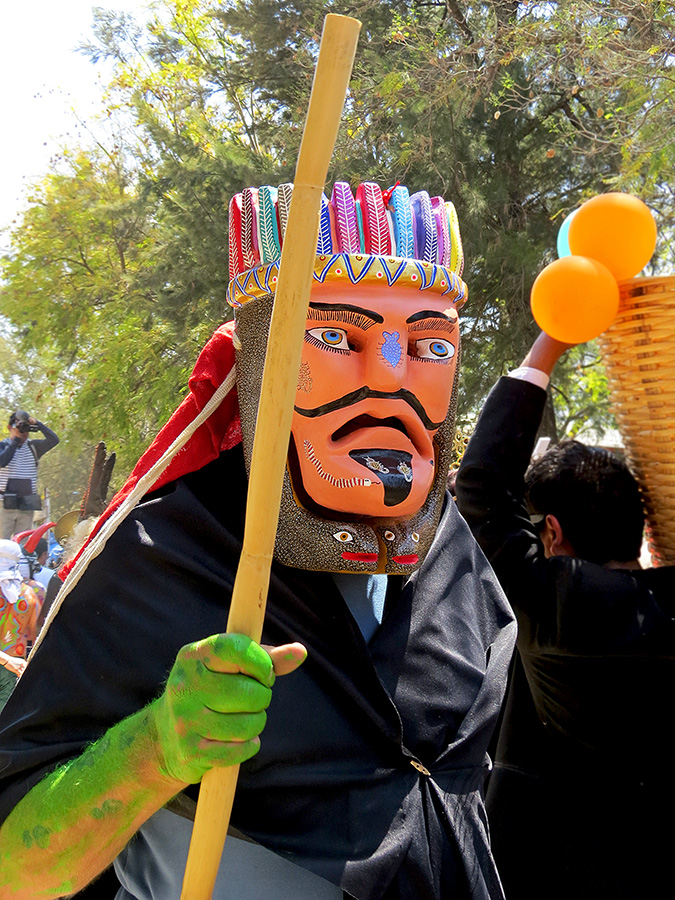
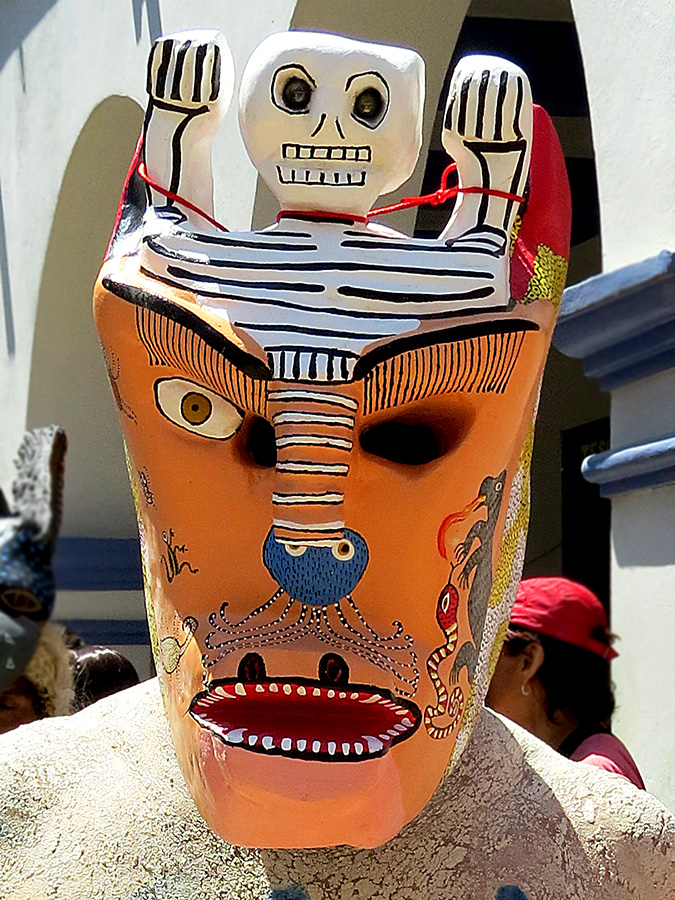
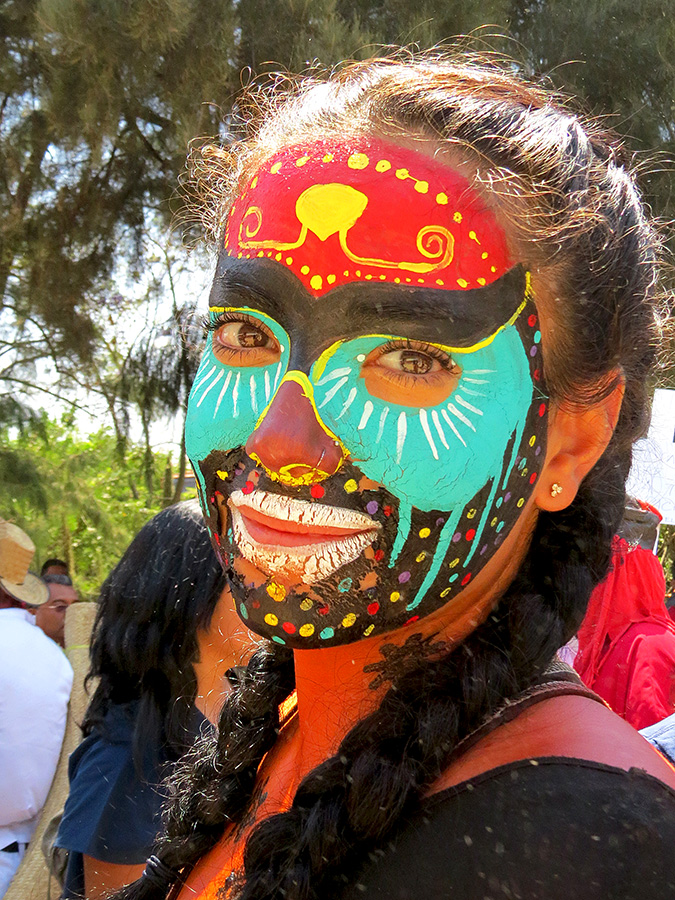
Besides a mock wedding with men dressed as women, mentioned in my previous post, Carnaval (Carnival, Mardi Gras, Fat Tuesday, Shrove Tuesday) in San Martín Tilcajete also means young men covered in motor oil (yuck!) and paint running through the village with belts of cowbells ringing.
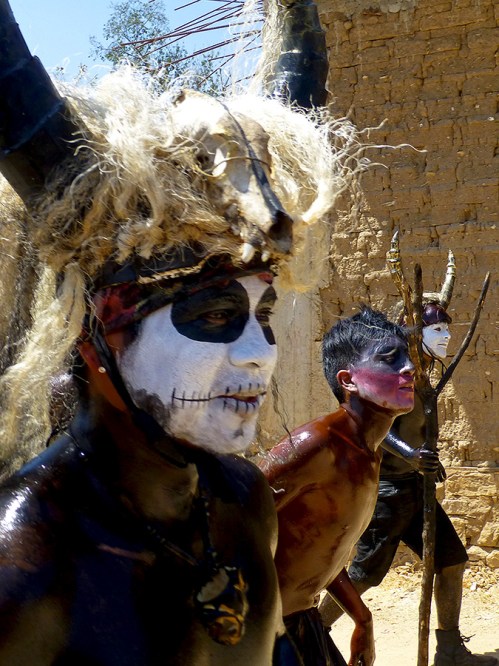

And, it means muchas máscaras de madera — in this village famous for its fantastical hand-painted alebrije woodcarvings and masks.
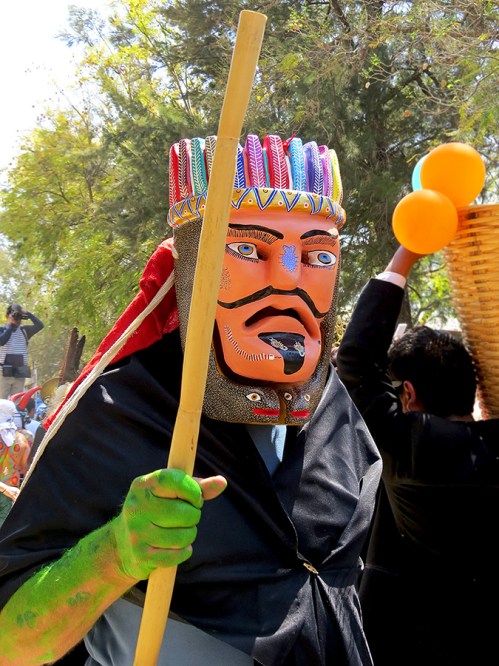
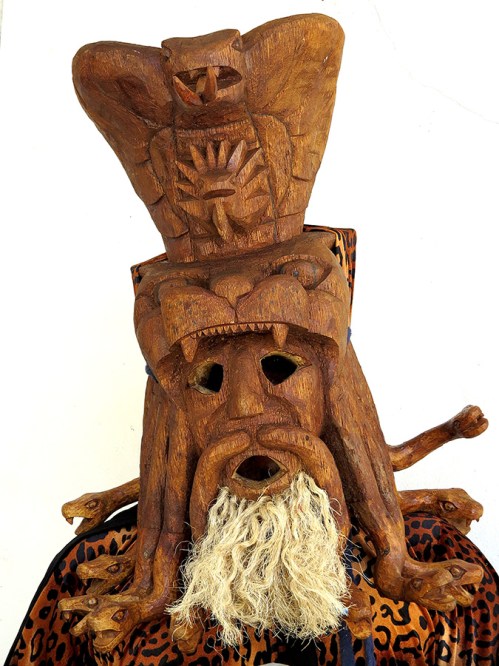

Some of my favorite masks and body paint were done by Jesus Sosa Calvo, his talented wife, Juana Vicente Ortega Fuente, and their gifted children. (See the mask I gave to my son, carved by Apolinar, one of their sons.) If you are in San Martín Tilcajete, be sure to see their work at Matlacihua Arte (right across from the zócalo on the main street).


The Spanish brought this pre-Lenten tradition to Mexico and, like many other seasonal celebrations, it conveniently coincided with indigenous festivals celebrating the “lost days” of the Mesoamerican calendar, “when faces were covered to repel or confuse evil.” Apparently, it caught on “because it was one time when normal rules could be broken especially with the use of masks to hide identities from the authorities.”


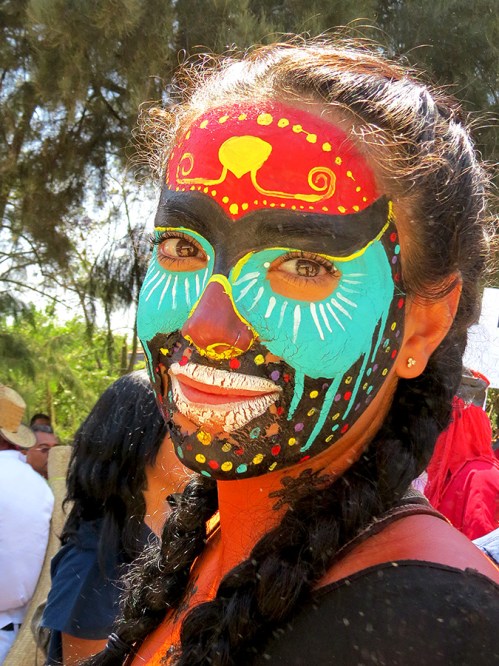
Masks, motor oil, face and body paint, you name it, disguised and anonymous was the order of the day!
Save
Save
Posted in Celebrations, Creativity, Culture, Holidays, Religion, Travel & Tourism | Tagged bodypaint, Carnaval, Carnival, Fat Tuesday, Mardi Gras, mascaras, masks, Mexico, Oaxaca, photographs, photos, popular travel destinations, San Martín Tilcajete, Shrove Tuesday | 3 Comments »
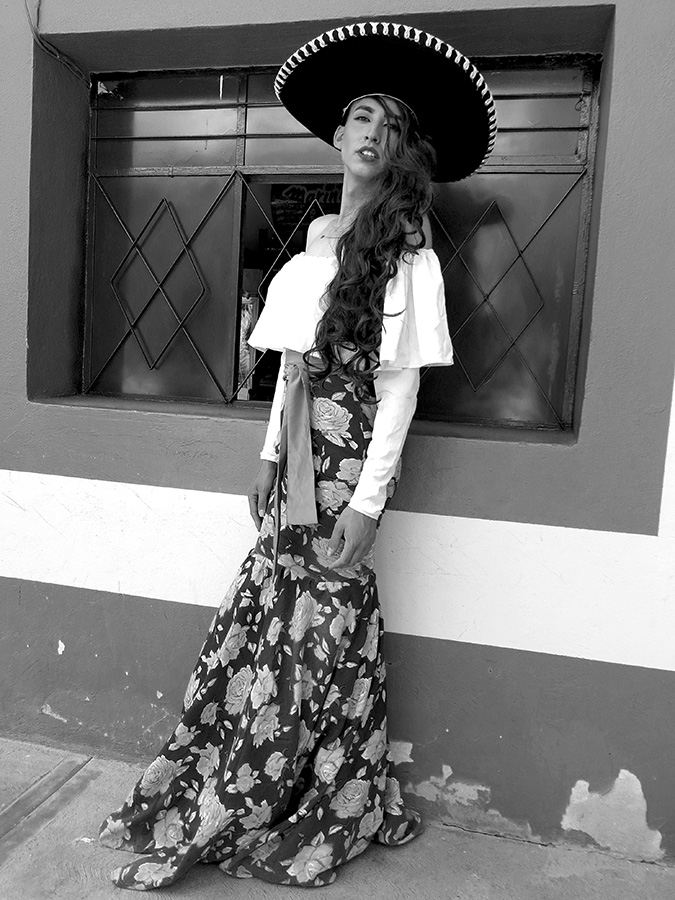
Among other highlights, Carnaval/Carnival in San Martín Tilcajete features a mock wedding, quinceañera, and beautiful fabulously dressed and accessorized “women.”




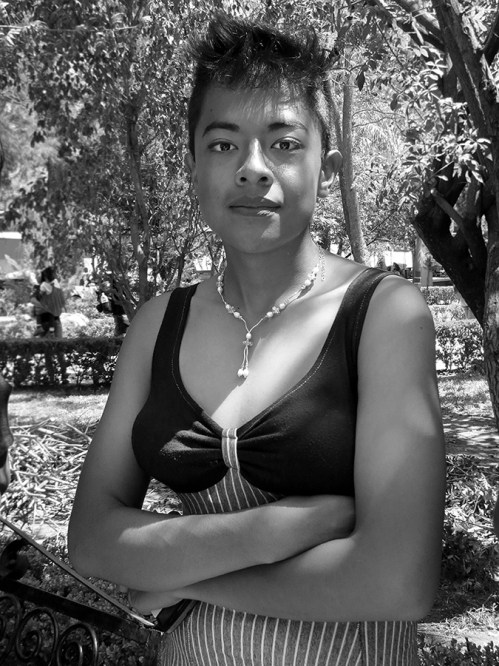
The day before Lent in San Martín Tilcajete 2017. As they say in New Orleans, “Laissez les bons temps rouler!”
Save
Save
Save
Save
Posted in Celebrations, Creativity, Culture, Holidays, Religion, Travel & Tourism | Tagged Black and white photography, Carnaval, Carnival, cross-dressing, Mardi Gras, men dressed as women, Mexico, Oaxaca, photographs, photos, popular travel destinations, San Martín Tilcajete, Shrove Tuesday | 3 Comments »
To continue the grocery shopping theme…
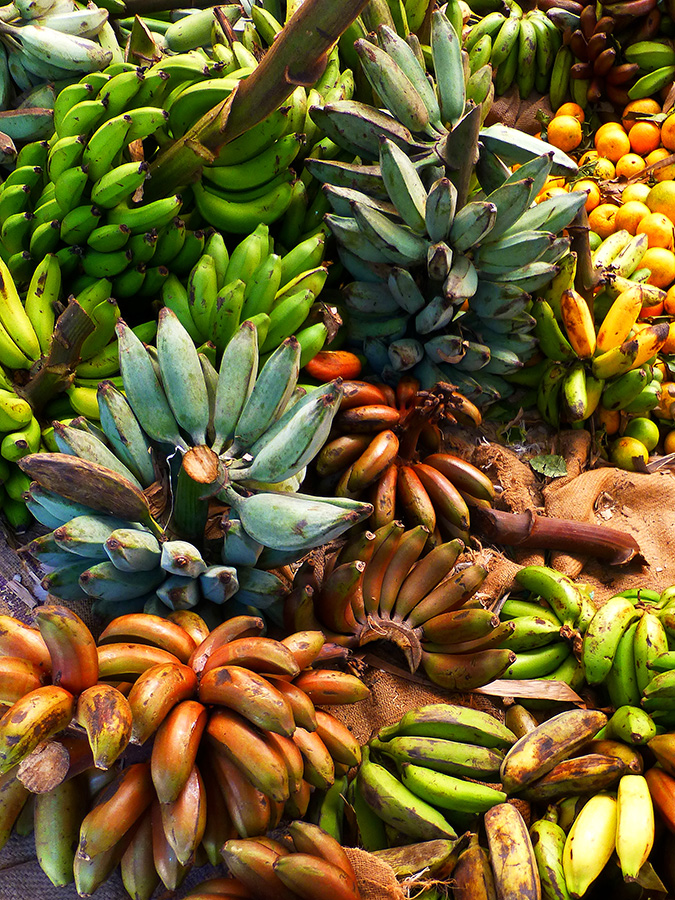
Why is it that of the almost 1000 varieties of bananas grown in the world, grocery stores here in el norte mostly only sell the Cavendish? Sheesh, even the smallest mercados in Oaxaca often have at least four varieties and sometimes more (depending on the season). After all, there are eight types of bananas cultivated in Mexico. The states of Chiapas (35%), Tabasco (25%), and Veracruz (13%), are the major producers, followed by Michoacán (6.5%) and Jalisco (4.5%), with Guerrero (3%) and Oaxaca (3%) bringing up the rear.
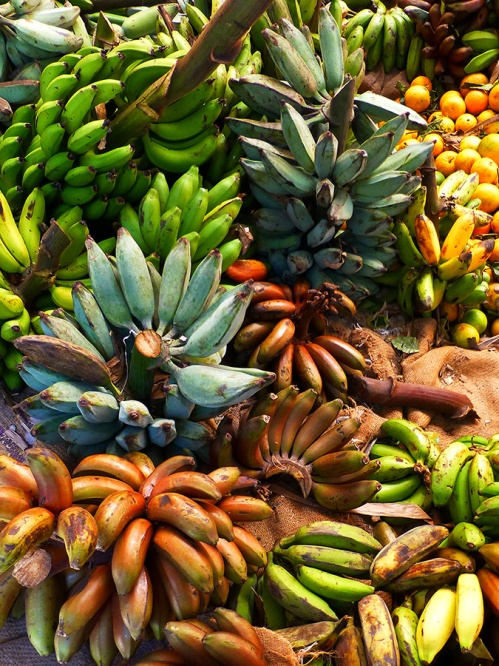
Bananas outside of the mercado in San Pablo Villa de Mitla, Oaxaca – November 2016
Did you know that banana plants are not trees? They are an herb and their “trunks” are made of overlapping leaves. As for the origin of the word “banana,” it comes from the Arabic, banan, which means finger. Thus, it makes perfect sense that the cluster of bananas growing on “tree” is called a hand. (For more banana facts, check out All about bananas.)
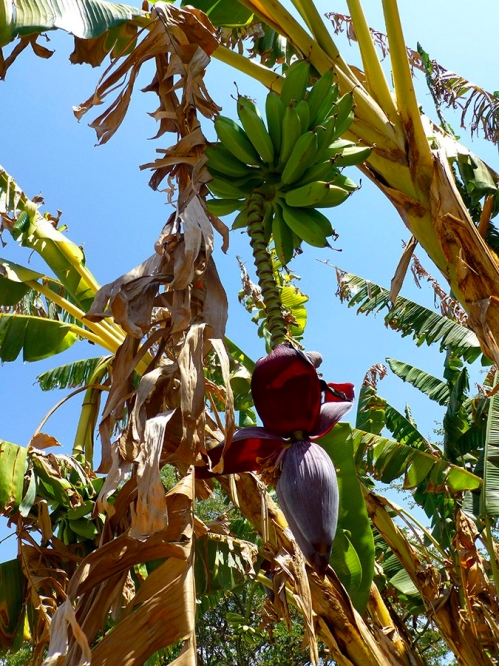
Banana “tree” outside Las Huamuches restaurant — between Santo Tomás Jalieza & San Martín Tilcajete, Oaxaca – February 2017
Now we come to the “heart” of the matter — the astonishing flower of the banana. Given its resemblance in color and shape, it’s also known as a heart and is a show-stopper for anyone who has never before seen one. It is often used in South Asian and Southeast Asian cooking, especially in curries, and a friend from El Salvador told me in his home country, the flowers are baked in the oven and eaten. Apparently, according to this website, banana hearts are good for most everything that ails you. Alas, while Mexico exports la flor de plátano, Moisés Molina, representative of Mexico’s Regional Association of Independent Producers and Banana Traders, lamented in 2000 that it was a pity they were consumed in China but not Mexico.
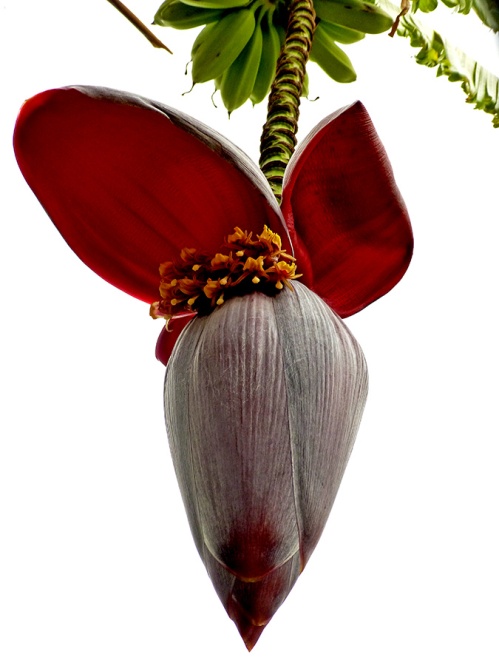
Banana flower in San Andrés Huayapam, Oaxaca – December 2016
For those in the USA, enjoy your bananas while you can — according to Geo-Mexico, “The USA is the world’s largest importer of bananas and Mexico’s main foreign market, receiving 80% of all exports of Mexican bananas.” Hmmm… I wonder how long before the toxic, twittering human smokestack of polluted right-wing demagoguery wreaks havoc on that?
Save
Save
Save
Save
Save
Save
Save
Save
Posted in Flora, Food, Travel & Tourism | Tagged bananas, fruit, markets, mercados, Mexico, Oaxaca, photographs, photos, plátanos | 5 Comments »
Currently, View from Casita Colibrí is being brought to you from el norte. Alas, tax season has come around again and mine need to be prepared. Then there is never-ending house maintenance and repair. I admit, it’s not all work and no play; being here means I get to spend time with family and friends, eat sushi, and give my regards to the Pacific Ocean.
However, despite the ease of grocery shopping when one has use of a car, pricey supermarket herbs packaged in puny plastic boxes don’t feed my soul and delight my senses the way the stalls overflowing with fresh and dried herbs at Mercado Benito Juárez in Oaxaca do.

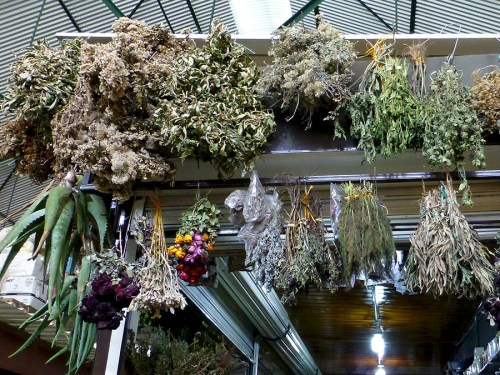

Speaking of the former governor of Oaxaca, Mexico’s much beloved five-term and only indigenous (Zapotec) president, Benito Juárez, his birthday is coming up on March 21. He is the only individual in Mexico to have his birthday designated as a national holiday (celebrated this year on Monday, March 20).
We would all do well to remember AND practice his famous words: Entre los individuos, como entre las naciones, el respeto al derecho ajeno es la paz. (Among individuals, as among nations, respect for the rights of others is peace.)
Save
Save
Posted in Food, Holidays, Markets, People, Travel & Tourism | Tagged Benito Juárez, herbs, markets, Mercado Benito Juárez, mercados, Mexico, Oaxaca, photographs, photos, popular travel destinations | 1 Comment »
Slowly the cars began to move. Slowly they climbed the steep hill. As they climbed, each little steam engine began to sing: “I-think-I-can! I-think-I-can! I-think-I-can! I-think-I-can! I-think-I-can! I-think-I-can! I think I can – I think I can – I think I can I think I can–” (The Little Engine That Could)
In this case, the little engines that could are Volkswagen Beetles, known in Mexico as vochos. These indomitable VW Bugs are ubiquitous on the streets of Oaxaca — in a rainbow of colors and in every stage of repair and disrepair imaginable.

They can even be spotted traveling along the walls thanks to artist, Efedefroy…
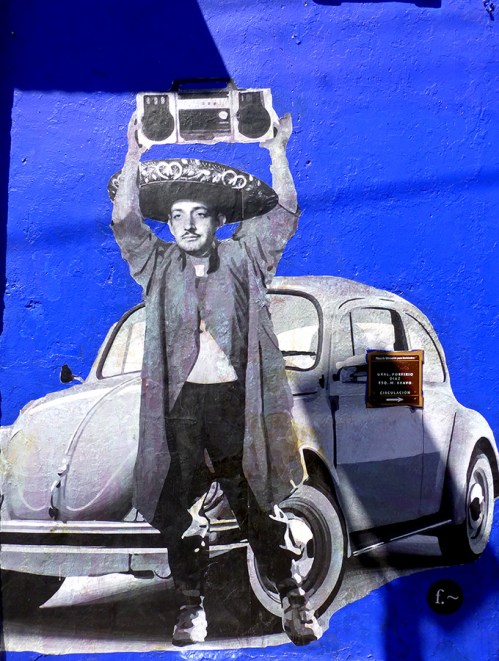
“Vocho art” isn’t limited to murals on street corners. Check out this Huichol beadwork “Vochol” I saw on exhibit at the Museo de Arte Popular in Mexico City last October. It is the work of Francisco Bautista, Kena Bautista, Roberto Bautista, Diego Díaz González, Emilio González Carrillo, Víctor González Carrillo, Alvaro Ortiz, and Herminio Ramírez.

And, that isn’t all… Mexican artist, Héctor Garnelo Navarro has covered a 1994 VW Beetle with “19,800 semi-precious stones (e.g., obsidian, jade) that form images of pyramids, animals, ancient deities (Quetzalcóatl [Feathered Serpent, Creator God] and the Mictlantecuhtli [God of the Underworld]).” It is known as the Vocho Teotihuacano (Teotihuacán Beetle) and according to this article, he is finishing a Vocho Maya and is considering a Vocho Alebrije — the latter inspired by the wood carvers and painters of Oaxaca. So, keep your eyes open!
Save
Save
Save
Posted in Creativity, Culture, Exhibitions, Museums, People, Transportation, Travel & Tourism | Tagged automobiles, Efedefroy, Héctor Garnelo Navarro, Mexico, Mexico City, Museo de Arte Popular, museum, Oaxaca, photographs, photos, popular travel destinations, The Little Engine That Could quote, Vocho, Volkswagen Beetle, VW bug | 4 Comments »
… and shadows in Oaxaca in March.
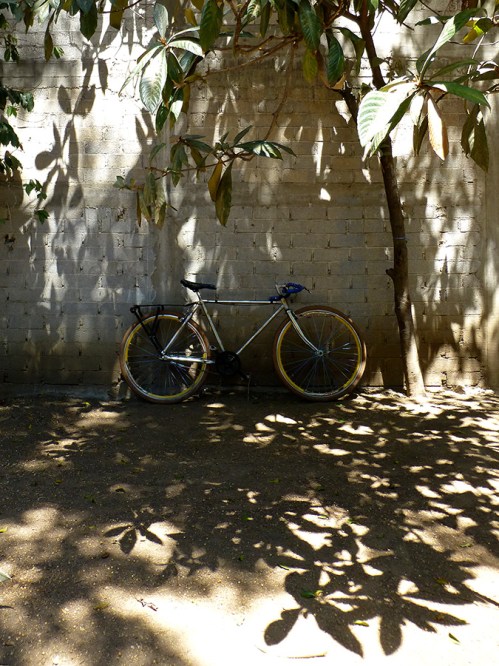
Character is like a tree and reputation like a shadow. The shadow is what we think of it; the tree is the real thing. — Abraham Lincoln

Shadow owes its birth to light. — John Gay
Save
Save
Posted in Flora, Gardens, Travel & Tourism | Tagged Abraham Lincoln quote, bicycles, bougainvilla, bougainvillea, John Gay quote, Mexico, Oaxaca, photographs, photos, shadows | 8 Comments »
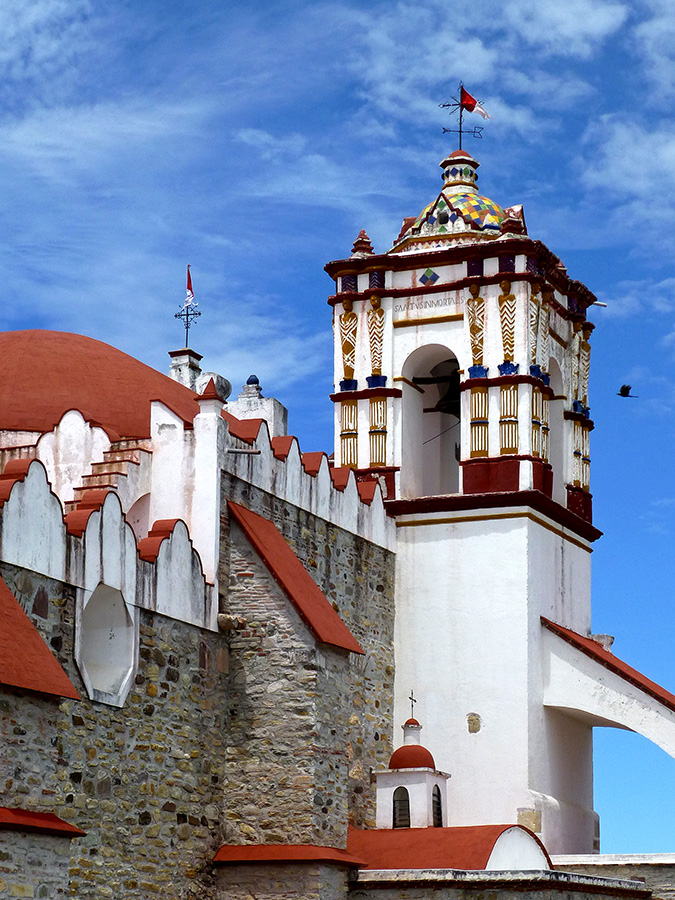
For years, I’ve gazed at the bell towers of Templo de la Preciosa Sangre de Cristo in Teotitlán del Valle and wanted to go up there. I mused that the views must be spectacular.
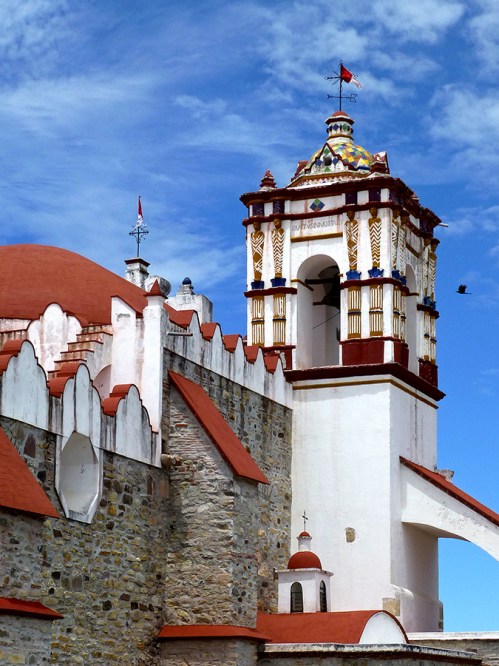
I struck it rich a couple of weeks ago when visiting gal pals and I were wandering around the church and were asked if (for a small donation) we wanted to go up to the top. We didn’t have to be asked twice.
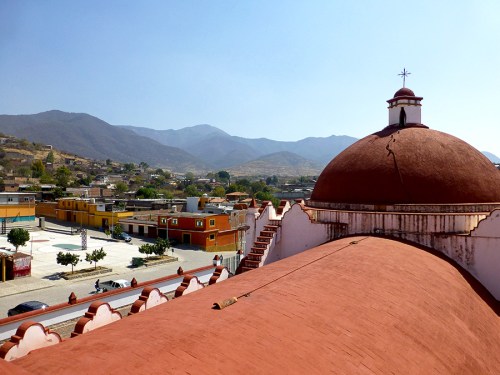
It was well worth the climb up the narrow, winding, and steep stone staircase.
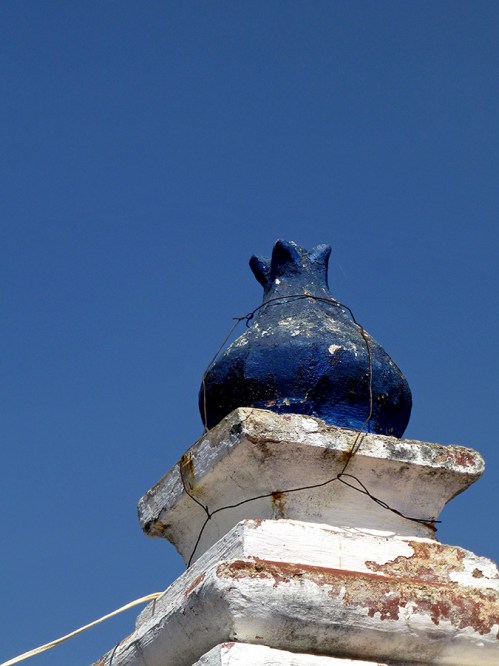
There I was, up close and personal with features I’d never before noticed.
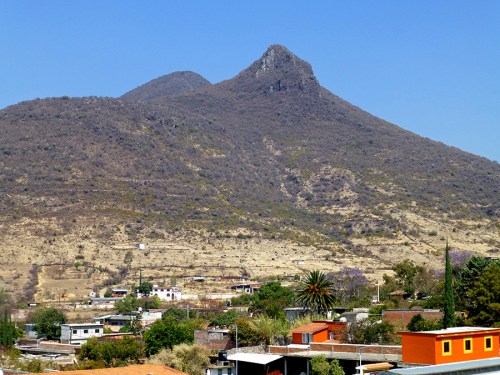
Overcoming a moderate case of acrophobia, I even ventured out between the towers and the dome.
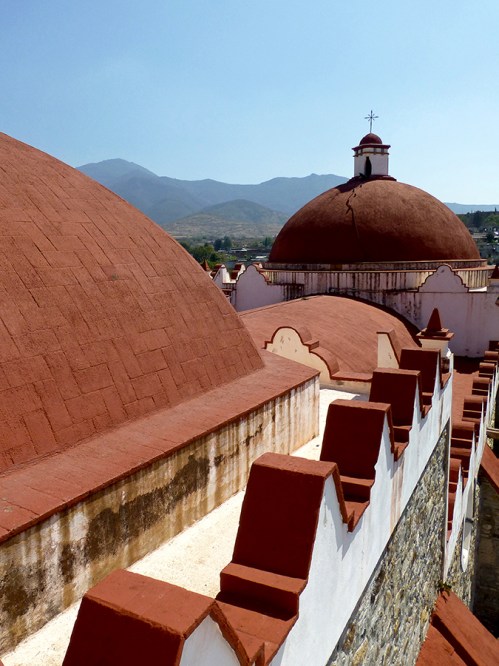
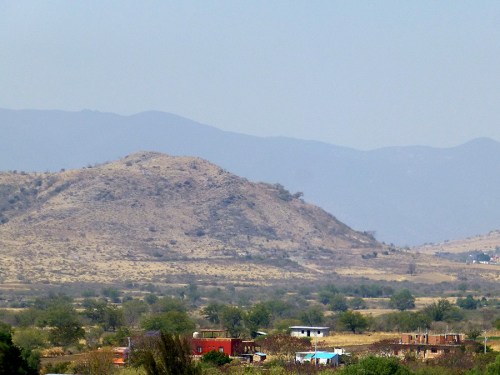
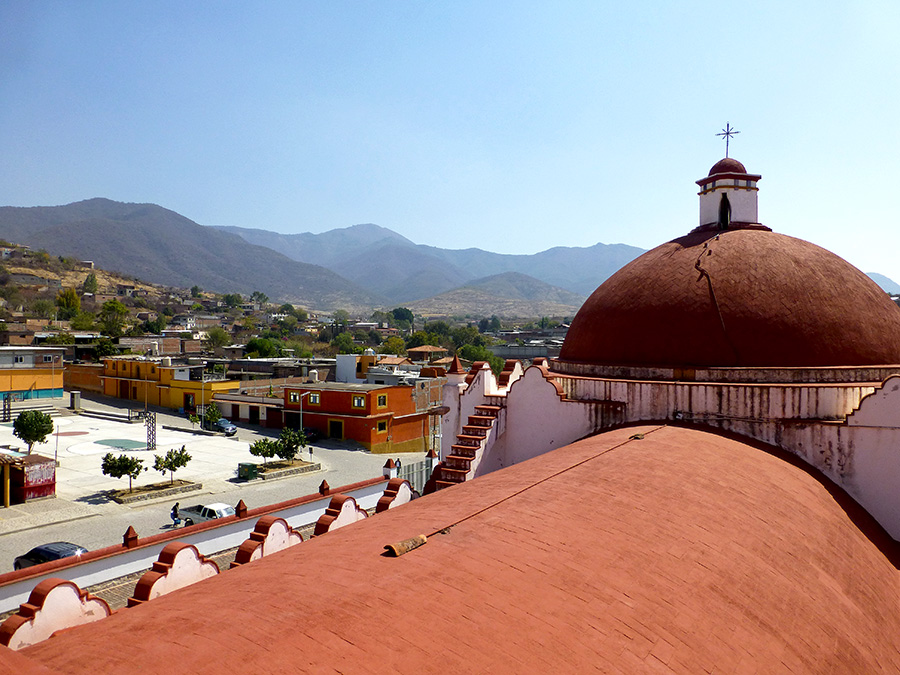
Despite a dry season haze that hung over the valley, the views in every direction were spectacular.
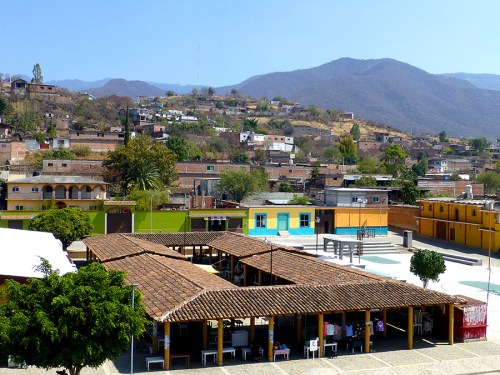
A bird’s-eye view!
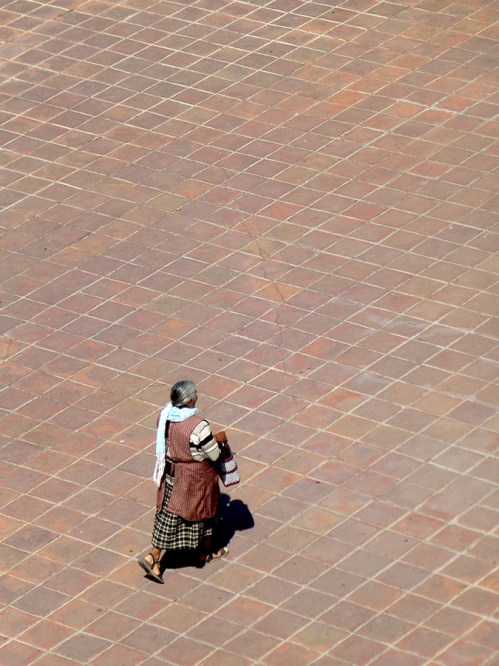
It was great fun trying to pick out the homes of friends.
The icing on the cake: The bell-ringer emerged, grabbed a couple of ropes, and the bells began to chime.
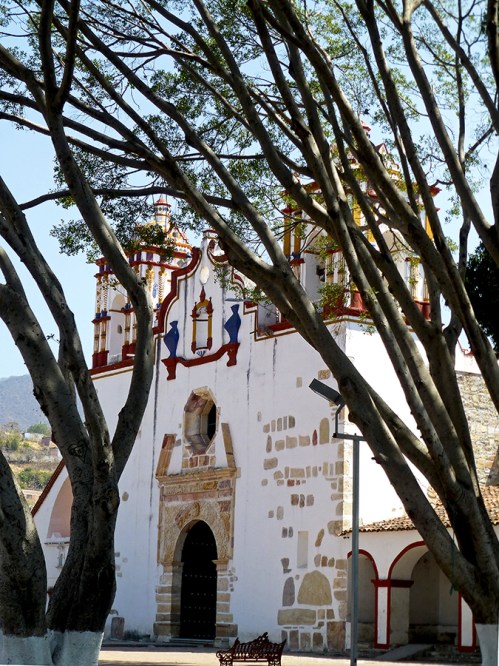
It was really loud (bordering on deafening) and lasted a long time!!! But, we wouldn’t have traded the experience for anything.
Save
Save
Save
Posted in Buildings, Churches, Culture, Travel & Tourism | Tagged bell towers, churches, El Picacho, Mexico, Oaxaca, photographs, photos, Templo de la Preciosa Sangre de Cristo, Teotitlán del Valle | 2 Comments »
It’s a travel day for me and I didn’t think I would have time to honor my sisters of the world on this International Women’s Day. However, thanks to a flight delay that has left me with an even longer than planned layover in Houston, I can think of no better way to celebrate the day than presenting Julia and Luvia; two of the extraordinary women of Teotitlán del Valle.
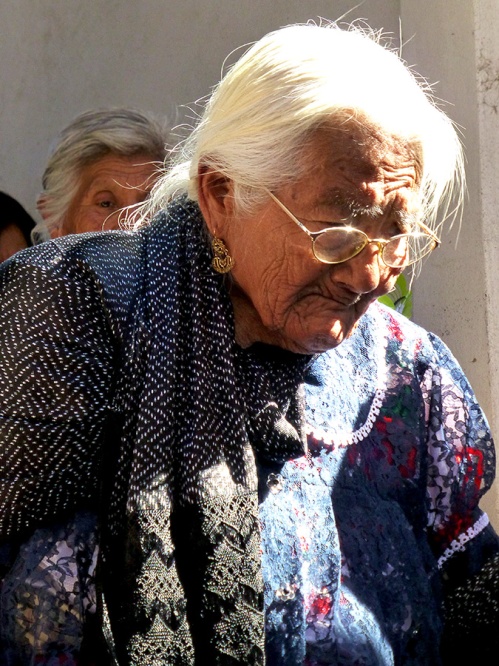
Julia Martinez Bautista at her 100th birthday party, February 1, 2017.
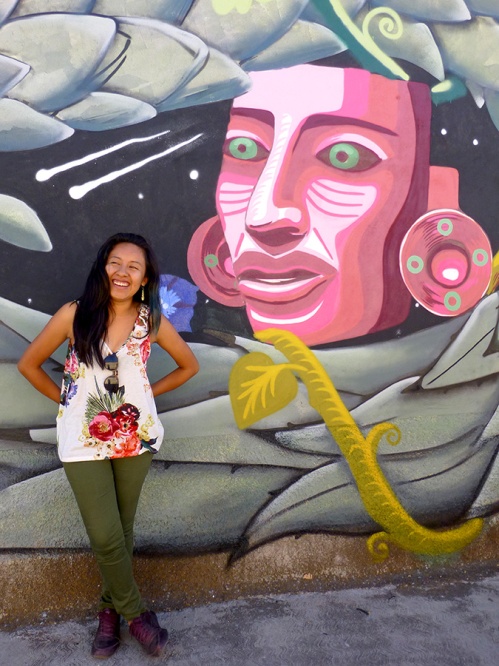
Luvia Lazo Gutierrez, director of the new Centro Cultural Comunitario de Teotitlán del Valle.
They embody the strength, ingenuity, intelligence, and creativity of women everywhere!
Save
Posted in Celebrations, Creativity, Holidays, People, Travel & Tourism | Tagged Día Internacional de la Mujer, International Women's Day, Julia Martinez Bautista, Luvia Lazo Gutierrez, Mexico, Oaxaca, photographs, photos, Teotitlán del Valle, women, Zapotec women | 6 Comments »
Oaxaca seems to invite and inspire creativity. Thus, for twenty years distinguished photographer, Mary Ellen Mark, who “considered Oaxaca her second home,” brought students here and conducted workshops at the Centro Fotográfico Manuel Álvarez Bravo. Now, seven photographers, Björn Árnason, Lori Barra, Ina Bernstein, James Carbone, Chae Kihn, Tim Porter, and Jody Watkins, are honoring their late mentor with an exhibition, Nuestra Oaxaca, at the Centro Fotográfico.
The exhibition opened on January 20, 2017, but it was the coming together by the seven and their very personal remarks during the artist reception and panel discussion on February 25 that revealed the impact Mary Ellen Mark had on their lives and work. She was “a dedicated and demanding teacher” who pushed them to know themselves in order to authentically see and capture the people and places on the other side of the lens. They also offered glimpses into Mark’s playful side and wit, along with how meaningful her friendship was to each of them and their profound sense of loss at her passing in 2015. I wasn’t the only one who blinked away tears.
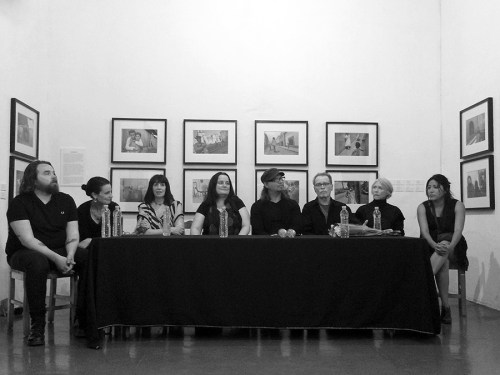
(L->R) Björn Árnason, Lori Barra, Ina Bernstein, Chae Kihn, James Carbone, Tim Porter, Jody Watkins, and translator, February 25, 2017.
In the words of Tim Porter, spoken at the opening of the exhibition on January 20, 2017:
We seven photographers are all different. Some of us are professionals who work for newspapers or do commercial work. Some of us are amateurs who simply love photography. Some of work in a documentary or journalistic style. Some of us make more interpretative images. We live in New York, in Los Angeles, in Iceland and in San Francisco. Some of us have been coming to Oaxaca for decades. Some of us for only a few years.
What we all share is Mary Ellen. She brought us together. Through her we became friends. Because of her we became better photographers. With her in mind, we come back – to pursue the work we started here, to become the photographers she believed we could be, to honor her passion and, perhaps, to find hope and inspiration in it.
If you are currently in Oaxaca or plan to be before the exhibition closes on April 7, 2017, I highly recommend paying it a visit; the images from each of the seven photographers will reveal Oaxaca in a new and thought-provoking light. In addition, you can also see the work of their mentor, Mary Ellen Mark, that is part of the Colección Toledo/INBA.
Save
Save
Save
Save
Save
Save
Posted in Creativity, Culture, Exhibitions, People, Travel & Tourism | Tagged Björn Árnason, Centro Fotográfico Manuel Álvarez Bravo, Chae Kihn, Ina Bernstein, James Carbone, Jody Watkins, Lori Barra, Mary Ellen Mark, Mexico, Oaxaca, photographs, photography exhibitions, photos, Tim Porter | 4 Comments »
Sunday afternoon at Casa Colonial in Oaxaca: Sun filtering through the trees of a lush tropical garden, the smell of hamburgers and hotdogs grilling on a barbecue, a friendly bartender, and a great jazz combo. What more could anyone want?
Thank you to the Casa’s owner Jane Robison and manager Amado Bolaños. It was a lovely way to spend a Sunday.
Posted in Culture, Flora, Gardens, Travel & Tourism | Tagged bougainvillea, Casa Colonial, flowers, Mexico, mural, music, musicians, Oaxaca, photographs, photos, popular travel destinations | 3 Comments »
February 27, 2017 by spixl
Yesterday, as my BFF and I sat outside drinking our morning coffee…
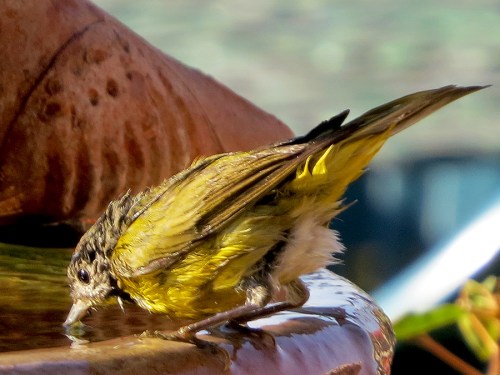
…we were joined on the terrace. Nothing like that first sip of the day!
Save
Posted in Animals, Casita Colibrí, Gardens | Tagged birds, fountain, Mexico, Oaxaca, photographs, photos | 1 Comment »
February 23, 2017 by spixl
A plumeria (aka, frangipani) blossoms on the terrace…
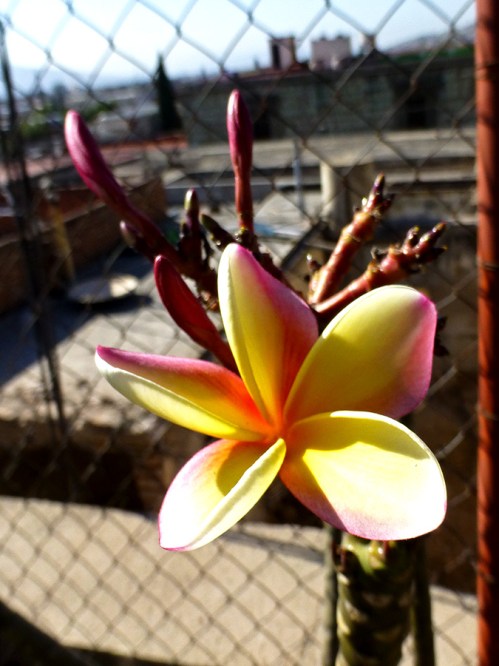
During this, the middle of a very dry, dry season, a perfumed promise of primavera.
Save
Posted in Casita Colibrí, Flora, Gardens, Travel & Tourism | Tagged flowers, frangipani, Mexico, Oaxaca, photographs, photos, plumeria | 2 Comments »
February 18, 2017 by spixl
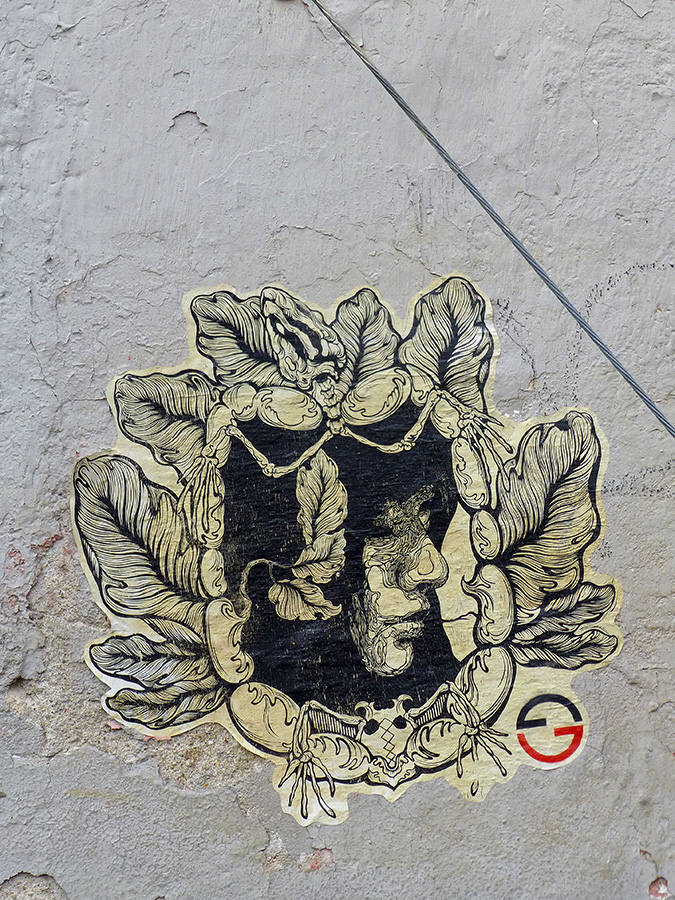
Yes, we know… ephemeral it may be; effective it is.
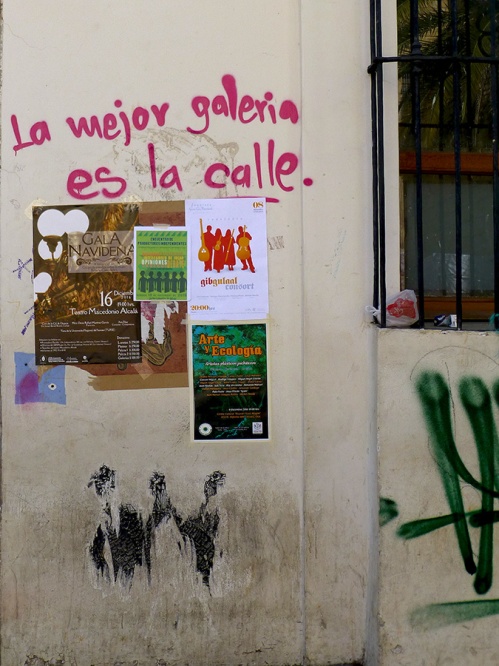
As do the artists of Gabinete Grafico, who bring their woodcut art to the streets.
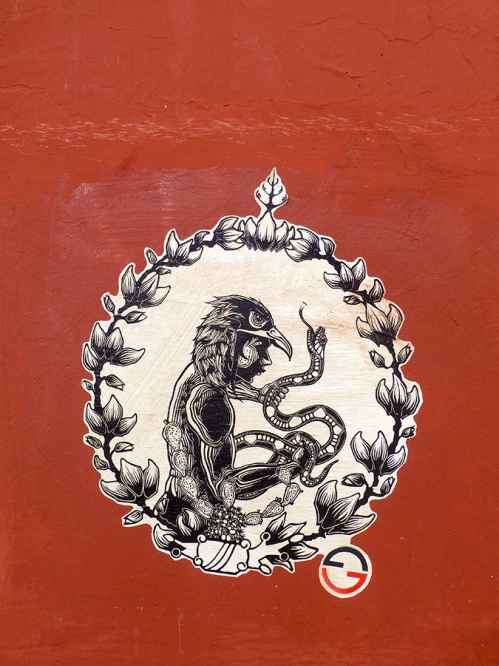
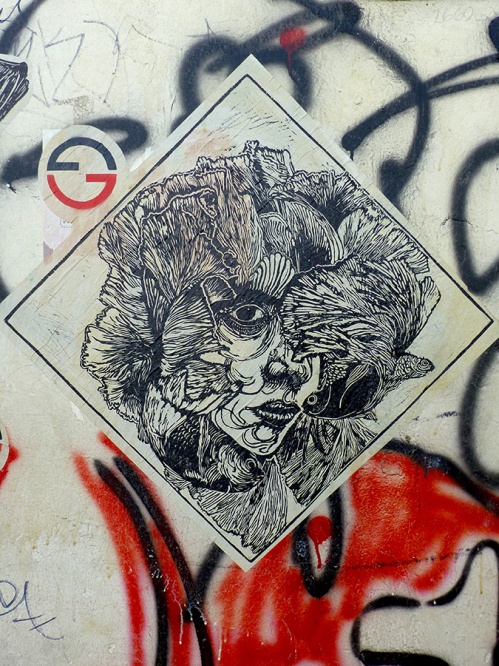



And yesterday, Gabinete Grafico’s artists inaugurated a brick and mortar gallery at Calle de M. Bravo 216 in Oaxaca city.
Posted in Creativity, Culture, Travel & Tourism | Tagged Gabinete Grafico, graffiti, Mexico, Oaxaca, photographs, photos, popular travel destinations, street art, wall art, woodcuts, xilografia | 5 Comments »
February 13, 2017 by spixl
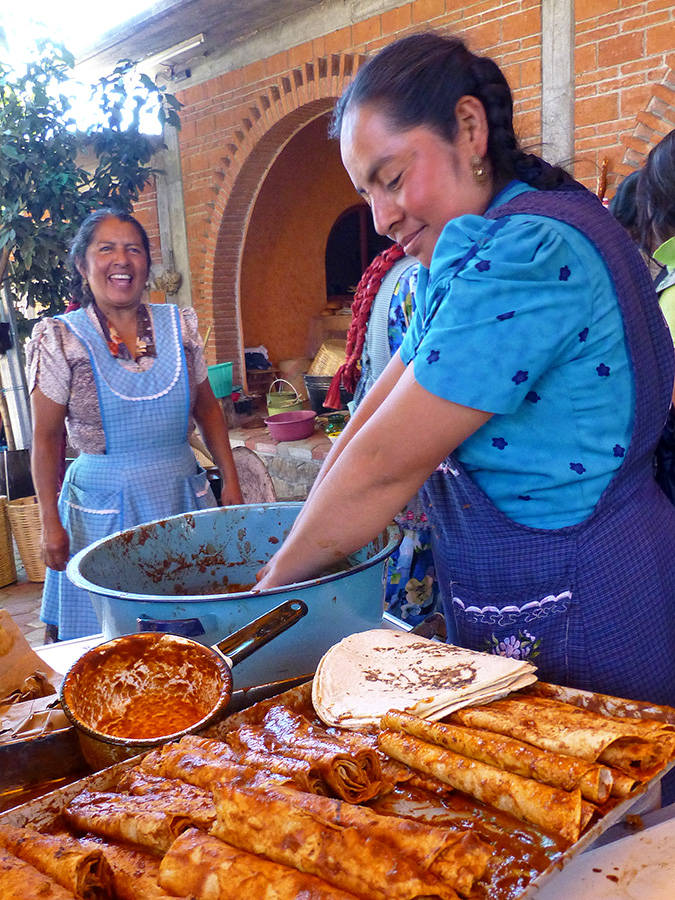
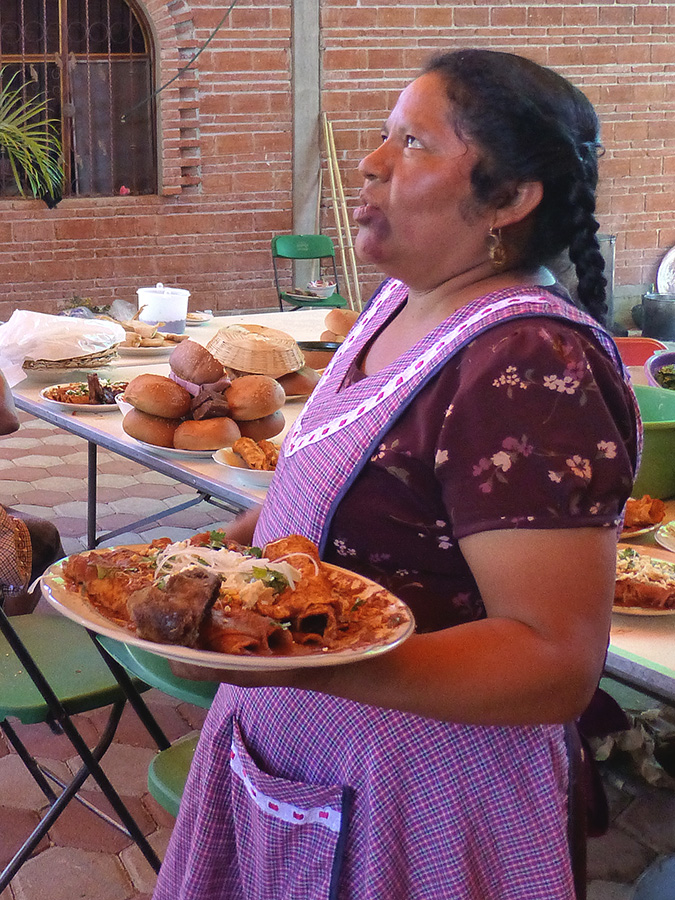
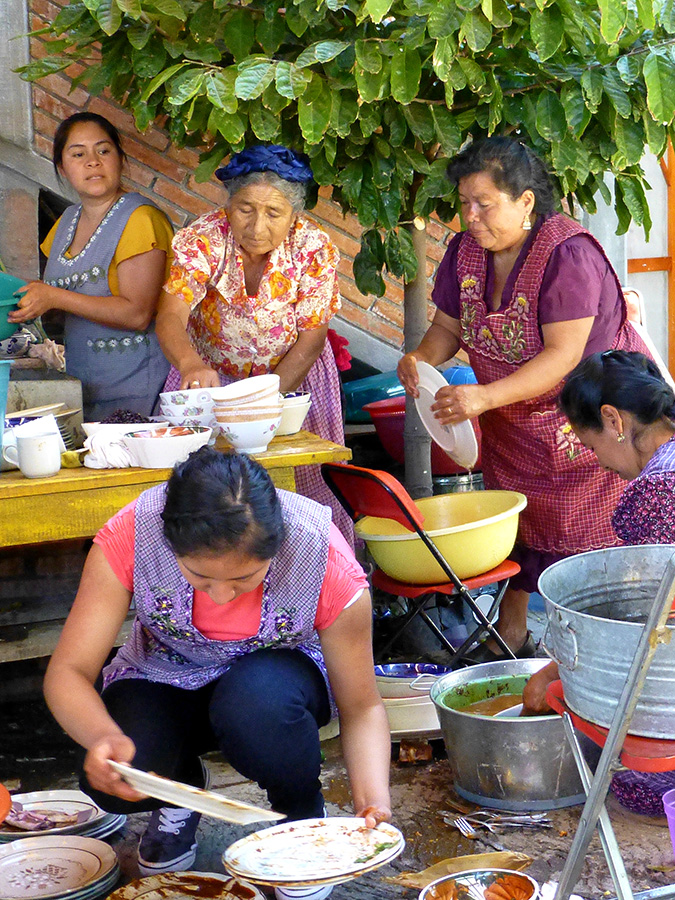
From the outdoor kitchens of Fidel Cruz and María Luisa Mendoza of Casa Cruz and Bulmaro Perez Mendoza, a three-day feast came forth to celebrate the mayordomía (stewardship) of La Virgen de Guadalupe in Teotitlán del Valle.

The roles are set in the stones of the metates…

But, it’s the hands of generations of women…

who continue to shape traditions and nourish bodies and souls.
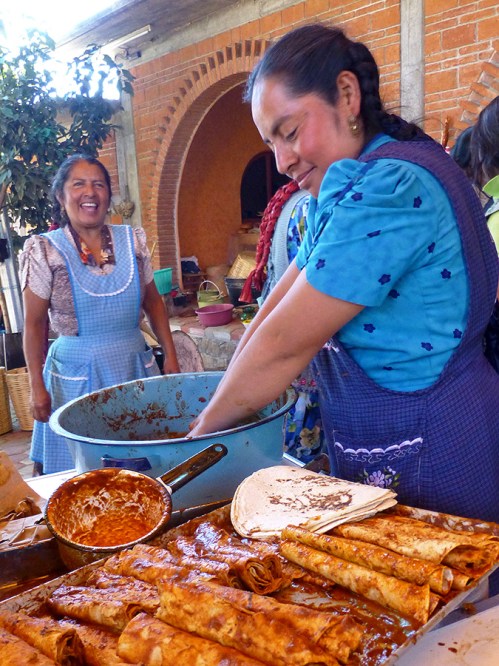
With apron strings tied, the women of Teotitlán del Valle, from celebrated cocinera Abigail Mendoza…
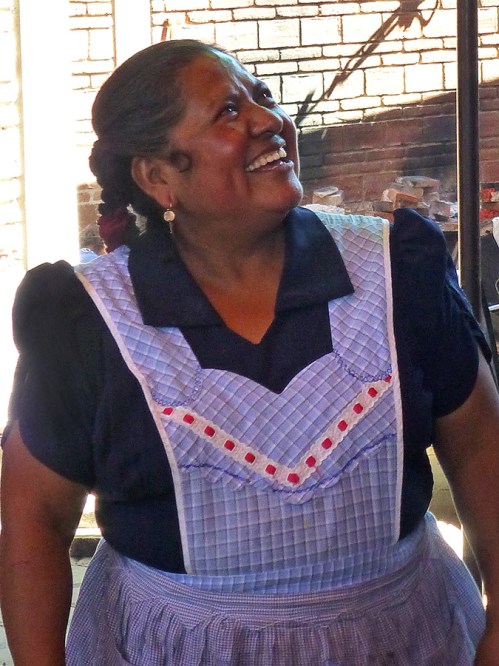
to her sister, María Luisa Mendoza…
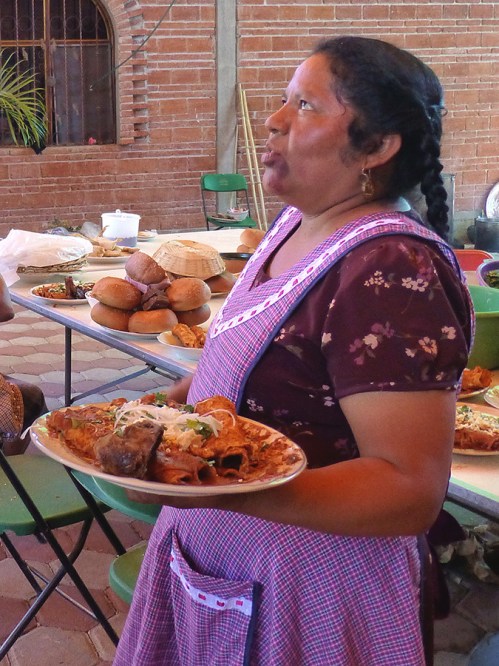
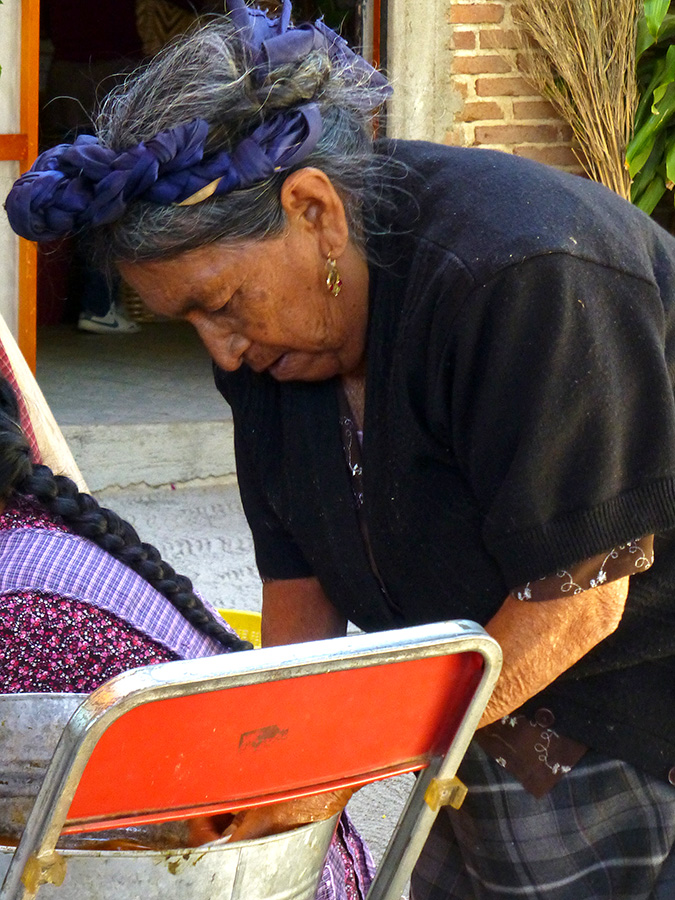
to the abuelas…

and their hijas, nueras, nietas, and sobrinas.
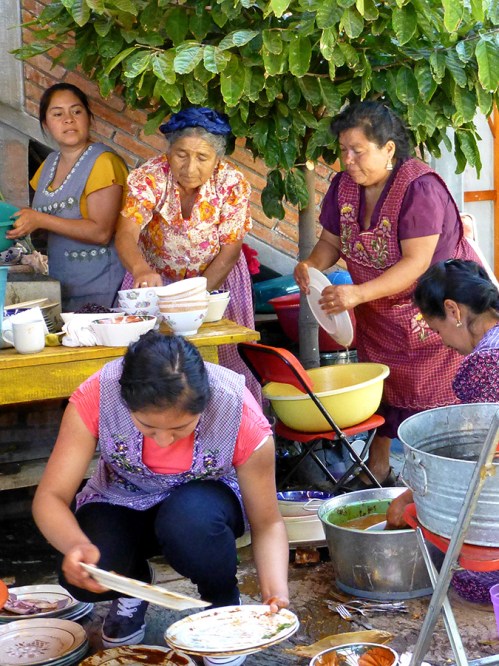
It takes a village of women to make feast.
Save
Save
Posted in Celebrations, Culture, Food, Travel & Tourism | Tagged Abigail Mendoza, Maria Luisa Mendoza, mayordomía, Mexico, Oaxaca, photographs, photos, popular travel destinations, stewardship, Teotitlán del Valle, Virgen de Guadalupe | 5 Comments »
February 10, 2017 by spixl
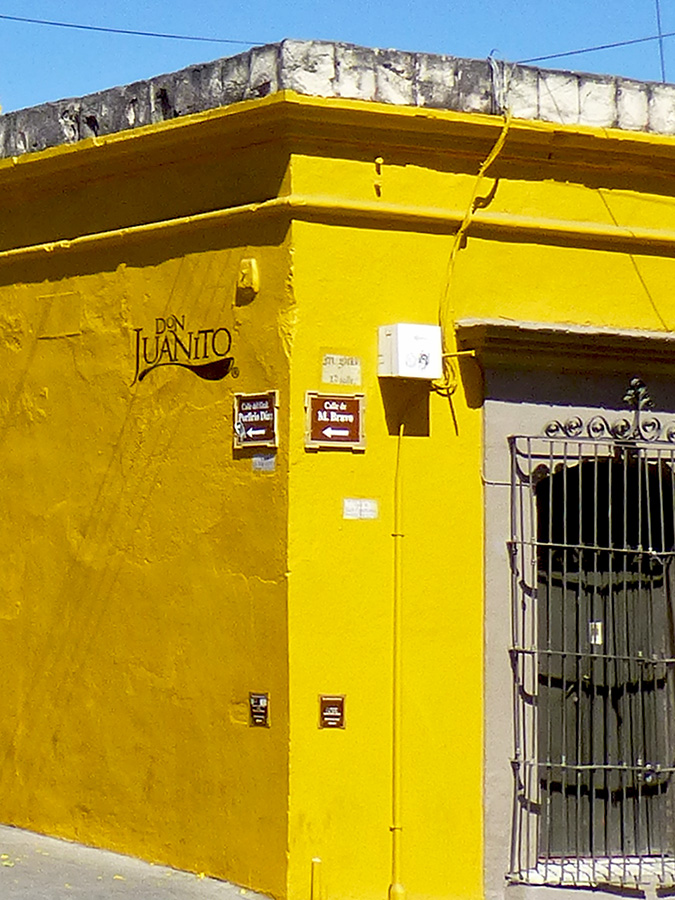
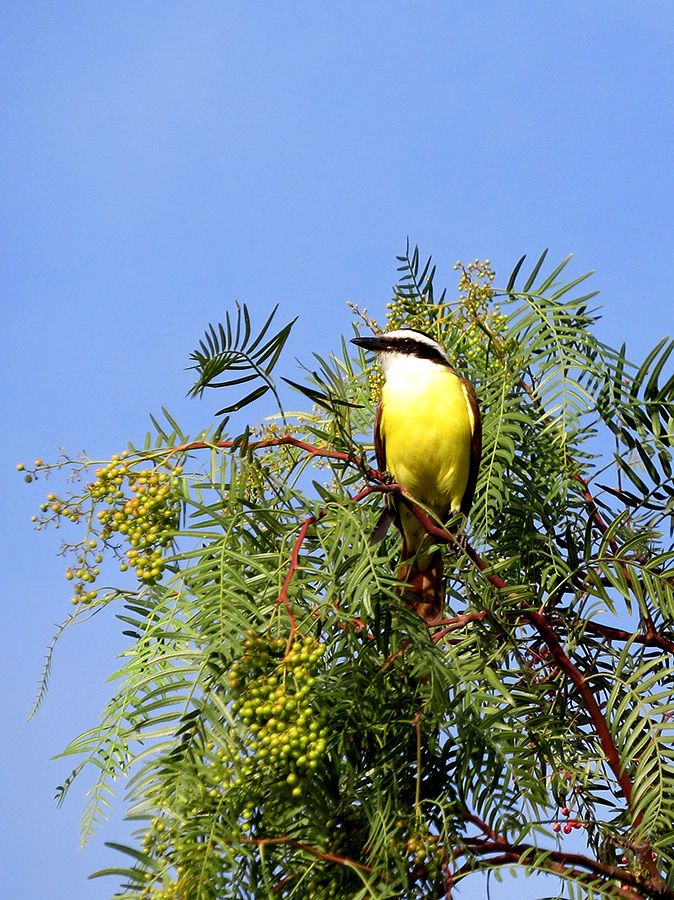
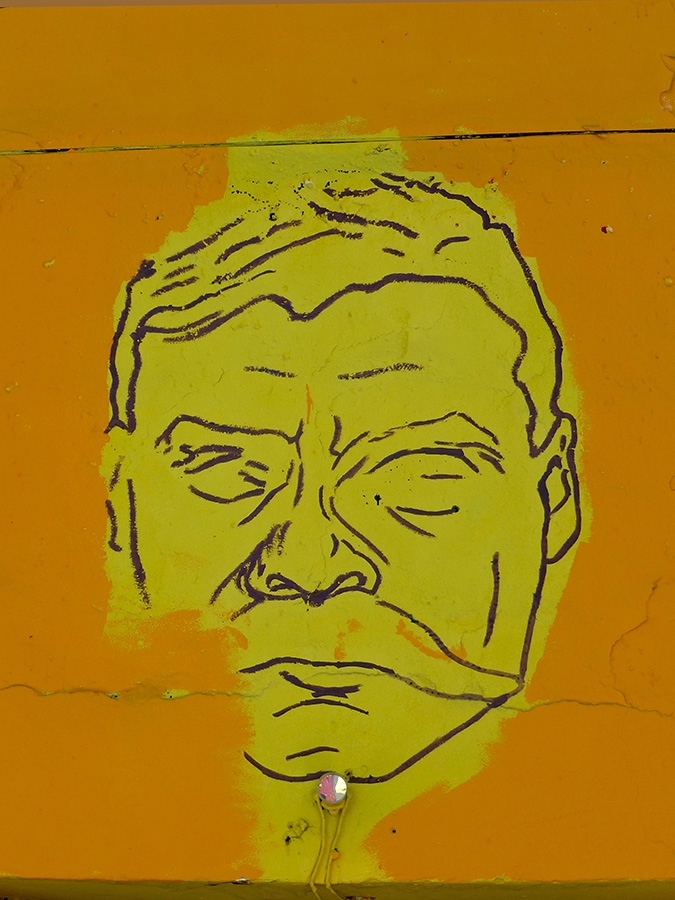
Yellow is the color of winter in Oaxaca, be it flora, fauna, or nature-inspired human intervention…
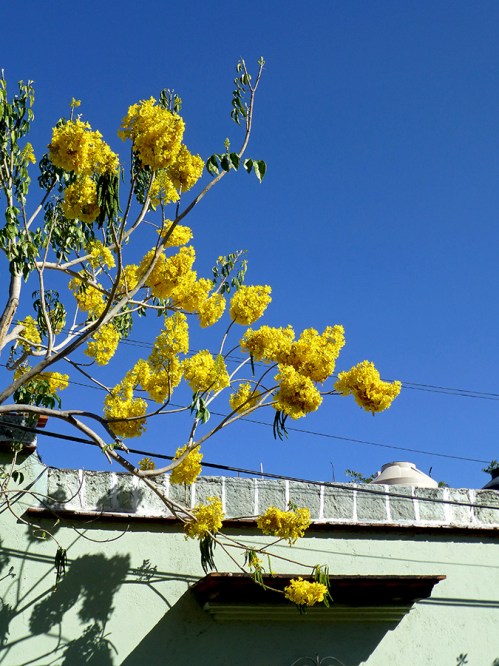
Primavera amarilla (Tabebuia chrysantha) on Calle Porfirio Díaz.
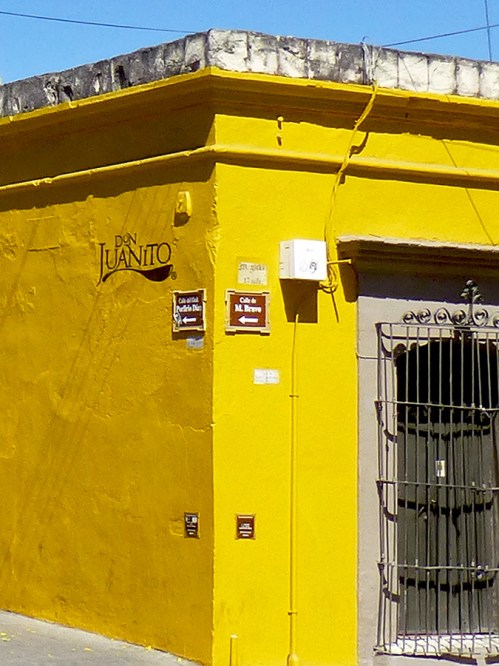
Corner of Calle Porfirio Díaz and Calle de M. Bravo.

Great Kiskadee sitting in the tree next door surveying the scene.

Emiliano Zapata looks out from above the entrance to Espacio Zapata and Atila del Sur restaurant.
A. M. A. R. I. L. L. O.
by Edward Kofi Louis
Aim high in life and, always seek for peace!
Making it possible to share with others;
As the sun always rises from the east! !
Resting down west to respect the muse of nature.
In the light of Life,
Lights in the sight of the truth! !
Living with positive morals,
Onward with the joy of life.
Save
Posted in Animals, Creativity, Culture, Flora, Travel & Tourism | Tagged A.M.A.R.I.L.L.O. poem, arboles, art, birds, Edward Kofi Louis, Emiliano Zapata, Espacio Zapata, Greater Kiskadee, Mexico, Oaxaca, photographs, photos, Primavera amarilla, trees, wall art, yellow | Leave a Comment »
« Newer Posts - Older Posts »






























 Mexican Peso Converter

 View From Casita Colibrí