And, for more Irish in Mexico history, I’m re-posting my March 17, 2016 blog post, St. Brendan in Mexico?, below:
The Mexican-Irish connection may date back farther than most of us have considered. Séamus Ó Fógartaigh writes in the essay, Ireland and Mexico, “The first Irishman to set foot on Mexican soil may well have been St. Brendan the Navigator, who, according to legend, crossed the Atlantic Ocean in his ‘currach’ (traditional Irish rowing boat) in search of new converts to the Christian faith. An ancient manuscript found in Medieval European monasteries allegedly described his voyage to strange Western Lands, and is known as the Navigatio Sancti Brendani Abbatis. Some historians claim that Christopher Columbus found inspiration for his seafaring adventure in the pages of the Navigatio of St. Brendan the Abbot.” And, he notes, there is even speculation that Quetzalcóatl was actually a deified Irish monk.
As you raise your pint of Guinness on this St. Patrick’s Day, consider this and the other Mexico and Ireland connections, while you sing a rousing chorus of Saint Patrick Battalion.
The song celebrates the Batallón de San Patricio, the Irish-American soldiers who deserted and fought alongside the Mexican army against the United States during the Mexican American War, 1846-1848. And, don’t forget to watch One Man’s Hero, the 1999 feature film about the San Patricios, starring Tom Berenger.
Sláinte mhaith! ¡Salud! And, remember, don’t drink and drive!
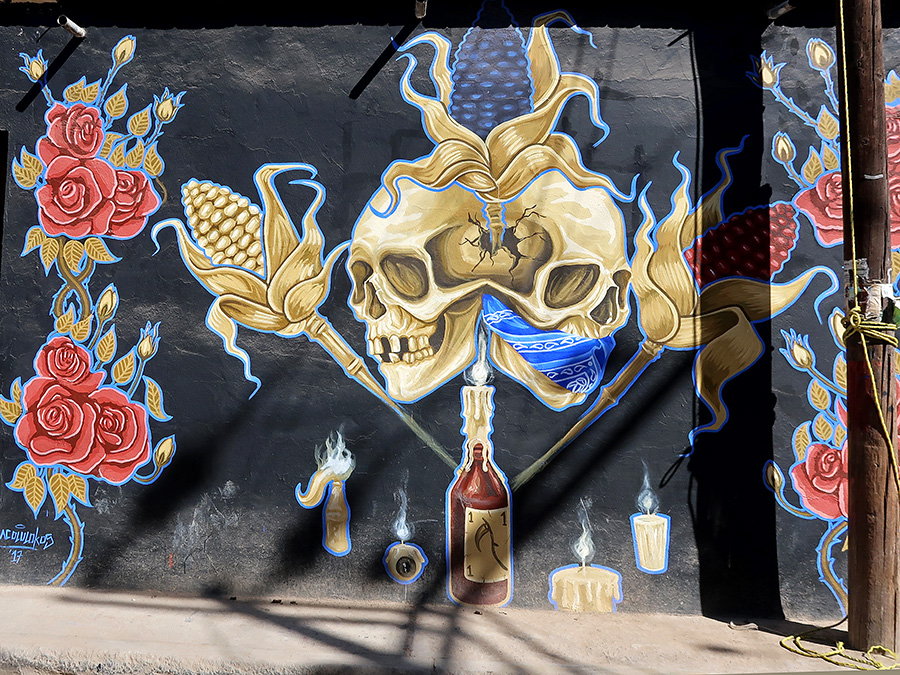
On Calle de Ignacio Allende at the corner of Tinoco y Palacios, a new mural is ready to take you on a magic carpet ride.
Well, you don’t know what we can find Why don’t you come with me little girl On a magic carpet ride You don’t know what we can see Why don’t you tell your dreams to me Fantasy will set you free Close your eyes girl Look inside girl Let the sound take you away
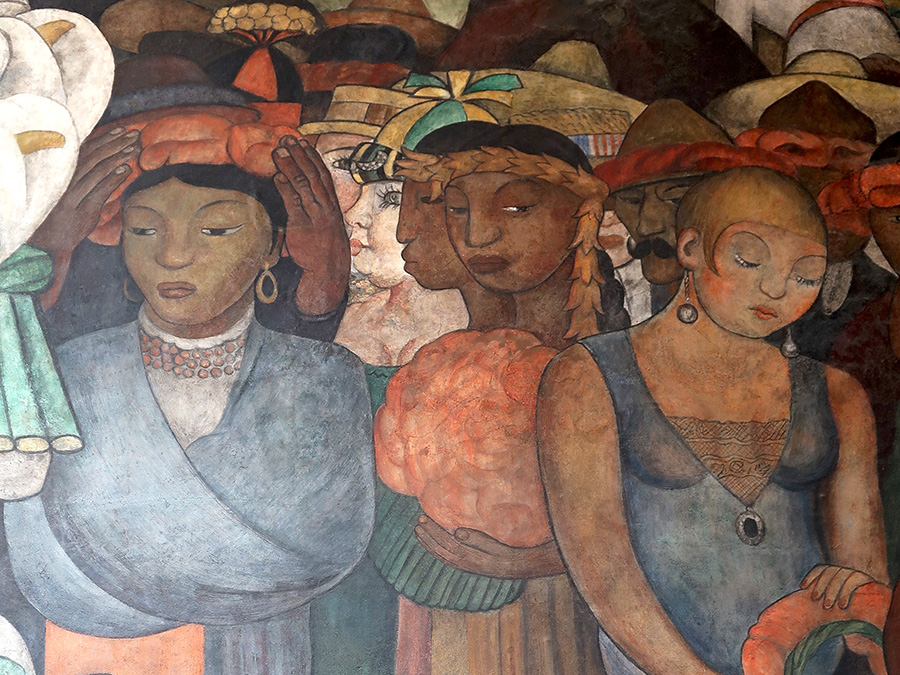
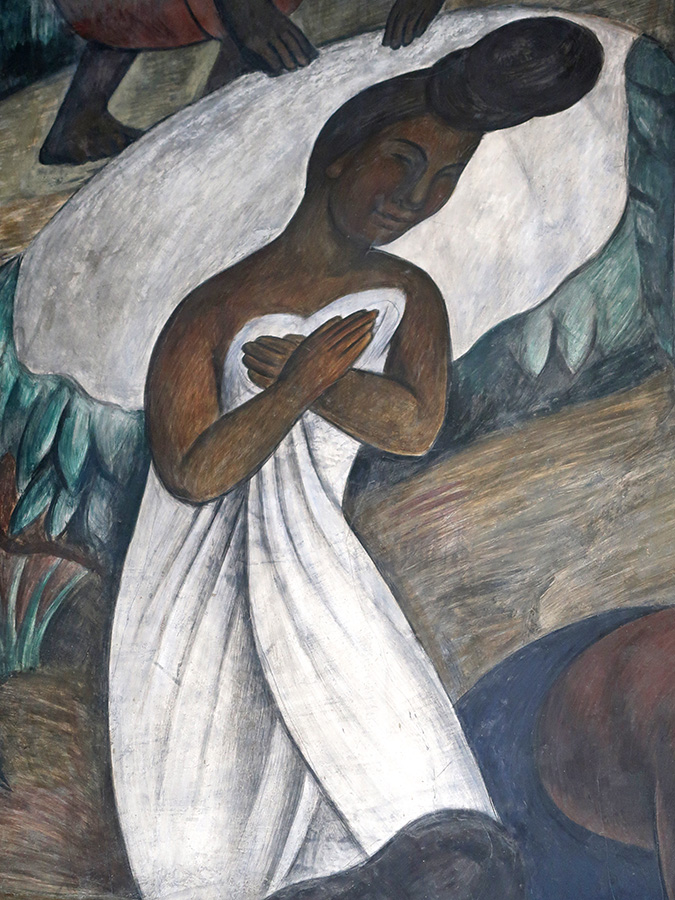
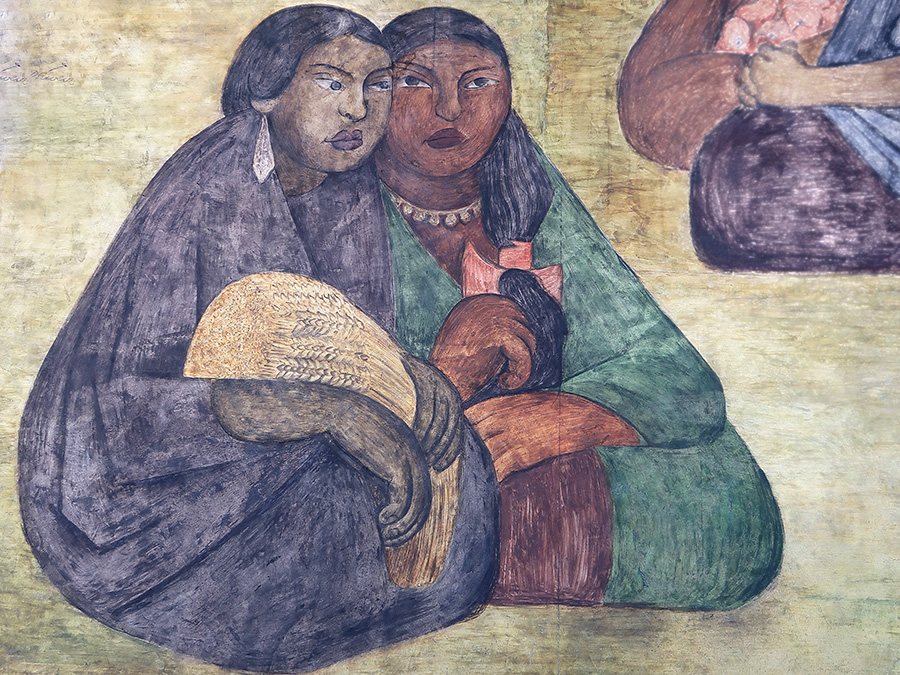
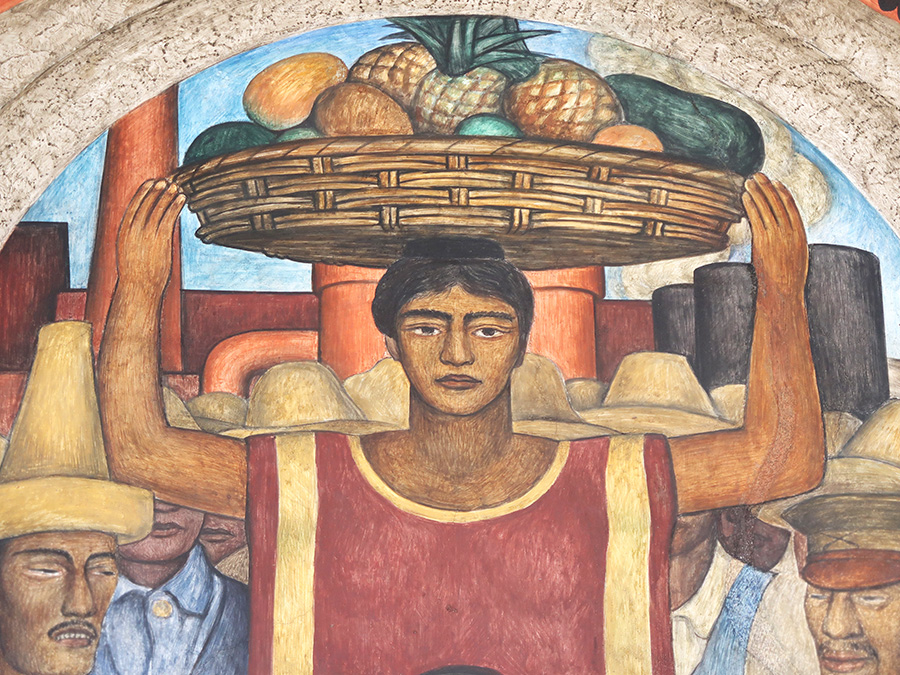
I was recently in Mexico City, where I spent hours at the Secretaría de Educación Pública (Secretariat of Public Education) building marveling at the three floors of murals by Diego Rivera. And so, in honor of International Women’s Day, some of the women in the murals…
Happy International Women’s Day to the women of the world! May your strength, creativity, intelligence, and love prevail.
Congratulations to Coco — winner of the 2018 Academy Award for Original Song, “Remember Me” (“Recuérdame”), and winner for best Animated Feature Film. Most of all, felicidades to all the bisabuelas (great-grandmothers) and abuelitas (grandmothers) who inspired the character of Coco with their strength, pride, and love.
They came, they saw, they styled, and they carried flowers! This past Friday, it was the turn of Prepatoria No. 6 to continue the “only in Oaxaca tradition” of Viernes del Llano — aka, Paseo Juárez el Llano or Paseo de los Viernes de Cuaresma.
For the first five Friday mornings of Lent, young women in their second, fourth, and sixth semesters at the prepatorias (grades 10-12 in the USA) of the Universidad Autónoma Benito Juárez de Oaxaca (UABJO), circle the statue of Benito Juárez in Llano Park, collecting bouquets of flowers, in this 45-year old tradition that traces its origin back to the nineteenth century — some say, even further.
There seemed to be a record number of young women this week — at least 30 — being cheered on by their families and home room supporters and ably assisted by their male flower-carriers.
Yes, there are winners in various categories (I think, largest number of flowers collected, most photogenic, best social media, and one or two others) and an overall “Madrina del Viernes” (Godmother of Friday) is chosen. However, all seem to leave in great spirits — and blogger buddy Chris has even spotted a few down at the local salón de billar shooting a little pool later in the morning.
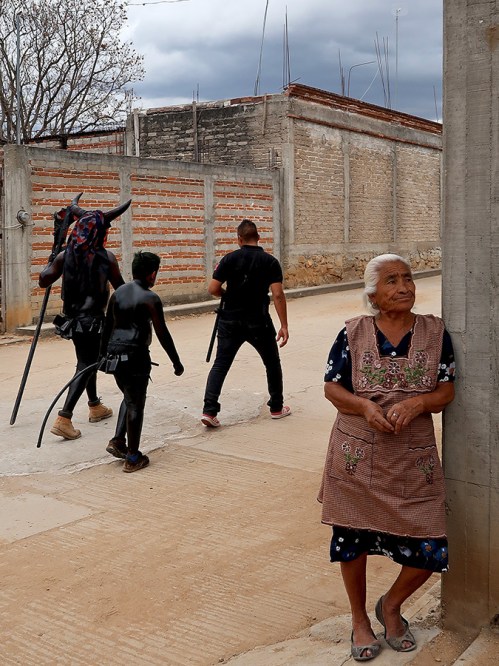
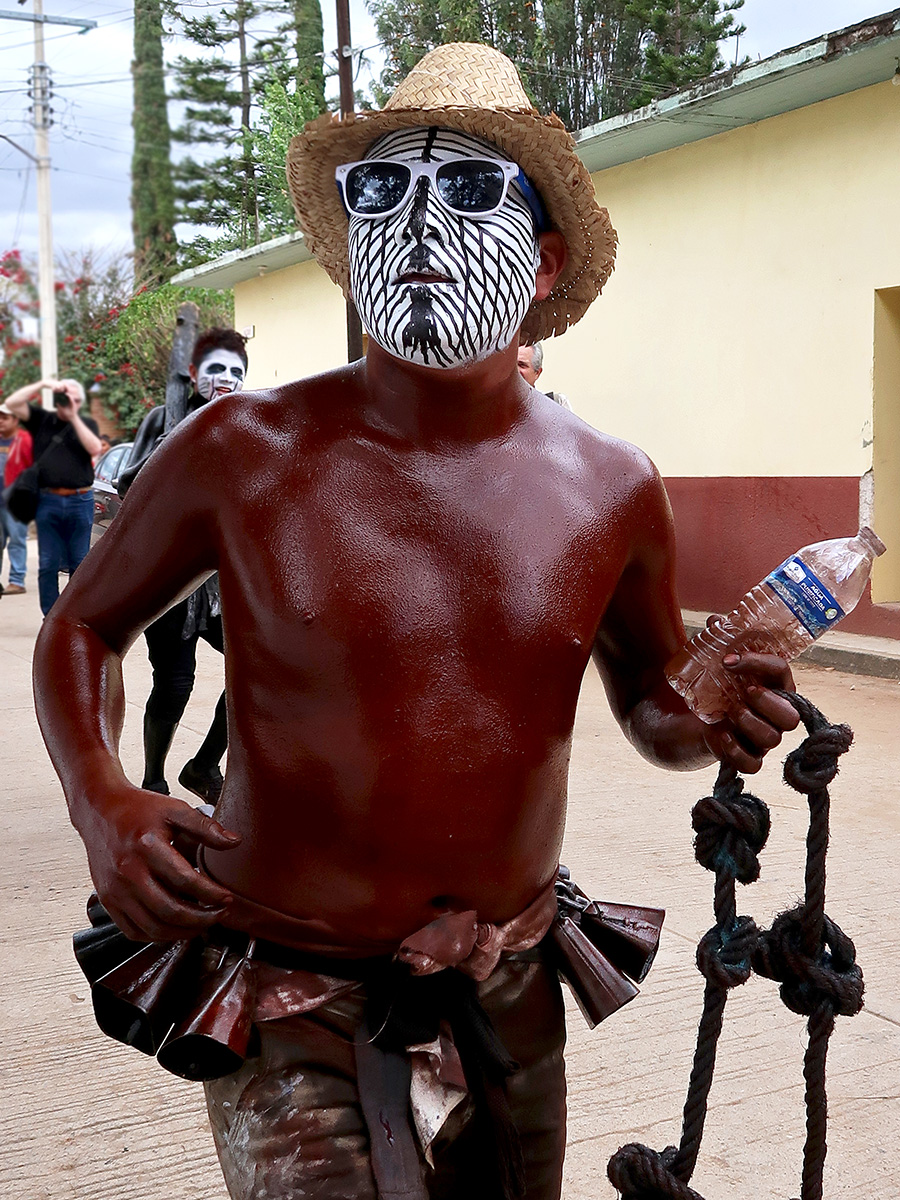
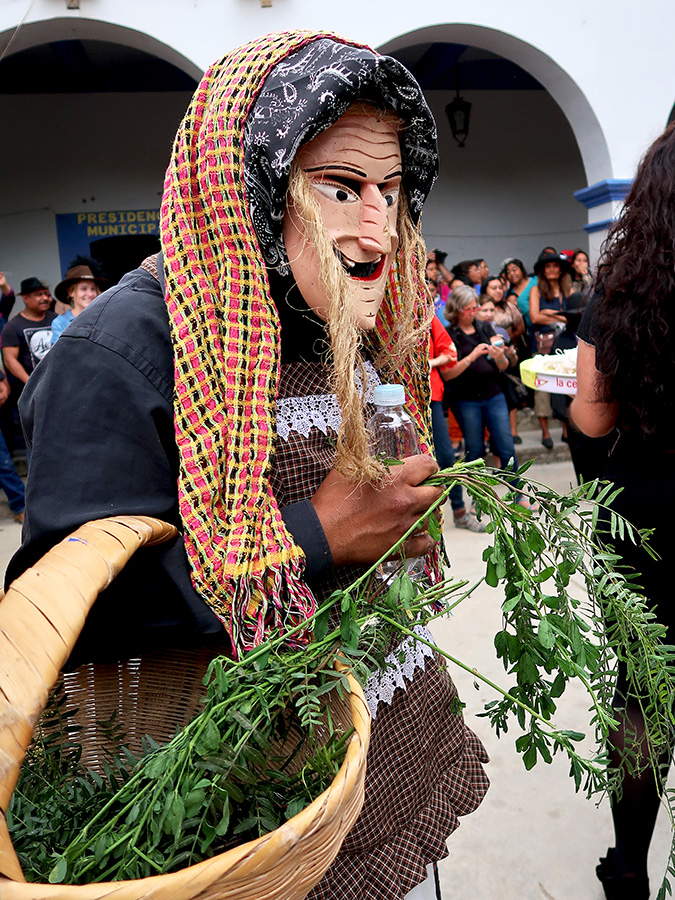
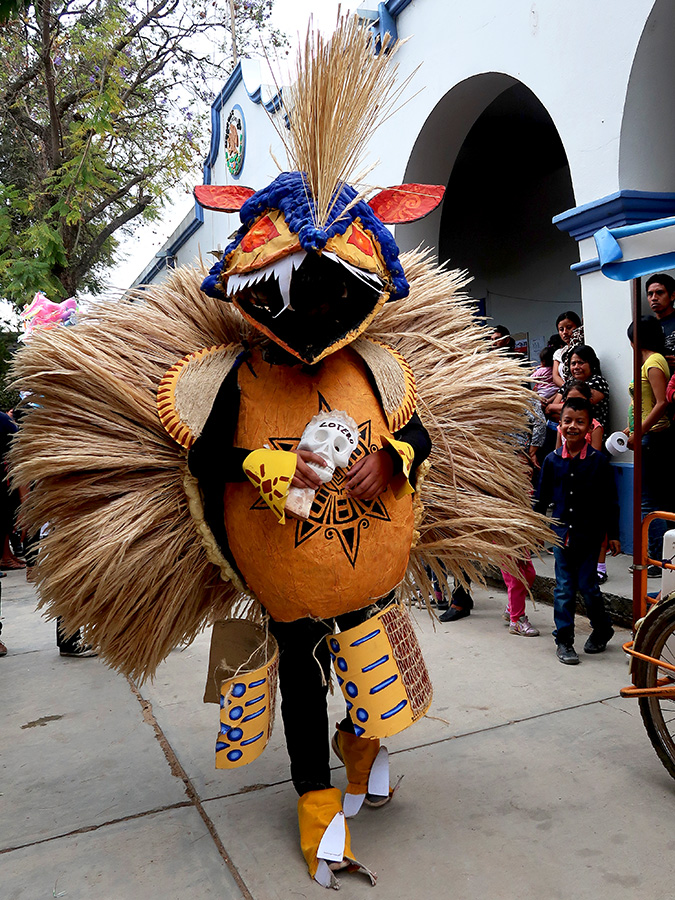
Día de Carnaval (aka, Fat Tuesday, Mardi Gras, Carnival), a day to let the good times roll before the sacrifices of the Lenten season, has come and gone. And, again, blogger buddy Chris and I headed out to the surreal celebration in San Martín Tilcajete. Driving into the village, one soon hears, rather than sees, that this isn’t a normal day in this wood carving village 17 miles south of the city — the streets are alive with the sound of cow bells. Roaming the dirt back roads and paved main street, los encabezados (guys covered in motor oil or paint) come running past — with cow bells tied around their waist — making mischief and startling the unaware.
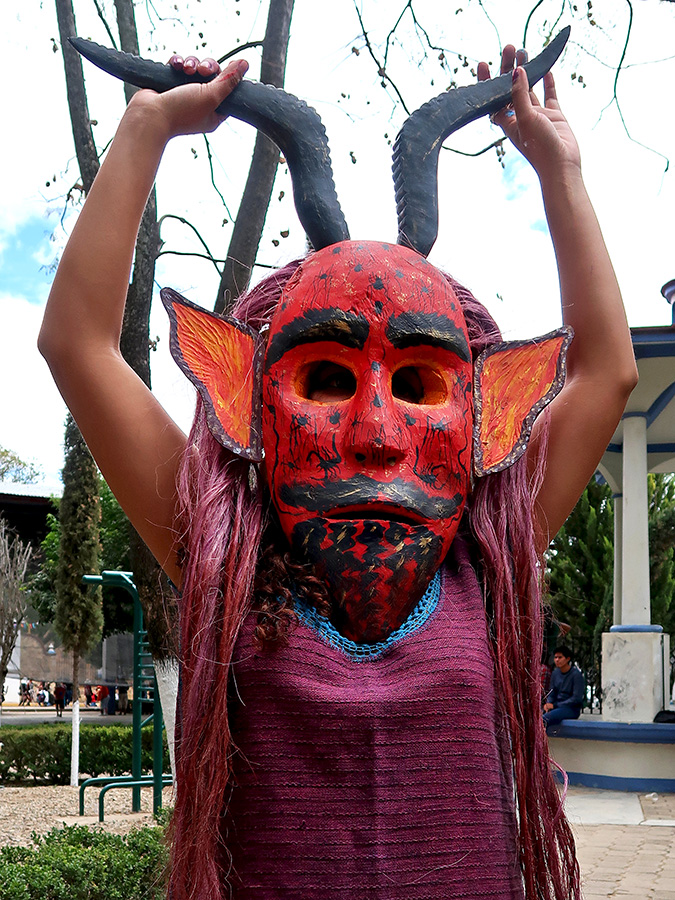
Masks, all the better to hide one’s identity when making fun of the powers that be, are an international carnaval tradition. Thus, in this village, known for its fantastically painted wood carvings, wooden masks play a big role in the celebration — including several by our friend Jesus Sosa Calvo and his family at Matlacihua Arte.
This is a town where creativity reigns supreme and the costumes seem to get more whimsical and weirder every year.
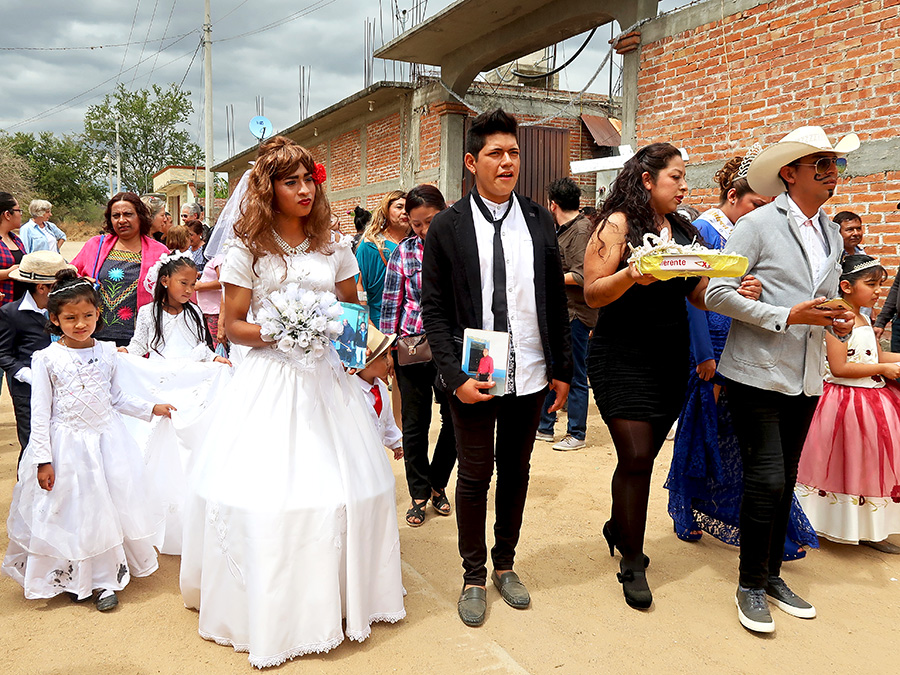
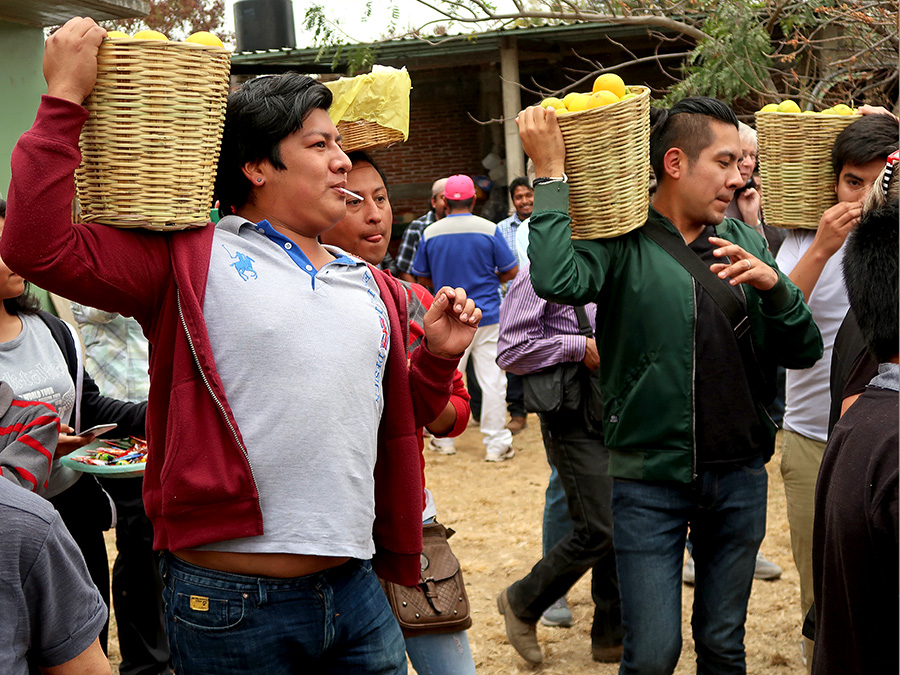
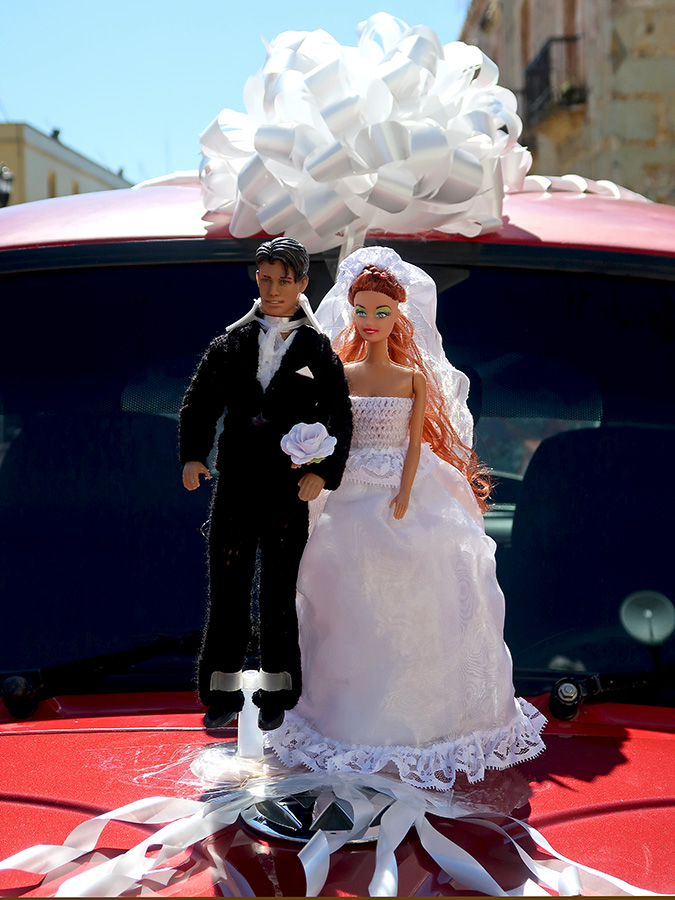
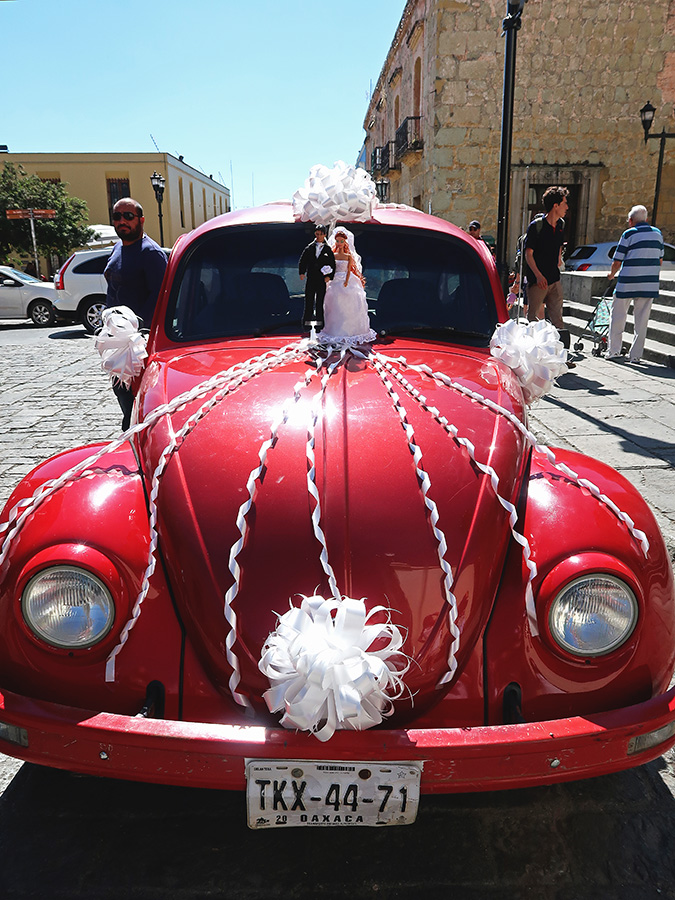
Oh, and did I mention there is a wedding? Well, actually a parody of a traditional village wedding. There is much pomp and circumstance, hilarity, and music — not to mention, breakfast and lunch for wedding guests — as participants move from the house of the mayor, to the home of the bride, and to City Hall for the civil ceremony. Dancing in the plaza follows and then, at some predetermined time, there is a procession through the streets before arriving at another house where the happy “couple” kneel before “priest” for the religious ceremony.
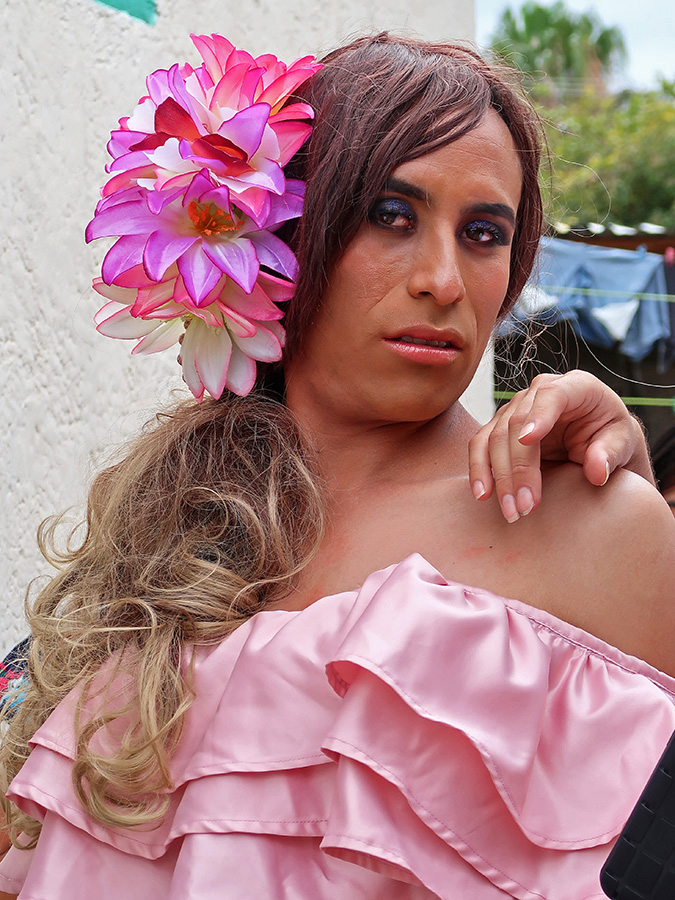
And, you might want to take a second look at those beautiful wedding guests with the smoldering eyes and modeling the gorgeous gowns. They are not what they seem — and that includes the bride.
The Spanish brought the Carnaval tradition to Mexico because, like many other seasonal celebrations, it conveniently coincided with indigenous festivals celebrating the “lost days” of the Mesoamerican calendar, “when faces were covered to repel or confuse evil.” Evidently it caught on, “because it was one time when normal rules could be broken…” And, San Martín Tilcajete certainly knows how!!!
By the way, many from the creative team of the movie Coco came to enjoy the festivities and renew acquaintances in this town that provided the inspiration for the alebrijes in the film. “De Oaxaca tomamos los alebrijes, la celebración del Día de los Muertos, toda esa energía y colores están en los paisajes de la película. Quise ser lo más fiel en esta investigación y plasmarlo en la cinta…” (“From Oaxaca we take the alebrijes, the celebration of the Day of the Dead, all the energy and colors are in the landscapes of the film…”) (NVI Noticias, 2/14/2018)
Without a doubt, blogging about living in Oaxaca has brought a myriad of fascinating, knowledgeable, and just plain fun people into my life. Thus, after meeting through my blog a couple of years ago, Kalisa Wells and I finally met in person last week at a textile talk at the Oaxaca Lending Library. Given that we both love textiles, we arranged to rendezvous a couple of days later at a Museo Textil de Oaxaca expo-venta.
While I was acquainted with the work of most of the artisans from Oaxaca on display, I was unfamiliar with the weaving of Ahuirán, Michoacán. Kalisa has a long history with traveling, living, and loving Mexico — including Michoacán.
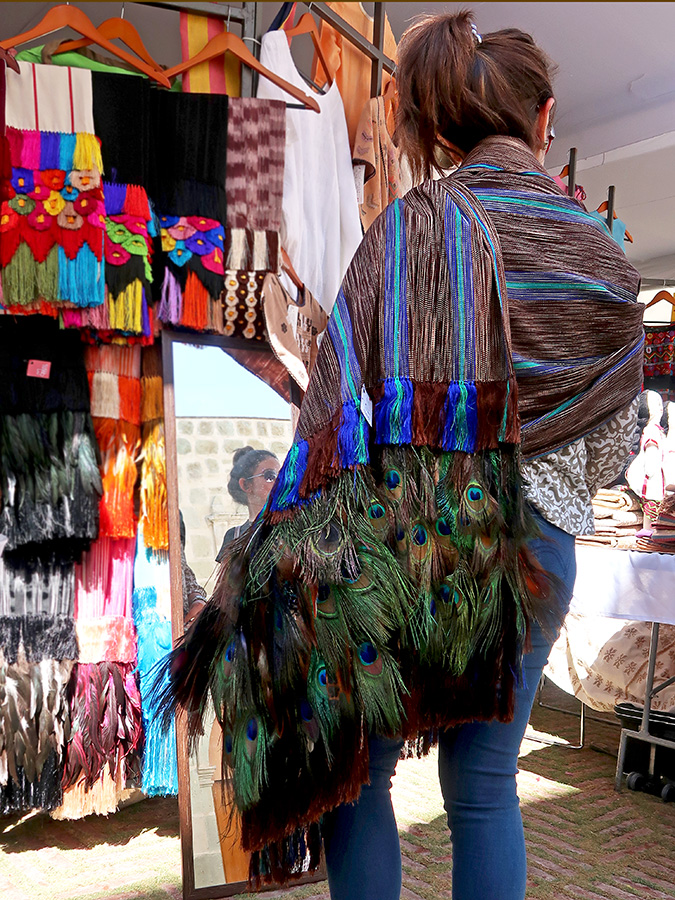
Among other innovations, Cecilia brought back the pre-Hispanic Purépecha tradition of using feathers in weaving. Multiple layers of individual feathers are hand sewn into the fringe of many of her beautiful backstrap woven rebozos (shawls) — providing an ethereal elegance to these staples of women’s attire in Mexico.
One of the daughters soon had us draped in these works of art, where we drew a crowd — some of whom also couldn’t resist being wrapped in the beauty of these exquisite pieces. Meeting new people almost always leads to learning new things and experiencing culture in more personal ways.
After three weeks in el norte, all my bags are packed and I’m ready to return to Oaxaca. While malls and supermarkets abound here in the San Francisco Bay Area, shopping doesn’t hold a candle to experiencing the Sunday market in Tlacolula de Matamoros.
Sidewalk murals greet shoppers on their way to the mercado.
Wearing traditional skirts, blouses, rebozos, and aprons, vendors compete for customers.
Stopping inside the mercado for barbacoa de chivo is a delicious way to take a break.
The apron selection, like everything else, is mind boggling!
Lastly, another sidewalk mural to send shoppers on their way home.
There is nothing like the life and color of shopping in Oaxaca. ¡Hasta pronto!
While scientists were in the process of identifying four new species of agave, an agave on my terrace…
June 28, 2017
… had a surprise of its own.
July 23, 2017
Seemingly overnight, from its center, a stalk (aka, quiote) began reaching toward the sky.
July 23, 2017
After awhile, buds began appearing along the sides of the stalk.
September 18, 2017
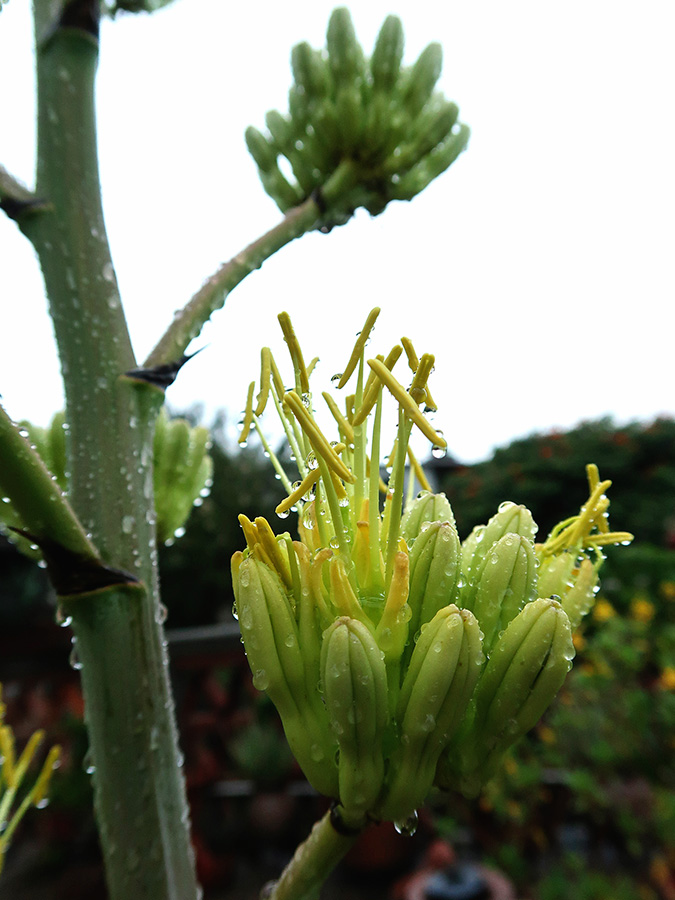
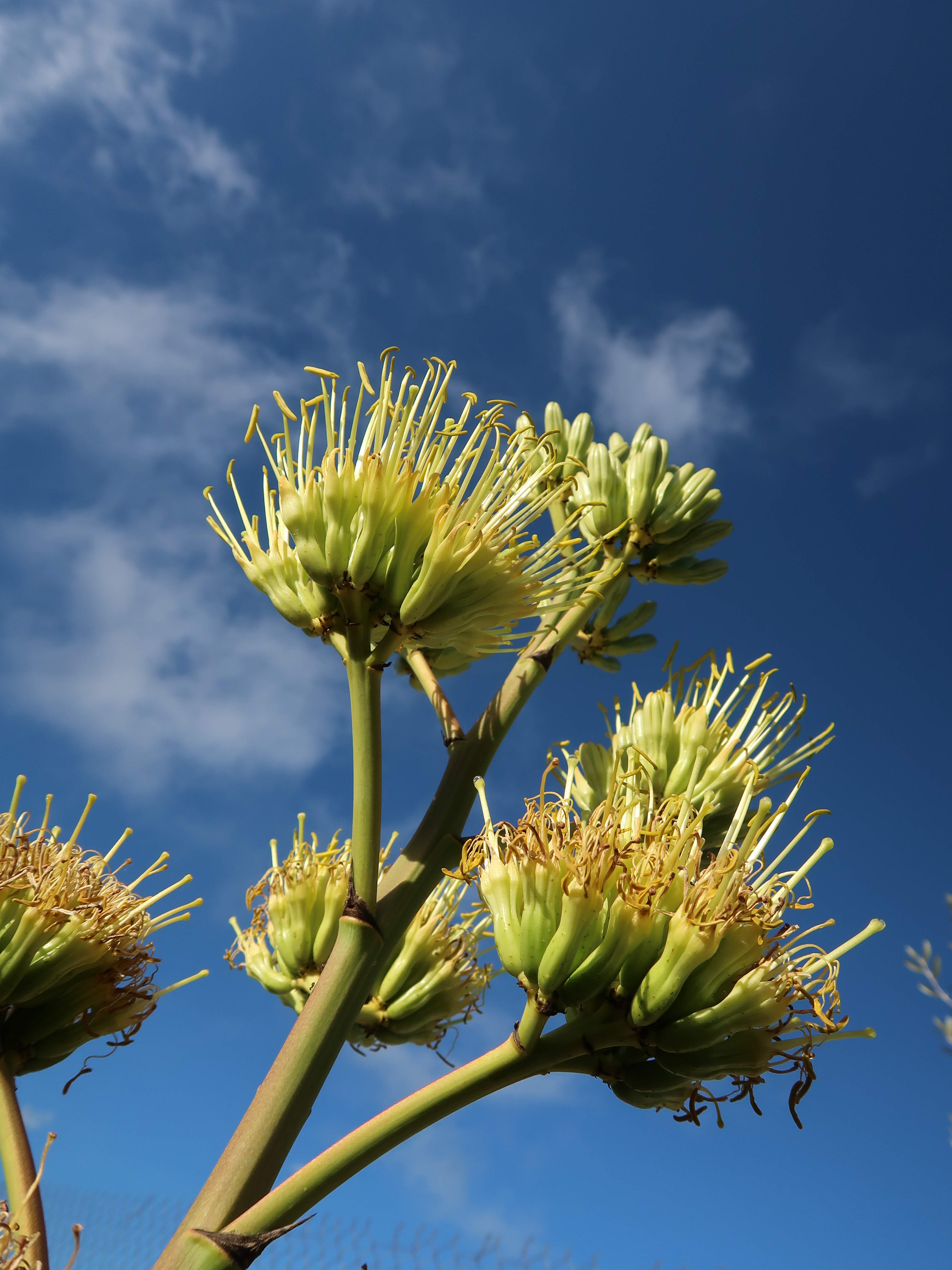
And from the buds, the rainy season brought blossoms.
September 27, 2017
The flowers opened from bottom to top.
October 21, 2017
Eventually, all the flowers browned and seed pods began forming.
November 19, 2017
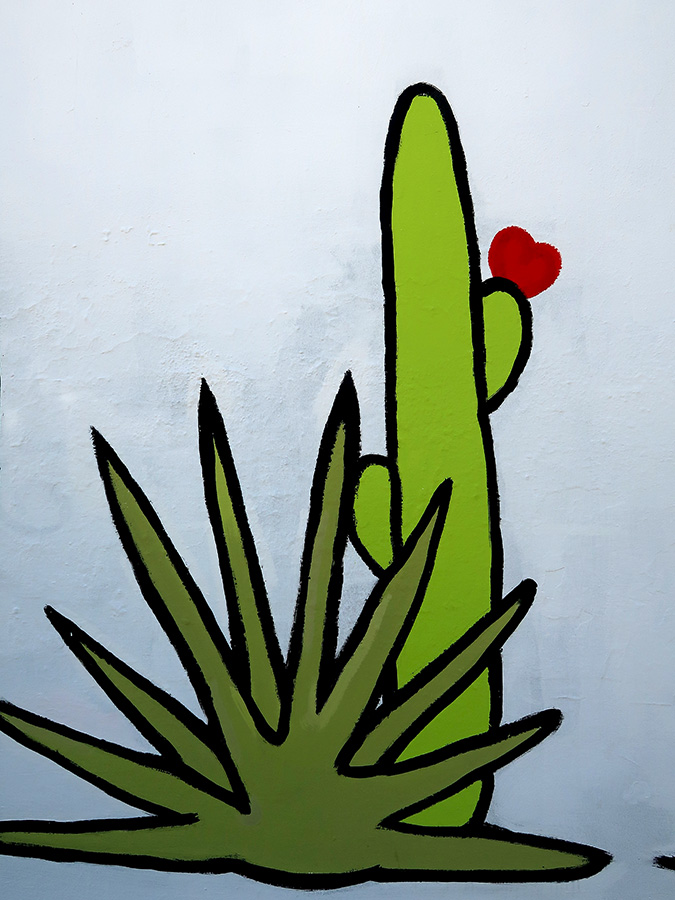
Who knows what I will find when I return to Casita Colibrí next week. What I do know is that this agave is now dying — but there are plantlets waiting to replace it! By the way, quiotes have traditionally been used for firewood (Maybe for my chiminea?) and even to make a didgeridoo-like musical instrument. (Hmmm… I don’t think I’ll try the latter.)
A day late, but not a dollar short, I finally made my way to the San Francisco Bay Area a week and a half ago. The days have been filled with family, friends, and appointments. However, today there was nothing on the agenda, I was worn out from all the activities, and baby it was cold outside. Thus, time to look back through photos earmarked for blog posts that had gone unwritten.
Leaving San Pablo Villa de Mitla after shopping for Pan de Muertos during Day of the Dead, we took a different route out of town and discovered a gymnasium with murals on the walls, both outside…
… and inside. Traditional, political, and colorful imagery to inspire playing your best!
You just never know what you will find when you take the road less traveled.


























 Mexican Peso Converter

 View From Casita Colibrí