It’s been a whole month since I’ve delved into the food porn photo archive. With Thanksgiving only two days away, what better time for a few of my dinners from the past ten days.
Rabbit served on a bed of fettuccine.
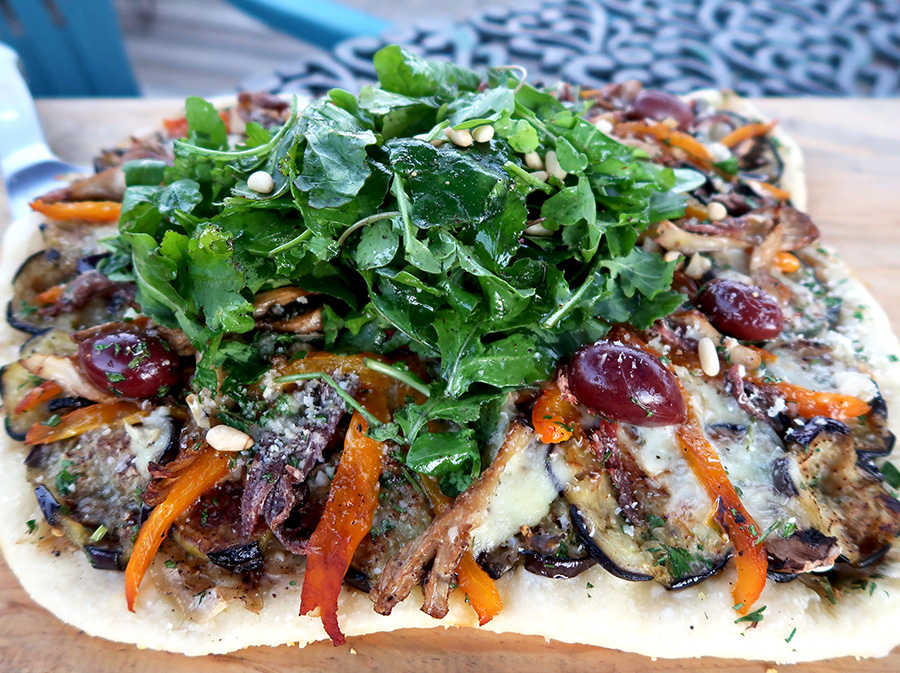
Eggplant, anchovy, and goat cheese pizza topped with arugula.
Roasted chicken served with tortillas (of course), guacamole, pickled red onions, and green salsa.
And, what better time to express my gratitude for having such a great and talented friend and neighbor who delights in sharing her culinary artistry with others. ¡Muchisimas gracias Kalisa!
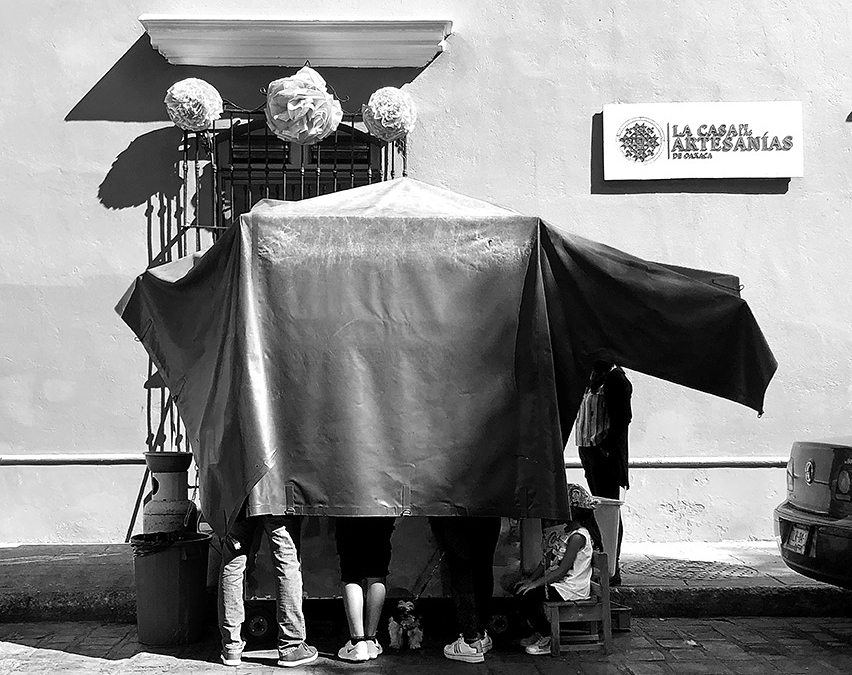
Yesterday, Mexico celebrated the National Day of Mexican Gastronomy and the tenth anniversary of traditional Mexican cuisine being designated by UNESCO as an Intangible Cultural Heritage of Humanity. Due to pandemic restrictions, in the absence of being able to savor the sights, smells, and flavors of a food festival, I honor the day with a photo of one of Oaxaca’s ubiquitous street food stalls.
This one, at the corner of Matamoros and García Vigil, always has customers — big and little, seated and standing, human and canine.
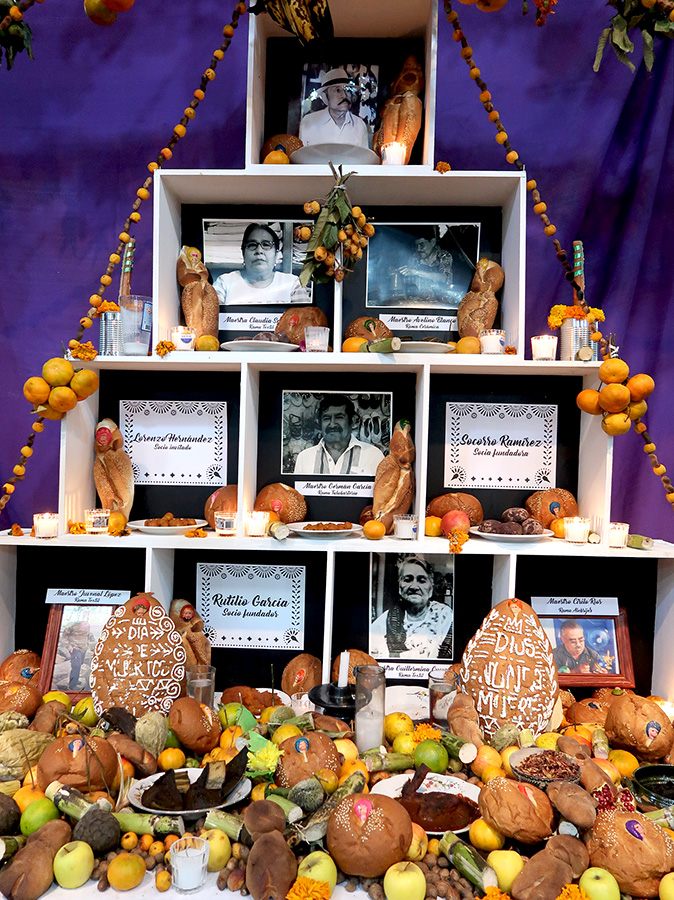
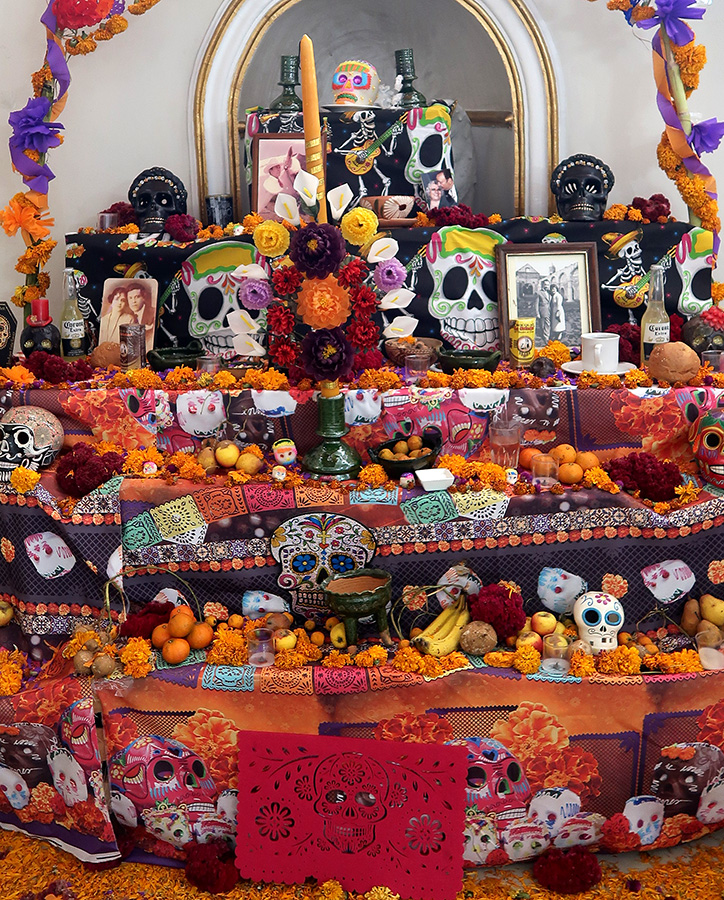
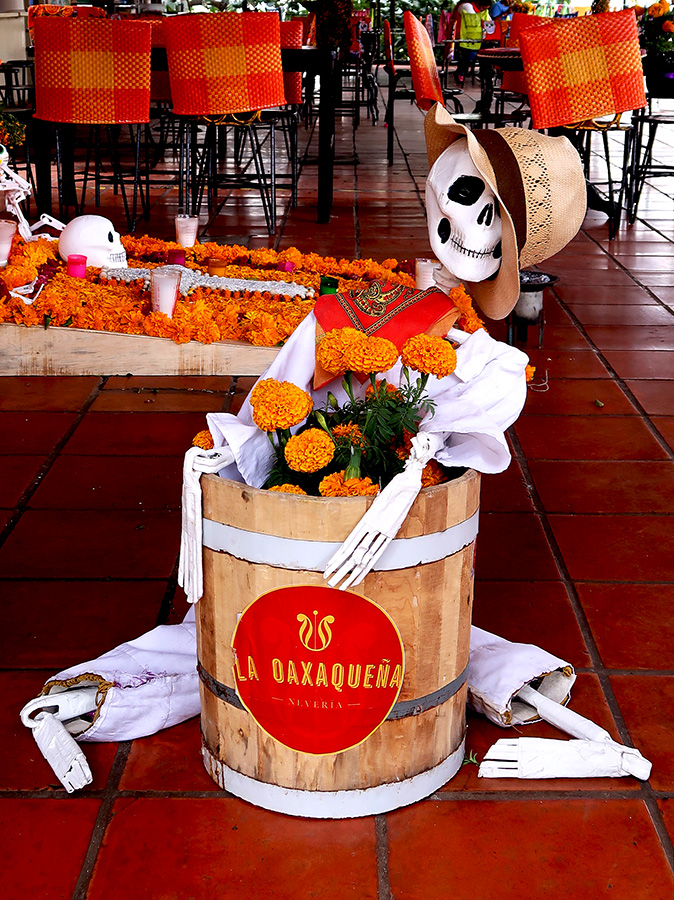
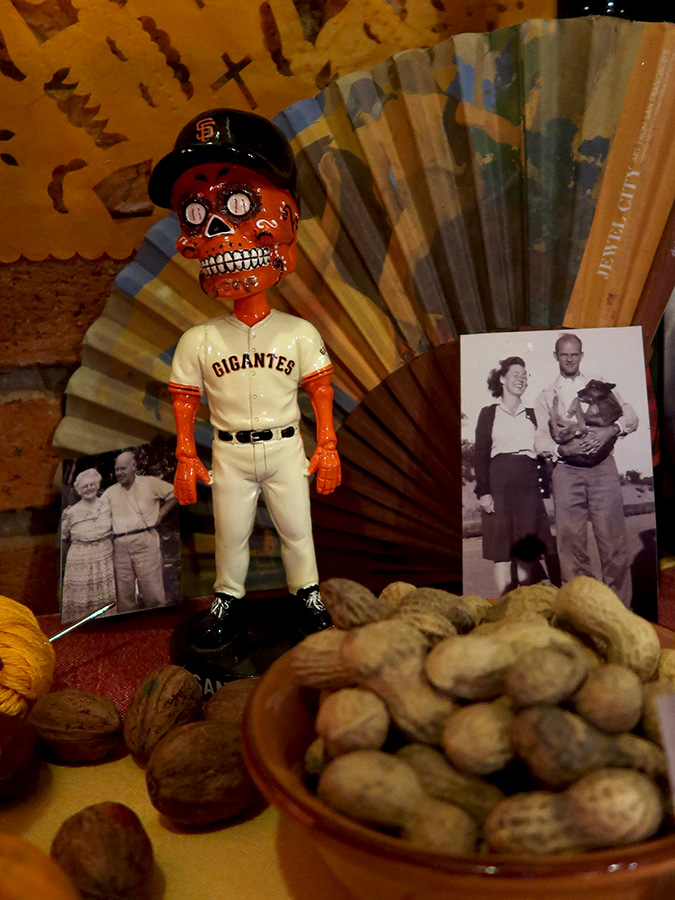
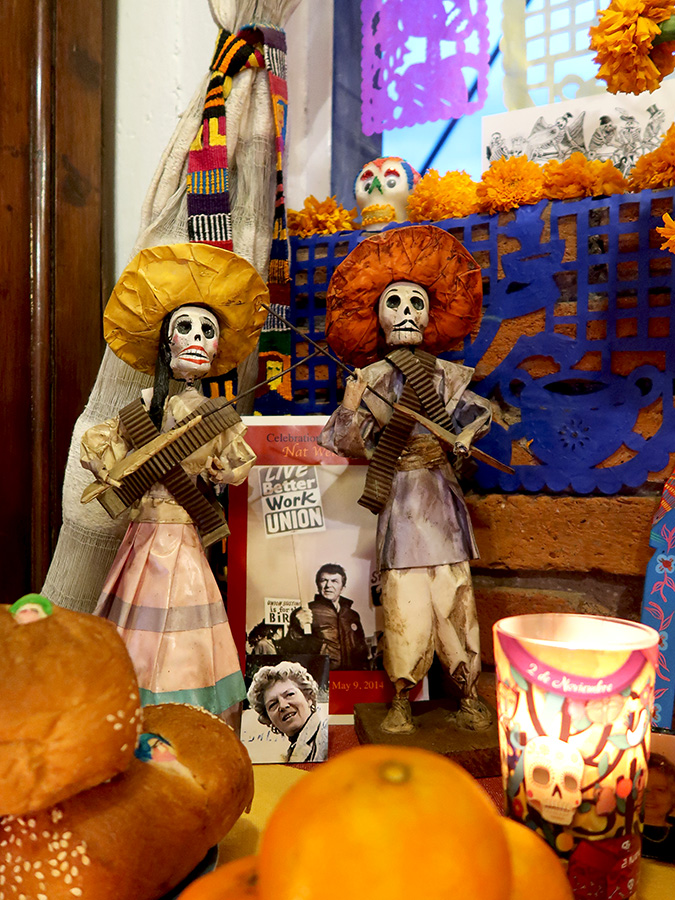
Living and being in Oaxaca during the Días de los Muertos is hard to put into words. There is so much to experience and to think about. It is the ofrendas that touch me the most — they are all so personal, even those on display to the public. And, one of the unexpected delights of tracking down the chairs of the Silla Calavera project, was to see the Day of the Dead ofrendas constructed by the hotels and restaurants also displaying the chairs.
Casa Antica, Av. José María Morelos.Plaza Las Vírgenes, Calle Labastida. Only very occasionally do fires break out!Utilitario Mexicano, Mariano Matamoros.La Casa de las Artesanías, Mariano Matamoros.Hotel Casa Garay, Calle Miguel Cabrera.On the Zócalo, ofrenda for Tomás Martínez, a leader of the Frente Popular Revolucionario.La Mano Mágica, Calle Macedonio Alcalá. Photo of Arnulfo Mendoza on the top right. I can’t believe it’s been 6-1/2 years since his passing.Hotel Trébol, Ricardo Flores Magón.Hotel Casa Vertiz, Calle Reforma.Hotel Marqués Del Valle, bordering the Zócalo.Jardín Sócrates neveria next to Basilica of Nuestra Señora de Soledad.
Sensory overload challenges the limits of heart and mind and, especially this year, my emotions ran the gamut from extreme exhilaration to quiet joy to being moved to tears.
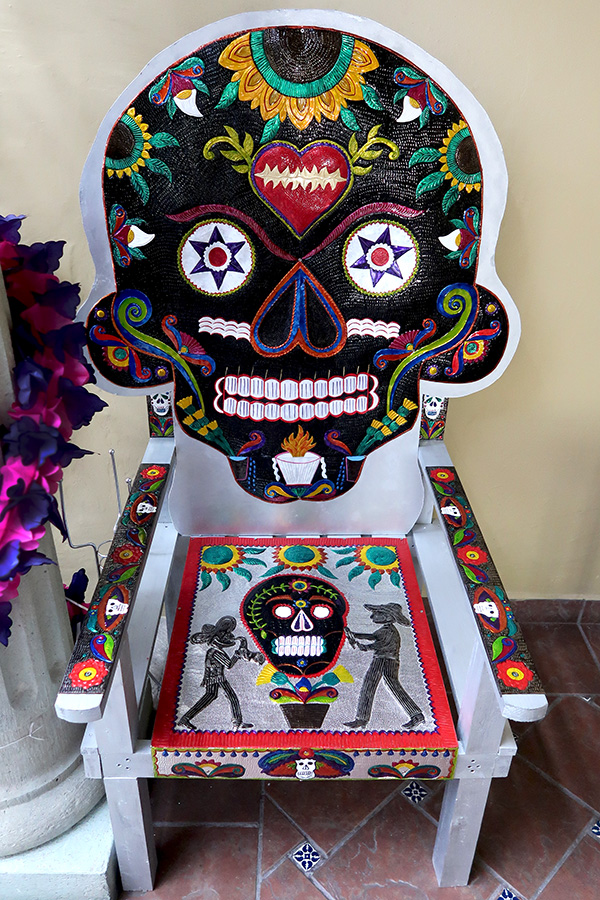
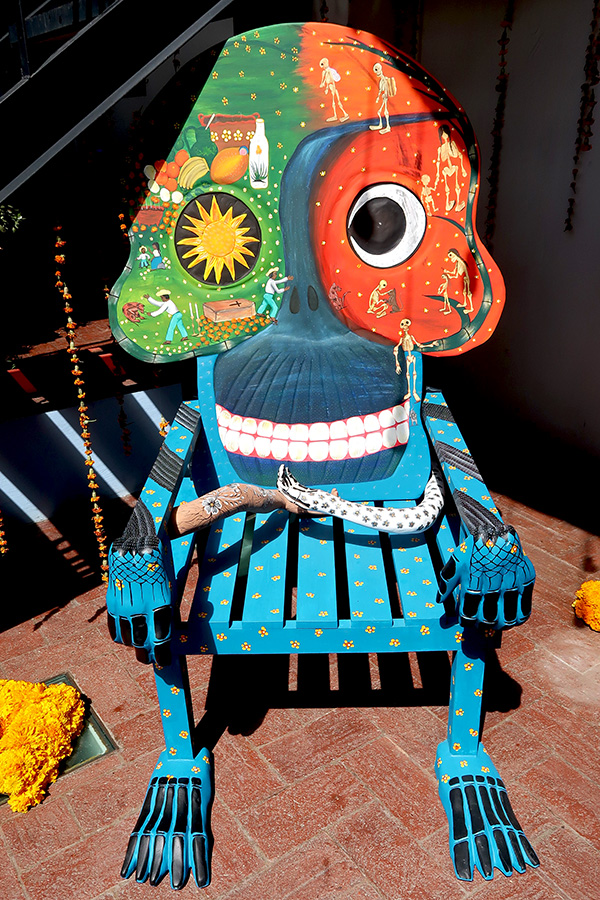
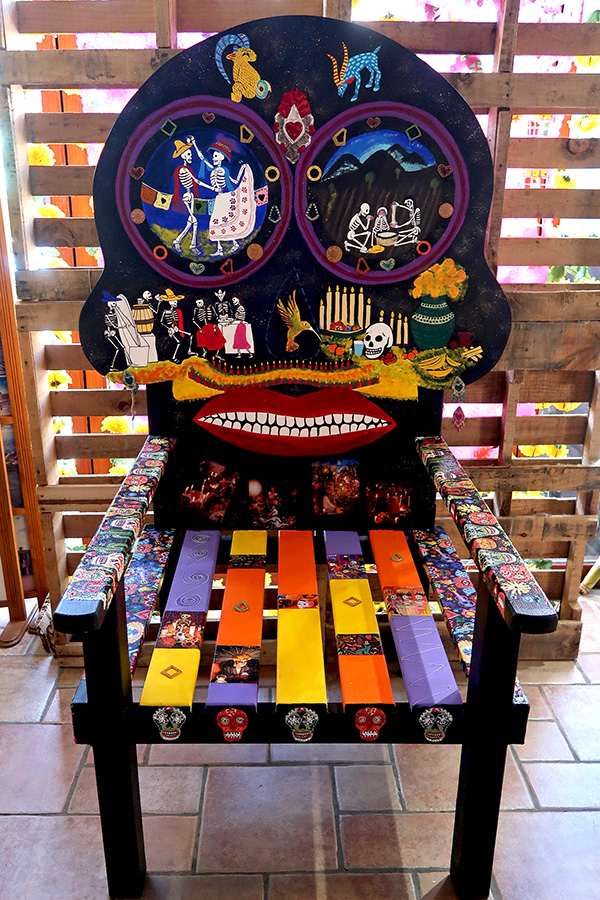
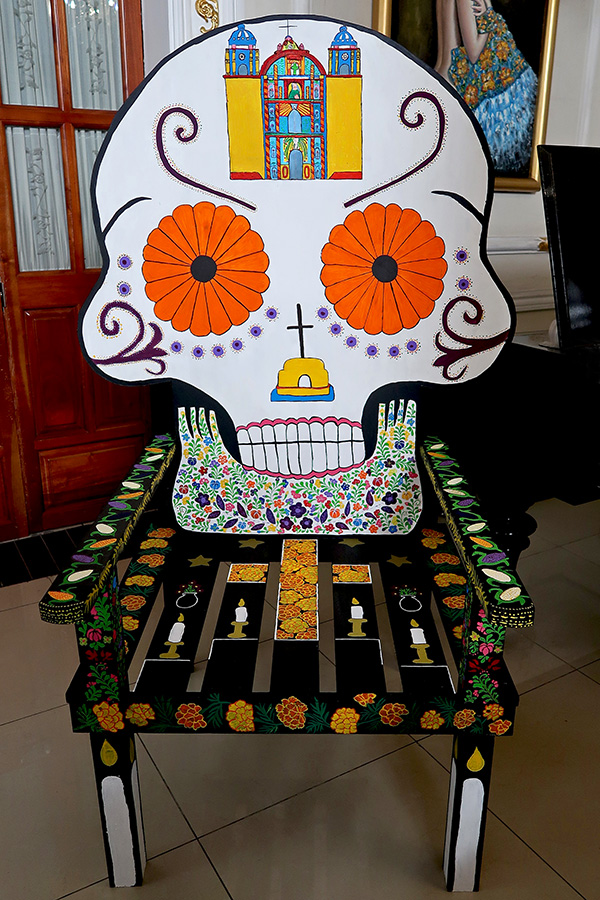
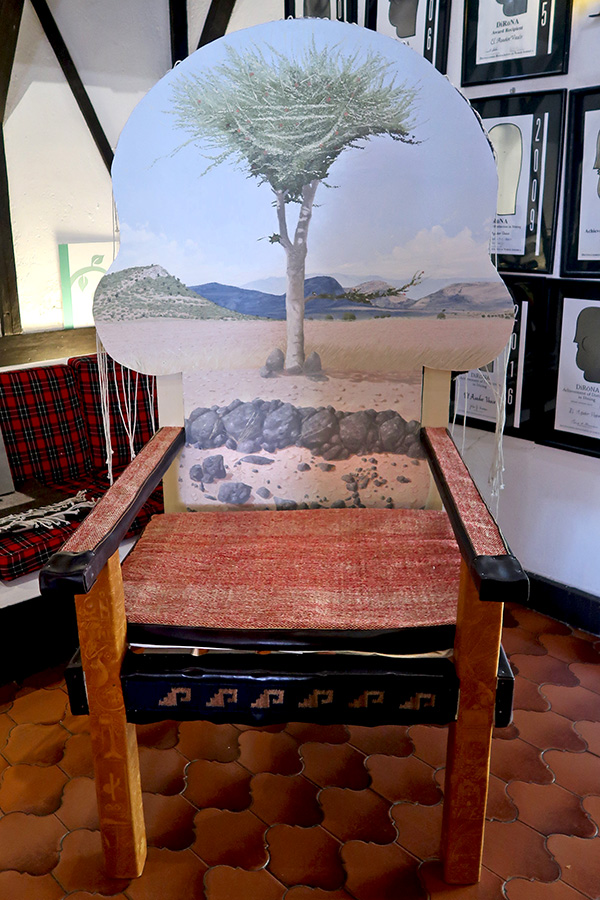
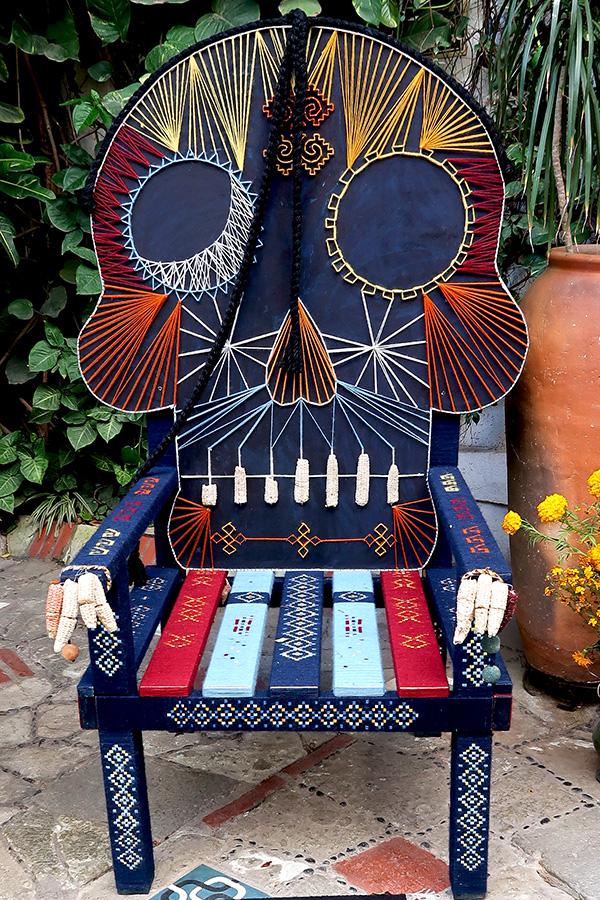
In my effort to “step away” from the US election news, I went in search of the fourteen chairs of the “Silla Calavera” project scattered throughout restaurants and hotels in the city — a creative and calorie-burning distraction!
Artist: Juana Vicente Ortega Fuentes, decorative painter; displayed at Pitiona restaurant. Title: Levantada de Cruz (Raised Cross).Artist: Fabián Pacheco, metalwork artisan; displayed at Gozobi restaurant. Title: Tradición y costumbre (Tradition and practice). Artist: Francisca Calvo, wooden alebrije artisan; displayed at Pitiona restaurant. Title: Platicando sobre las costumbres de mi pueblo (Talking about customs of my people).Artist: Jesús Sosa Calvo, wooden alebrije artisan; displayed at Hotel Parador. Title: Como ves te ves (As you see you see).
The project arose as an idea to spread the traditions of Oaxaca through artistic creations using an object of daily life — a comforting and comfortable seat, where each artist, through their creativity and respect for the dead, exposes the face of a skull.
Artists: Taller de Barro Zamani, polychrome clay artisans; displayed at Terranova restaurant. Title: Muertos que viven (The dead who live).Artists: Erika Nancy Carrillo Carreño, Montserrat Mandujano, Eliézer Vargas García, artesanas de la Costa oaxaqueña; displayed at Hotel Trébol. Title: Colores de vida y muerte (Colors of life and death).Artist: Colectivo Zegache (Alejandro Mendoza, Eleuteria Pacheco Mendoza, Edith Santo Méndez, Nancy Martínez Gaspar); displayed at Hotel Casa Garay. Title: Dxi tu gúl (Zapotec, unable to translate).Artist: Meletón Lazo, surrealist artist; displayed at Hotel Ferri. Title: Flor de piña (Pineapple flower dance).
Unfortunately, this next chair had been disassembled by the time I arrived, but here, in two parts, the back and the seat.
Artist: Gabriel Sosa, wooden alebrije artisan; seat back at Los Danzantes restaurant. Title: Fiesta de colores (Festival of colors).Artist: Gabriel Sosa, wooden alebrije artisan; seat at Los Danzantes restaurant. Title: Fiesta de colores (Festival of colors).
The artisans, I think with great success, sought to capture and share their roots, customs, and traditions.
Artist: Marcos Lucero, painter; displayed at Hotel Santa Rosa. Title: Bii tugul/Viento de muertos (Wind of the dead).Artist: Juan Lazo, landscape painter; displayed at El Asador Vasco restaurant. Title: La muerte es mas vida (Death is life).Artists: Paulino Ramirez and Eduardo Ramirez, painting and wooden alebrijes; displayed at Restaurant Casa Palmeras. Title: La última luz (The last light).Artist: Alfonso Canseco Peligro, graphic artist; displayed at La Mala restaurant. Title: Siéntate, vamos a tomar (Sit down and let’s drink).Artists: Luis Lazo and family, textile artists; displayed at Hotel Casa Vertiz. Title: Ciclo de vida (Cycle of life).
Yesterday, the chairs were removed from the restaurants and hotels. Tonight, with an inaugural celebration, they went on display at ARIPO until November 15, 2020. For purchase after that date, contact Matlacihua Arte or individual artists.
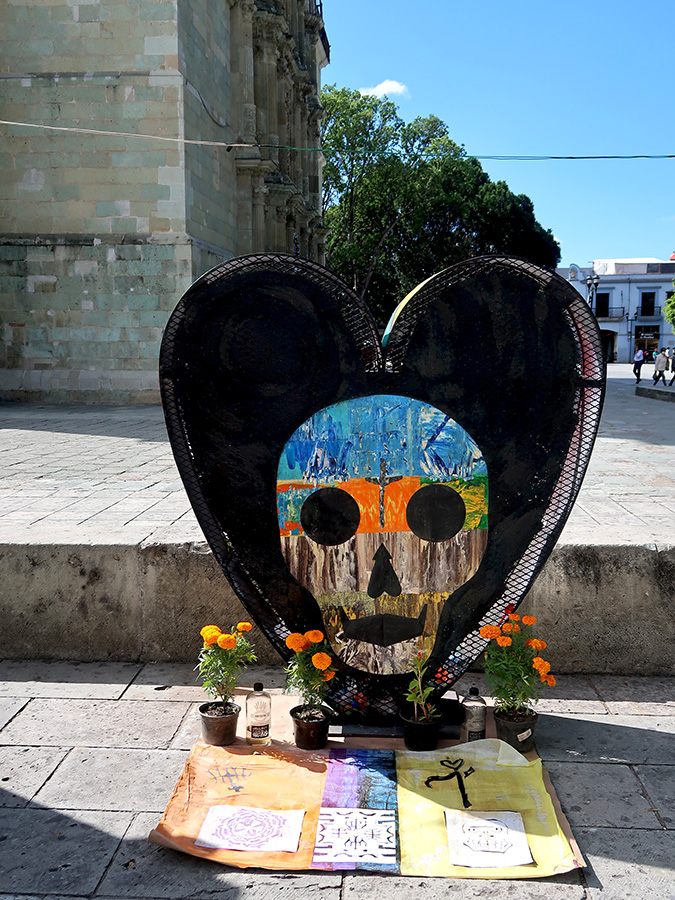
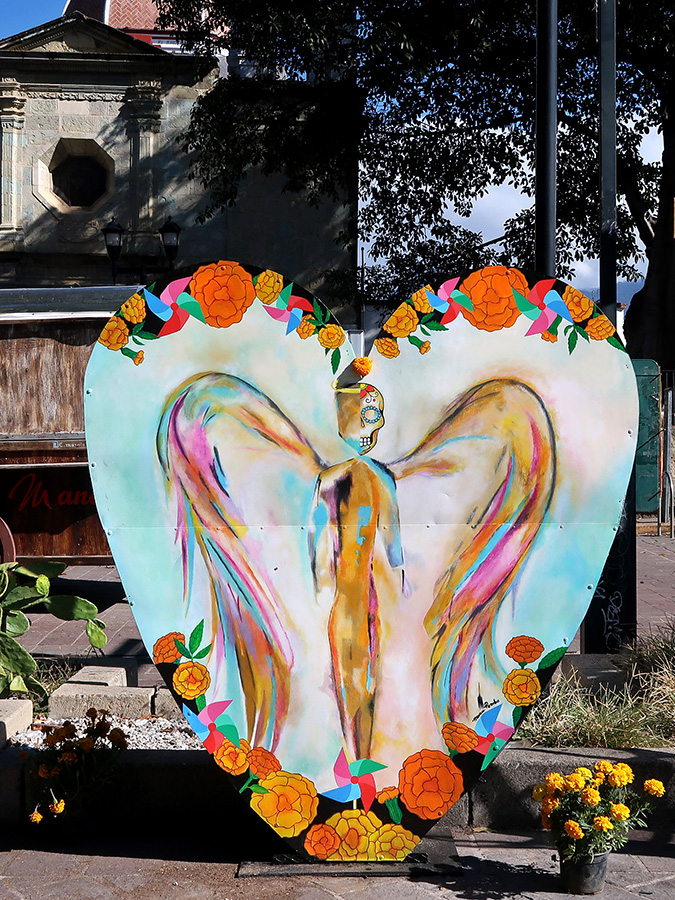
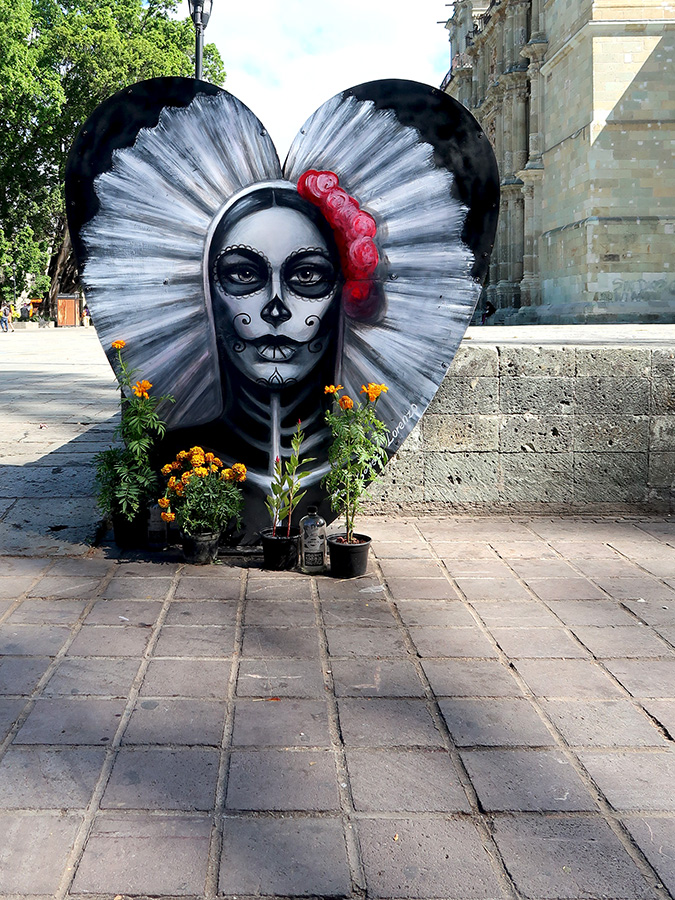
Even the recycling bins in Oaxaca are getting into the spirit of Day of the Dead.
Calle Independencia side of the Catedral de Nuestra Señora de la AsunciónIn front of the Iglesia de GuadalupeZócalo side of the Catedral de Nuestra Señora de la Asunción
And cempasúchil (marigolds) to beckon the difuntos (departed), plastic bottles, and tin cans.
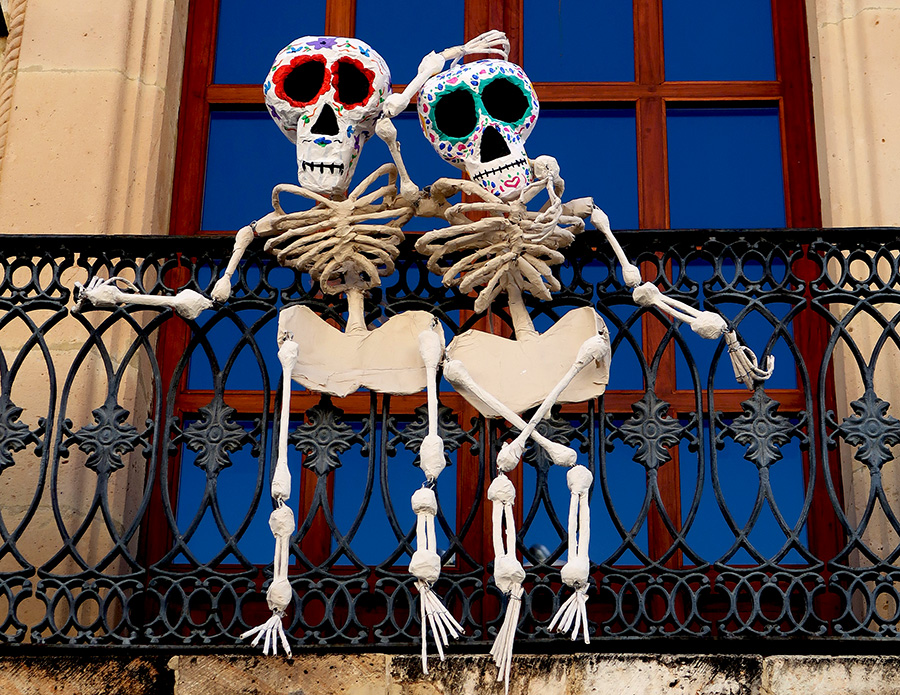
These are strange days leading up to our departed coming to call while we are living in the time of Covid-19. With public activities canceled, thus no nightly calendas (parades) filling the streets and our ears, and fewer tourists, Oaxaca is experiencing more peace and tranquility this Day of the Dead season — albeit laced with a touch of melancholy and anxiety.
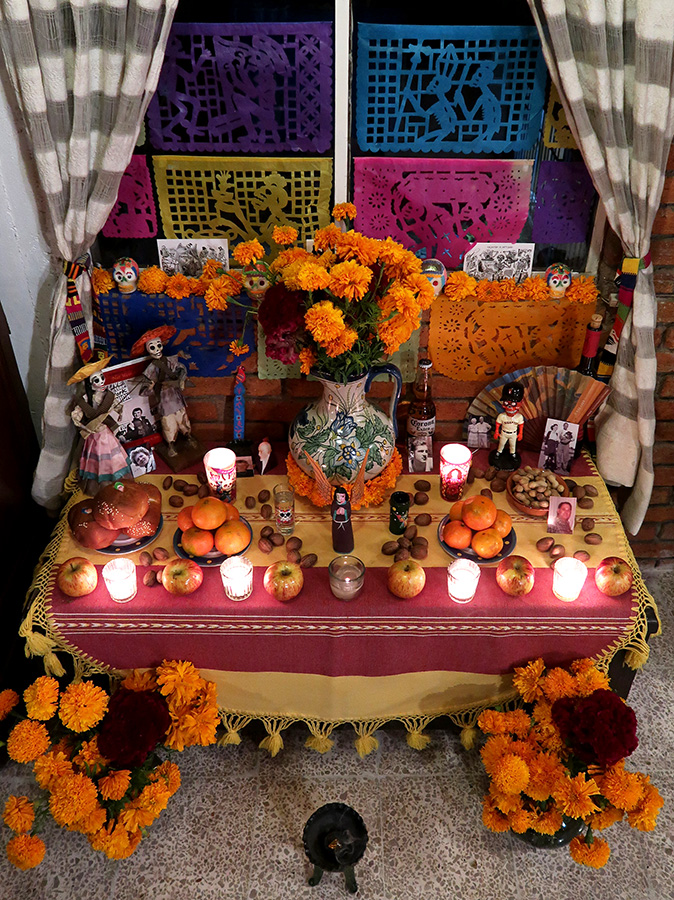
Masked and shielded, I braved the mostly local crowds south of the zócalo, to shop for cempasuchil (marigolds), cresta de gallo (cockscomb), apples, mandarin oranges, peanuts and pecans, chocolate, and pan de muertos (Day of the Dead bread) — but it wasn’t nearly as much fun as years past.
However, the joy returned when I unwrapped photographs of my parents, grandparents, and other loved ones; selected some of their favorite things to put on my ofrenda; placed the fruit, nuts, bread, and chocolate among the photos; positioned candles, flowers, and incense; and poured my departed a copita (little cup) of water and another of mezcal — all to beckon, entertain, and sustain them during their brief stay.
I’m looking forward to a more personal and reflective Día de Muertos this year.
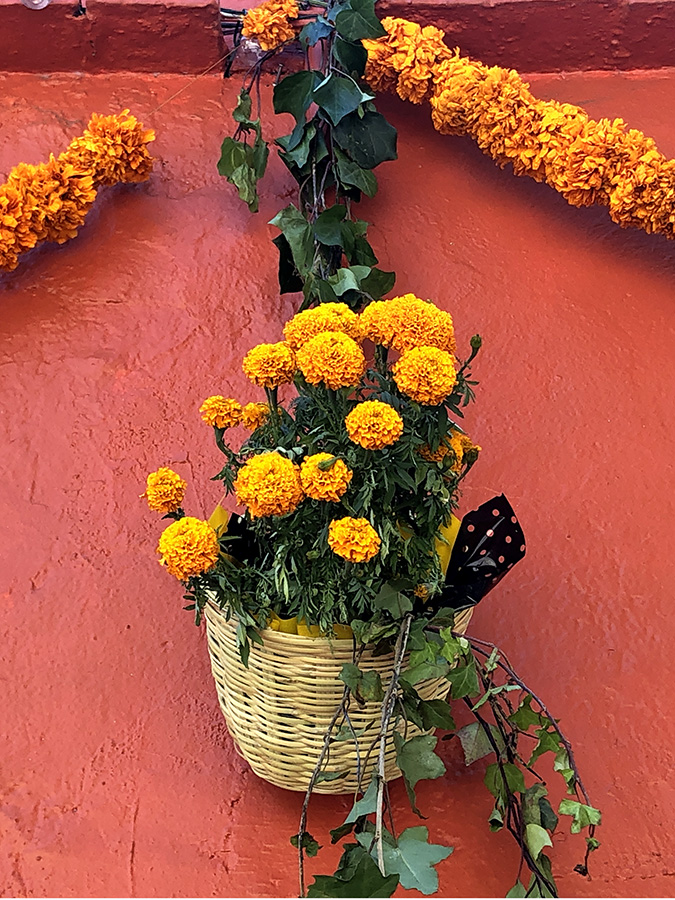
Cempasúchil (marigolds), the flowers synonymous with Day of the Dead, have begun appearing throughout the city. Alas, not in the quantity we are used to.
As I have written previously, because of the acceleration of the Covid-19 cases, the City of Oaxaca will not permit public Day of the Dead celebrations and events.
So it’s a subdued Día de Muertos season we are living.
While the yellows and oranges of the marigolds seem to mirror the semáforo amarillo and naranja (yellow and orange Covid-19 traffic lights) we are bouncing between, they brighten the days and impart a familiar and welcome scent.
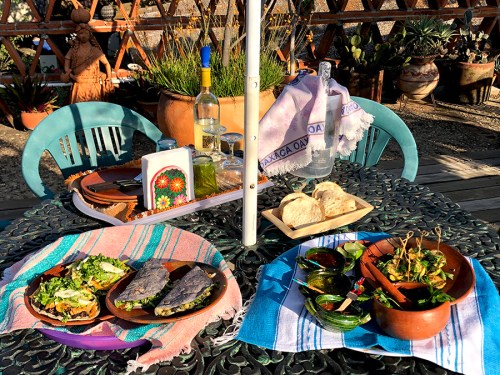
Given that the socially distanced dining on the terrace ice was broken earlier in the month, the entertaining continued with the arrival of L, my BFF since we were twelve. Kalisa — neighbor, friend, and cocinera extraordinaria – rose to the occasion and the three of us have been eating extremely well.
October 6, 2020 – Chicken and black bean memelas, huitlachoche and corn empanadas, salsas, and sautéed squash.
October 8, 2020 – Heirloom tomatoes, pickled onions, and queso fresco, accompanied by Parmesan Crisps hand carried from California.
October 8, 2020 – Guacamole, pickled onions, salsas, and peanuts.
October 8, 2020 – Tostadas of chicken and pork with spinach and guacamole.
October 14, 2020 – Chicken mole accompanied by rice and black beans.
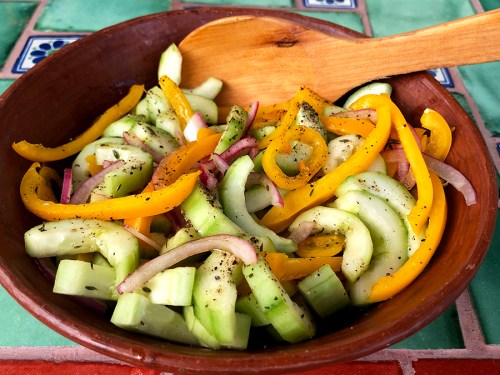
October 18, 2020 – Salad of cucumber, onion, and peppers.
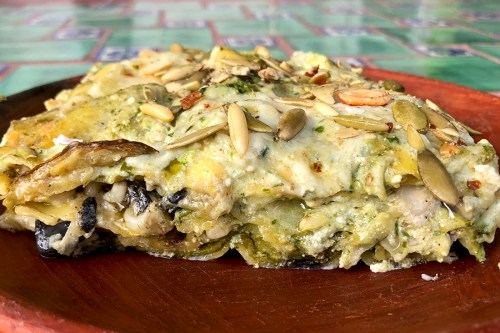
October 18, 2020 – Squash, fresh basil, huitlacoche, and cheese lasagna.
Lest you be concerned about the intervening dinners, the quantities were huge, doggie bags were taken back to our respective apartments, and leftovers continue to be happily consumed.
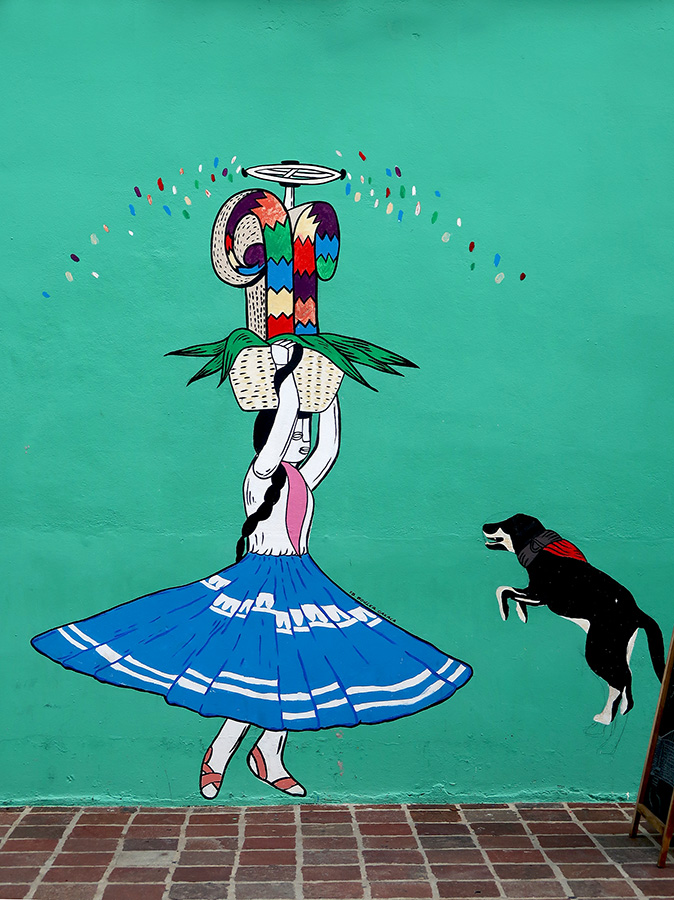
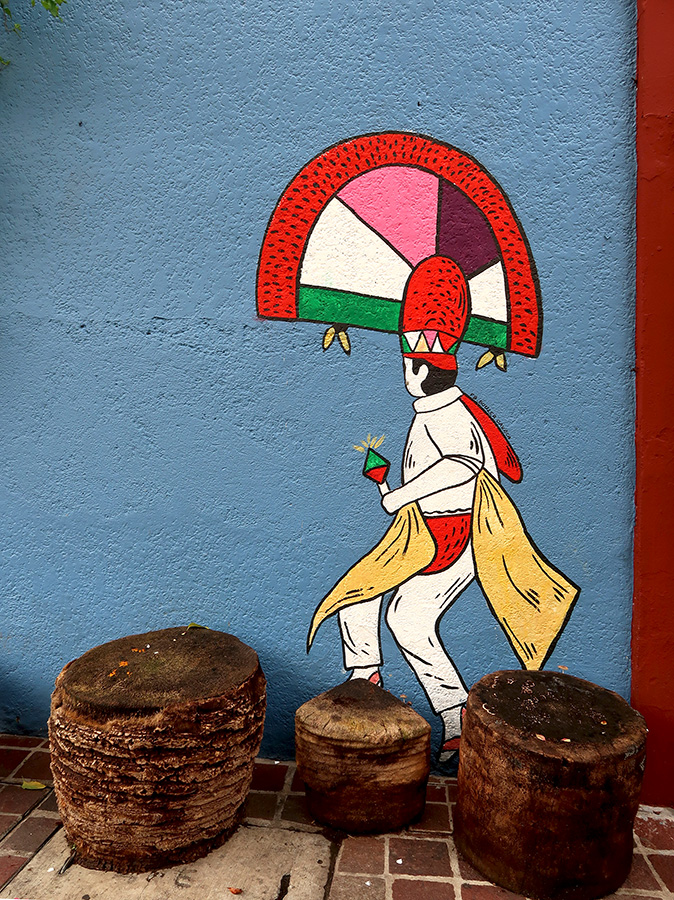
Oaxaca de Juárez, China Oaxaqueña dancer and Mazapán, the dancing dog.Huautla de Jiménez dancer.Danza de la Pluma dancer from Oaxaca’s central valley.
Living vicariously in these days of COVID-19 — be it through books, online concerts and museum tours, video events, and photos of people and places we are longing to see.
To borrow a line from Cole Porter, Oaxaca regrets there will be no Muertos this year, señora.
Due to a rebound in positive Covid-19 cases in both the capital and state (we are back in traffic lightorange — with red threatening), yesterday the city council of Oaxaca unanimously voted to cancel all Day of the Dead activities (NVI Noticias). That means there will be no comparsas (parades), altar displays, sand paintings, costume contests, and no cemetery visits. Other municipalities are expected to follow suit. If you have plans to be here for Día de Muertos, I strongly urge you to reconsider.
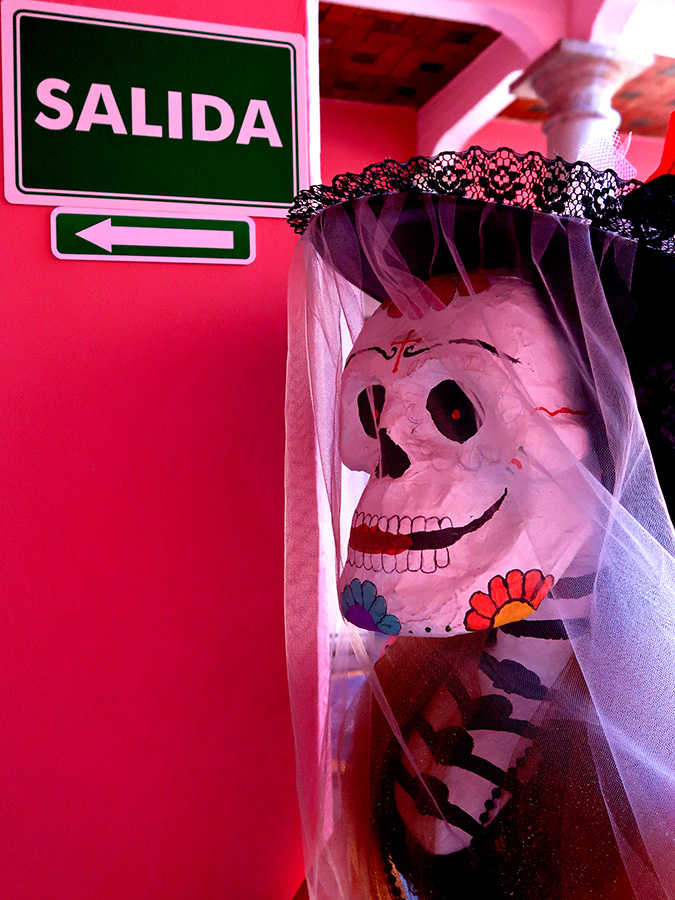
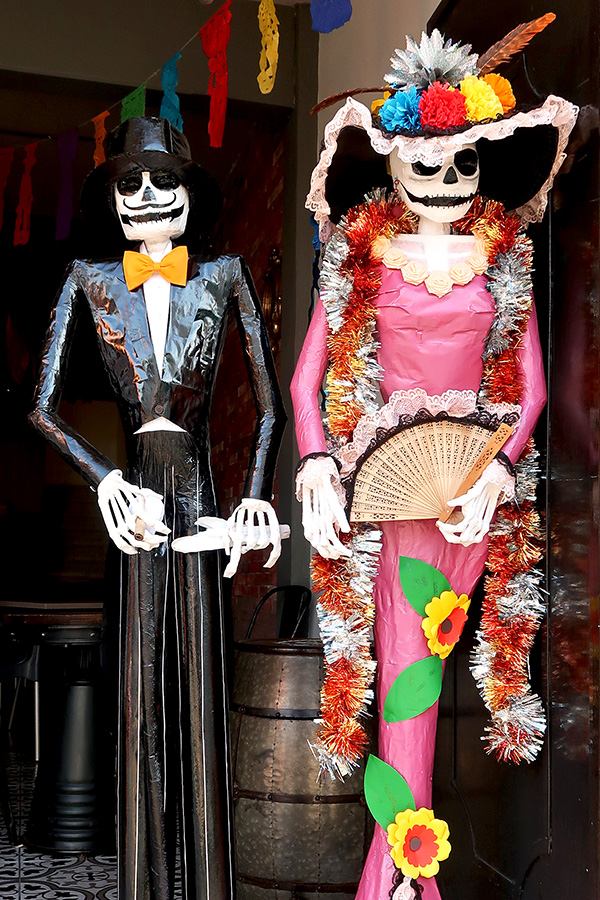
Given this sad and sobering news and the above Catrín and Catrina seen on this morning’s walk, I keep flashing on the Cole Porter song, Miss Otis Regrets — especially this dirge-like version by Kristy MacColl.
This is serious and no time to let your guard down. Please practice social distancing, wash your hands frequently, and for goodness sake, cover your mouth AND nose with a mask when out in public!!!

























 Mexican Peso Converter


