Feeds:
Posts
Comments

Archive for the ‘Culture’ Category

The rainy season has definitely arrived in the city, bringing several hours of lluvia every night for the past five nights.  The first rains of the season also bring (drum roll, please) chicatanas!  Early this morning, I went out onto the terrace with my coffee to be greeted with these not-so-little insects.  Flying (into my hair, eeek!) and crawling all over the place!

Female chicatana on blue oilcloth

Female chicatana on a very wet table.

What, you may ask are chicatanas?  They are giant flying ants that emerge with the first rains of the season — and by giant, I mean about 4 cm from the head to the tip of the wings for the females.  (As in much of the insect world, males are smaller and wingless.)

Male chicatana on wood deck

Male chicatana on the deck.

This occurs early one morning each year and lasts only a few hours.  My first experience with them was a couple of years ago, when I arrived at Oaxaca’s airport for my 8:30 AM flight one May morning, to find, yikes(!) an infestation of insects.  I had no idea what they were, but nobody seemed to mind, and kids were running around collecting them.  The answer came after I boarded the plane and began talking with a Oaxaqueña across the aisle.  She explained that the arrival of the chicatanas was a much-anticipated event because they are a delicacy.  As the video below documents, they are soaked, cleaned, toasted on a comal, ground, seasoned, and made into a salsa.

According to this post in a Chicago based culinary chat site, it has been almost “500 years since Bernardino de Sahagun reported to Europe on the tzicatana [chicatana in Nahuatl] in his Nueva Historia, from its divine associations to its swarm ethology (mirroring the movements of the Aztecan armies) to its apparent deliciousness to the Nahuan-speaking people in the region.”  And, long before that, tzicatanas were mentioned in the Florentine Codex.

Female chicatana on her back

Female chicatana doing the back stroke on the table.

By 9:30 this morning, they were gone.  However, should you find yourself in Oaxaca during a brief visit by the chicatanas, here is a recipe for Chicatana Salsa.

Read Full Post »

“I dunno… not much… festival going on downtown… Yeah, food looks good… couple of bands… castillo tonight… So, ya wanna go?”

Young man leaning against blue wall talking on cell phone

Last Sunday on a quiet side street away from the chaos and cacophony of the festival honoring el Divino Señor del Calvario, in San Juan Bautista Coixtlahuaca, Oaxaca.  Of course, it’s probably not at all what was being said, not to mention the fact the conversation was most likely in Spanish or Mixtec.  But it’s my split second story.

Read Full Post »

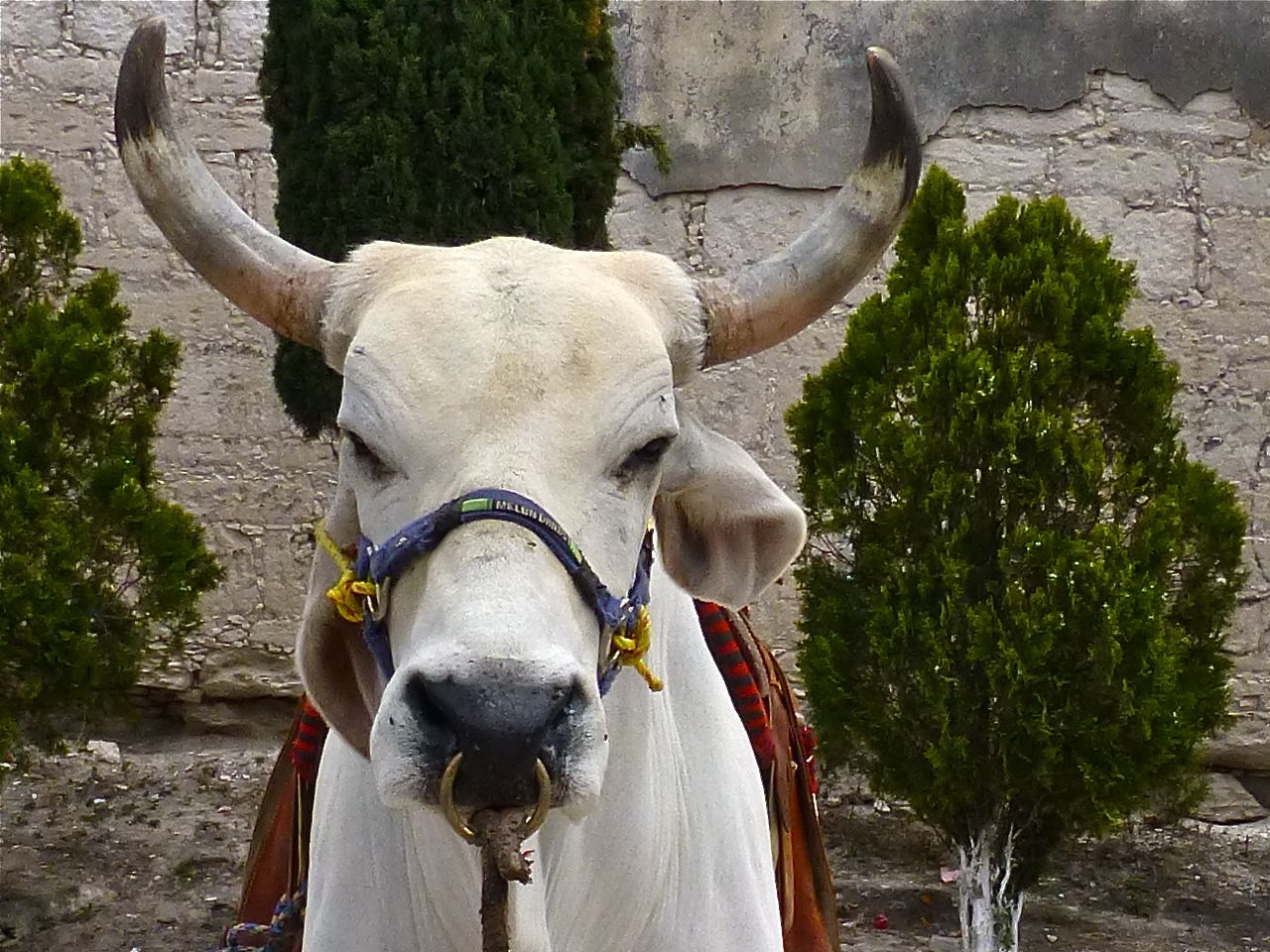
Bulls, real…

Face of white bull

and imagined…

Face of bull painted on backboard of basketball hoop

… yesterday on the streets of San Juan Bautista Coixtlahuaca.

We were there for day four of the annual fiesta in honor of el Divino Señor del Calvario and to see the Templo y ExConvento de San Juan Bautista — another of the grand Dominican churches currently undergoing restoration.  More about both later.  No bull!

Read Full Post »

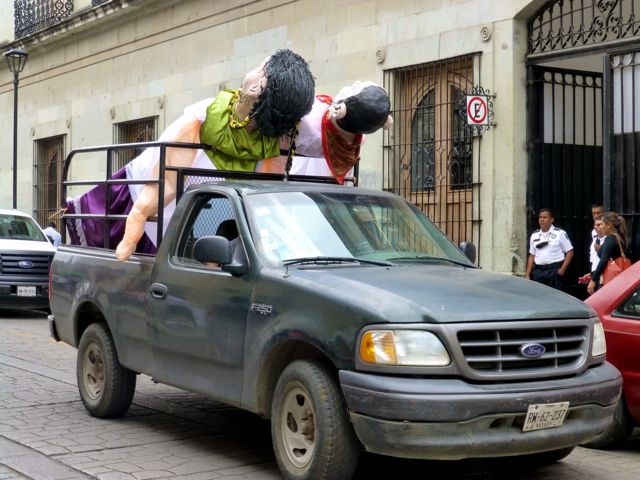
Yesterday, I was walking along calle de Flores Magón, and what to my wondering eyes did appear?

Pickup truck with 2 monos in back

Husband and wife?  Novia y novio??  “Just” friends???

Female mono laying in back of pickup gtruck

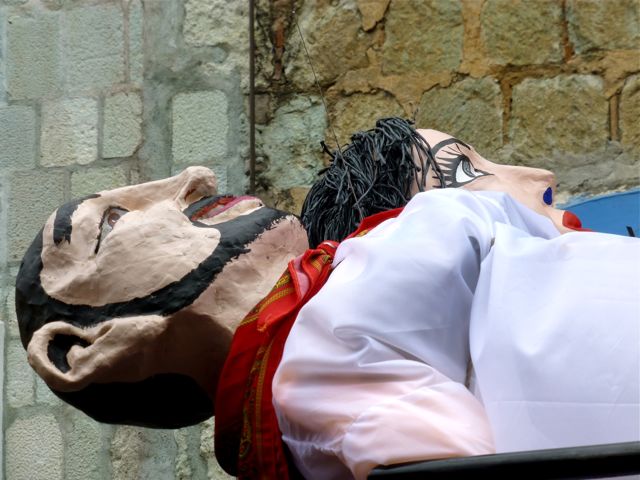
I’ve got to say, they looked rather stiff and not very comfortable.  Hope their trip was a short one!

Heads of male and female monos in back of truck

By the way, if you want to read a little about my journey to Oaxaca and expat life, Expat Blog recently published an interview with me, American Expat Living in Mexico – Interview with Shannon.  There is even a photo of a couple of monos supervising a banda.  Perhaps friends of the above???

Read Full Post »

The only true voyage of discovery, the only fountain of Eternal Youth, would be not to visit strange lands but to possess other eyes…  —Marcel Proust 

He to whom this emotion is a stranger, who can no longer pause to wonder and stand rapt in awe, is as good as dead: his eyes are closed.  —Albert Einstein 

Open your eyes, look within: Are you satisfied with the life you’re living?  —Bob Marley 

Eyes looking out on the world from the mural on Tinoco y Palacios, between Vasconcelos and Niños Heroes.

Read Full Post »

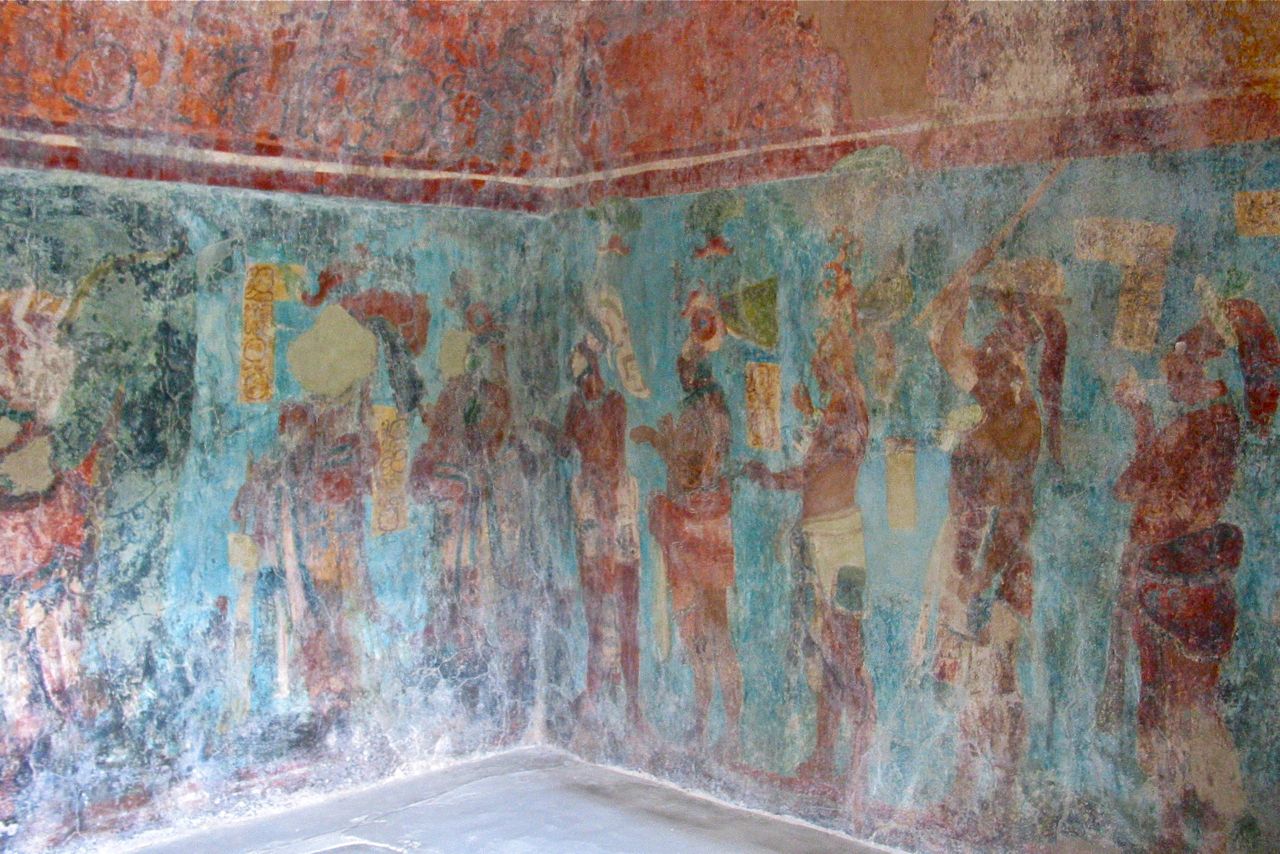
Mexico has a long and important place in the history of communication through murals — from stories related by pre-Hispanic civilizations…

Maya fresco circa 790 C.E. - Bonampak, Chiapas

Maya fresco circa 790 C.E. – Bonampak, Chiapas.

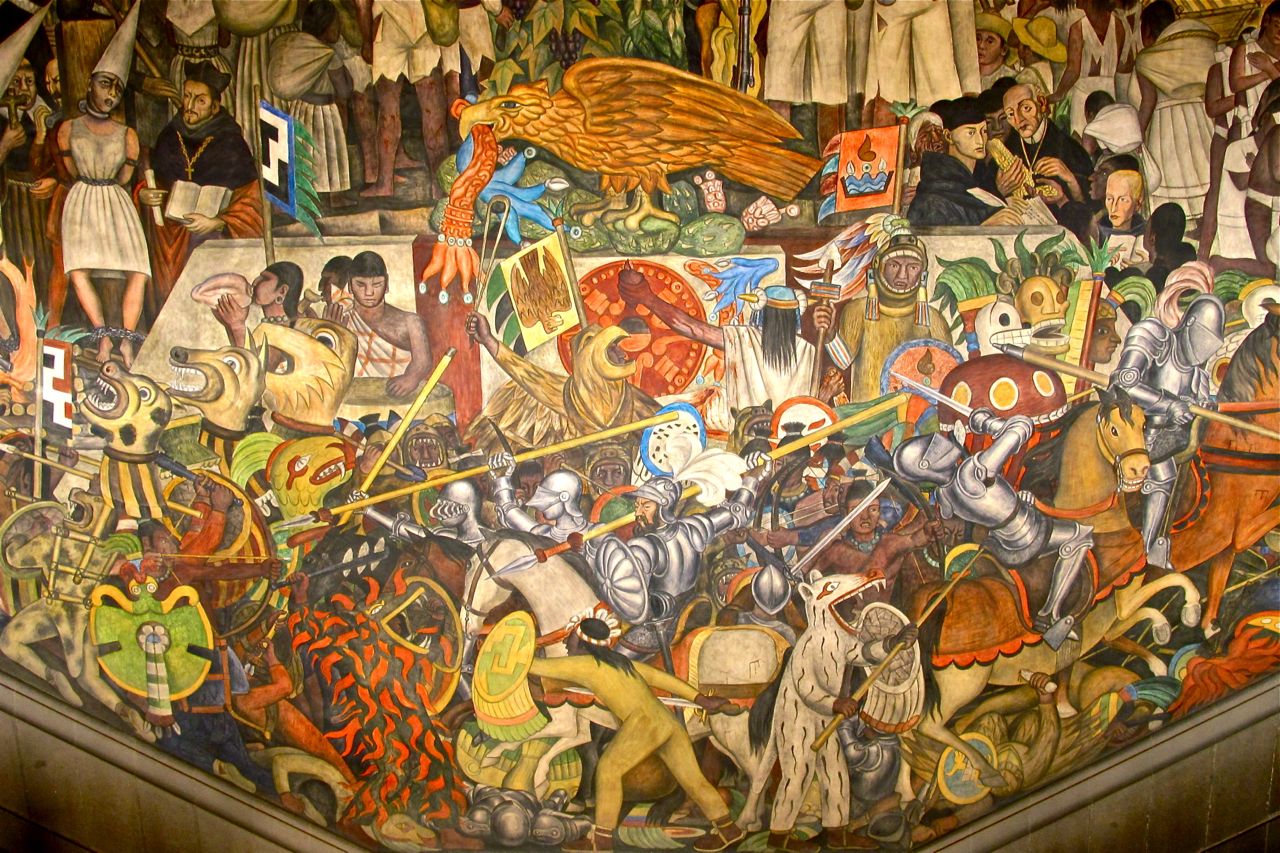
through the world-renowned and influential Mexican muralists of the twentieth century:  Orozco, Rivera, Siqueiros, and others.

History of Mexico by Diego Rivera, 1931 - National Palace, Mexico City.

History of Mexico by Diego Rivera, 1931 – National Palace, Mexico City.

And, as many of you know, murals on the walls of Oaxaca are part of the urban landscape, authorized or not, like them or not, they celebrate…

One of the murals in the pedestrian tunnel to the Guelaguetza auditorium.

One of several murals in the pedestrian tunnel to the Guelaguetza auditorium in Oaxaca city.

educate…

San Antonino Castillo Velasco, Oaxaca.

San Antonino Castillo Velasco, Oaxaca.

reveal past and present — and hopes and fears for the future.

Calle Tinoco y Palacios, between Vasconcelos and Niños Héroes.

Calle Tinoco y Palacios, between Vasconcelos and Niños Héroes, Oaxaca city.

Those found on the streets we expect to be ephemeral, but commissioned work, both inside and outside of buildings, we hope would have a longer and more permanent lifespan.  Of course, the Rockefeller family’s destruction of Diego Rivera’s Rockefeller Center mural showed differently.  And, more recently, my friend and artist, Mike Alewitz experienced the obliteration of his mural on the side of the Pathfinder Building, also in New York.  Both were instances of political differences and, while distressing, perhaps not too surprising.

However, today Mike is leading a battle in defense of his students’ murals.  According to NBC Connecticut:

Central Connecticut State University (CCSU) has built up one of the largest mural collections in the country since the program started in 2001. But Professor Mike Alewitz, who oversees CCSU’s mural painting program, said that collection is at risk.

The school has painted over six of the murals without notice and plans to do the same with another 12, Alewitz said Richard Bachoo, director of operations, confirmed. He said he hopes an appeal to the university and community support will protect the remaining murals.

“It made them feel part of the larger world, that they weren’t looking at blank walls inside an institution, but they were looking at the hopes and dreams of young people,” Alewitz said. “We found out that 18 murals were scheduled to be destroyed.”

<snip>

He says in the 14 years the mural program has existed, the policy has never been implemented in this way. Alewitz said in a statement that this is “the largest destruction of public art in recent history.” While administrators have removed murals in the past, they normally consult with the art department first, he said.

“The real policy has been that people love the murals, so when they’ve been painted, they’ve stayed up,” Alewitz said.

Oaxaca would lose much of her character and lessons would be lost, if we were to wake one morning and find all her murals disappeared.  The story is the same at CCSU.  For the full article, click HERETo send messages of protest and to see some of the amazing student murals that enliven the walls and stimulate thinking at CCSU but are slated for destruction, click HERE.  And, Why Bureaucrats Fear Art, is a letter to students and fellow artists, by Mike Alewitz.

Read Full Post »

“When we plant trees, we plant the seeds of peace and seeds of hope.”  — Wangari Maathai, 2004 Nobel Peace Prize Laureate.  From the poster for the inauguration of the Árbol de la Diversidad (Tree of Diversity) on Macedonio Alcalá celebrating May 17, International Day Against Homophobia and Transphobia.

The Ombudsman for Human Rights of the People of Oaxaca said the International Day Against Homophobia and Transphobia is an opportunity to become aware as a society of respect and acceptance that we owe to the other, a day that encourages us to live and work in building a more just, more humane, more egalitarian and fraternal society.  (Noticias, 17 mayo 2014)

Read Full Post »

These creatures began materializing around town a couple of months ago.  I wonder…

Creatures painted on wall

Who are they?

Creature painted on wall

Where did they come from?

Creatures painted on wall

What do they want?

Creatures painted on wall

Perhaps, I should ask here!

Creature painted on wall

The walls of Oaxaca… you have questions, they have answers.

Update:  The monsters sprang forth from the mind of SCOM.

h/t Jason Pfohl of Gorilla Glass.

Read Full Post »

Braided with love (and a little pain).  Ahhh, I remember it well…  Thinking of you, mom.

P1010473_2

Triqui mother and daughter near Santo Domingo, Oaxaca city, 2014

3 generations on top of El Picacho, Teotitlán del Valle

3 generations on top of El Picacho, Teotitlán del Valle, 2014 Día de la Santa Cruz.

Queen and mother at 2nd Viernes en Llano, Oaxaca city

Queen and mother at 2nd Viernes del Llano, March 2014, Oaxaca city.

Feliz Día de la Madre to all the beautiful, hardworking mothers of Oaxaca and all over the world.

Read Full Post »

Yippee!!!  A new, and extremely colorful, species of grasshopper has been discovered in the pine-oak forest of the Sierra Madre del Sur Mountain Range in Oaxaca.  Liladownsia fraile has been named for Oaxaca’s favorite daughter and one of my favorite performers, Lila Downs, someone I’ve written about often.

(Photo Credit: UCF)

(Photo Credit: UCF)

From Science Codex,

A newly discovered grasshopper by University of Central Florida scientists now bears the name of Grammy-award winning singer and activist Ana Lila Downs Sanchez.

The scientists named the new species discovered on the side of a mountain road near Oaxaca, Mexico, after the Mexican-American singer as a nod to her efforts to preserve indigenous culture and penchant for wearing colorful, local costumes as part of her performances.

“It was primarily Paolo’s idea to name the grasshopper after the singer” said Derek Woller, one of the authors of the paper referring to colleague Paolo Fontana. “He’s a big fan of Lila Downs (her stage name). The grasshopper is so beautiful, so vibrant and colorful. When he told us all about her, her work, her colorful clothes, and that she was born in the region where we found the specimens, we thought, yeah, that’s great, let’s do it.”  Read full article HERE.

According to the Zootaxa article, Studies in Mexican Grasshoppers: Liladownsia fraile, a new genus and species of Dactylotini (Acrididae: Melanoplinae) and an updated molecular phylogeny of Melanoplinae (a mouthful, I know, but the photos are worth scrolling through the article), Liladownsia fraile had been sighted in San José del Pacifico, Suchixtepec, and Pochutla.

By the way, if you are in Oaxaca, Lila Downs is performing tonight at the Teatro Macedonio Alcalá — a benefit for Fondo Guadalupe Musalem, a nonprofit dedicated to improving the lives of the young indigenous women of Oaxaca through education.

poster for benefit

Read Full Post »

Yesterday, we returned to Teotitlán del Valle to join in their annual Día de la Santa Cruz hike up El Picacho, the sacred mountain that watches over this incredibly special pueblo.  This year, instead taking the route up the mountain directly from downtown like we did last year (and it kicked our a$$), we drove to the presa (dam) and headed up a surprisingly well-marked trail from there.  A symphony of cicadas (cigarras or chicharras, en español), serenaded us as we climbed, young people passed us, and Templo de la Preciosa Sangre de Cristo, off in the distance, got smaller.  However, after more than an hour, we sighted our first pack burro (they bring up the food and drink) and knew we had almost reached our destination.

We were welcomed at the top by the family hosting the gathering and given cups of agua de jamaica — just what the doctor ordered!  There were even more people than last year, music blared from large speakers the aforementioned burros must have carried up the mountain, a new cross had replaced the one that had been hit by lightning last year, and, of course, the views were breathtaking.

But, with spectacular views in all directions, why was most everyone looking down toward the road from the village to the presa?

A foot race!  From what we could understand, there were 3 classes of runners; one that ran all the way from mercado in the center of Teotitlán and other two “only” ran up from the presa.  Whichever route they took, as one of the runner’s t-shirt says, they were all “chingon!”

And so was this gal, who was on her way up as we were coming down.

Woman carrying basket on head

Muchisimas gracias, yet again, to the people of Teotitlán del Valle for another unforgettable experience.

Read Full Post »

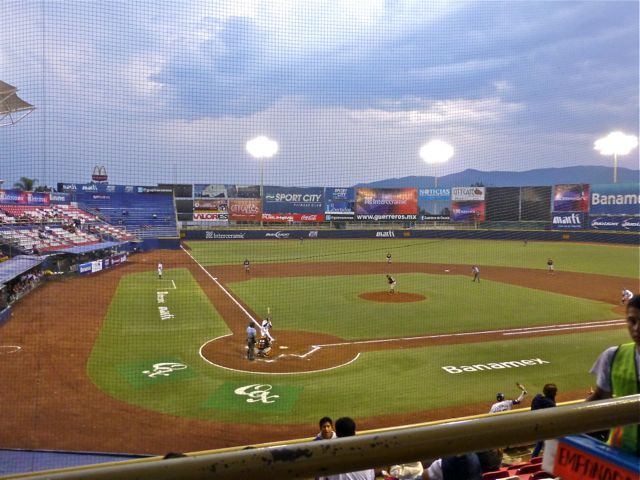
Many of you may not know that Oaxaca has a Minor League baseball team, the Guerreros de Oaxaca, a Triple-A team in the Mexican League.  They play at Estadio de Béisbol Lic. Eduardo Vasconcelos, right off the Pan American Highway, and most seats look out onto the sierras to the east.  Tickets are inexpensive (women, seniors, and children usually pay even less), a friend insists it’s a great place to learn local Spanish swear words, and it’s a mere 25 blocks from Casita Colibrí (definitely within walking distance).

However, until Tuesday night, I hadn’t been to a game in almost three years.

View of baseball field & mountains to east

The Guerreros were playing the Vaqueros Laguna from Torreón, Coahuila AND women got in free!  Besides the action by the players on the field, there were cheerleaders.  What can I say???  They certainly know how to toss their hair!

Cheerleaders tossing their hair

Despite the free ticket promotion for women (and men only paid 25 pesos), the stands were about an eighth full.  However, this guy and his drum walked up and down the main aisle, drumming up fan support.

Man with sombrero and drum


Unfortunately, in the bottom on the second inning, the rain that had been threatening, finally came.  The game was halted, the players headed into their respective dugouts, and the ground crew pulled out the tarp.

Silver tarp pulled over infield

It was already 8:15 PM, and we succumbed to being “fair weather fans” and left.  The game eventually resumed and the Guerreros lost, 2-5, BUT they won the next night, 12-5, and are currently in third place in the Mexican League Sur.

I will return… THIS season!


Read Full Post »

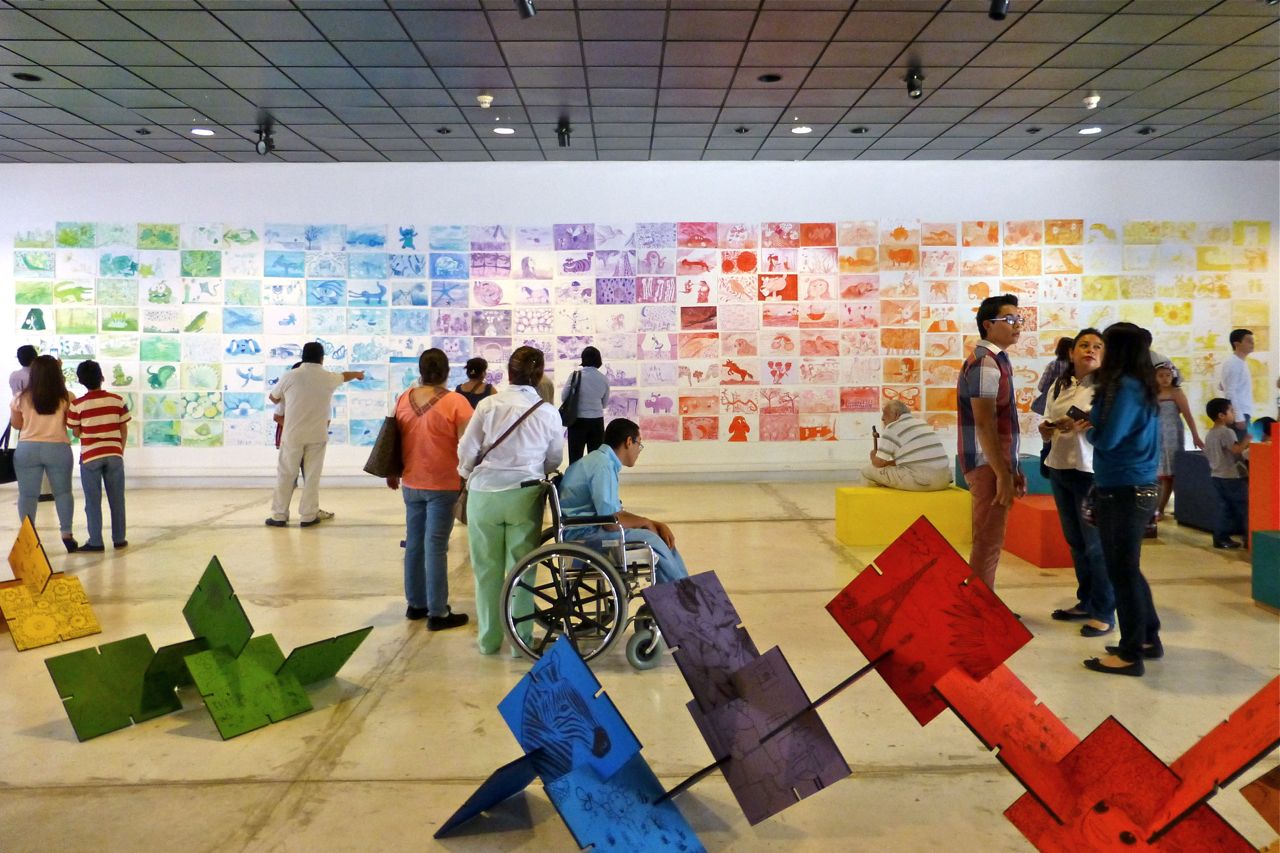
On Saturday, we drove to San Bartolo Coyotepec for the opening of the exhibition, Colorum, an exhibit of art by the children of Oaxaca, mounted as part of tomorrow’s el Día del Niño (Children’s Day) celebrations.  We went primarily to support my friend Juan, as his son Allan was one of the young artists participating in the show.  However, we stayed because it was a wonderfully inspiring and uplifting experience and I applaud the Museo Estatal de Arte Popular Oaxaca (MEAPO) for encouraging and showcasing the imagination and creativity of the children of Oaxaca.

P1030988

What is given to children, the children will give to society.

This slideshow requires JavaScript.

Children are the most important resource in the world and the best hope for the future.

The free imagination transforms the world and makes things fly.

P1030993

The Colorum exhibition lasts until May 20, 2014.  It is open from 10:00 AM to 6:00 PM, Tuesday through Sunday.

Read Full Post »

P1030572

No, not a newly discovered mutant killer variety — only one of the sculptures currently hanging out along the Alcalá.  It is part of a public art exhibit, “El migrante,” by Oaxaqueño artisit, Fernando Andriacci.

Read Full Post »

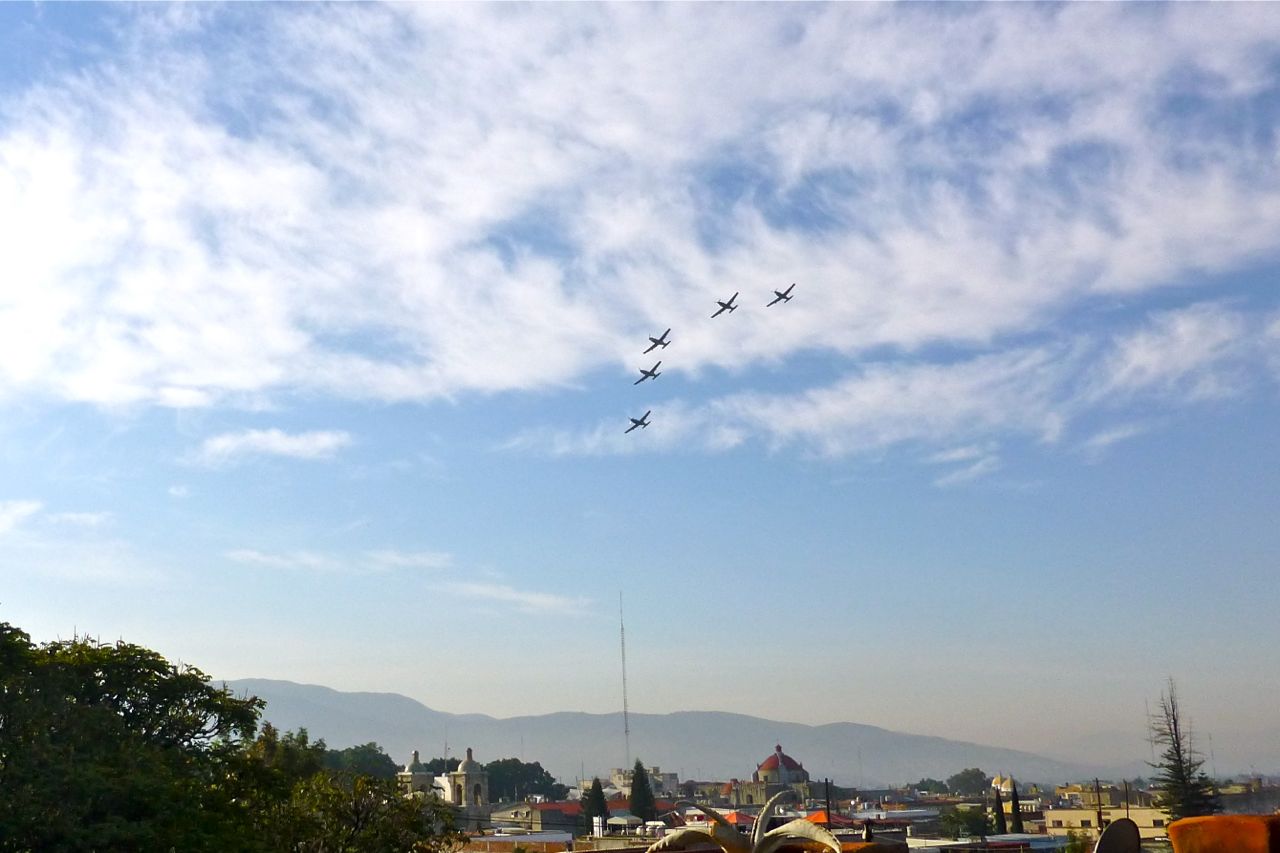
Today the City of Oaxaca celebrates 482 years as a colonial city.  (*** See below for a little history.)  The day began at 6 AM with the ringing of the Cathedral’s bells, the singing of Mañanitas Oaxaqueñas, and marimbas and tamales on the Alameda de León. Alas, that was a little early for me to be up, dressed, and downtown.  However, all I had to do was step out on my terrace to watch the next event of the day.

P1030885

Five Pilatus PC7 Mexican Air Force planes put on a  show over the city.

IMG_3605

They made several passes over the city.

IMG_3577

For their finale, contrails displayed the green, white, and red of the Mexican flag.

P1030892

And then they were gone.  I love how Noticias concludes their report,  “After 45 minutes, the ‘steel birds’ returned to their base, pending a new appeal to challenge gravity.”

IMG_3580

Celebrations continue through May 8 and a schedule of events can be found HERE.

*** In 1532 Spanish settlers (their bloody way paved by Hernán Cortés and his conquistadores) successfully petitioned the Queen of Spain for a land grant of 1 square league.  The colonists had already established their own town on the site of Huaxyacac, renamed it Antequera (after an old Roman city  in Spain) and received a Royal Charter from King Charles I of Spain. However, Cortés had successfully gotten the entire Valley of Oaxaca (hundreds of thousands of acres) declared as his own private marquisate and, his greed knowing no bounds, kept trying to evict the colonial townspeople.  By obtaining the queen’s charter, this end-run around Cortés insured the rights of the townspeople to the land.

Read Full Post »

« Newer Posts - Older Posts »