Feeds:
Posts
Comments

Archive for the ‘Creativity’ Category

Here in Oaxaca we continue surfing the temblors and tormentas…

IMG_0708

Calle de Ignacio Allende at the corner of Tinoco y Palacios

Torrential downpours and flooding have returned.  Aftershocks from the September 7 earthquake continue.  But, aside from difficulty navigating the flooding and potholes, suffering from frayed nerves, and being worried sick about friends and family in the critically affected areas of central and southern Mexico, we are okay in the city and surrounding villages.

Re geography:  Oaxaca is the name of both a state and its capital city.  The epicenter of the September 7th earthquake in Oaxaca was in the southeast part of the state — as the crow flies, it is almost 150 miles and through the Sierra Madre del Sur mountain range from Oaxaca city.   To see where Oaxaca’s earthquakes are happening, check out Earthquake Track.

Save

Read Full Post »

A skein of yarn waiting to be woven…

IMG_0695

Agave blossoms reaching for the sky…

IMG_0691

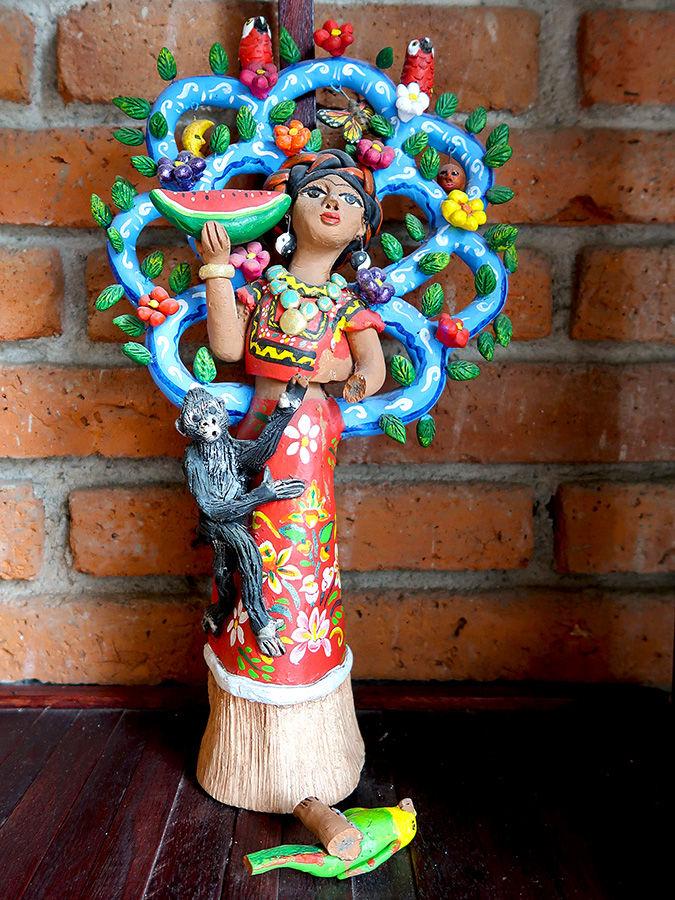
Ceramic sculpture of a Tehuana by Fran Garcia Vásquez.

IMG_0699

Ooops, a broken arm!  It seems appropriate that my only casualty from the 8.2 earthquake depicts a woman from the Isthmus of Tehuantepec — the region where some of the most severe damage in the state of Oaxaca occurred.  However, like the people she represents, she is strong, proud, and healing will happen.

If you want to help the victims of the September 7 earthquake, please see my previous post.  If you do, reward yourself by watching last night’s benefit at the Guelaguetza Auditorium, Oaxaca Corazón.  And, if you don’t, perhaps this spectacular concert will encourage you to donate to earthquake relief.

This all-star event, organized in less than a week by Lila Downs and Susana Harp, will have tears falling — I guarantee it!

Save

Read Full Post »

Oaxaca continues to be inundated with rain.  I’m in Colorado now (inhaling smoke from fires throughout the west), but friends in Oaxaca are describing flooding, leaking roofs, water coming through windows and doors, and rain without end. Today’s news is reporting more than 13 communities are incommunicado and that urban development is a major cause of flooding by the Atoyac River that runs through the valley of Oaxaca.

Perhaps there are lessons to be learned from the builders of Monte Albán, where the Pre-Hispanic drainage works better than current systems.

Read Full Post »

In June, I finally had a chance to meet fiber artist, Carolyn Smythe Kallenborn.  In 2012, I’d been captivated by and wrote a small blog post about her “Tormentos y Sueños” exhibition at the Museo Textil de Oaxaca.  So, I was thrilled to meet her at the Weave a Real Peace (WARP) annual meeting held this year in Oaxaca.  We chatted a couple of times during the conference, but it was the final evening, as many of us were standing in the lobby of the hotel waiting for the business meeting to begin, that Carolyn provided us with a real treat — renown weaver Erasto “Tito” Mendoza, from Teotitlán del Valle, delivered a tapete that was to be used in a collaborative work with Carolyn.

IMG_0268

We were all in awe as he unrolled his creation for us to behold.  ¡Espectacular! was the response from all.  Then Carolyn began describing how she would use mixed media to embellish this woven illustration of the balance of Mother Earth.  However, aside from a hazy picture in my mind, I really had no idea what the finished work would look like.  Then synchronicity came to pass… an announcement that the fruit of their collaboration, Equilibrio/Balance, had won the Surface Design Association, Award of Excellence at the International Fiber Arts VIII exhibition at the San Francisco Bay Area’s Sebastopol Center for the Arts.  And, best of all for me, the show coincided with my Bay Area visit.  Without much difficulty, I managed to persuade B (of Week in Oaxaca fame), who had fallen in love with the tapetes of Teotitlán AND lives in Sebastopol, to accompany me to the exhibition a few days ago.


Equilibrio/Balance traces cycles of nature: water through earth and sky; elements of previous life, feeding new growth; and the conversation between the mountains and the universe above.  — object label

IMG_0264

This is one of seventy pieces in this International Fiber Arts show.  Like Equilibrio/Balance, most of the works are not only visually stunning, but also have much to say about our world and contemporary life.  If you are in the Bay Area and love textiles, I highly recommend making your way to the Sebastopol Arts Center by September 3, when the show closes.

Save

Save

Save

Read Full Post »

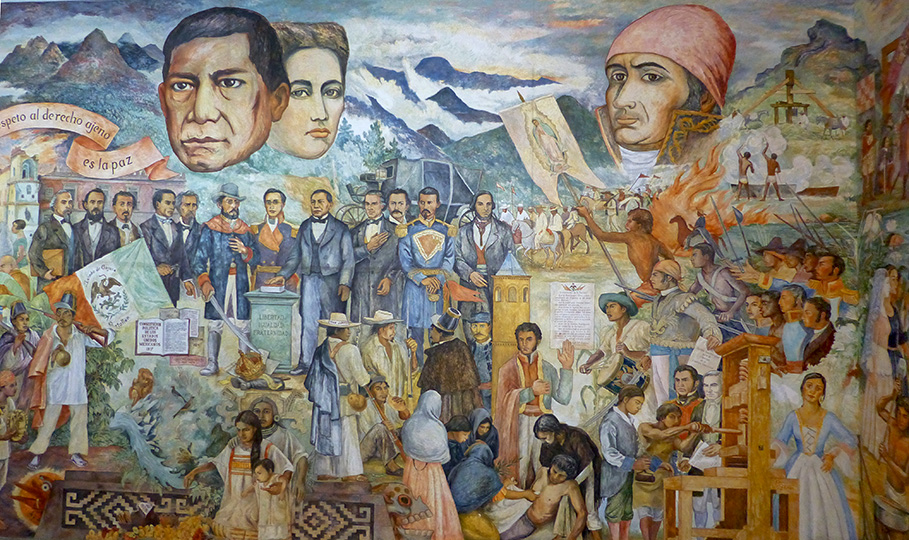
Our first stop on day five of B’s Week in Oaxaca was the Palacio de Gobierno to see the magnificent Mural of Oaxaca history.  Ooops!  I had forgotten that the Government Palace was now closed to the public.  However, a polite appeal to see the mural, addressed to one of the guards by a couple of tourists (okay, one tourist and one resident), resulted in the guard receiving permission from a superior to let us in.  We were instructed, mural only!  We obeyed, walking only half-way up the grand staircase to take in the entire work of art.  I love this mural by Arturo García Bustos and hope the palacio will again be opened to the public.

Once we had finished marveling at the Bustos history of Oaxaca, we walked up the Macedonio Alcalá to the Museo de Arte Contemporáneo de Oaxaca (MACO) to check out the Espejos de Cal mural being painted in the courtyard by Jesús González.  Engrossed in watching the mural unfold and fascinated in the technique explained by the artist’s Russian assistant, we never made it inside this treasure of a museum.  Next time!

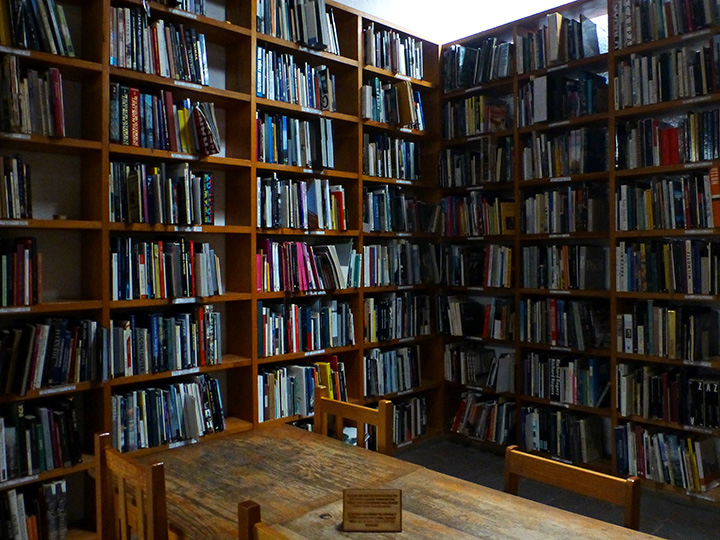
We strolled further up the Alcalá to the Instituto de Artes Gráficas de Oaxaca (IAGO), founded in 1988 by renown artist, philanthropist, and social activist, Francisco Toledo.  First we wandered through the exhibition rooms and then into the impressive library.  The 60,000+ books on art, architecture, design, photography, and much more is one of the most extensive arts-related collections in Latin America.  A photography professor friend raved to me about finding a book at IAGO that he had been searching for and B (the architect) was ooh-ing and ahh-ing at titles he eyed — and pulled a few off the shelves to leaf through.  IAGO also hosts lectures, conferences, musical performances, workshops, poetry readings, and film showings.

Needless to say, by the time we finally left, we were hungry.  Lucky for us, the acclaimed restaurant Pitiona was only a block away.  Born in Pinotepa Nacional, Oaxaca, Chef José Manuel Baños spent time in Spain under the tutelage of innovative chefs Feran Adrià and Juan Mari Arzak.  However, as the name Pitiona (a native herb frequently used in Oaxacan cooking) suggests, the starting point for Baños is local ingredients.  The simple elegance of the old colonial building and attention to detail in table settings, service, and especially food, made for a sublime interlude in the day’s activities.

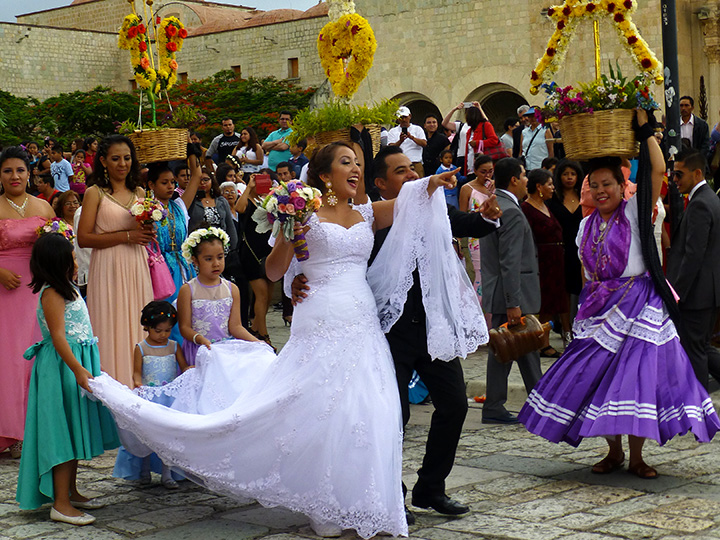
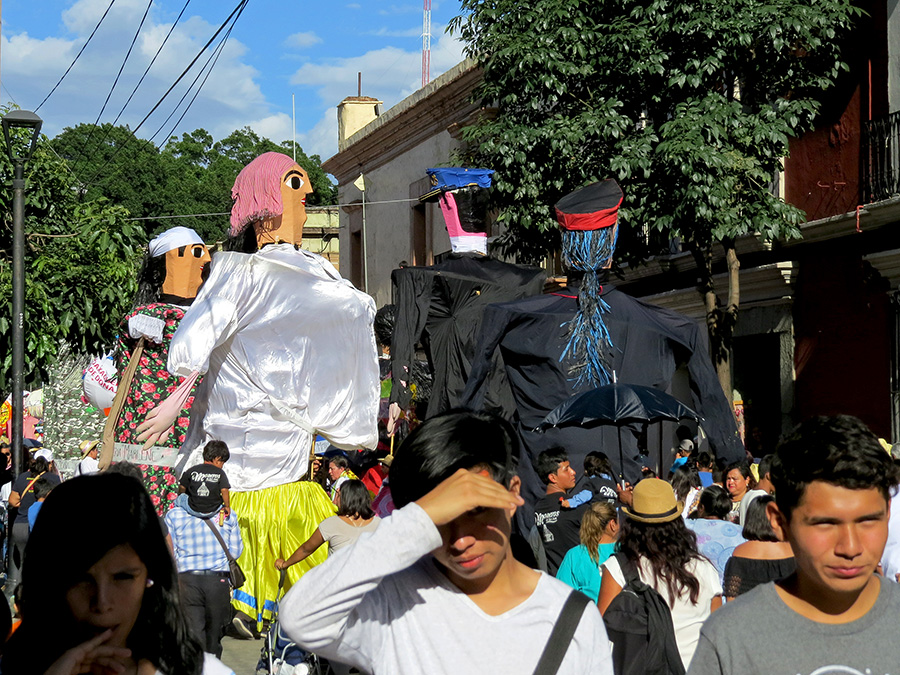
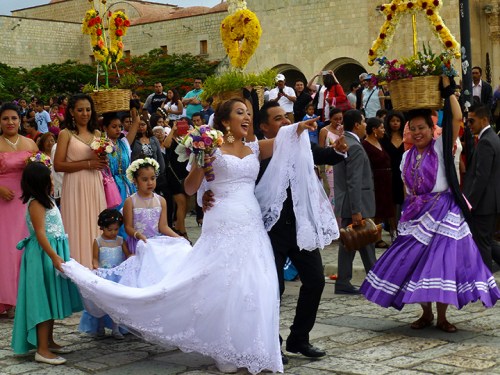
We descended the stairs of Pitiona to the sound of music coming from the atrium of Templo de Santo Domingo de Guzmán.  It was Saturday and that means wedding day at Santo Domingo – each featuring a band, folkloric dancers, marmotas (giant cloth balloons), bride and groom monos (giant puppets), a wedding procession down the Alcalá, and scores of tourists and locals stopping to watch — which we did, too!
Our final stop was at the photography museum Centro Fotográfico Manuel Álvarez Bravo, another brainchild of Francisco Toledo.  The museum has over 18,000 photographs in its permanent collection, including by its namesake Manuel Álvarez Bravo, his first wife Lola Alvarez Bravo, Henri Cartier-Bresson, Tina Modotti, Guillermo Kahlo (yes, Frida Kahlo’s father), and Mary Ellen Mark.  Works from the collection and by photographers from all over the world are exhibited in galleries surrounding a beautiful courtyard featuring a reflecting pool.

However, that wasn’t the end.  After a siesta, we gathered with eight other diners for a Waje pop-up dinner.  The June menu was an homage to mole and the setting was at the restaurant Mezquite Gastronomia Y Destilado where Waje chef, José Daniel Delgado is the new chef.  As always, José Daniel and his Waje team provided a creative, delicious, and delightful evening.  An added bonus was being seated across from Jason Cox, co-owner and mezcal steward of El Destilado — a restaurant I definitely need to try.

Only one day left in B’s Week in Oaxaca.  Where to go?  What to do?  Stay tuned!

Save

Save

Save

Save

Save

Save

Save

Save

Save

Save

Save

Save

Read Full Post »

Day four of B’s Week in Oaxaca had B relying on yours truly for the day’s sights and sounds.  Where to begin?  The answer, because it was near Casita Colibrí and we had just been to Mitla and Monte Albán, was the Museo de Arte Prehispánico de México Rufino Tamayo (Rufino Tamayo Museum of Prehispanic Art).  The collection is spread over five rooms surrounding a courtyard in a 16th century colonial building.  Each room is painted a different iconic Mexican color, chosen by the late Zapotec Oaxaqueño artist Rufino Tamayo, to highlight the pieces of his extraordinary collection.

Next we walked down to and through the iron gates, designed by Francisco Toledo, and across the brick pathway of the Centro Cultural San Pablo (Cultural Center of San Pablo).  We explored the interior rooms of this ex-convent, now an academic research and cultural center, that hosts concerts, lectures, exhibitions, and houses a library.  Pausing to rest, we took advantage of the cafe in the courtyard to order a couple of aguas.

Our thirst quenched, we walked around the corner to the Museo Textil de Oaxaca (Textile Museum of Oaxaca) to explore the ground floor and upstairs exhibitions of one of this textile lover’s favorite museums.  One of the exhibits was the stunning “Almas bordadas, vestido y ornamento en el Istmo de Tehuantepec” — displaying the iconic embroidered clothing of the Isthmus of Tehuantepec.  (Think, the dress of Frida Kahlo.)

Forty-five minutes later, we were certifiably hungry and, lucky for us, Origen, restaurant of Top Chef Mexico 2016 winner, Rodolfo Castellanos, and one of my oft recommended restaurants in Oaxaca, was only a block away.  As always, its relaxing interior, attentive service, and delicious food provided a perfect respite.

Once rested and satiated, it felt good to set feet to pavement for the short walk to the Catedral Metropolitana de Nuestra Señora de la Asunción (Cathedral of Our Lady of the Assumption).  The cathedral towers over the zocaló and the Alameda.  The construction of this green cantera (stone) edifice began in 1535 and was consecrated on July 12, 1733.  It is dominated by a spectacular altar and lined, on both sides, with chapels — the most important being that of Señor del Rayo.  In addition, it is home to one of the historic pipe organs of Oaxaca.

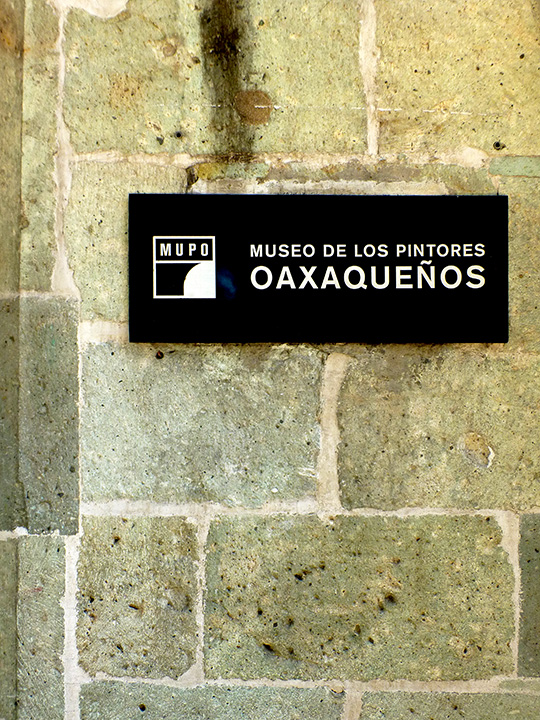
After being wowed by the Cathedral’s soaring ceiling, altar, art, chapels, and organ, we crossed Independencia for a taste of the modern — the Museo de los Pintores Oaxaqueños (Museum of Oaxacan Painters).  This, often overlooked, two-story restored colonial era mansion showcases the creativity and talent of Oaxaca’s painters.  I had been to the museum only a month before, but the exhibitions are ever-changing, and new artists were on display.

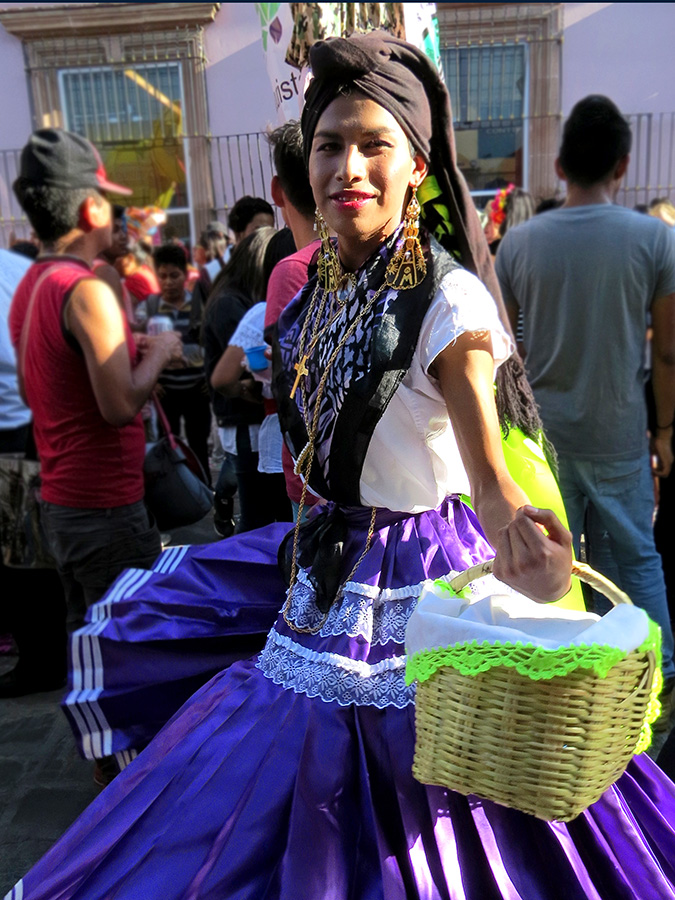
Of course, no day in Oaxaca is complete without a parade and we were not disappointed.  We departed the Museo de los Pintores Oaxaqueños to be greeted with a calenda (parade) by “Ranchu Gubiña” from Union Hidalgo in the Isthmus of Tehuantepec region — attired in clothing similar to that which we had seen earlier in the day at the textile museum.  We had come full circle!

Another long day’s journey into evening….  However, we weren’t finished yet; two more days await!

Read Full Post »

Whether just passing by…

P1280313

P1280424

Or, stopping to study…

P1280314

P1280425

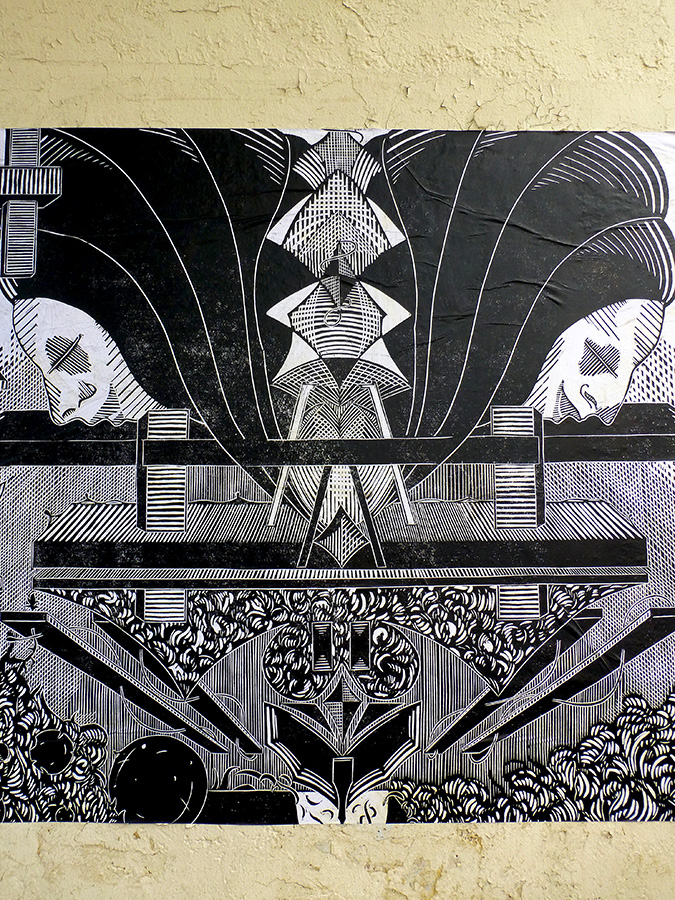
Even black and white stencils add color commentary to the walls of Oaxaca.

Read Full Post »

Another day, another parade.  Today, the Gran Calenda del Mercado de Abastos (parade of the markets) passed within a block and a half of Casita Colibrí.  I couldn’t miss it — the cacophony of multiple bands, cohetes (rockets), and honking horns announced its arrival in my ‘hood!  In the words of Octavio Paz, from The Labyrinth of Solitude

“The solitary Mexican loves fiestas and public gatherings.”

IMG_3690

“The art of the fiesta has been debased almost everywhere else, but not in Mexico.”

IMG_3707

“Our poverty can be measured by the frequency and luxuriousness of our holidays.”

IMG_3761

“Do they forget themselves and show their true faces?  Nobody knows.  The important thing is to go out, open a way, get drunk on noise, people, colors.”

IMG_3726

“In the confusion that it generates, society is dissolved, is drowned, insofar as it is an organism ruled according to certain laws and principles.”

IMG_3785

“Everything is united: good and evil, day and night, the sacred and the profane.  Everything merges, loses shape and individuality and returns to the primordial mass.”

IMG_3738

“The fiesta is a cosmic experiment, an experiment in disorder, reuniting contradictory elements and principles in order to bring about a renascence of life.”

Read Full Post »

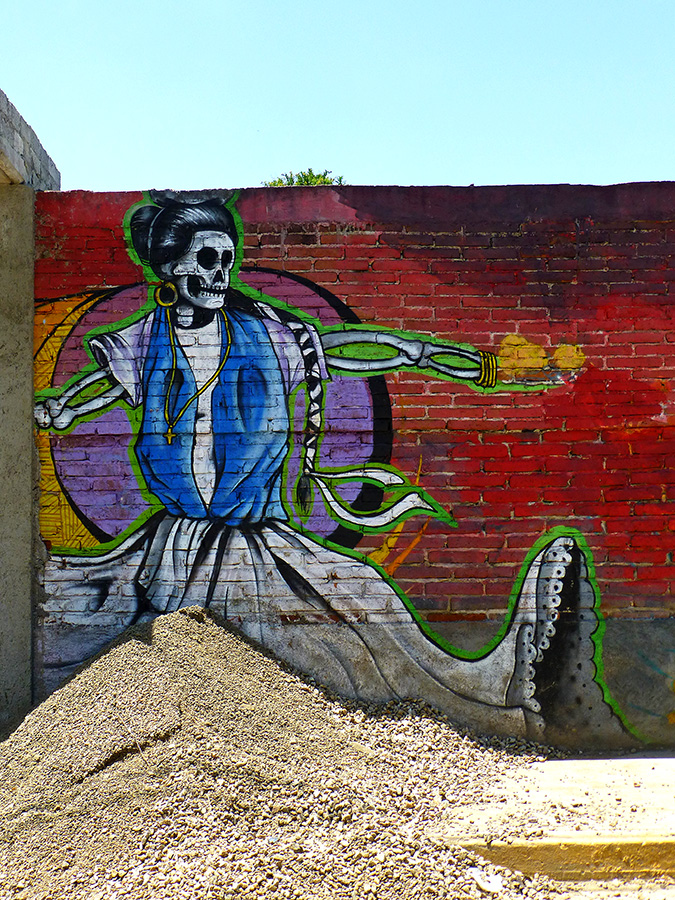
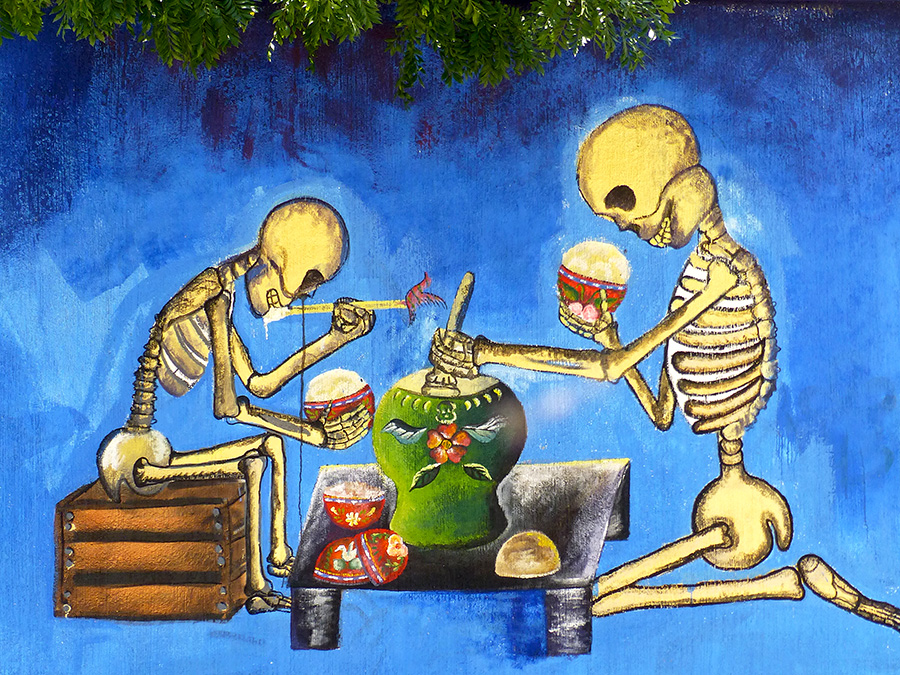
One of the great things about having friends come to visit, is going places and doing things not on the usual agenda.  Thus, last week, while accompanying my friend B on a private tour of sights outside Oaxaca city, the guide asked if we knew about the Muertos murals in Villa de Zaachila and would we like to see them.  Absolutely, we said!

In late October, prior to Día de Muertos, young artists are invited to paint Day of the Dead related murals on the walls of Calle Coquiza, the street that connects the church, Santa María Natividad, to the municipal cemetery.  Customs, beliefs, and legends provide the inspiration, as well as day-to-day activities.

P1260838

Flor de Piña dancers welcome residents and visitors to step through the doorway to the land beyond.

P1260849

Where electric meters serve as faces.

P1260844

And, telephone poles add a third dimension to the design.

P1260850

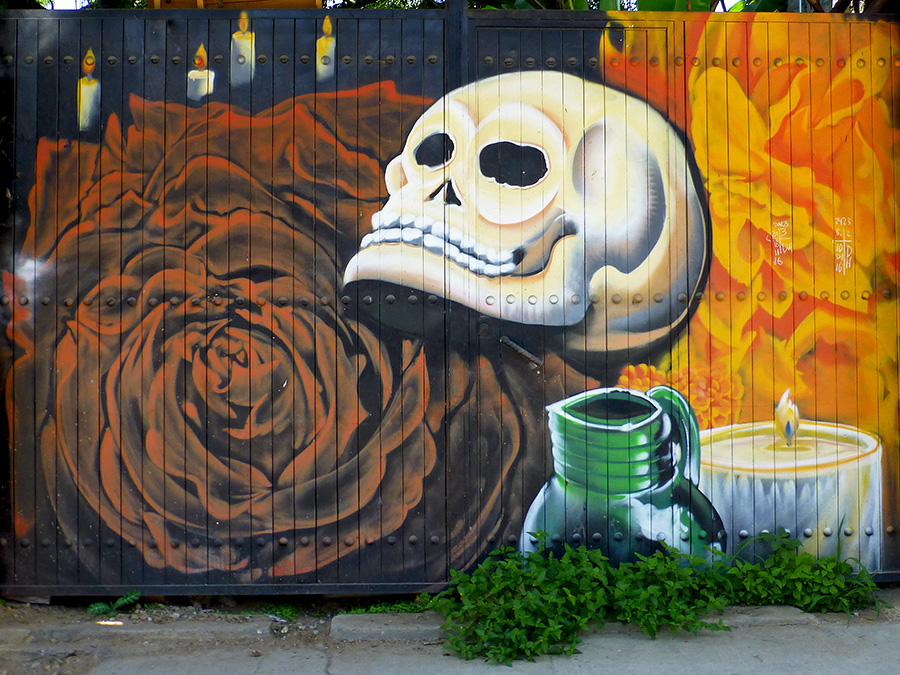
Painted pitchers and candles nestle in vegetation escaping from under a portón.

P1260874

And, a dancer frolics in sand waiting to be mixed into concrete for construction next door.

P1260853

Skeletons use an electric meter to get a leg up in climbing the conduit.

P1260857

Trees provide shade, as Pan de Muertos is baked in an outdoor oven.

P1260878

Leaves flutter above, as Bu’pu del Valle (chocolate atole) is frothed with a molinillo before being served in traditional hand-painted jicaras.

P1260862

Flowers tumble over the wall to adorn a catrina portrait’s hat.

The murals along the walls of Calle Coquiza remain throughout the year — until replaced by the next Día de Muertos artists’ offerings.  In addition, during Day of the Dead, this Calzada de los Muertos (Road of the Dead) is paved with sand paintings.  It is definitely going on my Muertos “must see” itinerary.

Read Full Post »

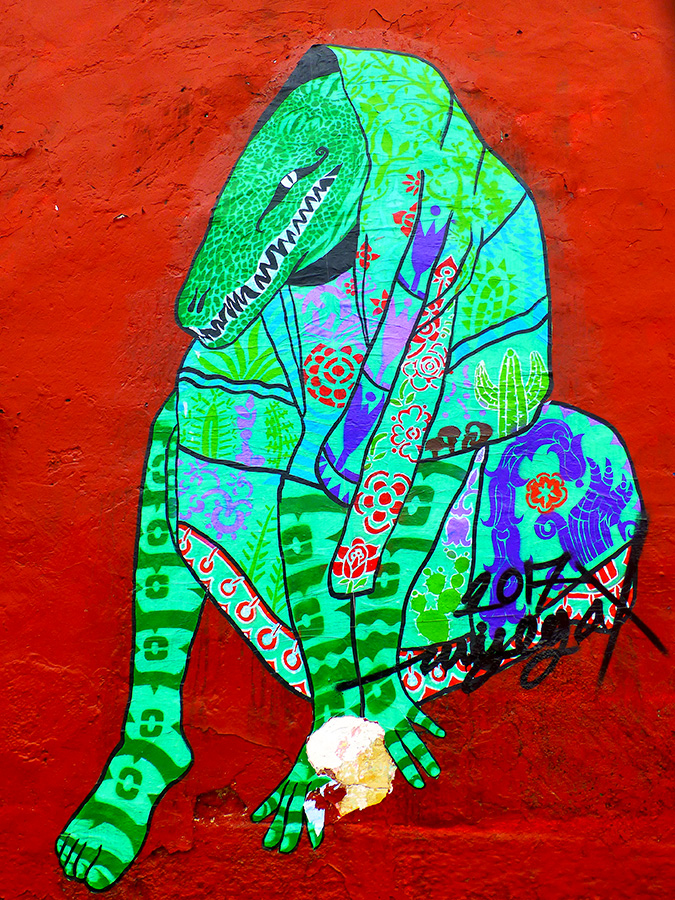
Walking along the sidewalks of Oaxaca…

P1260601

P1260602

P1260698

P1260188

I get the feeling I’m being watched… by Oaxaca’s revolutionary street art.

Read Full Post »

We live in perilous times…P1250005

The signs are everywhere…P1260098

This guy can’t be the only one riding to the rescue.P1250841

We all must do our part.

Save

Save

Read Full Post »

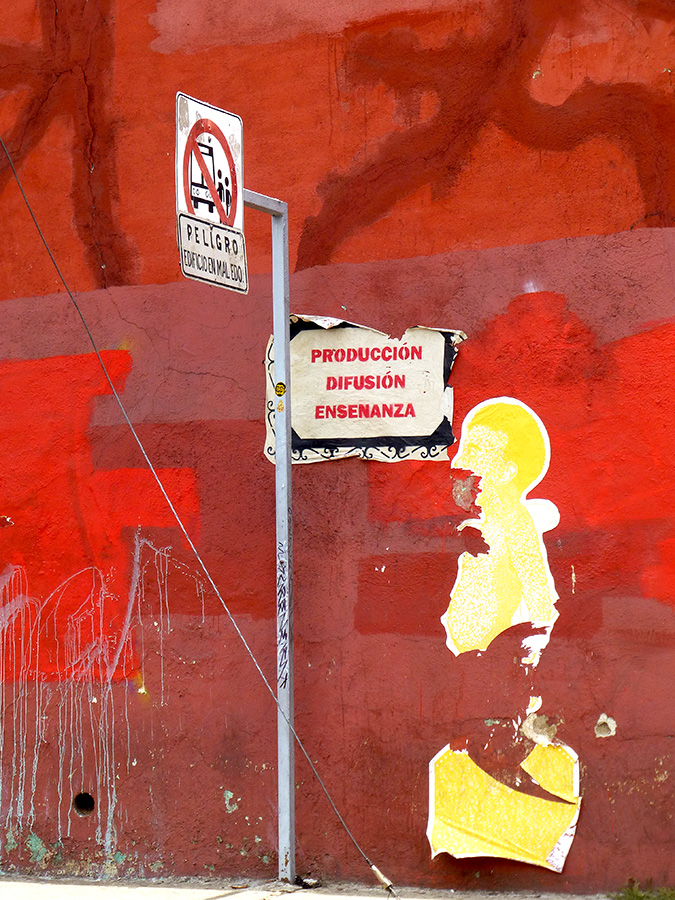
Sorry folks, the bus doesn’t stop here.  Why?  You ask.  Doesn’t red mean “stop”?  Not here.  Not now.  There is DANGER; this edifice is in a bad state!

P1260143

And, make sure to produce, disseminate, and teach about the dangers of buildings in hazardous states of disrepair.  As Mother Nature has reminded us twice within the past week, this is earthquake country.

Save

Read Full Post »

Tomorrow, May 18, museums worldwide will be celebrating International Museum Day with special events around this year’s theme, “Museums and contested histories: Saying the unspeakable in museums.”  According to the IMD website, The objective of International Museum Day is to raise awareness of the fact that, “Museums are an important means of cultural exchange, enrichment of cultures and development of mutual understanding, cooperation and peace among peoples.” 

While Oaxaca has many wonderful museums, textile lover that I am, I would like to honor the day by looking back at several exhibitions I had the pleasure of viewing at the Museo Textil de Oaxaca — and a current one, too!

IMG_9302

Tormentos y suenos” (Storms and dreams) by Carolyn Kallenborn – August 3, 2012

Exhibitions ranged from works by individual textile artists to themed shows displaying textiles from the museum’s permanent collection and those on loan.

P1050404

“Transcomunalidad. interventions and collaborations with stilt communities and craftsmen” exhibition by Laura Anderson Barbata – March 1, 2013

Item labels and detailed descriptive booklets have been extremely helpful and, in the case of collections by individual collectors, their field notes were fascinating.

P1050633

“Irmgard Weitlaner Johnson: a life dedicated to textiles” – Costal (bag) was acquired by Irmgard in 1949, is said to be one of the most well preserved examples from the Valle del Mezquital, Hidalgo and, given the design, is thought to have been a wedding gift. – Nov. 21, 2014

The museum not only collects, preserves, and exhibits, it also holds workshops, lectures, expo-ventas (exposition and sales), and has provided a platform for issues of importance to textile artists, especially from the indigenous communities of the state of Oaxaca.

P1080922

El Delirio del color Oaxaca en los años 1960″ – Huipil mazatecas from the Tuxtepec district – Apr. 19, 2015

Exhibition openings often have included receptions, with an occasional performance art presentation thrown in.

P1190533

“Hilo Rojo 3047” an autobiographical installation by Ornilla Ridone – May 21, 2016

Museums can be a place to help shape community identity and bring different community groups together, a catalyst for regeneration through the creation of new venues and civic spaces, and a resource for developing the skills and confidence of members of those communities.  — Museums Association

P1260051

“Tekstil” current exhibition by textile artist Trine Ellitsgaard – Piece titled “Serpiente y abanicos” (Serpent and fans) – May 6, 2017

In observance of this year’s International Museum Day, the Museo Textil de Oaxaca invites textile artists and designers, academics, students, and the general public to participate in a conversation exploring the questions, “What is plagiarism? What is a copy? What is collaborating? Is ‘to collaborate’ synonymous with ‘to employ’? What has been the role of the copy in the development of craft goods?”   May 18, 10:00 AM to 2:00 PM in the Claustro of the Centro Cultural San Pablo — next door to the Textile Museum.

Read Full Post »

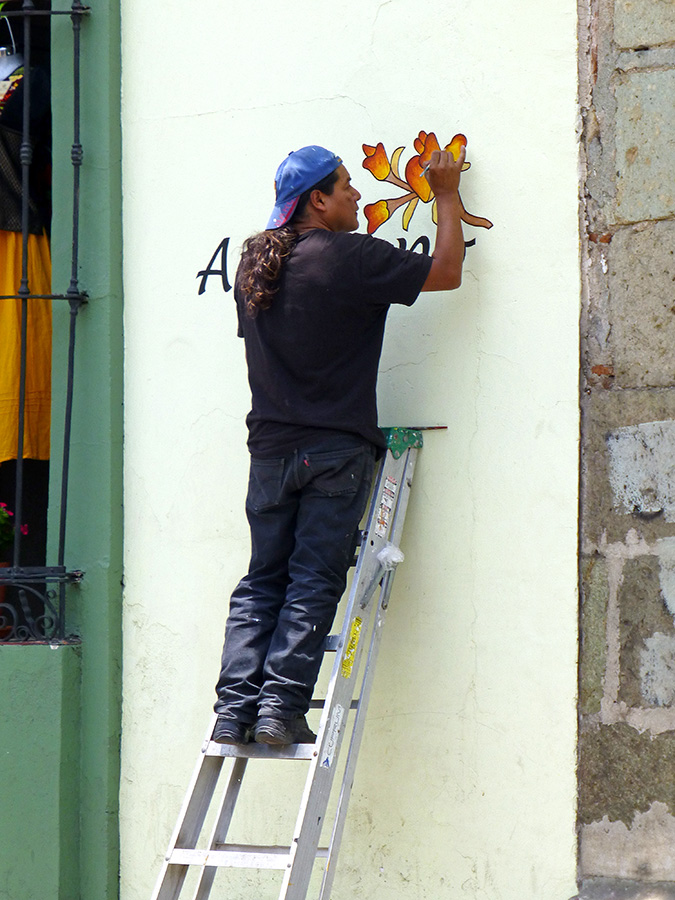
Thinking of all the sign painters I used to know back in the day, up in el norte.

At a time ruled by the industry and advanced technologies of all kinds, it’s easy to forget that once many things were done by hand. One of these things would be sign painting…. However, like many crafts and trades, hand-made sign painting was taken over by computers and printers, which promised cheaper and quicker solutions to its curious customers hungry for the wonders of the new era. As a result, these creatives lost their jobs, like many of their fellow draughtsmen and handymen.The Nostalgia of the Sign Painting

But, here in Oaxaca…

P1260079

We’ve got the ladder, the brush, and the artist.

P1260080_land

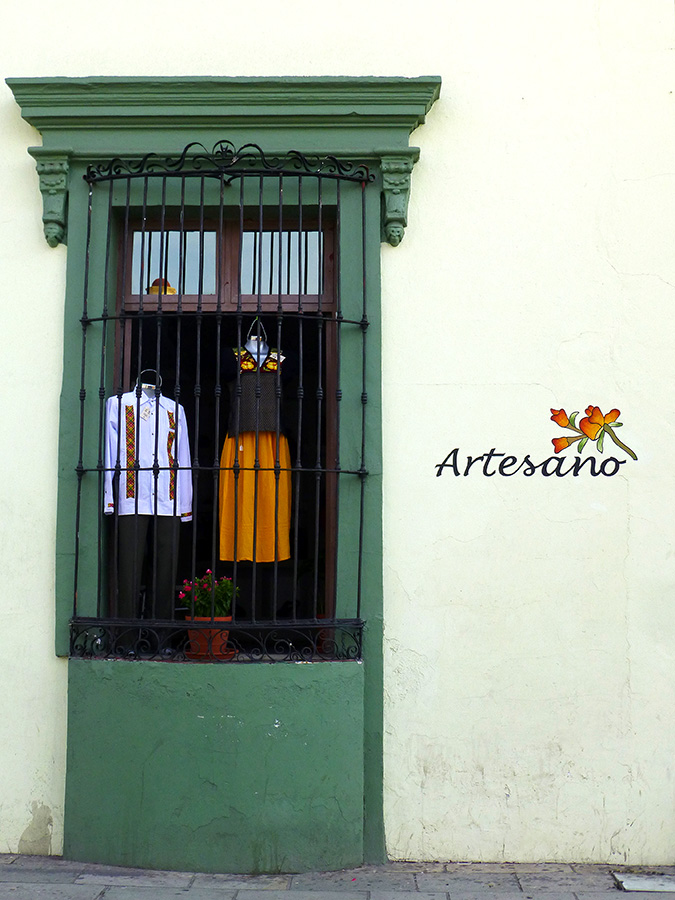
The hand-painted artistry continues and leads to…

P1260089

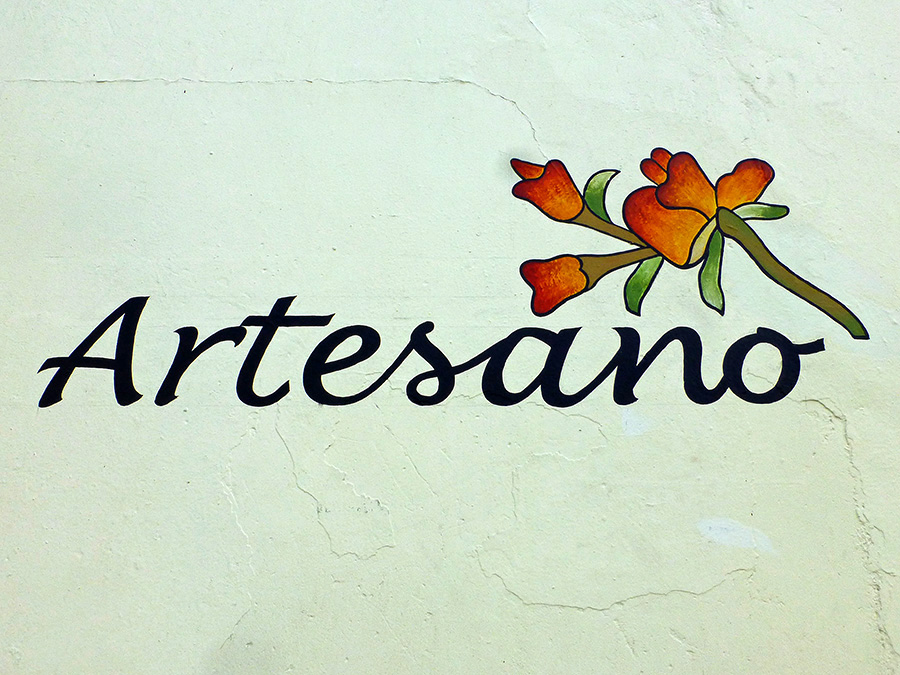
The creation of a beautiful and unique sign on Av. José María Morelos in Col. Centro.

P1260088

¡Vive los artesanos!

Update:  The sign painter (rotulista), Arturo, can be reached at:  951-201-3527

Save

Save

Save

Read Full Post »

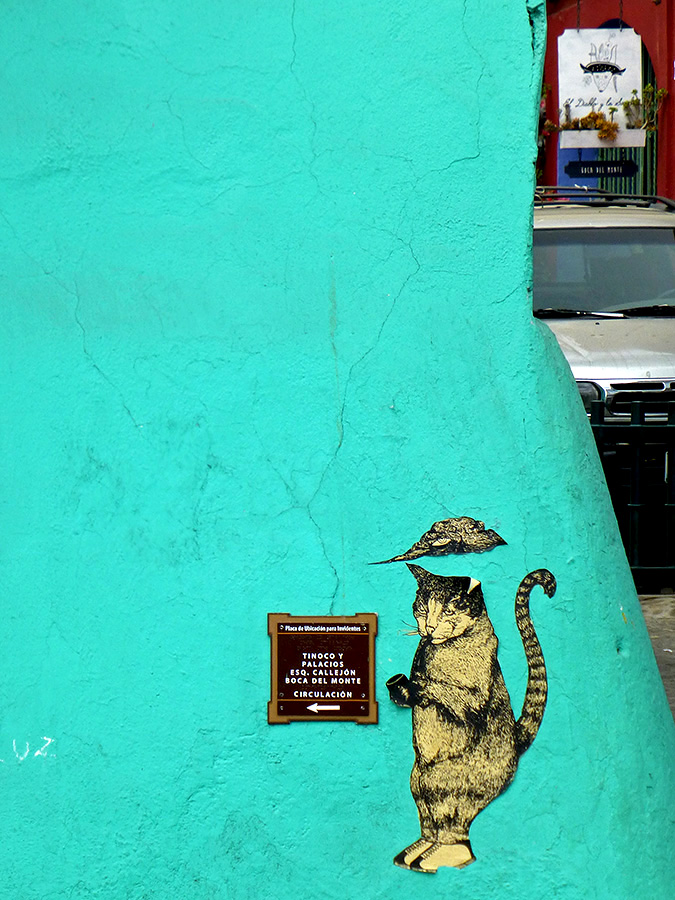
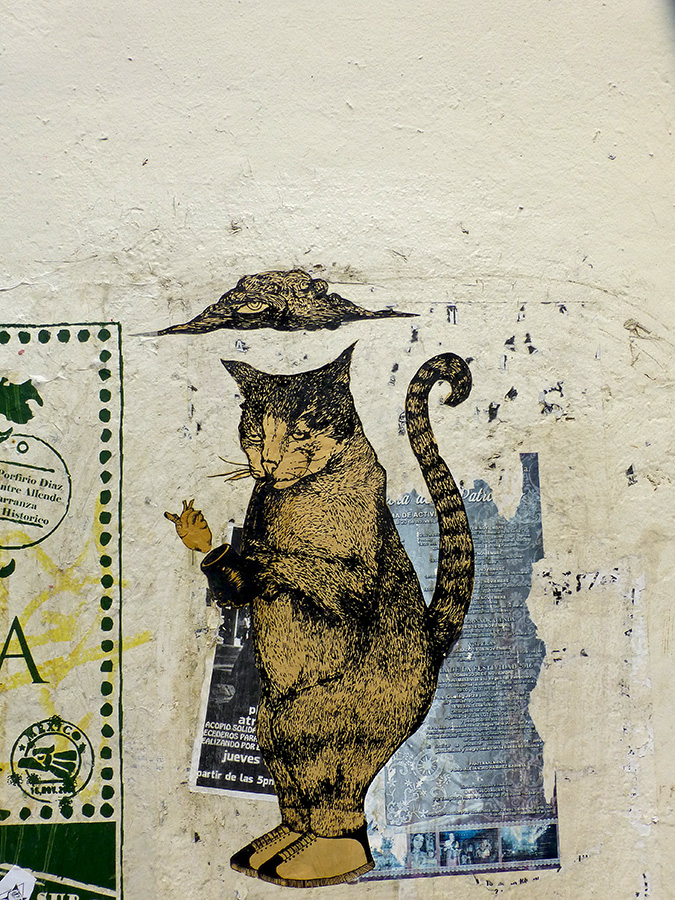
“What’s your name,” Coraline asked the cat. “Look, I’m Coraline. Okay?”
“Cats don’t have names,” it said.
“No?” said Coraline.
“No,” said the cat. “Now you people have names. That’s because you don’t know who you are. We know who we are, so we don’t need names.”Neil Gaiman, Coraline

P1250132

The problem with cats is that they get the exact same look on their face whether they see a moth or an axe-murderer.Paula Poundstone
P1250353
“Curiosity killed the cat,” Fesgao remarked, his dark eyes unreadable.
Aly rolled her eyes. Why did everyone say that to her? “People always forget the rest of the saying,” she complained. “‘And satisfaction brought it back.”Tamora Pierce, Trickster’s Choice

Read Full Post »

« Newer Posts - Older Posts »