Feeds:
Posts
Comments

Archive for the ‘Creativity’ Category

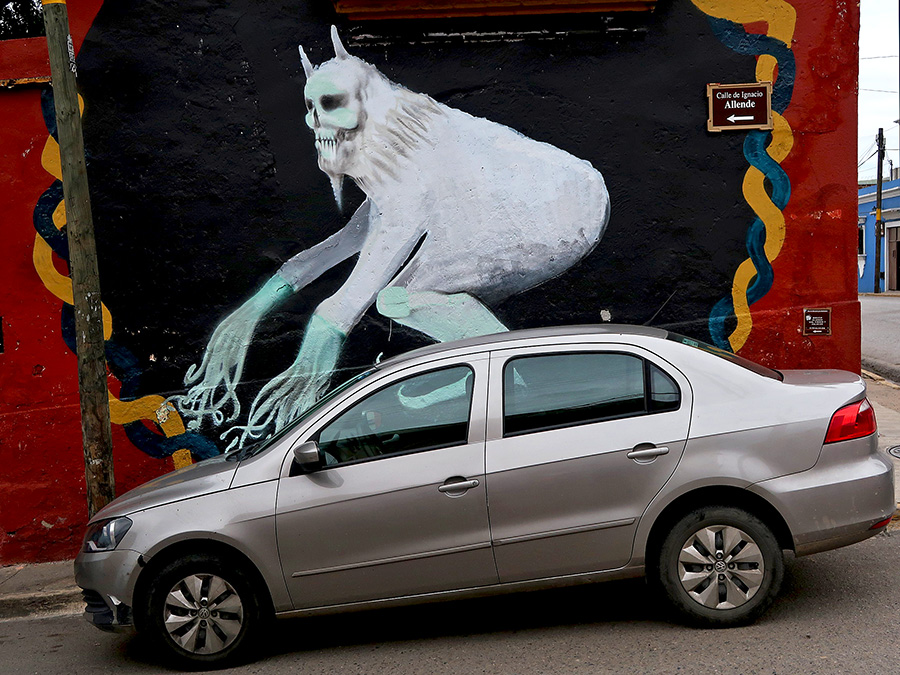
Walls of murals may be welcomed and encouraged in Tlacolula de Matamoros and Villa de Zaachila but, alas, such is not the case in the city of Oaxaca.  Remember the image on my Surfin’ safari post in September?

IMG_0708

Calle de Ignacio Allende at the corner of Tinoco y Palacios

And it wasn’t even finished — it is even more impressive now!

IMG_2558

However, do you see the two sheets of paper defacing the mural?

IMG_2559

Here we go again…  Like Color and culture, unwelcome and Lapiztola’s incredibly moving mural on the side of Museo Belber Jimenez, the authorities have declared this wonderful piece of art did not have their permission and will, most probably, be painted over.  Don’t they have more pressing problems to deal with?  Hint:  The multiple buildings “en mal estado” scattered throughout the Historic District that are in danger of collapsing onto pedestrians and drivers.

Read Full Post »

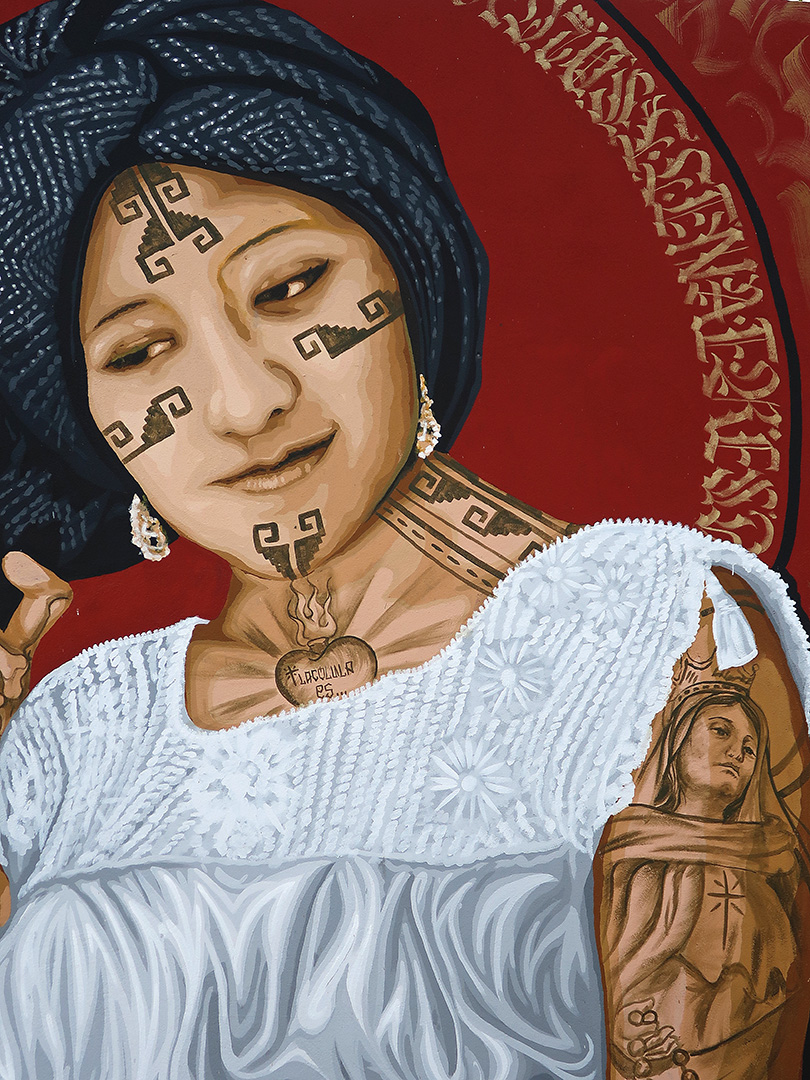
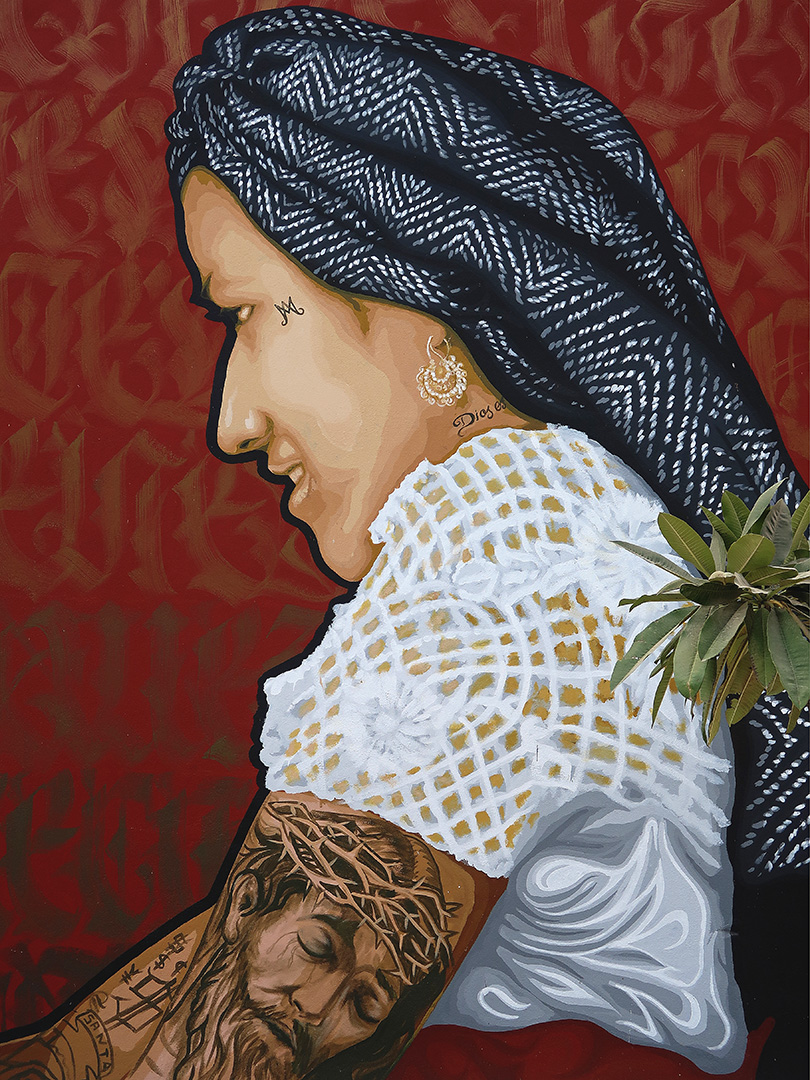
Last week in Tlacolula, as friends and I were studying the “¡Solo Dios perdona!” mural by the Tlacolulokos collective, the storekeeper next door advised us that if we liked that one, we should check out another spectacular Tlacolulokos mural a few blocks away.  So we did.

IMG_2505

He was right — it was indeed stunning in SO many ways!  We came face-to-face with three strong, proud, and beautiful Zapotec women of Tlacolula wearing their stories.

IMG_2506

There was the traditional white blouse with its crocheted yolk, the black and white rebozo twisted into a head covering, and there were the prized gold and pearl earrings.

IMG_2508

But, so too were the tattoos of iconic Catholic imagery of Virgen María and Jésus wearing his crown of thorns juxtaposed with pre-Conquest grecas of Mitla, a Spanish galleon, and the heart-dagger of betrayal.  This is one powerful mural!  And, the story doesn’t end here in Oaxaca.

IMG_2510

It is estimated that 250,000 Zapotecs live in the greater Los Angeles area — “making it the largest concentration of Oaxacans outside of Oaxaca thus earning its unofficial title among Oaxacan in the United States as Oaxacalifornia.”  (The Voice of Indigenous Resistance in Oaxacalifornia)  Thus it was appropriate that Cosijoesa Cernas and Dario Canul of the Tlacolulokos collective were invited to create eight massive murals, “Visualizing Language: Oaxaca in L.A” for an exhibition at the Los Angeles Public Library.  They hang “below murals by Dean Cornwell, whose depictions of California’s history, completed in 1933, ignore Native Californian cultures and ‘fail to recognize the suffering of native peoples during the European conquest, as well as their exclusion from society…'” (New Murals Celebrate the Culture of Oaxaca in L.A.)

The murals at the Downtown Central Library in Los Angeles will be on exhibit in the library’s rotunda until January 31, 2018.

Read Full Post »

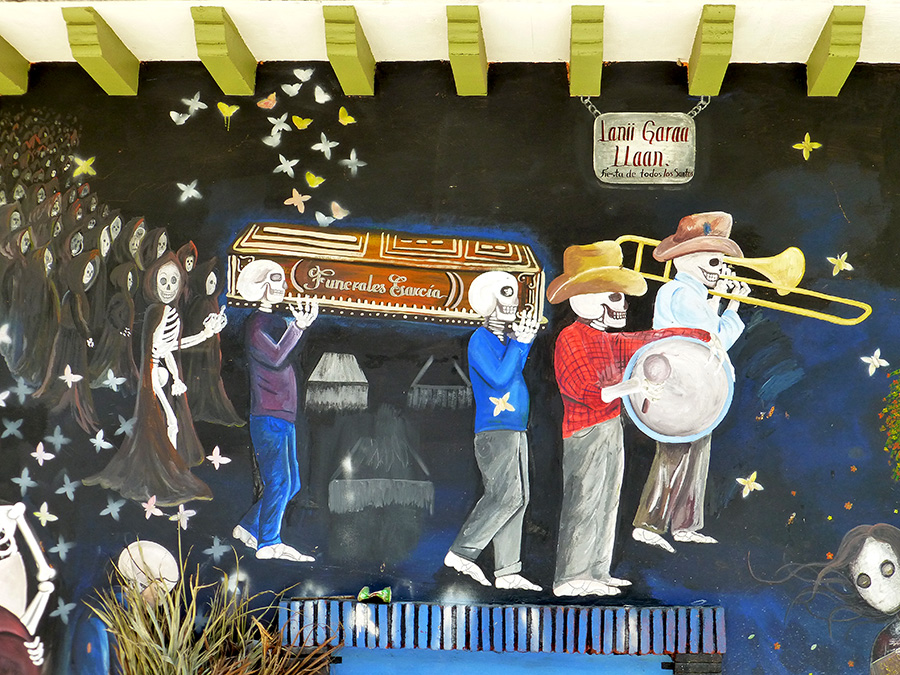
For anyone who still wonders why in the world I have chosen to live in and thrive in Oaxaca, go see the latest Pixar movie, Coco.

Entrance to the Panteón de Xochimilco, Oaxaca – Oct. 31, 2017

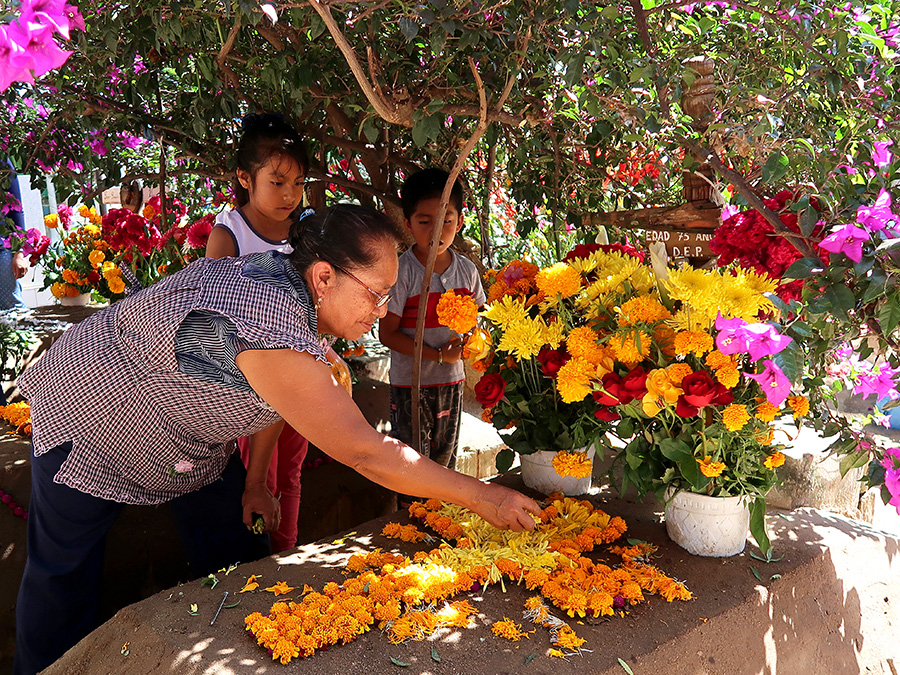
The filmmakers “based the Rivera family — a multigenerational matriarchy headed by Miguel’s formidable abuelita, or grandmother — on real-world families with whom they embedded while visiting the Mexican states of Oaxaca and Guanajuato between 2011 and 2013.”  (How Pixar Made Sure ‘Coco’ Was Culturally Conscious)

Panteón in San Antonino Castillo Velasco, Oaxaca – Nov. 4, 2017

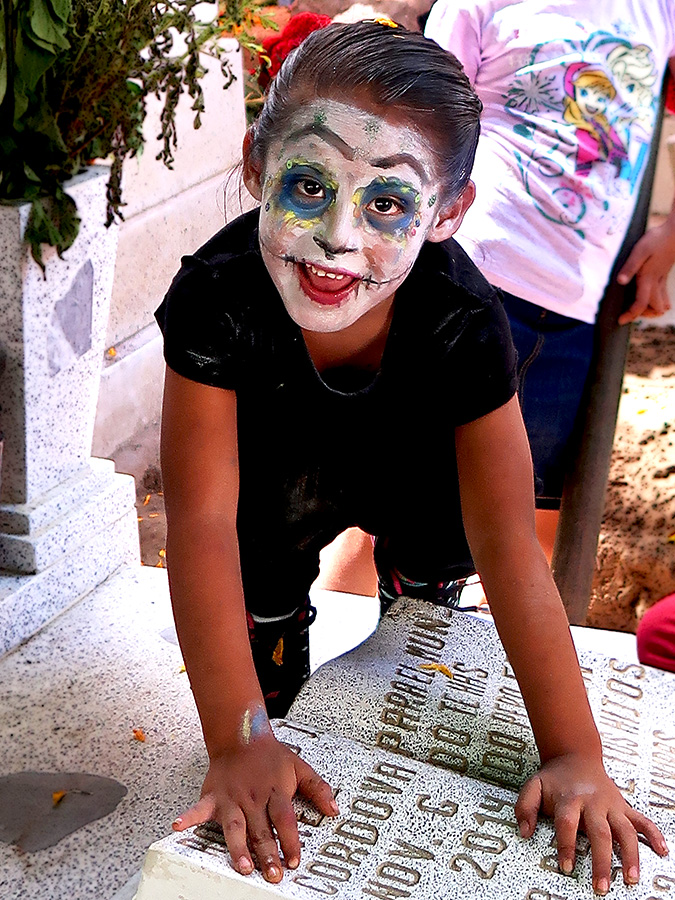
From the elaborately embroidered blouses and animated fantastical alebrije to the cemeteries and “life” of Día de los Muertos, Oaxaca provided an inspiration for the film.  (Coco, la nueva película de Disney-Pixar inspirada en Oaxaca)
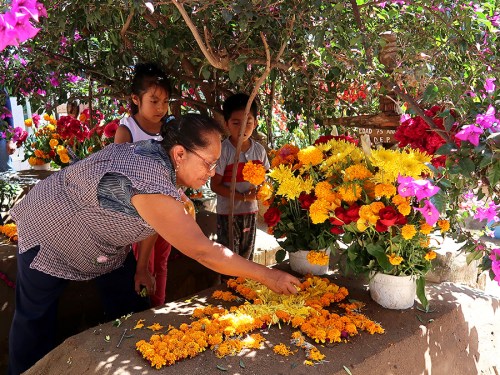
Panteón San Antonino Castillo Velasco, Oaxaca – Nov. 4, 2017

It is the music and messiness, color and cacophony, and finding joy in just being.

Panteón San Antonino Castillo Velasco, Oaxaca – Nov. 4, 2017

“We absorbed details in every place that we visited, but the most valuable thing was the time we spent with Mexican families.”  (How Coco’s Directors Celebrated the Film’s Mexican Heritage)
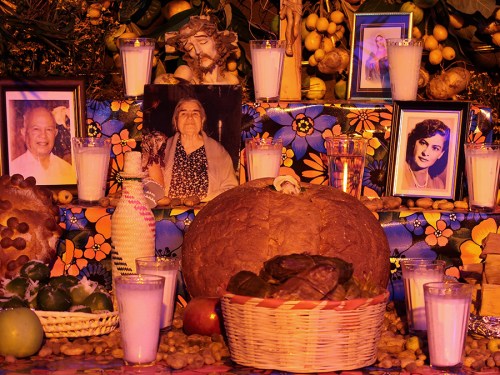
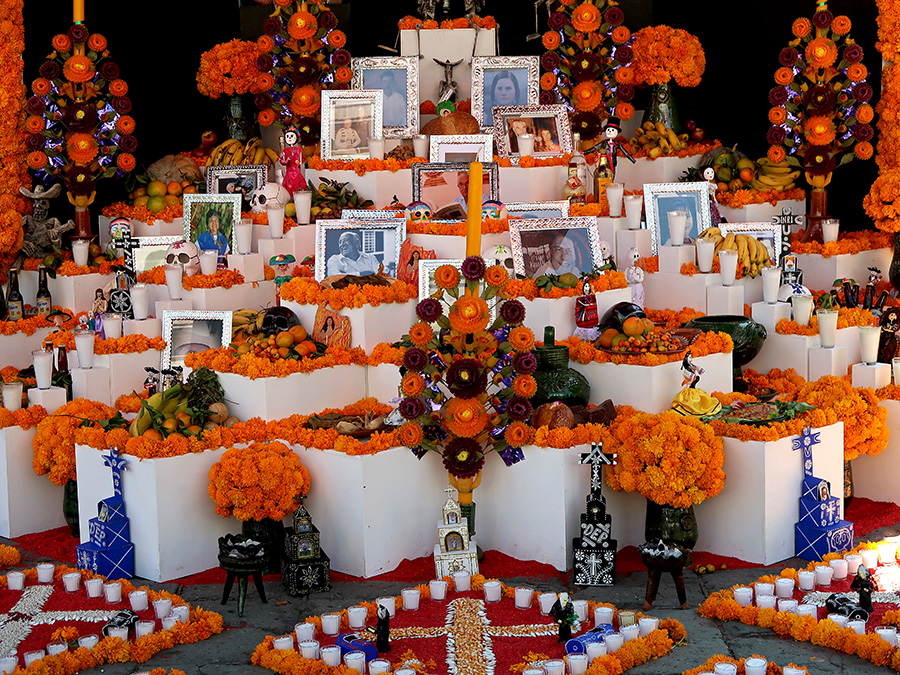
Ofrenda display in the Biblioteca Pública Central de Oaxaca Margarita Maza de Juárez – Oct. 31, 2017

It is the Oaxaca of fiestas, street dogs, and papel picado.
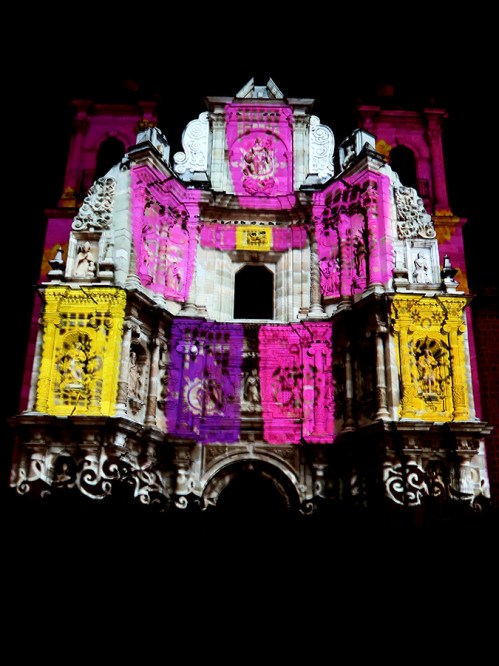
Papel picado projected on the Basilica de Nuestra Señora de la Soledad, Oaxaca – Oct. 30, 2017

Above all, it is about the importance of family, living and dead…

Public ofrenda in the atrium of the Catedral de Nuestra Señora de la Asunción, Oaxaca – Oct. 31, 2017

“With all of its music and folklore and artwork, and the story itself, audiences so far feel Coco respects their families, living and remembered.”   (Mexico, Music And Family Take Center Stage In ‘Coco’)
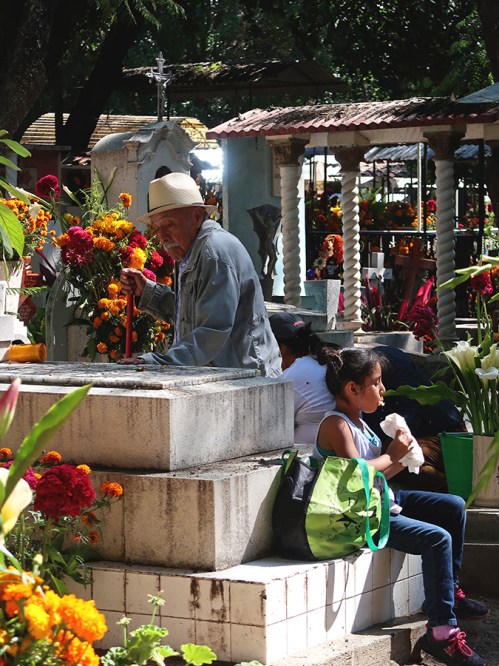
Panteón Municipal de Tlacolula de Matamoros, Oaxaca – Nov. 1, 2017

And, respect for one’s heritage and traditions.

Panteón San Antonino Castillo Velasco, Oaxaca – Nov. 4, 2017

This is the Oaxaca I fell in love with and treasure.

Panteón San Antonino Castillo Velasco, Oaxaca – Nov. 4, 2017

This is the Oaxaca that captured by heart, daily enriches my life, and I call home.

Read Full Post »
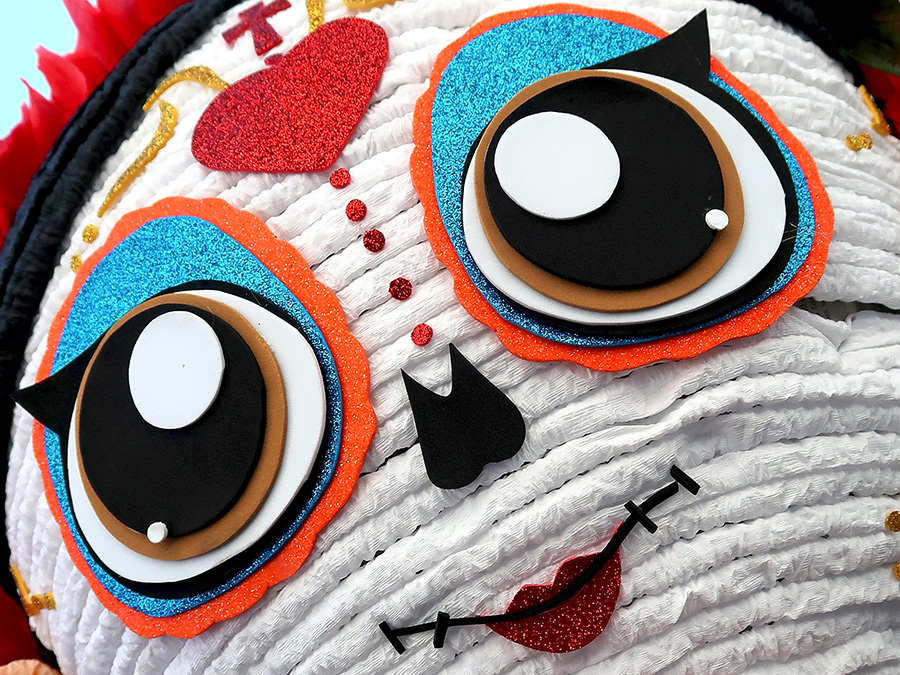
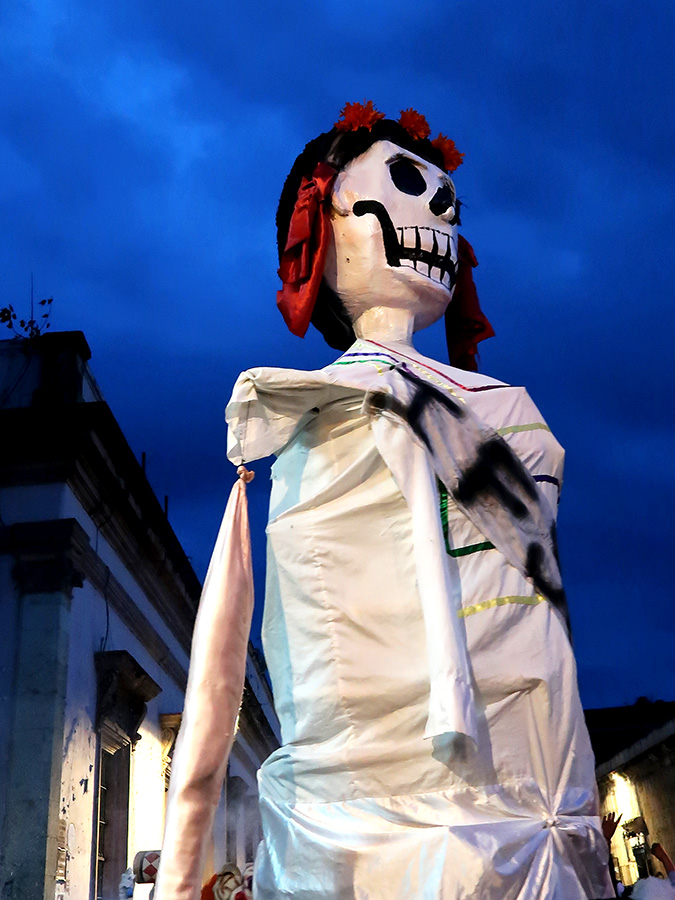
Yesterday, walking up the Alcalá on my way to La Cosecha Oaxaca organic market (Macedonio Alcalá 806), this Catrina cutie pie caught my eye.

IMG_2428

Though Muertos is in the rear view mirror, she is still hanging out above a doorway and keeping an eye on all who pass by.

IMG_2431

I keep thinking of the old song, I Only Have Eyes For You.

Read Full Post »

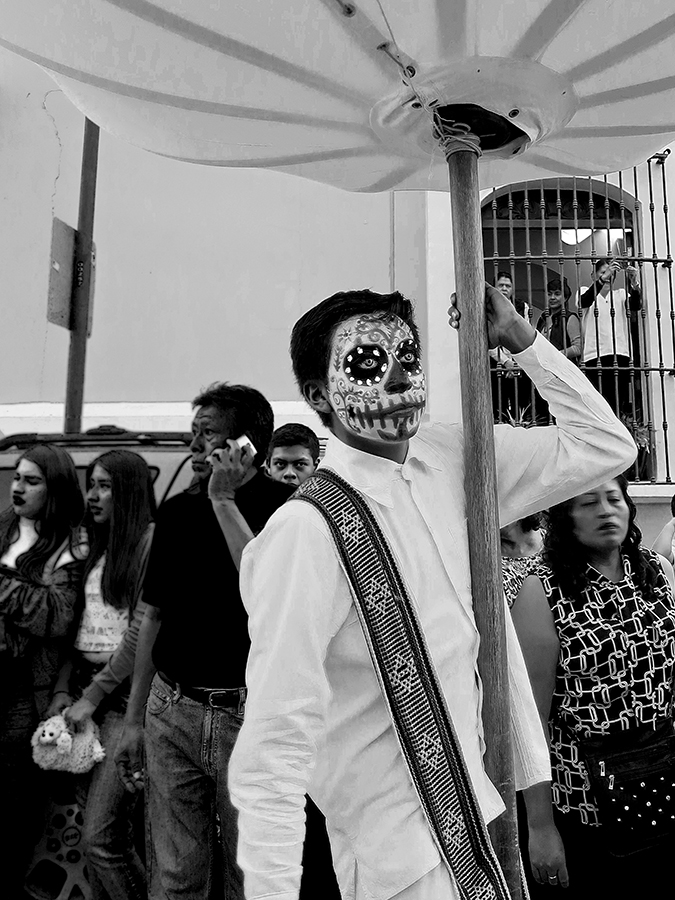
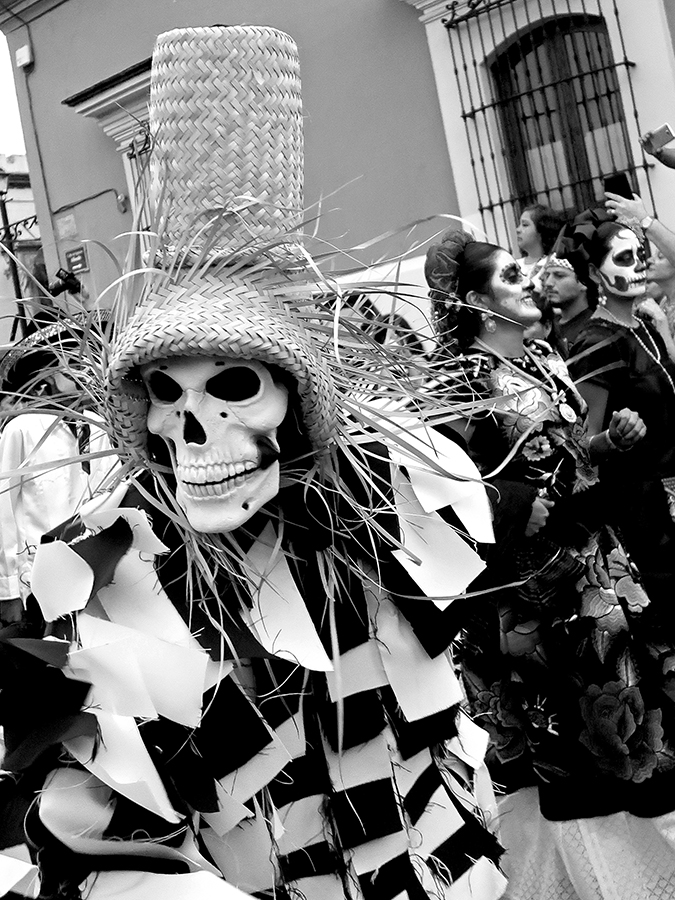
Looking back, in black and white…

IMG_1600_b&w

IMG_1448_b&w

IMG_1468_b&w

IMG_1472_b&w

IMG_1501_b&w

IMG_1473_b&w

Magna Comparsa Oaxaca through the streets of the city on October 28, 2017.

Read Full Post »

The transportation workers of the CTM (Confederación de Trabajadores de México) pretty much shut down main roads into and out of the city on Tuesday (just ask blogger buddy Chris) and Sección XXII of the teachers’ union yesterday blocked streets, today picketed government offices, and are now moving full force into the zócalo and surrounding streets.

IMG_2396

IMG_2398

IMG_2395

IMG_2400

Sigh, but don’t cry for Oaxaca.  Ten thousand years of history, this valley and her people will survive.  Listen and watch Lila Downs sing La Martiniana and remember its words

Porque si lloras yo peno,
en cambio si tú me cantas, mi vida,
yo siempre vivo, yo nunca muero.
~~~
Because if you cry, I’ll be filled with sorrow
Instead, if you sing to me
I will live forever, I’ll never die.

Save

Save

Read Full Post »
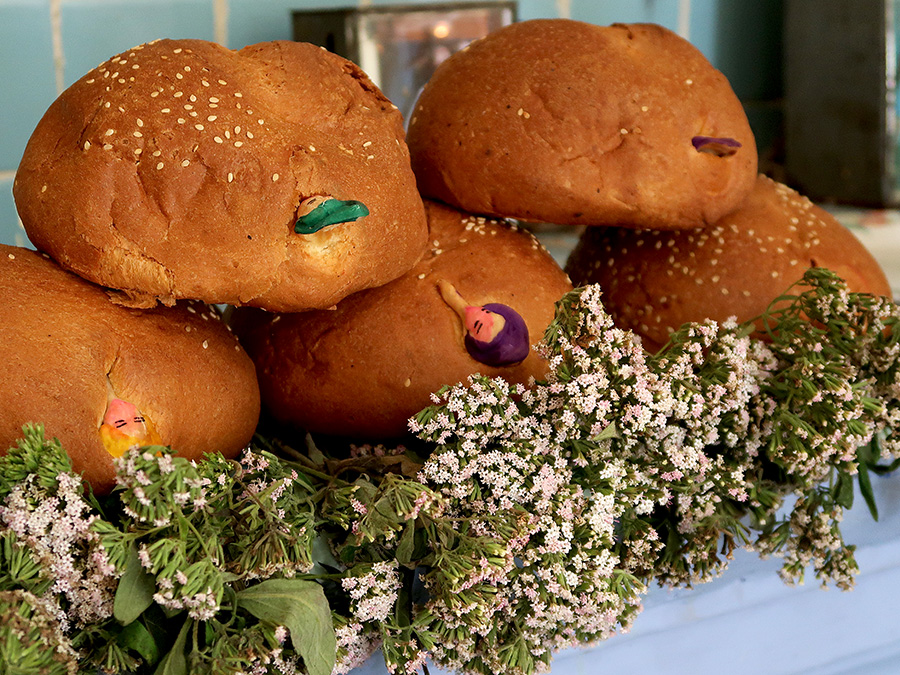
When Día de Muertos approaches, the panaderías (bakeries) work overtime to fill their shelves and counters with Pan de Muertos — an egg based bread, sometimes elaborately decorated, but always with a cabecita (also known as a muñeca), a little painted flour dough head, at the top.


The most intricately decorated bread comes from Mitla.  For a few years, Mitla held a Pan de Muertos fair and competition, with prizes for decoration.  Alas, because their bread is in such demand, the feria was halted two years ago as the bakers put a priority on attending to their customers needs — this is their livelihood, after all!


However, the small pueblo, Villa Díaz Ordaz picked up the slack and last year began holding a Festival del Pan de Muertos.  The village is off the beaten path and the festival hasn’t yet drawn much in the way of tourism, but it’s a wonderful event that blogger buddy Chris and I love attending (See his post, here).  Among other things, the event is encouraging and passing along to the younger generation knowledge and pride in the traditions and skills of their community.   And, in my book, that is a good thing!


Oaxaca city has also gotten into the Pan de Muertos promotion act.  A 6-day Feria del Pan y el Chocolate was held at the Jardín Carbajal.  One could talk to knowledgeable vendors eager to share their passion, buy bread and chocolate to take home, or just take break from the busyness of this time of year, to sit in the shade of the umbrellas dipping the pan into hot chocolate.  Yummm…


Why all this bread?  To place on one’s own ofrenda and to take to the ofrendas of relatives and extended family — its essence to nourish the difuntos (departed) when they come for their annual visit.

IMG_2063

Pan de Muertos on the altar of the chapel in the panteón in Teotitlán del Valle – November 1, 2017

It is a time of year when the difuntos also nourish the souls of the living.

Save

Read Full Post »
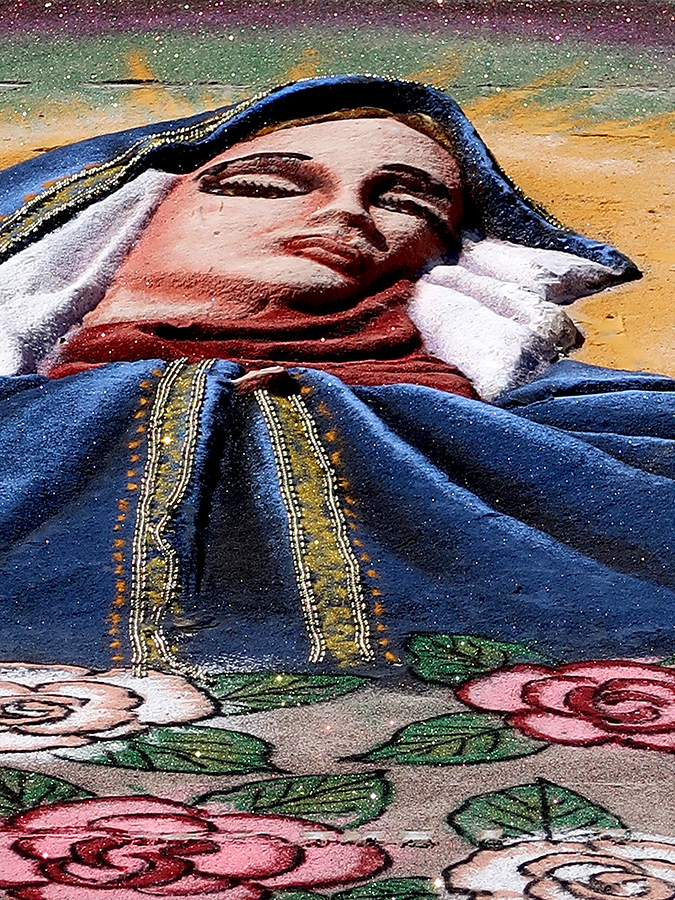
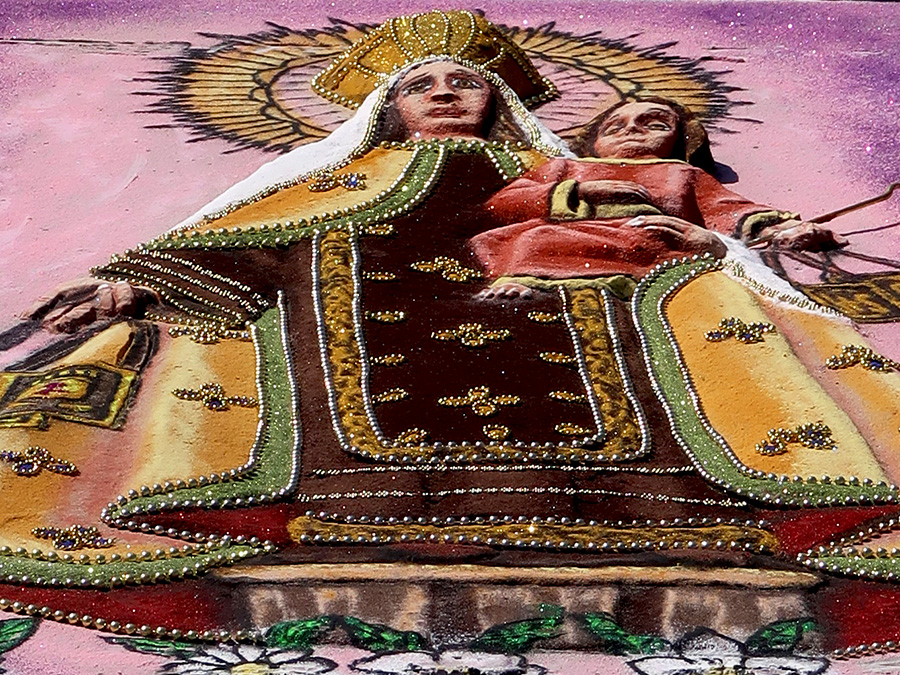
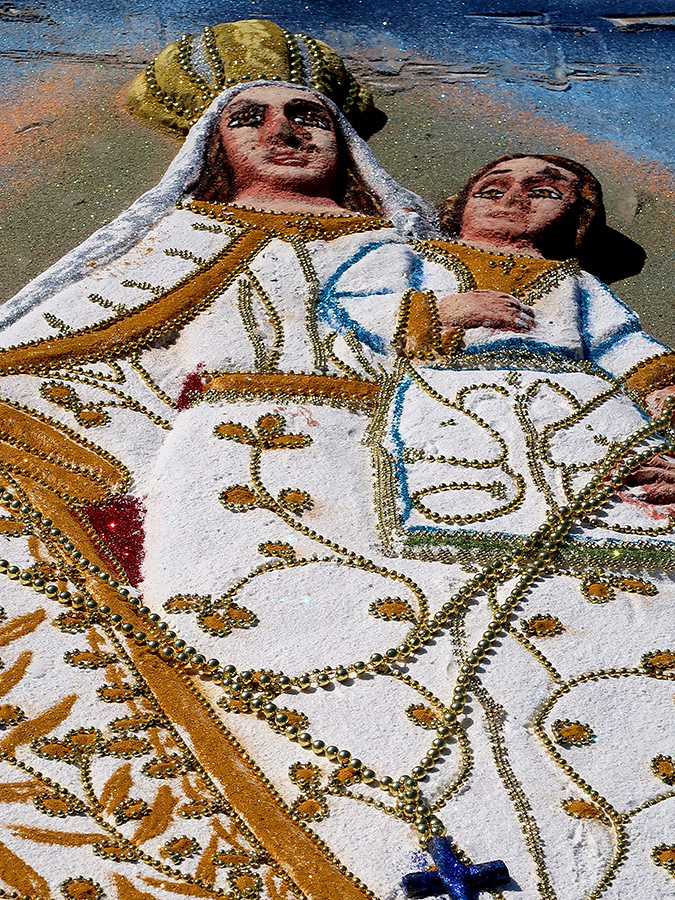
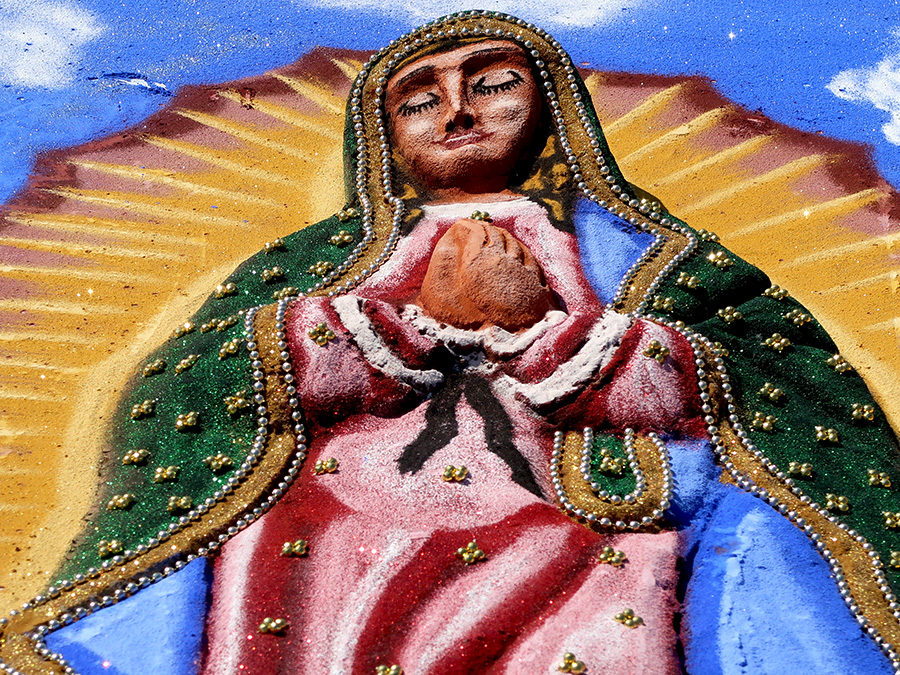
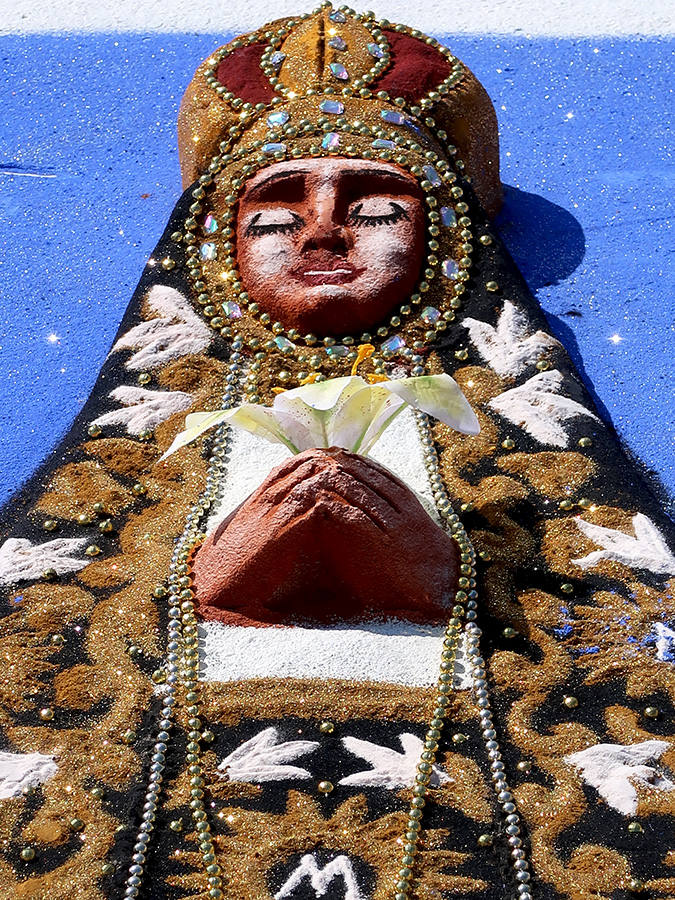
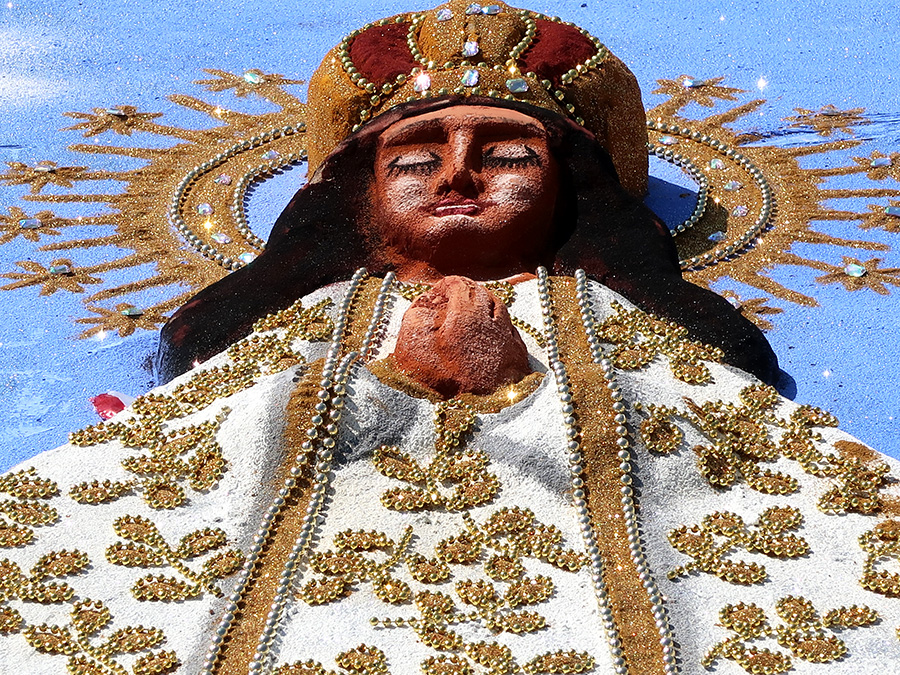
Tapetes de arena (rugs of sand) are a traditional feature of the celebration in Oaxaca of Día de Muertos.  When I first arrived to live here, they were drawn in front of the Cathedral.  Next, they moved for a year or two to the Government Palace and for the last several years they have graced the Plaza de la Danza.  This year’s offerings were the work of twelve artisans and feature the most beloved and revered of the Jesús and María señores y señoras in Oaxaca.  This post will highlight the ladies…

IMG_1720

Virgen Dolorosa — Our Lady of Sorrows

IMG_1702

Virgen del Carmen — Our Lady of Mount Carmel

IMG_1704

Sra. Virgen del Rosario — Our Lady of the Rosary

Interestingly, in previous years the themes of the sand paintings in these public spaces have been Día de Muertos related.  I’m not sure of why the change this year to religious imagery.  Indigenous Day of the Dead celebrations pre-date the arrival of the Spanish and the All Saints Day of the Catholic church.  And in Oaxaca, one of the most indigenous states in Mexico, as Shawn D. Haley points out in his book, Day of the Dead: When Two Worlds Meet in Oaxaca, “there is little of the Spanish influence to be found in the Oaxacan Day of the Dead.  The Spanish version… is bleak and dismal…. For the Oaxaqueñans, these days are… joyous and exuberant.  It is not a mourning of lost loved ones, but a celebration, a reunion with the dead.”

IMG_1707

Santa María de Guadalupe — Our Lady of Guadalupe

IMG_1711

Nuestra Señora de la Solidad — Our Lady of Solitude

IMG_1724

Inmaculada Concepción de Juquila — Virgin of Juquila

For more of these sand paintings, check out the recent post by blogger buddy Chris.  By the way, the feast days for these last three señoras are coming up in December.  First on the calendar is Juquila on December 8, then comes Guadalupe on December 12,  and, finally, Oaxaca’s patron saint, Soledad on December 18.  There will be special masses, processions, and rockets. December is a noisy month!

But first, we must welcome the difuntos (departed) who begin arriving tonight.

Save

Read Full Post »

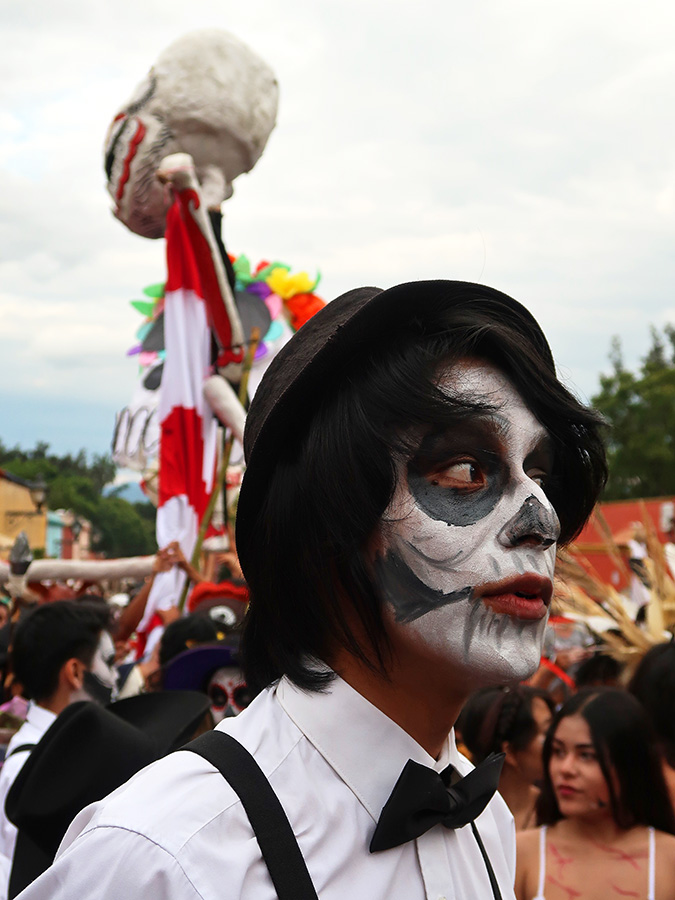
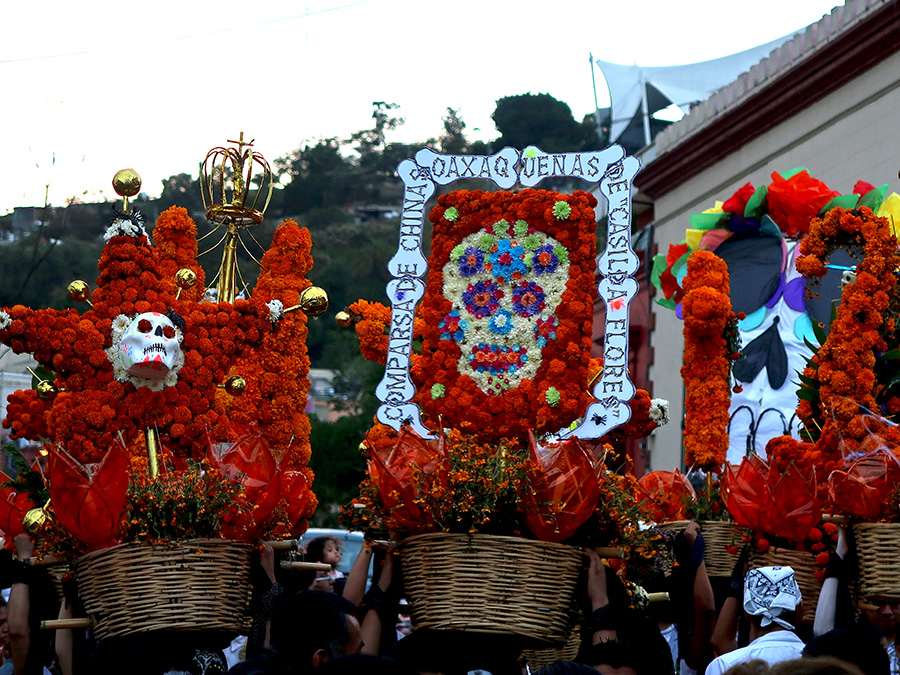
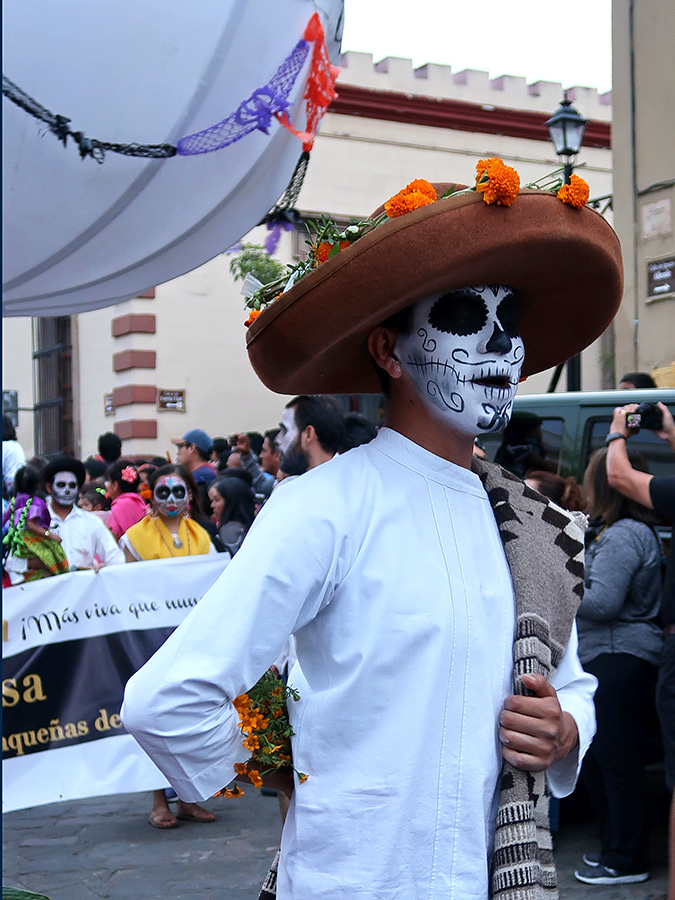
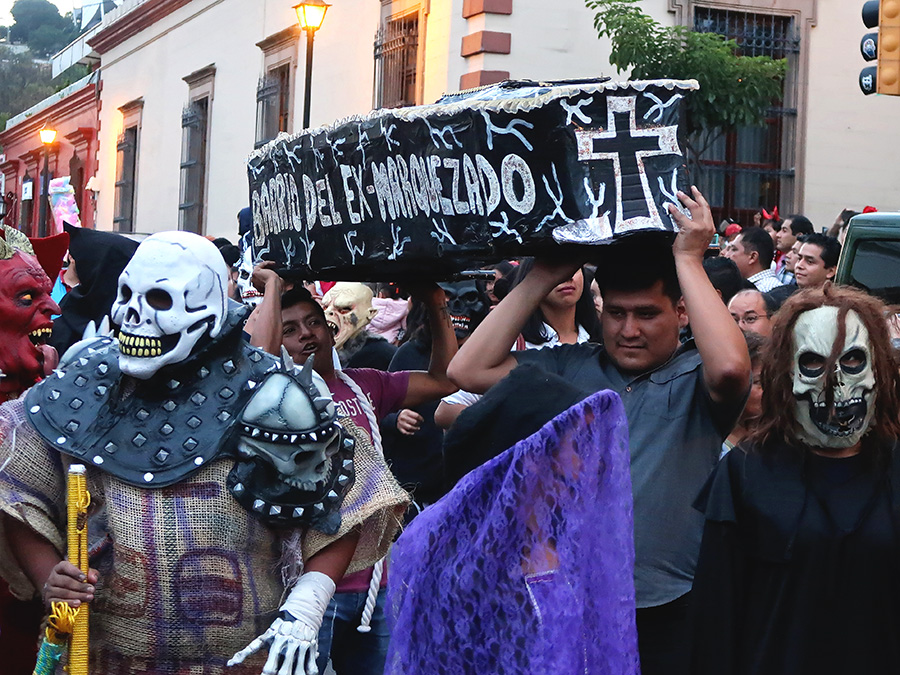
Last night, throughout the streets of the city, the living began welcoming the dead.

IMG_1491

IMG_1467

IMG_1446

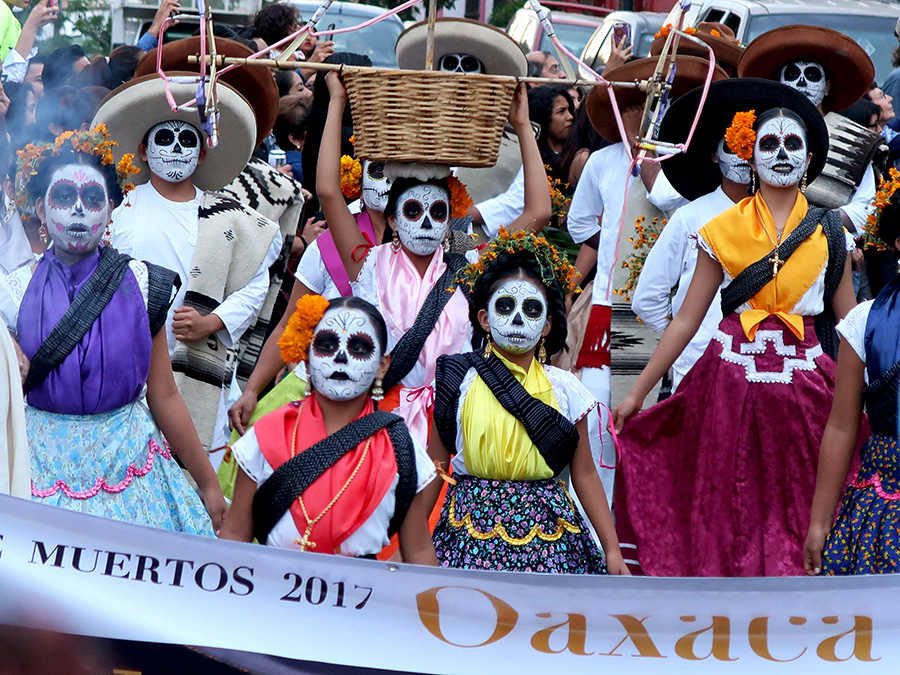
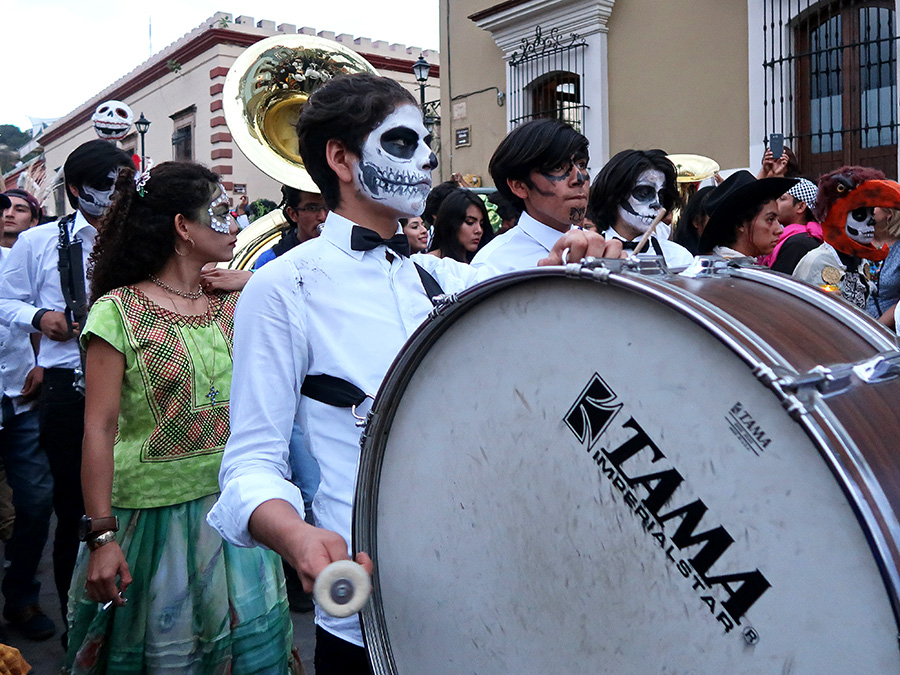
Like the Guelaguetza desfile of delegations, Oaxaqueños and tourists (foreign and domestic) crowded the sidewalks along the Magna Comparsa Oaxaca 2017 route — from the Cruz de Piedra, down García Vigil, left on Allende, right on Macedonio Alcalá, right on Independencia, and into the Alameda.

IMG_1453

IMG_1531

IMG_1454

With bands leading the way, catrinas in regional dress and dancers in traditional muerteada attire whirled and twirled, high-stepped and jumped, and moved and grooved their way through the streets.

IMG_1514

IMG_1449

IMG_1508

With earthquakes and hurricanes and now the resumption of the zócalo plantón (occupation) and bloqueos (blocades) of roads into and out of the city by Sección XXII of the teachers’ union and their allies, Oaxaca and Oaxaqueños needed to party-down in joyous abandon — and they did!

IMG_1499

IMG_1561

IMG_1615

Día de Muertos observances are different in the indigenous villages — the mood is more formal and each village has customs and rituals that tradition dictates must be followed.  But the bottom line in ciudad and pueblo is to provide a welcome worthy of both the living and the dead.  The celebrations have only just begun…

Read Full Post »
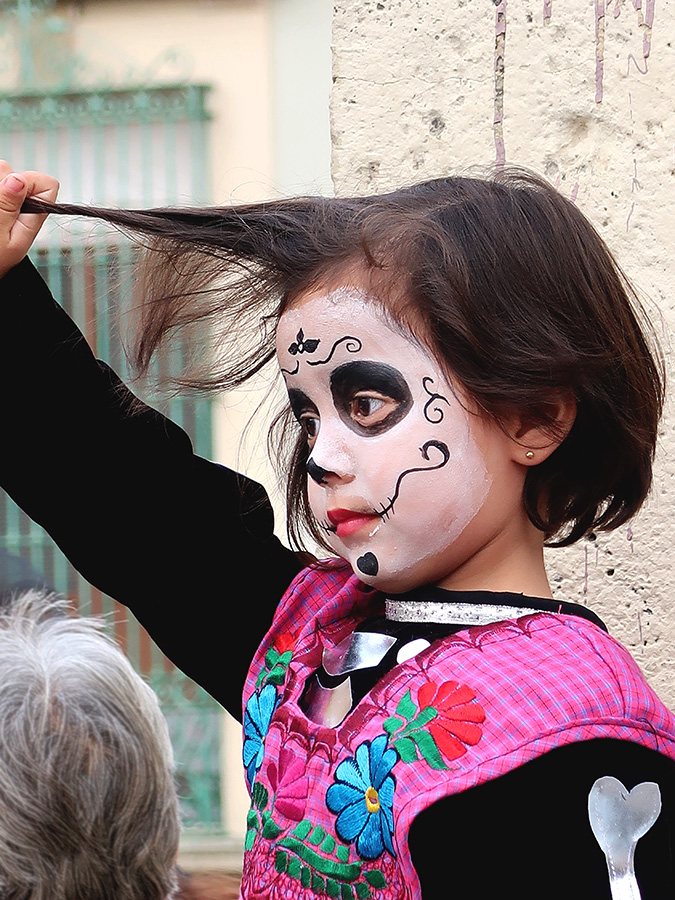
Calacas dressed for work and catrinas dressed to the nines, for my skeleton-loving grandson.

From the sidewalks, courtyards, and balconies of Oaxaca, October 2017 — ready for the Day of the Dead.

Read Full Post »

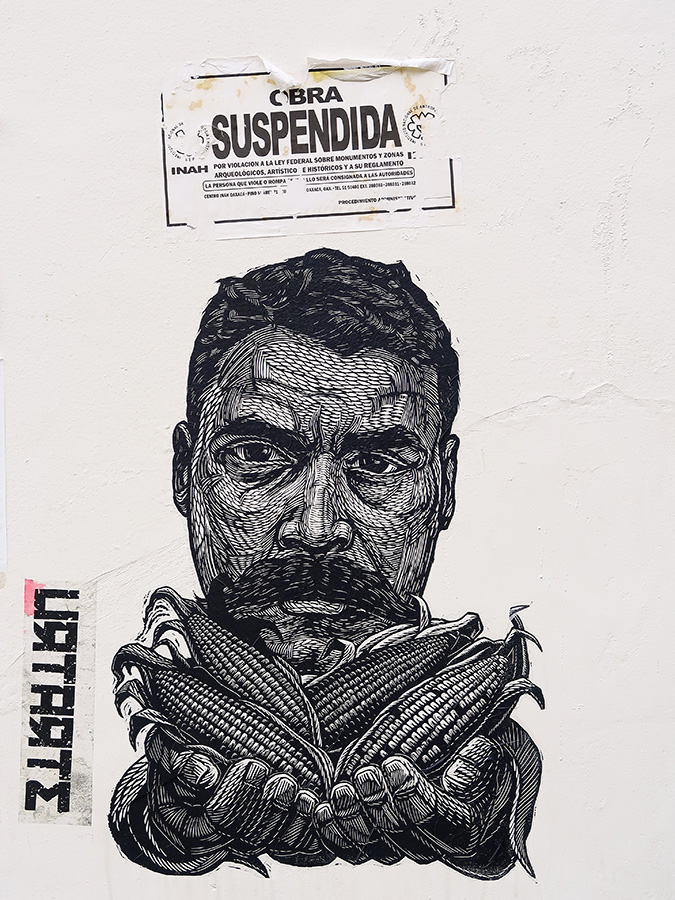
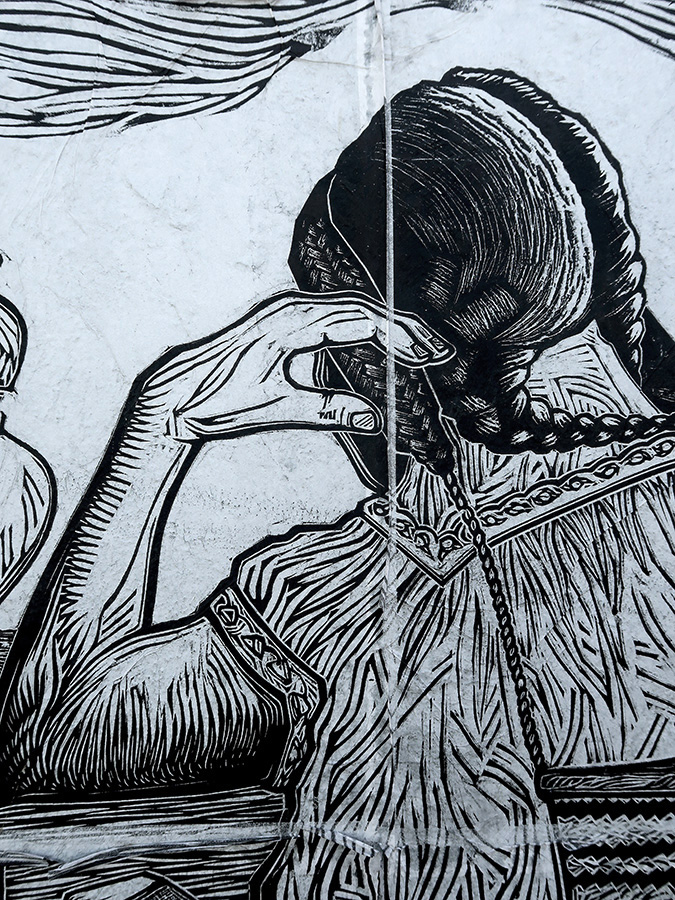
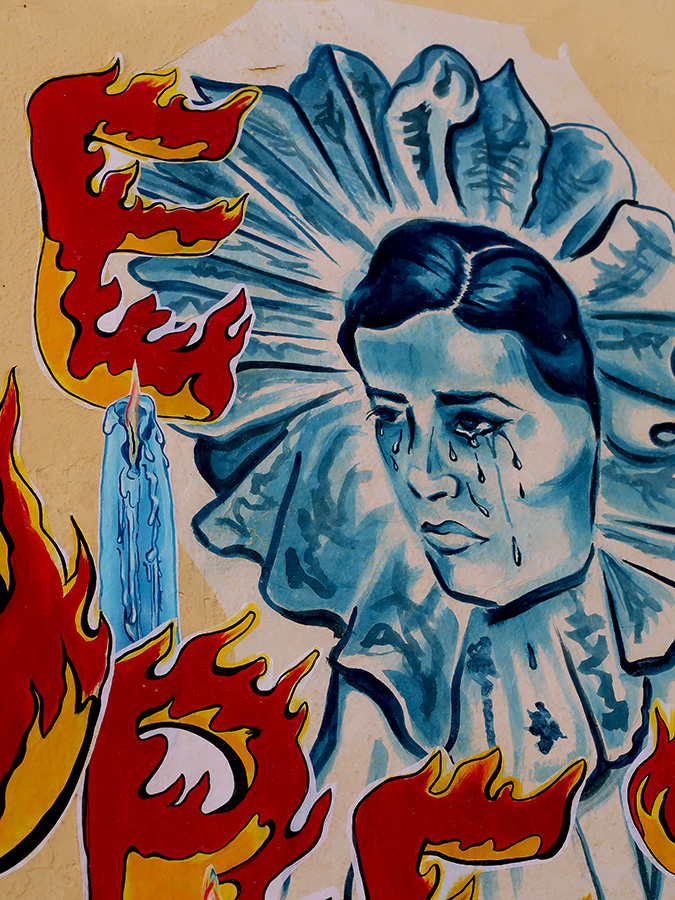
URTARTE — La Unión Revolucionaria de Trabajadores del Arte (the Revolutionary Union of Art Workers).  You have no doubt seen their work around the city of Oaxaca.

The black and white lines of resistance defending heritage corn from an invasion by the moneyed interests of el norte.

IMG_0760

Demanding justice for the 43 student teachers from Escuela Normal Rural Raúl Isidro Burgos in Ayotzinapa, Guerrero — still disappeared after three years.

IMG_0758

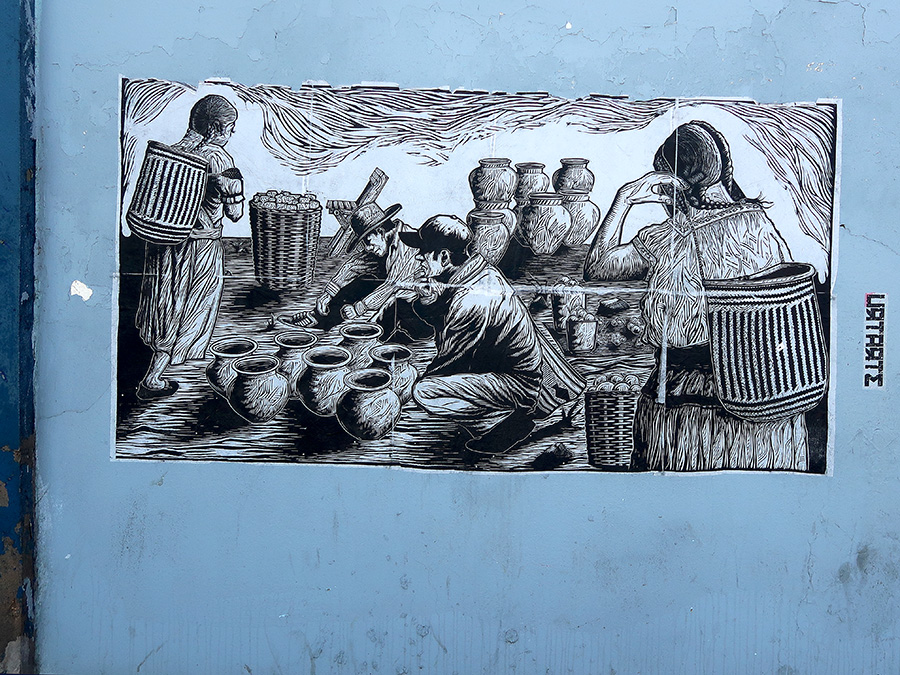
And yesterday I discovered this masterpiece…

IMG_1180

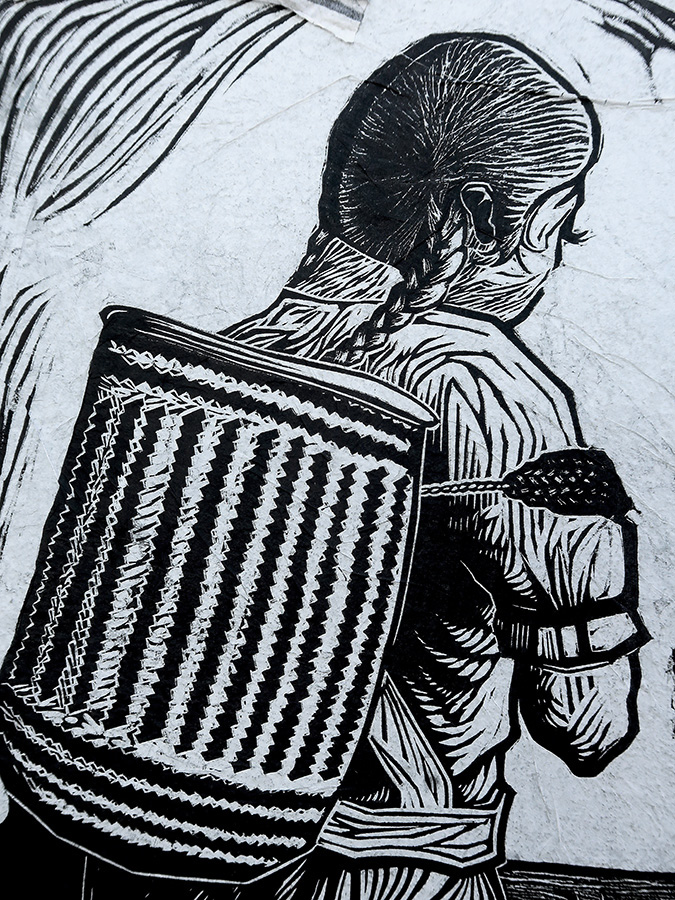
Celebrating the creativity, hard work, and dignity of the women and men living in the villages of Oaxaca.

IMG_1184_copy

IMG_1182_copy

IMG_1183_copy

A reminder of the people whose roots run deep into the soil and who make Oaxaca such an exceptional place.

Save

Read Full Post »

Día de Muertos is coming…

That means the departed will soon return to eat, drink, and be merry with their living loved ones.

Due to earthquake damage the Panteón General in the city is closed, but the traditional evening of the dead will take place at the Panteón Xochimilco.

As the schedule of over 100 cultural activities (between October 28 and November 4) states, despite earthquakes and hurricanes, “Oaxaca is more alive than ever!”

Read Full Post »

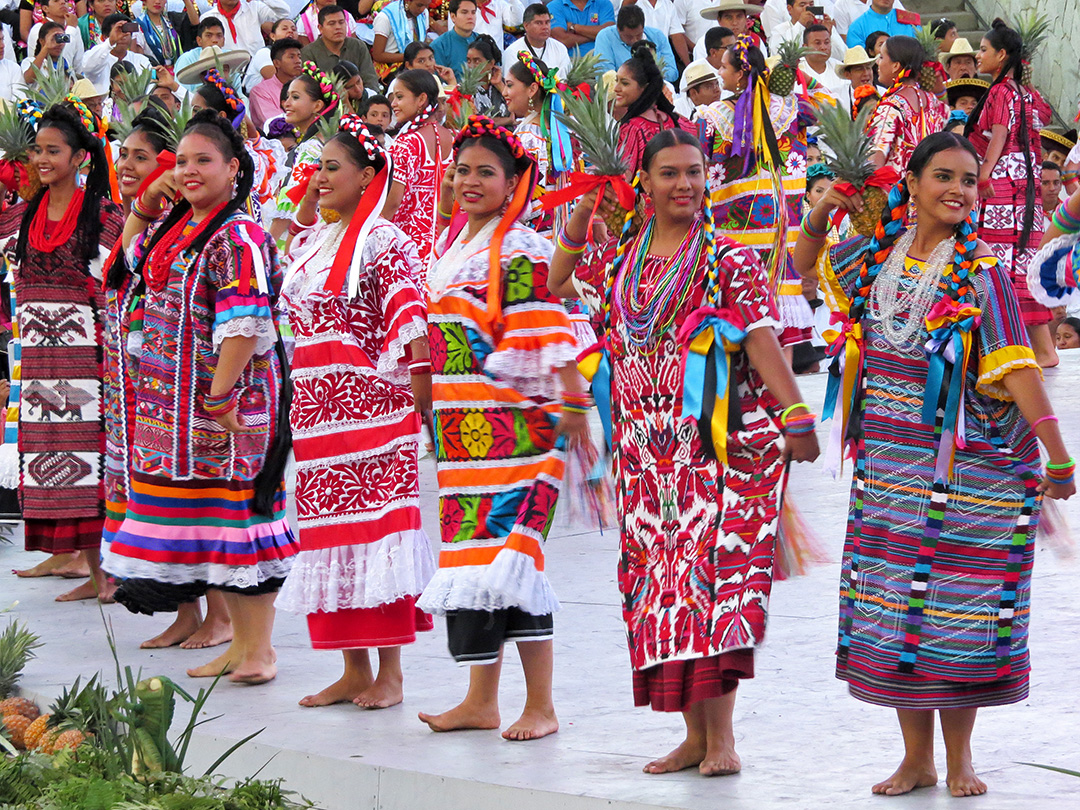
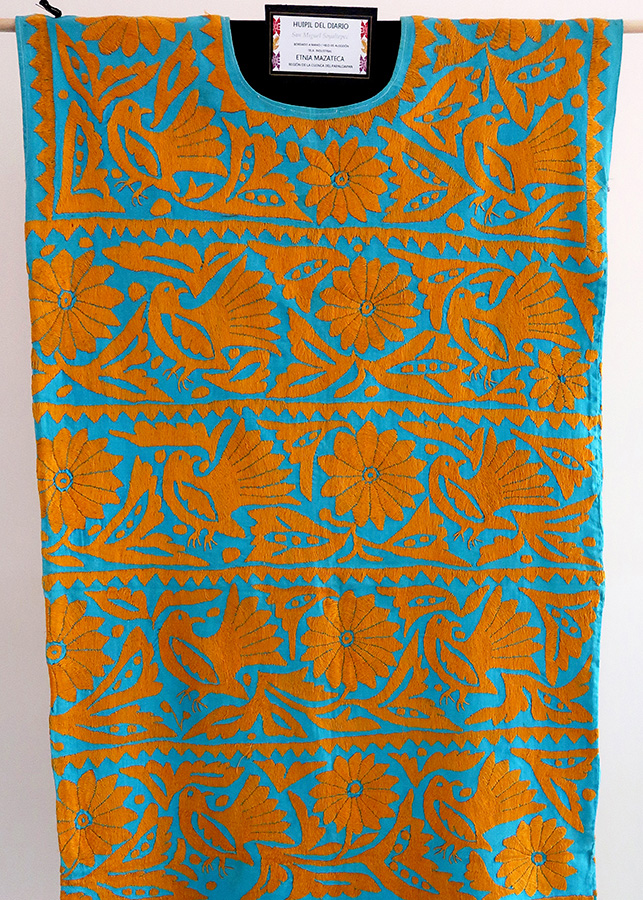
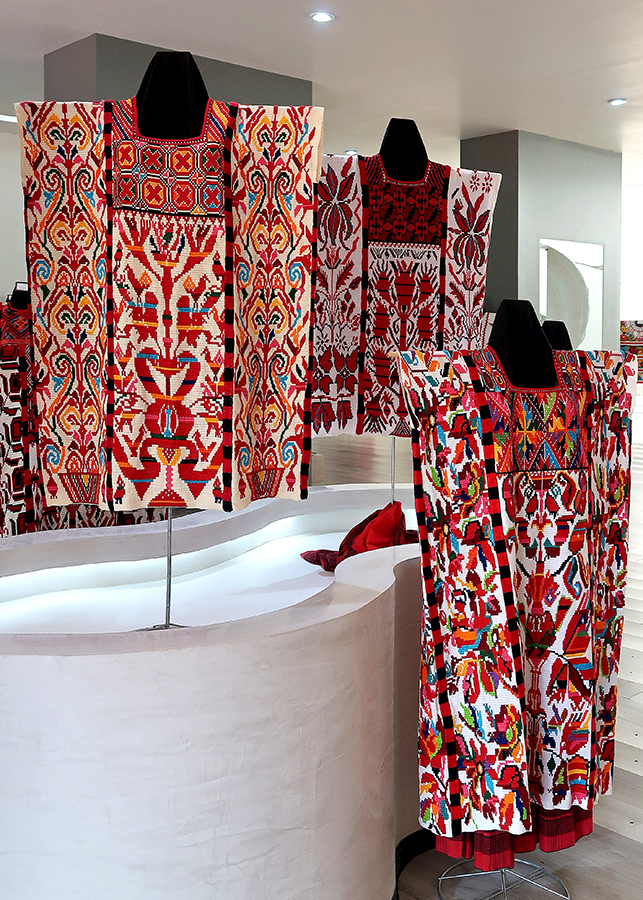
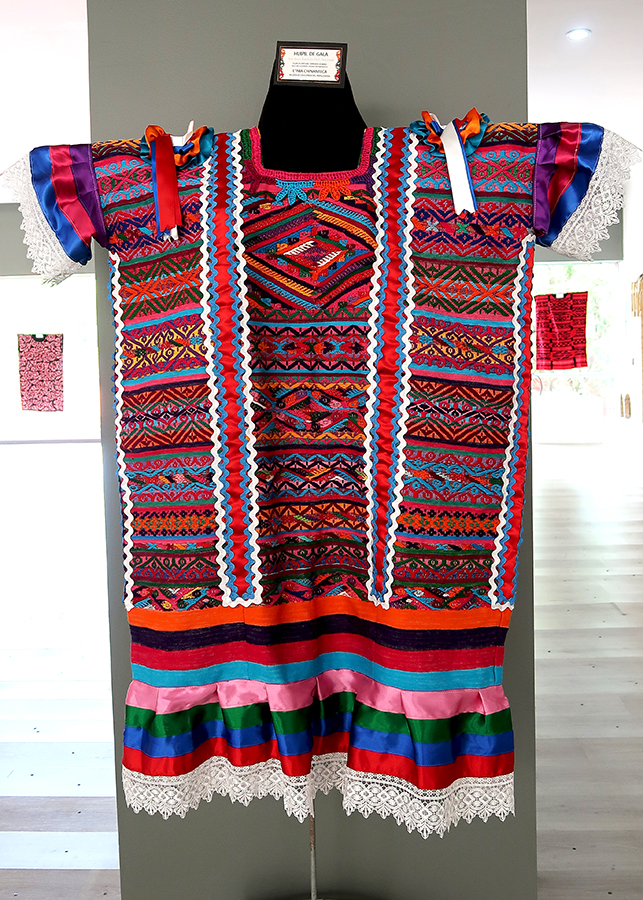
Since its creation in 1958, the Baile Flor de Piña (aka, the Pineapple Dance) has been bringing audiences to their feet at the Guelaguetza every July.  The energy and choreography is a cross between the Rockettes and Busby Berkeley, but the costumes are pure Oaxaca — the Mazateca and Chinanteca huipiles are a showcase of color, design, weaving, and embroidery from the Papaloapan region.

IMG_5038

Flor de Piña, La Guelaguetza – July 2015

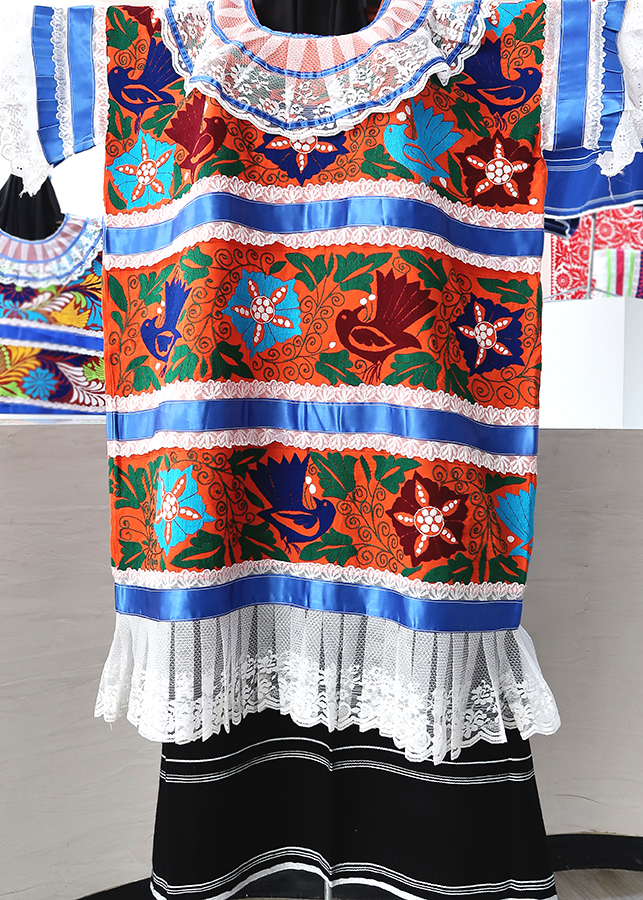
The Mazatec and Chinantec peoples are 2 of the 16 indigenous groups living in the state of Oaxaca.  For those who are as captivated by their textiles as I am, the Museo Estatal de Arte Popular Oaxaca (MEAPO) in San Bartolo Coyotepec currently has a fabulous exhibition, La Piel de Mi Raza, which features more than 55 Chinanteco and Mazateco textiles from the Papaloapan — some over 200 years old.

Mazateca huipiles are recognized by their hand-embroidered bird and flower motifs.

IMG_1063

Mazateca huipiles

IMG_1074

“Everyday” Mazateca huipil from San Miguel Soyaltepec

IMG_1064

“Dressy” Mazateca huipil from San Felipe Jalapa de Díaz

IMG_1080_copy

“Everyday” Mazateca huipil from San Miguel Soyaltepec

IMG_1067

Antique Mazateca huipil from San Pedro Ixcatlán

The Chinanteca huipiles are woven on backstrap looms with the bird, tree, Quetzalcoatl, and geometric designs embroidered or brocade woven into the piece.

IMG_1076

Chinanteca huipiles

IMG_1101

“Dressy” Chinanteca huipil from San Juan Bautista Valle Nacional

IMG_1091

Antique Chinanteca huipil from San Felipe Usila

IMG_1086

“Dressy” Chinanteca huipil from San Felipe Usila

IMG_1094

Antique Chinanteca huipil from San Felipe Usila

The exhibition is located in the upstairs gallery of MEAPO and runs until November 10, 2017.  By the way, if you haven’t been to the Museo recently, you are in for a surprise — the first floor has been divided into several galleries, allowing for multiple exhibits and providing for a more intimate experience.

And, for the fascinating and controversial background of the Flor de Piña, read Stephanie Schneiderman’s article, Baile Flor de Piña & Guelaguetza: Cultural Preservation.

Read Full Post »

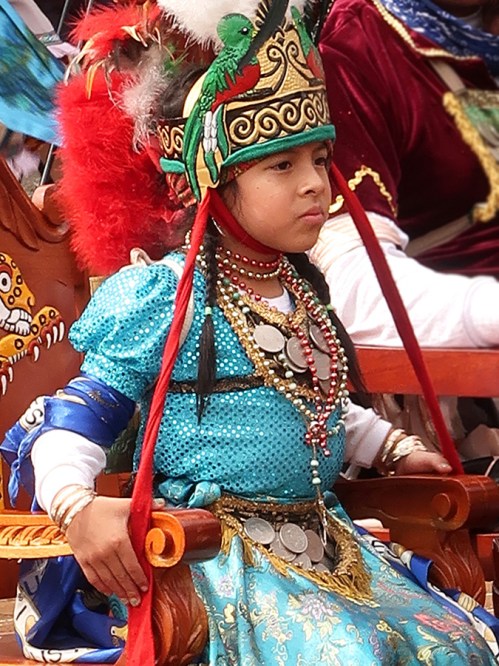
Yesterday, after missing the Fiesta de la Natividad because I was in the middle of my 6-week cross-country sojourn in el norte, I managed (courtesy of blogger buddy Chris and his trusty VW Jetta) to make it out to Teotitlán del Valle for the last day of the Fiesta de La Virgen del Rosario and performance of the Danza de la Pluma.

IMG_0915

Sergio Gutiérrez Bautista (Moctezuma)

The dance is day-long and recreates the Spanish Conquest from the Zapotec point of view.

IMG_0968_copy

Quetzali del Rayo Santiago Ruiz (Malinche)

IMG_0804

Elizabeth Hernández Gutiérrez (Doña Marina)

Miracle of miracles, the rain held off, the clouds parted, and the sun made a much welcome appearance.

IMG_0905

IMG_0776

Foreground:  Marcos Vicente Gutiérrez (Capitán 1 ro.)

IMG_0876

Foreground:  Edgar Daniel Ruiz Ruiz (Vasallo 8vo.)

IMG_0906

As we approached the atrium of the Templo Preciosa Sangre de Cristo, the father of one of the Danzantes explained a venue change — due to some (hopefully) minimal earthquake damage to one of the bell towers of the church, the Danza de la Pluma was moved next door to the plaza in front of the municipal building.

IMG_0856

Juan Bautista Ruiz (Subalterno)

IMG_0811

Florentino Martínez Ruiz (Subalterno) and Señor Inocencio

A heartfelt muchisimas gracias to the people of Teotitlán del Valle, many of whom I am so lucky and grateful to call friends.  The warm welcome I received was such an incredible tonic to the grey days we have been experiencing in Oaxaca.

Save

Read Full Post »

I can’t believe it has been three years since 43 student teachers went missing one night in Iguala, Guerrero.  And, I can’t believe the key questions remain.

P1160509_b&w

Who is responsible?  What happened that night?  Where are they?  Why are there still no answers?  How can 43 human beings be disappeared so completely?  When will the truth be revealed?

P1160500

In the midst of our current tragedies, let us not forget the 43 normalistas from Escuela Normal Rural Raúl Isidro Burgos, Ayotzinapa, Guerrero.

P1160508_b&w

Three years without answers must seem like an eternity to their families….

Read Full Post »

« Newer Posts - Older Posts »