In the hour leading up to the Guelaguetza Desfile de delagaciones, last minute prep work…


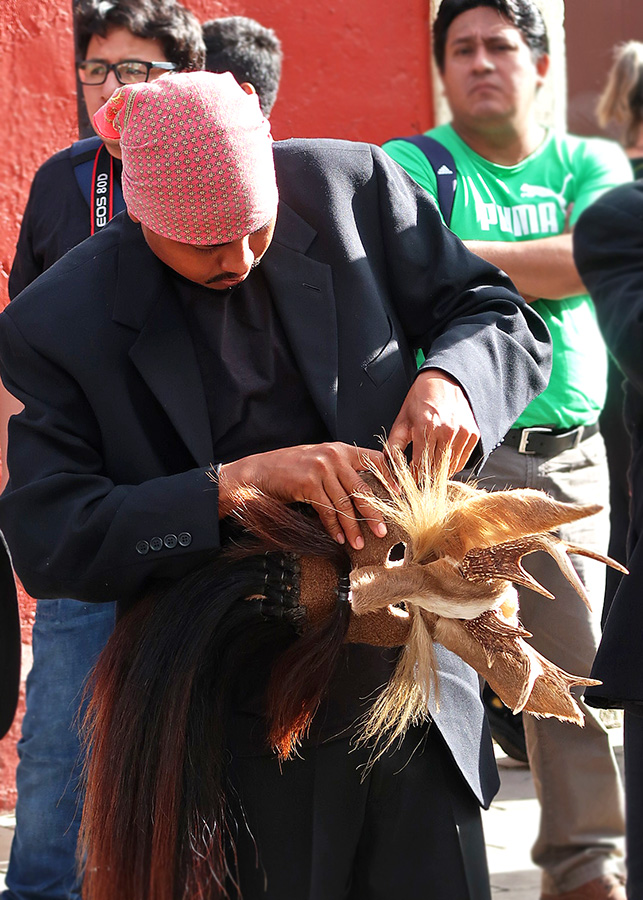

Props at the ready…




Human parade participants sit and wait…


And, spectators hang out on the sidewalks…

What did we all do before cell phones?
Posted in Celebrations, Creativity, Culture, Travel & Tourism, tagged Desfile de Delegaciones, Guelaguetza, marmotas, masks, Mexico, monos, Oaxaca, Parade of Delegations, photographs, photos, popular travel destinations, toritos on July 30, 2018| 1 Comment »
In the hour leading up to the Guelaguetza Desfile de delagaciones, last minute prep work…
Props at the ready…
Human parade participants sit and wait…
And, spectators hang out on the sidewalks…
What did we all do before cell phones?
Posted in Celebrations, Creativity, Culture, Environment, Flora, Food, Museums, People, Travel & Tourism, tagged art exhibitions, calenda, Carolyn Kallenborn, Erasto "Tito" Mendoza, Festival de los Moles, Flores y Cantos, Guelaguetza, Mexico, Miriam Campos, MUPO, Museo de los Pintores Oaxaqueños, Museo Rufino Tamayo, Nancy Mayagoitia, Oaxaca, parade, photographs, photos, Semana de los Antojos, Tehuanas on July 29, 2018| 3 Comments »
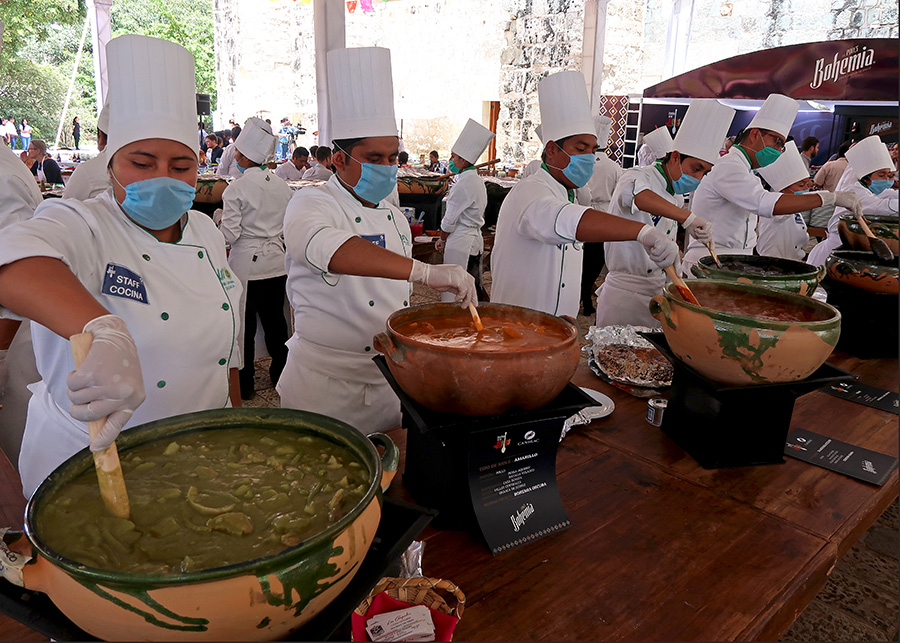
The day before the aforementioned Diosa Centéotl announcement, the major activity on my dance card was the Festival de los Moles “all you can eat” buffet in the beautiful setting of the Jardín Etnobotánico (Ethnobotanic Garden). To the accompanying sounds of Oaxaca’s state marimba band, blue, yellow, white, and red corn tortillas were placed on a comal; beer, aguas, and mezcal were offered and poured by an attentive wait staff; and appetizers plated with quesillo, molotes, tacos filled with guacamole and chapulines, and more were placed before each of the hundreds of attendees.

After what seemed like an eternity, the signal that all had been waiting for — the tin foil lids were removed from the cazuelas to reveal 19 different kinds of mole from 19 different restaurants. The stampede began! There is no way possible to taste them all, but I had scoped out a few in advance — Estofado from El Regio, Mole de Platano from El Tendajon, Mole de Castilla from my friends at Tierra Antigua, and Celia Florian’s Manchamanteles from Las Quince Letras. Blogger buddy Chris was sitting next to me and so we also tasted off each other’s plates, made more trips to the cazuelas, and I lost track of all that I had eaten. But of course I found room for the traditional leche quemada and tuna (cactus fruit) nieve (sorbet) for dessert. By the way, an added bonus to the event is sharing the experience with the friends old, new, and temporary at the tables-for-twelve.
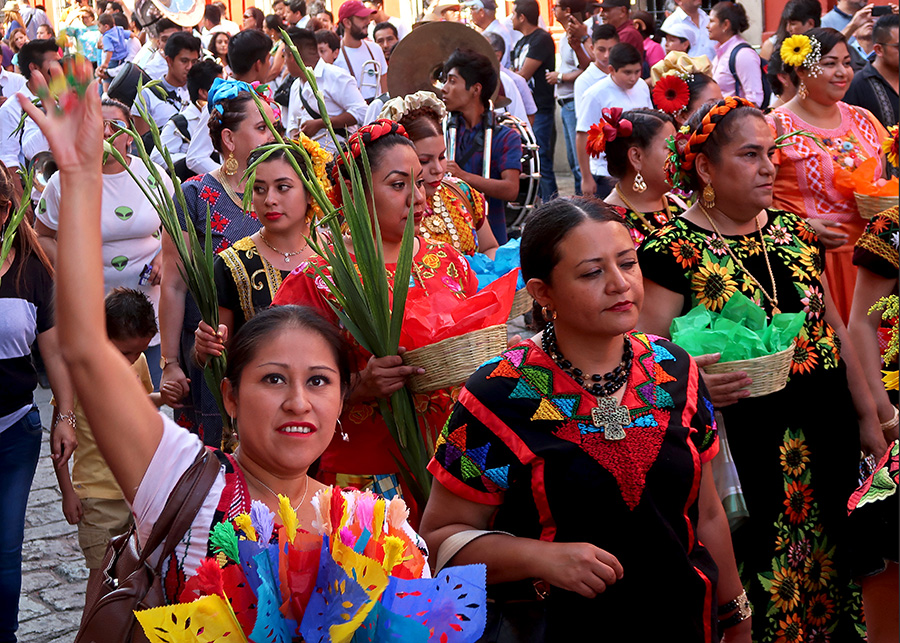
I bade Chris farewell and attempted to hurry home to change my clothes (yes, I’d spilled on my dress) before heading off to an exhibition opening. But, silly me, after nine years of living here, I should know better — there is no rushing in Oaxaca! Turning onto Macedonio Alcalá, I heard music and ahead of me could see the tops of monos and marmotas.

I was stopped dead in my tracks by one of the most colorful religious processions you will ever see. Honoring their patron saint, Santo Domingo de Guzmán, Tehuanas and their guys and band, danced their way down the street. Slowly navigating the jam-packed sidewalk, while being pelted with candy thrown to bystanders, I eventually was able to duck up a side street and make my way home. But, what fun along the way!
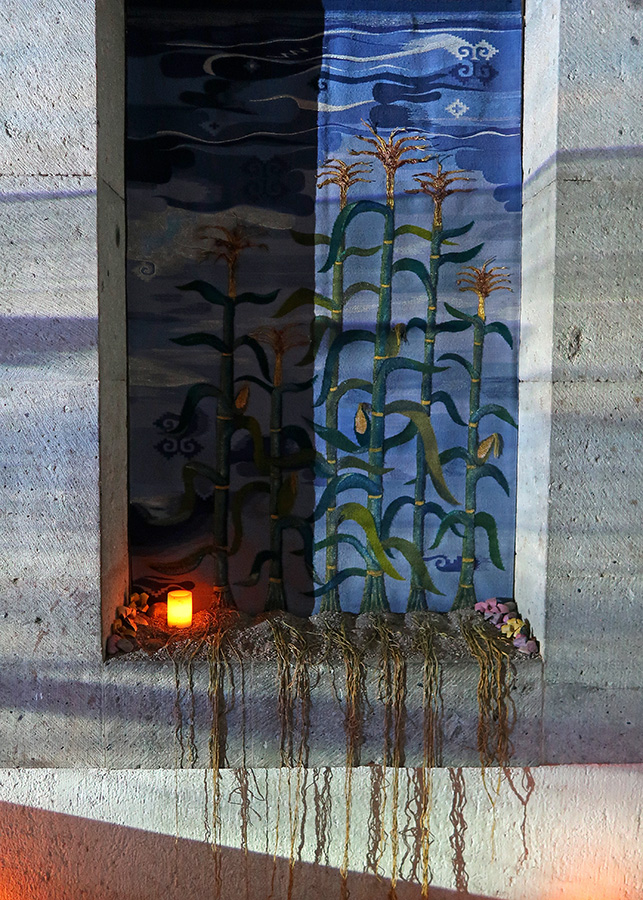
Clothes changed, I managed to arrive (almost on time) at the inauguration of “Flores y Cantos” at the Museo Rufino Tamayo — an exhibition that asks us to consider “Nezahualcoytl’s age-old challenge to create something beautiful and meaningful with our lives.” This multimedia exhibition, conceived of by Carolyn Kallenborn, envelopes the senses — ethereal sights; soothing music and comforting sounds of birdsong, rain, waves, and wind; and a celebration of the beauty and creativity of humans, then and now. Carolyn asks us to contemplate the legacy our ancestors passed on to us and how we want to be remembered when we are gone.

As one of two primary pieces in the exhibit, accomplished embroiderer Miriam Campos, from San Antonino Castillo Velasco, was commissioned by Carolyn to embroider a tree onto silk organza (above). With moving images of nature passing through its sheen and translucency, it was of this earth, yet not of this earth. For the other, Carolyn again collaborated with master weaver, Erasto (Tito) Mendoza on the truly spectacular tapete of corn that reaches from its roots of gold up into a swirling sky. The video images running across it, gave it a sense of movement. I returned again five days later.
On Wednesday, prior to my second visit with “Flores y Cantos,” at the enthusiastic urging of Henry Wangeman (Amate Books), I made a bee-line to the Museo de los Pintores Oaxaqueños (MUPO) for the recently opened, “Endemismo” exhibition — a significant and stunning show that explores the biodiversity endemic to this area. Located along the border of Oaxaca and Puebla, on July 2 the Tehuacán-Cuicatlán Biosphere Reserve was recognized as a Cultural and Natural (Mixed) Heritage of Humanity site by UNESCO.
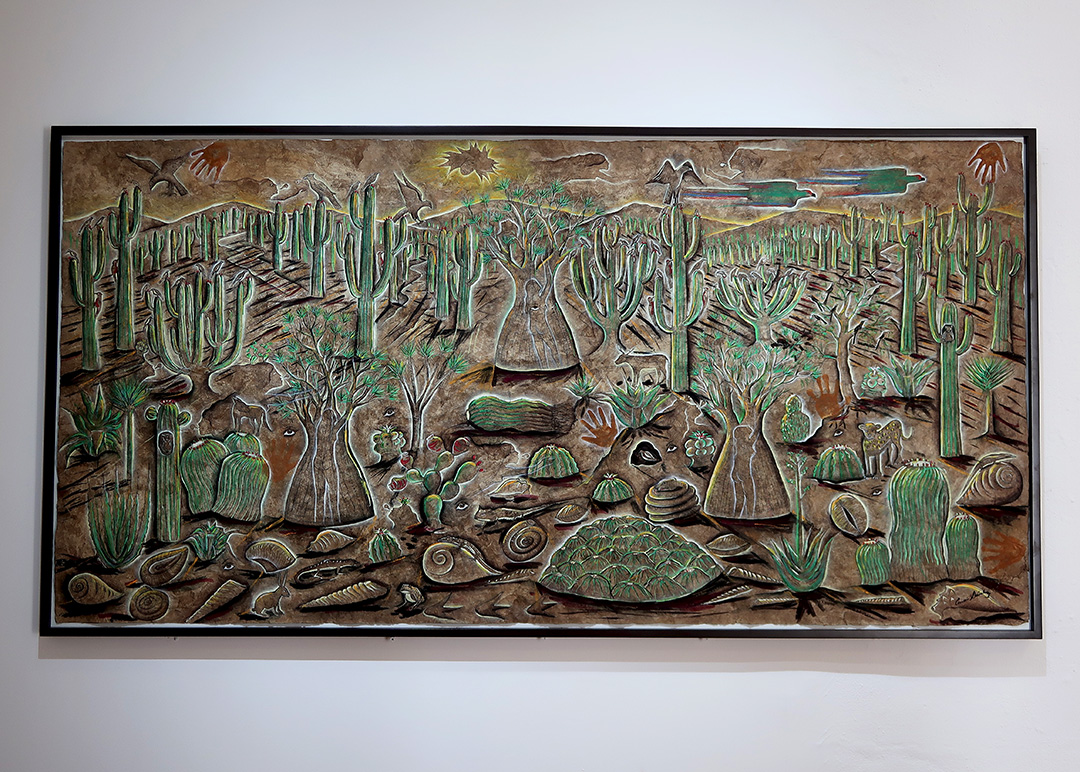
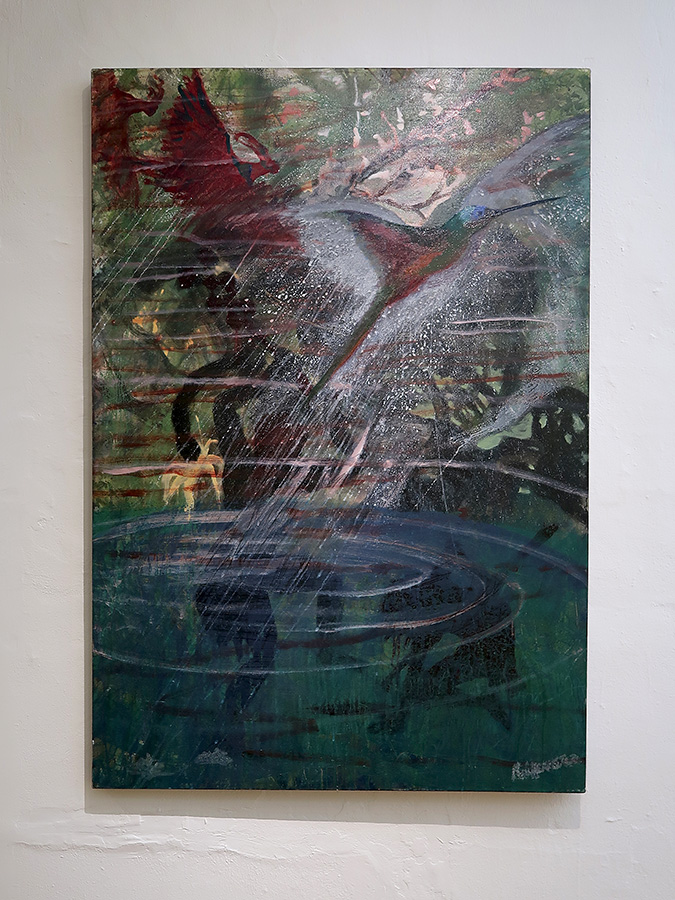
Filling both floors of the museum, and the brainchild of Nancy Mayagoitia, the show incorporates the work of twenty painters and photographers — each providing a new perspective on this old land in the Tehuacán-Cuicatlán Biosphere Reserve. I love the painting above by Cecilio Sánchez and entitled Paisaje de Cuicatlán (Cuicatlán landscape). It seems as if the eyes of this ancient land are watching to see what we do with this unique and precious place. (Click to enlarge the image and see the eyes.) And below, I couldn’t resist posting an image of Raúl Herrera’s, “El baño del colibrí Huitzilopochtli atl” from the exhibition — as every morning I watch the hummingbirds bathe in my fountain. Another exhibition to return to.
Given that I began this post with food, it only seems appropriate to end it with The Semana de los Antojos — a week of morsels of deliciousness to satisfy one’s (food) cravings — which opened July 24 under a colorfully decorated tent in the Plaza de la Danza. The aromas wafting onto my terrace beckoned and I followed.
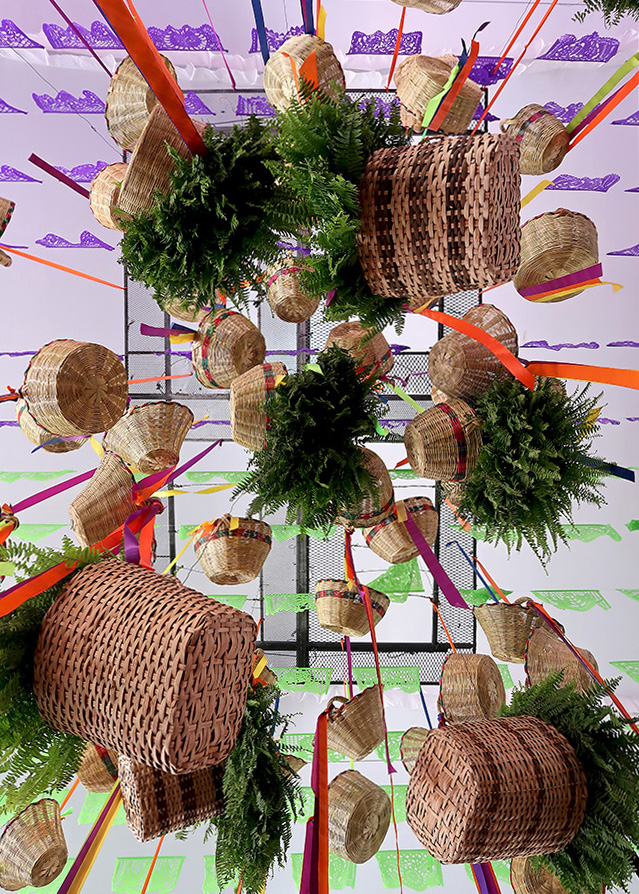
50 booths offering regional “comfort” food — garnachas from the Istmo (my current craving), tacos, tamales, tortas, tlayudas, empanadas, barbacoa, carnes asadas, you name it! And to wash it all down, tejate, tepache, pulque, chocolate, and aguas frescas. Oh, and did I mention desserts? Nieves, cookies and other sweets, and (hot off the presses) buñuelos.

No rest for the weary — but I wouldn’t have it any other way!
Posted in Celebrations, Creativity, Culture, People, Textiles, Travel & Tourism, tagged competition, corn goddess, costumes, Diosa Centéotl, Francisca Pérez Bautista, Guelaguetza, Lunes del Cerro, Mexico, Oaxaca, photographs, photos, popular travel destinations, scepter, traje on July 23, 2018| 1 Comment »
As I write, Diosa Centéotl 2018 is presiding over this year’s first Lunes del Cerro (Mondays on the Hill). This is corn planting season and the figure of the goddess Centéotl represents the deity to whom rituals were offered to guarantee a good harvest. She was elected from among 27 young indigenous women, representing the eight regions of the state of Oaxaca.
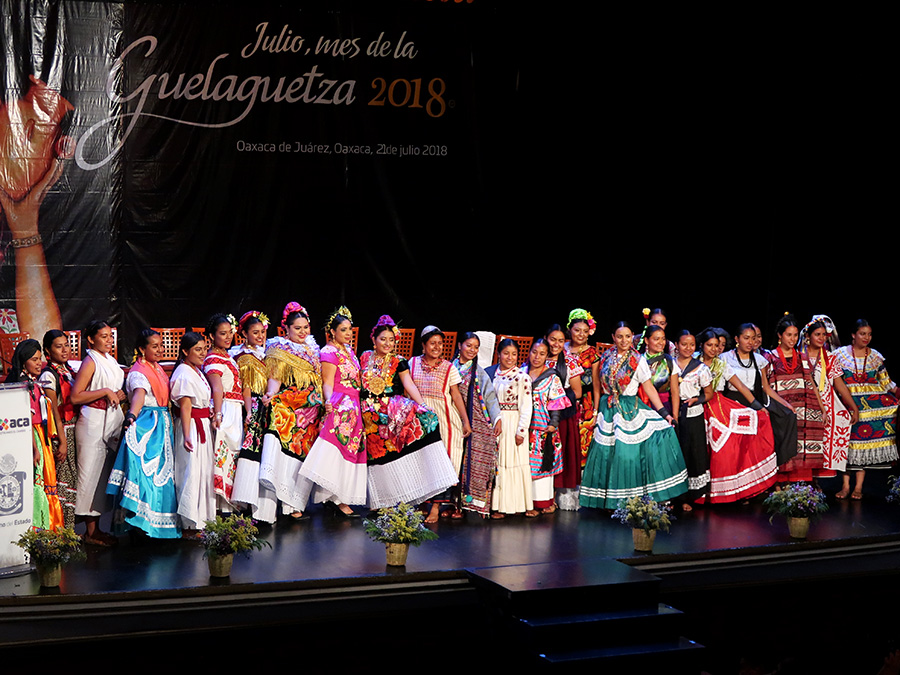
The first stage of the competition was held Friday morning at the Jardín del Pañuelito, with contestants speaking about their regions and communities. During stage two, later in the afternoon, the participants talked about their distinctive clothing. (For a few photos, check out Of Goddesses and Food.) The judges, including Las Quince Letras cocinera and ambassador of traditional Oaxaca cooking, Celia Florian (2nd from right), then deliberated.
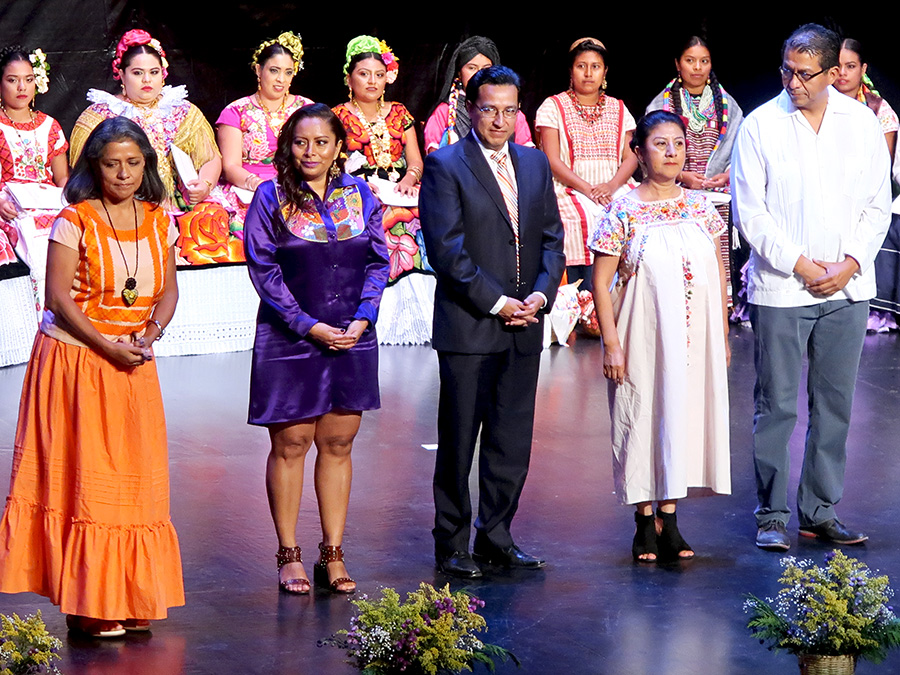
Saturday morning the venue moved to the elegant early 20th century Macedonio Alcalá theater where at least 500 people listened as the “Court” of the Diosa Centéotl was announced: Hillary Naxhiely López (San Blas Atempa), Adriana Ramón Guzmán (de Asunción Ixtaltepec), Yoali Josabet López Quiroz (Santo Domingo Tehuantepec), Socorro Hernández Santiago (Putla Villa de Guerrero), and María del Carmen Vásquez Díaz (Santa María Tlahuitoltepec).
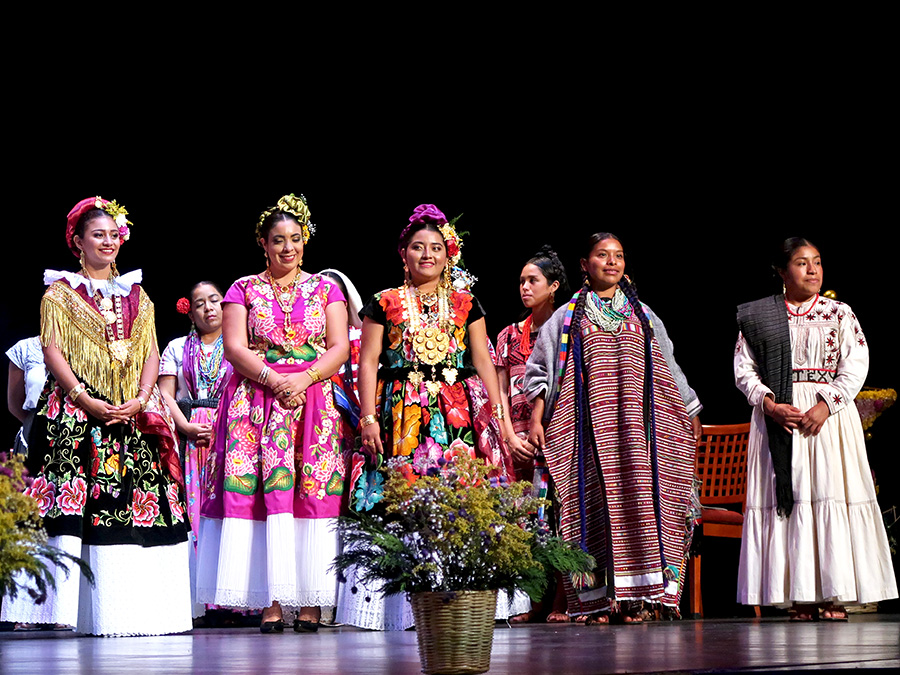
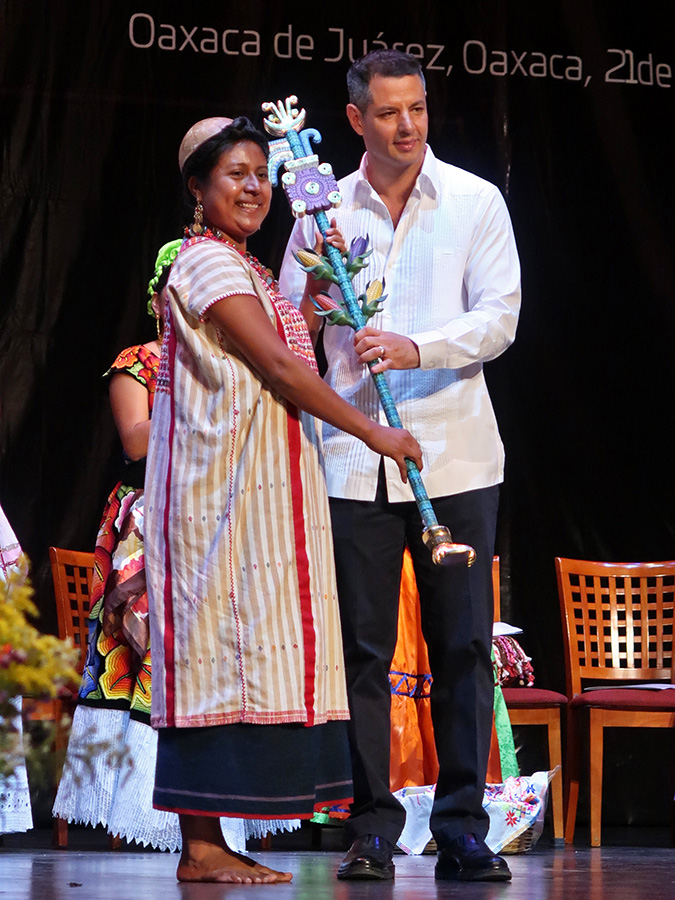
A beautiful scepter, carved and painted by Jacobo and María Ángeles from San Martín Tilcajete, waited in the wings to be presented to the new Diosa Centéotl.

And, the winner was… Francisca Pérez Bautista from Santa María Zacatepec. A member of the Tacuate ethnic group in the Sierra Sur region of Oaxaca, she was wearing the traditional cream-colored huipil with red ribbons and embroidery. On her head, she wore the customary bowl-shaped jícara head covering made from the fruit of the calabaza tree.
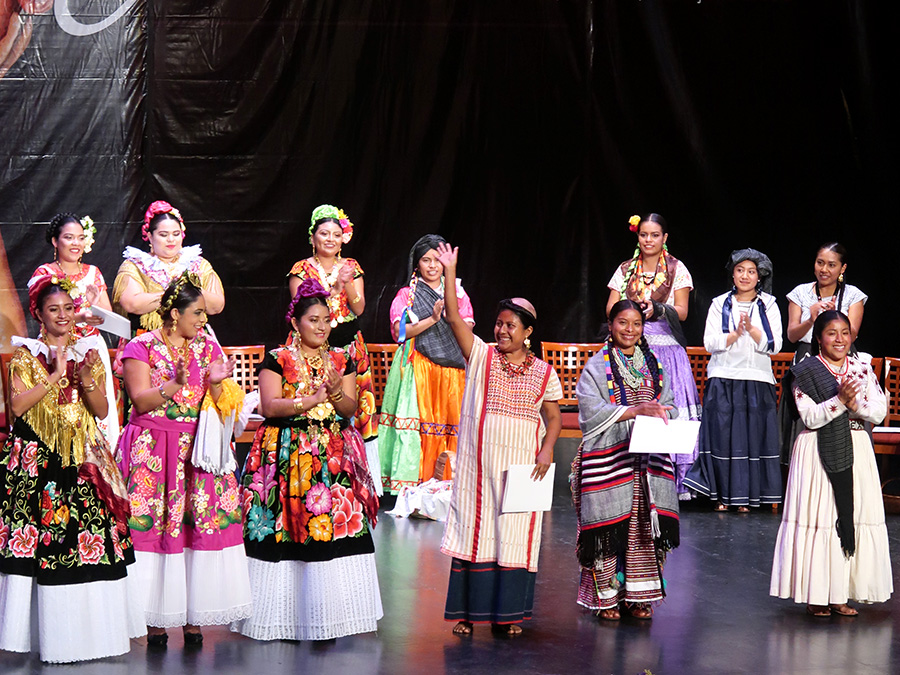
There was a twenty-minute break in the action — the governor, Alejandro Murat, was delayed in traffic. In the interim there was much affection and camaraderie displayed among the contestants. Eventually, he arrived and presented the scepter to Francisca.
There was no rest for the new Diosa Centéotl. Her official duties began immediately — a luncheon with the Guelaguetza delegations, followed by leading the desfile of delegations through the city’s streets.
Posted in Celebrations, Creativity, Culture, People, Travel & Tourism, tagged Danza de la Pluma, danzantes, Desfile de Delegaciones, Doña Marina, Guelaguetza, Malinche, Mexico, Oaxaca, Parade of Delegations, photographs, photos, popular travel destinations, Subalternos on July 22, 2018| 3 Comments »
Teotitlán del Valle’s Danza de La Pluma Promesa 2016-2018 guys (and two little gals) came, saw, and conquered Oaxaca city yesterday.


Quetzalli del Rayo Santiago Ruiz (Malinche) and Elizabeth Hernández Gutiérrez (Doña Marina)
After a rehearsal at the Guelaguetza Auditorium, followed by a lively (if various Facebook videos are to be believed) luncheon with the other delegations, they arrived, raring to go, at the Guelaguetza desfile (parade) gathering point in front of Jardín Conzatti.

Marcos Vicente Gutiérrez (Capitán de puerta 1º)
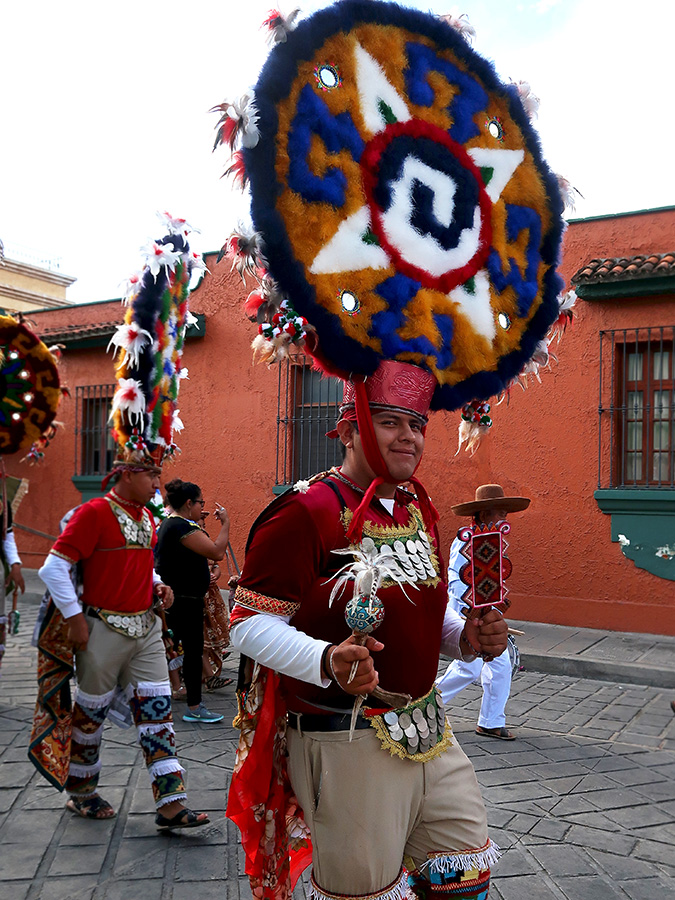
Juan Pablo González Gutiérrez (Vasallo 3º)
Along with the other Guelaguetza delegations, they posed for photos requested by the crush of media, tourists, and locals.


Sergio Gutiérrez Bautista (Moctezuma) on right

Florentino Martínez Ruiz (Subalterno 2º) and Juan Bautista Zárate (Subalterno 1º)
And this year, unlike their last appearance two years ago, it didn’t rain on their parade. Following their banner and band, they danced their way through the streets of the city under a brilliant late afternoon sun.

Tapete by the late Pedro Gutiérrez, father of danzante, Denes Luis Gutiérrez Martínez


Edgar Daniel Ruiz Ruiz (Vasallo 8º) in foreground
For more of the danzantes from Teotitlán del Valle at the desfile, check out the blog post from Chris. Next up, tomorrow morning’s performance up on Cerro Fortín! For those of you, like me, without tickets, check THIS SITE and/or CORTV for live (en vivo) links to each Guelaguetza performance.
Posted in Creativity, Culture, Economics, Textiles, Travel & Tourism, tagged aprons, embroidery, expo-venta, Fundación En Via, mandiles, Mexico, microfinancing, Oaxaca, photographs, photos, San Miguel del Valle, textile arts, textile traditions on July 20, 2018| 10 Comments »
As I’ve mentioned before, the ubiquitous aprons (mandiles) worn by the Zapotec women of the valley of Oaxaca have been elevated to an art form. Each village has developed their own unique style and none is more distinctive than those worn by the women of San Miguel del Valle.

Their full-skirted pinafore style aprons, made from poly-cotton plaid fabric, are elaborately machine-embroidered with colorful flowers and birds. Worn daily, they are the “uniform” of the women of the village beginning when they are little girls. And, most women have a wardrobe full — one to match each dress.
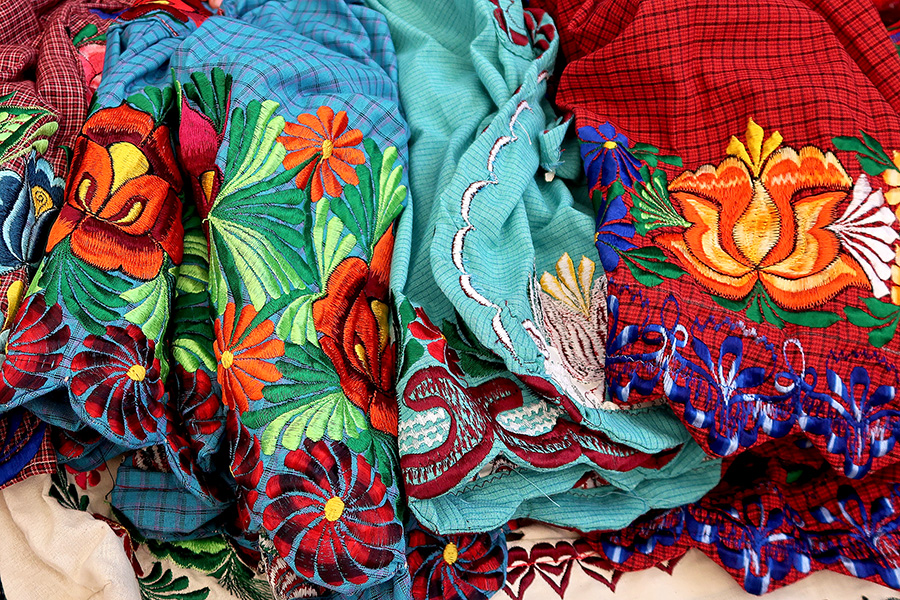
Thanks to microfinancing assistance from Fundación En Via, many of the women have developed profitable businesses selling these aprons and also have branched out to making tote bags and purses. The Fundación recently held a 3-day expo-venta in Oaxaca city and guess what I came home with?

I’m hoping to go on one of the Fundación microfinancing tours next month — to meet and learn from the women who benefit and to further contribute to this worthwhile endeavor. Empowering women empowers communities!
Posted in Creativity, Culture, People, Travel & Tourism, tagged Efedefroy, Mexico, Oaxaca, photographs, photos, popular travel destinations, street art, wall art, Wearable Art Textile Studio, Wizard of Oz on July 14, 2018| 4 Comments »
“Toto, I’ve a feeling we’re not in Kansas anymore.”
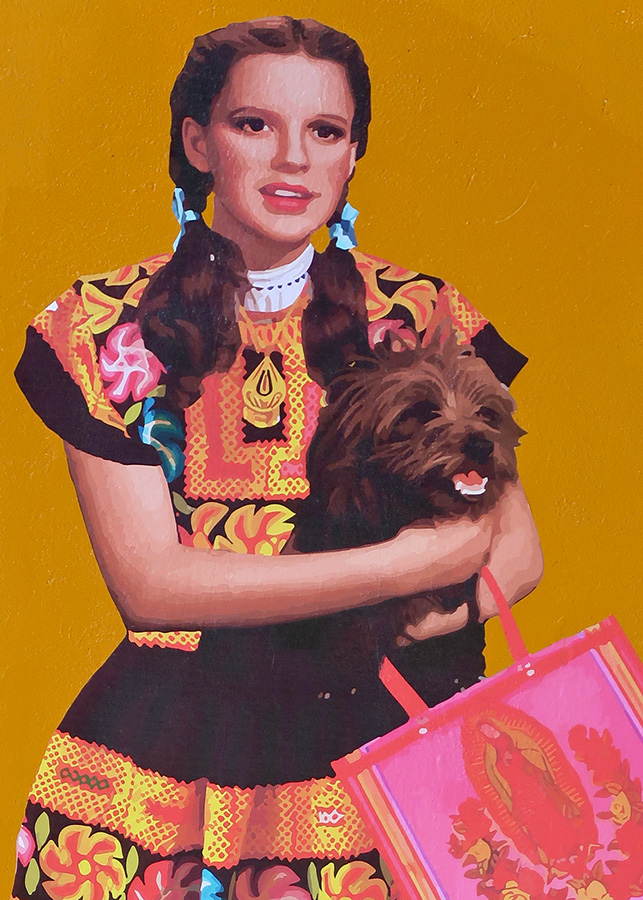
All you have to do is click your heels together three times and say “There’s no place like Oaxaca.”
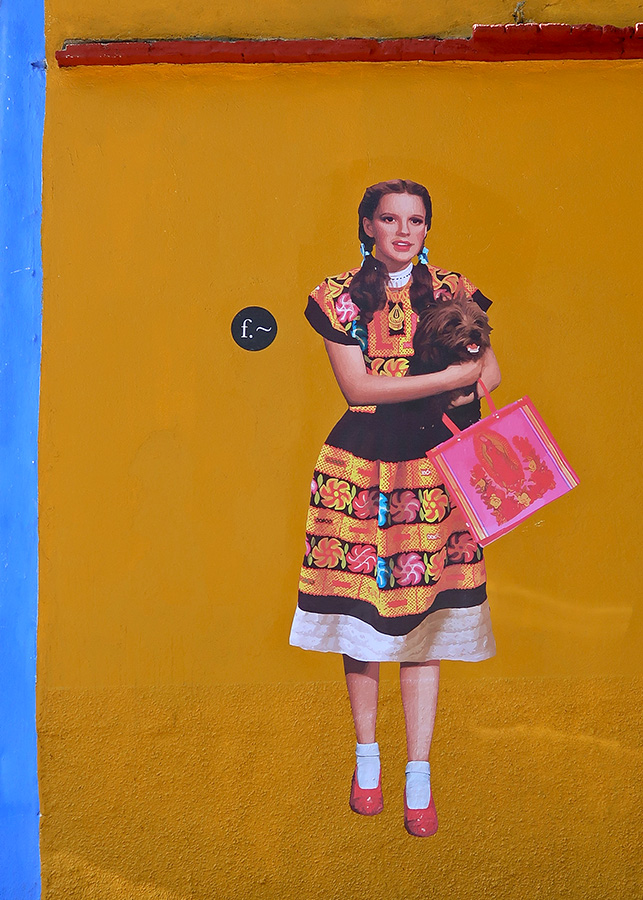
And you too can be a Tehuana in Oaxaca.

Seen on the wall outside Wearable Art Textile Studio, Gurrión 110 — across from the south side of Santo Domingo.
Update: Artist is Froy Padilla Aragón (aka, Efedefroy). Check out an article (en español) about him HERE.
Posted in Celebrations, Creativity, Culture, People, Travel & Tourism, tagged Danza de la Pluma, danzantes, Malinche, Mexico, Oaxaca, palas, photographs, photos, popular travel destinations, sonajas, Teotitlán del Valle on July 11, 2018| 4 Comments »
The Danza de la Pluma weapons of war consist of a small paddle (pala/macana) held in the left hand and a sonaja (rattle) held in the right (see images of danzantes in July 9 post).


The sonajas are decorated gourds attached to a deer leg or antler. During the dance, they mark the compass points and their sound is used to scare the opponents.


Each wooden pala is uniquely carved and decorated and serves as a baton and a shield in this dance that recreates the battles between the Spanish conquistadors and Moctezuma, his warriors, and allied kings.


Even Malinche (Quetzalli del Rayo Santiago Ruiz) carries a sonaja and a pala during parts of the dance. And, check out the reversible pala of Juan Pablo González Gutiérrez — red weaving surrounded by alebrije-like painting on one side and blue weaving and painting on the other. You can click on images to enlarge them. The creativity never ceases to amaze!
Posted in Creativity, Culture, Politics, Travel & Tourism, tagged graffiti, Mexico, Oaxaca, photographs, photos, popular travel destinations, street art, URTARTE, wall art on June 30, 2018| 2 Comments »
Despite Mexican elections tomorrow and the Mexico vs. Brazil World Cup elimination game on Monday, the walls of Oaxaca will not be silenced.
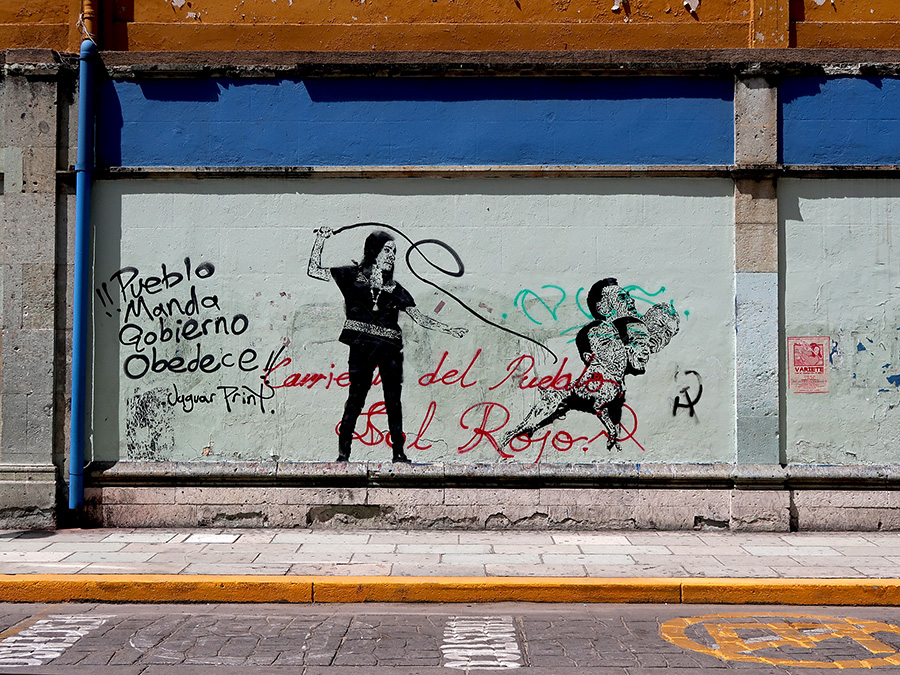


The latest from the walls of Gimnasio Universitario Centro Histórico of UABJO (Universidad Autónoma Benito Juárez de Oaxaca city center gymnasium) on Av. José María Morelos.
Posted in Casita Colibrí, Creativity, Gardens, Travel & Tourism, tagged garden, loveseat, Mexico, Oaxaca, outdoor furniture, photographs, photos, recycled plastic, terrace, weaving with plastic on June 23, 2018| 22 Comments »
Once upon a time, I went to Linda Hanna’s house in San Andrés Huayapam — the B&B Casa Linda. In addition to running a B&B, she leads artisan tours, is a major collector of textiles, art, crafts, and you name it, AND holds occasional yard sales. I always try to attend the latter and always buy a thing or two or three or four. Thus, 2-1/2 years ago, this loveseat found it’s way onto the terrace of Casita Colibrí. Linda wasn’t sure where or when she originally purchased it and it had long been relegated to a bed for a member of her animal menagerie, as the palm had completely disintegrated on one side, leaving only the jute webbing to prevent one’s bottom from landing on the ground. However, it had “good bones” and I had fallen in love with it. I figured that with a couple of decorative pillows to hide the hole, it would look great and be relatively functional. They did and it was.

Over the course of the past couple of years, the elements have caused more wear and tear to the palm and the wooden frame needed work. Into the story comes Sebastián, of Talavera transformation, part 4 fame. As if it wasn’t enough to be a carpenter, stonemason, electrician, plumber, and glazier, he and his wife Elizabeth had taken classes in weaving with plastic and started a business — primarily making baskets/purses. A couple of months ago, he stopped by to show me their latest projects and I had an inspiration. Could they refurbish my loveseat? His eyes lit up, said yes, we talked colors and designs, and a few weeks later he hauled it away. On Wednesday, it came back home.


I suspect you are asking, why plastic when the palm looked so beautiful? Two reasons. Firstly, it was a spur of the moment decision, but I knew Sebastián, trusted the work he does, and loved the creative possibilities he showed me. Secondly, I’d bought the loveseat to live outside on the terrace (albeit, under the gazebo) and in the back of my mind, as the palm seat, back, and arms continued to deteriorate, I’d wondered if there might be something more long lasting that could be used. Thus, plastic. However, it’s not just any plastic, Sebastián and Elizabeth’s business uses recycled plastic.

By the way, they also refinished the wood, using a marine varnish to help contribute to its longevity. I think, in its new incarnation, my loveseat still looks right at home and what is old is new again!
Posted in Creativity, Culture, Music, Travel & Tourism, tagged art, artists, Bob Dylan, Erika Santiago, Joan Baez, Mexico, murals, music, Oaxaca, photographs, photos, Sad-Eyed Lady Of the Lowlands, San Eyed, street art, urban art, wall art on June 4, 2018| 2 Comments »
Passing Erika Santiago‘s haunting mural along the wall outside Almacén Mexicano on Calle Valentín Gómez Farías, Sad-Eyed Lady Of the Lowlands began playing in my head.

Sometimes art brings a song. And, maybe we are all a little sad these days.
Posted in Creativity, Culture, Food, Gardens, Markets, Textiles, Travel & Tourism, tagged artisan markets, chickens, grilled onions, market day, mercados, Mexico, Oaxaca, photographs, photos, popular travel destinations, rebozos, seeds, shawls, Tlacolula de Matamoros on May 26, 2018| 4 Comments »
Last Sunday at the weekly market in Tlacolula de Matamoros…

Chickens
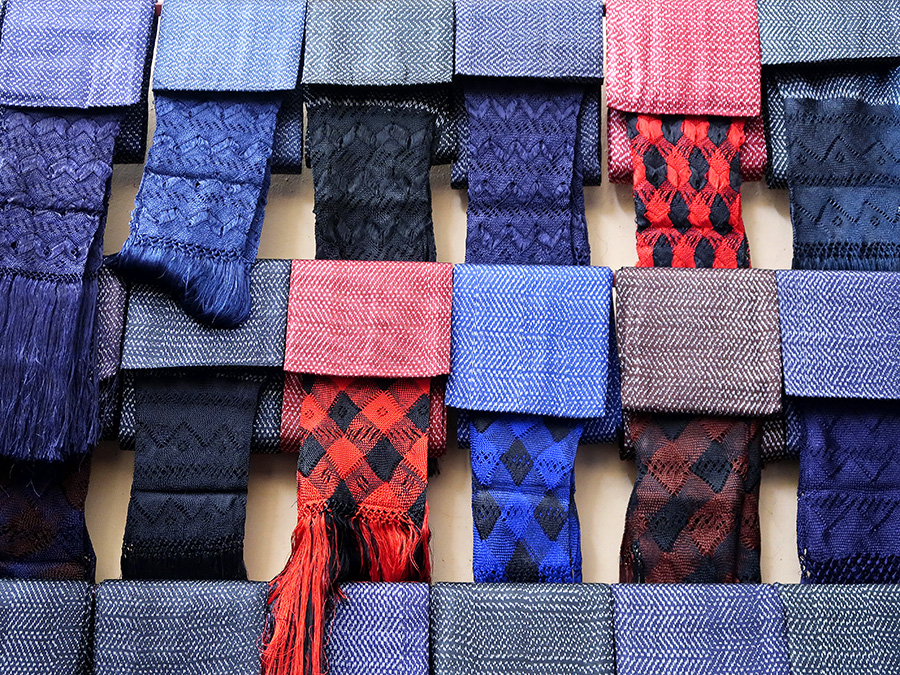
Rebozos
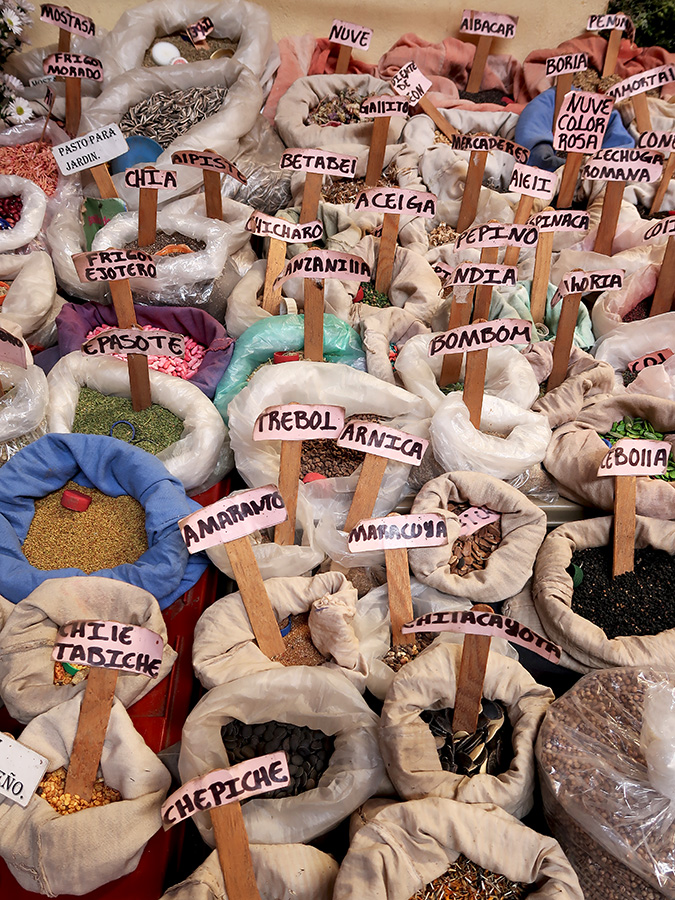
Seeds
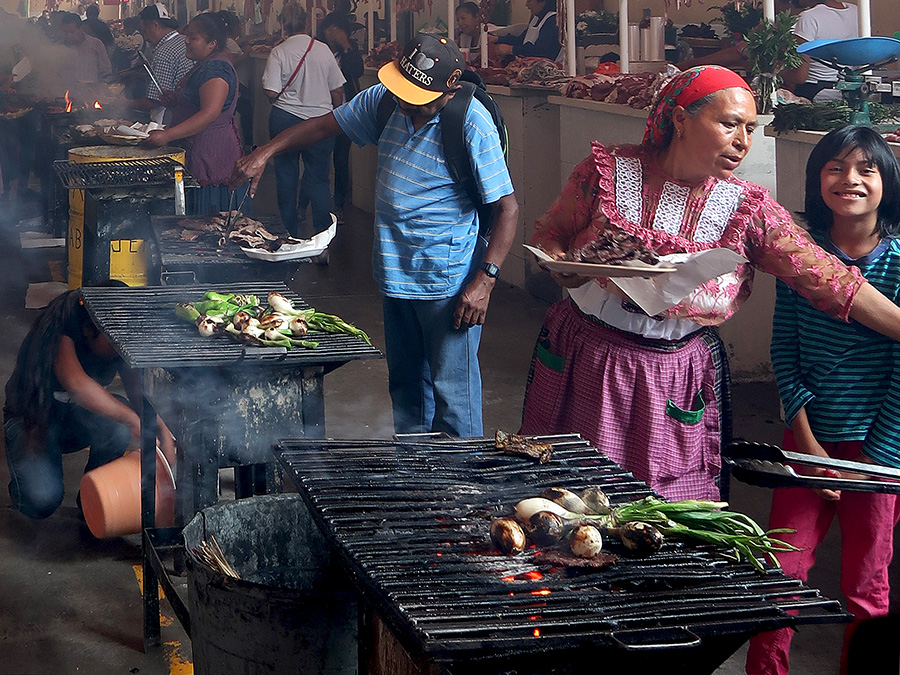
Lunch
It’s not just about produce, bootleg DVDs, tools, and underwear.
Posted in Celebrations, Creativity, Culture, Flora, Travel & Tourism, tagged Capilla de la Cruz, cucharilla, desert spoon, festival, fiesta, flower decorations, Mexico, Oaxaca, photographs, photos, plants, sotol, Tlacolula de Matamoros on May 23, 2018| 7 Comments »
I love Sunday market day in Tlacolula de Matamoros — the people, colors, food, cacophony, and frequent surprises speak to the life of Oaxaca. So, after returning Saturday night from two weeks in el norte, I jumped at the suggestion by blogger buddy Chris that we go to Tlacolula the next day. It did not disappoint.

Carnival rides were being set up where we frequently park and, in the usually deserted patio of the modern chapel at the intersection, several men were hard at work fashioning decorations. We peered from behind the wrought iron fence but were quickly invited in. They explained they were preparing for a festival honoring the chapel, the Capilla de la Cruz, all the while continuing to weave flowers out of a spiky, sword-like plant.
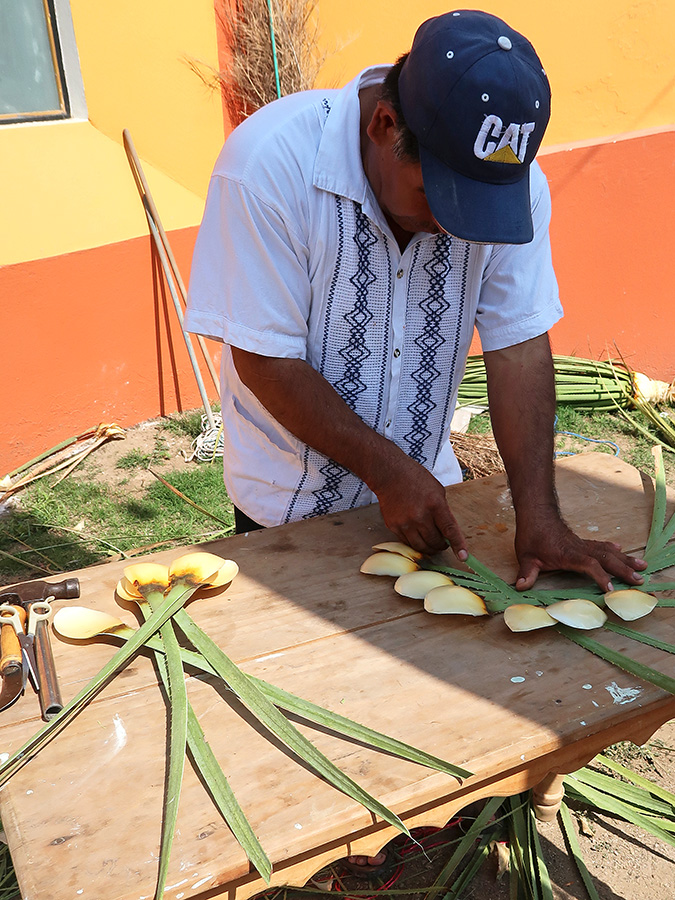
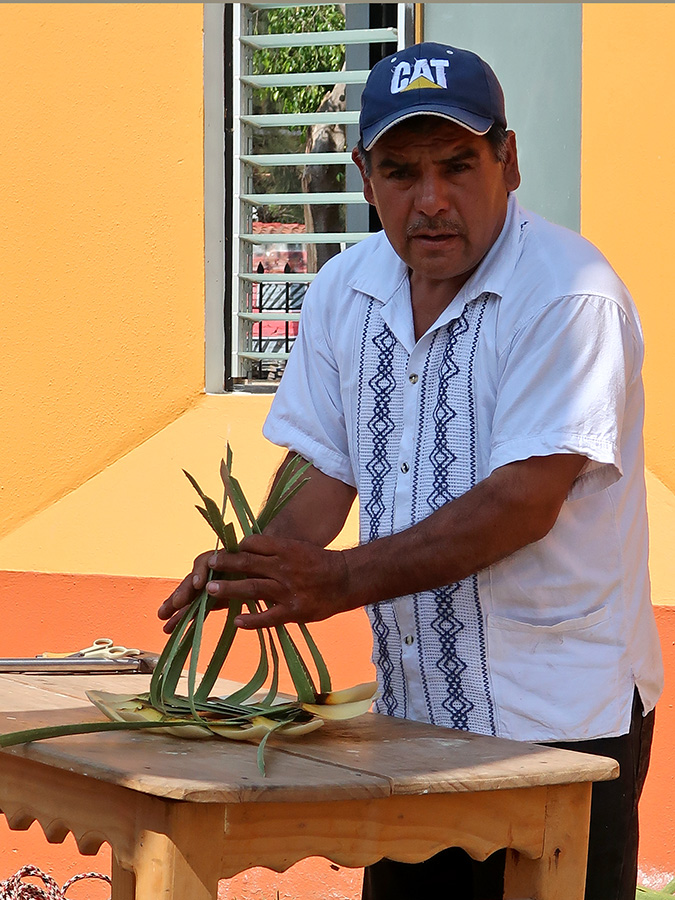

Especially during the Easter season, I’ve seen these flowers sold along with woven palms, but didn’t know what they were made from.

Once home, I couldn’t resist doing a little research (I’m a librarian, after all!) and discovered it was a species of Dasylirion (aka, Sotol, cucharilla, desert spoon). I can’t imagine what those spikes lining the sides of the leaves must do to their hands!


It was such fun talking with these guys and watching their nimble, practiced fingers at work. After two weeks away, what better way to get back into the swing of things in Oaxaca? And, the market was still to come.
Posted in Creativity, Culture, Travel & Tourism, tagged alebrije, artisans, Mexico, Oaxaca, photographs, photos, popular travel destinations, San Antonio Arrazola, San Martín Tilcajete, wood carving on May 18, 2018| 10 Comments »
Carved from the wood of the copal, an owl for my older son.
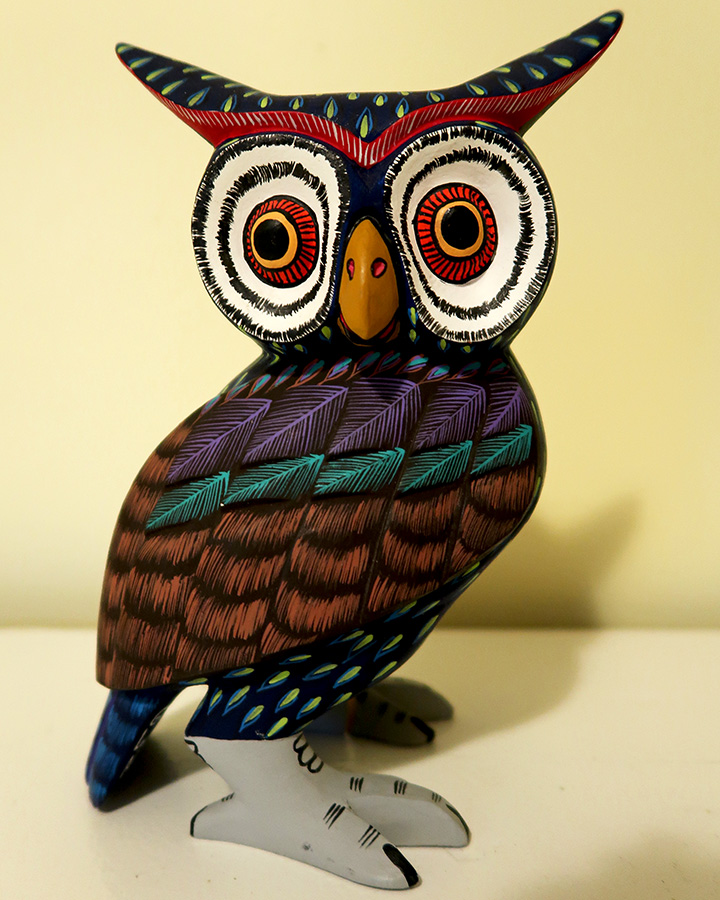
Carved by Lauro Ramírez and painted by Griselda Morales, San Antonio Arrazola, Oaxaca
A rabbit for my daughter-in-law.
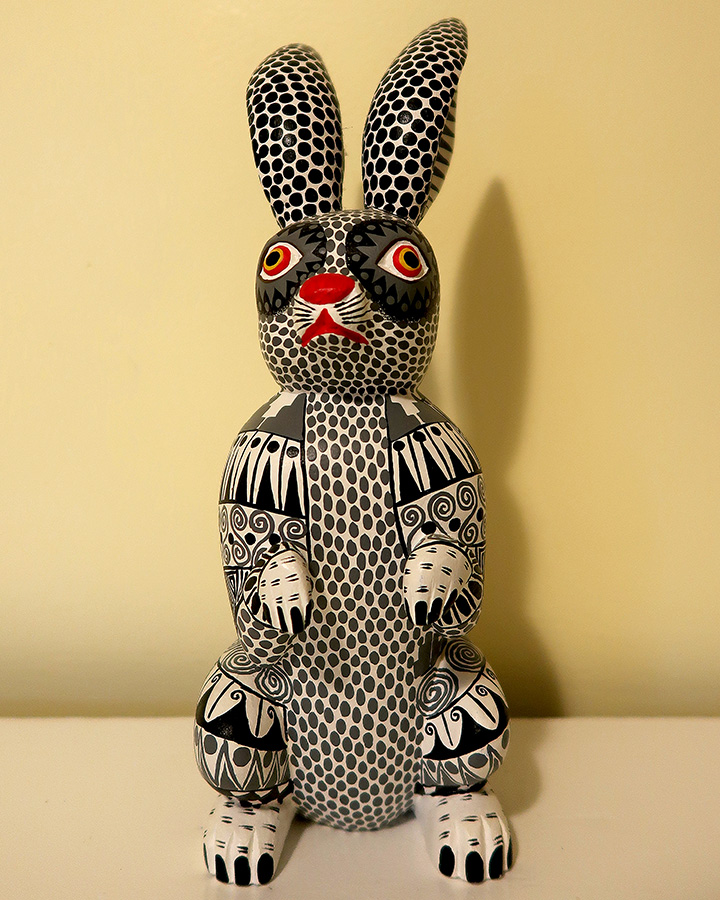
Carved by Mario Castellanos and painted by Reina Ramirez, San Antonio Arrazola, Oaxaca
A lion for my grandson.

Carved by Zeny Fuentes Santiago and painted by Reyna Piña Ramírez, San Martín Tilcajete, Oaxaca
And, a horse for my granddaughter.

Carved by Jesús Hernández Torres and painted by Roxana Fabian Ortega, San Martín Tilcajete, Oaxaca
Beautifully hand carved and painted alebrije for my family.
Posted in Creativity, Culture, Food, Markets, Travel & Tourism, tagged aprons, cooking, embroidery, mandiles, Mexico, Oaxaca, People, photographs, photos, popular travel destinations, Teotitlán del Valle, textiles, Tlacolula de Matamoros, women, Zapotec fashion on May 15, 2018| 18 Comments »
The lowly utilitarian apron has been elevated to an art form by the Zapotec women of the Tlacolula valley in Oaxaca. Worn every day, mandiles (aprons) are an essential and practical part of their traditional dress. Most women own several and take great pains to color coordinate them with the day’s attire.

Fiesta honoring the Virgen de Guadalupe at the home of Fidel Cruz and Maria Luisa Mendoza, Teotitlán del Valle.
Plainer aprons are worn around the home. However, they don one of their “Sunday best” aprons for special occasions. These are heavily embroidered and often have necklines and hems that are scalloped and, as a fashion statement, are frequently worn to the weekly market.

Vendor at the Sunday market in Tlacolula del Valle.
Mandiles are made of store-bought poly-cotton fabric, usually in a small plaid design. While “100% cotton” sounds more desirable to many of us, the blend is undeniably more practical. After all, who wants to iron when there is work to do and the temperatures are summery all year ’round?

Andrea weaving in Teotitlán del Valle.
Even though the embroidery is done by sewing machine, the more elaborate designs can take from three to four days days to make. Aprons range in price from approximately 150 to 700 pesos.

Leonor Lazo feeding a baby goat in Teotitlán del Valle.
Given that, in addition to being practical, these are also a fashion accessory, it should come as no surprise that styles can vary from village to village.

Young women from San Miguel del Valle attending a festival in Teotitlán del Valle.
I grew up with aprons. My grandmother lived next door and could always be found wearing a “house-dress” and a pinafore style apron with front patch pockets. Some were plain, but many she decorated with embroidery. Thus the mandiles of Oaxaca spoke to me and I listened.

Reyna Mendoza speaking to her El Sabor Zapoteco cooking class.
My first “Oaxaca” apron was a maroon plaid cobbler style with only a moderate amount of embroidery. After a year or two, it became so much a part of my home attire that I bought another in brown plaid. These are my workhorses and I wear them every day while cooking, cleaning, and even gardening. And, I proudly bring my own apron to cooking classes and make sure to pack one when I’ve been invited to a fiesta in Teotitlán del Valle — putting it on to help clear tables. I always get smiles from the women (and some of the men, too).

Me, mi mandil, a metate, and maiz at El Sabor Zapoteco cooking class in Teotitlán del Valle.
However, after countless Sunday market day trips to Tlacolula de Matamoros, not to mention, spending a lot time over the past several years in Teotitlán del Valle, I couldn’t help but be inspired by the fashion statements women, both young and old, were making, so I bought a slightly more elaborately embroidered pinafore style and then another and another.
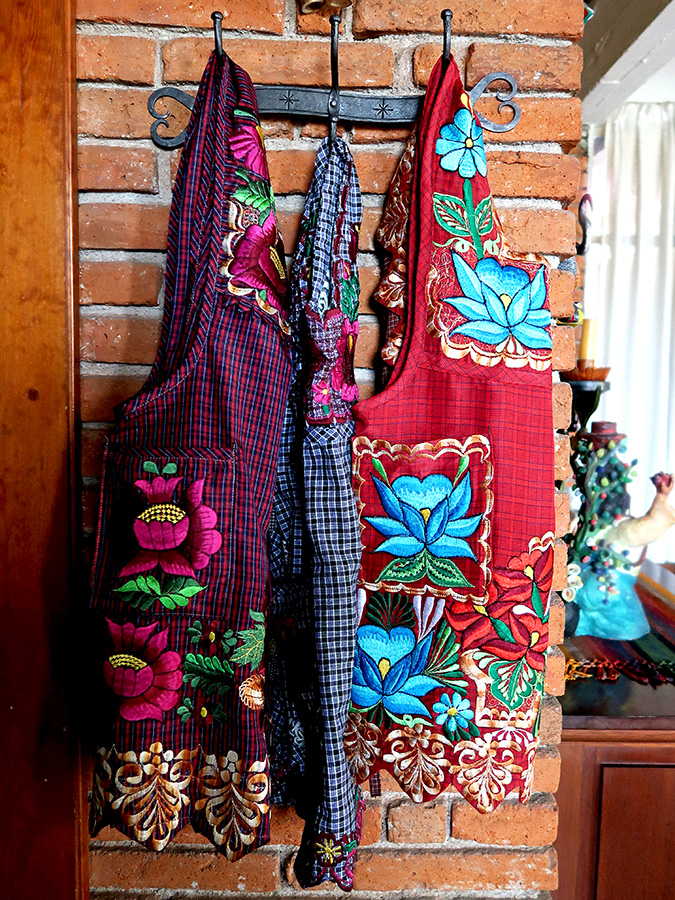
Three of my mandiles; the red is the newest.
I even dared to wear one recently in New York at my granddaughter’s first birthday party. With children ranging in age from six weeks to six years, I thought it was a very practical fashion statement on my part. And, guess who got one for her birthday?

Birthday present to my granddaughter — a toddler-size mandil.
A good place to check out who is wearing what style of mandil is at Tlacolula’s Sunday market. And, should you want to buy one for yourself and/or give one as a gift, there are at least eight apron stalls at the back of the market on Sundays.
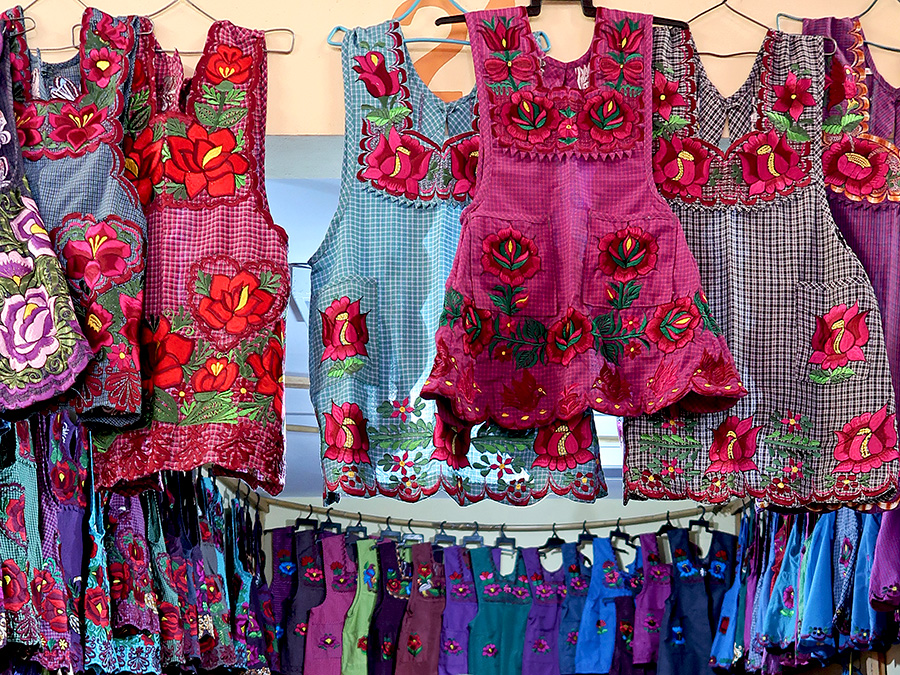
Apron stall at the back of the Tlacolula de Matamoros market.


 Mexican Peso Converter
 View From Casita Colibrí
Oaxaca’s wallpaper
Posted in Creativity, Culture, Politics, Travel & Tourism, tagged graffiti, Mexico, Oaxaca, photographs, photos, political art, political commentary, protest, stencil art, street art, URTARTE, wall art on May 29, 2018| 4 Comments »
Protest art continues to paper the streets of Oaxaca.
It’s there in black and white against walls of texture and color — greeting the morning’s light and disappearing as shadows fall.
Today, the faces of rage, resistance, and anguish are not only looking down from walls, they are seen at eye level in Oaxaca’s zócalo and streets. They’re back… The annual occupation and blockades by Sección 22 of the CNTE (teachers’ union) has begun.
Share this:
Read Full Post »