Just because, up here in el norte, life seems a bit more intense…

I say, send in a few of Oaxaca’s payasos.
Posted in Creativity, Culture, Travel & Tourism, tagged clowns, culture shock, Mexico, Oaxaca, payasos, photos on November 21, 2021| 2 Comments »
Just because, up here in el norte, life seems a bit more intense…
I say, send in a few of Oaxaca’s payasos.
Posted in Casita Colibrí, Creativity, Music, Nature & Science, tagged artesania, crystals, Mexico, music video, Oaxaca, photos, rainbows, tapetes on November 18, 2021| 8 Comments »
I’m in el norte visiting family, getting my Pfizer booster, and seeing friends. Today, it’s chilly and grey, so I’m letting the crystals I hung in the new Casita Colibrí’s entry window cast their magic.

In morning, as the sun pours in, they paint rainbows all over my home.
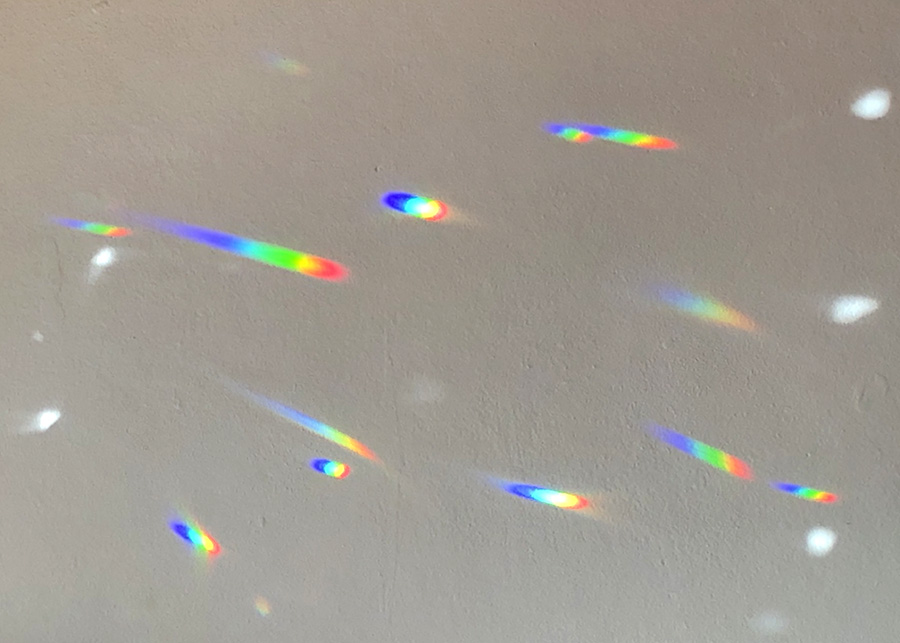
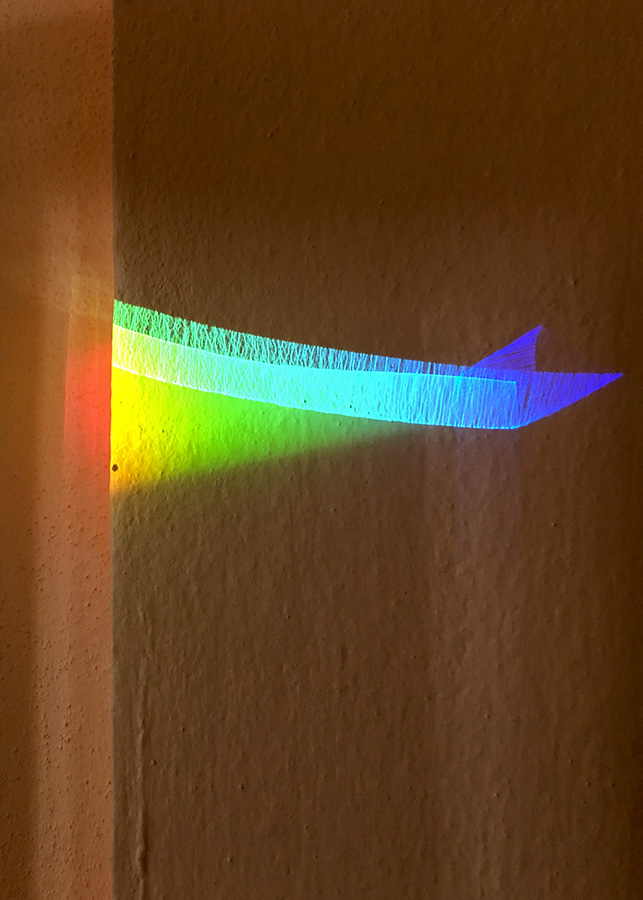

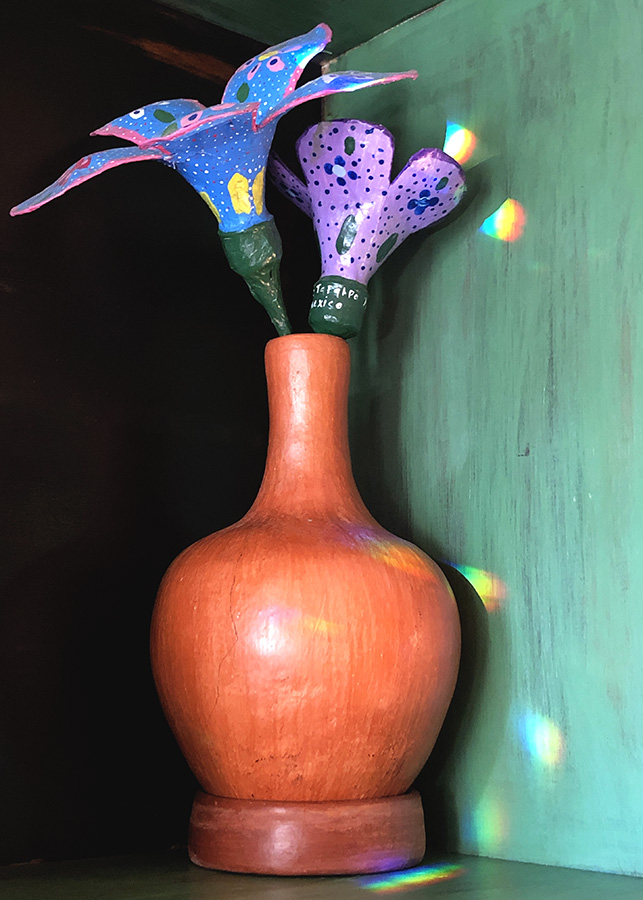
And, I’m singing along to the John Sebastian tune, I’ll Paint Rainbows All Over Your Blues. (Click the YouTube link, it will make you smile.)
Posted in Celebrations, Creativity, Culture, Neighborhoods, Religion, Travel & Tourism, tagged Barrio de Jalatlaco, comparsa, costumes, Day of the Dead, Día de los Muertos, Día de Muertos, face painting, Mexico, muerteada, Oaxaca, photos, popular travel destinations, religious banners, religious processions, Virgen del Rosario, Virgin Mary, Virgin of the Rosary on November 8, 2021| 10 Comments »
The evening of October 31, I heard the unmistakable sounds of a procession coming down the street — but not the raucous cacophony of a muerteada which, given the date, I was expecting. No, this was the slow dirge-like and repetitive hymn of a religious procession. Needless to say, I grabbed my camera, keys, and cubreboca (mask) and headed out the door. The Catholic church has dedicated the month of October to honor the Virgin Mary with the recitation of the Holy Rosary. This being the last Sunday of October, María traveled through the streets of Barrio de Jalatlaco through the generous mayordomía (stewardship) of the families Robles Tamayo and García Robles.

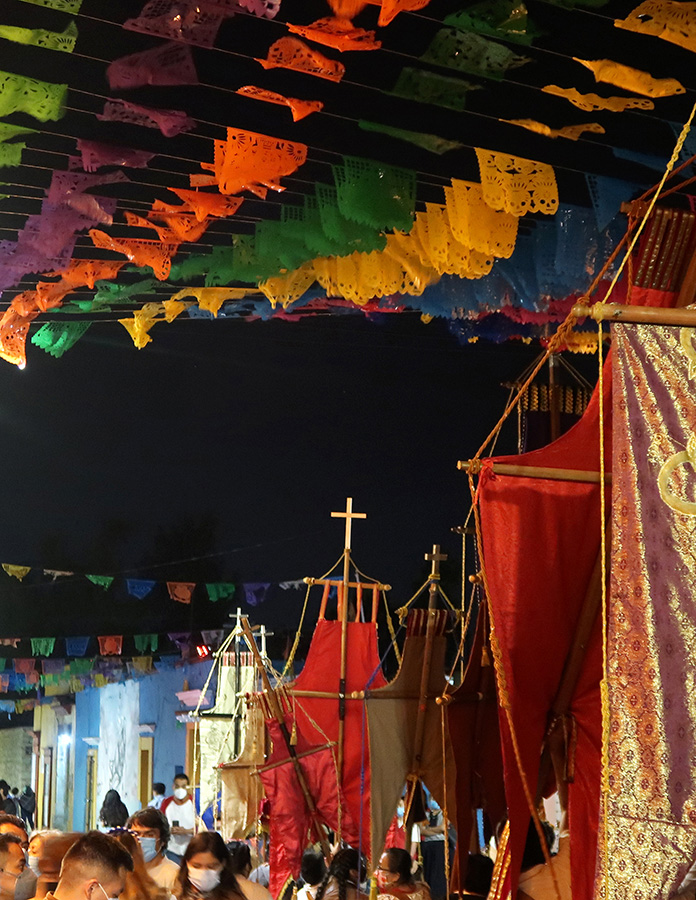

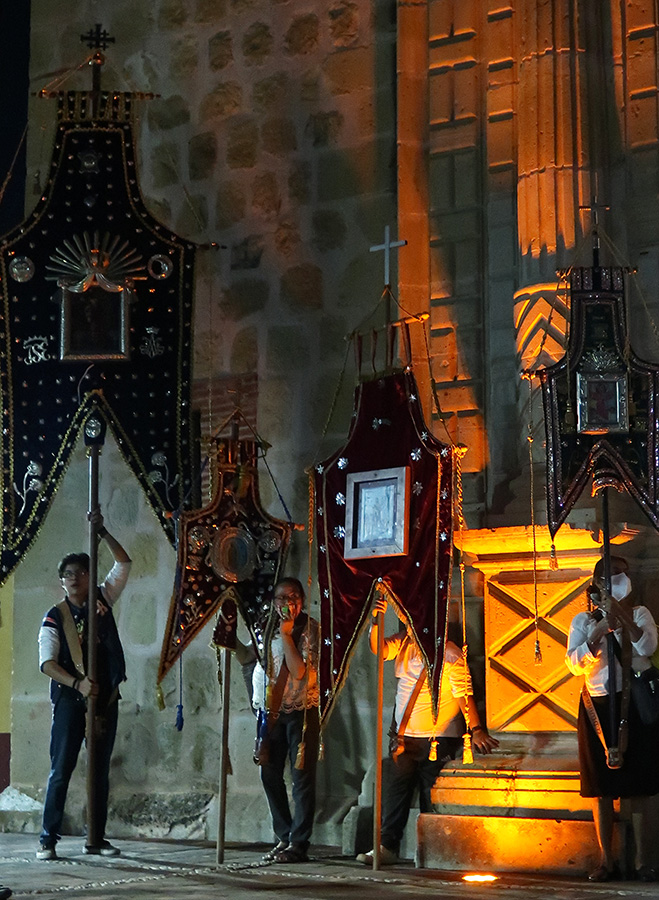

Upon her return to Templo de San Matías Jalatlaco, she was greeted by a less than solemn scene of Día de Muertos revelers in costumes and face paint, no doubt looking for a muerteada (aka, comparsa). According to the book, Day of the Dead: When Two Worlds Meet in Oaxaca, the muerteada allows the dead “to ‘occupy’ a living body, either a muerteada participant or an audience member, for a time, and therefore enjoy the entertainment directly rather than vicariously.” I suspect for some, it was just an excuse to party.


However, a muerteada did come to my neighborhood the following night. Again, I grabbed camera, keys, and cubreboca and ventured out to check it out. The craziness was only just getting started and would undoubtedly go on most of the night. Besides, not even half the people were wearing masks, so, after twenty minutes and twenty plus photos, I went home.


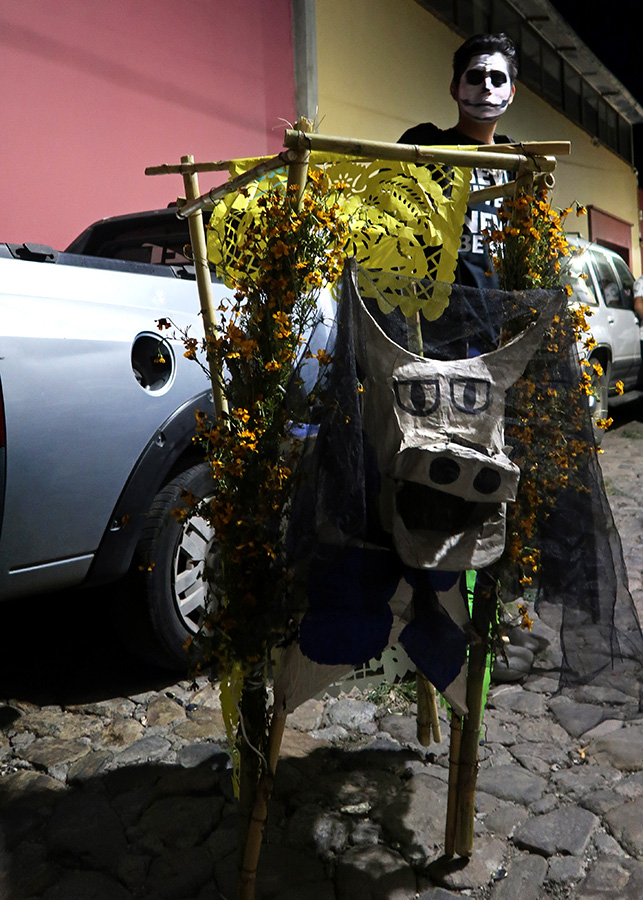

The sacred and profane that is Mexico.
Posted in Casita Colibrí, Celebrations, Creativity, Culture, Holidays, Religion, tagged altars, Barrio de Jalatlaco, calacas, calaveras, candles, catrinas and catrins, cempasúchitl, Day of the Dead, Día de los Muertos, Día de Muertos, fruit, Galería Shadai, Los Pilares Hotel and Restaurant - Flowers, marigolds, Oaxaca, ofrendas, pan de muertos, papel picado, photos, popular travel destinations, skeletons, skulls, sugar skulls on November 1, 2021| 16 Comments »
Day of the Dead altars and their offerings to the departed vary from region to region and, within those regions, from family to family. Ofrendas (offerings) are an integral part of Día de Muertos. They are a beacon to the departed, an ephemeral work of art, and the sum of their lovingly chosen parts. As you can see from the photos below from several in Barrio de Jalatlaco, even on public display, they are intensely personal and creative.
Galería Shadai – Flowers, papel picado, candles, incense, pan de muertos, fruit, nuts, a casserole, and beverages.

And, there is a catrina tapete de arena (sand carpet) made of sand, beans, and flowers.
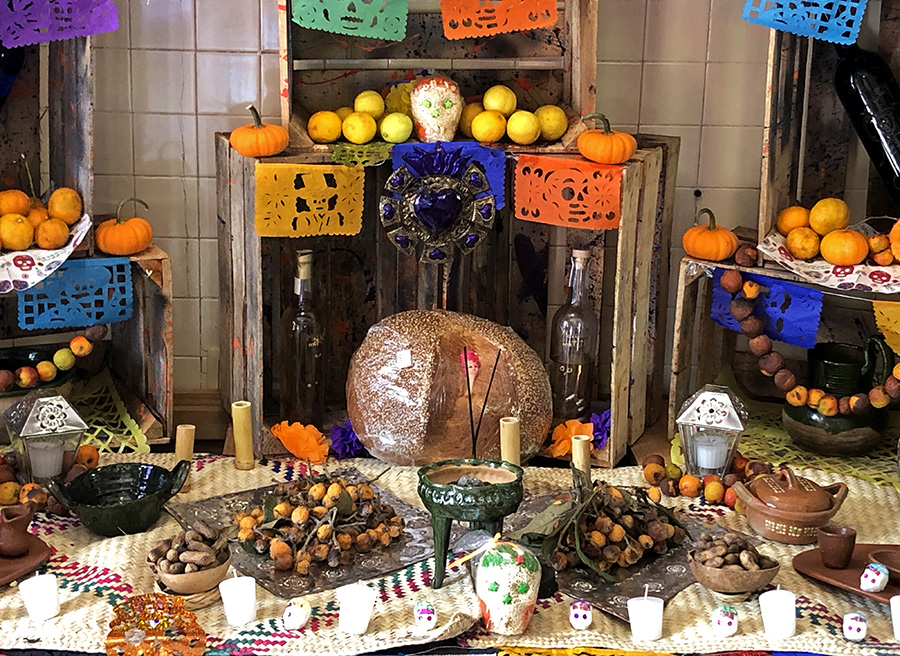
However, the only photo is of Maestro Francisco Toledo placed on a side pedestal.

Los Pilares Hotel and Restaurant – Flowers, papel picado, catrinas and catrins, candles, fruit, pan de muertos, and beverages.

And, there is a beautiful floral arch.
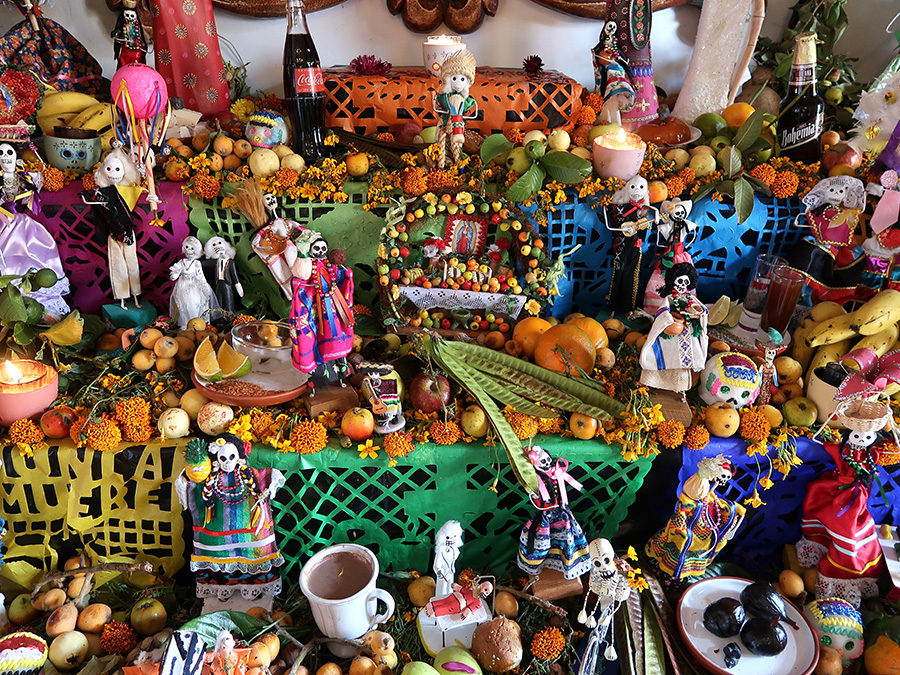
No photos of loved ones, but it’s a love story to the state of Oaxaca.

Family ofrenda – 5 de mayo at the corner of La Alianza. Family photos of the departed take center stage with papel picado, cempasúchitl (marigolds), and skeletons playing supporting roles.
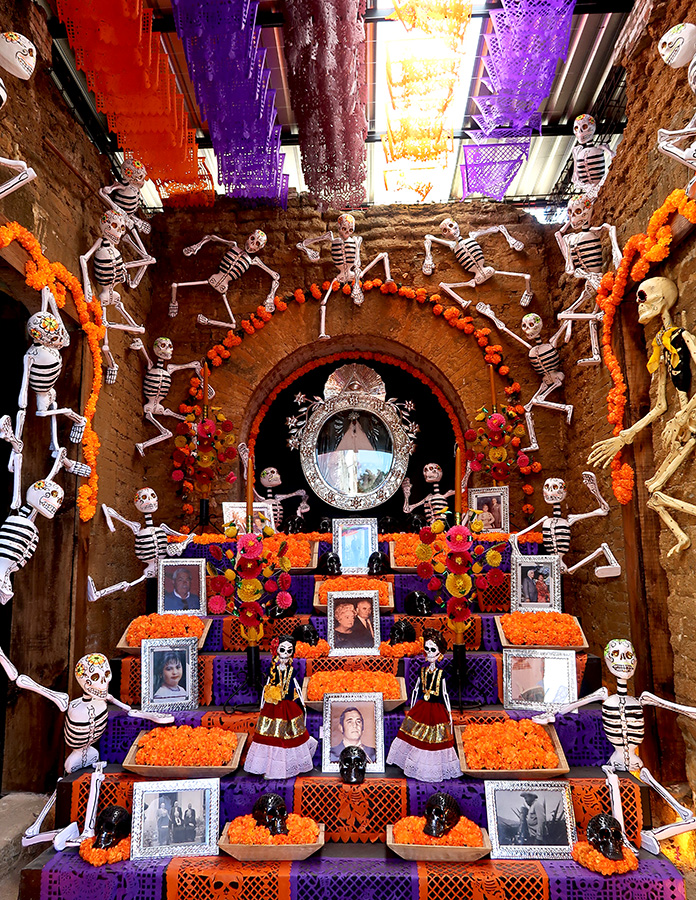
Then there are those magnificent floral candles like one sees in Teotitlán del Valle.

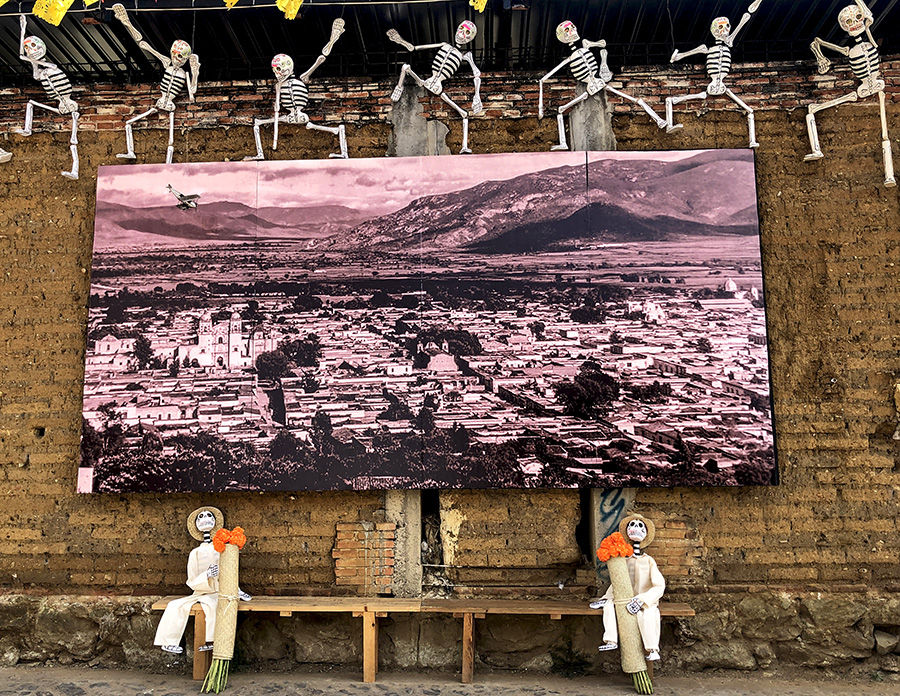
And, lest the departed can’t find their way home in the greatly expanded city, an old photo and skeletons await outside the altar alcove to show the way.
Last but not least, my altar and offerings. It was a creative challenge to set up in the new Casita Colibrí.

It’s smaller than previous years, but I have figured out a way to make it bigger and better next year.
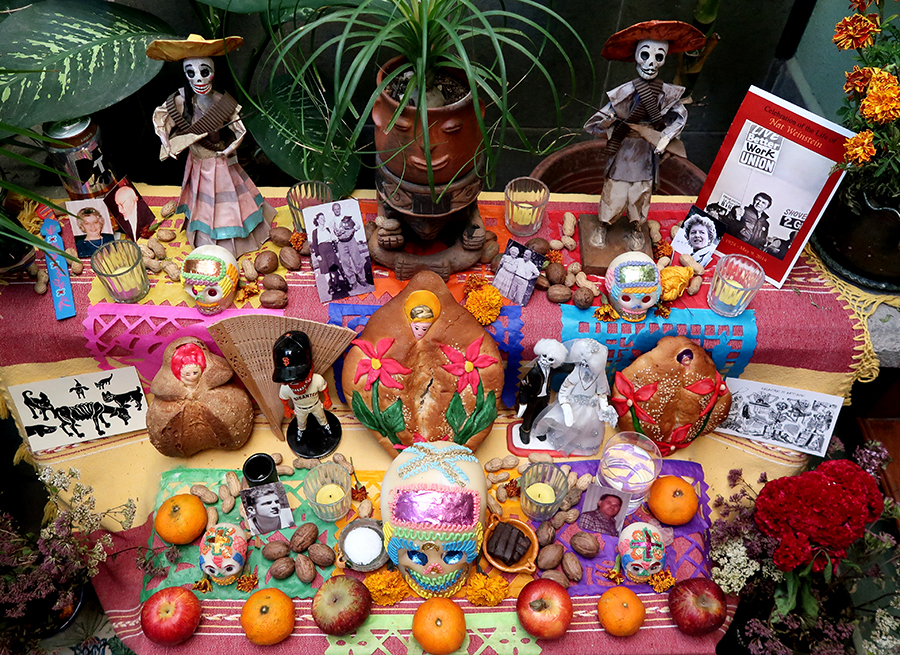
A yellow (color of death in pre-hispanic southern Mexico) tablecloth; papel picado (cut tissue paper) signifying the union between life and death; cempasúchitl (marigolds) and flor de muerto from the Sierra Norte, their scent to guide the spirits; and cresta de gallo (cockscomb) to symbolize mourning. There is salt to make sure the souls stay pure and chocolate, peanuts, pecans, apples, mandarin oranges, and pan de muertos (Day of the Dead bread) to nourish them. The sweet smell of copal incense and its smoke help guide my loved ones to the fiesta I have prepared for them. There is water to quench their thirst, as they travel between worlds, not to mention mezcal and cervesa (beer). And, there are the tangible remembrances of my departed — photos and some of their favorite things.

With candles lit and incense burning, I’m loving it and hoping my very dearly departed will find it warm, nourishing, and welcoming.
Posted in Celebrations, Creativity, Culture, Holidays, Religion, Travel & Tourism, tagged Barrio de Jalatlaco, cempasúchitl, Day of the Dead, Día de los Muertos, Día de Muertos, marigolds, Mexico, Muertos decorations, Oaxaca, papel picado, photos, skeletons, skulls on October 31, 2021| 19 Comments »
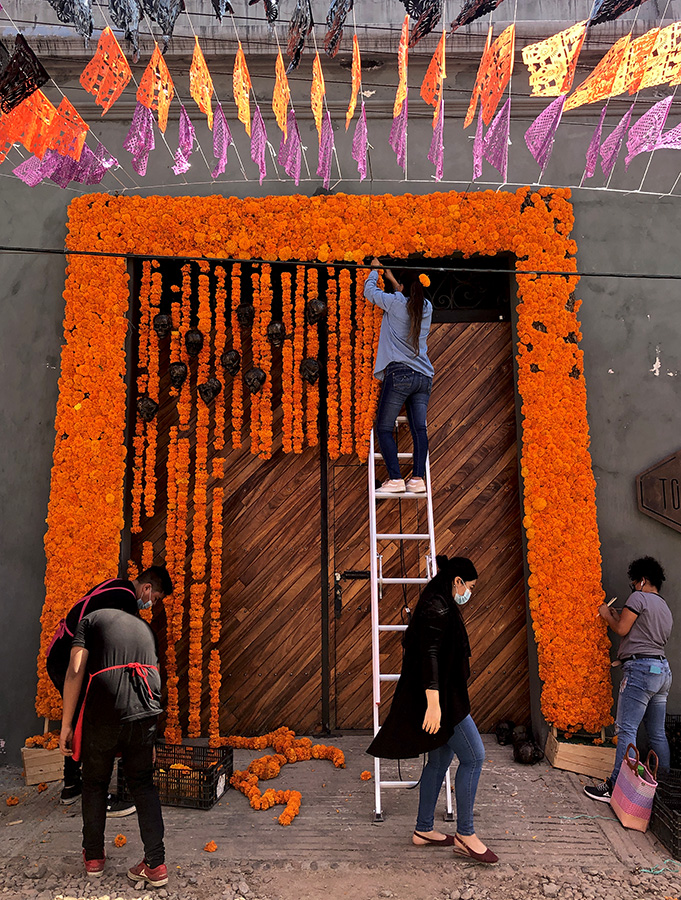
My new neighborhood, Barrio de Jalatlaco, has a long history — one that predates the arrival of the Spanish. Community spirit and traditions are strong, including making her departed feel welcome during Día de Muertos. Thus the bright orange and spicy scent of the flor de muerto, cempasúchitl (flower of the dead, marigolds) are everywhere.


Papel picado, in seasonal colors, ripple above the streets and cast fluttering shadows.

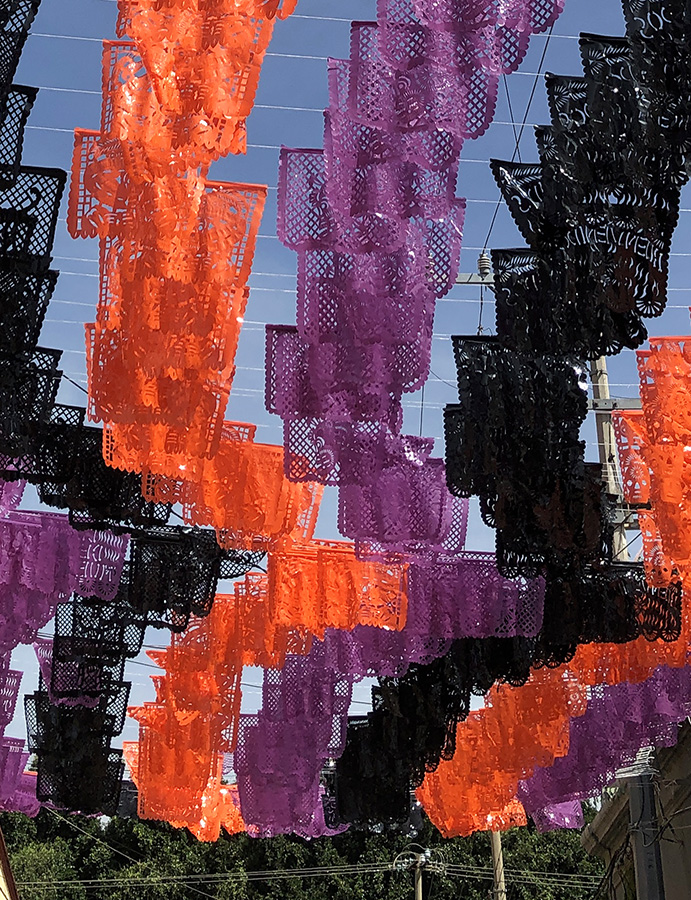

Floral arches welcome the living and the departed.


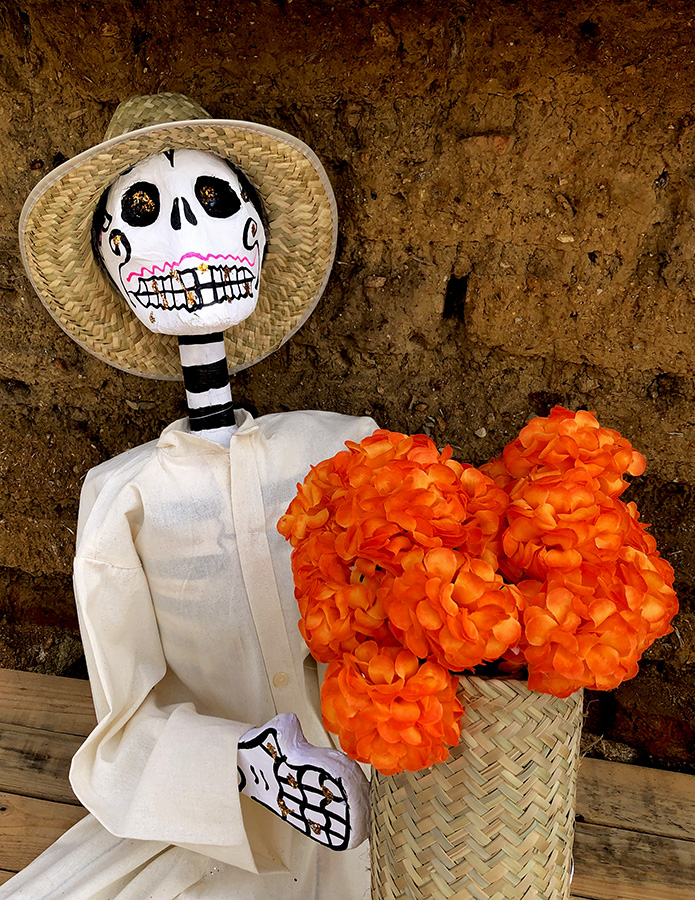
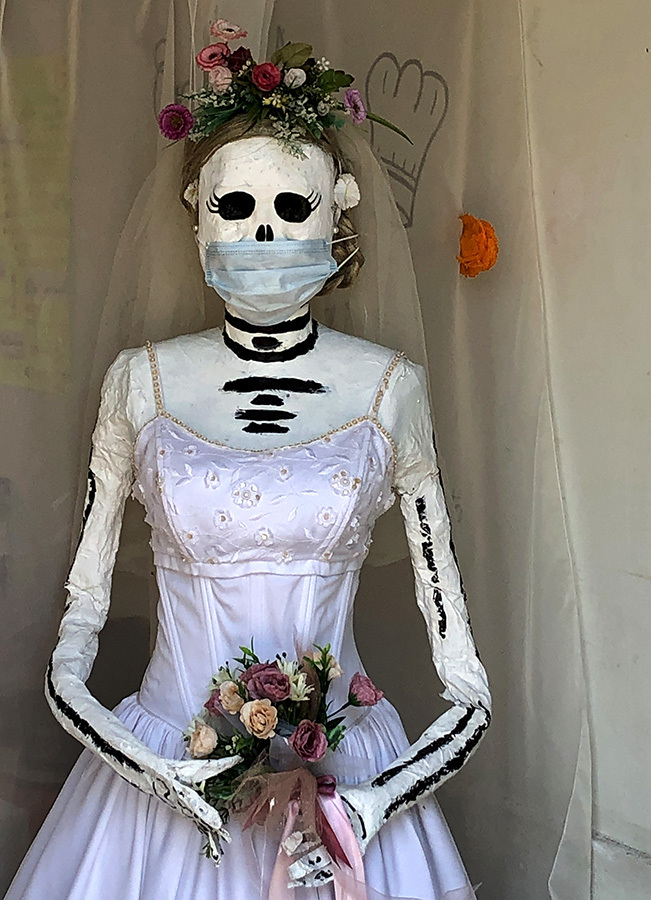
And skeletons are seen hanging out in doorways, windows, and sidewalks.

Tomorrow, altars and their offerings.
Posted in Celebrations, Creativity, Culture, Holidays, Travel & Tourism, tagged calacas, Catrinas, Day of the Dead, Día de los Muertos, Día de Muertos, Mexico, muertos murals, murals, Oaxaca, photos, popular travel destinations, skeletons, street art, urban art, Villa de Zaachila, wall art on October 29, 2021| Leave a Comment »
Oaxaca is getting ready for the annual arrival of her difuntos (souls of the dead), so a pause in the Day in the country posts is in order. Blue sky or grey, ran or shine, and village or city, they come…
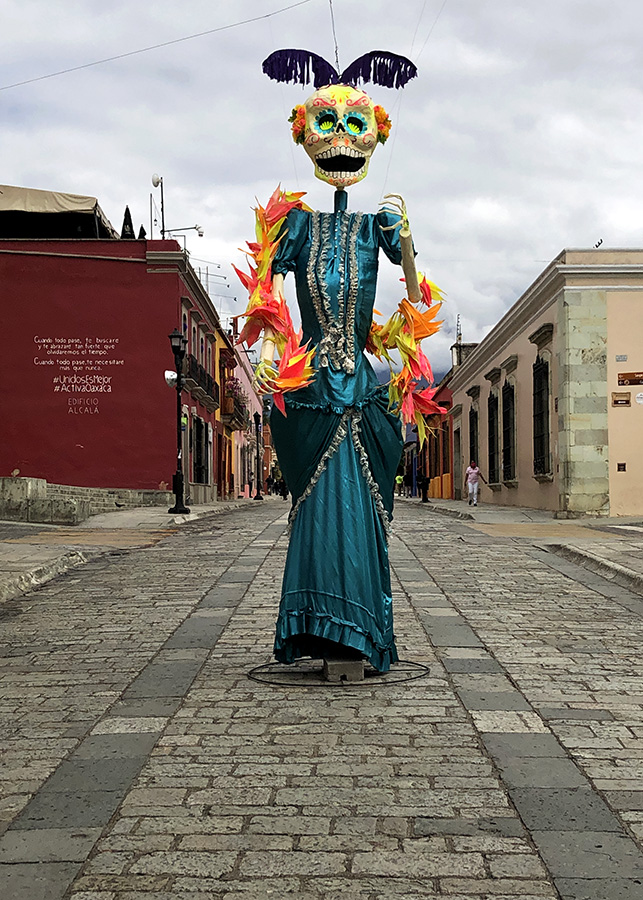


They come to eat and drink…
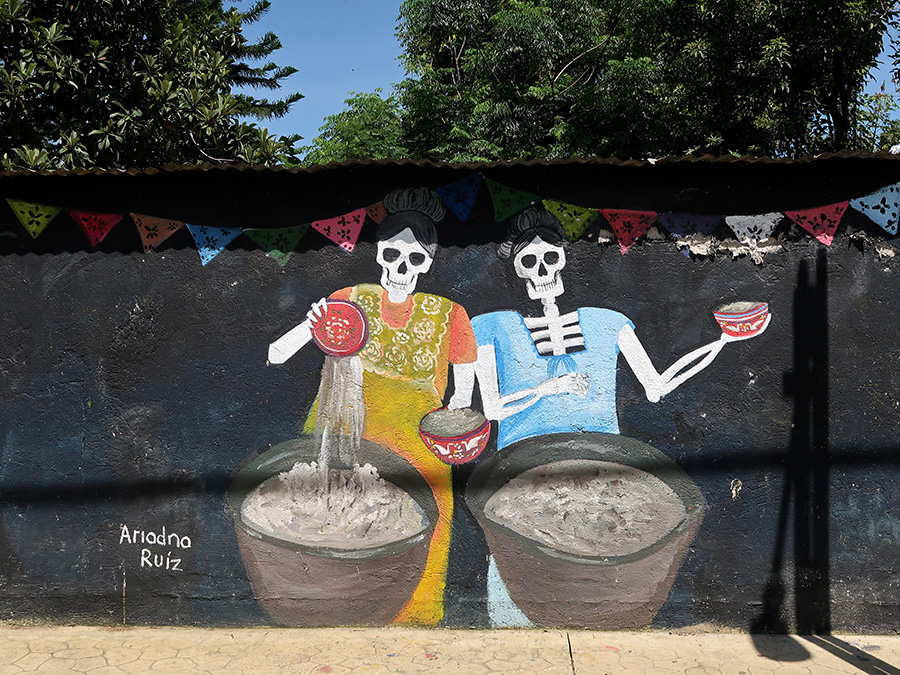
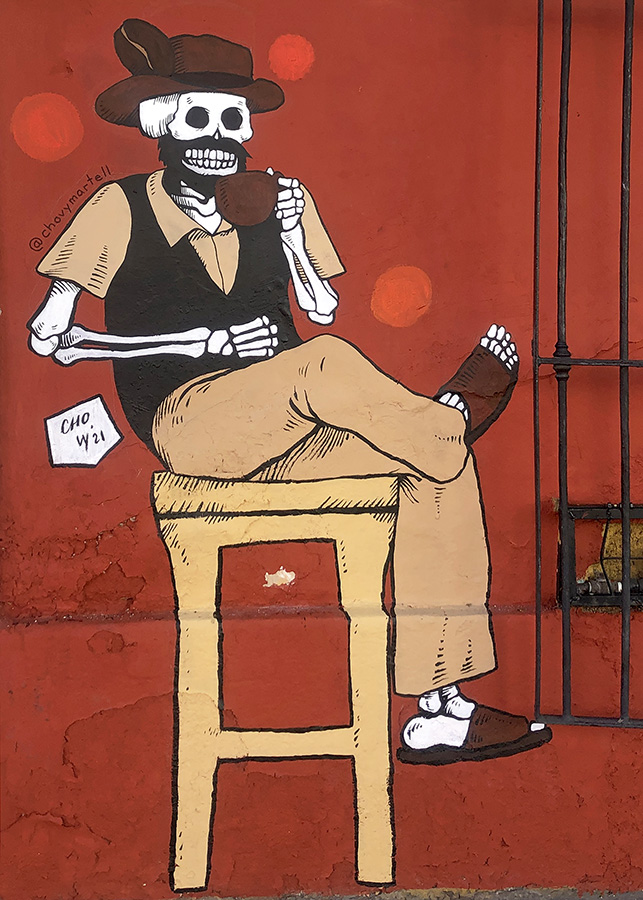
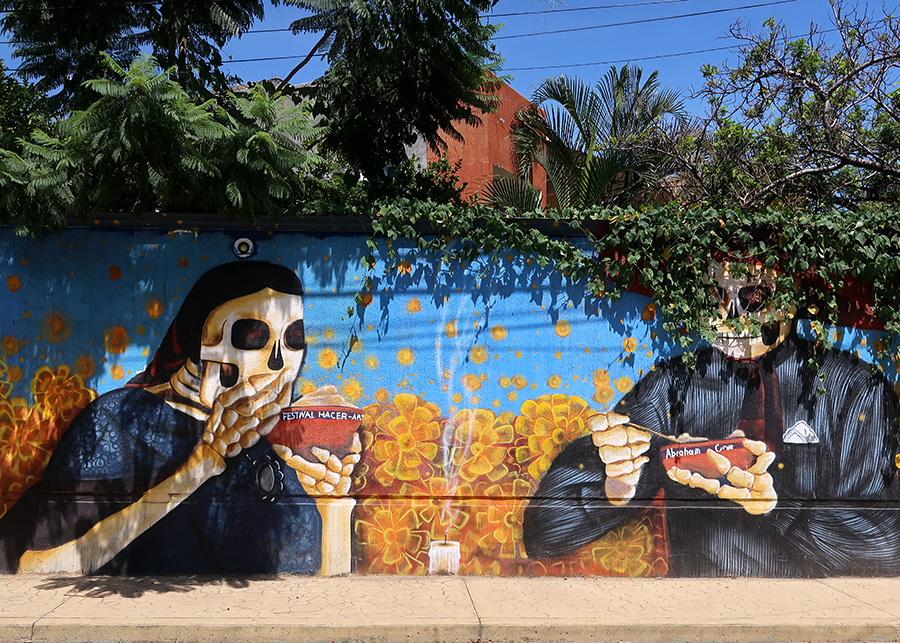
They come to sing and dance, contemplate life and death, and be with loved ones.

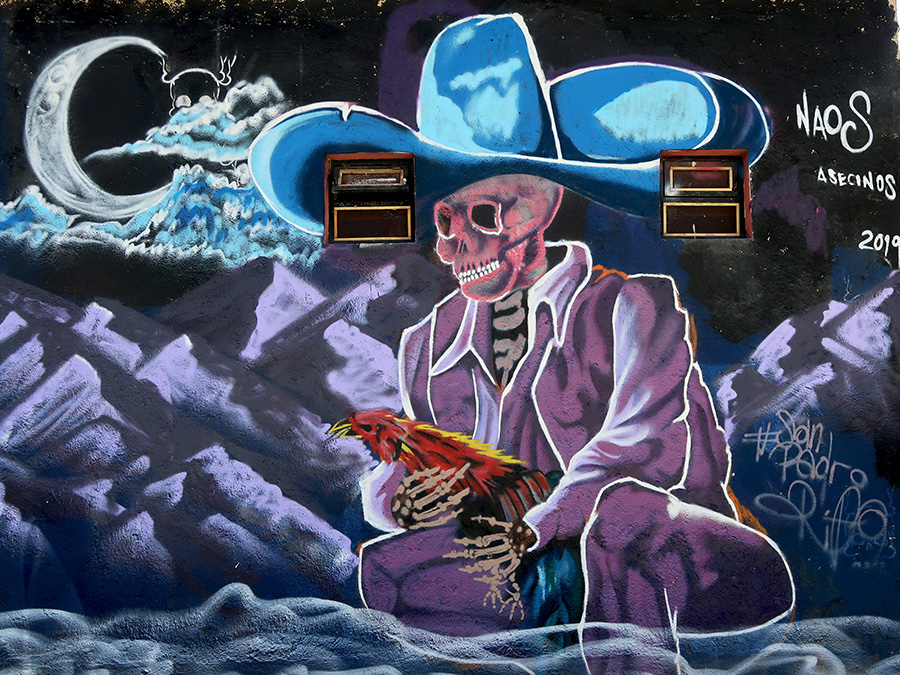

Our hearts are filled with joy to welcome them to the fiesta we have lovingly prepared in their honor.
Posted in Celebrations, Creativity, Culture, Food, Markets, Transportation, Travel & Tourism, tagged barbacoa, COVID-19 fallout, Covid-19 mural, Day in the country, day of the dead bread, Mexico, murals, Oaxaca, pan de muerto, photos, popular travel destinations, skeletons, street art, tuk tuk, urban art, Villa de Zaachila, wall art on October 21, 2021| 10 Comments »
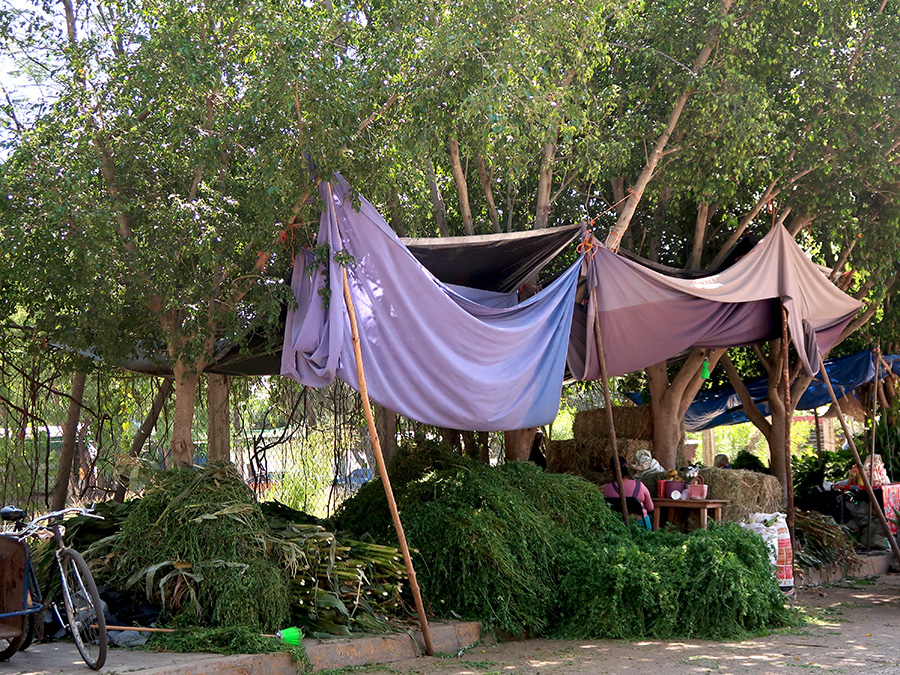
Thursday is market day in Villa de Zaachila. Thus, once we turned off the carretera, we crawled our way into town joining scores of other cars, trucks, tuk tuks, motorcycles, bicycles, pedestrians, dogs, and the occasional goat. The scenes were pure country village. Once parked, we meandered our way along the street stalls, stopping to examine their wares and chat with vendors.

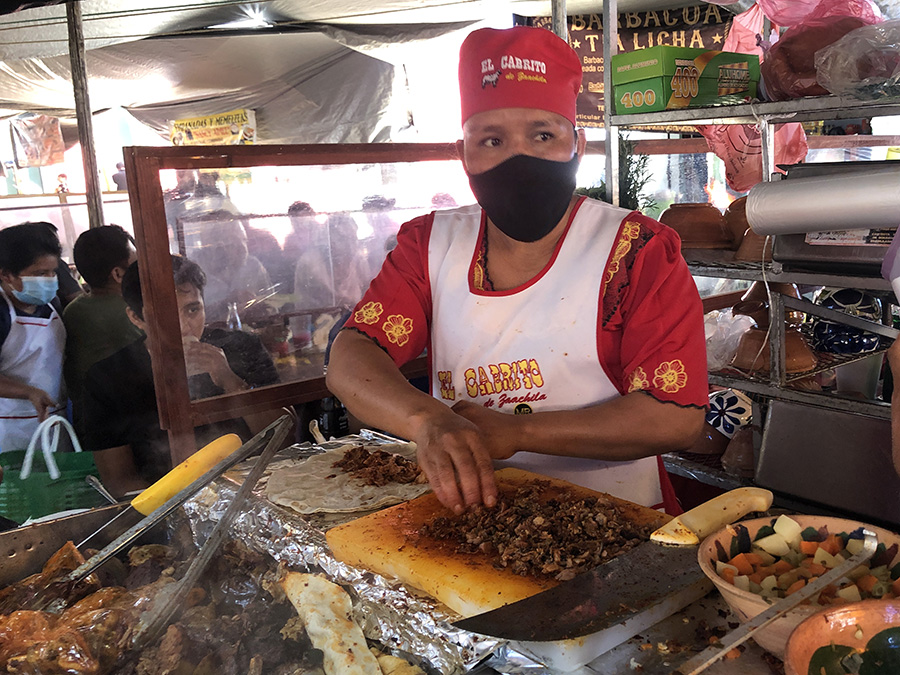
However, our stomachs were grumbling and our trajectory was set — Zaachila’s mouthwatering barbacoa de chivo (goat) beckoned!

Once sated, we went in search of Zaachila’s beautifully decorated pan de muerto (Day of the Dead bread). It was still a little early in the season but, zigzagging up and down the bread aisles, we eventually found a couple of vendors and bought a few to be placed on our ofrendas.

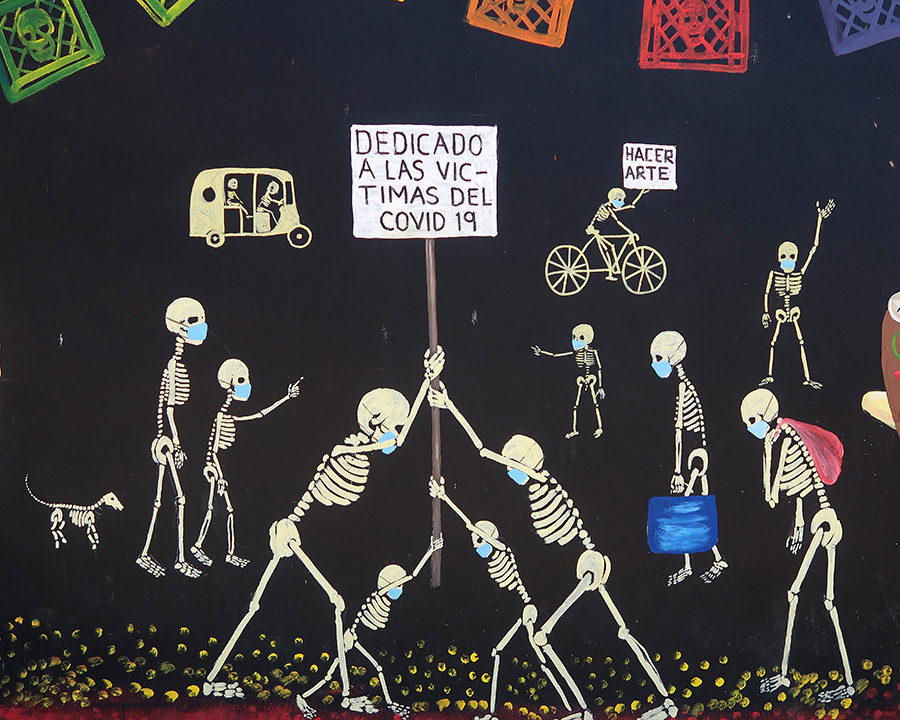
Being members of the “clean plate club” and needing to walk off our very filling lunch, we walked toward the Templo de Santa Maria de la Natividad to begin the Muertos mural walk to the Panteón. However, before even reaching the church, we were stopped in our tracks by this massive and incredibly moving mural dedicated to the victims of Covid-19.

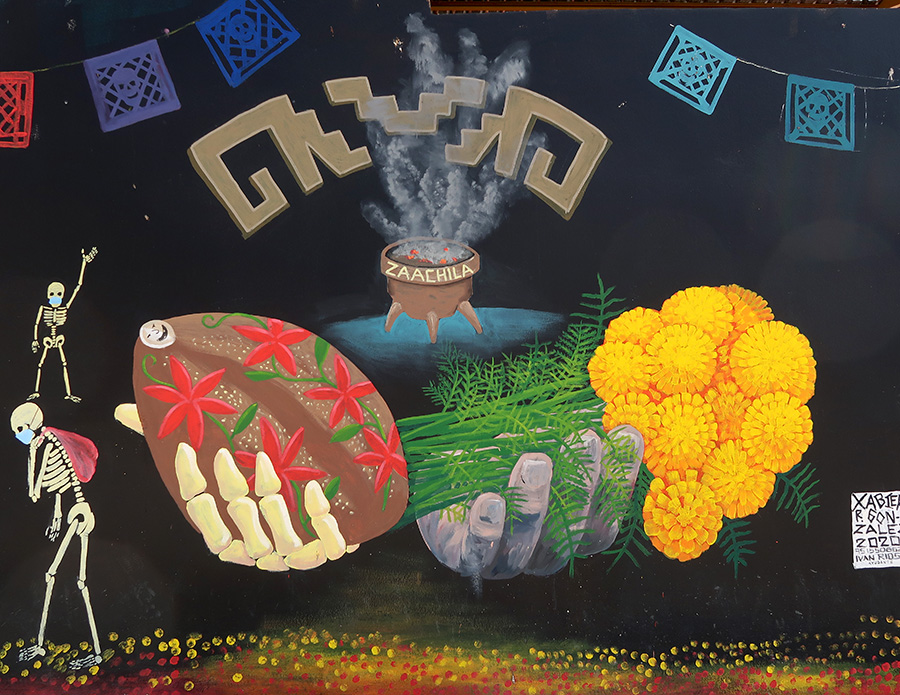

New Day of the Dead murals had been painted along calle Coquiza since I was last in Zaachila two years ago and I will post pictures later. In the meantime, next stop — a mezcal palenque in Zimatlán de Álvarez.
Posted in Creativity, Culture, Protests, Tragedy, Travel & Tourism, Violence, tagged Ayotzinapa, Black and white photography, bolero, disappeared, Mexico, normalistas, Oaxaca, photos, protest stencil art, shoeshiner, stencils, street art, student teachers, Subterráneos Art Collective, urban art, wall art on October 7, 2021| 4 Comments »
Opposite Santo Domingo, a bolero (shoeshiner) walks up Macedonio Alcalá to work…
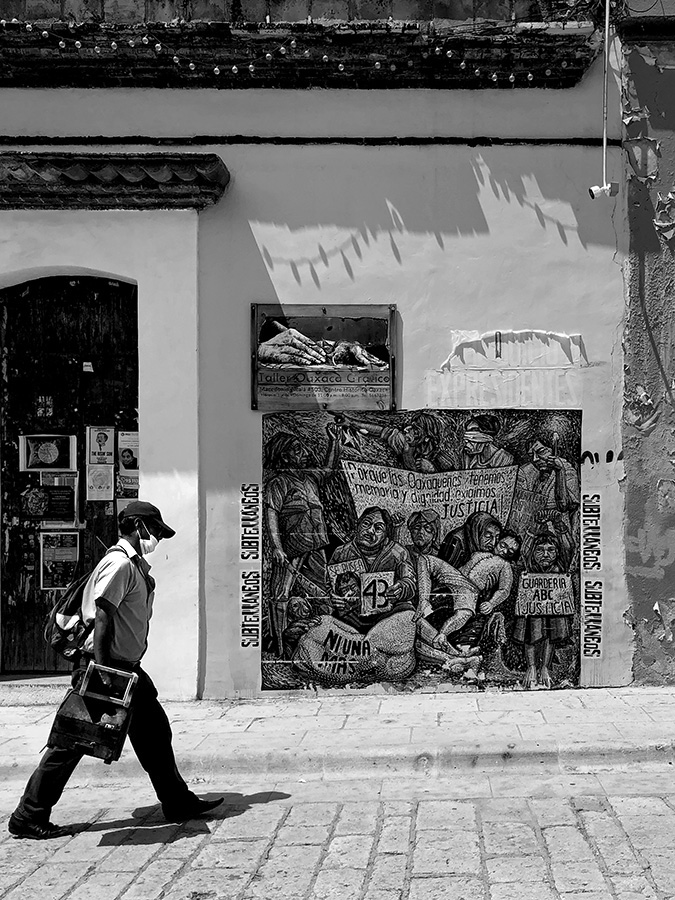
As the faces on the wall cry out, “Because we people of Oaxaca have memory and dignity, we demand justice” for the missing Ayotzinapa 43 normalistas (student teachers).
Posted in Creativity, Culture, Politics, tagged defaced mural, graffiti, Mexico, mural, murals, Oaxaca, photos, public art, street art, Tlacolulokos, urban art, wall art on October 2, 2021| 13 Comments »
Sometime last night, the recently inaugurated mural by the Tlacolulokos was defaced. And we are left asking, why?


The message, purportedly by anarchists (given the presence of their symbol) is calling the artists “Oaxaca indigenous traitors.” Due to their collaboration on the mural with the Canadian government??? I don’t know. But what I do know is that I am sad and angry at this attack on the right of artists to create without censorship or intimidation.
Update: The mural has been repaired. However, click HERE for a communiqué regarding why it was defaced.
Posted in Agriculture, Celebrations, Creativity, Culture, Food, Travel & Tourism, tagged #DíaNacionalDelMaíz, corn, Día Nacional del Maíz, maíz, Mexico, murals, National Day of Corn, Oaxaca, photos, popular travel destinations on September 29, 2021| 2 Comments »
Feliz Día Nacional del Maíz (Happy National Day of Corn).
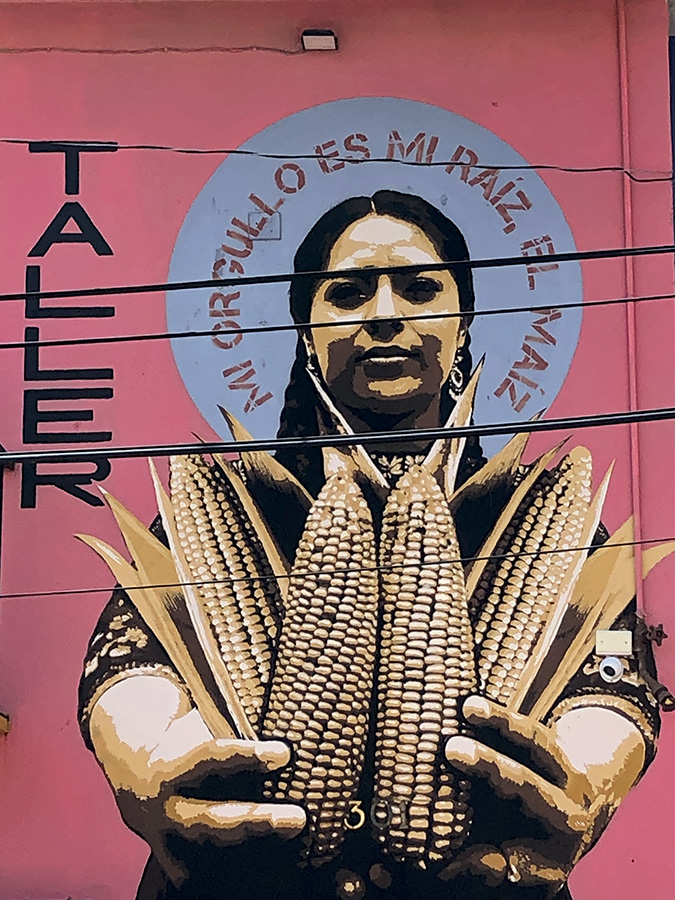
Mi orgullo es mi raiz, el maíz (My pride is my root, the corn).

But what would corn be without the hands that have cared for it for hundreds of years. — CONABIO (National Commission for the Knowledge and Use of Biodiversity)

Sin Maíz No Hay País (Without corn there is no country)!
Posted in Celebrations, Creativity, Culture, Neighborhoods, People, Travel & Tourism, tagged Barrio de Jalatlaco, Canada, Dario Canul (artist), Encuentros indígenas: Canada-Oaxaca 2021, indigenous artists, Mexico, murals, Nuestro sol se ha ido (mural), Oaxaca, photos, popular travel destinations, Rolande Souliere (artist), street art, Tlacolulokos, urban art, wall art on September 21, 2021| 9 Comments »
Under the shade of the 361 year old Coquito de la Iglesia de Jalatlaco tree, onlookers (and bloggers like yours truly), dignitaries, media, and the artists of the Tlacolulokos collective gathered for the inauguration of the previously mentioned new mural in Jalatlaco.

The mural, “Nuestro sol se ha ido” (Our sun has gone) is a collaboration between Rolande Souliere of the “Anishinaabe” people in Canada and the Zapotec Tlacolulokos urban art collective from Oaxaca’s central valley.

The mural’s inauguration was live streamed on Facebook on the Secretaría de las Culturas y Artes de Oaxaca page.
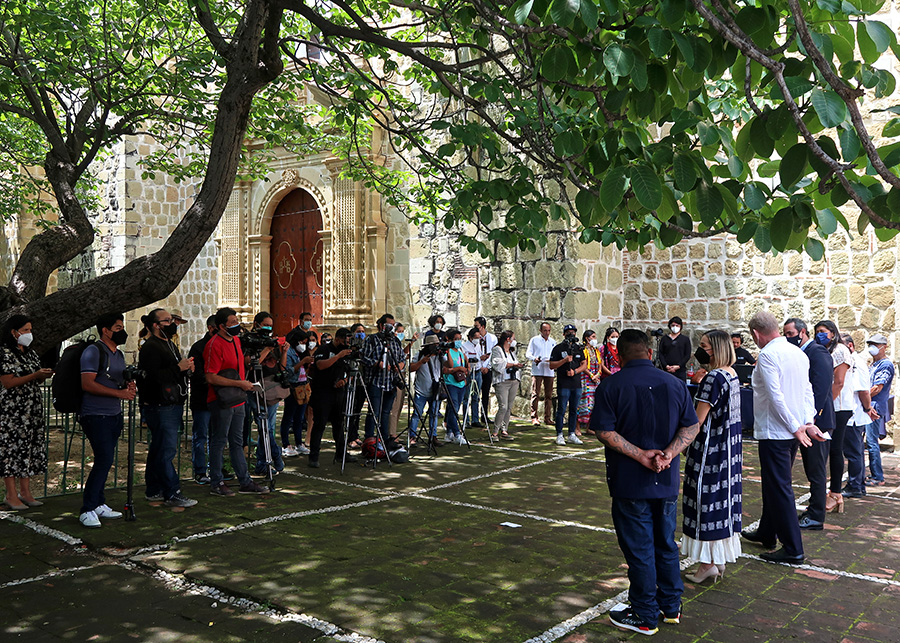
Unfortunately, Rolande Souliere could not travel to Oaxaca. However she described some of the symbolism of the mural: “We decided to portray the mythological beings of the Canadian thunderbird and the Zapotec deity of the Cosijo throne, these fantastic beings are responsible for the thunder and rain that the world experiences and that come together thanks to the clouds…. symbolic imageries such as Zapotec patterns, the route of thunder and the four directions of the first nations represented by the colors red, black, yellow and white… important signifiers in both communities since they represent the continuation of indigenous culture in contemporary society.”

Dario Canul, representative of the Tlacolulokos colective further explained, “The mural, ‘Our sun has gone,’ is a representation of celebration, life, rain, thunder, and tears that all indigenous peoples have shed over time.”

The inauguration launched the 2-1/2 week long Encuentros indígenas: Canadá-Oaxaca 2021 (Indigenous encounters: Canada-Oaxaca 2021) — a series of activities in Oaxaca city and surrounding villages — that runs from September 20 to October 8, 2021.

In remarks by Graeme C. Clark, the Canadian Ambassador, at the inaugural event and reports from this article, the collaboration seems to be an expression of the mea culpa by the Canadian government with regard to their historic treatment of the first peoples of the territory that is now called Canada. Better late than never. The indigenous peoples of the USA are still waiting.
Posted in Creativity, Culture, Neighborhoods, Travel & Tourism, tagged artists at work, Barrio de Jalatlaco, Mexico, mural painting, murals, Oaxaca, photos, popular travel destinations, street art, Tlacolulokos, urban art, wall art, work in progress on September 17, 2021| 5 Comments »
Today, I decided to change up what has become my Friday shopping routine. Instead of walking north to the fruit and veggie vendor, I headed south to explore the Friday tianguis — relocated from Llano Park a couple of years ago and now residing near the Polideportivo.
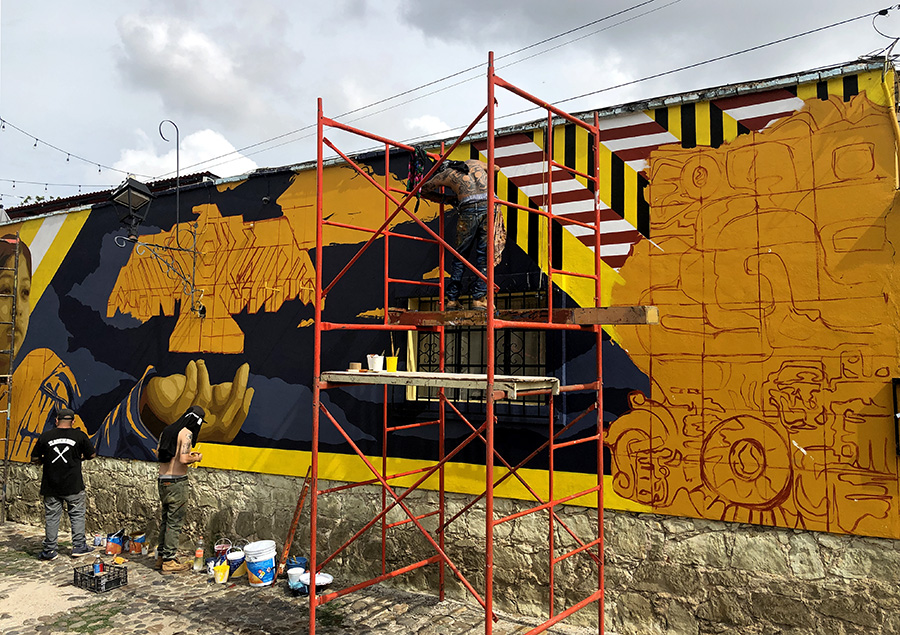
And, what an excellent decision it was! Only blocks from home, I came across a massive mural in progress on Calle de la Noche Triste at the corner of Calle Ignacio Aldama.
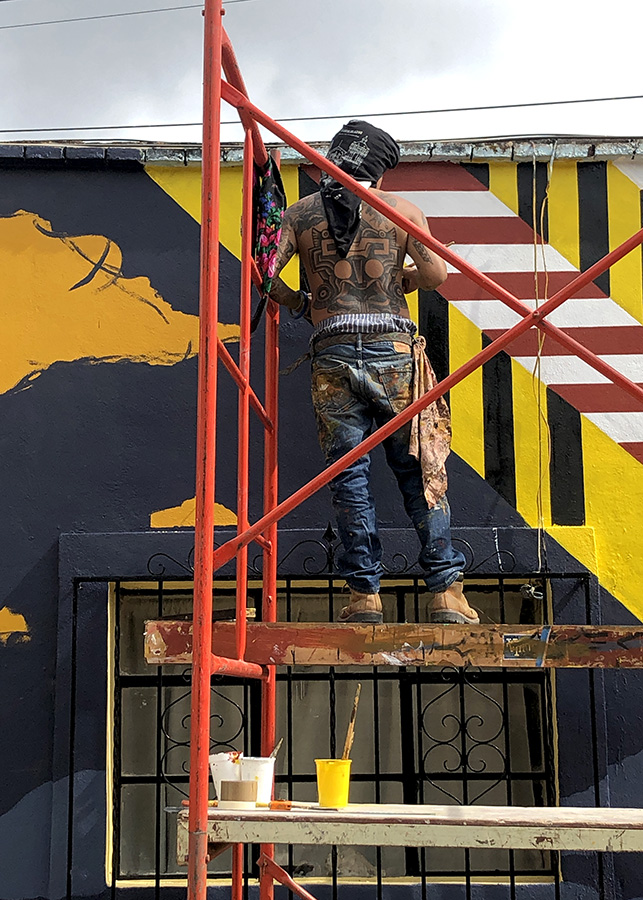
With scaffolding and tools of the trade in place, men were at work.
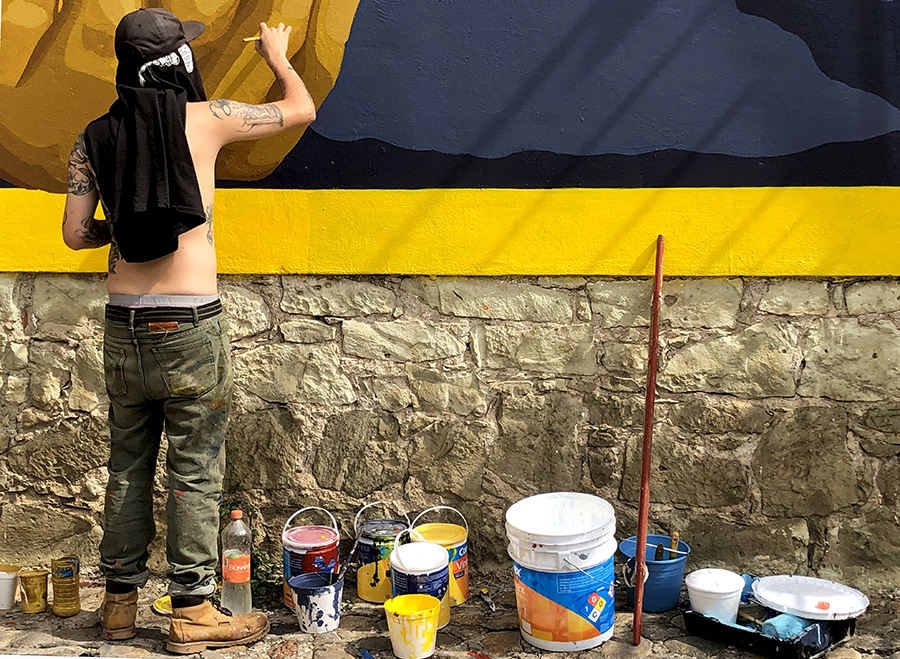
The style looked familiar, so I stopped to ask, and discovered they were the Tlacolulokos – my favorite artist collective from Tlacolula de Matamoros!

I think the guy I spoke to was a bit taken aback to find that this gringa was quite familiar with their work — including the murals for the Downtown Central Library in Los Angeles, California. Stay tuned…
Posted in Celebrations, Creativity, Culture, Holidays, Neighborhoods, Travel & Tourism, tagged Barrio de Jalatlaco, El Mes de la Patria, Mexican flag, Mexican Independence Day, Mexico, Oaxaca, patriotic decorations, photos, popular travel destinations on September 9, 2021| Leave a Comment »
Decorations in green, white, and red began going up the first of September.

No, it’s not beginning to look a lot like Christmas.
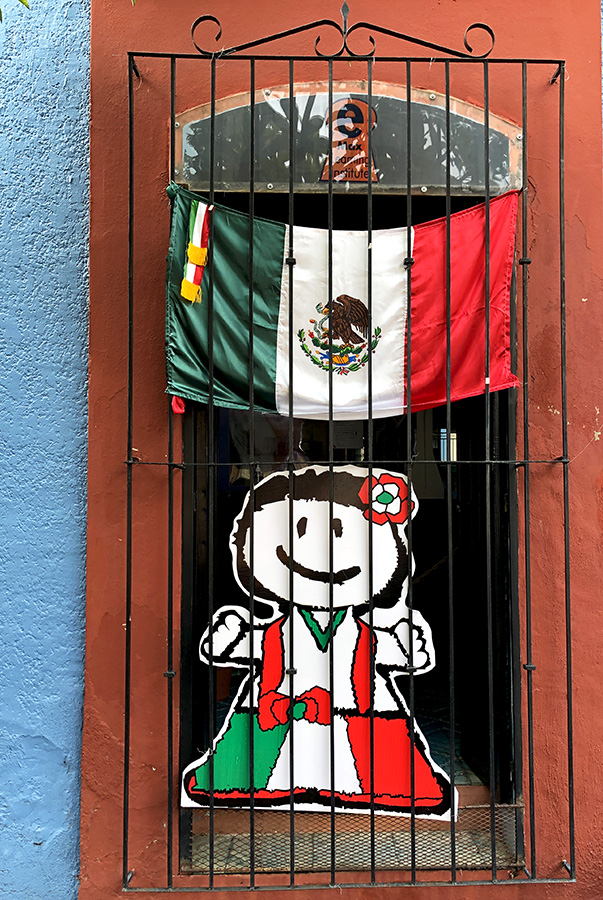
The entire month of September is designated the Mes de la Patria — a month celebrating Mexico’s independence from Spain — a war which began on September 16 1810 and finally ended 200 years ago on September 27, 1821.

Posted in Creativity, Culture, Travel & Tourism, tagged Barrio de Jalatlaco, faces, Lord Acton quote, Mexico, murals, Oaxaca, Octavio Paz quote, photos, street art, urban art, wall art on August 30, 2021| 8 Comments »
In the first chapter of The Labyrinth of Solitude, Octavio Paz reflects on the face of an old man… “features are seen as a face, and later as a mask, a meaning, a history.”
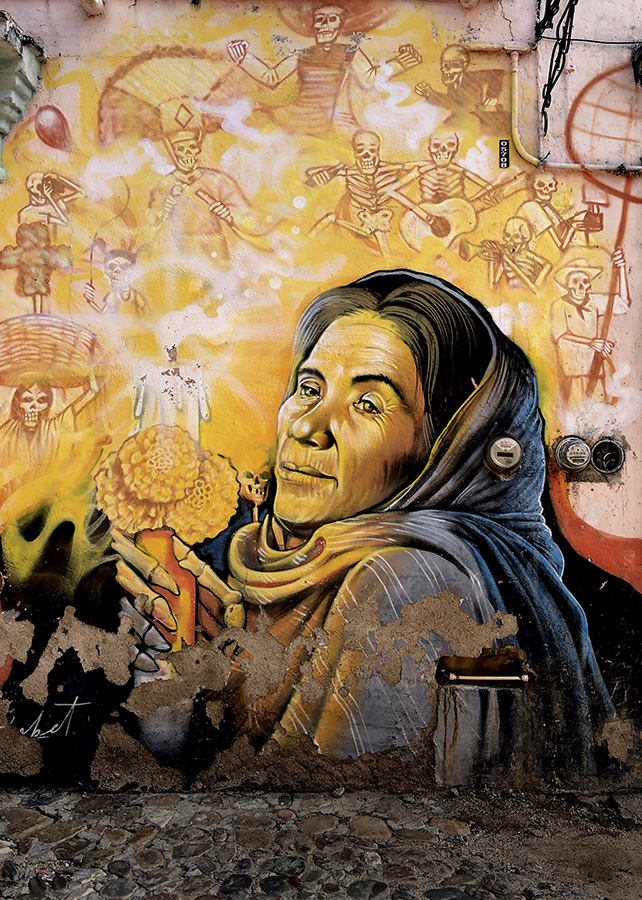
And John Dalberg-Acton wrote, “History is not a burden on the memory but an illumination of the soul.”
Posted in Creativity, Environment, Neighborhoods, Travel & Tourism, tagged artists, artists taking action, Barrio de Jalatlaco, climate action, environmentalism, hearts, iconic imagery, Llano Park, Mexico, Oaxaca, photos, plastic recycling, popular travel destinations, recycling, recycling hearts, saving the planet, taking action, urban art on August 3, 2021| 6 Comments »
Recycling in Oaxaca continues — slowly but surely. But, honestly, who can resist filling these hearts around Parque El Llano/Paseo Juarez?


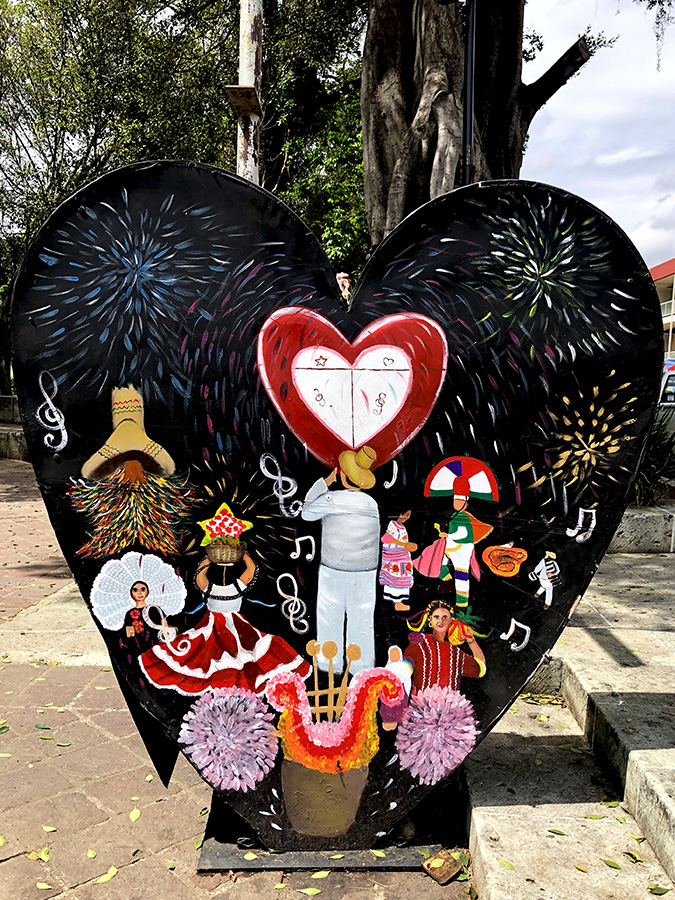
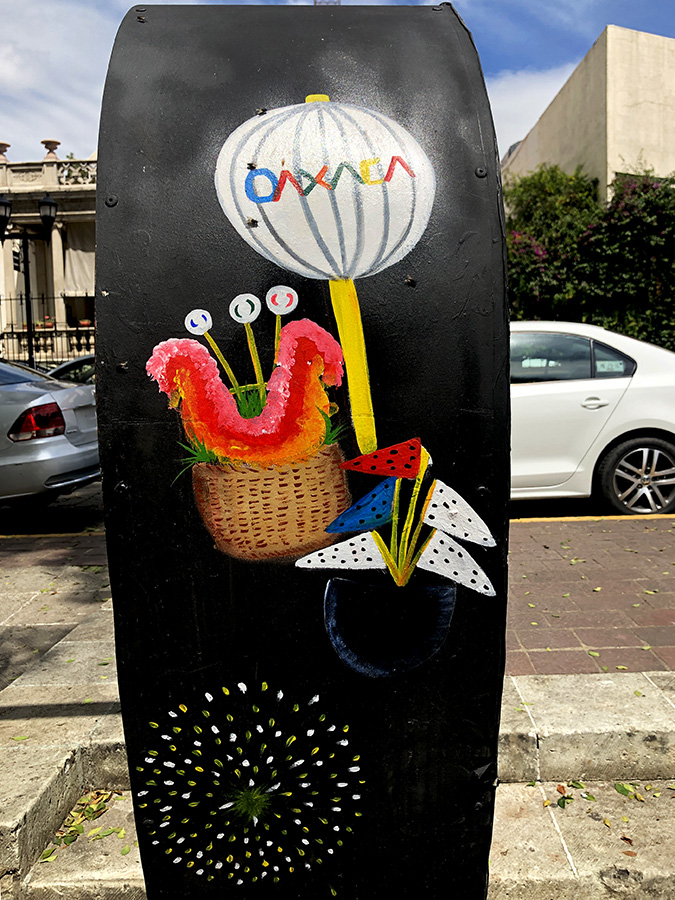
Here in Jalatlaco, we are not asked to separate our trash, but I think I will begin taking my plastic agua mineral (mineral water) bottles down to this heart next to the Templo de San Matías Jalatlaco.

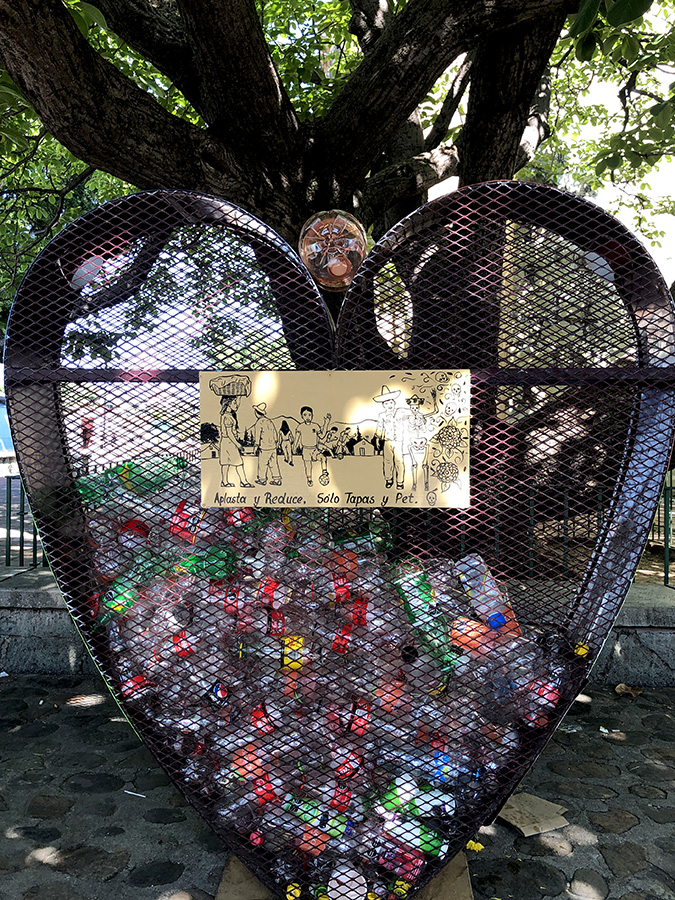

This is a program, begun in 2019, by the city’s Desarrollo Integral de la Familia, a governmental agency charged with strengthening and developing the welfare of the Mexican families.


 Mexican Peso Converter

