Except for the patter of rain and the sound of the occasional car on wet pavement, all is gray and quiet on this Good Friday in my San Francisco Bay Area home. I miss the colorful and creative sights and sounds of Viernes Santo in Oaxaca. Thus, today finds me looking back to the Santo Viacrucis (Holy Way of the Cross) procession last year in Barrio de Jalatlaco on Viernes Santo.
8th Station of the Cross where Jesús meets the women of Jerusalem.
1st Station of the Cross where Jesús is condemned to death.
7th Station of the Cross where Jesús falls for the second time.
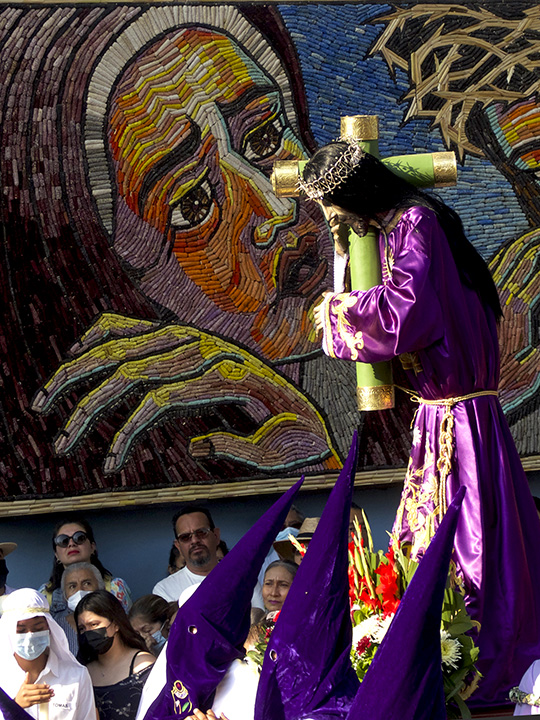
Jesús carrying the cross through the streets of the Jalatlaco neighborhood.
John the Baptist follows Jesús.
Mary Magdalene following Jesús.
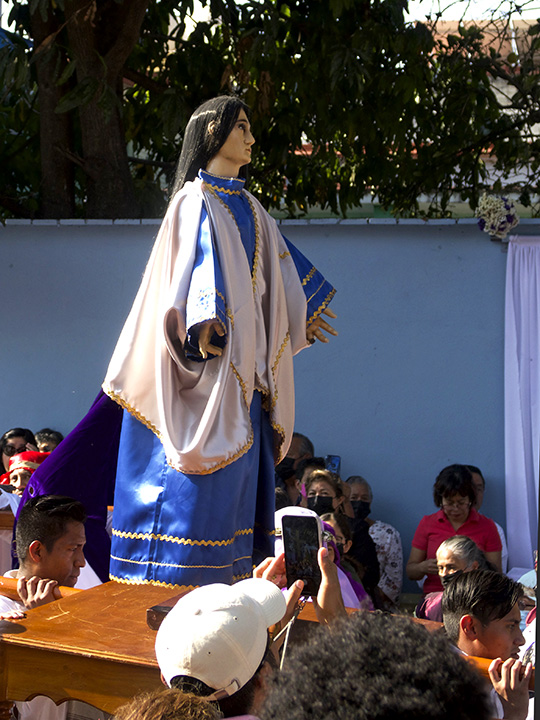
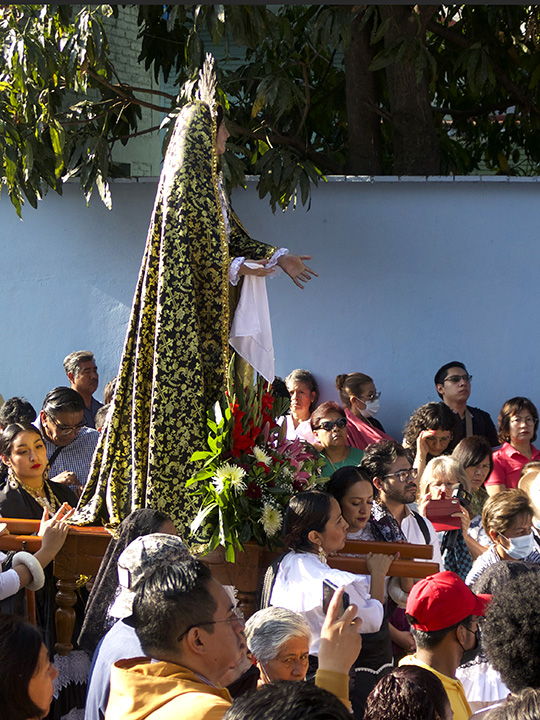
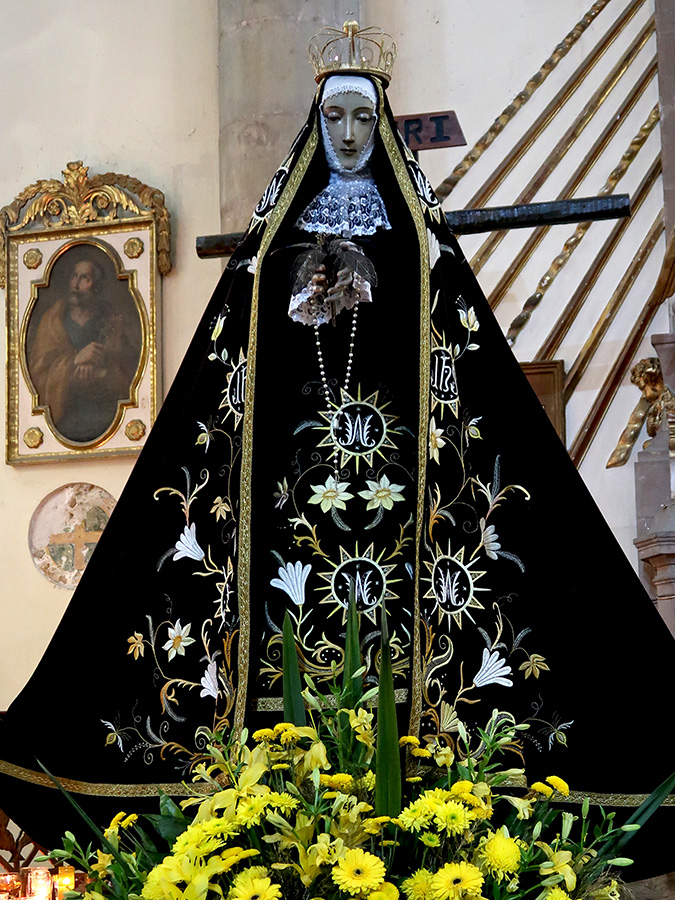
María heading toward her final encuentro (meeting) with her son.
Jesús enroute to his final encuentro (meeting) with his mother.
María and Jesús in their final encuentro (meeting).
While I don’t subscribe to any religion, the people of Oaxaca, their devotion, and their creativity in celebrating their faith always moves me.
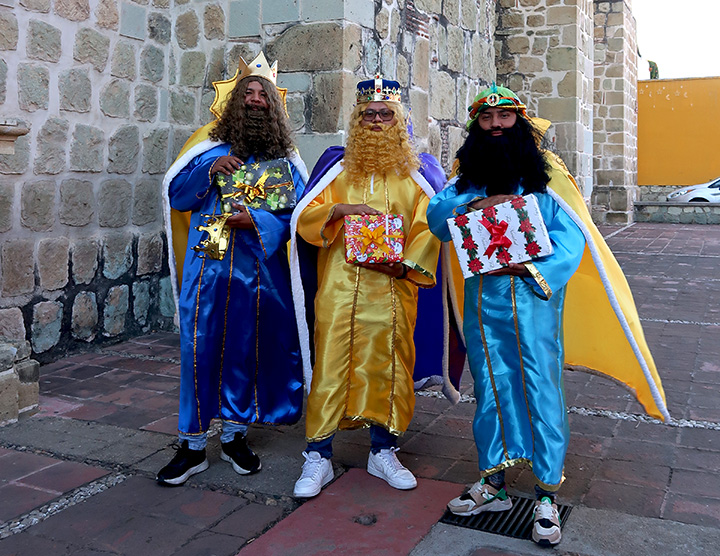
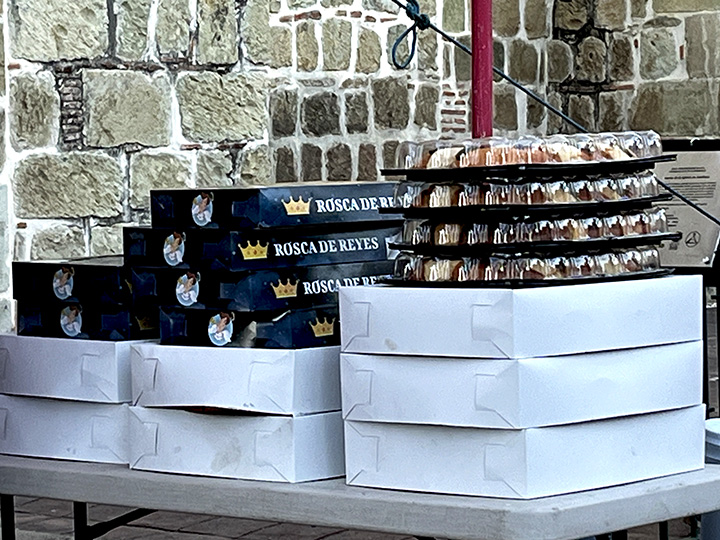
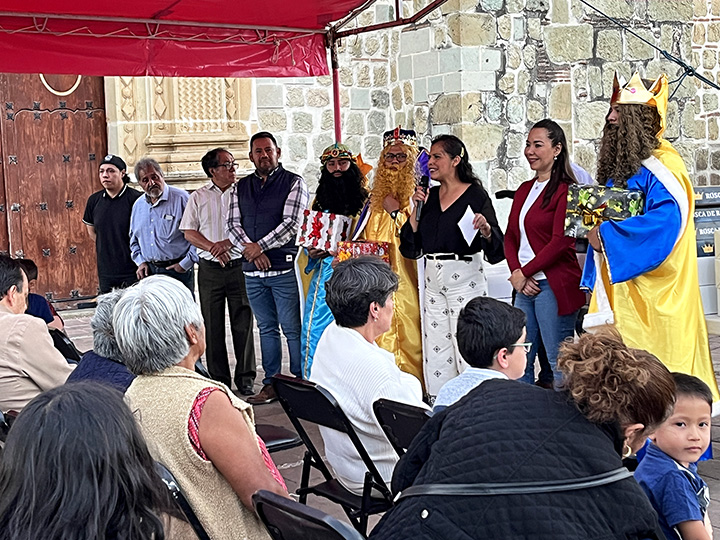
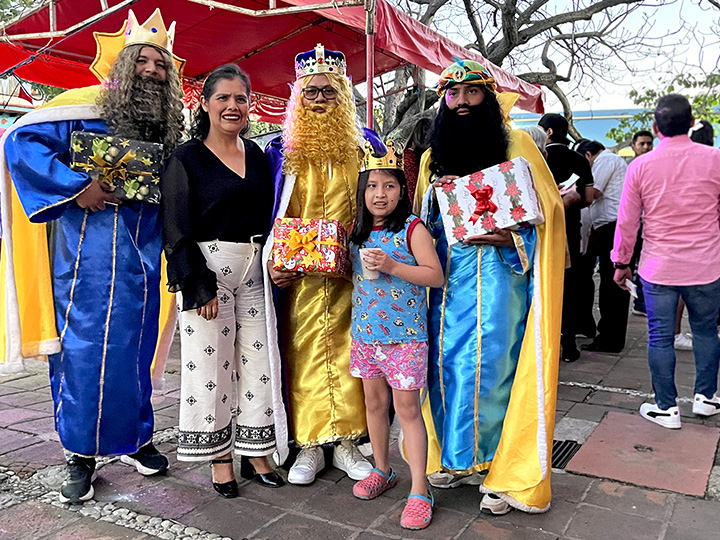
Speakers blared through the streets of Barrio de Jalatlaco yesterday morning announcing a celebration of Día de Reyes Magos in the church atrium at 5 PM. There were photo-ops galore as neighbors gathered; Melchor, Gaspar, and Baltazar posed; boxes of Roscas de Reyes (Three Kings cake) were delivered; politicians spoke; cake was eaten; and toys were distributed.
Tradition dictates the person(s) finding a baby Jesus figurine hidden in their slice of cake must host a tamalada (tamales party) on February 2nd, Día de la Candelaria (Candlemas). As always seems to happen, I was a “lucky” recipient of the plastic Jesus. Alas, I will be in California. Hmmm… maybe a shopping trip to Cardenas Markets is on the agenda.
Jean-Baptiste Racine’s quote, “Life is a comedy to those who think, a tragedy to those who feel” comes to mind when I reflect on 2023. Looking at the state of the world, I think many of us have spent the year vacillating between laughing and crying. However, on this New Year’s Eve, I prefer to remember the celebrations and places I experienced with family and friends, old and new. These are the times that nourish my soul and empower me to welcome 2024.
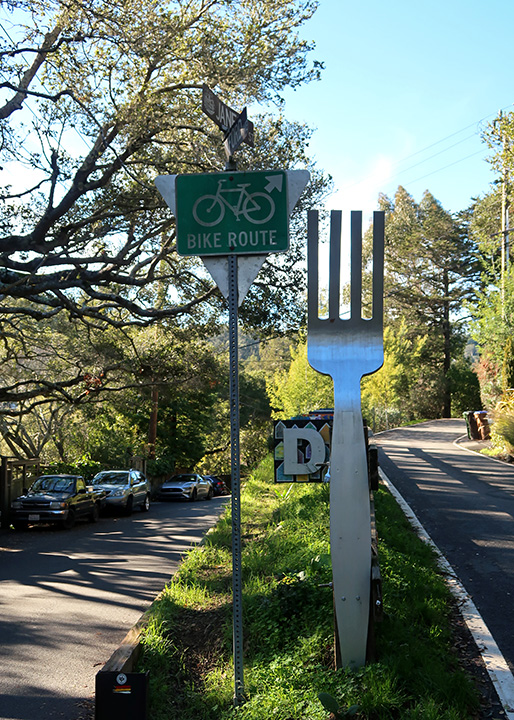
January 2023 – Mill Valley, CA. “Fork in the road.” I took the high road.
February 2023 – Oaxaca de Juárez. Archivo Histórico del Estado de Oaxaca.
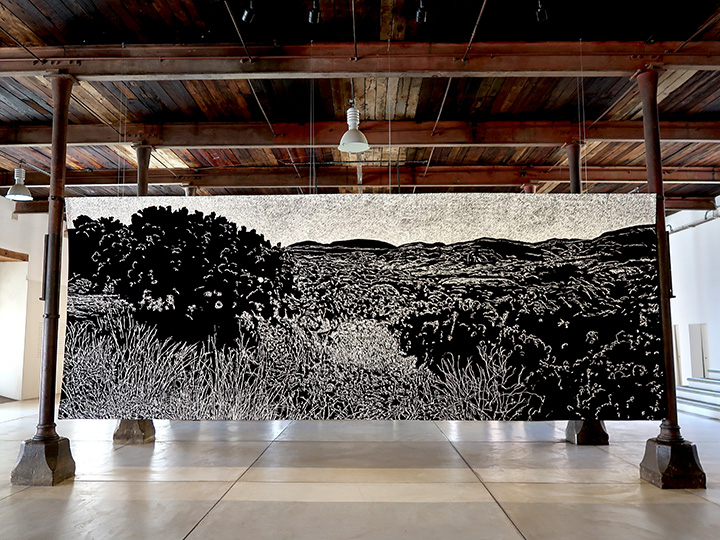
March 2023 – San Agustín Etla, Oaxaca. “Seamus Heaney & Jan Hendrix en Yagul” exhibition at Centro de las Artes de San Agustín (CASA).
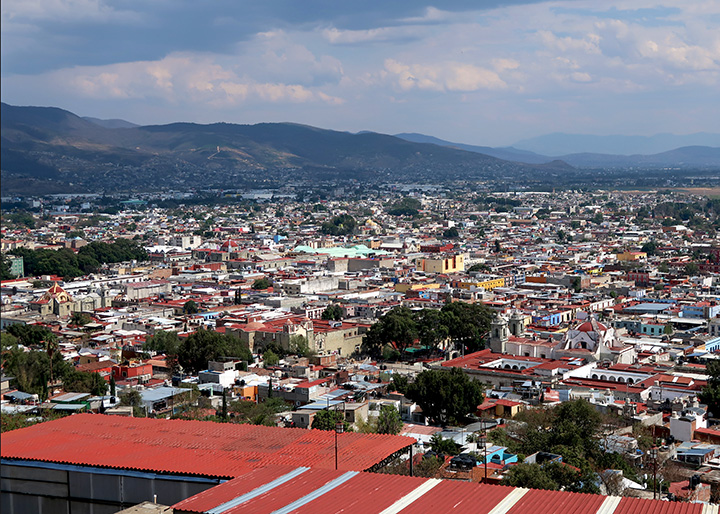
April 2023 – Oaxaca de Juárez. View from El Mirador Restaurante.
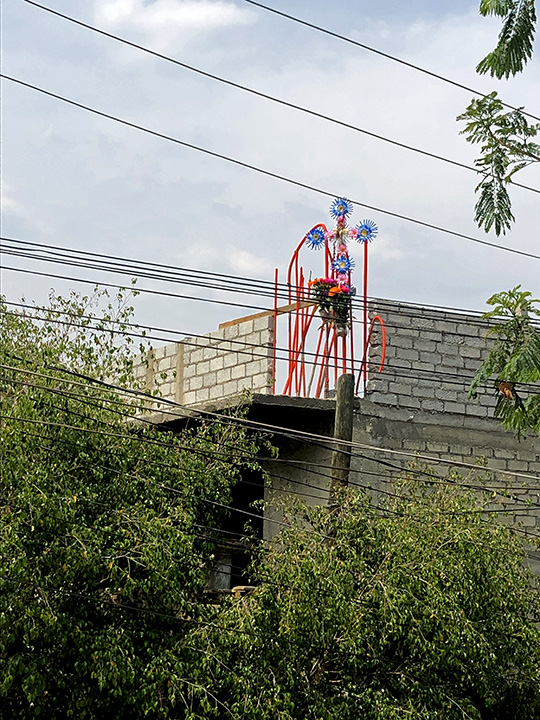
May 2023 – Oaxaca de Juárez. Cross on construction site in honor of Día de la Santa Cruz.
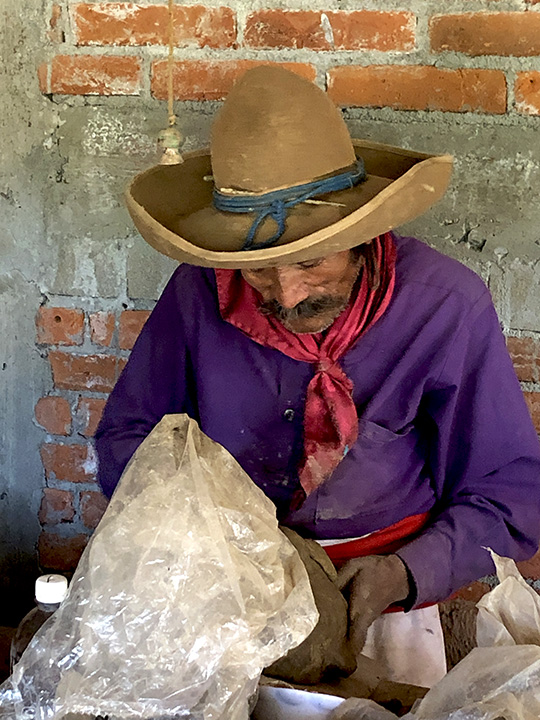
June 2023 – San Antonino Castillo Velasco, Oaxaca. Don José Garcia Antonío (aka, the blind potter).
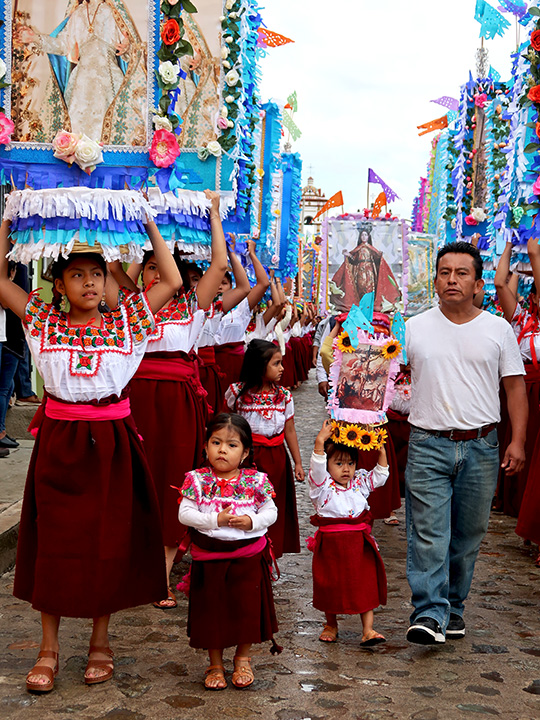
July 2023 – Teotitlán del Valle, Oaxaca. Convite welcoming people to the festival honoring La Preciosa Sangre de Nuestro Señor Jesucristo.
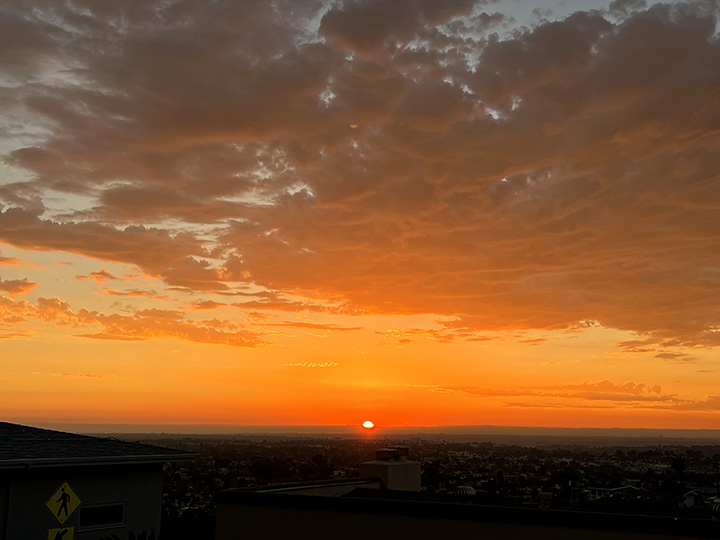
August 2023 – La Mesa, CA. Sunset over the Pacific Ocean.
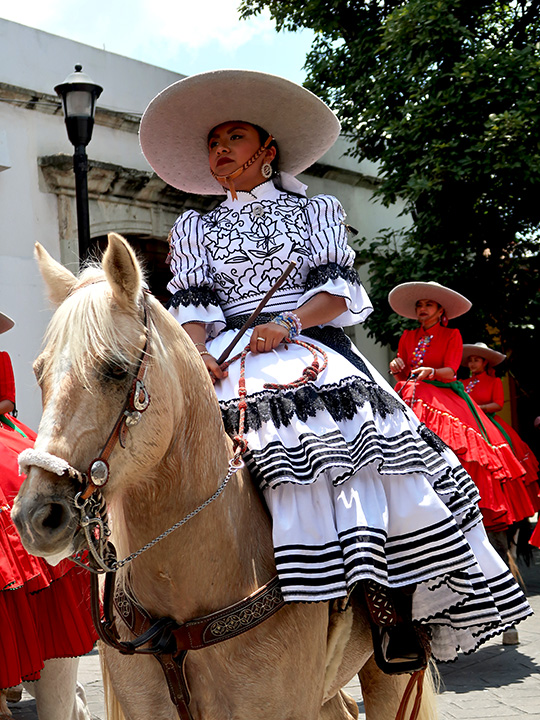
September 2023 – Oaxaca de Juárez. Escaramuzas riding in the Mexican Independence Day parade.
October 2023 – Oaxaca de Juárez. “Nelson” one of the Oaxaca Guerreros baseball team’s mascots.
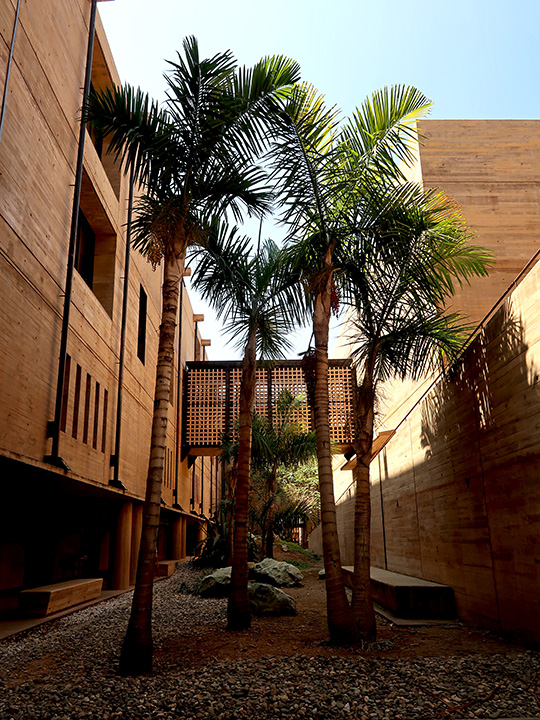
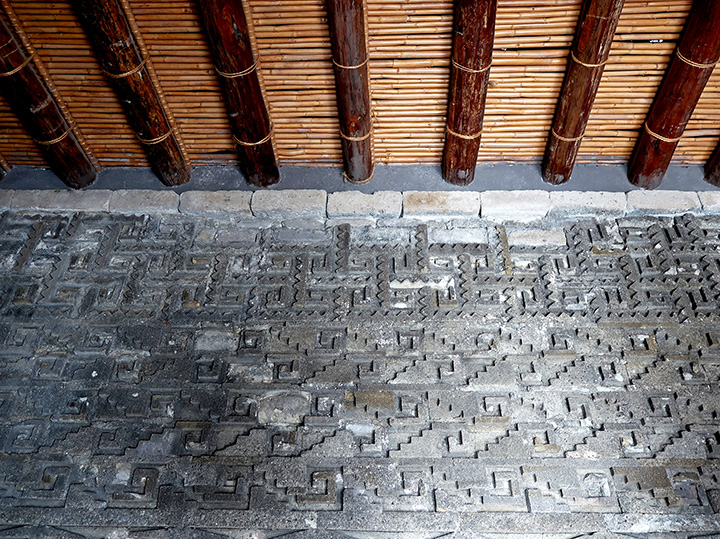
November 2023 – Villa de Mitla, Oaxaca. Interior wall and ceiling in the “Church Group” at the Mitla archeological site.
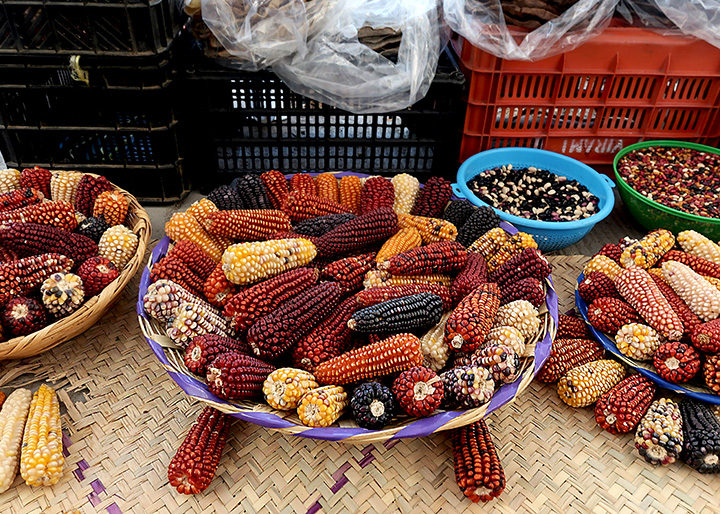
December 2023 – Unión Zapata, Oaxaca. Feria de la Agrobiodiversidad en Oaxaca.
Many thanks to all the wonderful readers of my blog; I am constantly amazed and gratified you choose to stop by. On this New Year’s Eve, with a renewed appreciation for the small things that bring joy and give life meaning, I wish you all, ¡Feliz Año Nuevo!
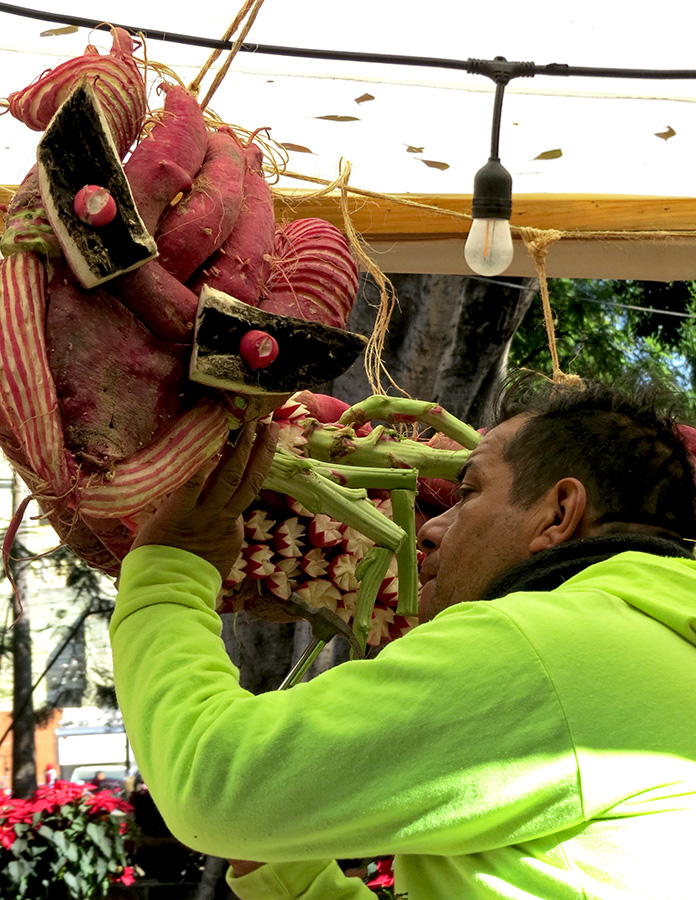
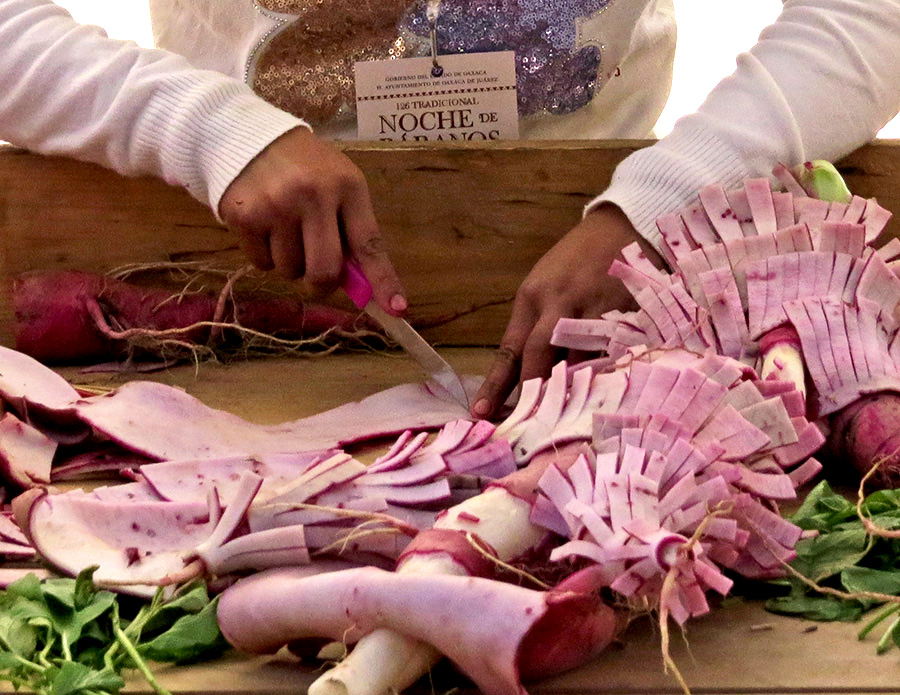
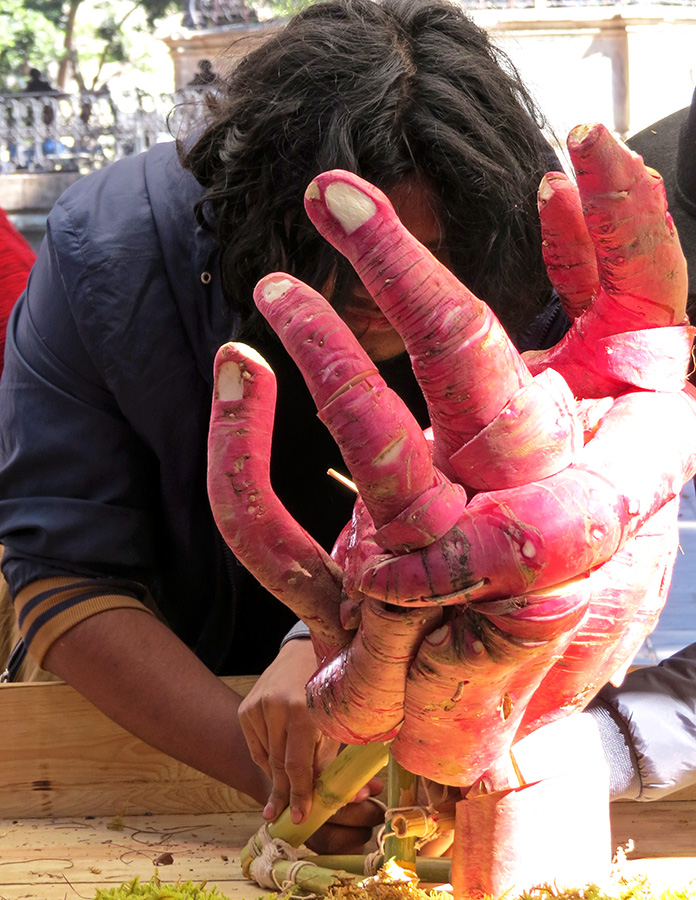
If it’s December 23, it must be the “only in Oaxaca” Noche de Rábanos. I love going in the morning to watch these skilled artists and their imaginations at work creating exquisite sculptures out of radishes — of all things!
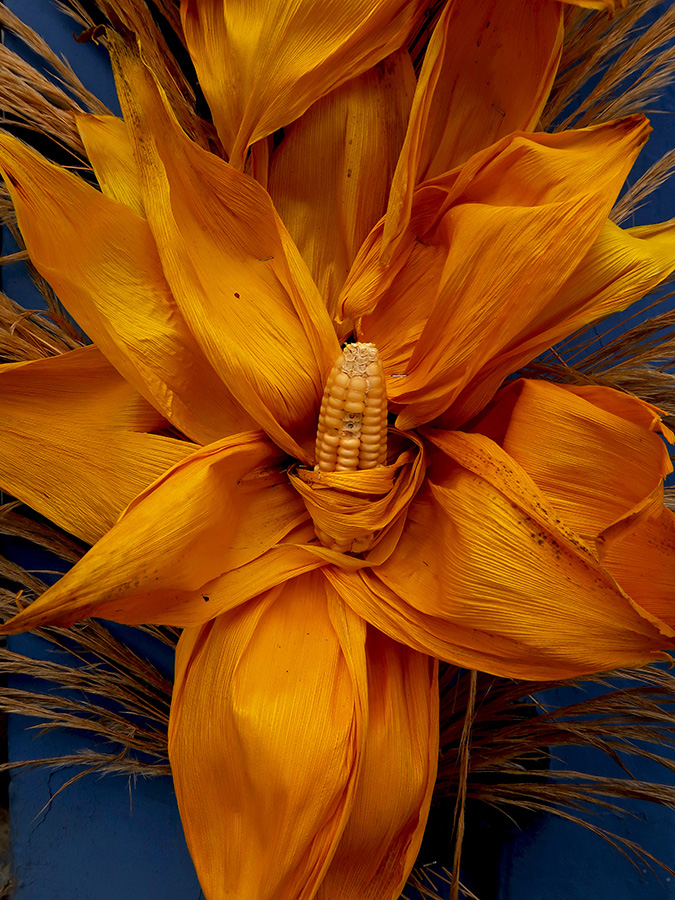
And, there weren’t just radishes. Creations of totomoxle (dried corn husks) and flor inmortal (dried flowers) were also on display. Stay tuned…
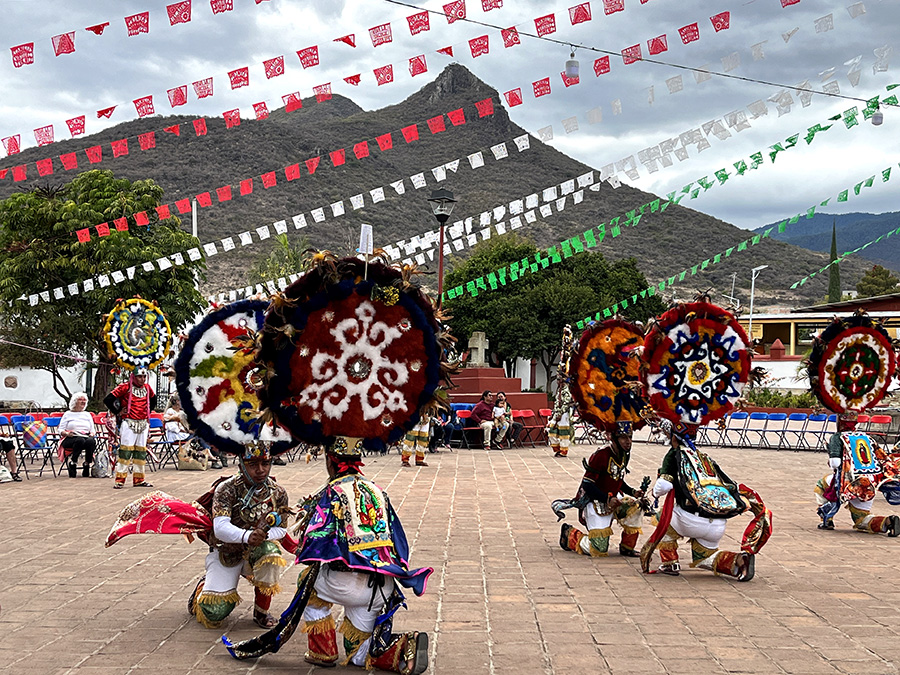
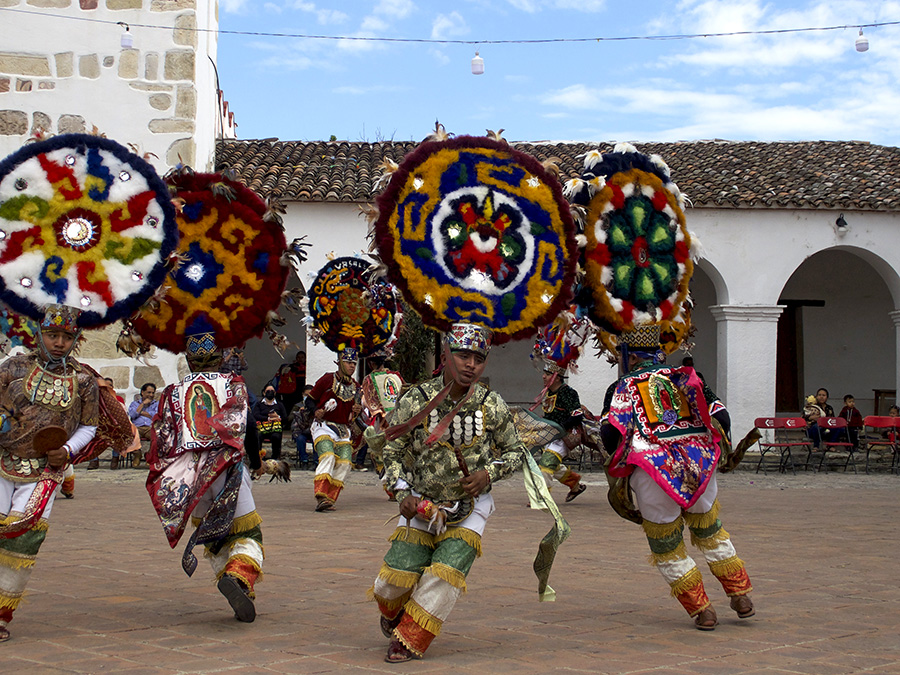
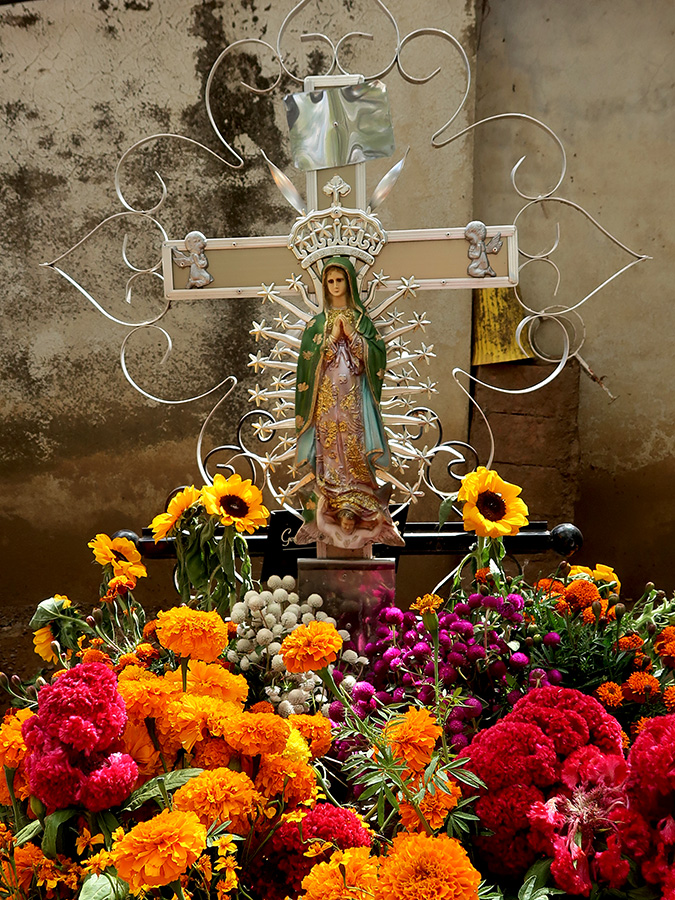
All over Mexico on December 12th the country pauses to honor and celebrate the Virgin de Guadalupe, also known as the Queen of Mexico, Empress of America, and patron saint of Mexico. And, there is no place I would rather be on this day than in Teotitlán del Valle watching the Danza de la Pluma. The dance is a ritual reenactment of the battles between the Aztec and the Spanish conquistadors. In this Zapotec village, the dancers make a 3-year religious commitment to perform it at the four major religious festivals each year, including Guadalupe.
Members of the Danza de la Pluma Promesa 2022-2024 entering the atrium of Templo de la Preciosa Sangre de Cristo.
Malinche, Moctezuma, Doña Marina, and danzantes.
Dancing under the watchful gaze of the sacred mountain, Cerro Picacho, Quie Guia Betz in Zapotec.
Danzantes “leaning in” during one of the 40+ dances of the Danza de la Pluma.
Moctezuma preparing to leap during one of the dances.
Members of the Danza de la Pluma Promesa 2022-2024 and their band.
A profound muchisimas gracias to the people of Teotitlán del Valle for always being so warm and welcoming.
I’ve always liked Thanksgiving — and not just because, after I turned 12, my aunt would pour a little red wine in a shot glass for my cousin and me. It’s one of the least commercial US holidays, if one discounts the whole “black Friday” phenomenon. And, it isn’t wrapped in flag waving. It’s a day set aside for a communal sharing of Mother Nature’s bounty, counting our blessings, and acknowledging and giving thanks for the assistance of the dark-skinned original human inhabitants of the Americas. What a novel idea!
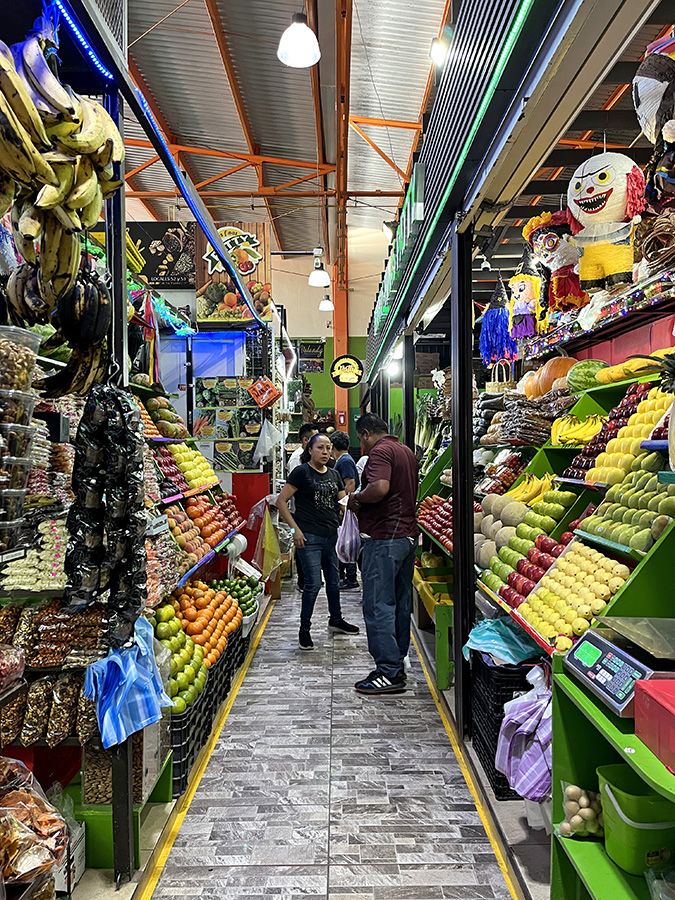
Puesto Patti at Mercado Hidalgo in Colonia Reforma.
I will be sharing this day with my apartment complex neighbors and some of our favorite friends. We have completed our major shopping expeditions in search of fresh cranberries, brussel sprouts, Vidalia onions, and other ingredients not commonly found in Oaxaca to contribute to our feast. (Thank you, Mercado Hidalgo!) Two small turkeys (2 because none of our ovens are big enough to fit a 20 lb turkey) have been purchased and we will all be contributing a side dish or two. It’s a busy day in this neighborhood!
Puesto Patti at Mercado Hidalgo in Colonia Reforma.
Besides being thankful for my loving and supportive family, wonderful friends (both old and new), dedicated and encouraging blog readers (Yes, you!), I’m extremely grateful for having the privilege of having a home living among people whose ancestors first cultivated corn 10,000 years ago in this beautiful valley.
Puesto Patti at Mercado Hidalgo in Colonia Reforma.
And, not only corn, archaeologists have discovered evidence of turkey domestication 1,500 years ago in the valley of Oaxaca’s Mitla Fortress. According to Gary Feinman, Field Museum curator of Mesoamerican anthropology, “It’s a bird very, very similar to what a lot of people are going to eat on Thursday.”
Wedding procession in Barrio Jalatlaco.
My cranberry/pear relish is in the refrigerator chilling. However, before making the dressing, I’m headed off to join with Little Amal in a calenda down the Macedonio Alcalá from Santo Domingo de Guzmán to Catedral de Nuestra Señora de la Asunción — bringing her message of “hope for displaced people everywhere, especially children who have been separated from their families.”
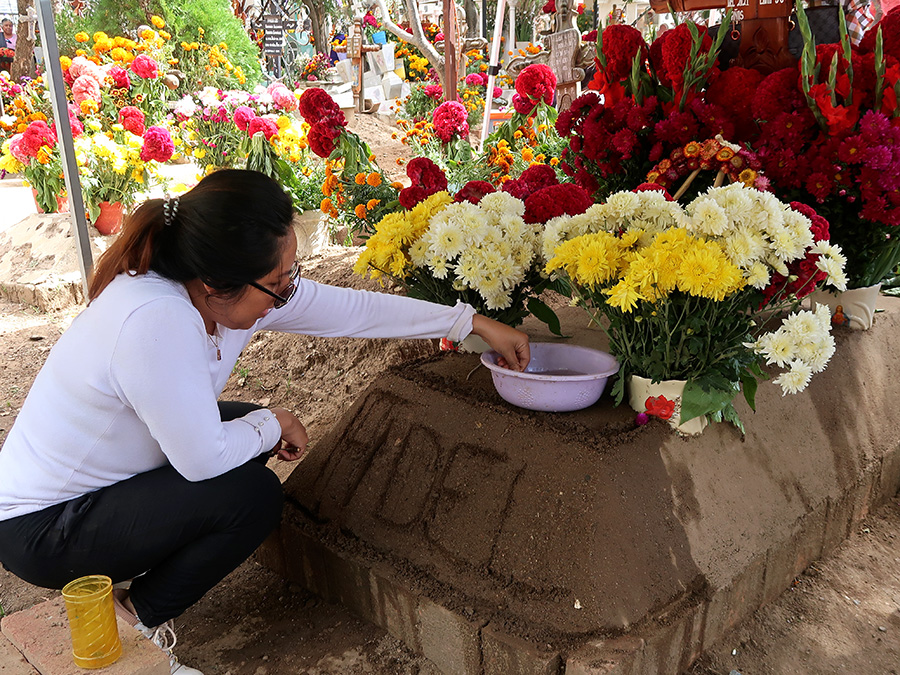
On November 3rd, K and I headed to San Antonino Castillo Velasco — a Zapotec community 24 miles south of Oaxaca city. It is a village known for growing flowers and for the floral embroidery decorating its traditional blouses and dresses.
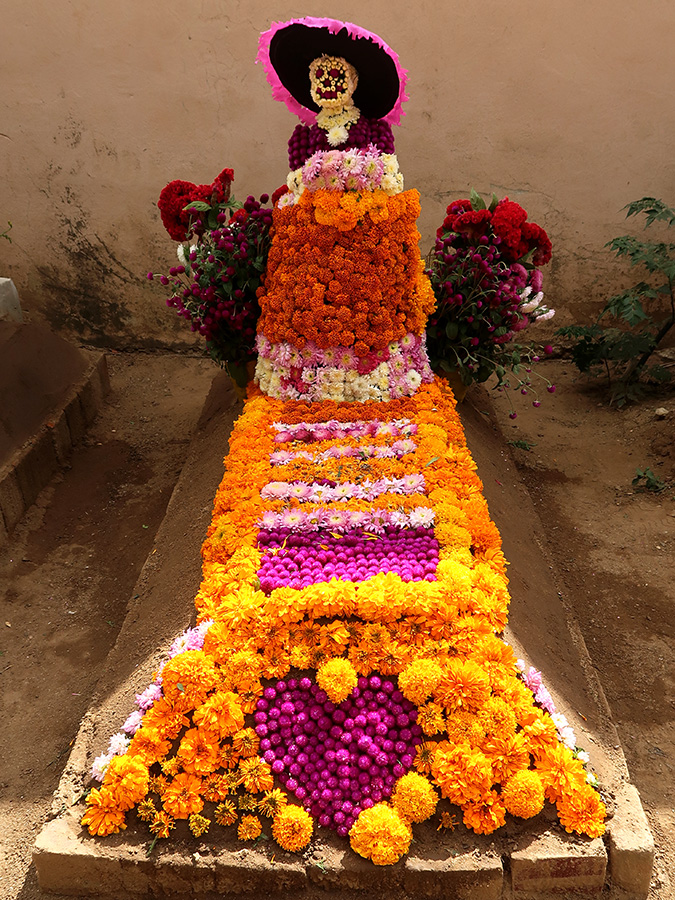
Their difuntos (departed souls) understand their families are busy providing flowers for altars and tombs in the surrounding villages in the valley and wait until November 3-4 to return and spend time with their living loved ones. Because floral design plays such an important role in the traditions and commerce of the village, it is carried over to the elaborate decorating of the tombs in the panteón (cemetery).
One of the flowers grown is the “flor inmortal” (immortal flower), so named because, even when dried, it retains its brilliant colors. Artisans in the village use these flowers to create intricately designed figures on display December 23 in the city of Oaxaca during Noche de Rábanos and to decorate the graves of loved ones during Día de Muertos.
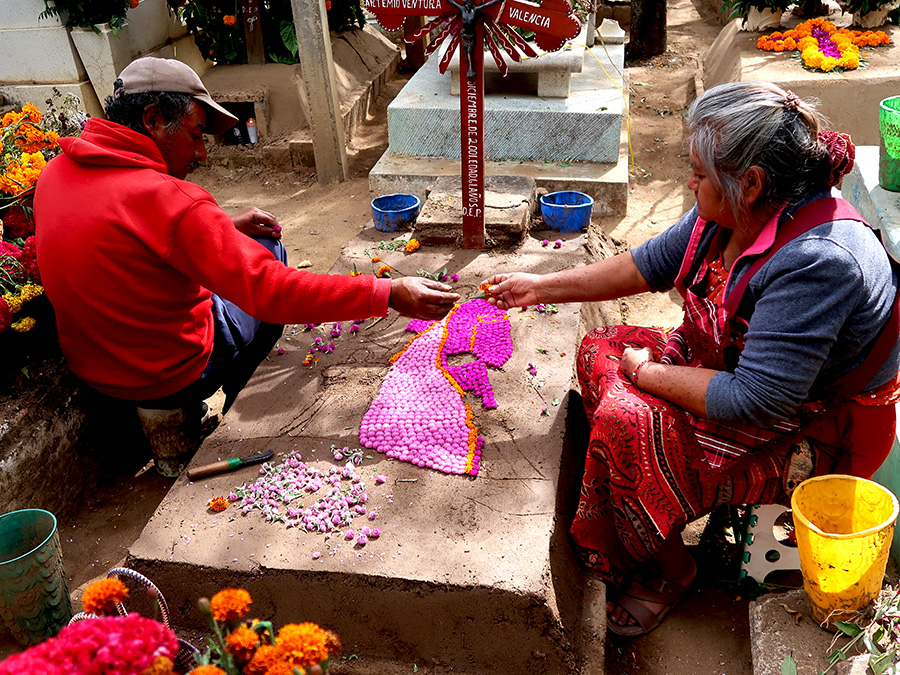
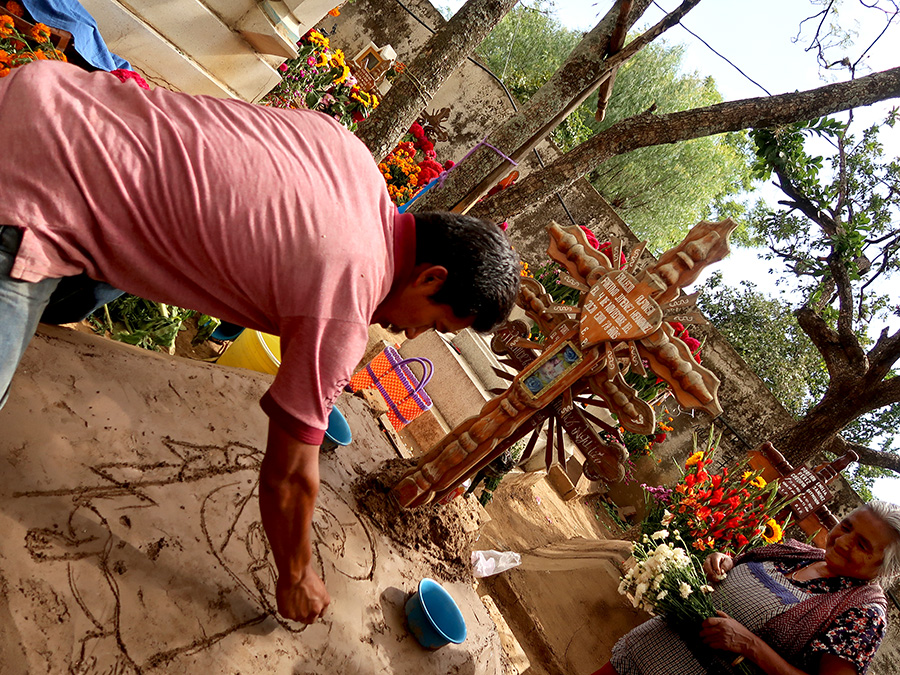
In the cemetery villagers mix the area’s very fine dirt with water, cover the graves with this damp mud, and use a trowel to smooth it. Once dry, they outline designs and religious imagery into this mud canvas and use flowers (fresh and dried) to paint the scene. Entire families are involved — male and female, young and old. It is a labor of love and incredibly moving to behold.
There is a duality surrounding the celebration of Día de Muertos (Days of the Dead) in Oaxaca. While most every home and many public buildings and businesses construct altars with ofrendas brimming with flowers, candles, bread, chocolate, fruit, nuts, beverages, copal incense, and often photos of the departed, there is a distinct difference between the traditions of the more mestizo communities (Oaxaca city and the Etlas, for example) and those of the indigenous communities. The former often includes raucous comparsas (parades) called muerteadas with costumes, masks, painted faces, music, and “adult beverages.” According to the book, Day of the Dead: When Two Worlds Meet in Oaxaca, the muerteada allows the dead “to ‘occupy’ a living body, either a muerteada participant or an audience member, for a time, and therefore enjoy the entertainment directly rather than vicariously.”
However, in the indigenous villages these days are more solemn, filled with ritual, and are family oriented. I lean toward this more spiritual observance, so I escaped the craziness of the daily comparsas and drunken crowds in the city and went to stay in the Zapotec village of Teotitlán del Valle with my compadres (including comadre K) and to shop in Tlacolula for pan de muertos (bread), candles, and flowers to take to the ofrendas of families K and I have a relationship with in Teotitlán and San Pablo Villa de Mitla.
Tlacolula de Matamoros – Vendors of caña (sugar cane) used to create an arch over ofrendas.
Tlacolula de Matamoros – Ofrenda in the Templo de Santa María de la Asunción.
Tlacolula de Matamoros – Tapete de arena (sand painting) in Templo de Santa María de la Asunción.
San Pablo Villa de Mitla – Store front.
San Pablo Villa de Mitla – Ofrenda on home altar.
San Pablo Villa de Mitla – Detail from a public ofrenda.
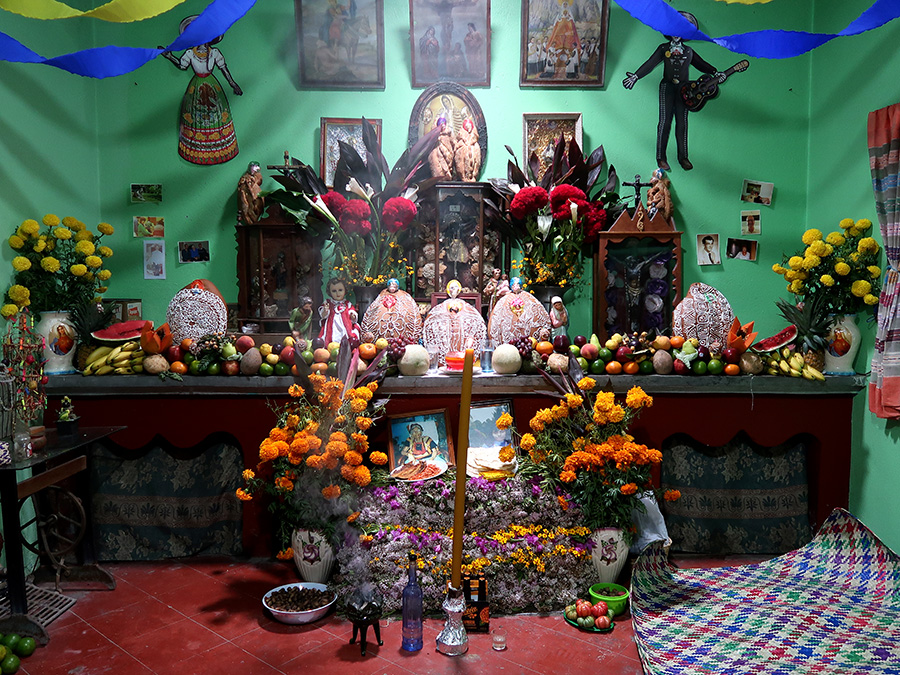
Teotitlán del Valle – Ofrenda (offerings) on home altar.
Teotitlán del Valle – Tamales amarillo traditionally served on November 1.
Teotitlán del Valle – Panteón (cemetery) early evening on November 2.
While the Día de Muertos observances may differ, the bottom line in both city and pueblo is to provide a welcome worthy of both the living as hosts and the dead as honored guests.
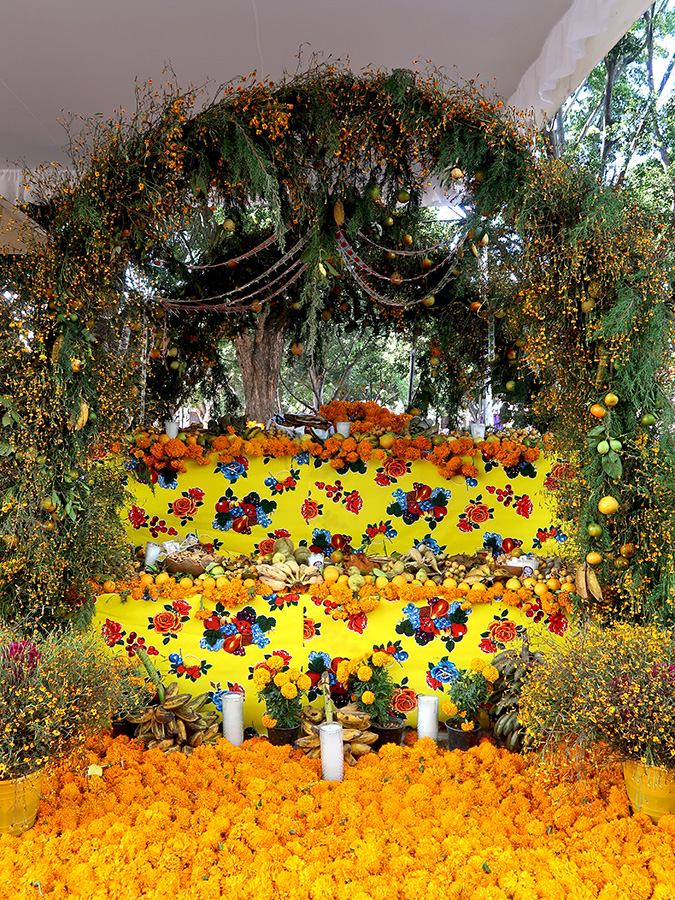
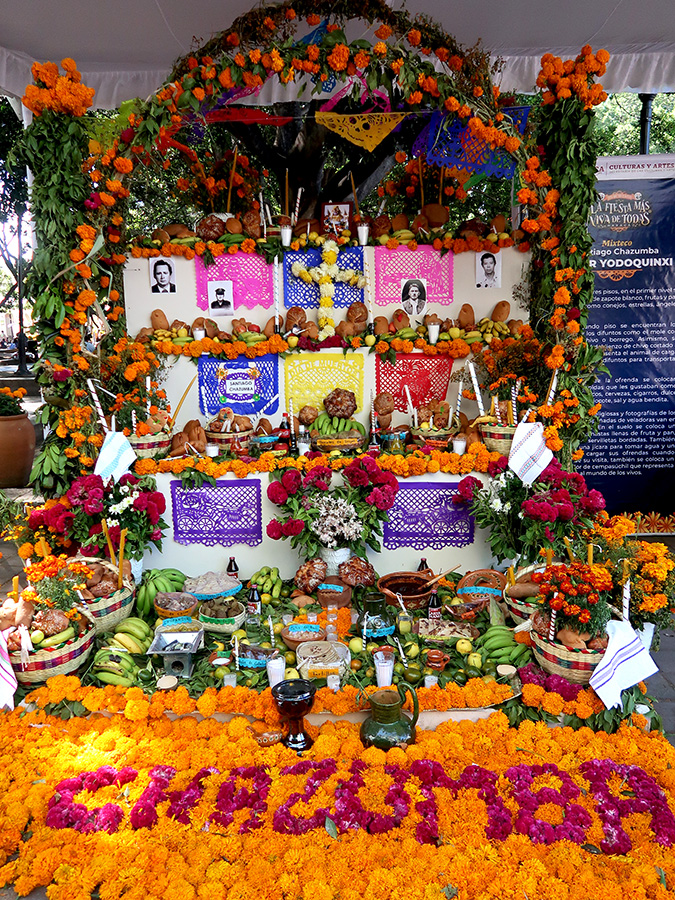
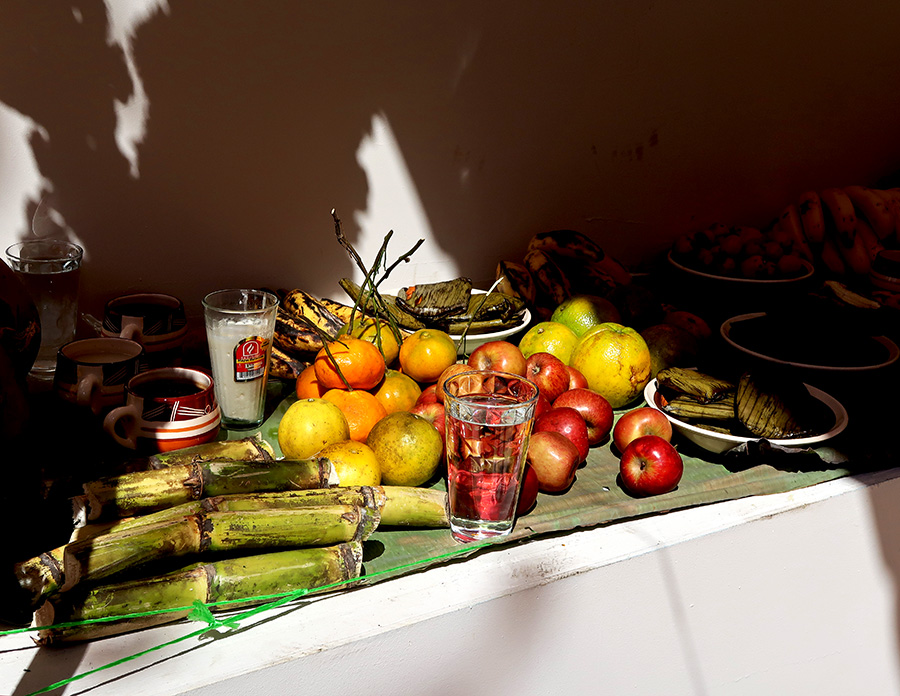
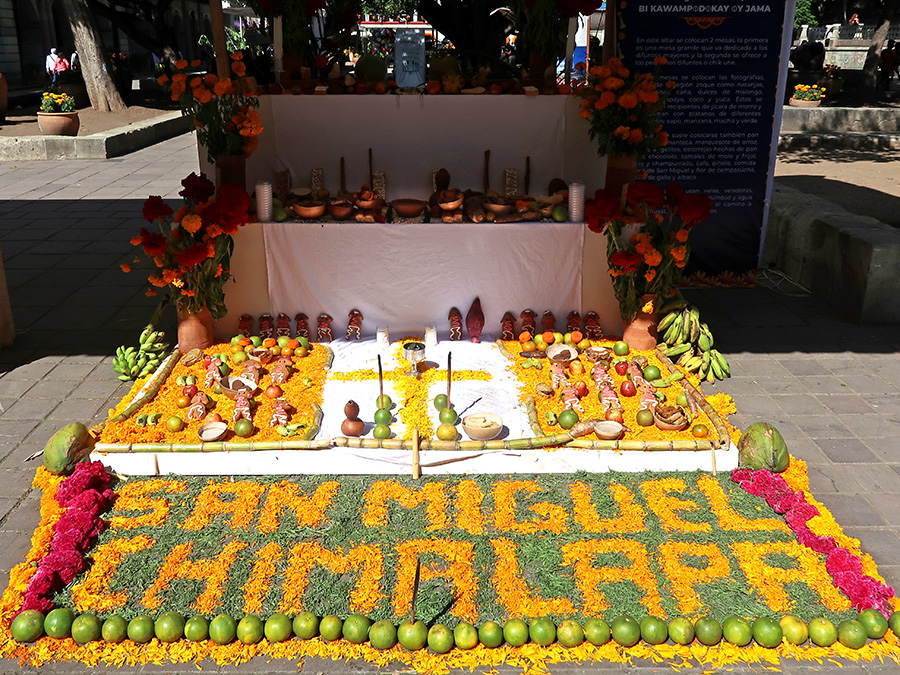
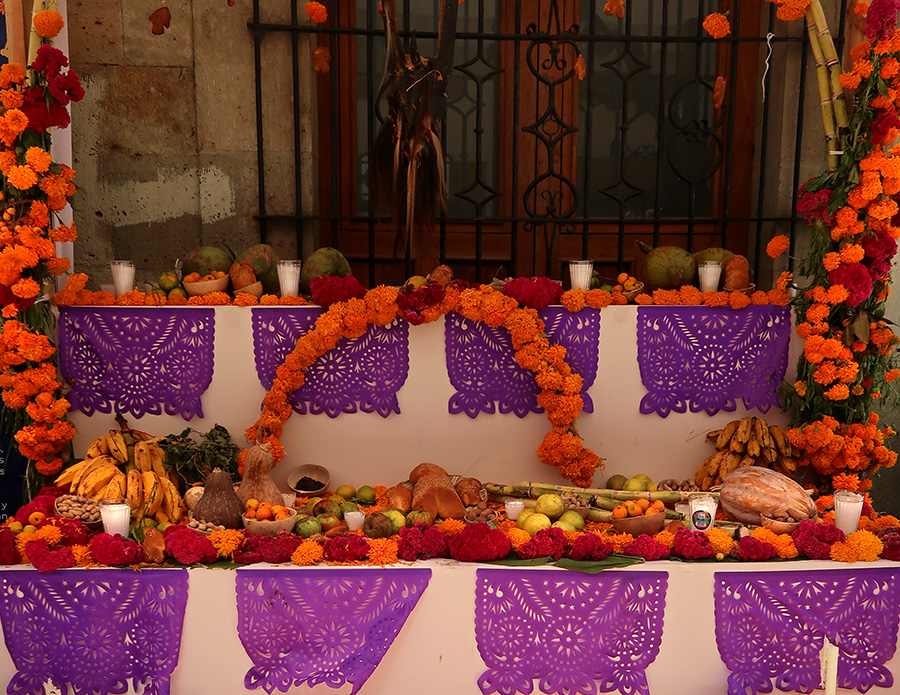
Oaxaca is alive with preparations for Día de Muertos and the Zócalo is filled with altars from her indigenous and Afromexican communities.
Zapoteco – San Melchor Betaza, Oaxaca – Altar Bkog Tse Bene Wat
Náhuatl – Santa María Teopoxco, Oaxaca – Tlamanal-Miquilistle
Cuicateco – San Juan Bautista Cuicatlán, Oaxaca – Altar Cuicateco
Amuzgo – San Pedro Amuzgos, Oaxaca – Altar Ncué Ndó’ Tzjón Noán
Mixe – Santa María Tlahuitoltepec, Oaxaca
Zapoteco – Santo Domingo Tehuantepec, Oaxaca
Mixteco – Villa de Tamazulápam del Progreso, Oaxaca
Mazateco – Huautla de Jiménez, Oaxaca – Altar El Portal
Mixteco – Santiago Chazumba, Oaxaca – Altar Yodoquinxi
Chatino – Santiago Yaitepec, Oaxaca – Mesa de las Ánimas
Mixtecos Ñuu Savi – Santiago Ixtayutla, Oaxaca
Chontal – Santiago Astata, Oaxaca
Zoque – San Miguel Chimalapas, Oaxaca – Bi KawampΦdΦkay Φy Jama
Chinanteco – San Juan Bautista Valle Nacional, Oaxaca – Altar Tradicional Chinanteco
Triqui – San Juan Copala, Oaxaca – Altar Se Inaj Xhi Aj
Mazateco – San Pedro Ixcatlán, Oaxaca – Altar Autóctono
Ikoots – San Mateo del Mar, Oaxaca – Altar De Tikambaj
Pueblos Afromexicanos – Altar de los Pueblos Afromexicanos de la Costa de Oaxaca
The scent of cempasúchil (marigolds) fills the air and beckons the difuntos (souls of the departed) to eat, drink, and be merry with their living loved ones.
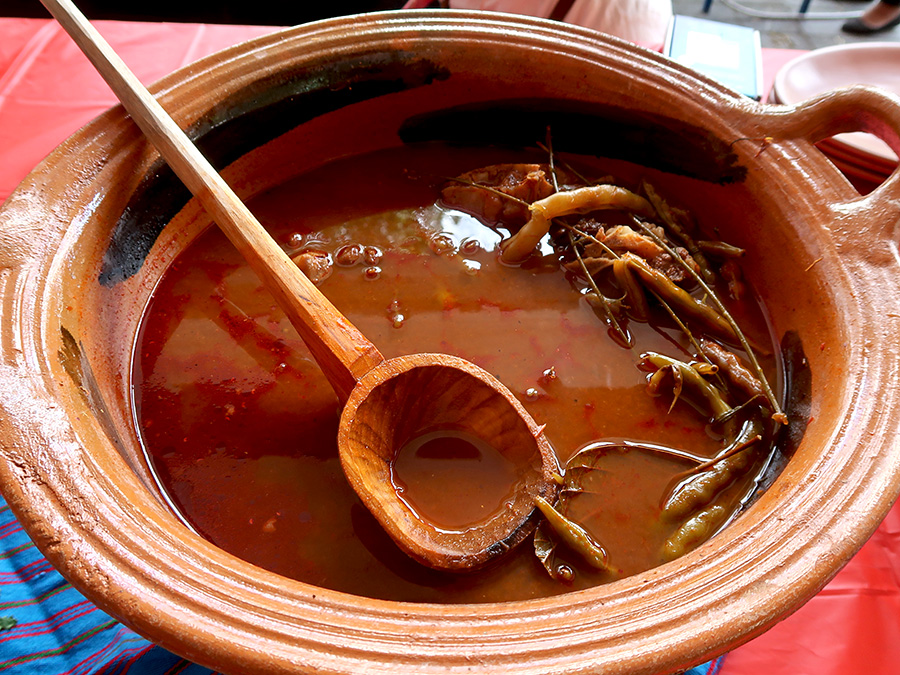
This past weekend, the city held a three-day celebration of Mole de Caderas — a traditional seasonal Mixtec dish from Huajuapan de León, Oaxaca and nearby Tehuacán, Puebla. It is only served during the fall, when the goats are made to make the ultimate sacrifice — and it is absolutely delicious!
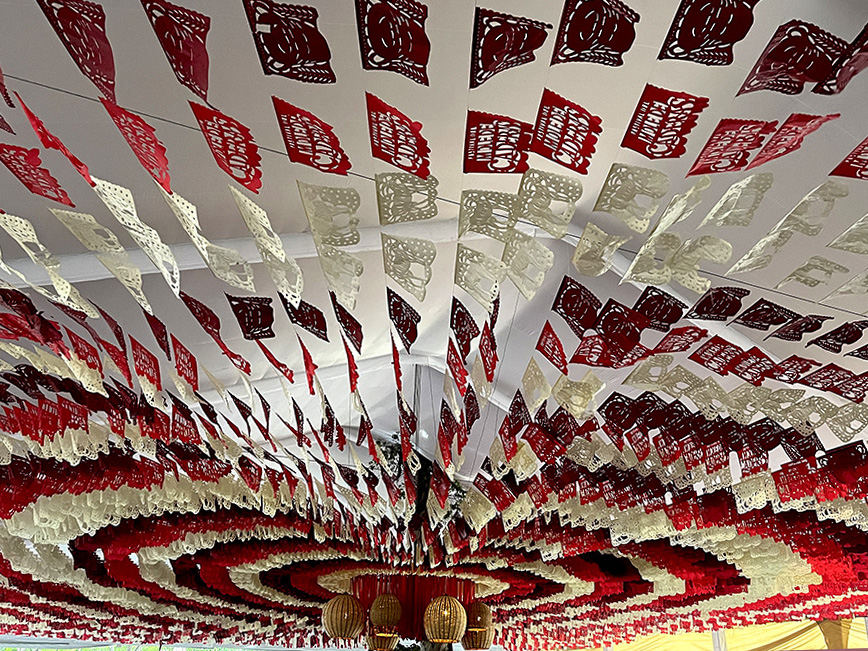
Papel picado cut into images of goats and ollas and the words “Festival del Mole de Caderas,” hung from the rafters of the tent.
This special dish is made from the hip (caderas) and the spine of goats that have been raised for one and a half years. Starting in July they are fattened on the forage unique to the hills of the Mixteca, large amounts of salt, and a little water — this is what provides the meat with fat, softness, and juiciness and gives the broth its distinctive flavor. In early fall, when the shepherds have brought the goats back to the farms, there is a ritual filled celebration that includes offerings, incense, music, and dancing, including a dance with the goats — all in honor of the goats who were about to give their lives to feed the population.
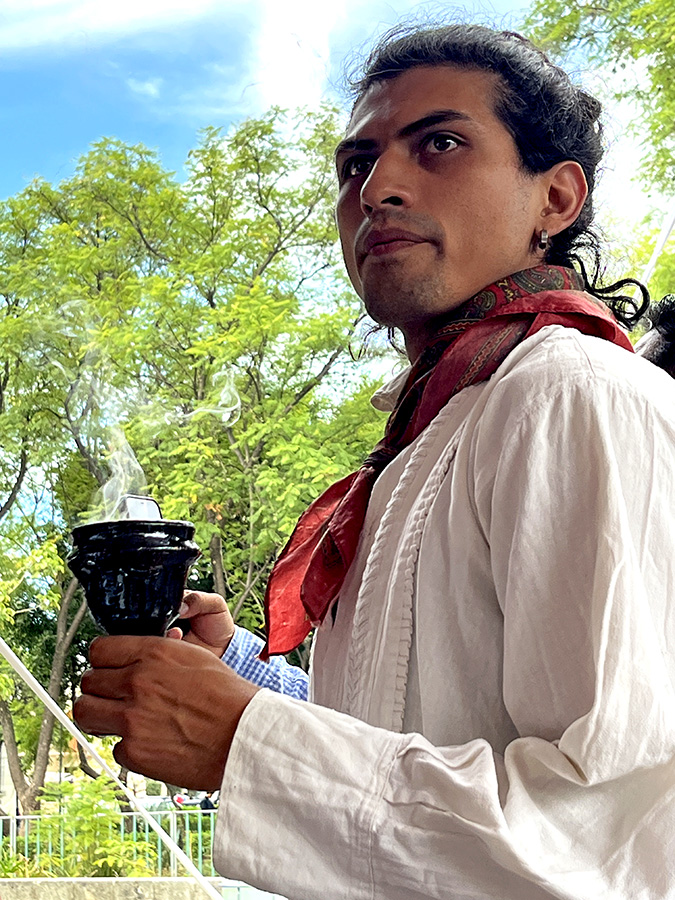
Incense carried in the opening procession.
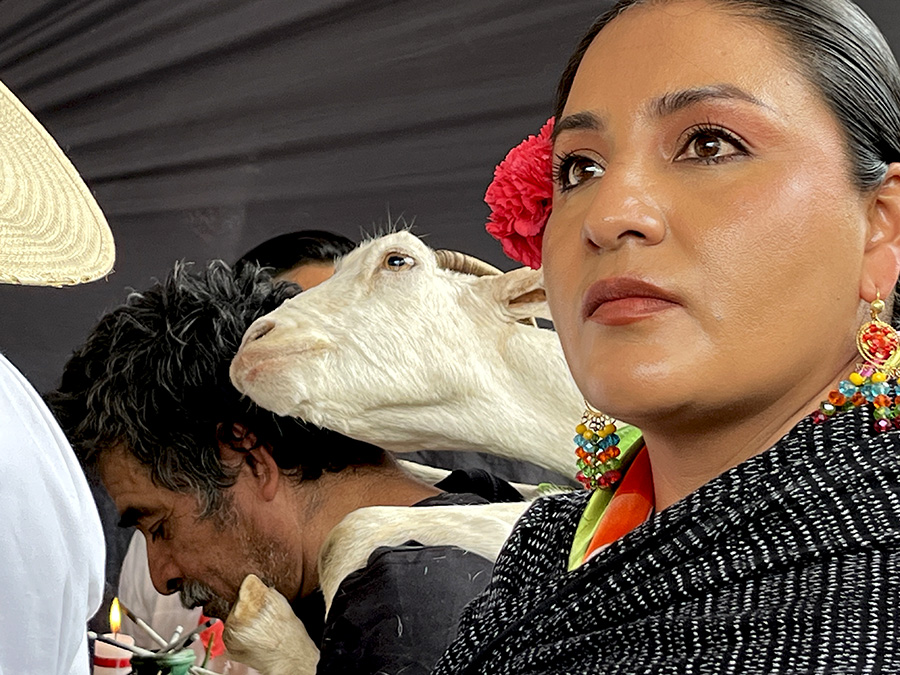
Matancero carrying el chivo (the goat) and a Mixtec dancer waiting for the procession to begin.
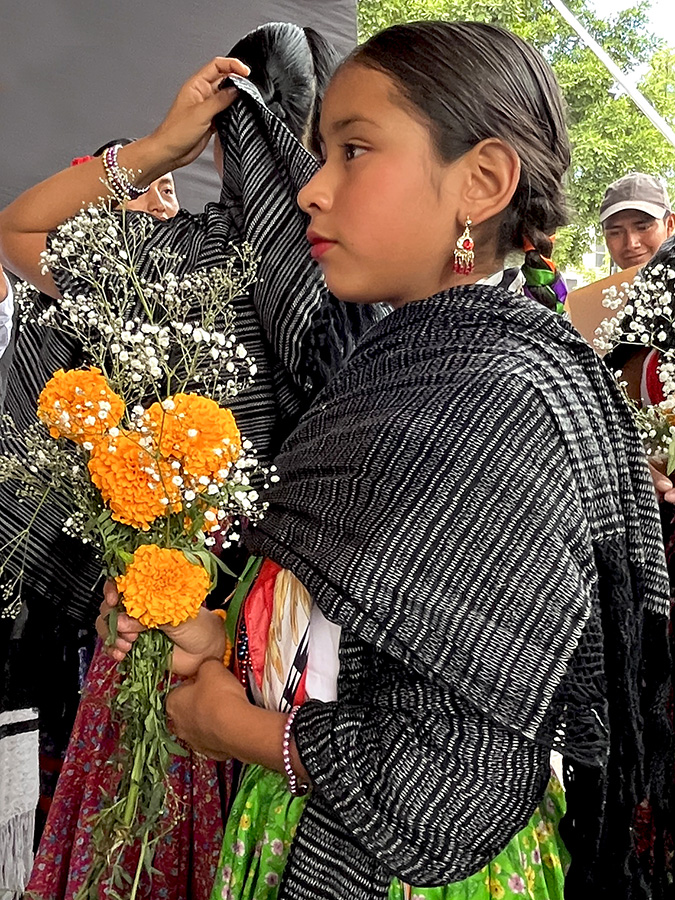
Young Mixtec dancer waiting for the procession to begin.
At last Friday’s opening of the festival, there were dignitaries galore (including the governor of Oaxaca), multiple speeches, and a moving procession with two goats to the tune of Canción Mixteca, a song which always brings tears to my eyes. It was followed by a dance with the goats and a stylized reenactment of the ritual killing of the goats (no actual blood was spilled).
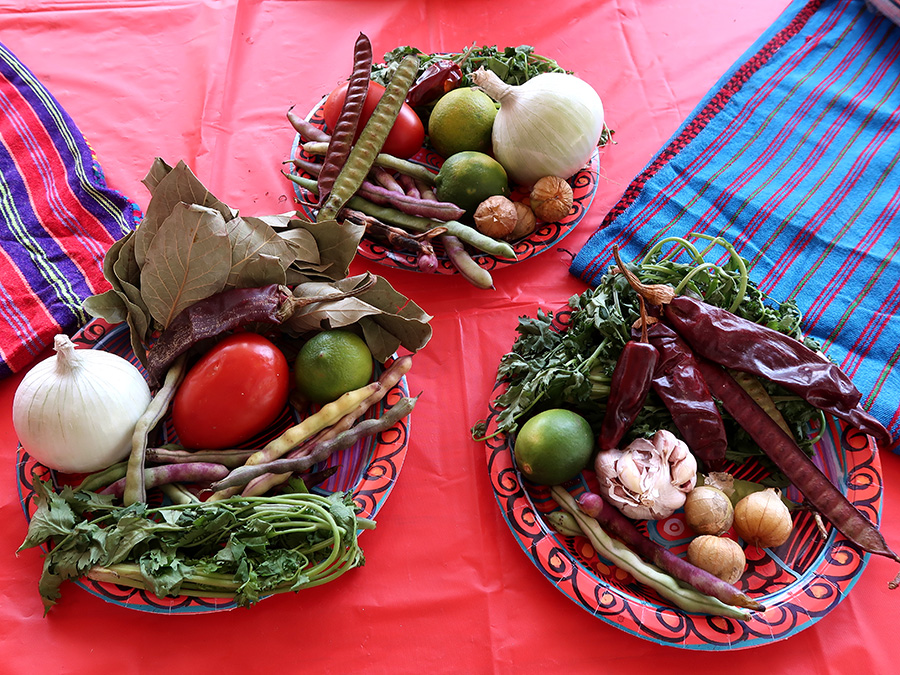
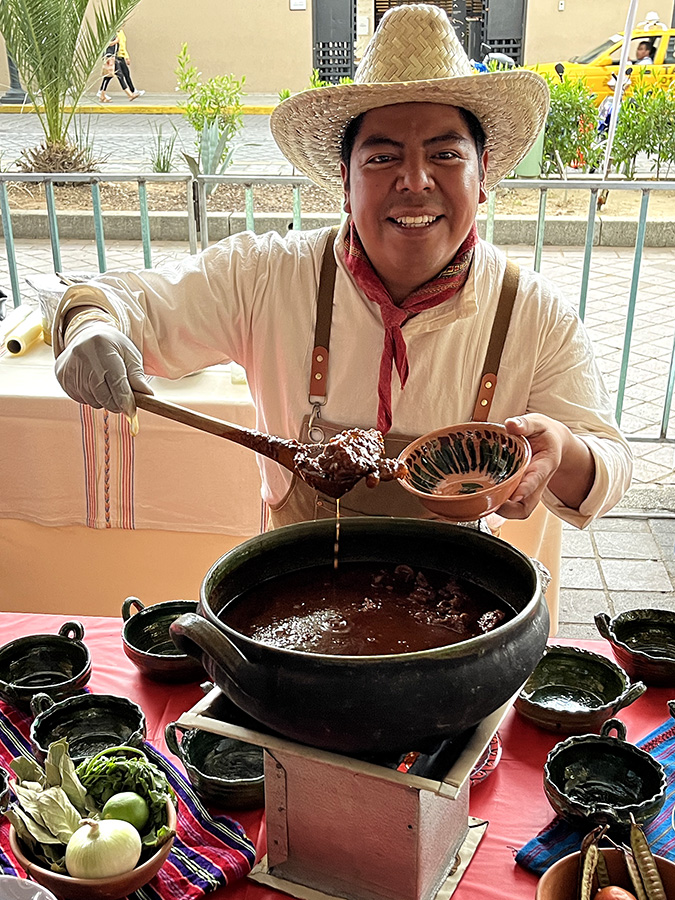
We were then funneled through a palapa decorated tunnel to the tented dining area, where traditional cooks from Huajuapan de León and Oaxaca city waited proudly behind booths displaying ollas (clay pots) filled with steaming Mole de Caderas and Huaxmole de Caderas. Hmmmm… I wondered what the difference was between Huaxmole de Caderas and Mole de Caderas.
Ingredients used in making Mole de Caderas and Huaxmole de Caderas.
Wilver Vásquez López serving what his booth labeled, Mole de Chivo.
Huaxmole de Caderas.
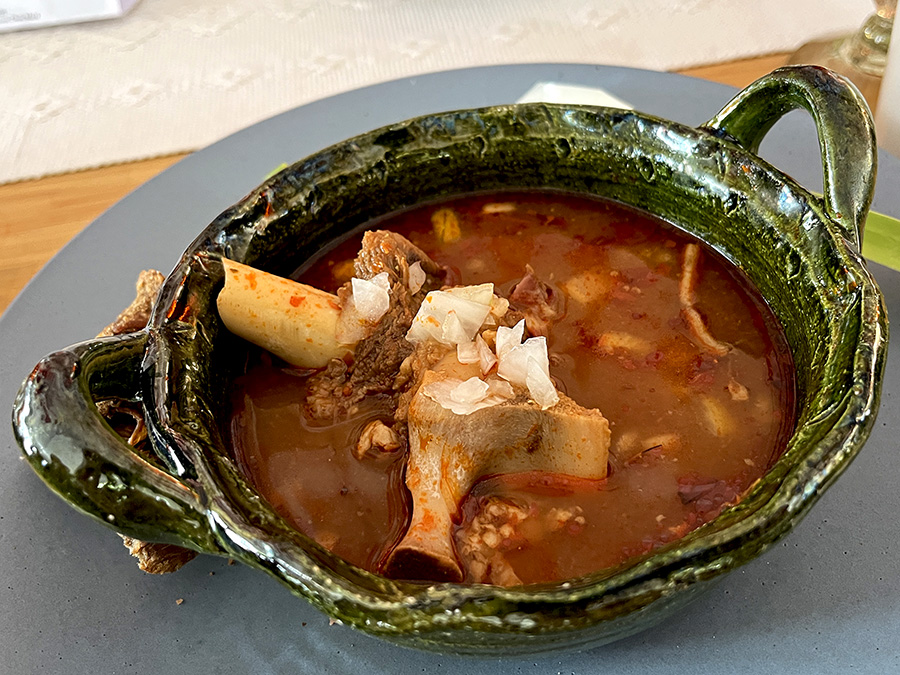
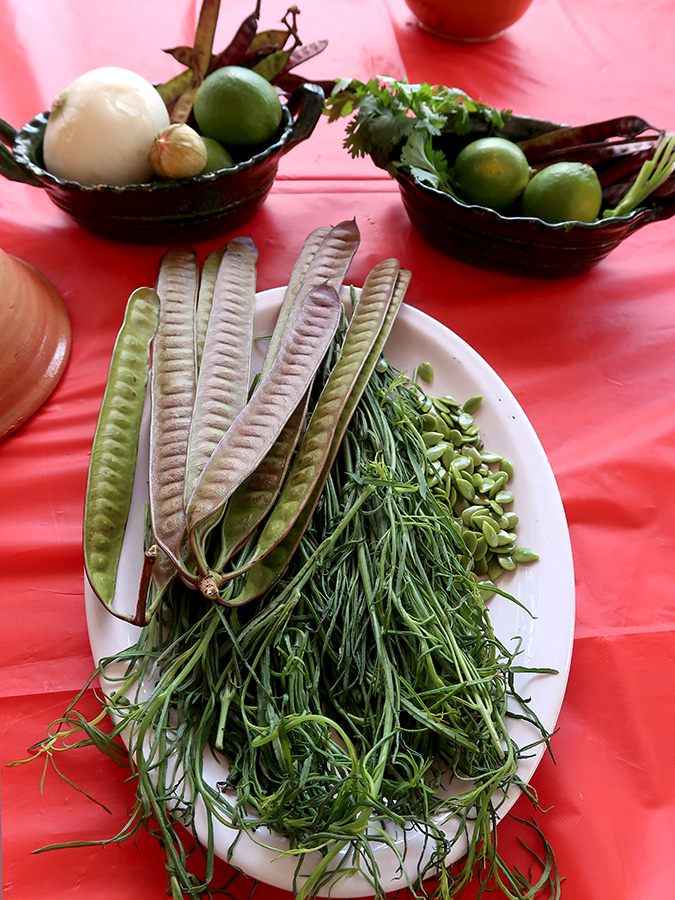
Once home, a little research ensued (I am a librarian, after all) and I found that both dishes share common preparation and major ingredients. However, Huaxmole de Caderas is distinguished with the addition of toasted seeds from the huaje (also spelled guaje) tree — the tree that gave Oaxaca its name. Whereas, Mole de Caderas is prepared with green beans. However, if huajes are added to the latter, it is considered Huaxmole de Caderas. The herb, chepiche (aka, pepicha) is also used and, at the festival, both chepiche and huaje were used to garnish the plates.
Huaje and chepiche.
Mole de Caderas.
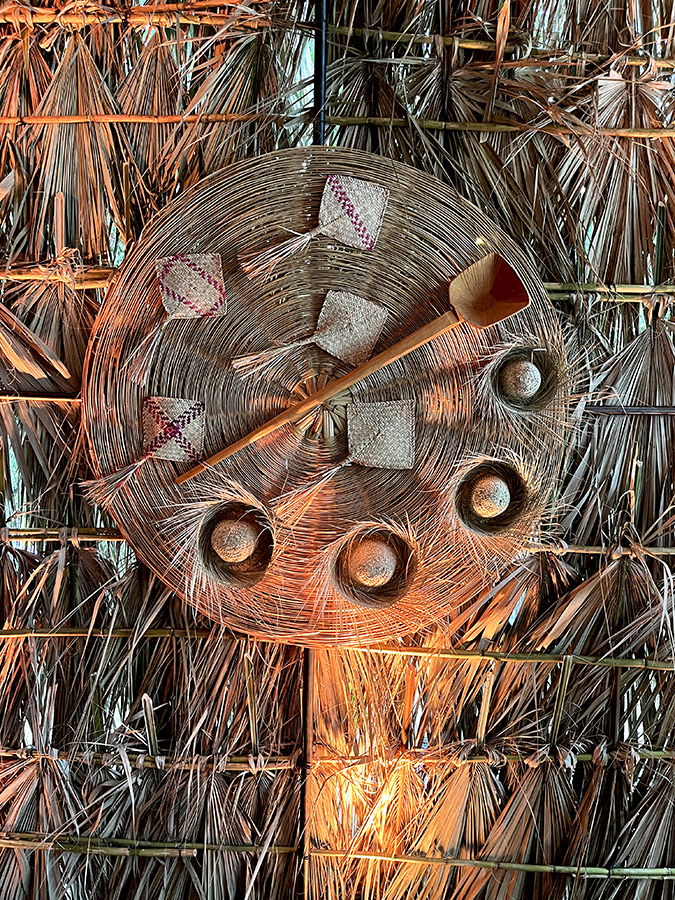
Interior of the palapa covered entrance to the Festival del Mole de Caderas.
By the way, there were also fresh tortillas, hot off the comal, and booths offering goat tacos, sweets, aguas, and mezcal from the Mixtec region.
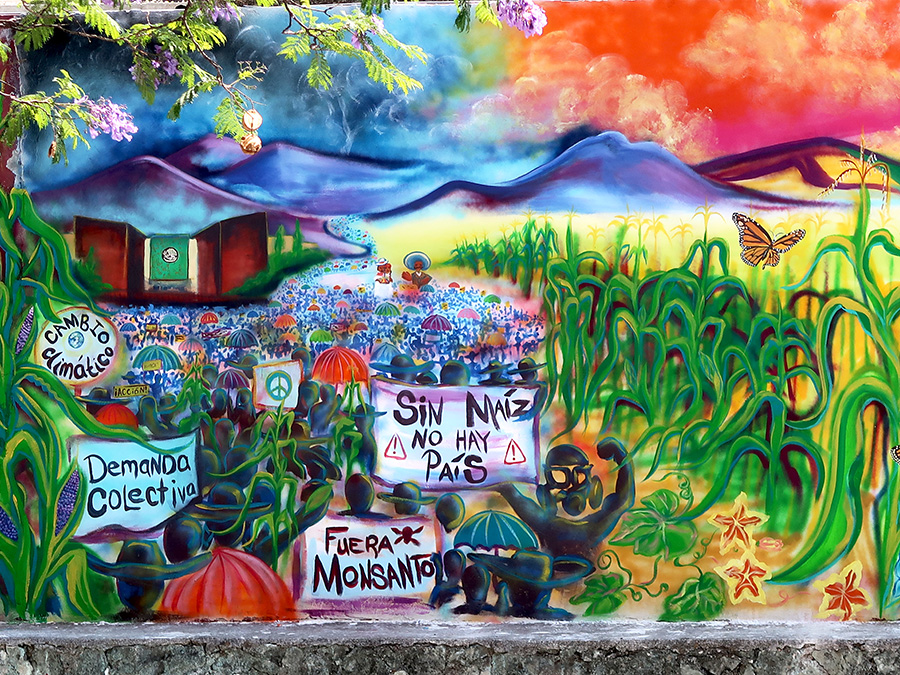
Today, September 29, Mexico celebrates Día Nacional del Maíz — a day honoring the sacred maíz, symbol of the country and base food crop for most of the nation. In Oaxaca, one never has to look far to see corn and not just in fields. Corn is depicted in murals, featured in decorations, and (of course) on most every dining table, most every day.
Decoration outside a shop in Oaxaca city.
Mural at Mercado Sánchez Pascuas in Oaxaca city – “Without corn, there is no country.”
Mural in San Martín Tilcajete.
My favorite tamales from the milpa and hands of Emilia Gonzalez Martinez in Teotitlán del Valle.
In the words of cocinera tradicional Carina Santiago, at the beginning of the trailer (below) for the tremendous documentary, Los Guardianes del Maíz / The Keepers of Corn, “Corn was not domesticated by man, man was domesticated by corn.”
Trailer for Los Guardianes del Maíz / The Keepers of Corn documentary.
Last night El Grito de Dolores, also known as El Grito de la Independencia (the Shout of Independence), rang from government buildings throughout the country — recreating Don Miguel Hidalgo y Costilla’s call to arms in 1810 announcing the start of the ten-year long war for independence from Spain. In my neighborhood, green, white and red decorations can be seen around every corner and flying from rooftops.
Today, crowds will line sidewalks from the Palacio de Gobierno to Parque El Llano to cheer on their favorite contingents as a patriotic parade takes to the streets of Oaxaca. Mexican pride on display. ¡Viva México!
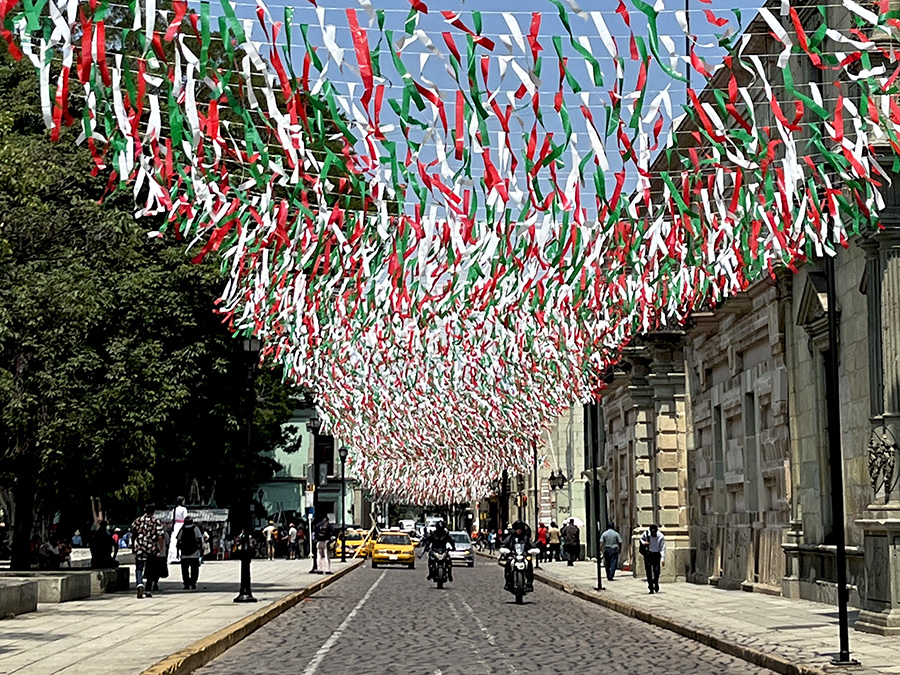
Here in Mexico, ’tis the season for displaying the green, white, and red colors of the Mexican flag. The entire month of September, Mes de la Patria (the month of the homeland), Mexico celebrates her successful war of independence from Spain — a war which began on September 16, 1810 and finally ended on September 27, 1821. Late at night on September 15, throughout Mexico bells will sound as the Grito de Dolores will echo from government balconies — mayors, governors, and the president recreating Father Hidalgo’s call to arms for independence.
In the meantime, beginning at the end of August, everything is coming up green, white, and red…
August 31, 2023 – State of Oaxaca’s government palace.
August 31, 2023 – Avenida de la Independencia, Oaxaca de Juárez.
There will also be a patriotic parade through the main streets of Oaxaca on September 16. However, for the foodies among us, the best part is the fleeting presence of Chiles en Nogada on restaurant menus. As Cristina Potters of the Mexico Cooks! blog explains, this is the season when its iconic ingredients are harvested and we are presented with the green of a poblano chile stuffed with a picadillo of seasonal ingredients (not to mention, green of the parsley garnish), covered with a white walnut sauce, and topped with bright red pomegranate seeds.
PS: Cristina also provides a recipe in the link above. ¡Buen provecho!
































 Mexican Peso Converter

 View From Casita Colibrí