Feeds:
Posts
Comments

Archive for the ‘Celebrations’ Category

This past weekend, the city held a three-day celebration of Mole de Caderas — a traditional seasonal Mixtec dish from Huajuapan de León, Oaxaca and nearby Tehuacán, Puebla. It is only served during the fall, when the goats are made to make the ultimate sacrifice — and it is absolutely delicious!
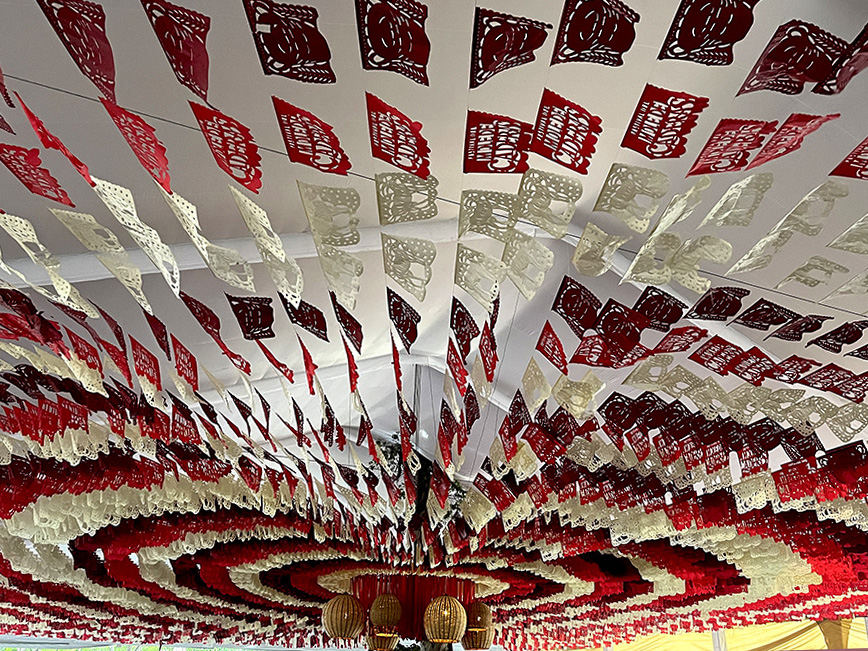
Papel picado cut into images of goats and ollas and the words “Festival del Mole de Caderas,” hung from the rafters of the tent.

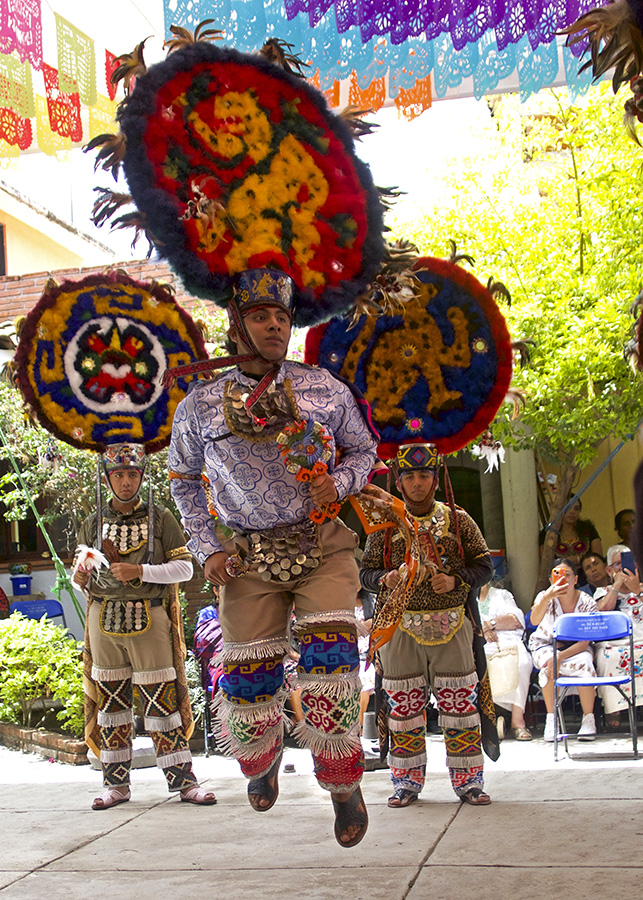
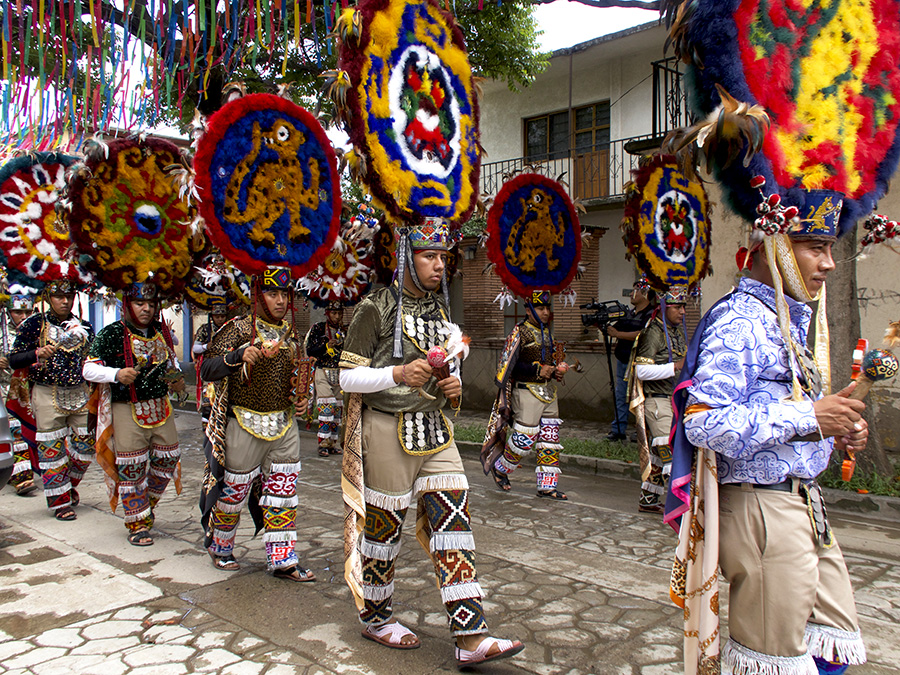
This special dish is made from the hip (caderas) and the spine of goats that have been raised for one and a half years. Starting in July they are fattened on the forage unique to the hills of the Mixteca, large amounts of salt, and a little water — this is what provides the meat with fat, softness, and juiciness and gives the broth its distinctive flavor. In early fall, when the shepherds have brought the goats back to the farms, there is a ritual filled celebration that includes offerings, incense, music, and dancing, including a dance with the goats — all in honor of the goats who were about to give their lives to feed the population.
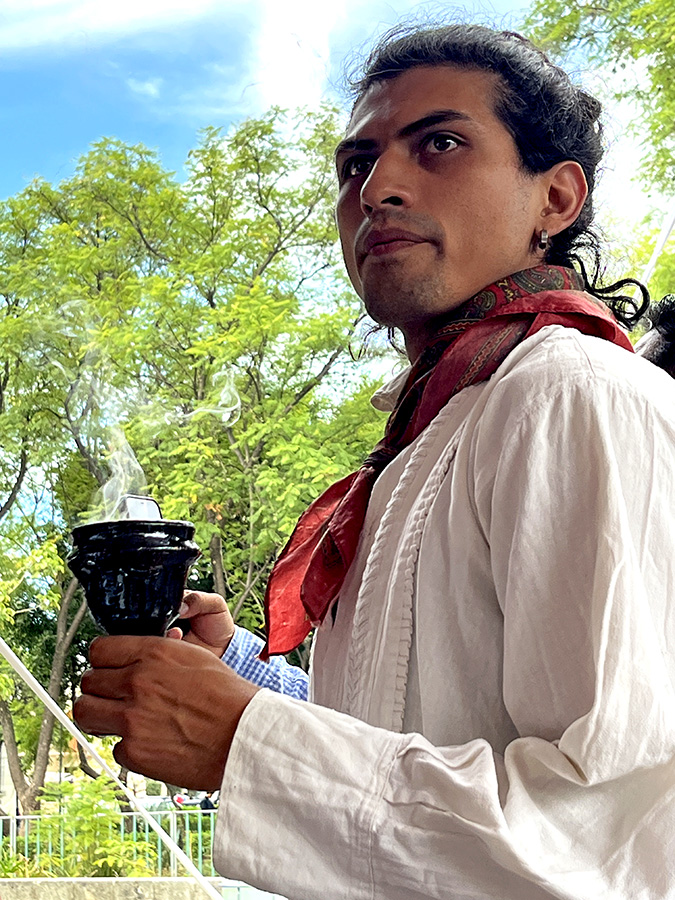
Incense carried in the opening procession.
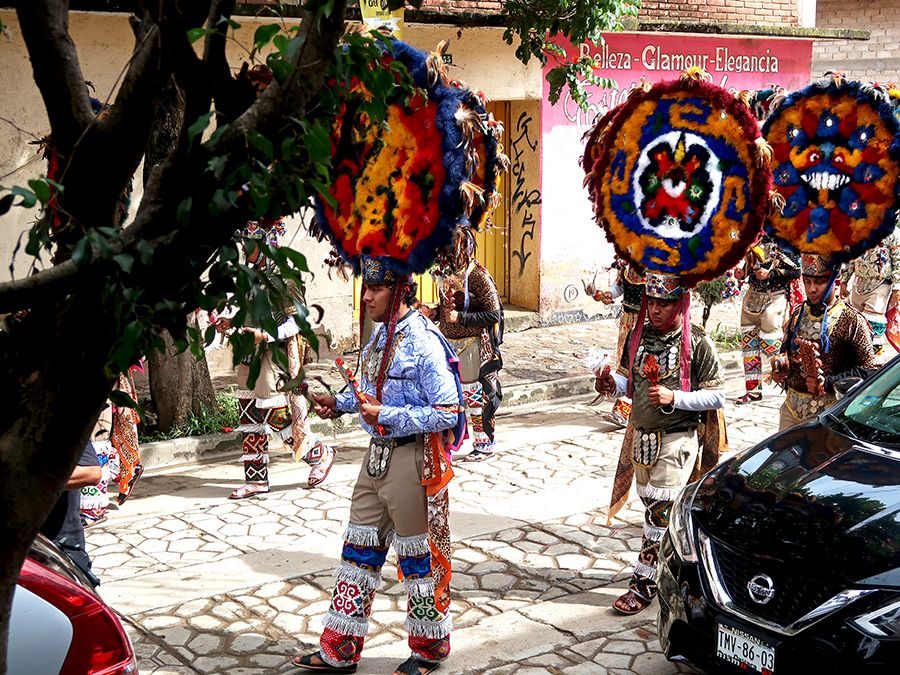
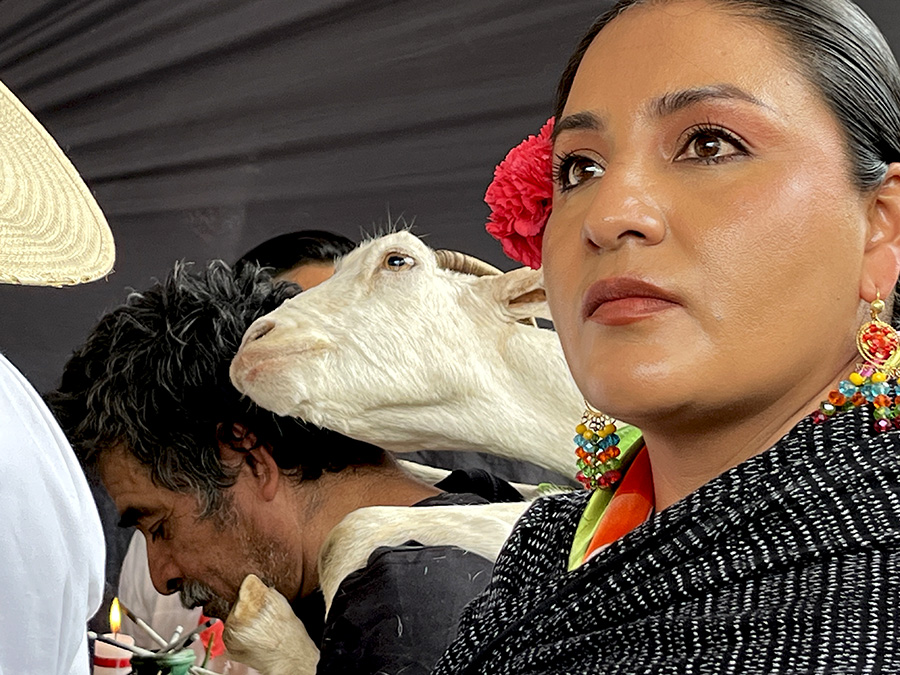
Matancero carrying el chivo (the goat) and a Mixtec dancer waiting for the procession to begin.
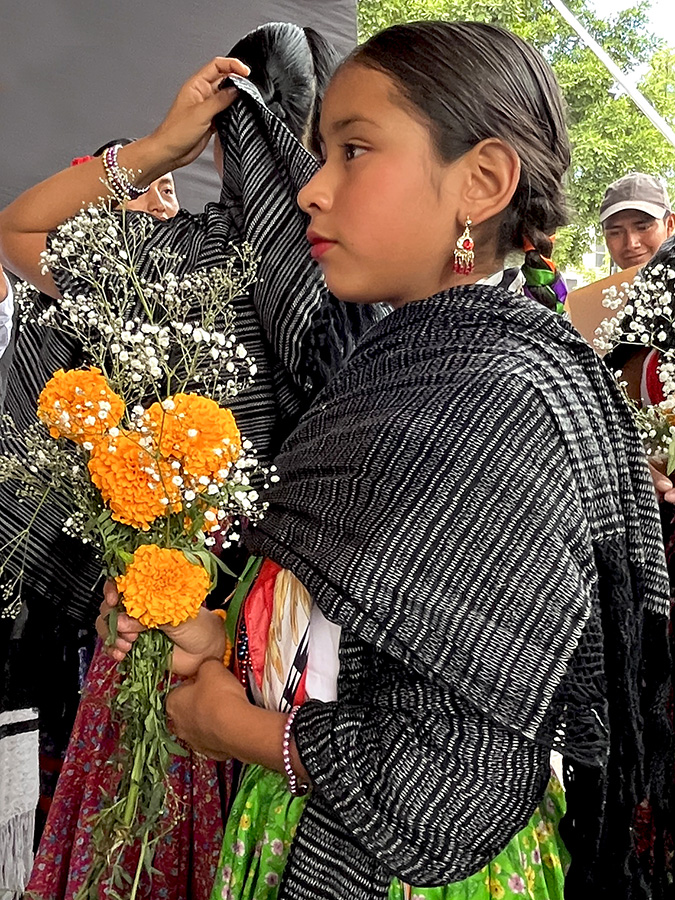
Young Mixtec dancer waiting for the procession to begin.

At last Friday’s opening of the festival, there were dignitaries galore (including the governor of Oaxaca), multiple speeches, and a moving procession with two goats to the tune of Canción Mixteca, a song which always brings tears to my eyes. It was followed by a dance with the goats and a stylized reenactment of the ritual killing of the goats (no actual blood was spilled).

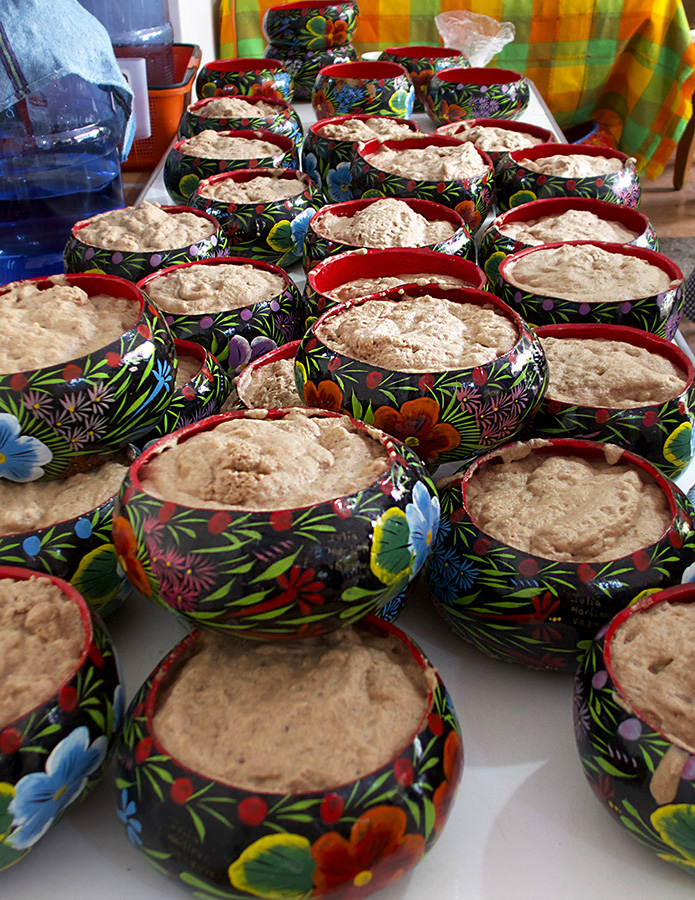
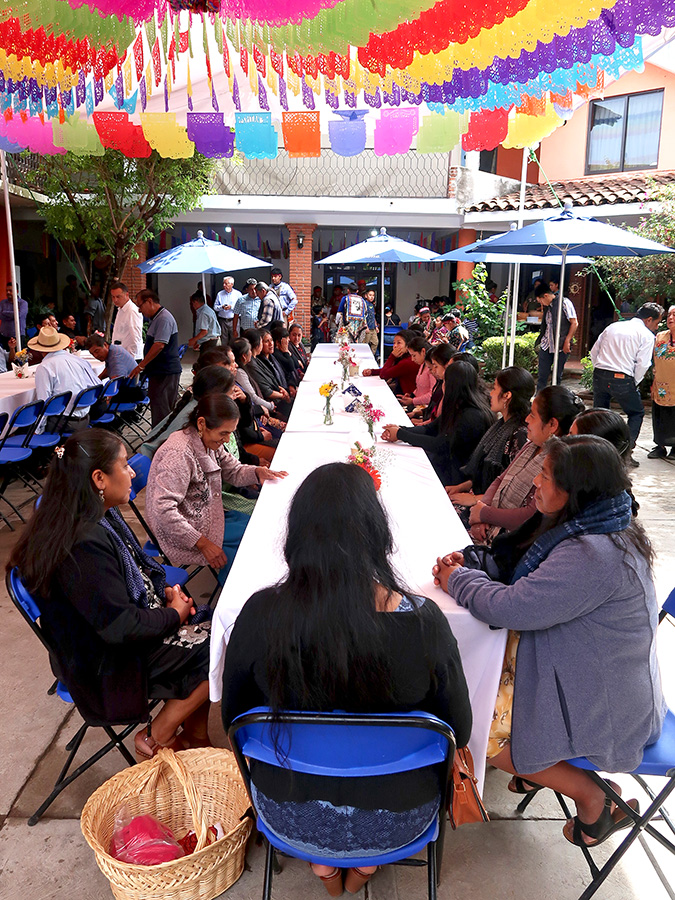
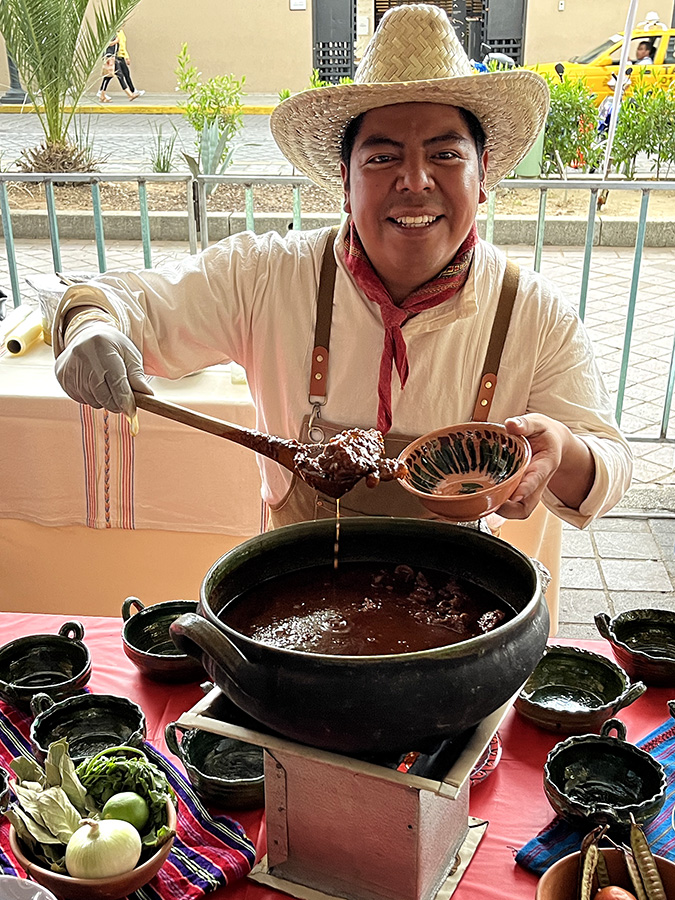
We were then funneled through a palapa decorated tunnel to the tented dining area, where traditional cooks from Huajuapan de León and Oaxaca city waited proudly behind booths displaying ollas (clay pots) filled with steaming Mole de Caderas and Huaxmole de Caderas. Hmmmm… I wondered what the difference was between Huaxmole de Caderas and Mole de Caderas.
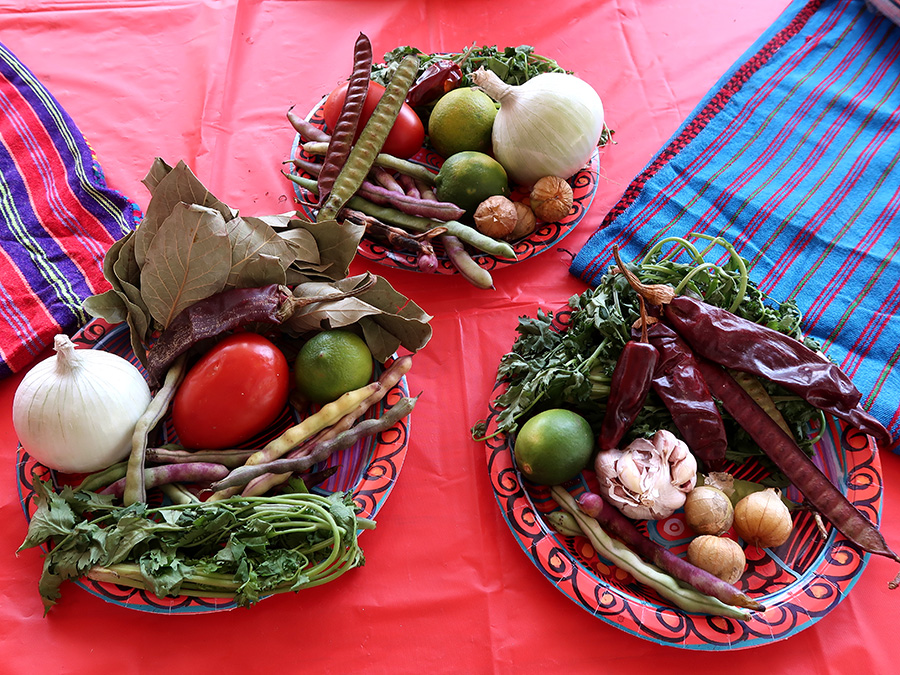
Ingredients used in making Mole de Caderas and Huaxmole de Caderas.
Wilver Vásquez López serving what his booth labeled, Mole de Chivo.
Huaxmole de Caderas.

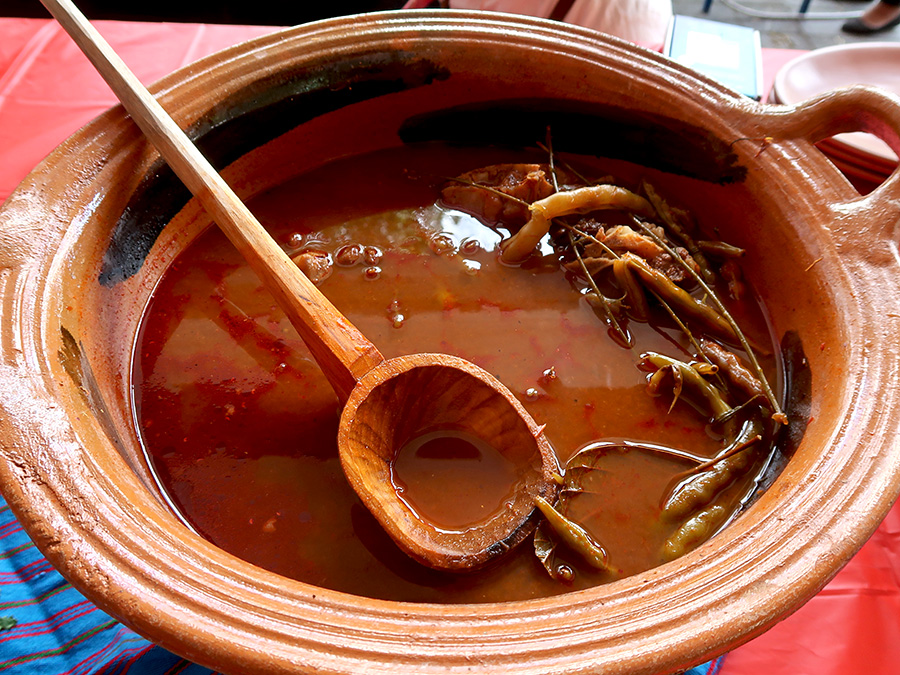
Once home, a little research ensued (I am a librarian, after all) and I found that both dishes share common preparation and major ingredients. However, Huaxmole de Caderas is distinguished with the addition of toasted seeds from the huaje (also spelled guaje) tree — the tree that gave Oaxaca its name. Whereas, Mole de Caderas is prepared with green beans. However, if huajes are added to the latter, it is considered Huaxmole de Caderas. The herb, chepiche (aka, pepicha) is also used and, at the festival, both chepiche and huaje were used to garnish the plates.
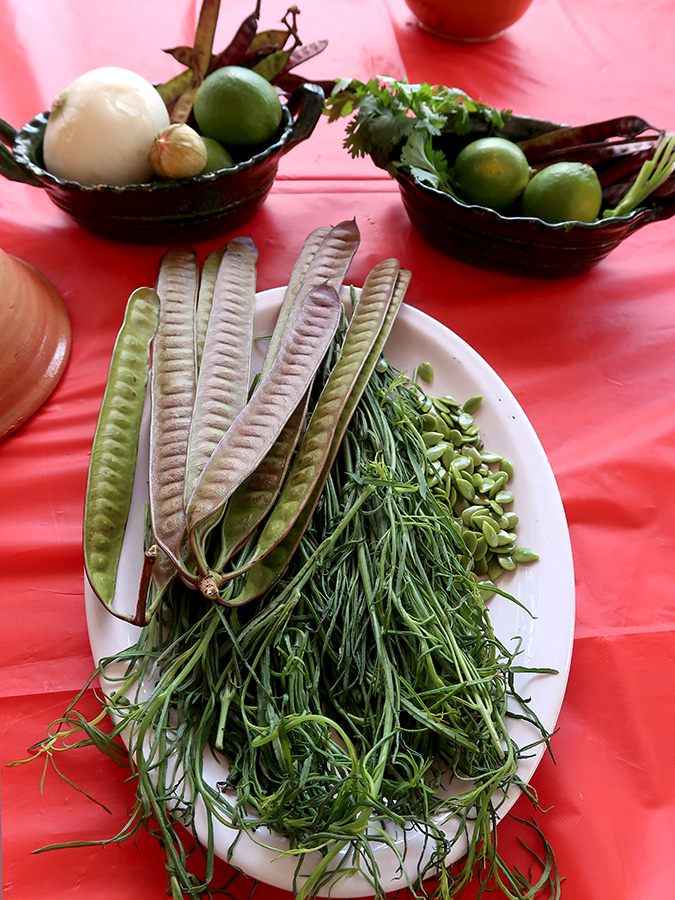
Huaje and chepiche.
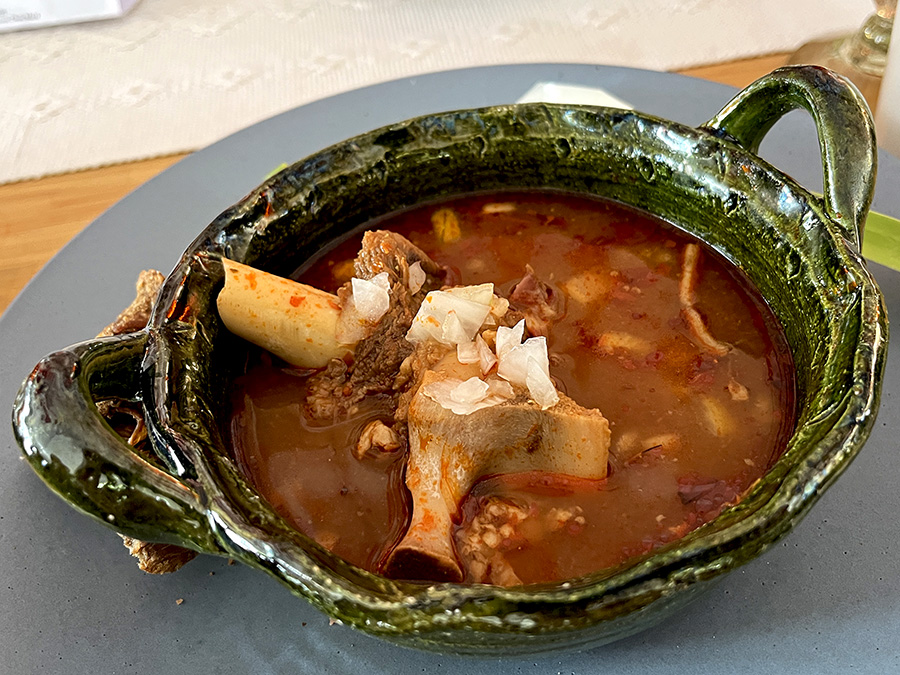
Mole de Caderas.
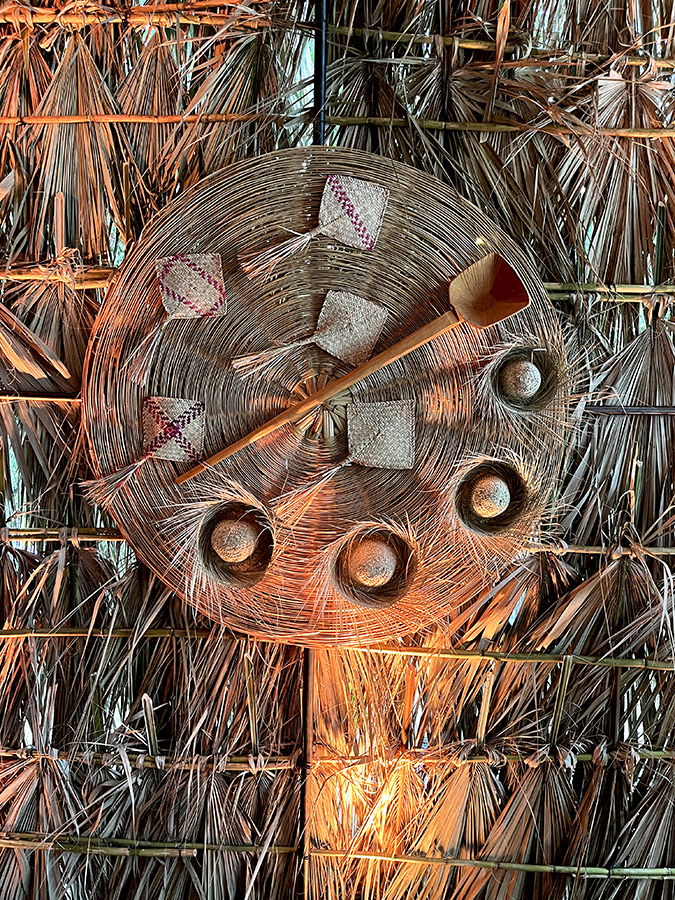
Interior of the palapa covered entrance to the Festival del Mole de Caderas.

By the way, there were also fresh tortillas, hot off the comal, and booths offering goat tacos, sweets, aguas, and mezcal from the Mixtec region.

References:
El mole de caderas, un plato insignia de la Mixteca
¡Ojo aquí! Estas son las diferencias entre el Mole de Caderas y el Huaxmole
Read Full Post »

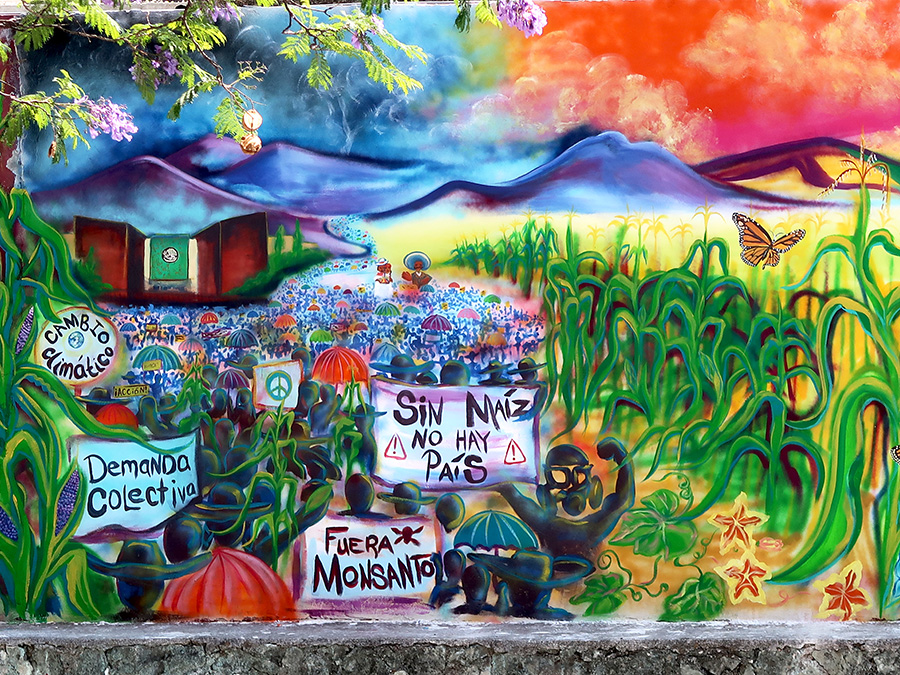
Today, September 29, Mexico celebrates Día Nacional del Maíz — a day honoring the sacred maíz, symbol of the country and base food crop for most of the nation. In Oaxaca, one never has to look far to see corn and not just in fields. Corn is depicted in murals, featured in decorations, and (of course) on most every dining table, most every day.

Decoration outside a shop in Oaxaca city.
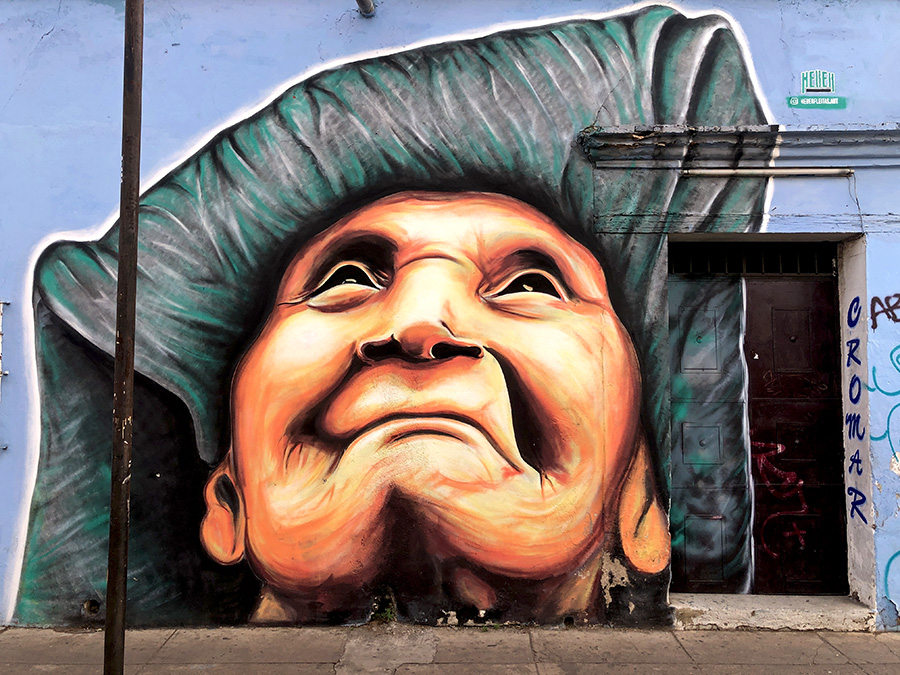
Mural at Mercado Sánchez Pascuas in Oaxaca city – “Without corn, there is no country.”
Mural in San Martín Tilcajete.
My favorite tamales from the milpa and hands of Emilia Gonzalez Martinez in Teotitlán del Valle.

In the words of cocinera tradicional Carina Santiago, at the beginning of the trailer (below) for the tremendous documentary, Los Guardianes del Maíz / The Keepers of Corn, “Corn was not domesticated by man, man was domesticated by corn.”

Trailer for Los Guardianes del Maíz / The Keepers of Corn documentary.

Read Full Post »

Last night El Grito de Dolores, also known as El Grito de la Independencia (the Shout of Independence), rang from government buildings throughout the country — recreating Don Miguel Hidalgo y Costilla’s call to arms in 1810 announcing the start of the ten-year long war for independence from Spain. In my neighborhood, green, white and red decorations can be seen around every corner and flying from rooftops.

Today, crowds will line sidewalks from the Palacio de Gobierno to Parque El Llano to cheer on their favorite contingents as a patriotic parade takes to the streets of Oaxaca. Mexican pride on display. ¡Viva México!

Read Full Post »

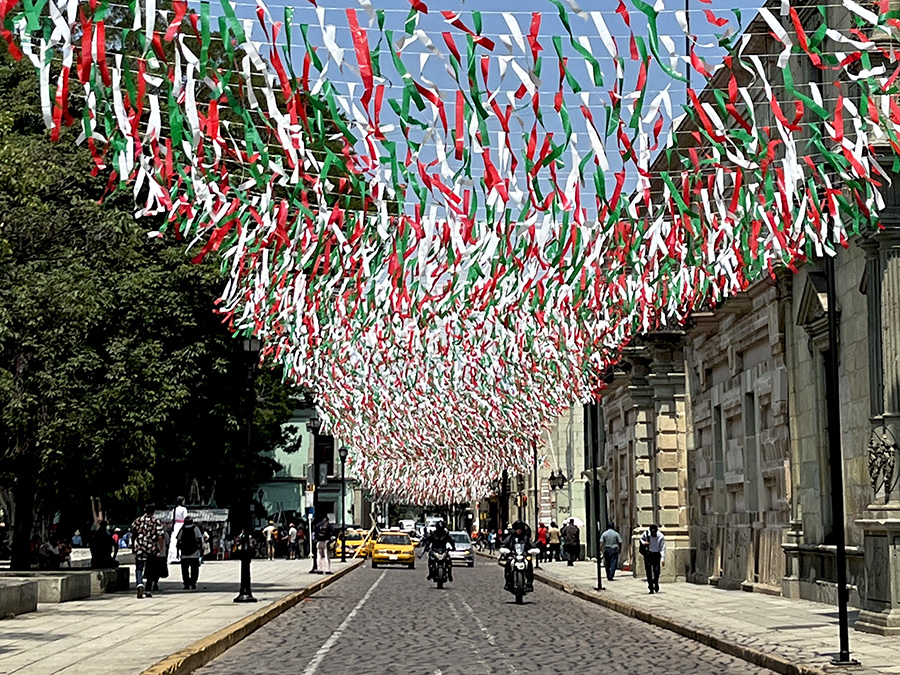
Here in Mexico, ’tis the season for displaying the green, white, and red colors of the Mexican flag. The entire month of September, Mes de la Patria (the month of the homeland), Mexico celebrates her successful war of independence from Spain — a war which began on September 16, 1810 and finally ended on September 27, 1821. Late at night on September 15, throughout Mexico bells will sound as the Grito de Dolores will echo from government balconies — mayors, governors, and the president recreating Father Hidalgo’s call to arms for independence.

In the meantime, beginning at the end of August, everything is coming up green, white, and red…

August 30, 2023 – Chiles en Nogada, La Casa del Tío Güero, Oaxaca de Juárez.
August 31, 2023 – State of Oaxaca’s government palace.
August 31, 2023 – Avenida de la Independencia, Oaxaca de Juárez.

There will also be a patriotic parade through the main streets of Oaxaca on September 16. However, for the foodies among us, the best part is the fleeting presence of Chiles en Nogada on restaurant menus. As Cristina Potters of the Mexico Cooks! blog explains, this is the season when its iconic ingredients are harvested and we are presented with the green of a poblano chile stuffed with a picadillo of seasonal ingredients (not to mention, green of the parsley garnish), covered with a white walnut sauce, and topped with bright red pomegranate seeds.

PS: Cristina also provides a recipe in the link above. ¡Buen provecho!

Read Full Post »

I got out of Dodge (aka, San Diego) last Friday morning, August 18, 2023 — just in time. Happiness was missing the historic arrival in California of Tropical Storm Hilary. Whew!!!

August 19, 2023 – walking down 5 de mayo in Barrio de Jalatlaco on my way to buy produce at Xiguela.
August 19, 2023 – Evening wedding calenda in Barrio de Jalatlaco.
August 20, 2023 – mural seen on the way to Mercado de la Merced.
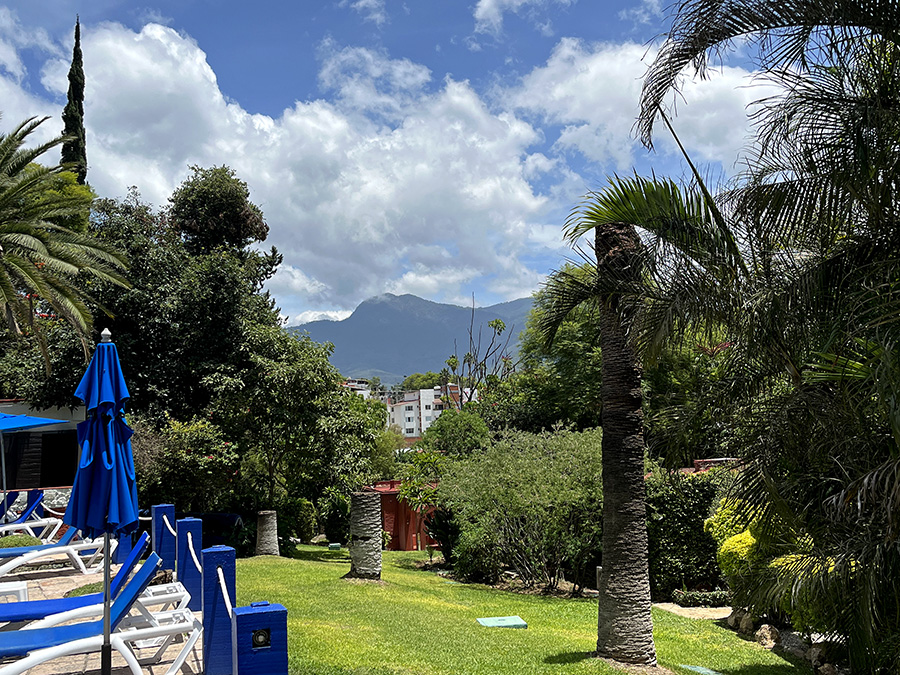
August 23. 2023 – View from the swimming pool of Hotel Victoria.

It’s good to be back.

Read Full Post »

In Teotitlán del Valle, as part of their three year commitment, each member of the Danza de la Pluma group and, especially their family, is responsible for taking a turn hosting one of the four yearly festivals. It includes several days of serving traditional foods at sit-down breakfasts, lunches, and dinners to the danzantes, band, families, godparents, village officials, and church leaders. For Danza de la Pluma Promesa 2022-2024 danzante, Capitán 2, Hugo Santiago Jimenez’s family, this entailed months of preparation, three pigs and one bull meeting their maker, and days of cooking for over 300 people.

Grupo Danza de la Pluma Promesa 2022-2024 entering Casa Santiago.
Hot chocolate with traditional breads.
Grinding chocolate on metates for atole de espuma.
Atole de espuma waiting to be served.
Hugo Santiago Jimenez and Félix Contreras Ruiz eating higadito.
The women’s table waiting for breakfast at Casa Santiago. Yes, there is a men’s table — separate tables is traditional.

Two days before winging my way to California, I had the privilege of attending the breakfast given by Hugo’s family at the family compound, Casa Santiago. After the meal, tables were folded, chairs were moved to surround the courtyard, danzantes took their places, the band began to play, and Hugo and his fellow Capitán, Félix Contreras Ruiz commenced to dance. Following their dance, the entire group performed and then, led by the band, they took to Teotitlán’s main street to process up to the atrium of the church where they would perform the Danza de la Pluma for almost eight hours.

Papel picado at the fiesta hosted by the family of Capitán 2, Hugo Santiago Jimenez, at Casa Santiago.
Some of the women behind the days of feasting.
Hugo Santiago Jimenez dances in the courtyard of Casa Santiago.
Family watching as Hugo Santiago Jimenez dances in the courtyard of Casa Santiago.
Band leads the way back to the Templo de la Preciosa Sangre de Cristo.
Grupo Danza de la Pluma Promesa 2022-2024 processing back to the Templo de la Preciosa Sangre de Cristo.

Muchisimas gracias to the people of Teotitlán del Valle and, especially, Hugo and his family for inviting me and for being so welcoming and gracious. And, to my readers, CORTV will be streaming tomorrow (July 24, 2023) evening’s Danza de la Pluma performance by Teotitlán’s danzantes at La Guelaguetza (5 PM Mexico; 4 PM PDT; 7 PM EDT).

Read Full Post »

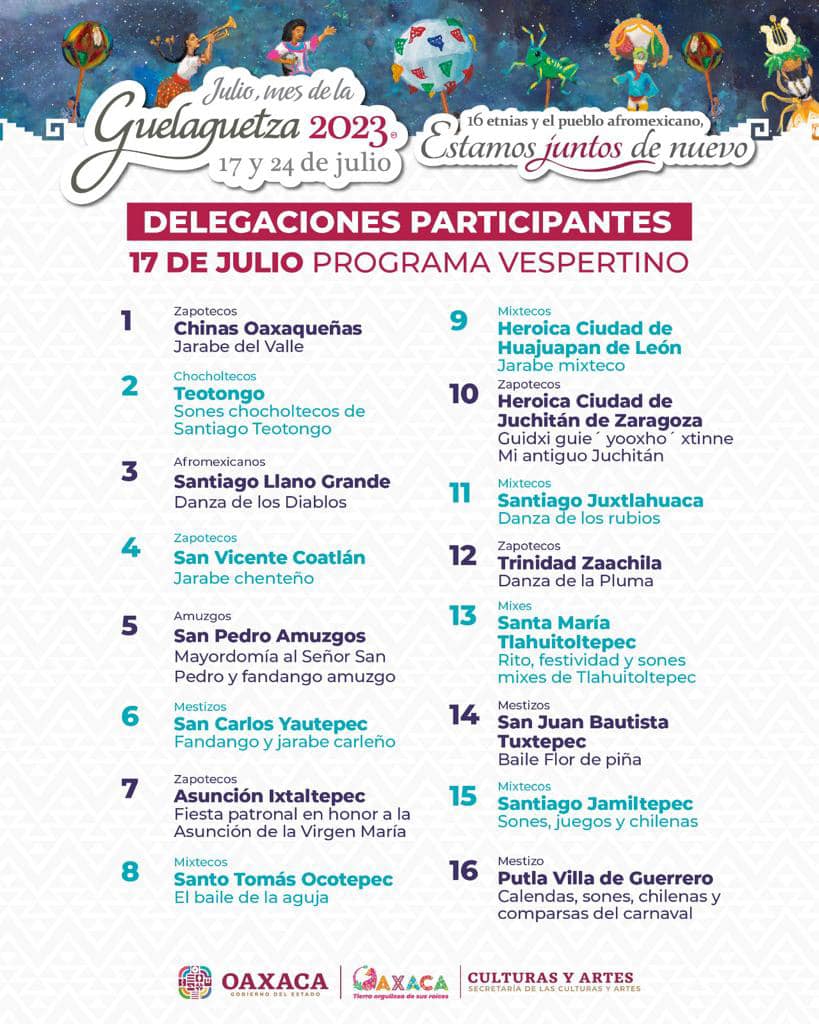
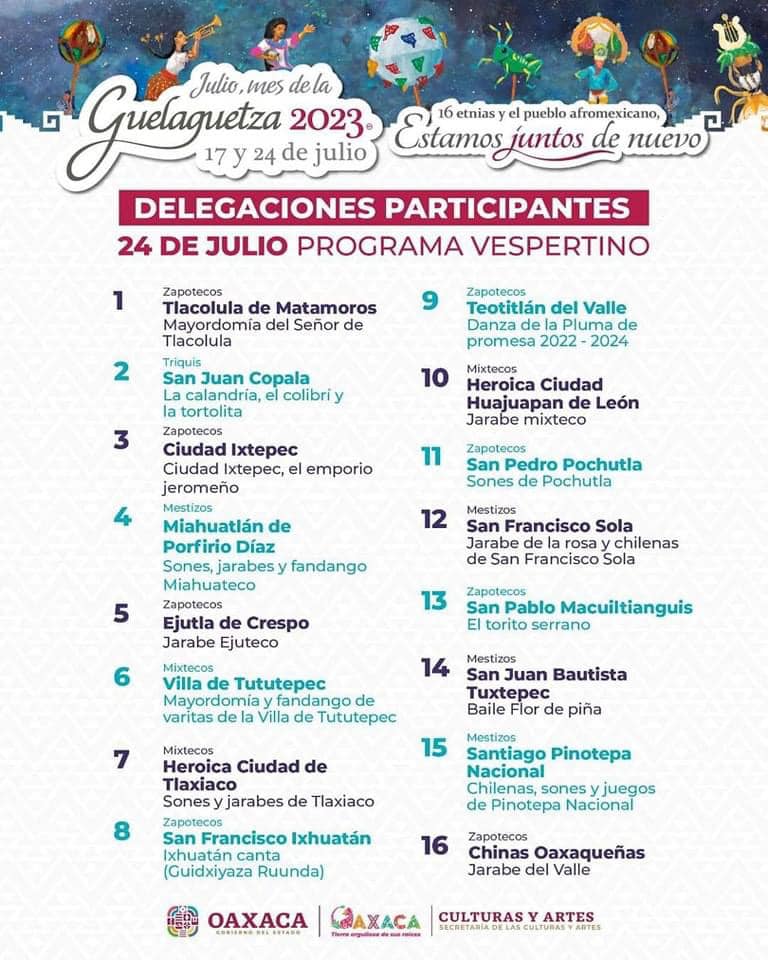
It’s Guelaguetza time in Oaxaca. And, I know, I should have written this blog post several days ago, but I have the best of excuses for my tardiness — I’m in el norte for a family reunion, thus a little distracted! However, better late than never, Guelaguetza 2023!

See below for the list of delegations by date, time, and the dance they will be performing. Performances will be streamed on CORTV’s YouTube channel.

July 17, 2023 – 10:00 AM
July 17, 2023 – 5:00 PM
July 24, 2023 – 10:00 AM
July 24, 2023 – 5:00 PM

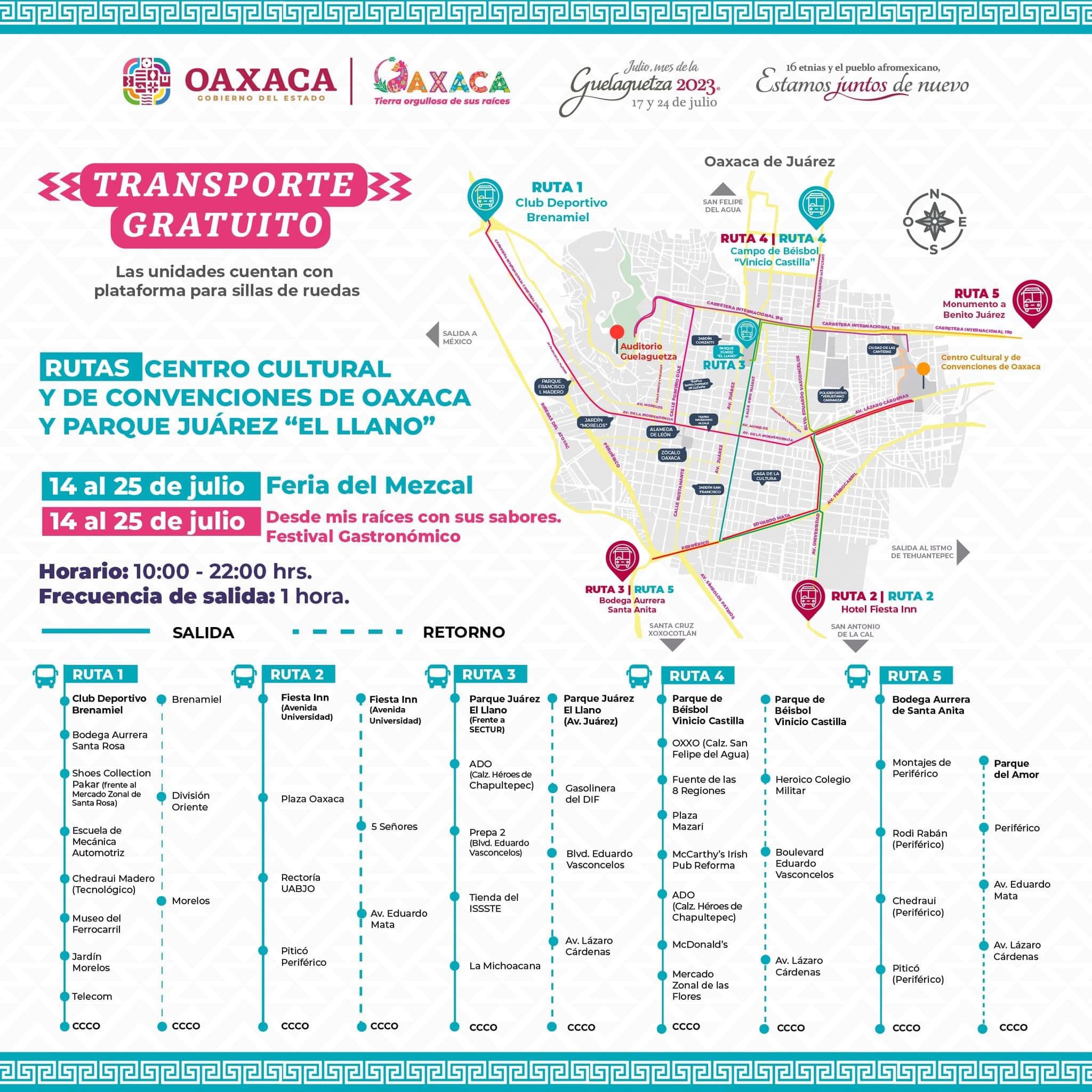
Activities are spread throughout the city with free transportation available between event sites.

For other daily activities and more information, check out the official Guelaguetza 2023 website and Facebook page. Enjoy!

Read Full Post »

To all the fathers and father figures, I wish you ¡Feliz Día del Padre!

May you find joy in your role and continue to share your wisdom, traditions, and love.

Read Full Post »

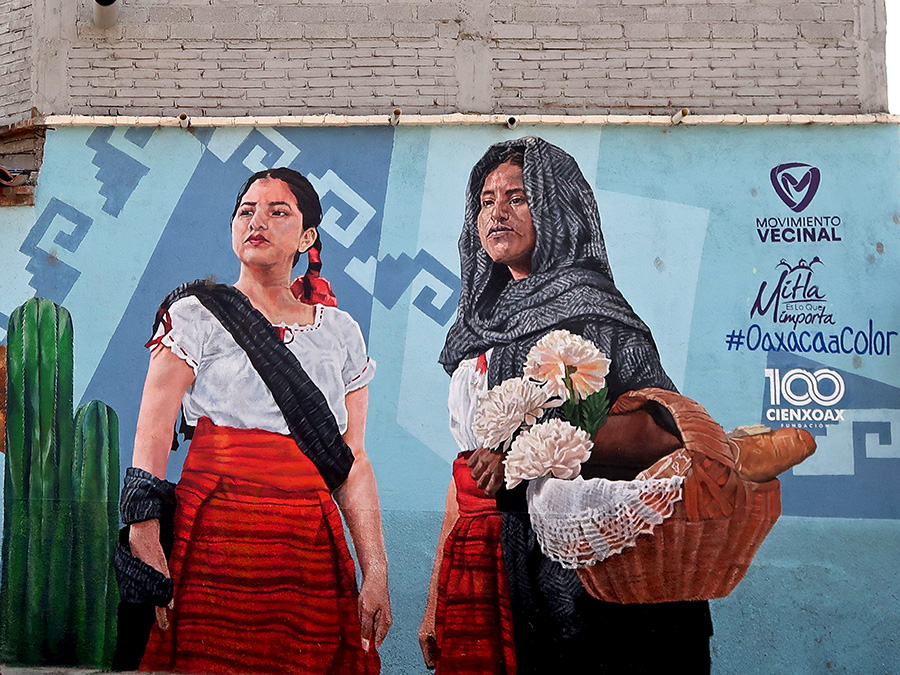
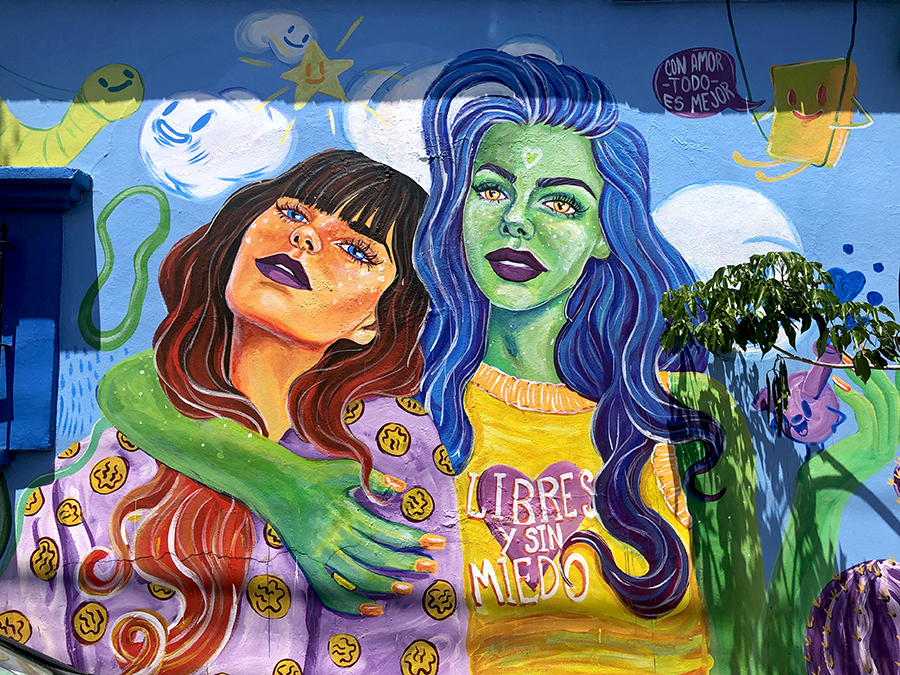
May 10 is Día de la Madre in Mexico and to honor the mothers, grandmothers, mother figures, and the daughters, whose future is in their hands, some recent murals seen in the city and countryside.

The celebration of Mother’s Day migrated south from the USA in the early 20th century and was embraced and promoted by the Catholic Church AND the anticlerical Revolutionaries. Their reasons being:

around the 1850s the Liberals… were nervous about women’s growing participation in the public sphere.  Establishing motherhood as venerable and the home as sanctified… would give women a sphere of their own where they could be boss.  Also, it would keep them off the streets and out of the workplace where they had begun to compete with men for jobs. Under their watch, everyday motherhood became an exalted madre-hood…. The twentieth-century Revolutionaries who succeeded them took the idea and ran with it, adding in 1922 a ritual, Mother’s Day. [Madre: Perilous Journeys with a Spanish Noun by Liza Bakewell, p. 84]

As for keeping them out of the workforce, according to a report citing the 2010 census, 33.3% of women work and this doesn’t even include those working in family operated enterprises. However distasteful the reasons behind the establishment of Mother’s Day in Mexico, it does nothing to diminish the need to honor these beautiful, hardworking, formidable, and loving women.

And to the girls and young women, may you be empowered by the strength and love of the maternal figures in your life to reach for the stars, live without fear, and be whatever you choose to be.

Read Full Post »

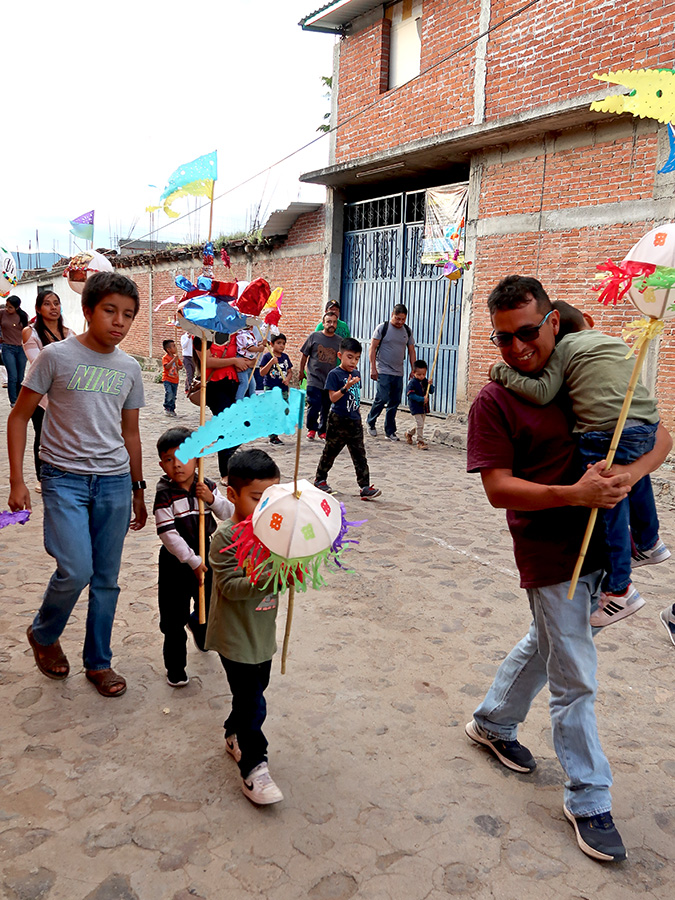
The United Nations declared November 20 as World Children’s Day. However, that is Día de la Revolución in Mexico, thus in 1924, President Álvaro Obregó and Minister of Public Education José Vasconcelos designated April 30 as Día del Niño — the day Mexico celebrates and honors her children. Schools organize parties with games and treats, communities organize special activities, and parents may give their hijas and hijos gifts. However, one of the features of life in Oaxaca that I most appreciate is the way children are included all year round in celebrations.

July 4, 2022 – Convite for the festival honoring Preciosa Sangre de Nuestro Señor Jesucristo, Teotitlán del Valle.
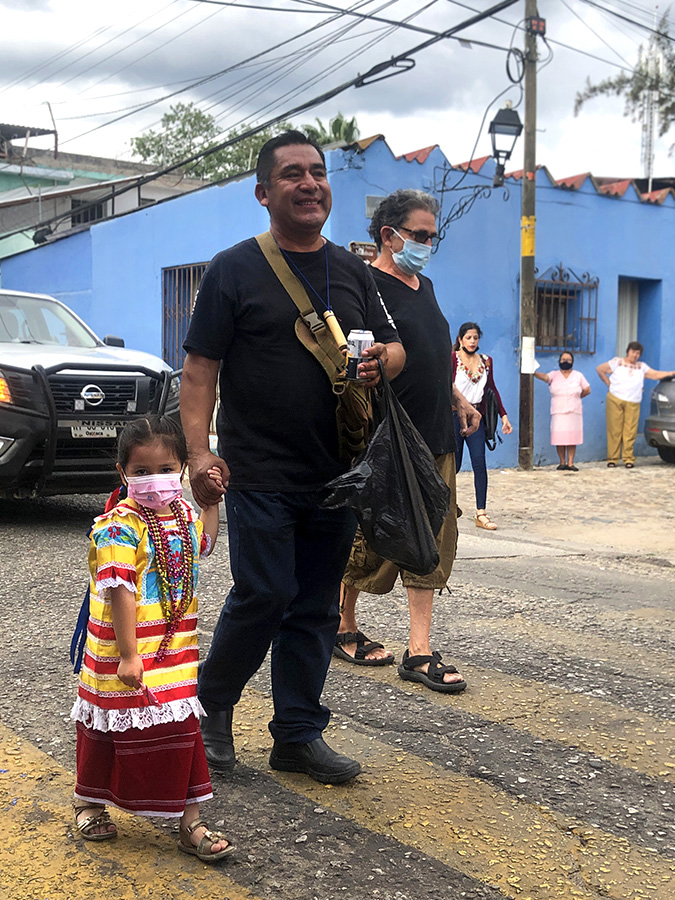
July 4, 2022 – Wearing traditional dress, with her canasta, watching and learning at the Preciosa Sangre de Nuestro Señor Jesucristo convite, Teotitlán del Valle.
July 4, 2023 – Practicing with a marmota at the convite honoring Preciosa Sangre de Nuestro Señor Jesucristo, Teotitlán del Valle.
July 5, 2022 – Playing the roles of La Malinche and Doña Marina in the Danza de la Pluma, Teotitlán del Valle.
September 16, 2022 – Young escaramuza participating in the Independence Day parade in Oaxaca City.
February 4, 2023 – Young boy twirling a marmota during wedding festivities in front of Templo de Santo Domingo de Guzmán, Oaxaca.
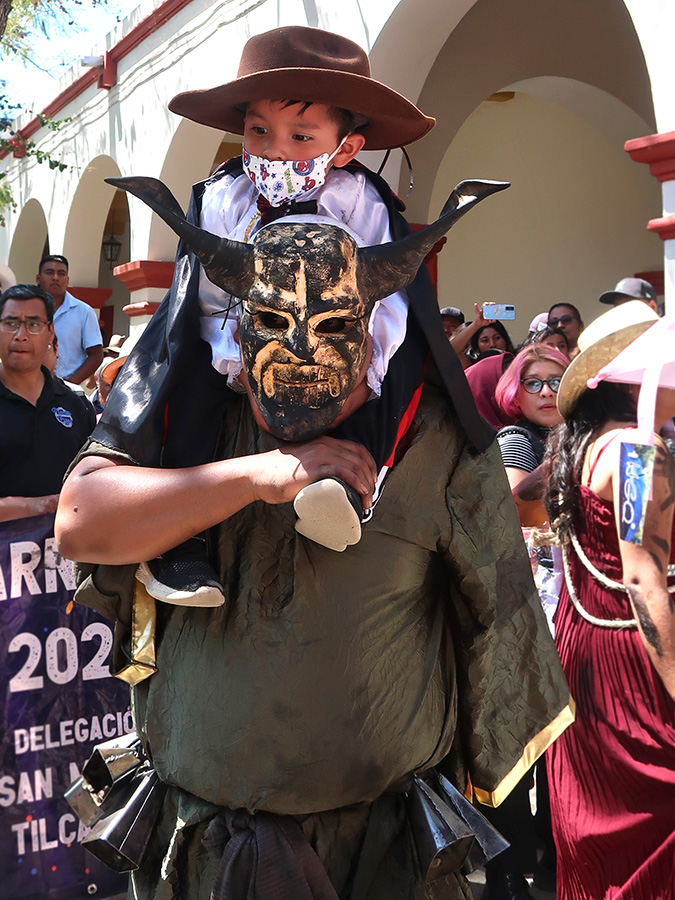
February 18, 2023 – Young cachudos from Santa María Coyotepec participating in the Carnaval parade, Oaxaca.
February 18, 2023 – Young participant in the Carnaval parade, Oaxaca.
February 21, 2023 – Carnaval in San Martín Tilcajete.
April 2, 2023 – Carrying an offering in the Good Friday procession, San Antonino Castillo Velasco.

“… the objective of this [Día del Niño] celebration is to dedicate a moment to understanding the child population, promoting their social inclusion and carrying out activities to promote their well-being and the rights to which they have access as human beings.” (Google translation from this article)

Read Full Post »

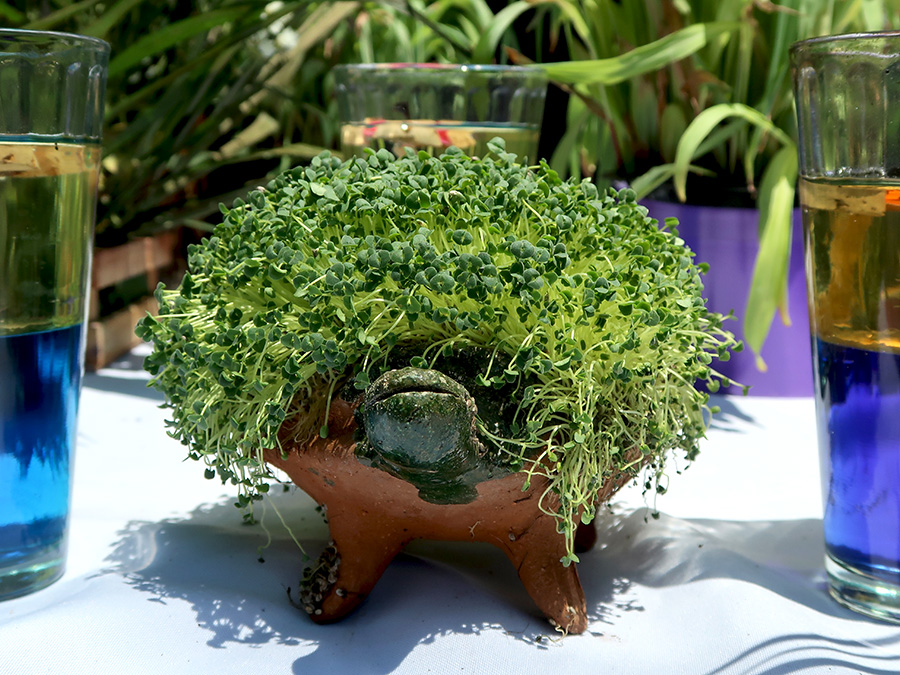
As Semana Santa approached, Oaxaca’s annual invasion of the Chia Pets began. On altars in churches, homes, and businesses, terracotta animals sprouting Chia appeared.

Good Friday 2023 – 5th Station of the Cross in Barrio de Jalatlaco.

Before you lament commercialized products from the USA intruding on the sanctity of Holy Week, I can happily report Salvia Hispanica (aka, chia) filled clay animals were symbols of the season long before Joe Pedott ever set foot in Oaxaca in the late 1970s and “discovered” them.

According to an article in MexConnect, “Growing greens remind the viewer of the resurrection and renewal of life.”

Native to Mexico, Salvia hispanica was the third most important food (after corn and beans) of the Aztecs as chia seeds are high in protein and omega-3 fatty acids. By the way, the name of the Mexican state of Chiapas comes from Chiapan, an ancient city whose name in Náhuatl means, “the place where the chia sage grows.”

(ps) Sorry about the Chia Pet advertisement ear worm!

Read Full Post »

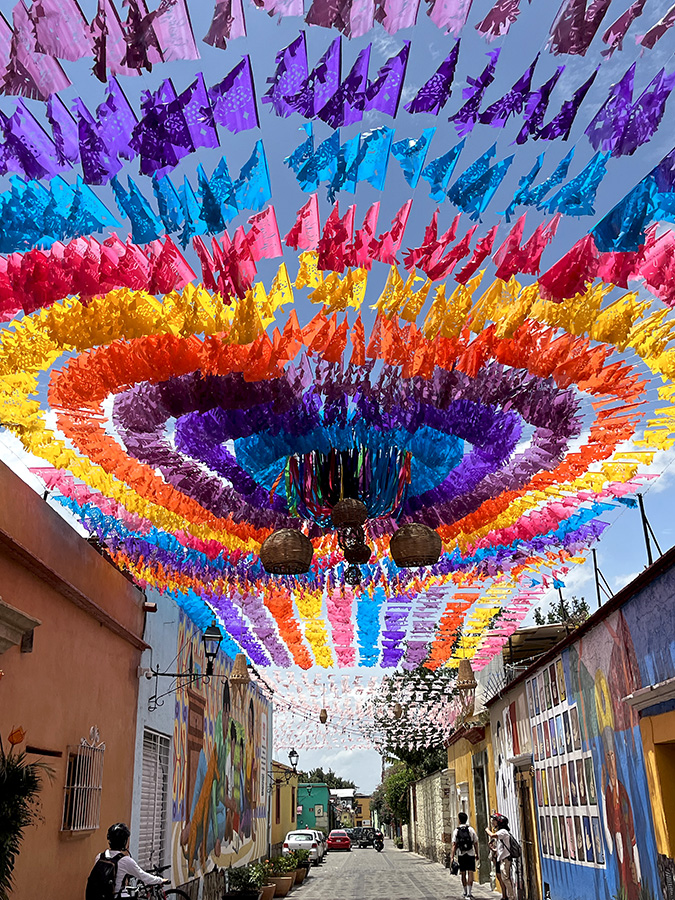
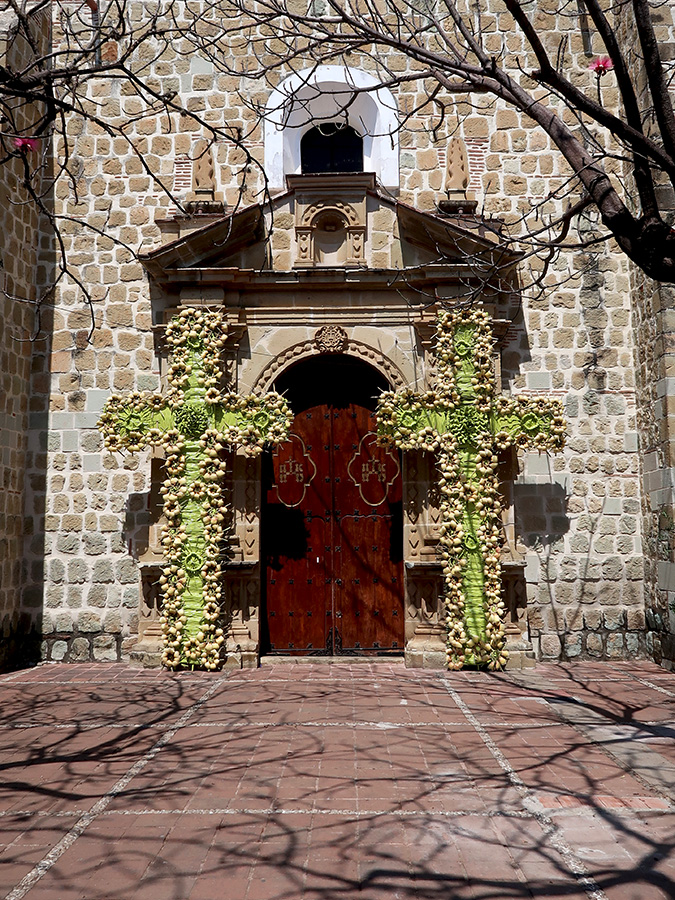
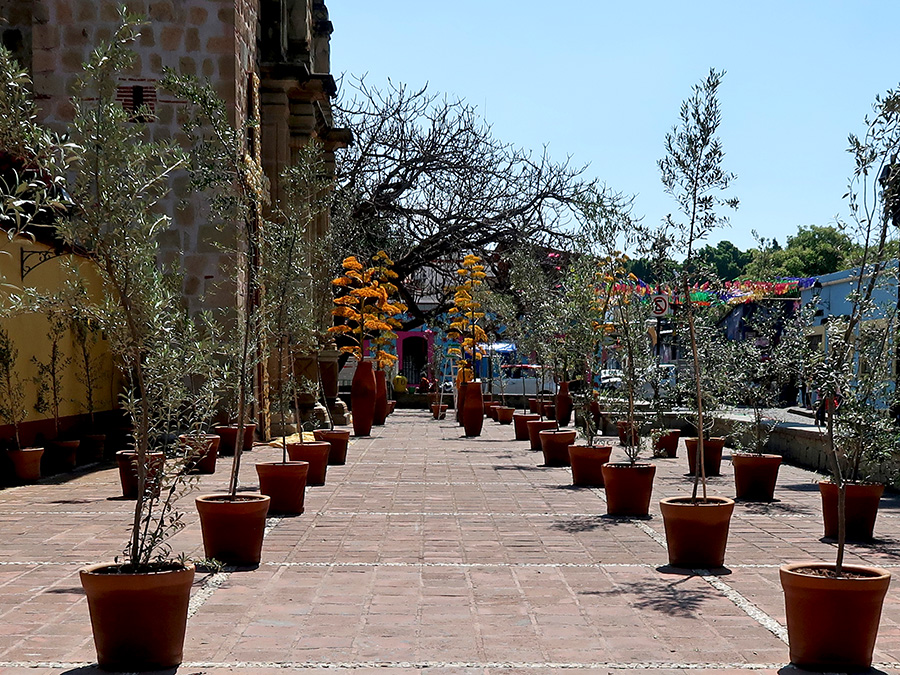
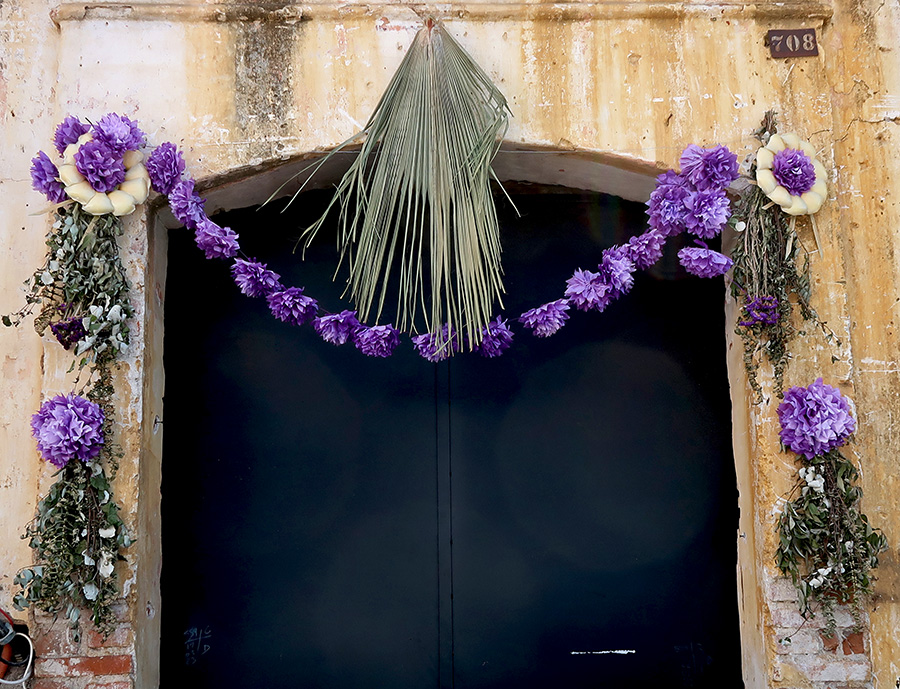
Purple papel picado (actually, plastic) began appearing above streets a month ago. And, in the past few days, the atrium of Templo San Matías Jalatlaco has been decorated with olive trees, sheaves of wheat, and crosses embellished with flowers woven from the base of Sotol leaves.

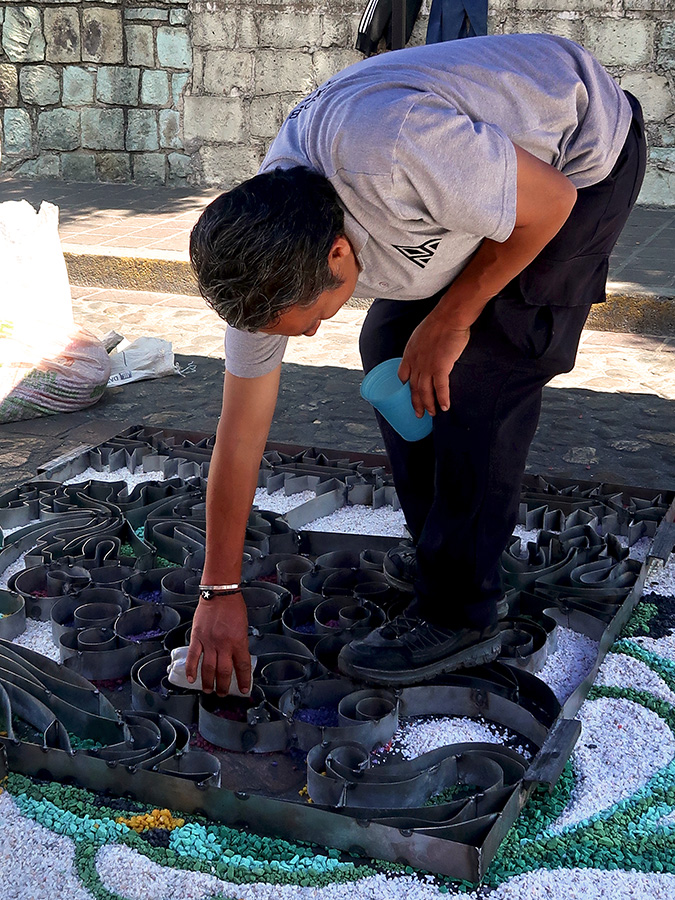
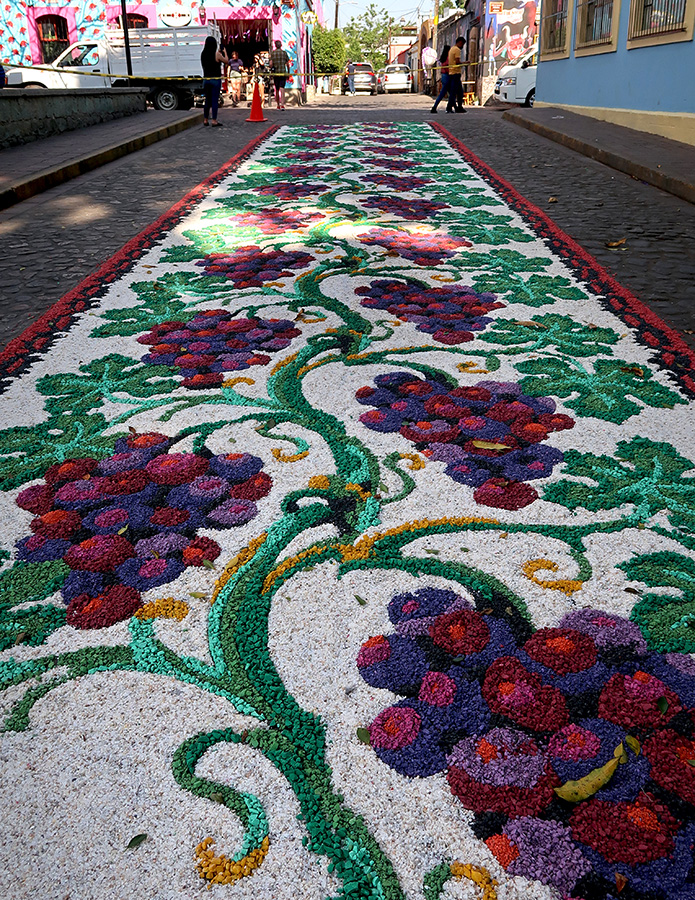
Yesterday, Calle de Miguel Hidalgo in front of the church was closed to traffic and the Alfombristas Mexicanos colective from Huamantla, Tlaxcala began creating a beautiful tapete (rug) made of colored stones along the length the block.

Purple decorations can also be seen festooning the fronts of homes and businesses in the neighborhood.

You might ask, why all the purple? According to the Ecclesiastical Sewing website, purple symbolizes “the royalty of Christ, His passion and death for our sins, and the coming of spring.” For more of an explanation, click on the link to their website.

Read Full Post »

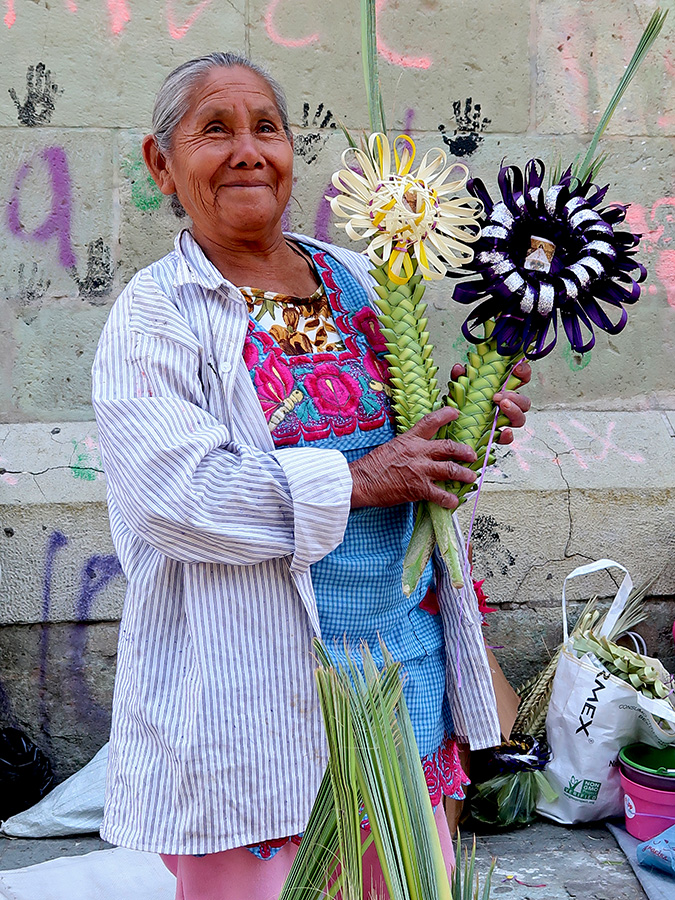
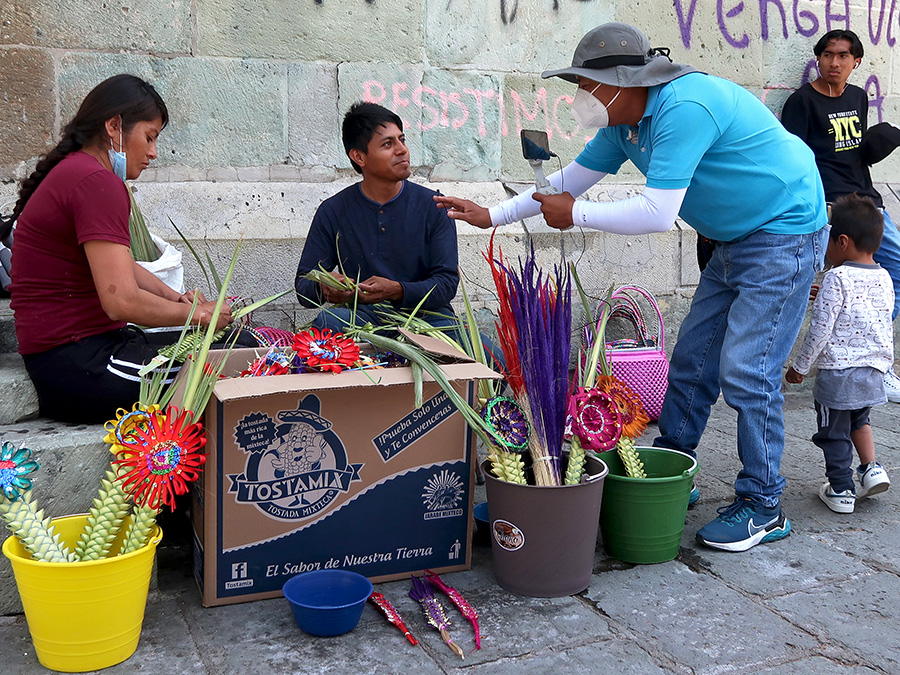
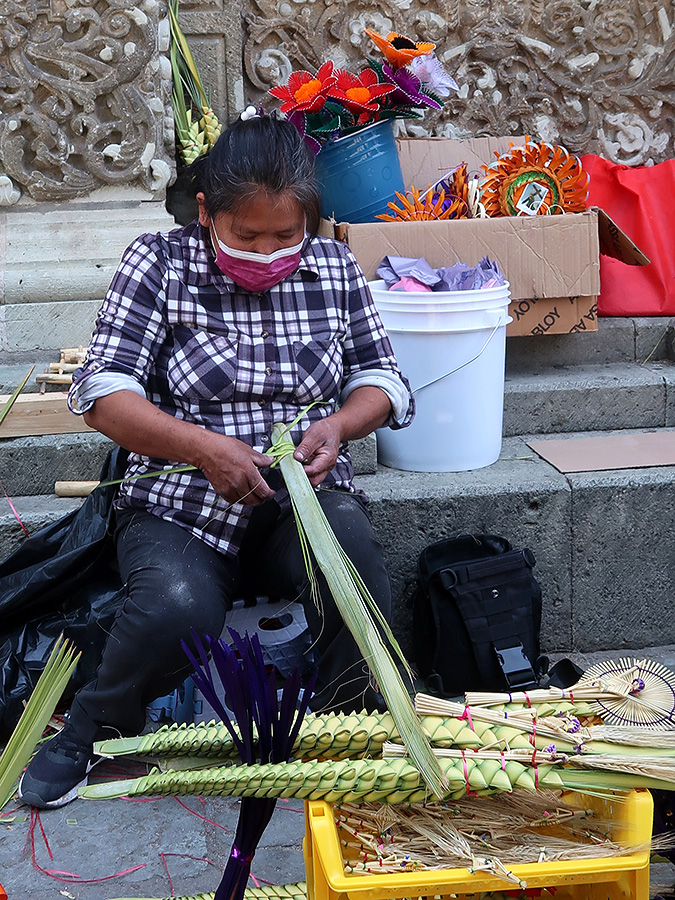
Despite the construction on the Alameda across from the Cathedral, the palm weavers from the Mixteca region of Oaxaca are back to sell intricately woven palm fronds to be blessed and carried on Palm Sunday.

And, like most artisan traditions, it’s a family affair.

Read Full Post »

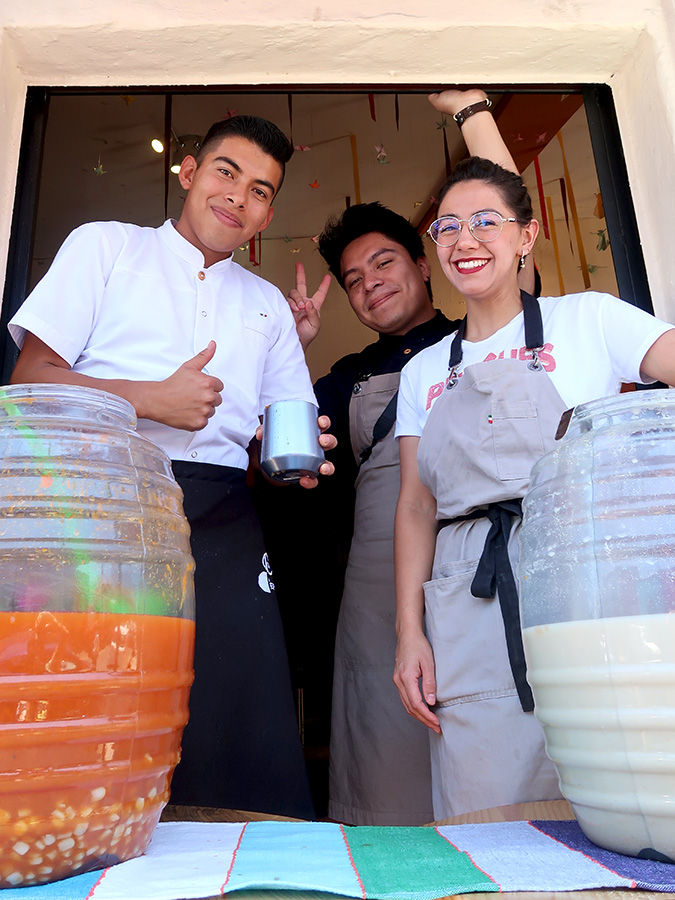
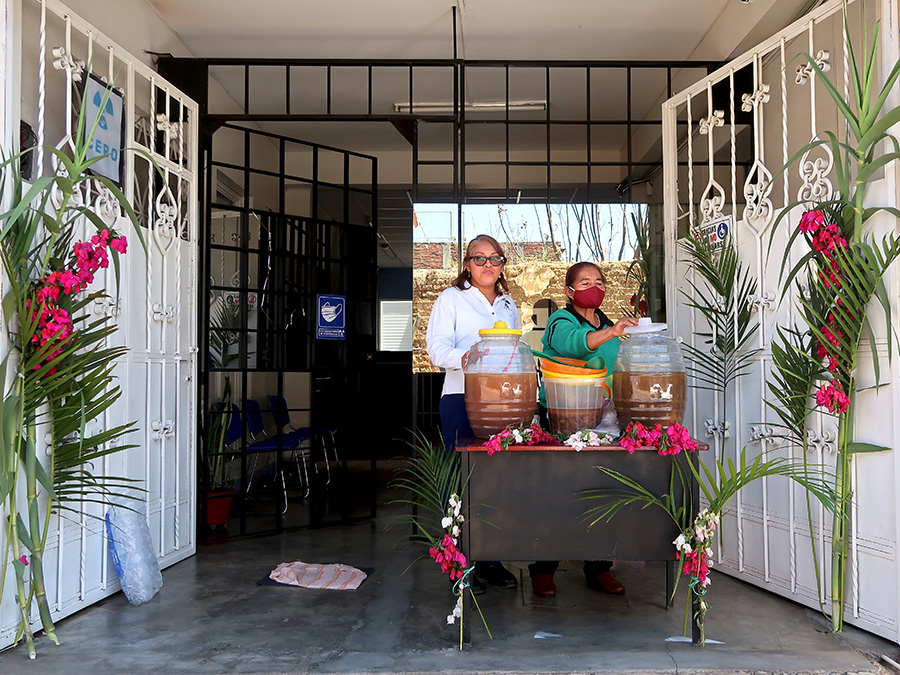
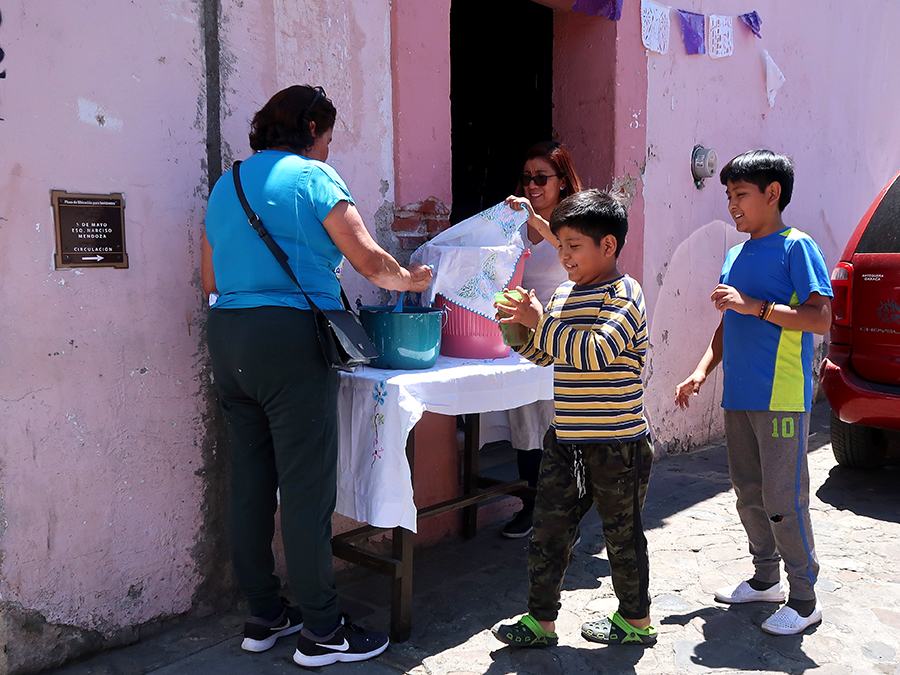
The day before yesterday, there was water, water everywhere and lots of drops to drink! It was the fourth Friday of Lent, Día de la Samaritana, an “only in Oaxaca” celebration.

Xocote restaurant on Calle Antequera, Barrio de Jalatlaco.

The Day of the Good Samaritan was inspired by the Gospel of John story in the New Testament when a tired and thirsty Jesus, on his way to Galilee, asks a Samaritan woman at Jacob’s Well in Sychar for some water. The request was highly unusual because, according to the Old Testament, “Jews regarded the Samaritans as foreigners and their attitude was often hostile.”  The woman complied with his request and the rest is history.

Laboratorio de Análisis Clínicos Qualis on 5 de mayo, Barrio de Jalatlaco.

Celebrating the Good Samaritan in Oaxaca began in the atria of churches at the end of the 19th century and is a popular and much-loved tradition. People of all ages, from small children to grandparents, line up at bougainvillea and palm decorated booths in front of churches, restaurants, businesses, and schools for the traditional Día de la Samaritana free flavored waters.

Santa Hierba restaurant, 5 de mayo, Barrio de Jalatlaco.

By noon, masses of people had gathered in the atrium of the local church, Templo de San Matías Jalatlaco, where two long rows of tables, under the shade of the tented atrium, were lined with massive bowls filled with colorful aguas on offer. However, I preferred to avoid the crowds and wander through the streets of my Jalatlaco neighborhood.

Miscelánea Tepeaca, 5 de mayo, Barrio de Jalatlaco.

By the way, we are not talking plain water, these are divinely flavored aguas frescas made with fresh fruits, herbs, flowers, and more — jamaica (hibiscus), horchata, chilacayote (squash), tamarindo, sandia (watermelon), and tejate.

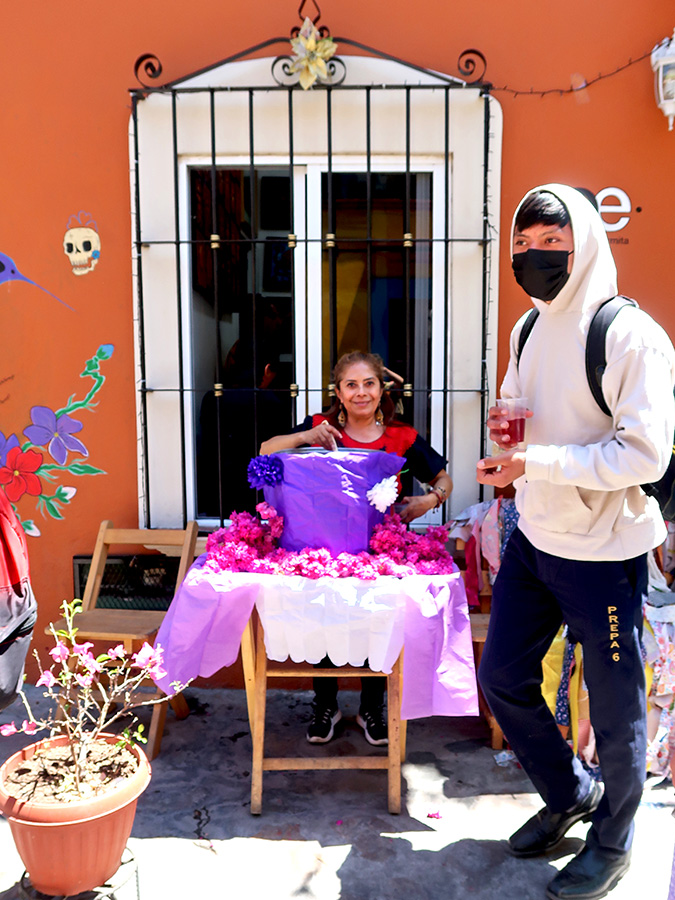
Espacio Ermita Arte y Diseño, Calle Hidalgo, Barrio de Jalatlaco.

In the name of the environment, an appeal was made for people to bring their own cups. And, I think a majority complied!

Asador Bacanora, 5 de mayo, Barrio de Jalatlaco.

After almost two hours, three aguas, and being surrounded by smiling people enjoying this celebration of generosity, I returned home with my heart full of gratitude for this Oaxacan tradition. I love this day and the message it imparts and the way it brings neighbors together.

Read Full Post »

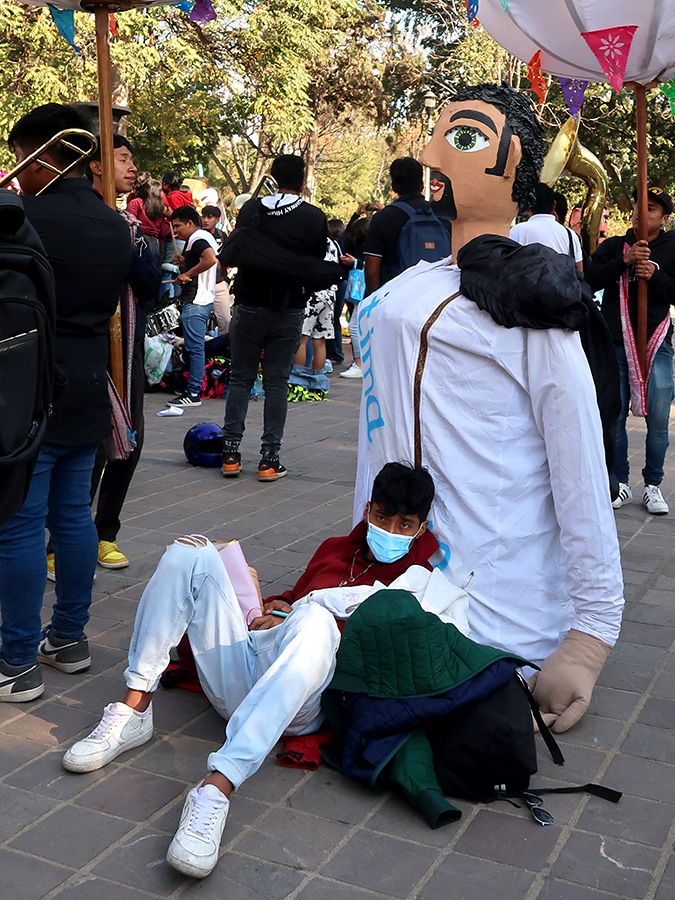
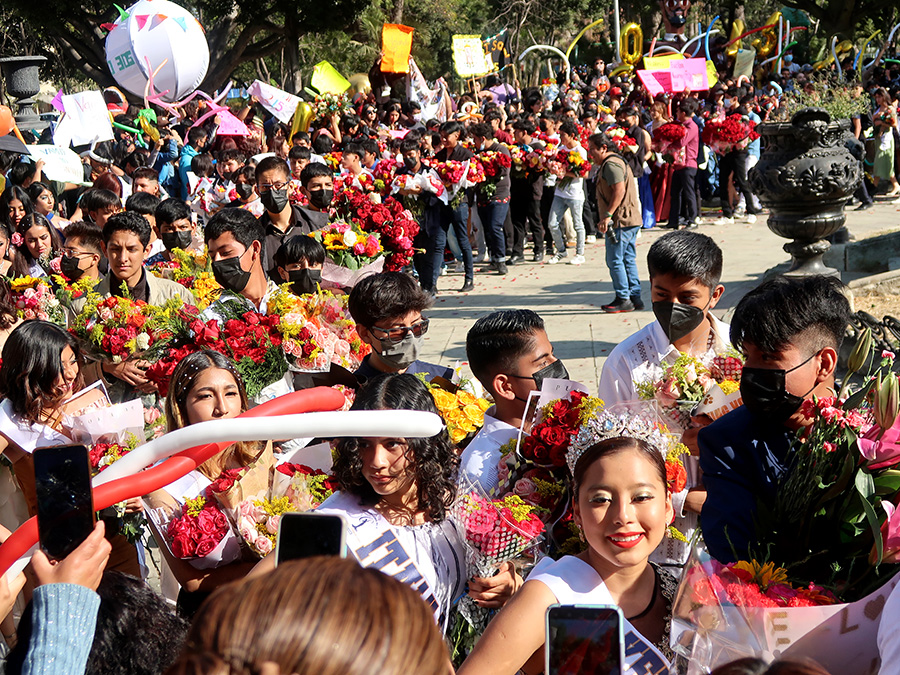
Should you find yourself in Llano Park early on a Friday morning during Lent, your senses will be assaulted with the cacophony of multiple bands (playing different tunes at the same time!), twirling marmotas, dancing monos, cheering students, young men loaded down with flowers, and young women dressed to the nines circling the statue of Benito Juárez.

Viernes del Llano (aka, Paseos Florales del Llano) is a fifty year old “only in Oaxaca” tradition held during the first five Fridays of Lent. Apparently, dating back to the 19th century, Oaxaca had a tradition, promoted by the church, of paying homage to women for the important role they play in the support of the family. The ritual died out, but was resurrected in the seventies by the Universidad Autónoma Benito Juárez de Oaxaca (UABJO) to recover “religious and family values.”

The tradition was put on hold during the pandemic, but is back in full force. I was in Teotitlán del Valle for this year’s first paseo but, along with my neighbor, attended the second one on March 3rd featuring Preparatoria 6. It must be a very large school as there were 85 participants.

The winners (photos below) were announced in five different categories — that in English translated (approximately) to: Miss Photogenic, Miss Social Media, Godmother of Flowers, Best Cheerleader, and Godmother of Friday.

While it is very colorful, joyous, fun to observe, and is a lucrative day for flower vendors, this article (in Spanish) raises some obvious questions, including: Is this tradition or sexism? And, is this something educational institutions should be promoting?

Read Full Post »

« Newer Posts - Older Posts »