Feeds:
Posts
Comments

Archive for July, 2012

The textiles of Oaxaca are currently on center stage, both literally and figuratively, during these 10 days of Guelaguetza festivities.  And perhaps, besides drawing in much-needed tourist pesos, the Guelaguetza plays an important role in the appreciation and preservation of Oaxaca’s textile traditions.

Delegation from San Andrés Huaxpaltepec, District of Jamiltepec, in the Costa region of the state of Oaxaca.

However, the textile traditions of Lebanon have not fared so well.  According to the article, The End of the silk road, by Ana Marie Lucas and posted to Now Lebanon, silk production, which dates back to the Middle Ages, is on death’s doorstep.  Only two artisanal workshops remaining today.  However, along with the Italian Embassy, the Mexican Embassy, Alfredo Harp Helú Foundation, and Textile Museum of Oaxaca are coming to the rescue.

“We wanted to share our experience with the Lebanese,” Mexican Ambassador Jorge Alvarez Fuentes told NOW Extra. “When I saw the House of the Artisan closed and in need of more attention I thought this was the perfect place to exhibit both Mexican and Lebanese items,” he explained.

“Aside from the exhibition, we wanted to organize two conferences and a workshop of how to dye the silk with natural pigments. This way many people will be able to see how the Phoenicians could extract the purple dye from the Murex shell,” he added.

According to Héctor Meneses, head of the Textiles Museum in Oaxaca, there are surprising similarities between the Lebanese and Mexican traditions in terms of pigment extraction. Mexicans extracted the red dye from a species of snail, very similar to the purple dye extracted by the Phoenicians from the Murex shell. “The difference is that in Mexico, this process is still alive and it’s being used,” he said during a conference.  [Read full article HERE]

FYI:   Alfredo Harp Helú is a Mexican businessman who, like his cousin Carlos Slim Helú (world’s richest man), is of Lebanese extraction.  Harp Helú maintains a residence in Oaxaca and, besides his foundation funding the Textile Museum, he and his foundation are involved in several other philanthropic projects in the state of Oaxaca.

h/t to Margie Barclay for the article.
Read Full Post »

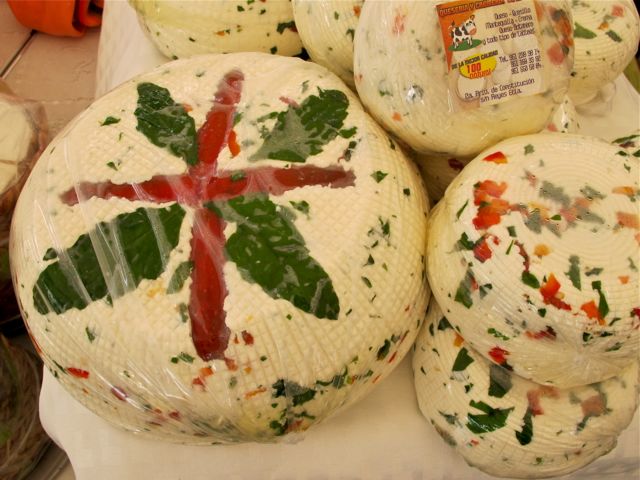
Besides mushrooms, tejate, tamales, and mole, there is cheese and mezcal… and last Monday I hopped in a colectivo bound for Etla; my destination was Reyes Etla (about 20 km. from the city) for the 2nd annual Queso y Quesillo Expo Feria.  Oaxaca is known all over Mexico for its cheese and, without a doubt, the best comes from the municipalities around Etla — and Oaxaca’s department of tourism is on a mission to promote its position globally.

Ball of cheese decorated with basil leaves and red bell pepper strips.

Vendors tempted with artistic displays and tastings of, among others, queso fresco, queso crema, and quesillo.  Yummm….  It is a dark day around Casita Colibrí when there isn’t a ball of quesillo in the refrigerator.

Display of cheeses with woman vendor behind counter

FYI:  Quesillo (aka:  Oaxacan string cheese) was first made in Reyes Etla in 1884 — supposedly by mistake!  According to one legend, a young girl from Reyes Etla disobeyed her mother and allowed the cheese curds to expand into a spongy mass.  She attempted to correct her mistake by pouring boiling water over the curds, then she kneaded it and pulled it into the first strip of what is now known as quesillo.

Woman vendor wearing mask behind display of quesillo
And, now, we turn to the 15th annual Feria Internacional del Mezcal…  After years of languishing in tequila’s shadow, being considered a “poor relation” — that is, if it was considered at all — mezcal’s profile has risen dramatically in the past several years.

XV feria internacional del mezcal oaxaca 2012

In August 2010, none other than Eric Asimov wrote about, Mezcal, Tequila’s Smoky, Spicy Cousin in the New York Times.  A year later, a NYT ‘s article advised, Move Over, Tequila, It’s Mescal’s Turn to Shine.  (You say mescal, I say mezcal.)

And, sheesh, I was flipping channels the other night and stumbled on Tim and Tim in Oaxaca, being instructed on the art of making mezcal by my landlord, on an episode of the TV program ROAM!  Then there is the No Reservations “Obsession” episode, where  Anthony Bourdain explores Ron Cooper’s obsession with mezcal.

Back to the feria, where over 40 vendors displayed their wares…

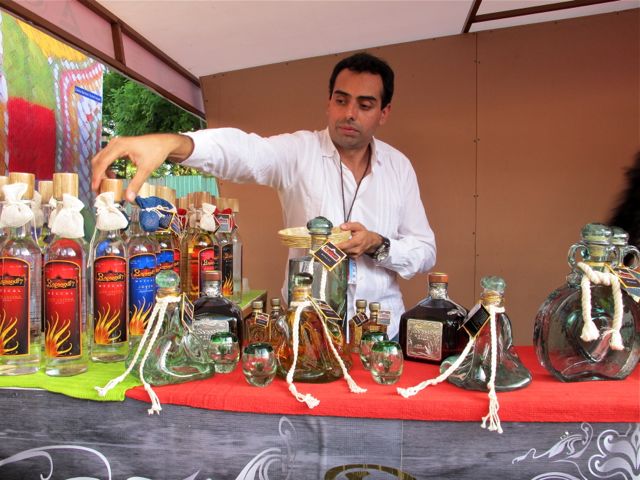
Bottles of mezcal lined up in two shelves of a display

poured generous tasting shots…

3 guys behind counter offering shots of mezcal

and sold their mezcals.

.Male vendor reaching for a bottle of mezcal

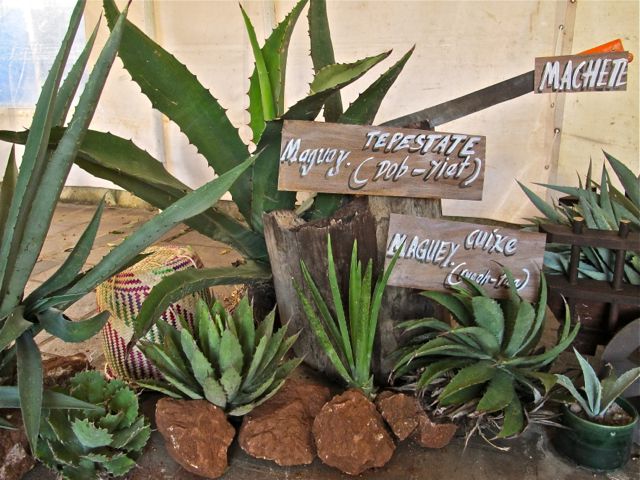
In addition, there was an exhibit showing the various types of maguey, from which mezcal is made…

Variety of agave plants with labels.

and the equipment used and processes they undergo to become this smoky and complex distilled spirit.

A mezcal still

As the old Oaxaqueño saying goes, “For everything bad, drink mezcal, and for everything good, you also should.”

Read Full Post »

Sunday, we headed up into the clouds of Oaxaca’s Sierra Norte to San Antonio Cuajimoloyas.  At 10,433 feet above sea level and nestled in a forest of pine and oak trees, the setting has an ethereal feel and seems a world apart from the valley below — almost like being in an alpine village in Switzerland.

Wood house with tin roof

Getting up there wasn’t easy, thanks to the bumpy and winding dirt road.  However, reaching our destination, the Feria Regional de Hongos Silvestres (fair of wild mushrooms) was well worth it!

Banner above municipal building, against a cloudy sky, announcing, "Bienvenidos,12va. feria regional de Hongos Silvestres"

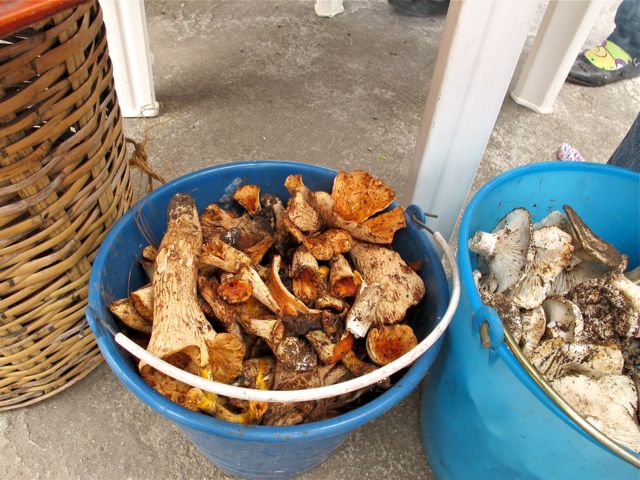
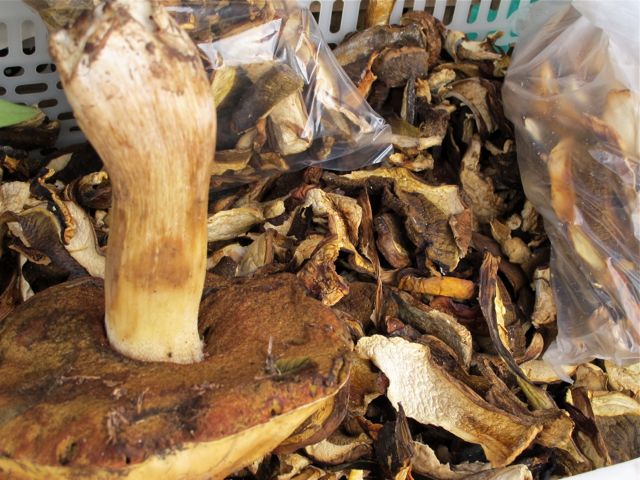
Once there, baskets, buckets, and boxes filled with freshly gathered mushrooms greeted us.

Blue plastic bucket of trumpet mushrooms

Close-up of mushrooms

Mushrooms in a box

Orange capped mushrooms in a green container

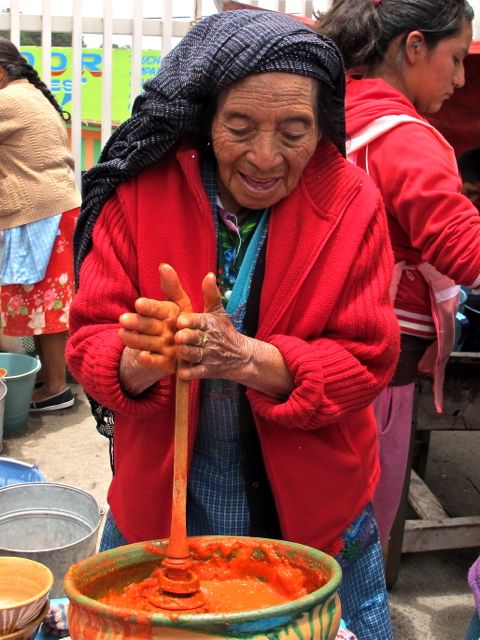
Not only was there a bounty of raw mushrooms, the aroma of sautéed mushrooms, mushroom tamales, and mushroom empanadas stimulated our appetites and we tried them all, and washed it down with an atole rojo made by this beguiling gal.

Elderly woman mixing atole rojo.

And no, these were not “magic mushrooms” but the experience was, indeed, magical.

Read Full Post »

As most of you have gathered, I love the music and people, life and color, and food and ferias, not to mention the year-round sun and warm weather of Oaxaca.  However, as I’ve mentioned before, there is much going on beneath the surface and it isn’t pretty.  So, even though it’s the middle of Guelaguetza (or, maybe because the spotlight is on the music, dance, and costumes of Oaxaca’s indigenous communities), I feel compelled to share today’s article by one of my favorite labor photographers and journalists, David Bacon.

Canadian Mining Goliaths Devastate Mexican Indigenous Communities and Environment

Wednesday, 25 July 2012 00:00 By David Bacon, Truthout | Report Email

An assembly last fall in Oaxaca of the Binational Front of Indigenous Organizations that called for a sustainable development policy that would support farmers as opposed to mega development projects. (Photo: David Bacon)An assembly last fall in Oaxaca of the Binational Front of Indigenous Organizations that called for a sustainable development policy that would support farmers as opposed to mega development projects. (Photo: David Bacon)
Oaxaca, Mexico – For over two decades in many parts of Mexico, large corporations – mostly foreign owned but usually with wealthy Mexican partners – have developed huge projects in rural areas. Called mega-projects, the mines and resource extraction efforts take advantage of economic reforms and trade treaties like the North American Free Trade Agreement.

Emphasizing foreign investment, even at the cost of environmental destruction and the displacement of people, has been the development policy of Mexican administrations since the 1970s. When the National Action Party (PAN) defeated the old governing Party of the Institutionalized Revolution (PRI) in 2000, this economic development model did not change. In fact, the PAN simply took over the administration of this development policy and even accelerated it, while in the Mexican Chamber of Deputies the two parties cooperated to advance its goals.

But while these projects enjoy official patronage at the top, they almost invariably incite local opposition over threatened or actual environmental disaster. Environmental destruction, along with accompanying economic changes, cause the displacement of people. Families in communities affected by the impacts are uprooted and often begin to migrate. Nevertheless, the projects enjoy official support and are defended against rising protests from poor farmers and townspeople by the federal government.  [Please read the full article HERE]

Read Full Post »

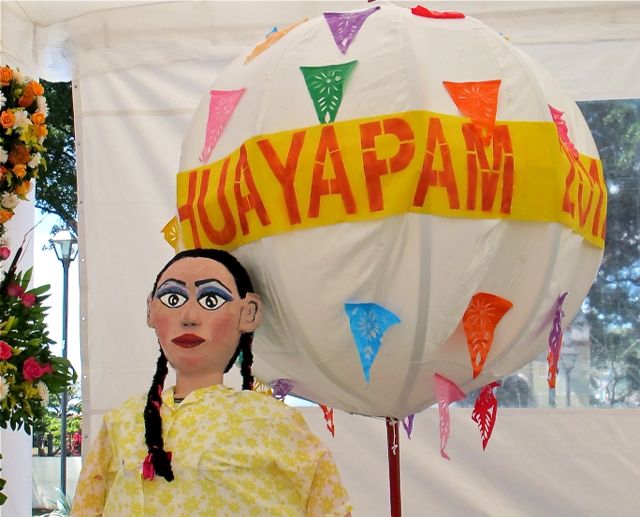
Oaxaca is a foodie paradise, in major part, because much of its cuisine draws on and honors its pre-Hispanic roots.  And, right now, during this time of Guelaguetza, various food and beverage ferias and festivals are also happening throughout the city and central valleys of Oaxaca.  Today, on the Plaza de la Danza, the Feria del Tejate y el Tamal, celebrating these specialties of San Andrés Huayapam, opened with the usual fanfare — music, monos, a marmota, and speeches.

Mono and marmota with "Huayapam" printed around it.

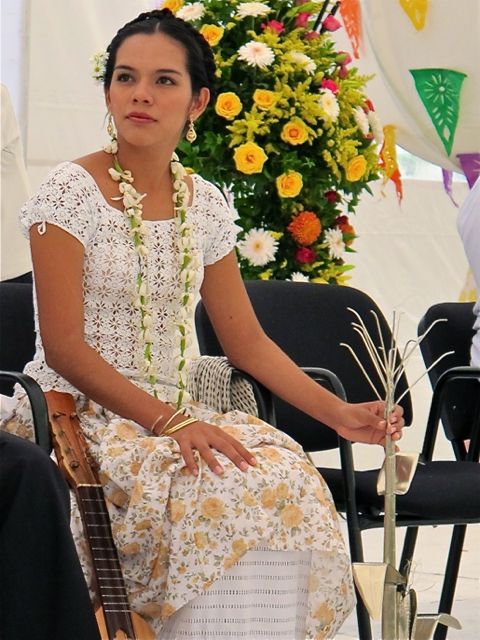
Present were a number of local dignitaries, including Evelyn Acosta López, the recently elected corn goddess, la Diosa Centéotl 2012, who presides over the Guelaguetza.

Evelin Acosta López seated.

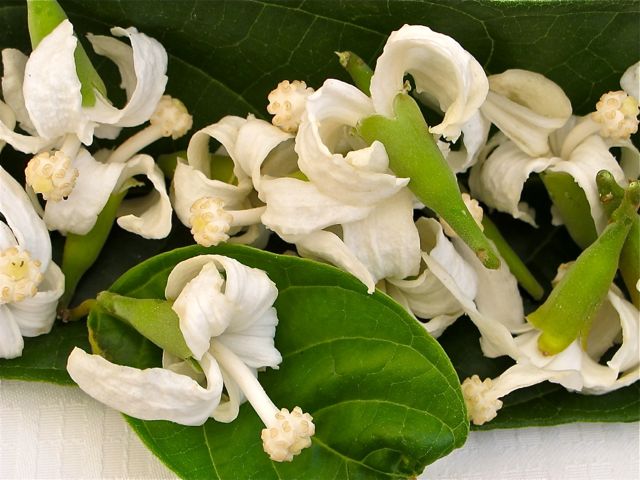
Tejate is a foamy, refreshing, and nutritious non-alcoholic pre-Columbian beverage made from Nixtamal corn, mixed with tree ash, and toasted cacao beans, mamey seeds, and Rosita de Cacao flowers.

Rosita de Cacao blossoms.

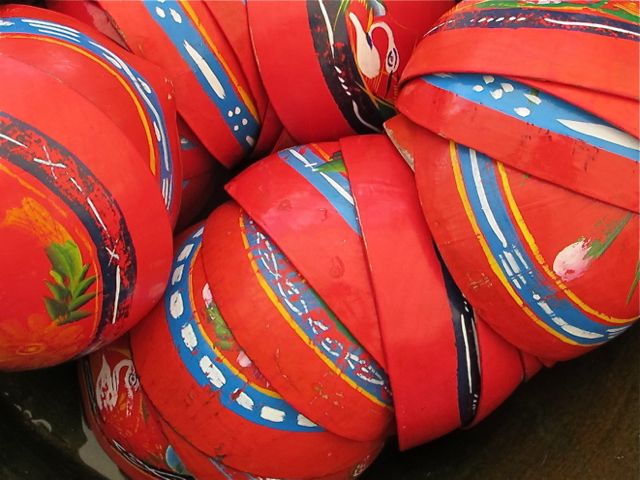
One frequently sees tejate, served in these colorfully painted gourds, in the mercados of Oaxaca, at festivals, and street side stands.

Dried and hollowed-out gourds painted red with blue, yellow, and green decoration.

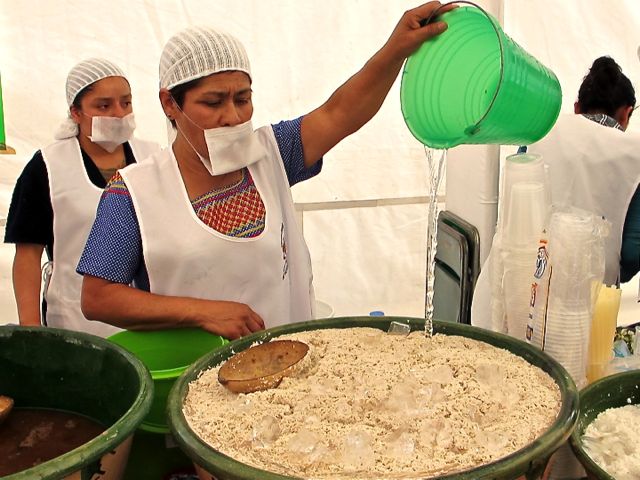
And, yes, it is safe to drink.  The water and ice that are added…

Woman with surgical mask pouring water from bucket into large pot of tejate

come from garrafons of “pure” water.

Stack of garafons (jugs) of pure water.

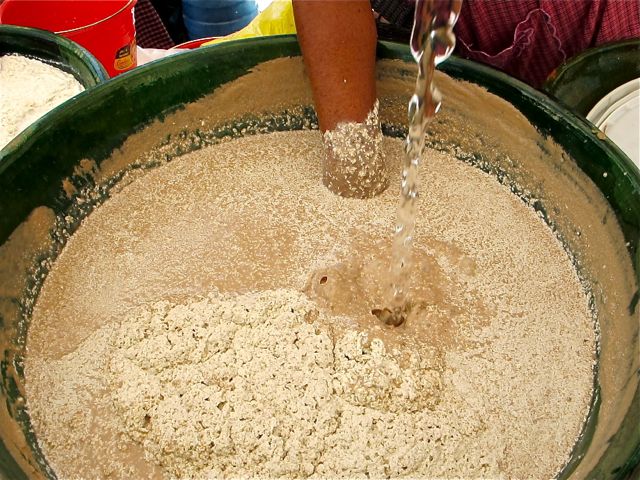
And, please, don’t be put off by the women, up to their elbows, mixing the ingredients.  Just think about it…  Chefs often use their hands when preparing food and arms are generally much cleaner than hands!  Believe me, these women take great pride in their expertise and product.

Hand and lower arm mixing tejate as water is added

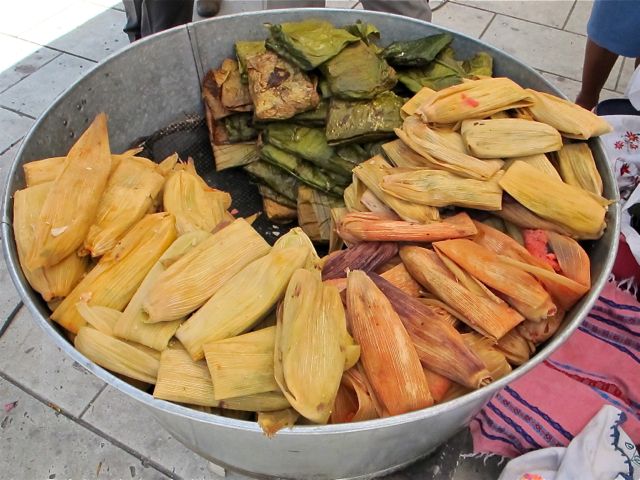
Oh, right, there were also tamales!  Once I finished taking photos and drinking a tall cup of tejate, I made my day’s tamal purchase; chepil, chichilo, and mole.  Tomorrow, I will be returning for more.

Large galvanized aluminum bucket filled with a variety of tamales wrapped in corn husks and banana leaves.s

The Feria del Tejate y el Tamal runs today and tomorrow at the Plaza de la Danza, then moves up to San Andrés Huayapam for Saturday and Sunday.  You can find a little more information about the feria in last year’s blog post, Tejate and tamales.

And, sheesh, I still haven’t blogged about the cheese feria, mushroom feria, not to mention, the Feria Nacional del Mezcal — all of which I’ve attended during the past several days!

Read Full Post »

Live and direct from Oaxaca’s Guelaguetza Auditorium; see what all the fuss is about!  Watch the July 23 and 30 Guelaguetza performances, along with the July 29 production of the Legend of Donají, stream live on the internet at:

Night shot of colored smoke billowing from Guelaguetza Auditorium.

View from the terrace…  The Guelaguetza Auditorium during last night’s Legend of Donají show.

Read Full Post »

A slideshow from yesterday’s Guelaguetza Parade of Delegations.

This slideshow requires JavaScript.

There is so much going on!

Read Full Post »

And, then there was the Festival de los 7 Moles opening buffet lunch set amidst the beauty and tranquility of the Jardín Etnobotánico.  Serendipity and synchronicity brought us there… running into a friend, conversation, investigation (see pots below), and her enthusiasm and powers of persuasion (gracias, Rosa!) had us purchasing tickets on the spot.

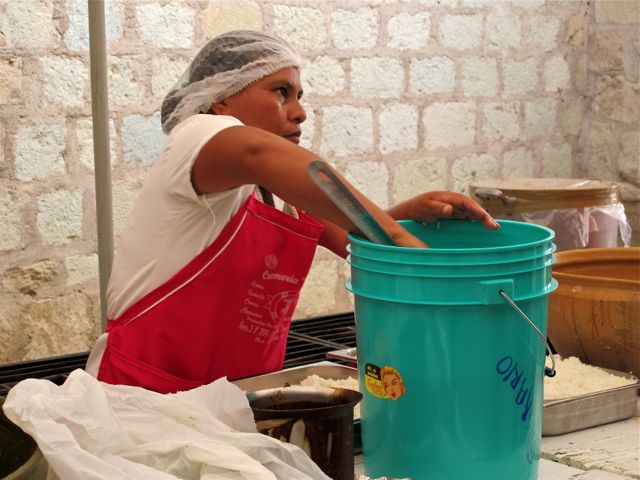
While kitchen staff prepared the serving platters and bowls…

Woman in apron and wearing hairnet, scoops cooked rice out of a large bucket.

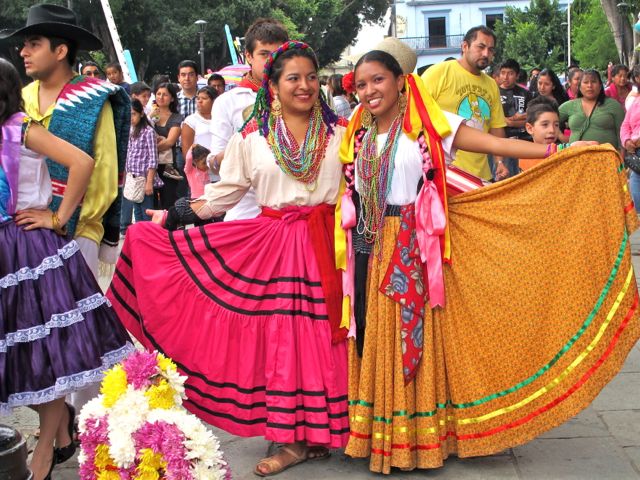
Dancers gathered on the Alameda for a calenda that would lead people the luncheon.

Two women displaying their long  colorful full skirts

They included a number of small children…

Woman squatting down and clasping hands with a toddler-age boy - both in indigenous dress

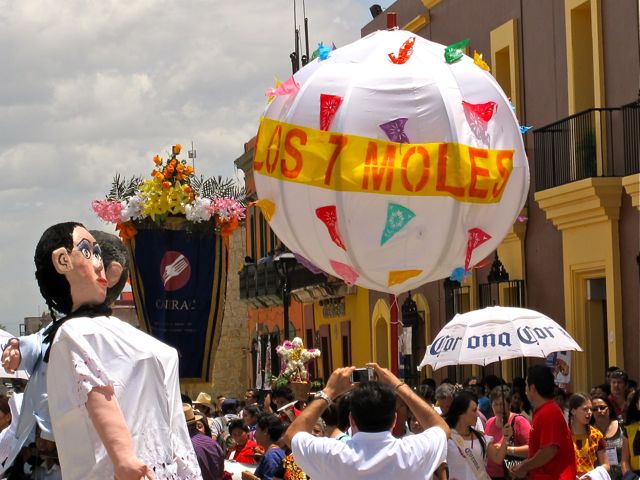
The calenda, including the requisite marmota (giant cloth balloon), monos (giant puppets), band, dancers with canastas (see yesterday’s post), and the sponsoring banner of CANIRAC (national association of the restaurant and food industries), made its way up the Alcalá…

Procession with marmota, monos, and banner

before turning onto Constitución and entering the Jardín, where wait staff and divine moles awaited.

Wait staff, wearing black, white, and grey gathered next to table.

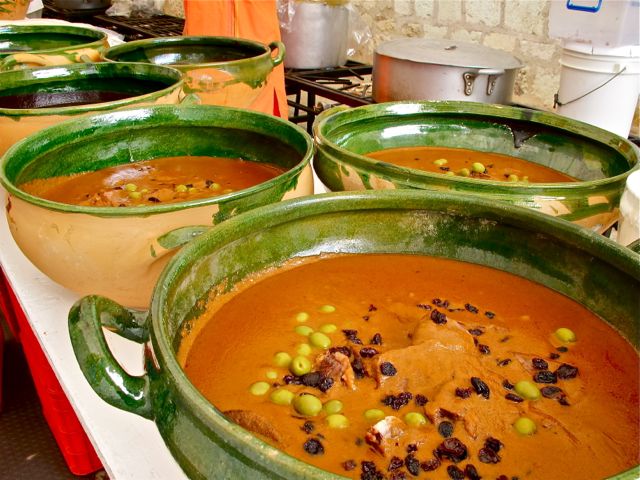
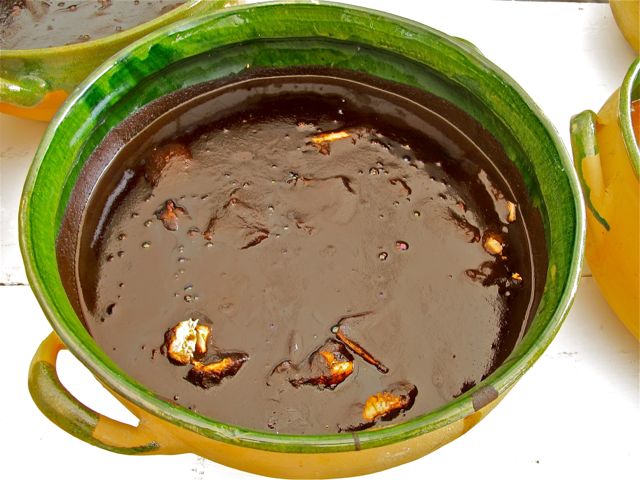
Yummm, mole negro

Large green pottery bowls filled with black mole.

Mole amarillo

Green pottery bowls of red colored moles

Mole coloradito

Green ceramic pot with red mole.

Mole verde

Green mole in green ceramic pot

There was also mole chichilo, mole manchamanteles, and mole rojo.  I tried them all!!!  And, I haven’t even mentioned the cervesa, mezcal, aguas, and appetizers of quesillo, chicharon, and tacos filled with guacamole and chapulines (grasshoppers).  You’ll have to switch over to Chris’s blog to see those and much more.  Oh, and for dessert, a scoop of each of my favorite nieves (sherbet); leche quemada (burned milk) and tuna (cactus fruit).

A day filled with light, color, music, fabulous food, and, most of all, wonderful friends — the recipe for a perfect day!

(ps)  There are almost 50 restaurants around town that will be featuring mole as part of this 12-day festival.

Read Full Post »

It didn’t start that way; I awoke to horrifying news from Colorado.  Thank goodness blogger buddy Chris called and the heart that beats in Oaxaca beckoned.

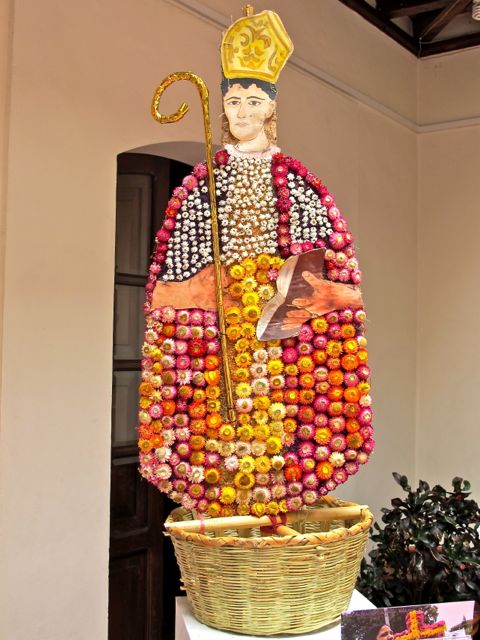
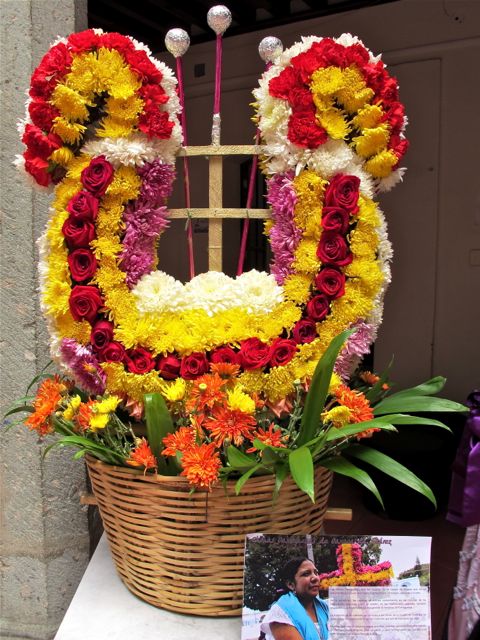
First stop was the “Al Son del Valle,” an exhibition of canastas from 17  villages in the central valleys of Oaxaca.  These are baskets that are carried on the heads of women during calendas (parades); you may remember them from previous posts on the convites in Teotitlán del Valle.  The art of crafting canastas and the traditions and culture they represent have been proudly and lovingly passed down through the generations.

San Antonino Castillo Velasco canasta decorated with Flor Inmortal, the flower that never dies.

Canasta from San Mateo Macuilxóchitl

From San Jerónimo Tlacochahuaya, these canastas are lit and become pinwheels of fireworks at the end of a calenda.

Canasta of Las Chinas Oaxaqueñas of the city of Oaxaca

Canasta from Tlacolula de Matamoros.

Canasta from Zimatlán de Álvarez made of crepe paper.

Muchas gracias, Oaxaca, I needed that!

Read Full Post »

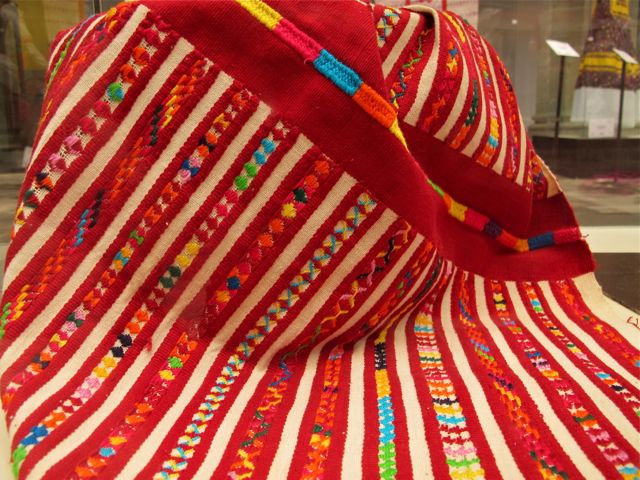
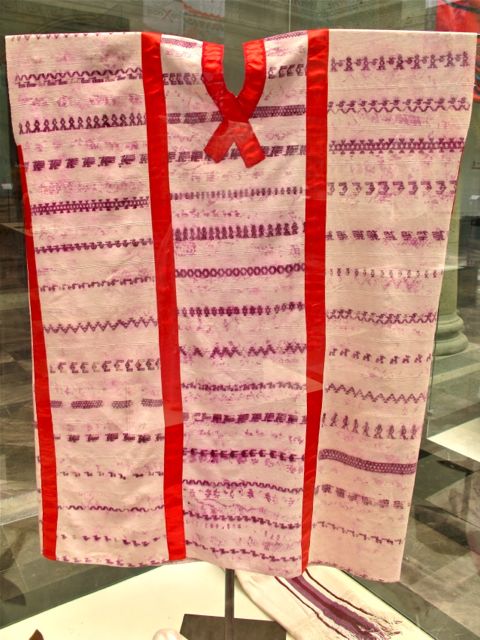
This year marks the 80th anniversary of the modern Guelaguetza festival in Oaxaca.  The calendar is filled with official Guelaguetza activities and other events that take advantage of the massive annual influx of tourists (especially from other parts of Mexico).  The colorful and distinctive costumes worn by the Guelaguetza delegations from each of the 8 regions of the state of Oaxaca play a major role in wowing visitors and residents — including, me!

Huipil de San Andrés Chicahuaxtla, Putla Villa de Guerrero, Oax.

As a result, the “Oaxaca Xaba Lulá” exhibition has been mounted in the Government Palace.

Traje de la Villa Sola de Vega, Oax.

These are only a fraction of the items on exhibit and the photos were chosen primarily because they showed the least amount of reflection on the plexiglass display cases.  It is a beautiful, but challenging to photograph, setting!

Huipil de San Bartolomé, Ayautla, Teotitlán, Oax.

The collection of trajes típicos (typical costumes) representing the 8 regions of Oaxaca runs through the end of the month.

Rebozo de San Juan Colorado, Jamiltepec, Oax.

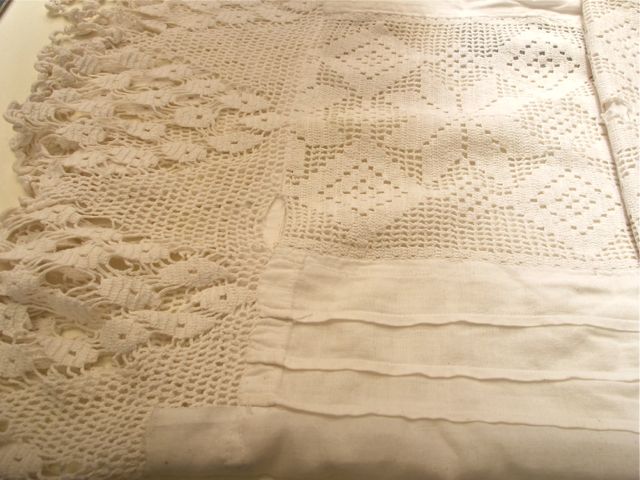
The dresses, hats and accessories were donated by Oaxacan citizens from different regions of the state and were made in the traditional way, with many using natural dyes.

Huipil de Gala de San Lucas Ojitlán, Tuxtepec, Oax.

At the July 6 opening, José Zorrilla de San Martin Diego (Minister of Tourism and Economic Development), explained that they reflect a cultural essence that has prevailed for centuries in customs and traditions of the people of Oaxaca.

Funda de San Jerónimo Tecoátl, Teotitlán. Oax.

He observed that the Oaxacan costumes are a reflection of the depth of the culture, traditions, and ancestral weaving techniques that have been passed from generation to generation of Oaxacan hands.

Traje de Santa María Tlahuitoltepec, Mixe, Oax.

“The huipiles display in all their splendor the details that form a labyrinth of colors, a tiny universe that reflects the vastness of fertile nature and the symbolism that characterizes our native land and which graces the greatest festival of Oaxacaños,” Zorrilla de San Martin Diego very poetically suggested.

Huipil de Jalapa de Díaz, Tuxtepec, Oax.

Needless to say, during the next two weeks, I’m going to try to hit as many of the fairs, parades, dances, and exhibitions as possible.  Stay tuned…

Save

Read Full Post »

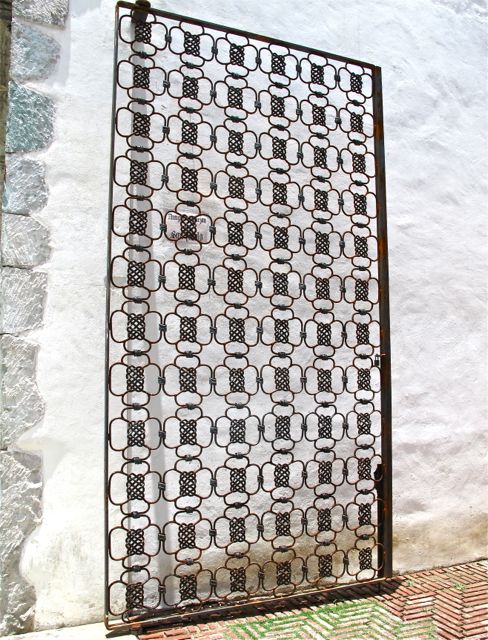
Intricately designed and executed iron gates have been installed at either end of Antiguo Callejón de San Pablo, ushering visitors into the “Old meets new” grounds of the Centro Académico y Cultural San Pablo.

Iron gate

Oaxaca’s favorite son and Mexico’s foremost living artist, Francisco Toledo, narrates a video documenting the construction of the gates.  It’s in Spanish, but even if you don’t understand the language, it’s worth watching, anyway.

By the way, today is Toledo’s 70th birthday.  ¡Feliz cumpleaños, maestro!

Read Full Post »

Early Saturday morning I was on my way to the doctor’s office, thus walking with purpose.  However, turning onto Constitución, along the south side of Santo Domingo, I had to pause…

Man and woman in stylized Aztec costume in jewel tones.

A photo shoot in progress?  I didn’t actually have a doctor’s appointment, just dropping by for a consultation (common here), so I lingered.

HE was obviously modeling “glamed-up” Aztec.  But SHE…

Woman in stylized Aztec costume in jewel tones.

Hmmm… Japanese???  Of course not!  Comparing it to images found in the codices, it, too, is an extremely stylized expression of  the fashion and hair of some classes of Aztec women.

Close-up of woman wearing purple silk huipil and stylized Aztec hairdo.

¡Muy hermosa!

Update:  I think Sheri is probably correct.  This may be a promotion for, or at least evoke, the annual reenactment of the Donají la leyenda, during Guelaguetza.  It is the legend of Princess Donají, a Zapotec princess who was kidnapped and decapitated by rival Mixtecos.  Her beautiful head was later found intact by a shepherd under a lily.  The body and head were reunited and buried together near, what is now, the city of Oaxaca’s airport.   The face of Donají appears on the official shield of the city of Oaxaca de Juárez.

Official shield of Oaxaca de Juárez.

The elevation and celebration of this story makes me wonder how today’s Mixtecos feel about it…

Read Full Post »

The word "ask" spray painted on wall.

Painted on wall: a cross followed by words "adiccion o conviccion?"

Shadow on wall that looks like a podium; words written "I love Phaooluchiiz. Signed by Fapely"

Who do you love?

Read Full Post »

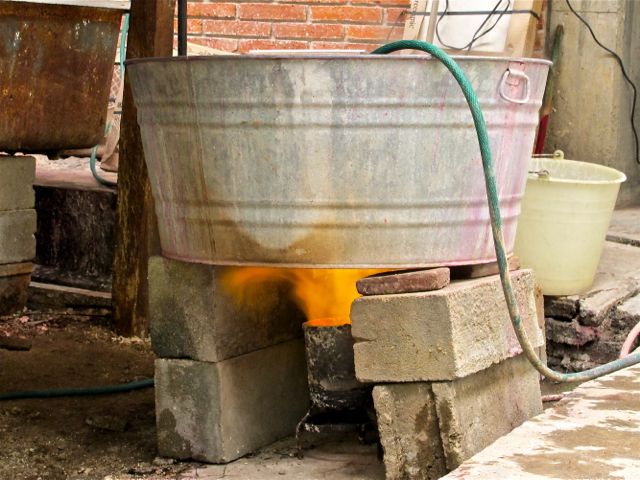
Have I mentioned there is a weaving business that operates out of the apartment complex where I live?   Most of the operations have recently moved offsite — apparently, not so the dying.

I returned home on Tuesday to find a fire roaring…

Large metal pot propped up concrete blocks over a fire

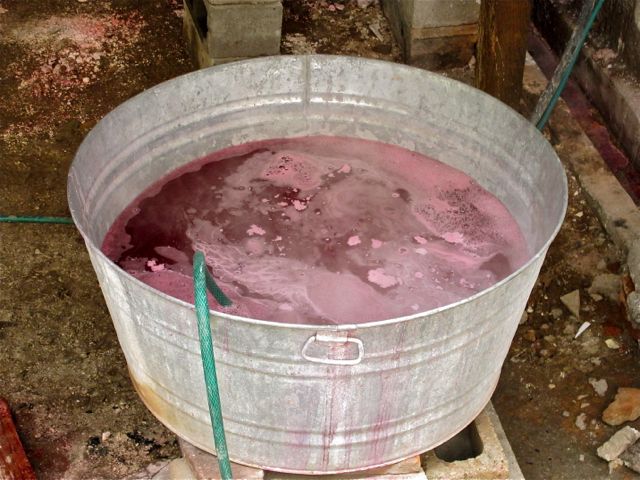
A dye bath roiling…

Galvanized metal bucket filled with roiling red dye bath

Luci and Luís rinsing and removing excess water from newly dyed cotton yarn…

A man and woman wearing rubber boots walking on wet yard

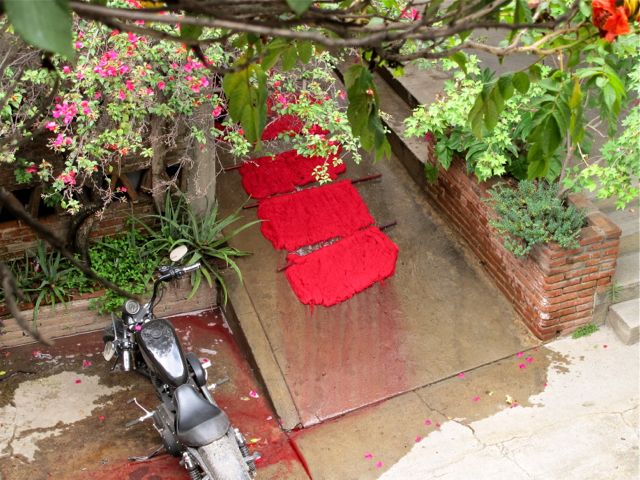
And, a new view from Casita Colibrí…

Red newly dyed yarn laid out on cement sloped slab; tree leaves in foreground

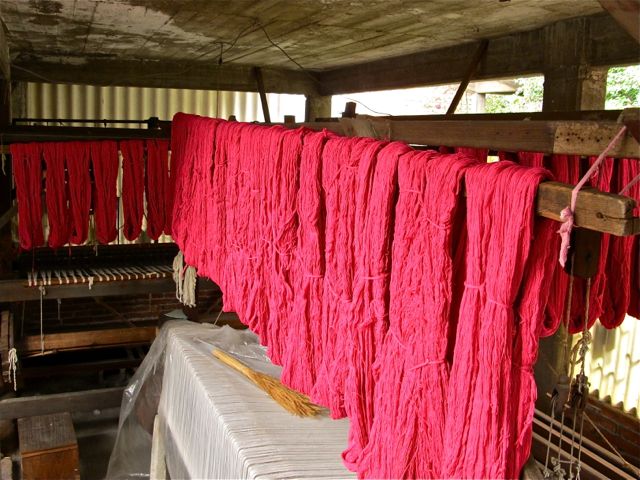
Hanks now just “hanging out” above the looms…

Hanks of pinkish/red yarn hanging above looms

Read Full Post »

MLB All Star Game is on Cablemas (Lo siento mi maestra, el idioma es el Inglés.) and players from my San Francisco Giants are kicking “you know what!”  I’d hoped to take the ferry (a very civilized way to go) to a Giants’ game when I was in the Bay Area last month, but, alas, time got away from me.

Oaxaca has a Minor League team, the Guerreros de Oaxaca, a Triple-A team in the Mexican League and their stadium is within (long) walking distance.  Alas, I haven’t been to one of their games this season, either!  However, last week I did wander by their office; the door was open and revealed this wonderful sculpture…

Sculpture of three baseball players topped by a gold mitt

Baseball player on sculpture, with bat on shoulder.

Closeup of baseball player on sculpture with bat on shoulder, wearing Guerreros de Oaxaca cap and jersey.

By the way, during the seventh inning stretch, fans rise and sing, “Linda Oaxaca” (Beautiful Oaxaca).  It always brings a smile and I’ll take it over “God Bless America” every time!

Read Full Post »

Older Posts »