If you want an up close and personal fireworks experience, come to Oaxaca. Of course, there are no guarantees you won’t find yourself in the line of fire. No barricades, no yellow caution tape, no police! I’ve seen hair singed, had a friend get pinhole burns on the inside of his glasses, and last night a projectile came careening toward us and had me ducking for cover. However, as the saying goes, “no harm, no foul” and the spectacle was espectacular!
It began with 45+ minutes of the quema de toritos and angelitos.
They were followed by a spectacular castillo, a “firefall,” and traditional fireworks exploding against a clear black sky.
Late Tuesday night during this week’s fiesta honoring la Preciosa Sangre de Nuestro Señor Jesucristo. It was a fabulous — well worth spending the night in Teotitlán and staying up way past my bedtime!
Last Sunday, Oaxaca bid adiós to the 10º Nacional Festival de Danzón, the stately dance from Cuba that has captivated Oaxaca. Alas, I only managed to catch the very end. But, as always, I was charmed by the formality and style and intensity and joy — a tradition kept alive by those in their latter years…
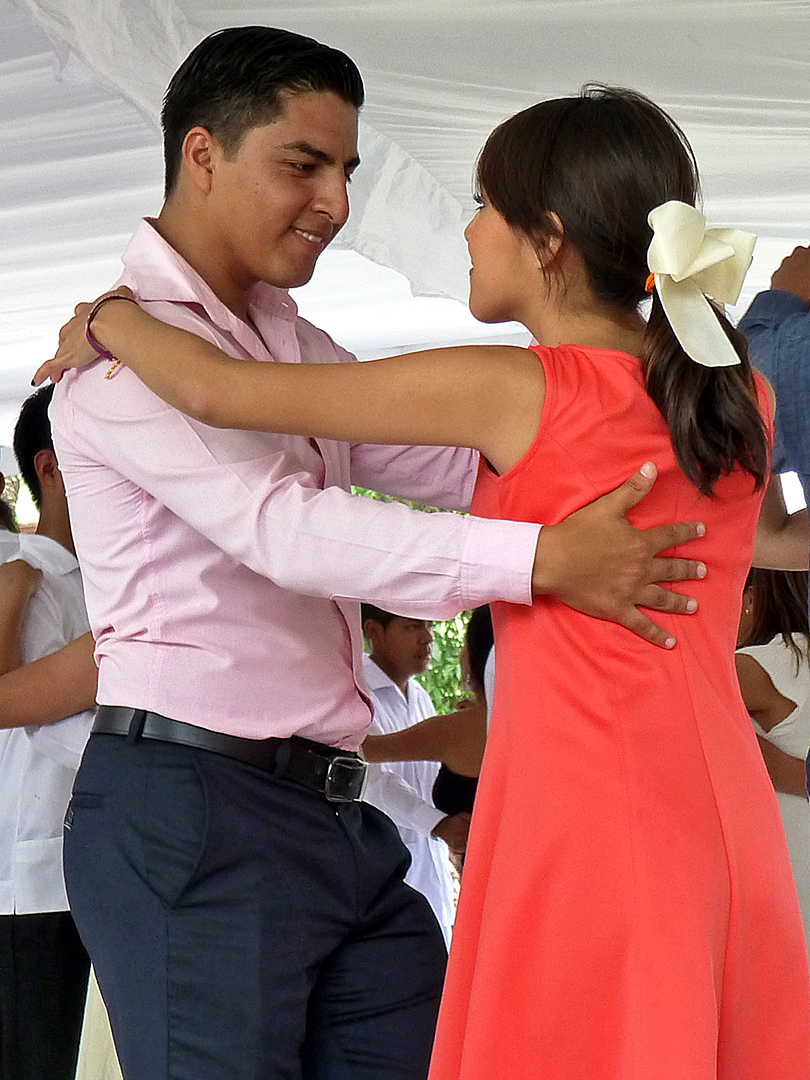
… and by the young.
Several well-known danzones were composed Amador Pérez Dimas from Villa de Zaachila, ten miles southwest of Oaxaca city.
For a taste of danzón, here is brief snippet from the close of the festival. By the way, the band is Banda Santa Cecilia from Teotitlán del Valle, a band we will be hearing several times next week during the the multi-day fiesta honoring Preciosa Sangre de Nuestro Señor Jesucristo.
If you are in Oaxaca, you can experience Danzón for yourself on Wednesdays at 6:30 PM, either under the laurels on the Zócalo or on the Alcalá near Santo Domingo, depending on the state of the Zócalo — occupied or not occupied.
In my last blog post, I mentioned Teotitlán del Valle does not go on Daylight Saving Time. And, they are not alone! As the article, Clocks don’t change where sun keeps time, most of Mexico didn’t adopt DST until 1996 and given the autonomy guaranteed to indigenous communities, “70% of the entire indigenous population of Oaxaca” have chosen to follow the sun — the “King of the Sky.”
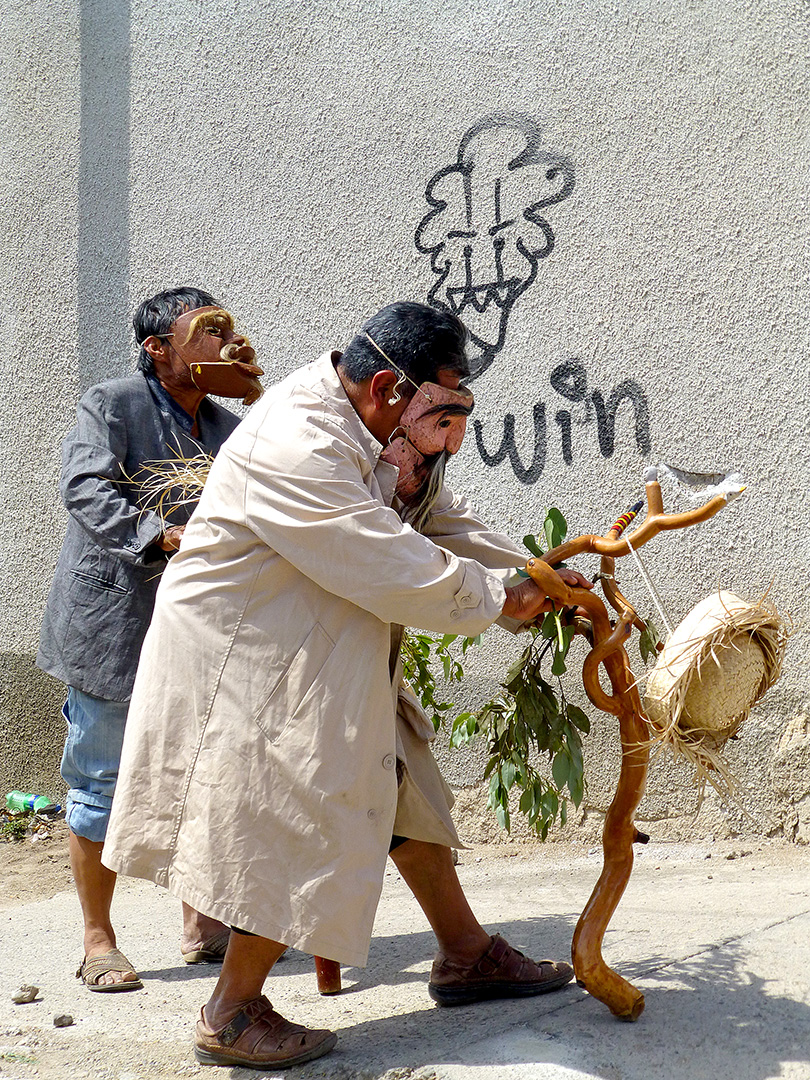
Ojala, blogger buddy Chris (who doesn’t change his watch to DST either) and I will be returning to Teotitlán del Valle for the final day (into night) of the Baile de Los Viejitos, (the Dance of the Old Men) this time hosted by el quinto (5th) sección. However, before we go, a few more scenes from Tuesday’s fiesta, put on by the segunda (2nd) sección.
I say, “ojala, ” because several marches and blockades are currently in progress throughout Oaxaca and on the carreteras into and out of the city. Alas, the video I shot on Tuesday of the Baile de los Viejitos may be as close as I come to the dancing action until next year.
February 14th isn’t just a day for lovers. In Mexico, it is known as the Día del Amor y la Amistad (Day of Love and Friendship). Oaxaca’s balloon, chocolate, and flower vendors do a booming business and restaurants are usually filled to capacity with friends, sweethearts, and families.
I fell in love with Oaxaca the first time I saw her when visiting a friend in 2007. Who wouldn’t when the guitars and harmonies of Trio Santo Domingo drew us to the zócalo on a balmy August evening! Thus, my gift to you on this day of love and friendship:
“La amistad es lluvia de flores preciosas” (Friendship is like a shower of precious flowers) — line from a Nahuatl poem.
Along with blogger buddy Chris, I’ve been immersed in putting together a presentation for the Oaxaca Lending Library on the Danza de la Pluma, as it’s performed in Teotitlán del Valle. On the superficial level, the Danza relates the story of the Conquest. But, as is the genius of art, it reaches into our hearts and souls and explores and communicates the truths we feel.
And so, this brief video from classmates of the 43 missing Ayotzinapa students touched me deeply.
The ballet needs to tell its own story in such a way it can be received without having to be translated into language. –Twyla Tharp
A beautiful photo montage and song by Arturo Leyva honoring the 43 students of the Escuela Normal Rural Raúl Isidro Burgos, teachers’ college in Ayotzinapa, Guerrero.
The video uses some of the #IlustradoresConAyotzinapa illustrations, paintings, and embroidery by Mexican designers, artists, and artisans ofthe faces of the43student teachers of Ayotzinapa.
In addition, journalist París Martínez has developed profiles of the 43 disappeared students by talking with their families and friends.
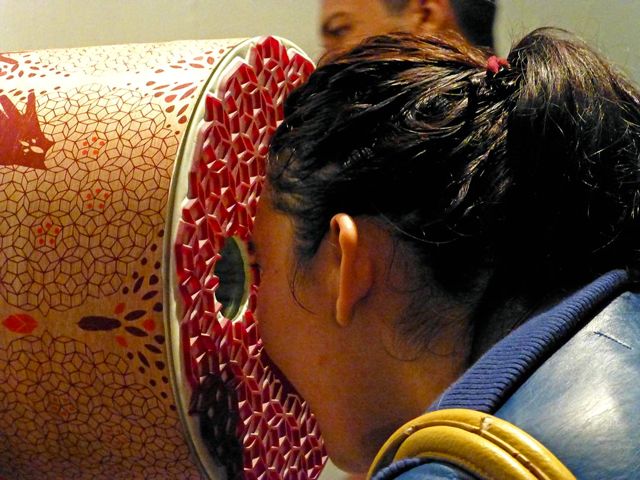
Many of you may remember Juan Martinez, mi amigo and carpenter extraordinaire of Adios mosquitos and A terrace transformed fame. Well, he is a man of many talents — and one of them is building kaleidoscopes. Given that his “day job” is working in the office of Gorilla Glass, he has come into contact with many of the hip, young, and talented artists currently creating in Oaxaca. Thus, a natural collaboration ensued. Juan + Gorilla Glass + Lapiztola stencil = an exhibition of the Lapiztola Collective’s artistry at Gorilla Gallery.
Looking into the eye of the kaleidoscope.
What do you see?
There is the second kaleidoscope — this one a hand-crank. Come by Gorilla Gallery on one of the next couple of Thursdays from 2 PM to 8 PM, to give it a try.
And, be forewarned, they are working on a special Día de los Muertos kaleidoscopic project. Prepare to be amazed!
The rainy season has definitely arrived in the city, bringing several hours of lluvia every night for the past five nights. The first rains of the season also bring (drum roll, please) chicatanas! Early this morning, I went out onto the terrace with my coffee to be greeted with these not-so-little insects. Flying (into my hair, eeek!) and crawling all over the place!
Female chicatana on a very wet table.
What, you may ask are chicatanas? They are giant flying ants that emerge with the first rains of the season — and by giant, I mean about 4 cm from the head to the tip of the wings for the females. (As in much of the insect world, males are smaller and wingless.)
Male chicatana on the deck.
This occurs early one morning each year and lasts only a few hours. My first experience with them was a couple of years ago, when I arrived at Oaxaca’s airport for my 8:30 AM flight one May morning, to find, yikes(!) an infestation of insects. I had no idea what they were, but nobody seemed to mind, and kids were running around collecting them. The answer came after I boarded the plane and began talking with a Oaxaqueña across the aisle. She explained that the arrival of the chicatanas was a much-anticipated event because they are a delicacy. As the video below documents, they are soaked, cleaned, toasted on a comal, ground, seasoned, and made into a salsa.
According to this post in a Chicago based culinary chat site, it has been almost “500 years since Bernardino de Sahagun reported to Europe on the tzicatana [chicatana in Nahuatl] in his Nueva Historia, from its divine associations to its swarm ethology (mirroring the movements of the Aztecan armies) to its apparent deliciousness to the Nahuan-speaking people in the region.” And, long before that, tzicatanas were mentioned in the Florentine Codex.
Female chicatana doing the back stroke on the table.
By 9:30 this morning, they were gone. However, should you find yourself in Oaxaca during a brief visit by the chicatanas, here is a recipe for Chicatana Salsa.
Even though the significance of May 1, as International Workers’ Day, had its origin in the USA, it is not celebrated there (for a variety of reasons I won’t go into here). However, like most countries in the world, Día del Trabajo is a national holiday in Mexico. To honor labor everywhere, here is Oaxaca’s favorite daughter singing her song, “Mother Jones.”
“Pray for the dead, but fight like Hell for the living.” — Mary Harris Jones (aka, Mother Jones, the miners’ angel)
Do you remember the Danzantes in training from two weeks ago? All that practice by folkloric dancers from eight villages in the valleys of Oaxaca, was for last night’s “monumental” opening of the Muestra Internacional de Danza Oaxaca.
The dance festival lasts through next Saturday (April 12, 2014), with events taking place at venues throughout the city, AND all are free!
By the way, I’d received an email notice of the dance festival, but it was the comment, “Hope to see us this coming Saturday” from “the danzante with the orange penacho and green shirt” seen in a photo from my blog post, Speaking of Danzantes, that had me making a special point to attend. Muchisimas gracias a Abdiel for the tip. I hope you see this post!
As I’ve mentioned before, Oaxaca is one of the most indigenous and (no surprise) one of the poorest states in Mexico. And, the Triqui of the Mixteca region of Oaxaca are some of the state’s poorest residents. They have recently come to the attention of sports lovers, as a result of the heartwarming story of their youth basketball team, dubbed the Barefoot champions of the mountains.
However, while their success story makes us feel good, it is rare. Political violence and poverty continue to chase the Triqui out of their beautiful and ancient mountain communities in search of a better future for their families. And, discrimination continues to follow them into el norte. To add to the strikes against them wherever they go, Spanish is not their native language — the state of Oaxaca is home to 16 distinct ethnolinguistic groups, with Triqui being one. And so, the story of Bernadina Hernandez and her grassroots efforts in Hollister, California should be known, appreciated, and celebrated.
This morning, as I was getting ready to go to my local mercado, I heard the unmistakable sounds of the Danza de la Pluma (feather dance). I’ve seen it often enough in Teotitlán del Valle to know the music. While it is performed throughout the valley and is always one of the big hits during July’s Guelaguetza, Teotitlán del Valle is one of only two villages where it is performed as a religious ritual during their three major yearly festivals.
As I approached the Plaza de la Danza, the music got louder and louder. Once there, I looked down to see 75 – 100 dancers in jeans and t-shirts practicing one of the (forty-one) dances of the Danza de la Pluma. They were danzantes in training from various folkloric groups in the valley of Oaxaca.
As you can see from the video, the footwork is complex and the steps require a lot of stamina. And, just wait until they put on the penachos (headdresses)!
I often wonder and worry that the traditional dances will eventually be lost. Today’s encounter with these young dancers gave me hope.
In Memory of the Irish Soldiers of the Heroic Battalion of Saint Patrick Who Gave Their Lives for the Mexican Cause During the Unjust North American Invasion of 1847. – plaque in Plaza de San Jacinto, San Ángel, Mexico City
Sometime around 8,000 years ago, corn was first domesticated in the valley where I have the privilege of living. Botanists have determined that the valley of Oaxaca was the “cradle” of maize evolution. Maíz became the lifeblood of the Mesoamerican diet and culture and it continues today.
On September 29, Oaxaca celebrated el Día Nacional del Maíz Nativo (National Native Corn Day). On the zócalo, across from the Government Palace, there were displays showcasing the multiple hues of native corn…
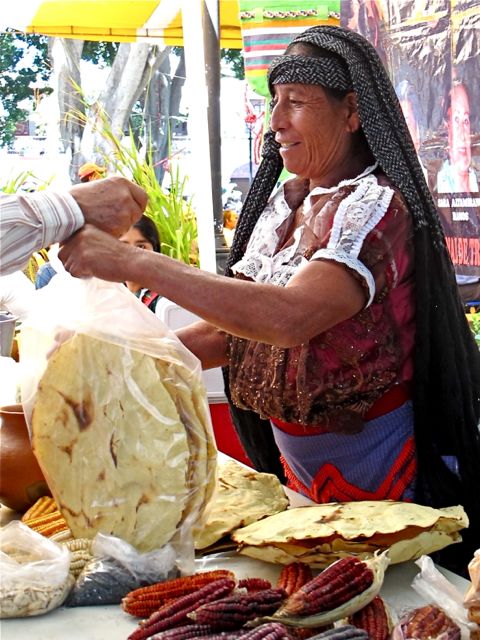
There were tlayudas for sale…
However, there were also warnings about the dangers of genetically modified corn and the products containing them…
Genetically modified corn is a major issue in Oaxaca. There is a concern that native plants could become infected with GMOs, which would then contaminate and compromise the genetic diversity of native varieties. Speakers, at the event, discussed the importance of the community seed banks that have been established to safeguard native varieties and be used in the wake of economic and ecological crisis. Two weeks after the aforementioned event, there was good news, a Mexico judge has placed an indefinite ban on genetically engineered corn.
And so to celebrate, I am re-posting the Lila Downs video of her song “Palomo del Comalito,” paying homage to maíz, and its “granitos de cristal” (grains of crystal).
And to bring this post full circle, the video was filmed in Teotitlán del Valle, located here in the valley where corn was first cultivated.
 It began with 45+ minutes of the quema de toritos and angelitos.
 Late Tuesday night during this week’s fiesta honoring la Preciosa Sangre de Nuestro Señor Jesucristo. It was a fabulous — well worth spending the night in Teotitlán and staying up way past my bedtime!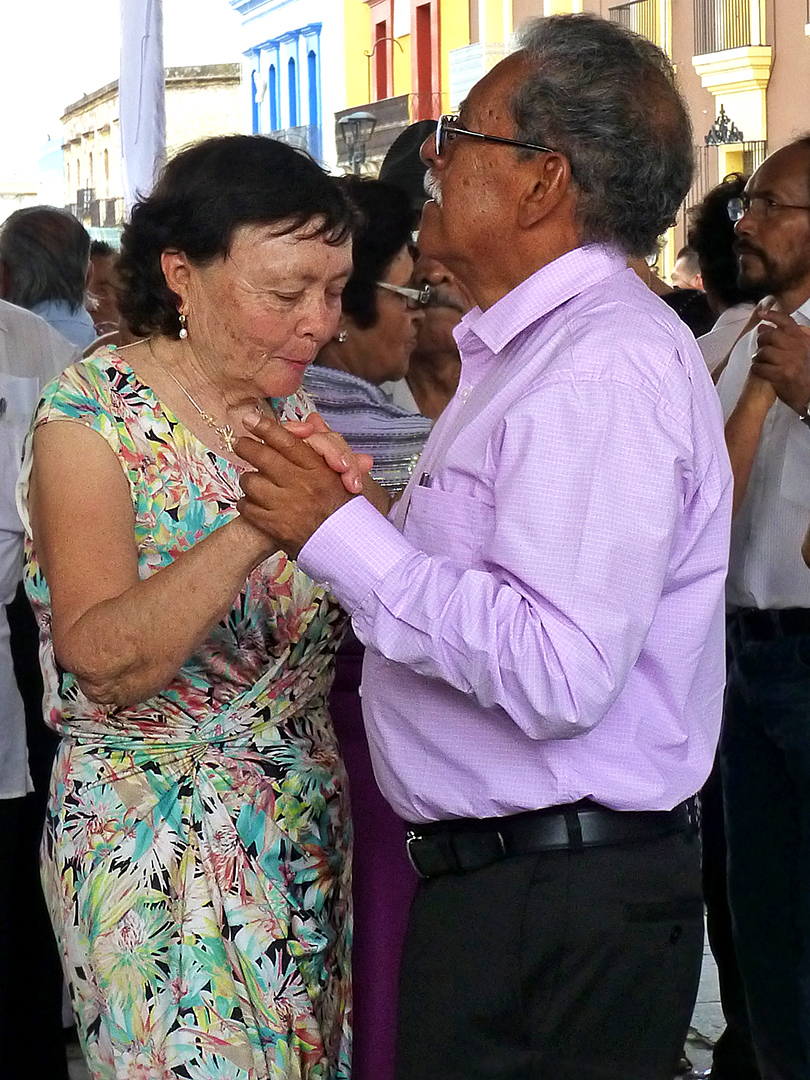









 Mexican Peso Converter

 View From Casita Colibrí