Feeds:
Posts
Comments

Posts Tagged ‘popular travel destinations’

I’m bidding a fond, but with a hint of “good-riddance to bad rubbish,” farewell to 2021. In truth, I’m trying not to view the recent piles of basura (garbage) in the streets and bloqueos (blockades) by the garbage collectors as a metaphor for this past year of pandemic, fires, floods, and general pandemonium in the world.

Long walks around the city sufficed to fill my need to “travel” until the spring when my world expanded — with untold gratitude to scientists for their work in developing vaccines to help protect us from worst case Covid-19 scenarios. After fourteen months, armed with the vaccine, cubrebocas (face masks), caution, and excitement, I began venturing out of the city (even up to el norte twice), spending time with family and friends, and actually attending activities and events in person, not just via Zoom. It was almost, but not quite, like normal — and it was good!

January 17, 2021 – Templo y Convento de San Francisco de Asís Oaxaca
February 7, 2021 – Tapete woven by Mario González Pérez; Sangre y Herencia exhibition at Hotel Casa Antigua.
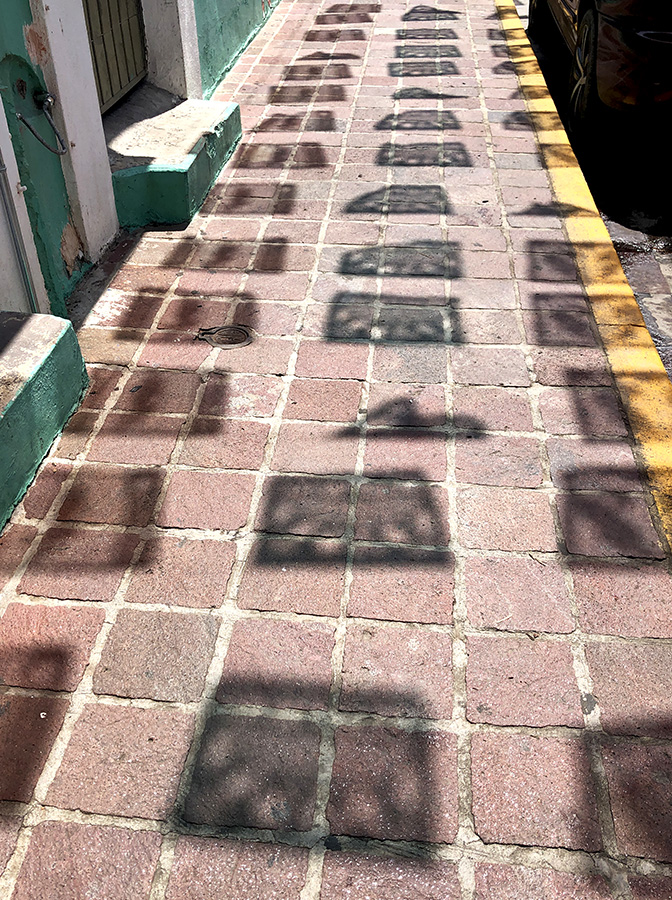
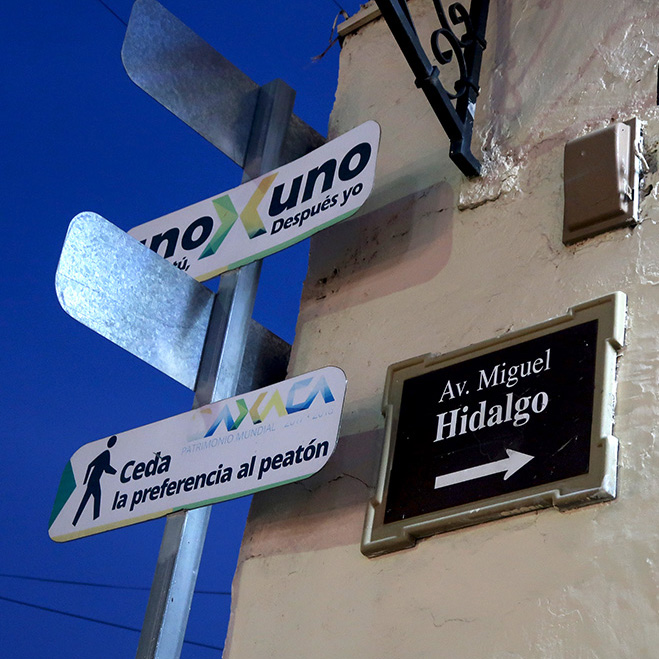
March 8, 2021 – Busy street corner in the city.
April 2, 2021 – La Morada de Colibrí, one of my favorite stalls at Pochote Xochimilco Mercado Orgánico y Artesanal.
May 26, 2021 – Rooftop art in Barrio de Jalatlaco.
June 25, 2021 – Bike rally passing the ADO bus station — saying “No to violence against women” by students from Colegio Superior para la Educación Integral Intercultural de Oaxaca.
July 13, 2021 – Outside wall of La Mano Magica Gallery/Galería promoting the Shinzaburo Takeda exhibition.
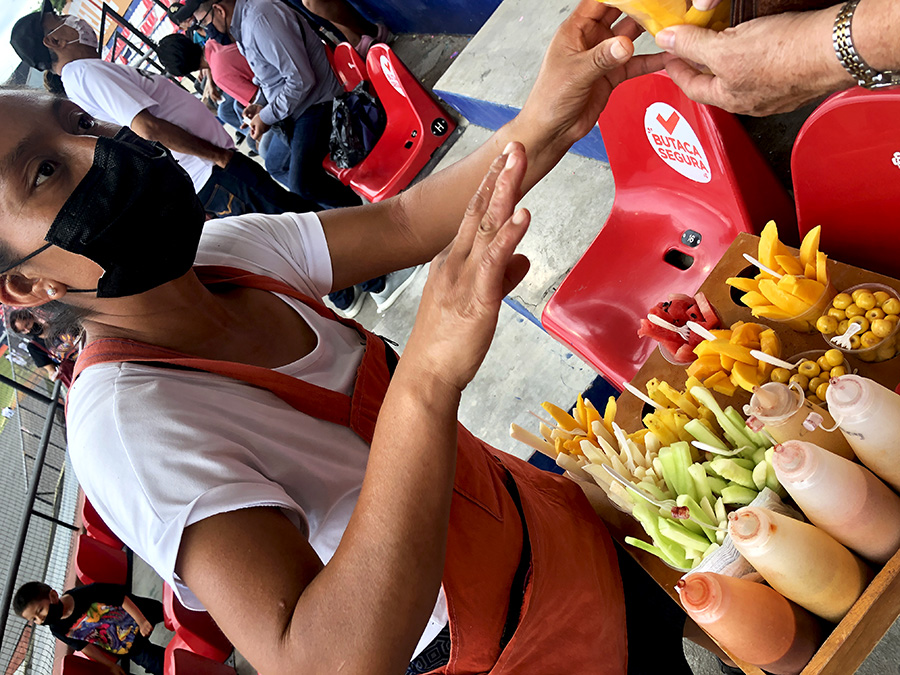
August 1, 2021 – Guerreros baseball game dining at Estadio de Béisbol Lic. Eduardo Vasconcelos.
September 4, 2021 – Tree down on Czda. de la República after strong winds and very wet rainy season.
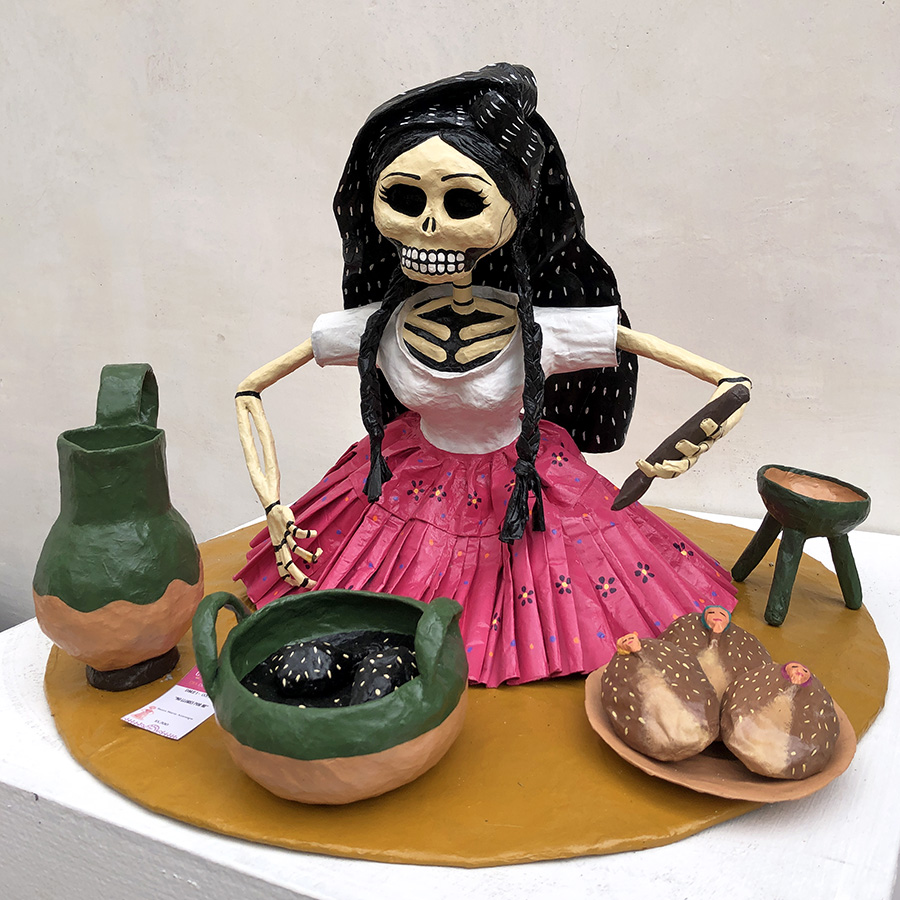
October 19, 2021 – “No Llores Por Mi” sculpture by a Santa María Atzompa artist — Día de Muertos exhibition at ARIPO.
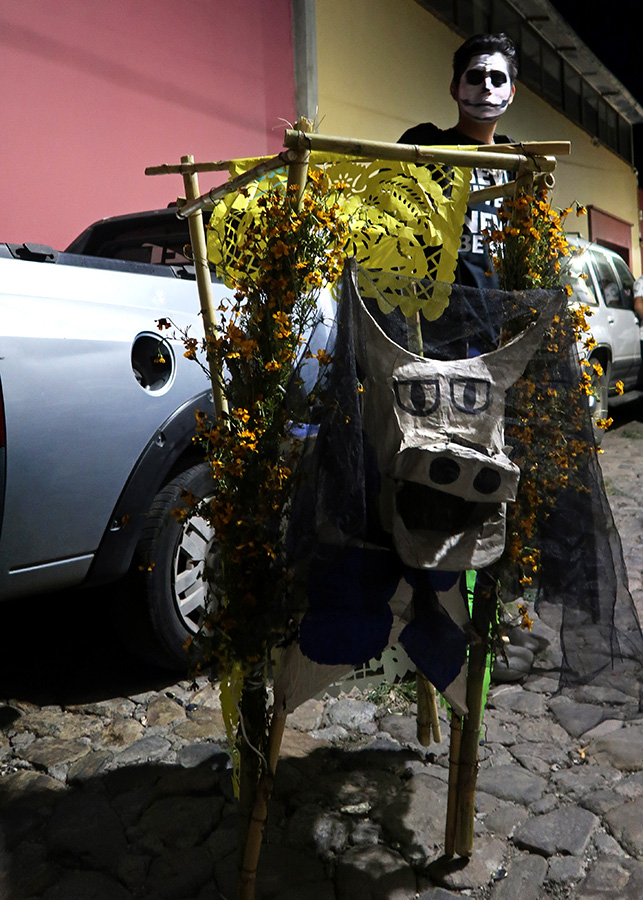
November 1, 2021 – Neighbor weeding and cleaning the street in preparation for the evening’s Muerteada.
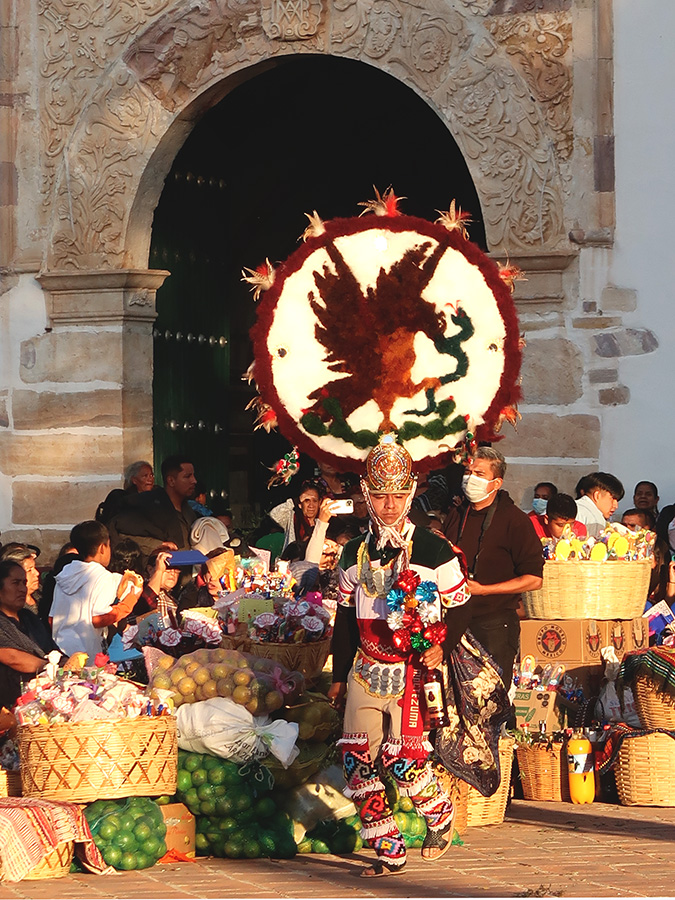
December 12, 2021 – In honor of the Virgen de Guadalupe, the last dance by Danza de la Pluma de Teotitlán del Valle, Promesa 2019 – 2021.

Feliz año nuevo y muchisimas gracias to all my wonderful blog readers for “hanging in” and for your encouraging comments during these challenging times — it means the world to me! May 2022 be kinder to all and bring you peace, joy, and health.

Read Full Post »

It’s the night before Christmas and the streets of Barrio de Jalatlaco are aglow with Christmas lights.

My little Christmas tree is decorated with earrings, necklaces, and tiny alebrije. Beneath the tree stands my miniature nacimiento (nativity scene) woven of palm fronds in the Mixteca region of Oaxaca.

In keeping with my blog’s Noche Buena tradition, a new interpretation of Pancho Claus — with the generous permission of the authors.

La Noche Before Christmas

’Twas the night before Christmas and all through the casa,
Not a creature was stirring, My goodness! ¿Qué pasa?
The children were all tucked away in their camas,
The girls in their sleepers, the boys in piyamas.

The stockings were hung, with mucho cuidado,
In hopes that old Santa would feel obligado,
To bring all the children, both buenos y malos,
Muchísimo candy, and other regalos.

When out in the yard there arose tanto grito,
That I jumped to my feet like a scaredy-gatito.
I ran to the window and looked out afuera,
And who in the world do you think that it era?

Saint Nick on his sleigh in a big red sombrero,
Came dashing toward me like a loco bombero.
And pulling his sleigh, instead of venados,
Were eight little burros venir-ing volados!

I watched as they came and this kindhearted hombre,
Was whistling and shouting and calling por nombre:
“¡Ay Pancho, ay Cisco, ay Chuy, ay Flaco!”
“¡Ay Bella, Estrella, Chiquita y Paco!”

Then he jumped off his sleigh with his hands on his pecho,
After landing on top of our very own techo.
And struggling to squeeze down our old chimenea,
He bounced off the hearth like a bowl of jalea.

Now huffing and puffing at last in our sala,
With soot smeared all over his vestido de gala,
He filled all the stockings with buenos regalos,
For none of the niños had been muy malos.

Then chuckling aloud feeling muy contento,
He turned in a flash and was gone like el viento.
And I heard him exclaim, y es la verdad,
“Merry Christmas to all, y ¡Feliz Navidad!”

***Inspired by the poem “A Visit From St. Nicholas” by Clement C. Moore, 1822, and by the original song and lyrics “Pancho Claus” by Lalo Guerrero, 1956 (with permission from the estate of Lalo Guerrero). Conceived of and written as “The Noche Before Christmas”, (date/author/copyright uncertain, c. 1956-2001?). This revision by Bill Stryker and Norma Verdugo Stryker, 2019 (Copyright Registration Number TXu002156234).

Wishing one and all peace, joy, and health. !Felices fiestas!

Read Full Post »

No sooner had I returned to Oaxaca than I left again. However, this time it was to spend only a few days in Teotitlán del Valle for Guadalupe’s feast day and the celebration ending the three year commitment by the dancers of the Danza de la Pluma Promesa 2019-2021. (More about that in a later post.) In addition, after almost a two year absence, I also managed to spend a few hours in Tlacolula de Matamoros and San Pablo Villa de Mitla.

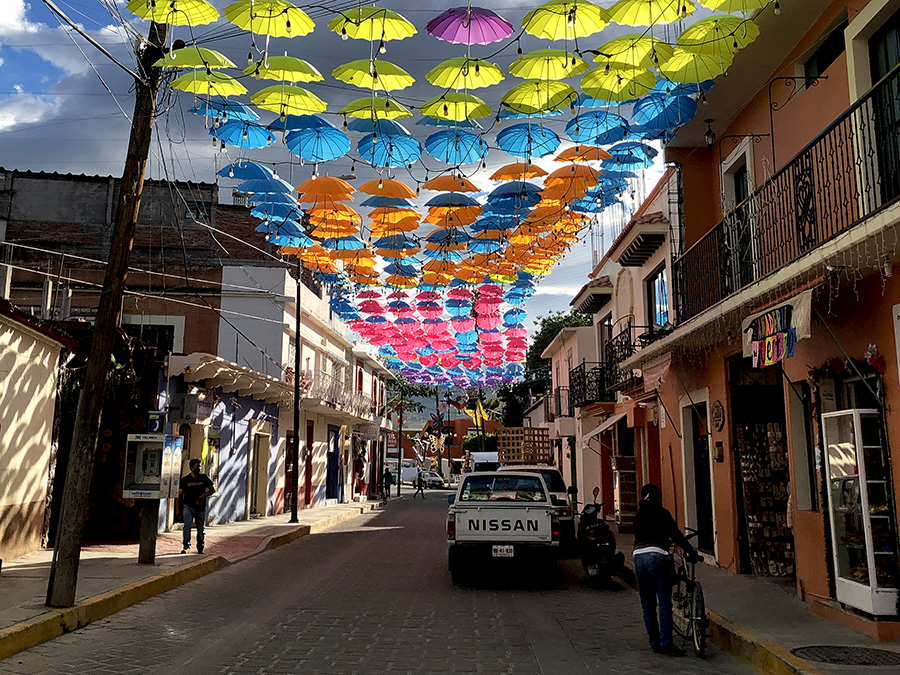
Umbrellas of Mitla – December 13, 2021
Nacimiento of Tlacolula – December 13, 2021
Papel picado of Teotitlán – December 12, 2021

My friend K and I took local buses and I am happy to report everyone on the buses was masked and we even had to disembark at a checkpoint before entering Mitla. Once we and the interior of the bus were disinfected, we reboarded and headed into the town.

Read Full Post »

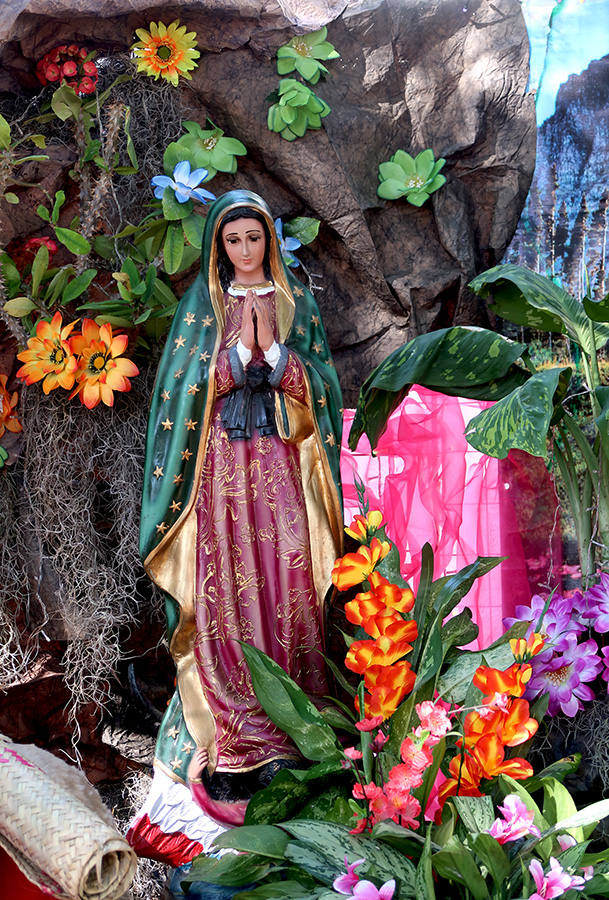
In pre-pandemic years, on December 11, the day before Día de la Virgen de Guadalupe, little boys, dressed as Juan Diego and little girls (las Malinches) in traditional indigenous traje (costume), waited patiently in long lines with parents and grandparents to enter the Templo de Nuestra Señora de Guadalupe (at the north end of Llano Park) to be blessed. Once they exited, at least fifteen “Guadalupe grotto” settings, and the photographers who constructed them, competed for pesos for portraits of the children placed in these elaborate stage sets.

This year, no doubt due to the pandemic, when I arrived in the afternoon, the church doors were closed, there were half the “Guadalupe grotto” sets, and almost no children around — despite the carnival rides, games of chance, food stalls, and tchotchke vendors filling the park and beckoning. The little girl in the last photo was the only child I saw being photographed. Click on Guadalupe’s children and The kids are all right for photos of adorable niñas and niños from previous years.

Read Full Post »

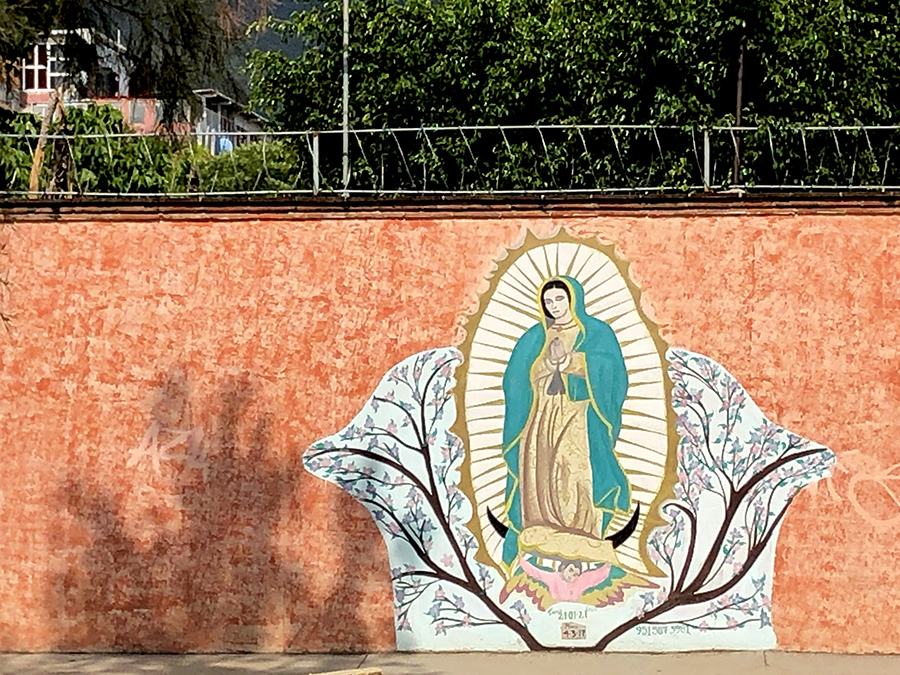
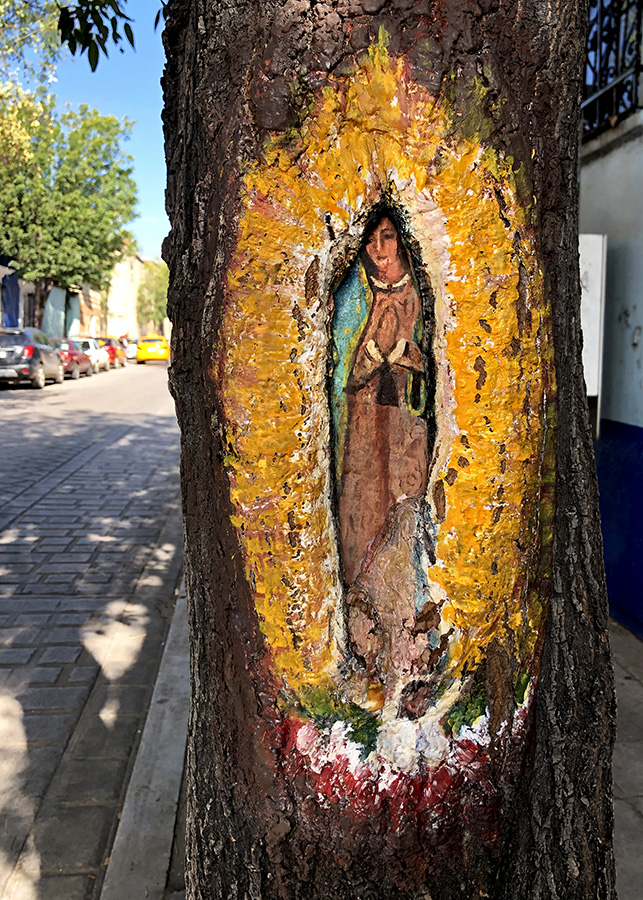
Tomorrow may be Día de la Virgin de Guadalupe, but she is never far from sight no matter the day or place.

May 25, 2021 – Somewhere between Oaxaca’s airport and Barrio de Jalatlaco.
July 5, 2021 – Convite in Teotitlán del Valle.
January 3, 2021 – Outside the Iglesia de San Matias Jalatlaco.
August 11, 2021 – Along a sidewalk in Oaxaca de Juárez.
December 13, 2020 – Vendor offerings on the sidewalk of the Macedonio Alcalá.

Read Full Post »

Our Day in the country’s final destination was San Bernardo Mixtepec. The scenery was spectacular as we drove south from Zimatlán de Álvarez, through the valley, and northeast up into the mountains. It was mid October, nearing Día de Muertos and in the valley there were fields filled with cempasúchitl (marigolds) and cresta de gallo (cockscomb) waiting to be picked for altars. In the meantime, they were being enjoyed by a local grasshopper.

Navigating the narrow, winding, and steep roads, we eventually arrived at the palenque and family home of José Alberto Pablo and his father Mario. Perched on the side of a mountain, it offers stunning views.

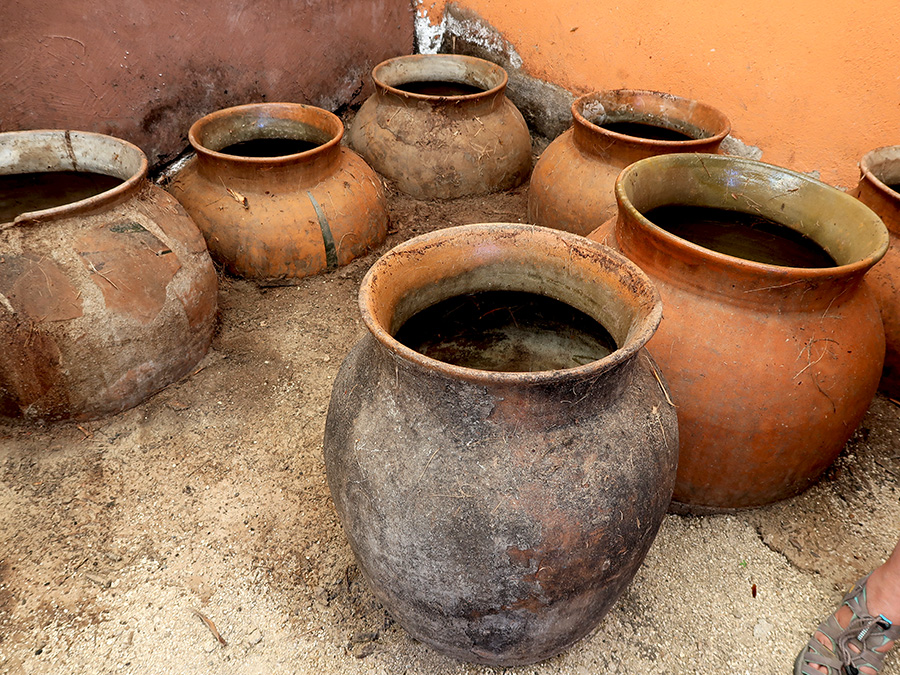
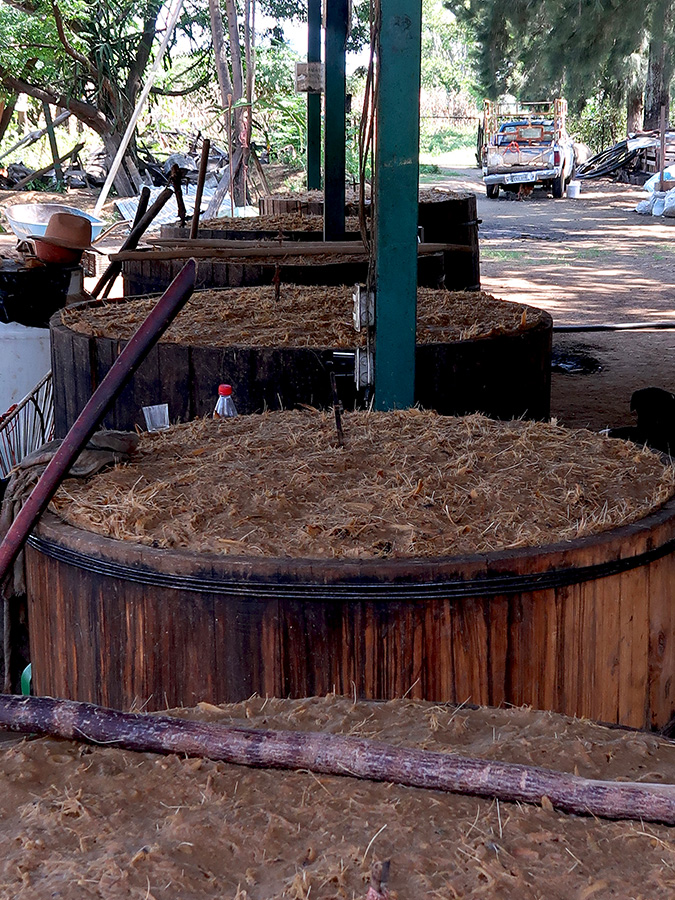
Fermentation is done in clay pots in a specially built room, and clay pots are used for distillation. In an eco-friendly feature, he recirculates the condenser water rather than letting it drain into a stream.

At some point in the history of San Bernardo Mixtepec, a persuasive vendor must have introduced the palenqueros to enameled metal condensers. Over time they rust and deposit a small amount of rust into the mezcal — giving it a distinctive yellow-orange color. According to José Alberto, the villagers have become so accustomed to the color, they are reluctant to drink clear mezcal.

José Alberto Pablo, his father Mario, and Craig T. (middle) — a very happy mezcal aficionado.

Yes, we bought! I came away with a lovely rusty tobalá. By the way, they also use stainless and copper condensers to make clear rust-less mezcal — for the less adventurous and to satisfy the mezcal regulatory board.

Read Full Post »

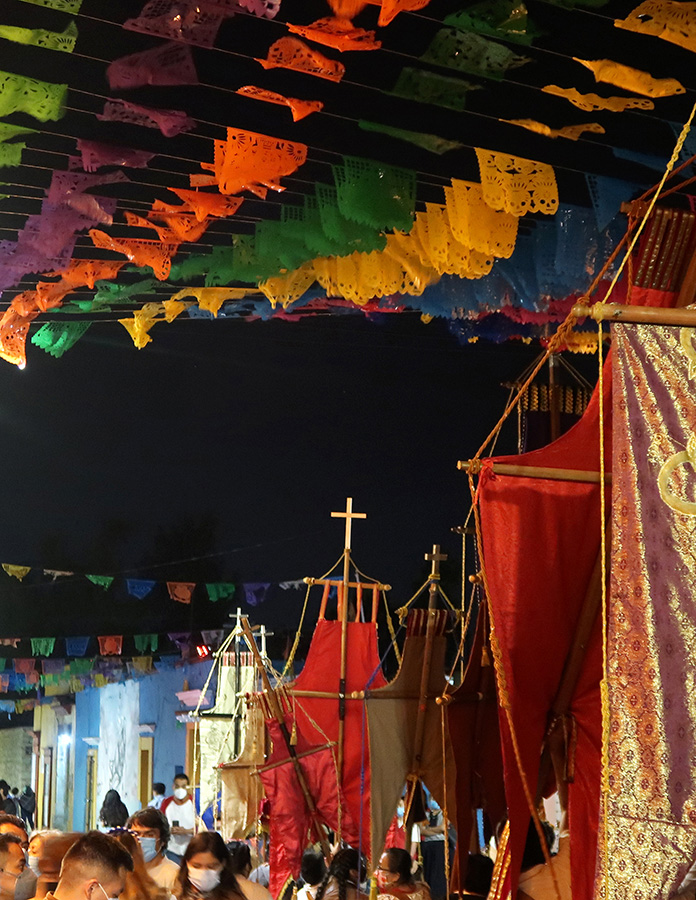
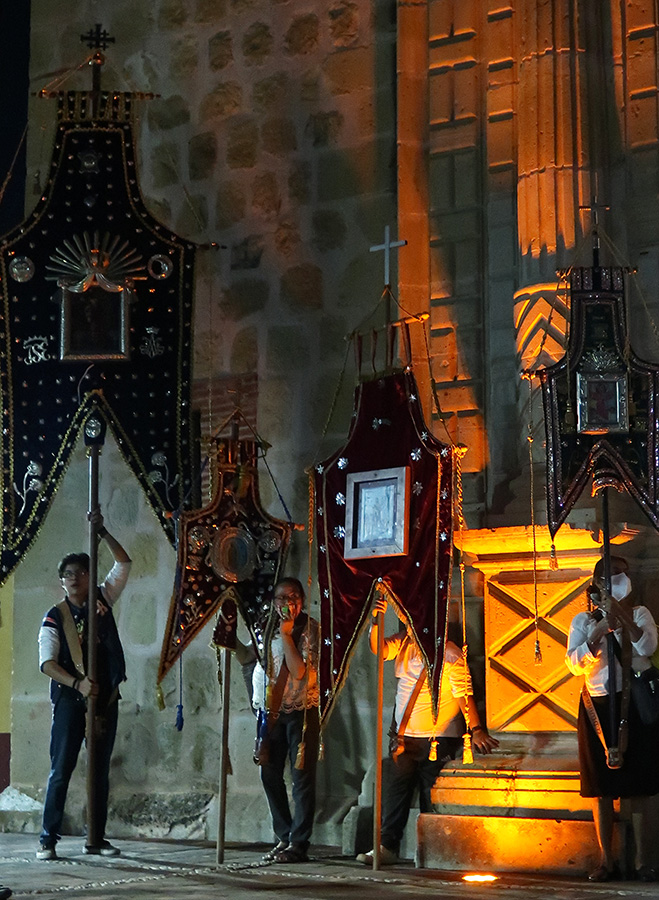
The evening of October 31, I heard the unmistakable sounds of a procession coming down the street — but not the raucous cacophony of a muerteada which, given the date, I was expecting. No, this was the slow dirge-like and repetitive hymn of a religious procession. Needless to say, I grabbed my camera, keys, and cubreboca (mask) and headed out the door. The Catholic church has dedicated the month of October to honor the Virgin Mary with the recitation of the Holy Rosary. This being the last Sunday of October, María traveled through the streets of Barrio de Jalatlaco through the generous mayordomía (stewardship) of the families Robles Tamayo and García Robles.

Upon her return to Templo de San Matías Jalatlaco, she was greeted by a less than solemn scene of Día de Muertos revelers in costumes and face paint, no doubt looking for a muerteada (aka, comparsa). According to the book, Day of the Dead: When Two Worlds Meet in Oaxaca, the muerteada allows the dead “to ‘occupy’ a living body, either a muerteada participant or an audience member, for a time, and therefore enjoy the entertainment directly rather than vicariously.” I suspect for some, it was just an excuse to party.

However, a muerteada did come to my neighborhood the following night. Again, I grabbed camera, keys, and cubreboca and ventured out to check it out. The craziness was only just getting started and would undoubtedly go on most of the night. Besides, not even half the people were wearing masks, so, after twenty minutes and twenty plus photos, I went home.

The sacred and profane that is Mexico.

Read Full Post »

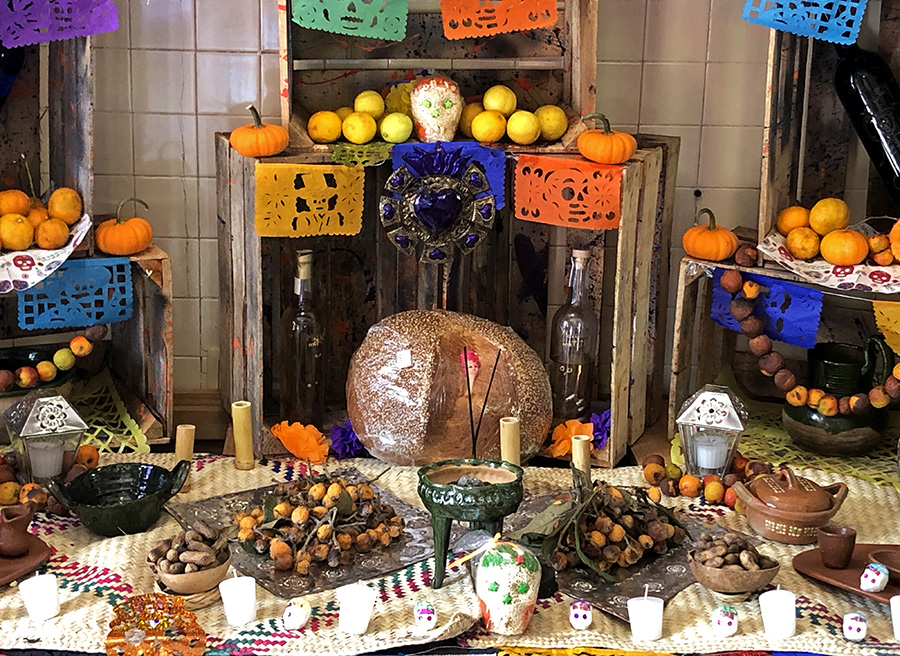
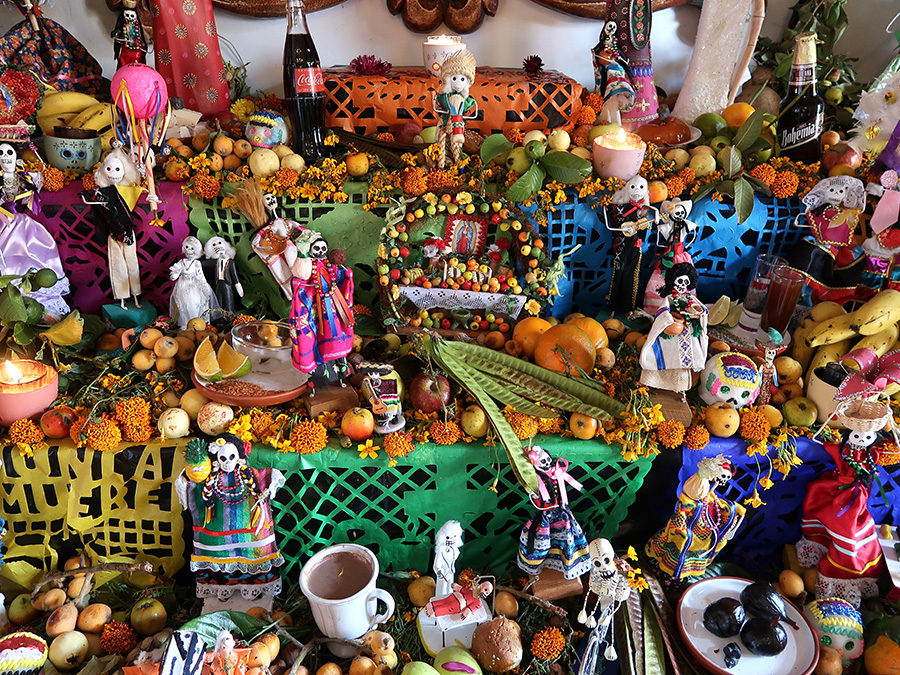
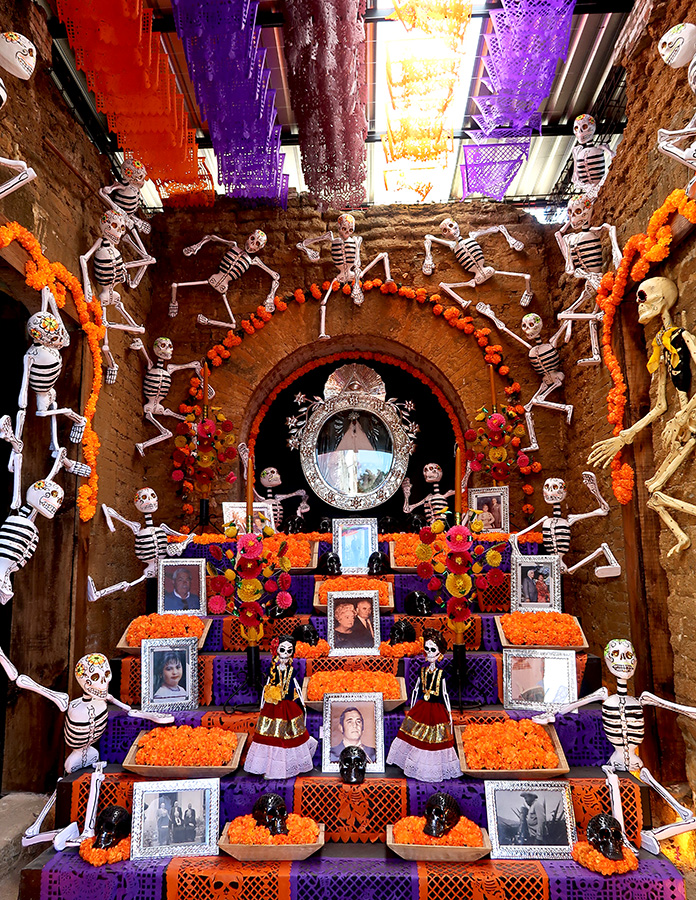
Day of the Dead altars and their offerings to the departed vary from region to region and, within those regions, from family to family. Ofrendas (offerings) are an integral part of Día de Muertos. They are a beacon to the departed, an ephemeral work of art, and the sum of their lovingly chosen parts. As you can see from the photos below from several in Barrio de Jalatlaco, even on public display, they are intensely personal and creative.

Galería Shadai – Flowers, papel picado, candles, incense, pan de muertos, fruit, nuts, a casserole, and beverages.

And, there is a catrina tapete de arena (sand carpet) made of sand, beans, and flowers.

However, the only photo is of Maestro Francisco Toledo placed on a side pedestal.

Los Pilares Hotel and Restaurant – Flowers, papel picado, catrinas and catrins, candles, fruit, pan de muertos, and beverages.

And, there is a beautiful floral arch.

No photos of loved ones, but it’s a love story to the state of Oaxaca.

Family ofrenda – 5 de mayo at the corner of La Alianza. Family photos of the departed take center stage with papel picado, cempasúchitl (marigolds), and skeletons playing supporting roles.

Then there are those magnificent floral candles like one sees in Teotitlán del Valle.

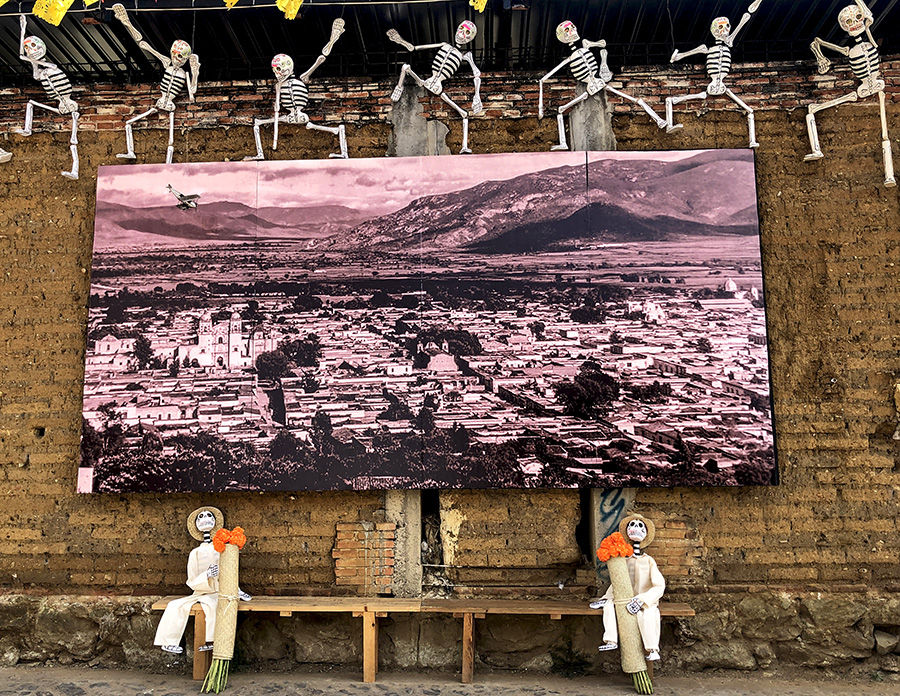
And, lest the departed can’t find their way home in the greatly expanded city, an old photo and skeletons await outside the altar alcove to show the way.

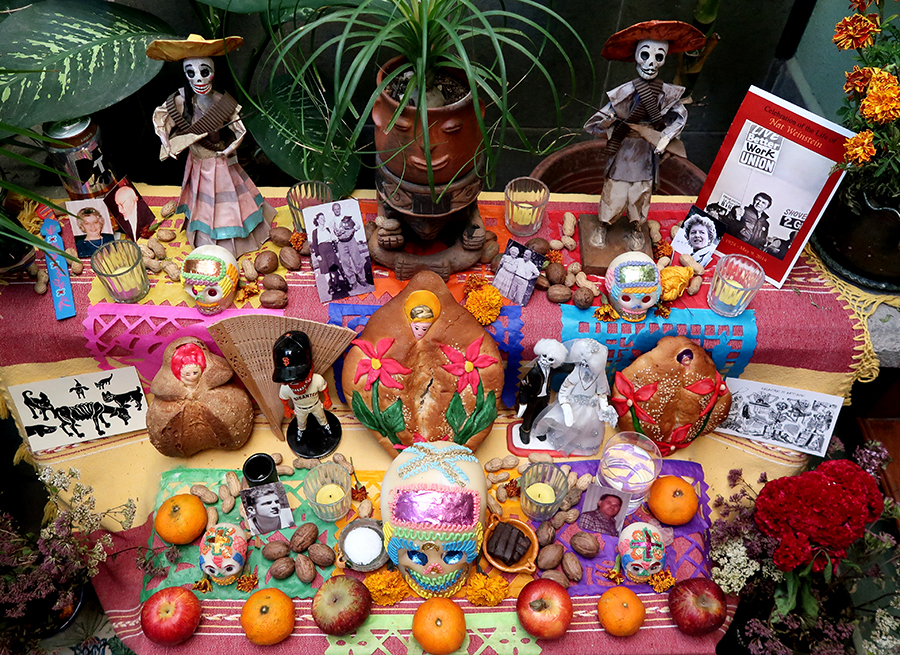
Last but not least, my altar and offerings. It was a creative challenge to set up in the new Casita Colibrí.

It’s smaller than previous years, but I have figured out a way to make it bigger and better next year.

A yellow (color of death in pre-hispanic southern Mexico) tablecloth; papel picado (cut tissue paper) signifying the union between life and death; cempasúchitl (marigolds) and flor de muerto from the Sierra Norte, their scent to guide the spirits; and cresta de gallo (cockscomb) to symbolize mourning. There is salt to make sure the souls stay pure and chocolate, peanuts, pecans, apples, mandarin oranges, and pan de muertos (Day of the Dead bread) to nourish them. The sweet smell of copal incense and its smoke help guide my loved ones to the fiesta I have prepared for them. There is water to quench their thirst, as they travel between worlds, not to mention mezcal and cervesa (beer). And, there are the tangible remembrances of my departed — photos and some of their favorite things.

With candles lit and incense burning, I’m loving it and hoping my very dearly departed will find it warm, nourishing, and welcoming.

Read Full Post »

Oaxaca is getting ready for the annual arrival of her difuntos (souls of the dead), so a pause in the Day in the country posts is in order. Blue sky or grey, ran or shine, and village or city, they come…

Oaxaca City
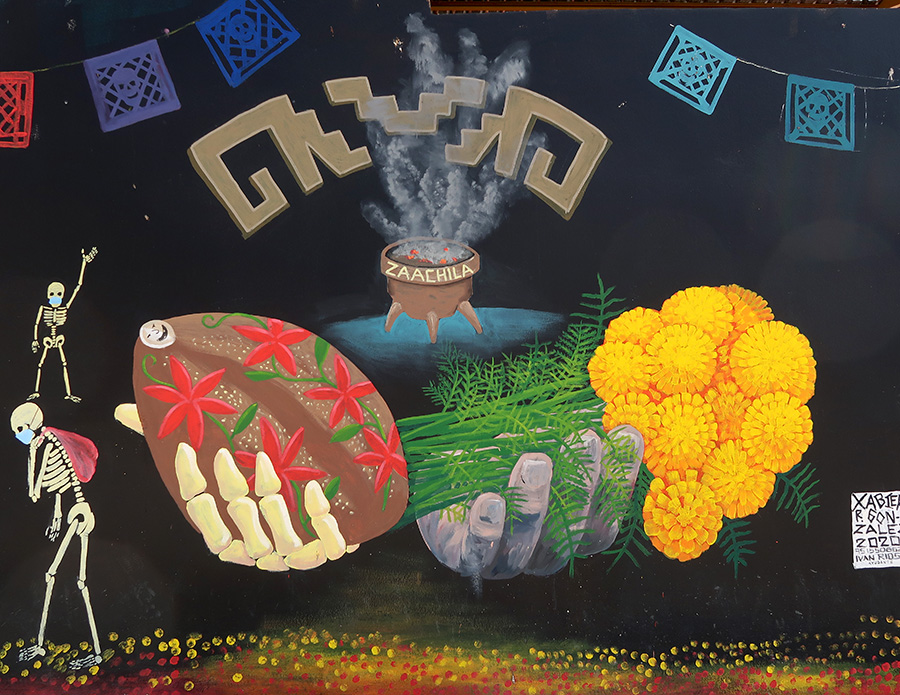
Villa de Zaachila
Villa de Zaachila

They come to eat and drink…

Villa de Zaachila
Oaxaca City
Villa de Zaachila

They come to sing and dance, contemplate life and death, and be with loved ones.

Villa de Zaachila
Villa de Zaachila
Oaxaca City

Our hearts are filled with joy to welcome them to the fiesta we have lovingly prepared in their honor.

Read Full Post »

Flora and fauna and mezcal, oh my! That pretty much sums up the next stop on my day in the country adventure with friends. After leaving Villa de Zaachila, we headed south to Zimatlán de Álvarez and the working farm and palenque of René Parada Barriga (sold under label, Tío René). René was at a meeting, so his son Moisés capably took over the palenque’s touring and teaching duties.

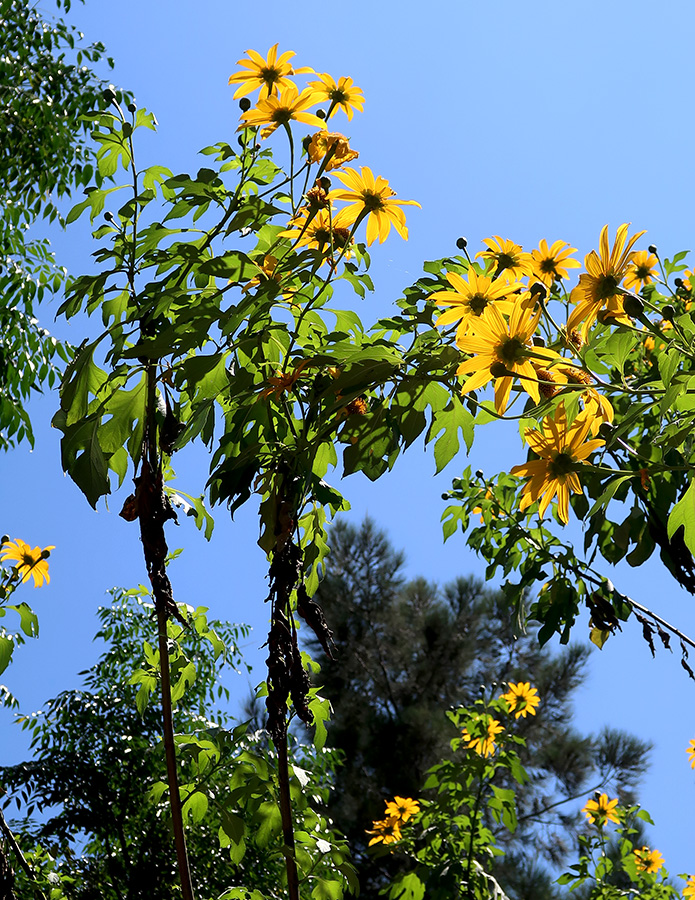
Tithonia diversifolia (aka, Mexican sunflower) reaching toward the sky.
Agave plantlets waiting to be planted.
Nonchalant cattle relaxing in the shade.
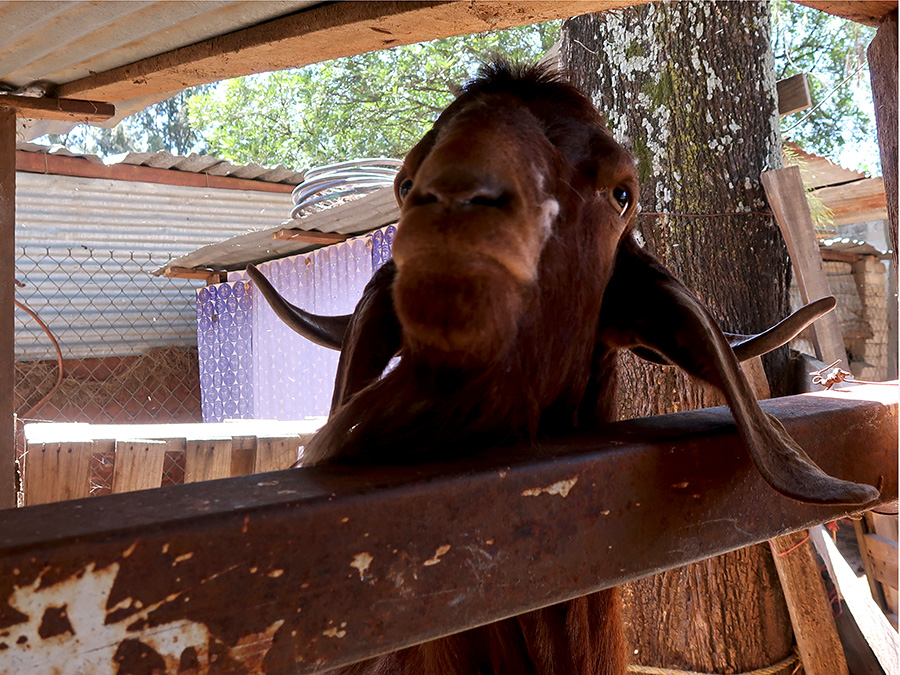
Friendly goat saying, “buenas tardes.”
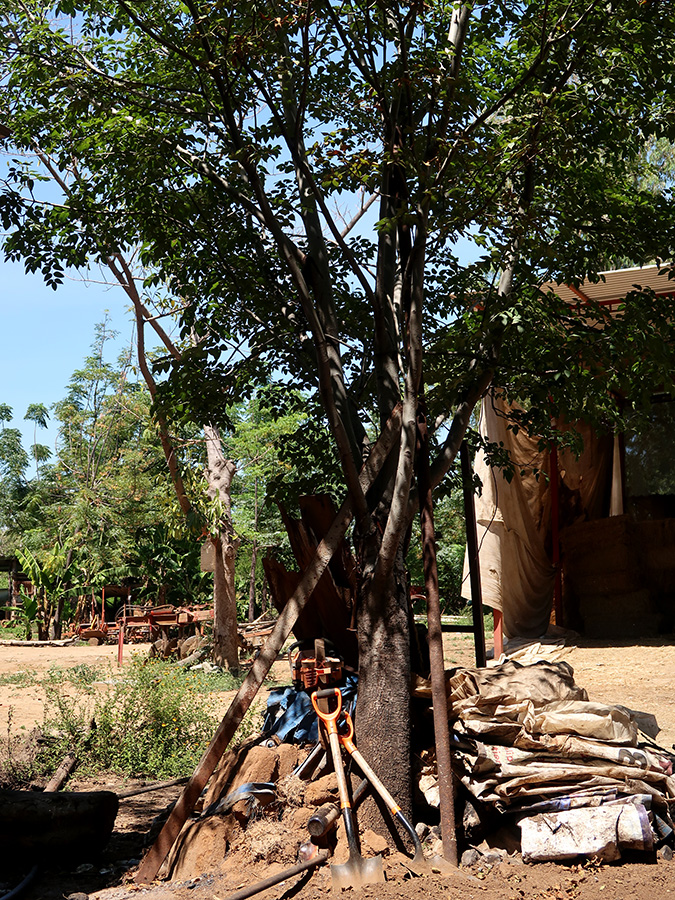
Tools of the trade.
Omnipresent home altar.
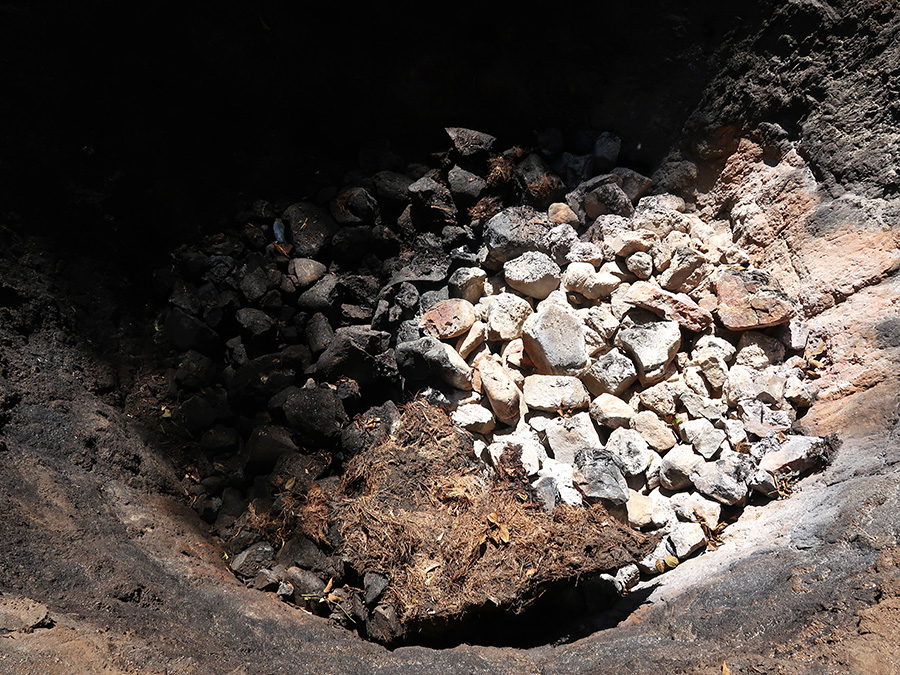
Cooking pit awaiting the next batch of agave.
Fermentation vats.
Copper stills.
Moisés offering a taste.
Sophia filling one of our empty bottles.

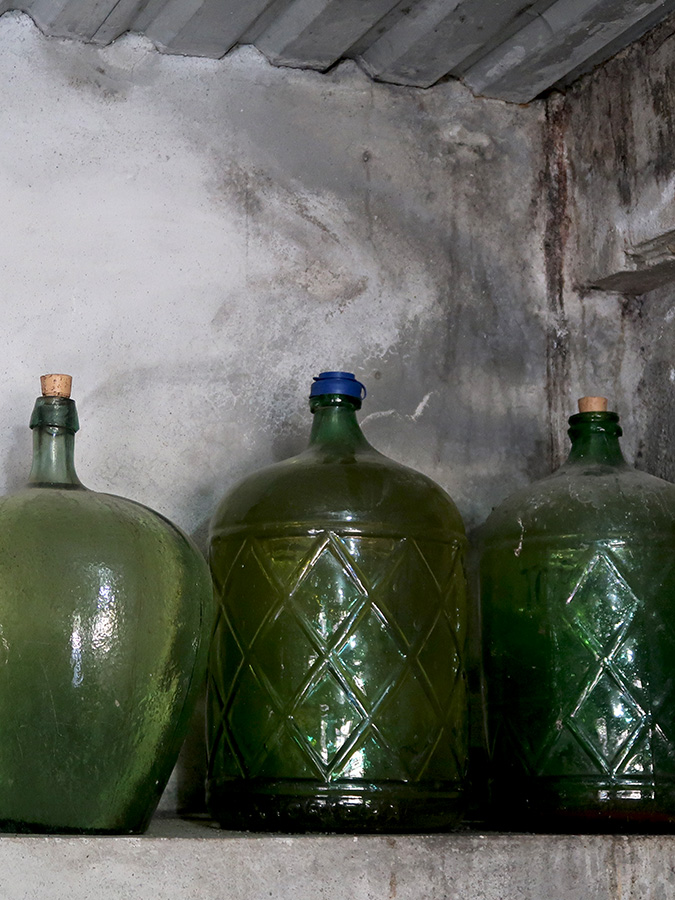
We came prepared, bringing our own plastic bottles and René’s wife Sophia poured and sold. I bought a lovely copper distilled Cuish and, once home, transferred it into one of my many empty glass bottles — saved for days such as this. Our next (and last) stop was another palenque. Stay tuned!

Read Full Post »

Thursday is market day in Villa de Zaachila. Thus, once we turned off the carretera, we crawled our way into town joining scores of other cars, trucks, tuk tuks, motorcycles, bicycles, pedestrians, dogs, and the occasional goat. The scenes were pure country village. Once parked, we meandered our way along the street stalls, stopping to examine their wares and chat with vendors.

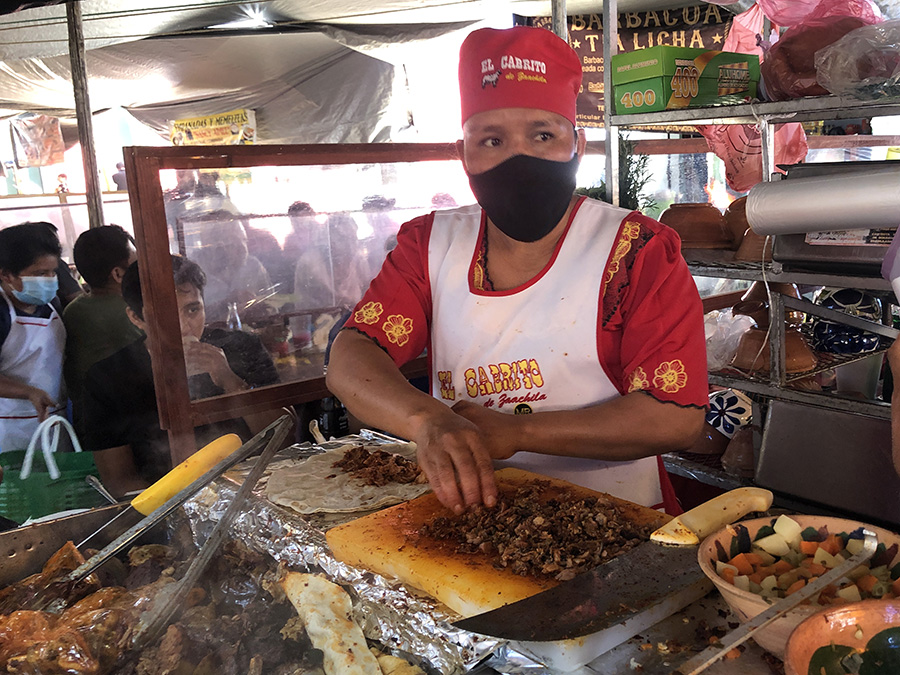
However, our stomachs were grumbling and our trajectory was set — Zaachila’s mouthwatering barbacoa de chivo (goat) beckoned!

Once sated, we went in search of Zaachila’s beautifully decorated pan de muerto (Day of the Dead bread). It was still a little early in the season but, zigzagging up and down the bread aisles, we eventually found a couple of vendors and bought a few to be placed on our ofrendas.

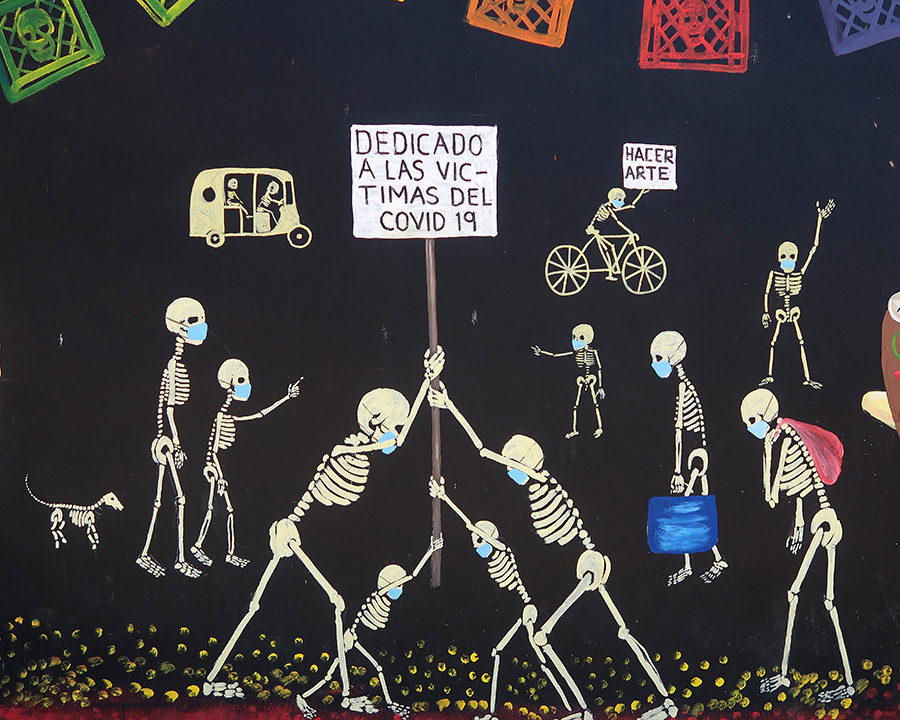
Being members of the “clean plate club” and needing to walk off our very filling lunch, we walked toward the Templo de Santa Maria de la Natividad to begin the Muertos mural walk to the Panteón. However, before even reaching the church, we were stopped in our tracks by this massive and incredibly moving mural dedicated to the victims of Covid-19.

New Day of the Dead murals had been painted along calle Coquiza since I was last in Zaachila two years ago and I will post pictures later. In the meantime, next stop — a mezcal palenque in Zimatlán de Álvarez.

Read Full Post »

Oaxaca-loving mezcal afficionado friends are in town and invited me to spend a day with them exploring pueblos and palenques. They hired a double vaccinated/mask wearing driver for the day, so I jumped at the opportunity escape from the city and hang out with them. First on the itinerary was the Mercado de Artesanías in Santa María Atzompa to peruse and purchase some of their green glazed pottery.

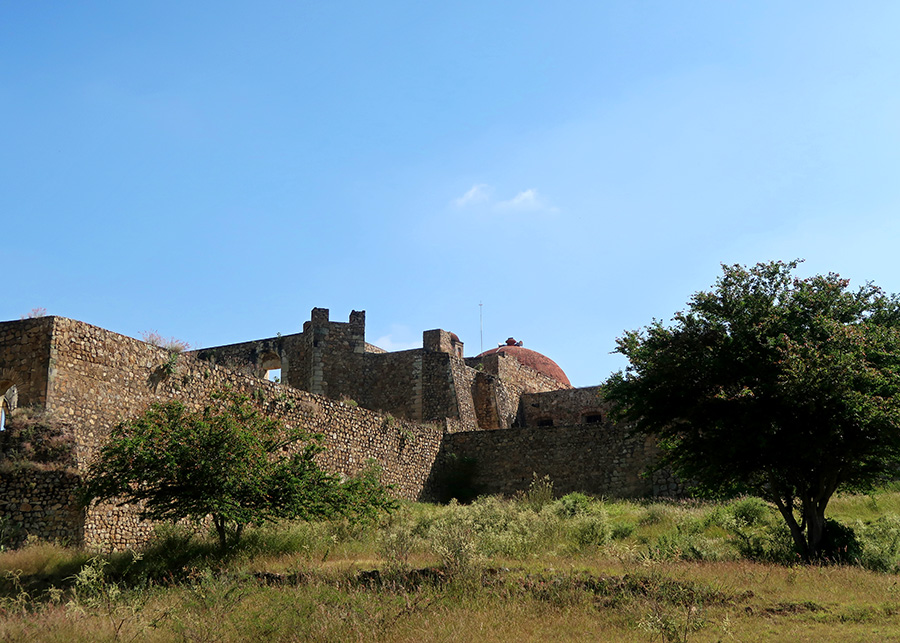
Next up was supposed to be Villa de Zaachila, but since they had never been to the Ex-Convento de Santiago in Cuilapan de Guerrero and even though it is currently closed due to Covid-19 precautions, we pulled into the mostly empty parking lot and gazed through the wrought iron fence at the unfinished basilica and monastery that was begun in 1535 and, due to skyrocketing costs, construction stopped in 1570.

We proceeded to walk almost all the way around the outer walls of this massive structure — enjoying views of the sides and back and the flora that surrounds it — something I previously had never done.

While we were definitely not in Oklahoma, the Rogers and Hammerstein song, “Oh, What a Beautiful Mornin'” came to mind.

There’s a bright golden haze on the meadow,
The corn is as high as an elephant’s eye,
An’ it looks like its climbin’ clear up to the sky.

Alas, we got trapped on the far side of the ex-convento with no exit and had to retrace our steps back to the car where we turned onto the road and headed southeast to Villa de Zaachila. Stay tuned!

Read Full Post »

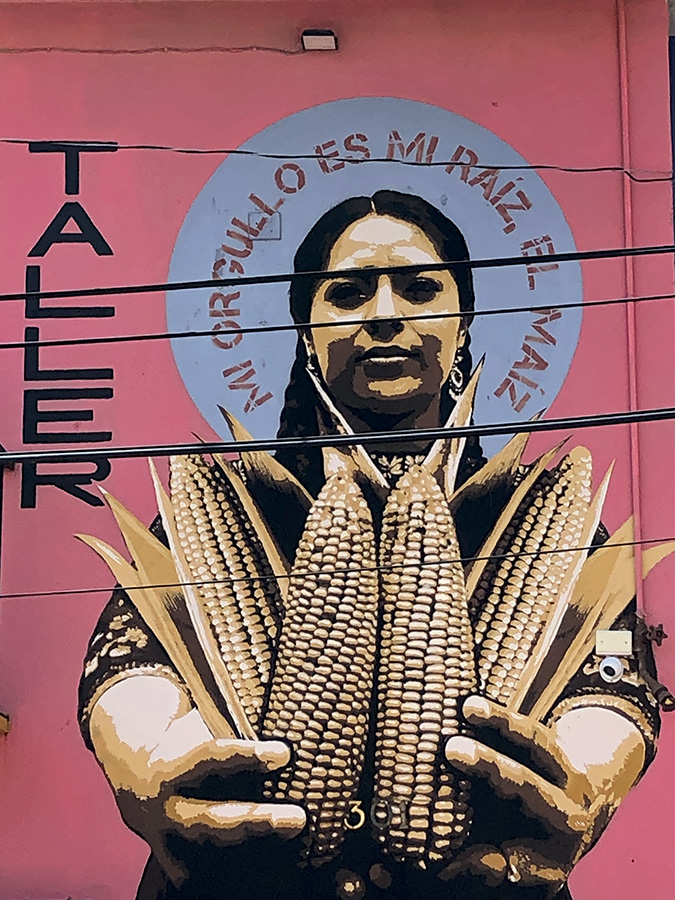
Feliz Día Nacional del Maíz (Happy National Day of Corn).

Mi orgullo es mi raiz, el maíz (My pride is my root, the corn).

But what would corn be without the hands that have cared for it for hundreds of years.CONABIO (National Commission for the Knowledge and Use of Biodiversity)

Sin Maíz No Hay País (Without corn there is no country)!

Read Full Post »

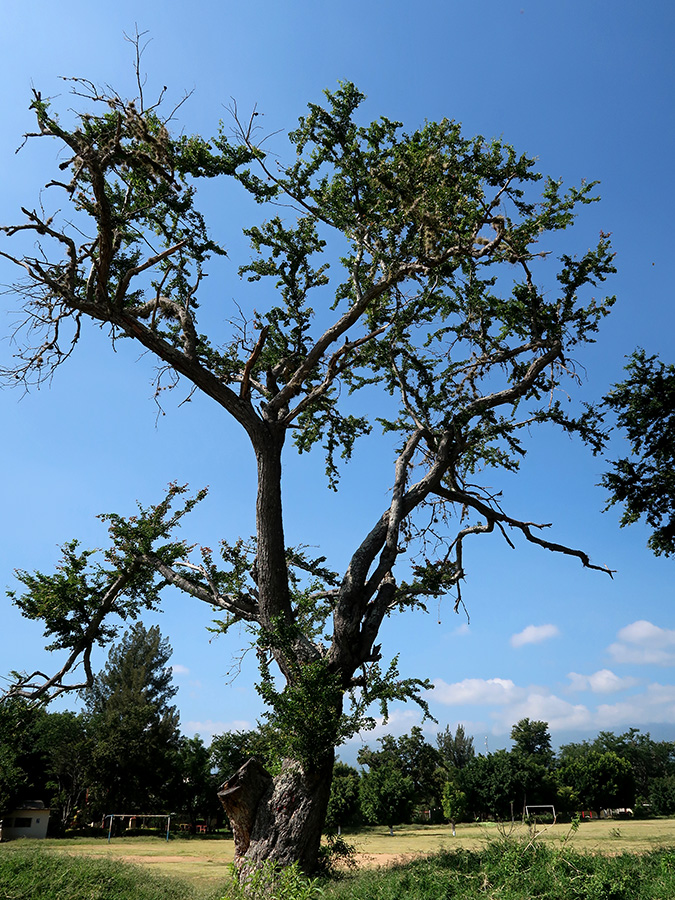
Under the shade of the 361 year old Coquito de la Iglesia de Jalatlaco tree, onlookers (and bloggers like yours truly), dignitaries, media, and the artists of the Tlacolulokos collective gathered for the inauguration of the previously mentioned new mural in Jalatlaco.

“Nuestro sol se ha ido” mural in Barrio de Jalatlaco.

The mural, “Nuestro sol se ha ido” (Our sun has gone) is a collaboration between Rolande Souliere of the “Anishinaabe” people in Canada and the Zapotec Tlacolulokos urban art collective from Oaxaca’s central valley.

Indigenous Encounter Canada/Mexico, “Our sun has gone” by Tlacolulokos and Rolande Souliere.

The mural’s inauguration was live streamed on Facebook on the Secretaría de las Culturas y Artes de Oaxaca page.

Media and dignitaries gathered in the atrium of the Templo de San Matías Jalatlaco.

Unfortunately, Rolande Souliere could not travel to Oaxaca. However she described some of the symbolism of the mural: “We decided to portray the mythological beings of the Canadian thunderbird and the Zapotec deity of the Cosijo throne, these fantastic beings are responsible for the thunder and rain that the world experiences and that come together thanks to the clouds…. symbolic imageries such as Zapotec patterns, the route of thunder and the four directions of the first nations represented by the colors red, black, yellow and white… important signifiers in both communities since they represent the continuation of indigenous culture in contemporary society.”

Inaugural ribbon cutting (Canadian Ambassador wearing white shirt in center and artist Dario Canul on the far right) for the “Nuestro sol se ha ido” mural.

Dario Canul, representative of the Tlacolulokos colective further explained, “The mural, ‘Our sun has gone,’ is a representation of celebration, life, rain, thunder, and tears that all indigenous peoples have shed over time.”

Drone filming the inauguration of the “Nuestro sol se ha ido” mural.

The inauguration launched the 2-1/2 week long Encuentros indígenas: Canadá-Oaxaca 2021 (Indigenous encounters: Canada-Oaxaca 2021) — a series of activities in Oaxaca city and surrounding villages — that runs from September 20 to October 8, 2021.

Tlacolulokos artists in front of the mural, “Nuestro sol se ha ido” mural.. Dario Canul (center).

In remarks by Graeme C. Clark, the Canadian Ambassador, at the inaugural event and reports from this article, the collaboration seems to be an expression of the mea culpa by the Canadian government with regard to their historic treatment of the first peoples of the territory that is now called Canada. Better late than never. The indigenous peoples of the USA are still waiting.

Read Full Post »

Today, I decided to change up what has become my Friday shopping routine. Instead of walking north to the fruit and veggie vendor, I headed south to explore the Friday tianguis — relocated from Llano Park a couple of years ago and now residing near the Polideportivo.

And, what an excellent decision it was! Only blocks from home, I came across a massive mural in progress on Calle de la Noche Triste at the corner of Calle Ignacio Aldama.

With scaffolding and tools of the trade in place, men were at work.

The style looked familiar, so I stopped to ask, and discovered they were the Tlacolulokos – my favorite artist collective from Tlacolula de Matamoros!

I think the guy I spoke to was a bit taken aback to find that this gringa was quite familiar with their work — including the murals for the Downtown Central Library in Los Angeles, California. Stay tuned…

Read Full Post »

« Newer Posts - Older Posts »