In front of Oaxaca’s Cathedral, the Palm weavers from the Mixteca have been practicing their craft with awesome dexterity, creativity, and skill.


All is ready for Domingo de Ramos (Palm Sunday).
Posted in Celebrations, Churches, Creativity, Culture, Holidays, Travel & Tourism, tagged Catedral de Oaxaca, Cathedral of Oaxaca, Domingo de Ramos, Mexico, Mixteca palm weavers, Oaxaca, Palm Sunday, photographs, photos, popular travel destinations, Semana Santa on March 24, 2013| 10 Comments »
In front of Oaxaca’s Cathedral, the Palm weavers from the Mixteca have been practicing their craft with awesome dexterity, creativity, and skill.
All is ready for Domingo de Ramos (Palm Sunday).
Posted in Buildings, Creativity, Culture, Exhibitions, Gardens, People, Travel & Tourism, tagged abandoned buildings, art, art installation, El Sueño de Elpis, exhibition, Matria Jardín Arterapéutico, Mauricio Cervantes, Mexico, Oaxaca, photographs, photos, Primavera, Seasons, Spring on March 22, 2013| 3 Comments »
Do you remember December’s abandoned building that artist Mauricio Cervantes transformed into Hope amidst decay with his El Sueño de Elpis? Bringing together artists, gardeners, and community members, he is again working his magic at Casa del SXIX. Honoring sustainability and reuse, Matria, Jardín Arterapéutico is a year-long multidisciplinary installation that will grow and change with the seasons.
Appropriately, on the first day of Spring — the season of rebirth, resurrection, and renewal — I was invited to wander through the site and watch as life was emerging from the decay.
Primavera, the beginning phase of Matria, Jardín Arterapéutico will be revealed to all on Saturday, March 23 at 2:00 PM. The building can be found at Murguía 103 (between Macedonio Alcalá and 5 de mayo).
Posted in Beverages, Celebrations, Churches, Culture, Food, Holidays, Religion, Travel & Tourism, tagged Barrio de Jalatlaco, Chilacayota, Día de la Samaritana, Día de las Aguas, Good Samaritan day, Horchata, Lent, Mexico, nieves, Oaxaca, photographs, photos, popular travel destinations on March 19, 2013| Leave a Comment »
You know Semana Santa is on the horizon when tables, large and small, elaborately or minimally decorated, miraculously appear in doorways, street corners, and the Alcalá. The common denominator is smiling people offering Agua de Jamaica, Horchata, Chilacayota, and even nieves to all passers-by. Día de la Samaritana (Good Samaritan Day) is an only-in-Oaxaca, 4th Friday of Lent, event.
This year, besides experiencing the joyous mob scene on the Alcalá and the small sidewalk stands on side streets, on a tip from a friend, I made the “taking your life in your hands” crossing of Calzado de la República to the picturesque cobblestoned neighborhood of Jalatlaco. Tables of aguas and nieves lined the plaza in front of the Templo de San Matías Jalatlaco and pastor Víctor Hernández was recounting the Biblical story, found in the Book of John, of the woman at the well who offered water to Jesus — the inspiration for Día de la Samaritana. He concluded the story and blessing with the word “¡ataque!” and the masses did, indeed, attack the tables! By the way, pastor Hernández gets around — he was the same priest who performs the yearly blessing of the animals across town at the Templo de Nuestra Señora de la Merced.


It was a hot day and having already had two aguas, as I made my way over to Jalatlaco, I was jonesing for a nieve but, alas, by the time I figured out which table was serving it, the line was too long. So, giving up on the nieve, I accepted another agua and headed towards home. However, in the true spirit of the day, as I was melting in the heat, an older gentleman standing on the sidewalk asked if I would like a nieve and gestured toward a woman standing in the doorway behind a small table. “Sí” I replied and a styrofoam coffee cup filled with Leche Quemada (my favorite) was thrust into my hand. Another sublime day in Oaxaca…
Posted in Science & Nature, Travel & Tourism, Weather, tagged arboles, Cabellos de Ángel, Mexico, Oaxaca, photographs, photos, plants, popular travel destinations, Pseudobombax ellipticum, Shaving Brush Tree, trees on March 16, 2013| Leave a Comment »
We are in the middle of the dry season; the mountains surrounding the valleys of Oaxaca are golden. It’s still winter and my African tulip trees remain leafless against the sun and blue sky. However, Mother Nature is hinting that Spring is coming; time for you guys to shave those winter beards. And, this time of year, la madre naturaleza supplies the brushes — the Pseudobombax ellipticum.

According to the Oaxaca Garden and Nature Club website, its common name in English is the Shaving Brush Tree.

As you can see above, the flowers can be red or white.

By the way, one of its common names en español is Cabellos de Ángel.
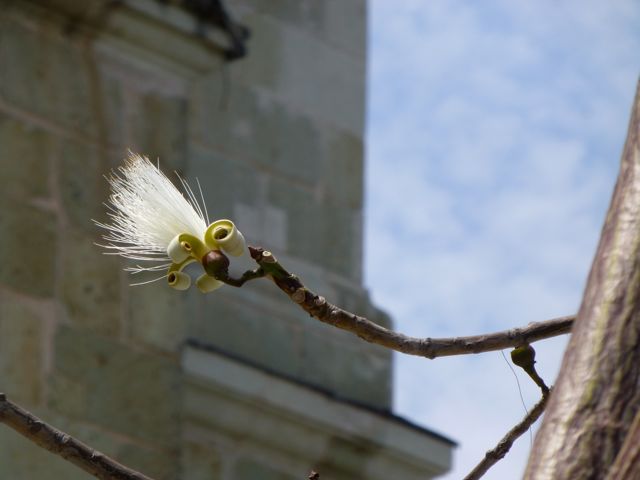
Angel Hair or Shaving Brush? You decide!
Posted in Creativity, Culture, Weather, tagged graffiti, Mexico, Oaxaca, photographs, photos, street art, urban art, wall art on March 13, 2013| 4 Comments »
It may be March, but Oaxaca is doing May weather — daytime temperatures in the high 80s/low 90s and the nights are sheets only.
I scream, you scream…
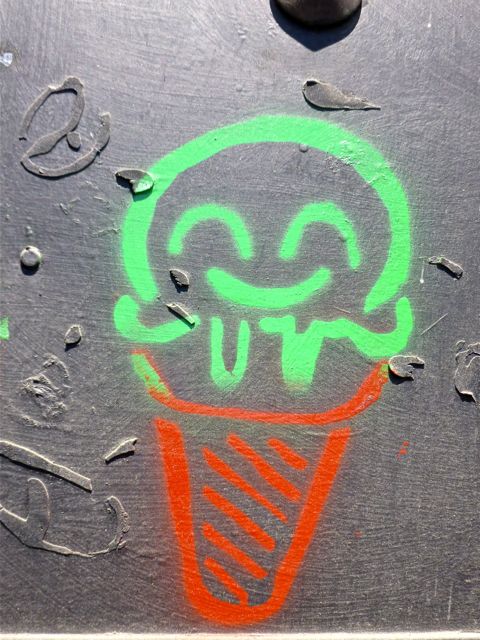
Even the walls scream for ice cream!
Posted in Agriculture, Creativity, Culture, People, Science & Nature, Textiles, Travel & Tourism, tagged costumes, cotton, coyuche, goat herder, goats, huipil, livestock, Mexico, Oaxaca, Odilon Merino Morales, photographs, photos, plants, San Juan Amuzgo, Sheri Brautigam, traje on March 10, 2013| 5 Comments »
A mile or two from the city are fields of corn; a recurring reminder of where the masa used to make tortillas, tamales, and other mealtime staples, comes from. Livestock roam the hills and are often seen being herded down the streets of local villages.

And, at the foot of the stairs of my new apartment is a coyuche bush — the brown cotton plant that has been cultivated in this part of the world for thousands of years.
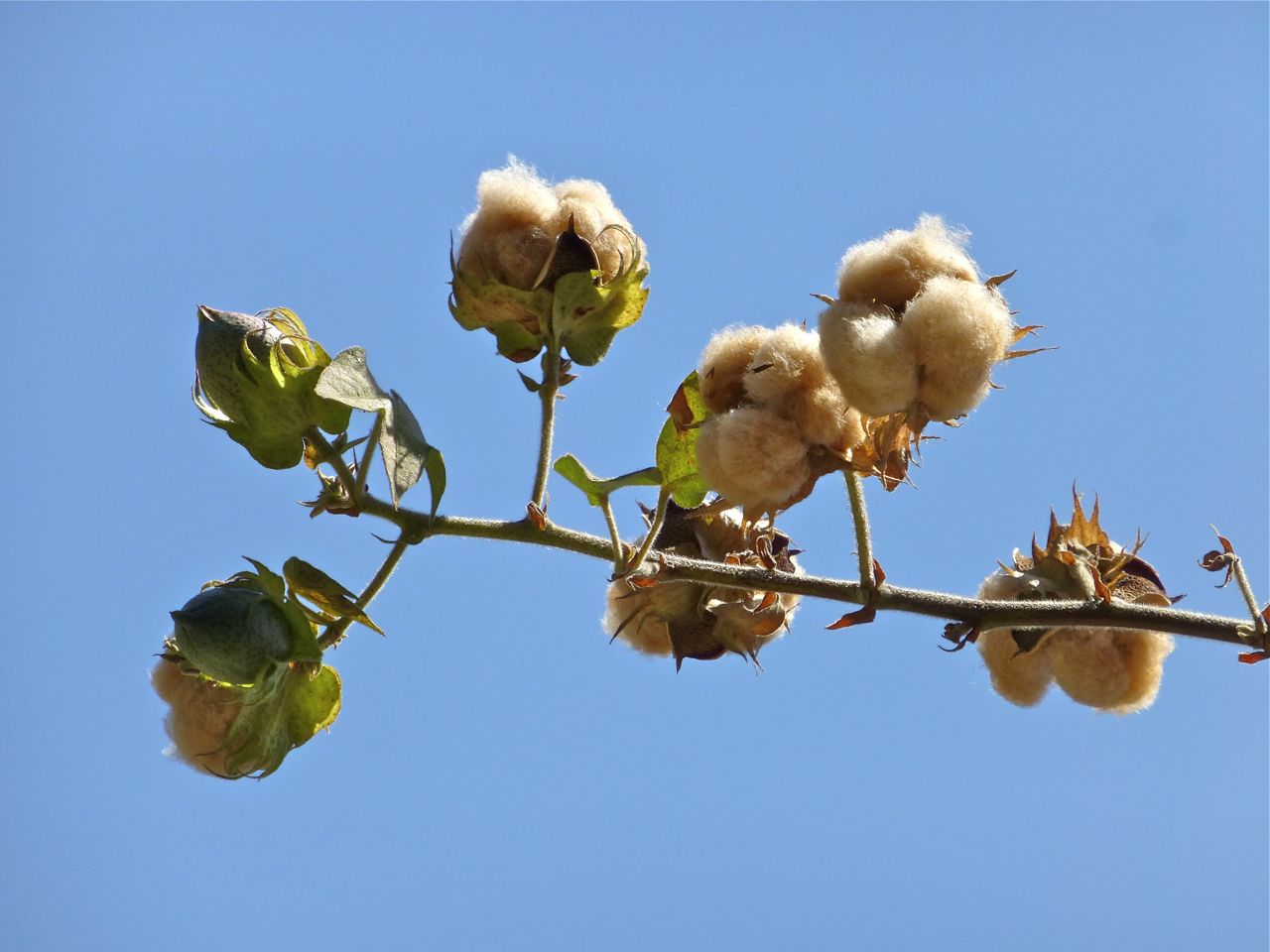
The ripe buds of the coyuche have been harvested, cleaned, spun, and woven into huipiles and cotones (men’s shirts) by countless generations. However, like many textile traditions, industrialization has taken its toll. The cultivation and use of coyuche is literally hanging by a thread, mostly confined to the Mixteca and Costa Chica regions of Oaxaca. As a result, besides just liking the design and color, I have a profound appreciation for and treasure this old huipil that was given to me a couple of years ago.

It’s in desperate need of repair. My friend and Mexican textile collector and chronicler, Sheri Brautigam, advised me to take it to Odilon Merino Morales, who is from San Juan Amuzgo and leads an effort to revive the use of coyuche. I will ask him if he knows of someone who could give my huipil some tender loving mending.
Living close to the source — there is something wonderful about the coyuche plant’s daily reminder of the origin of one of my favorite huipiles.
Posted in Buildings, Creativity, Culture, Holidays, Travel & Tourism, tagged Comisión Nacional para el Desarrollo de los Pueblos Indígenas, Día Internacional de la Mujer, International Women's Day, Mexico, murals, National Commission for the Development of Indigenous Peoples, Oaxaca, photographs, photos, popular travel destinations, public art, street art, urban art on March 8, 2013| 1 Comment »
Today is International Women’s Day…


Mural on the wall outside the Comisión Nacional para el Desarrollo de los Pueblos Indígenas, Delegación Oaxaca, on Heroico Colegio Militar in Col. Reforma.
¡Feliz el Día Internacional de la Mujer!
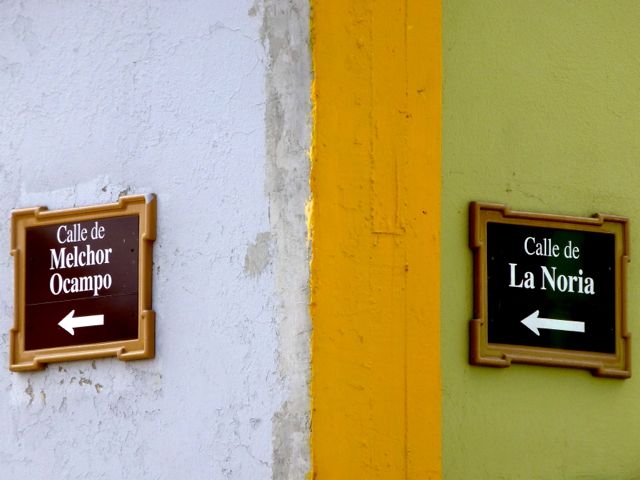
Posted in Creativity, Culture, Signs, Travel & Tourism, tagged graffiti, Mexico, Oaxaca, photographs, photos, street art, street signs, urban art, wall art on March 6, 2013| 4 Comments »
Posted in Celebrations, Culture, Parks & Plazas, Travel & Tourism, tagged Basilica de la Soledad, celebrations, dancers, Día del Barrendero, garbage collectors, garbage trucks, marmotas, Mexico, monos, Oaxaca, photographs, photos, popular travel destinations, Sindicato Independiente 3 de Marzo, street sweepers, toritos on March 4, 2013| 9 Comments »
Yesterday was another of the “ya just never know…” days. Returning to the city from Xoxocotlán after looking at the house my (soon-to-be-former) neighbor is building, the taxi driver pointed down Independencia and said something that we interpreted as, “day of the garbage collector.” So, instead of going home, my camera and I walked in the direction he pointed and, sure enough, a side street was lined with decorated garbage trucks.
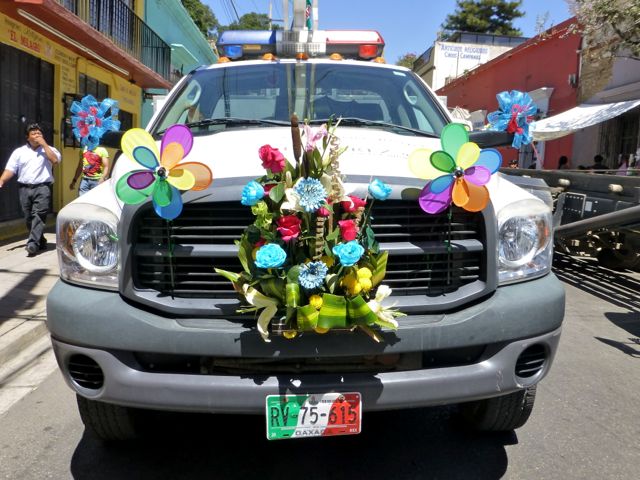


However, this day wasn’t for just any old garbage collectors; being March 3rd, it celebrated the founding of the Sindicato Independiente 3 de Marzo of the municipality of Oaxaca. Depending on which newspaper report one reads, it is either the 34th, 38th, or 39th anniversary.

These are the city workers who keep the state’s capital clean — the garbage collectors, street sweepers, drivers, and laborers. And, the city of Oaxaca IS clean, putting San Francisco to shame! After a Thanksgiving mass, most of the 1,200 “trabajadores de limpia” and their families filled the plaza in front of the Basilica de la Soledad. And, like all good Oaxacan celebrations, there were monos, dancers, marmotas, bands, toritos, and the whistles, whirrs, and booms of fireworks (of the all bang, no bling variety).


So, now you know where to be and what to do next March 3rd!
Posted in Creativity, Culture, Science & Nature, Travel & Tourism, Weather, tagged dry season, Mexico, Oaxaca, Oración al sagrado elemento agua, photographs, photos, popular travel destinations, SAGA, street art, urban art, wall art, water on March 3, 2013| Leave a Comment »
It’s the dry season, no rain in a couple of months, and we are reminded how sacred and precious water is.
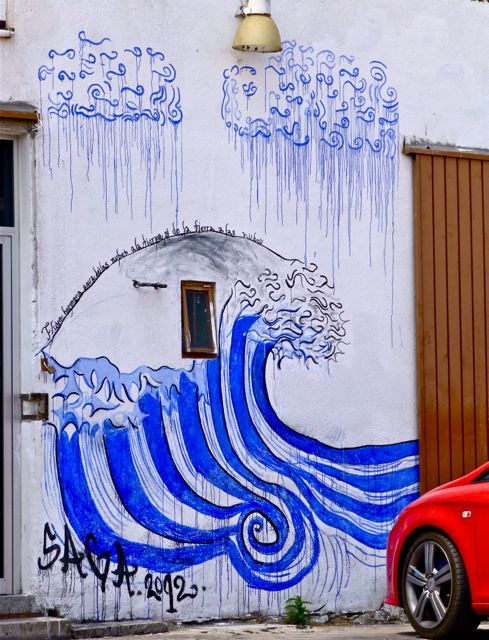
At the top of the wave:
“Fluye hermana agua de las nubes a la tierra y de la tierra a las nubes.” (Sister water flowing from the clouds to earth and from the earth to the clouds.)
A line from the poem, Oración al sagrado elemento agua.
Posted in Buildings, Creativity, Culture, Music, Travel & Tourism, tagged Academia de Arte Musical, art, Buffalo Springfield, Mexico, mural, music, Oaxaca, photographs, photos on February 25, 2013| Leave a Comment »
The little Embraer may have touched down in Oaxaca late Saturday night but, in the words of a long ago Buffalo Springfield song, I’m still “flying on the ground.”

Mural on the wall outside Academia de Arte Musical in Oaxaca.
Moving two days before a California and New York trip… What was I thinking?
Posted in Creativity, Culture, People, Signs, tagged art, Mexico, Oaxaca, photographs, photos, popular culture, stickers, street art, street signs, urban, urban art on February 21, 2013| Leave a Comment »
Pop culture stickers are, “ubiquitous in urban centers around the world. Often seen at eye level or just beyond reach, stickers grace most every imaginable surface of the built environment.” [Digital Collections Street Art Graphics]
As you can see, Oaxaca is no exception.

Jimmy and María Sabina, I know. — even got to see Hendrix perform twice, back in the day.
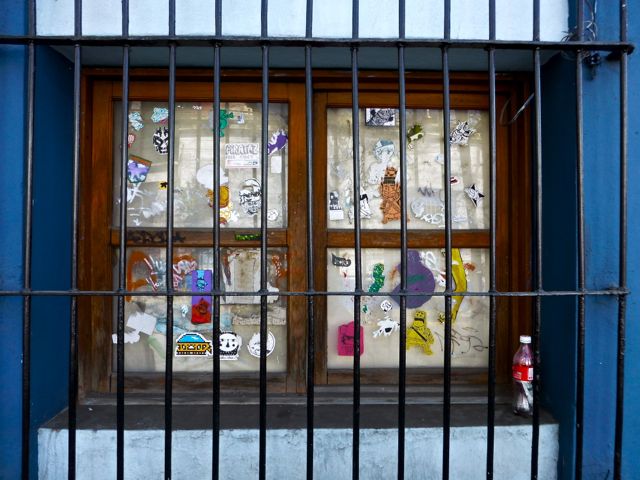
But, that qualifies me as being “certain age” and so most of the references escape me.
And, what’s with the skull and cross-bones? Rebellion? Symbol of a toxic culture?? Perhaps. But, like Che, one now sees them everywhere — even on toddler clothes. Co-opted, again!
Posted in Celebrations, Culture, Education, Language, tagged articles, Centro Académico y Cultural San Pablo, Día Internacional de la Lengua Materna 2013, Endangered Languages Project, ethnolinguistic groups, indigenous peoples, Indigenous Youth Step up to Protect their Roots, International Mother Language Day, language, lengua materna, Mexico, Mother Tongue, native tongues, Oaxaca, San Pablo Academic and Cultural Center, UNESCO on February 19, 2013| 2 Comments »
In 1999, UNESCO designated February 21 as International Mother Language Day. Tomorrow, February 20, Oaxaca begins her own celebration of Día Internacional de la Lengua Materna 2013 with a 2-day conference.

The issue of “lenguas maternas” has a particular resonance in Oaxaca, as the state is home to 16 distinct ethnolinguistic groups: Amuzgos, Chatino, Chinanteco, Chocho, Chontal, Cuicateco, Huave, Ixcateco, Mazateco, Mixe, Mixteco, Náhuatl, Popoloca, Triqui, Zapoteco, and Zoque. As anyone who has visited the villages of Oaxaca has discovered, sometimes the abuelos and abuelas only speak their native language, not Spanish.
However, as Ernestina Gaitán Cruz notes in an article in sinembargo.mx, most of these indigenous languages lack an alphabet, having been passed from one generation to another through an oral tradition, and because these “Mother Tongues” are not taught in the schools, a significant number of these languages are in danger of becoming extinct.
Oaxaca is not alone. From the article, Indigenous Youth Step up to Protect their Roots:
UNESCO estimates that every two weeks, one language disappears from the world.
Education systems have historically played a large part in the disappearance of indigenous languages, sometimes even forcing their extinction by severely punishing and shaming children for speaking native tongues or expressing indigenous identity in any way.
<snip>
In some communities where a large portion of the population speaks only the native language, another issue arises: access to important information on topics such as health care, employment opportunities, legal rights and public services.
And, it isn’t just a particular community that suffers, as The Endangered Languages Project explains, The disappearance of a language means the loss of valuable scientific and cultural information.
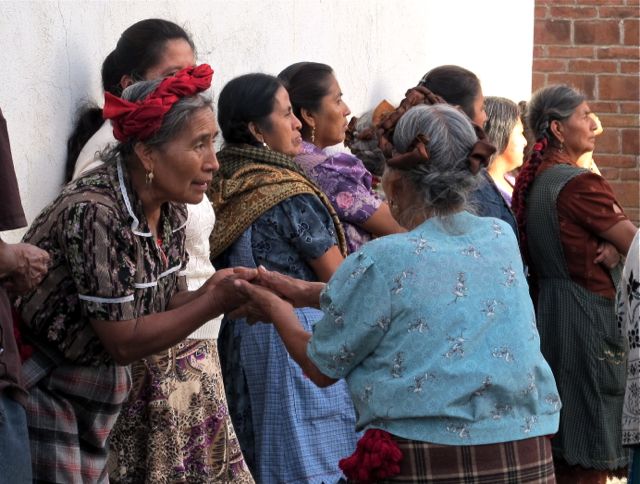
Zapotec village of Teotitlán del Valle
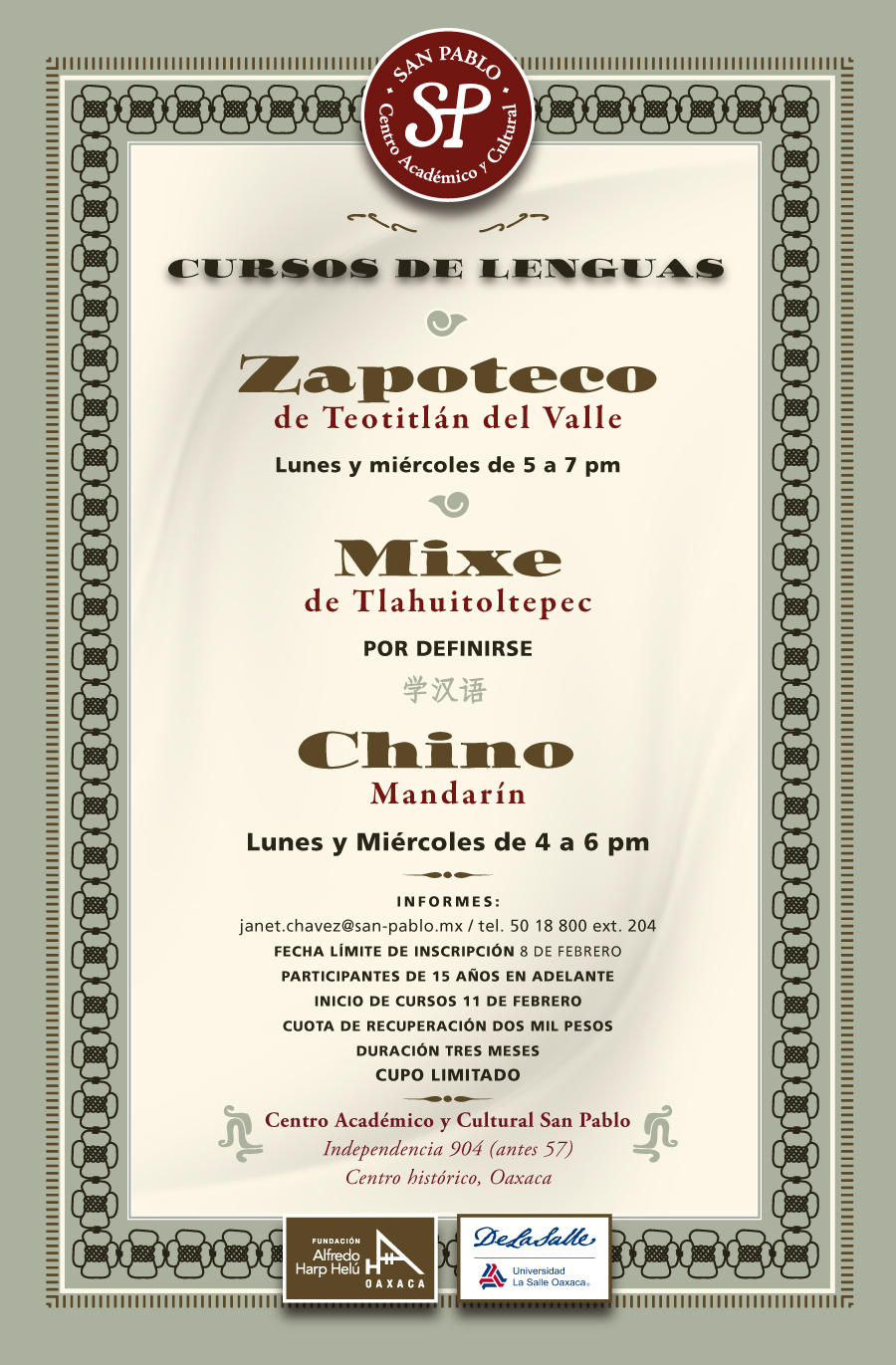
One of the missions of the Centro Académico y Cultural San Pablo in the city of Oaxaca is to document, study, and preserve the indigenous languages of Oaxaca. The center includes a library, offers language classes, and will be hosting several events during Día Internacional de la Lengua Materna 2013.
Posted in Celebrations, Creativity, Culture, Exhibitions, Travel & Tourism, tagged Danza de los diablos, Devil's Dance, dried corn husks, Mexico, Moisés Ruiz Sosa, Noche de Rabanos, Oaxaca, photographs, photos, popular travel destinations, Santiago Juxtlahuaca, Totomoxtle on February 16, 2013| 7 Comments »
The sun is shining, but it’s cold. With snow on the ground, I’m living inside. I’m definitely not in Oaxaca anymore! I’m outside of Saratoga Springs, New York. Yes, I traded the land of blue skies, brilliant colors, warm temps, and open doors and windows, for ten days in the frigid, fifty shades of gray, northeast — but for the best of reasons, my grandson’s first birthday. However, I need my Oaxaca fix! So, with a little time on my hands (nap time for baby) I am going through Noche de Rabanos photos. And, these little devils, jumped out at me. (Gosh, I have no idea why!)  These dancers portray La Danza de los diablos, a dance that is the result of a fascinating fusion of African and Sonoran rituals.
  They are made of dried corn husks
  and were created by Moisés Ruiz Sosa. The detail is amazing!
  La Danza de los Diablos de Santiago Juxtlahuaca won second prize in the 2012 Totomoxtle Decorado division.
  Ooops! The adorable little devil who melts this heart just woke up. Time to do the crawling-around-on-the-floor dance.




 Mexican Peso Converter
 View From Casita Colibrí
Sign of the times
Posted in Churches, Creativity, Culture, People, Religion, tagged current-events, illustrations, Mexico, Oaxaca, photographs, photos, political commentary, Pope Benedict XVI, street art, Templo de Santo Domingo de Guzmán, wall art on February 28, 2013| Leave a Comment »
Today, Pope Benedict XVI, the head of the Roman Catholic church rode off into the sunset. (Actually, he flew off in a helicopter.) And, naturally, the walls of Oaxaca had something to say…
This was pasted on a wall right across from the south entrance to Santo Domingo de Guzmán. The walls are never silent.
By the way, I did a Twitter search for the hashtag afterPopequit, but came up empty.
Share this:
Read Full Post »