Feeds:
Posts
Comments

Posts Tagged ‘Mexico’

Late on the night of September 7, 2017, in the mountains of Telluride, Colorado, my phone dinged — a message from a friend in Oaxaca concerned about my 91 year old neighbor.  That was my first news of the largest earthquake to hit Mexico in a century last week.  Needless to say, I spent half the night monitoring news sites, emailing, messaging, and checking status updates by friends and neighbors on Facebook.  Thankfully, all friends and neighbors came away relatively unscathed — save for severely frayed nerves.

The epicenter of the 8.1 (8.2 according to Mexican authorities) earthquake was off the coast of Chiapas.  Given its geography, the state of Oaxaca has been hard hit.  The red bullets on the map below show some of areas in the state most severely affected.

No automatic alt text available.

As of yesterday, the death toll was up to 91.  According to reports from Oaxaca’s governor, more than 800,000 people in the state potentially lost everything and in Juchitán de Zaragoza, in the Isthmus of Tehuantepec region, 5,000 homes were destroyed.  The earthquake also devastated the mountain communities of the Mixe.

Oaxaca and Chiapas are two of the poorest states in Mexico and help is urgently needed.  Maestro Francisco Toledo, who is from Juchitán, is collecting funds through his non-profit, Amigos del Instituto de Artes Gráficas de Oaxaca y del Centro Fotográfico.  For details see below:

https://i0.wp.com/oaxacaculture.com/wp-content/uploads/2017/09/Earthquake-help-Mexico.jpg


Oaxaca earthquake relief is also being solicited by the following organizations and individuals:

CADENA (Comite de Ayuda a Desastres y Emergencias Nacionales A.C.)
BANAMEX
Sucursal: 7009
CUENTA: 189458
CLABE: 002180700901894588
https://cadena.ngo/dona

The Harp Helu Foundation will match 1 X 1 for any contributions directly to:
Citibanamex
Cuenta 23, Sucursal 100
CLABE: 002 180 010 000 000 235
Formento Social Banamex, A.C.

The government agency, DIF Oaxaca is taking donations:
• Voluntariado DIF Oaxaca, Avenida Juarez 914, Col. Centro
• Hangar del Gobierno de Oaxaca, Aeropuerto Internacional, Santa Cruz Xoxocotlan
• Gimnasio Ricardo Flores Magon, Derechos Humanos s/n Col. America Sur
• Oficianas Centrales DIF Oaxaca, Vicente Guerrero 114, Col. Miguel Aleman

Casa de Esperanza House of Hope Anabaptist Community Church is receiving donations in any form (groceries, baby food, money, etc.) to be sent to the coast where many have lost their homes or family members. Please bring your donations to: Casa de Esperanza— Camino Nacional 929-3 Ixcotel Oaxaca Oax Te l 9 5 1 1 7 6 3 1 5 3

Omar Alonso of Oaxacking has set up a YouCaring crowd funding site to aid in relief efforts in Juchitan.

Flor Cervantes, who founded, Mujeres de 8 de Marzo in Juchitan, is collecting funds for the refuge.  For more information call her in Oaxaca at:  951 125 02 48

And, the Oaxaca Lending Library is working on collecting and sending supplies and money to the areas in Oaxaca most affected.

If you aren’t dealing with hurricanes Harvey and Irma destruction, PLEASE HELP Oaxaca!!!

Save

Read Full Post »

Oaxaca continues to be inundated with rain.  I’m in Colorado now (inhaling smoke from fires throughout the west), but friends in Oaxaca are describing flooding, leaking roofs, water coming through windows and doors, and rain without end. Today’s news is reporting more than 13 communities are incommunicado and that urban development is a major cause of flooding by the Atoyac River that runs through the valley of Oaxaca.

Perhaps there are lessons to be learned from the builders of Monte Albán, where the Pre-Hispanic drainage works better than current systems.

Read Full Post »

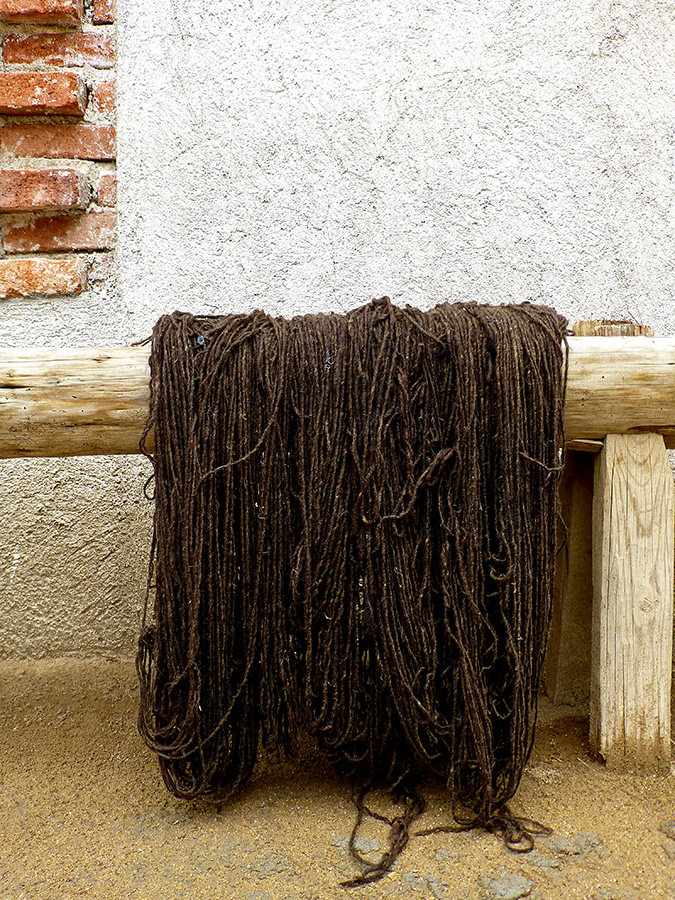
Wool was brought to Teotitlán del Valle in the 16th century…

Spun into yarn…

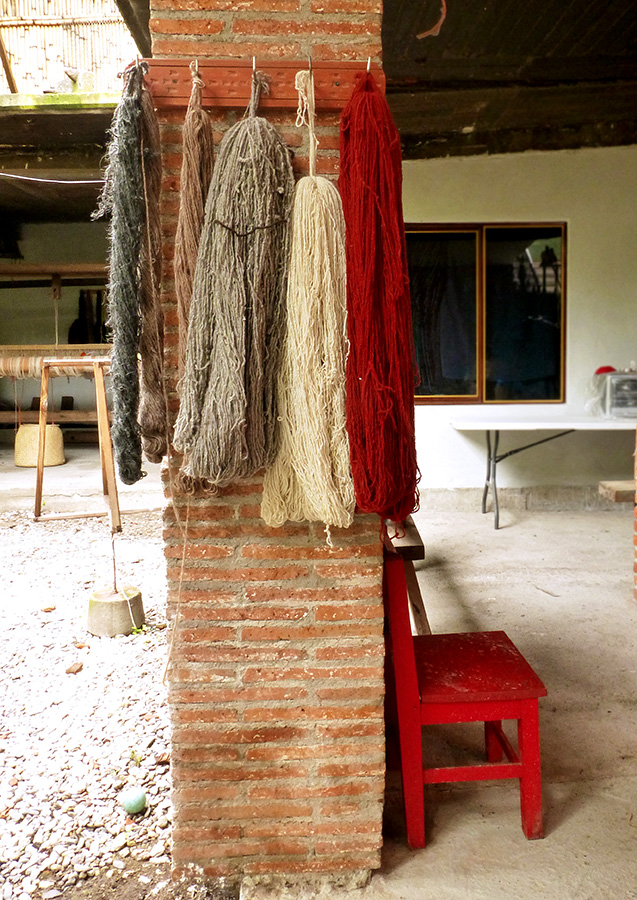
Dyed with natural dyes…

In the 20th century, less labor intensive aniline dyes were introduced…

However, now many weavers are returning to their roots — harvesting and using natural dyes.

The history, culture, and art that is yarn is alive and well and living in Teotitlán del Valle.

Save

Read Full Post »

As I’ve previously mentioned, my grandson loves skeletons and skulls AND he also loves Oaxacan chocolate.  Recipe for the perfect gift to take to him:  Go to my favorite chocolateria, Conchita (local # 210) inside Mercado 20 de Noviembre.

P1280681

Take 1 kilogram of chocolate beans, add 1 kilogram of sugar and 25 grams of cinnamon sticks, and mill in the Mexicano embalado.

P1280687

Bring home a plastic bag full of warm chocolate, spread out on a cookie sheet, let cool, then cut and stamp.

P1280697

A recipe for the perfect gift to bring to my Day of the Dead loving, chocoholic grandson.

Read Full Post »

Sunday was the last day of B’s Week in Oaxaca and he had some last-minute shopping to do.  Family back home had requested a stack of tlayudas (also spelled, clayudas), the 12″ diameter handmade and dried tortillas, and quesillo, Oaxacan string cheese.  The closest mercado to B’s hotel was Mercado de la Merced.  It’s one of the best in Oaxaca city — selling fresh fruits and vegetables, nuts and dried chiles, healing herbs and incense, meats and poultry, breads and cheeses, baskets and oil cloth, housing juice bars and small restaurants (like the well-known Fonda Florecita), and more — almost everything one could ever need.  These mercados make shopping social and fun — way more enjoyable than impersonal supermarkets and shopping malls.

After purchasing the requested items and wandering up and down the maze of aisles, we returned to B’s hotel to off-load the cheese (hotel’s refrigerator) and tlayudas (spread out on the bed to dry).  Our appetites having been stimulated, we walked across the city to the off-the-beaten-path location of Criollo, the year-old creation of Chef Enrique Olvera (Pujol in Mexico City, Cosme in New York), Chef Luis Arellano (originally from the Cañada region of Oaxaca), and architect Javier Sánchez.

It was a good thing we were famished, as the 7-course tasting menu was more than enough.  However, each plate brought such deliciousness, we happily continued on.  And, the setting?  While on an extremely busy street, once one steps inside this modern take on the traditional colonial courtyard, a sense of peace takes over.  Sated, we wandered to their orchard at the back of the restaurant, where we were warmly greeted and offered a cup of poleo tea brewed in the outdoor kitchen set in the orchard.  Our hostess explained this kitchen allows for the traditional preparation of some of the menu items.  In addition, she pointed to another building that she explained was going to be a culinary bed and breakfast.

By the time we left Criollo, it was late afternoon.  Before B returned to his hotel and I to my apartment, we marveled at what a full, delicious, and delightful six days it had been.

Just a note:  A week isn’t nearly enough time to experience all that Oaxaca city and surrounding villages have to offer.  We never made it to the Sunday market in Tlacolula de Matamoros, Hierve el Agua, Centro de las Artes de San Agustín (CASA), the alebrije pueblos of San Martín Tilcajete and San Antonio Arrazola, San Bartolo Coyotepec for their black pottery and Museo Estatal de Arte Popular de Oaxaca (State Museum of Folk Art (MEAPO), Santa María Atzompa for green pottery and the archaeological site, the Pueblos Mancomunados of the Sierra Norte, and then there are the mezcal palenques in the valley of Oaxaca.  I guess B will just have to come back!

Save

Save

Save

Save

Save

Save

Save

Read Full Post »

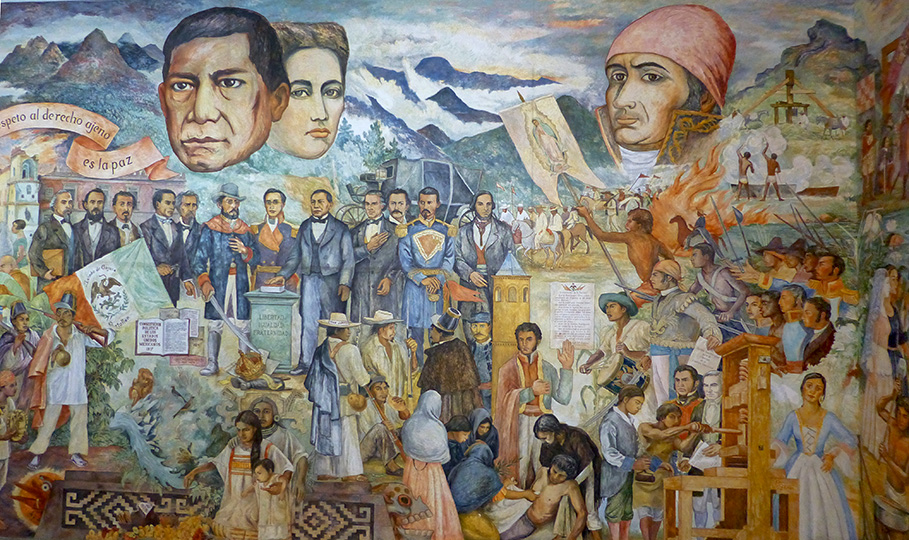
Our first stop on day five of B’s Week in Oaxaca was the Palacio de Gobierno to see the magnificent Mural of Oaxaca history.  Ooops!  I had forgotten that the Government Palace was now closed to the public.  However, a polite appeal to see the mural, addressed to one of the guards by a couple of tourists (okay, one tourist and one resident), resulted in the guard receiving permission from a superior to let us in.  We were instructed, mural only!  We obeyed, walking only half-way up the grand staircase to take in the entire work of art.  I love this mural by Arturo García Bustos and hope the palacio will again be opened to the public.

Once we had finished marveling at the Bustos history of Oaxaca, we walked up the Macedonio Alcalá to the Museo de Arte Contemporáneo de Oaxaca (MACO) to check out the Espejos de Cal mural being painted in the courtyard by Jesús González.  Engrossed in watching the mural unfold and fascinated in the technique explained by the artist’s Russian assistant, we never made it inside this treasure of a museum.  Next time!

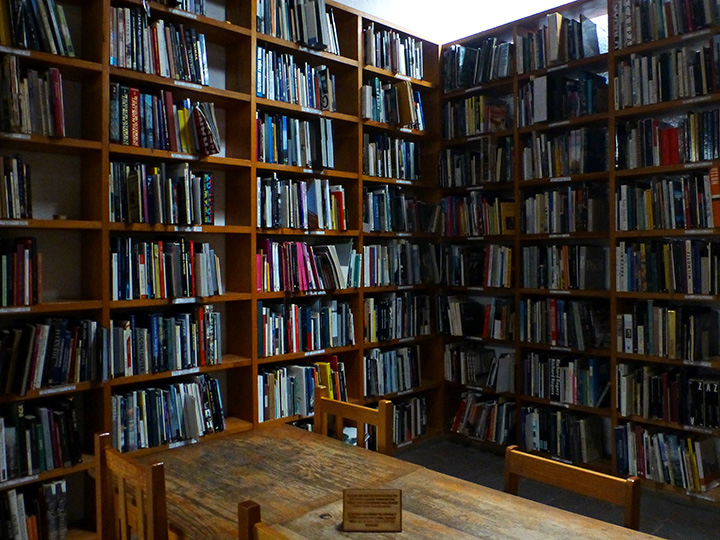
We strolled further up the Alcalá to the Instituto de Artes Gráficas de Oaxaca (IAGO), founded in 1988 by renown artist, philanthropist, and social activist, Francisco Toledo.  First we wandered through the exhibition rooms and then into the impressive library.  The 60,000+ books on art, architecture, design, photography, and much more is one of the most extensive arts-related collections in Latin America.  A photography professor friend raved to me about finding a book at IAGO that he had been searching for and B (the architect) was ooh-ing and ahh-ing at titles he eyed — and pulled a few off the shelves to leaf through.  IAGO also hosts lectures, conferences, musical performances, workshops, poetry readings, and film showings.

Needless to say, by the time we finally left, we were hungry.  Lucky for us, the acclaimed restaurant Pitiona was only a block away.  Born in Pinotepa Nacional, Oaxaca, Chef José Manuel Baños spent time in Spain under the tutelage of innovative chefs Feran Adrià and Juan Mari Arzak.  However, as the name Pitiona (a native herb frequently used in Oaxacan cooking) suggests, the starting point for Baños is local ingredients.  The simple elegance of the old colonial building and attention to detail in table settings, service, and especially food, made for a sublime interlude in the day’s activities.

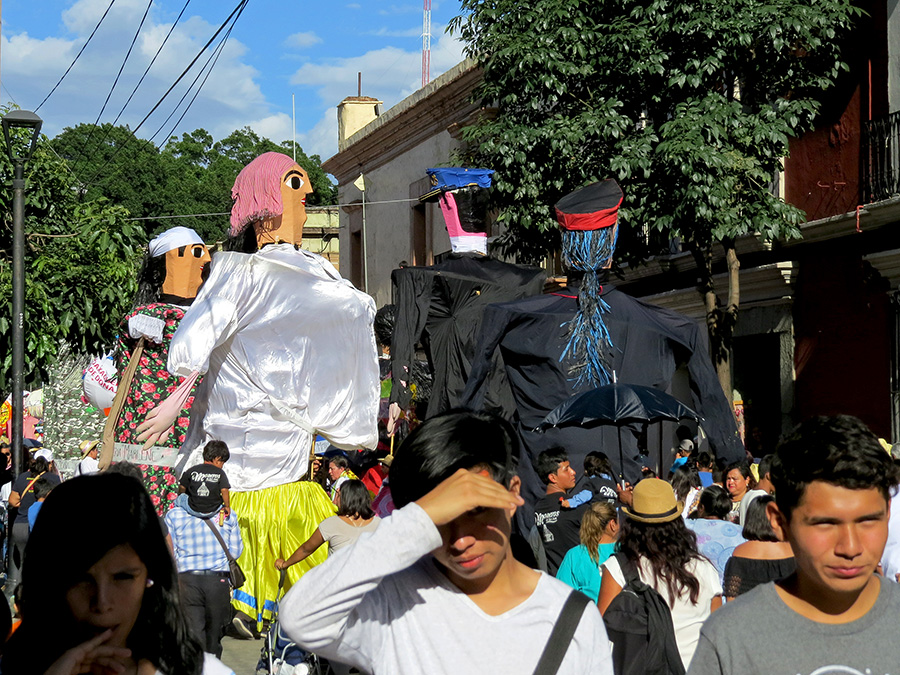
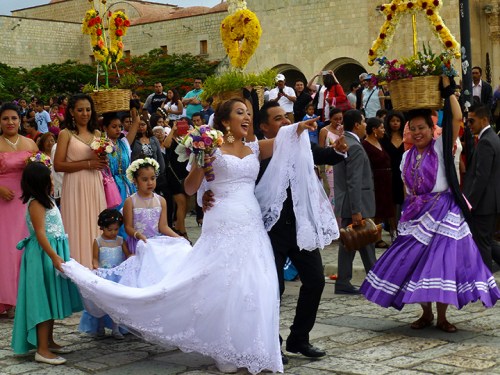
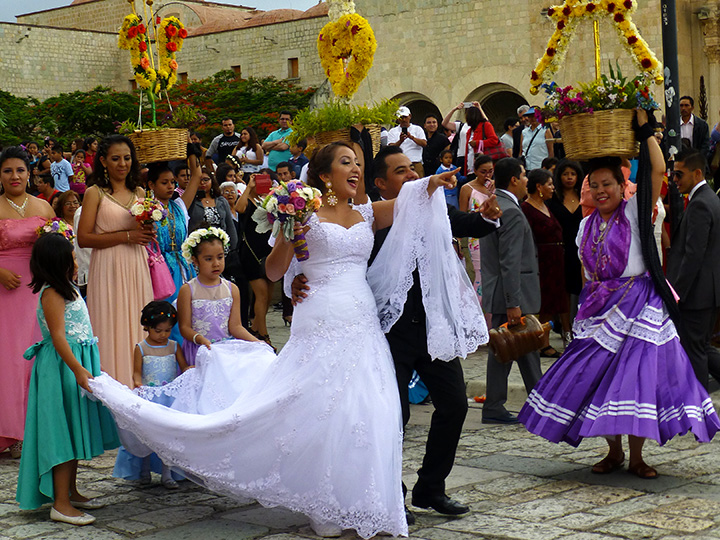
We descended the stairs of Pitiona to the sound of music coming from the atrium of Templo de Santo Domingo de Guzmán.  It was Saturday and that means wedding day at Santo Domingo – each featuring a band, folkloric dancers, marmotas (giant cloth balloons), bride and groom monos (giant puppets), a wedding procession down the Alcalá, and scores of tourists and locals stopping to watch — which we did, too!
Our final stop was at the photography museum Centro Fotográfico Manuel Álvarez Bravo, another brainchild of Francisco Toledo.  The museum has over 18,000 photographs in its permanent collection, including by its namesake Manuel Álvarez Bravo, his first wife Lola Alvarez Bravo, Henri Cartier-Bresson, Tina Modotti, Guillermo Kahlo (yes, Frida Kahlo’s father), and Mary Ellen Mark.  Works from the collection and by photographers from all over the world are exhibited in galleries surrounding a beautiful courtyard featuring a reflecting pool.

However, that wasn’t the end.  After a siesta, we gathered with eight other diners for a Waje pop-up dinner.  The June menu was an homage to mole and the setting was at the restaurant Mezquite Gastronomia Y Destilado where Waje chef, José Daniel Delgado is the new chef.  As always, José Daniel and his Waje team provided a creative, delicious, and delightful evening.  An added bonus was being seated across from Jason Cox, co-owner and mezcal steward of El Destilado — a restaurant I definitely need to try.

Only one day left in B’s Week in Oaxaca.  Where to go?  What to do?  Stay tuned!

Save

Save

Save

Save

Save

Save

Save

Save

Save

Save

Save

Save

Read Full Post »

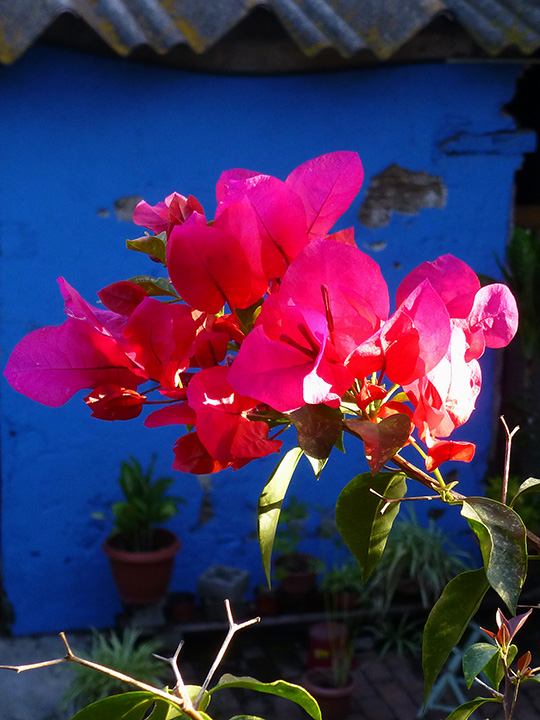
Two weeks ago, as the sun was about to sink behind the mountains to the west, I glanced up from my desk.

Light and shadow highlighted the Mexpost pink of the bougainvillea against the backdrop of a Frida Kahlo blue wall.  Ahhh…

Read Full Post »

Day four of B’s Week in Oaxaca had B relying on yours truly for the day’s sights and sounds.  Where to begin?  The answer, because it was near Casita Colibrí and we had just been to Mitla and Monte Albán, was the Museo de Arte Prehispánico de México Rufino Tamayo (Rufino Tamayo Museum of Prehispanic Art).  The collection is spread over five rooms surrounding a courtyard in a 16th century colonial building.  Each room is painted a different iconic Mexican color, chosen by the late Zapotec Oaxaqueño artist Rufino Tamayo, to highlight the pieces of his extraordinary collection.

Next we walked down to and through the iron gates, designed by Francisco Toledo, and across the brick pathway of the Centro Cultural San Pablo (Cultural Center of San Pablo).  We explored the interior rooms of this ex-convent, now an academic research and cultural center, that hosts concerts, lectures, exhibitions, and houses a library.  Pausing to rest, we took advantage of the cafe in the courtyard to order a couple of aguas.

Our thirst quenched, we walked around the corner to the Museo Textil de Oaxaca (Textile Museum of Oaxaca) to explore the ground floor and upstairs exhibitions of one of this textile lover’s favorite museums.  One of the exhibits was the stunning “Almas bordadas, vestido y ornamento en el Istmo de Tehuantepec” — displaying the iconic embroidered clothing of the Isthmus of Tehuantepec.  (Think, the dress of Frida Kahlo.)

Forty-five minutes later, we were certifiably hungry and, lucky for us, Origen, restaurant of Top Chef Mexico 2016 winner, Rodolfo Castellanos, and one of my oft recommended restaurants in Oaxaca, was only a block away.  As always, its relaxing interior, attentive service, and delicious food provided a perfect respite.

Once rested and satiated, it felt good to set feet to pavement for the short walk to the Catedral Metropolitana de Nuestra Señora de la Asunción (Cathedral of Our Lady of the Assumption).  The cathedral towers over the zocaló and the Alameda.  The construction of this green cantera (stone) edifice began in 1535 and was consecrated on July 12, 1733.  It is dominated by a spectacular altar and lined, on both sides, with chapels — the most important being that of Señor del Rayo.  In addition, it is home to one of the historic pipe organs of Oaxaca.

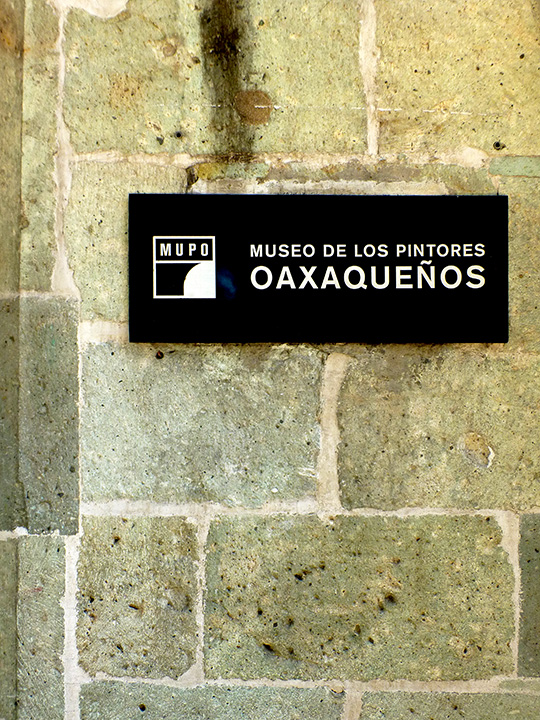
After being wowed by the Cathedral’s soaring ceiling, altar, art, chapels, and organ, we crossed Independencia for a taste of the modern — the Museo de los Pintores Oaxaqueños (Museum of Oaxacan Painters).  This, often overlooked, two-story restored colonial era mansion showcases the creativity and talent of Oaxaca’s painters.  I had been to the museum only a month before, but the exhibitions are ever-changing, and new artists were on display.

Of course, no day in Oaxaca is complete without a parade and we were not disappointed.  We departed the Museo de los Pintores Oaxaqueños to be greeted with a calenda (parade) by “Ranchu Gubiña” from Union Hidalgo in the Isthmus of Tehuantepec region — attired in clothing similar to that which we had seen earlier in the day at the textile museum.  We had come full circle!

Another long day’s journey into evening….  However, we weren’t finished yet; two more days await!

Read Full Post »

Whether just passing by…

P1280313

P1280424

Or, stopping to study…

P1280314

P1280425

Even black and white stencils add color commentary to the walls of Oaxaca.

Read Full Post »

On day three of B’s week in Oaxaca, Benito (Discover Oaxaca) returned to pick us up a little after 9:00 AM.  We wound our way up to the archeological site, Monte Albán — the imposing former capital of the Zapotecs.  Construction of this commanding site, on top of an artificially flattened mountain, began around 500 B.C.  By 350-550 A.D., it had become the economic, political, and religious center for the Zapotecs, and one of the first urban complexes in Mesoamerica.  Though we were only there for two hours, I learned more from Benito than I had on my previous five or six unguided visits.  While we were there, a specially fitted drone (archaeocopter) was being used by archaeologists — the sound was annoying, but once we figured out it was for research, it became more tolerable and rather intriguing.  There is still so much to be uncovered!

Monte Albán – looking down onto the main plaza.

Coming down off the mountain, we took the scenic route, circling around the western base of Monte Albán, often bouncing along on dirt roads as we headed south to the Ex-monastery of Santiago Apóstol in Cuilapam de Guerrero.  Construction began on this massive and elaborate Dominican complex in 1556 but was temporarily halted in the 1570s and never resumed — leaving behind a towering roofless basilica, ornate frescoes, and a magnificent Gothic cloister.  There are several theories as to why it was never finished — lack of funds due to the extravagance, a dispute over land ownership, the decimation of the local indigenous population from 43,000 in the 1520s down to 7,000 in 1600, leaving few workers to construct it and natives left to convert.  Climbing the stairs up to the second story terrace yields an impressive view and site from which to contemplate the impact of the Spanish conquest.

Murals inside the Ex-monastery of Santiago Apóstol, Cuilapam de Guerrero.

After an hour of roaming through the unfinished remains of the Ex-monastery, we returned to the van for the 4-mile drive to Villa de Zaachila.  Thursday is market day and the village was alive with shoppers.  From where we parked, we walked through the market, with B marveling at all there was for sale — from fresh fruits and vegetables to tools and kitchen ware to clothing and needlework to…. And, we never even made it to the livestock market.

Moto taxis taking people to and from the tianguis on market day in Villa de Zaachila.

Once through the market, we walked past the church and up a hill to the small archaeological site of the last capital of the Zapotecs and later conquered by the Mixtecs, not long before the Spanish arrived.  It is mostly unexcavated, but has two small tombs that can be accessed.

Tomb 1 – The Owl (Tecolote, Búho) of Zaachila.

We were about to head to lunch, when we were waylaid by Benito’s inquiry if we knew about and would like to see the Día de Muertos (Day of the Dead) murals decorating the walls of Calle Coquiza — a street that connects the church with the municipal cemetery.  Of course we responded that we would love to see them!  If you are in Zaachila, they are worth checking out.  You can see more of the murals on my blog post, Muertos murals in Zaachila.

Muertos mural along Calle Coquiza, Villa de Zaachila.

We were starving by the time we had walked the length and back of Calle Coquiza, so we made a beeline for the van that would take us to Restaurante La Capilla de Zaachila.  It felt so good to sit, relax, and eat!

Tortilla Zachileña de guisado al horno.

It was a fairly quiet return to the city — we were satiated by food, sights, and information.  However, following a few hours of rest, B and I met up again to stroll down to the zócalo, sip mezcal on rooftop terrace of Casa Crespo  — though the music was a bit loud, the mezcal was good and the view of Santo Domingo couldn’t be beat.

By the way, this day’s travels took us to many of the major sites where the legend of Donaji takes place.

Save

Read Full Post »

As the name implies, the Feria del Tejate y el Tamal also featured tamales, along with yesterday’s blog post subject, Tejate, “Drink of the Gods”.

embroidered tea towels

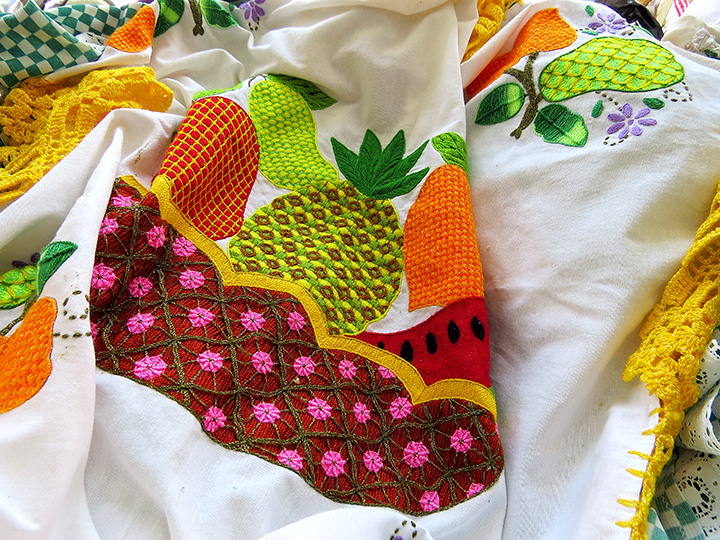
Tamal vendors from San Andrés Huayapam stood behind long tables lined with tin buckets, giant pots, and baskets covered with colorfully embroidered towels hiding every kind of tamal imaginable.  There were mole negro (black mole) tamales wrapped in banana leaves…

IMG_3833

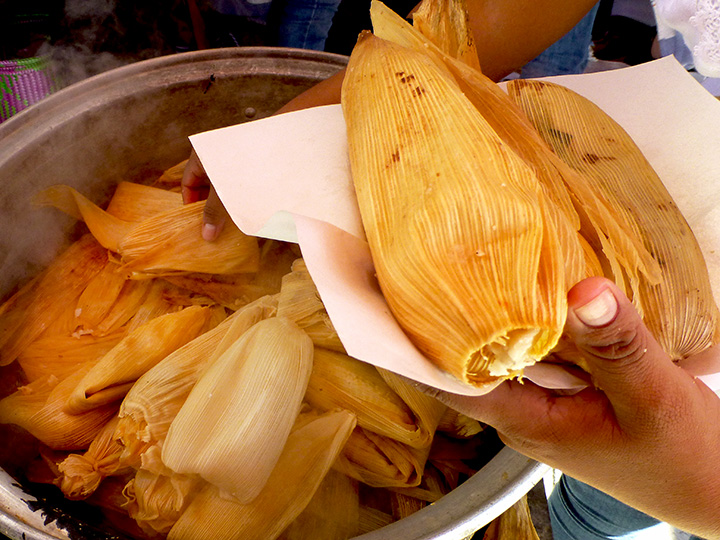
And… flor de calabaza (squash blossom), amarillo (yellow mole), verde (green mole), chapulín (grasshopper), frijol (bean), and chepil (a wild herb) wrapped and steamed in corn husks.  The local newspaper reports there were also fish and shrimp tamales.  Darn, I didn’t even see them!  Though not a surprise because it was quite a scene as crowds amassed in front of the vendors placing their orders.  It reminded me of the lyrics from the Neil Diamond song, Sweet Caroline:  Hands, touching hands, reaching out…

IMG_3832

I don’t really have a favorite — they are all so uniquely special.  However, because chichilo mole originated in San Andrés Huayapam and is only served on special occasions (weddings, christenings, harvesting of crops), I always make sure to bring home a couple.  Chichilo mole is made from chilhuacle negro, mulatto, and pasilla chiles; blackened tortillas and seeds of the chiles; and avocado leaves, the latter imparting a subtle anise flavor.  They are so yummy!

P1280628

The prehispanic riches of tejate and tamales — a couple of reasons why Oaxaca is a food lovers paradise.

Save

Read Full Post »

This morning, the Feria del Tejate y el Tamal opened at the Plaza de la Danza — with live music, speeches, scores of tejate and tamal vendors, and hundreds of happy, hungry people.  In the event you are unfamiliar with tejate (which is probably the case if you have never been to Oaxaca), it is a very popular frothy, refreshing, nutritious, and (supposedly) aphrodisiacal non-alcoholic prehispanic beverage.  It is made from corn mixed with tree ash, cacao beans, mamey seeds, rosita de cacao (Quararibea funebris) flowers, and peanuts or pecans (depending on the season).


The preparation takes at least twelve hours, as the beans, seeds, flowers, and nuts must be toasted on a comal and corn must be nixtamalized.  Ingredients are taken to a molino to be milled, then kneaded together, left to cool, eventually being hand-ground on a metate to make a thick paste — which is what one sees in the mercados being thinned with water and (literally) mixed by hand.  For a blow-by-blow photo essay of the process, check out Making Tejate for the Market.


In days gone by, this exquisite beverage was reserved solely for Zapotec royalty.  However, today tejate is for the masses, with tejateras and their massive clay ollas set up at almost every mercado and festival you run across.  One frequently sees tejate poured into colorfully painted gourds and, of course, it tastes even better when served that way!


The sale of tejate is the main economic activitity in San Andrés Huayapam, located about 7 miles northeast of Oaxaca city.  It is prepared and served by the tejateras of the Unión de Mujeres Productoras del Tejate.  At the Feria, many of the tejateras were young — it is good to see the ancestral recipes and skills being passed down to the next generation.


The Feria del Tejate y el Tamal runs through tomorrow (July 26, 2017).  If you are in town, don’t miss it!  Oh yes, there were tamales, so stay tuned…

Read Full Post »

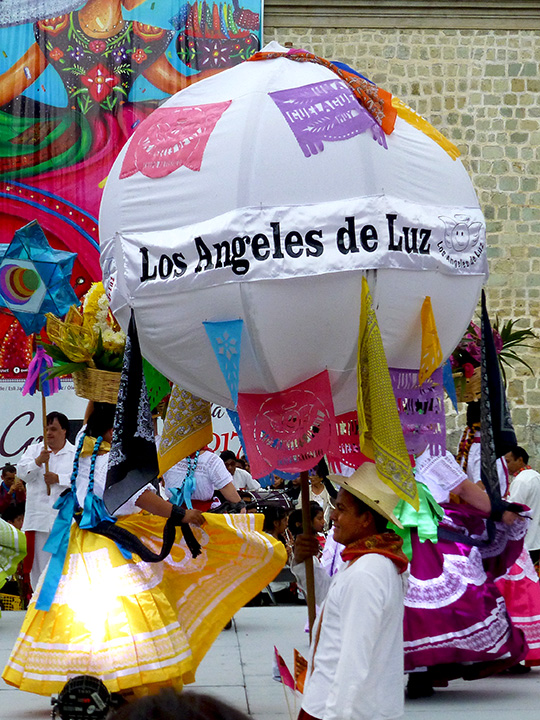
The Guelaguetza Muy Especial, danced by Los Ángeles de Luz, gets bigger every year.

Convite – China Oaxaqueñas, City of Oaxaca

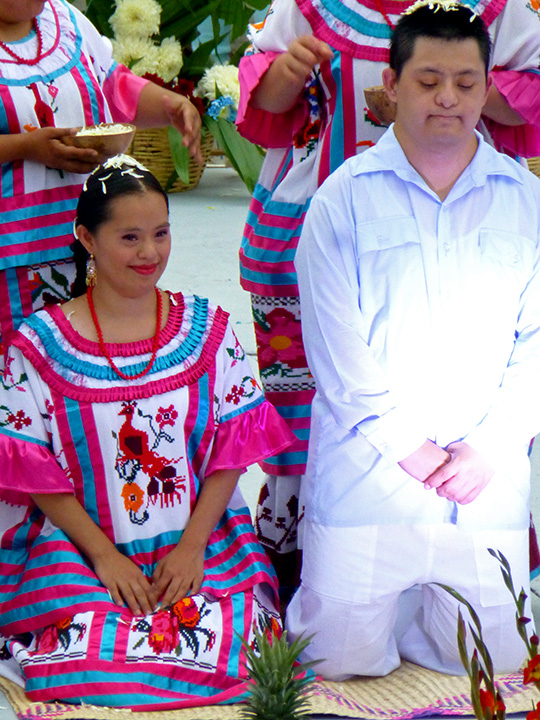
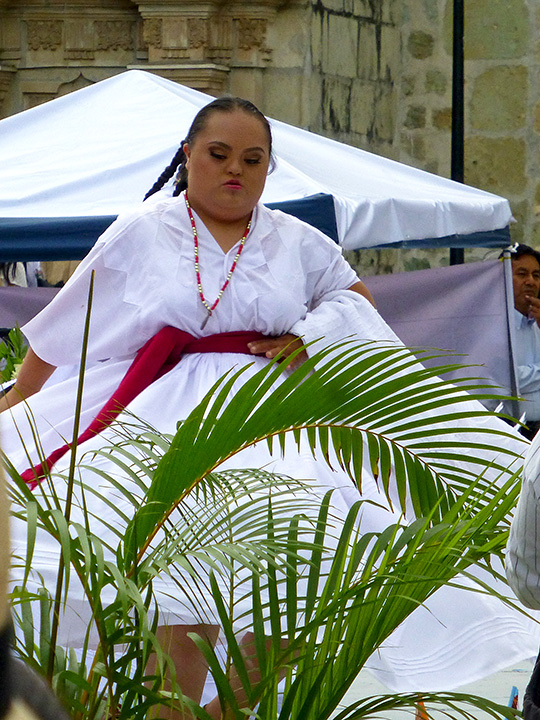
Early yesterday evening, all seating was filled and it was standing room only at the Plaza de la Danza — and that is a very good thing because Los Ángeles de Luz is group of 18 children and young people with Down’s Syndrome.

Jarabe – Ejutla de Crespo, Valles Centrales region

It was formed in 2003 with the purpose of facilitating the integration of people with Down’s syndrome and offering them creative experiences that exercise their motor skills, intelligence, language, and sensitivity in an environment of respect, trust, and love. (Ángeles le dan luz a las fiestas del Lunes del Cerro, 07/25/2016)

Jarabe – Tamazulapam Espiritu Santo, Mixe region

Their talents also extend to theatrical productions, including performances of “Snow White and the Seven Dwarfs” and “Romeo and Juliet.”  In addition, they have mounted an interdisciplinary spectacular, “Ellos le bailan a México, a un México muy especial.”

Wedding jarabe – Huautla de Jiménez, Cañada region

At the Guelaguetza Muy Especial, these young people make the requisite costume changes and perform traditional dances from the eight regions of Oaxaca.

Jarabe – San Melchor Betaza, Sierra Norte region

This year’s show brought Oaxaca’s dignitaries, including Diosa Centeotl, Rebeca Itahí Ortiz Santibañez — she looked incredibly moved when they performed dances from her town of San Melchor Betaza.

Rebeca Itahí Ortiz Santibañez – Diosa Centeotl 2017

As I have mentioned before, perhaps it is because I have a special needs nephew or that both my sister-in-law and daughter-in-law are special education teachers, that I am drawn to this event every year.

Jarabe – Pinotepa Nacional, Costa region

Tears always well up in my eyes as I share in the joy and pride exhibited by the dancers from Los Ángeles de Luz.

Read Full Post »
Another day, another parade.  Today, the Gran Calenda del Mercado de Abastos (parade of the markets) passed within a block and a half of Casita Colibrí.  I couldn’t miss it — the cacophony of multiple bands, cohetes (rockets), and honking horns announced its arrival in my ‘hood!  In the words of Octavio Paz, from The Labyrinth of Solitude

“The solitary Mexican loves fiestas and public gatherings.”

IMG_3690

“The art of the fiesta has been debased almost everywhere else, but not in Mexico.”

IMG_3707

“Our poverty can be measured by the frequency and luxuriousness of our holidays.”

IMG_3761

“Do they forget themselves and show their true faces?  Nobody knows.  The important thing is to go out, open a way, get drunk on noise, people, colors.”

IMG_3726

“In the confusion that it generates, society is dissolved, is drowned, insofar as it is an organism ruled according to certain laws and principles.”

IMG_3785

“Everything is united: good and evil, day and night, the sacred and the profane.  Everything merges, loses shape and individuality and returns to the primordial mass.”

IMG_3738

“The fiesta is a cosmic experiment, an experiment in disorder, reuniting contradictory elements and principles in order to bring about a renascence of life.”

Read Full Post »

The dancers get most of the press, but the musicians are some of the unsung heroes of all the Guelaguetza performances.  And, I have to say, yesterday the Banda Oro Blanco at the Guelaguetza at “Las Peñitas” in Reyes Etla played a leading role.  And the view wasn’t bad either!

P1270889 

P1270890

P1270891

P1280140

What can I say about this clarinet player?  At one point he played off a fake book on a smart phone and he was on fire!!!

Read Full Post »
« Newer Posts - Older Posts »