Feeds:
Posts
Comments

Posts Tagged ‘Mexico’

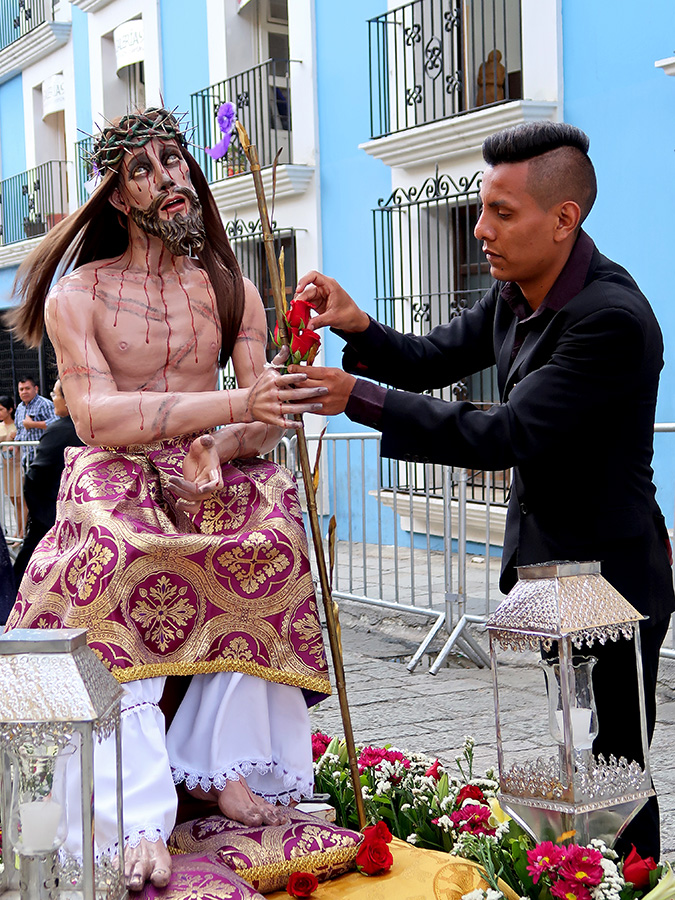
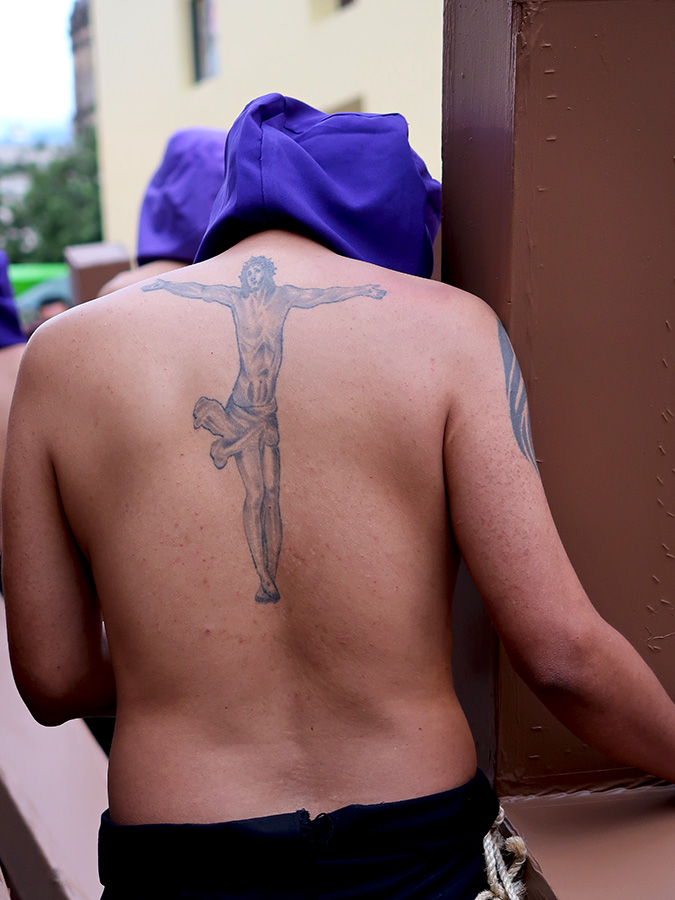
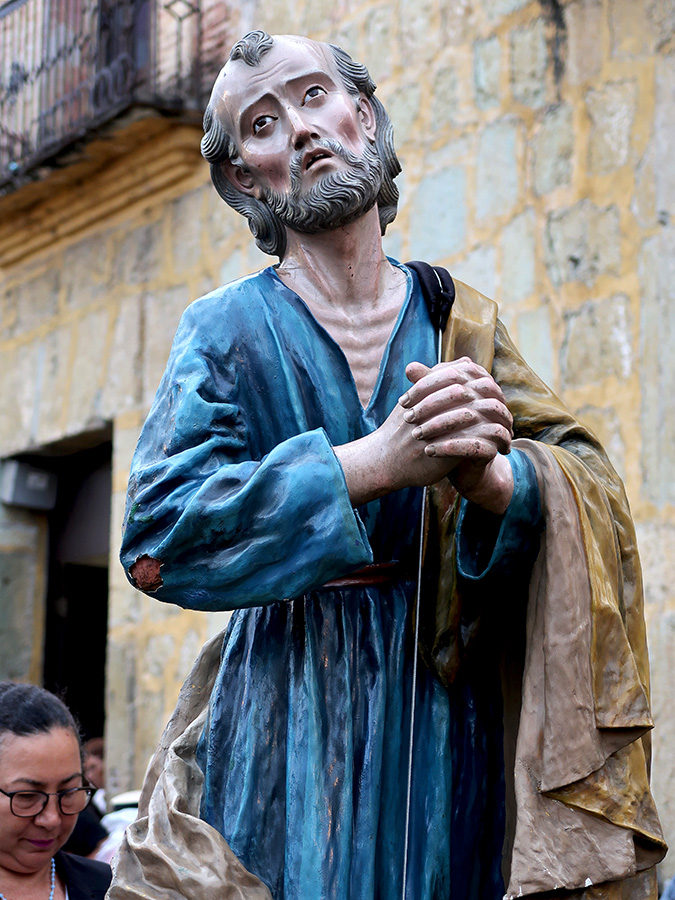
Last night I joined in the Oaxaca tradition of visiting seven churches (la visita de las siete casas) on Jueves Santo (Holy Thursday, Maundy Thursday).  According to Wikipedia, “The tradition of visiting seven churches on Holy Thursday probably originated in Rome, as early pilgrims visited the seven basilicas as penance.”  Last year I missed it, albeit for an excellent reason, as I spent much of Semana Santa (Holy Week) in Teotitlán del Valle with the family of Porfirio Gutierrez.

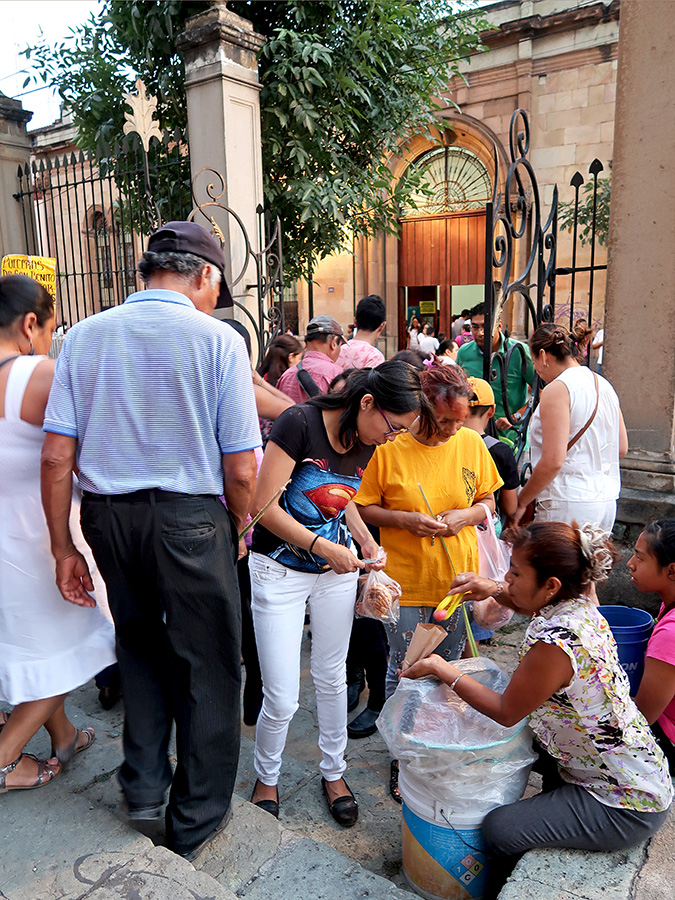
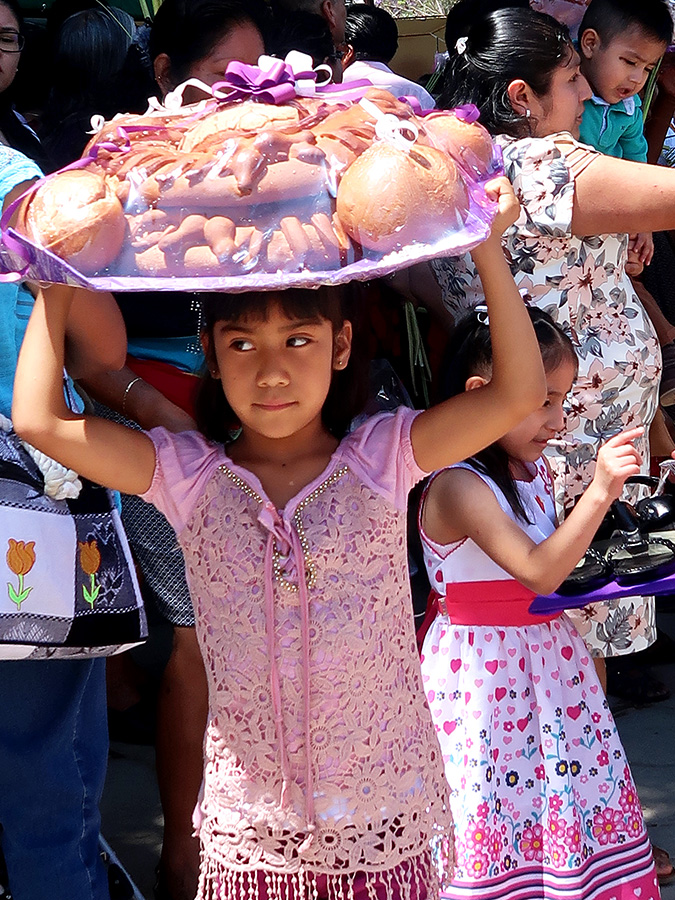
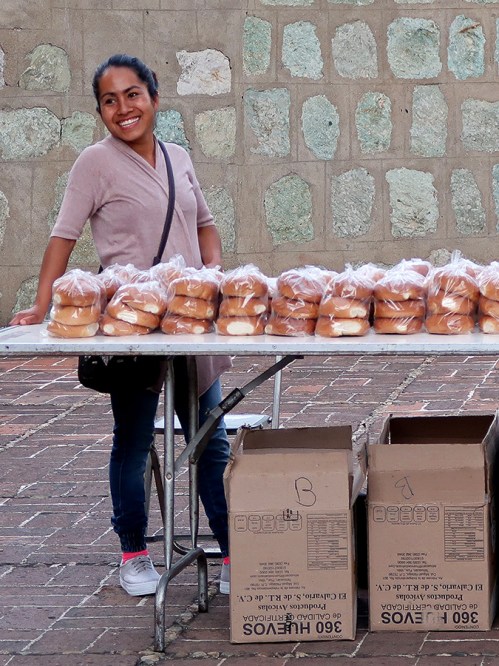
This year, my first stop was just around the corner at Templo de San José, where I bought my pan bendito from a couple of women selling small bags of the traditional blessed bread from a little table just inside the front door.  The entrance to this church is small and it was crowded with parishioners trying to get to the mass that was in progress, so I opted not to stop to take photos.  As I exited and made my way across Jardín Socrates (packed with people enjoying nieves), enroute to Basilica de Nuestra Señora de la Soledad, there were more blessed bread vendors set up in Soledad’s atrium.
The doors to the Basilica were closed and the “traveling” Soledad was standing under a giant tent in the atrium.  However, I followed the faithful to a tiny side chapel where a miniature image of Soledad appeared, behind iron bars and glass, like an apparition.
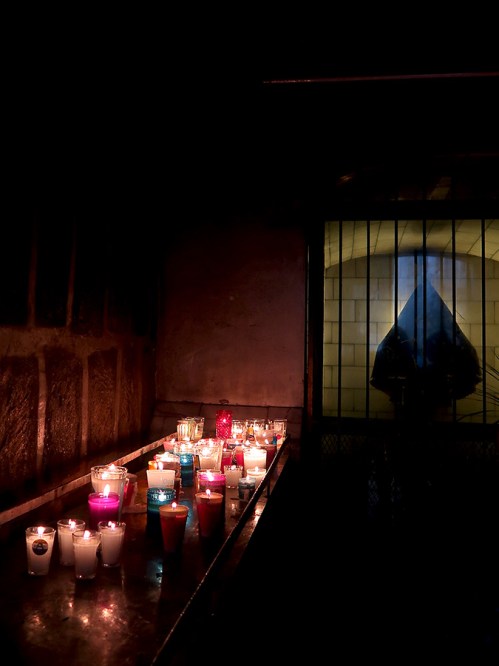
My next stop was along Calle Independencia — at Templo de San Felipe Neri, where I was met with gridlock.  I joined the crowd in practicing patience and persistence as I navigated my way to the entrance, which was also serving as the exit — for some unknown reason the side door was closed.

Less than a block away, my next destination was the Catedral de Nuestra Señora de la Asunción.  It took almost ten minutes to wind my way through the masses of people (tourists, vendors, performers, and other Jueves Santo pilgrims) crowding the street and the Alameda.  A mass was in progress and the pews were packed — even in the side chapels, it was standing room only.  However, it was here, amidst thousands, I had the good fortune of running into a dear Oaxaca friend I hadn’t seen for many months.

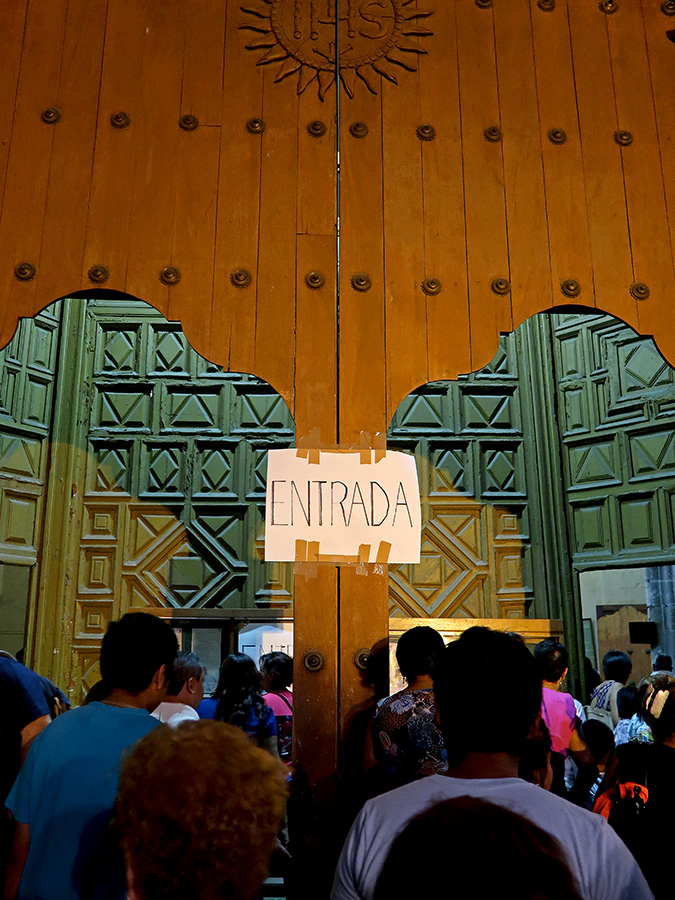
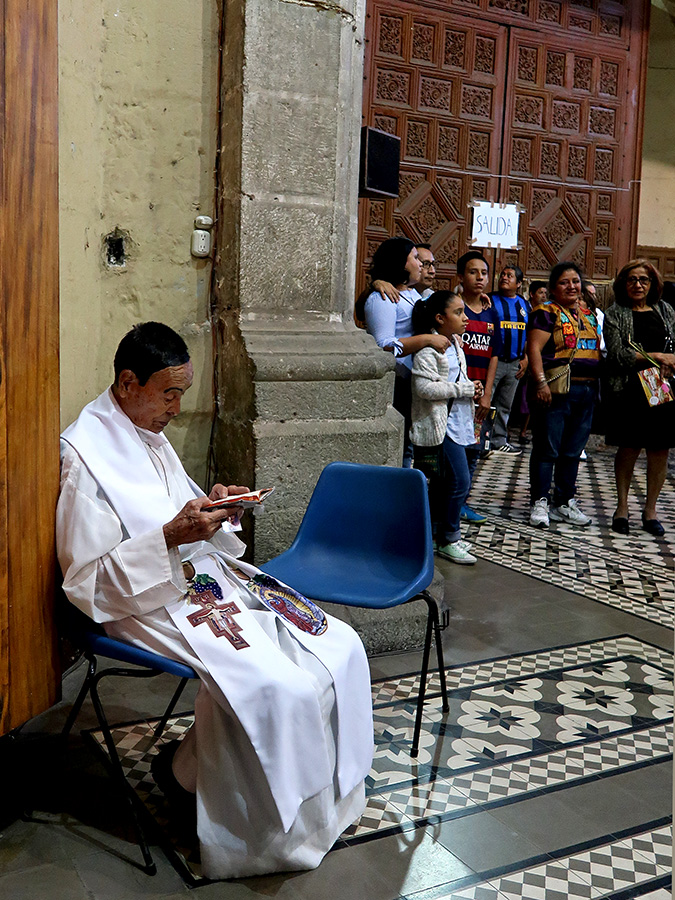
Leaving the Cathedral, I met the same foot traffic jam when crossing the zócalo to Templo de la Compañía de Jesús.  However, once there, leave it to the Jesuits to have the entrada y salida (entrance and exit) logistics worked out!

Exiting the “salida” door, I took a side street to avoid the zócalo and Alameda.  By this time darkness had fallen, the uneven and potholed sidewalks had become even more treacherous, and so taking care not to also fall, I headed to Templo del Carmen de Abajo.  Though not crowded, it too had separate doors marked for entering and exiting.  And here, too, I ran into someone I knew — this time a new acquaintance from Palm Sunday in San Antonino Castillo Velasco.

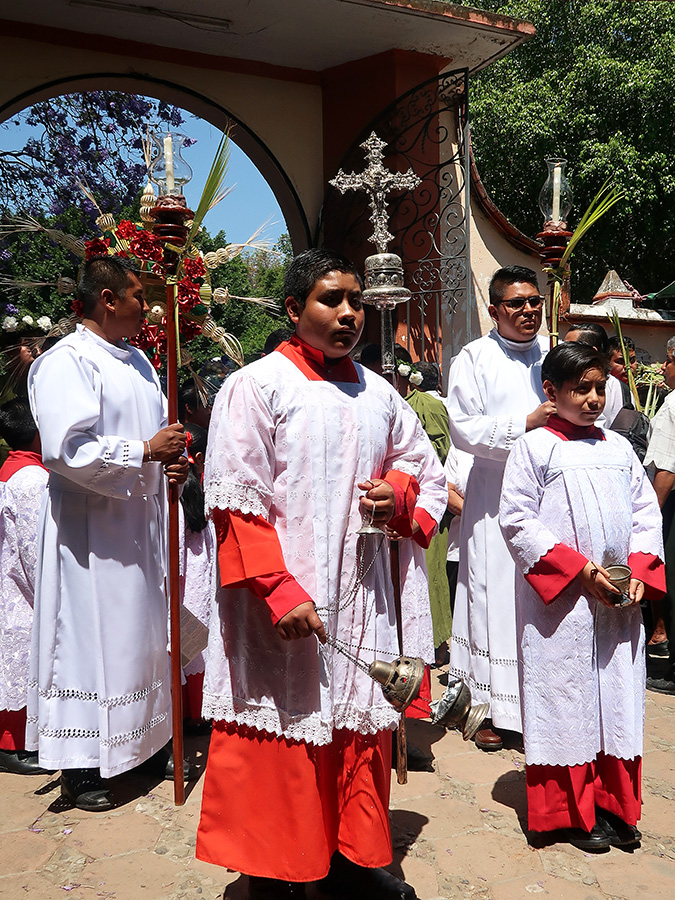
I couldn’t even get near the doorway of Santo Domingo de Guzmán, so I gave up on that visit and turned towards Templo del Carmen Alto and, on my way there, ran into one of my neighbors!  Even when it’s filled with tens of thousands of tourists, it’s a small world in Oaxaca.  Once at Carmen Alto, I joined a throng of people walking down the main aisle, when a procession, led by an incense swinging altar boy, came up behind us asking for permission to pass — the gal behind me had a very close call with the incense burner.
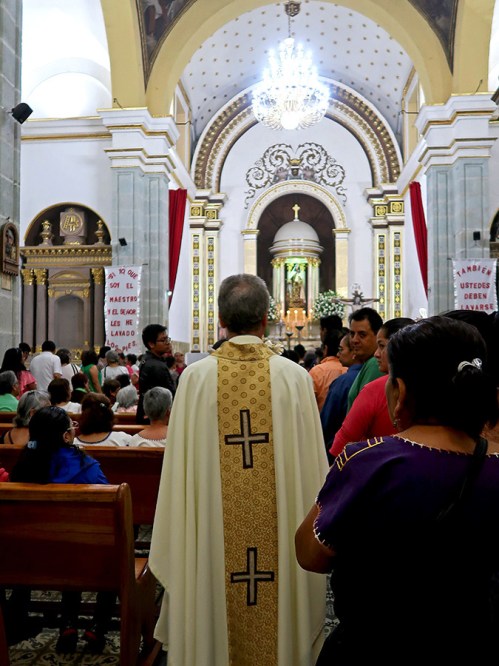
I had visited seven churches in seventy minutes and, by the time I left Carmen Alto, my feet were sore and hunger and home beckoned.  However, I was left with warm feelings of having greeted friends and been out and about with the people of my adopted city.

Read Full Post »

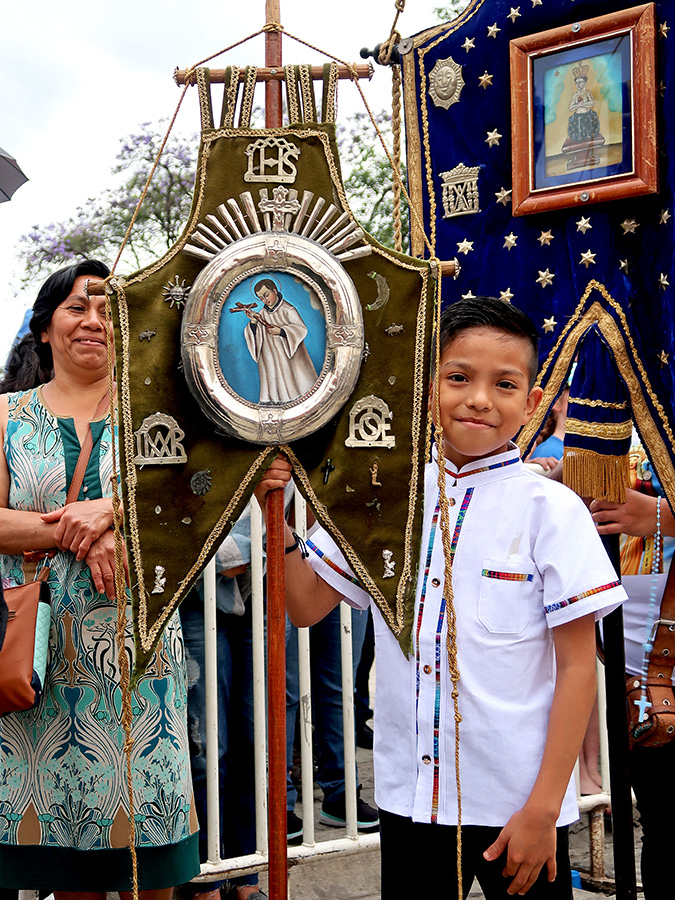
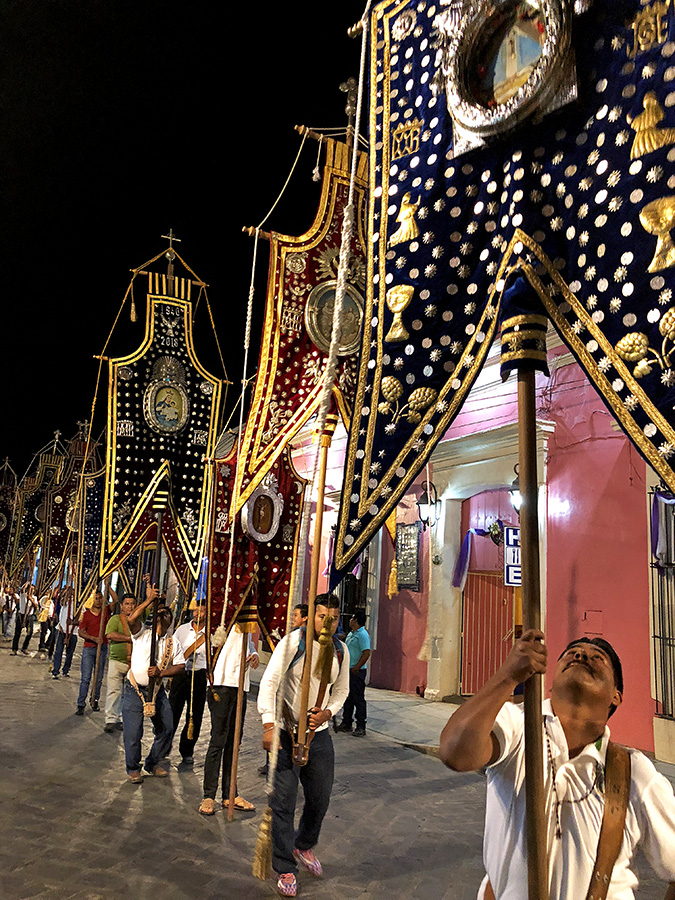
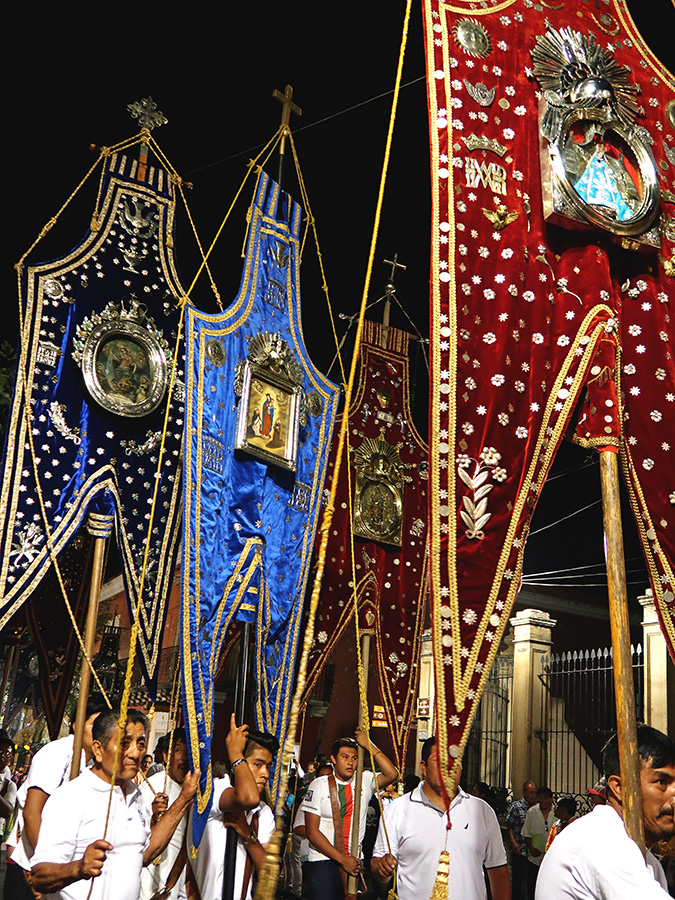
Semana Santa (Holy Week) is in full flower in Oaxaca, the streets are filled with tourists, both domestic and international, and the city is very helpfully distributing a schedule of the most important activities for this Easter season.  Thus, on Tuesday evening I walked down to Independencia, which had been blocked to traffic, for the Procesión de Estandartes (Procession of Banners) — leaving from the Basílica de La Soledad and arriving at the Cathedral, a few blocks away.

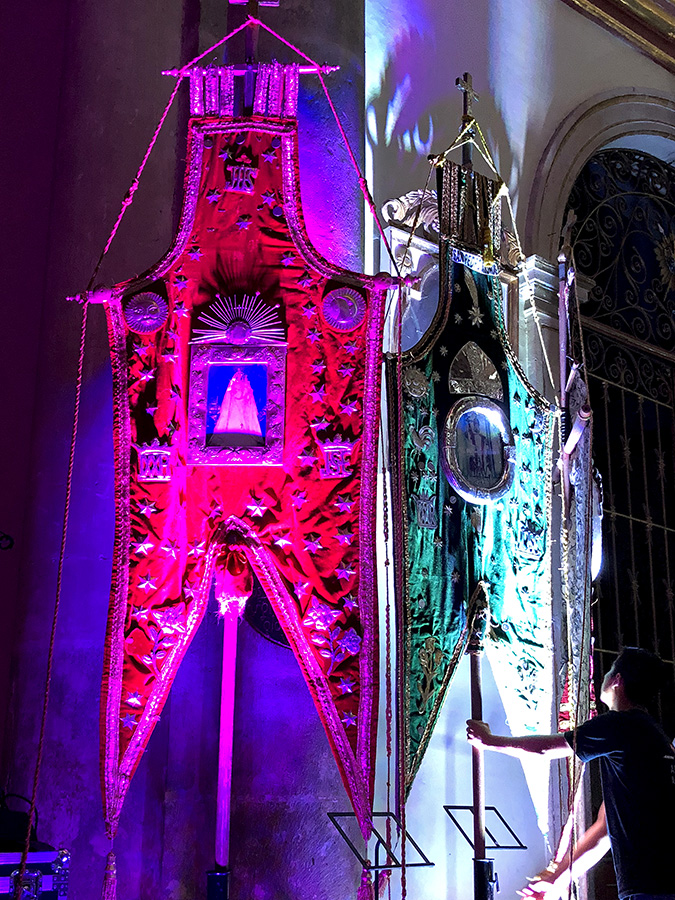
The banners were carried by the members of the hermandad del Santísimo Rosario (Brotherhood of the Most Holy Rosary) and numbered well over 100.

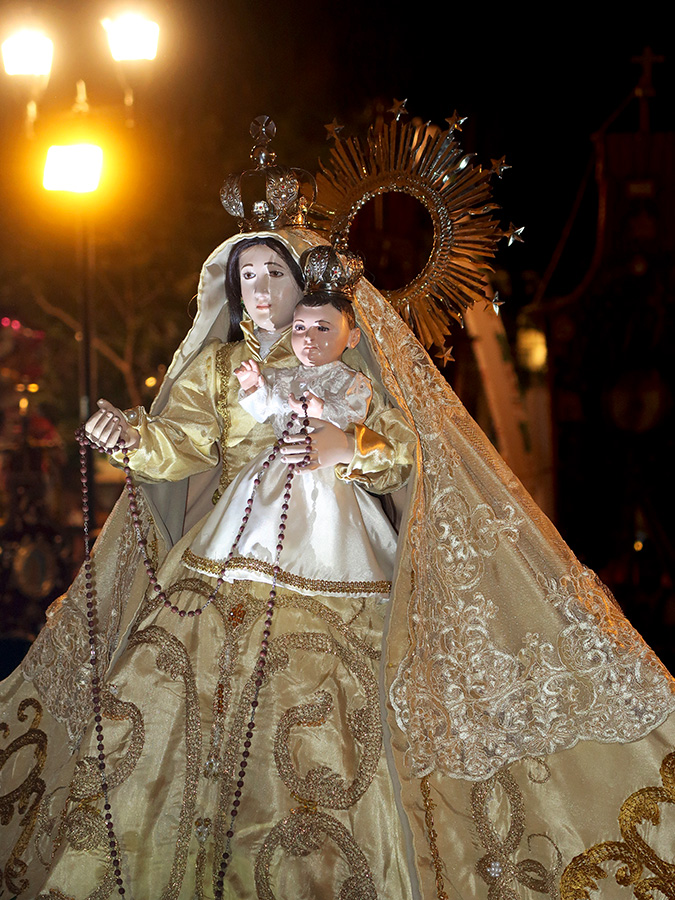
In addition, the Chinas Oaxaqueñas de Casilda carried an image of Nuestra Señora del Rosario (Our Lady of the Rosary), the patron saint of the brotherhood.

Once all the banners had reached the plaza in front of the Cathedral, the way parted for Our Lady of the Rosary to enter the Cathedral.

The banners followed and were carefully positioned next to special lighting along the aisle walls on either side of the Cathedral.  It was quite stunning!

An hour-long choral concert followed — nothing like listening to sacred music under the soaring ceiling of Catedral Metropolitana de Nuestra Señora de la Asunción.  They had even installed video monitors, so all could see the orchestra and singers.

I returned to the Cathedral the next day to view the banners “up close and personal” and discovered informational labels had been placed in front of each estandarte — listing the date made, affiliated church, church festival, and the sponsor of the banner.

They will once again hit the road late tomorrow afternoon to join Good Friday’s, Procesión del Silencio (Procession of Silence).

Read Full Post »
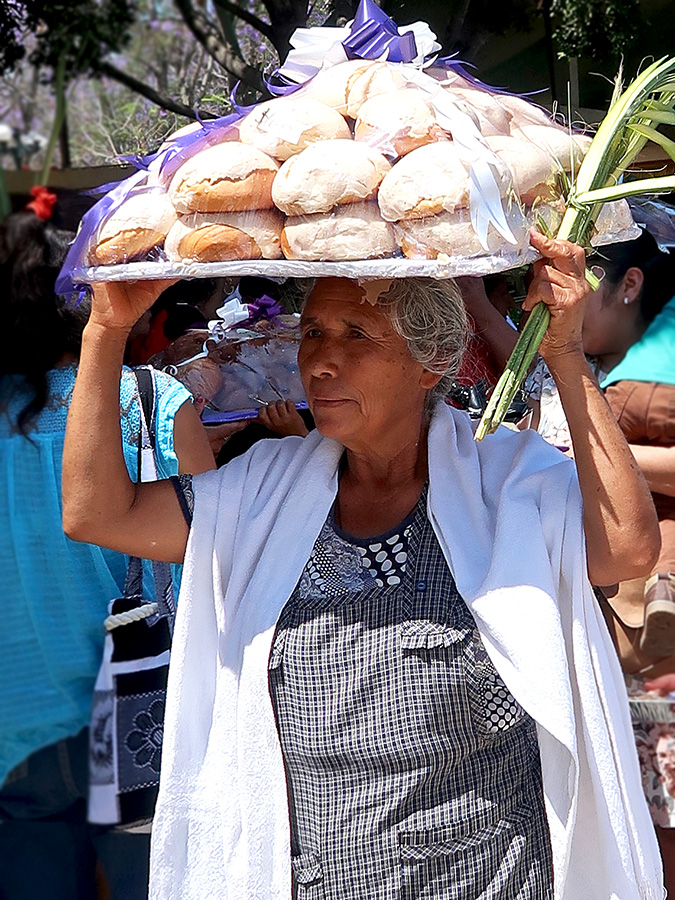
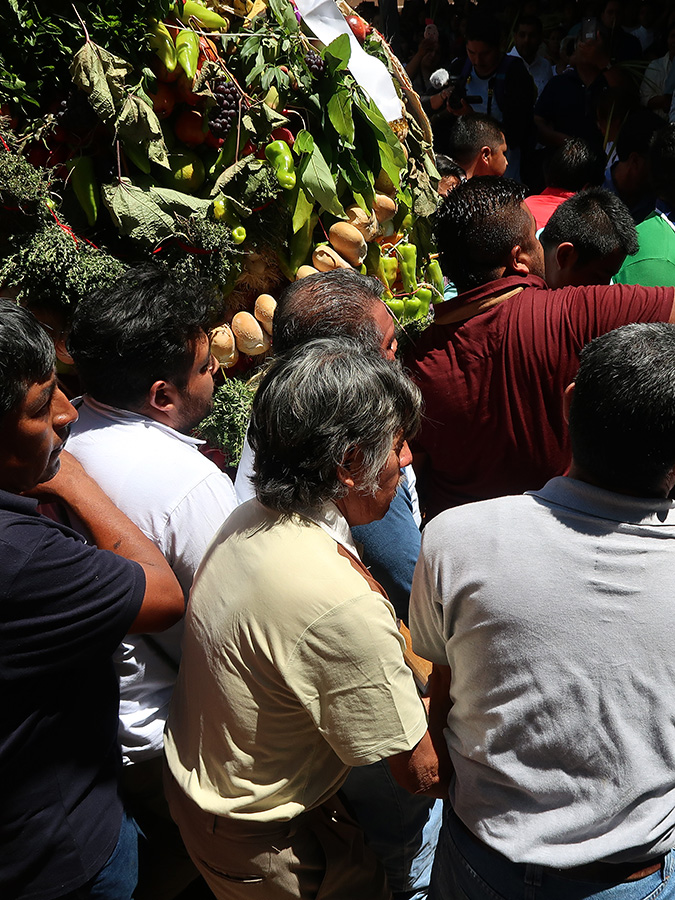
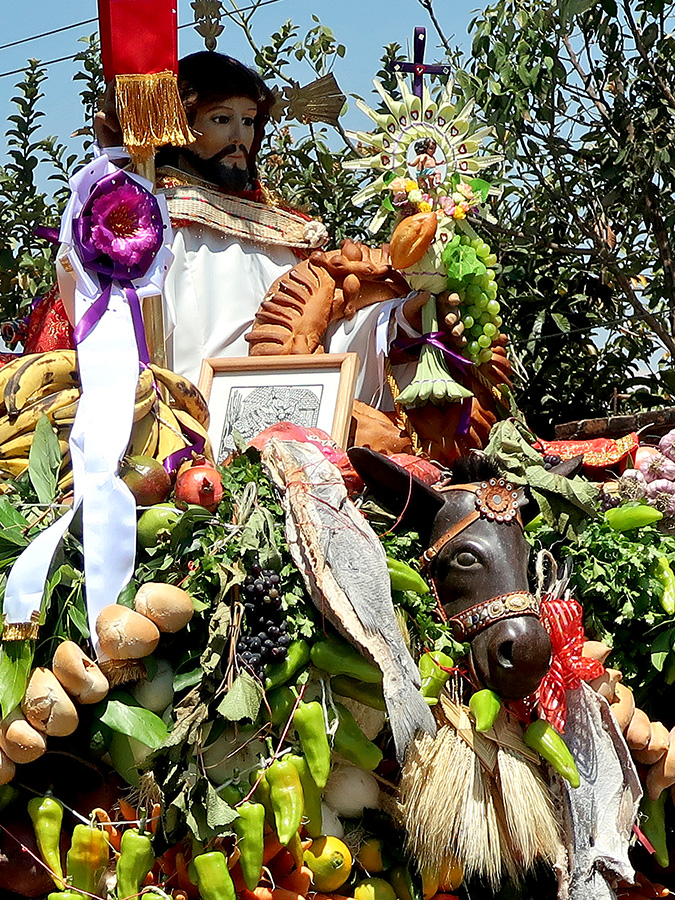
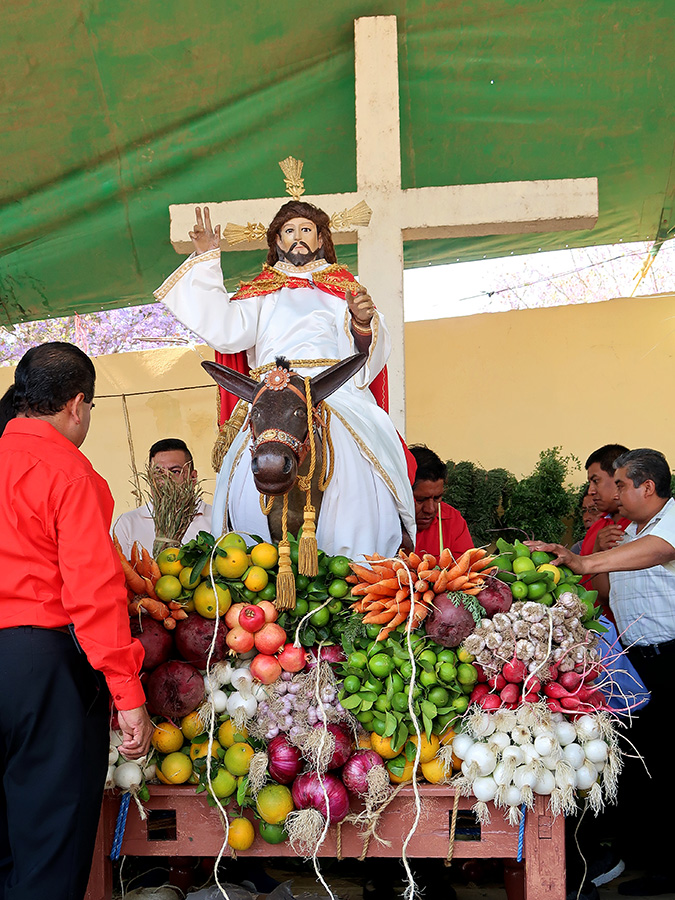
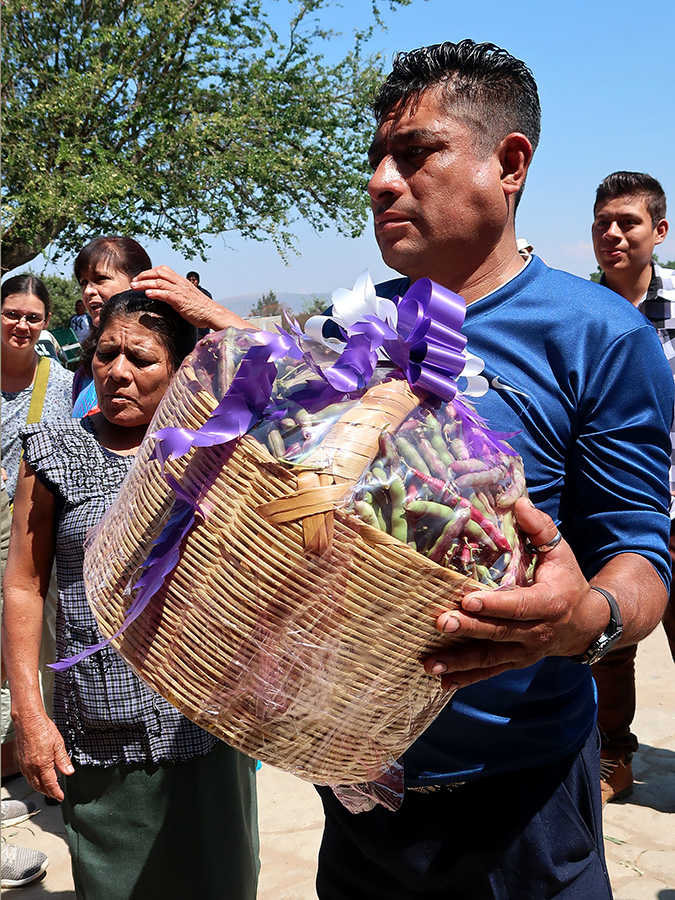
If it’s Domingo de Ramos (Palm Sunday), I must be in San Antonino Castillo Velasco.  I know there must be other villages that have colorful and moving celebrations, but the magic of San Antonino compels me to return year after year.  Who can resist the spectacle outside the village panteón of watching el Señor del Burro be piled high with a cornucopia of fruits and vegetables and festooned with garlands of peppers and pan (bread)?

IMG_6099

IMG_6135

IMG_6117

IMG_6167

IMG_6142

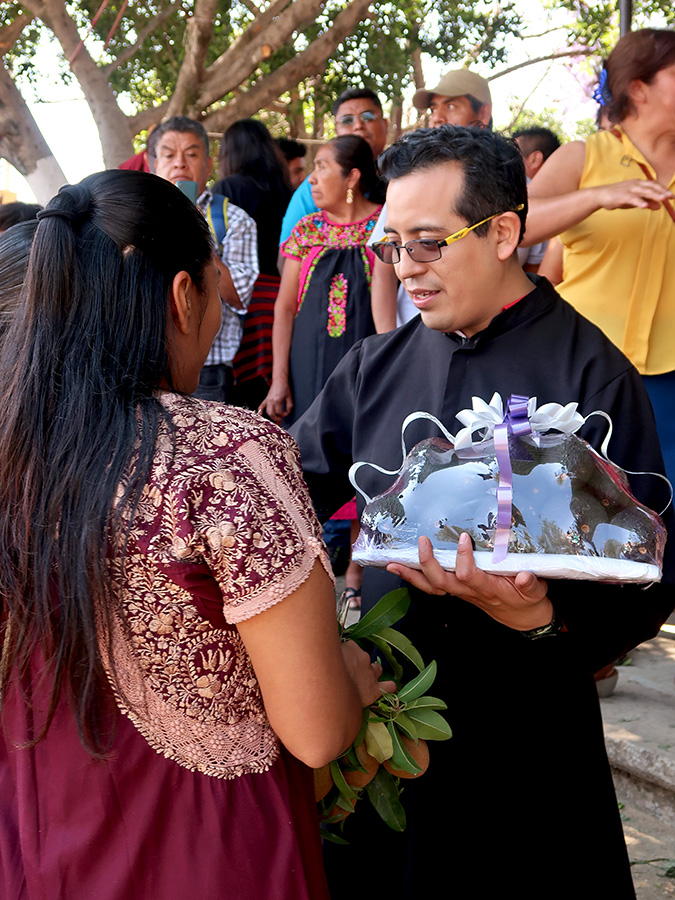
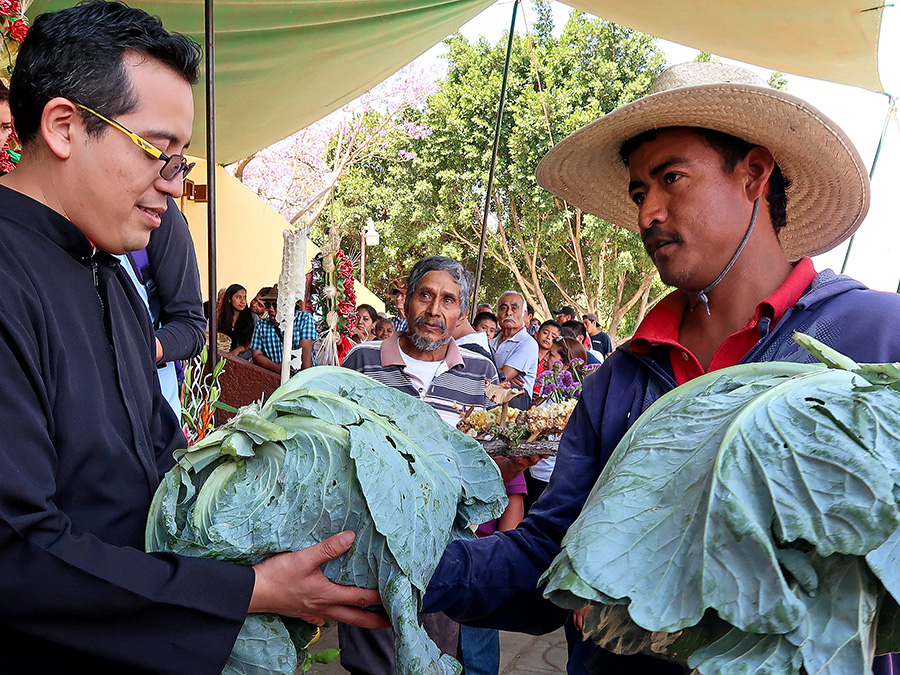
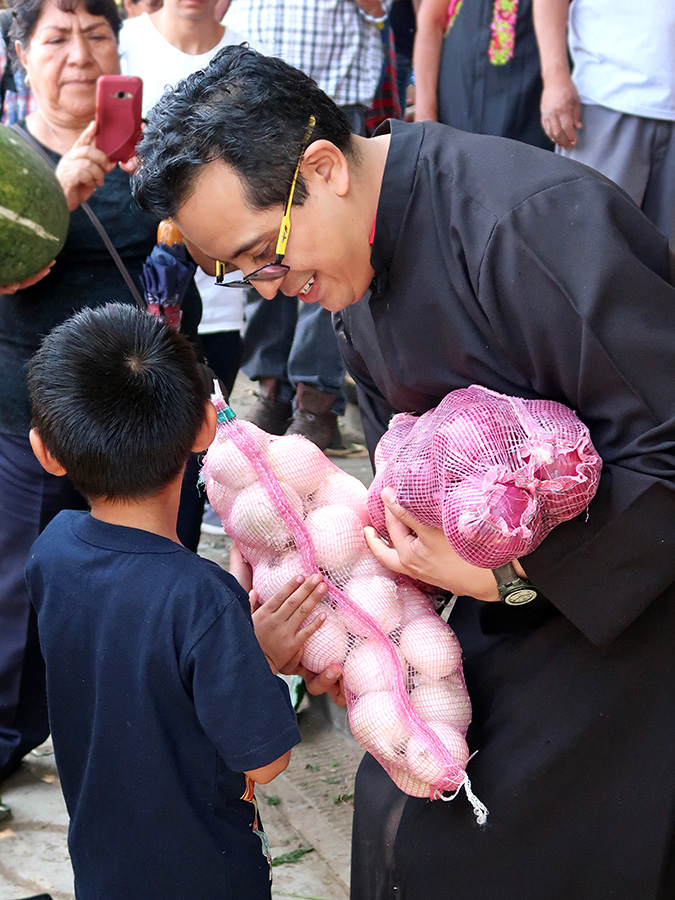
And, besides, each year there is always something a little new and different.  To wit, in previous years parishioners presented their offerings with great pride to a committee of three or four women who formally received the donations, thanked the benefactors, and priced the items (for sale later in the day to benefit the work of the church).  However, this year, in addition to offering blessings, it was the priest who interceded between the donors and the pricing committee to receive and express gratitude to each person for their contribution — be they grand or humble.

IMG_6106IMG_6159_landIMG_6162IMG_6156IMG_6105

Once the young priest finished receiving the goods, he donned his ceremonial robes, offered prayers, and blessed everything (including my camera!) and everyone with holy water.  This was the cue for palm fronds to be distributed to all and the altar boys and girls and disciples to assemble.

IMG_6198IMG_6207IMG_6180

IMG_6261

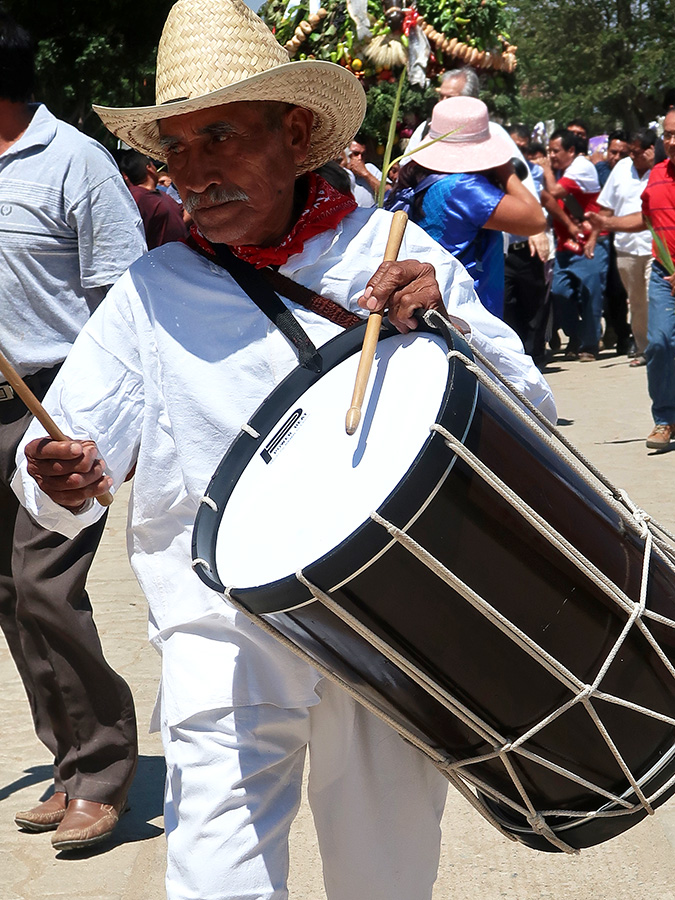
With the burro fully loaded, a team of 20+ extremely strong men hoisted the litter carrying the image of San Salvador atop the burro and, followed by villagers and visitors carrying the remainder of the goods collected, the journey to the church set off — a ritual reenactment of the Biblical story of Jesus entering Jerusalem to celebrate the Passover.  As the procession made its way to the church, the rhythmic sounds of the drum and horn leading the way were occasionally overpowered by shouts warning the men of topes (speed bumps) and low hanging telephone wires that must be navigated.

IMG_6202IMG_6219IMG_6217IMG_6216

The route is at least a kilometer from the panteón to San Antonino Obispo church and yesterday the sun was blazing, with not a cloud in the sky.  It is a grueling act of faith for the men who bear this massive burden.  The final hurtle was making their way up the steps and under the arch leading to the church atrium, where a platform to place el Señor del Burro awaited.

IMG_6236IMG_6245IMG_6226

By 1:00 PM, the bounty to be sold had been hand (head) carried or trucked to the display area set up on the opposite side of the church atrium and it was time for the outdoor mass to commence.  Thus, it was also time for us to duck out to browse the accompanying expo-venta of fabulous San Antonino embroidered blouses and dresses, flor inmortal artisan creations, the amazing and ongoing work of José García Antonio, the blind potter, and lastly find our favorite empanada vendor in the maze of food and artisan stalls set up outside the atrium walls.  Yummm…

You should also check out the Oaxaca-The Year After blog– rumor has it that Chris will be posting a video of the procession in the next day or two (or three).

Read Full Post »
… and danger!

IMG_6067

Doorways propped up with 2x4s, yellow caution tape, and continuing aftershocks — this is one of the many buildings in Oaxaca that has me walking on the opposite, even if sunny, side of the street.

Read Full Post »

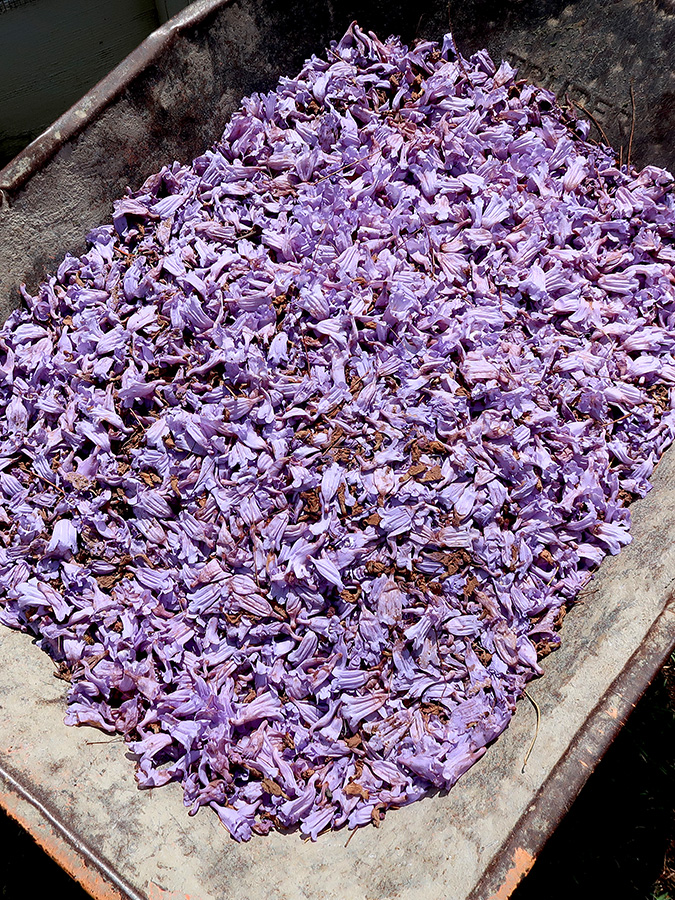
The jacarandas are heralding spring’s approach.

IMG_6046

Bathing in the purple rain as the blossoms fall…

IMG_6044

IMG_6053

IMG_6052

Many thanks to Tatsugoro Matsumoto, one of the first Japanese immigrants to Mexico, for recommending to President Álvaro Obregón that jacaranda trees from Brazil be planted in Mexico City.

IMG_6051

Now, throughout Mexico, underneath the purple rain we walk.  And, this time of year, I always smile, remember, and begin humming Prince’s Purple Rain and Jimi’s Purple Haze.

Read Full Post »
On this St. Patrick’s Day, you might want to check out this brief history lesson from PRI (Public Radio International), Mexico remembers the Irishmen who fought for Mexico against the US.

And, for more Irish in Mexico history, I’m re-posting my March 17, 2016 blog post, St. Brendan in Mexico?, below:

The Mexican-Irish connection may date back farther than most of us have considered. Séamus Ó Fógartaigh writes in the essay, Ireland and Mexico, “The first Irishman to set foot on Mexican soil may well have been St. Brendan the Navigator, who, according to legend, crossed the Atlantic Ocean in his ‘currach’ (traditional Irish rowing boat) in search of new converts to the Christian faith. An ancient manuscript found in Medieval European monasteries allegedly described his voyage to strange Western Lands, and is known as the Navigatio Sancti Brendani Abbatis. Some historians claim that Christopher Columbus found inspiration for his seafaring adventure in the pages of the Navigatio of St. Brendan the Abbot.” And, he notes, there is even speculation that Quetzalcóatl was actually a deified Irish monk.

As you raise your pint of Guinness on this St. Patrick’s Day, consider this and the other Mexico and Ireland connections, while you sing a rousing chorus of Saint Patrick Battalion.

The song celebrates the Batallón de San Patricio, the Irish-American soldiers who deserted and fought alongside the Mexican army against the United States during the Mexican American War, 1846-1848. And, don’t forget to watch One Man’s Hero, the 1999 feature film about the San Patricios, starring Tom Berenger.

Sláinte mhaith! ¡Salud! And, remember, don’t drink and drive!


Read Full Post »

On Calle de Ignacio Allende at the corner of Tinoco y Palacios, a new mural is ready to take you on a magic carpet ride.

IMG_5909

Well, you don’t know what we can find
Why don’t you come with me little girl
On a magic carpet ride
You don’t know what we can see
Why don’t you tell your dreams to me
Fantasy will set you free
Close your eyes girl
Look inside girl
Let the sound take you away

Magic Carpet Ride, written by Normal Cook, Robert Manuel Clivilles, and David Bryon Cole; performed by Steppenwolf.


Hopefully, this mural won’t be slapped with “pintura no autorizada” signs like its predecessor.

Read Full Post »

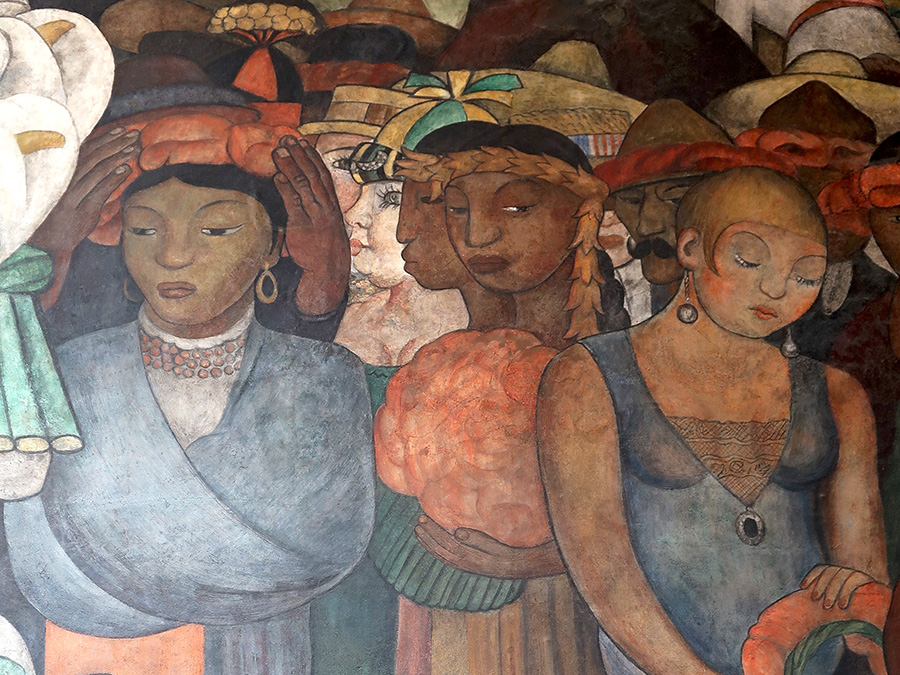
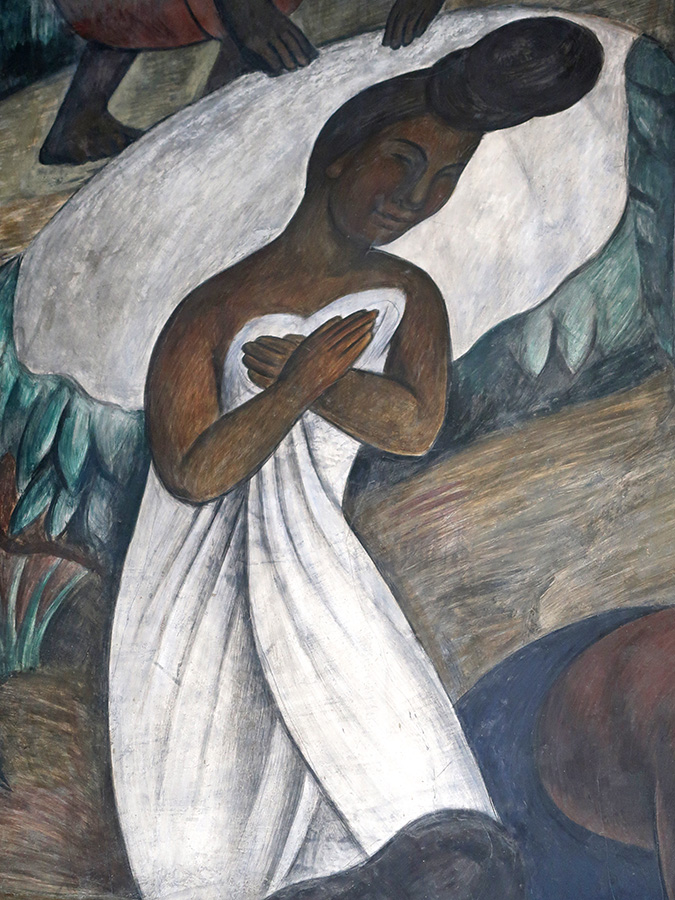
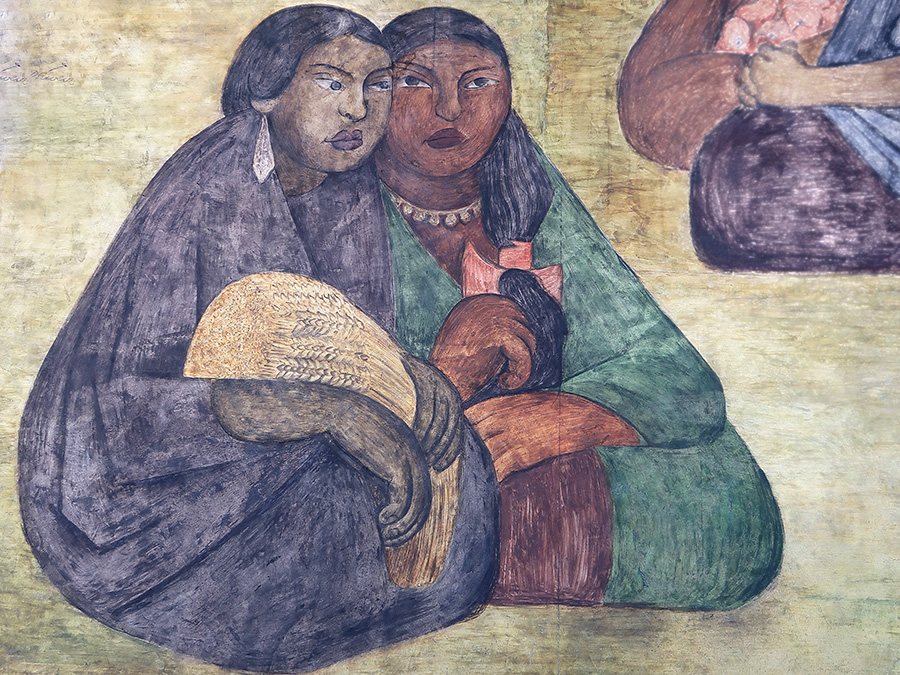
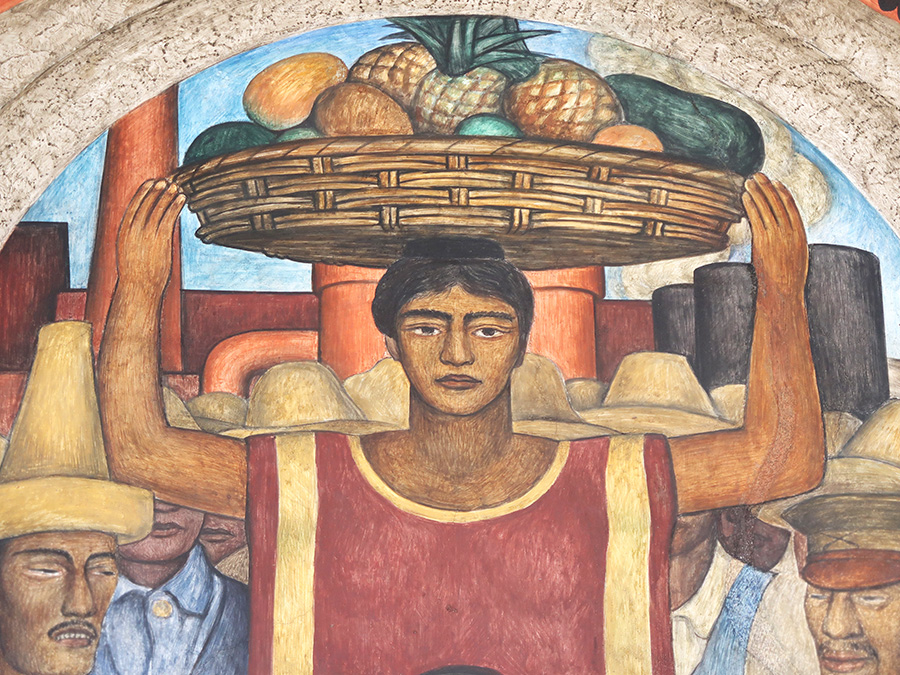
I was recently in Mexico City, where I spent hours at the Secretaría de Educación Pública (Secretariat of Public Education) building marveling at the three floors of murals by Diego Rivera.  And so, in honor of International Women’s Day, some of the women in the murals…

IMG_5550_copy

IMG_5484

IMG_5542

IMG_5477

IMG_5499

IMG_5508_copy

IMG_5545

IMG_5500

IMG_5547

IMG_5555

IMG_5498

Happy International Women’s Day to the women of the world!  May your strength, creativity, intelligence, and love prevail.

Read Full Post »
Congratulations to Coco — winner of the 2018 Academy Award for Original Song, “Remember Me” (“Recuérdame”), and winner for best Animated Feature Film.  Most of all, felicidades to all the bisabuelas (great-grandmothers) and abuelitas (grandmothers) who inspired the character of Coco with their strength, pride, and love.

IMG_4989

Carnaval 2018, San Martín Tilcajete, Oaxaca

And, bravo to Guillermo del Toro (Best Director) and The Shape of Water (Best Movie) — ¡Viva México!

Read Full Post »

They came, they saw, they styled, and they carried flowers!  This past Friday, it was the turn of Prepatoria No. 6 to continue the “only in Oaxaca tradition” of Viernes del Llano — aka, Paseo Juárez el Llano or Paseo de los Viernes de Cuaresma.

For the first five Friday mornings of Lent, young women in their second, fourth, and sixth semesters at the prepatorias (grades 10-12 in the USA) of the Universidad Autónoma Benito Juárez de Oaxaca (UABJO), circle the statue of Benito Juárez in Llano Park, collecting bouquets of flowers, in this 45-year old tradition that traces its origin back to the nineteenth century — some say, even further.

There seemed to be a record number of young women this week — at least 30 — being cheered on by their families and home room supporters and ably assisted by their male flower-carriers.

Yes, there are winners in various categories (I think, largest number of flowers collected, most photogenic, best social media, and one or two others) and an overall “Madrina del Viernes” (Godmother of Friday) is chosen.  However, all seem to leave in great spirits — and blogger buddy Chris has even spotted a few down at the local salón de billar shooting a little pool later in the morning.

Read Full Post »
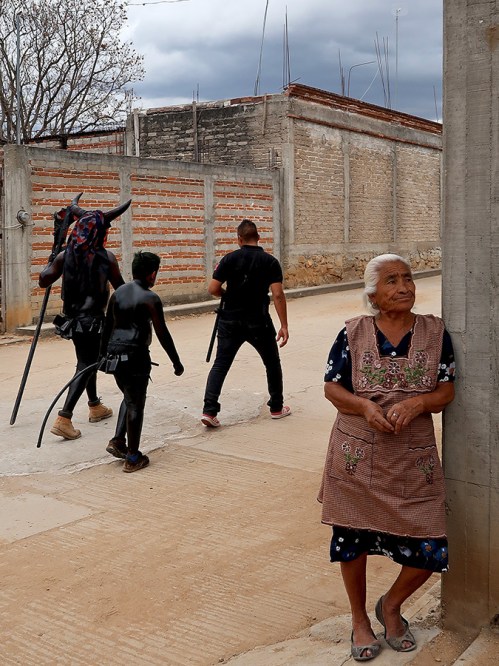
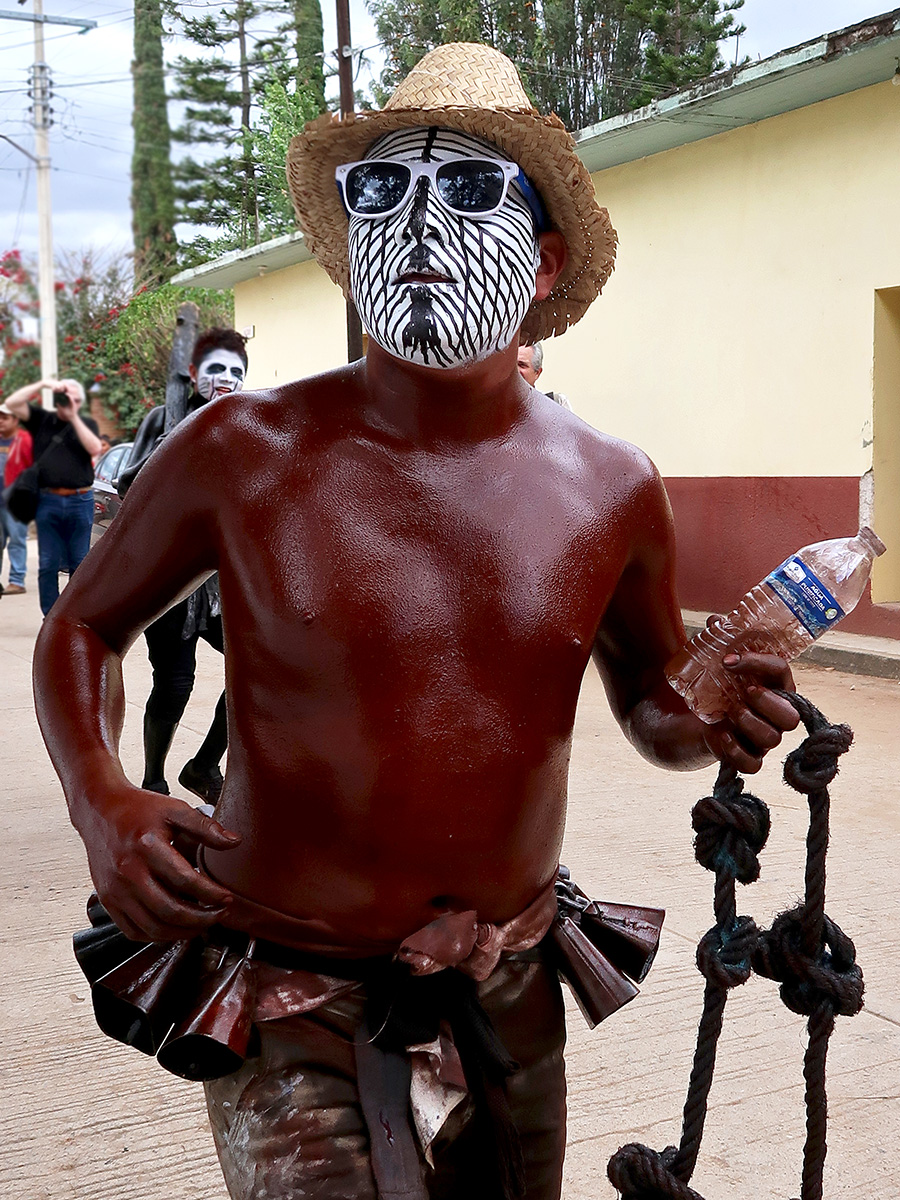
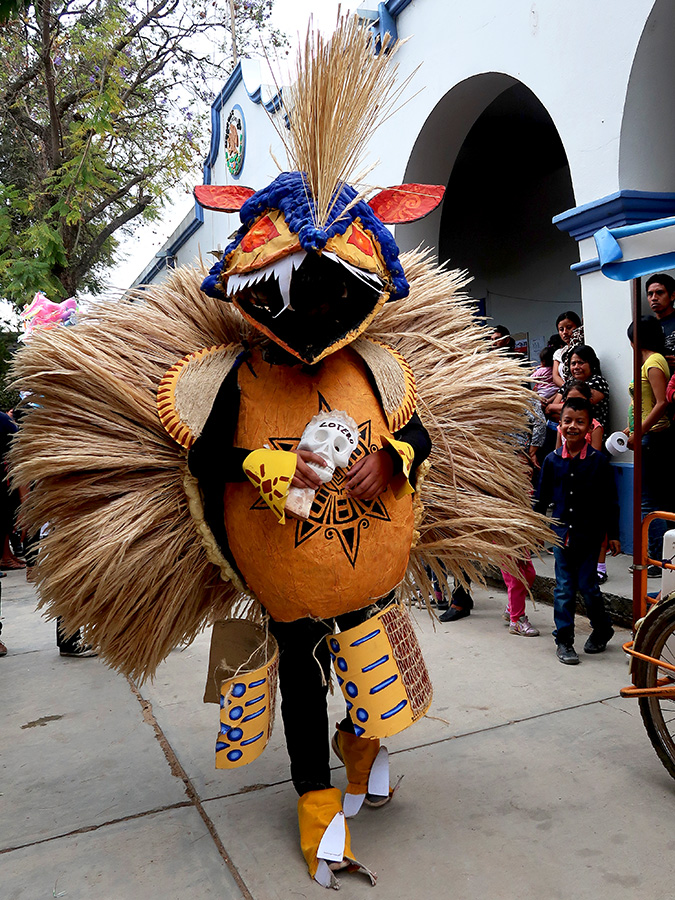
Día de Carnaval (aka, Fat Tuesday, Mardi Gras, Carnival), a day to let the good times roll before the sacrifices of the Lenten season, has come and gone.  And, again, blogger buddy Chris and I headed out to the surreal celebration in San Martín Tilcajete.  Driving into the village, one soon hears, rather than sees, that this isn’t a normal day in this wood carving village 17 miles south of the city — the streets are alive with the sound of cow bells.  Roaming the dirt back roads and paved main street, los encabezados (guys covered in motor oil or paint) come running past — with cow bells tied around their waist — making mischief and startling the unaware.

IMG_4902_landIMG_5042IMG_5031

IMG_4903

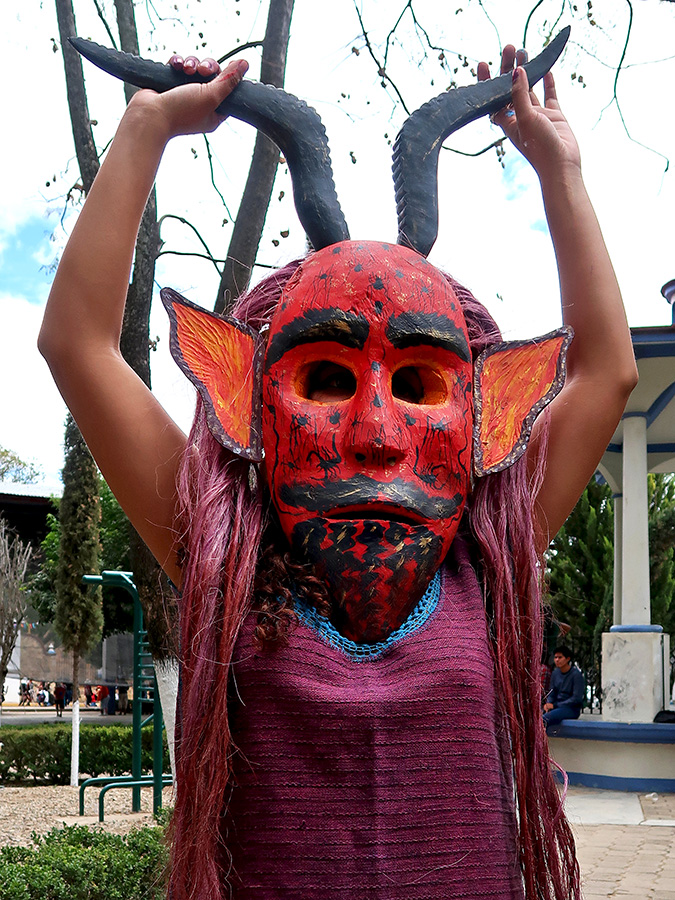
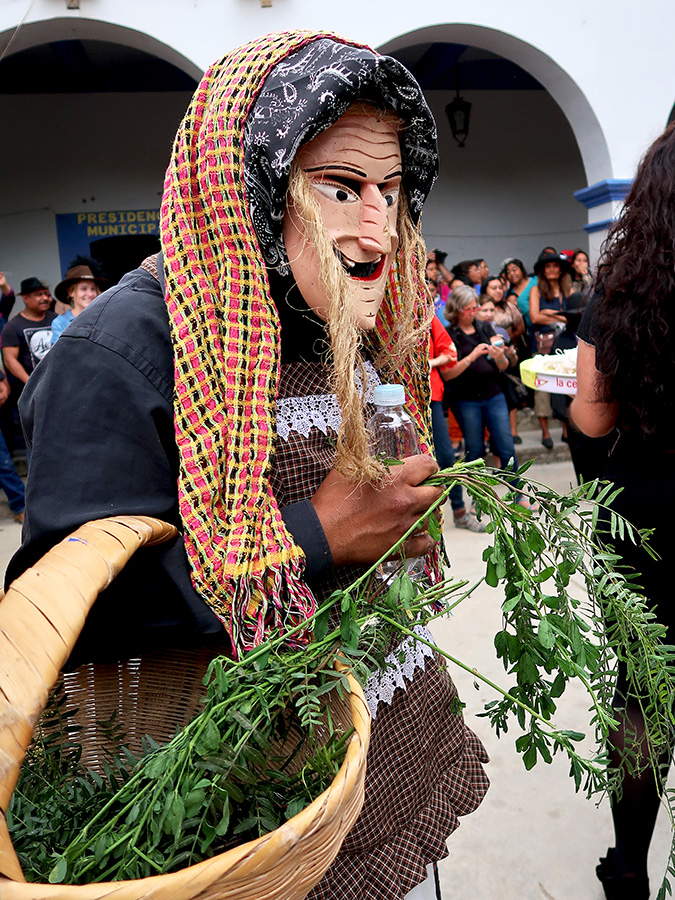
Masks, all the better to hide one’s identity when making fun of the powers that be, are an international carnaval tradition.  Thus, in this village, known for its fantastically painted wood carvings, wooden masks play a big role in the celebration — including several by our friend Jesus Sosa Calvo and his family at Matlacihua Arte.

IMG_4919

IMG_5058

IMG_4907

IMG_5055

IMG_4978

This is a town where creativity reigns supreme and the costumes seem to get more whimsical and weirder every year.

IMG_4960

IMG_5020

IMG_5052

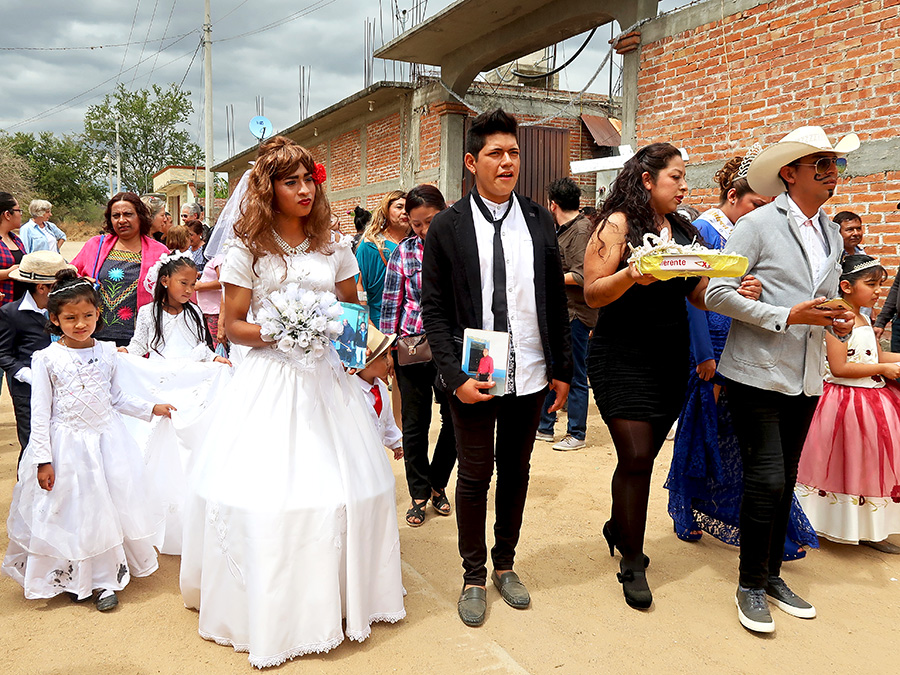
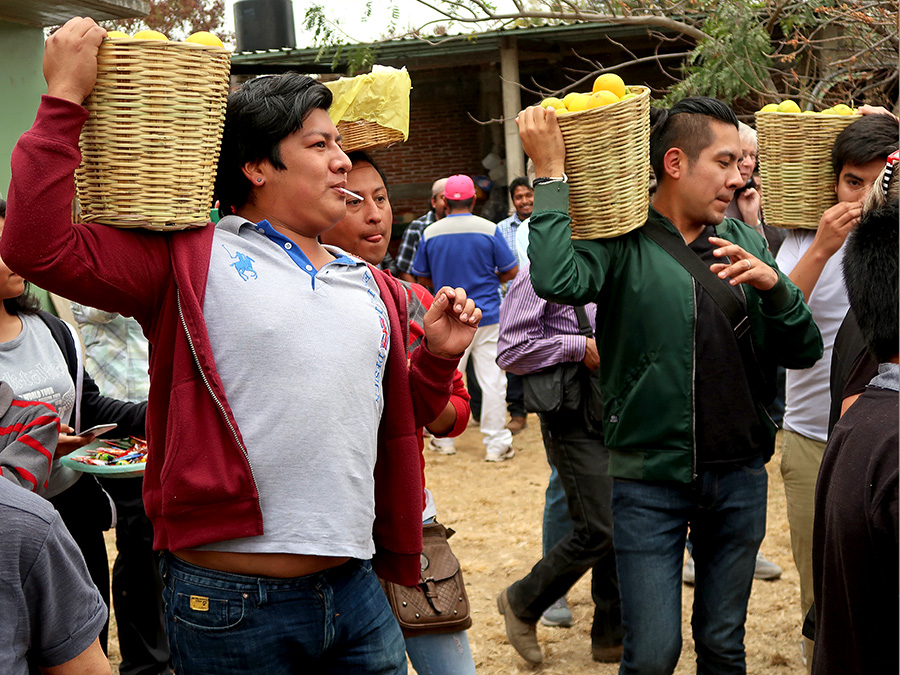
Oh, and did I mention there is a wedding?  Well, actually a parody of a traditional village wedding.  There is much pomp and circumstance, hilarity, and music — not to mention, breakfast and lunch for wedding guests — as participants move from the house of the mayor, to the home of the bride, and to City Hall for the civil ceremony.  Dancing in the plaza follows and then, at some predetermined time, there is a procession through the streets before arriving at another house where the happy “couple” kneel before “priest” for the religious ceremony.

IMG_4994

IMG_4970

IMG_4981

IMG_5011

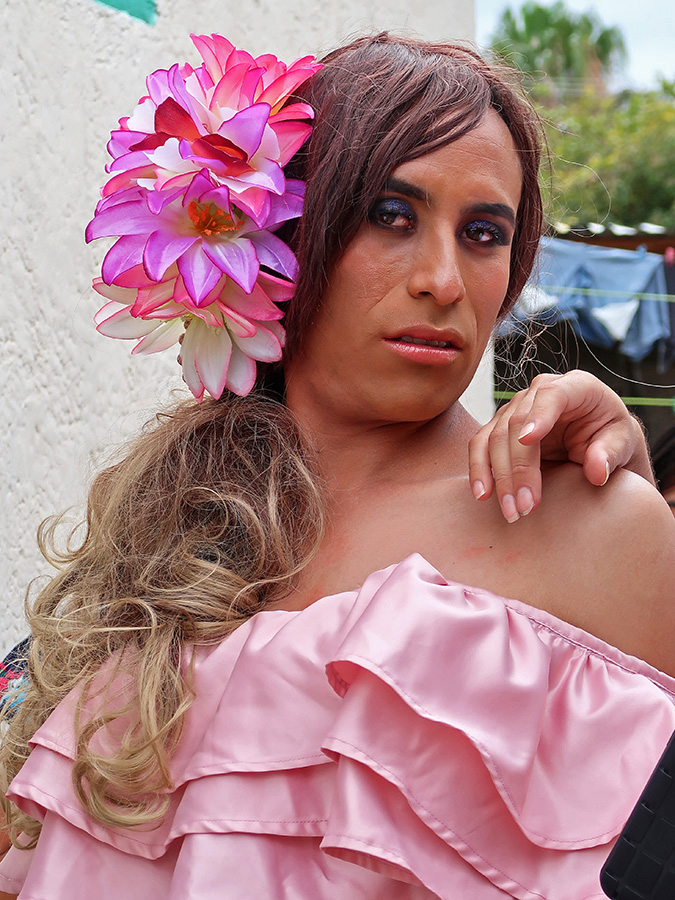
And, you might want to take a second look at those beautiful wedding guests with the smoldering eyes and modeling the gorgeous gowns.  They are not what they seem — and that includes the bride.

IMG_4972 (1)

IMG_4940

IMG_4946

IMG_4937

The Spanish brought the Carnaval tradition to Mexico because, like many other seasonal celebrations, it conveniently coincided with indigenous festivals celebrating the “lost days” of the Mesoamerican calendar, “when faces were covered to repel or confuse evil.”  Evidently it caught on, “because it was one time when normal rules could be broken…”  And, San Martín Tilcajete certainly knows how!!!

By the way, many from the creative team of the movie Coco came to enjoy the festivities and renew acquaintances in this town that provided the inspiration for the alebrijes in the film.  “De Oaxaca tomamos los alebrijes, la celebración del Día de los Muertos, toda esa energía y colores están en los paisajes de la película. Quise ser lo más fiel en esta investi­gación y plasmarlo en la cin­ta…”  (“From Oaxaca we take the alebrijes, the celebration of the Day of the Dead, all the energy and colors are in the landscapes of the film…”) (NVI Noticias, 2/14/2018)

Read Full Post »

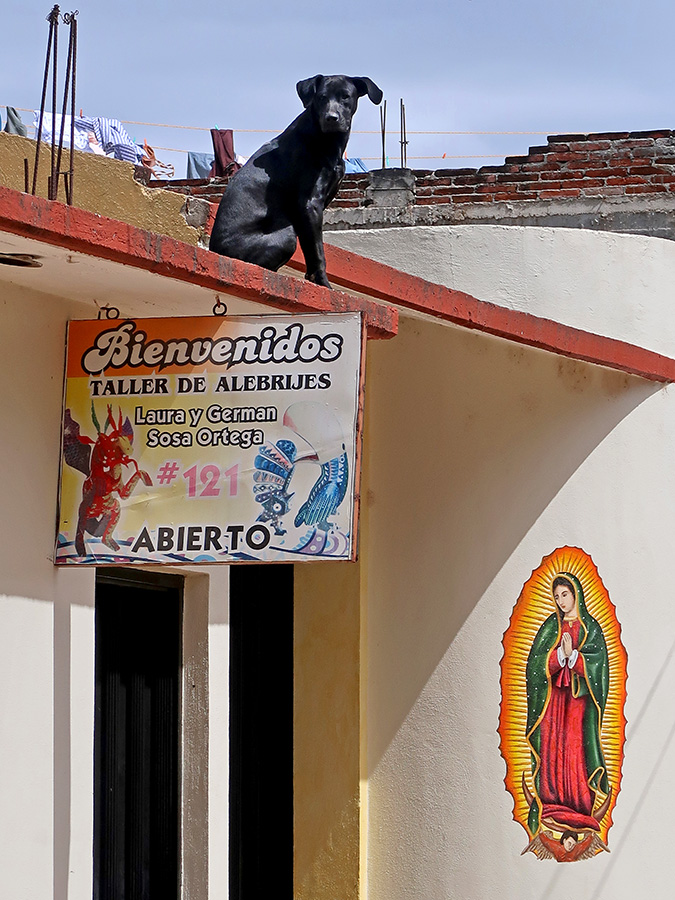
The roof dogs of San Martín Tilcajete wish you luck in the Year of the Dog.  (And, the Virgen de Guadalupe is there to help, too.)

IMG_5070

Happy Chinese New Year!


Read Full Post »

Mural on Calle Berriozábal by young Welsh artist, Harry Hambley — aka, Ketnipz.

IMG_2462

IMG_2465

IMG_2463

As we say in Mexico, Feliz día del amor y la amistad — Happy day of love and friendship!

Read Full Post »
Without a doubt, blogging about living in Oaxaca has brought a myriad of fascinating, knowledgeable, and just plain fun people into my life.  Thus, after meeting through my blog a couple of years ago, Kalisa Wells and I finally met in person last week at a textile talk at the Oaxaca Lending Library.  Given that we both love textiles, we arranged to rendezvous a couple of days later at a Museo Textil de Oaxaca expo-venta.

IMG_4879

While I was acquainted with the work of most of the artisans from Oaxaca on display, I was unfamiliar with the weaving of Ahuirán, Michoacán.  Kalisa has a long history with traveling, living, and loving Mexico — including Michoacán.

IMG_4881

So, with great enthusiasm, she whisked me off to the booth of Purépecha weaver Cecelia Bautista Caballero and her daughters, Ángeles Rodriguez Bautista and Araceli Rodriguez Bautista — where Kalisa was greeted like a long lost sister and I was warmly welcomed.

IMG_4884_copy

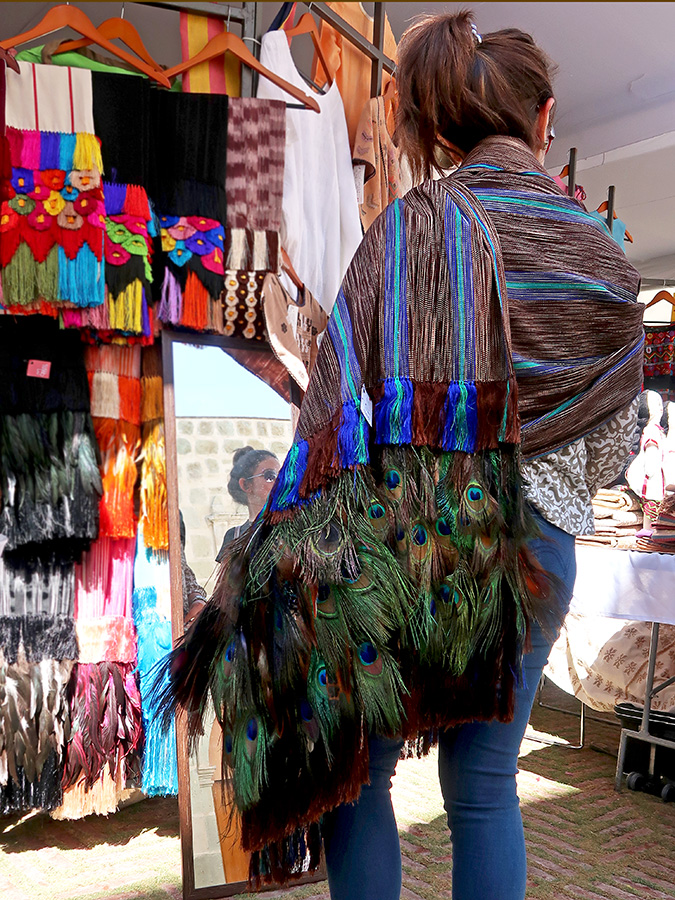
Among other innovations, Cecilia brought back the pre-Hispanic Purépecha tradition of using feathers in weaving.  Multiple layers of individual feathers are hand sewn into the fringe of many of her beautiful backstrap woven rebozos (shawls) — providing an ethereal elegance to these staples of women’s attire in Mexico.

IMG_4891

One of the daughters soon had us draped in these works of art, where we drew a crowd — some of whom also couldn’t resist being wrapped in the beauty of these exquisite pieces.  Meeting new people almost always leads to learning new things and experiencing culture in more personal ways.

Read Full Post »
Last night my night blooming cereus welcomed me home.

IMG_4870

Seriously!

Read Full Post »

« Newer Posts - Older Posts »