San Antonino Castillo Velasco continues to enchant. What’s not to like about a village known for growing flowers, decorating graves with designs created with flor inmortal (immortal flowers) during Día de los Muertos, and floral designs executed in exquisite embroidery?!!
Then there is Palm Sunday and the tradition of gathering at the panteón, loading El Señor del Burrito with locally grown bounty, blessing by the priest, an incense led procession carrying it to the church, and then selling it to raise money for a local orphanage.
It never ceases to amaze! The produce loaded onto the Little Burro, along with the overflow, was fantastic — enormous cabbages, the whitest of white cauliflower, perfect roses, cacao beans, squash, fruits, and on and on…
Then there are the people… young and old, they are always gracious and welcoming. And this year, under temperatures threatening 90ºF, women were circulating throughout the gathering crowd, offering thirst quenching aguas to stave off dehydration.
Oh yes, there were also kids and animals — and sometimes together! As I think I’ve mentioned before, children in these indigenous communities seem to always be included and when old enough (5 and up, I’m guessing), given responsibilities — joy and exuberance, along with patience and commitment, abound.
I loved watching the little boys wrangling the goats as the procession proceeded from the panteón to the church.
Today is the sixth Friday of Lent and Oaxaca is commemorating Viernes de Dolores, the Friday of Our Lady of Sorrows.
The Municipality of Oaxaca, the Ministry of Tourism, and Hotel Quinta Real Oaxaca extended an invitation to a free Concierto Viernes de Dolores in the Ex Convento de Santa Catalina de Siena. The less than one-hour program included a description of the altar (including the sprouted chia — yes, the original Chia Pets); a powerful poem relating the story of the celebration that alternated with a musical program sung by Coro de la Ciudad de Oaxaca, under the direction of Israel Rivera Cañas, that included the traditional, Stabat Mater de Juan Matís, a 13th-century Catholic hymn about the Sorrows of Mary.
At the Cross her station keeping, stood the mournful Mother weeping, close to her Son to the last.
The acoustics of Santa Catalina de Siena were wonderful, the horchata and agua de chia, served at the conclusion of the program, were refreshing, and it was a much welcome and tranquil way to spend an hour on a busy Friday.
One of the stops while my gal pals were visiting two weeks ago was the Centro de las Artes de San Agustín (CASA), in San Agustín Etla. This re-imagined former textile factory is one of the most esthetically pleasing spaces I’ve ever experienced.
Even the recycling bins are exquisitely designed and placed!
This post was inspired by a couple of recent close encounters of the reptilian kind.
When my gal pals were visiting at the end of March, naturally we went to Mitla and wandered through the archeological site. In addition to the intricate fretwork, remains of wall paintings, massive columns, and tombs, one of the, very much alive, residents of this “place of the dead,” caught our eye.
She was extremely busy digging a hole in the rocks (to lay eggs?) and allowed us get within less than a meter from her. One of her relatives was, no doubt an inspiration for one of my favorite alebrije by Bertha Cruz of the woodcarving village of San Antonio Arrazola.
And then, a couple of nights ago, one of my resident, but very shy, geckos made a rare appearance on one of the beams that spans my brick ceiling.
While my geckos greet me in the morning and night with their welcoming chirps, they seldom come out into the open when I’m around. However, there it was, high above my head and frozen in place as I approached. It remained while I went to get my camera and then stayed for the requisite photo shoot. Thank you my chirping friend!
I wonder if, during its nocturnal wanderings through my apartment, my little gecko came across its talavera likeness hanging on the wall?
Do you remember the Danzantes in training from two weeks ago? All that practice by folkloric dancers from eight villages in the valleys of Oaxaca, was for last night’s “monumental” opening of the Muestra Internacional de Danza Oaxaca.
The dance festival lasts through next Saturday (April 12, 2014), with events taking place at venues throughout the city, AND all are free!
By the way, I’d received an email notice of the dance festival, but it was the comment, “Hope to see us this coming Saturday” from “the danzante with the orange penacho and green shirt” seen in a photo from my blog post, Speaking of Danzantes, that had me making a special point to attend. Muchisimas gracias a Abdiel for the tip. I hope you see this post!
According to the Indigenous Farmworker Study (IFS), there are approximately 165,000 indigenous Mexican farmworkers and their children living in California — with a significant percentage coming from the state of Oaxaca. Writer and photographer David Bacon has been photographing and interviewing indigenous Mexican migrants working in California’s agricultural fields for many years. The following Truthout article is from his photo-documentary project, Living Under the Trees, sponsored by the California Council for the Humanities and California Rural Legal Assistance.
Most young farm-workers in California are migrants from Mexico, especially the south of the country, where many people share an indigenous culture and language. Ricardo Lopez, living in a van with his grandfather in a store parking lot in Mecca, a tiny farmworker town in the Coachella Valley, says working as a migrant without a formal home was no surprise:
This is how I envisioned it would be working here with my grandpa and sleeping in the van. It’s hot at night, and hard to sleep well. There are a lot of mosquitoes, very few services, and the bathrooms are very dirty. At night there are a lot of people here coming and going. You never know what can happen; it’s a bit dangerous. But my grandfather has a lot of experience and knows how to handle himself. With the money I earn I’m going to help my mother and save the rest. I’ll be attending college in the fall at Arizona Western College—my first year. I want to have a good job, a career. I’m not thinking of working in the fields. Not at all. I look at how hard my grandfather has worked. I don’t want to do field work for the rest of my life because it’s so hard and the pay is so low.
Lopez describes the reality for farmworkers in California in a way that gives tangible meaning to the facts and numbers describing farmworker life. There are about 120,000 indigenous Mexican farmworkers in California. Counting the 45,000 children living with them, that is a total of 165,000 people. They are the most recent migrants from Mexico. They speak twenty-three languages, come from thirteen different Mexican states, and have rich cultures of language, music, dance, and food that bind their communities together.
This project is therefore a reality check. The idea is to give indigenous migrant communities a vehicle they can use to find support for dealing with the social problems they face, such as housing, low wages, and discrimination. This documentary work is not neutral. Its purpose is to help provide a means for people to organize and win support in a world that, at best, treats them as invisible, and at worst demonizes them. I used to be a union organizer, and this work is very similar. Social documentation not only has to have an engagement with reality, but should try to change it.
Braving 90+º F temperatures this afternoon, I headed down to the, you-can-buy-anything-you-want, Mercado Benito Juárez. This is my “go to” market for nueces (pecans), arándanos (dried cranberries), coffee beans, chapulines (grasshoppers), fruits, and vegetables. There is also mole, meats, fish, textiles, flowers, souvenirs, piñatas, costumes, lucha libre masks, baskets, leather goods, hats, hair-care products, jewelry, and much more — the original “mall.”
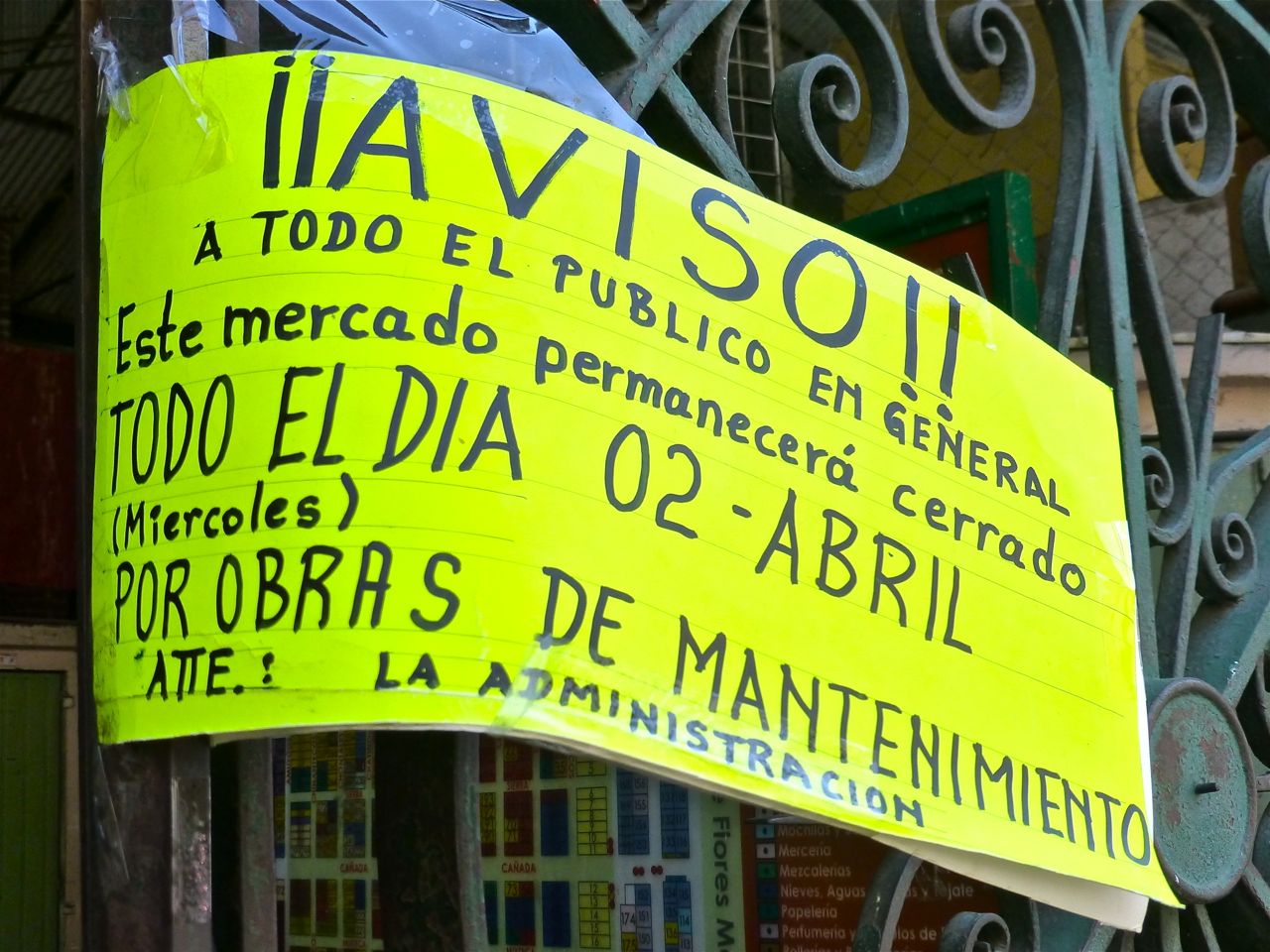
Today, all I needed was my favorite tiny Dominico bananas and a couple of avocados. However, suspicion set in when I noticed NO double-parked vehicles or even much traffic on Las Casas. A bloqueo (blockade)? No. Muy extraño (very strange). I crossed the street and walked down to my regular entrance into the market and noticed the corrugated metal doors of the vendor stalls along the street were tightly shut and then saw a sign at the gate to the market that read…
Closed for maintenance work!!! No reason why, no re-opening date, and no relocation site for the vendors was given. I flashed on visions of the six-month renovation of my neighborhood, Mercado IV Centenario. Hmmm… does it have something to do with the aguas negras (sewage), due to a short-circuit underground that was reported last week? I’m guessing, yes. According to today’s report in NSS Oaxaca, there is dredging going on (Oaxaca’s version of Roto Rooter?), vendors will then clean up (disinfect?) their stalls, and the mercado will reopen tomorrow. Por favor, keep your fingers crossed.
Update:Mercado Benito Juárez re-opened yesterday, as promised. According to my favorite fruit and vegetable vendor, it was closed on Wednesday due to the aguas negras problem.
If you are in Oaxaca and it’s the fourth Friday of Lent, it must be Día de la Samaritana (AKA, el Día de las Aguas) — a uniquely Oaxacan celebration. It is inspired by the Gospel of John story in the New Testament: At noon, a tired and, apparently, thirsty Jesus, on his way to Galilee, asks a Samaritan woman at Jacob’s Well in Sychar for some water. His request was highly unusual because, according to the Old Testament, “Jews regarded the Samaritans as foreigners and their attitude was often hostile.” The woman complied with his request and the rest is history.
By noon, this past Friday in Oaxaca, the thermometer had already reached 90º F in El Centro Histórico and people of all ages, from small children to abuelos, were already lined up at bougainvilla and palm decorated booths in front of churches, schools, and businesses for the traditional Día de la Samaritana free aguas. It wasn’t just plain water they were waiting on, it was for divinely flavored aguas frescas made with fresh fruits and flowers — jamaica, horchata, chilacayota, tamarindo, sandia, and others. However in front of the churches, prior to the offering of aguas, there was a reenactment of Jesus and the Samaritana, as well as a priestly blessing — and an article in Noticias reported that, given the blazing hot sun, some in the crowd became a little impatient.
This slideshow requires JavaScript.
All were eventually served and the streets were filled with smiling people drinking a rainbow of aguas. Within an hour the serving pots, pitchers, bowls, and buckets were empty and all that remained were garbage containers filled to overflowing with plastic cups.
By the way, talking to my friend Sam, who teaches at Universidad José Vasconcelos de Oaxaca, they had an aguas frescas contest — memorable combinations of watermelon with strawberries and lime; atole with tuna nieve; and coconut with strawberries. However, I was informed the day’s winner was the piña colada — alas, minus the rum, I’m thinking.
As I’ve mentioned before, Oaxaca is one of the most indigenous and (no surprise) one of the poorest states in Mexico. And, the Triqui of the Mixteca region of Oaxaca are some of the state’s poorest residents. They have recently come to the attention of sports lovers, as a result of the heartwarming story of their youth basketball team, dubbed the Barefoot champions of the mountains.
However, while their success story makes us feel good, it is rare. Political violence and poverty continue to chase the Triqui out of their beautiful and ancient mountain communities in search of a better future for their families. And, discrimination continues to follow them into el norte. To add to the strikes against them wherever they go, Spanish is not their native language — the state of Oaxaca is home to 16 distinct ethnolinguistic groups, with Triqui being one. And so, the story of Bernadina Hernandez and her grassroots efforts in Hollister, California should be known, appreciated, and celebrated.
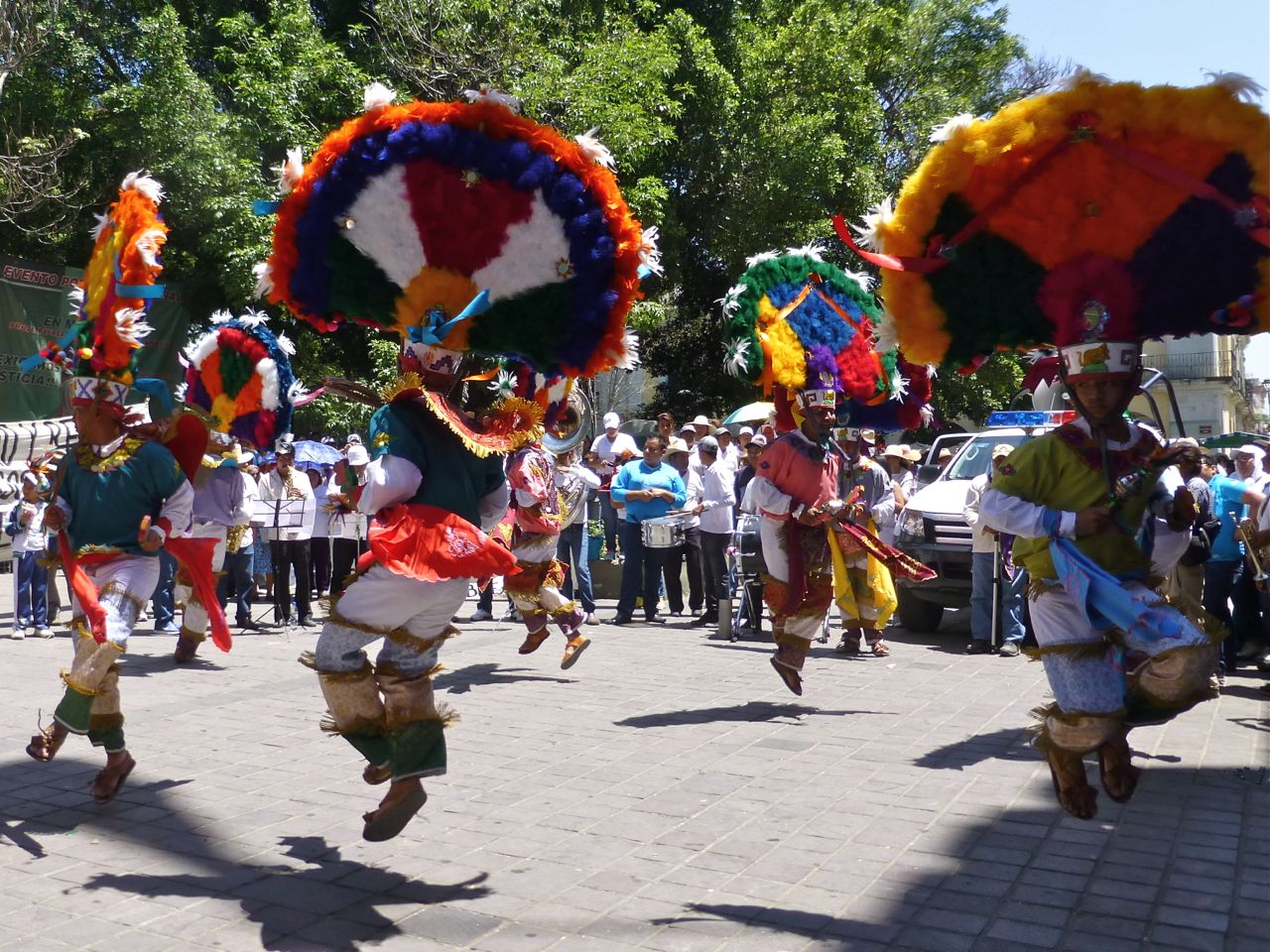
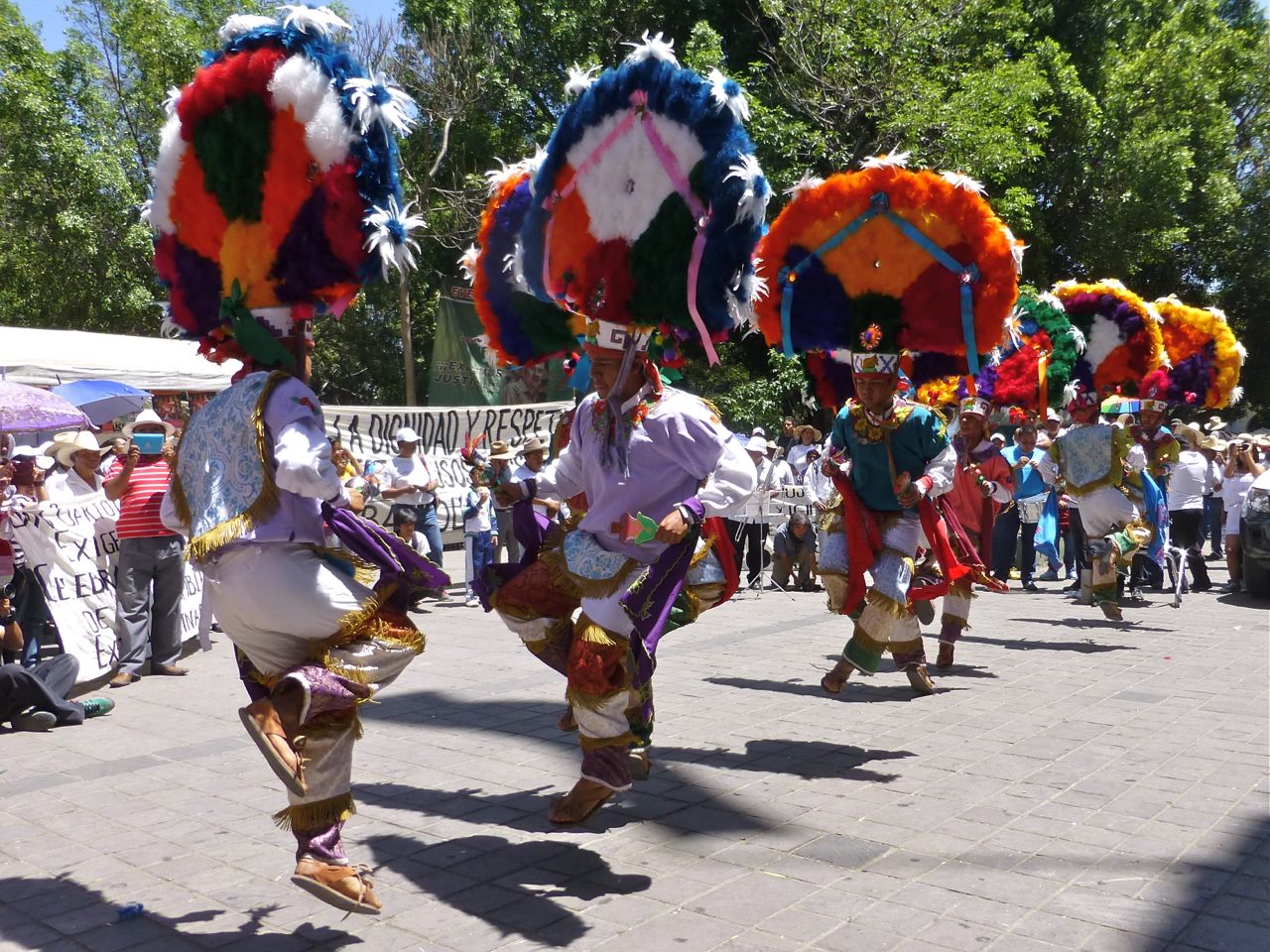
Today was the first day of a way-too-short first time visit to Oaxaca by a couple of California gal pals — an orientation walk through El Centro was the order of the day. And what did we stumble upon in front of the Government Palace? Danzantes waiting to perform a couple of the dances from the Danza de la Pluma.
They began dancing and I flashed on Saturdays’ blog post, Danzantes in training. However, these guys definitely weren’t apprentices — they had the steps and jumps down WITH those heavy and seemingly unwieldy penachos on their heads — and the crowd cheered.
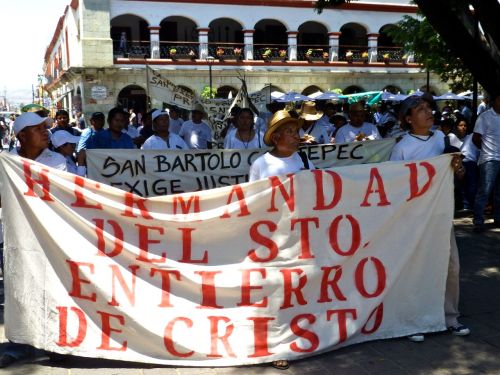
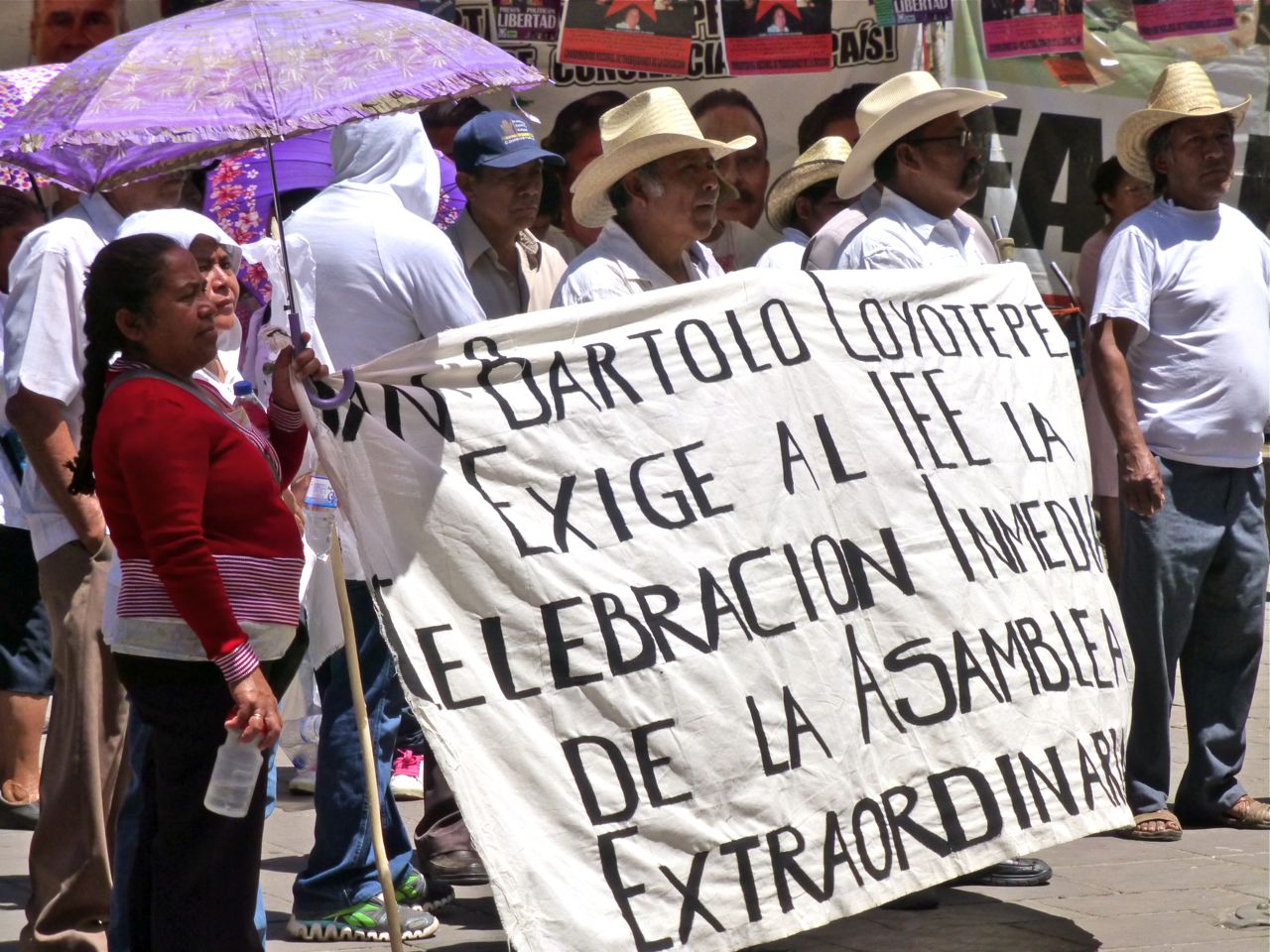
The danzantes and most of their gathered audience were from San Bartolo Coyotepec, about 15 km south of the city. It’s a village known for the artisans who make black pottery. However, along with the band and dancers, there were banners and protestors.
According to this article (in Spanish), “they arrived at the presidential palace in the main square of the city to demand the replacement of the elections because the process was considered seedy and does not represent the will of the community.”
Culture and politics… I couldn’t have arranged a more quintessential Oaxaca experience, if I had tried. And my friends, what did they think? They loved it all!
This morning, as I was getting ready to go to my local mercado, I heard the unmistakable sounds of the Danza de la Pluma (feather dance). I’ve seen it often enough in Teotitlán del Valle to know the music. While it is performed throughout the valley and is always one of the big hits during July’s Guelaguetza, Teotitlán del Valle is one of only two villages where it is performed as a religious ritual during their three major yearly festivals.
As I approached the Plaza de la Danza, the music got louder and louder. Once there, I looked down to see 75 – 100 dancers in jeans and t-shirts practicing one of the (forty-one) dances of the Danza de la Pluma. They were danzantes in training from various folkloric groups in the valley of Oaxaca.
As you can see from the video, the footwork is complex and the steps require a lot of stamina. And, just wait until they put on the penachos (headdresses)!
I often wonder and worry that the traditional dances will eventually be lost. Today’s encounter with these young dancers gave me hope.
Domingo’s escape from the city out into the countryside of Oaxaca brought back one of my fondest childhood memories: Sunday drives with my grandparents into the golden hills of northern California. Two-lane winding roads with only the occasional car or pickup truck; farms, fields, and roadside stands outside my rolled down window always brought a sense of adventure mixed with freedom and serenity. And, it still does…
Oaxaca city to Teotitlán del Valle, where we yielded to a herd of cattle.
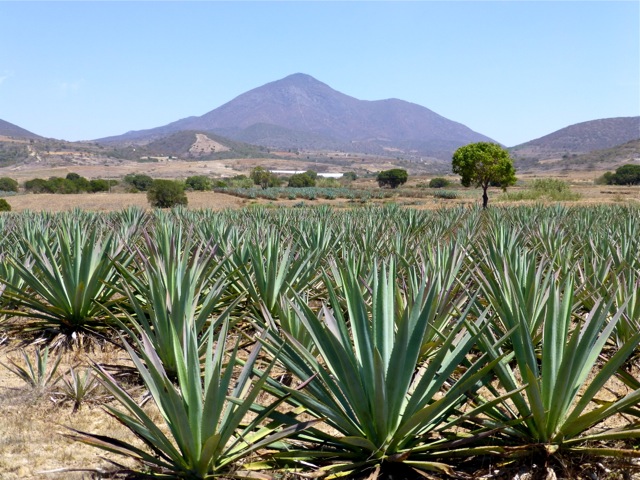
Santiago Matalán past fields of agave to San Baltazar Chichicapam.
We continued on the mostly deserted road towards Octotlán de Morelos.
Onto Hwy. 175 and a lunch stop at the roadside restaurant, between Santo Tomás Jalieza and San Martín Tilcajete, from almost two weeks earlier.
And this time we noted the name: Los Huamuches. Another delicious comida… a perfect way to end our meandering and head for home.











 Mexican Peso Converter

 View From Casita Colibrí