This morning, I awoke to the familiar, if startling, sounds of cohetes (rockets). Oh right, it’s Día de la Santa Cruz (Day of the Holy Cross). Alas, no pilgrimage hike up Cerro Picacho for us this year; we are still in recovery from our island adventure AND, more importantly, even at 7:30 AM, it is too darn hot! Have I mentioned Oaxaca has been experiencing 90º – 96º F temperatures for the past month? That’s 10º F above average. Exhausting it is and sweltering we are.
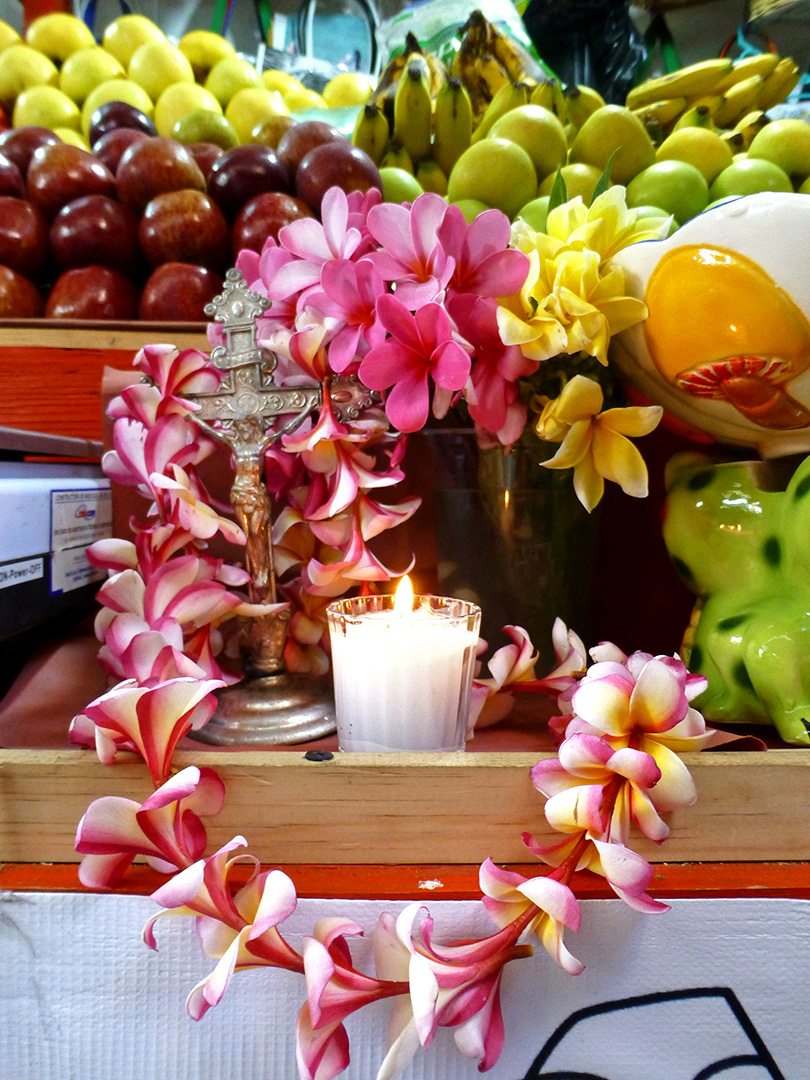
However, before the sun was directly overhead, I returned to Benito Juárez mercado hoping my coffee guy would be there. He wasn’t, but many of the stalls had beautifully decorated alters, fragrant with the sweet scent of flor de mayo (plumeria) blossoms.

In Mexico, it is also Día del Albañil, the feast day of the stonemason/bricklayer/builder because, according to this article (en español):
Before the Conquest, the indigenous Mesoamerican related to the cross with the cardinal directions of the Indian cosmography north, south, east, west and central graphically formed the cross.
With the arrival of the Spaniards, this evocation was eradicated and replaced by religious symbolism of the Holy Cross.
Since then the celebration of this feast with the construction of houses, churches, monasteries, and other buildings with Indian labor was established.

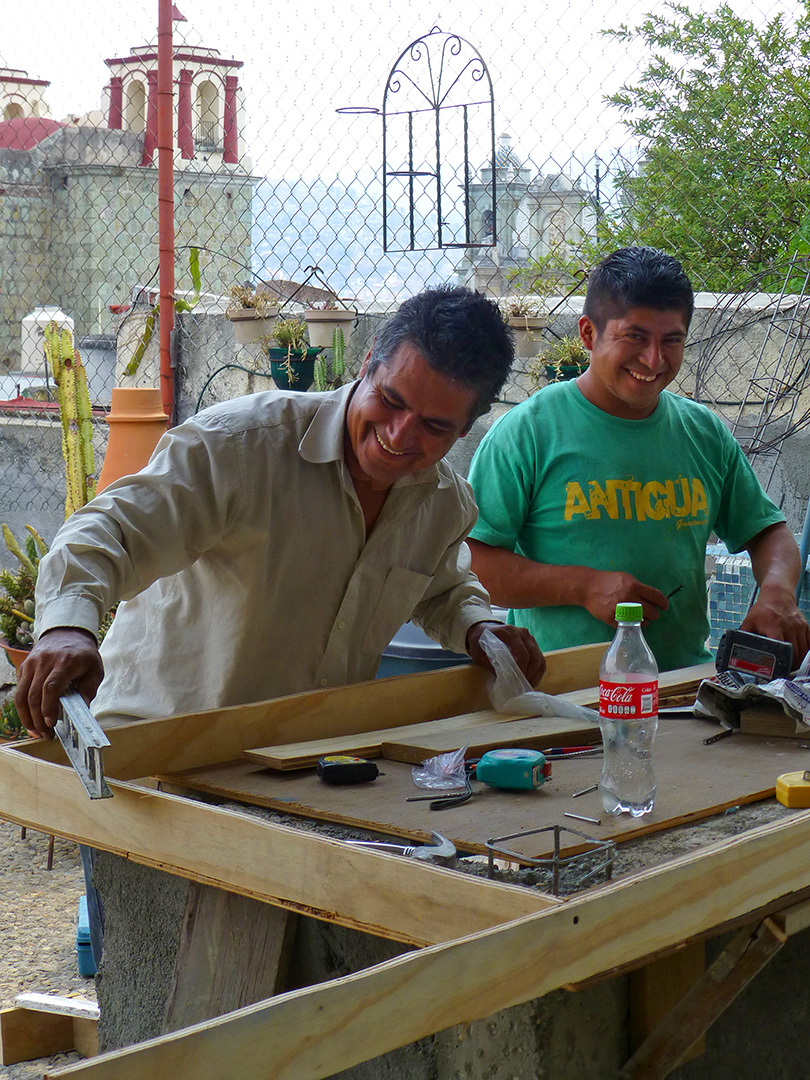
However, Sebastián and Leonardo continued working on my new counter. And, yes, there will be tile!
Posted in Casita Colibrí, Celebrations, Creativity, Culture, Holidays, Religion, Travel & Tourism | Tagged construction workers, counter construction, Día de la Santa Cruz, Día del Albañil, Flor de mayo, flowers, Mexico, Oaxaca, photographs, photos, plumeria, popular travel destinations | 1 Comment »
A pause in the Cuba coverage to echo Dorothy, “There’s no place like home” — especially if that home is Oaxaca. I needed (yes, needed!) chocolate and coffee and, thus, headed toward the Benito Juárez and 20 de noviembre mercados. As always, even just a grocery shopping trip is a feast for the senses.
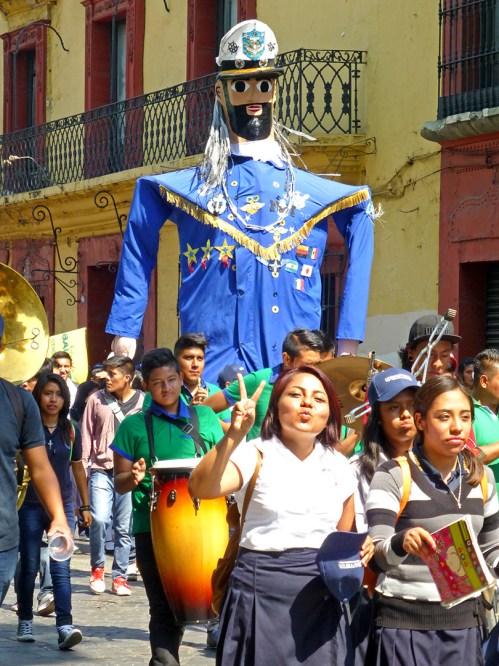
First, a calenda on Calle Independencia of students, academics, and workers to launch the registration of candidates for rector of Universidad Autónoma Benito Juárez de Oaxaca (UAJBO).
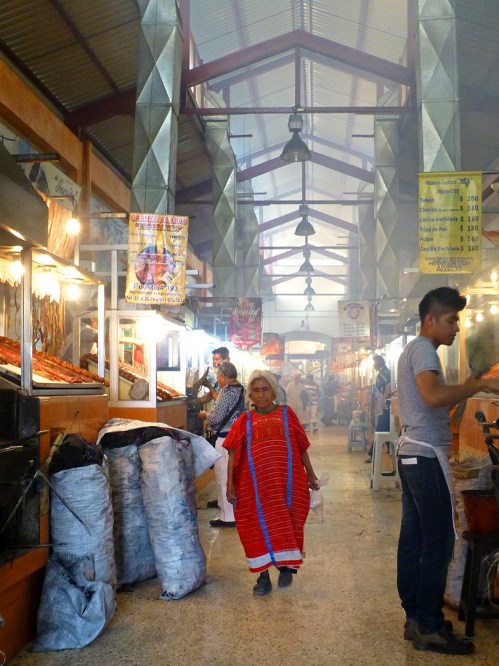
A peek into el pasillo de las carnes asadas (ahhh, the smells) in 20 de noviembre mercado, while waiting for my chocolate guy to finish with other customers.

A look at the finished murals (and merchandise) in a newly opened shop at Calle Macedonia Alcalá 100.

Stopping to gaze up at the “Aves Sin Paraíso” exhibition above the Alcalá.

Almost back to Casita Colibrí, a new stencil at the corner of Morelos and Tinoco y Palacios.
By the way, I got the chocolate, but couldn’t find my coffee guy in the maze of temporary stalls set up on the streets surrounding the Benito Juárez mercado (it’s undergoing a much-needed renovation). There’s always mañana — I’m not completely out, yet.
Save
Posted in Creativity, Culture, Markets, Travel & Tourism | Tagged 20 de noviembre mercado, art, Aves Sin Paraíso, El pasillo de las carnes asadas, food, graffiti, Mexico, murals, Oaxaca, photographs, photos, popular travel destinations, stencil art, street art, students, urban art, wall art | 4 Comments »
What can one say about a country that celebrates a poet/essayist/philosopher/journalist as a national hero? Granted, José Martí was also a fierce fighter for Cuban independence from Spain and died in battle on May 19, 1895, shot by Spanish troops in Dos Ríos, Cuba.
However, it is his writings that appear to be his most powerful and lasting legacy. Exiled from Cuba due to his political activity against Spain, he spent many years in the United States and while there, he wrote a passionate report following the 1886 execution by hanging in Chicago of the Haymarket martyrs. And so, let’s commemorate this May Day with words from José Martí…
Every human being has within him an ideal man, just as every piece of marble contains in a rough state a statue as beautiful as the one that Praxiteles the Greek made of the god Apollo. — José Martí
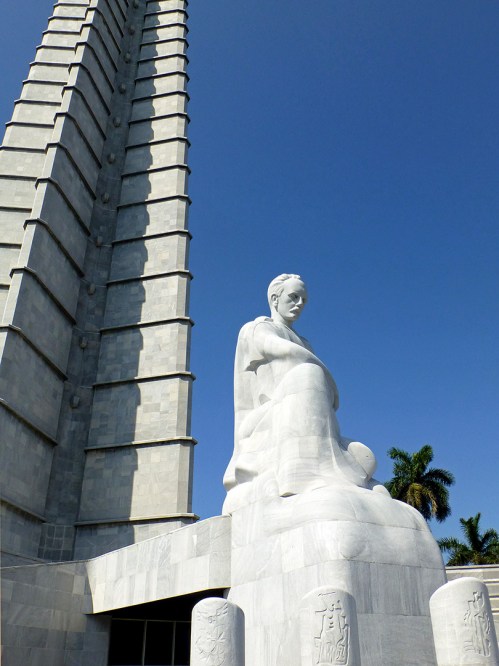
Memorial José Martí, Plaza de la Revolución, Havana
To educate is to give man the keys to the world, which are independence and love, and to give him strength to journey on his own, light of step, a spontaneous and free being. — José Martí
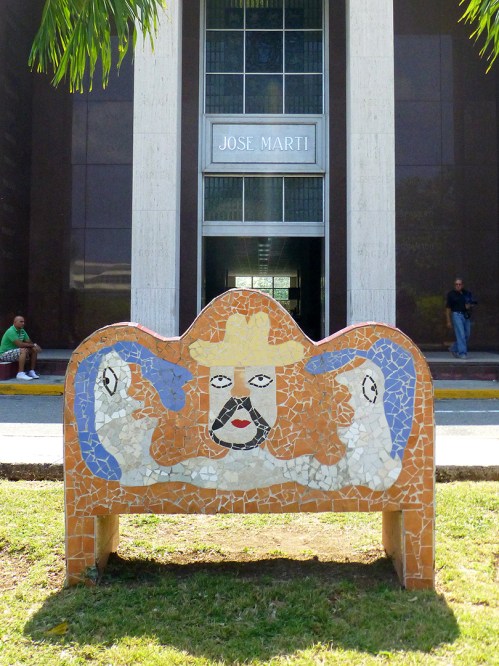
Biblioteca Nacional José Martí, Havana
Men are like the stars; some generate their own light while others reflect the brilliance they receive. —José Martí
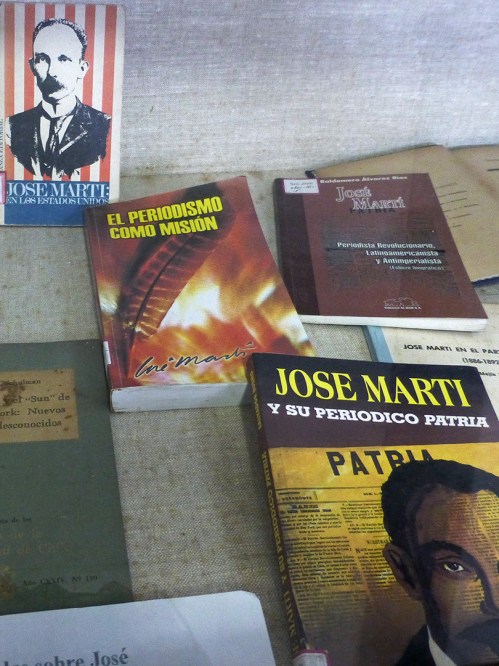
Display at the Biblioteca Nacional José Martí, Havana
Man can never be more perfect than the sun. The sun burns us with the same light that warms us. The sun has spots (stains). The ungrateful only talk about the spots (stains). The grateful talk about the light. — José Martí, La edad de oro

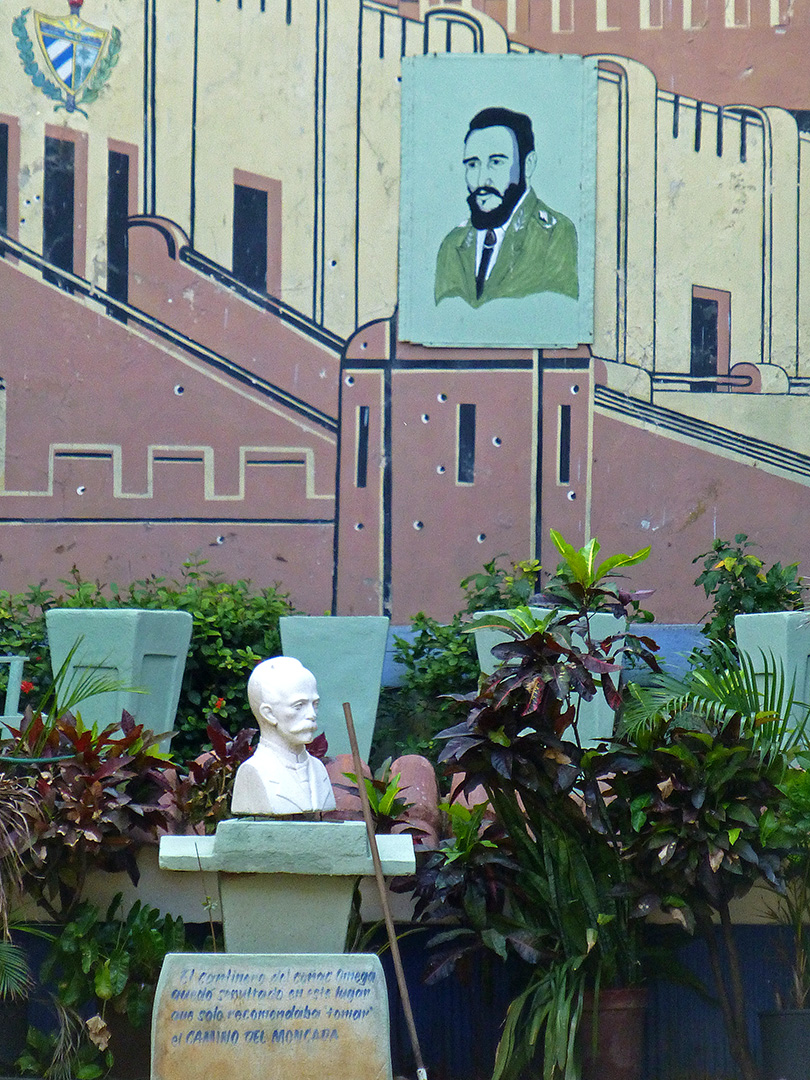
Courtyard of El Sitial Moncada, Havana
In a time of crisis, the peoples of the world must rush to get to know each other. — José Martí

Bookseller stall in the Plaza de Armas, Havana
I have a white rose to tend
In July as in January;
I give it to the true friend
Who offers his frank hand to me. — José Martí
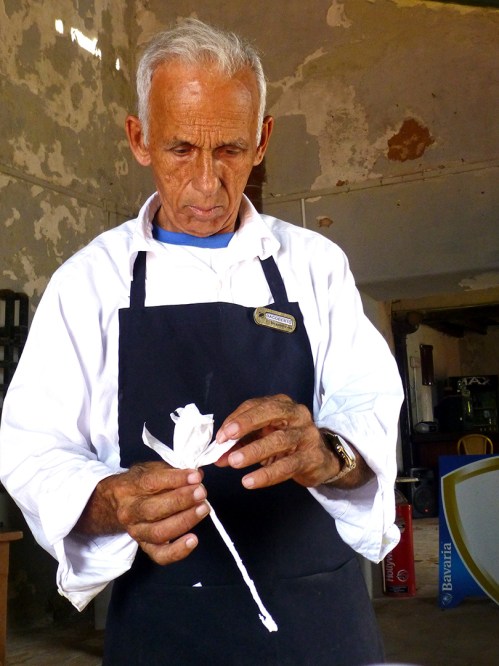
Dagoberto, our waiter at a bar on the grounds of Castillo de los Tres Reyes Magos del Morro, Havana — the white rose he made and presented to me
If translated back into Spanish, those last words may sound familiar to you…
Cultivo una rosa blanca,
En julio como en enero,
Para el amigo sincero
Que me da su mano franca.
This Playing for Change YouTube video may refresh your memory, then there is Pete Seeger. The above is one of four stanzas from Martí’s Versos Sencillos that are often used as lyrics to Guantanamera.
Posted in Books, Creativity, Culture, History, Holidays, Labor, Libraries, People, Travel & Tourism | Tagged Biblioteca Nacional José Martí, Cuba, El Sitial Moncada, Guantanamera, Havana, José Martí, memorials, music, photographs, photos, Plaza de Armas, Plaza de la Revolución, popular travel destinations, v, waiters, writers | 4 Comments »
In a time long ago, in a land far away, my mother bought a 1955 red and white Ford Fairlane convertible with red and white leather upholstery and a V8 engine. What a car! With top down, several road trips from the San Francisco Bay Area to Los Angeles ensued. And, “Betsy” even bumped along dirt roads and forded streams on camping trips up to Mount Lassen. We had her for ten years before repeated repair trips had my mother saying, “Enough!!!” and trading her in. It was a very sad day. What almost 16-year old wants to learn to drive a big boring pale yellow 1965 Ford Fairlane station-wagon?!
However, Betsy lives on the streets of Cuba!!! Last week’s Havana vacation had me seeing her and her older and younger Ford brothers and sisters everywhere — even Edsel!
Also there were her cousins. Most of the vintage cars, known as almendrones in Cuba, are taxis and, once destination and price are agreed to, they ply the streets taking passengers from point A to point B.
Though often they just cruise up and down the Malecón seeing and being seen enjoying the sea breeze and spectacular setting. It’s an especially popular pastime among tour groups and wedding parties.
The Stills and Young wistful elegy to Neil Young’s first car, Long May You Run, keeps playing in my mind.
Long May You Run
We’ve been through
some things together
With trunks of memories
still to come
We found things to do
in stormy weather
Long may you run.
Long may you run.
Long may you run.
Although these changes
have come
With your chrome heart shining
in the sun
Long may you run.
Well, it was
back in Blind River in 1962
When I last saw you alive
But we missed that shift
on the long decline
Long may you run.
Long may you run.
Long may you run.
Although these changes
have come
With your chrome heart shining
in the sun
Long may you run.
Maybe The Beach Boys
have got you now
With those waves
singing “Caroline No”
Rollin’ down
that empty ocean road
Gettin’ to the surf on time.
Long may you run.
Long may you run.
Although these changes
have come
With your chrome heart shining
in the sun
Long may you run.
To the vintage cars of Cuba, long may you run!!! And, for those concerned, as we were, about collectors coming in and sweeping up many of the 60,000 old American cars, according to a couple of articles I’ve read, that might not be the case. Because of their age and the US embargo, “the cars have jerry-rigged modifications” that make them undesirable to collectors. Then there is the pride owners have in their cars…
Cristian Paez, 40, said he has no intention of letting go of his 1956 purple and beige Bel Air convertible, purchased long ago by his grandfather. ‘Not possible,’ declares the burly 40-year-old, not for any price. ‘I love driving this car.'”
Stay tuned here and on Oaxaca-The Year After for more on the Havana adventure.
Posted in Culture, Transportation, Travel & Tourism | Tagged automobiles, Cuba, Habana, Havana, Long May You Run lyrics, Malecon, photographs, photos, popular travel destinations, songs, vintage cars | 6 Comments »
Remember the pineapple growing in my rooftop container garden? Upon returning from a week-long magical mystery trip (more about that to come) last night, I discovered mi piña was more than ready to harvest.

The fragrance beckons… breakfast tomorrow!!!
Posted in Agriculture, Casita Colibrí, Flora, Food, Gardens | Tagged food, fruit, garden, Mexico, Oaxaca, photographs, photos, piña, pineapple | 2 Comments »
The murals may be disappearing, but the walls of Oaxaca continue to radiate with messages.
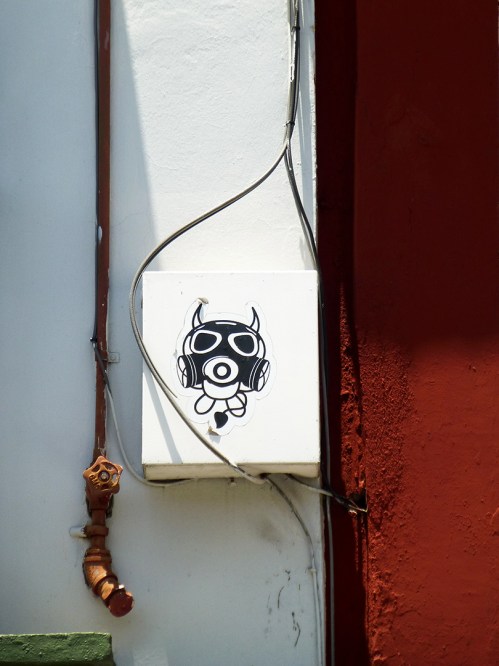
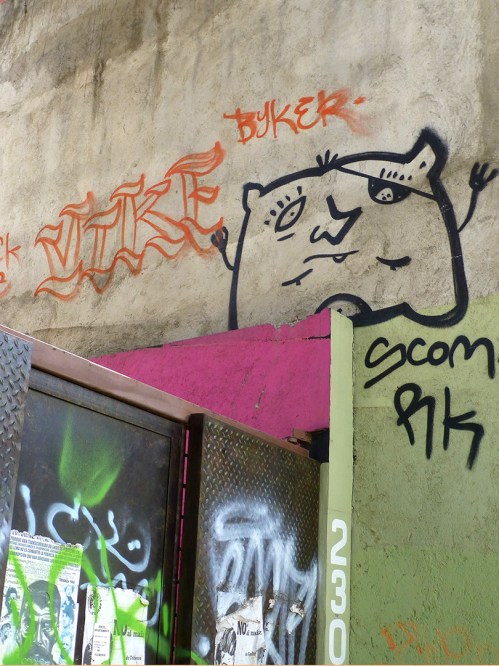



Oaxaca, never a dull moment and never a dull wall.
Posted in Creativity, Culture, Travel & Tourism | Tagged art, graffiti, Mexico, Oaxaca, photographs, photos, popular travel destinations, stickers, street art, urban art, wall art | Leave a Comment »
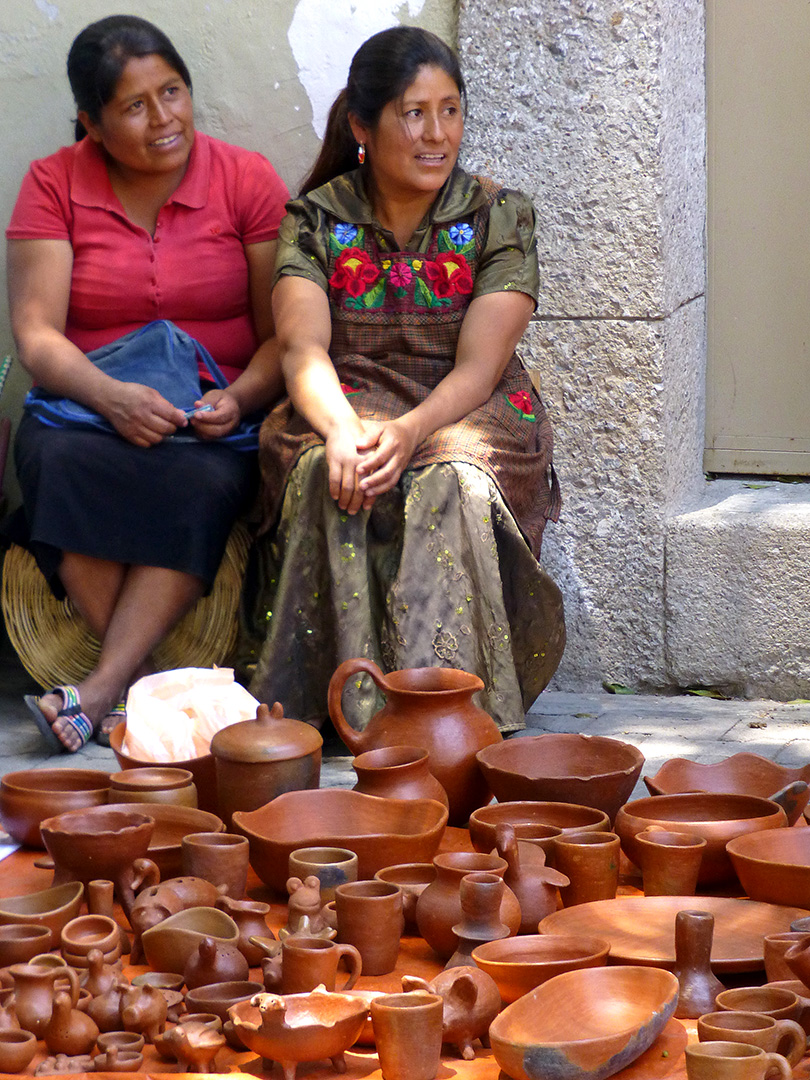
A few weeks ago, blogger buddy Chris and I returned to Tlacolula de Matamoros for the 5th annual Festival de la Nieve, Mezcal, Gastronomía. Besides yummy food, ice creams, and drink there were vendors of textiles, baskets, and barro.

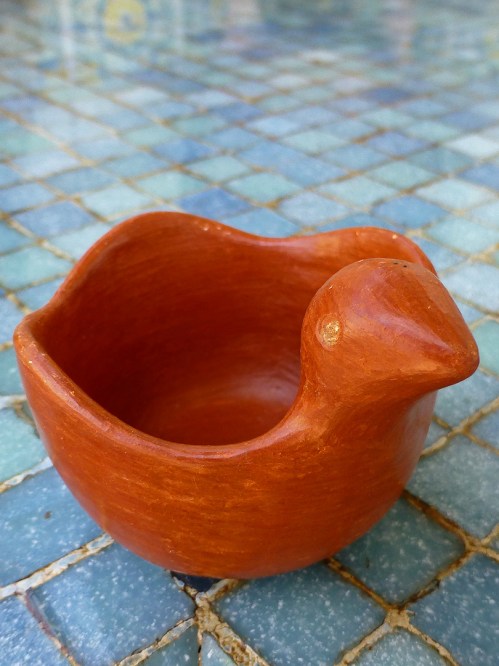
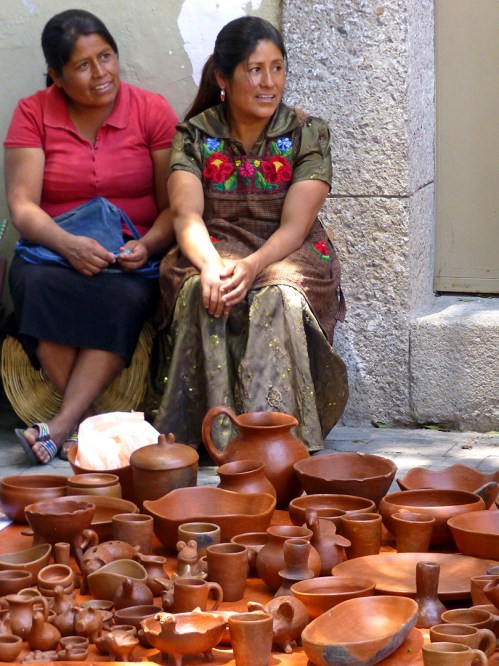
These are the women of San Marcos Tlapazola and their elegant and functional pottery. I already have several oft used pieces, including a comal. However, the girl in the red dress and blue apron above, talked me into a little salsa dish. How could I resist?
You can always find these women of red clay selling their wares on Sunday market day in Tlacolula and, if you are in the market for a comal, they stroll the aisles of the Mercado Benito Juárez in Oaxaca city almost everyday. That’s where I got mine!
And, if you want to see these gals in action, check out the video Mujeresdelbarrorojo.
Posted in Creativity, Culture, Markets, Travel & Tourism | Tagged barro, Festival de la Nieve Mezcal Gastronomía, Mexico, Oaxaca, photographs, photos, popular travel destinations, pottery, San Marcos Tlapazola, Tlacolula de Matamoros | 3 Comments »
As you know, I love the food of Oaxaca. However, having spent most of my life in the San Francisco Bay Area, home to cuisine from all over the world, there are times when the palate craves a little international flavor. So, I was delighted to finally try the Indian restaurant, Mini Taj, located in the Plaza Bugambilias building at Garcia Vigil 304, between Matamoros and M. Bravo.
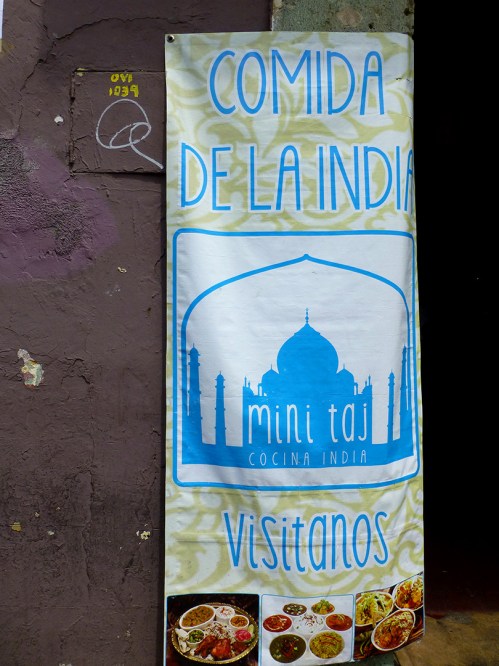
Opened in 2012 (yes, I’m late to the party), it is the delicious creation of Chef Ramesh Chawla. Originally from Haryana, India, he was born into a caste of chefs and has been cooking and refining his talents since he was twelve years old. Chef is very exacting in his flavors and travels to the USA every two months to personally source the herbs and spices needed for his recipes.
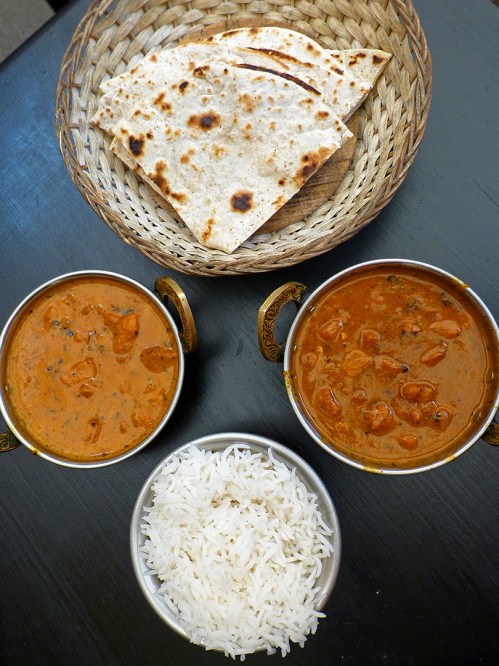
It is well worth it. The Chicken Tikka Masala that I had last week and the Lamb Korma and Lamb Rogan Josh that my amiga J and I shared today were all exquisite. The Steamed Basmati Rice and Naan were perfectly prepared and the Mango Lassi is one of the most refreshing beverages one could ever hope to drink. If you don’t believe me, check out the rave reviews on Trip Advisor. So get thee to Mini Taj and never mind the current road construction.

Mini Taj is open 11 AM to 10 PM, Monday through Sunday. Spread the word and, as their website says, “Be prepared to be blown away.”
Posted in Food, People, Restaurants, Travel & Tourism | Tagged Calle de Manuel Garcia Vigil, food, Indian restaurants, Mexico, Mini Taj, Oaxaca, photographs, photos, Ramesh Chawla, restaurants, road construction | 2 Comments »
How could I have missed three flowers on my night blooming cereus a few nights ago??? I don’t know, but I did. However, yesterday afternoon…

My opuntia microdasys surprised and delighted me!
Posted in Casita Colibrí, Flora, Gardens | Tagged cactus, flowers, garden, Mexico, Oaxaca, opuntia microdasys, photographs, photos | 2 Comments »
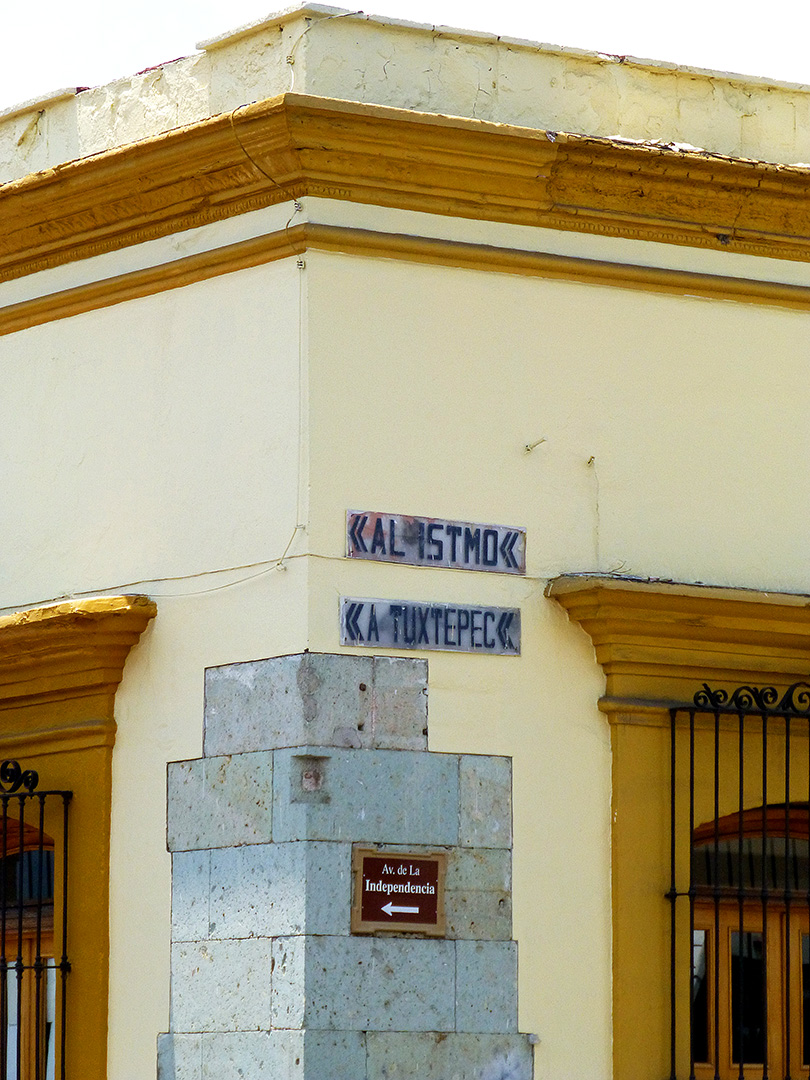
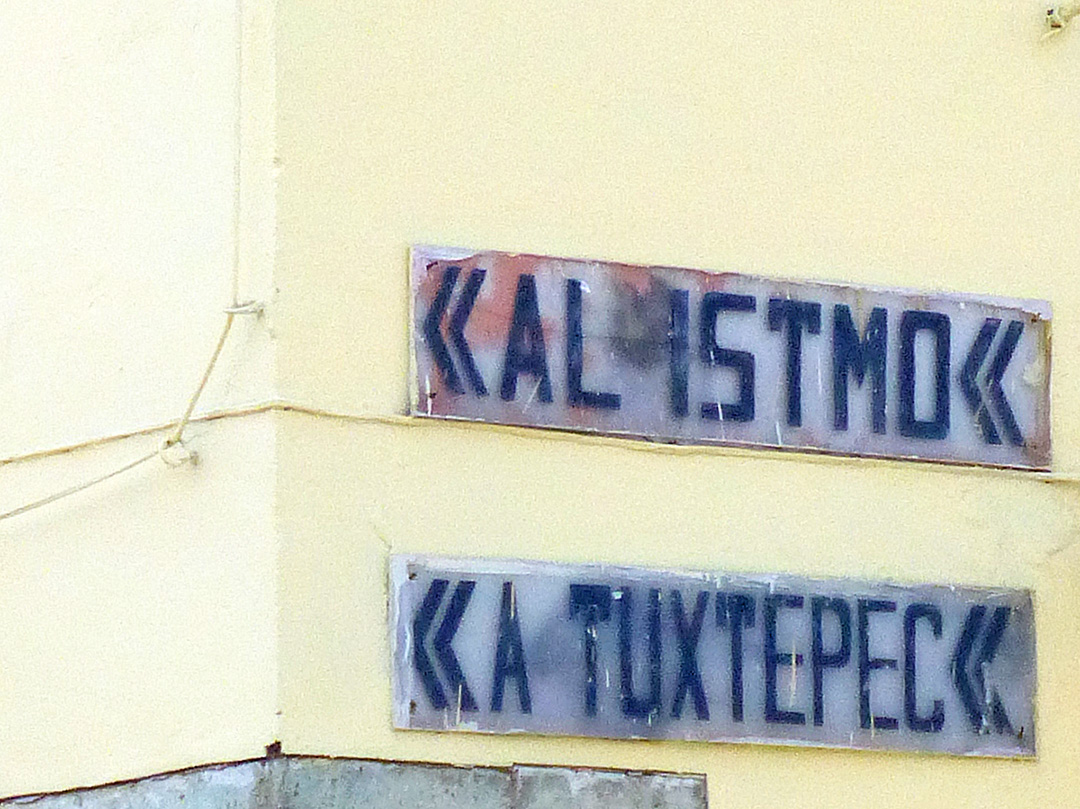
Everyday, I see something new or different or odd or… Yesterday, at the corner of Av. de La Independencía and Calle Xicoténcatl, a couple of unfamiliar signs caught my eye.
High up on the corner of a building, in the middle of the city, road signs pointing to the Istmo and Tuxtepec. Just a word of warning, you are in for a long and winding drive, no matter which destination you choose.

The Istmo de Tehuantepec region of the state is approximately 250 km southeast of the City of Oaxaca. Though if you decide on Tuxtepec, it’s only 220 km northeast. Either way, head east on Independencía. ¡Buen viaje!
Posted in Buildings, Geography, Signs, Travel & Tourism | Tagged Mexico, Oaxaca, photographs, photos, popular travel destinations, street signs | Leave a Comment »
Old school…

New school…

Art school…
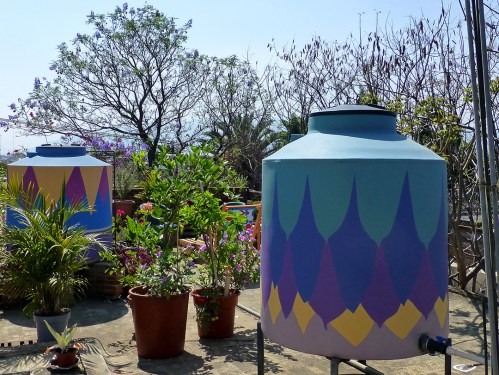
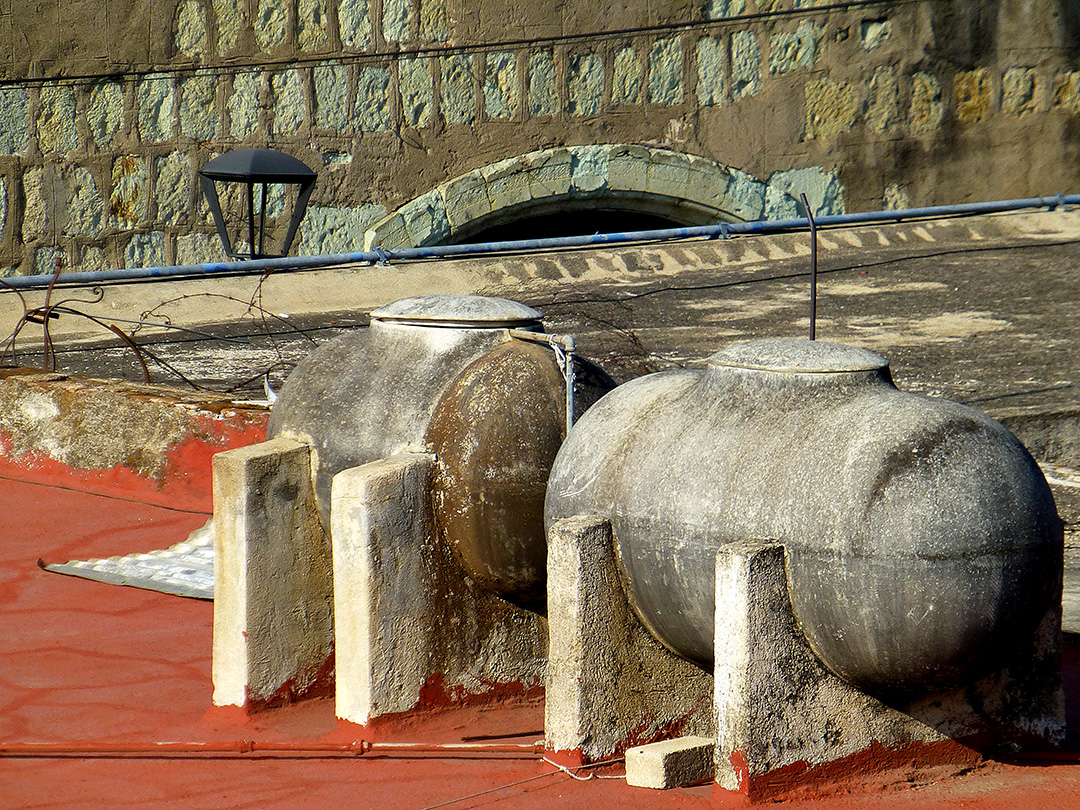
For those dying to know what the heck a tinaco is and how the water system in Mexico works:
At my apartment complex, municipal water is regularly (or, not so regularly — as the case may be) delivered though a pipe under the street into a cistern (storage tank) located under our driveway); a bomba (pump) is run daily for an hour (más o menos) to bring water from the cistern up into tinacos sitting on the various rooftops of the complex. In case you are worried, float valves keep them from overflowing (most of the time). When we turn on the tap, courtesy of gravity, water flows (or dribbles) from the tinaco into and through our faucets. ¡Ojala!
By the way, drinking water is a completely different story…
Posted in Buildings, Creativity, Environment, Gardens, Travel & Tourism | Tagged art, Mexico, Oaxaca, painted tanks, photographs, photos, popular travel destinations, tinaco, water delivery system | 8 Comments »
The poster announces, Lanii xh’tee búul (La fiesta de los abuelos) — the annual Festival of the Grandparents in Teotitlán del Valle that occurs five days immediately following Easter. Pre-Hispanic in origin, masked “ancients,” in ritualistic, lively, and hilarious fashion, impart their “wisdom” to the village leaders at a grand “Danza de los Abuelos” on the municipal plaza. (If only I could “get” the jokes!)
However, prior to each evening’s merriment, a home in one of the five sections of the village hosts a feast with enough food and drink to feed an army. And, like the world over…

…we know who are the behind-the-scenes heroes of fiestas like this.

It is the abuelas with their hands, hearts, and mouthwatering recipes (like the mole amarillo, above) handed down from their grandmothers.
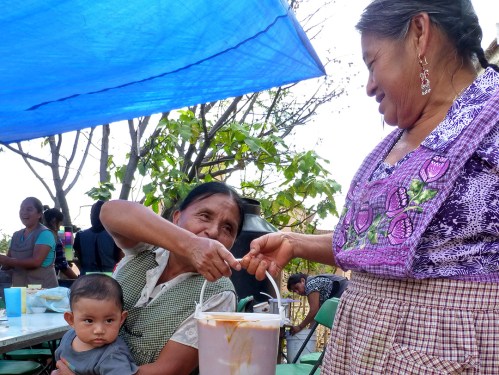
Even while bouncing nietos (grandchildren) on their knees, with good humor, grace, and their elaborately embroidered aprons, they make certain everyone is fed.

And, they keep a strict accounting of all that is spent!
Posted in Celebrations, Culture, Food, Travel & Tourism | Tagged abuelas, aprons, Carnaval, Carnival, fiestas, Mexico, mole amarillo, Oaxaca, photographs, photos, popular travel destinations, Teotitlán del Valle | 7 Comments »
Mosquito borne diseases like Dengue, Chikungunya, and Zika continue to plague the planet. Today’s good news is a Dengue vaccine proves 100% effective in human trials. Let’s hope so!
In the meantime, understand the life cycle of mosquitoes and follow the instructions on a wall in Tlacolula de Matamoros…
Wash, cover, turn over, and eliminate!
Posted in Creativity, Culture, Health, Signs, Travel & Tourism | Tagged Chikungunya, community education, Dengue, Dengue vaccine, education, health, Mexico, mosquitoes, Oaxaca, photographs, photos, wall art, Zika | Leave a Comment »
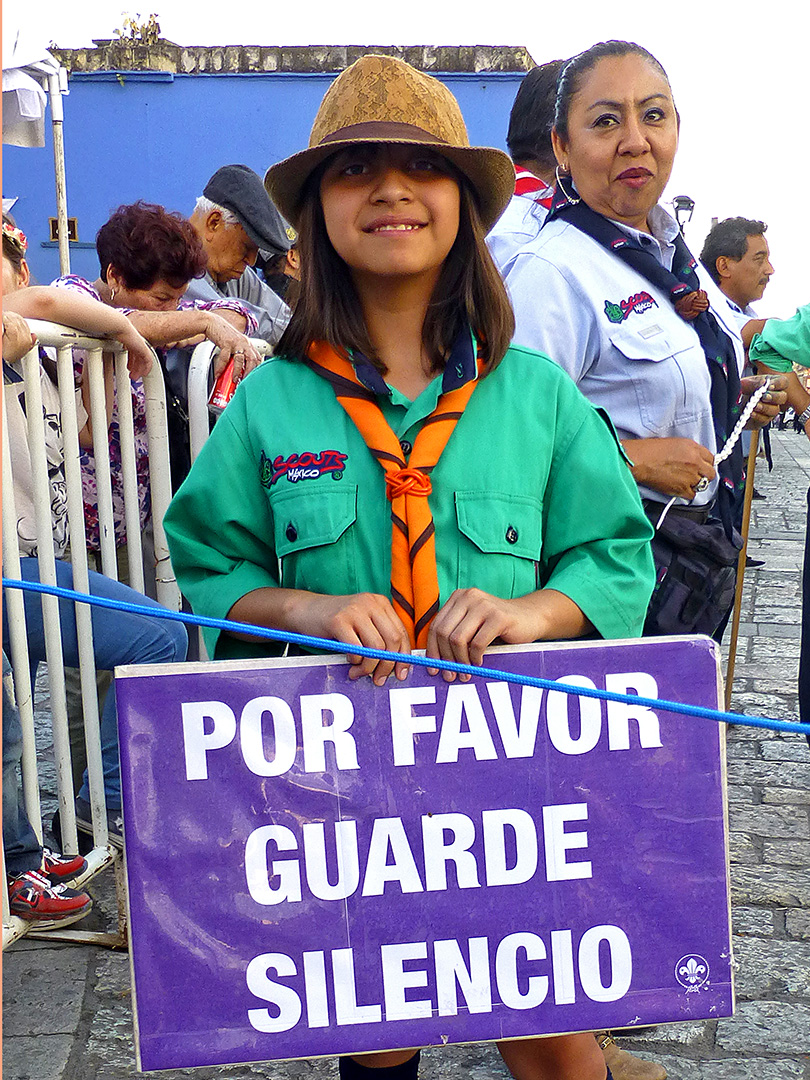
Late afternoon on Good Friday (Viernes Santo), the people began gathering along the sidewalks of the Andador Turístico (aka, the Alcalá), Allende, and Garcia Vigil, staking out a favored spot to watch the Procession of Silence. Not to worry, the Girl and Boy Scouts were there to keep everything and everybody in order and to remind one and all to “please, keep silent.”

And, lest you misbehave, there were a couple of drones hovering above the fray to record the action, both good and bad, and offering an interesting juxtaposition against Templo de Santo Domingo de Guzmán’s colonial architecture — the old and new of Oaxaca.
Daylight Savings Time hasn’t yet begun in Mexico and the setting sun offered dramatic light as Señor de La Columna emerged from Santo Domingo to take his place in the procession.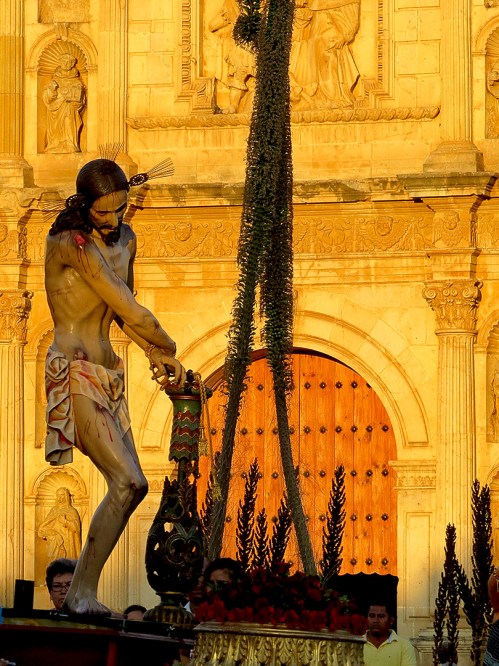
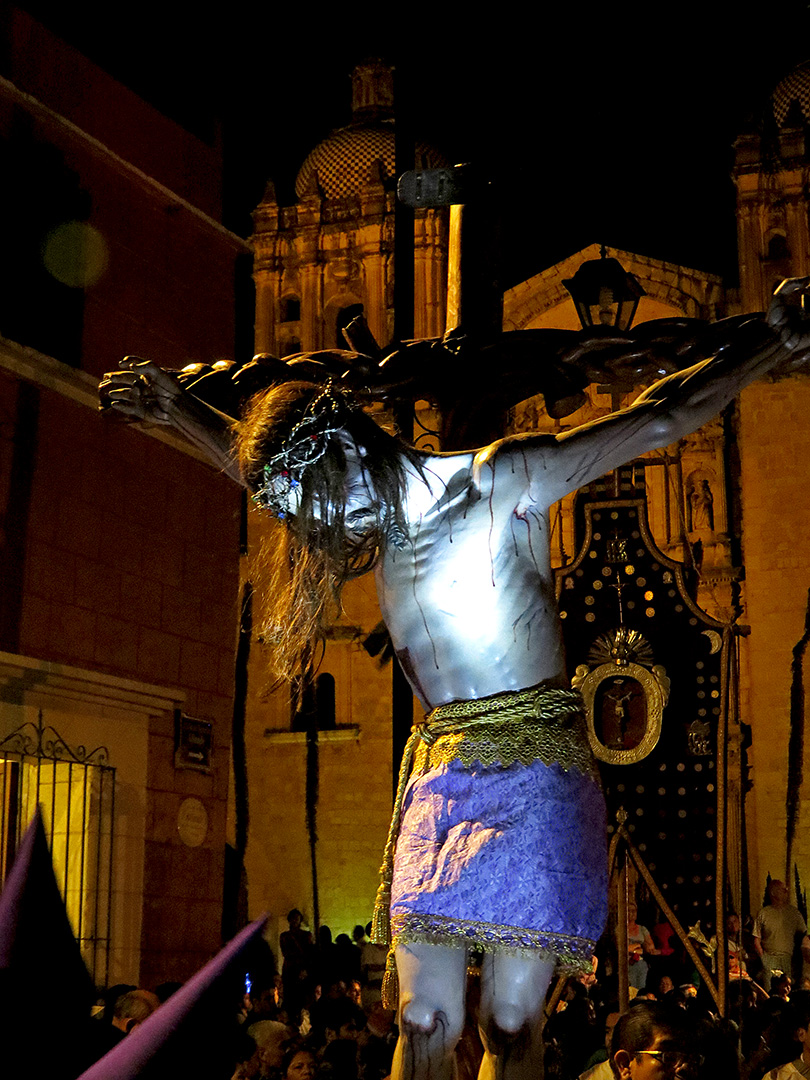
However, the light was fading fast as the high-pitched tones of the chirimía and the rhythmic beat of the tambor at last heralded the start of the procession and Señor de la Humildad y Paciencia made his way from Templo de la Preciosa Sangre de Cristo.
As darkness fell, the street lights proved challenging and my photos of the 50+ religious banners, as they slowly passed my vantage point on Allende, left a lot to be desired, except for this littlest of standard bearers.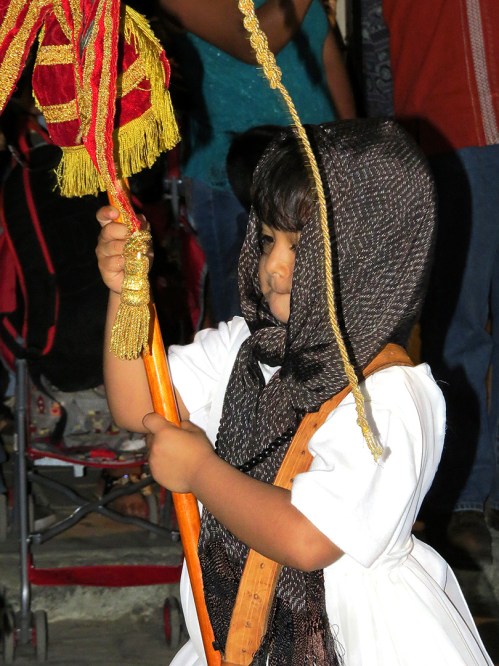
This year the faces of Jesús and María seemed to be lit from underneath and that helped a bit.
However, perhaps the darkness was whispering to me to stop making photos and just “be” with the experience.
This was the thirtieth year of Oaxaca’s Procesión del Silencio and so I suspect there will many more to come.
Posted in Celebrations, Churches, Culture, Holidays, Religion, Travel & Tourism | Tagged Easter, Girl Scouts, girls, Good Friday, Holy Week, Mexico, Oaxaca, Pascuas, photographs, photos, Procesión del Silencio, Procession of Silence, Religious standard bearer, Santo Domingo de Guzmán, Señor de La Columna, Señor de la Humildad y Paciencia, Viernes Santo | 8 Comments »
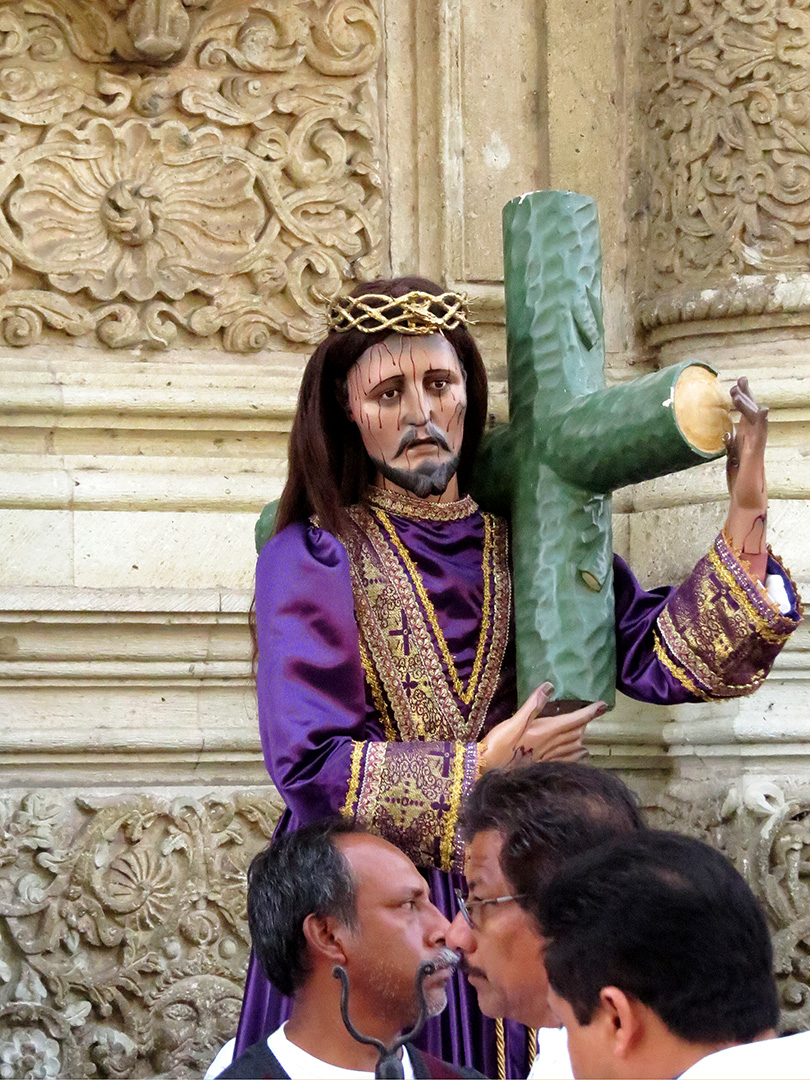
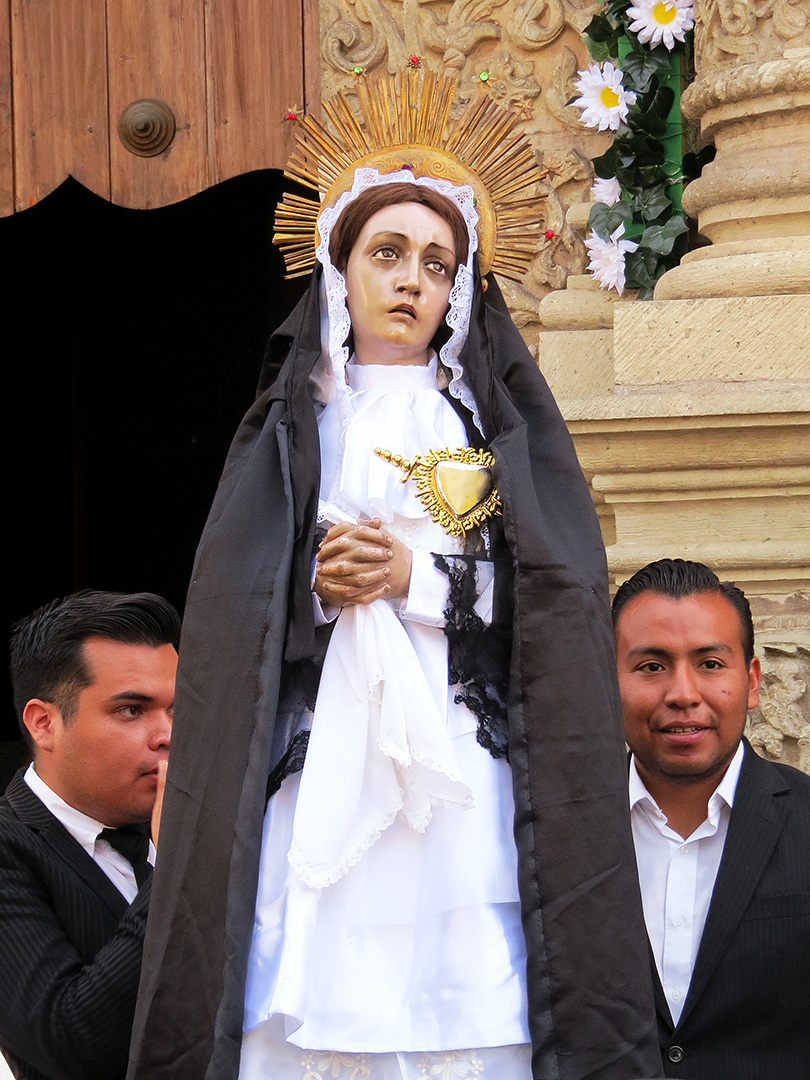
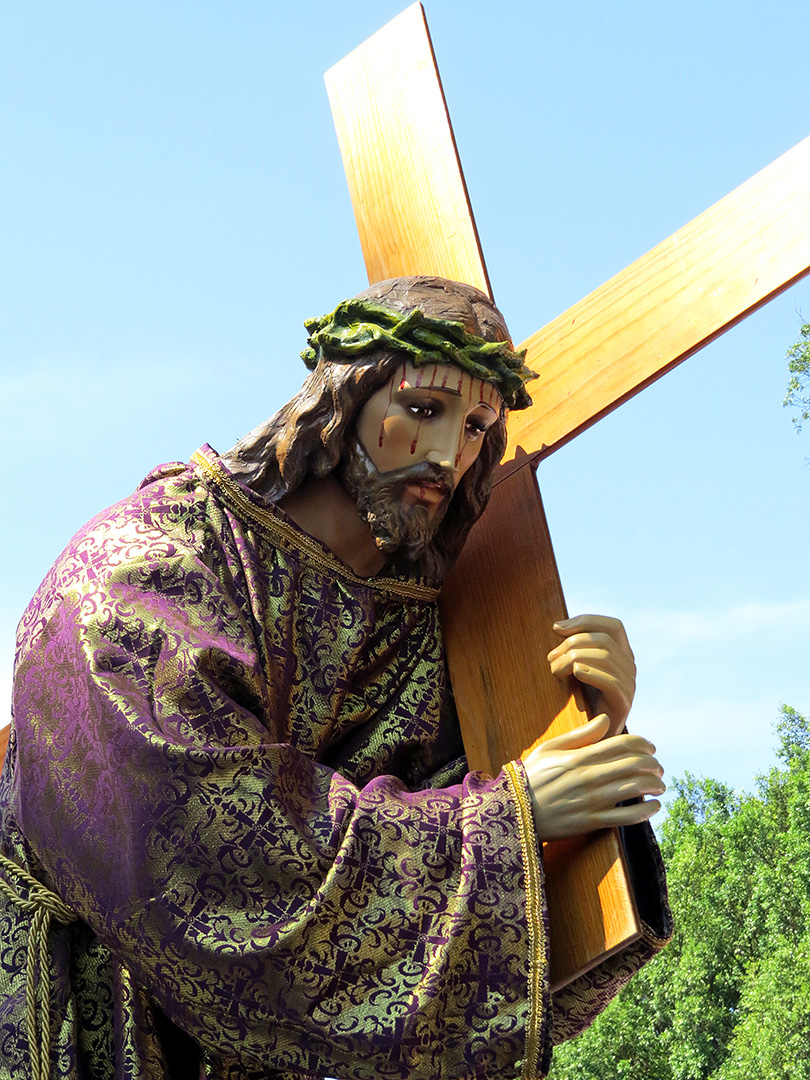
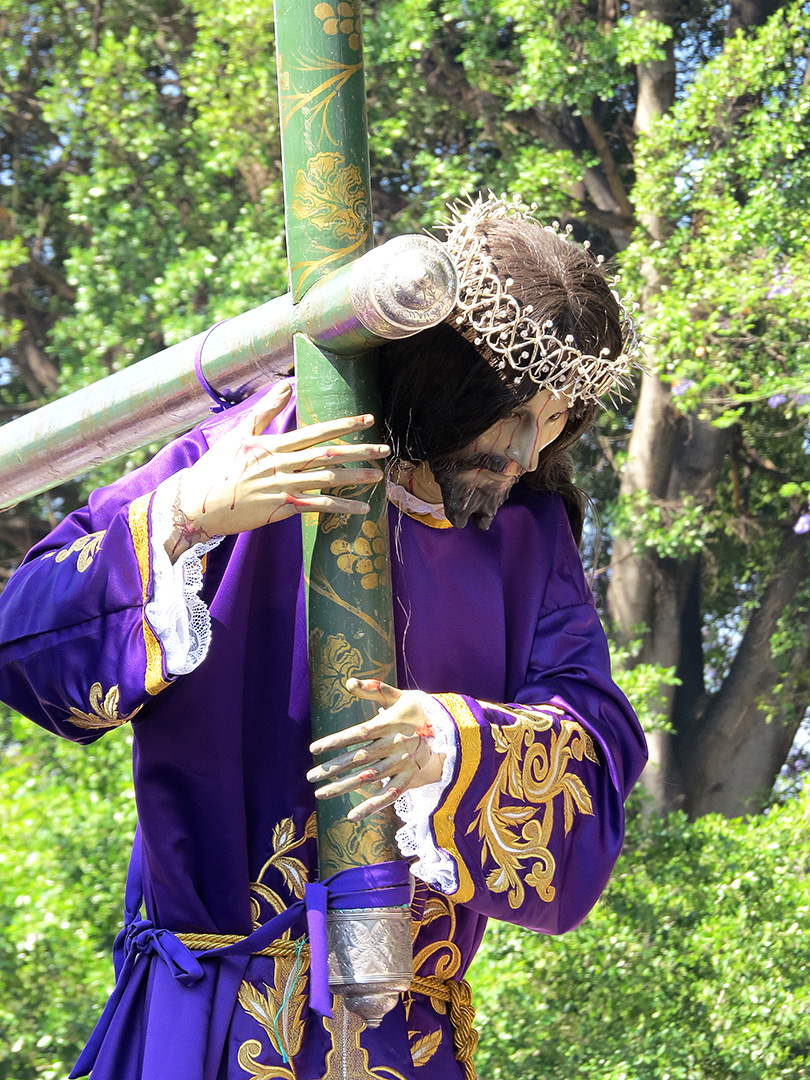
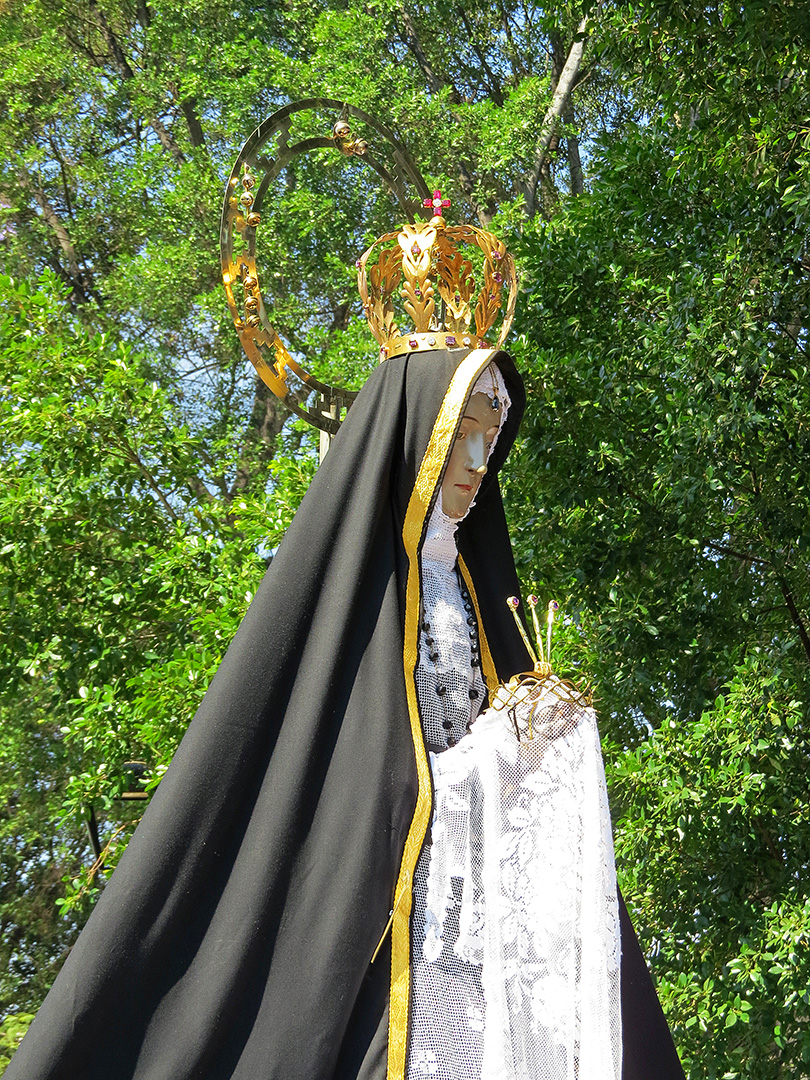
Jesus and Mary up close and in color from their Viernes Santo (Good Friday) morning meeting in front of Oaxaca’s Cathedral.

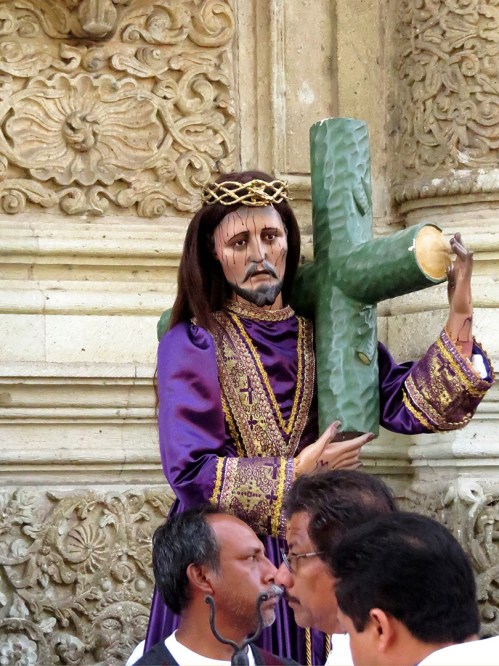


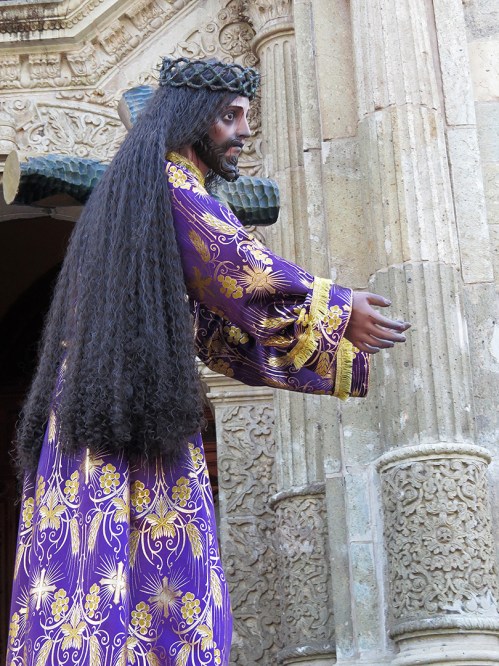

I know, some photos just beg for a caption. Once all the Marys and Jesuses had gathered, prayers had been recited, and rituals performed, they all processed back to their home churches to rest up for the evening’s Procession of Silence.


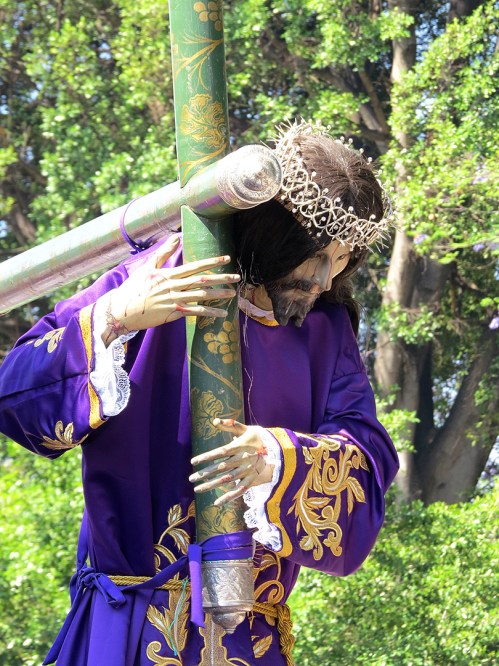
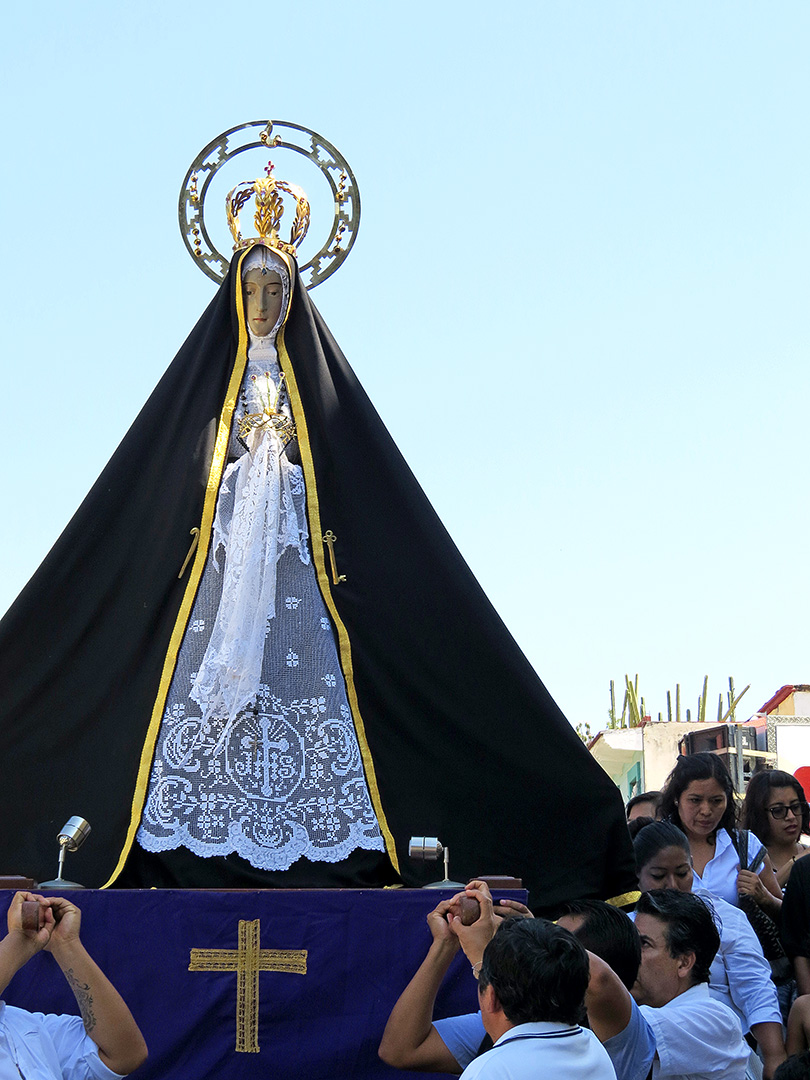
… including Soledad. Since she was going my way, I walked her home.
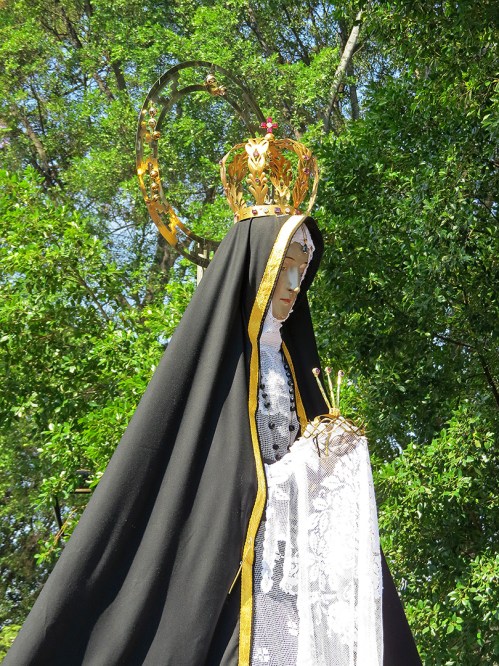


And, yes, she made it back to the Basilica safe and sound.
Posted in Celebrations, Churches, Culture, Holidays, Religion, Travel & Tourism | Tagged Basilica de la Soledad, Christianity, Easter, Good Friday, Holy Week, Jesus, Mexico, Oaxaca, photographs, photos, popular travel destinations, portraits, Semana Santa, Viernes Santo, Virgen de La Soledad, Virgin Mary | Leave a Comment »
« Newer Posts - Older Posts »
























 Mexican Peso Converter

 View From Casita Colibrí