November 20, 2016 by spixl
It was early evening last Monday, all my bags were packed and I was ready to go, when the the sounds of a parade began getting closer and closer. I grabbed the little Lumix and headed into the streets.

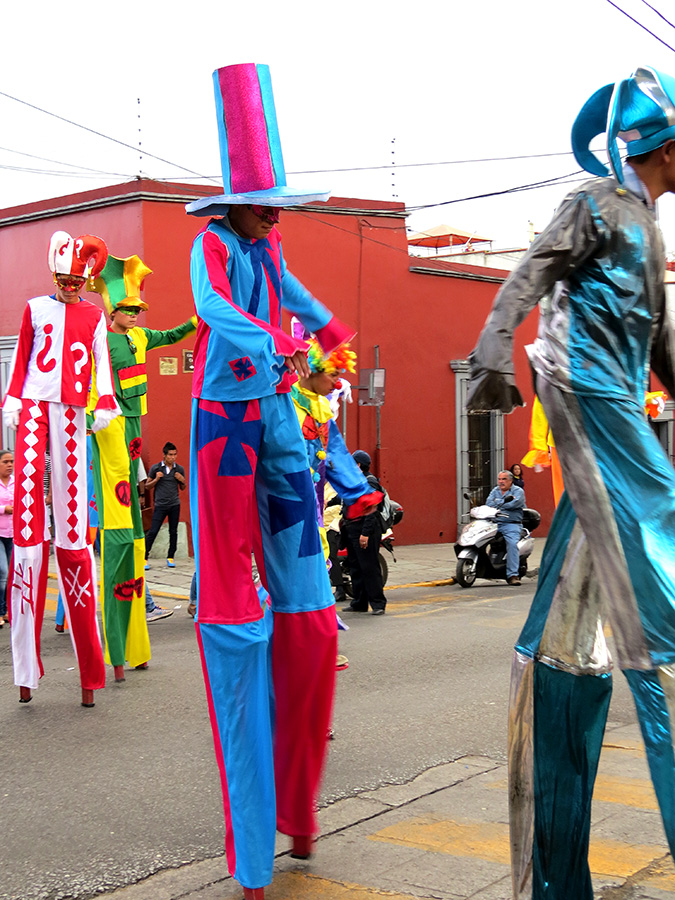
Zancudos, not autos, on Av. Morelos
Yikes, Zancudos had taken over the street.

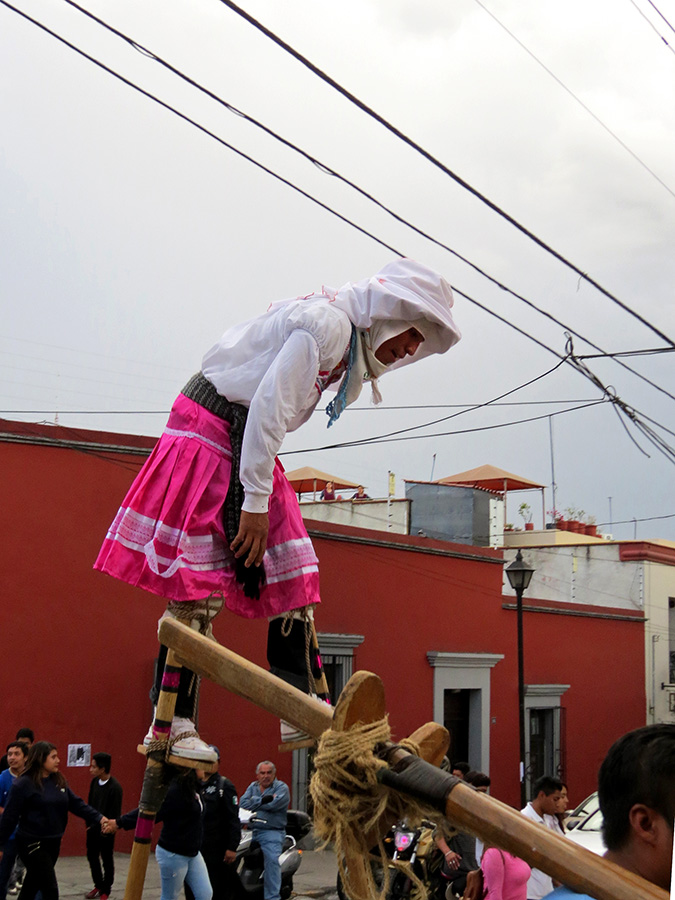
Low bridge!
As you can see, we are not talking about mosquitoes; these Zancudos are stilt walkers.

Approaching the Plaza de la Danza
The two contingents of Zancudos were part of a calenda kicking off UABJO (Universidad Autónoma Benito Juárez de Oaxaca), Semana Cultural, Deportiva y Científica (Culture, Sport, and Science Week).

About to tackle the stairs
The five-day program of events included competitions in singing, chess, oratory, and science experiments; film and theater presentations; along with zumba, self defense, and aerobics demonstrations.
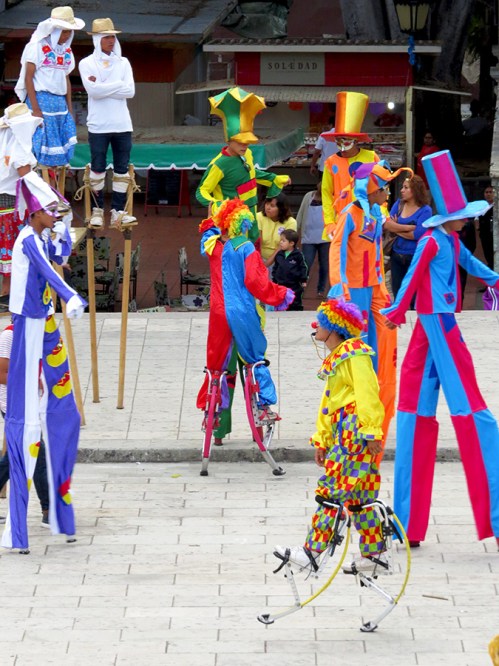
Dancing and prancing on the Plaza de la Danza
Reason #980 why I love Oaxaca: You just never know when a calenda will break out!

Rest time, after walking and dancing their way through the streets
It was a great memory to carry with me, as I boarded the plane the next morning en route to el norte.
Posted in Celebrations, Creativity, Culture, Education, Travel & Tourism | Tagged Mexico, Oaxaca, photographs, photos, Semana Cultural, Deportiva y Científica, stilt walkers, UABJO, Universidad Autónoma Benito Juárez de Oaxaca, Zancudos | 6 Comments »
November 17, 2016 by spixl
The US election results had come in and, with mixed feelings, I was preparing for a trip up into the belly of the beast, to visit family. A mural seen shortly before I left, on the wall of contemporary art space La Curtiduria on 5 de mayo in Jalatlaco, seemed to speak to me.
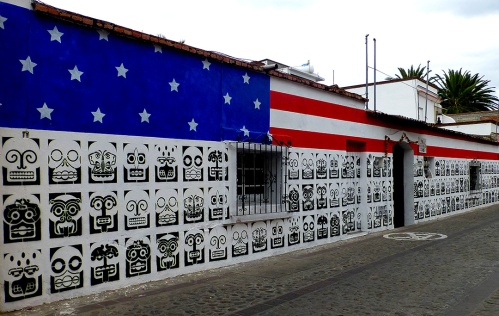
Today, after hearing of the death of Mose Allison, another musical great I had the privilege of seeing in person several times, I’m thinking the wall could very well have been singing…
Your Mind Is On Vacation
by Mose Allison
You’re sitting there yakkin’ right in my face
I guess I’m gonna have to put you in your place
Y’know if silence was golden
You couldn’t raise a dime
Because your mind is on vacation and your mouth is
Working overtime
You’re quoting figures, you’re dropping names
You’re telling stories about the dames
You’re always laughin’ when things ain’t funny
You try to sound like you’re big money
If talk was criminal, you’d lead a life of crime
Because your mind is on vacation and your mouth is
Working overtime
You know that life is short and talk is cheap
Don’t be making promises that you can’t keep
If you don’t like the song I’m singing, just grin and
Bear it
All I can say is if the shoe fits wear it
If you must keep talking please try to make it rhyme
‘Cause your mind is on vacation and your mouth is working
Overtime
Posted in Creativity, Culture, Travel & Tourism | Tagged Barrio de Jalatlaco, Mexico, Mose Allison, mural, Oaxaca, photographs, photos, street art, urban art, wall art, Your Mind Is On Vacation lyrics | 2 Comments »
November 14, 2016 by spixl
After the wretched week that was (RIP Leonard Cohen and Leon Russell, not to mention the USA elections), reviewing my Día de Muerto photos from Teotitlán del Valle was the ideal tonic.
On November 1, as I previously mentioned, after strolling and sitting and contemplating and conversing our way through the panteón in Tlacolula de Matamoros, we drove to the home of friends, Zacarias Ruiz and Emilia Gonzalez, in Teotitlán. Arriving at 3:00 PM, we were just in time to join the family and other guests, as Zac gave words of welcome to the difuntos, who had also just made their appearance.

Our pan de muerto and mezcal joined the other offerings on the altar to provide nourishment to the departed while we, the living, sat down at the long table for a little cervesa, mezcal, and more than a few of the 500+ tamales Emilia had made. After lots of eating and conversation, we walked across the courtyard to give our regards to Antonio Ruiz (weaver of one of my treasured rugs), wife Claudia, and their children (the beautiful Beatriz and her lively brothers, Diego and Antonito), and to see Antonio’s new showroom (Chris has a photo in his Familia blog post) and their altar.

Invited to return to the Ruiz home the following day for Emilia’s famous mole negro, we also stopped at the village panteón to listen for the wind that signals the departure of the difuntos at 3:00 PM on November 2.

We also stopped to pay our respects at the grave of Arnulfo Mendoza, though it took a little searching to find it, as the large tree that stood next to it had fallen, leaving only a stump.

Both days, the drive back to the city was filled with the warmth, peace, and joy that Teotitlán del Valle always seems to impart.

Under the strong and comforting gaze of Picacho, who could ask for a better resting place.
Save
Posted in Celebrations, Culture, Holidays, Travel & Tourism | Tagged altars, cemetery, Día de los Muertos, Día de Muerto, El Picacho, flowers, graves, Mexico, Oaxaca, ofrenda, photographs, photos, Teotitlán del Valle | 4 Comments »
November 11, 2016 by spixl
The view from Casita Colibrí after the election in el norte…

What are you looking at?
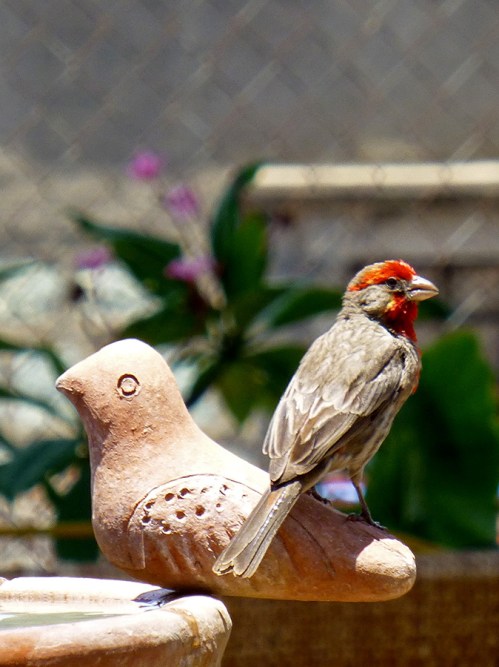
Not liking what I’m seeing.
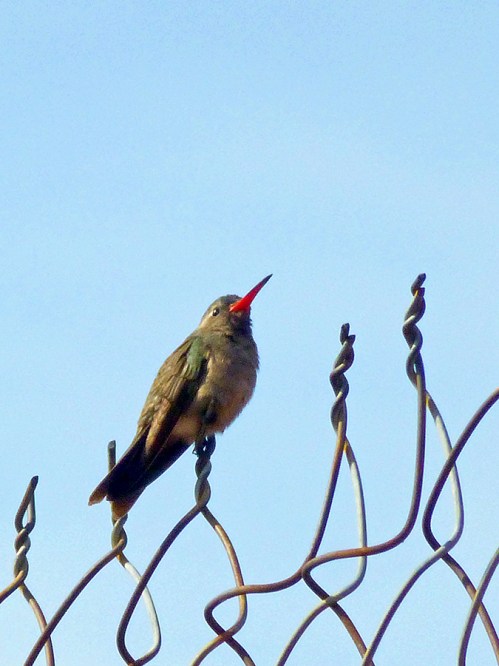
Contemplating the future…
Bird On The Wire
by Leonard Cohen
Like a bird on the wire,
like a drunk in a midnight choir
I have tried in my way to be free.
Like a worm on a hook,
like a knight from some old fashioned book
I have saved all my ribbons for thee.
If I, if I have been unkind,
I hope that you can just let it go by.
If I, if I have been untrue
I hope you know it was never to you.
Like a baby, stillborn,
like a beast with his horn
I have torn everyone who reached out for me.
But I swear by this song
and by all that I have done wrong
I will make it all up to thee.
I saw a beggar leaning on his wooden crutch,
he said to me, “You must not ask for so much.”
And a pretty woman leaning in her darkened door,
she cried to me, “Hey, why not ask for more?”
Oh like a bird on the wire,
like a drunk in a midnight choir
I have tried in my way to be free.
Rest in peace, Leonard Cohen. Thank you for your poetry, your music, your voice, and your grace.
Posted in Animals, Casita Colibrí, Gardens, Music | Tagged birds, Leonard Cohen, Mexico, Oaxaca, photographs, photos | 4 Comments »
November 7, 2016 by spixl
The dead don’t arrive in the valley of Oaxaca all at once. The cosmic difunto air traffic controller has scheduled their arrival at different times on different days, from October 31 through November 3, to avoid celestial congestion.
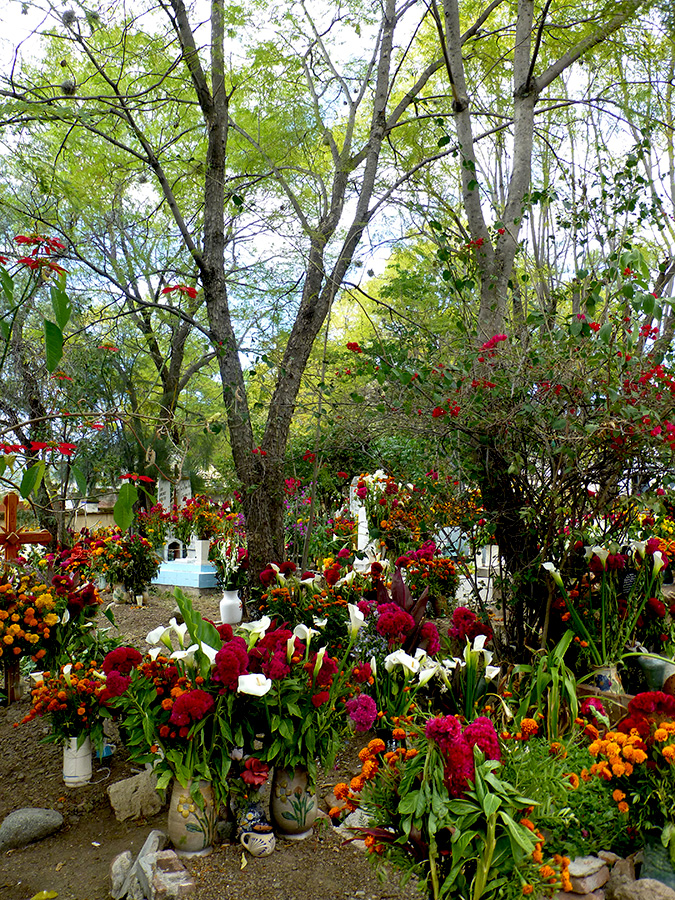
Santa María Atzompa’s departed are among the first to return, arriving on the night of October 31. Flower and food vendors line the walkway leading to the panteón as grandparents, parents, teens, and small children stream in with arms full of flowers, candles, buckets, and brooms. Because is built on a slope and there are almost no paths, footing can be treacherous, especially in the dark when only candles on the graves light the way. At one time, perhaps tombs were positioned on a grid, but no more and it seems to be filled to capacity. I guess that’s why one side of the panteón has been opened up (one of the walls removed), the field beyond leveled, and a new wall around the field, connected to the old, constructed. (You can click on images for a larger view.)
On November 1, in the early afternoon, it has become our custom to visit the cemetery in Tlacolula de Matamoros, before bringing pan de muerto and mezcal to the home of friends in Teotitlán del Valle. In contrast to the higgledy-piggledy of Atzompa, the panteón in Tlacolula emanates a sense of order and serenity. I wonder, could the tranquility come from the 500 year old ahuehuete trees (hijos of el Tule, we were told) that reign over the tombs of the departed and make for an amazing play of light and shadow throughout?
On November 2, we returned to Teotitlán, but I will save that for another blog post. However, that was not the end of the road. In the category of, no rest for the living, the following day we drove south to San Antonino Castillo Velasco. This is the village known for their beautiful flowers and exquisite floral embroidery. And, it is said that because the living are so busy providing flowers to other parts of the valley, the departed wait until November 3 to return. (See the book, Day of the Dead: When Two Worlds Meet in Oaxaca by Shawn D. Haley and Curt Fukuda.) I’m sure, like we, the difuntos are dazzled by the intricacy of floral designs that family members have created to decorate their tombs in welcome.
Octavio Paz writes in The Labyrinth of Solitude, “Life extended into death, and vice-versa. Death was not the natural end of life but one phase of an infinite cycle.”
Posted in Celebrations, Creativity, Culture, Travel & Tourism | Tagged cemetery, Día de los Muertos, Día de Muerto, flowers, graves, Mexico, music, Oaxaca, Octavio Paz quote, panteón, photographs, photos, San Antonino Castillo Velasco, Santa María Atzompa, Tlacolula de Matamoros, tombs | 9 Comments »
November 4, 2016 by spixl
A pause in the Día de Muertos coverage for breaking news!!!
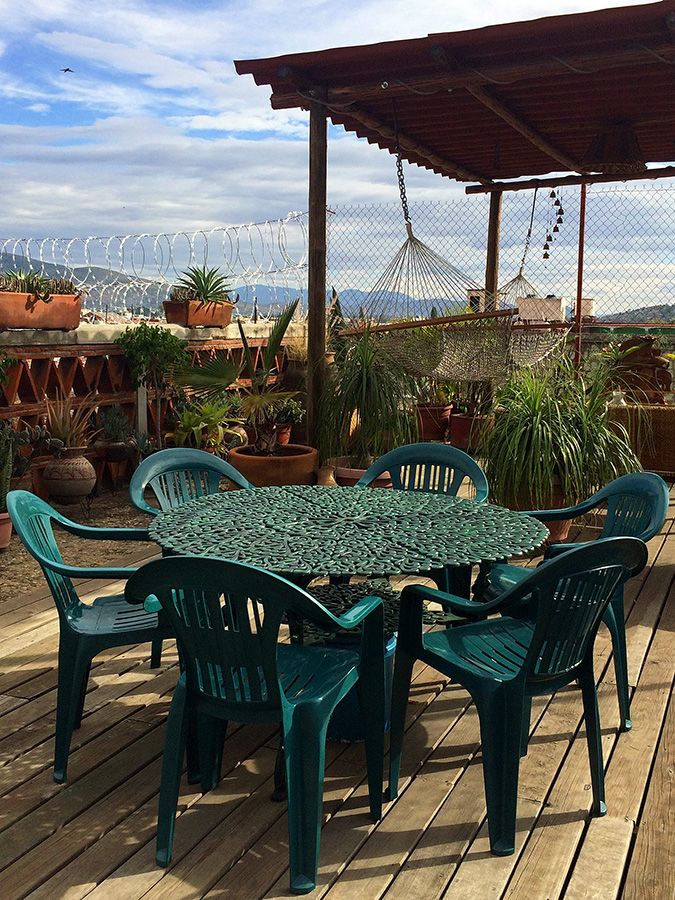
A few months ago, I replaced the small lightweight plastic table, that came with my apartment, with a larger dark green/black wrought iron one. A couple of weeks ago, I exchanged the faded blue umbrella for a dark green one. However, blue plastic chairs continued to surround the table — dark green chairs remained elusive, until today. All was now color-coordinated perfection.

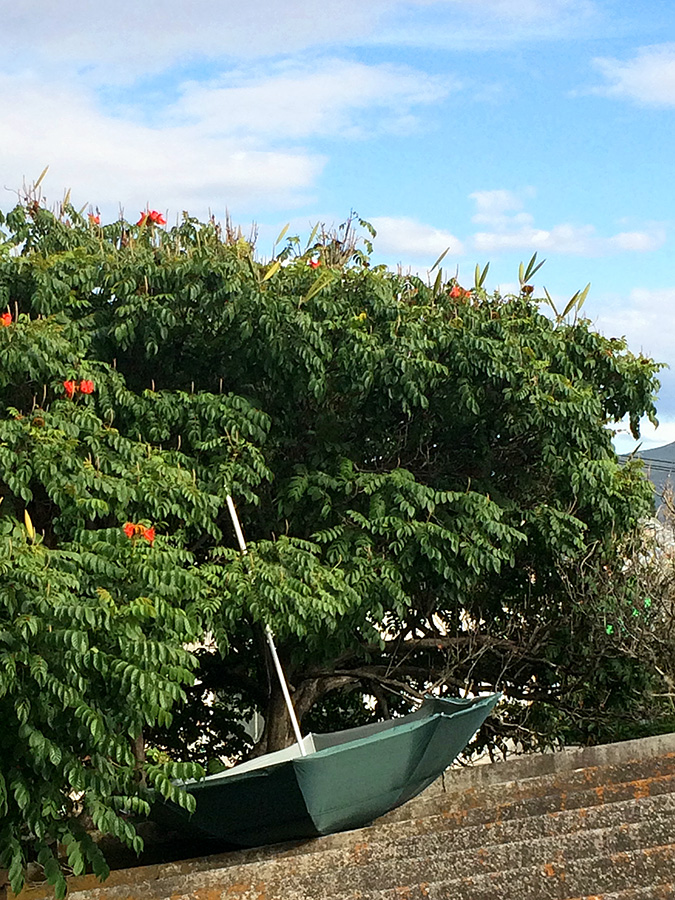
Then, late this afternoon the winds came, the umbrella took flight, and disappeared

Up, up, and away over the terrace it sailed, landing on the rooftop of the apartment compound bodega. Thank goodness it didn’t leave the property!

However, there is good news — with the aid of an extension ladder, long pole, and another gust of wind, my neighbor D freed it from the tree limb and its new rooftop perch. Intact, it slowly glided down to the driveway. It is now back, standing in the center of the table — albeit collapsed and fastened with a bungee cord. Great minds are working on ways to better secure it.
Posted in Gardens | Tagged Mexico, Oaxaca, photographs, photos, table and chairs, terrace, umbrella, wind | Leave a Comment »
November 1, 2016 by spixl
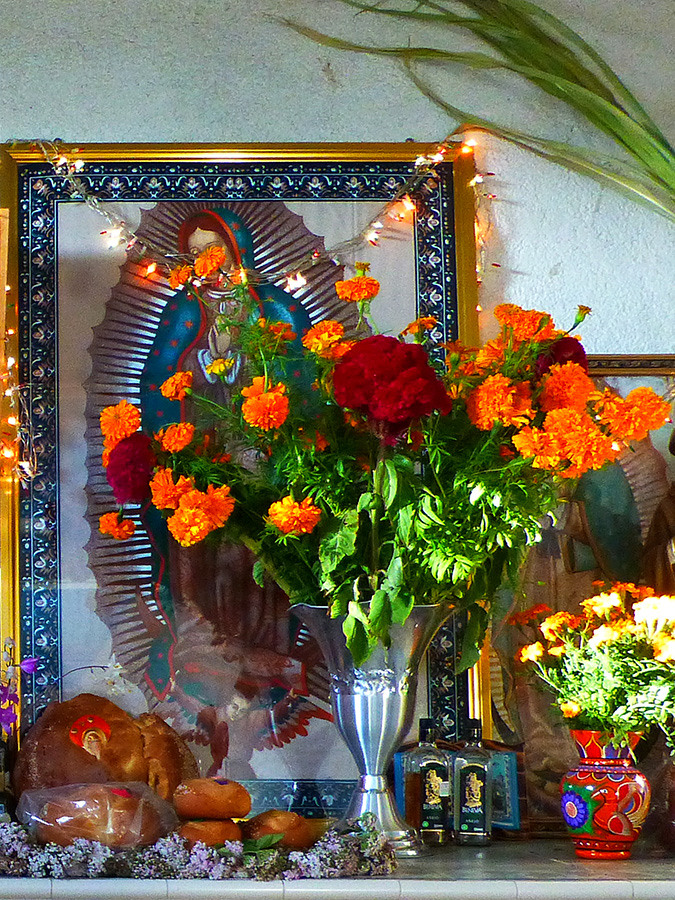
Poco a poco (little by little) my ofrenda has been constructed and composed. A yellow (the color of death in prehispanic southern Mexico) cloth covers two chests and papel picado, signifying the union between life and death, has been added.

Photos of departed loved ones have been placed, along with apples, oranges, and nuts to nourish the difuntos, sal to make sure the souls stay pure, cempasúchitl and veruche (domesticated and wild marigolds) — their scent to guide the spirits, cockscomb to symbolize mourning, the previously mentioned flor de muerto from the mountains above Díaz Ordaz, and copal incense to draw the spirits home and ward off evil.
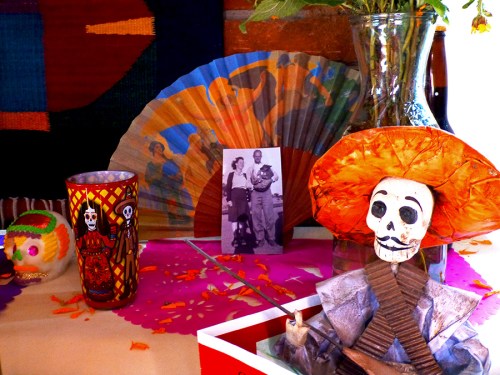
Sugar skulls, catrinas, and a few of the favorite things of my parents, grandparents, and in-laws have also been added. Lest the spirits become thirsty, there is water, mezcal, cervesa, and a bottle of port (for my mom) to drink.

Last night, the candles and copal incense were lit to guide my loved ones to my Oaxaca home and, just to make sure, I sprinkled some cempasúchitl petals outside to help them find their way.
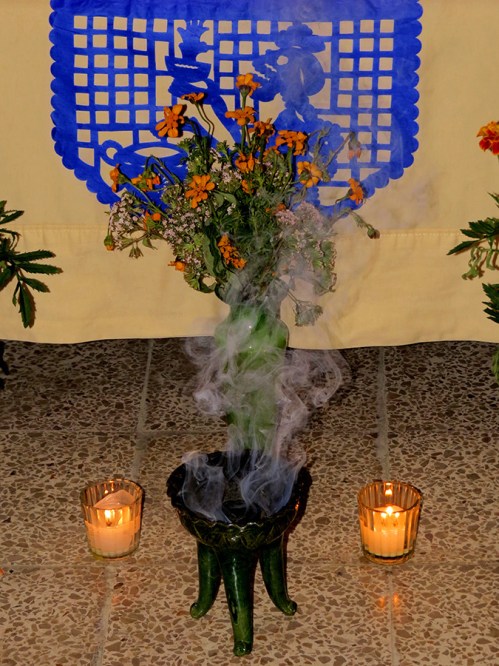
It may not be the house where they lived, but I’m hoping they too believe, When you live in your heart, you are always home.
Posted in Casita Colibrí, Celebrations, Creativity, Culture, Travel & Tourism | Tagged Catrinas, Día de los Muertos, Día de Muertos, fruit, incense, Mexico, Oaxaca, ofrenda, papel picado, photographs, photos | 8 Comments »
November 1, 2016 by spixl
October 30, 2016, around and about the valley of Oaxaca, preparations were underway for Día de Muertos. Bread, fruit, chocolate, nuts, and flowers for sale spilled from mercados into the streets; the difuntos must be fed… and only the best!
Our first stop was Villa Díaz Ordaz for their first Expo Festival del Pan de Muerto. It was day two of the 3-day festival and, of course, we were there early (around noon), but everyone was so warm and welcoming. Hopefully, it will continue to grow in future years, as this is a sweet village in a picturesque setting at the base of the mountains.

In Díaz Ordaz, they call these tiny, spicy-scented, lavender flowers “flor de muerto” and we were informed that they are even more important than cempasuchil (marigolds).

After buying some surprisingly flavorful (whole grain!) pan de muerto for my ofrenda, we headed off to San Pablo Villa de Mitla. Mitla has the most beautiful pan de muerto and two years ago we stumbled on their Pan de Muertos festival and competition. A dazzling display of intricately decorated breads lined the sidewalks under the portales. Alas, the festival was not continued, as their bread is in such demand, the bakers were too busy to take time out for an expo and competition. So, like last year, we just enjoyed the sights and aromas of their bustling mercado.

Have you ever seen so many varieties of bananas??? And, now for the famous pan de muertos…

Returning home, I added the bread and flor de muerto to my ofrenda. Following a siesta, I ventured out into the streets of the city in search of a comparsa. I never found it, but, as you could see from my previous post, the city was teeming with people and activity. However, amid the merriment and mayhem, there were scenes of tranquility.
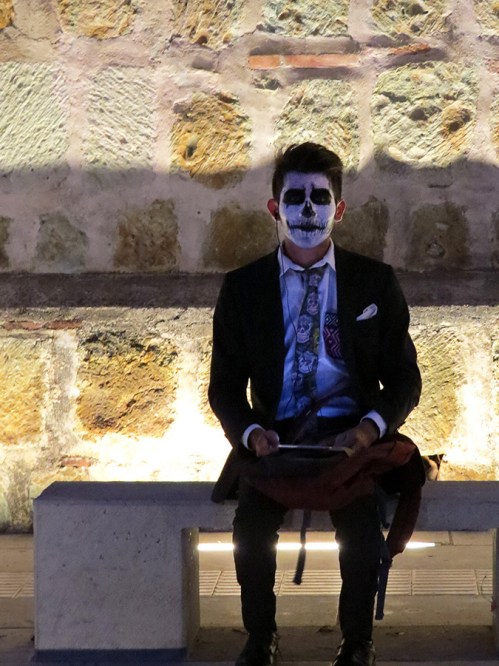
A catrin ejecutivo?

The copal incense beckoned the difuntos… They began arriving this morning, seconds after midnight.
Save
Save
Save
Posted in Celebrations, Creativity, Culture, Food, Travel & Tourism | Tagged catrin, day of the dead bread, Día de Muertos, flor de muerto, fruit, incense, Mexico, Oaxaca, pan de muerto, photographs, photos, popular travel destinations, San Pablo Villa de Mitla, Villa Díaz Ordaz | 3 Comments »
October 30, 2016 by spixl
Beautiful Oaxaca tonight on Macedonio Alcalá…

In the words of the song, “Oaxaca vives en mí” (Oaxaca, you live in me).
Posted in Celebrations, Culture, Travel & Tourism | Tagged Calle Macedonio Alcalá, colored lighting, crowds, Día de Muertos, Mexico, Oaxaca, photographs, photos | 1 Comment »
October 29, 2016 by spixl
Celebrations in Oaxaca surrounding Día de Muertos are beginning. This past week, we, members of the Mexico Travel Photography Facebook group, were issued a 5-day “Day of the Dead” photo challenge by moderator, Norma Schafer. There are always so many favorite images from so many events that I never get around to posting, so this was my opportunity. My five…
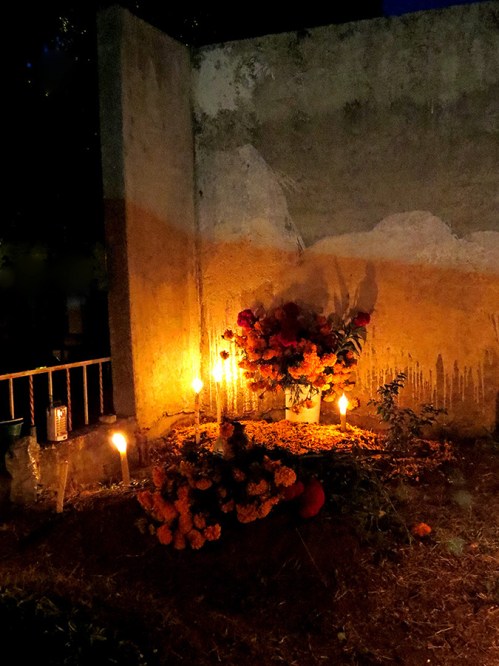
Panteón, Santa María Atzompa, Oaxaca on Oct. 31, 2015

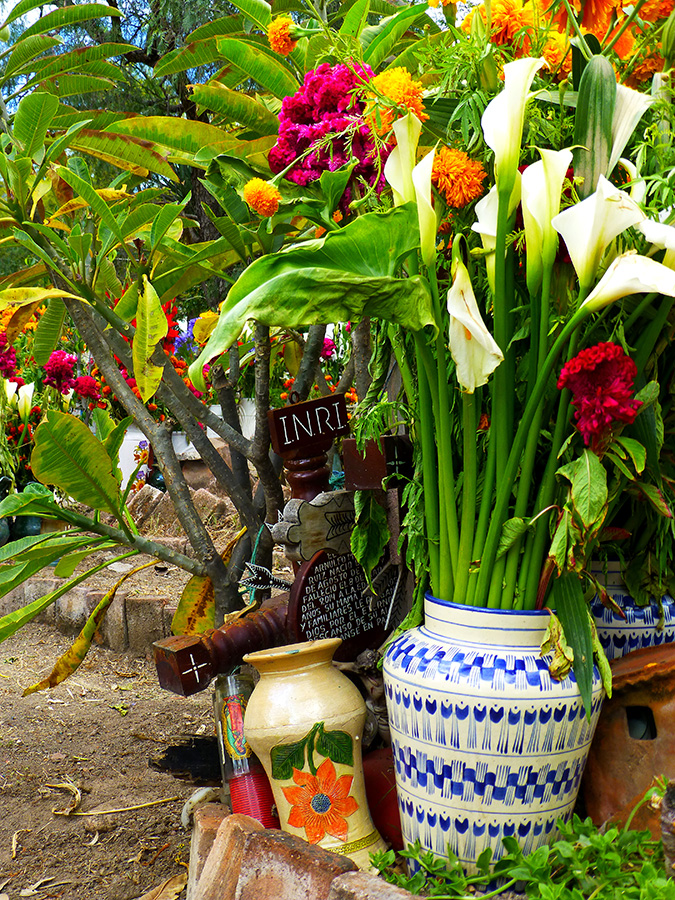
Offering on tomb in Panteón Municipal de Tlacolula de Matamoros, Oaxaca on Nov. 1, 2015

Muerteada, morning after the night before, Nov. 2, 2014, San Agustín Etla, Oaxaca

Sun sets on Santa María Atzompa panteón, Oct. 31, 2014

On the Alcalá in Oaxaca City, Oct. 31, 2014
And, five more, just because…
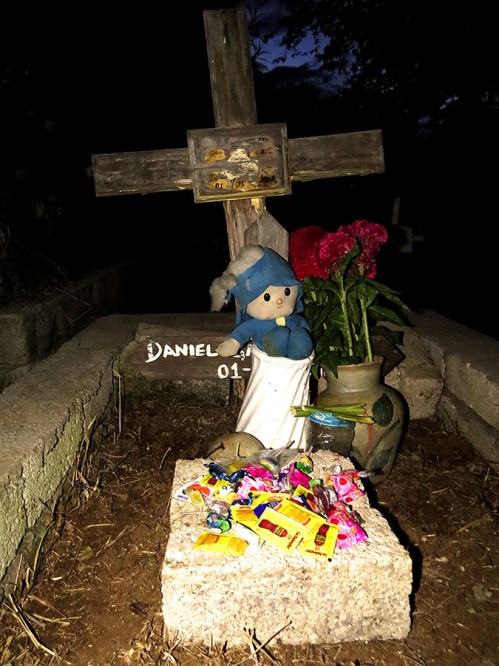
Santa María Atzompa, Oct. 31, 2015

San Pablo Villa de Mitla, ofrenda with pan de muertos, Nov. 1, 2014
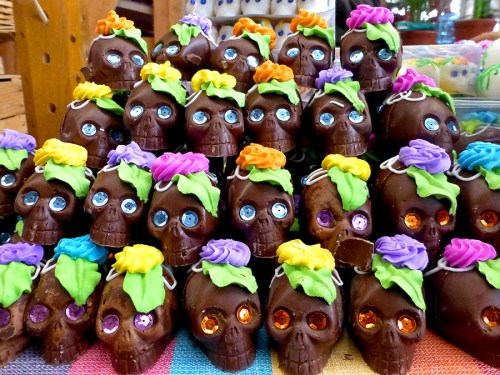
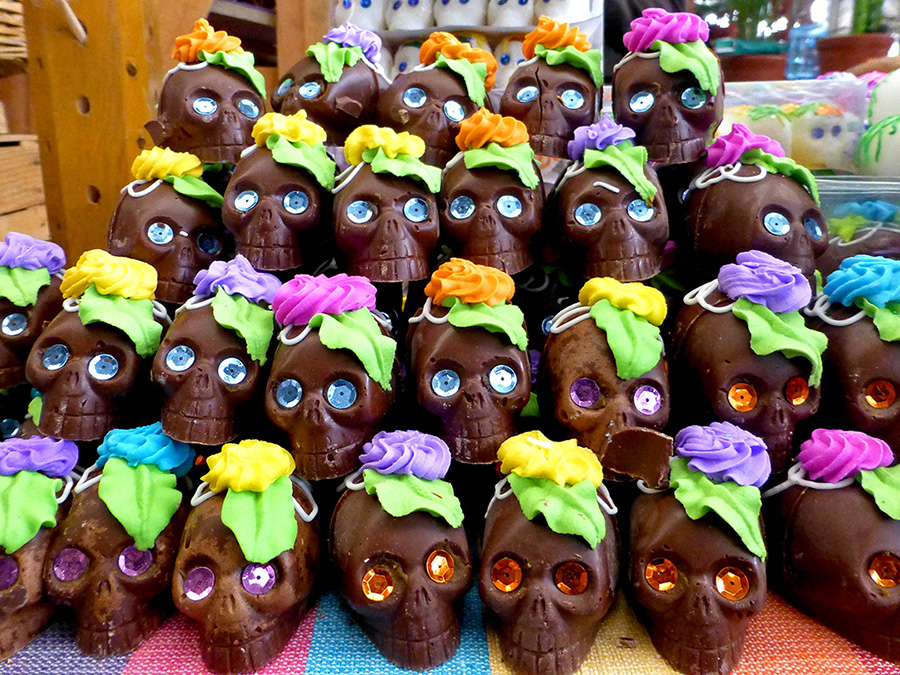
Chocolate calaveras at Villa de Etla, Oct. 31, 2014
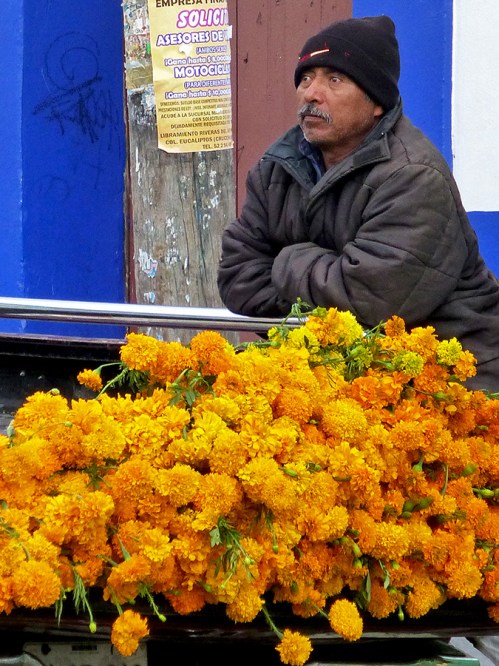
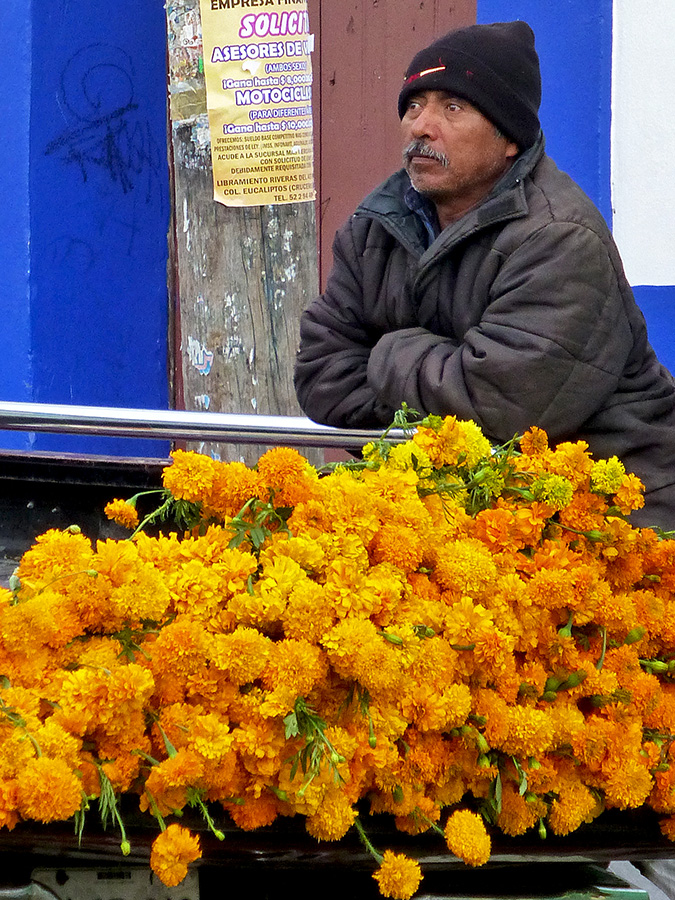
Cempasuchil (marigold) vendor at Villa de Etla, Oct. 31, 2014

Casa de las Artesanías de Oaxaca, Oct. 31, 2015
That’s all folks, for now. Stay tuned for more to come from this year.
Posted in Creativity, Culture, Holidays, Travel & Tourism | Tagged cempasuchitl, chocolate skulls, Day of the Dead, Día de los Muertos, marigolds, Mexico, muerteada, Oaxaca, pan de muerto, panteón, photographs, photos, popular travel destinations, Santa María Atzompa, skeletons | 6 Comments »
October 27, 2016 by spixl
Before I become completely immersed in the myriad of activities related to and surrounding Day of the Dead, I want to write a post about Porfirio Gutiérrez Contreras, another of the talented and creative weavers from Teotitlán del Valle I have come to know.
I first met Porfirio via my blog and we soon became Facebook friends. However, we didn’t actually meet in person until last November’s, Feria Exposición Maestros del Arte in Chapala, Jalisco. I made a beeline for his booth and introduced myself to him and his sister, Juana Gutiérrez Contreras. Porfirio’s recognition and warmth made me feel truly welcome — like we were long-lost friends.

Juana Gutiérrez Contreras, grinding anil (indigo). She cleans wool, spins yarn, gathers herbs, master of natural dyes

Porfirio Gutiérrez, with paddles of nopal cactus housing cochineal from which the dye carmine is derived. He designs, weaves, promotes, educates, demonstrates

Skeins of hand-spun and naturally dyed yarn at the Porfirio Gutiérrez y Familia workshop.
While, as you can see from the video, The Weaver From The Place of Gods, Porfirio is soft-spoken, he is exceedingly passionate about his Zapotec heritage and the preservation of the textile traditions of his village. His knowledge, talent, and dedication led him to be one of four native artists to be chosen to participate in last year’s, Artist Leadership Program sponsored by the Smithsonian Institution’s National Museum of the American Indian.

Vat of the natural dyestuff, bejuco (dodder).

Plants used to produce natural dyes.

Vat of the natural dye, cochinilla (cochineal).
A key component of the Smithsonian program was, following their residency, each artist was charged with returning to their community to share their knowledge, with the goal of preserving the wisdom and techniques refined and handed down from their ancestors. I had the privilege of attending the awarding of certificates and exposition that concluded the 9-day workshop, given in Teotitlán by Porfirio and Juana. The exposition was entitled El Ritual de los Sueños and took as its inspiration the traditional fiber mat, known as the petate. It is on the petate where babies are delivered, dreams occur, and in which bodies are wrapped before being placed their grave.

“When preparing food and drinks, reverence is made before the metate.”

Image of Porfirio and Juana’s parents as they kneel to receive the blessing on their wedding day.

“With the joy or grief of each ritual, life is shared with food as well as the sharing of experiences; to perform such an act the woman sits on the mat.”
The family’s studio is located at Calle Simon Bolivar #6, Teotitlán del Valle and I can assure you, visitors will be warmly welcomed. And, who knows, you may come away with beautiful new, naturally dyed, hand-loomed treasure.
I already have a place on the wall reserved for one of Porfirio’s distinctly designed tapetes and am now saving my pesos.
Posted in Creativity, Culture, Exhibitions, People, Textiles, Travel & Tourism | Tagged El Ritual de los Sueños, exhibitions, Juana Gutiérrez Contreras, Mexico, natural dyes, Oaxaca, photographs, photos, Porfirio Gutiérrez Contreras, rugs, tapetes, Teotitlán del Valle | 9 Comments »
October 23, 2016 by spixl
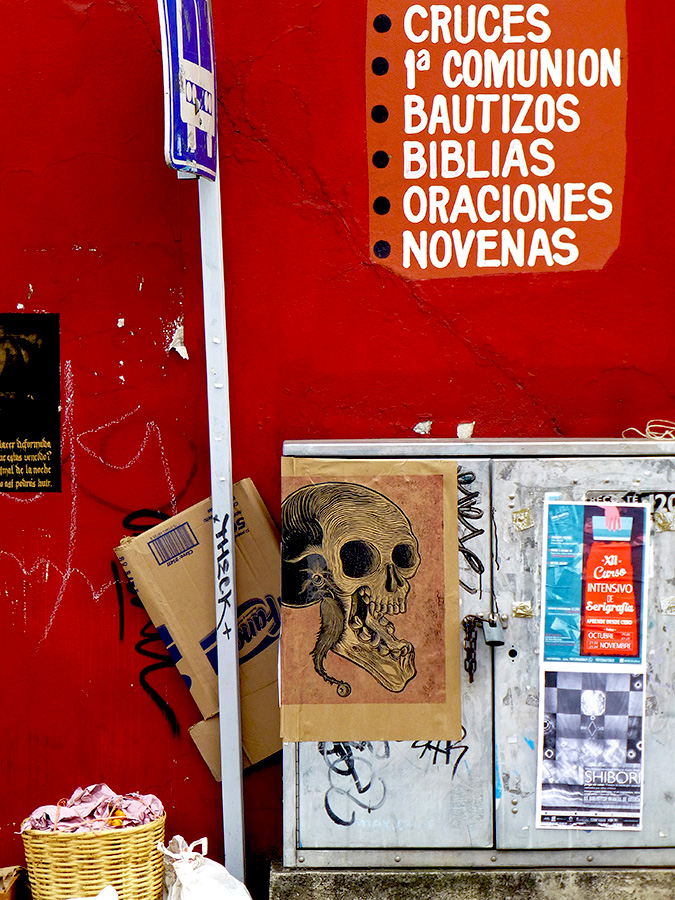
Yesterday, a sidewalk still life seen walking home from the market…
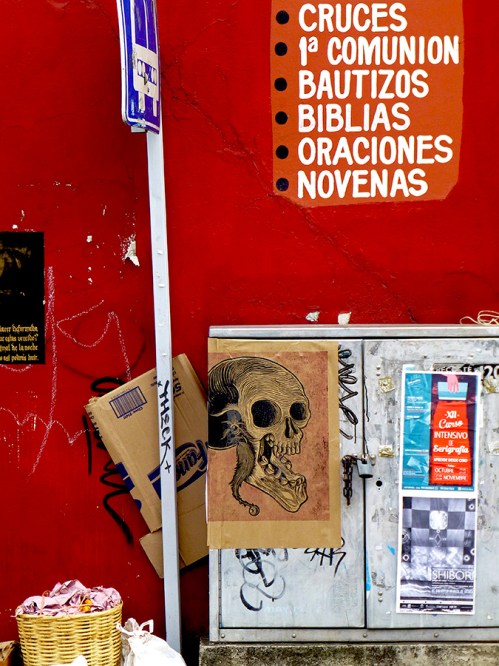
We are travelers on a cosmic journey, stardust, swirling and dancing in the eddies and whirlpools of infinity. Life is eternal. We have stopped for a moment to encounter each other, to meet, to love, to share. This is a precious moment. It is a little parenthesis in eternity. — Paulo Coelho
Save
Save
Posted in Creativity, Culture, Religion, Travel & Tourism | Tagged calaveras, Mexico, Oaxaca, Paulo Coelho quote, photographs, photos, posters, skulls | Leave a Comment »
October 21, 2016 by spixl
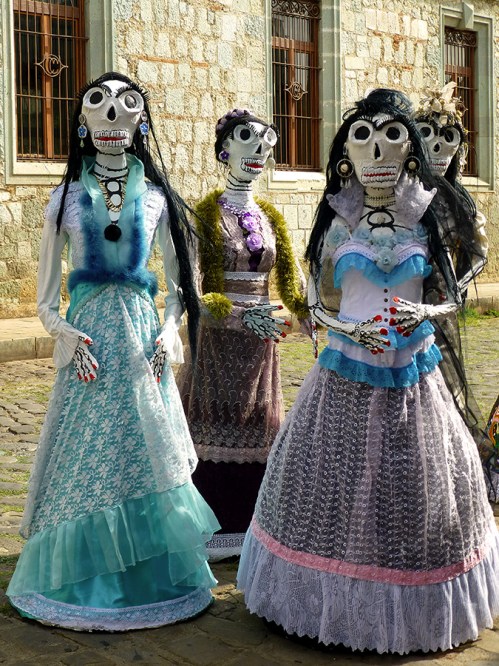
Dressed in their best festival finery…
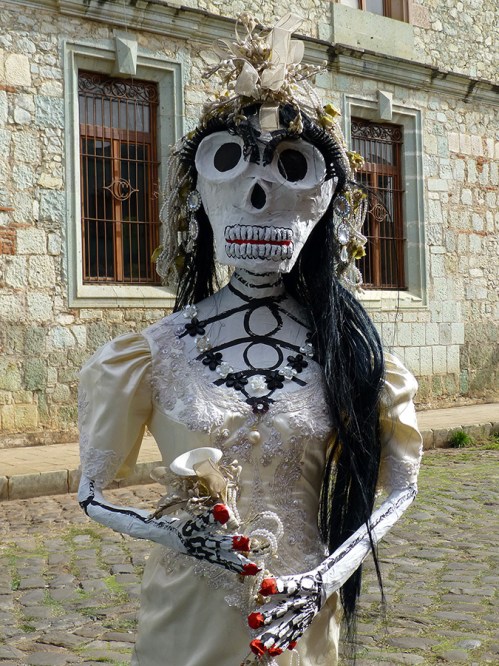
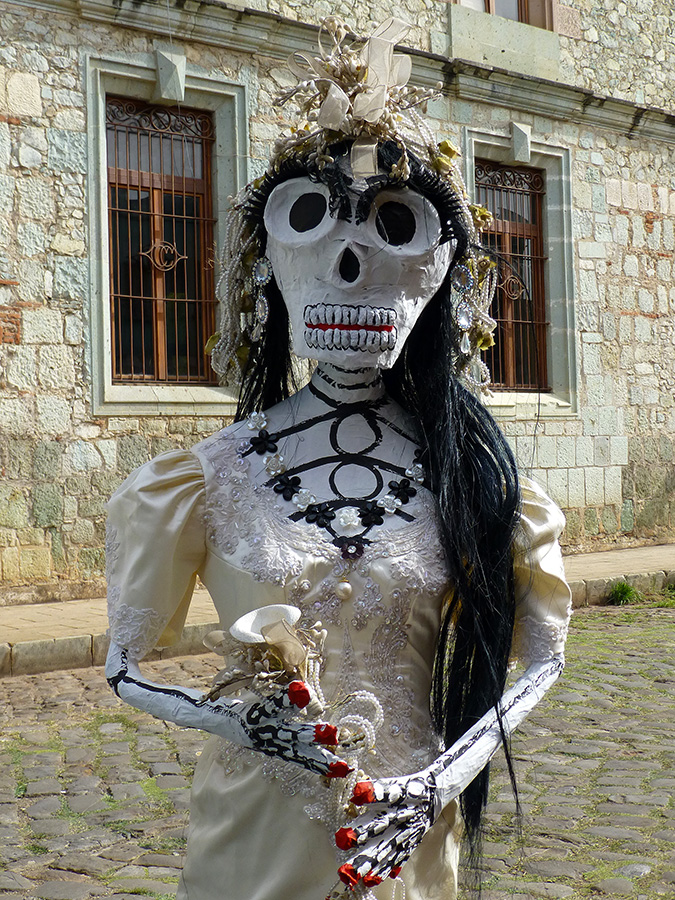
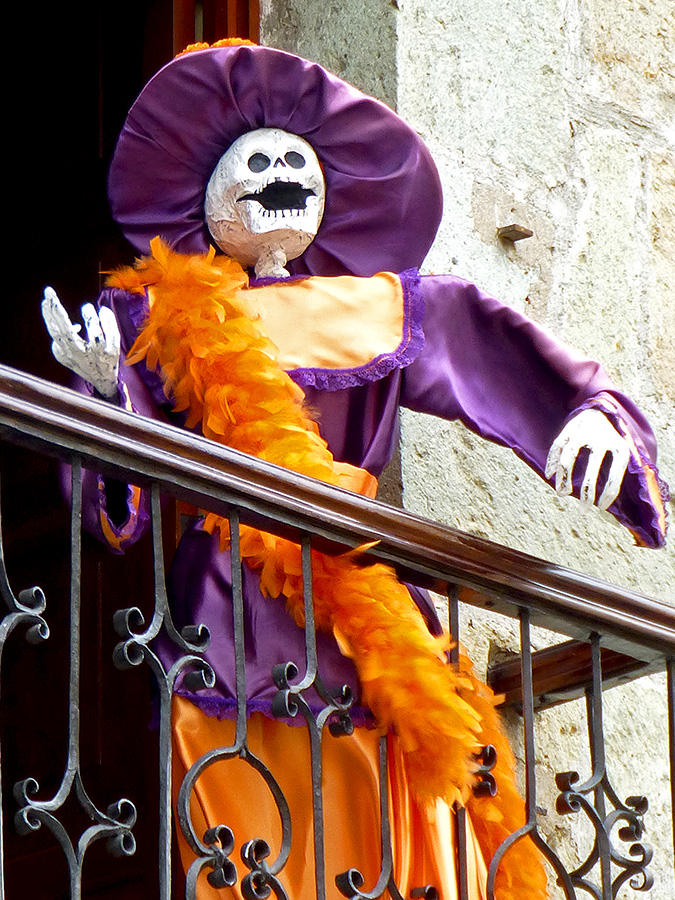
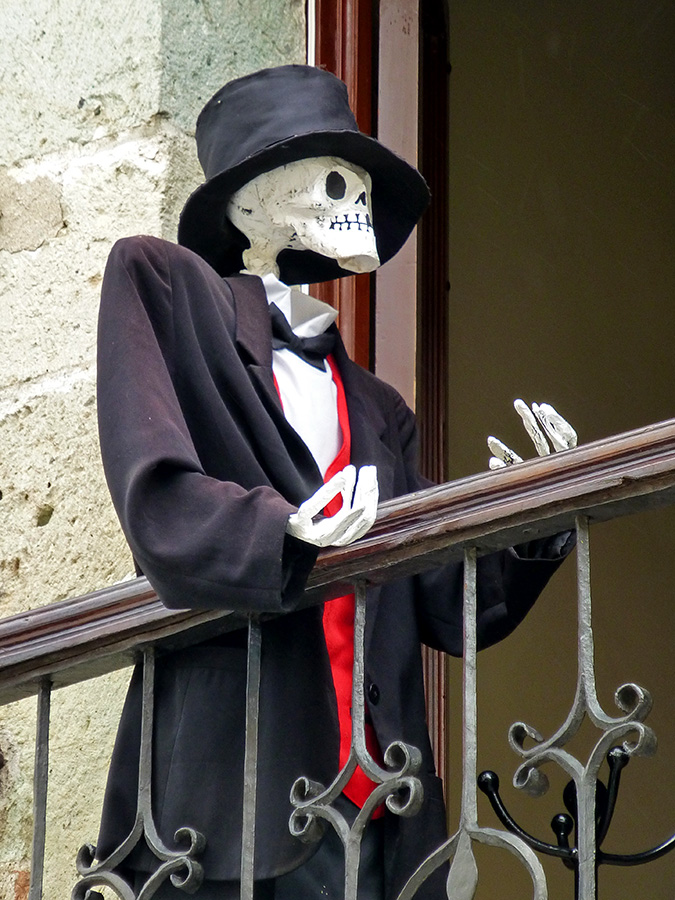
The Catrinas have begun arriving in town…
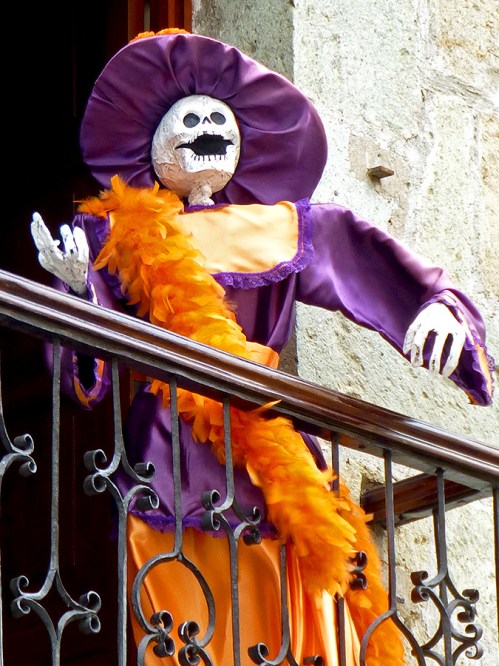
You see them loitering on street corners…
Hanging out on balconies (I think she’s in drag)…

All the better to see and be seen.

However, in the end, no matter how fancy their finery and glittery their jewels, as José Guadalupe Posada wrote,
La muerte es democrática, ya que a fin de cuentas, güera, morena, rica o pobre, toda la gente acaba siendo calavera
(Death is democratic, because after all, light-skin, brown, rich or poor, everyone ends up being a skull)
Posted in Creativity, Culture, Holidays, Travel & Tourism | Tagged calacas, calaveras, Catrinas, Day of the Dead, Día de los Muertos, José Guadalupe Posada, Mexico, Oaxaca, photographs, photos, skeletons, skulls | 5 Comments »
October 18, 2016 by spixl
Marigolds have begun appearing in the city. The yellow of this flor de muertos (flower of the dead) will help guide the difuntos (deceased) home to feast with their families during the upcoming Día de Muertos (Day of the Dead) celebrations. Known as cempazuchil (also spelled cempasúchitl), flower pots and/or vases of marigolds may find their way onto ofrendas (the offerings on home altars for the difuntos). Some scatter the petals on their muertos altar, others in a trail leading from the street into the house and up to the ofrenda.

Next week, seasonal Day of the Dead markets will spring up and shopping will go into high gear. Needless to say, I will join in buying the traditional fruits, nuts, flowers, and sugar skulls to place on my ofrenda. And, along with friends, I will pay my respects to the difuntos of friends in Teotitlán del Valle. It’s a special time of year in Oaxaca.
Once a librarian, always a librarian, thus a few resources about Day of the Dead:
A brief note: Celebrations vary throughout Mexico and, even in the valley of Oaxaca, traditions differ from village to village, but the above articles will give you a general idea. You can also click HERE for my Día de Muertos blog posts from previous years.
Posted in Culture, Holidays, Travel & Tourism | Tagged cempasuchitl, Day of the Dead, Día de los Muertos, Día de Muertos, flowers, marigolds, Oaxaca, photographs, photos | 1 Comment »
October 15, 2016 by spixl
Returning to Casita Colibrí last Sunday afternoon, I unlocked the door, set down my way-too-heavy backback, and, having been away for a month, I savored the scene my Oaxaca home presented. There was my new Tree of Life tapete hanging on the wall of my dining area looking like it had always been there; on the floor, separating living spaces, the beautiful mohair rug woven for me by Antonio Ruiz Gonzalez presided.
AND (drum roll, please), in front of the sofa, my most recent purchase — a stunning rug from Casa Cruz in Teotitlán del Valle.

Maria Luisa Mendoza, wife and partner of weaver Fidel Cruz Lazo, displaying their wares in their taller in Teotitlán del Valle.

Metates leaning against the wall, waiting to to be used to hand grind the natural dyes.

An array of some of their brilliantly colored naturally dyed yarns.
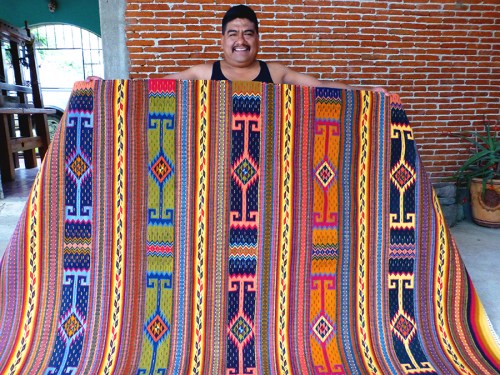
After much indecision on my part (they were all SO beautiful), Fidel displays my final choice.

My rug in its new home in the living room area of Casita Colibrí.
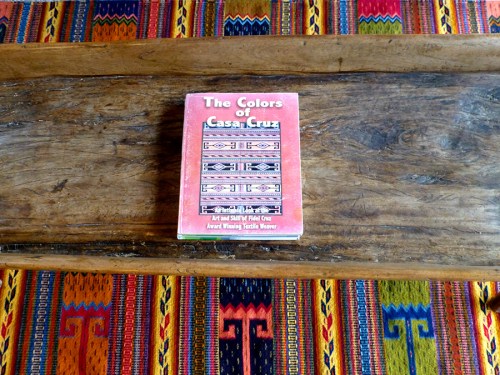
It wasn’t until I took this photo, that I realized the design on the cover of the book, The Colors of Casa Cruz, is the same as my new rug.
The yarns of my new rug were dyed using indigo, cochinilla, nuez (walnuts), musgo (moss), achiote (annatto), and cempazuchil (marigolds) and the primary design element is the diamond, representing the four cardinal points, and symbolizing the continuity of life.
Posted in Casita Colibrí, Creativity, Culture, People, Textiles, Travel & Tourism | Tagged Casa Cruz, Fidel Cruz Lazo, Maria Luisa Mendoza, Oaxaca, photographs, rugs, tapetes, Teotitlán del Valle | 6 Comments »
« Newer Posts - Older Posts »
























 Mexican Peso Converter

 View From Casita Colibrí