Feeds:
Posts
Comments

Archive for the ‘Textiles’ Category

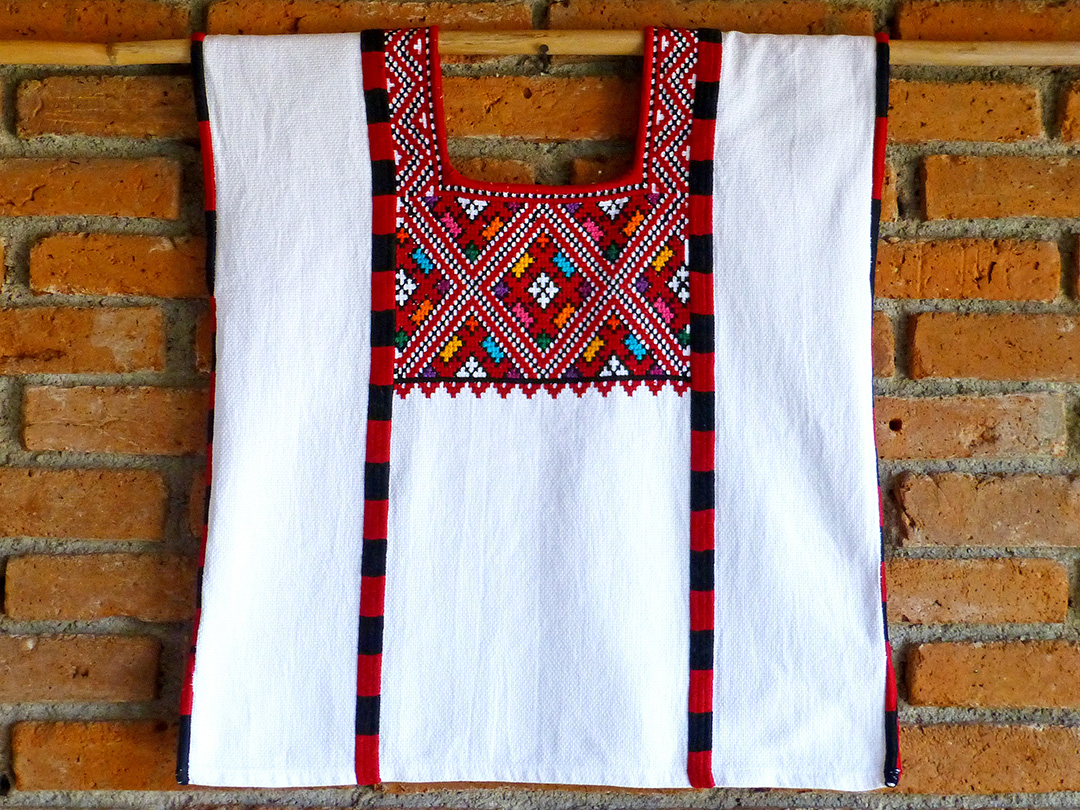
As I’ve previously written, two separate (and battling) French designers were exposed as plagiarizing the traditional embroidery designs of Santa María Tlahuitoltepec, a village in the mountainous Mixe region of Oaxaca.

P1100015

However, at last there is a triumph for the embroiderers and the time-honored motifs handed down from their ancestors and inspired by the land — A Court Rules High-End French Label Doesn’t Own Rights to Indigenous Oaxacan Design.

P1100017

The people of Santa María Tlahuitoltepec may not be financially wealthy, but they and their community are rich in culture and pride in their history and traditions.  They are not angling for a monetary settlement — all they want is that their work and designs be recognized and respected.

P1110662

While we are on the topic of disrespect of indigenous peoples, we have the recent disgraceful Coca-Cola México advertisement, showing Hipsters Bringing Soda To Indigenous Mexicans — another Mixe village, Totontepec Villa de Morelos.  After an immediate social media campaign challenged the ad, Coca Cola pulled it.  As this teleSUR article details, This New Coca Cola Ad Shows Mexico’s White Savior Problem.  In addition, like the USA, obesity is growing problem here, thus a Reply to Coca-Cola comes in new video by the Alliance for Food Health featuring two Mixe students speaking about the health risks posed by these kinds of “soft drinks” that lack any nutritional value.

By the way, the English language Mexico News Daily is running a poll, asking if you “agree that the controversial Coca-Cola Christmas video was racist or offensive?”  And, I’m appalled that as I write, the results are:  32% yes and 68% no!!!
Read Full Post »

Black Friday and Cyber Monday sales are in the rear view mirror,  December is upon us — only twenty-three more shopping days until Christmas — and the shopping frenzy in el norte continues.  Thanks, but no thanks, I say.   I prefer this…

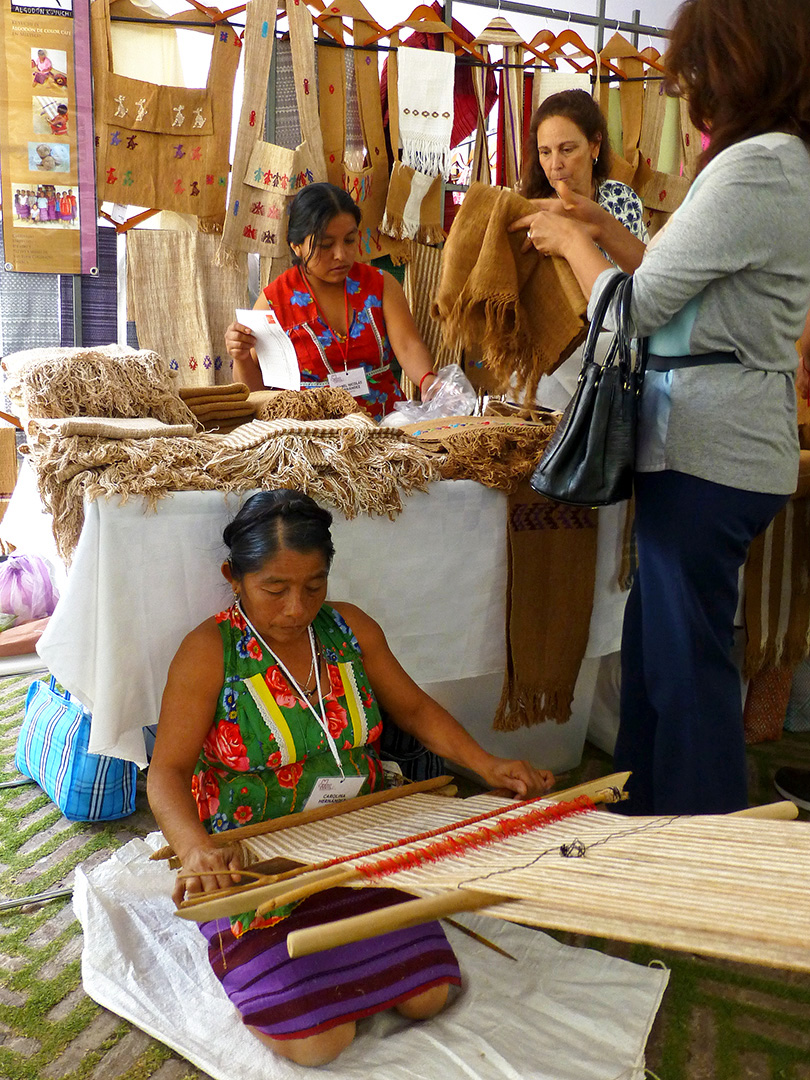
Weaver from the Katyi Ya'a Taller Colectivo de Algodón Native (Collective workshop using native cottons)

Weaver from the Katyi Ya’a Taller Colectivo de Algodón Native (Collective workshop using native cottons)

On the Friday after Thanksgiving, I took leisurely stroll down to the 2-day expo-venta (exposition and sale), sponsored by the Museo Textil de Oaxaca and held in the tranquility of the Centro Cultural San Pablo patio.  After much oohing and ahhing and talking with many of the artisans, I headed up 5 de mayo to one of my favorite pocket courtyards and the shops tucked in along its garden path…

5 de mayo #408

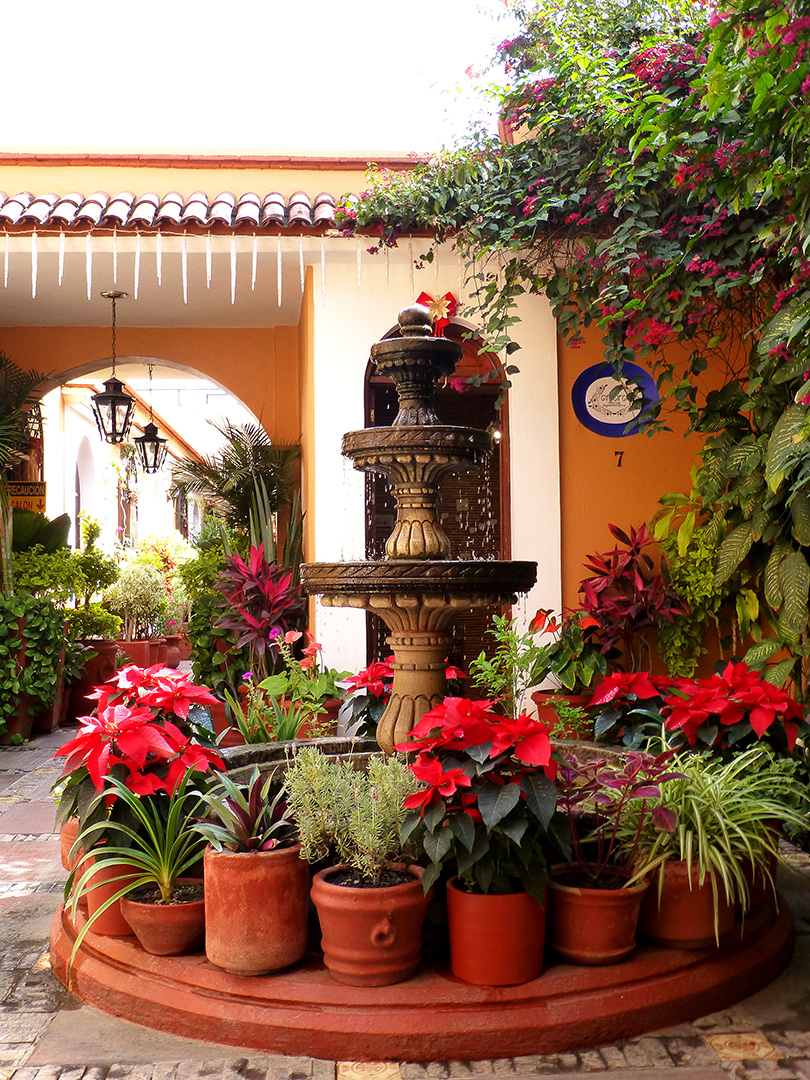
5 de mayo #408 – home to tapetes (rugs) at the Fe y Lola gallery and Seasons of My Heart retail store, among other small shops.

I won’t reveal where or if I bought anything — I wouldn’t want to spoil any Christmas surprises!  What I will say is… I prefer strolling to rushing; personally meeting and paying the artisans for their work to handing over a credit card at an impersonal department store; and, perhaps most of all, experiencing the pride radiated by an item’s creator when I admire their work.

Read Full Post »

The celebration of Día Internacional de los Pueblos Indigenas continues in Oaxaca this weekend, with music, dance, food, and an artisan expo-venta (sale) in Jardín El Pañuelito.  As I walked through the exposition, one woman’s embroidery drew me back for a second look.  I was especially drawn to a huipil that had been hanging next to the one below.  It’s not in this photo, because one of the “Diablos” from the Santiago Juxtlahuaca dance troupe (who were performing later) had already volunteered to climb up on a chair to take it down for her to show to me.

However, before I could get my money out, a delegation of dignitaries came by for a photo shoot.

P1130477

This popular and exceptionally talented woman is Carmen Vásquez Pérez, from San Mateo Yetla, Valle Nacional, located 172 kilometers northeast of Oaxaca city in the Papaloapan Region.  According to the article, Mujeres preservan bordado en Yetla, the village is surrounded by waterfalls and lush vegetation and is rich in Chinanteca customs.

P1130484Doña Carmen learned to embroider as a child and has been instrumental in an effort to preserve and promote the local traditional designs and techniques.  As you can see below, her workmanship is exquisite.

P1130489 After returning home and doing a little research, I’m even more pleased with my purchase.  And, by the way, I did not “bargain” — my new treasure is worth every peso of its 600 peso price tag, and then some!

Read Full Post »

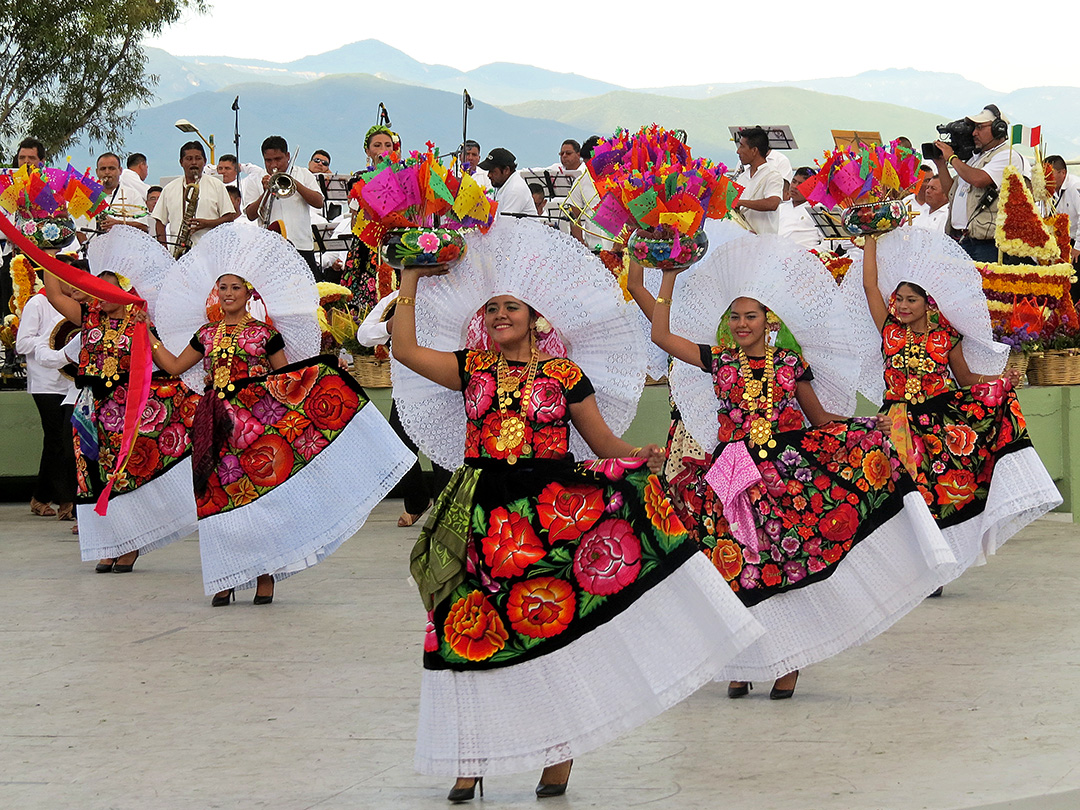
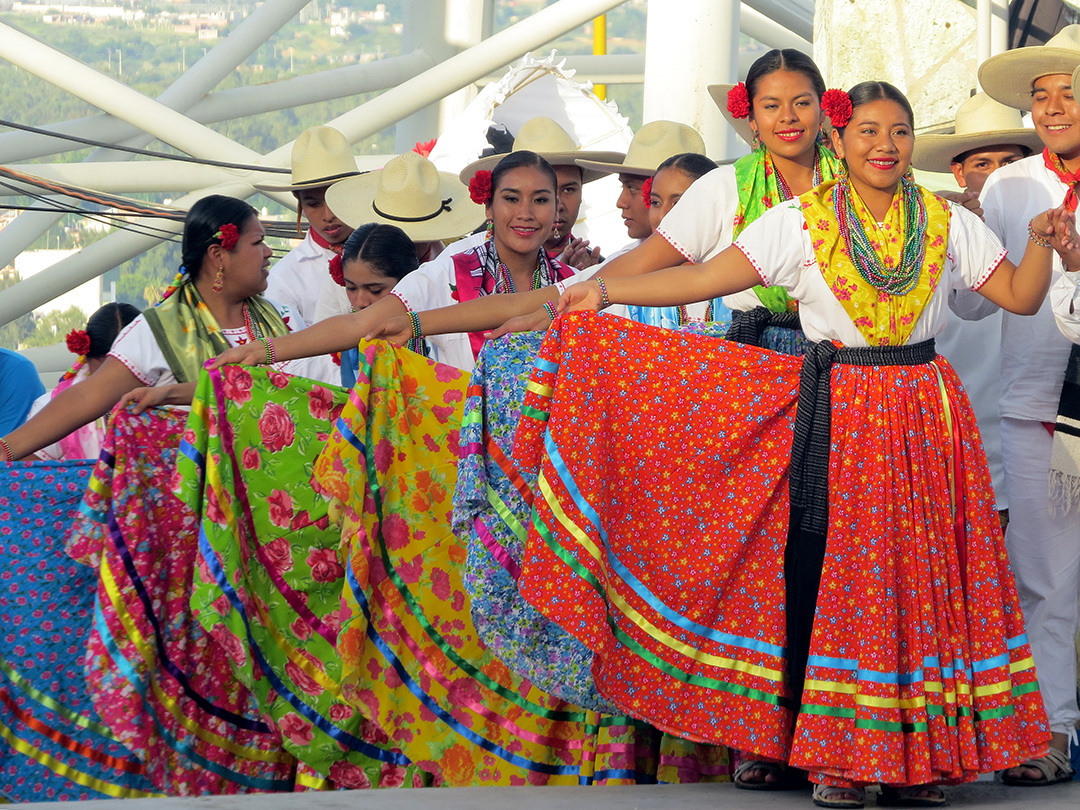
The Plaza de la Danza was filled with cheering crowds early Sunday evening as ten girls and eight boys from Los Ángeles de Luz took the stage for the 13th edition of this very special Guelaguetza.  Perhaps it is because I have a special needs nephew or that both my sister-in-law and daughter-in-law are special ed teachers that I am drawn to this event every year.  In any case, the joy and pride exhibited by these young people with Down’s Syndrome, as they make the requisite costume changes and perform traditional dances from the eight regions of Oaxaca, always lifts my heart.

I had to leave before it ended, but hopefully through this slideshow I can share a little of the professionalism and accomplishment of these performers and the emotion experienced by those of us who had the privilege of being in the audience.

This slideshow requires JavaScript.

President of Los Ángeles de Luz, Flor Verónica García Ávilan explained in El Imparcial, that the group was formed after “realizing that contact with music, dance, and the audience makes them happy, cheerful, communicative, committed and disciplined beings, facilitating their development holistically within society.” [translated from Spanish]

And, I would like to add, for those of us watching their performance, it facilitates our acceptance of those who many be a little different from us.  If you are in Oaxaca for next year’s Guelaguetza festivities, try to attend this heartwarming and uplifting event.  Also, there is always a calenda (parade) a couple of days before AND scrambling for gifts tossed into the crowd after each dance.

Read Full Post »

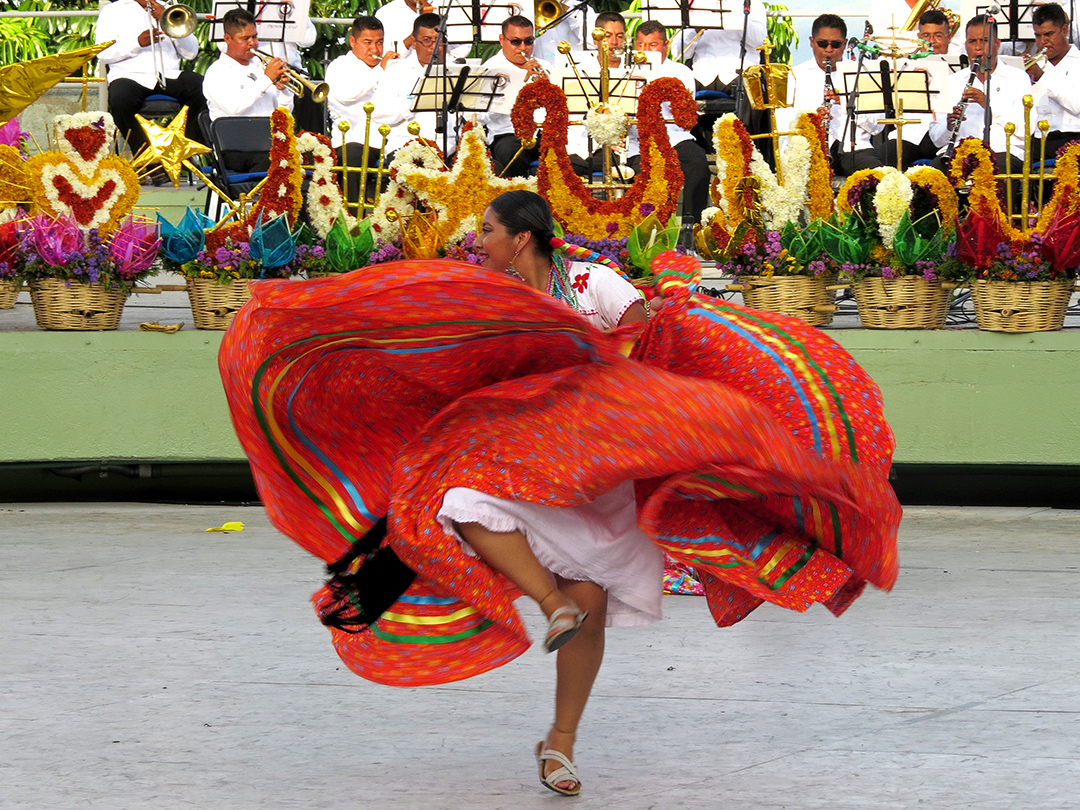
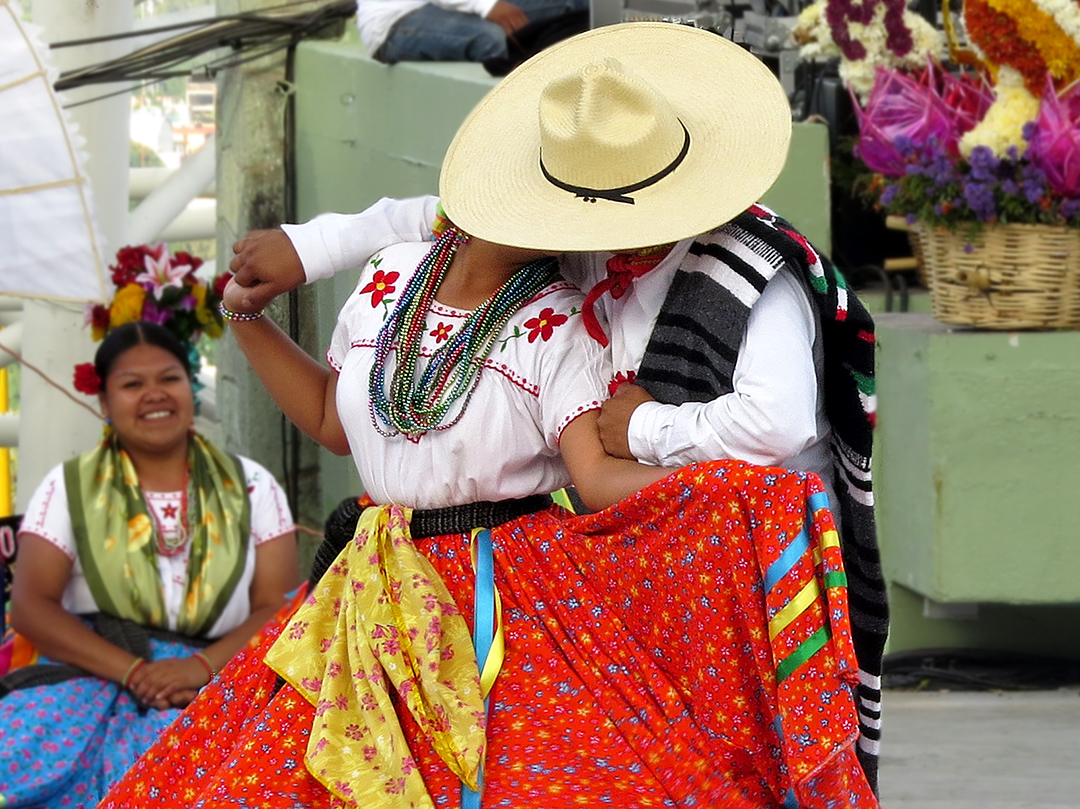
Last Saturday, in the end, it did not rain on the parade.  With only minutes to spare before the first desfile of the Guelaguetza delegations was to begin, the torrential downpour stopped, the rockets sounded, bands played, and the delegates danced their way down Independencia.  I can’t believe how UN-bedraggled and energetic they were!

This slideshow requires JavaScript.

Here’s hoping I managed to include one photo from each of the delegations in the slideshow above.

By the way, if you are in Oaxaca and planning to attend the second desfile tomorrow (July 25), see below for the parade route  — it has been changed!

Desfile2 ruta

Read Full Post »

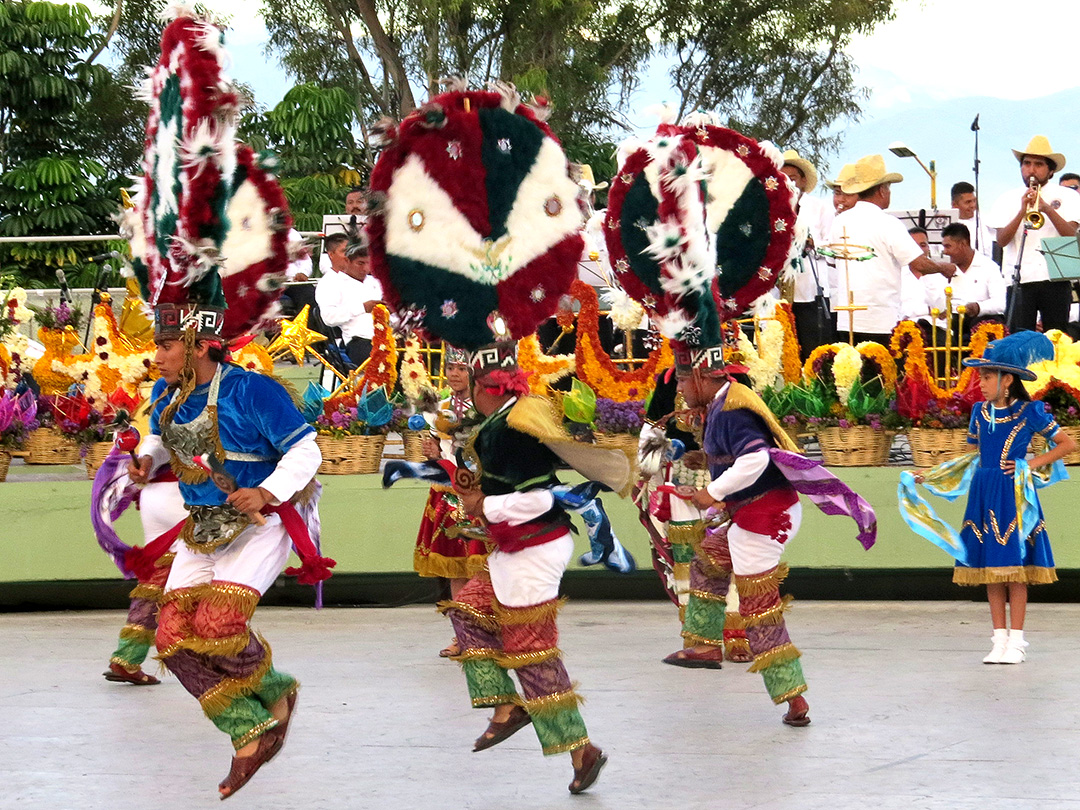
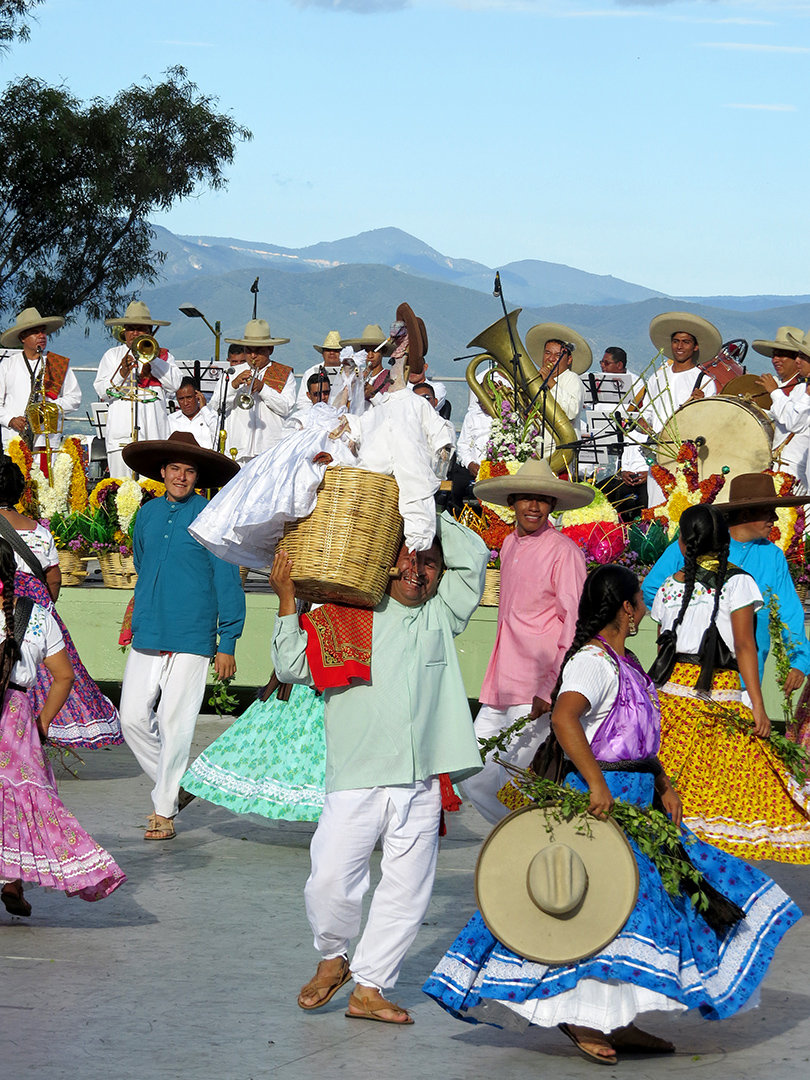
Next Monday, the the 83rd annual modern Guelaguetza will commence on Cerro Fortín.  And so, the last of my photos from last year’s evening performance…

I’ll resume my coverage with the San Paliluú of San Antonio Huitepec a village from the Valles Centrales region.

IMG_4882IMG_4884IMG_4895San Pedro Comitancillo performed the Danzas y Sones de Mi Tierra from the Istmo de Tehuantepec region.

IMG_4908IMG_4918P1010316IMG_4920And then there was the Danza de la Pluma.  Moctezuma, Danzantes, Malinche, and Doña Marina from San Jerónimo Tlacochahuaya, in the Valles Centrales region, performed one of the dances that reenacts the story of the Conquest.

IMG_4943IMG_4966IMG_4961Loma Bonita in the Tuxtepec region, very near the the state of Veracruz, then took the stage with its rousing Rinconcito Oaxaqueño.

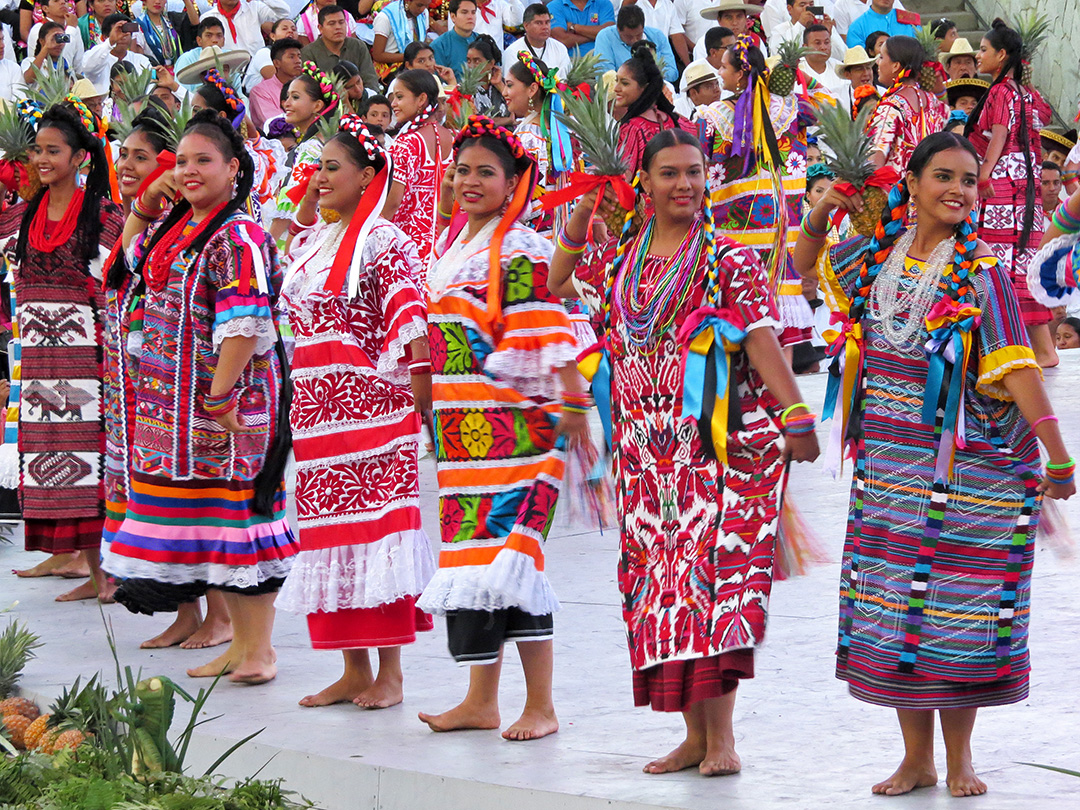
IMG_4983IMG_4997IMG_5018The sun began to set as 36 beautiful women from San Juan Bautista Tuxtepec in the Papaloapam region, wearing their with brightly colored huipiles, took to the stage for the crowd pleasing Flor de Piña.

IMG_5026IMG_5038

Darkness began to fall (making for challenging photography from 1/3rd of the way up from the Guelaguetza Auditorium stage), as the lively Sones and Chilenos danced by the delagation from the Costa region village of San Juan Cacahuatepec kept the energy flowing.

P1010363La Dote y el Tercel Día e Fandango from the dancers of San Antonino Castillo Velasco in the Valles Centrales region closed the evening’s performances.

P1010371As fireworks exploded over the Guelaguetza Auditorium, the band played, the audience took to its feet, and delegations reclaimed the stage to dance the evening’s Guelaguetza performance to a close.

Now on to La Guelaguetza 2015!

Read Full Post »

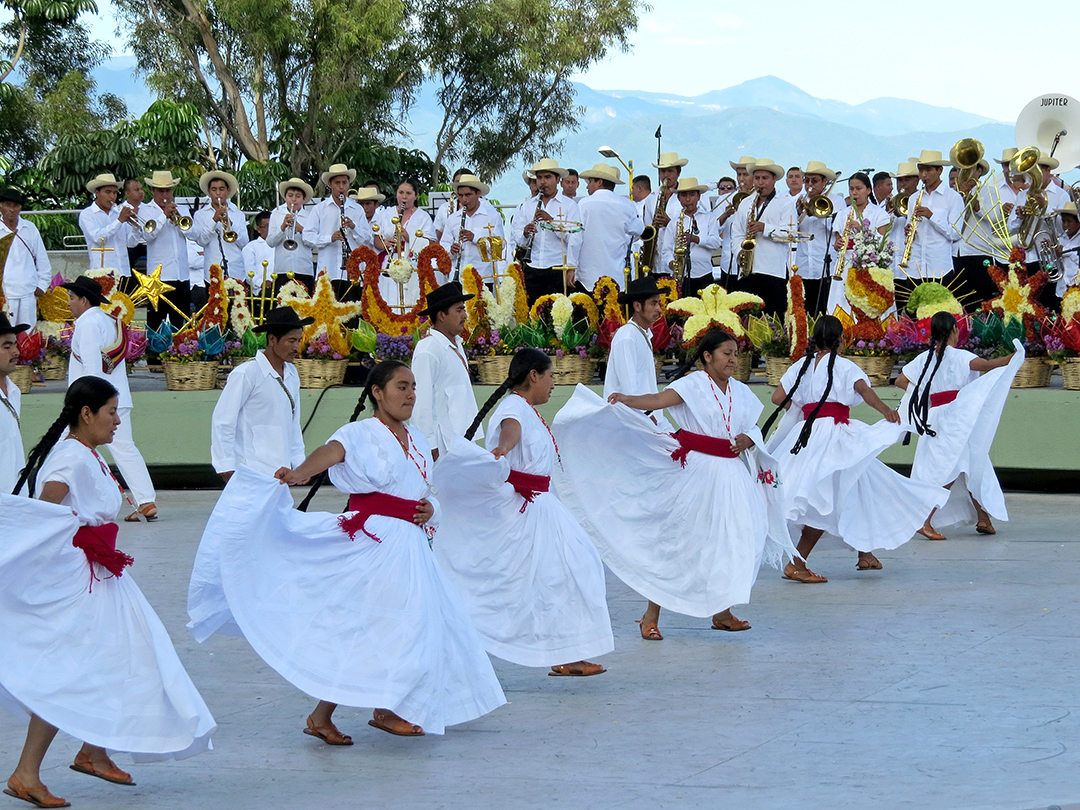
Last year, wearing the whitest of white huipiles, skirts, shirts, and pants, the delegation from San Melchor Betaza, in the Sierra Norte Region of Oaxaca, danced the sones and jarabes from their community.

IMG_4694IMG_4695IMG_4696I don’t know how the turkey felt as he took center stage when Ocotlán de Morelos, from the Valles Centrales Region, performed La Llevada del Guajolote, a dance dating to the 19th century.

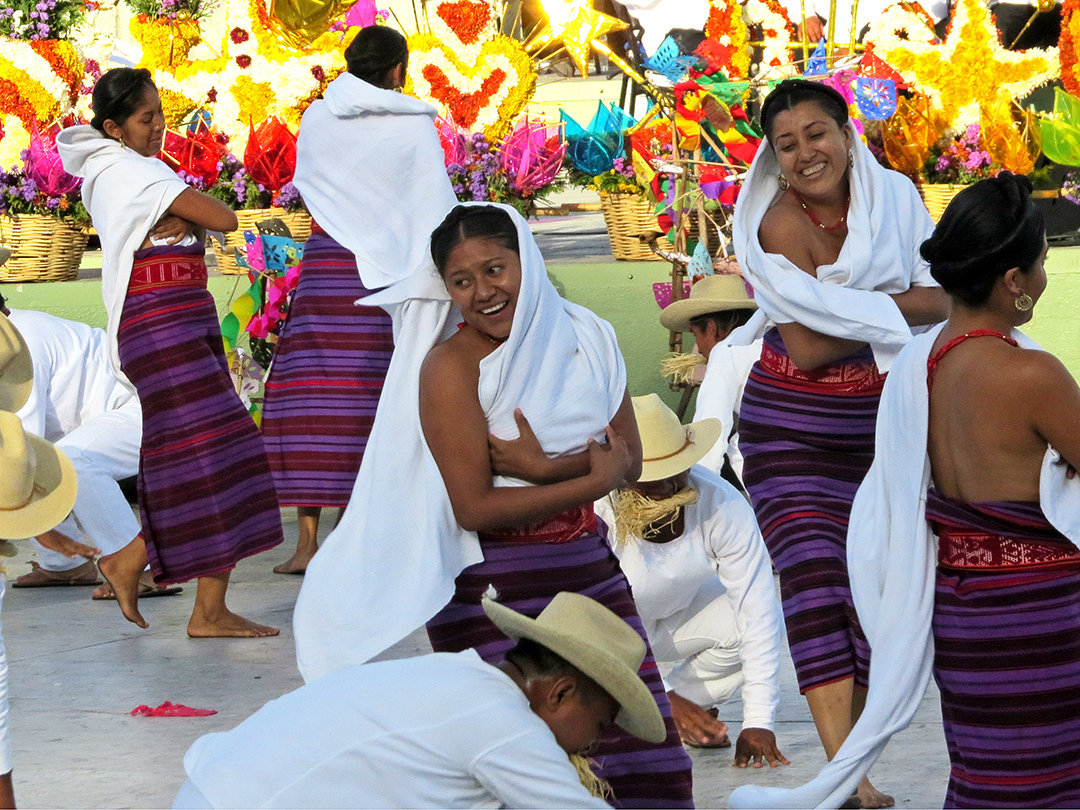
IMG_4802IMG_4805 IMG_4803The dances by the delegation from San Andrés Huaxpaltepec, from the Costa Region, offered the action of the Fandango de Cajón and the grace of the Mayordomía with women wearing stark white mandiles (shawls) and caracol dyed purple pozahuancos (wrap skirts).

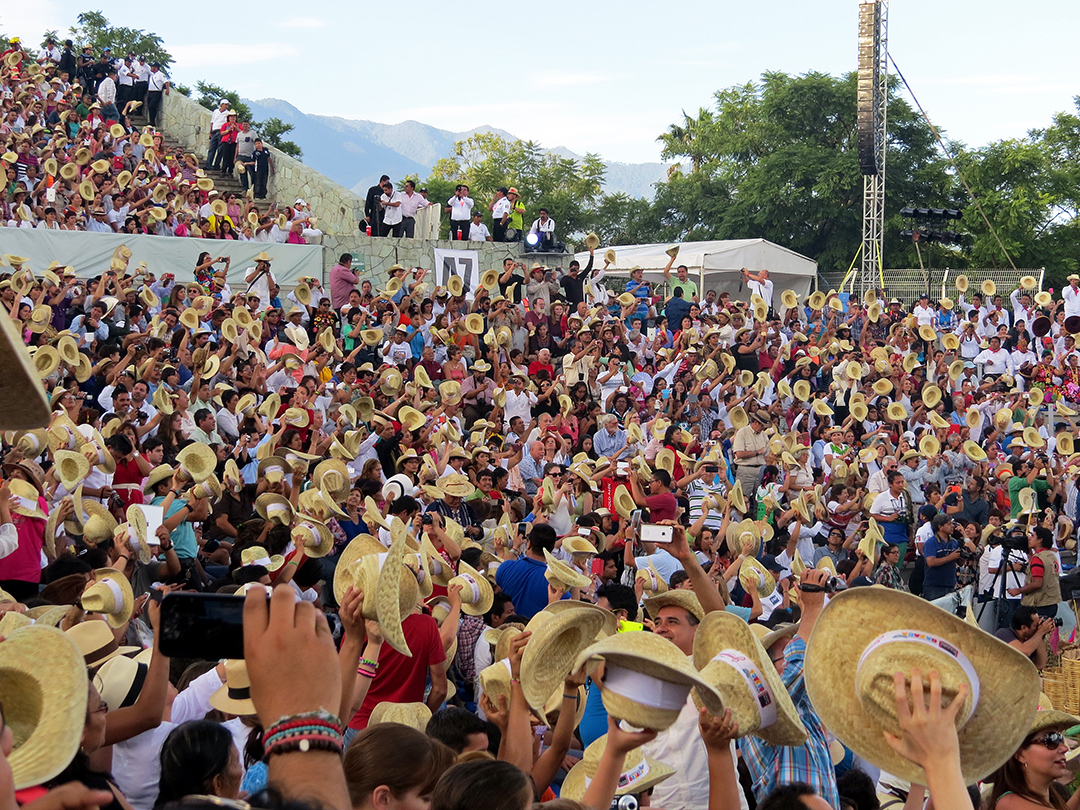
IMG_4817IMG_4828IMG_4845As the first few notes of the Canción Mixteca were played, the audience rose and, as one, began waving their hats and singing the beloved song of the Mixteca Region.  With the audience warmed up, the gals from Huajuapan de León began dancing the Jarabe Mixteco — twirling and tempting the guys with their flirty skirts.

IMG_4862IMG_4859

IMG_4869IMG_4877IMG_4880Click HERE for last Monday’s part 1.  Stay tuned for more next Monday, as the countdown to this year’s Guelaguetza festivities continues.

Read Full Post »

Three weeks from today, despite the Never-ending tale of the velaria, the 83rd annual Guelaguetza performances on Cerro Fortín commence.  Yikes, was it really almost a year ago that one of my childhood BFFs and I walked up the hill to the auditorium to revel in the music, costumes, dances, view, fireworks, and all-around conviviality of festivities?  There is always so much going on during the last two weeks of July, that I only got around to posting a few photos from that evening.  Today, and for the following two Mondays, I’m going to attempt to remedy that.  Better late than never!

The delegation from the Cañada region of the state, Huautla de Jimenez, danced to Sones Mazatecos…
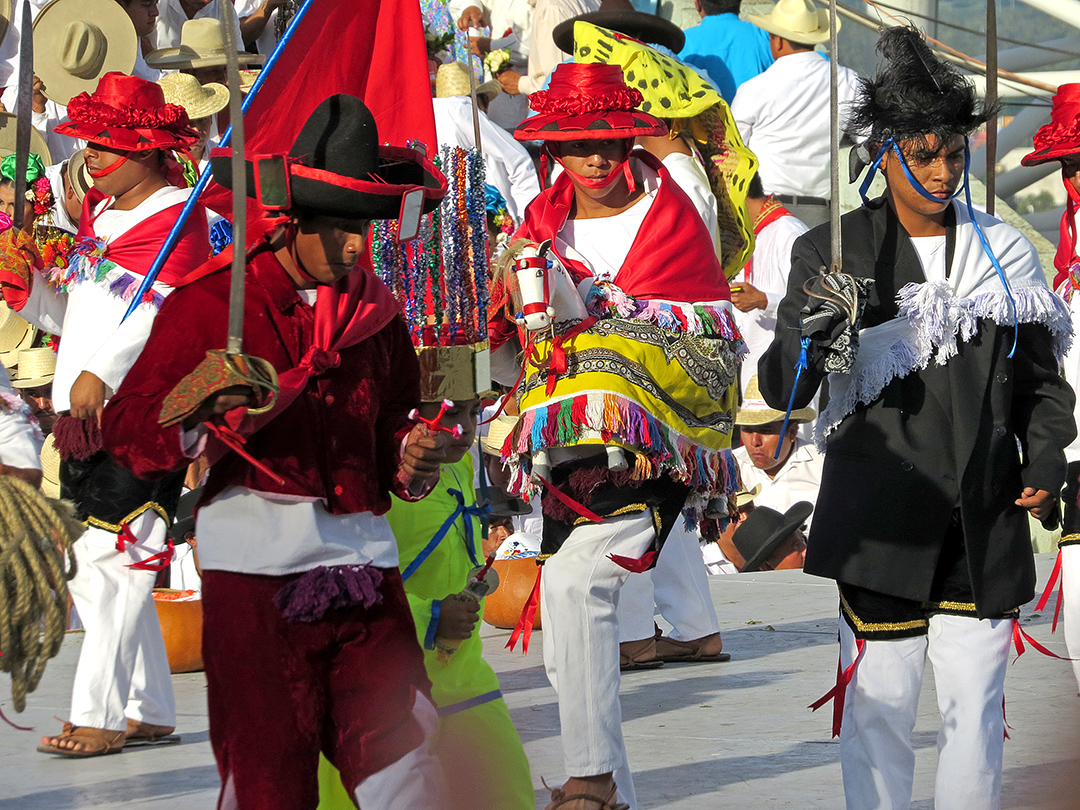
IMG_4701IMG_4707IMG_4708The dancers from Santiago Juxtlahuaca, in the Mixteca, performed the rip-roaring Danza de los Rubios…
IMG_4778P1010286IMG_4785And, from the Istmo de Tehuantepec region, the beautiful women and dashing men from Ixtepec presented Vela “Esmeralda”…
IMG_4717IMG_4724P1010283IMG_4759IMG_4761That’s all folks!  But, more to come next Monday.

Read Full Post »

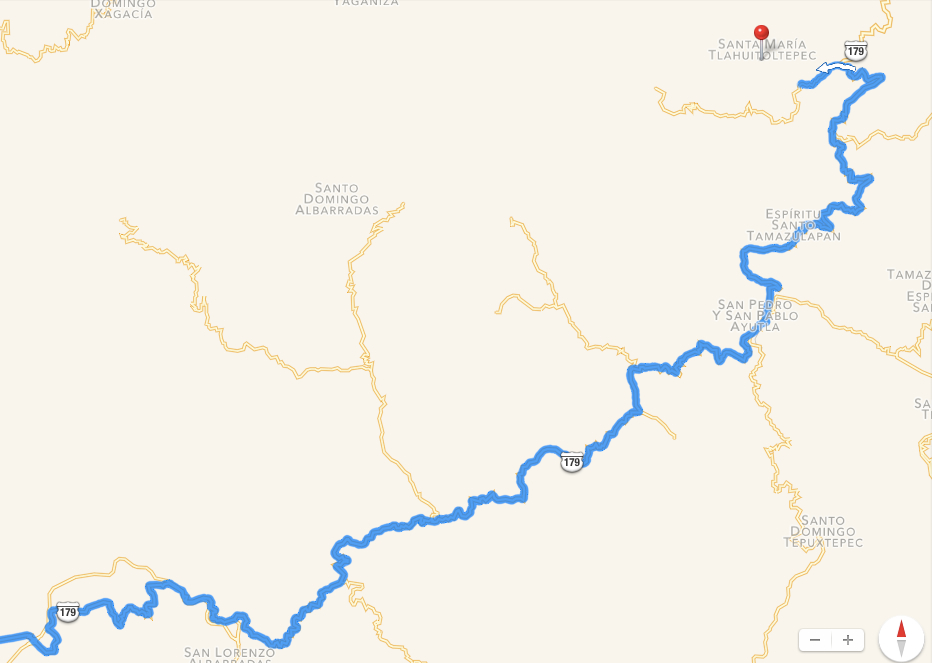
Blogger buddy Chris and I have been talking about returning to Santa María Tlahuitoltepec since our first visit in May 2013.  Time flies when you’re having fun and it took the current Theft of a cultural kind controversy to motivate us to hit the long and winding road up into the Mixe.  To reach our our journey’s end in the Sierre Norte, our road trip took a little over two and a half hours from the city — on a much improved route 179, I might add.

179 to Tlahui

Reaching the center of town, known for its musical literacy and textiles, Tejas, a youth band, was warming up on the multipurpose municipal basketball court.

P1090928

Their performance was part of the Domingos de Concierto (concert Sundays).  We joined villagers to watch and listen.

P1090961

Most all of the women “of a certain age” were wearing the traditional dress that is a symbol of this community.

P1090942

However, our stomachs began grumbling and led us in search of comida.  The comedor we had been directed to wasn’t open but there were women sitting under the portales selling tamales.  This gal’s amarillo tamales (3 for 10 pesos) were muy sabrosos!

P1090940 copy

Once we had eaten, fed a couple of street dogs the crumbs (until a woman walking softly and carrying a big stick, chased them away), and our energy levels were restored, we walked across the street to the sextagonal textile kiosk — the day’s destination.

P1090969

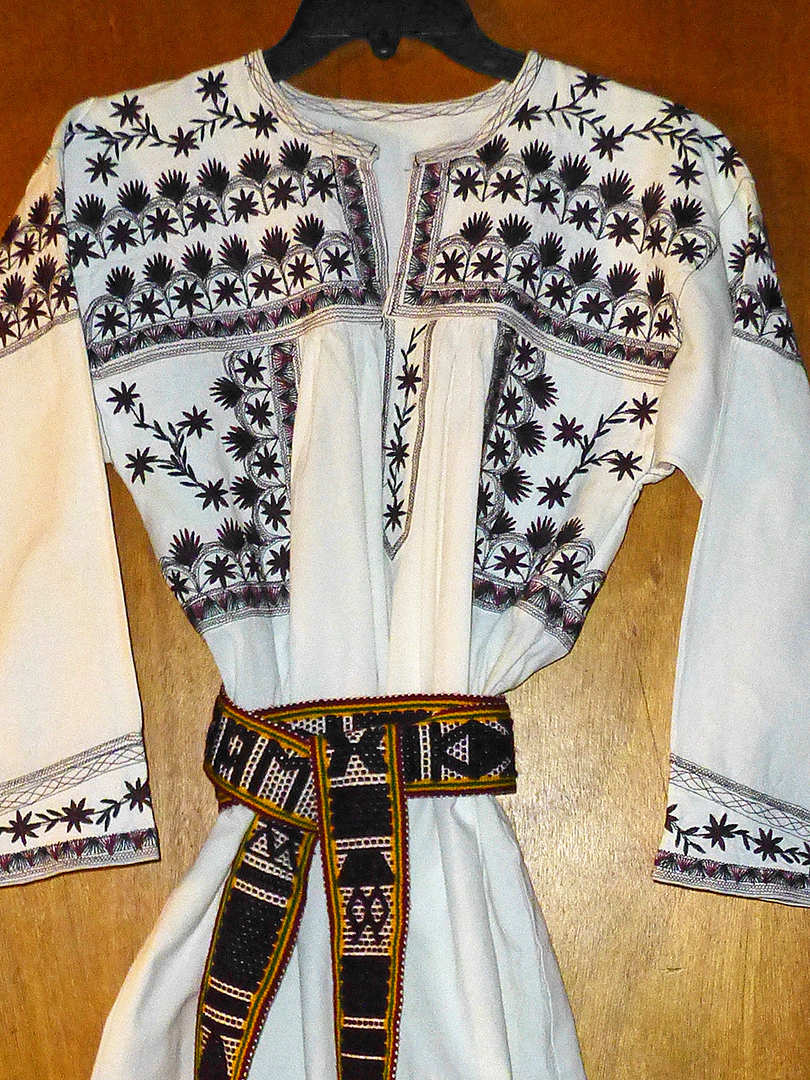
We headed to Artesanias Kojpk Okp, the tiendita of Doña Honorina Gómez Martínez, the embroiderer we had met on our previous visit to Tlahuitoltepec.  Ahhh, yes, she was well aware of the Inspiration or plagiarism dispute with French designer, Isabel Marant, that even Vogue UK has covered.  As I later discovered, she spoke for the embroiderers at the press conference held at Oaxaca’s Textile Museum ten days ago.

P1090975

This spirited, strong, and delightful woman has been embroidering for 46 years and, as she explained at the press conference, “my heart tells me what I’m going to embroider because I have it in memory, born with that idea or feeling, experience, it is the daily life as Mixe.  It is a representation of blood, food, and nature. ” [translated from the original Spanish]

P1090984 copy

She recognized us and she and her assistant (husband? son?) were more than willing to plunge into piles of her creations, pull down blusas hanging on the walls, and dismantle displays.  Here is the blusa and ceñidore I came home with…

P1100022

Should you be inclined to go to the source, but can’t manage a trip up into the Mixe, as always, she will have a stall in July at the special artisan market in Oaxaca city during La Guelaguetza.  She can also be contacted by telephone:  01 283 596 26 05 and cell:  951 198 79 42.

Stay tuned for a blog post on Oaxaca-The Year After…  (Chris has a lot more photos to weed through!)

Read Full Post »

Today the Museo Textil de Oaxaca is celebrating its seventh birthday with live music (of course!), nieves (ice cream), and an expo-venta of tie-dye and batik textiles from Nigerian born, Gasali Adeyemo.  The exhibition and sale culminate a week-long artist-in-residence, in which he taught a 5-day workshop — I’m kicking myself I didn’t take it — and a Friday evening presentation, “African Blues, Mi Vida en Indigo” — which I did attend!  Gasali’s work is spectacular and his face glows when he talks about the traditions, technique, and love that goes into his work.

P1080889P1080985P1080984Note the orange blouse above; it beckoned to me and I couldn’t resist buying it.  The technique is batik on a brocaded cotton that has been dyed with the bark of a tree found in Nigeria.  The name of the tree in the Yoruba language is Epo Ira, which, according to Gasali roughly translates to, “tonic iron tree,” as it is also used medicinally to cure iron deficiency.

By the way, for those of you who are going to the International Folk Art Market in Santa Fe, NM in July, Gasali and his beautiful textiles will be there.

Read Full Post »

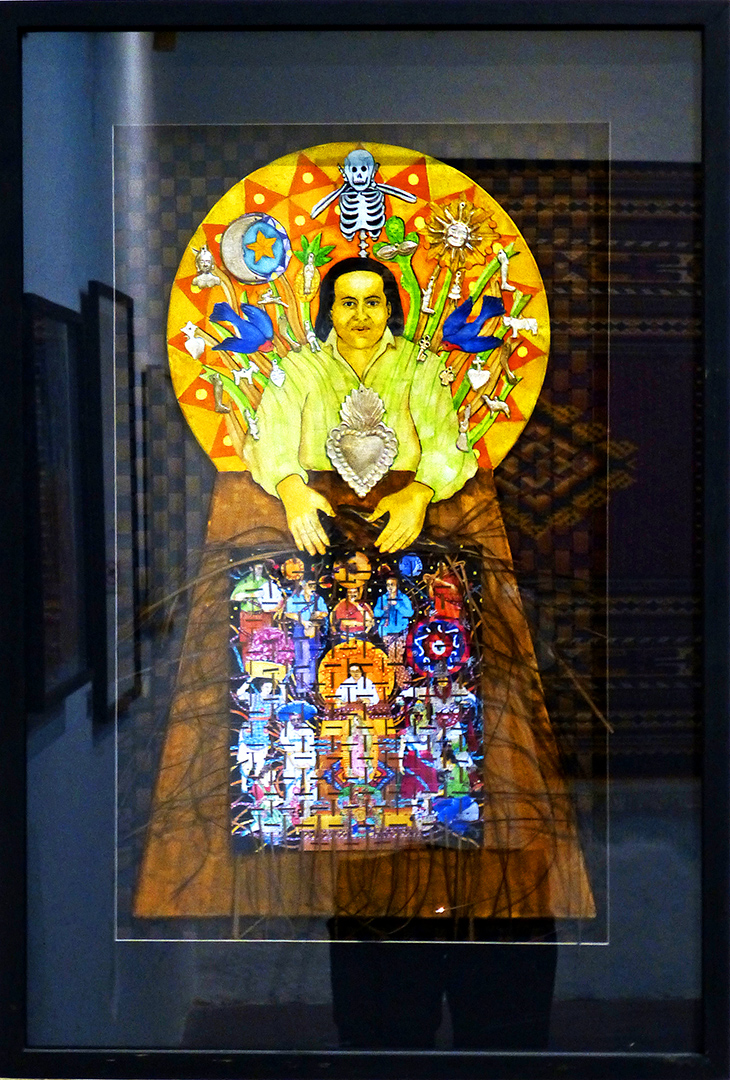
It’s been one year since the passing of maestro Arnulfo Mendoza Ruíz.

Tejedor de los sueños by Charles Barth

Tejedor de los sueños by Charles Barth (alas, with reflections from other pieces)

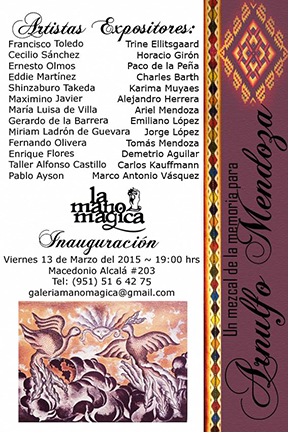
To honor his life, an exhibit of works by his friends, colleagues, and family was inaugurated at La Mano Mágica on March 13, 2015.

ManoMagica exhibit

His older son, Gabriel Mendoza Gagnier, curated this amazing collection of paintings, weaving, and artesanía.

Assisted by Arnulfo’s companion, Yukiko, the opening featured, not only amazing art, but also mezcal, tamales, and surprise entertainment by Carnaval dancers from San Martín Tilcajete, wearing masks carved by some of the well-known carvers from the village, including Inocenio Vásquez and Jésus Sosa Calvo.

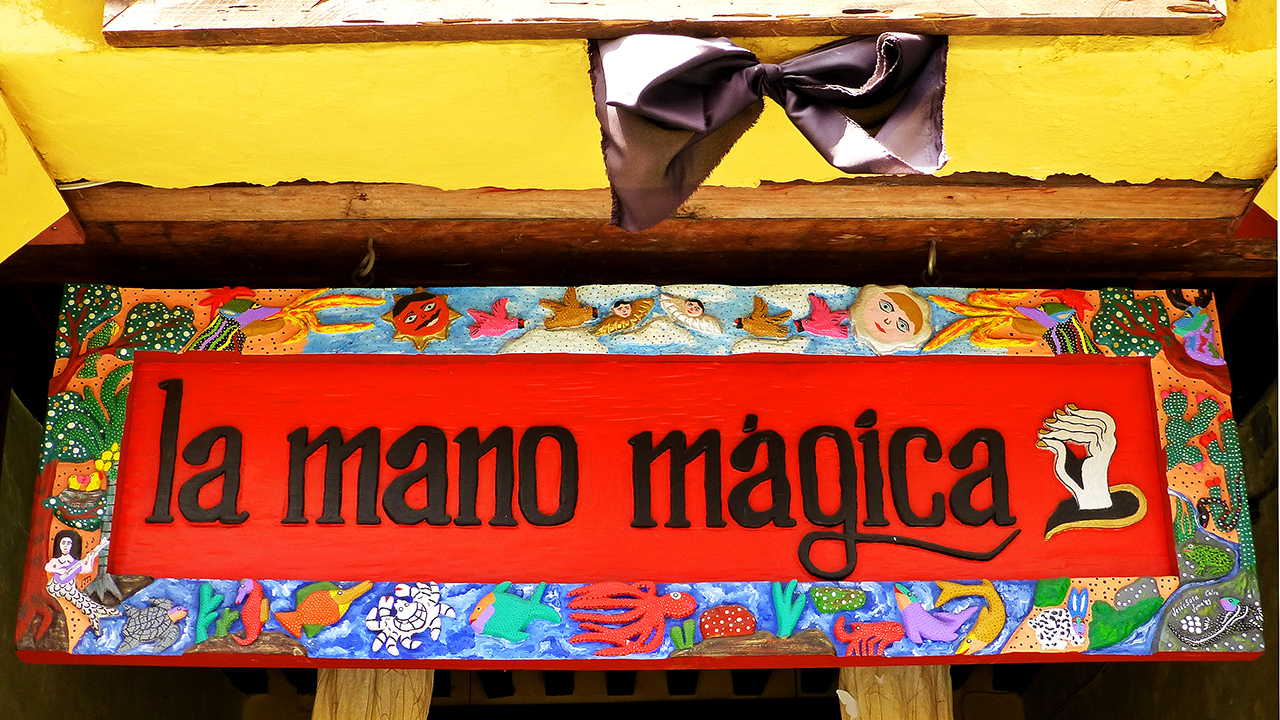
Jésus Sosa Calvo had carved the signature entry sign for La Mano Mágica and recently, unasked, came by to freshen up the paint that had faded over the years under the intense Oaxaca sun.

P1070473

While, in the words of Manuel Matus Manzo,  Arnulfo Mendoza may have gone on “to meet the Jaguar and the god Murcielago,” the dreams of his magical hands remain.

Finally, this beautiful poem by Alberto Blanco from the exhibit’s catalog…

Mitades a Arnulfo

I
La mitad de la tierra
no sueña con la luna.
La mitad de la luna
no sueña con el sol.

Si la luna es la trama,
y si el sol es la urdimbre,
esa tierra es la tela
donde acaso se vive.

II
La vida es la comedia
ya la muerte es el drama,
pero el textil de siempre
es la urdimbre y la trama.

La mitad de la vida,
la mitad de la muerte:
una tela tejida
con un hilo de suerte.


Read Full Post »

Yesterday was Día de la Bandera (Flag Day) in Mexico.  Hmmm, I don’t think these were the flags they had in mind…

The flags that were flying on the streets of Oaxaca were those carried by the members of the Integrantes del Frente de Organizaciones Sociales, Campesinas, Urbanas, Pesqueras y del Transporte (FOSCUPT), an umbrella group of more than forty social organizations, peasants, urban workers, fishers, and transport workers.  Thousands marched from the Fuente de las Ocho Regiones (Fountain of the 8 Regions) to the zócalo.  Besides flags, there were banners and burros…

And Devils Dance street theater from an Afromexicano group, probably from the Costa Chica.

After marching and playing for miles, the destination was reached; the bote player took a break and gals from San Pablo Tijaltepec went and got something to drink.

According to this article, the mobilization was to reject bad structural policies and funding cuts being made in the peasant sector and requesting the federal government turn their eyes to Oaxaca.  In addition, Jesus Romero López, leader of FOSCUPT, among other demands, called for justice for the social and political leaders who have been killed and for better urban planning, stating that the city is growing in a disorganized way, often resulting in neighborhoods with no water, electricity, or paved streets.

Read Full Post »

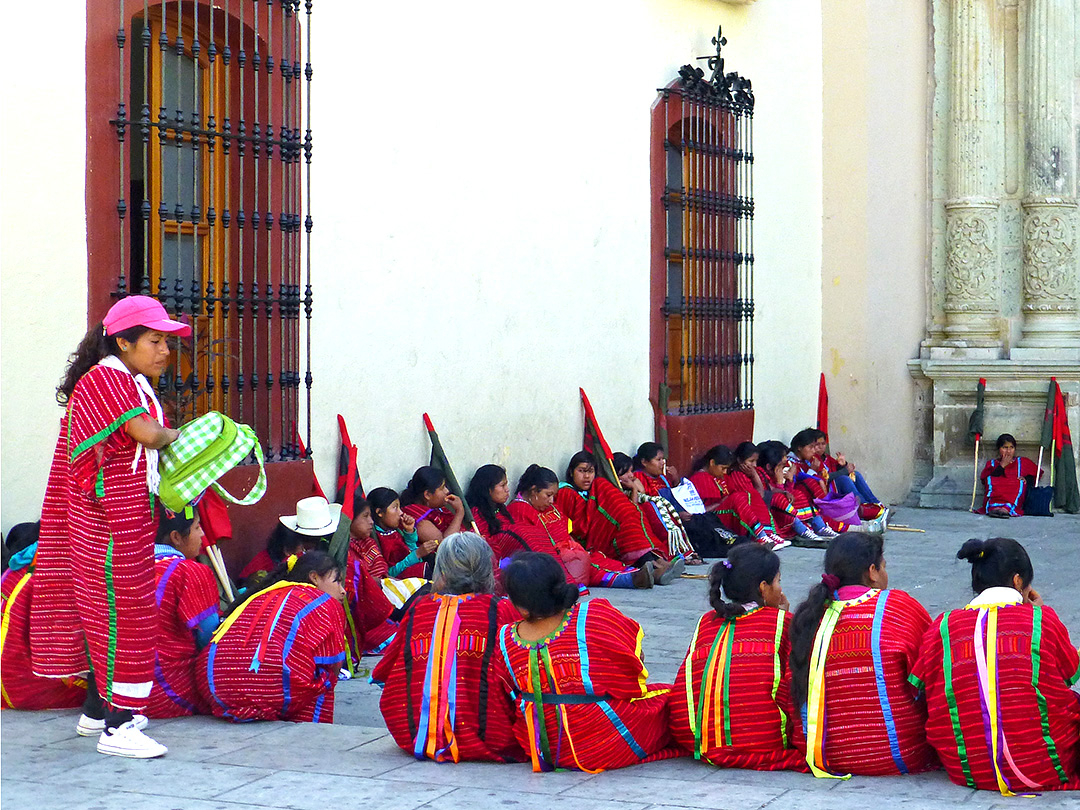
February 2, besides being Groundhog Day in the USA, is Candelaria in Mexico.  And so, late Monday morning, I went in search of Niño Díos.  None was to be found in the vicinity of the Cathedral.  Only the traditional red huipiles of the female Triqui members of MULT caught my eye.

P1060655

I continued my quest, heading up to Templo de Nuestra Señora de Guadalupe.  However, as I walked through Llano park, no one was carrying a Niño Díos, dressed in this year’s finery, to the church to be blessed.  Only a giant red horse sculpture by Oaxaqueño artist, Fernando Andriacci (and its red feedbag?) was there to see.

P1060656

I turned west and headed for home, hoping I might possibly spot a Niño Díos as I passed Templo del Carmen Alto.   But no, only a red-shirted water delivery man caught my eye.

P1060668

Funny, if we allow ourselves to see things as they are and not as how we expect them to be, we can return home with something completely different and delightful from what we had set out to find.

Read Full Post »

Last Friday, I walked over to the B&B, El Diablo y la Sandía and walked into the highlands of Chiapas.

P1050822

It was the first of a 3-day expoventa of textiles by El Camino de los Altos

P1050819

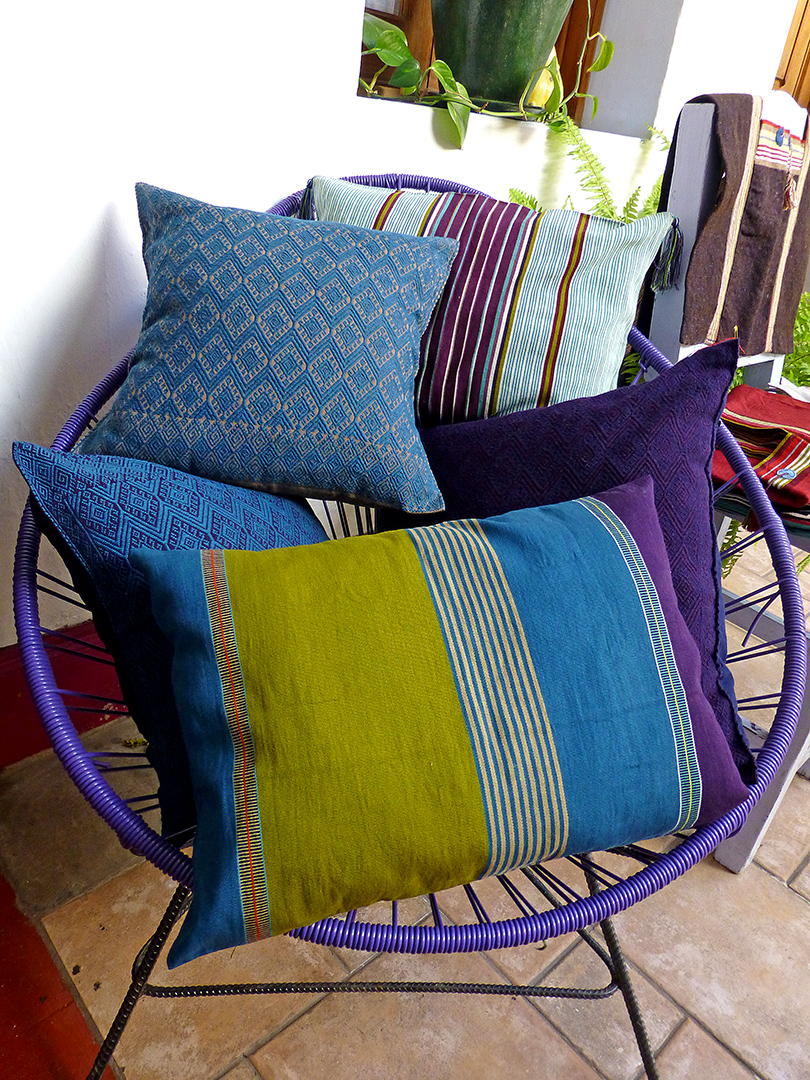
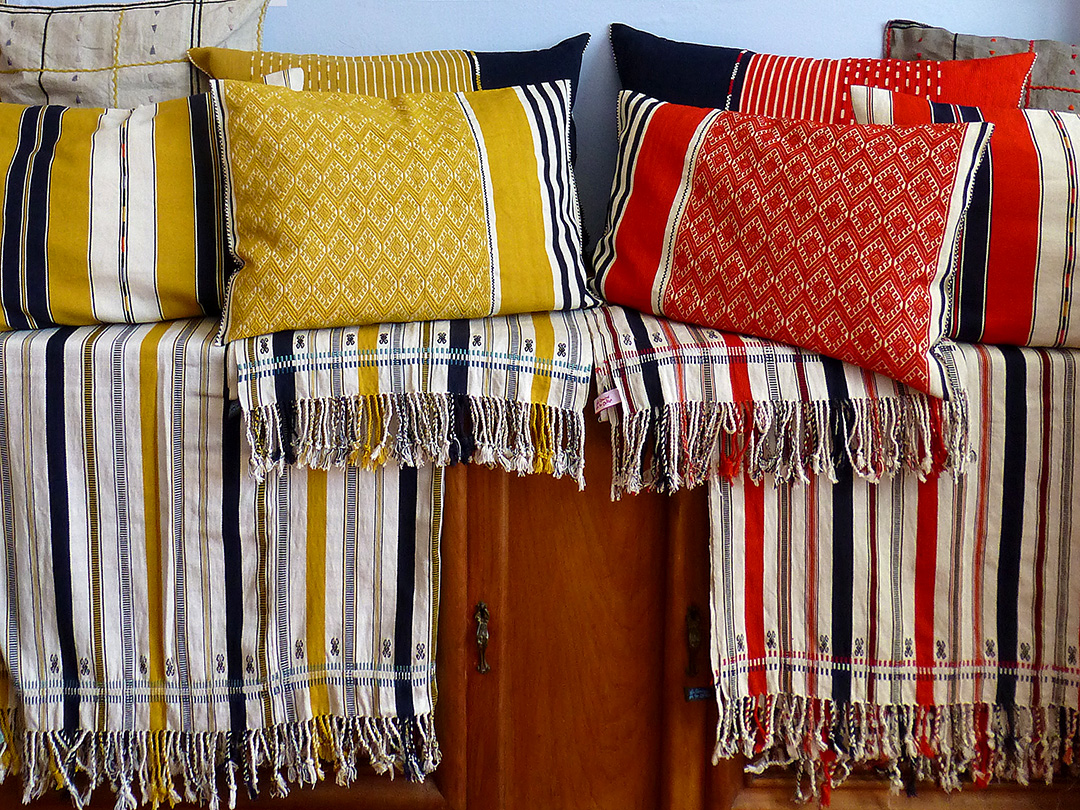
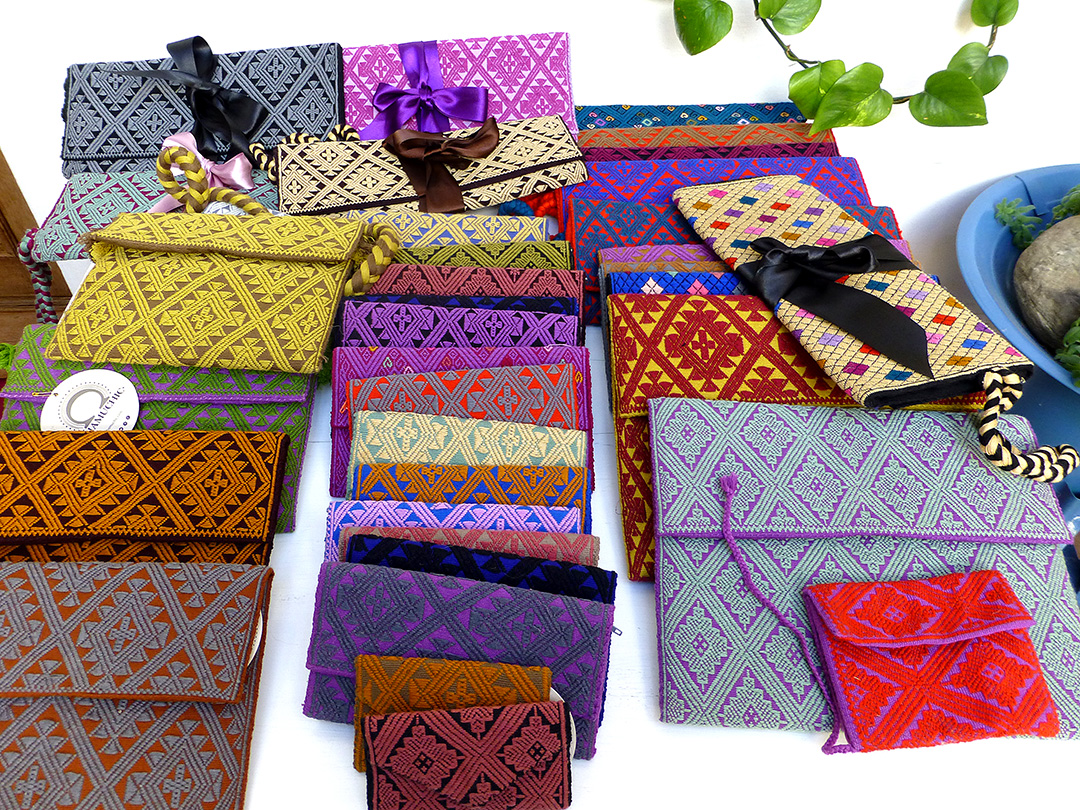
and Chamuchic, two weaving collectives from Chiapas.  Their colors and designs are sophisticated and I wanted them all!

P1050823

Alas, the budget limited me to two pillow covers that have joined two solid colored brocaded covers that I bought at a similar expoventa a year and a half ago.

P1050934

I think they look great under my beautiful poncho woven by Amalia Martínez Casas.

Read Full Post »

Congratulations to one of my favorite weavers, Amalia Martínez Casas from the mountain village of Tamazulápam del Espíritu Santo, winner of the 13th Popular State Art Prize “Benito Juarez” 2013.  The award, presented several days ago by Oaxaca governor Gabino Cue, recognized and honored her work using the backstrap loom, using cotton thread and wool dyed with indigo and banana peel, to weave the traditional costume of Tamazulápam in the Mixe.

Three or four times a year, an artisan fair is held in Llano Park.  Puestos upon puestos of pottery, wood carved alebrije, jewelry, and textiles are on display.  It was here, two years ago, where I first discovered the exquisite work of the tiny and talented weaver, Amalia Martínez Casas.

IMG_4175

I couldn’t resist buying this huipil; a subtle black on charcoal grey that looks both traditional here in Oaxaca and very hip with black leggings and boots in el norte.

And, then the next time, even though the dye was a little uneven, I couldn’t resist buying this short huipil — the color had me at, hola!

Her well-crafted technique and finely drawn designs are sophisticated, be they executed in subdued huipiles or brilliant red serapes.

Every time I wear one of her works of art, people ask, “Where is it from?”  “Who made it?”  “Where can I get one?”  I’ve pointed several friends to her stall in Llano Park during artisan fairs and last week, at the request from a friend in California, I bought this one.  The slight green tint will be perfect with her red hair.  (Yes, this one’s for you, Louise!)

Photos of the award ceremony can be found HERE and video is available HERE.  (Amalia Martínez Casas can be seen beginning at 6:00 minutes.)  And, for more of her creations, check out a blog post Chris did last January.

Read Full Post »

« Newer Posts - Older Posts »