Feeds:
Posts
Comments

Archive for the ‘Holidays’ Category

This week the city of Oaxaca celebrates her 485 birthday.  Yes, we know she is older…  However, we are talking the colonial city, here.  And, despite her age, this birthday girl began the festivities by inviting the best cocineras from the eight regions of the state to cook for her citizens and visitors — from 1 PM until 9 PM — under the shade of a giant tent covering the Plaza de la Danza.  The Primer Encuentro de Cocineras Tradicionales de Oaxaca was not free, but quite reasonable.

The food was riquísima (beyond delicious) and, while we were there, the guys from Santiago Juxtlahuaca in the Mixtec region of Oaxaca, performed the Danza de los Rubios.

I returned home satisfied and sleepy, but the day wasn’t over.  There was a calenda (parade) scheduled for 5 PM and a procession of “Gigantes” at 7 PM — route for the latter was unclear.  I was hot, tired, and torn.  To go, or not to go?  That was the question.  Thunder began rumbling and I figured my answer was to stay in for the evening.  However, at 7:30 PM, when a the sounds of a procession came practically to my doorstep and not a drop of rain had fallen, I had to run out to join it.
The “Gigantes” were supposed to represent the giants of all time that Oaxaca has given to the world.  Most were a mystery to me, though I think I saw Benito Juárez and maybe Porfirio Díaz (both Oaxaqueños) and I’m guessing the bunny is a nod to the alebrije wood carving and decorating tradition.  In any case, it was great fun!

Just as the calenda reached the Plaza de la Danza, it began raining on this parade and everyone made a beeline for the cover of the Cocineras tent.  I’m sure they will eat well!  And the rain?  It was probably the best birthday gift Mother Nature could bestow on Oaxaca’s parched earth and dusty sidewalks.
This was just day one of the anniversary festivities.  Tomorrow (Tuesday) is Oaxaca’s actual birthday and the church bells will begin chiming at 6:45 AM.  So I’d better get to bed!  By the way, the Encuentro de Cocineras Tradicionales de Oaxaca opens again at 1 PM tomorrow and lasts until 8 PM or whenever the food runs out.  For a complete schedule of events, click HERE.

Read Full Post »

After spending Holy Monday in Teotitlán del Valle, I returned on Jueves Santo (Holy Thursday, Maundy Thursday) to spend the day with Juana Gutiérrez Contreras in the home she shares with her husband, Antoño Lazo Hernandez, and their family.  She and her husband are members of a talented family of Zapotec weavers.  I’ve previously blogged about her brother Porfirio and am helping in a small way with a big project he is working on — and that is how I found myself spending several days during Semana Santa in Teotitlán.

P1210385_copy

Juana Gutiérrez Contreras and Antoño Lazo Hernandez – July 2016

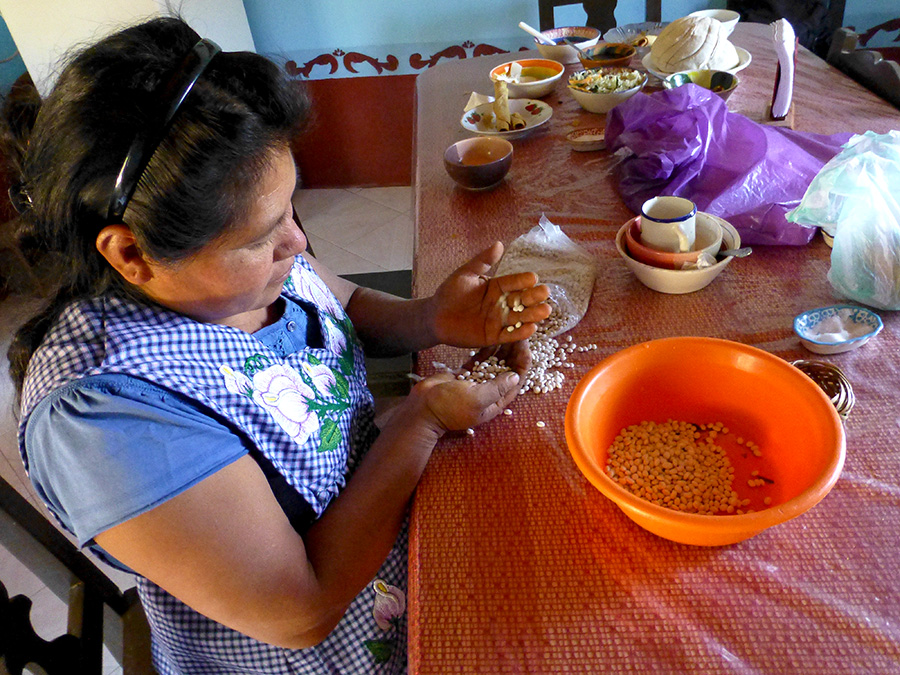
However, this day, I wasn’t there for the weaving — as wonderful as it is.  As with much of life in Teoti, there are culinary customs to be followed on Holy Thursday.  After insisting I sit down for desayuno (my second of the day — I’d eaten breakfast before leaving home), we set to work preparing the traditional Jueves Santo comida of white beans.

P1250578

Juana separating dried white beans.

I was tasked with grinding garlic and herbs used to season the beans.

P1250605

Crushing garlic and herbs using a stone pestle in a clay bowl.

Halved tomatoes (another of my jobs), whole onions and whole jalapeños were added to the beans.

P1250606

Yes, this watched pot did boil — or at least, simmer!

Our attention then turned to making chiles rellenos de queso, using Oaxaca’s own chile de agua.  For this, we moved to the outside kitchen set up under the shade of fruit trees.

P1250609

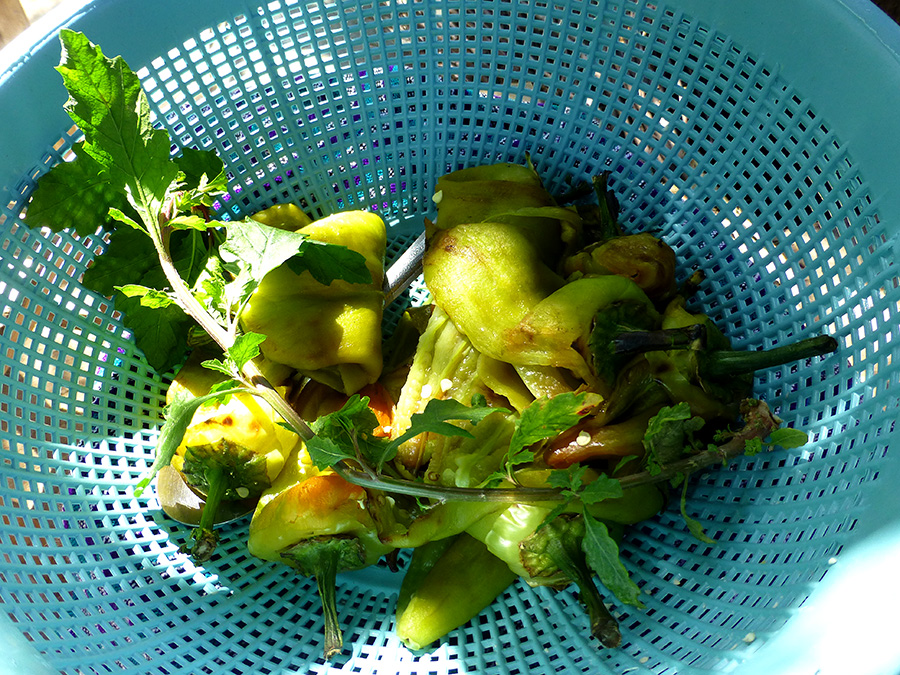
Chiles roasting roasting directly on top of wood coal.

Juana used her fingers to turn the the chiles.  However, after one attempt on my part, she pointed to the tongs.  Those coals were really hot!

P1250617

Modern wire whisk meets traditional clay cazuela.

While Juana whipped egg whites to a stiff peek, before adding the yolks, I peeled and slit the chiles.

P1250618

Epazote leaves and chiles await the quesillo.

I was also entrusted with stuffing the chiles — first a leaf of epazote, followed by a heaping helping of shredded quesillo (Oaxaca string cheese).  Then Juana commenced to frying the chiles rellenos in another cazuela — gently laying each on top of a bed of egg batter and spooning more batter on top.

P1250624

Cazuela and chiles rellenos amidst the flames.

She was masterful in her ability to withstand the heat of the fire while carefully turning the chiles.

P1250621

Chiles rellenos about to be transferred to a waiting platter.

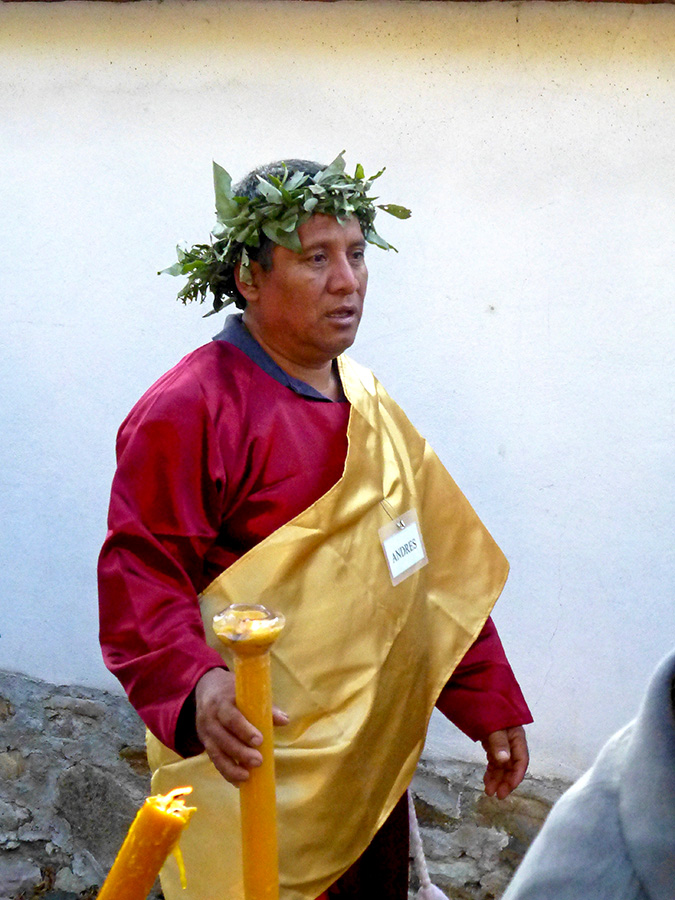
In timing known only to Juana and Antoño, comida was ready just as Antoño walked in the door from attending a reenactment of La Última Cena at the church — a Last Supper that featured the flavors of Teotitlán.  During this Semana Santa, he portrayed Andrés el Apóstol (Apostle Andrew).  So, only a few hours after we had all last eaten, we were again sitting down at the table.  Alas, the food was SO delicious and I was having so much fun, I forgot to take pictures of our bowls of delicately flavored white beans and plates of chiles rellenos.  Sometimes you just have to be “in the moment.”

Save

Save

Read Full Post »

As the last couple of posts hinted, this year, instead of the city, I spent much of Semana Santa (Holy Week) in one of my favorite places — Teotitlán del Valle.

This was only the beginning.  It was a colorful, moving, and delicious experience!


Read Full Post »

Well, actually not coats.  These are the “casitas” (temporary homes) to house Jesús and María as they make their way through the streets of Teotitlán del Valle on Lunes Santo (Holy Monday).

P1250463

The aforementioned streets include several blocks of Av. Juárez — the main street into town.  Thus, I found myself being “let off” the Teoti bus by the panteón (cemetery), instead of the mercado.

P1250462

How could I complain, when these guys (above) were so welcoming and offered this weary traveler a cup of agua de guanábana, a refreshing fresh fruit drink.

P1250478

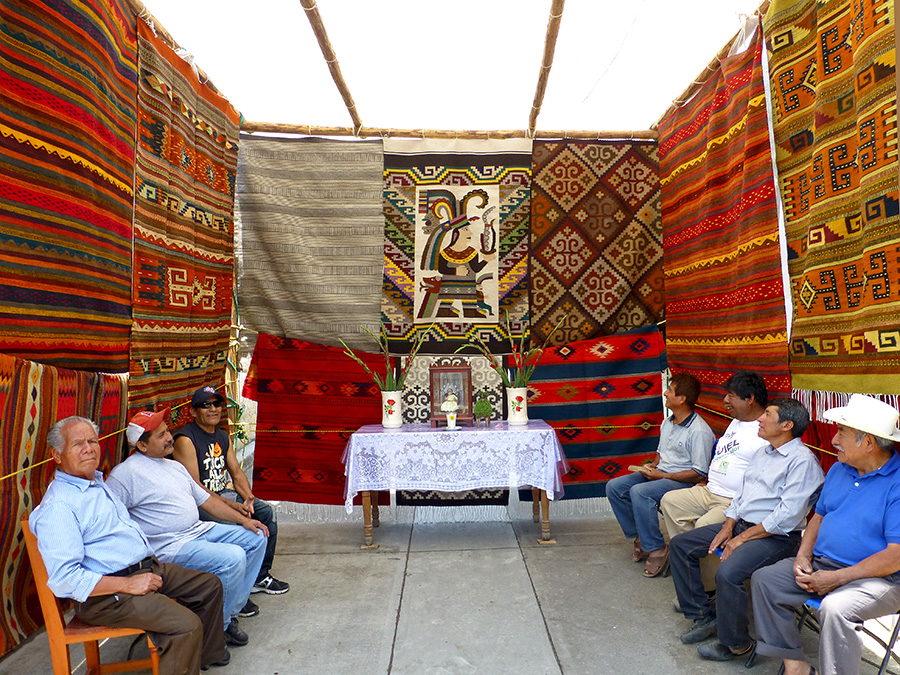
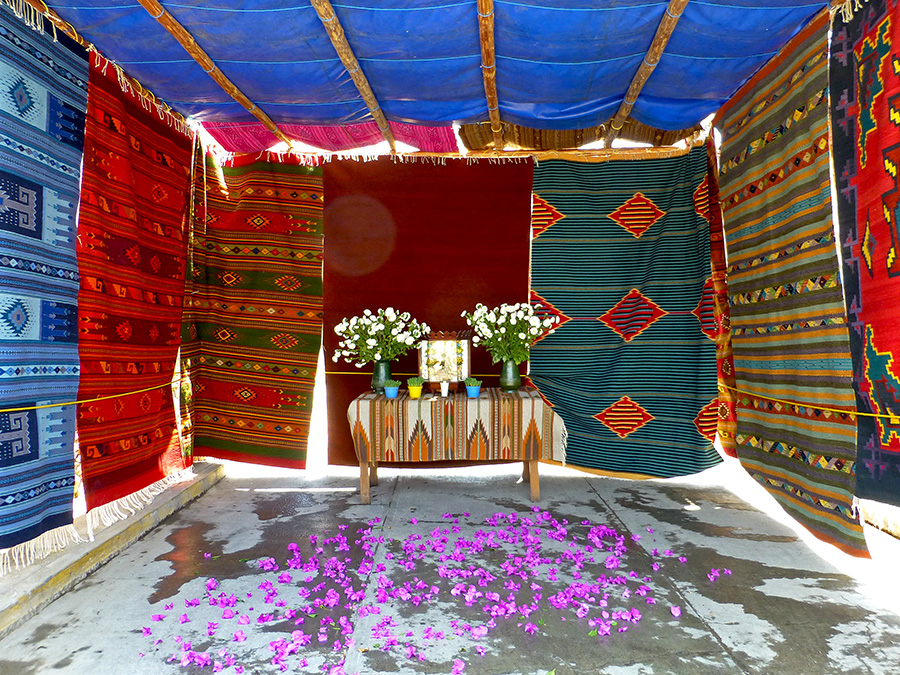
As I mentioned in Monday’s post, there are twelve casitas in all — each with “walls” of the colorful tapetes woven in this village known for the story-telling designs and striking colors of their rugs.  Apparently, up until forty years ago, the casita walls were made of petates, the traditional woven palm mats that play a role from birth to death.  But, times change, the tapetes are more colorful, and it’s good PR for this community of weavers.

IMG_3200

As Jesús and María near, the ground is sprinkled with water and bougainvillea blossoms are scattered on the casita floor, copal incense is lit, and platters of food and drink await to feed the faithful and quench their thirst.  More about that to come…

Save

Save

Read Full Post »

Today, Lunes Santo (Holy Monday), found me in Teotitlán del Valle, as Jesús and María were carried on palanquins in a slow moving procession through town, from one temporary tapete (rug) adorned casita to another.  They will make twelve stops in all.

IMG_3262 crop2

This casita was erected by the family of the Vice President of the village Church Committee, Amado Gutiérrez, father of Porfirio Gutiérrez, of whom I have previously written.

There was food and drink and so much more to this solemn expression of faith, so please stay tuned…

Read Full Post »

Una muestra (a sample) from another sublime Domingo de Ramos (Palm Sunday) in San Antonino Castillo Velasco.

P1250437

Under the lavender canopy of jacaranda, Jesús (wearing his red cape) and his burro enter the church courtyard laden with the rich bounty of the village.

More to come…

Save

Save

Save

Save

Read Full Post »

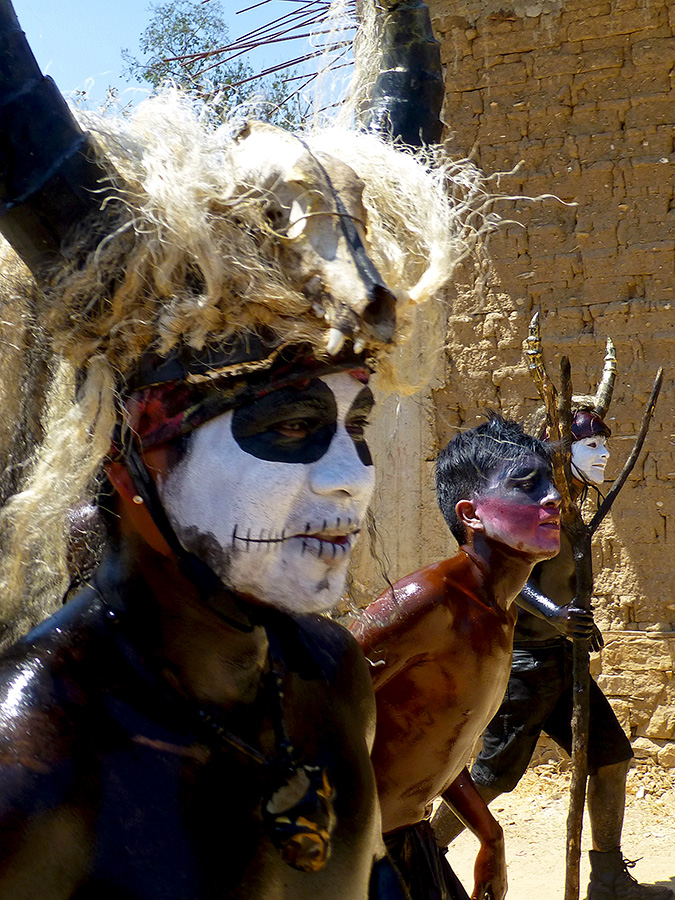
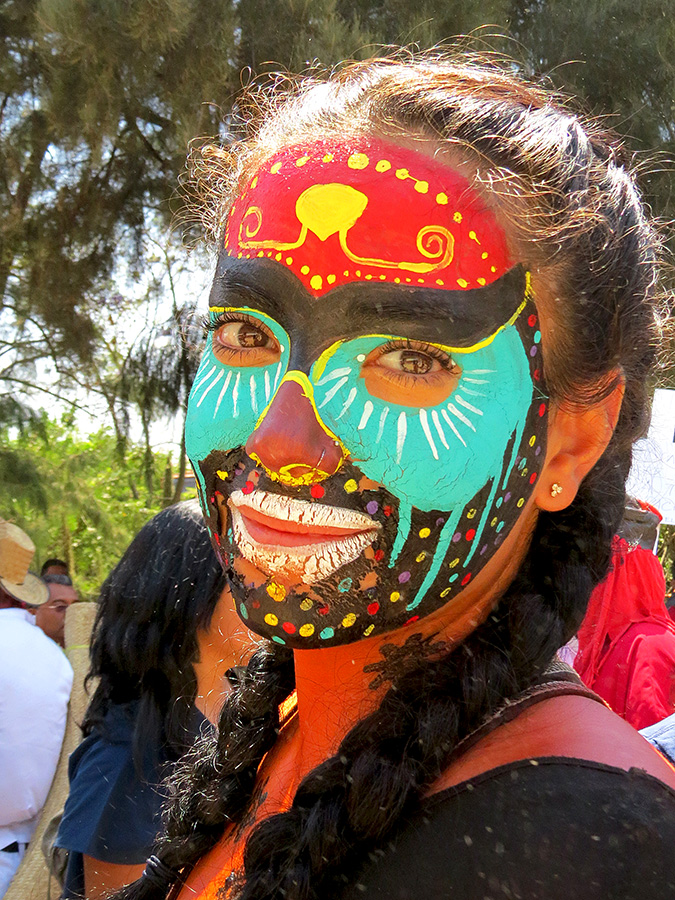
Besides a mock wedding with men dressed as women, mentioned in my previous post, Carnaval (Carnival, Mardi Gras, Fat Tuesday, Shrove Tuesday) in San Martín Tilcajete also means young men covered in motor oil (yuck!) and paint running through the village with belts of cowbells ringing.

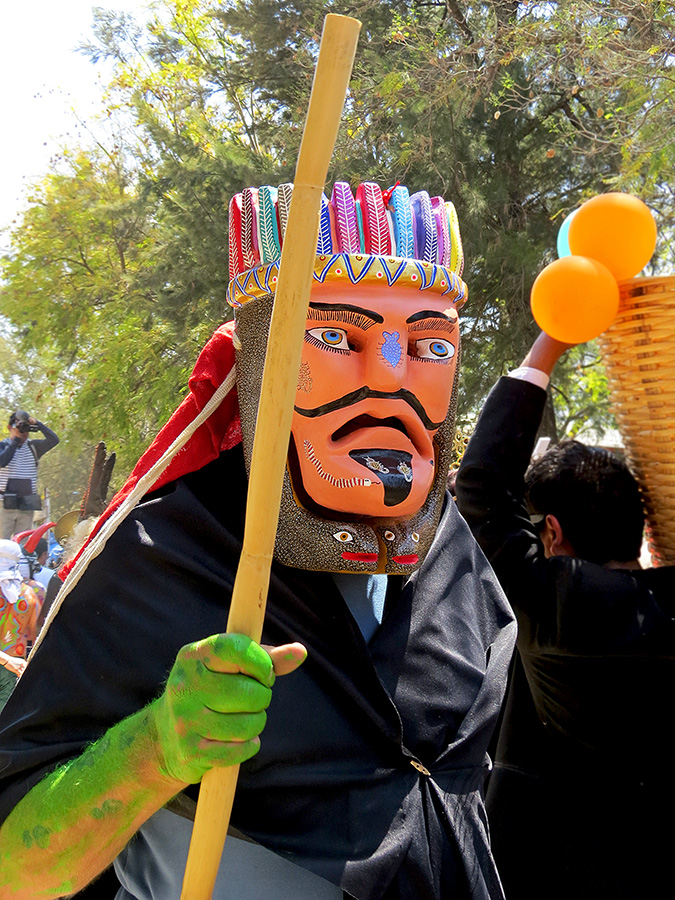
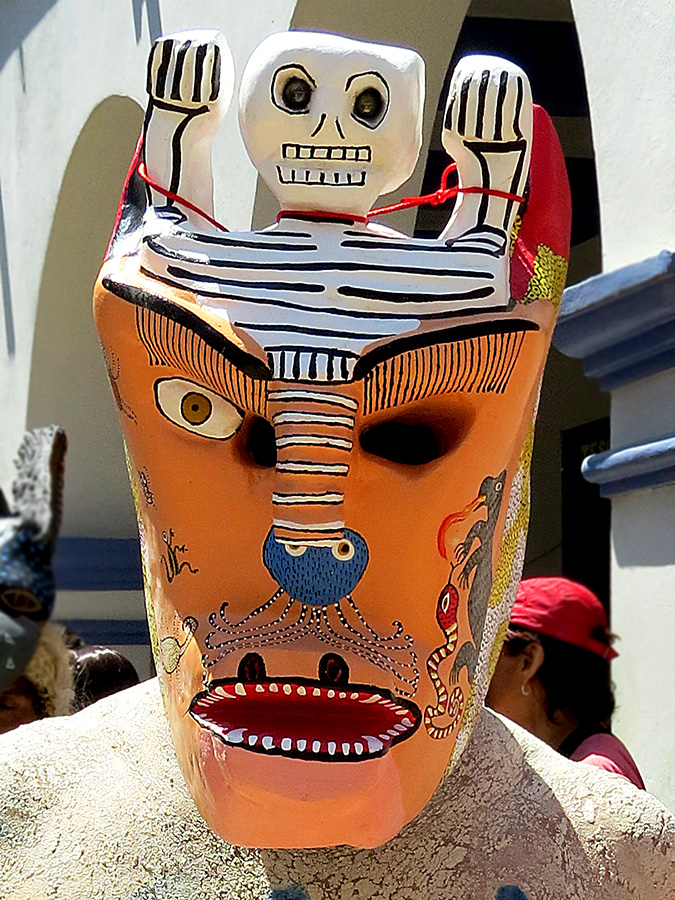
And, it means muchas máscaras de madera — in this village famous for its fantastical hand-painted alebrije woodcarvings and masks.

Some of my favorite masks and body paint were done by Jesus Sosa Calvo, his talented wife, Juana Vicente Ortega Fuente, and their gifted children.  (See the mask I gave to my son, carved by Apolinar, one of their sons.)  If you are in San Martín Tilcajete, be sure to see their work at Matlacihua Arte (right across from the zócalo on the main street).

The Spanish brought this pre-Lenten tradition to Mexico and, like many other seasonal celebrations, it conveniently coincided with indigenous festivals celebrating the “lost days” of the Mesoamerican calendar, “when faces were covered to repel or confuse evil.”  Apparently, it caught on “because it was one time when normal rules could be broken especially with the use of masks to hide identities from the authorities.”

Masks, motor oil, face and body paint, you name it, disguised and anonymous was the order of the day!

Save

Save

Read Full Post »

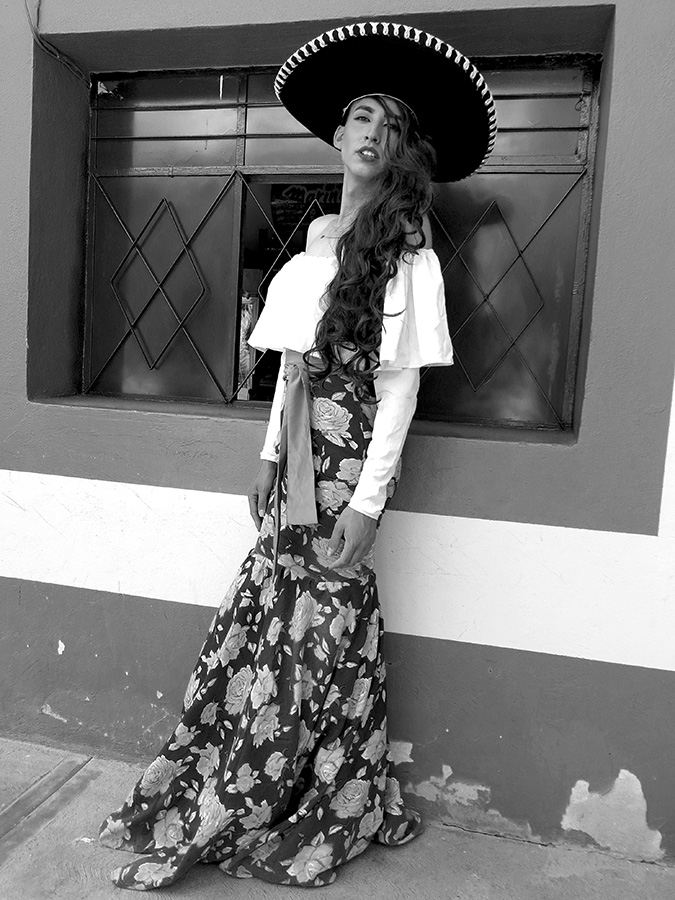
Among other highlights, Carnaval/Carnival in San Martín Tilcajete features a mock wedding, quinceañera, and beautiful fabulously dressed and accessorized “women.”

IMG_2917

IMG_2906

IMG_2902

IMG_2901 b&w

IMG_2909

The day before Lent in San Martín Tilcajete 2017.  As they say in New Orleans, “Laissez les bons temps rouler!”

Save

Save

Save

Save

Read Full Post »

Currently, View from Casita Colibrí is being brought to you from el norte.  Alas, tax season has come around again and mine need to be prepared.  Then there is never-ending house maintenance and repair.  I admit, it’s not all work and no play; being here means I get to spend time with family and friends, eat sushi, and give my regards to the Pacific Ocean. 

However, despite the ease of grocery shopping when one has use of a car, pricey supermarket herbs packaged in puny plastic boxes don’t feed my soul and delight my senses the way the stalls overflowing with fresh and dried herbs at Mercado Benito Juárez in Oaxaca do.

P1240917

P1240909

P1240913

Speaking of  the former governor of Oaxaca, Mexico’s much beloved five-term and only indigenous (Zapotec) president, Benito Juárez, his birthday is coming up on March 21.  He is the only individual in Mexico to have his birthday designated as a national holiday (celebrated this year on Monday, March 20). 

We would all do well to remember AND practice his famous words:  Entre los individuos, como entre las naciones, el respeto al derecho ajeno es la paz.  (Among individuals, as among nations, respect for the rights of others is peace.)

Save

Save

Read Full Post »

It’s a travel day for me and I didn’t think I would have time to honor my sisters of the world on this International Women’s Day.  However, thanks to a flight delay that has left me with an even longer than planned layover in Houston, I can think of no better way to celebrate the day than presenting Julia and Luvia; two of the extraordinary women of Teotitlán del Valle.

P1240772

Julia Martinez Bautista at her 100th birthday party, February 1, 2017.

P1240647

Luvia Lazo Gutierrez, director of the new Centro Cultural Comunitario de Teotitlán del Valle.

They embody the strength, ingenuity, intelligence, and creativity of women everywhere!

Save

Read Full Post »

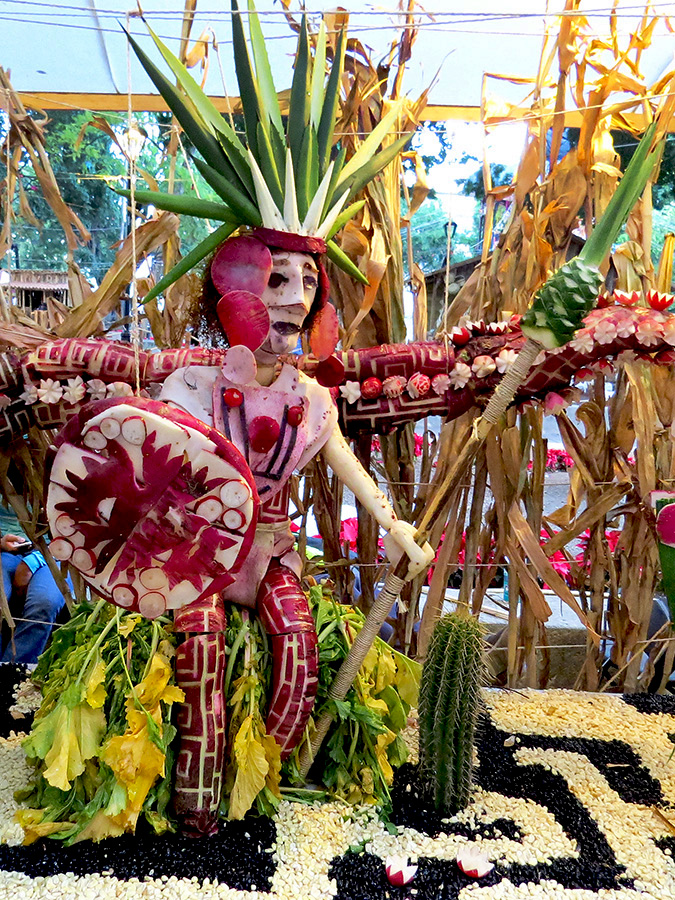
Of the rábanos from Noche de Rábanos, this radish sculpture of Cuauhtémoc, the last Aztec emperor of Tenochtitlan, was my favorite.

Cuauhtémoc portrayed in radishes

“Cuauhtémoc: El Último Gran Emperador Azteca” by José Yehú Santos Aguilar took second place in the Free Radish category.

Read Full Post »

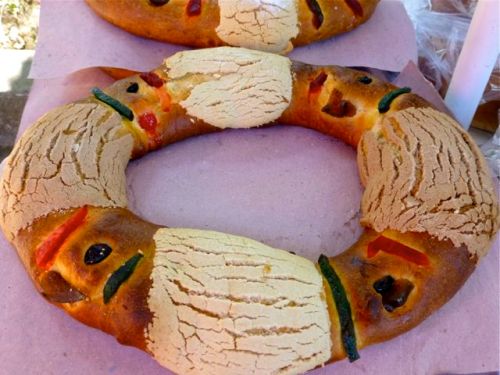
Today, Mexico is celebrating Día de Reyes (aka, Three Kings Day and Epiphany).  It is today, not Christmas, that children wake up to find gifts brought during the night, not by Santa but by the Magi.  Melchior, Gaspar, and Balthazar still had enough stamina to stroll the Alcalá late this morning handing out presents.  Alas, gold, frankincense, and myrrh seem to have gone out of fashion.

Later this afternoon, at the new Polideportivo Venustiano Carranza, the children’s choir “Agnus Dai,” will perform and “Los Payasos y Domo de la Ciencia” from the Oaxaca Science and Technology Council will hold activities.  After a siesta, los tres Reyes Magos will also make their way up to the sports complex to hold contests and continue their gift giving.

P1040299

By the way, at a meeting I attended today, guess who bit into the little plastic baby Jesús hidden in the Rosca de Reyes (Three Kings cake)?  You guessed it!  Hmmm… That means I have to host a tamal and atole party on Candlemas, February 2nd, for everyone at the meeting.  That’s the tradition in Oaxaca!

Read Full Post »

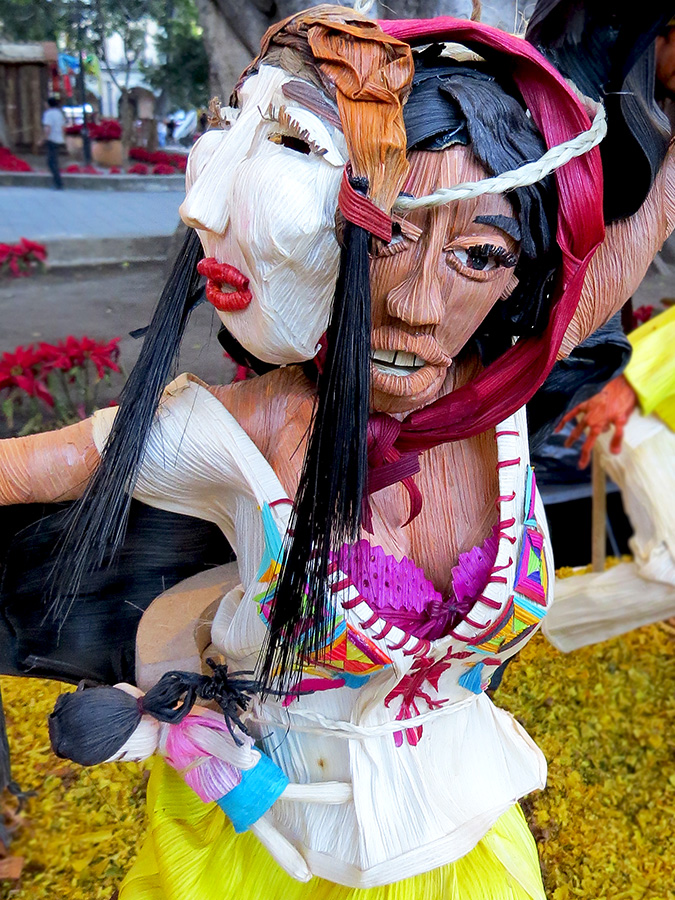
As I previously explained, Noche de Rabanos isn’t just about radishes.  One of the other categories of entries is Totomoxtle Decorado.  And the winner was Moisés Ruíz Sosa, with his dyed cornhusk depiction of Día de Muertos on the Costa Chica of Oaxaca.

img_2838

Descendants of slaves, the Afromexicano population of Oaxaca is located in 16 municipalities, with 11 of these municipalities located in the Costa Chica, Oaxaca’s far western coastal region, bordering the state of Guerrero.

img_2842

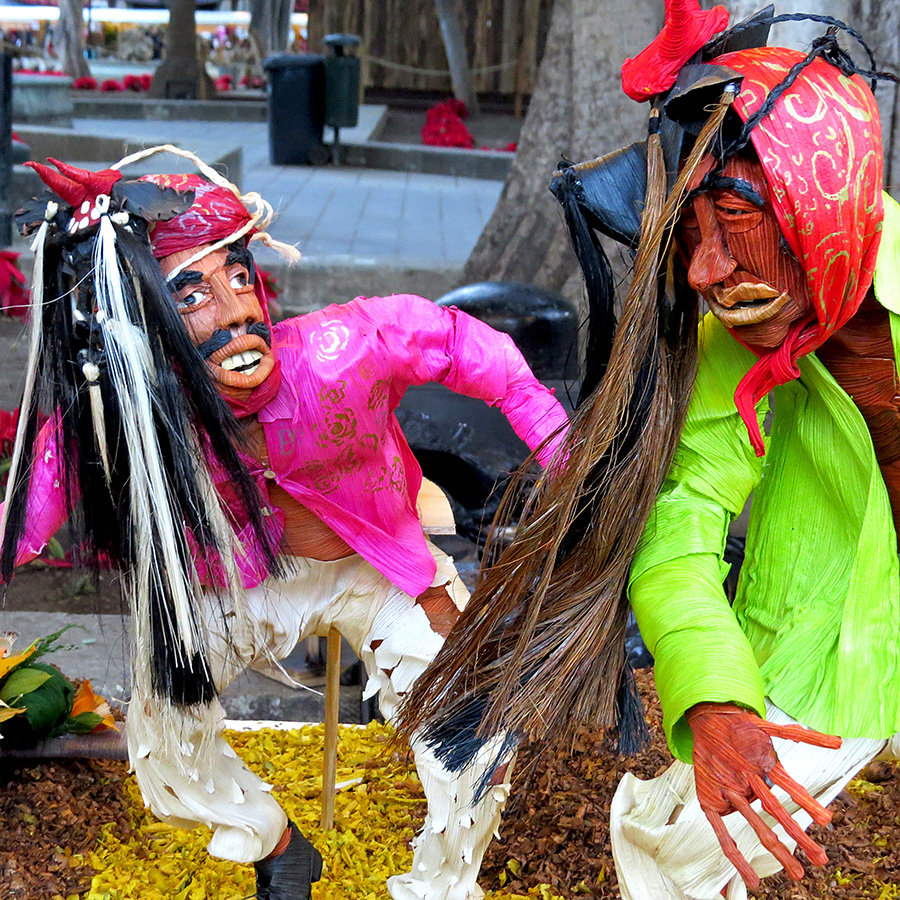
During Day of the Dead, the Danza de los Diablos (Dance of the Devils) is performed in these communities.

img_2840

Dancers wear devil masks, and are led by a colonial ranch foreman with a whip, who “struts around, while his buxom ‘white’ wife – played by a black man – flirts outrageously with the ‘devils’ and even the audience.”  [The black people ‘erased from history’]

img_2844

To see the Noche de Rabanos 2013 entry by Moisés Ruíz Sosa, click HERE.

By the way, the “Elaborando Artesanía, Plasmando Sueños: ‘Teotitlán del Valle, Tierra de Dioses’” by Raymundo Sánchez Monserrat Maricela, which I wrote about in Noche de Rabanos, pt. 1, took first prize in the Flor Inmortal Adulto category!

Save

Save

Read Full Post »

‘Tis Nochebuena in Oaxaca and all is well.  The sun is shining and goodwill is felt on the streets and in the mercados.  Casita Colibrí is festooned with seasonal decorations both outside and in.

Tonight, posadas from throughout the city will converge on the zócalo with Josés, Marías holding baby Jesús, and angels on flatbed trucks; pinwheels, sparklers, and fireworks will light the night sky; brass bands will play; and China Oaxaqueñas will dance.  I can’t wait!  In the meantime, may Ernie Villarreal’s version of Pancho Claus by Chicano music legend, Eduardo “Lalo” Guerrero, bring the gift of joy to those near and far.

Pancho Claus

‘Twas the night before Christmas and all through la casa
Not a creature was stirring, Caramba! ¿Que pasa?

Los ninos were all tucked away in their camas,
Some in vestidos and some in pajamas.
While Mama worked late in her little cocina,
El viejo was down at the corner cantina.

The stockings were hanging con mucho cuidado,
In hopes that St. Nicholas would feel obligado
To bring all the children, both buenos y malos,
A Nice batch of dulces and other regalos.

Outside in the yard, there arouse such a grito,
That I jumped to my feet, like a frightened cabrito.

I went to the window and looked out afuera,
And who in the world, do you think que era?

Saint Nick in a sleigh and a big red sombrero
Came dashing along like a crazy bombero!

And pulling his sleigh instead of venados,
Were eight little burros approaching volados.

I watched as they came, and this little hombre
Was shouting and whistling and calling by nombre.

¡Ay, Pancho! ¡Ay, Pepe! ¡Ay, Cuca! ¡Ay, Beto!
¡Ay, Chato! ¡¡Ay, Chopo! ¡Maruca and ¡Nieto!

Then standing erect with his hand on his pecho
He flew to the top of our very own techo.
With his round little belly like a bowl of jalea,
He struggled to squeeze down our old chimenea.

Then huffing and puffing, at last in our sala,
With soot smeared all over his red suit de gala.

He filled the stockings with lovely regalos,
For none of the children had been very malos.

Then chuckling aloud and seeming contento,
He turned like a flash and was gone like the viento.

And I heard him exclaim and this is VERDAD,
Merry Christmas to all, And to All ¡Feliz Navidad!

May you all find peace and joy every day of the year.

Read Full Post »

It’s December 23 in Oaxaca and Noche de Rabanos is upon us.  The setting-up has begun and the spectators are gathering.  Despite its name, it isn’t just about artisans working their creative magic carving radishes.  There are three other categories, including the use of Flor Inmortal (a type of dried flower).  I will return this evening, but in the meantime, this entry titled, “Elaborando Artesanía, Plasmando Sueños: ‘Teotitlán del Valle, Tierra de Dioses'” by Raymundo Sánchez Monserrat Maricela, is for all my friends in Teotitlán del Valle.

p1240103copy

Spinning the wool.

p1240101

Weaving tapetes from the spun wool.

p1240105

Grinding corn or maybe chocolate OR maybe even cochinilla!

p1240106

Dancing the Danza de la Pluma…

p1240107

The danzantes of the Grupo de Danza de Pluma Promesa keeping their promise.

I think Raymundo did a wonderful job capturing the people of Teotitlán del Valle, the Land of the Gods, who make crafts and shape dreams.

Save

Save

Read Full Post »

« Newer Posts - Older Posts »