Scenes from the streets of San Martín Tilcajete during yesterday’s Carnaval craziness.


“Color is descriptive. Black and white is interpretive.” – Eliott Erwitt
Posted in Celebrations, Creativity, Culture, Religion, Travel & Tourism, tagged Black and white photography, bodypaint, Carnaval, Carnival, Fat Tuesday, Jacobo Ángeles, Mardi Gras, mascaras, masks, Mexico, Oaxaca, photos, San Martín Tilcajete on March 6, 2019| 2 Comments »
Scenes from the streets of San Martín Tilcajete during yesterday’s Carnaval craziness.
“Color is descriptive. Black and white is interpretive.” – Eliott Erwitt
Posted in Celebrations, Creativity, Culture, Holidays, Travel & Tourism, tagged Barrio de San Pablo Zaachila, Carnaval, Carnival, costumes, Fat Tuesday, Mardi Gras, mascaras, masks, men dressed as women, Mexico, Muestra de Carnavales de los Valles Centrales, Oaxaca, painted bodies, parade, photos, San Jacinto Chilateca, San Martín Tilcajete, Santa Ana Zegache, Santa María Coyotepec, Shrove Tuesday on March 3, 2019| 2 Comments »
Given that Oaxaca loves parades and processions (the numbers of Muertos comparsas and Guelaguetza desfiles seem to grow every year), yesterday the 1st Muestra de Carnavales de los Valles Centrales took over the Macedonio Alcalá walking street with costumes, devils, painted bodies, cowbells, bands, masked men, mezcal, and more.

Santa Ana Zegache

Santa Ana Zegache
In an effort to promote tourism in the villages, residents and visitors were treated to sampling the variety of Carnaval traditions from five of the Valley of Oaxaca’s communities.
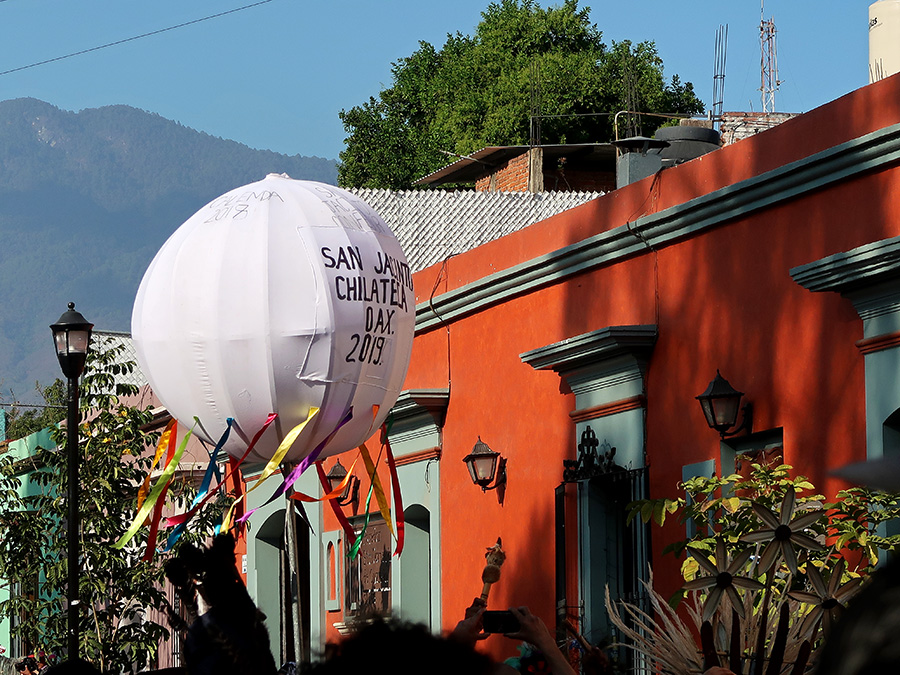
San Jacinto Chilteca
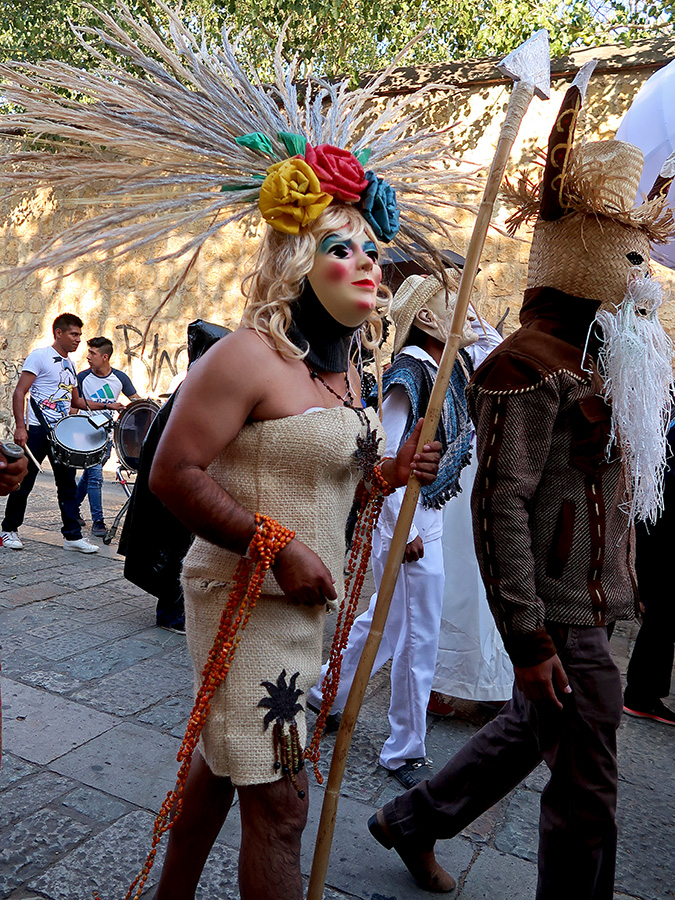
San Jacinto Chilteca
The Spanish brought the tradition of Carnaval to Mexico. However, like many other seasonal celebrations, it conveniently coincided with indigenous festivals celebrating the “lost days” of the Mesoamerican calendar, “when faces were covered to repel or confuse evil.”

Santa María Coyotepec

Santa María Coyotepec
Apparently, it caught on “because it was one time when normal rules could be broken especially with the use of masks to hide identities from the authorities.”
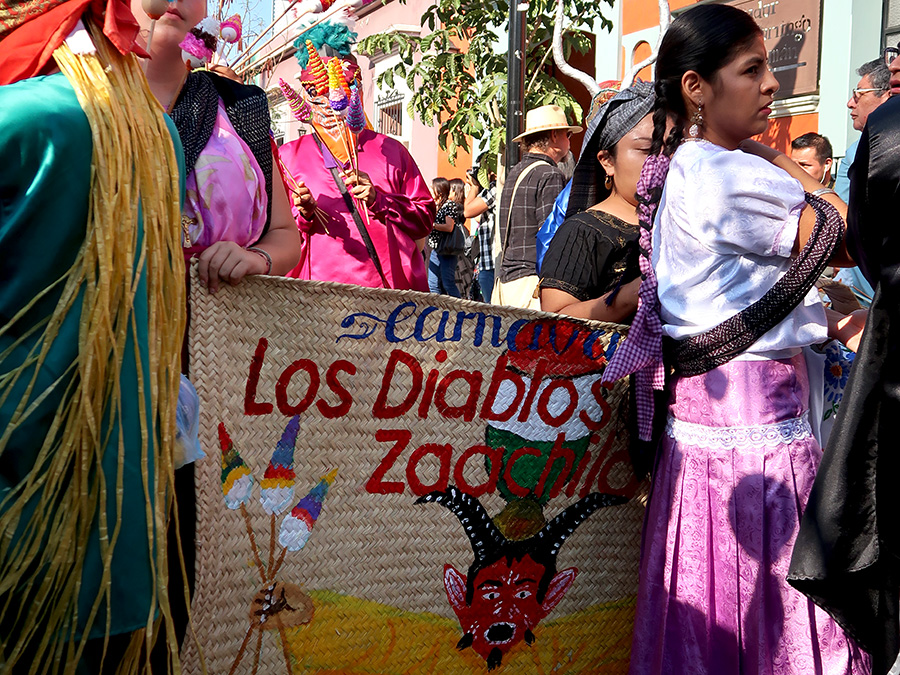
Barrio de San Pablo Zaachila
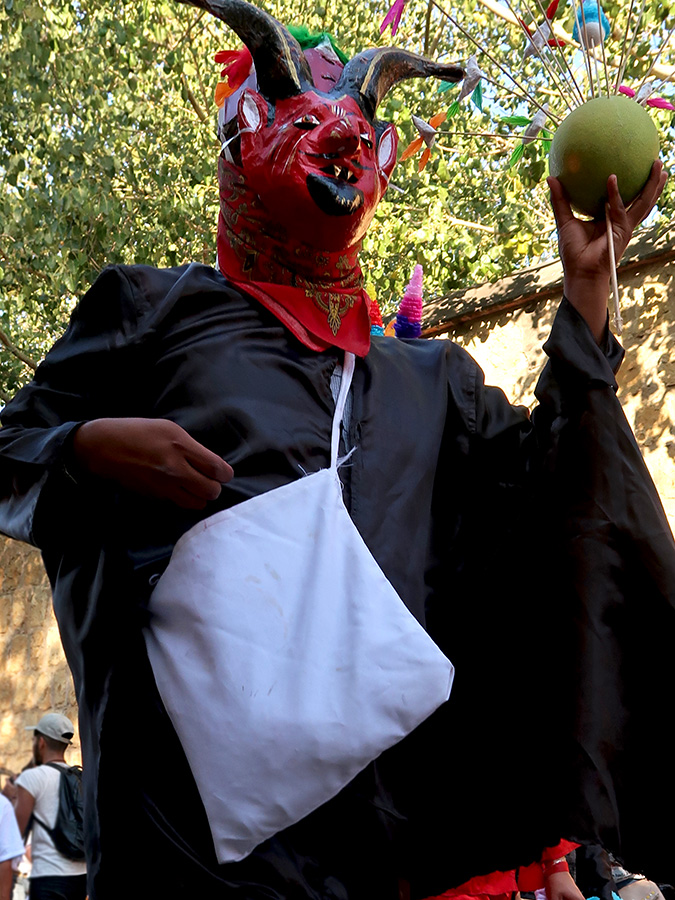
Barrio de San Pablo Zaachila
This Día de Carnaval (aka, Fat Tuesday, Mardi Gras, Shrove Tuesday, Carnival), like previous years, we will be heading out to San Martín Tilcajete.

San Martín Tilcajete

San Martín Tilcajete
However, now I’m thinking we might want to add another stop (or four?) to our itinerary. We shall see…
Posted in Archaeology, Culture, Travel & Tourism, tagged archaeological zone, Black and white photography, Mexico, Oaxaca, photos, popular travel destinations, Suchilquitongo on February 27, 2019| 2 Comments »
Visiting friends equals playing tour guide and exploring the sights, sounds, and tastes of Oaxaca. Thus, last Thursday off we went to the new-to-me, little known, and hard to find north-of-the-city archeological site of Suchilquitongo.
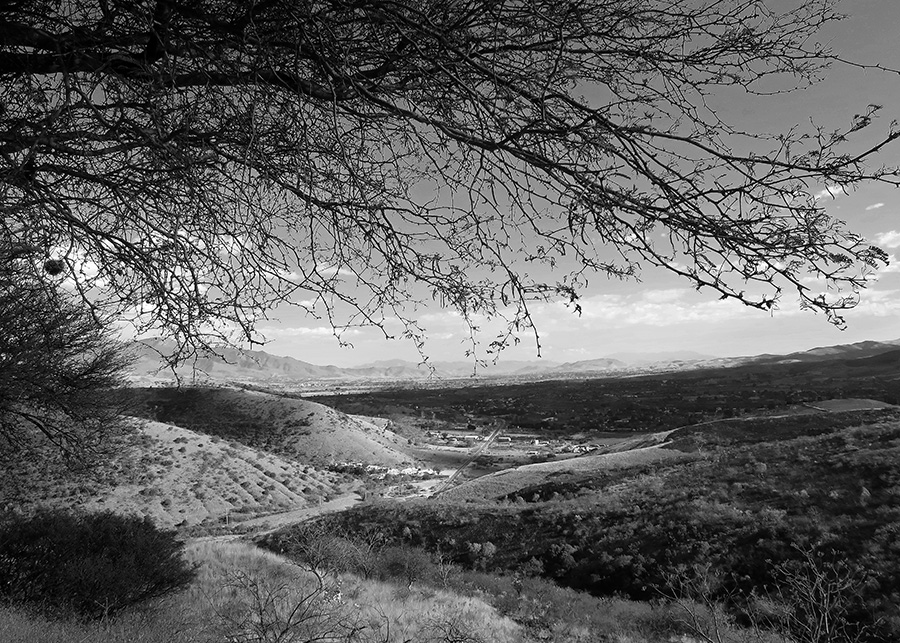


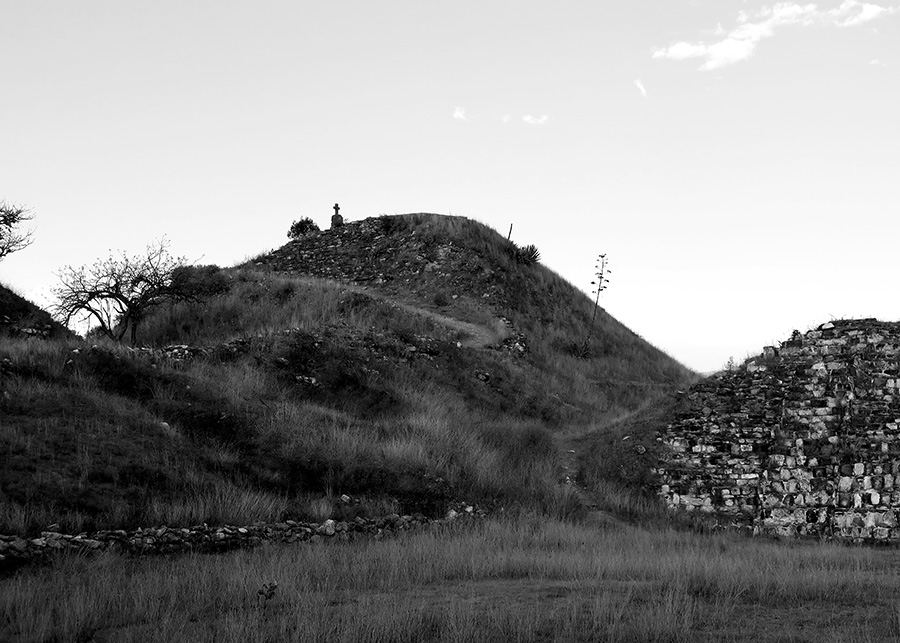
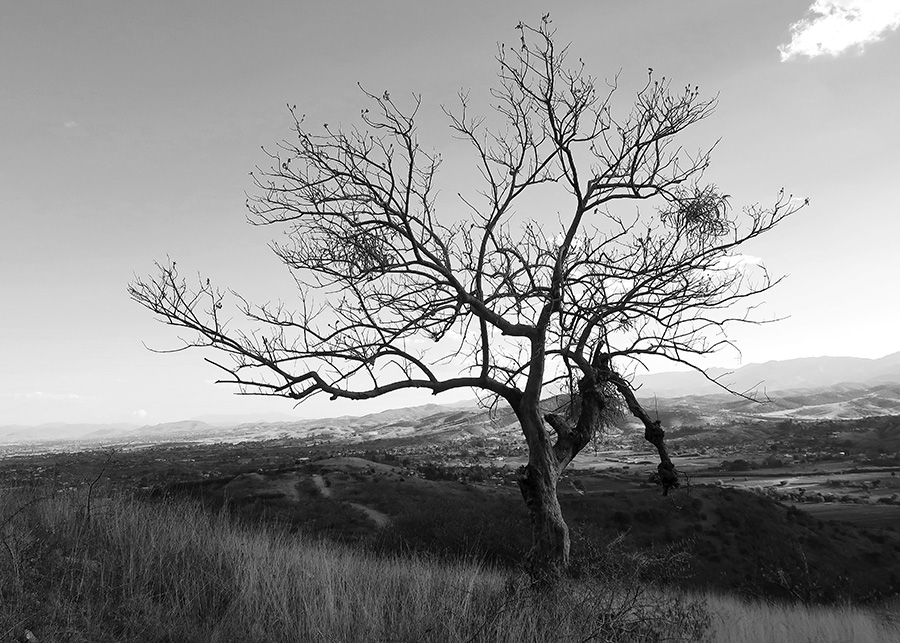
While the site is small and the excavated tomb is closed, for the views alone, it was well worth the trip.
Posted in Agriculture, Animals, Beverages, Creativity, Culture, Flora, Science & Nature, Travel & Tourism, tagged agave, bats, flowers, hummingbirds, Lapiztola, mague, Mal de Amor palenque, Mexico, murals, Oaxaca, photos, popular travel destinations, quiote, Santiago Matatlán, wall art on February 24, 2019| 5 Comments »
Let us all raise a glass to the hummingbirds and bats of Oaxaca.
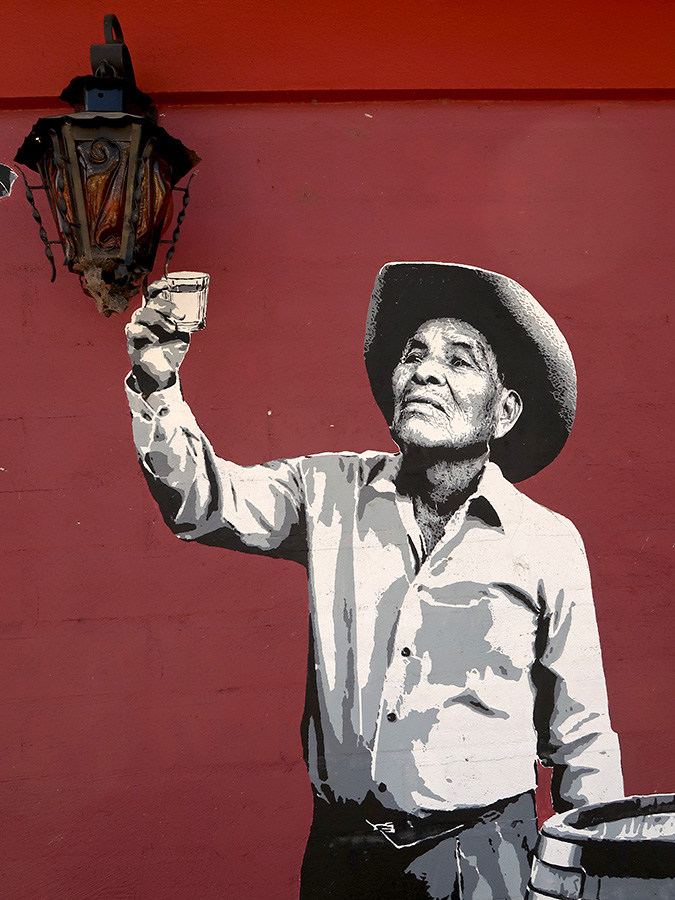
Without the work they do pollinating the flowers on the quiotes (stalks) that shoot up from the agave,
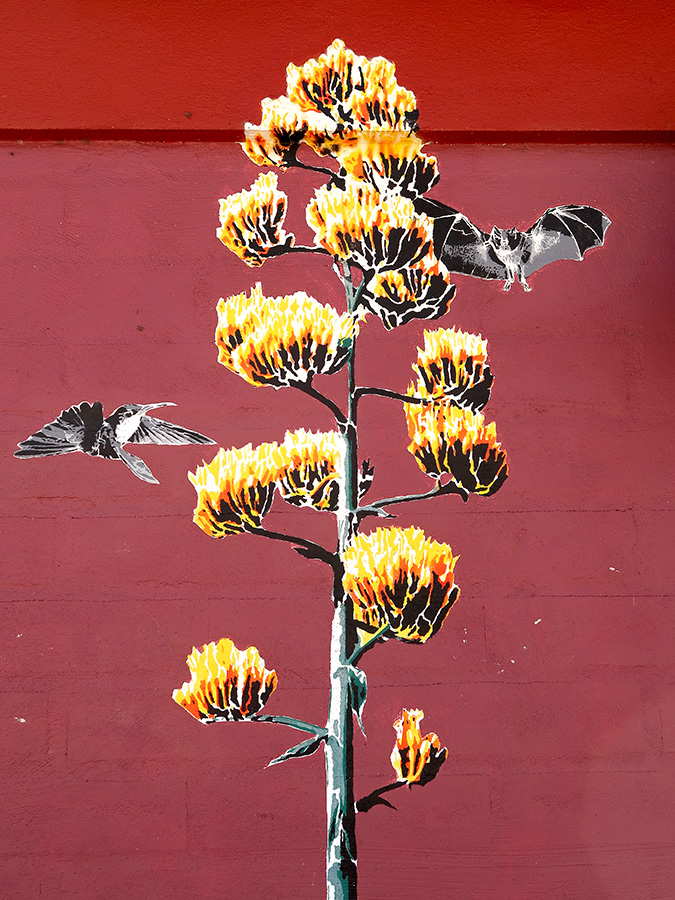
there would be no maguey piñas to harvest and cook…
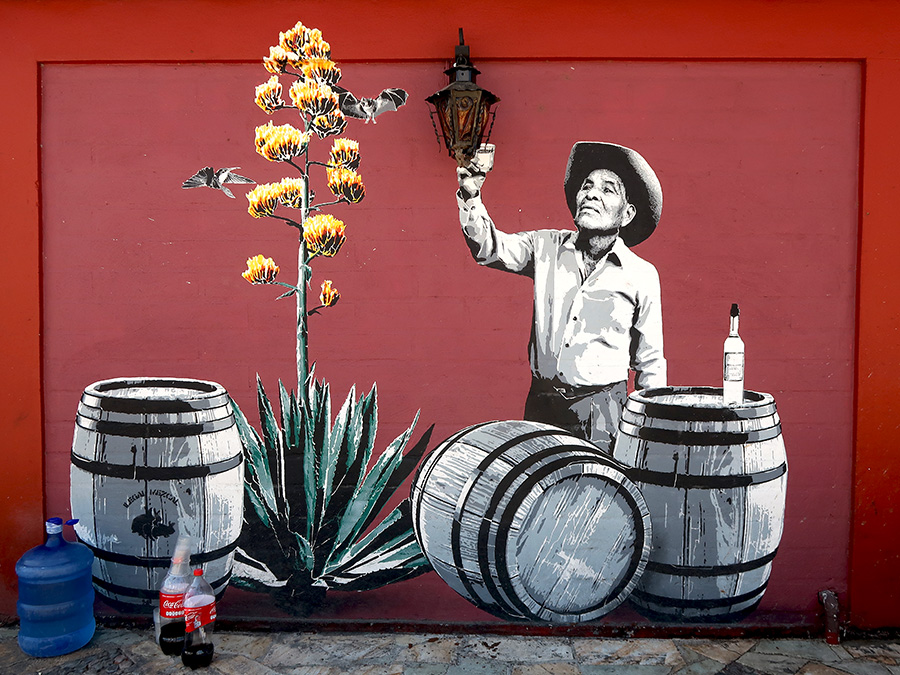
and no mezcal to drink!
*Mural by Lapiztola on the side of the Palenque Mal de Amor (makers of Ilegal mezcal) 2+ miles north of Santiago Matatlán, Oaxaca. Check out their other mural at the palenque HERE.
Posted in Celebrations, Culture, Education, Language, Travel & Tourism, tagged costumes, Día Internacional de la Lengua Materna, ethnolinguistic groups, indigenous peoples, International Mother Language Day, language, lengua materna, Mexico, Mother Tongue, native tongues, Oaxaca, photos, traje, UNESCO, United Nations on February 19, 2019| 7 Comments »
2019 has been proclaimed the International Year of Indigenous Languages by the United Nations. The issue of “lenguas maternas” (mother tongues) has a particular resonance in Oaxaca, as the state is home to 16 distinct ethnolinguistic groups: Amuzgos, Chatino, Chinanteco, Chocho, Chontal, Cuicateco, Huave, Ixcateco, Mazateco, Mixe, Mixteco, Náhuatl, Popoloca, Triqui, Zapoteco, and Zoque.

As anyone who has visited the villages of Oaxaca has discovered, sometimes the abuelos and abuelas only speak their mother tongue, not Spanish. To honor and celebrate them, their ancestors, and their children and grandchildren, today on the zócalo, Oaxaca celebrated those languages with songs, poetry, and recitations.
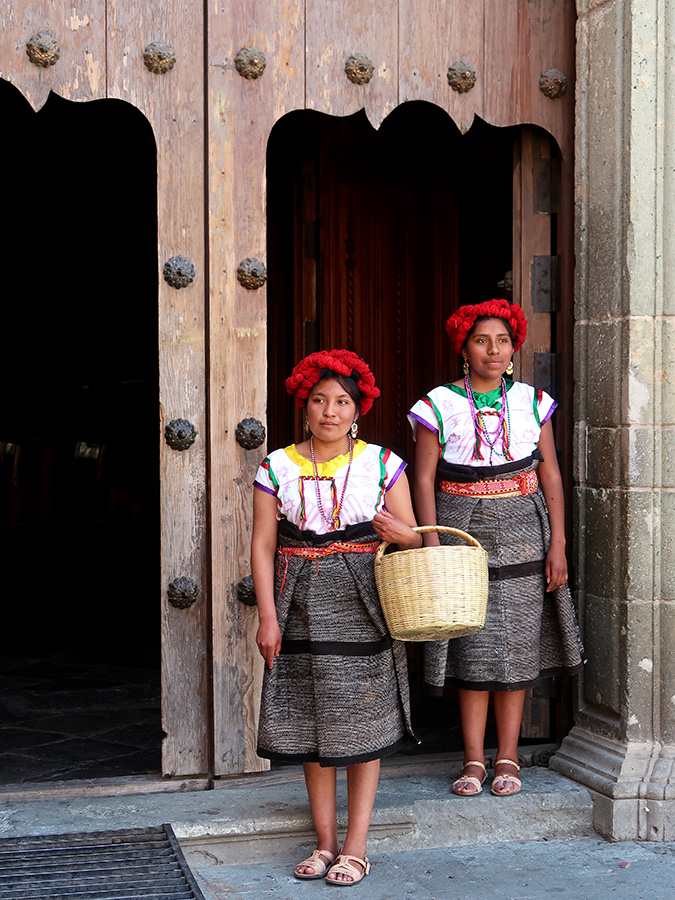
However, like indigenous languages throughout the world, Mexico’s indigenous languages are in danger of disappearing. The importance of passing these languages and the world views they express to the younger generations cannot be underestimated.

Thus here in Oaxaca, on February 21, 2019, Mother Language Day, you can walk “The roads of the feathered serpent: revaluing one of the variants of the Zapotec Valley of Oaxaca” and “Meet the Zapotec of Teotitlán through storytelling and other activities!” at the Biblioteca Infantil (Children’s Library).
Posted in Creativity, Culture, Exhibitions, Museums, People, Textiles, Travel & Tourism, tagged Chachahuantla blusa, Linda Hanna, Mexico, Museo Estatal de Arte Popular Oaxaca (MEAPO), Oaxaca, photos, Rosas y Revelaciones, San Antonino Castillo Velasco dress, San Miguel del Valle mandil, San Pedro Zipiajo blusa, Tenancingo rebozo, Teotitlán del Valle ruana, Virgen de Guadalupe, Virgin of Guadalupe, Zinacatán tunic on February 16, 2019| 6 Comments »
The devotion to the Virgin of Guadalupe captured the imagination of fiber artist Linda Hanna when, as an early teen, she visited Mexico with her family and saw believers crawling on their knees up to the Basilica of Our Lady of Guadalupe.

Blouse by Teresa Silvia Tzintzun, San Pedro Zipiajo, Michoacán (Purepecha).

Detail of blouse by Teresa Silvia Tzintzun, San Pedro Zipiajo, Michoacán (Purepecha).
The Virgin’s appeal continued to deepen when Linda moved to Oaxaca in 1997. Thus the seeds/threads of the exhibition, “Rosas y Revelaciones: Homage to the Virgin of Guadalupe by Mexican Textile Artists” were sown/sewn.

Blouse by Marcolina Salvador Hidalgo, Chachahuantla, Puebla (Nahua).

Detail of blouse by Marcolina Salvador Hidalgo, Chachahuantla, Puebla (Nahua).
The legend of La Virgen de Guadalupe is known to every Mexican, every person of Mexican descent, and probably every foreigner who calls Mexico home. The image of this dark-skinned Virgin who spoke Náhuatl is as imprinted on the national consciousness as she was on Juan Diego’s legendary tilma (cloak).

Dress by María Guadalupe Santiago Sánchez, San Antonino Castillo Velazco, Oaxaca (Zapoteco).

Detail of dress by María Guadalupe Santiago Sánchez, San Antonino Castillo Velazco, Oaxaca (Zapoteco).
Her image has continued to appear on cloth, albeit with human, not divine, intervention. Both Father Miguel Hidalgo in the Mexican War of Independence and Emiliano Zapata, one hundred years later, during the Mexican Revolution, led their troops under the banner of Our Lady of Guadalupe.

Man’s tunic by Pascuala Vásquez Hernández, Zinacatán, Chiapas (Tzotzil, Maya).

Shawl by Adolfo García Díaz & Delvina Salinas Cruz, Tenancingo, Estado de México.
The Rosas y Revelaciones textile exhibition presents work from 52 communities in ten states in Mexico (Chiapas, Colima, Guerrero, Jalisco, Mexico, Michoacán, Oaxaca, Puebla, Tlaxacala, and Yucatán) — with the majority being from Oaxaca.

Apron by Valeria García Hernández, San Miguel del Valle, Oaxaca (Zapoteco).

Detail of apron by Valeria García Hernández, San Miguel del Valle, Oaxaca (Zapoteco).
Linda explained that she gave the artists free rein to let their imagination and expertise be their guide. I suspect these words by Guadalupe Ángela, from her poem, “Virgen de la Creación” (Madonna of Creation) composed for the exhibition, echo their prayers for inspiration and guidance:
Madonna of Creation
pull the image from me, the beauty.
Make it cedar, make it textile, make it
a landscape. May the needle and thread be touched
by you.

Ruana by Erasto (Tito) Mendoza Ruiz, Teotitlán del Valle, Oaxaca (Zapoteco).
When you go, be sure to take the time to watch the video interviews with some of the artisans — the seriousness, devotion, and honor they felt at being selected to participate in this incredibly special project is extremely moving. The show is currently at the Museo Estatal de Arte Popular Oaxaca (MEAPO) (closed on Mondays) in San Bartolo Coyotepec, Oaxaca and runs through March 17, 2019 (extended until April 28, 2019) — after which it will be prepared to tour. Its first stop will be at the Museo Nacional de Culturas Populares in Coyoacán, Mexico City — in time for Día de la Virgen de Guadalupe on December 12, 2019.
(ps) Linda is hoping the exhibition will develop wings and fly throughout Mexico and eventually to the USA. If you have contacts in the museum world who might be interested in hosting this exhibition, please be sure to contact Linda Hanna at Casa Linda.
Posted in Celebrations, Creativity, Culture, Holidays, Travel & Tourism, tagged balloons, Día del Amor y la Amistad, hearts, Mexico, papel picado, photos, Valentine's Day on February 13, 2019| Leave a Comment »
The signs of Valentine’s Day are everywhere…

Ready for the fiesta on the patio of my apartment complex.

Tin hearts on display at the Museo Estatal de Arte Popular de Oaxaca (MEAPO) shop in San San Bartolo Coyotepec.
While it may be a holiday imported from Europe, Mexico embraces the celebration.

Dining room ceiling of Los Huamuches, between Santo Tomás Jalieza and San Martín Tilcajete.

Balloons on the zócalo in Oaxaca de Juárez.
Wishing you ¡Feliz Día del Amor y la Amistad!

Bougainvillea on a cross at the palenque of Faustino García Vásquez, San Baltazar Chichicápam.

Ready for the fiesta on the patio of my apartment complex.
Happy Day of Love and Friendship to all!
Posted in Creativity, Culture, Textiles, Travel & Tourism, tagged coyuche, expo-venta, huipil, indigenous textiles, Khadi Oaxaca, Mexico, Museo Textil de Oaxaca, Oaxaca, photos, rebozos, shawls, Textile Museum of Oaxaca on February 3, 2019| 3 Comments »
Friday, February first, the opening of the Museo Textil de Oaxaca expo-venta (show and sale) beckoned. Textiles from the Yucatán, Veracruz, Puebla, the State of Mexico, Michoacán, and (of course) Oaxaca filled tables and display racks. It’s hard not to feel overwhelmed by the color and beauty and workmanship, but I’m learning. I take my time, make several rounds of the booths, and then see what calls me back.
So, what did I return to? The rebozos (shawls) from Ahuirán, Michoacán.
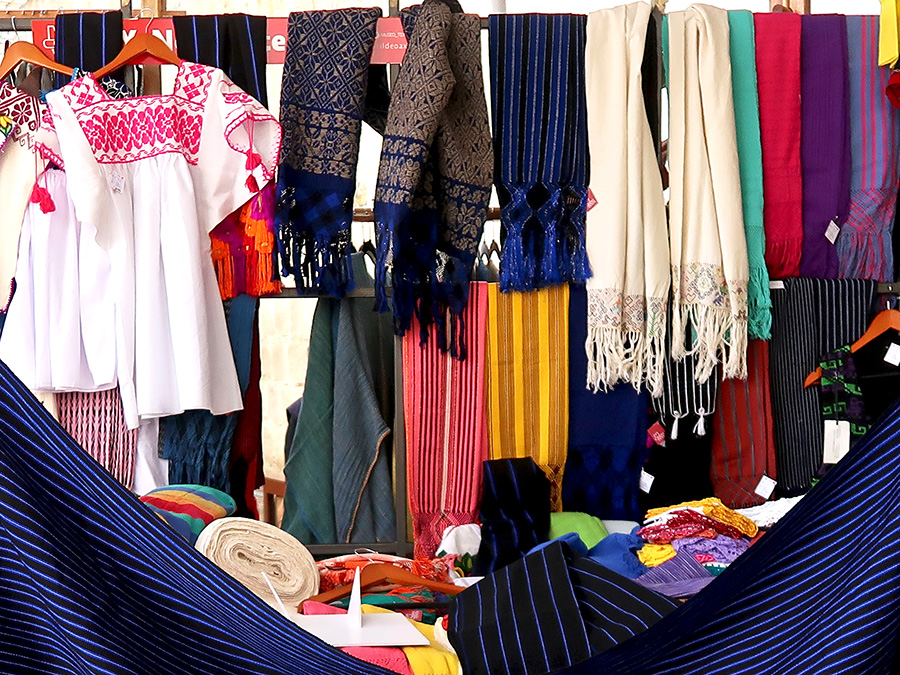


And, what did I buy? One of their traditional black and blue cotton and rayon rebozos.
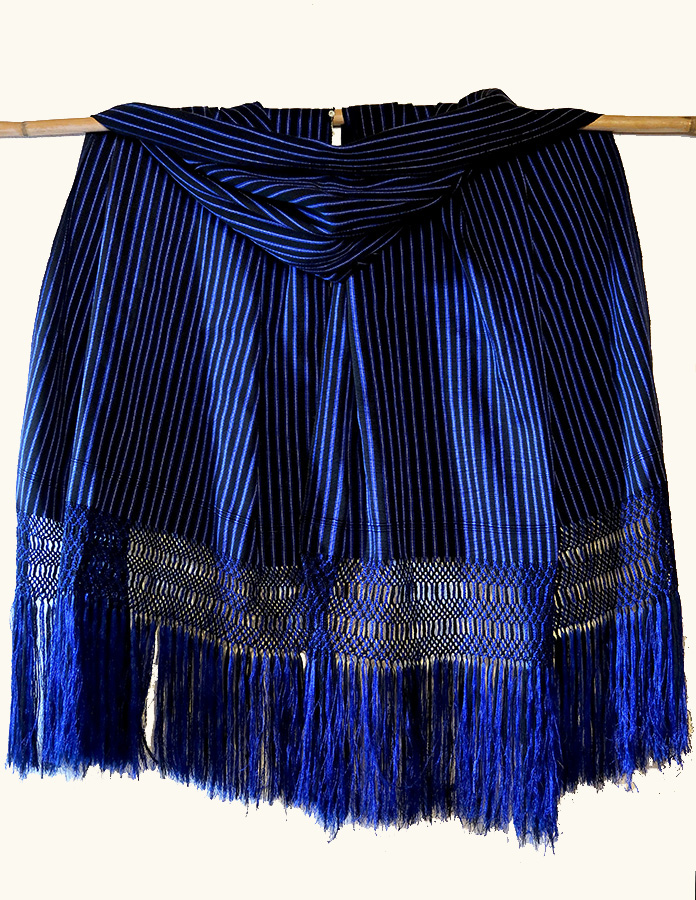
Then there was Khadi Oaxaca — “a social-entrepreneur initiative that supports the village of San Sebastian Rio Hondo, Oaxaca, Mexico, to economically develop in a sustainable way.” They spin, dye, and weave coyuche — a brownish cotton grown in Oaxaca and, working with designers, fashion modern takes on this traditional cloth. They even sell bolts of fabric so you can design your own!


What called out to me? A lovely huipil with a subtle, but intricate, design. I love the way the natural color of the coyuche takes the dye.

I also kept coming came back to the stall filled with the spectacular textiles from San Bartolomé Ayutla, Oaxaca. Alas (or, thank goodness), I was out of money. Next time…

The expo-venta runs through tomorrow (Feb. 4) on the patio of Centro Cultural San Pablo, next door to the Museo Textil de Oaxaca.
Posted in Culture, History, Politics, Protests, Travel & Tourism, tagged Can the Triquis Go Home? article, David Bacon, huipil, indigenous peoples, Mexico, Movimiento Unificador de Lucha Triqui (MULT), Oaxaca, photos, red, Triqui on February 2, 2019| Leave a Comment »
The zócalo is a sea of red today. It is the 38th anniversary of the founding of the Movimiento Unificador de Lucha Triqui (MULT) — one of the organizations of Triqui from the Mixteca Baja region of Oaxaca. They have come to (yet again) present their demands to the government.

For background (in English) on the plight of the Triqui in Oaxaca and the many who have been forced by violence in their communities to migrate to California, check out David Bacon’s article, Can the Triquis Go Home? Unfortunately, I don’t think much has changed since it was written in 2012.
Posted in Celebrations, Churches, Culture, Travel & Tourism, tagged candles, Feria del Carrizo, festivals, Mexico, Oaxaca, photos, popular travel destinations, procession, San Juan Guelavia, velas on January 30, 2019| Leave a Comment »
On Sunday in San Juan Guelavía for the Feria del Carrizo in the municipal plaza, the sounds of a procession drew me next door to the church.
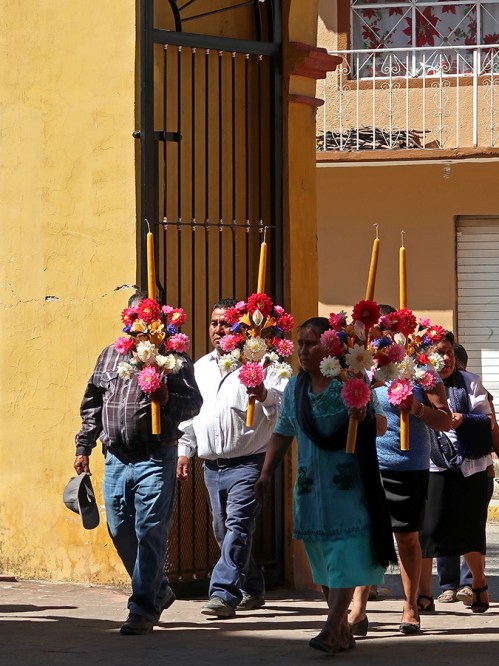
A procession! I’m not sure if the occasion had anything to to with patron saint, San Juan Bautista. However, what I do know is that I love being surprised and delighted by Oaxaca — a place I am proud to now call home.
Posted in Creativity, Culture, Travel & Tourism, tagged baskets, canastas, Fairs, Feria del Carrizo, festivals, Mexico, Oaxaca, photos, popular travel destinations, San Juan Guelavia on January 28, 2019| 5 Comments »
Yesterday took us to San Juan Guelavía for the eighth annual Feria del Carrizo. I missed it last year (I was up in el norte) and it was good to be back. The feria just keeps getting bigger and better and its continued success is good news for the community. And, I got to reconnect with Teresa Hipolito who wove two lampshades for me in 2015!

Because plastic baskets have gained popularity as the shopping basket of choice, the village saw a severe decline in the demand for their handcrafted baskets made from carrizo (Arundo donax, Spanish cane, Giant cane, Wild Cane, and Colorado River weed) — a tall perennial cane that grows along river banks in Oaxaca.
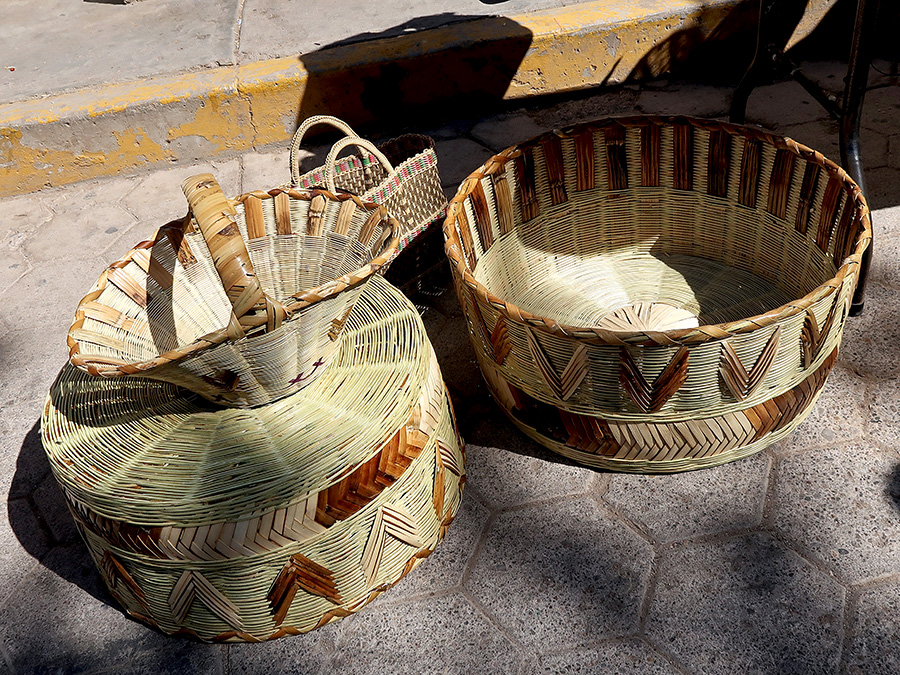
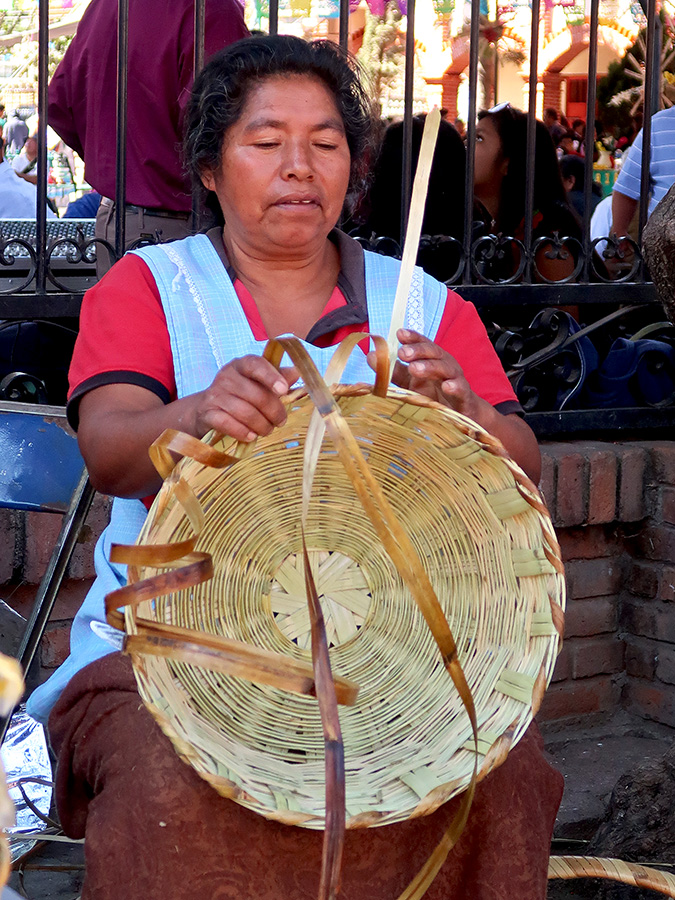
Baskets woven from carrizo have been used as carriers and storage bins since before the Spanish set foot on the soil that became Mexico. Thus, San Juan Guelavía decided to hold a fair to help rescue the craft of weaving their beautiful and traditionally utilitarian creations from carrizo and give a much-needed boost to the economy.
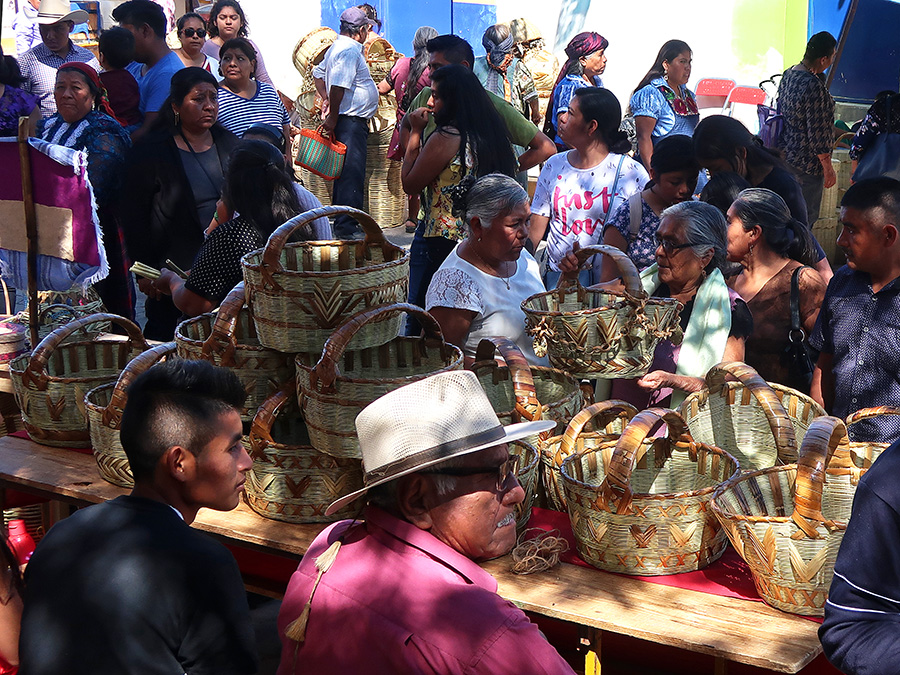
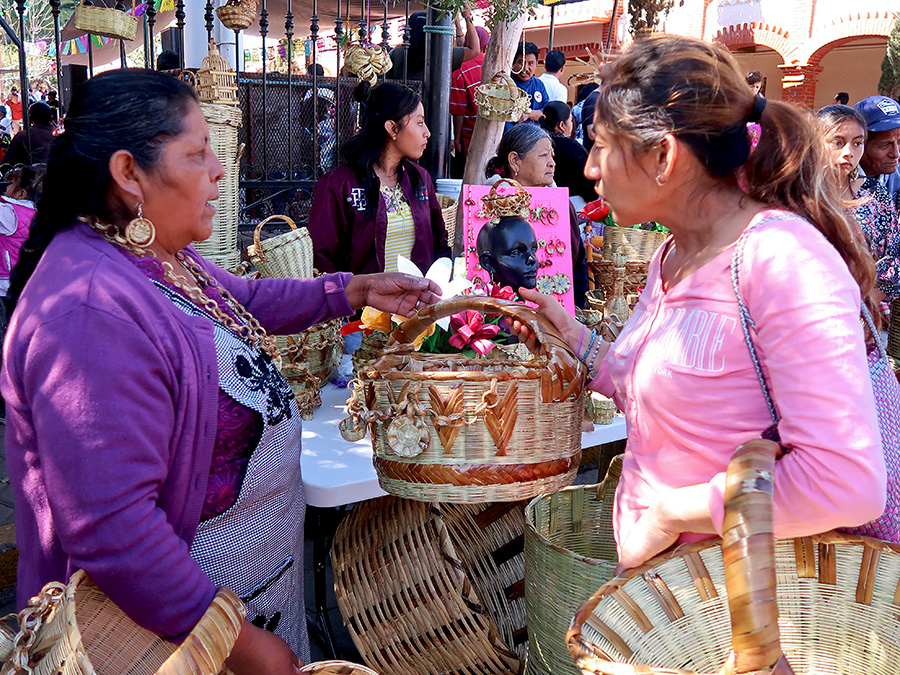
Besides baskets and bird cages, the artisans have branched out to weaving lampshades, decorative bottle covers (they make great gifts, especially when filled with mezcal), fashioning toys, earrings, and much more.

As with most ferias and special events in Oaxaca, there was music, folkloric dance groups from schools in the area, craft vendors from nearby villages, mouthwatering food…


… and absolutely adorable children.


In a village of about three thousand, there are currently about thirty families who work with carrizo — that’s a large percentage of the population! And, the very good news is that the skills and pride are being passed down to the younger generation.

The fair is held the last Sunday of January and the first Sunday of February. If you missed it yesterday, it is definitely worth a visit next Sunday — perhaps on your way to or from Tlacolula’s weekly market. San Juan Guelavía is about 40 minutes east of the city. By the way, there are a couple of workshops along the road that leads into town that are also worth a stop.
(ps) For more cute kids photos from the feria, see Oaxaca-The Year After.
Posted in Celebrations, Culture, Travel & Tourism, tagged bands, Mexico, monos, Oaxaca, photos, popular travel destinations, weddings on January 26, 2019| 6 Comments »
If it’s Saturday, it must be wedding day in Oaxaca.

They are scheduled one right after another at several of the churches, especially those on Macedonio Alcalá (the walking street).
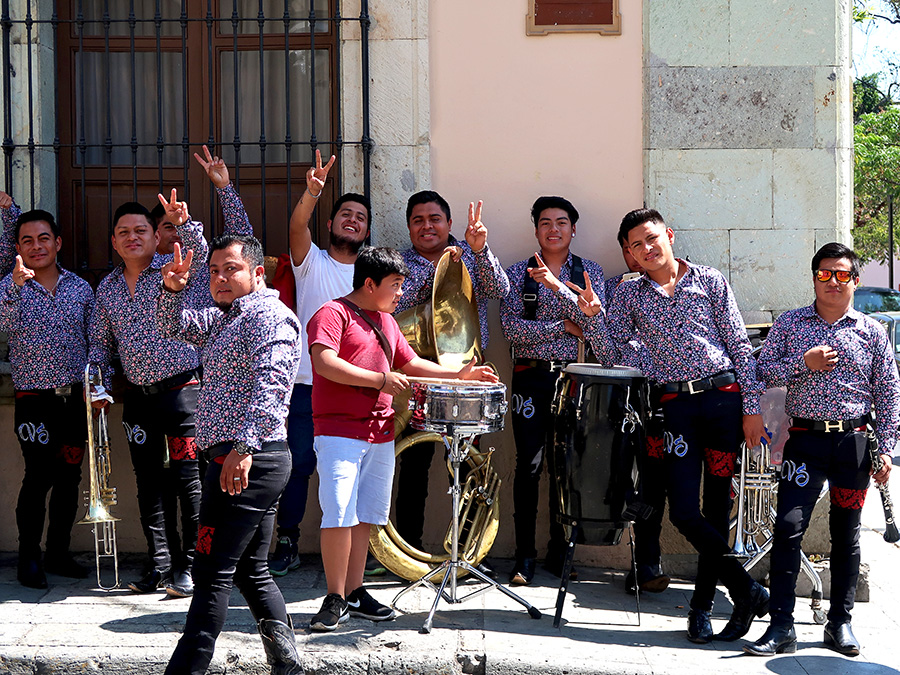
As a result, there is a lot of waiting by the wedding parties, bands, and monos.
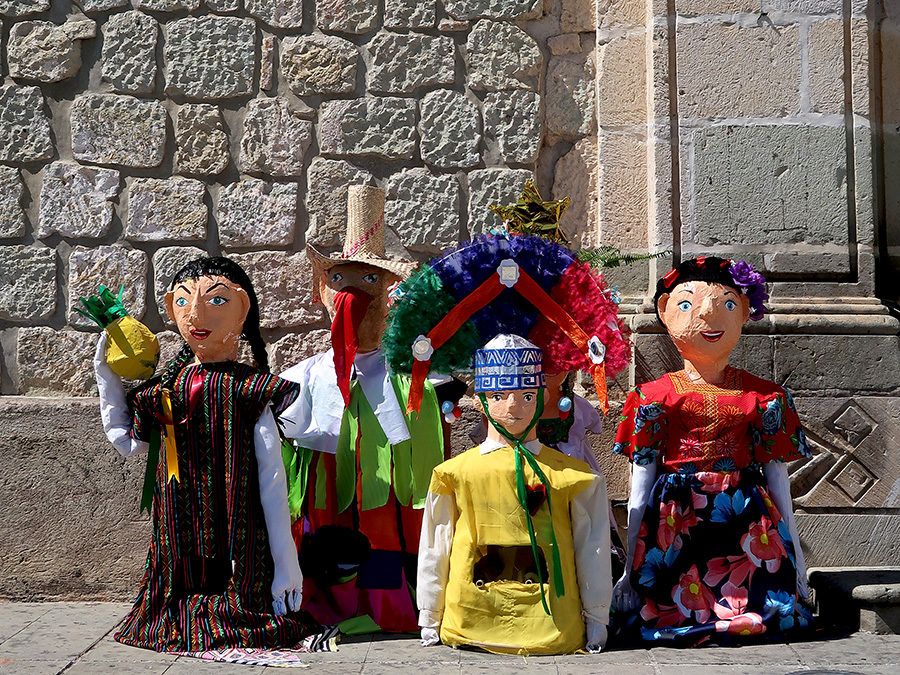
All dressed up with someplace to go!
Posted in Creativity, Culture, Travel & Tourism, tagged art, artisans, José García Antonio, Mexico, Oaxaca, photos, popular travel destinations, San Antonino Castillo Velasco, sculptures on January 21, 2019| 14 Comments »
How lucky can a gal get?
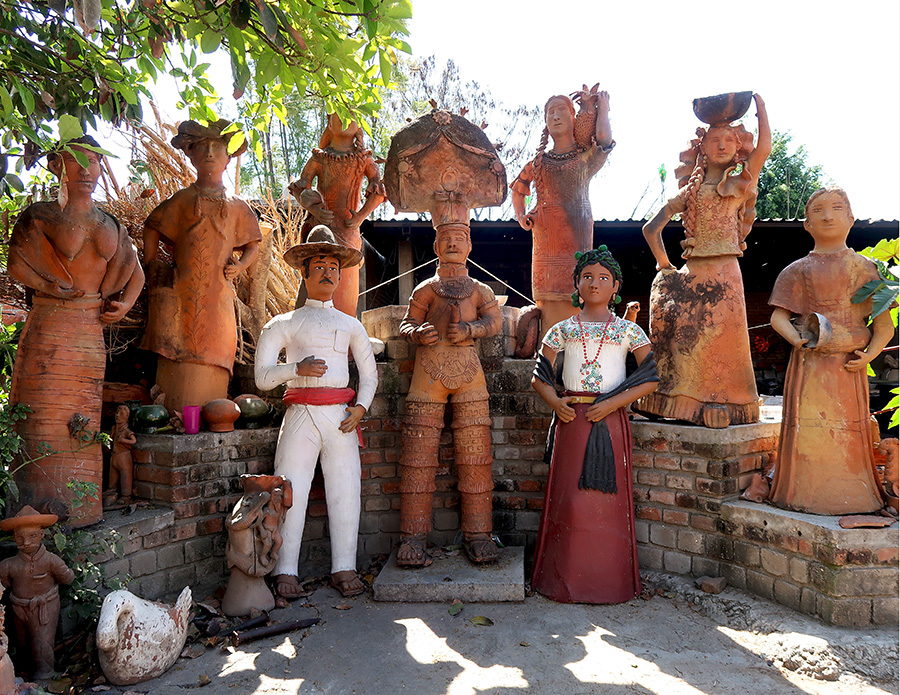
On day five back in Oaxaca, a last-minute invitation found me venturing behind an unassuming red iron door at Libertad 24, San Antonino Castillo Velasco and being greeted by welcoming figures of all shapes and sizes gathered throughout a large earthen courtyard.

This is the home and workshop of Grand Maestro, José García Antonio, also known as the blind potter.
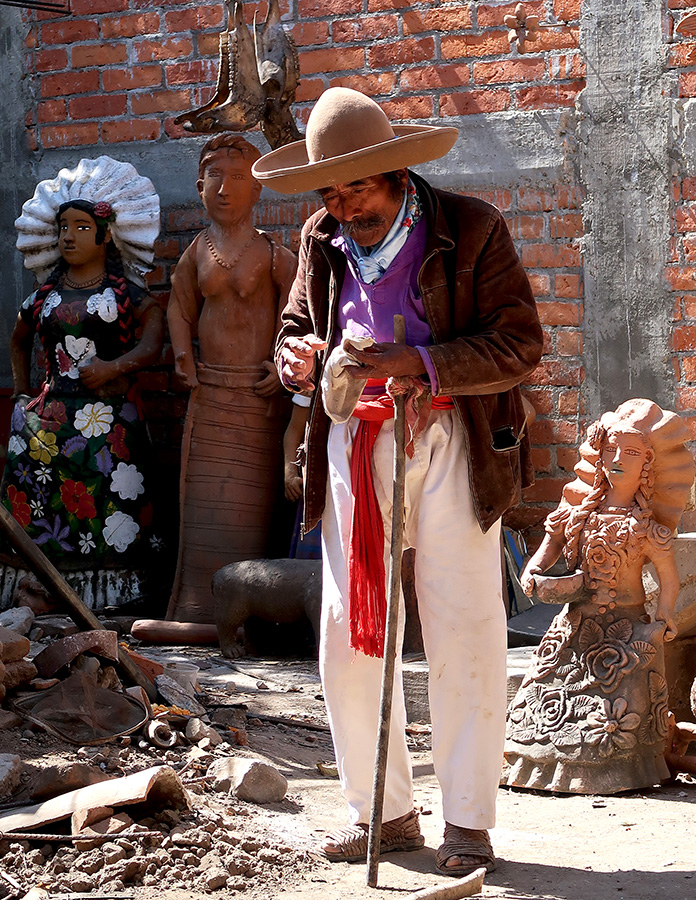
Losing his sight to glaucoma, he continues to sculpt sensual and evocative figures from the local barro (clay).

He was married to his beloved wife, Santa Teresita Mendoza Reyna Sanchez, in 1987.
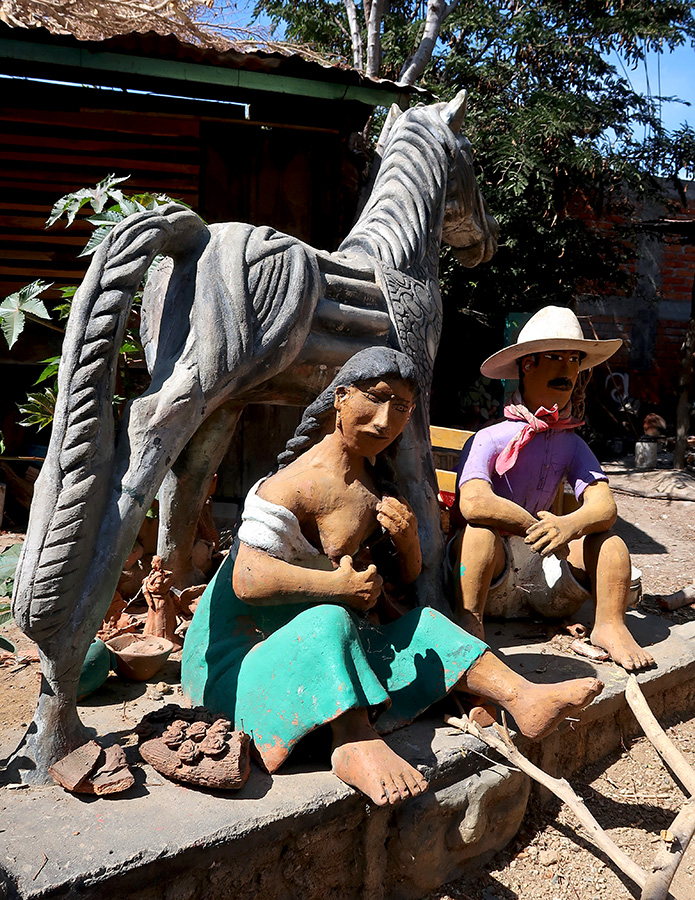
Her face and body are etched in his memory and continue to provide a model for many of his female figures.

The twinkle in those all-seeing sightless eyes and the artistry in those gifted hands give form and life to his creations in clay.
“It would seem that the hearts of the potters of Oaxaca are made of clay. Their emotions, intuitions, joys, fears and fantasies flow through their bloodstream until arriving at the hands which knead the clay and, as if by magic, transform it into exquisite ceramic sculptures.” (quoted from “The Great Masters of Mexican Folk Art.”)
Posted in Creativity, Culture, Travel & Tourism, tagged artesania, carved horses, dancing horses, Mexico, Oaxaca, photos, popular travel destinations, rocking horses, street scenes on January 18, 2019| 4 Comments »
Day one back in Oaxaca…

Warm sun, blue sky, and rocking horses parked on Calle de Mariano Abasolo.
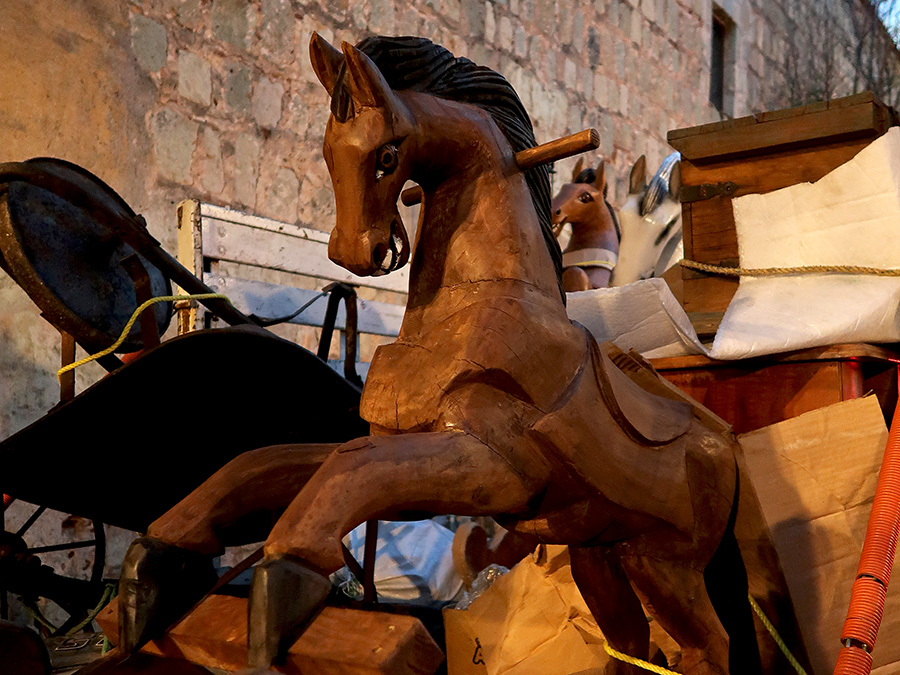
Vendor from Puebla with a truck full of dramatic wooden dancing horses from Zacatecas.

It’s good to be home!
Posted in Creativity, Culture, Exhibitions, People, Travel & Tourism, tagged Antonio Lazo Hernández, art exhibitions, Biliee, Cat's Cradle, Danza de la Pluma, danzantes, exhibits, Javier Lazo Gutiérrez, Juana Gutiérrez, La cuna del gato, MACO, Mexico, Museo de Arte Contemporáneo de Oaxaca, museums, Oaxaca, Peter Liashkov, photos, plantón, Porfirio Gutiérrez Contreras, Teotitlán del Valle on January 11, 2019| 2 Comments »
On November 30, I went to the opening of the Bajo la bóveda azul cobalto/Under the Cobalt Blue Sky exhibition at the Museo de Arte Contemporáneo de Oaxaca (MACO) — an innovative collaboration that paired thirteen visual artists from the USA and France with thirteen local artisan families. It was a fabulous and jam-packed event infused with the energy of conversation and creativity. Unfortunately, with so many people in attendance, seeing the art was challenging and I vowed to return.
Running into weaver Antonio Lazo Hernández, brother-in-law of Porfirio Gutiérrez Contreras, when I was in Teotitlán del Valle for the first day of the Virgen de Guadalupe festivities, gave me the nudge I needed to make time to actually see the show before leaving for my el norte trip. At the opening, I hadn’t even realized that Porfirio and his family (Antonio, Juana Gutiérrez Contreras, and Javier Lazo Gutiérrez) had been paired with Peter Liashkov to create a piece for the exhibition.

“The ability to leap freely about our imagery without any constraints” — Peter Liashkov
Their collaboration explored the story of the Danza de la Pluma — linking images of the Danza de la Pluma Promesa 2016-2018 danzantes to symbols used in the dance. They even incorporated the well-worn sandals of the dancers.


I couldn’t help thinking of the poem, Judge Softly, urging us all to,
Just walk a mile in his moccasins
Before you abuse, criticize and accuse.
If just for one hour, you could find a way
To see through his eyes, instead of your own muse.

“From the dialogue between our two cultures, we were able to make the references to diversification and syncretism visible, where there is always a cultural responsibility joined with a tragic story… something tragic for some and good for others… it produces new dialogues” — Porfirio Gutiérrez Contreras
Bajo la bóveda azul cobalto/Under the Cobalt Blue Sky runs through the end of February. There are twelve other amazing collaborations that demonstrate “what can happen when we accept our differences and our similarities; it is an example of coexistence under the same blanket of stars.” If you are in town, it is a show not to be missed.


 Mexican Peso Converter
 View From Casita Colibrí
