Feeds:
Posts
Comments

Archive for the ‘Creativity’ Category

I love the carved masks worn in many of the traditional dances in Mexico and, thus, made a bee-line to the current exhibition at the Palacio de Gobierno, Máscaras de Juxtlahuaca — part of the month-long celebration of Guelaguetza.

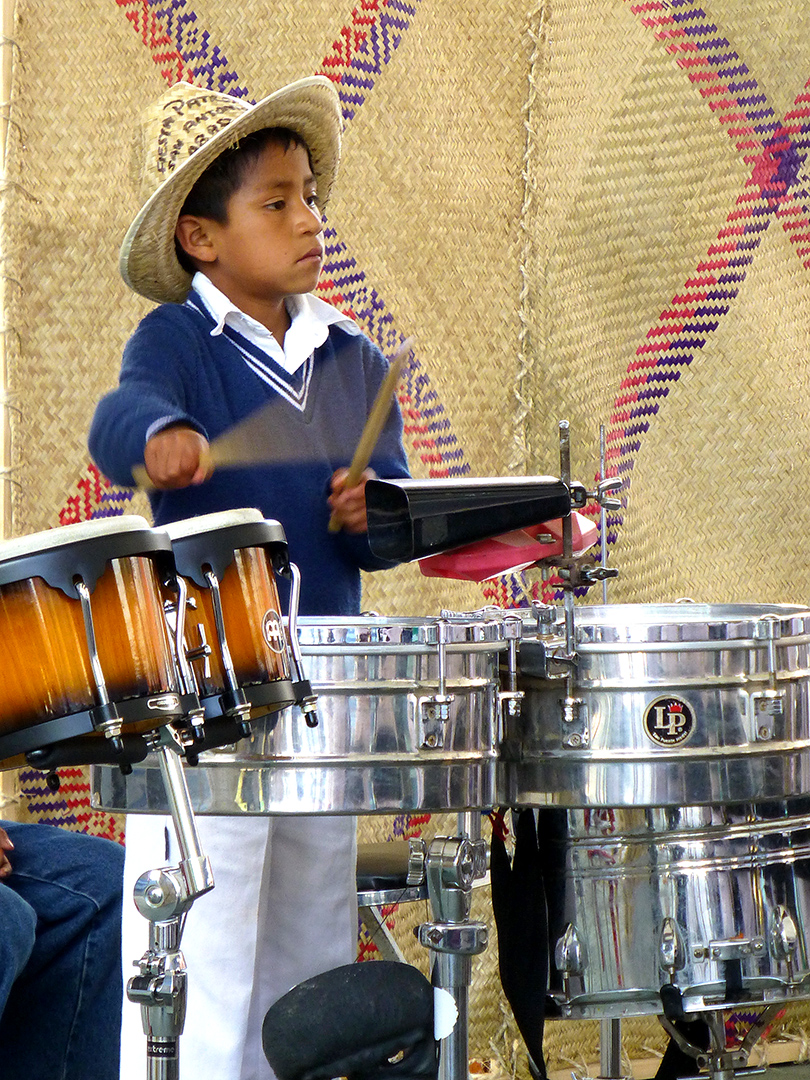
Most of the masks in the show are the work of  Alejandro Guzman Vera, a native of Santiago Juxtlahuaca in the Mixtec region of Oaxaca.  He was born in 1972 and, as a young child, made his first mask of cardboard and painted it with crayons.  At age 12, he carved his first wooden mask.  He went on to study at the Escuela Nacional de Artes Plasticas and has become one of the premier mask-makers in Mexico.  He has exhibited world-wide and is one of the honored Grandes Maestros del Arte Popular de Oaxaca, profiled in the book by the same name.  By the way, he is not only a mask-maker, but also an accomplished musician and is playing a role in the rescue of the traditional music of Juxtlahuaca.

(Click on an image to enlarge it and to enable a slideshow.)

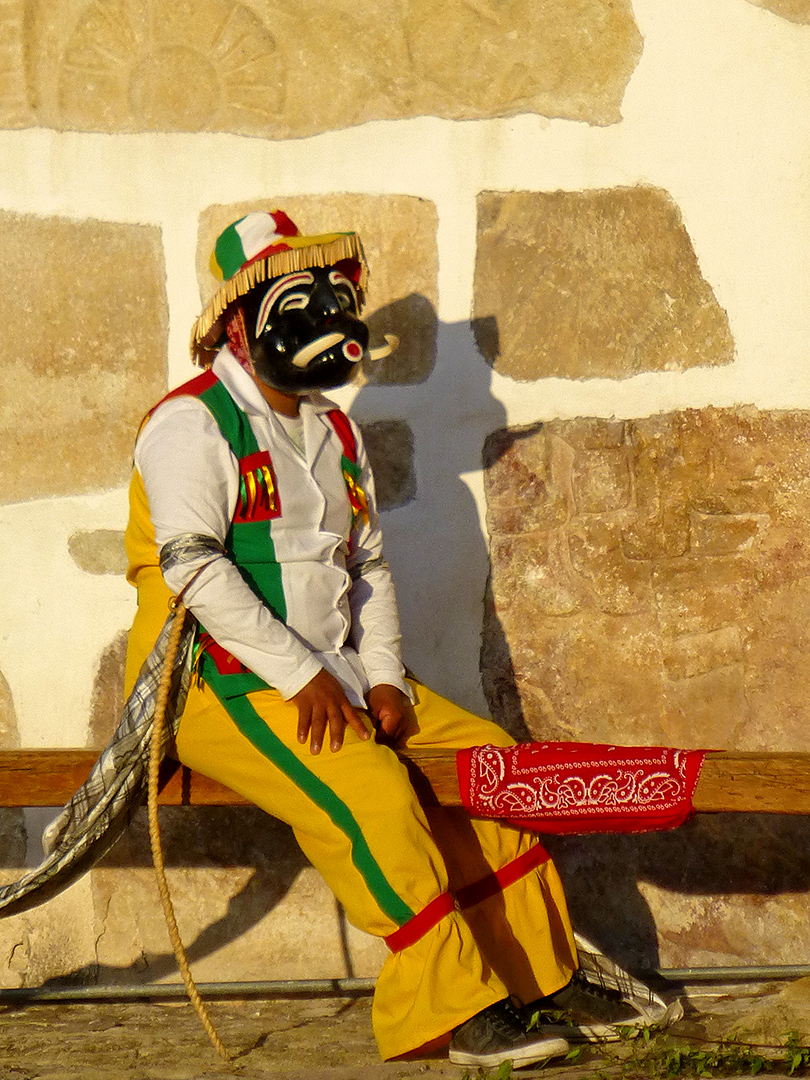
Dancers from Santiago Juxtlahuaca will be performing the Danza de los Rubios in the morning Guelaguetza presentation on July 27 and will, no doubt, be wearing masks, cracking their whips, and jingling their spurs during the Procession of Delegations on the preceding Saturday.  For a glimpse at the Danza de los Rubios and to get a feeling for some of the music Alejandro Guzman Vera is involved in saving, here is a snippet from last year’s Guelaguetza performance:

Masks are donned not only for the Danza de los Rubios, but also for the Danza de los Diablos and the Danza del Macho, which are performed at various annual festivals in the region.  Once carved and painted, the wooden masks can be embellished with glass eyes and real animal teeth and horns of bulls, goats, or deer.  They are an amazing sight to see!

The Máscaras de Juxtlahuaca exhibition at the Museo del Palacio in Oaxaca city closes August 28, 2015.

(This blog post is especially for you, Jane and Ken!)

Read Full Post »

Next Monday, the the 83rd annual modern Guelaguetza will commence on Cerro Fortín.  And so, the last of my photos from last year’s evening performance…

I’ll resume my coverage with the San Paliluú of San Antonio Huitepec a village from the Valles Centrales region.

IMG_4882IMG_4884IMG_4895San Pedro Comitancillo performed the Danzas y Sones de Mi Tierra from the Istmo de Tehuantepec region.

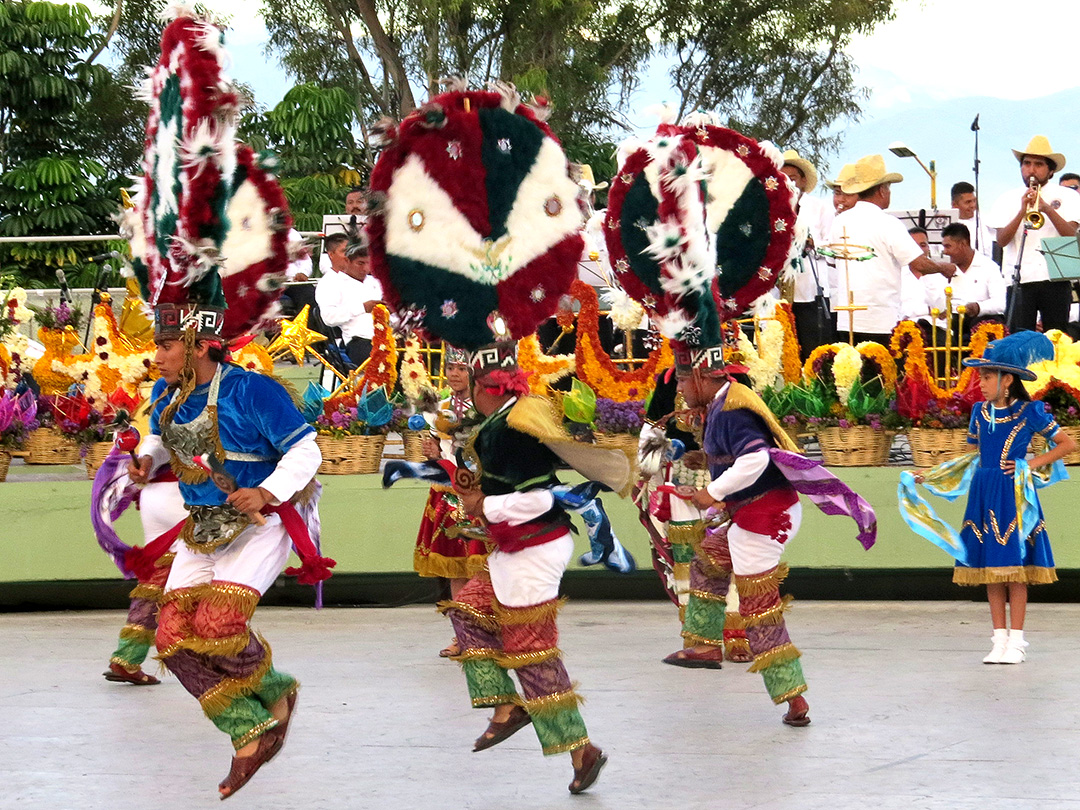
IMG_4908IMG_4918P1010316IMG_4920And then there was the Danza de la Pluma.  Moctezuma, Danzantes, Malinche, and Doña Marina from San Jerónimo Tlacochahuaya, in the Valles Centrales region, performed one of the dances that reenacts the story of the Conquest.

IMG_4943IMG_4966IMG_4961Loma Bonita in the Tuxtepec region, very near the the state of Veracruz, then took the stage with its rousing Rinconcito Oaxaqueño.

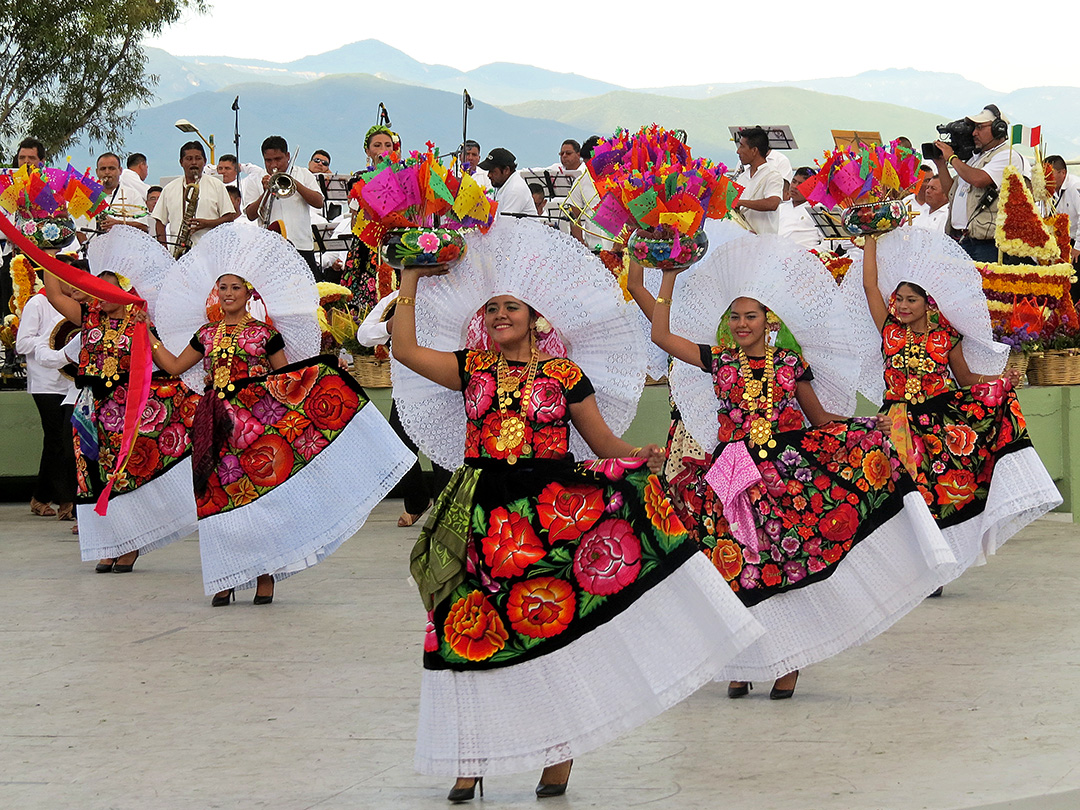
IMG_4983IMG_4997IMG_5018The sun began to set as 36 beautiful women from San Juan Bautista Tuxtepec in the Papaloapam region, wearing their with brightly colored huipiles, took to the stage for the crowd pleasing Flor de Piña.

IMG_5026IMG_5038

Darkness began to fall (making for challenging photography from 1/3rd of the way up from the Guelaguetza Auditorium stage), as the lively Sones and Chilenos danced by the delagation from the Costa region village of San Juan Cacahuatepec kept the energy flowing.

P1010363La Dote y el Tercel Día e Fandango from the dancers of San Antonino Castillo Velasco in the Valles Centrales region closed the evening’s performances.

P1010371As fireworks exploded over the Guelaguetza Auditorium, the band played, the audience took to its feet, and delegations reclaimed the stage to dance the evening’s Guelaguetza performance to a close.

Now on to La Guelaguetza 2015!

Read Full Post »

Storm clouds were gathering on Tuesday afternoon, as we drove out to Teotitlán del Valle for this year’s first performance of the Danza de la Pluma.  However, the clouds were chased away and the plaza in front of Templo de la Preciosa Sangre de Jesucristo was bathed and blessed with the light and shadows of the golden hour.

P1100717P1100713P1100725P1100756Ahhh…

(ps)  For a Moctezuma eye view of the dance, check out Chris’s Moctezuma Cam post.

Read Full Post »

Last night, all was in readiness in Teotitlán del Valle for most important fiesta of the year — honoring la Preciosa Sangre de Nuestro Señor Jesucristo (the Precious Blood of Our Lord Jesus Christ).

Specially cut papel picado fluttered from the church.

P1100456Marmotos waited in the wings.

P1100467And canastas, lovingly decorated by their owners stood ready to be carried through the streets of Teotitlán del Valle.

IMG_7677Next up, the most important ingredient…

Read Full Post »

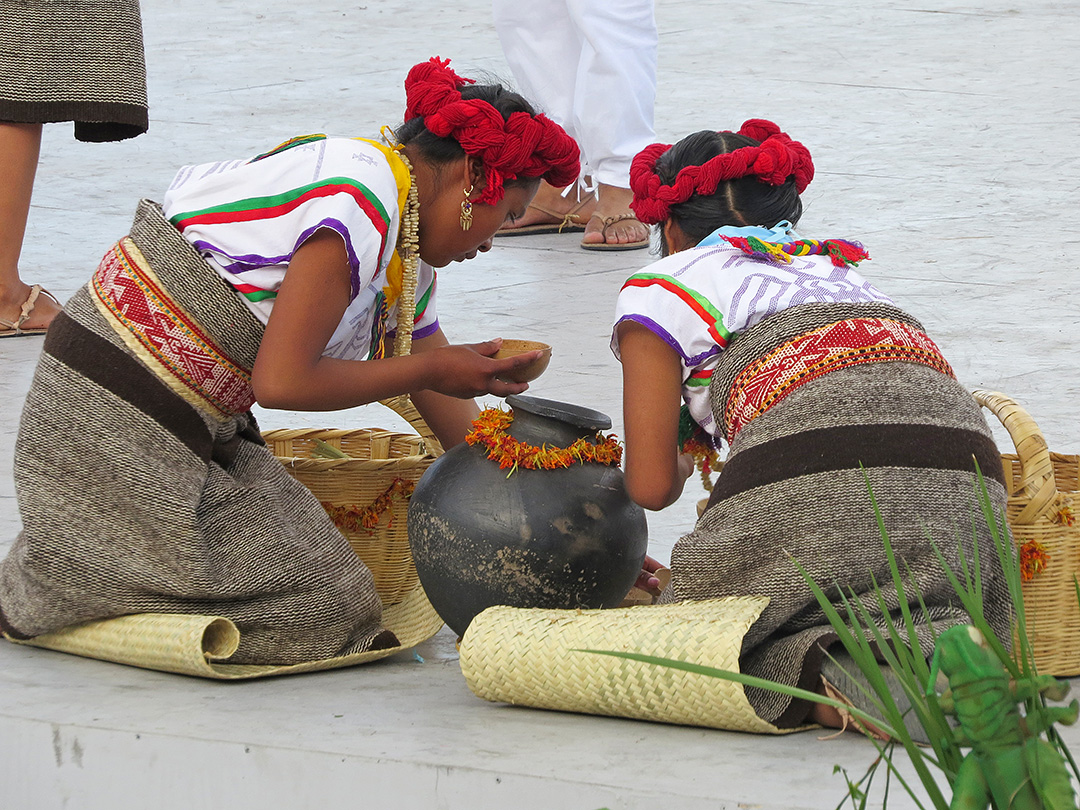
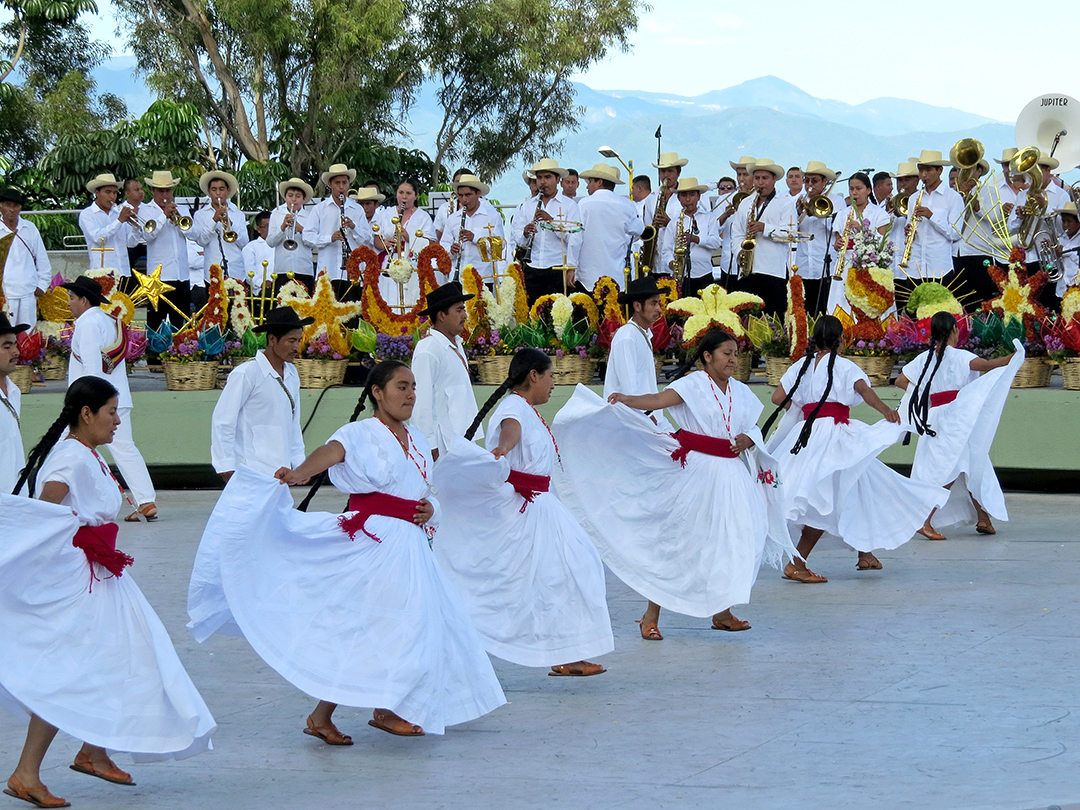
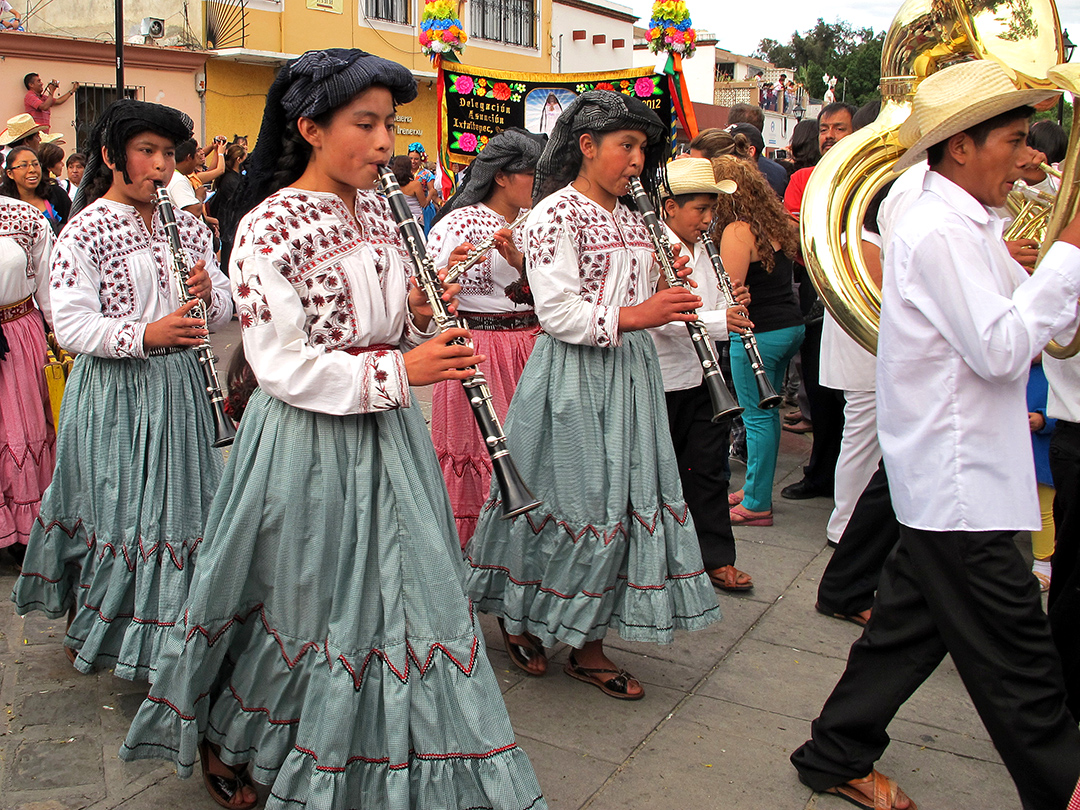
Last year, wearing the whitest of white huipiles, skirts, shirts, and pants, the delegation from San Melchor Betaza, in the Sierra Norte Region of Oaxaca, danced the sones and jarabes from their community.

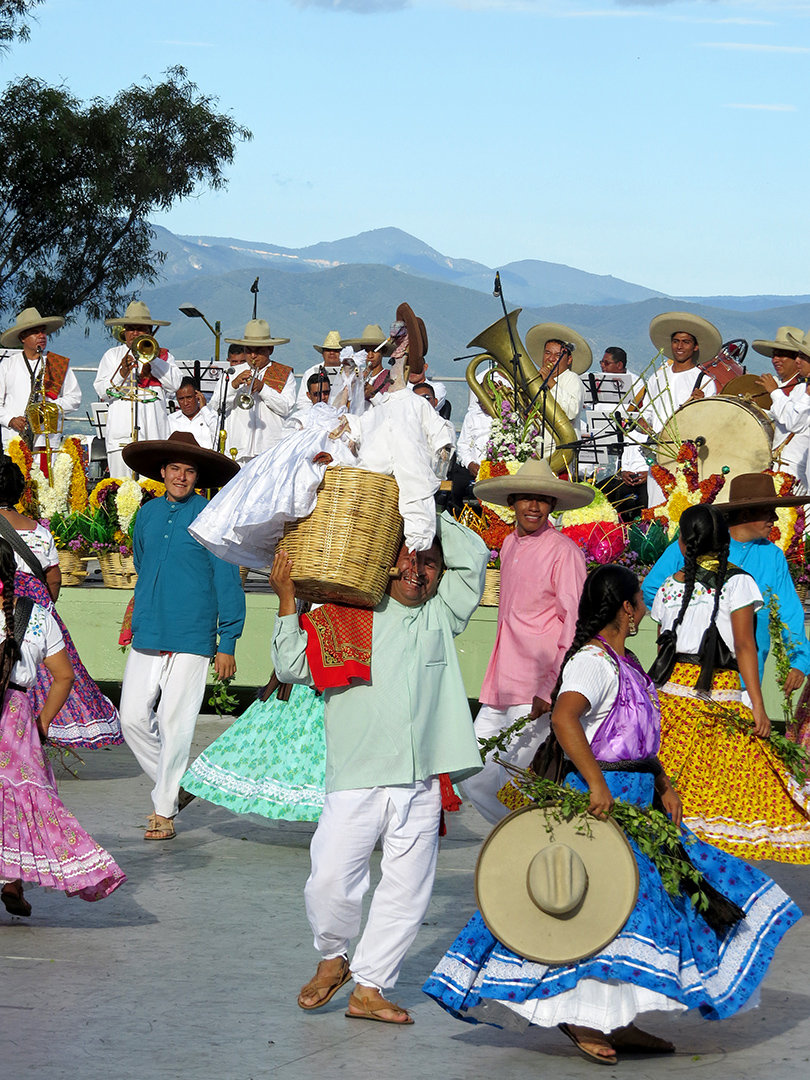
IMG_4694IMG_4695IMG_4696I don’t know how the turkey felt as he took center stage when Ocotlán de Morelos, from the Valles Centrales Region, performed La Llevada del Guajolote, a dance dating to the 19th century.

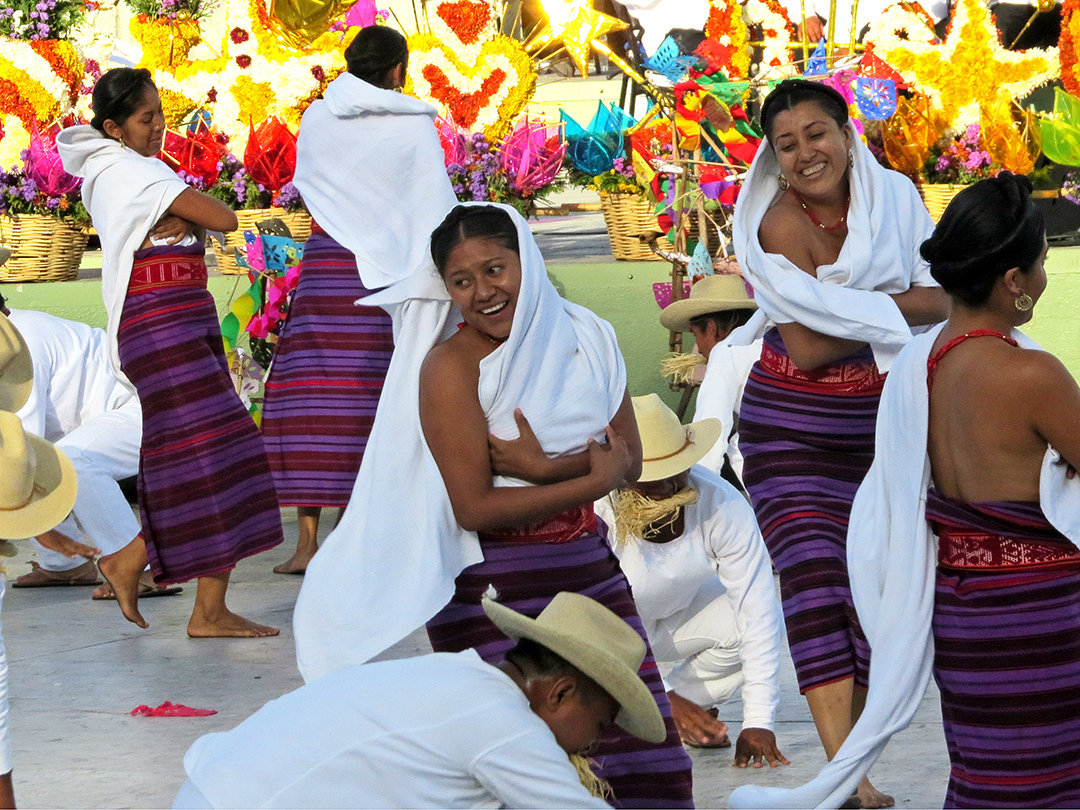
IMG_4802IMG_4805 IMG_4803The dances by the delegation from San Andrés Huaxpaltepec, from the Costa Region, offered the action of the Fandango de Cajón and the grace of the Mayordomía with women wearing stark white mandiles (shawls) and caracol dyed purple pozahuancos (wrap skirts).

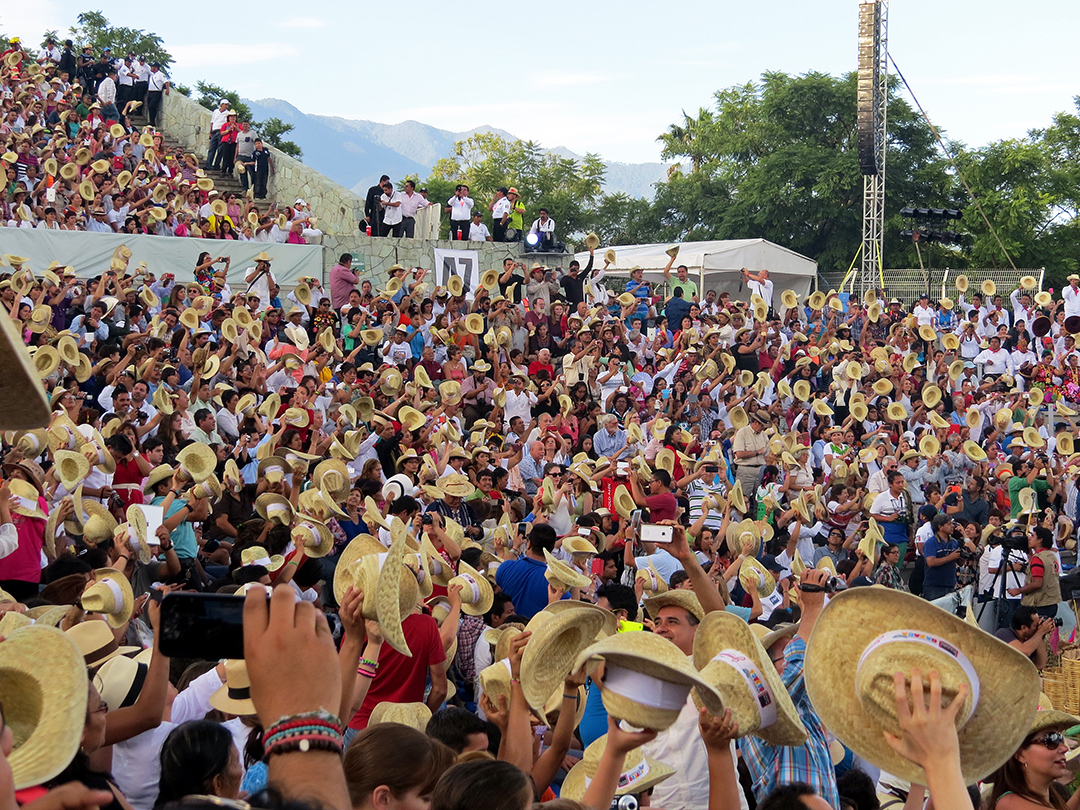
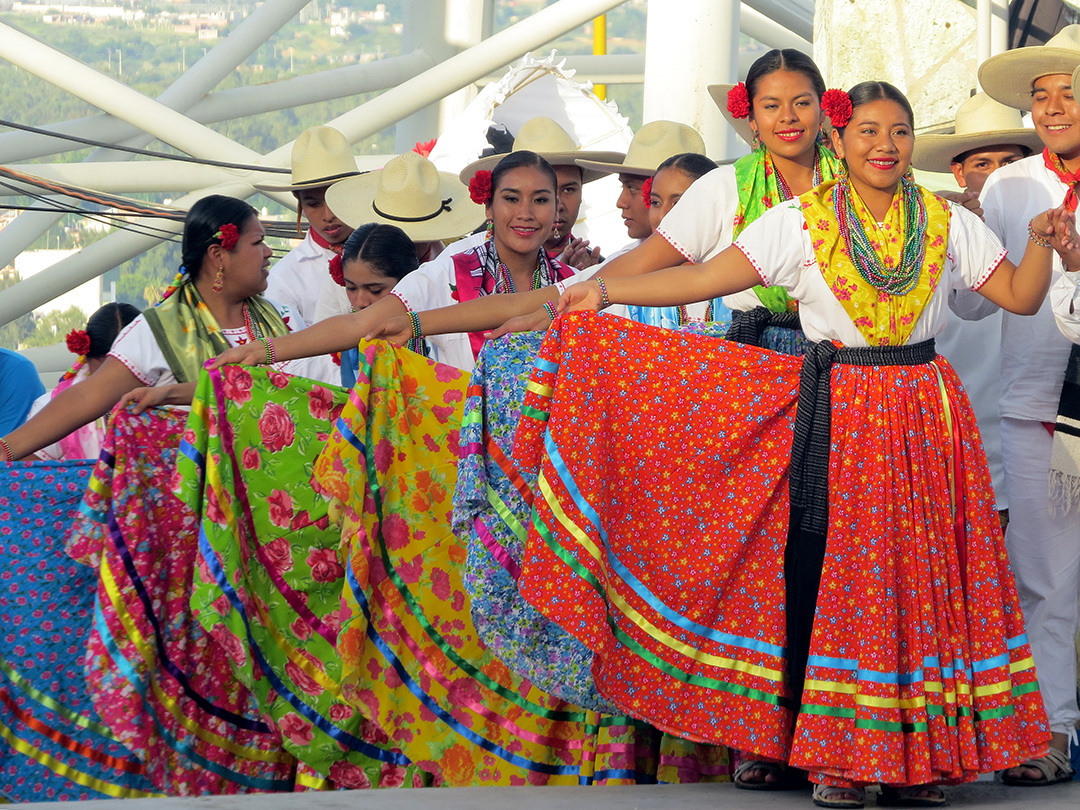
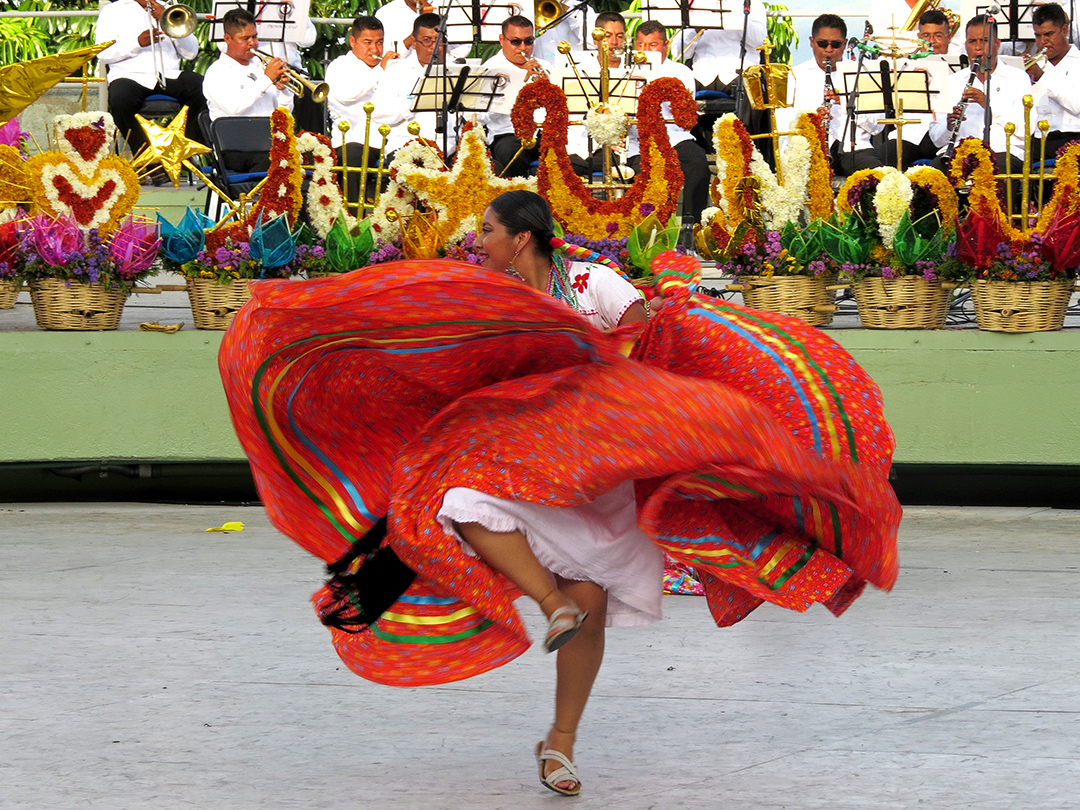
IMG_4817IMG_4828IMG_4845As the first few notes of the Canción Mixteca were played, the audience rose and, as one, began waving their hats and singing the beloved song of the Mixteca Region.  With the audience warmed up, the gals from Huajuapan de León began dancing the Jarabe Mixteco — twirling and tempting the guys with their flirty skirts.

IMG_4862IMG_4859

IMG_4869IMG_4877IMG_4880Click HERE for last Monday’s part 1.  Stay tuned for more next Monday, as the countdown to this year’s Guelaguetza festivities continues.

Read Full Post »

Three weeks from today, despite the Never-ending tale of the velaria, the 83rd annual Guelaguetza performances on Cerro Fortín commence.  Yikes, was it really almost a year ago that one of my childhood BFFs and I walked up the hill to the auditorium to revel in the music, costumes, dances, view, fireworks, and all-around conviviality of festivities?  There is always so much going on during the last two weeks of July, that I only got around to posting a few photos from that evening.  Today, and for the following two Mondays, I’m going to attempt to remedy that.  Better late than never!

The delegation from the Cañada region of the state, Huautla de Jimenez, danced to Sones Mazatecos…
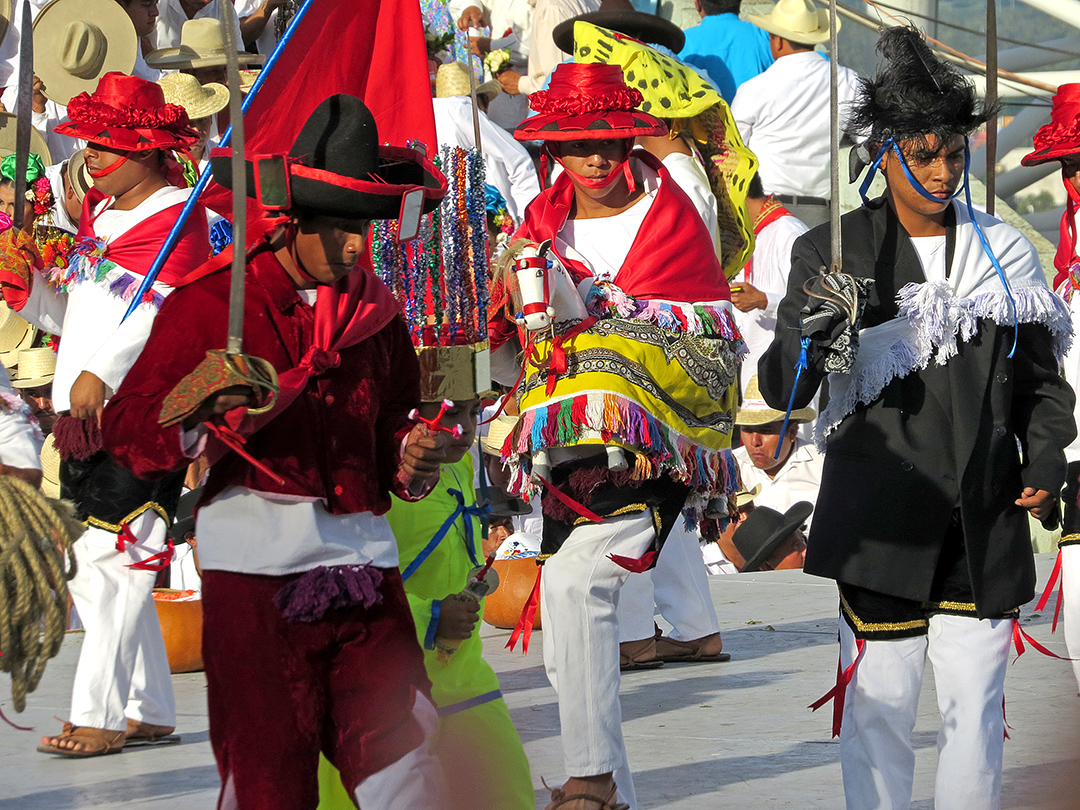
IMG_4701IMG_4707IMG_4708The dancers from Santiago Juxtlahuaca, in the Mixteca, performed the rip-roaring Danza de los Rubios…
IMG_4778P1010286IMG_4785And, from the Istmo de Tehuantepec region, the beautiful women and dashing men from Ixtepec presented Vela “Esmeralda”…
IMG_4717IMG_4724P1010283IMG_4759IMG_4761That’s all folks!  But, more to come next Monday.

Read Full Post »

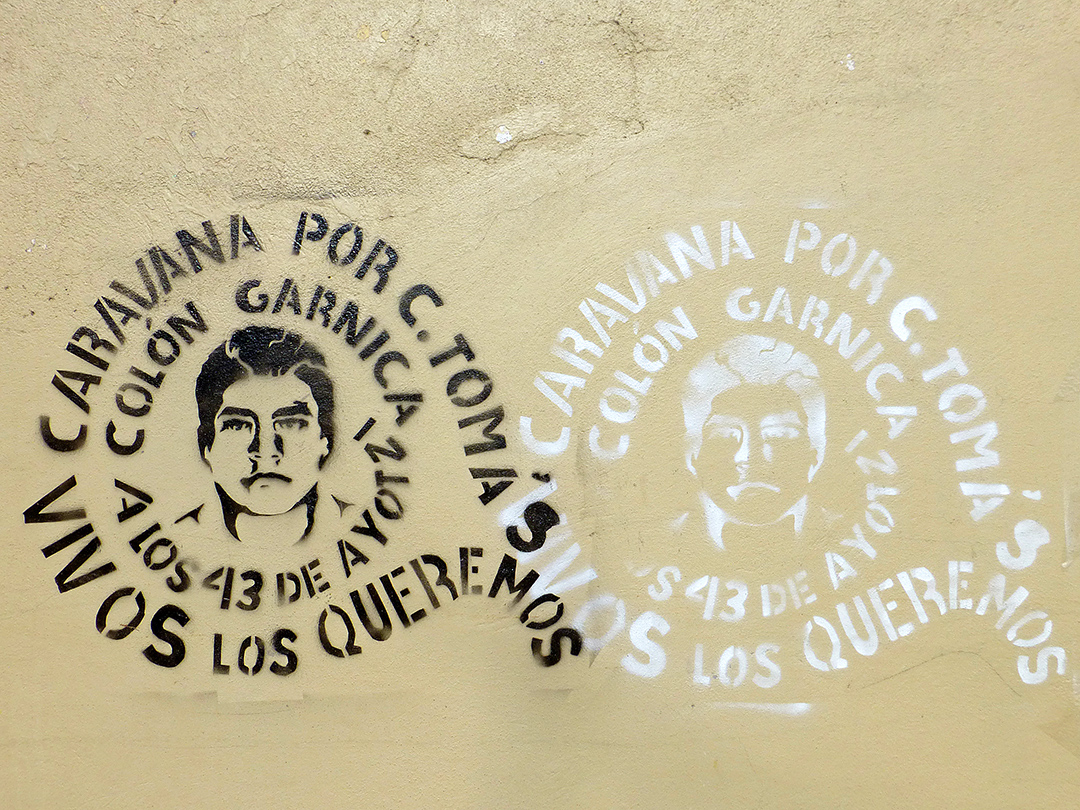
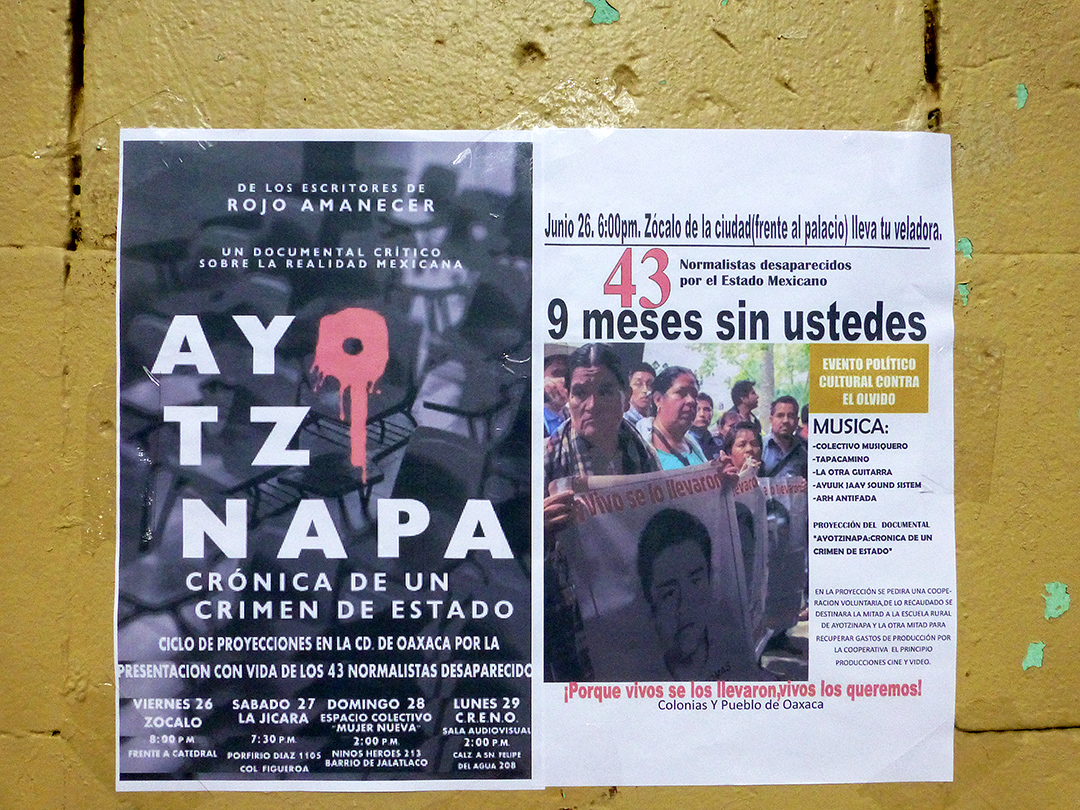
It’s been nine months since 43 students from the Escuela Normal Rural Raúl Isidro Burgos teachers’ college in Ayotzinapa, Guerrero went missing — a traumatic, heartbreaking, and disgraceful anniversary that isn’t going unnoticed.  The Missing Mexican Students Case Is Not Closed For 43 Families, nor for the people of Mexico.

Yesterday, in Tlacolula de Matamoros, the signs were impossible to miss, as we walked down the main street.  The community continues to remember her son, Cristian Tomás Colón Garnica, one of the Ayotzinapa 43.

P1100112“His father traveled from their land when the abduction of the 43 young normal school students was first reported. ‘I am a day laborer. I make 600 pesos [USD$44.50] weekly, maximum, and that’s when there’s work, because sometimes there is no work. My boy wants to be a teacher. That is the job he wants, but they stopped him, they arrested him … What are we going to do?!'”  — from Mexico Voices.
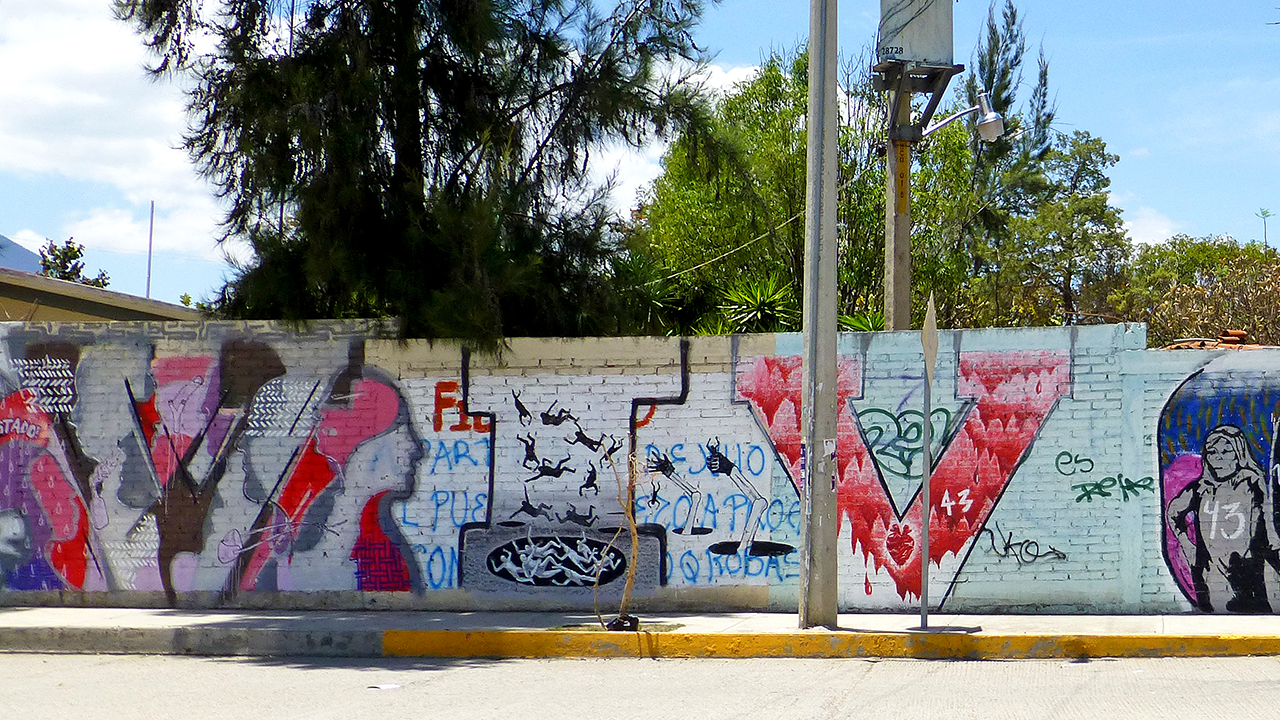
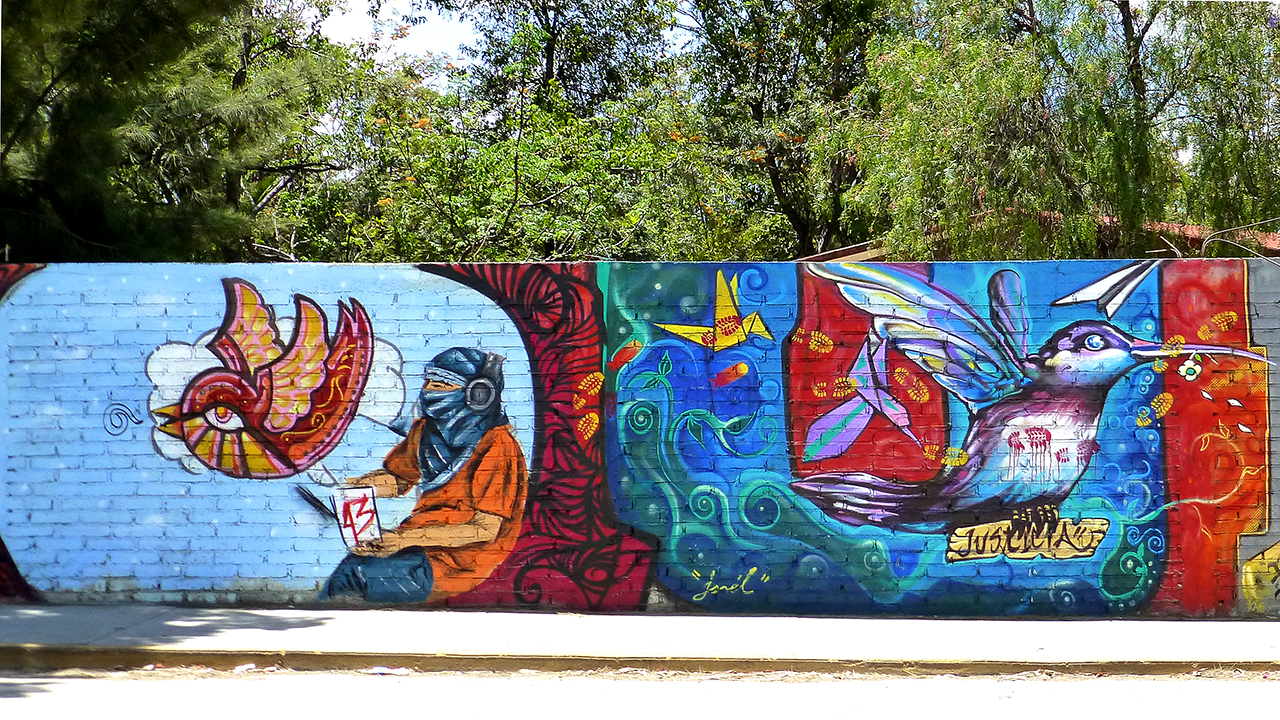
P1100110On the wall, near the stencils above, posters announced events in Oaxaca city in remembrance of the students.  As the murals at the north entrance to Tlacolula de Matamoros proclaim…

P1080468 P1080469 P1080470P1080471P1080472

“VIVOS 43 LOS QUEREMOS”

Read Full Post »

As our journey on Sunday to Santa María Tlahuitoltepec had just gotten underway, Chris and I were engrossed in conversation when I had a whoa-grab-the-camera moment.  Across highway 190, just outside the city, a double row of VW Beetles appeared.

P1090900Perhaps, figuring it was safer to pull over rather than having me coming between him and the the steering in an attempt to take photos out the driver side window, Chris offered to pull over.

P1090897Some had been repainted and tricked out, but others had just been lovingly (no doubt) washed and detailed.

P1090899By the time we stopped, we had already passed at least fifty Bugs and the lines continued as we drove off.

P1090901A Classic Car Rally?  There was a scattering of other makes of cars, but the Beetles were the overwhelming majority and they ruled!

(Update: Blog reader, shewhodaresnothing, offered the answer.  June 22 was Worldwide VW Beetle Day!)
Read Full Post »

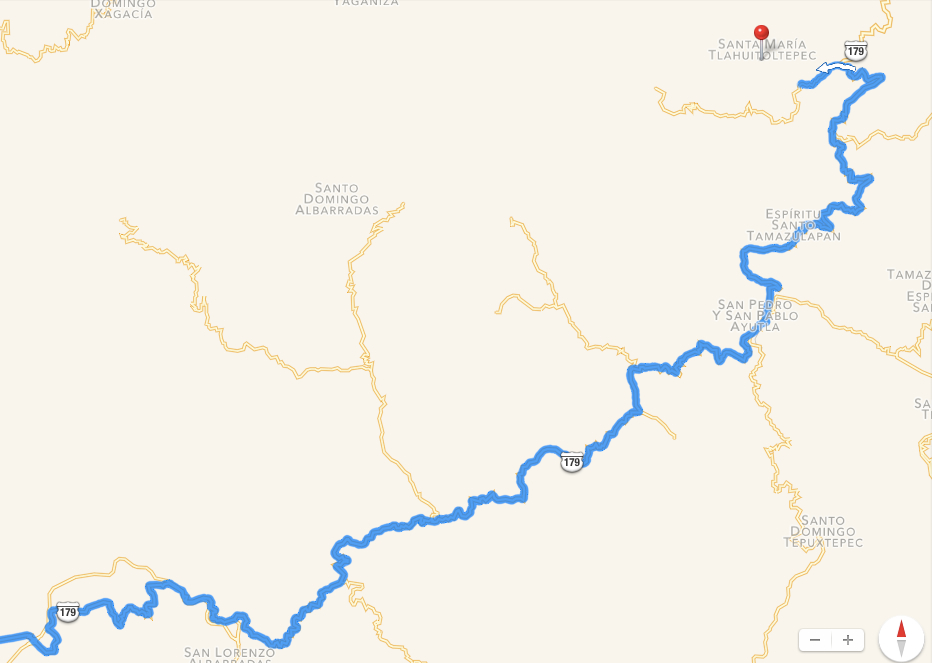
Blogger buddy Chris and I have been talking about returning to Santa María Tlahuitoltepec since our first visit in May 2013.  Time flies when you’re having fun and it took the current Theft of a cultural kind controversy to motivate us to hit the long and winding road up into the Mixe.  To reach our our journey’s end in the Sierre Norte, our road trip took a little over two and a half hours from the city — on a much improved route 179, I might add.

179 to Tlahui

Reaching the center of town, known for its musical literacy and textiles, Tejas, a youth band, was warming up on the multipurpose municipal basketball court.

P1090928

Their performance was part of the Domingos de Concierto (concert Sundays).  We joined villagers to watch and listen.

P1090961

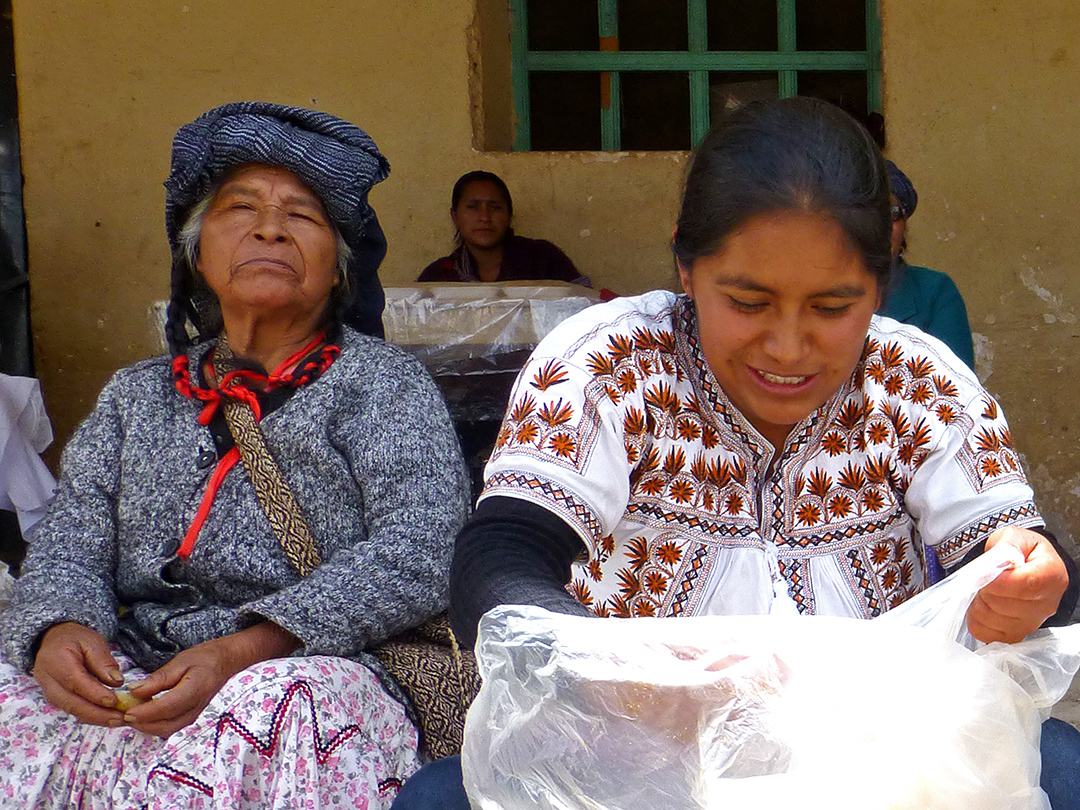
Most all of the women “of a certain age” were wearing the traditional dress that is a symbol of this community.

P1090942

However, our stomachs began grumbling and led us in search of comida.  The comedor we had been directed to wasn’t open but there were women sitting under the portales selling tamales.  This gal’s amarillo tamales (3 for 10 pesos) were muy sabrosos!

P1090940 copy

Once we had eaten, fed a couple of street dogs the crumbs (until a woman walking softly and carrying a big stick, chased them away), and our energy levels were restored, we walked across the street to the sextagonal textile kiosk — the day’s destination.

P1090969

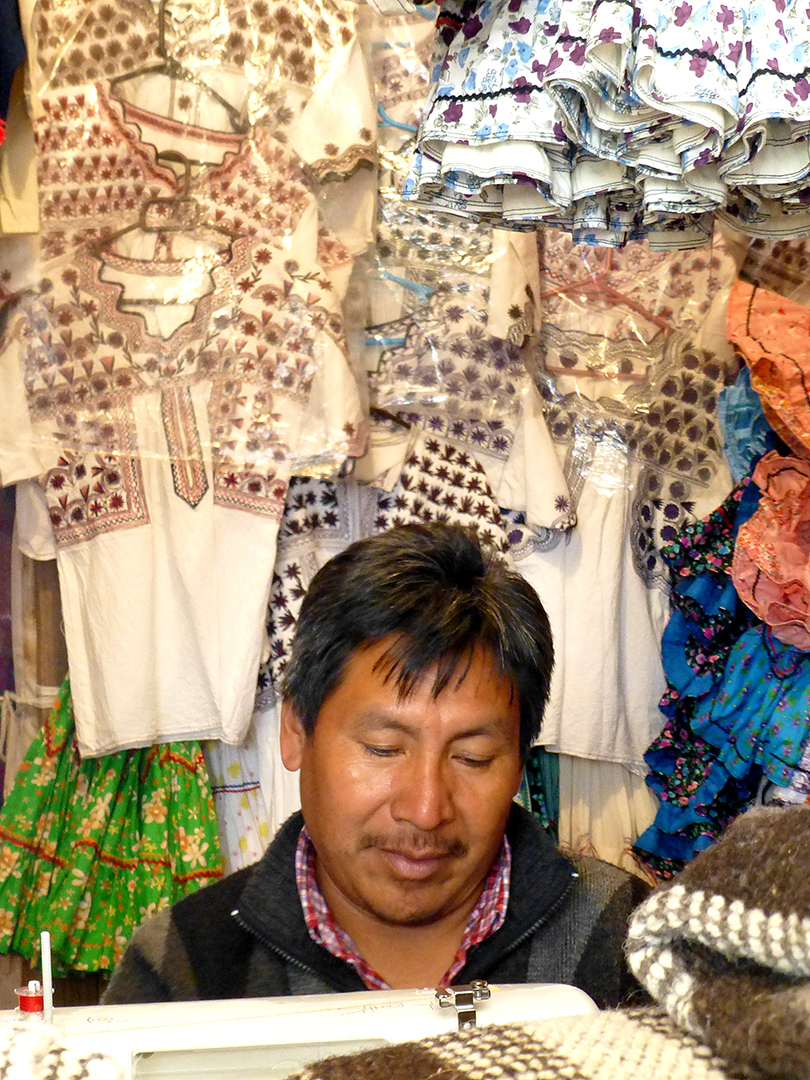
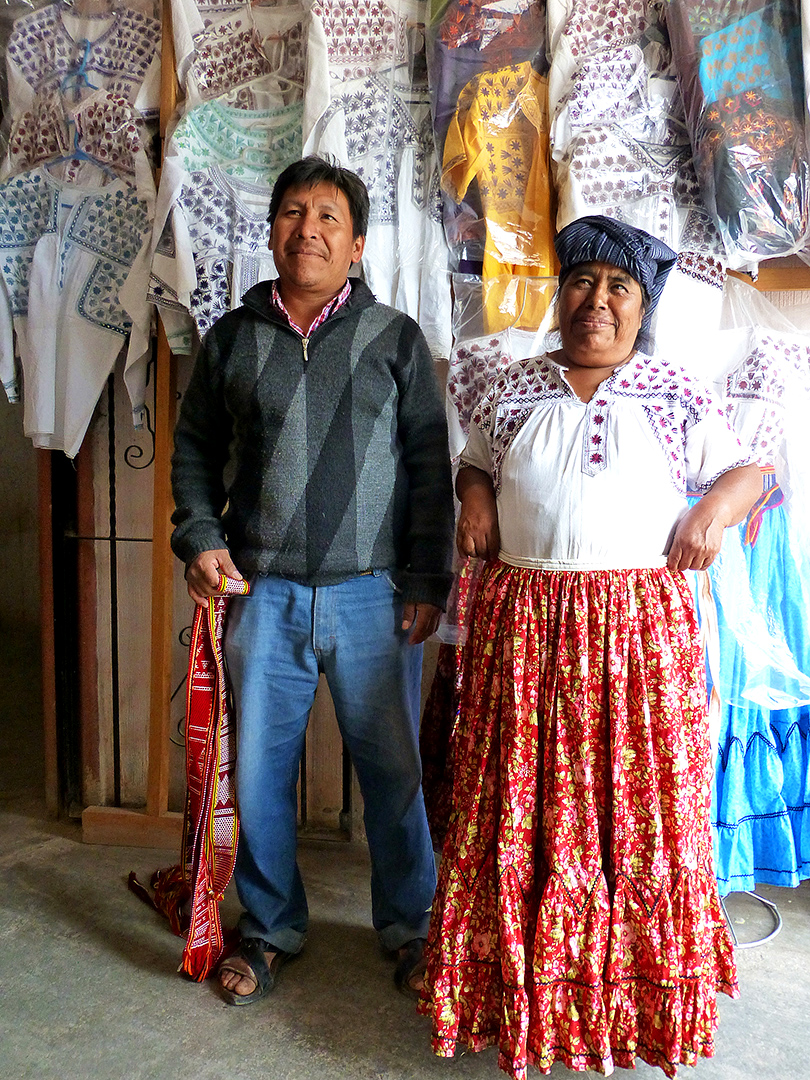
We headed to Artesanias Kojpk Okp, the tiendita of Doña Honorina Gómez Martínez, the embroiderer we had met on our previous visit to Tlahuitoltepec.  Ahhh, yes, she was well aware of the Inspiration or plagiarism dispute with French designer, Isabel Marant, that even Vogue UK has covered.  As I later discovered, she spoke for the embroiderers at the press conference held at Oaxaca’s Textile Museum ten days ago.

P1090975

This spirited, strong, and delightful woman has been embroidering for 46 years and, as she explained at the press conference, “my heart tells me what I’m going to embroider because I have it in memory, born with that idea or feeling, experience, it is the daily life as Mixe.  It is a representation of blood, food, and nature. ” [translated from the original Spanish]

P1090984 copy

She recognized us and she and her assistant (husband? son?) were more than willing to plunge into piles of her creations, pull down blusas hanging on the walls, and dismantle displays.  Here is the blusa and ceñidore I came home with…

P1100022

Should you be inclined to go to the source, but can’t manage a trip up into the Mixe, as always, she will have a stall in July at the special artisan market in Oaxaca city during La Guelaguetza.  She can also be contacted by telephone:  01 283 596 26 05 and cell:  951 198 79 42.

Stay tuned for a blog post on Oaxaca-The Year After…  (Chris has a lot more photos to weed through!)

Read Full Post »

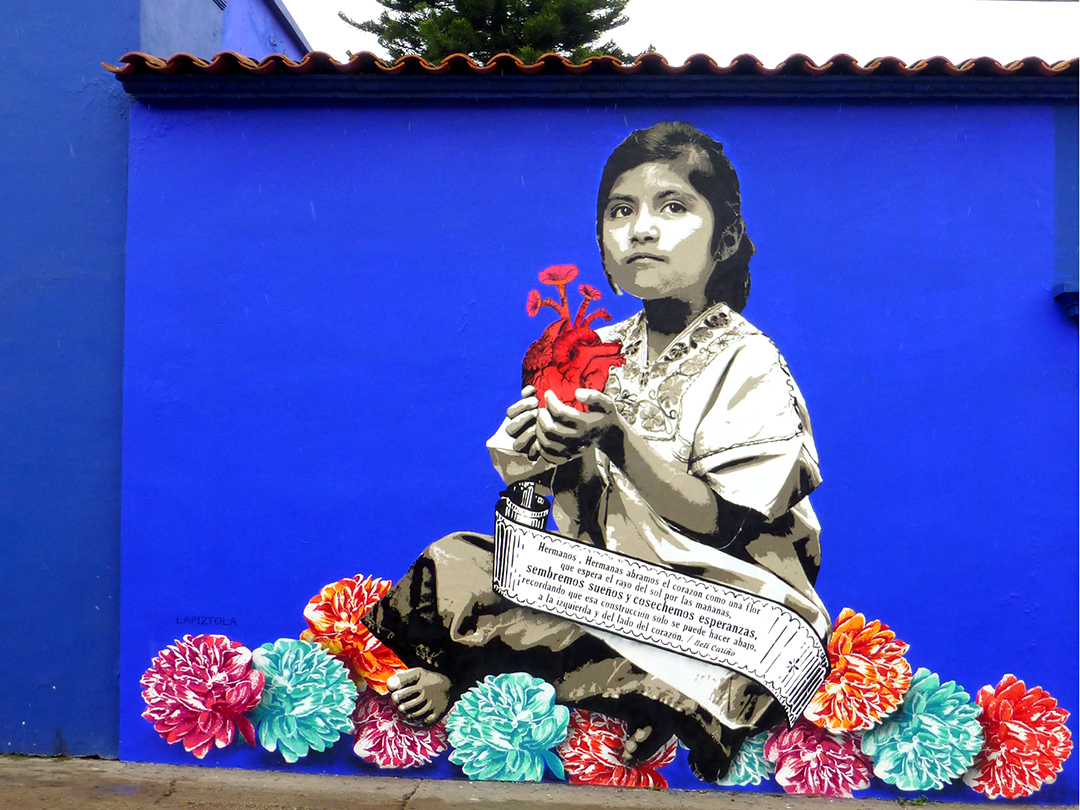
I walk past the Museo Belber Jimenez at least every other day and its brilliant blue walls always make me smile.  If you’re in the neighborhood, you can’t miss it!  In mid April, not long after undergoing a major renovation, a city bus lost control and crashed into the museum.  Fortunately no one was seriously injured, but the window, grating, and wall on the Tinoco y Palacio side of the museum were damaged.

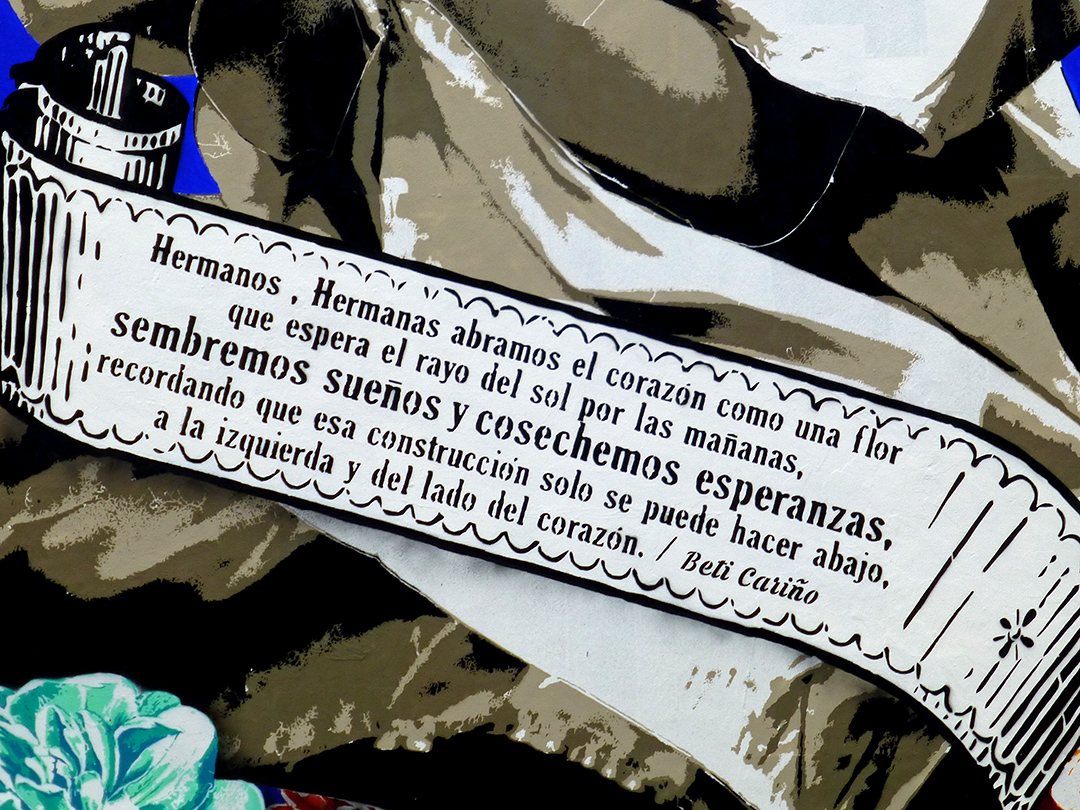
By the time I left in mid May for the trip north, all had been repaired.  And then a few days before returning to Oaxaca, blog reader BJ wrote to tell me there was a “beautiful new mural” on the west wall of the museum.  She was right — it’s stunning and deeply moving.

P1090814_copy

P1090815

P1090808Muchisimas gracias to Museo Belber Jimenez for inviting Lapiztola to enhance the exterior of the museum and our lives with the beautiful mural and its message from Beti Cariño.

Read Full Post »

Yesterday, I hibernated at home; a day spent unpacking and recovering.  Today, Carlos, now upgraded to a hurricane, is swirling off the coast of southern Mexico and bringing grey skies, chilly temperatures (it hasn’t even hit 70ºF), and a relentless drizzle.  It’s not the kind of day that draws one out into the streets.  However, the larder needed to be restocked and the cell phone needed to be reactivated, so, with umbrella in hand, I was forced to venture out.

On the upside, the rain brings out the greens of the cantera.  Though, I’m not sure where this concrete insert in the sidewalk at the corner of Independencia and Garcia Vigil came from or what it means.  (Update:  It’s Grupo: Salvando Vidas. Oaxaca — a volunteer group that has taken on the much needed task of repairing the city’s sidewalks muy peligrosas, saving lives and limbs!  h/t,  Peggy)

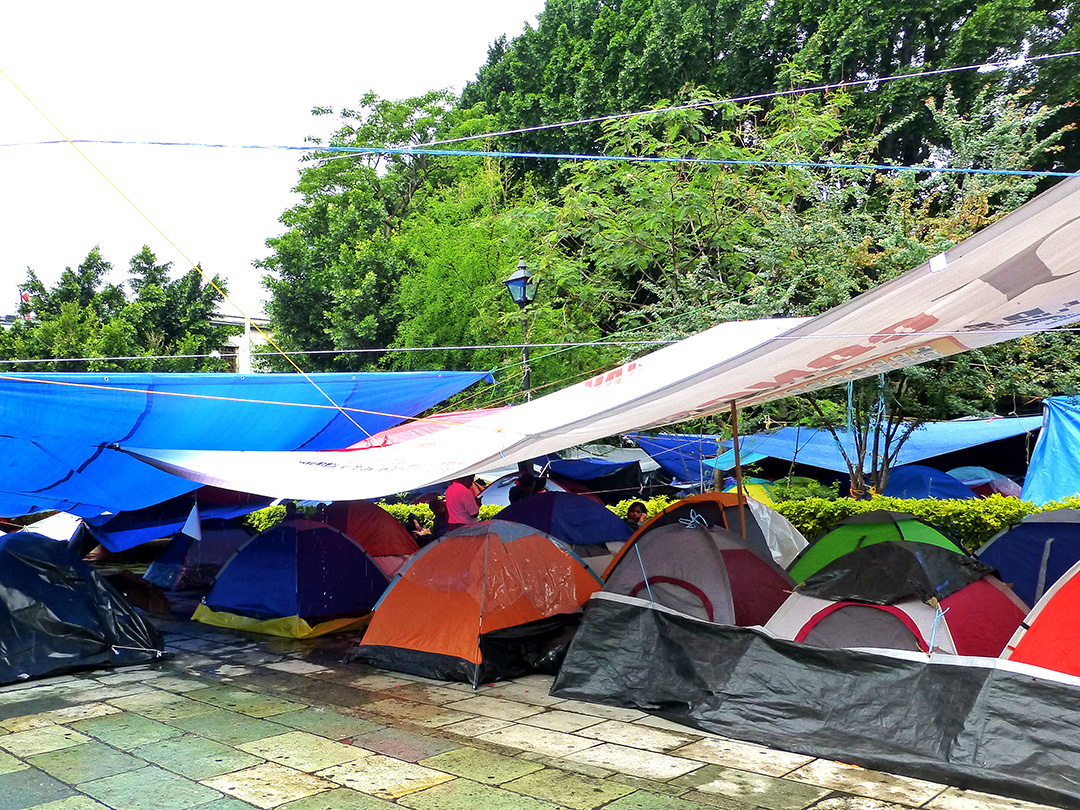
For some mystifying (at least to me) reason, Telcel deactivates my cell phone if I don’t use it for three weeks — this is despite the fact that I have a ridiculously high saldo (balance) in my account.  So, my first stop was to add even more pesos in order to reactivate my service.  With that chore in the rear view mirror, I crossed Independencia onto the Alameda, on my way to Mercado de Benito Juárez (or, Bennie J’s, as my friend G christened it years ago), only to find much of it covered with tents.

P1090803I’d read the news and had steeled myself for the return of ambulantes, but wasn’t prepared for ten times the number of Sección 22 teachers union tents from when I left in mid May.  Navigating the ropes tethering the tarps was a challenge and I had to forgo the umbrella.  The teachers looked cold and miserable and the restaurants under the portales looked mostly empty.  This is definitely not a picnic for anyone.  Continuing on to the mercado, I filled my shopping bag and headed for home.

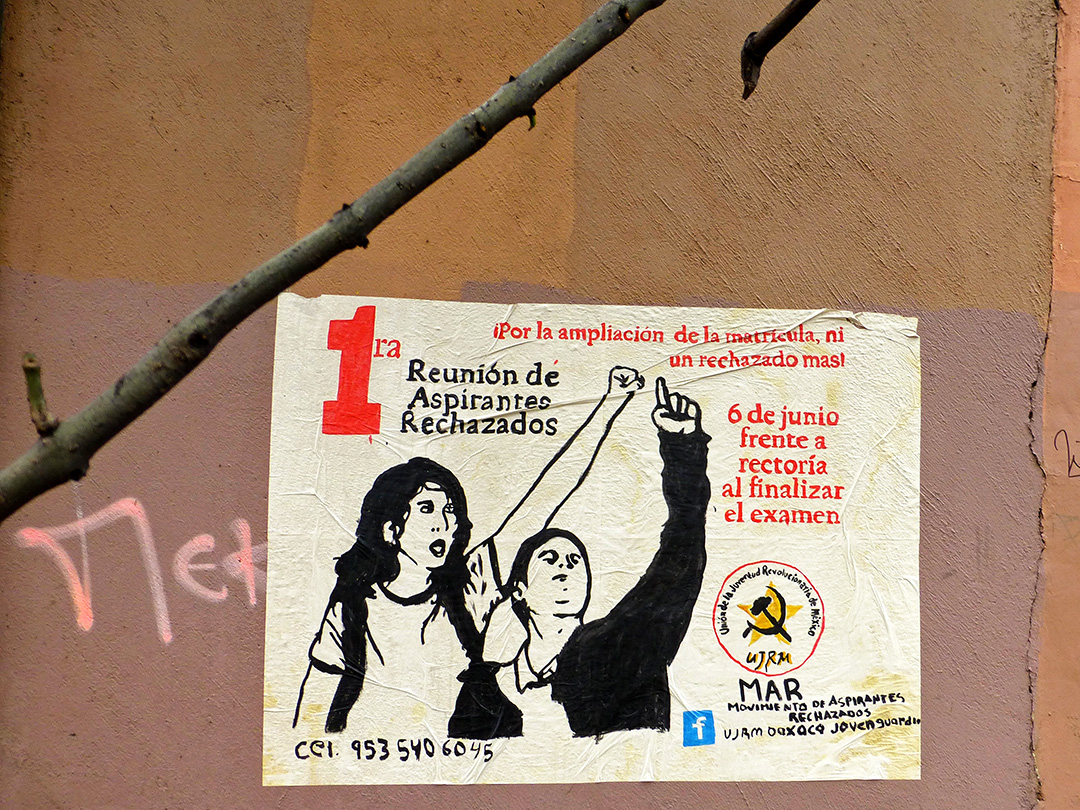
P1090816However, the signs of protest are everywhere.  In the “Emerald City,” the more things change, the more they stay the same.

Read Full Post »

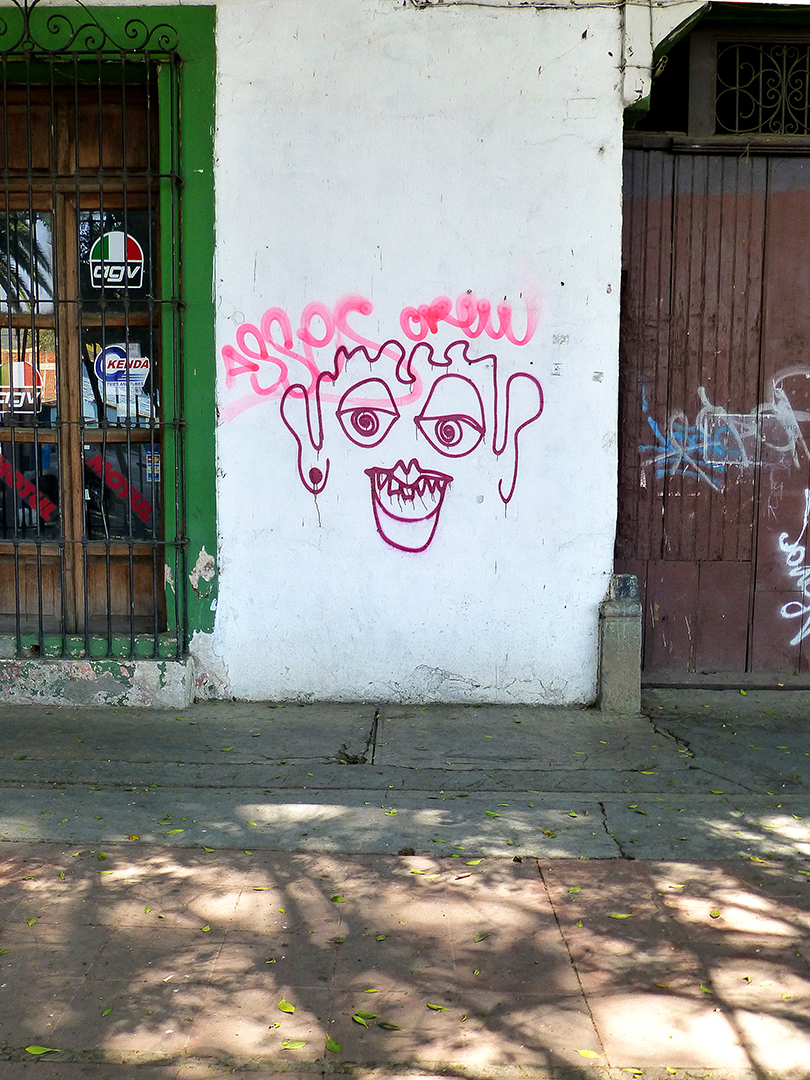
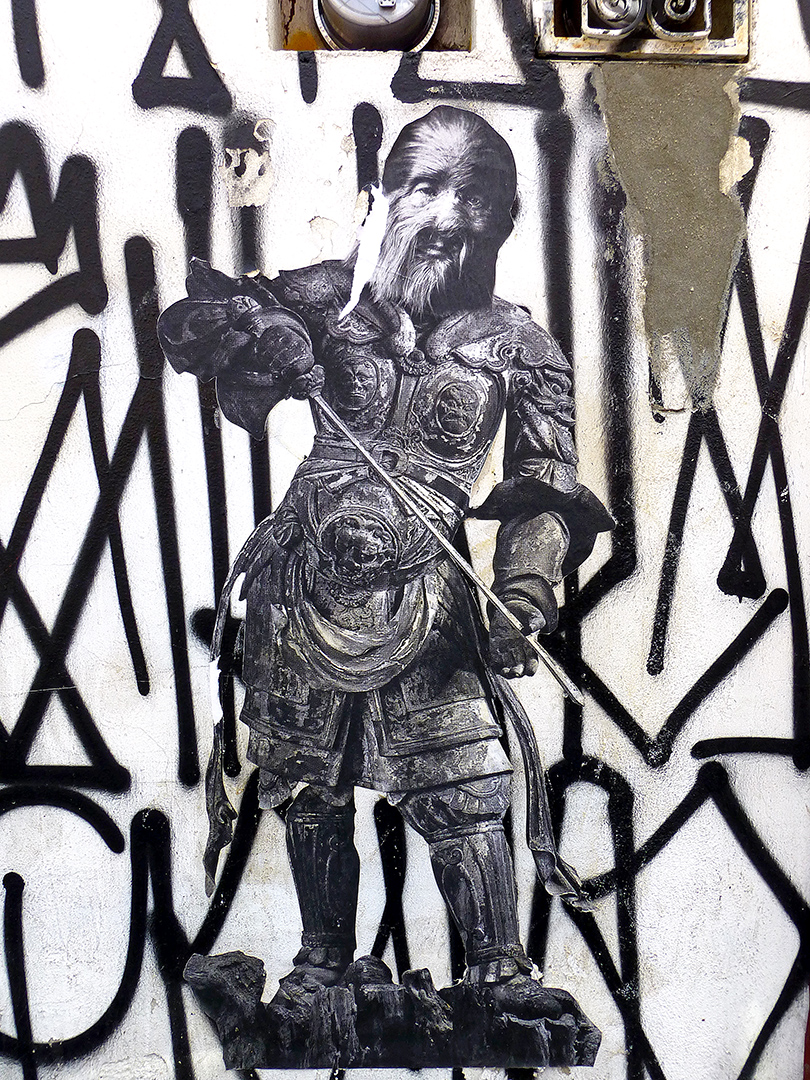
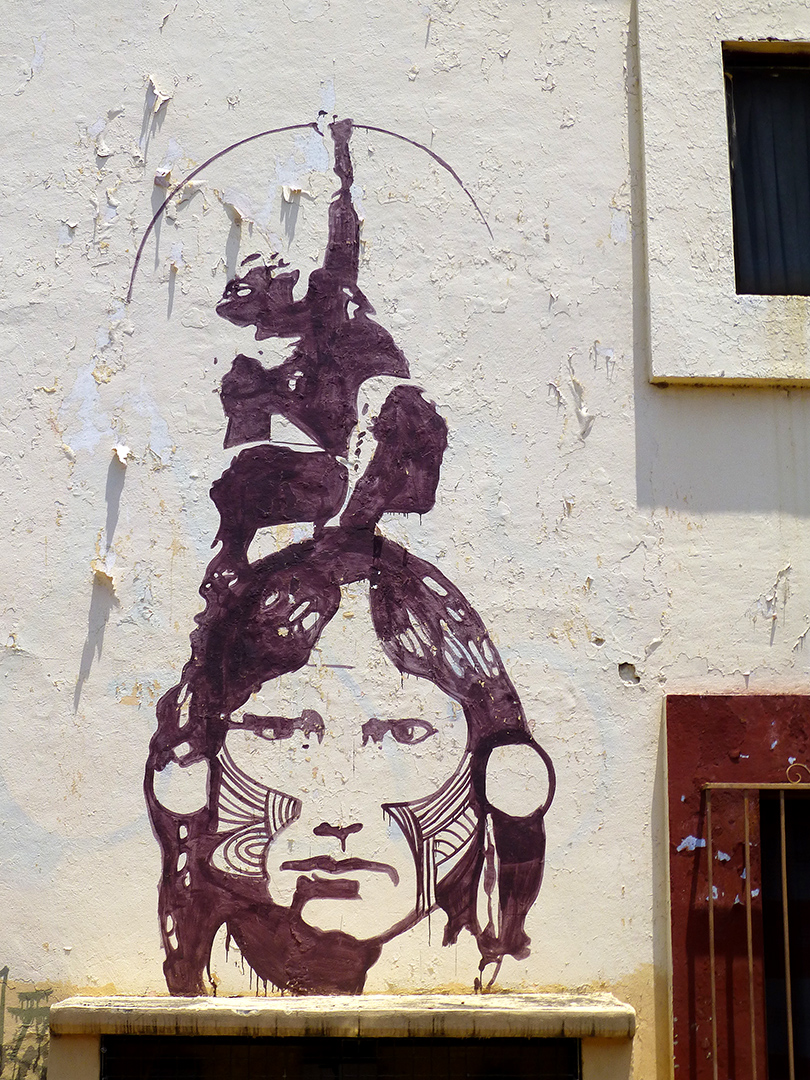
Looking forward to tomorrow’s return to Oaxaca, though not sure what I will find.  So, in preparation, a little street art, apropos of nothing…

P1060589

P1060966

P1080268

P1090304

P1080674

P1090499

… and everything.

Read Full Post »

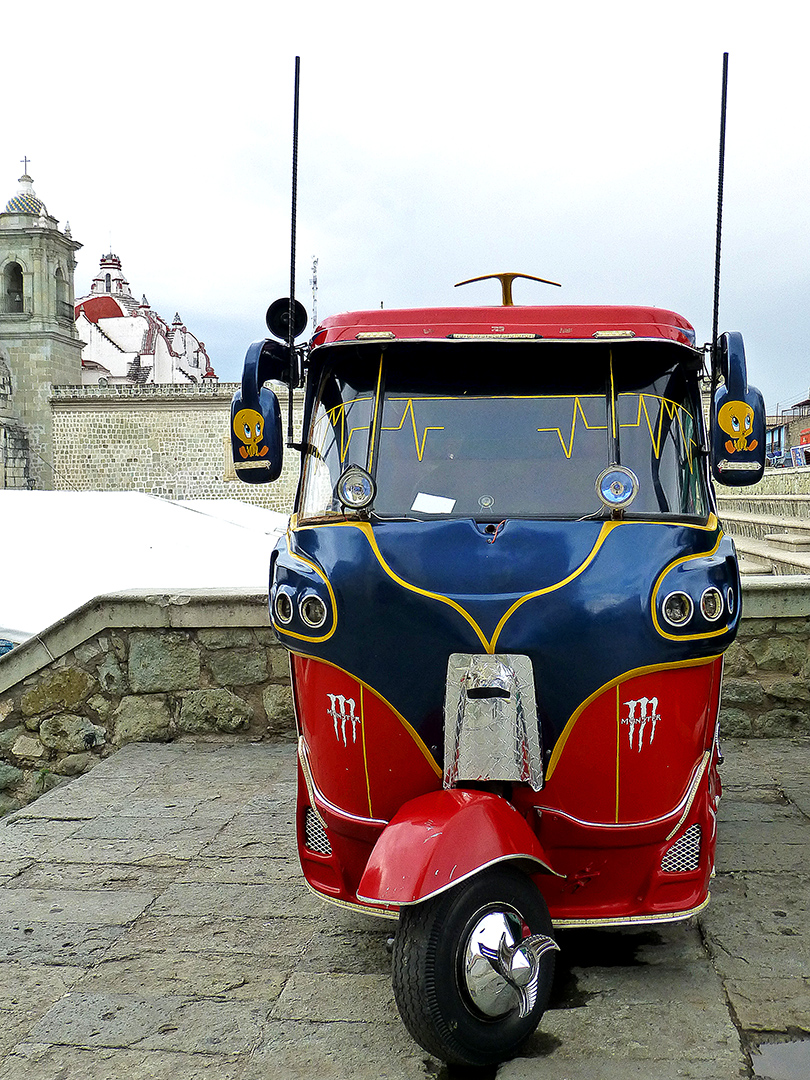
VW Beetles aren’t the only tricked out small vehicles on the road in Oaxaca.  While not allowed in the city, tuk-tuks (moto taxis) have become indispensible in ferrying passengers into the villages from bus and colectivo stops along the carreteras and up, down, and around the often narrow and dirt paved streets within villages where cars remain a luxury.  You haven’t lived until you’ve ridden one down a rocky embankment, forded a stream, and then climbed back up the bank on the other side — all without tipping over or getting one’s feet wet.  Talk about the little engine that could!

Most are utilitarian looking.  However, one day these tricked out tuk tuks appeared above the Plaza de la Danza.

P1080270

P1080271

P1080269

If you’ve got a little money and a large imagination, voilà!

Read Full Post »

High in the mountains of the Sierra Norte, the village of Santa María Tlahuitoltepec sits perched on a ridge top in Oaxaca’s Mixe region.  The terrain is rugged and unforgiving; it took rescue crews ten hours, much of it on foot, to reach the municipality following a lethal mudslide at the end of an extremely wet 2012 rainy season.  Eight months later, in May of 2013, when blogger buddy Chris and I ventured up there for their Fiesta de Mayo, we still had to detour around the remains of the slide.

P1080538 copy

Santa María Tlahuitoltepec, May 11, 2013.

Despite the harsh conditions and its remote location, Santa María Tlahuitoltepec is home to the Center for Musical Training and Development of Mixe Culture and it is estimated that 70% of the population can read music and many who can’t, play by ear — a source of great pride.

Guelaguetza desfile, July 28, 2012

Guelaguetza desfile, July 28, 2012

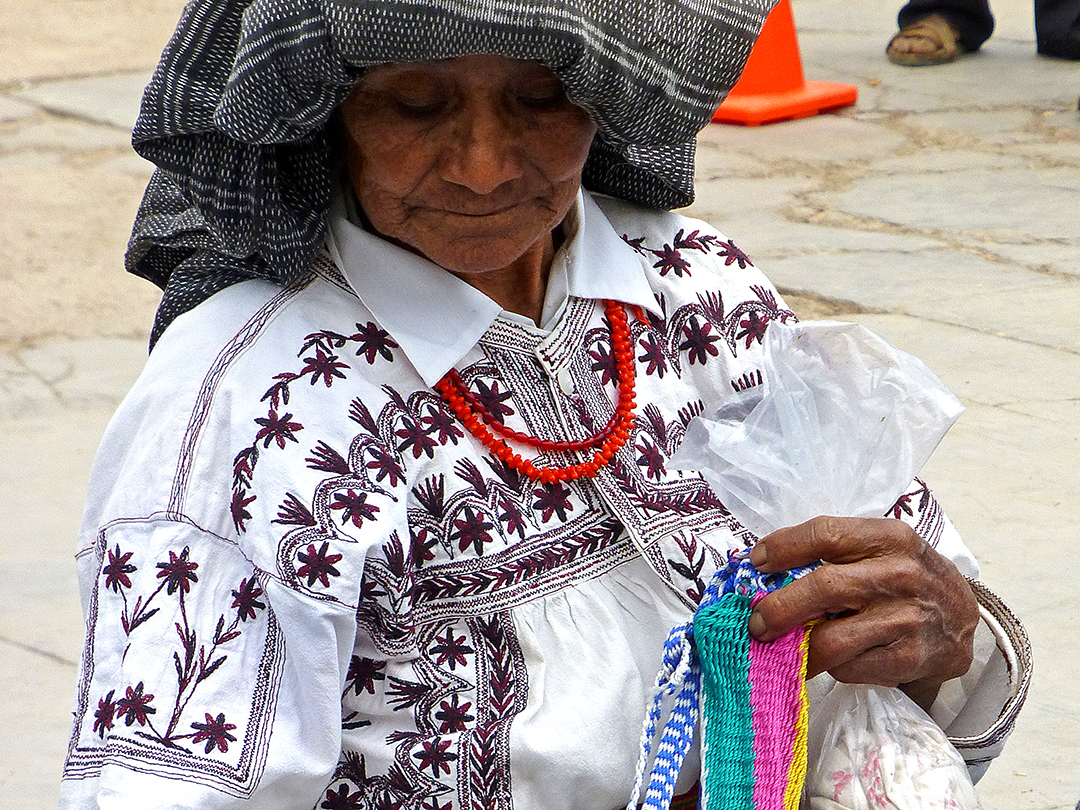
In addition to the musical talents of its residents, the village is known for the intricately embroidered blouses the women make and wear.  The design of both the cut of the blouse and the patterns of embroidery are uniquely Santa María Tlahuitoltepec.  If you see someone wearing one on the streets of Oaxaca, you know immediately where it came from.  I have a blouse and Chris bought a couple to decorate the walls of his house.

Santa María Tlahuitoltepec, May 2013.

Santa María Tlahuitoltepec, May 11, 2013.

However, in January of this year Oaxaqueña singer Susana Harp raised the alarm when she tweeted her outrage that the exclusive US department store Neiman Marcus was selling identical copies of the blouses of Santa María Tlahuitoltepec for $290 US dollars (six times what the originals cost in Oaxaca) — without even an acknowledgement of the origin of the designs.  And, last week ReMezcla (a digital publisher, creative agency, and entertainment company targeting Latino millenials) took up the issue of this kind of cultural appropriation with it’s article, The $290 Isabel Marant Huipil Rip Off That Pissed Off Oaxaca’s Mixe Community noting that, “In the case of Isabel Marant’s new ‘bohemian’ Étoile line, however, it’s hard to even muster a flimsy cultural inspiration defense, since the Oaxacan Mixe culture the clothes were ‘inspired’ by have been completely erased from the narrative.”

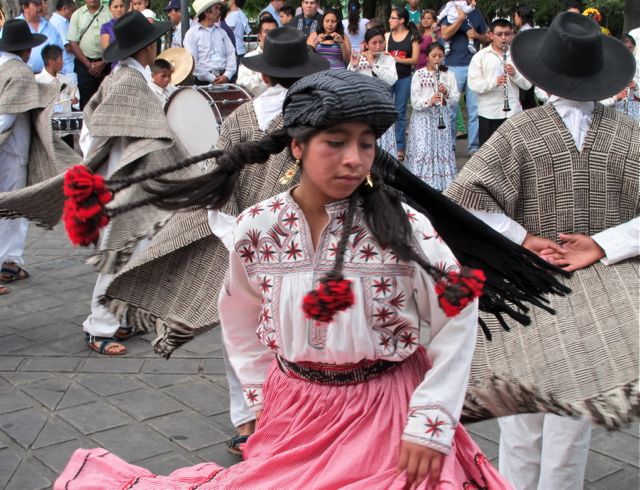
Dancers in action from Santa María Tlahuitoltepec

I urge you to forgo these and other high-priced knock-offs.  Instead, go to the source and buy originals from the talented artisans who created them.  And, a note to ReMezcla, especially given the subject of your article, I would have appreciated credit for your use of my photograph (above) from the Guelaguetza desfile, that I originally posted July 22, 2013.

Update:  A press conference by municipal authorities and embroiderers from Santa María Tlahuitoltepec was held on June 3 at at the Textile Museum of Oaxaca protesting the lack of respect by Isabel Marant for the creativity and work by the women of Tlahuitoltepec and the history and worldview that gave birth to their designs.

Read Full Post »

Eight months and counting… Tonight, eight months ago, 43 students from the Escuela Normal Rural Raúl Isidro Burgos teachers’ college in Ayotzinapa, Guerrero went missing.  I am sadly resigned that marking this horrific anniversary has become a regular feature on my blog.  As a mother, a guest resident of Mexico, and someone who believes that the peoples of the world deserve social justice, I can’t ignore this tragedy.

I dare you to leave Carteles por Ayotzinapa, the current exhibition at Instituto de Artes Gráficas de Oaxaca (IAGO), with a dry eye.  The 49 posters on display are only a fraction of the over 700 posters submitted to the First International Poster Biennial 2014 Convocation Ayotzinapa, an initiative of Oaxaca’s internationally renown artist, Francisco Toledo.  In addition to Mexico, artists from Argentina to Greece; Iran to Lebanon; and Poland to the USA responded to his call, recognizing as Toledo explained, the tragedy of Ayotzinapa has outraged people from beyond the borders of Mexico.

Photo courtesy of Oaxaca Media

Photo courtesy of Oaxaca Media

Irwin Homero Carreño Garnica, a graphic design student, originally from Ocotlán de Morelos, Oaxaca, was awarded first prize for his heartbreaking work, “México fracturado por Ayotzinapa” (Mexico fractured by Ayotzinapa).  As you can see above, it is a map of Mexico in the shape of a skeleton, with a break in the femur, where Ayotzinapa, Guerrero is located.  Like the work of the Tlacolulokos, the use of an iconic image (skeleton) and a primary palette of black, white, and greys, increases the emotional impact, much like Picasso’s, “Guernica.

Second place was won by Damian Kłaczkiewicz (Poland) and third place went to Daniela Diaz (Mexico).  The three winning posters will be reproduced for distribution throughout Mexico.

The exhibition runs through June 26, 2015.

Read Full Post »

« Newer Posts - Older Posts »