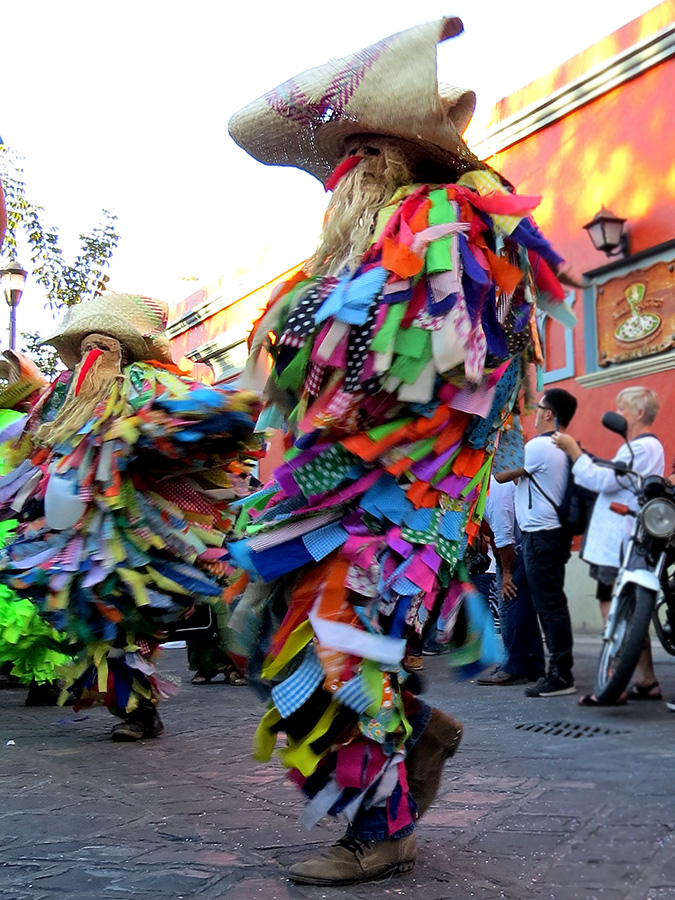
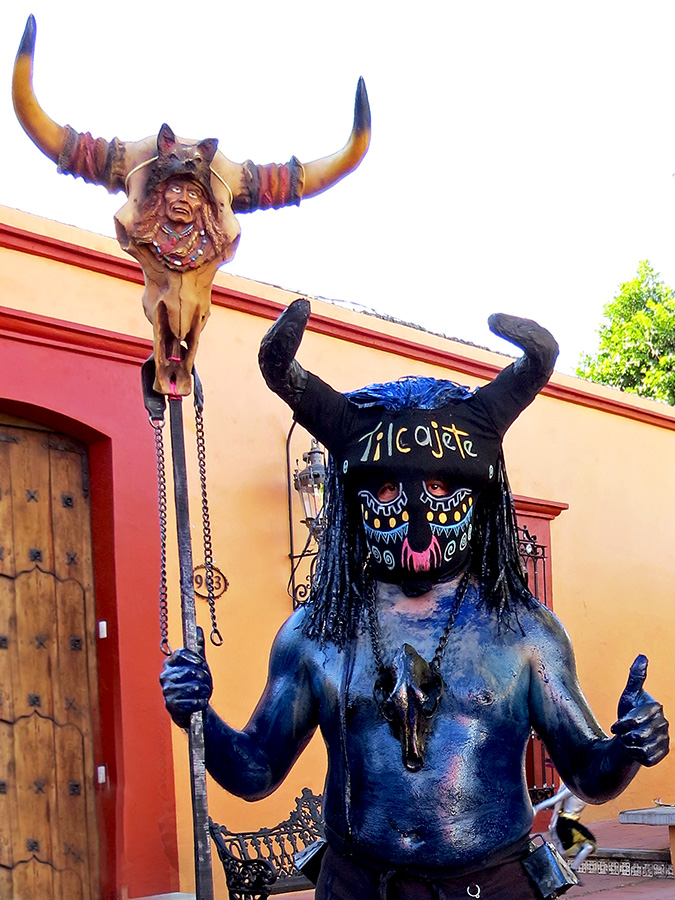
Día de Carnaval (aka, Shrove Tuesday, Fat Tuesday, Mardi Gras, Carnival) in Oaxaca is muy especial — especially in the village of San Martín Tilcajete. The Spanish brought the tradition to Mexico and, like may other seasonal celebrations, it conveniently coincided with indigenous festivals celebrating the “lost days” of the Mesoamerican calendar, “when faces were covered to repel or confuse evil.” Apparently, it caught on “because it was one time when normal rules could be broken especially with the use of masks to hide identities from the authorities.”
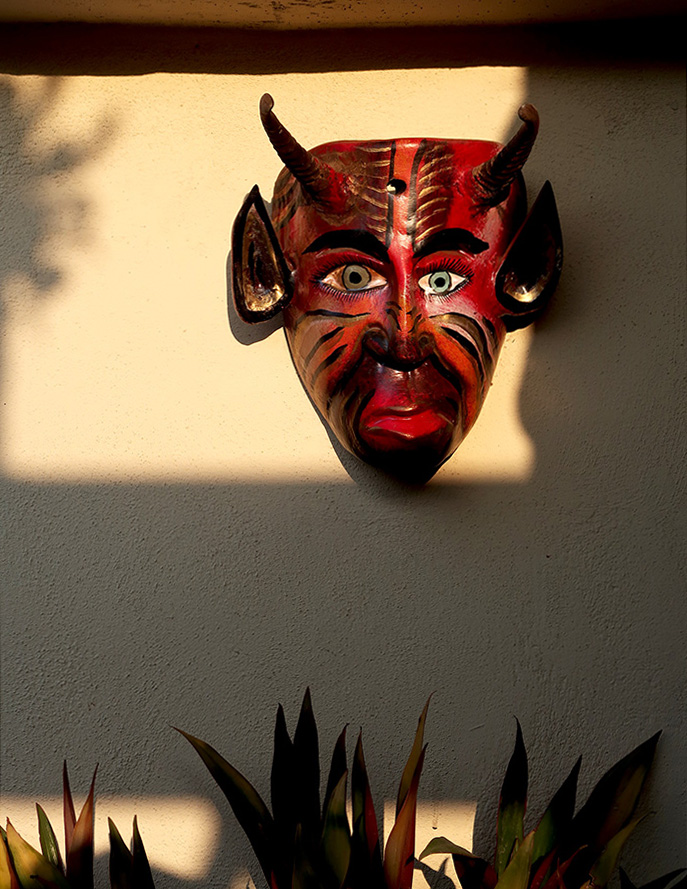
Masks waiting to be worn at the workshop of Victor Fabián Ortega (click on image to enlarge)…
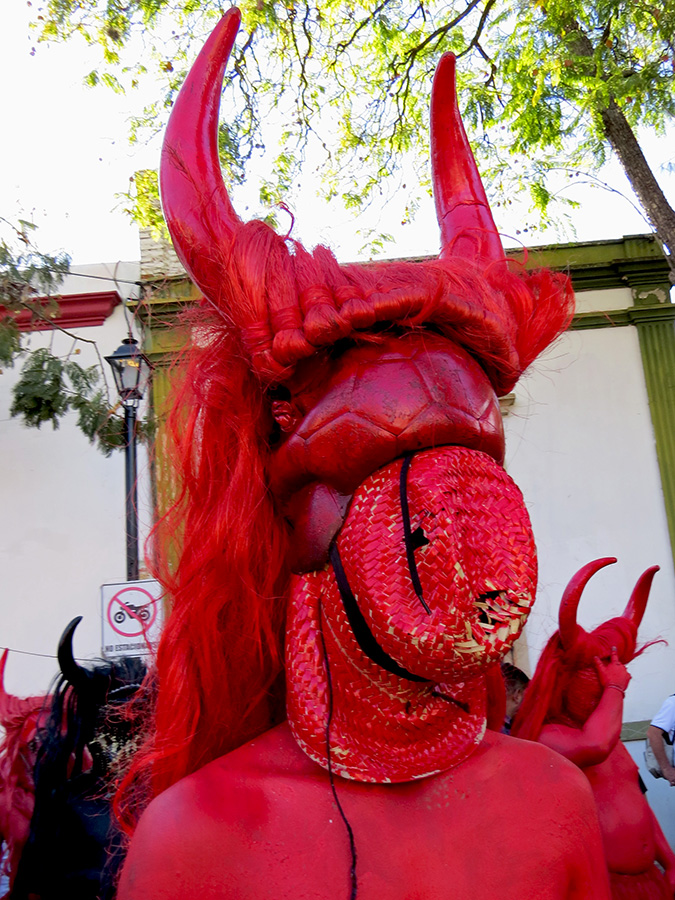
Not only were there masks at the workshop, there were bodies to be painted and it was a family affair — brothers, sisters, cousins, children, wives, and Victor himself who painted, was painted, and donned a mask.
Other family members (including women, new in the past couple of years) came painted and masked to gather to begin roaming through the village with other families, inviting one and all to the festivities!
And, it’s not just the adults. As with all celebrations and rituals in Oaxaca, children are encouraged to appreciate and participate — hopefully, ensuring these traditions continue.
The devils of San Martín Tilcajete laughed at everything: baptisms, weddings, solemn acts. Surrounded by devils with masks, old shoes, clothing of sacks, paintings that come from the earth and ancestral plants, they roam the streets chattering and everywhere they walk the streets laughing and appear either as devils or animal spirits.
That is why in SMT in carnival, it becomes a poetic dimension of shapes, colors and sounds; a fun and educational community that teaches us how imperfect we are, and to ask the good not to be so solemn and boring. — Chamucos: Carnaval de San Martín Tilcajete Oaxaca, by Adolfo Pérez Butrón. (My translation.)
Read Full Post »





















 Mexican Peso Converter

 View From Casita Colibrí

A day without women
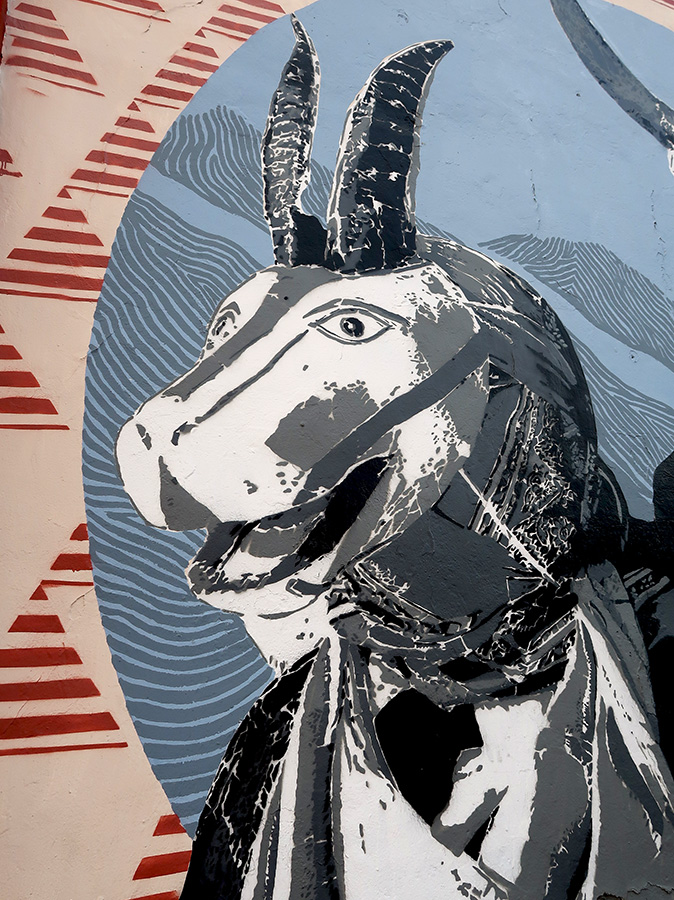
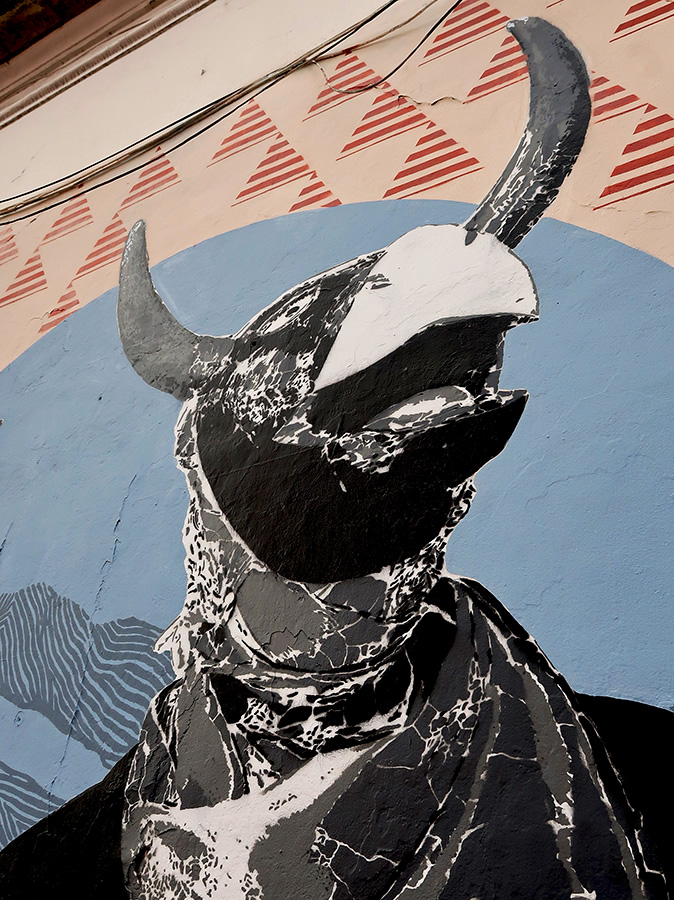
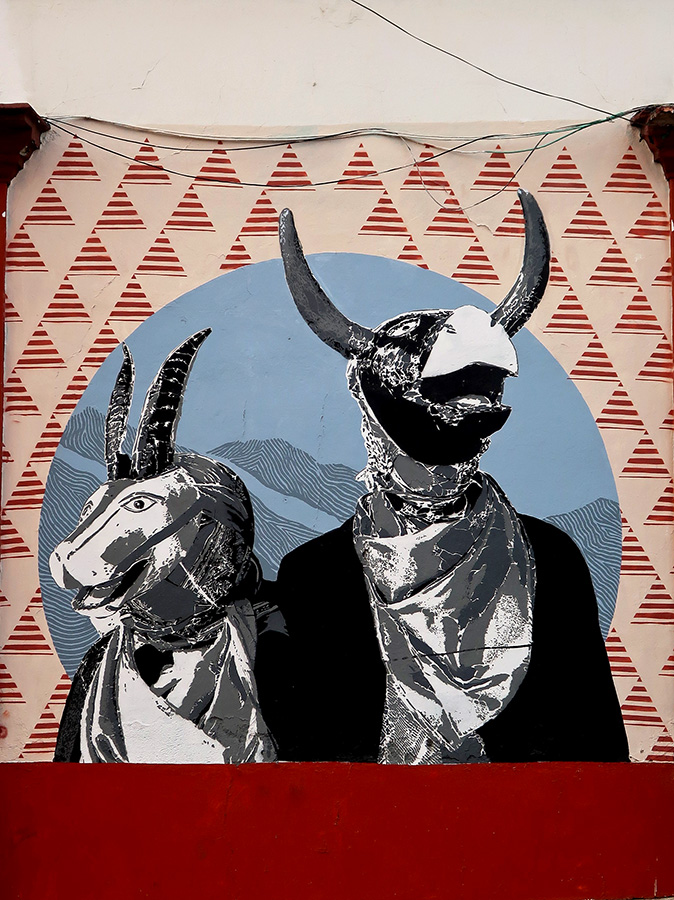
Posted in Creativity, Culture, Politics, Protests, Travel & Tourism, tagged #ParoNacionaldeMujeres, #UnDíaSinMujeres, #UnDíaSinNosotras, A Day Without Us, A Day Without Women, art, Día Internacional de la Mujer, International Women's Day, Mexico, National Women's Strike, Oaxaca, photos, political art, political commentary, protest, stencil art, street art, urban art, wall art, women's rights on March 8, 2020| 4 Comments »
Today, March 8, women around the world are celebrating International Women’s Day with marches, forums, exhibitions, and more. The mass media is filled with stories about extraordinary women and companies catering to women are using references to International Women’s Day in their advertising, though, I might add, very few mention its revolutionary past.
However, it isn’t today’s demonstrations, expositions, and other special events that has women in Mexico talking. It is the call for women to disappear for a day to protest the staggering amount of violence perpetrated against them. Government statistics report that 3,825 women met violent deaths last year, 7% more than in 2018. That works out to about 10 women slain each day in Mexico, making it one of the most dangerous countries in the world for females. Thousands more have gone missing without a trace in recent years.
Using the hashtags #ParoNacionaldeMujeres (National Women’s Strike), #UnDíaSinNosotras (A Day Without Us), and #UnDíaSinMujeres (A Day Without Women), organizers have reached out to the women of Mexico that on Monday, March 9, nothing moves: Don’t go out, don’t shop, don’t go to school, and don’t consume — become invisible, simulating the thousands of women who have been murdered or disappeared.
As three female legislators wrote in an article expressing their support for the strike, Women are responsible for about half of the compensated economic activity in the country, and relied upon disproportionately for unpaid work in the home, which is roughly equivalent to 15% of Mexico’s GDP. In exchange, our rights are impaired or ignored. Women have become the protagonists of thousands upon thousands of stories of violence and impunity at the hands of men who, in public and in private, feel they have a right to decide over our lives and our bodies…. That and many, many reasons more are why Mexico’s women will march in protest on March 8, and stop everything – stop working, stop asking, stop accepting – on March 9.
Share this:
Read Full Post »