Pretty in pink on the streets of Oaxaca…

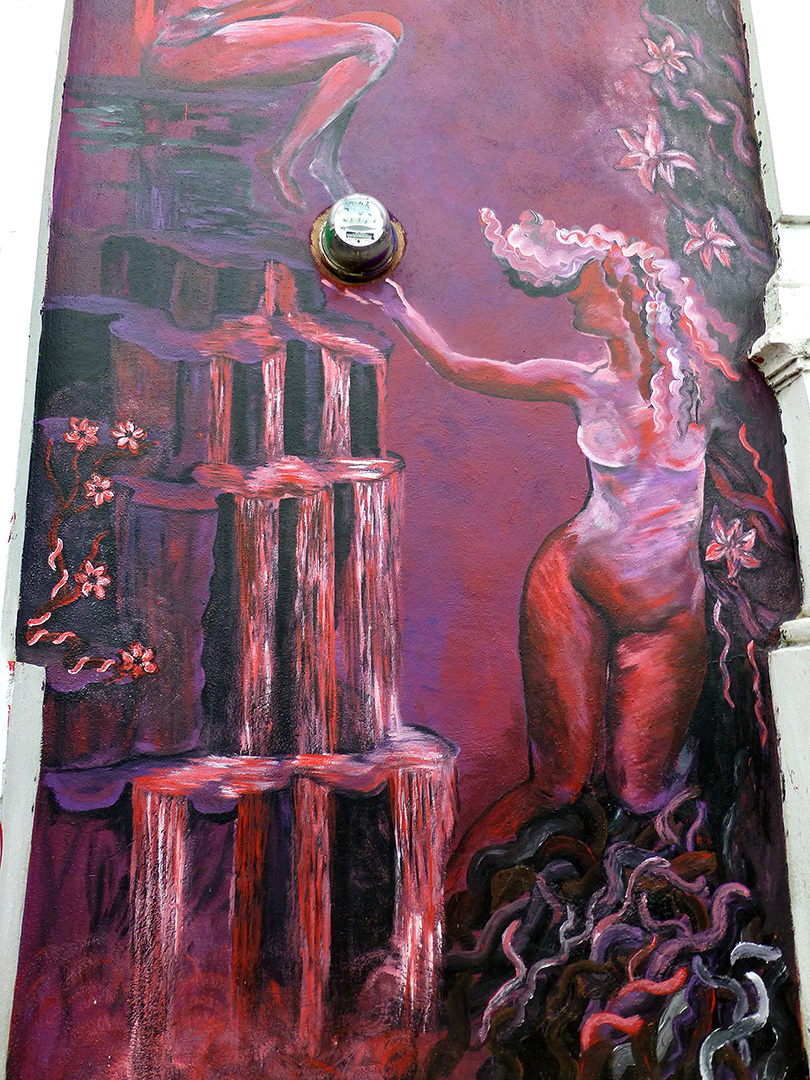


And, this doesn’t even include the pink and lime green of Correos de México (Mexican post office).
Posted in Creativity, Culture, Transportation, Travel & Tourism, tagged automobiles, bus, cars, catrina, graffiti, Mexico, Oaxaca, photographs, photos, popular travel destinations, street art, urban art, Vocho, Volkswagen Beetle, VW bug, wall art on November 10, 2015| 5 Comments »
Pretty in pink on the streets of Oaxaca…
And, this doesn’t even include the pink and lime green of Correos de México (Mexican post office).
Posted in Casita Colibrí, Creativity, Culture, Travel & Tourism, tagged Casita Colibrí, ceramic faces, Colima, Mexico, Oaxaca, popular travel destinations, wall art, wall hanging on October 26, 2015| 2 Comments »
The difuntos (departed) will be returning on November 1 and 2, but it’s the impending arrival of my very-much-alive friends from el norte who have inspired last minute painting and decorating. New outside entrance color to highlight wall hanging from Colima, gifted by my neighbor.
Posted in Buildings, Creativity, Culture, Museums, Travel & Tourism, tagged art, Lapiztola, murals, Museo Belber Jimenez, museums, photographs, photos, popular travel destinations, urban art, wall art on October 24, 2015| 14 Comments »
She’s gone…
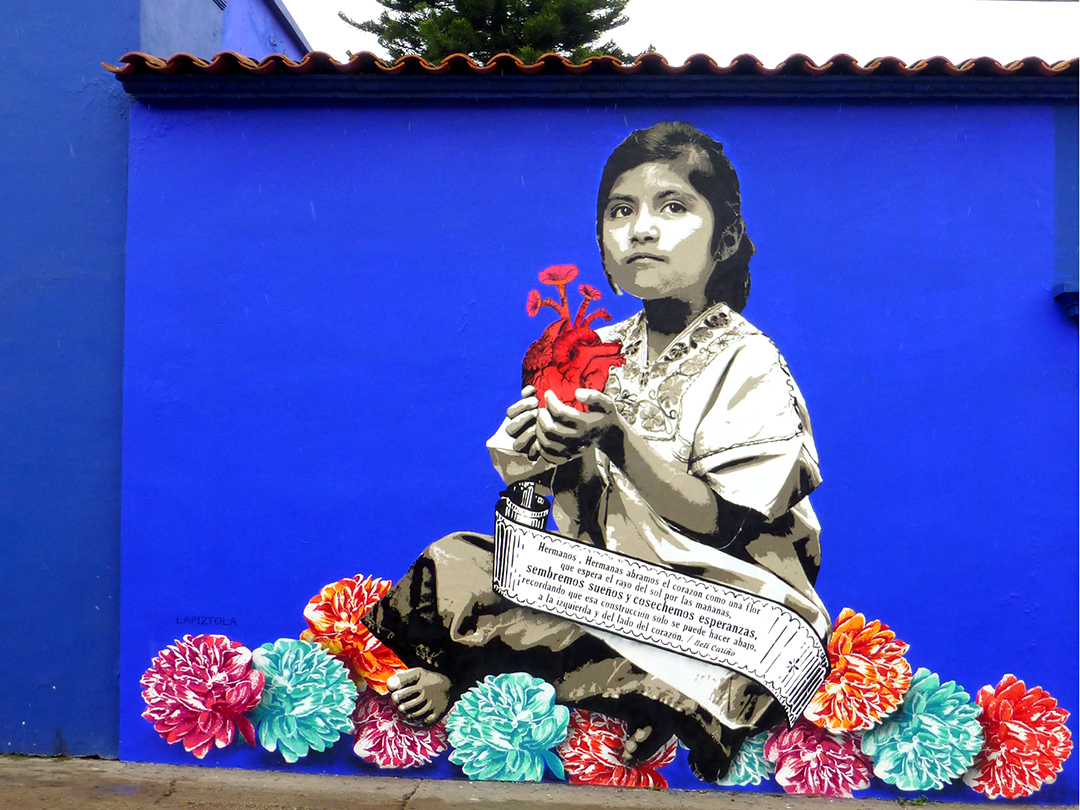 As feared, by order of the government, the beautiful and moving mural by Lapiztola, on the side of Museo Belber Jimenez, has been erased.
 Only her ghost remains.
 I miss her, too. Color and culture, indeed, seem to be unwelcome.
Posted in Agriculture, Culture, Flora, Travel & Tourism, tagged agave, Lapiztola, mescal, Mexico, mezcal, murals, Oaxaca, photos, popular travel destinations, street art, urban art, wall art on October 18, 2015| 3 Comments »
Before a “suspendida” order is slapped on this stunning piece by the Lapiztola collective celebrating the human face of agave cultivation, here is another moving work of art for the people, seen on Tinoco y Palacio on the wall of Piedra Lumbre, near the Sanchez Pascuas mercado. It tells a story…
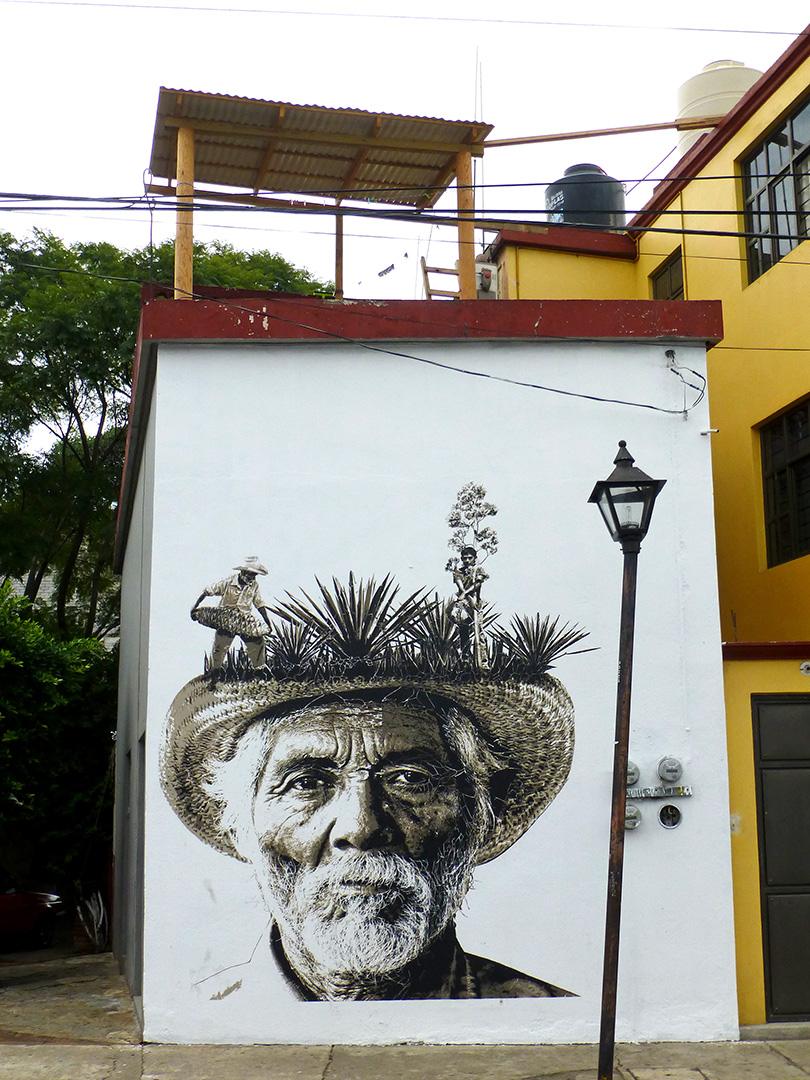 The wisdom of cultivation handed down from generation to generation.
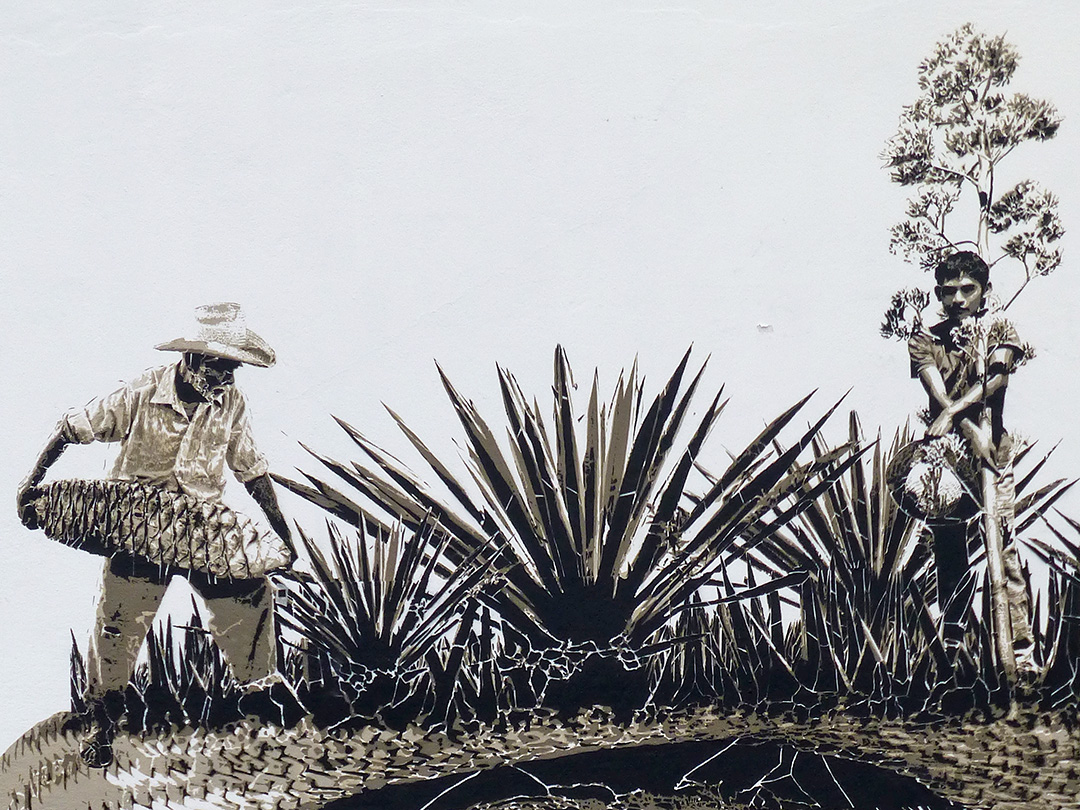 From the agave comes mezcal.
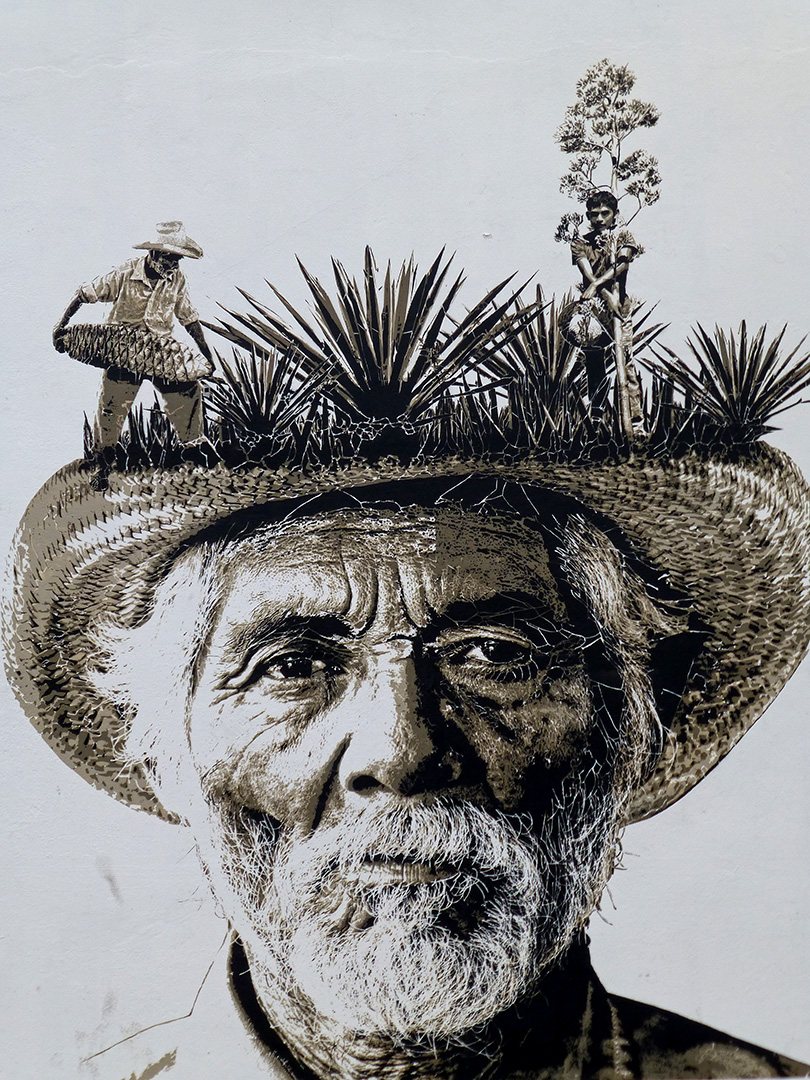 There are 199 “recognized” species of agave. How many can be used to make mezcal? The Mezcal PhD explores the answer. And, for an illustrated guide to many of the more popular varietals, click The Many Varieties of Mezcal.
Posted in Buildings, Creativity, Culture, Travel & Tourism, tagged art, Central Connecticut State University, Chiquitraca Colectivo, Color y Cultura Empresa Comunitaria, Lapiztola, Mexico, murals, Museo Belber Jimenez, Oaxaca, obra suspendida, photographs, photos, stores, street art, urban art, wall art, work suspended on October 15, 2015| 12 Comments »
As many of you already know, one of my favorite things about living and being in Oaxaca is, you just never know what you will stumble across. Rounding a corner, one might come upon a calenda (parade) with band, marmotas, monos, and dancers; a street artist or payaso (clown) entertaining a gathering of nin@s to abuel@s; street art; or a newly opened store.
So (no surprise), a few months ago, walking up Tinoco y Palacios enroute to the Sanchez Pascuas mercado (in need of a few staples like quesillo, aguacates, and tamales), a stunning new mural caught my eye.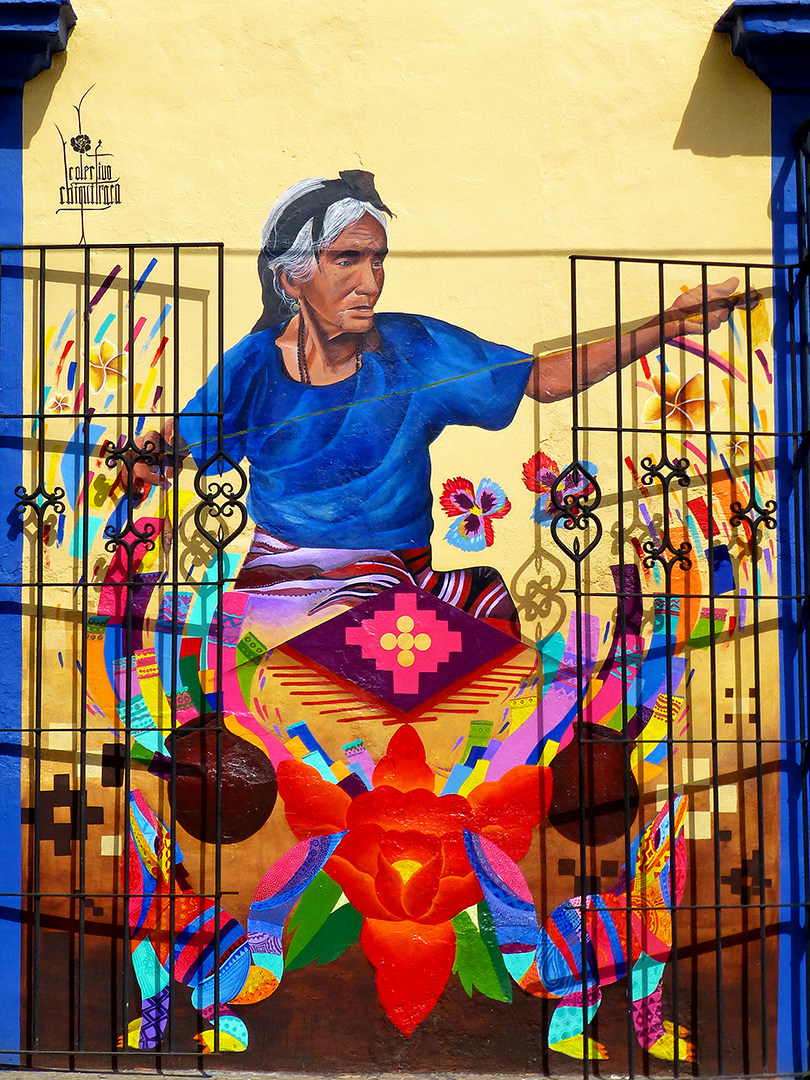 Positioned to entice potential customers into Color y Cultura, a newly opened artisan community shop, the mural is the work of Chiquitraca Colectivo from Juchitán. It worked, I was hooked, and later returned to browse and eventually buy a pair of earrings carved from a gourd. However, during a return trip to the mercado, I was rather shocked to see unsightly papers defacing the mural.
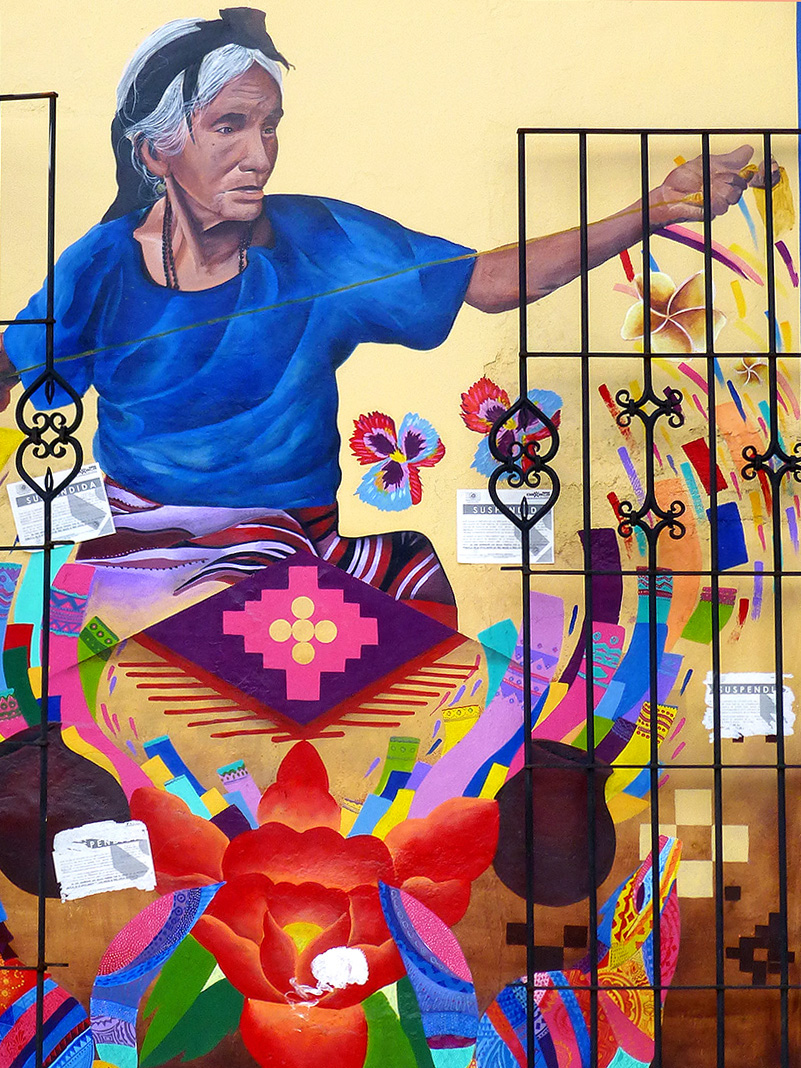
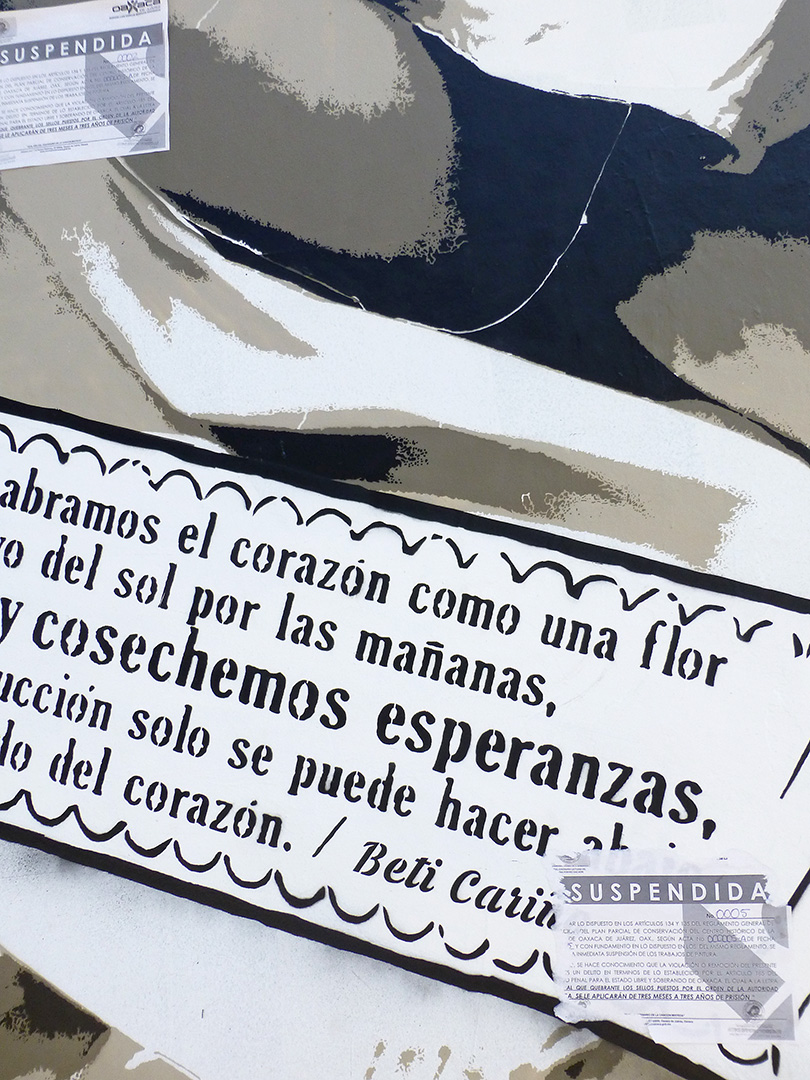
Usually, street murals are “hands off” zones for vandalism. However, closer inspection revealed official notices declaring, “Suspendida” (suspended) and going on to say that the mural violates regulations on the conservation of the historic district.
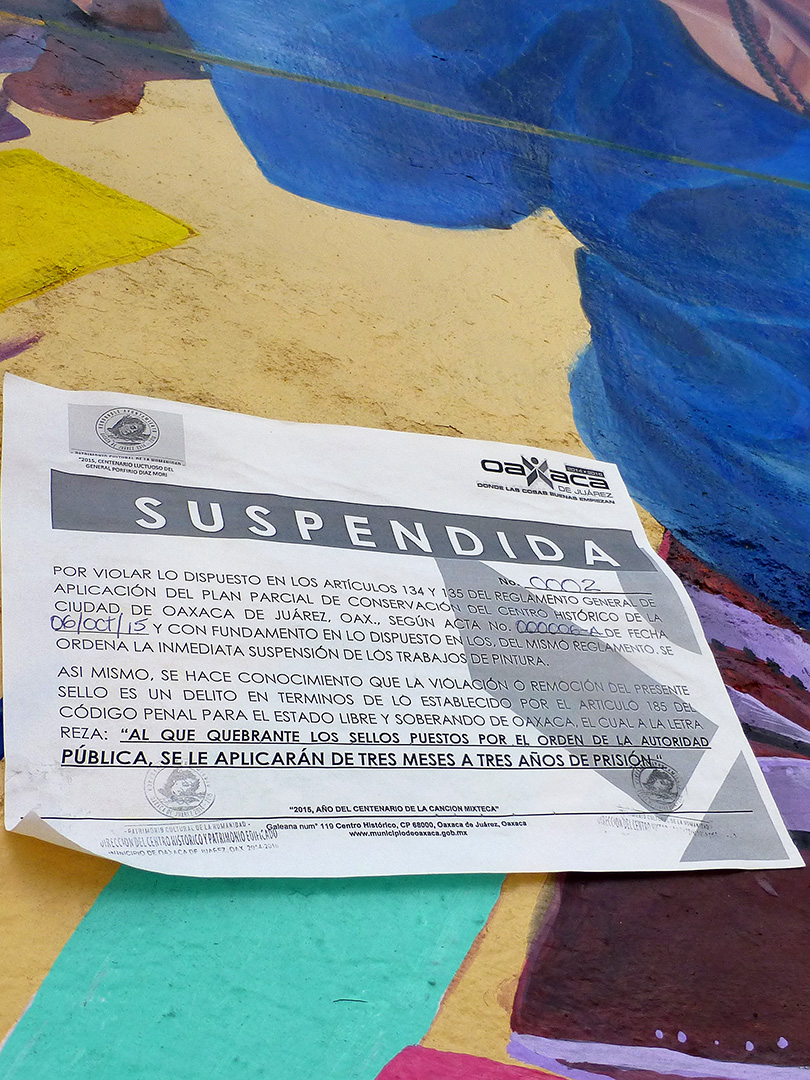
And, if this weren’t egregious enough, remember the stunning We sow dreams and harvest hope mural on the side of Museo Belber Jimenez?
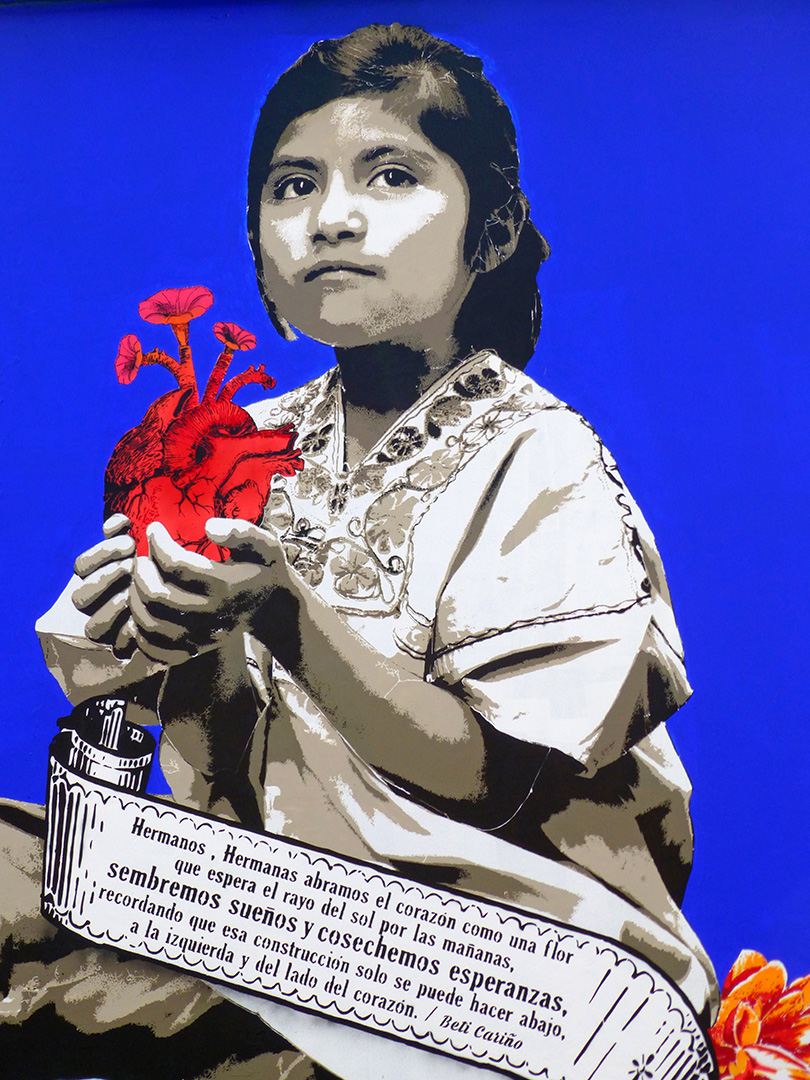
It too now has appalling “Suspendida” notices plastered on it. WTF is going on??? A little research revealed that a law was recently passed to “criminalize” wall art. Yes, yes, yes… I understand that the “powers that be” and even ordinary residents are sick of graffiti on historic buildings. BUT to lump the anarchist “A” spray-painted on the side of the Cathedral with magnificent murals painted on ugly decaying walls and beautiful works of art privately commissioned by businesses and museums to decorate their buildings, is the height of absurdity, never mind assigning a “criminal” aspect to it. Believe me, Oaxaca has a laundry list of more important issues that it needs to address.
If in their “infinite wisdom” they are attempting to “clean up” the city to better appeal to tourist dollars, euros, yen, etc., then I think they are barking up the wrong tree — we extranjeros (foreigners) love the street art! To that end, below is a copy of a letter I sent to the president of Central Connecticut State University (CCSU) last year, when officially authorized murals painted by art students as part of their course work were ordered removed by the university administration.
Dear President Miller:
I am writing to you from the city of Oaxaca de Juárez in southern Mexico, nestled in the valley where corn was first cultivated. I have the privilege of living in culture that has a deep respect for, and appreciation of, communication through all forms of art.
Oaxaca is filled with museums and public art. In addition, her walls are covered with murals, both officially sanctioned and unauthorized. An example of the latter: My current neighbor, previously lived next to a concrete bench built into a wall along her street. It’s primary function seemed to serve as a gathering place for garbage and graffiti. Being an artist, she painted a living room scene around the bench, replete with, a lamp, bouquets of flowers, pillows on the sofa/bench, and a framed painting with the image of a smiling creature holding a sign that quotes Oaxaca’s favorite son and former Mexican president, Benito Juárez: “El respecto al derecho ajeno es la paz.” (Respect for the rights of others is peace.) It is a quote that every Mexican school child learns and in the eighteen years since the bench and mural were first painted, it has become a beloved icon of the street and very little graffiti and garbage have reappeared.
Oaxaca would lose much of her character and lessons would be lost, if we were to wake one morning and find all her murals disappeared. The story is the same at CCSU and it would be shameful if the beautiful and thought-provoking student murals at CCSU were to be needlessly destroyed.
Posted in Celebrations, Creativity, Culture, Food, Travel & Tourism, tagged agriculture, Coral Saucedo, corn, Día Nacional del Maíz, food, Francisco Toledo, graffiti, maíz, Mexico, mural, National Day of Corn, Oaxaca, Ocote, photographs, photos, Ricardo Aeme, Seasons of My Heart, street art, Susana Trilling, wall art on October 1, 2015| 6 Comments »
September 29 was Día Nacional del Maíz (National Day of Corn) in Mexico. Corn was first cultivated approximately 8,000 years ago in the valley of Oaxaca and native varieties are still grown by the descendants of those original farmers. This was a day to, not only pay homage to Mother Corn but, as Mexican painter Francisco Toledo reminded those along Oaxaca’s Alcalá, to continue the struggle to defend native corn against impending invasion by Monsanto and its genetically modified seeds. The year revolves around the cycle of corn, which is planted in the same fields as beans and squash to make a perfect growing environment.
 The cornstalk grows, the bean plant crawls up the corn, and the squash vine sprawls out and shades the ground to keep it moist… Some of the corn is harvested in August and eaten fresh, while the rest is left on the stalks to dry.
 All parts of the corn plant are used — kernels, husks (for tamales), cobs (pig feed), and stalks (cow feed). The dried corn is stored and used in many ways throughout the year.
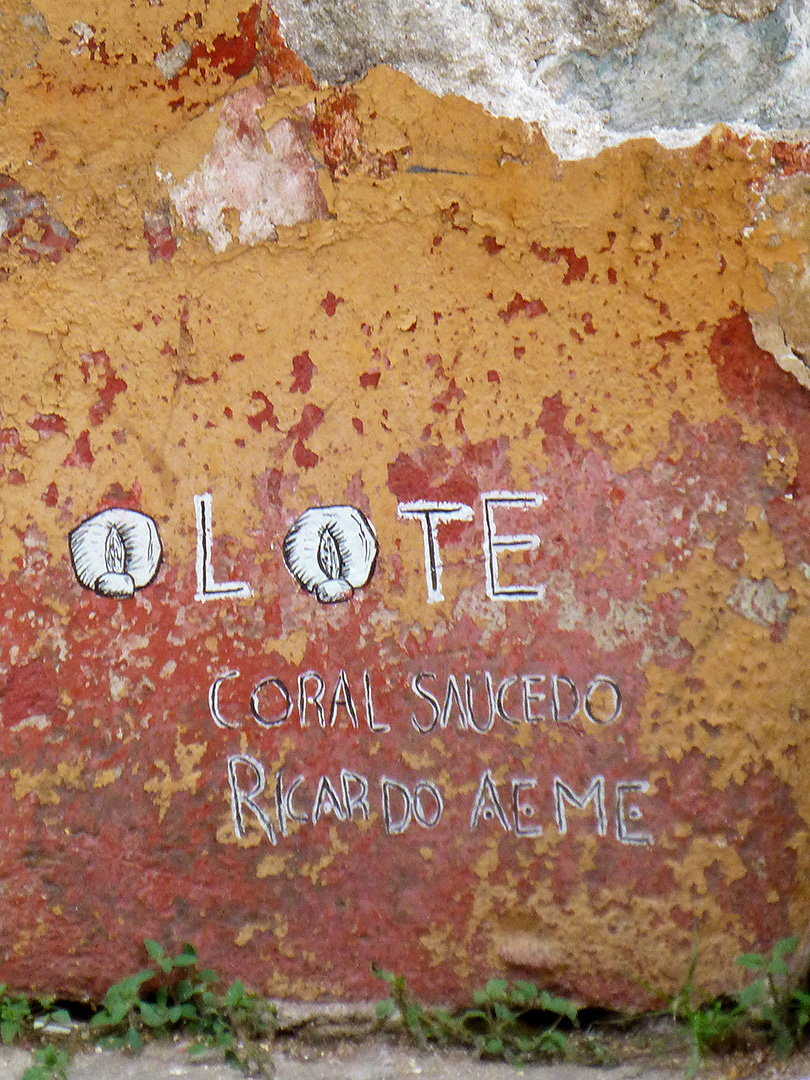 Text in italics is from the Seasons of My Heart cookbook by Susana Trilling.
The artists of the above, used the signature “olote” which is derived from Nahuatl word, olotl. In English, it translates to “corncob” and “a nobody.” Thank you to a couple of “nobodies,” Coral Saucedo and Ricardo Aeme, for such an expressive and beautiful piece of art honoring the sacred corn.
Posted in Creativity, Culture, People, Travel & Tourism, tagged artists, graffiti, Jesus Kobe, Mexico, murals, Oaxaca, photographs, photos, popular travel destinations, street art, Taqueria Santa Fe video, wall art on August 3, 2015| 4 Comments »
Last week, walking down Crespo, I spotted a mural at the turnoff to Calle Panorámicas del Fortín and discovered it was the work of Jesus Kobe.


Hmmm… Recently, I’d seen another of his works on Allende near Crespo.


I was familiar with the artist because last year, friends and I were walking along Panorámicas and stopped at this mural.


We walked further along to find another mural, but without a signature. It turned out the artist was walking by and when he saw us admiring the work, he graciously stopped to chat. It was Kobe and he explained that he only signs his work once it is completed.


Serendipity, why this place never ceases to surprise and delight!
And, watch and hear Kobe explain the inspiration that underlies the mural he created for Santa Fe Taqueria in Portland, Oregon:
Posted in Creativity, Culture, Travel & Tourism, tagged Agatha Christie quote, art, culture, graffiti, Marty Rubin quote, Nicko Foster, photographs, photos, popular travel destinations, Sam Shepard quote, social commentary, street art, wall art on August 2, 2015| 2 Comments »
I wonder… What is artist Nicko Foster saying along the walls of calle Constitución?
Behind every mask there is a face, and behind that a story.
–Marty Rubin
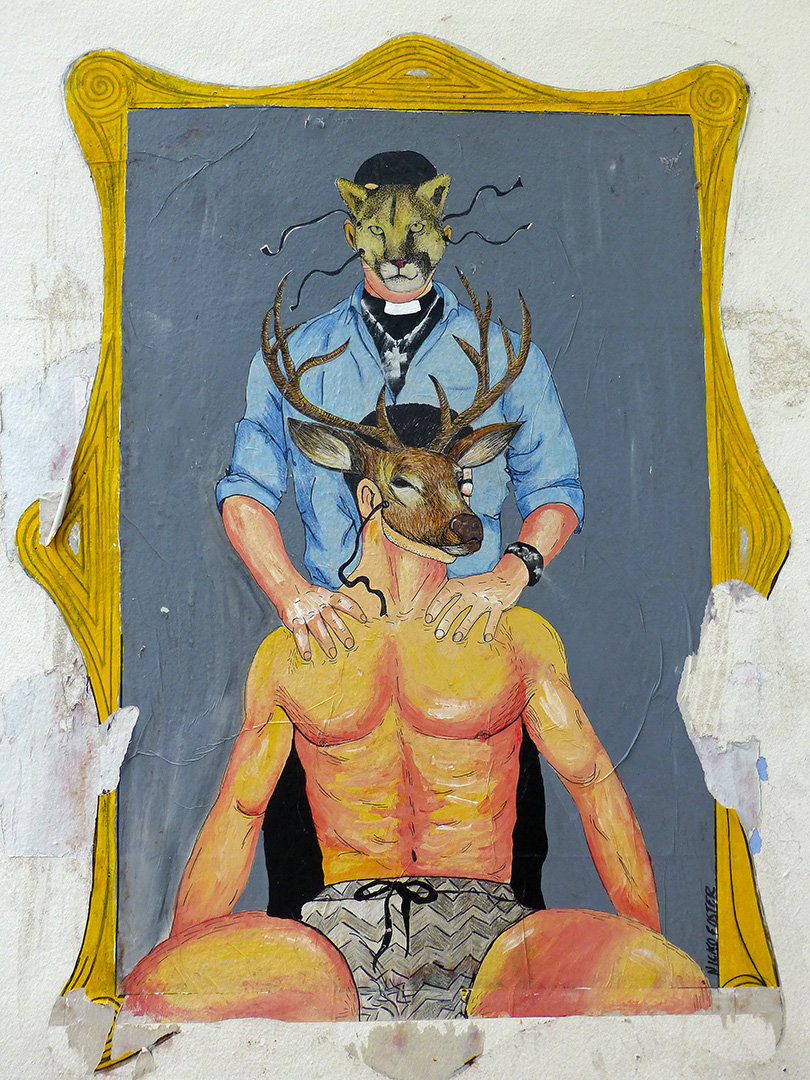 The human face is, after all, nothing more nor less than a mask.
—Agatha Christie
 I believe in my mask–The man I made up is me
I believe in my dance– And my destiny
—Sam Shepard
Posted in Creativity, Culture, People, Tragedy, Travel & Tourism, Violence, tagged #Ayotzinapa9meses, Ayotzinapa, Cristian Tomás Colón Garnica, Escuela Normal Rural Raúl Isidro Burgos, graffiti, Mexico, murals, Normal Rural Ayotzinapa, Oaxaca, photographs, photos, posters, stencil art, street art, teachers’ college, Tlacolula de Matamoros, wall art on June 26, 2015| 4 Comments »
It’s been nine months since 43 students from the Escuela Normal Rural Raúl Isidro Burgos teachers’ college in Ayotzinapa, Guerrero went missing — a traumatic, heartbreaking, and disgraceful anniversary that isn’t going unnoticed. The Missing Mexican Students Case Is Not Closed For 43 Families, nor for the people of Mexico.
Yesterday, in Tlacolula de Matamoros, the signs were impossible to miss, as we walked down the main street. The community continues to remember her son, Cristian Tomás Colón Garnica, one of the Ayotzinapa 43.
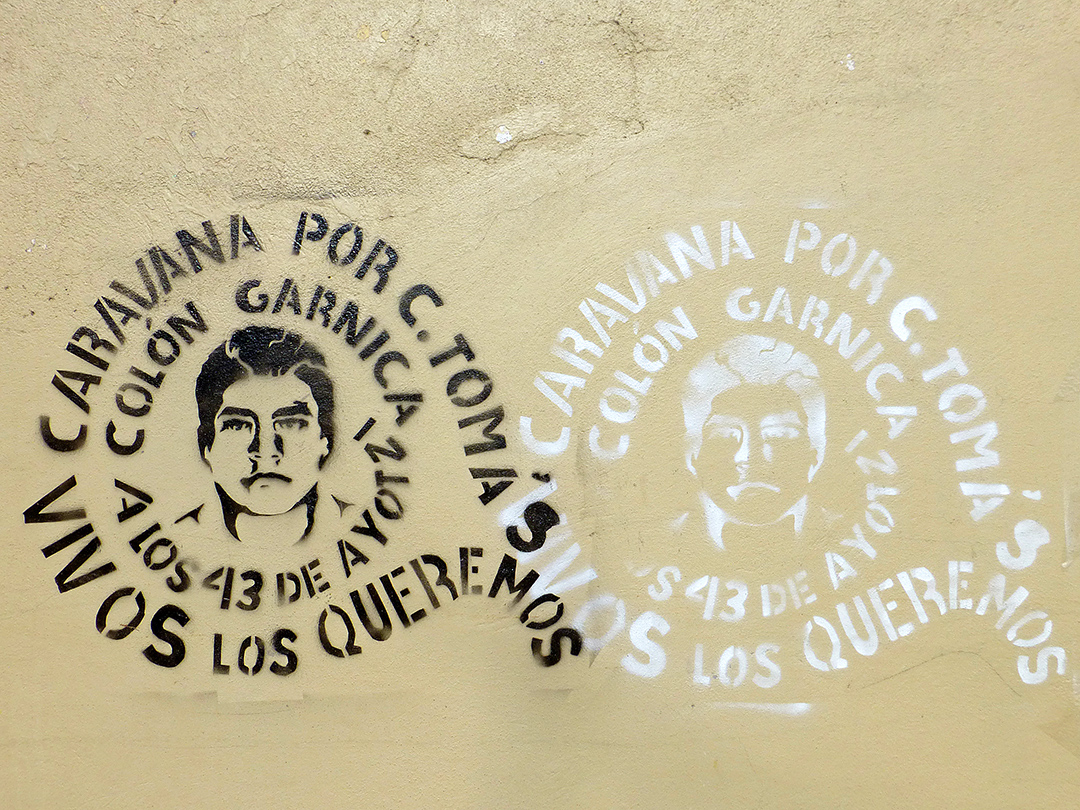 “His father traveled from their land when the abduction of the 43 young normal school students was first reported. ‘I am a day laborer. I make 600 pesos [USD$44.50] weekly, maximum, and that’s when there’s work, because sometimes there is no work. My boy wants to be a teacher. That is the job he wants, but they stopped him, they arrested him … What are we going to do?!'” — from Mexico Voices.
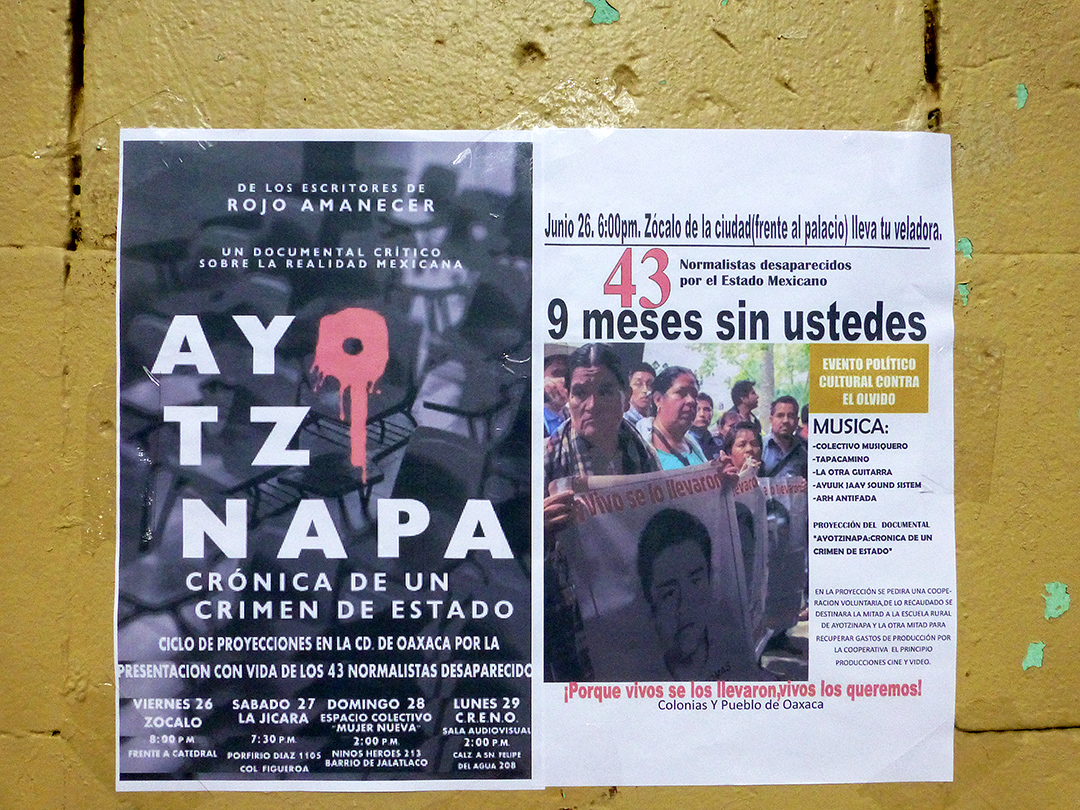 On the wall, near the stencils above, posters announced events in Oaxaca city in remembrance of the students. As the murals at the north entrance to Tlacolula de Matamoros proclaim…
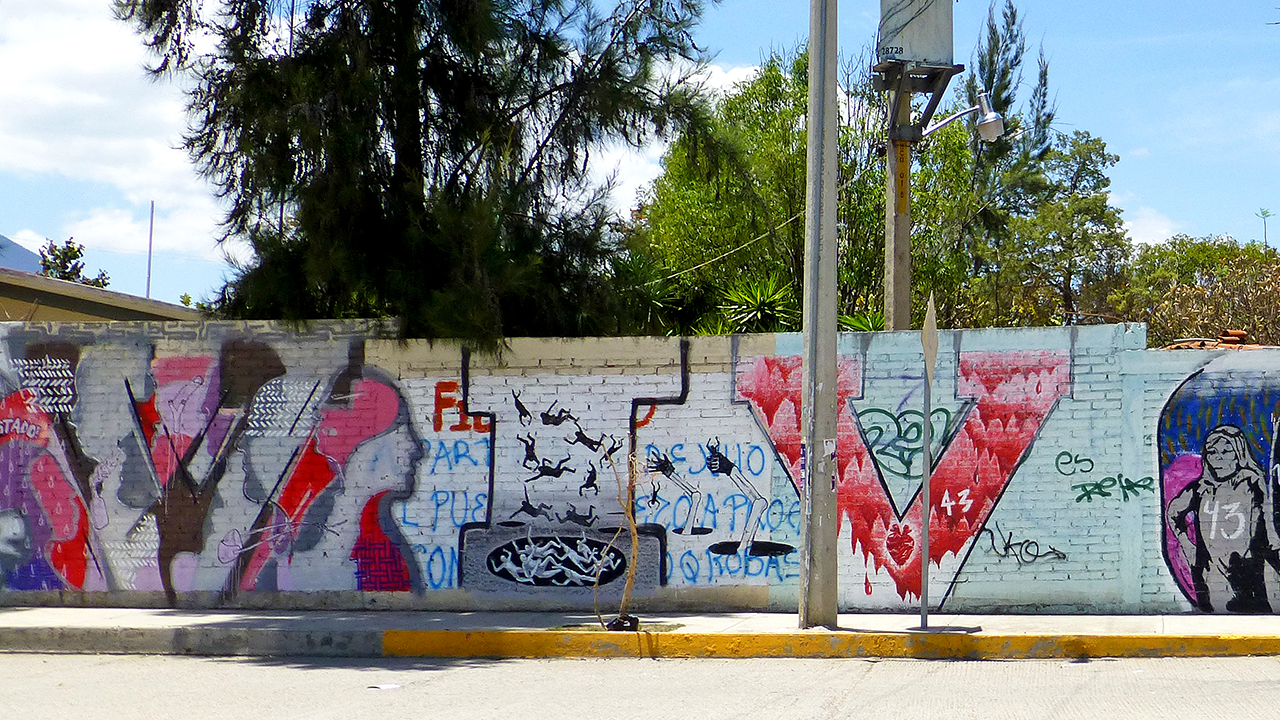


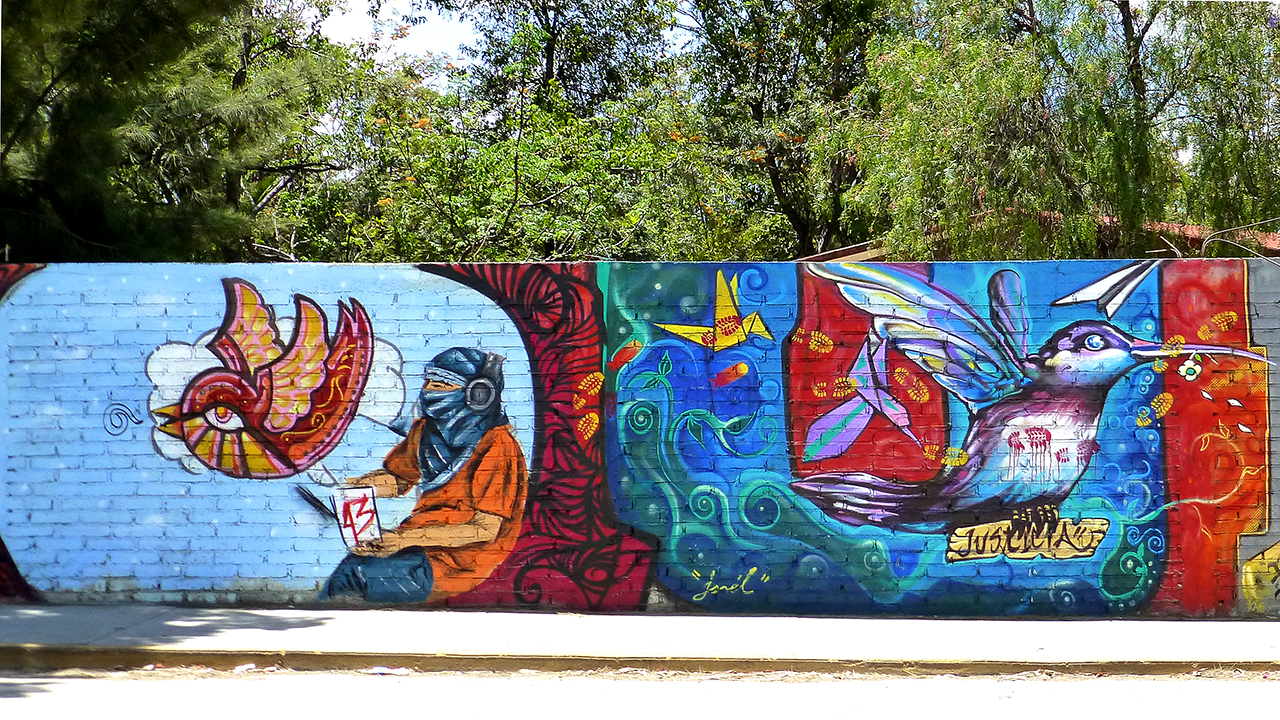


“VIVOS 43 LOS QUEREMOS”
Posted in Buildings, Creativity, Culture, Museums, Travel & Tourism, tagged Lapiztola, murals, Museo Belber Jimenez, museums, photographs, photos, popular travel destinations, urban art, wall art on June 15, 2015| 3 Comments »
I walk past the Museo Belber Jimenez at least every other day and its brilliant blue walls always make me smile. If you’re in the neighborhood, you can’t miss it! In mid April, not long after undergoing a major renovation, a city bus lost control and crashed into the museum. Fortunately no one was seriously injured, but the window, grating, and wall on the Tinoco y Palacio side of the museum were damaged.
By the time I left in mid May for the trip north, all had been repaired. And then a few days before returning to Oaxaca, blog reader BJ wrote to tell me there was a “beautiful new mural” on the west wall of the museum. She was right — it’s stunning and deeply moving.
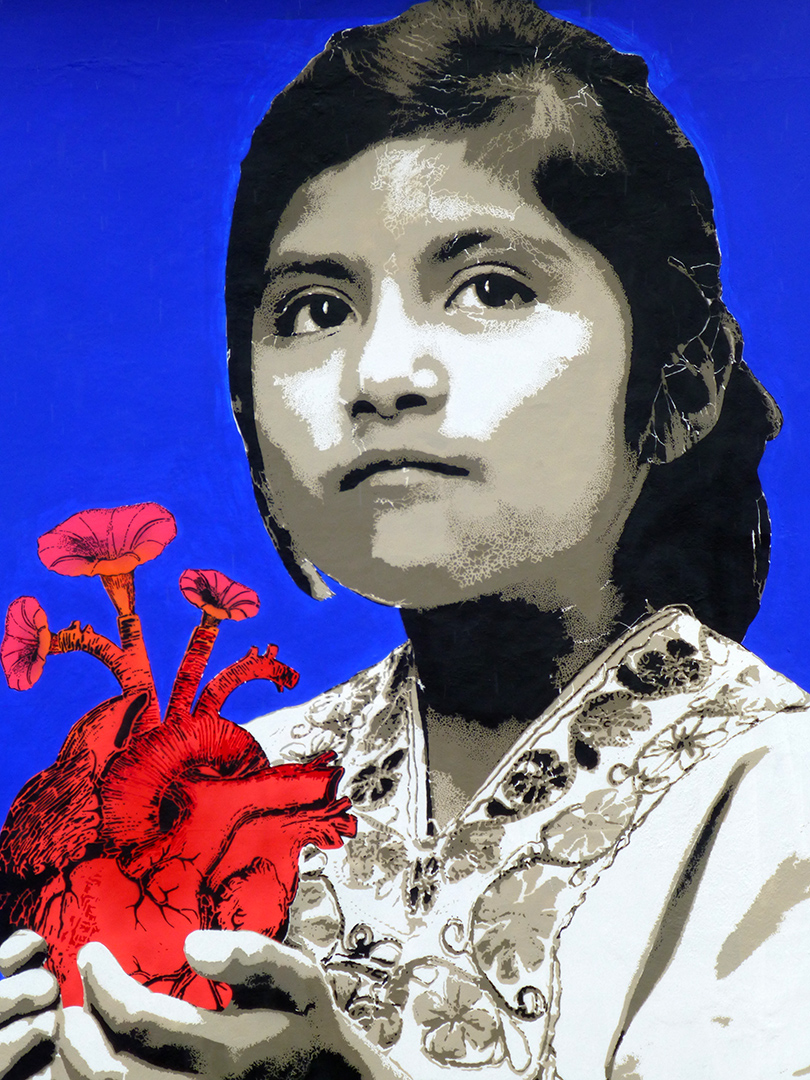
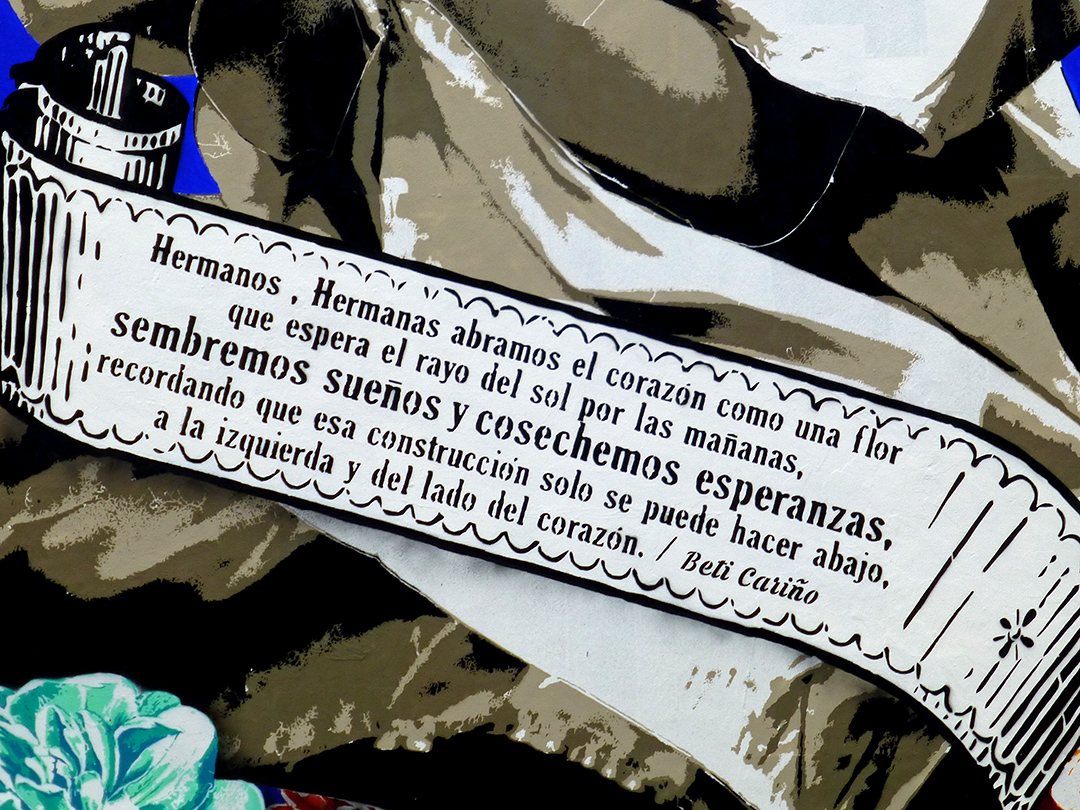 Muchisimas gracias to Museo Belber Jimenez for inviting Lapiztola to enhance the exterior of the museum and our lives with the beautiful mural and its message from Beti Cariño.
Posted in Creativity, Culture, Economics, Education, Labor, Politics, Protests, tagged cantera, graffiti, photographs, photos, plantón, Seccion 22, sidewalks, street art, Teachers union, tents, wall art on June 13, 2015| 4 Comments »
Yesterday, I hibernated at home; a day spent unpacking and recovering. Today, Carlos, now upgraded to a hurricane, is swirling off the coast of southern Mexico and bringing grey skies, chilly temperatures (it hasn’t even hit 70ºF), and a relentless drizzle. It’s not the kind of day that draws one out into the streets. However, the larder needed to be restocked and the cell phone needed to be reactivated, so, with umbrella in hand, I was forced to venture out.
On the upside, the rain brings out the greens of the cantera. Though, I’m not sure where this concrete insert in the sidewalk at the corner of Independencia and Garcia Vigil came from or what it means. (Update: It’s Grupo: Salvando Vidas. Oaxaca — a volunteer group that has taken on the much needed task of repairing the city’s sidewalks muy peligrosas, saving lives and limbs! h/t, Peggy)
 For some mystifying (at least to me) reason, Telcel deactivates my cell phone if I don’t use it for three weeks — this is despite the fact that I have a ridiculously high saldo (balance) in my account. So, my first stop was to add even more pesos in order to reactivate my service. With that chore in the rear view mirror, I crossed Independencia onto the Alameda, on my way to Mercado de Benito Juárez (or, Bennie J’s, as my friend G christened it years ago), only to find much of it covered with tents.
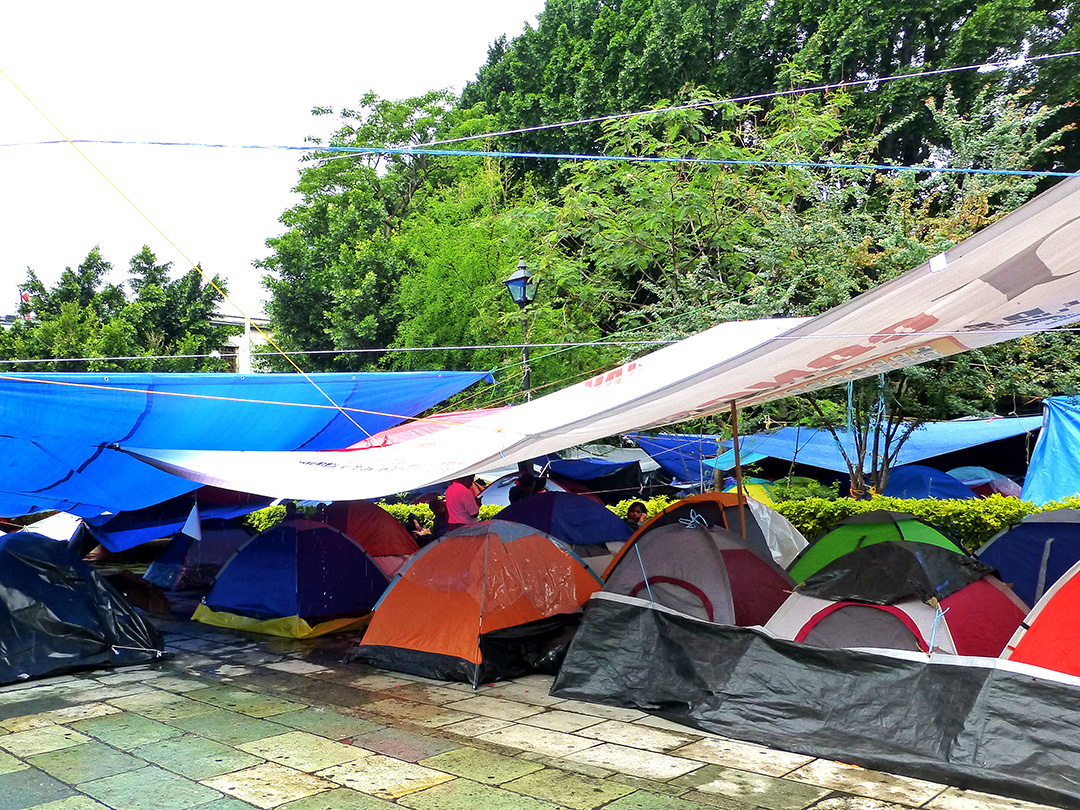 I’d read the news and had steeled myself for the return of ambulantes, but wasn’t prepared for ten times the number of Sección 22 teachers union tents from when I left in mid May. Navigating the ropes tethering the tarps was a challenge and I had to forgo the umbrella. The teachers looked cold and miserable and the restaurants under the portales looked mostly empty. This is definitely not a picnic for anyone. Continuing on to the mercado, I filled my shopping bag and headed for home.
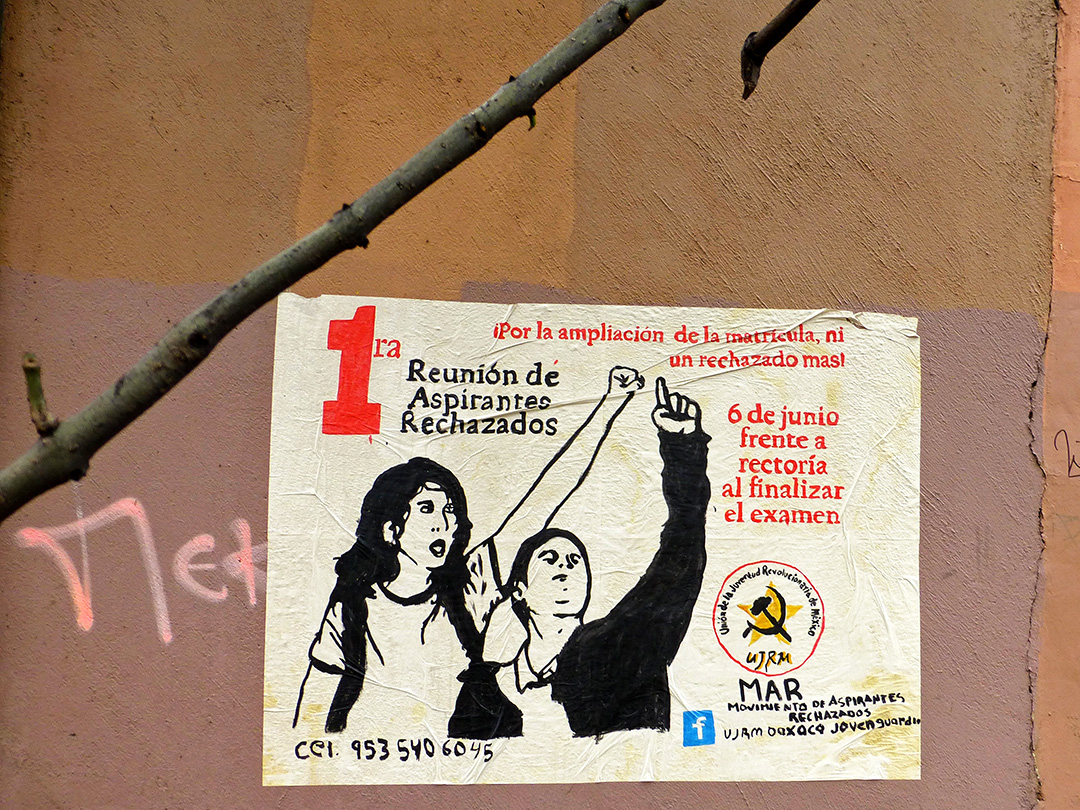 However, the signs of protest are everywhere. In the “Emerald City,” the more things change, the more they stay the same.
Posted in Creativity, Culture, Exhibitions, Immigration, Museums, Travel & Tourism, tagged artists, Casa de la Ciudad, Con el fuego en las manos, Cosijoesa Cernas, Darío Canul, Mexico, murals, Oaxaca, photographs, photos, popular travel destinations, Tlacolulokos, wall art on May 22, 2015| 4 Comments »
The previously mentioned Tlacolulokos collective has brought their artistry and social commentary to a wall on the upper floor of the Casa de la Ciudad. The mural, “Con el fuego en las manos” shows two young women, almost mirror images of each other or, perhaps, two sides of the same woman.
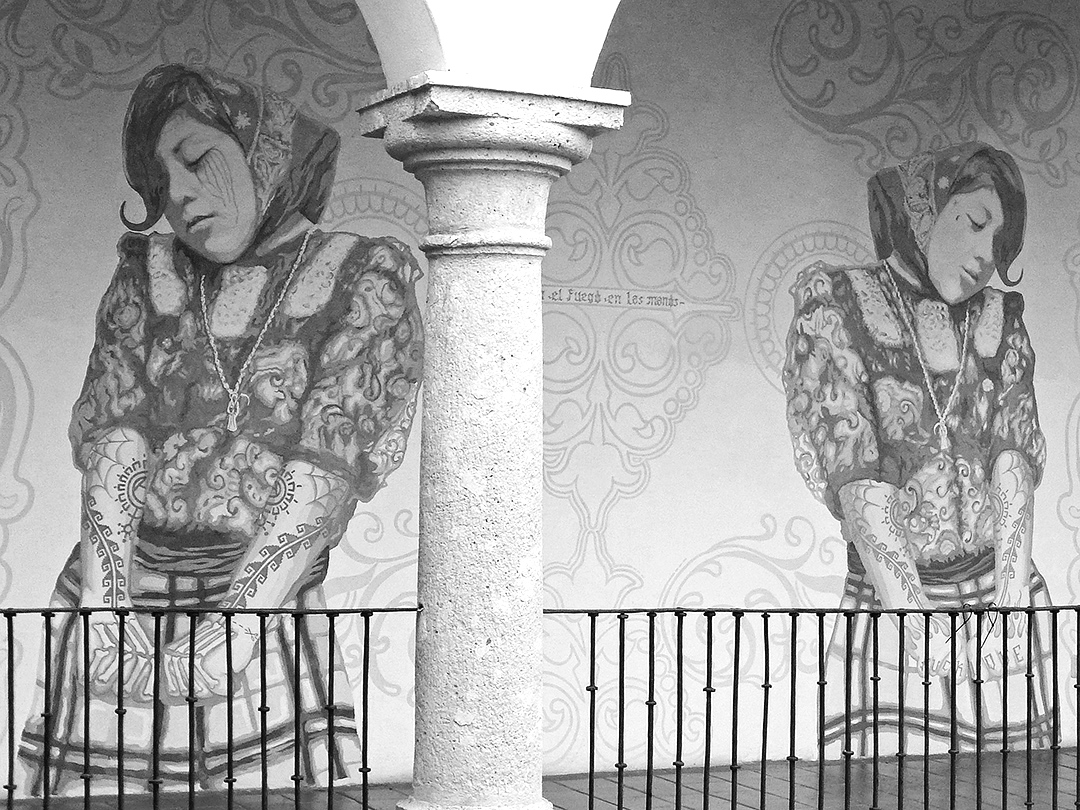
The young women/woman wear the traditional clothing of San Bartolome Quialana, a village near Tlacolula de Matamoros, home of the Tlacolulokos collective. Like communities throughout Oaxaca, much of the male population has migrated to the United States, in search of work leaving the women to carry on alone.


As the introduction to the exhibit on the Casa de la Ciudad website explains, With a critical view towards the current cultural context, Tlacolulokos group, headed by Darío Canul and Cosijoesa Cernas, seeks to question the idealized images of the Oaxacan culture, tourism product discourse, and insights from the reality currently experienced by the people of Oaxaca.


There are elements in her clothing belonging to the Latina culture of the southern United States, as the cholo bandana that she wears on her head, or the tattoos on her arms that add a critical and provocative tinge to this cultural mix, a product of migration. [ Google translation, with a little help from yours truly]


One of the trademarks of the Tlacolulokos group is the power their images acquire and the emotion they elicit by limiting the palette to black, white, and grays. For more background and a better understanding of the mural, a video (en español) of the artists discussing their work can be found here.
“Con el fuego en las manos” is scheduled to run until December 2015 at the Casa de la Ciudad (Porfirio Diaz No. 115, at the corner of Morelos in Oaxaca’s Historic District). Hours are 9:00 AM to 8:00 PM, Monday through Sunday.
Posted in Creativity, Culture, Travel & Tourism, tagged Diego Alvarez, Mexico, murals, Oaxaca, Ocote, photos, street art, urban art, wall art on May 16, 2015| 6 Comments »
Just so you know… The gods are watching you on Tinoco y Palacios, between Morelos and Matamoros.


Hmmm…. sometime between January, when I first photographed the mural and a few days ago, when I returned, an airplane landed on the tongue.


Recently, BBCtrending posted the video, Aztec to urban — Mexico’s street art explosion, highlighting the use of Mexico’s pre-Columbian imagery in contemporary street art. I don’t know the name of the artist who painted the mural above, but seeing the “Dioses Urbanos” of Diego Alvarez (aka, Ocote) in the video, brought it to mind.
Posted in Celebrations, Creativity, Culture, Holidays, Travel & Tourism, tagged 5 e mayo, Cinco de mayo, graffiti, history, Mexico, Oaxaca, photographs, photos, popular travel destinations, posters, stencil art, wall art on May 5, 2015| 7 Comments »
It’s Cinco de Mayo, but in Oaxaca, like most of Mexico, it’s a business as usual kind of day; schools are in session, businesses and banks are open, and deliveries are being made. The cervesas and mezcal may be flowing and guacamole may be served, but no more than usual. Only in Puebla, where the significantly outnumbered Mexican troops defeated the French army in the Battle of Puebla on May 5, 1862, is it a big deal. However, most every city and village has a street named 5 de mayo and in many, like Oaxaca, a street has been named for Ignacio Zaragoza Seguín, the general who commanded the Mexican army at the Battle of Puebla. By the way, he was born in what was the Mexican village of Bahía del Espíritu Santo, now Goliad, Texas, USA.
As the walls of Oaxaca continue to show, it’s the current battles that remain front and center…


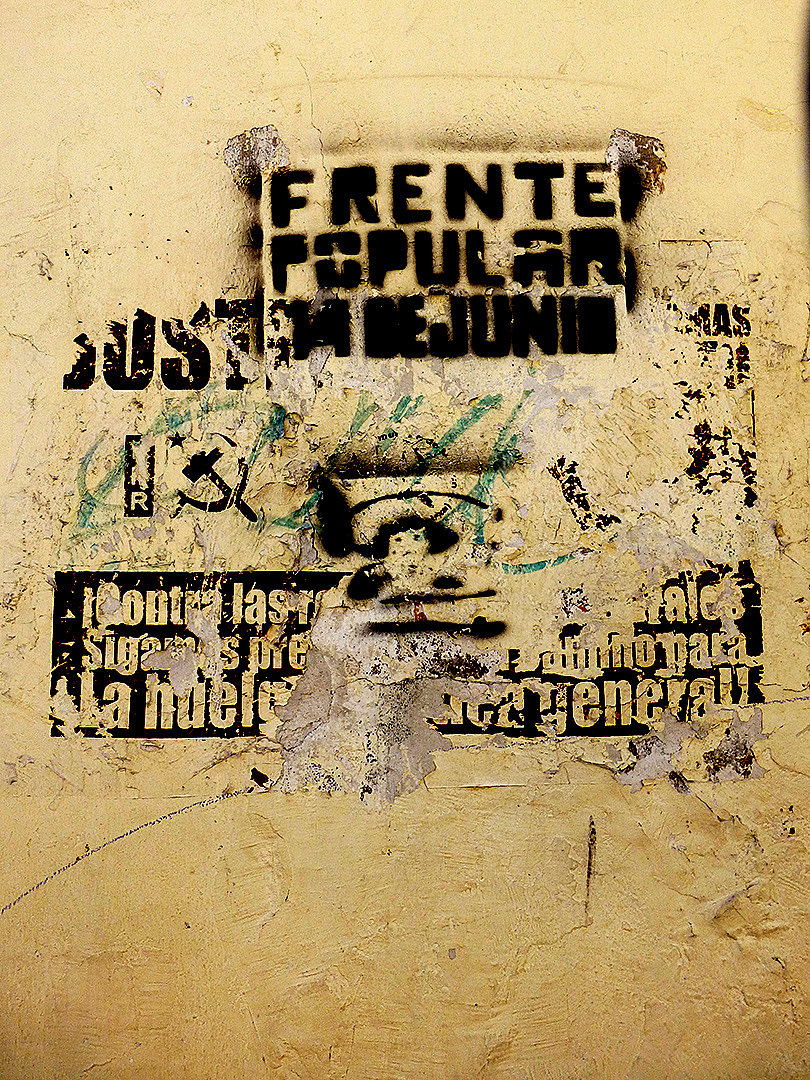
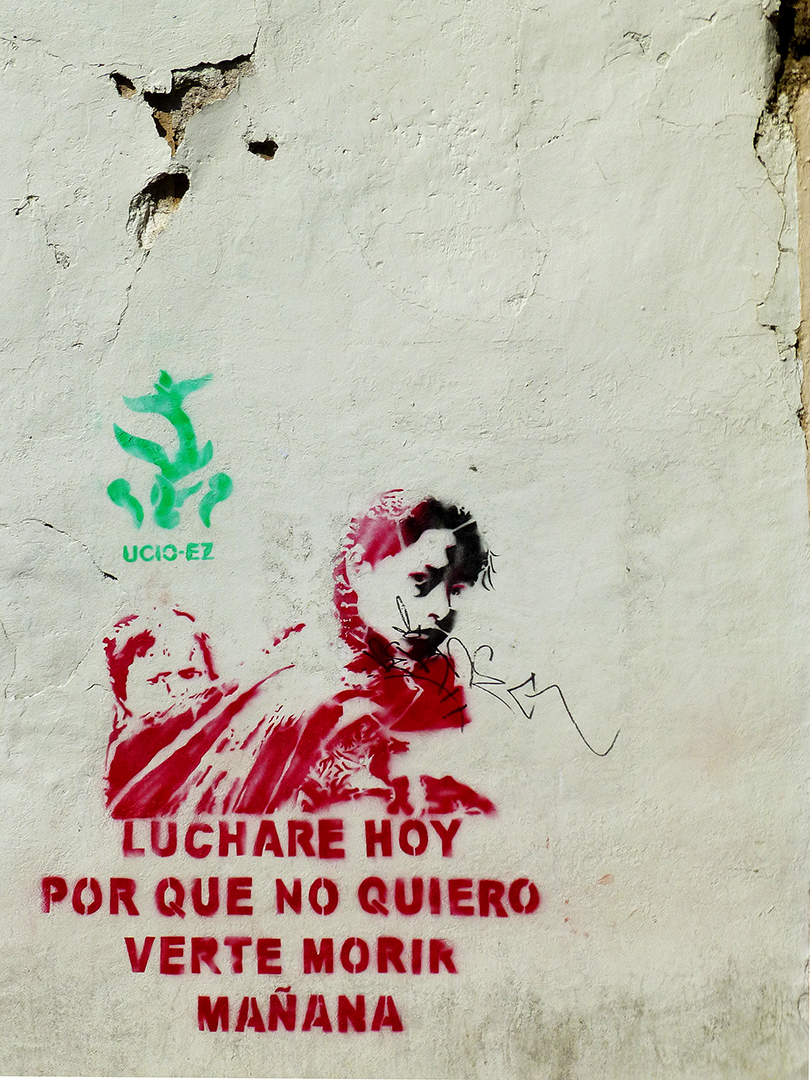 As the mother in the stencil above explains, against the odds like her ancestors 153 years ago, “I will fight today because I don’t want to see you die tomorrow.”


 Mexican Peso Converter
 View From Casita Colibrí
Wise old walls of Oaxaca
Posted in Creativity, Culture, Travel & Tourism, tagged graffiti, Mexico, Oaxaca, photographs, photos, popular travel destinations, social commentary, street art, urban art, wall art on September 20, 2015| 4 Comments »
Never silent and never dull.
Share this:
Read Full Post »