Aguas, atole, aguardiente, cafe, chocolate, compuestos, destilados, pulque, tejate, tepache, and té, oh my! Those are only fraction of the 72 beverages (alcoholic and non) found in the eight regions of the state of Oaxaca and featured in the “hot off the press” book, Bebidas de Oaxaca. Authors, Salvador Cueva and Ricardo Bonilla spent a year traveling up and down and over and through the mountains, valleys, and coastal regions of this most diverse, both geographic and cultural, state.

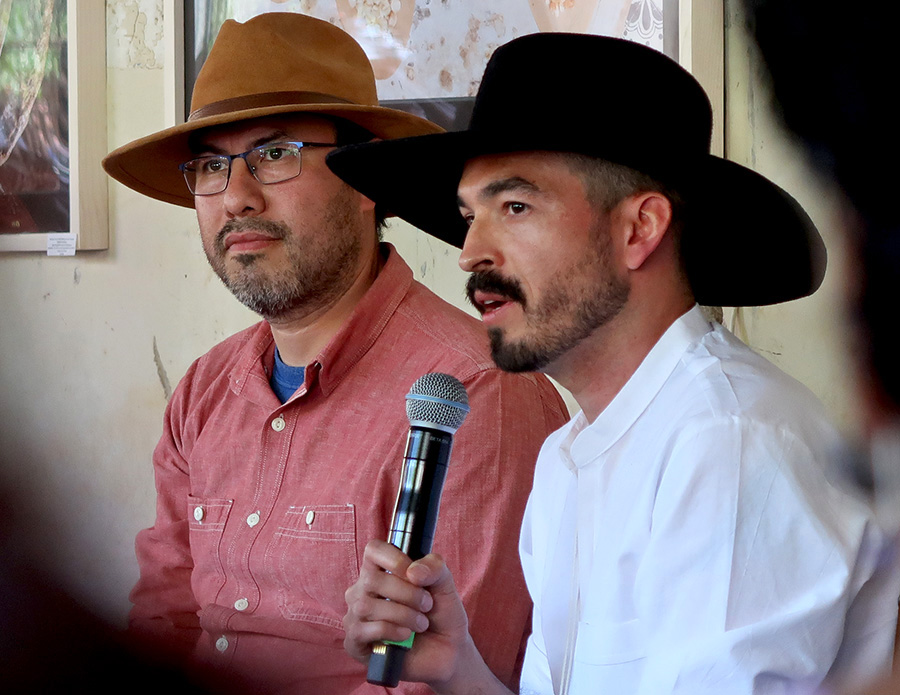
Ricardo Bonilla and Salvador Cueva.
They met the indigenous men and women whose families have handed down through countless generations the recipes for everyday and ceremonial beverages. Most of all they got to know, learn from, and appreciate the people and their traditions. A poem, composed and recited by Emma Méndez García from Huatla de Jiménez, expressed the pride and strength of the rich cultures of those who contributed their time, histories, and knowledge to the project.

Emma Méndez García (Huautla de Jiménez) reciting the poem she wrote in honor of the occasion.
The relationship the authors developed with their subjects was obvious at Saturday afternoon’s book presentation at the gloriously dilapidated and magical Proyecto Murguia (site of the 2012 El Sueño de Elpis). They presented each of the cocineras and cocineros featured in the book with the book, a book bag, a mug, and much gratitude and appreciation.

Ricardo Bonilla, Jovita López Cruz (Unión Nacional Zafra), and Salvador Cueva.

Ricardo Bonilla, Carina Santiago (Teotitlán del Valle), and Salvador Cueva.

Ricardo Bonilla, Catalina Chávez Lucas (Tlacolula de Matamoros), and Salvador Cueva.

Ricardo Bonilla, Reyna Mendoza (Teotitlán del Valle), and Salvador Cueva.

Ricardo Bonilla, Celia Florian (La Ciénega, Zimatlán), and Salvador Cueva.
Following the formal presentations, 20 of the beverages were free to sample and purchase directly from their makers.
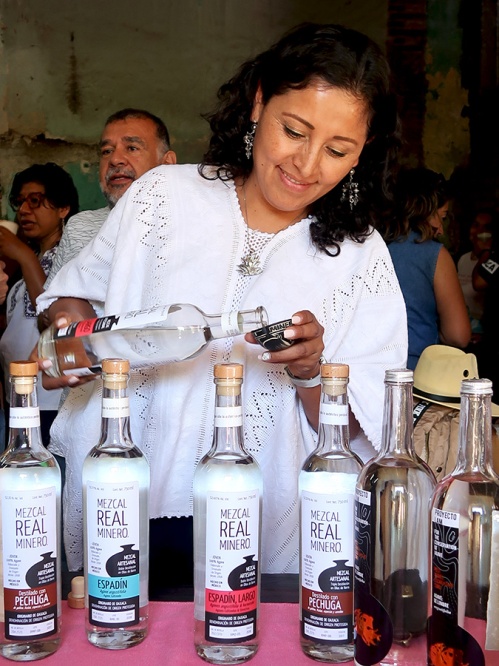
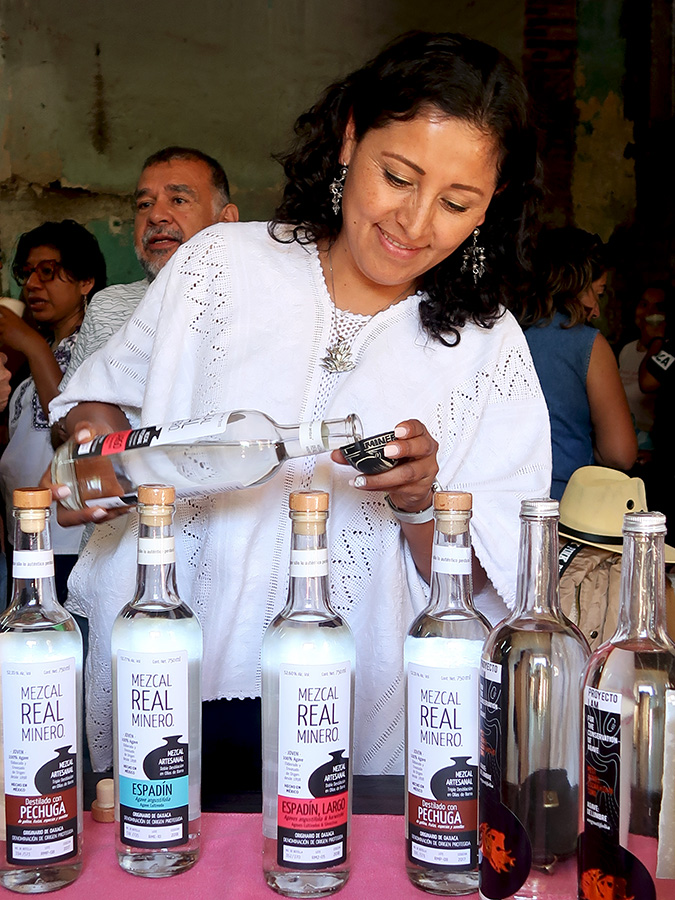
Mezcal from Graciela Ángeles Carreño (Santa Catarina Minas).
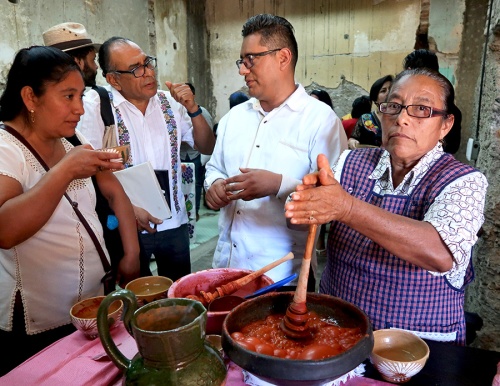
Pinole prepared by Elisa León Pérez (Santa Catarina Ixtepeji).

Estela serving Chocolateatole con cacao blanco by Carina Santiago (Teotitlán del Valle).

Tepache con rojo by María Díaz Cortés and Juana Gallardo Jiménez (Santa María Tlahuitoltepec).
Bebidas de Oaxaca is available in Spanish and English and in hard and softbound editions. For information regarding purchasing the book, go to their website. Or, if you are in Oaxaca city, attend the book talk at La Jícara (Porfirio Díaz 1105) on Thursday evening, March 5, 2020 at 7:00 PM. A percentage of the sales of the book will go to the Bebidas de Oaxaca foundation to support the people and families who participated in the book.
Read Full Post »





















 Mexican Peso Converter

 View From Casita Colibrí


A day without women
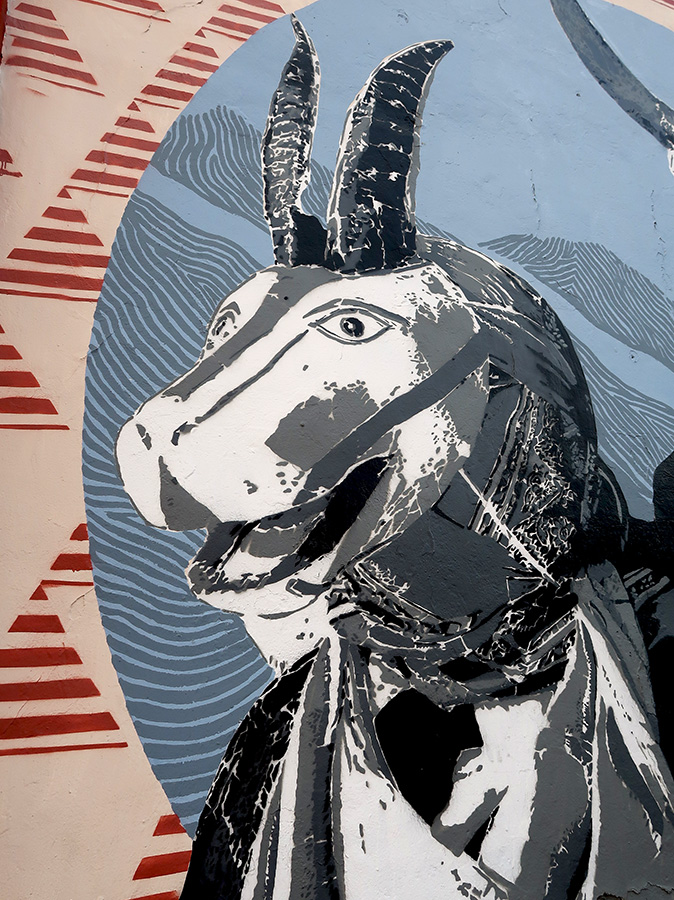
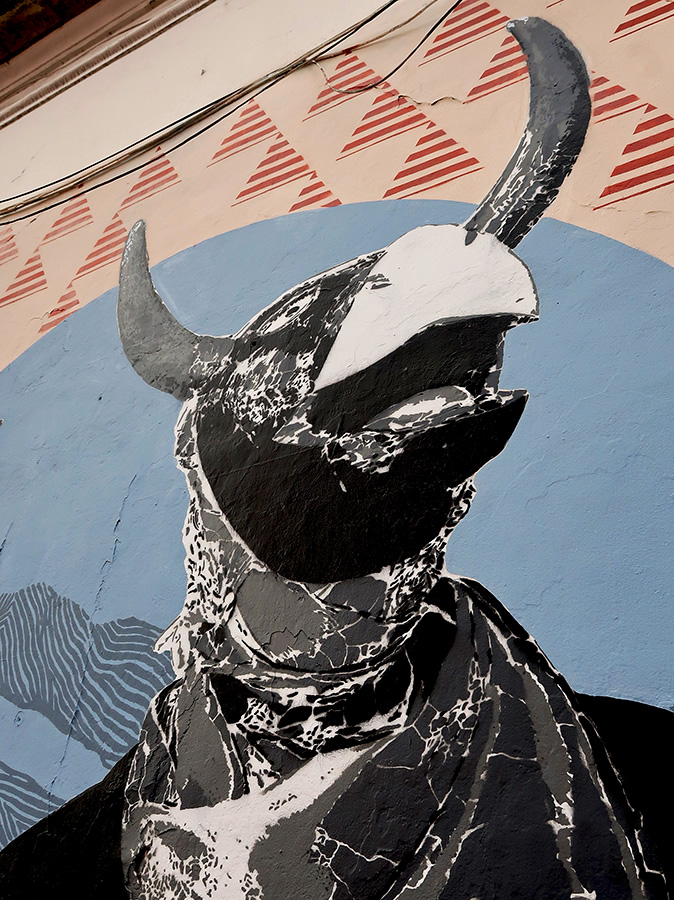
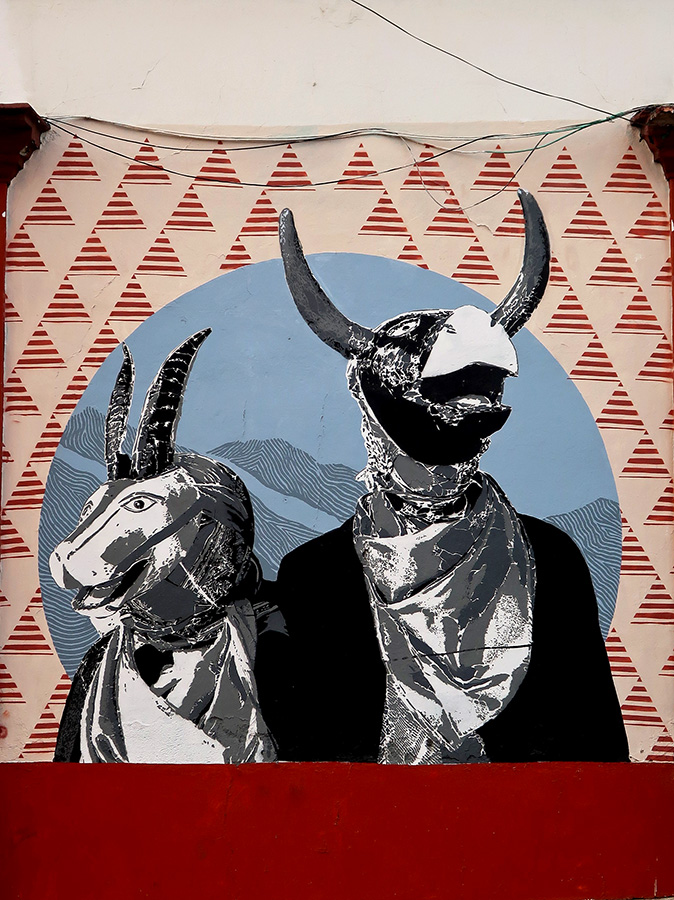
Posted in Creativity, Culture, Politics, Protests, Travel & Tourism, tagged #ParoNacionaldeMujeres, #UnDíaSinMujeres, #UnDíaSinNosotras, A Day Without Us, A Day Without Women, art, Día Internacional de la Mujer, International Women's Day, Mexico, National Women's Strike, Oaxaca, photos, political art, political commentary, protest, stencil art, street art, urban art, wall art, women's rights on March 8, 2020| 4 Comments »
Today, March 8, women around the world are celebrating International Women’s Day with marches, forums, exhibitions, and more. The mass media is filled with stories about extraordinary women and companies catering to women are using references to International Women’s Day in their advertising, though, I might add, very few mention its revolutionary past.
However, it isn’t today’s demonstrations, expositions, and other special events that has women in Mexico talking. It is the call for women to disappear for a day to protest the staggering amount of violence perpetrated against them. Government statistics report that 3,825 women met violent deaths last year, 7% more than in 2018. That works out to about 10 women slain each day in Mexico, making it one of the most dangerous countries in the world for females. Thousands more have gone missing without a trace in recent years.
Using the hashtags #ParoNacionaldeMujeres (National Women’s Strike), #UnDíaSinNosotras (A Day Without Us), and #UnDíaSinMujeres (A Day Without Women), organizers have reached out to the women of Mexico that on Monday, March 9, nothing moves: Don’t go out, don’t shop, don’t go to school, and don’t consume — become invisible, simulating the thousands of women who have been murdered or disappeared.
As three female legislators wrote in an article expressing their support for the strike, Women are responsible for about half of the compensated economic activity in the country, and relied upon disproportionately for unpaid work in the home, which is roughly equivalent to 15% of Mexico’s GDP. In exchange, our rights are impaired or ignored. Women have become the protagonists of thousands upon thousands of stories of violence and impunity at the hands of men who, in public and in private, feel they have a right to decide over our lives and our bodies…. That and many, many reasons more are why Mexico’s women will march in protest on March 8, and stop everything – stop working, stop asking, stop accepting – on March 9.
Share this:
Read Full Post »