Feeds:
Posts
Comments

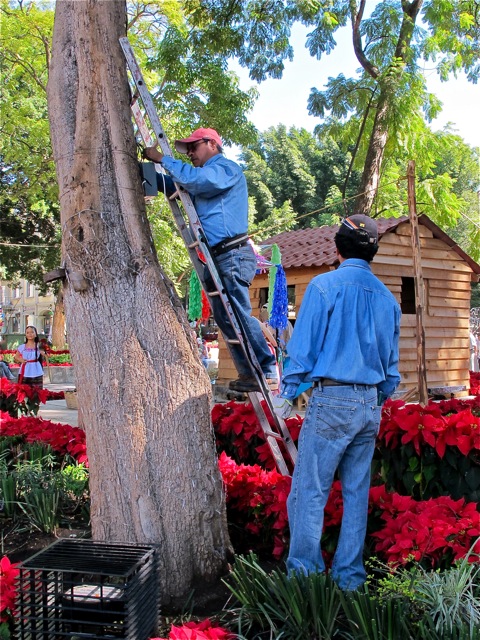
Oaxaca is gearing up for Christmas.  Thankfully, it is not (yet) as hectic and commercial as in el norte.  Though decorations have been been displayed, front and center, in my local Soriana super-mercado for at least a month, it is only in the last few days that the city’s electricians have been positioning lights on the trees around the zócalo…

Electrician positioning light on tree

to  illuminate the welcoming niño.

Mannequin of boy in sombrero and sarape

Lambs have begun appearing…

Long white-haired mannequin carrying lamb.

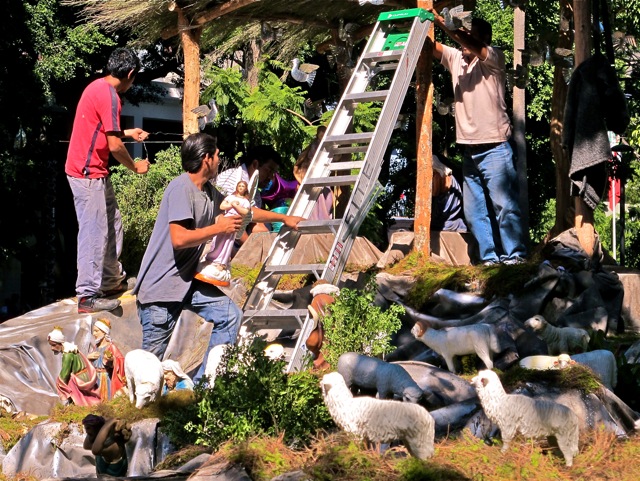
Angels are being elevated…

Workman about to carry an angel mannequin up a ladder.

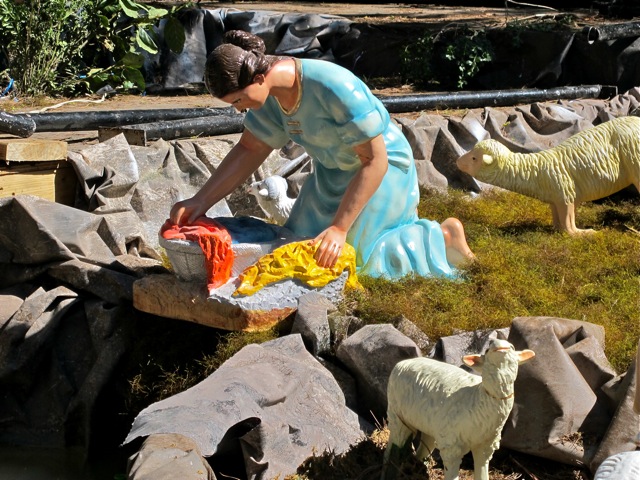
Clothing is laundered in preparation for Navidad…

Female mannequin washing clothes as mannequins of lambs watch.

And, thousands of poinsettias have been brought in to add splashes of color to the beds beneath the 130+ year old Indian laurels.

Flower bed of poinsettias under Indian laurel tree.

It’s beginning to look a lot like Christmas!

This is… Oaxaca de Juárez

As promised…

And, there is SO much more!!!

Old meets new…

… in all manner of ways; there’s a lot of that here.  Successful meetings between old and new are a matter of debate.  The newly renovated Centro Académico y Cultural San Pablo is no exception.  It was acquired, designed by architect Mauricio Rocha, renovated, and repurposed by the Alfredo Harp Helú Foundation.

Located in the heart of the historic district, between the Museo Textil and the Teatro Macedonio Alcalá, this former Dominican convent, originally established in 1529, has been one of those ubiquitous crumbling and peligrosos buildings for a long time.  In addition, to the features of the original cloister, archeological remains from 2,500 years ago were uncovered and have been preserved.

This slideshow requires JavaScript.

The buildings will house a research center (including a library), dedicated to the study of the languages and cultures of the indigenous of Oaxaca, serve as a venue for cultural presentations, and provide exhibit space for the philanthropic endeavors of the Alfredo Harp Helú Foundation, which (among several others) includes the Textile Museum, Museum of Philately (stamps), Institute of Oaxacan Historic , and Children’s Library.

The grand opening, with all the requisite fanfare and dignitaries, was November 26.  Alas, I missed it!  However, the courtyard provided the setting for several performances during the Instrumenta Oaxaca 2011, a 2-week long chamber music festival that ran from November 3rd to the 18th; two of which I attended.  I was dazzled by the setting (and the acoustics weren’t bad, either) and was especially gratified that the library, which the seating faced, presented a prominent and dramatic architectural feature.

Written on the wall of the building housing a small collection from the BS: Biblioteca Infantil (Children’s Library), a quote from Dostoyevsky (of all people):  Los libros son mi aliento, mi vida y mi futuro.  In English:  Books are my breath, my life and my future.

For more (in English) about the Centro Académico y Cultural San Pablo, see Norma Hawthorne’s article, Oaxaca Center Promotes Indigenous Language and Culture, Opens November 26, 2011.

Update:  Read how this cultural and historical gem, lost in plain sight.

This is…

In August 2011, Vive Oaxaca launched a campaign to showcase the best of the state through a series of video shorts.  Two have already been released online:

Esto es Zaachila

and, Esto es Guelaguetza

I’m looking forward to Monday night’s online release of, Esto es Oaxaca de Juárez.  I guess you know what my Tuesday morning blog post will be!

… equals public art on Calzada Niños Héroes de Chapultepec, a section of the legendary Pan-American Highway in Oaxaca’s capital city.

On October 27, 2011, representatives from the groups Espantapájaros, Asaro, Bouler, Viyegax, Arte Jaguar, Lapiztola, and Uriel Marín set to work transforming a long drab wall into a work of art representing the social, cultural, and political life of Oaxaca and Mexico.  The wall of graffiti was part of the Puntos de Encuentro, Primer Festival de Artes Visuales Oaxaca 2011, previously mentioned in my mid-October blog post, Meeting Points….

This slideshow requires JavaScript.

As of a few days ago, the artwork remains to catch the eye of drivers (yikes!), passengers, and pedestrians.

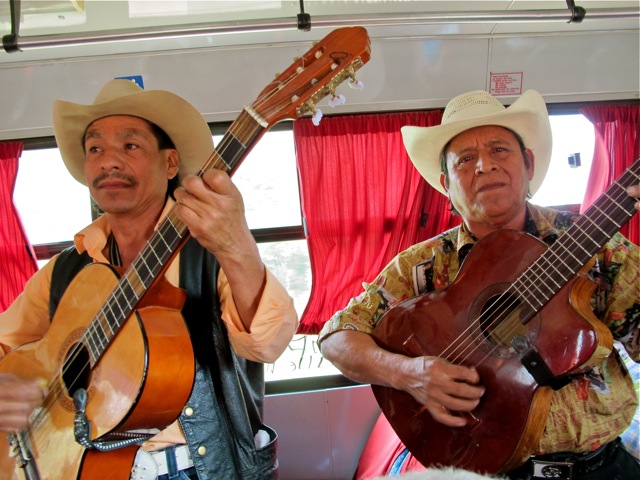
Dos guitarristas

Being serenaded on the bus from Zaachila back to Oaxaca…

Two guitarists on bus.

What’s not to love???

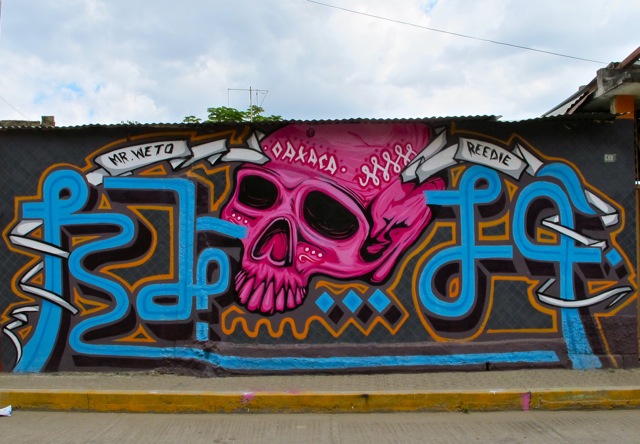
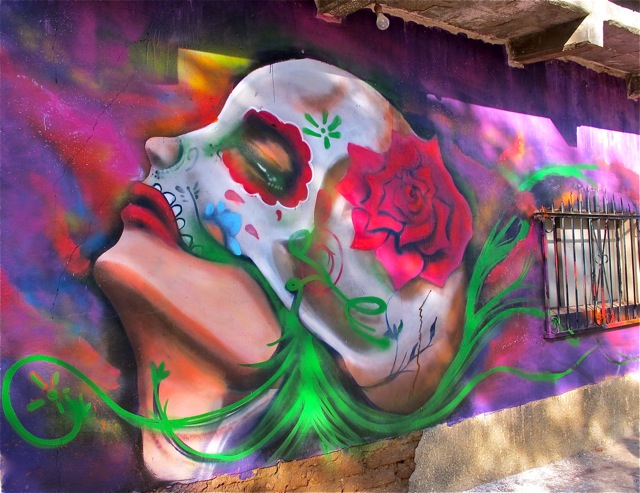
The writing’s on the wall…

… in Zaachila

Wall mural: magenta skull with writing: Mr. Weto; Oaxaca; Reedie

and Zimatlán de Lázaro Cárdenas.

Woman's head with 3/4 white mask with large red flower

I have no idea what they mean…  But, who cares?

The water boils…

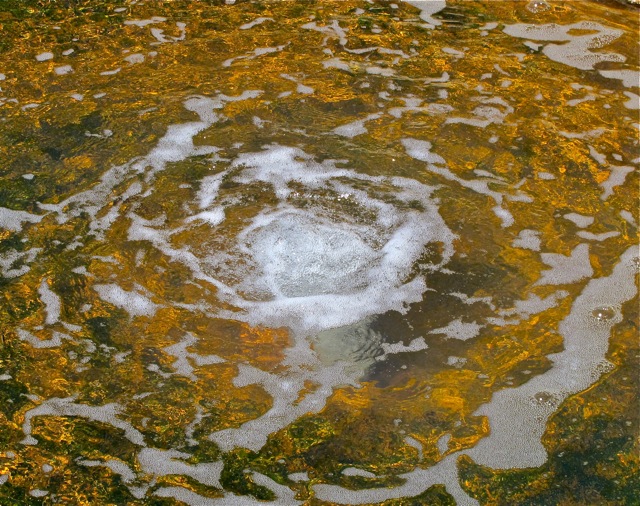
…at Hierve el Agua.  Well, it doesn’t actually boil; cool, mineral rich water burbles up from underground springs,

Water burbling up into a small pool

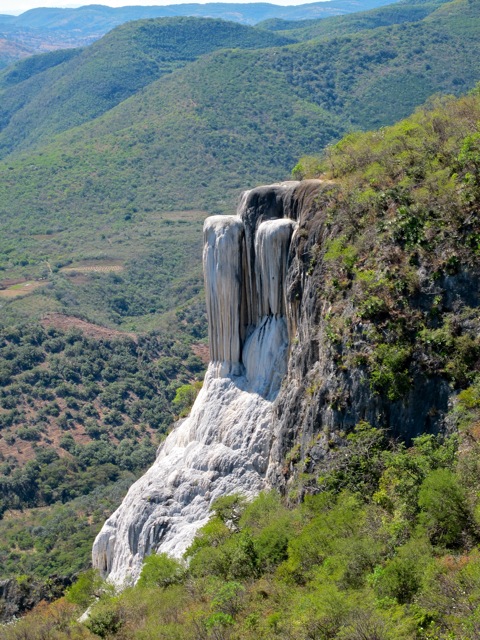
depositing calcium carbonate as it cascades over the two cliffs, forming the Cascada Grande…

Calcium carbonate "waterfall"

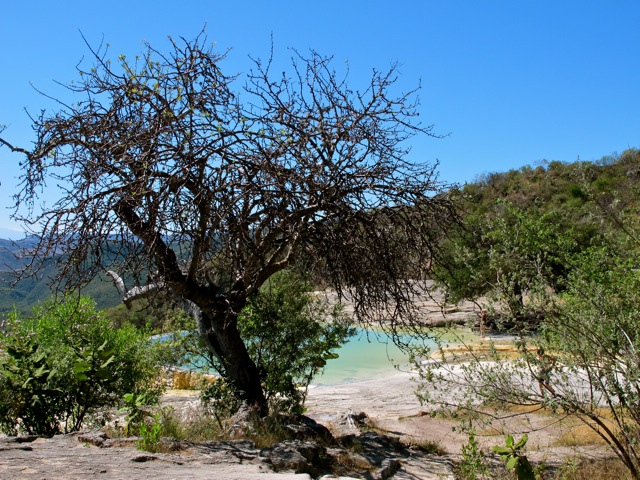
and the Cascada Chica.  To reach the latter, one must bounce along a dirt road that twists, climbs, and descends for at least a half an hour from Mitla, pay a 20 peso admission, park, and then walk a short way down a steep and rocky path to come upon a spectacular sight.

Tree in foreground, with pool and mountains behind.

More than 2,500 years ago, a uniquely designed irrigation system was constructed to channel the waters.  (More information:  Ecotourism – Hierve el Agua)

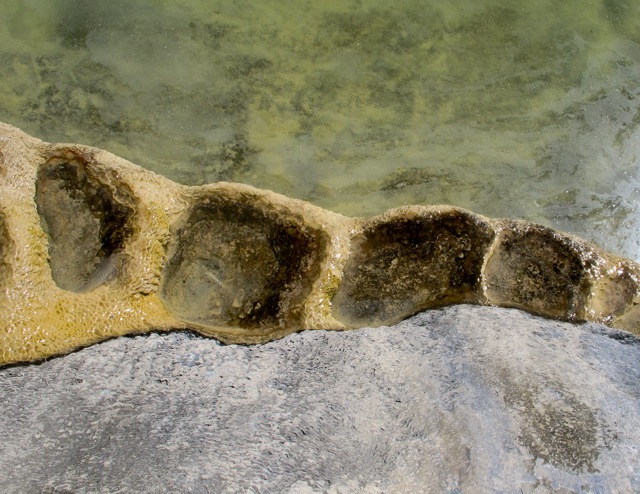
Water and stone pockets

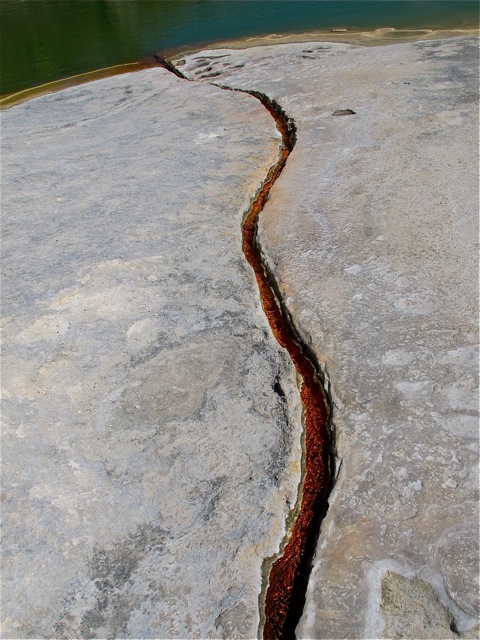
Iron stained troughs bring the mineral rich and supposedly healing water…

Rust-red stained trough

to two artificial, but tranquil pools above the Cascada Chica; peaceful at least on weekdays.  Rumor has it, the weekend scene is much more lively!

Green tinged water in pool on side of cliff.

Yesterday (a Friday), this dramatic take on an infinity pool had us all saying, aaahhh.

Pool dropping off over the cliff, with scenic background of mountains.

(ps)  A word to the wise (from the unwise), bring bug spray… though you may not see them, they (whatever they are) are there!  There are also food and trinket vendors, swimming is allowed, and bathrooms and changing rooms are available.

A view from the terrace

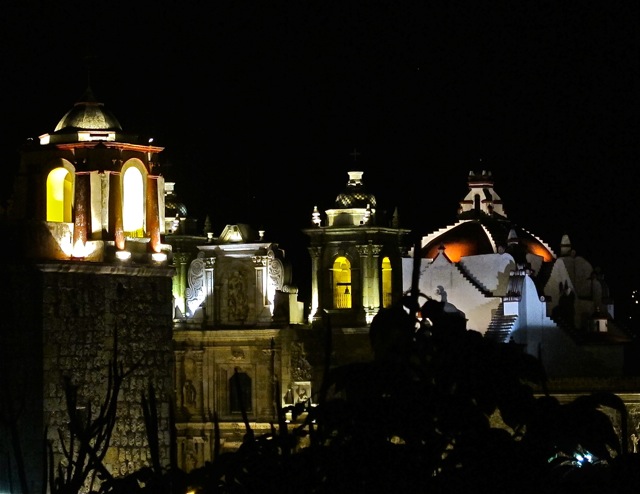
Iglesia de San José and Basílica de la Soledad from my terrace last night…

Bell tower of Church of San José and bell tower, facade, and dome of Basílica de la Soledad

Ahhh… another reason I love it here.

Gracias San Antonino

Today is Thanksgiving in los Estados Unidos de América… and besides my wonderful family and friends, I am so grateful to see and experience places like San Antonino Castillo Velasco during los Días de Muertos.

This slideshow requires JavaScript.

¡Feliz Acción de Gracias a todos!

Labor of love in San Antonino

San Antonino Castillo Velasco, a Zapotec community near Ocotlán, is a village known for its flowers.  They are, no doubt, the inspiration for beautifully embroidered linens and clothing sold in the mercados and found in museum collections.  And, a specialty is the “flor inmortal” (immortal flower), so named because, even when dried, it retains its brilliant colors.  They are used to create intricately designed figures on display December 23 in the city of Oaxaca, during Noche de Rábanos and to decorate the graves of  loved ones during Días de Muertos in San Antonino.

This slideshow requires JavaScript.

As I’ve previously mentioned, each village seems to have its own unique traditions for the Days of the Dead.  Villagers here mix the area’s very fine dirt with water, cover the graves, use a trowel to smooth it, outline designs and religious imagery into the dried coating, and then use flowers (fresh and dried), to paint the scene.  Entire families are involved, young and old, and the atmosphere is filled with joy, purpose, and most of all… Love.

For a very special moment, that is a metaphor the two days spent at San Antonino, see Chris’s post, Moments make a life..

Back to Days of the Dead…

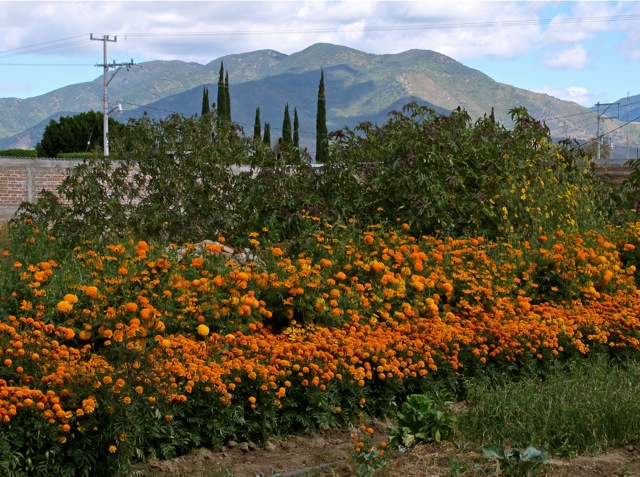
San Antonino Castillo Velasco, to be precise. Young and old converged on the municipal cemetery to decorate the graves with the magenta of cockscomb and yellow to orange to rust of marigolds (cempazúchil or zempoalxochitl) grown in nearby fields.

Field of marigolds with mountains in background

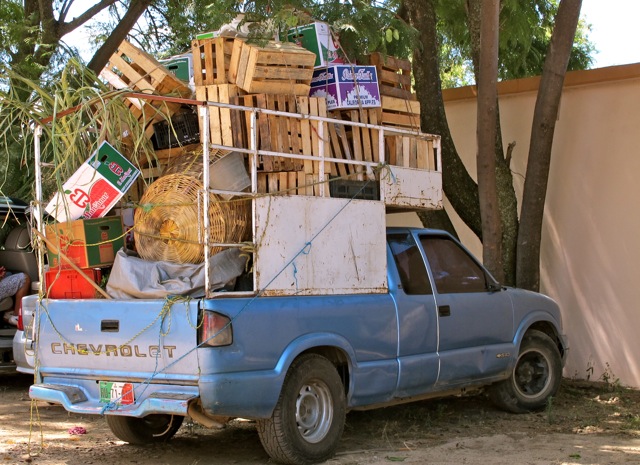
They came by car and truck…

Blue pick-up truck piled high with empty crates and baskets

By horse (note wooden saddle)…

Horse with saddle tied to a tree

By pedal-powered cart…

Green cart powered by a bicycle

By horse-powered cart.

Young girl riding in a horse pulled cart.

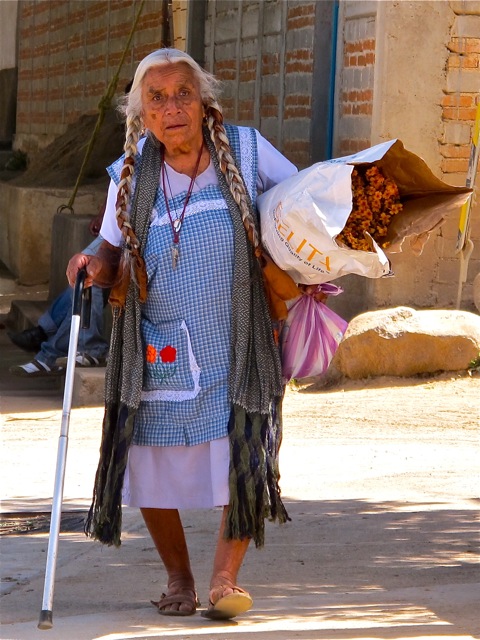
And, on foot…

Elderly woman walking with cane and carrying a bundle of flowers

Laughter, artistry, and pride followed.  Stay tuned for images of their meticulous labors of love.

Tombs of Zaachila

Yesterday’s trip to Zaachila began with the archaeological site, located right above the Church of Nuestra Señora de la Natividad.
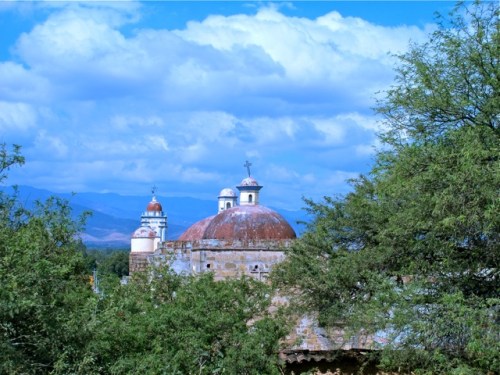
View of Church of Nuestra Señora de la Natividad from Zaachila archaeological site

Zaachila, named for the pre-Columbian Zapotec king, Zaachila Yoo, was the last Zapotec capital, following the demise of Monte Alban.  It was eventually conquered by the Mixtecs, who were still there when the Spanish conquistadors appeared on the scene.
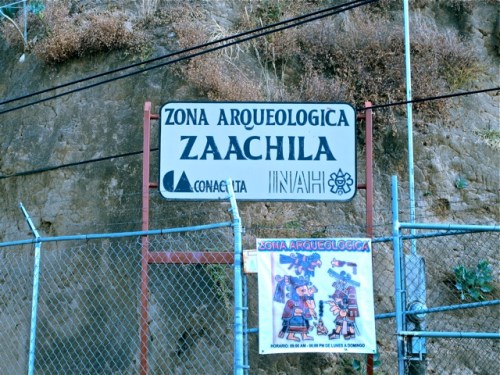
Entrance to Zaachila archaeological site

First excavated by archaeologist Roberto Gallegos in 1962, only a small fraction of the site has been uncovered.  However, visitors have access to two small tombs in mound A.

Facade of Tomb 2

Tomb 2 is the much less decorative of the two, though it apparently once held jewelry and other valuable offerings, many, of which can be found in the Instituto Nacional de Antropología e Historia in Mexico City.
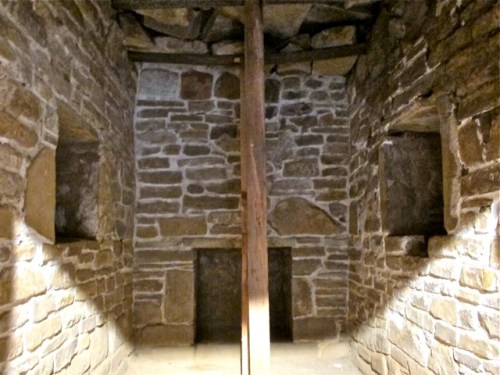
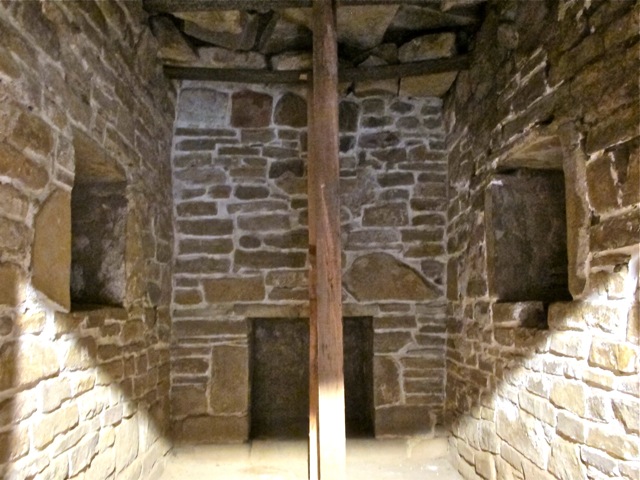
Interior of Tomb 2

According to the brochure available for purchase (10 pesos), Tomb 1 was constructed in the epoch III-A (250-650 CE) and reused in the Post-classic era (950-1521 CE).

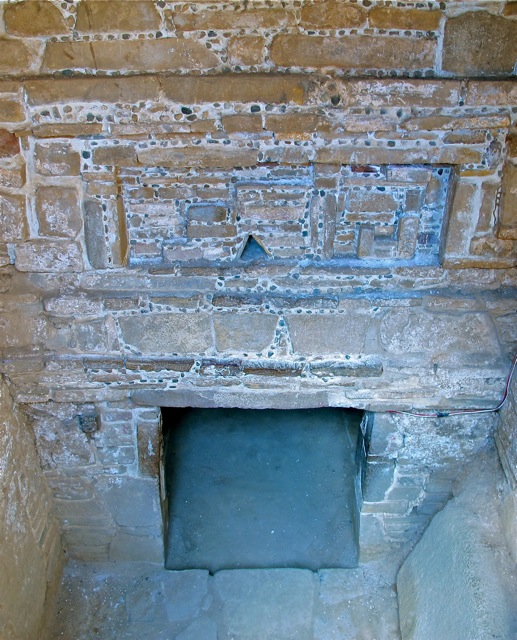
Facade of Tomb 1

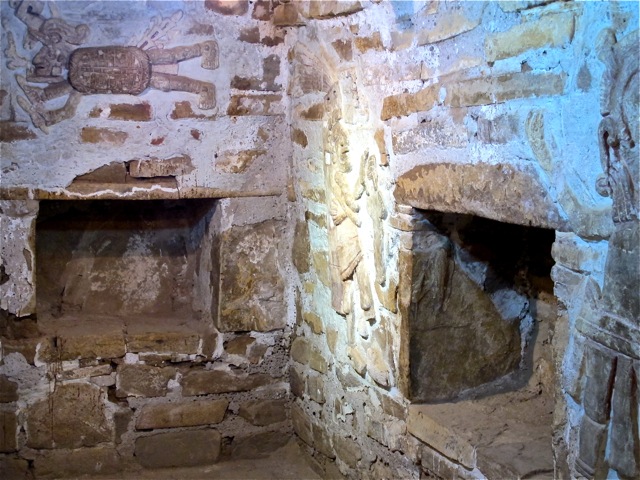
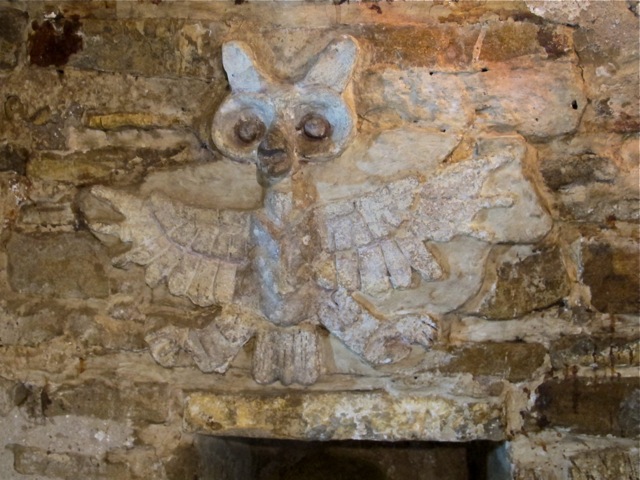
Seven figures adorn the walls of Tomb 1.

Figure of Yahui on far wall of Tomb 1

Figure of Búho (owl) on left wall of Tomb 1

Figure of Bújo (owl) on right wall of Tomb 1.

Figure on right wall of Tomb 1

Figure of Bezelao (a supreme god) on left wall of Tomb 1

Figures of 5 Flower and 9 Flower are also depicted but I couldn’t lean far enough over the barrier to photograph them.

The site recently reopened after being closed for several months.  Work continues…

Piles of stones under trees

The site is open Monday through Sunday from 8 AM to 6 PM.  A small museum collects the 31 peso admission fee, displays photos of many of artifacts removed from the site and on display in Mexico City, reproduction of parts of the Codex Zouche-Nuttall (housed in the British Museum), and photographs from other archaeological sites in Oaxaca.

For more information on the Mixtec Group Codices, take a look at the Foundation for the Advancement of Mesoamerican Studies website.
Up close in Zaachila

Thursday is market day in Zaachila.  And, along with the baskets, aprons, succulent fruits and vegetables, mouthwatering food stalls, kitchen and hardware, it features turkeys (hobbled and unable to trot), goats of many colors, yokes of oxen, and little piggies going to market…

This slideshow requires JavaScript.

I love it!

The voice of Lila Downs

Mexico’s favourite singer-songwriter dishes on development, gender, indigenous issues, peace and music.  An interview with Lila Downs (in English) from the IFAD social reporting blog:

http://blip.tv/ifad/lila-downs-reverence-hope-change-5672813

By the way, Chris, over at Oaxaca-The Year After has posted more from the recent concert at the Guelaguetza Auditorium, covered in my Sublime sounds and spectacle post.