Feeds:
Posts
Comments

Archive for the ‘Flora’ Category

Greetings from cold, gray, windy, and rainy Northern California. I arrived a couple of weeks ago and am still in recovery from a three-day wedding in Teotitlán del Valle right before I departed for winter in the San Francisco Bay Area. Family, friends, frozen fingers, and a severe case of sticker shock have also contributed to no new blog posts for sixteen days. And, please consider this advance warning: I’m going to be in el norte for several months. However, I have many ideas and photos for future Oaxaca focused blog posts — they just may be few and far between. I begin with remembering last February’s return visit to Vives Verde, the labor of love garden created by architect Francisco Martínez.
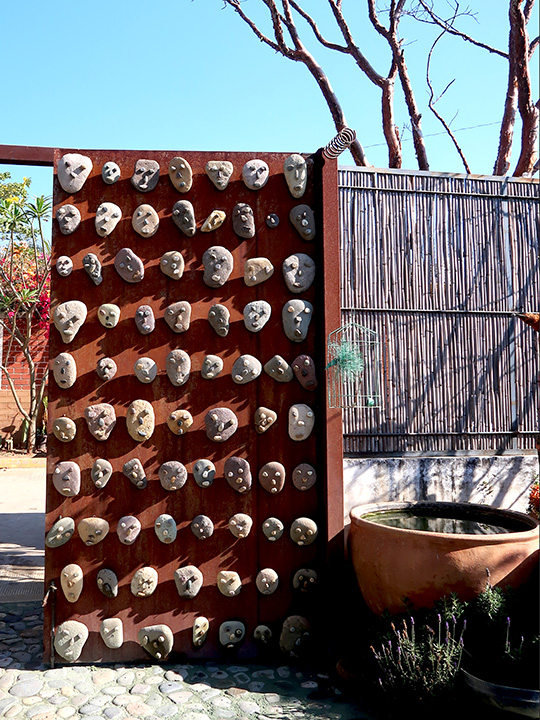
Over fourteen years ago, architect Francisco Martínez began a project of landscaping a former garbage dump into a healing, artistic, and environmental garden — a marriage of plants, recycling, whimsical art, and education.

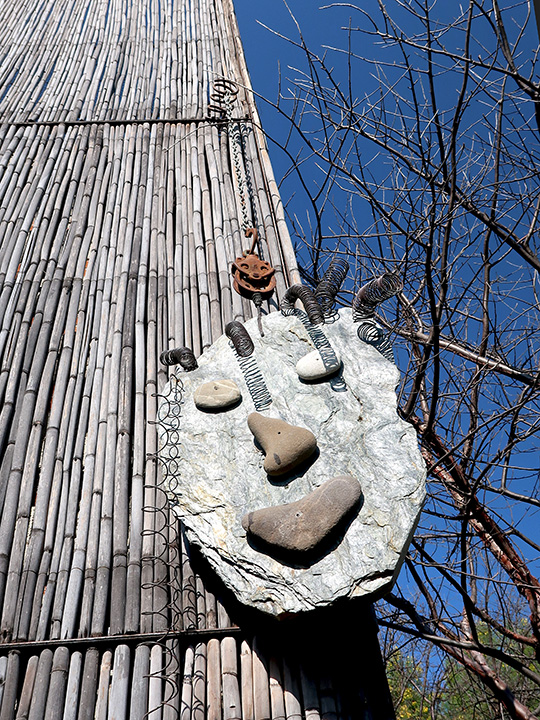
A water catchment system utilizing paths, beds, and ponds irrigate this garden of more than 200 species and 2000 plants — mostly from Oaxaca.
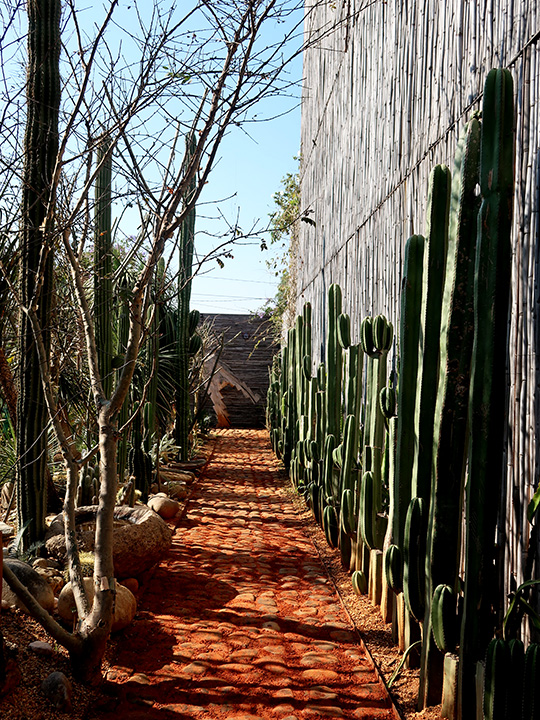
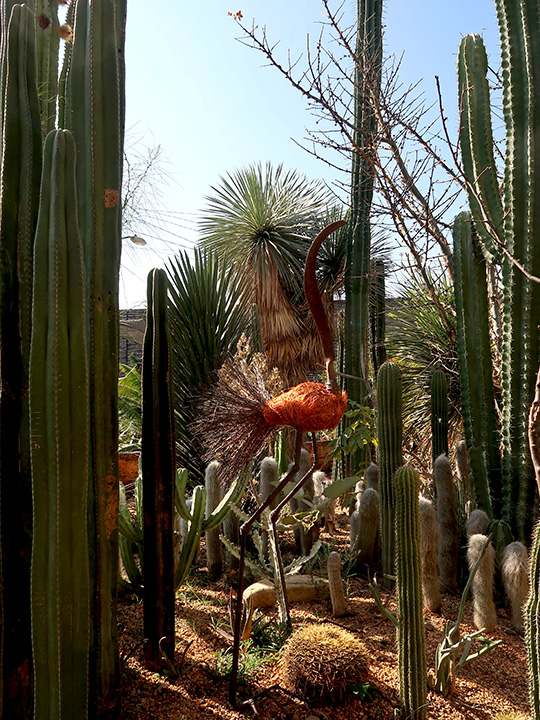
Francisco and his garden are dedicated to raising awareness of preservation and conservation of the sustainable environment. In his effort to fulfill the garden’s mission, he hosts free guided tours — ranging from the architecture faculty of the Universidad Regional del Sureste to students from the Sor Juana Inés de la Cruz primary school.

Vives Verde is located at Calle Tula 627, Colonia las Culturas, Santa Cruz Xoxocotlán, Oaxaca.
Read Full Post »

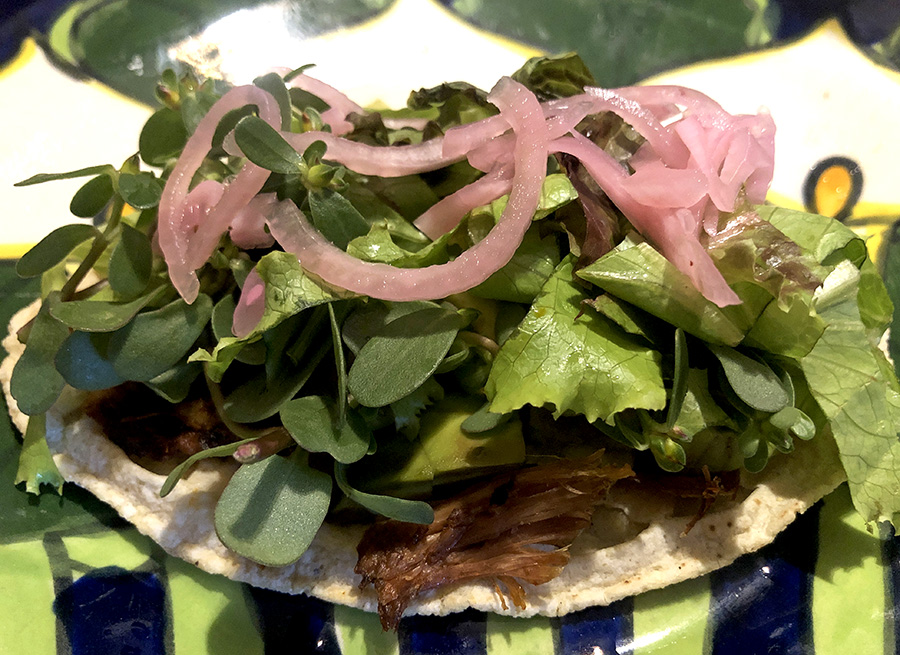
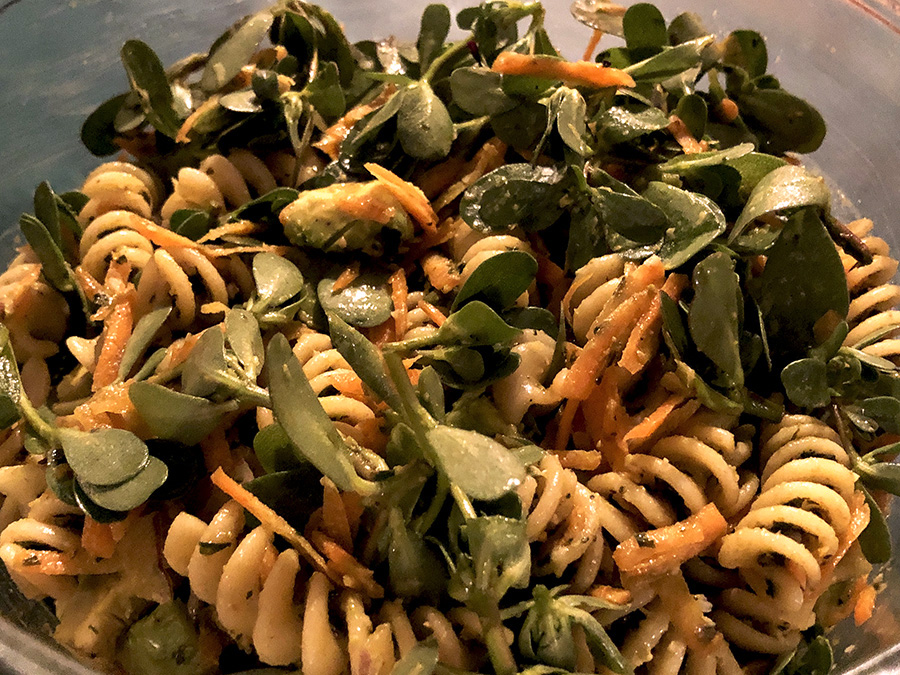
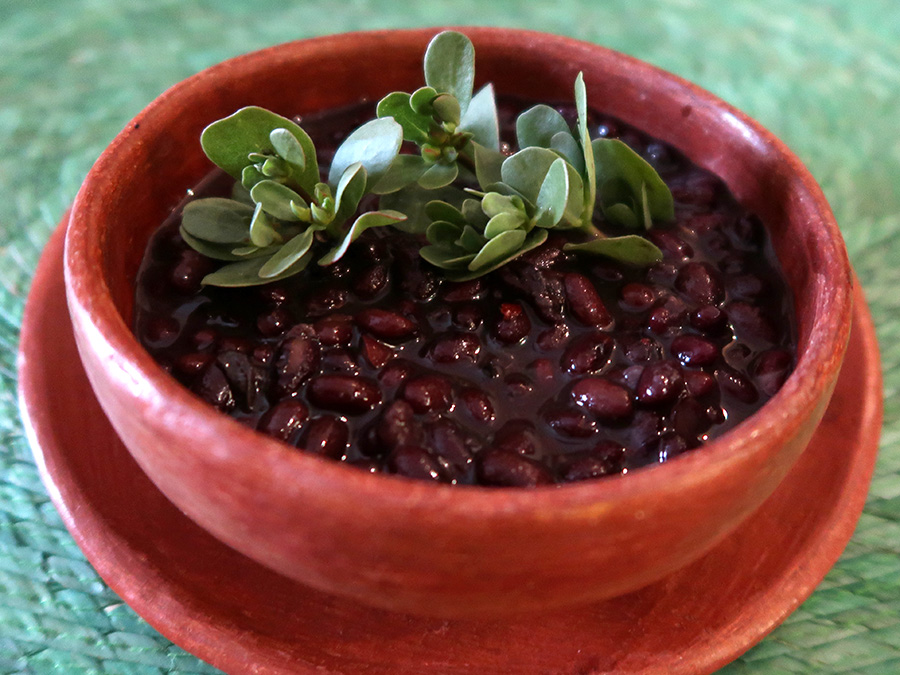
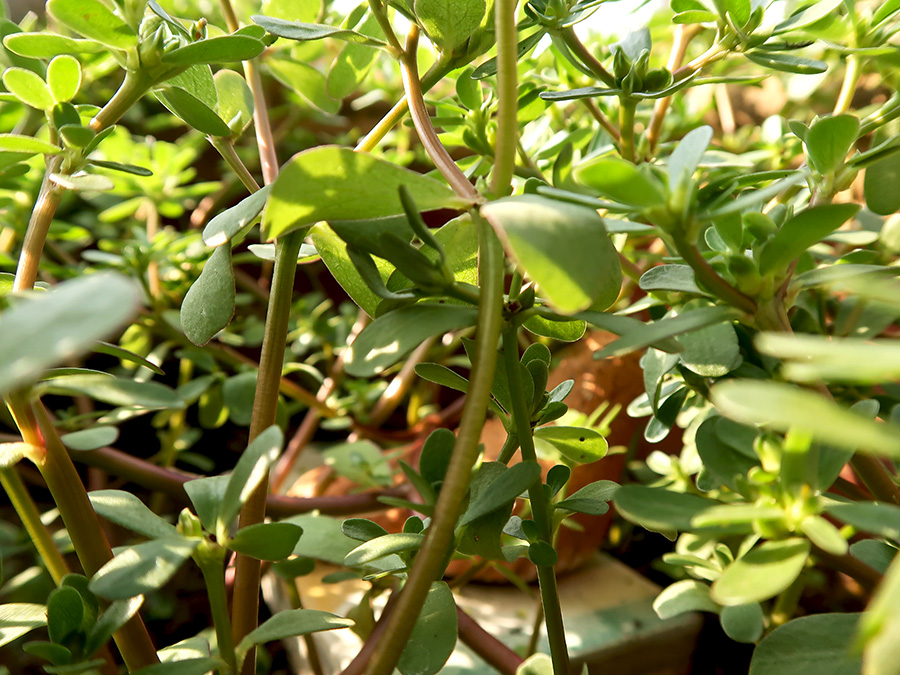
The rainy season, which came early this year and has disappeared for the past two weeks, has brought a plethora of purslane (verdolaga en español) to the rooftop garden. Most every planter and pot is filled with this uninvited, but much welcome, herb. And, it always inspires me to be a little more creative in the kitchen.

Volunteer purslane/verdolaga filling an unused garden pot on the rooftop terrace.
Taco filled with barbacoa, avocado, lettuce, purslane/verdolaga, and pickled red onions.
Fusilli with carrots, avocado, and purslane/verdolaga.
Purslane/verdolaga garnishing black beans.
Volunteer purslane/verdolaga in the giant pot that is home to my magnolia tree and terracotta bird.

Purslane is not only versatile and delicious, WebMD sings its praises when it comes to its health benefits.

Read Full Post »

This spring has brought some wild weather to Oaxaca. It began with the previously blogged about freak hailstorm in April and this past week, besides the usual late afternoon rain, the city experienced two more hailstorms — definitely not normal. They are very localized, with nearby towns remaining dry or receiving only a few showers.

Late yesterday afternoon, while the city continued to bask in sunshine, Teotitlán del Valle only 23 miles away was hit with its first violent hailstorm in many years. One minute all was calm as friends and I sat outside at Restaurante y Galería Tierra Antigua sipping mezcal. However, within minutes, the sky darkened, wind began to blow, and the heavens opened.

Almost without warning, hailstones, some the size of two peso coins, began pelting us. Needless to say, we grabbed our belongings and copitas of mezcal, as quickly as we could, and ran inside the restaurant. Once all the customers were safely inside, staff scrambled to close doors and windows. Then all watched as the force of Cocijo, the Zapotec god of rain and lightening, among other powerful forces, took center stage. It was an awesome 15+ minute performance! And, thankfully, save for some shredded foliage, there didn’t appear to be any damage.

Read Full Post »

Early Sunday morning on the rooftop terrace…

Night blooming cereus against the blue wall. By 9:00 AM, its twelve hours of beauty was gone.

Read Full Post »

The violent storms Oaxaca experienced in mid April brought down 30+ trees in the city, including one of her beloved old Indian laurels in Llano Park. And, when a tree falls in Oaxaca…

Left to right: Cuetzpalin/iguana; Coatl/serpiente/snake; Ocelotl/jaguar; Ozomatli/mono/monkey

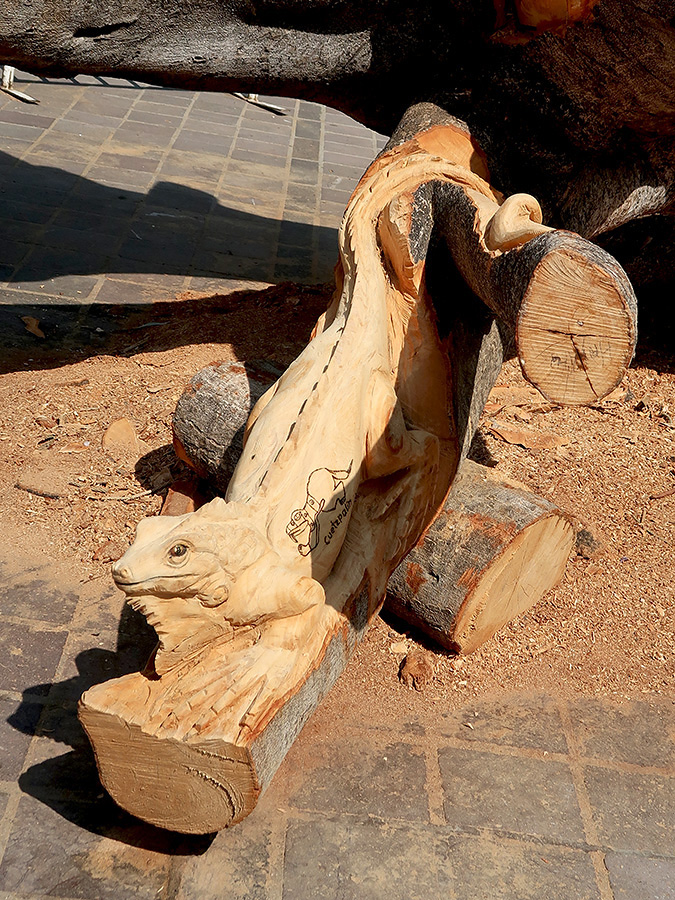
Talented artist, Heriberto Castro López, grabbed his chainsaw and chisel and, with the blessings of the powers that be, turned the fallen tree into a public work of art, a language lesson, and a plea for help.

Cuauhtli/águila/eagle

A monkey, a jaguar, an eagle, a rabbit, an iguana, and there’s a snake in there somewhere — all animals iconic to Oaxaca — emerged.

Tochtli/conejo/rabbit

The animals seem appropriate, as Parque el Llano (aka, Paseo Juárez, El Llano de Guadalupe, and Alameda de Nezahualcoyotl) housed a zoo from 1945 to 1971 (dates not verified) — hence the gold painted lions at the four main entrances to the park.

Cuetzpalin/iguana

However, this time the animals aren’t confined to cages — they are free and calling on us to save this planet we all call home before it’s too late.

Many thanks to Heriberto Castro López for his “Llamado de Auxilio” gift to Oaxaca.

Read Full Post »

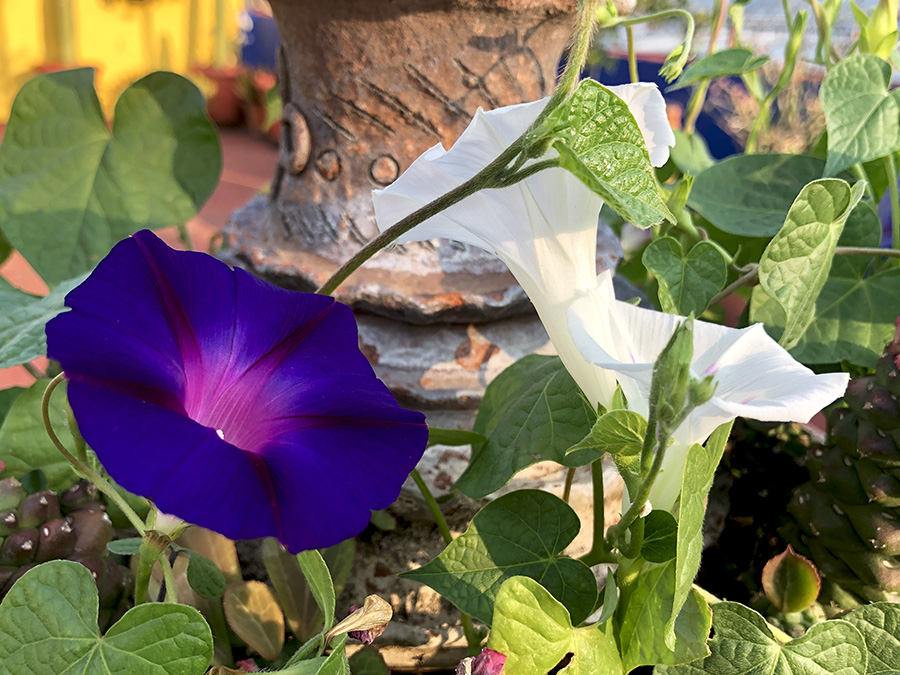
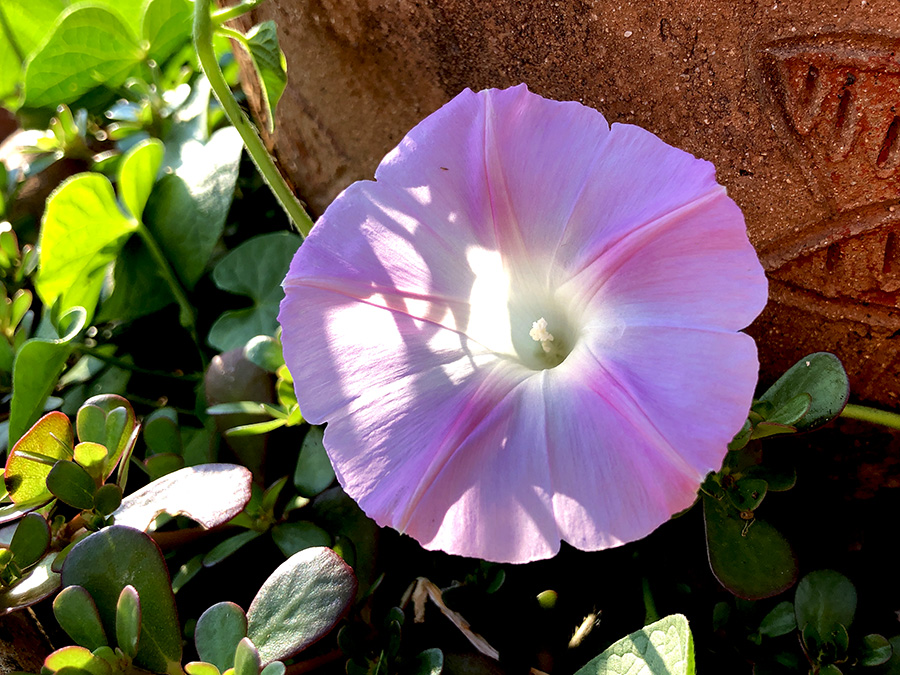
What can I say? The last few mornings, as I checked on my rooftop garden, I started singing, The Telephone Hour song from 1960s musical, Bye Bye Birdie.

What’s the story, morning glory?
What’s the word, hummingbird?

Yes, I’m that old!

Read Full Post »

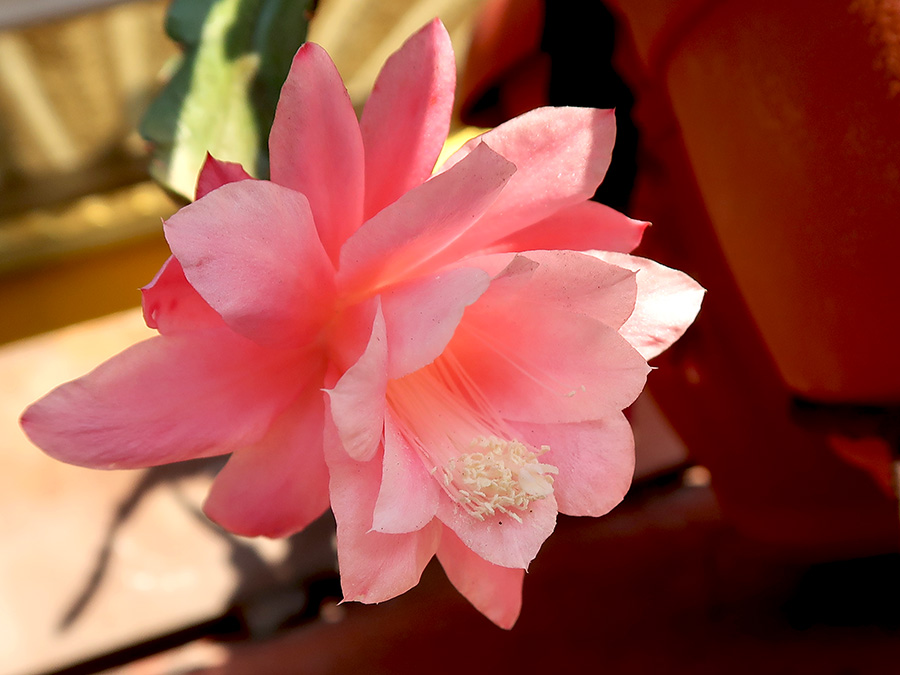
And now the April “showers” have brought spring flowers to Casita Colibrí.

Orchid cactus – April 25, 2023
Flor de mayo – April 10, 2023
Madagascar palm – April 10, 2023
Bougainvillea – April 22, 2023
Hibiscus – April 26, 2023

Read Full Post »

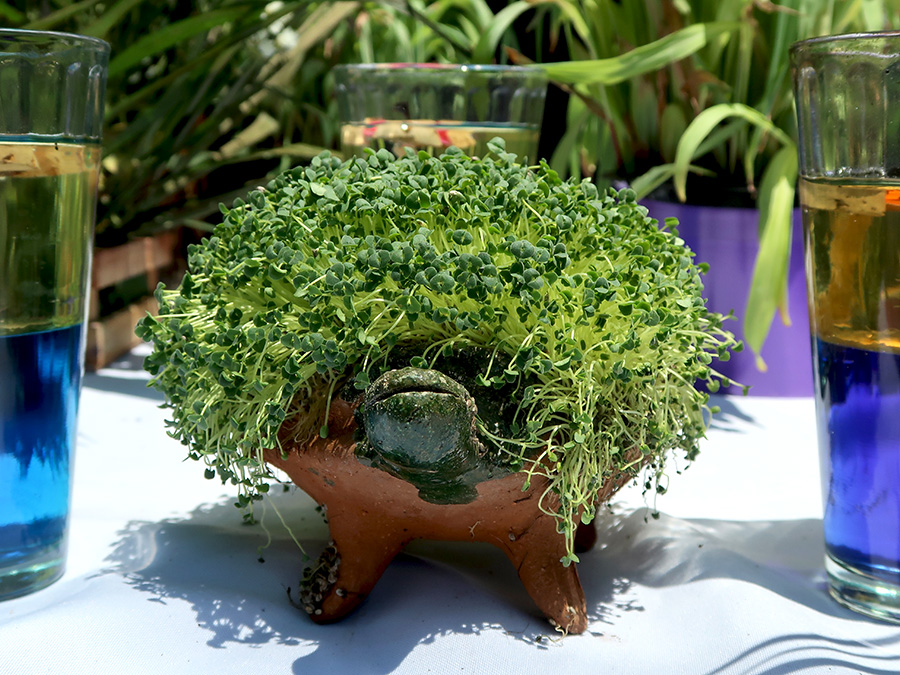
As Semana Santa approached, Oaxaca’s annual invasion of the Chia Pets began. On altars in churches, homes, and businesses, terracotta animals sprouting Chia appeared.

Good Friday 2023 – 5th Station of the Cross in Barrio de Jalatlaco.

Before you lament commercialized products from the USA intruding on the sanctity of Holy Week, I can happily report Salvia Hispanica (aka, chia) filled clay animals were symbols of the season long before Joe Pedott ever set foot in Oaxaca in the late 1970s and “discovered” them.

According to an article in MexConnect, “Growing greens remind the viewer of the resurrection and renewal of life.”

Native to Mexico, Salvia hispanica was the third most important food (after corn and beans) of the Aztecs as chia seeds are high in protein and omega-3 fatty acids. By the way, the name of the Mexican state of Chiapas comes from Chiapan, an ancient city whose name in Náhuatl means, “the place where the chia sage grows.”

(ps) Sorry about the Chia Pet advertisement ear worm!

Read Full Post »

While I was in el norte, I had no worries about my plants, as I knew my neighbors A&P would take good care of them. It has taken me a week to unpack, put things away, clean (oh, the dust!), and get reacquainted with my garden’s flora and fauna.

I was surprised and delighted this tiny cactus welcomed me with one of its flowers.

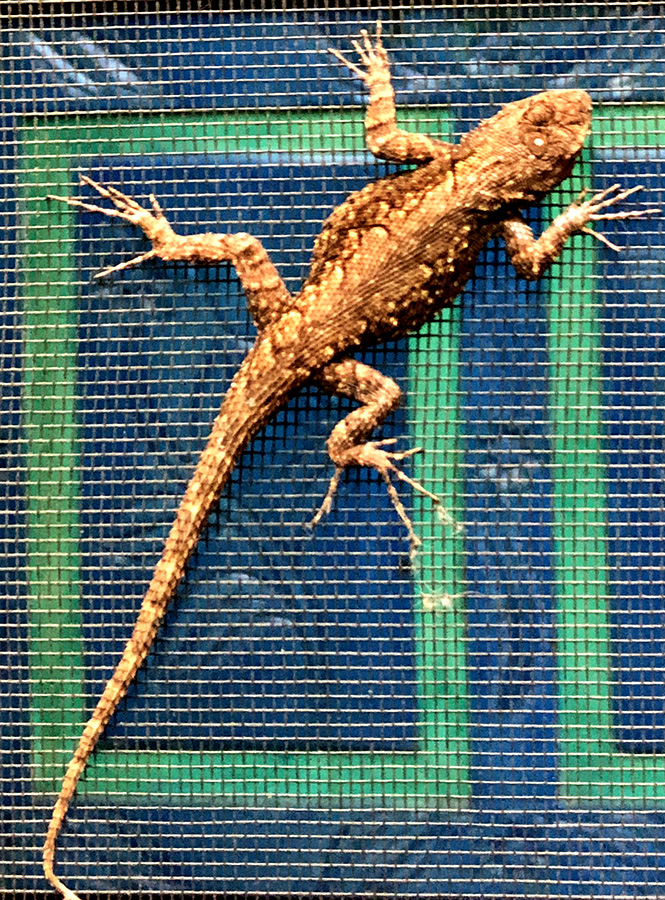
Another delight was the presence of Eddie Lizard still hanging out on the outer side of the screen between the atrium and my office. He’s been here a month and a half!

A less welcome sight were these small caterpillars. Thankfully, P took on the task of picking them off with my garden tweezers. They have been munching on my Passion Flower leaves for months and I can’t figure out how to eradicate them. Any suggestions?

After being gone for a month, it’s good to be back home, be warm and dry, and enjoying my garden!

Read Full Post »

Autumn light catches plant shadow play against my garden’s new blue wall.

Epiphyllum hookeri (Night blooming cereus)

Beaucarnea recurvata (Elephant’s foot)

Pachypodium lamerei (Madagascar palm)

Blue makes for a far more dramatic scene than the former lifeless cream color.

Read Full Post »

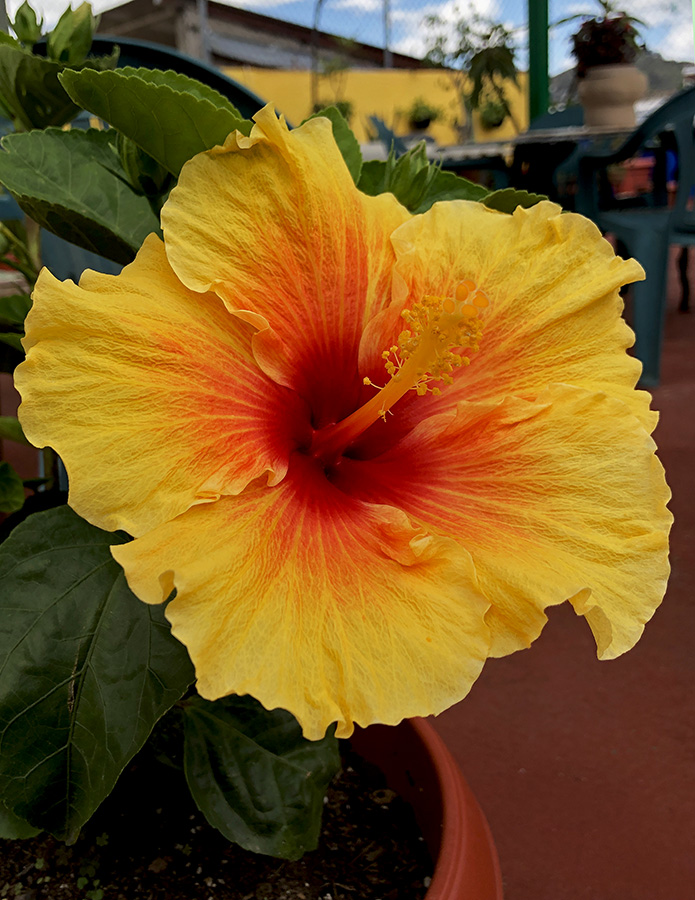
Several weeks ago, at the weekly Friday market on Calle del Refugio, I bought a hibiscus plant in a 6 inch pot. It had a single brilliant yellow with red highlights flower, but was filled with promise from multiple buds. I immediately transplanted it into a larger pot and it has proceeded to put on quite a show. As one flower folds up and falls off, another opens to take its place.

September 10, 2022 hibiscus flower
September 16, 2022 hibiscus flower
September 22, 2022 hibiscus flower
September 26, 2022 hibiscus flower
September 27, 2022 hibiscus flower

Each flower is unique and ready for its close-up!

Read Full Post »

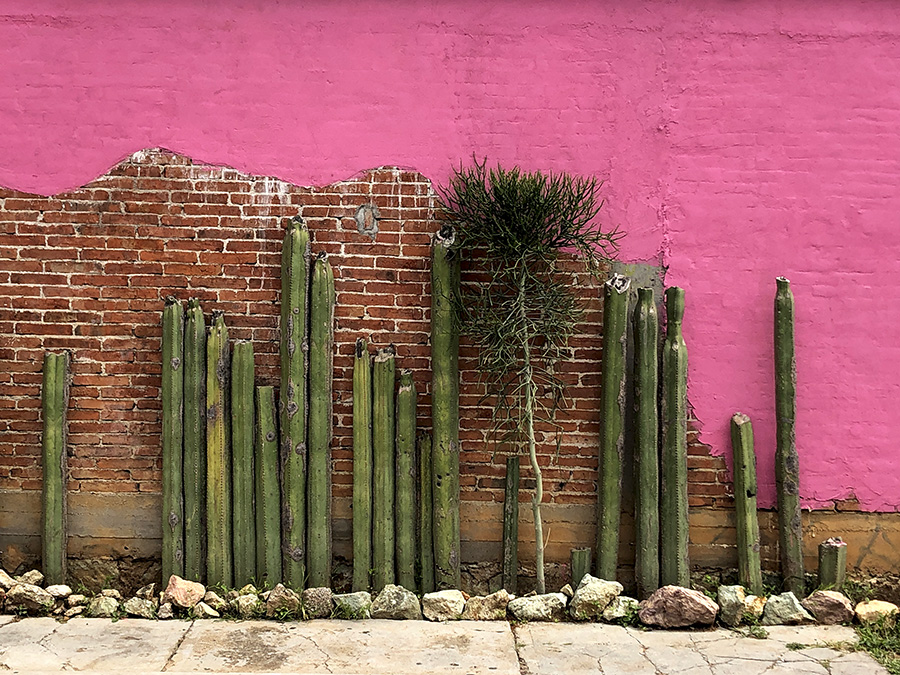
Sometimes, you just have to stop and marvel at the artistry of organ cactus planted against a wall.

Calle Pajaritos, Barrio de Jalatlaco, Oaxaca de Juárez
Casa Ocho Regiones, Av Benito Juárez, Oaxaca de Juárez
Calle 5 de mayo, Barrio de Jalatlaco, Oaxaca de Juárez

The sculptural effects of organ cactus always seem to create a WOW factor.

Read Full Post »

These are the scenes that soothe my soul…

Metates, molcajete, and comal.
Barro rojo and cactus.
Chiles and bean pot.
Black beans.
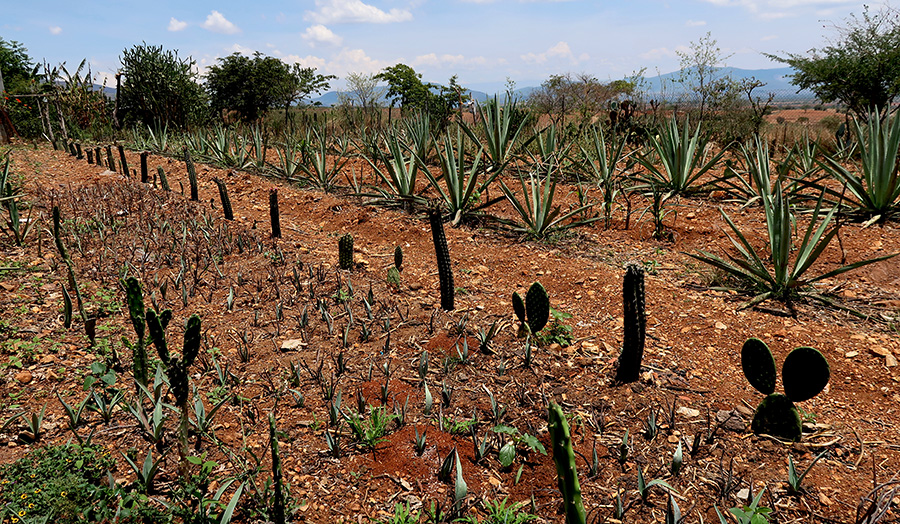
Cactus and agave.

A long weekend spent with my comadres and compadre at Tierra Antigua.

Read Full Post »

A couple of weeks ago, my friend K and I spent the day in the land of red clay, San Marcos Tlapazola, at the home of potter, Valentina Cruz. I have accumulated quite a collection (though not nearly as much as K) of barro rojo and several of my favorite pieces are by Valentina.

Getting there was quite the adventure. Leaving from Teotitlán del Valle (where I was spending a long weekend), the journey entailed taking a 3-wheeled moto (aka, tuk-tuk) to the highway, catching a bus to Tlacolula de Matamoros, multiple times asking for directions re where to find transportation to take us to Tlapazola, a bit of wandering around, ten blocks of walking, followed by waiting and wondering if we were in the right place. After 1/2 hour, a combi (a glorified pickup truck with wooden benches in the truck bed) arrived and took us up towards the mountains. Needless to say, the bouncing caused by the dirt roads and potholes were felt! Unfortunately, because the back of the truck was covered, we couldn’t even enjoy the views — that had to wait until we finally arrived at Valentina’s home/workshop/store.

The red clay soil isn’t just good for making pottery. Agave, cactus, corn, and squash also seem to thrive under the tender loving care of Valentina and her husband, Don Luis.

When we arrived, Valentina was busy at the tortilla press and comal — making tlayudas (large crispy tortillas) to accompany the chicken soup prepared by her daughter. After we all finished eating comida, we watched as Valentina took out a smooth river rock and began to burnish several pieces. This extra step puts a lovely sheen on her pottery and is one of the things that makes her work stand out.

Of course, I couldn’t resist buying the two horn-playing rabbits (top photo) at the tienda in her home. They join the face with the lid (also in top photo), among my many utilitarian pieces expertly crafted by Valentina. She and her beautiful barro rojo pottery can also be found at the weekly Sunday market in Tlacolula. After this lovely, but long day, we opted for her to call us a taxi to drive back to Teotitlán.

Read Full Post »

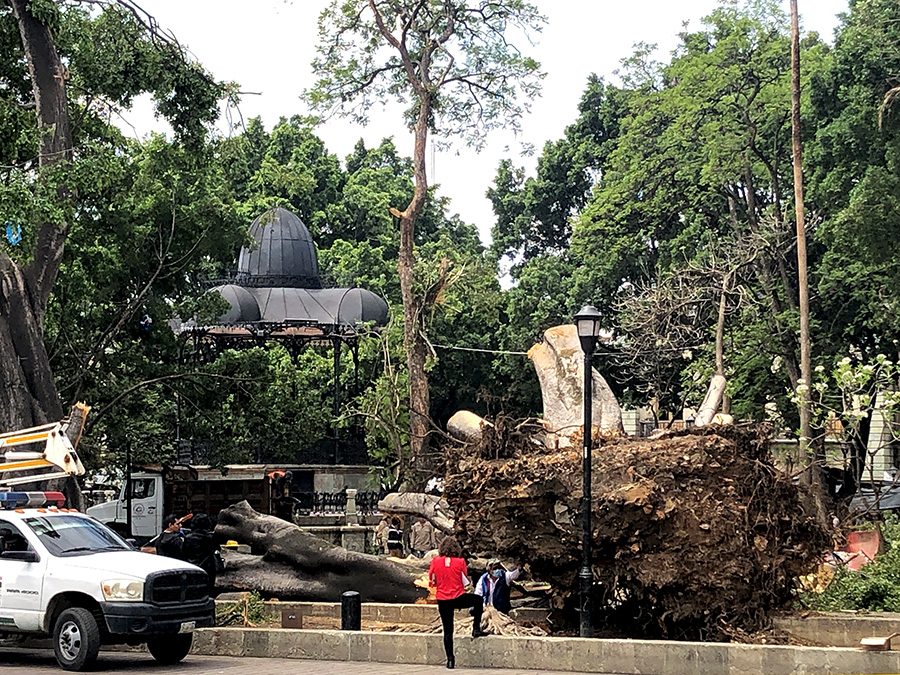
We read the news today, oh boy. Early last night a violent thunderstorm brought gale force winds and torrential rain. It didn’t last long but it took its toll. The beloved giant Indian laurel that provided shade to the concerts, danzón, and other programs “bajo el laurel” on the zócalo toppled to the ground. Thankfully, no one was injured.

The iconic Indian laurels were planted on Oaxaca’s Zócalo and Alameda de León between 1870 and 1880. However, in the thirteen years that I have lived here, I’ve lost count of the number of laurels that have fallen.

As the late artist and heritage tree advocate Francisco Verástegui once explained to me, the trees suffered from damage caused by an aborted remodel of the Zócalo in 2005, along with improper pruning, inadequate irrigation, faulty drainage, and the use of unsterilized mulch leading to the growth of fungus and causing the roots to rot.

I wasn’t the only one to come to pay my respects to this magnificent tree. “Muy triste” (very sad) was the morning’s refrain, as people filed by shaking their heads and others stopped to watch as the body of the Indian laurel was prepared for it’s final resting place.

Read Full Post »

Older Posts »