Feeds:
Posts
Comments

Archive for the ‘Culture’ Category

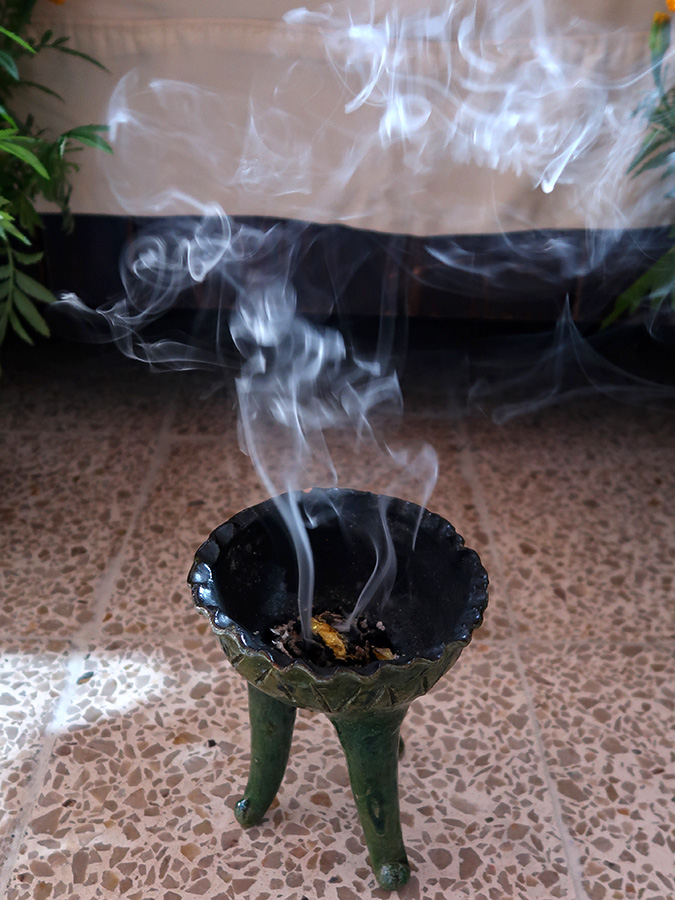
Today, at 3:00 PM in Teotitlán del Valle, as leaves in the mountains and fields rustled, the arrival of the difuntos (departed) was announced with the sound of cohetes (rockets) and church bells.  Incense burners were lit and placed in front of ofrendas in each home’s altar room — the smoke and scent of copal helping to guide the spirits home for their yearly twenty-four hour visit.

Tonight they will feast on tamales amarillos — special tamales that are traditionally served three times a year in Teotitlán — in July for the Fiesta de la Preciosa Sangre de Cristo, in October for the Fiesta de la Virgen del Rosario, and today, November first, in honor of the returning difuntos.

IMG_3964_crop

As we have done for many years, blogger buddy Chris and I came to the home of Zacarías Ruiz and Emilia Gonzalez with our offering of pan de muertos and a bottle of mezcal to place on their altar — paying our respects to their difuntos.  In turn, we were offered mezcal and cervesas (beer), followed by the aforementioned tamales amarillos.

The tamales were days in the making.  Several of the family’s organic free range chickens were sacrificed; corn from their milpa was nixtamalized to make a silky smooth masa; and the ingredients for mole amarillo were toasted, chopped, blended, and boiled.  The final preparation began at 3:30 this morning — 250 tamales were assembled, filled, and wrapped in fresh green leaves from their milpa and placed in the steaming pots.  The results were to die for!

For me, more than painted faces and parades, this is what makes experiencing Día de los Muertos in Oaxaca so special.

Read Full Post »

As my grandchildren finished their trick or treating up in el norte, I put the final touches on my Día de los Muertos ofrenda (offering) here in Oaxaca.
IMG_1662

A yellow (the color of death in pre-hispanic southern Mexico) cloth covers two chests; papel picado (cut tissue paper), signifying the union between life and death, has been added, along with the traditional flowers of Day of the Dead — cempasúchil and veruche (domesticated and wild marigolds), their scent to guide the spirits, and cockscomb to symbolize mourning.  Visitors brought the sunflower and, since my grandfather, father, and father-in-law were avid gardeners, it is for them!

IMG_1645

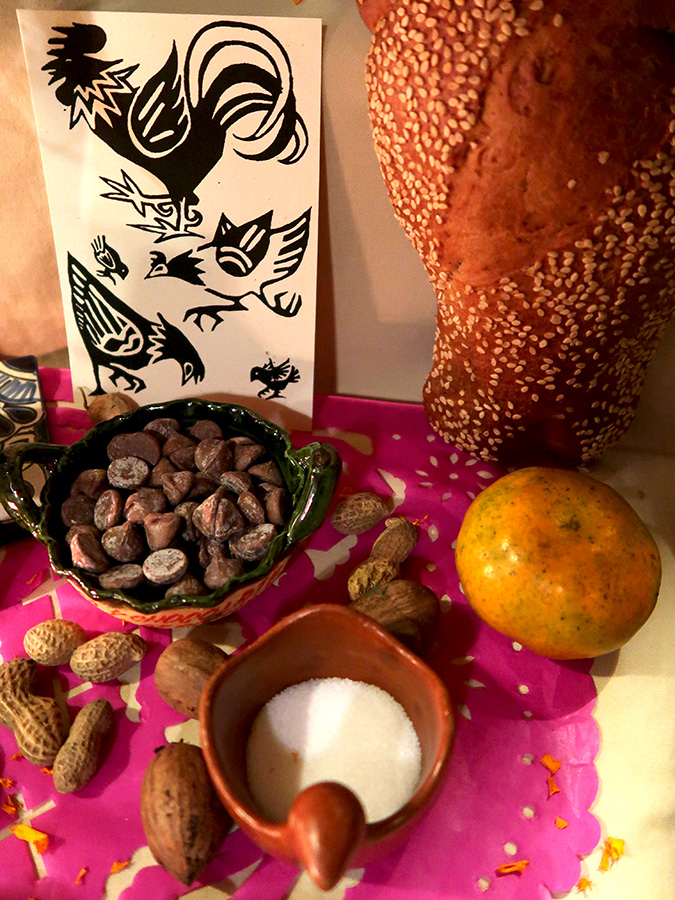
There is salt to make sure the souls stay pure and chocolate, peanuts, pecans, apples, mandarin oranges, and pan de muertos (Day of the Dead bread) to nourish them.

IMG_1665

The sweet smell of copal incense and its smoke help guide my loved ones to the feast I have prepared.  And, there is water to quench their thirst, as they travel between worlds, not to mention mezcal and cervesa (beer).

IMG_1767

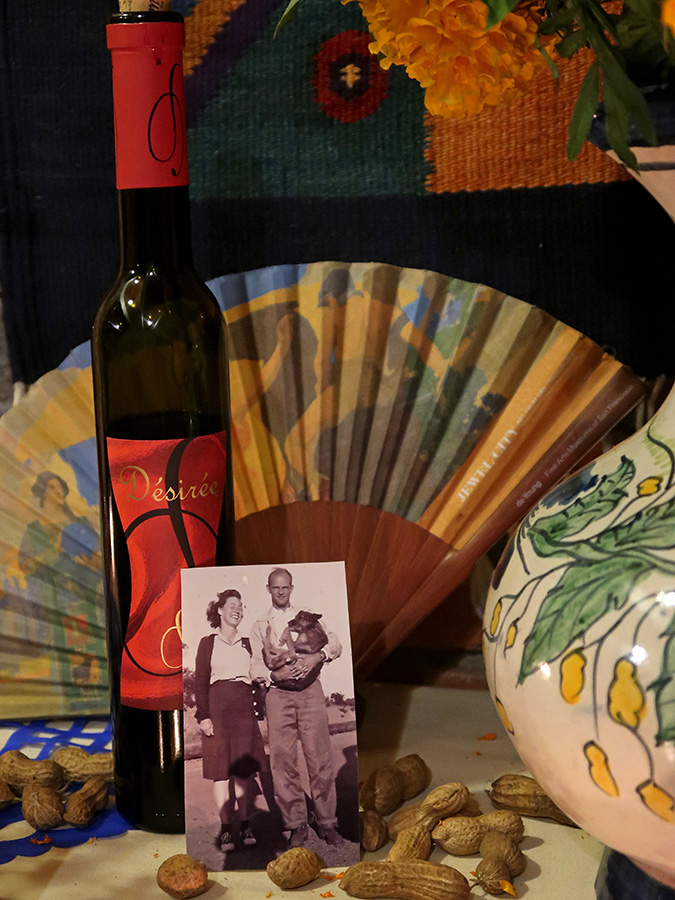
But, most important of all, there are the tangible remembrances of my departed — photos and some of their favorite things.

IMG_1655

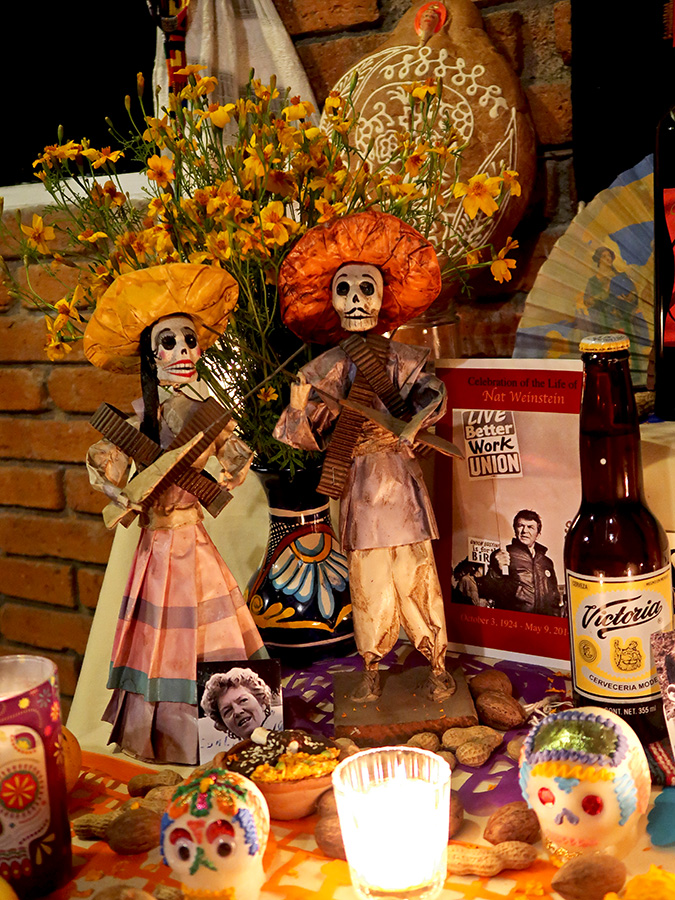
Revolutionary catrina and catrin for my revolutionary comadre and compadre, Sylvia and Nat.

IMG_1765

Yarn and a crochet hook for my dear grandmother who many of the abuelas (grandmothers) in Oaxaca remind me of — always wearing an apron, never wearing pants, and incredibly adept with crochet and embroidery thread.  And, for my adored grandfather, a San Francisco Giants baseball cap.  My grandparents moved next door at the same time the Giants moved from New York to San Francisco and grandpa and I listened to many games together on his transistor radio, as I helped him in the garden.

IMG_1660

There are other cherished friends and relatives on my altar, but pride of place goes to my parents.  For my father, who was killed when I was only two and a half, there is beer (below the above photo) — alas Victoria not Burgermeister!  And for my mother, a fan to cool herself as she dances and a bottle of port to sip before she sleeps.

IMG_1794

It’s been a two-day labor of love as I wanted everything to be perfect for my difutos (departed) to find their way and feel welcome in my Oaxaca home.

Read Full Post »

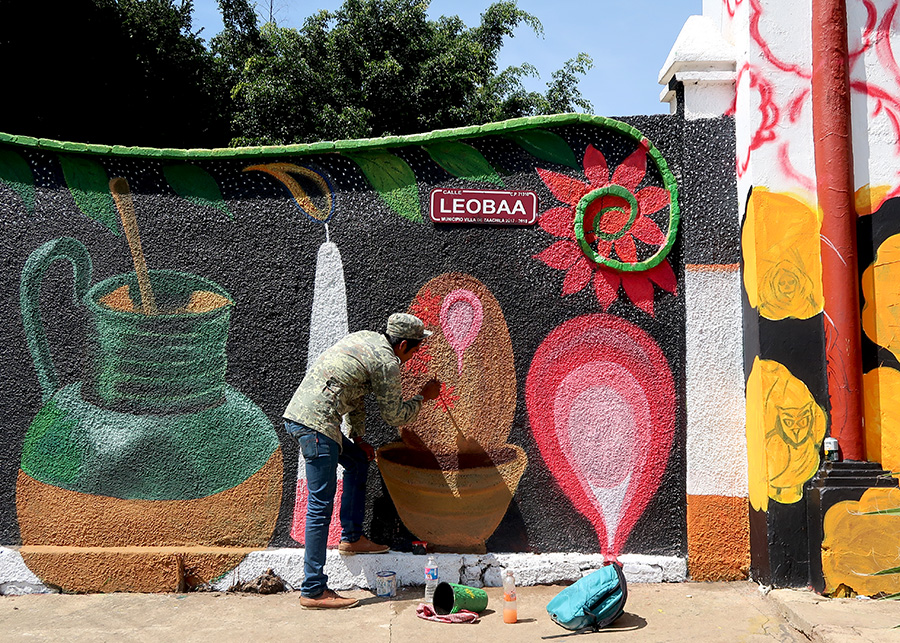
Not all the Día de los Muertos murals in Villa de Zaachila were finished, some were still works in progress…

IMG_1288

with ladders and paints standing by…

IMG_1309

waiting for their artists to pick up the brush…

IMG_1286

or spray can, as the case may be.

IMG_1327

I first saw many of the murals in the summer of 2017 and was happy to see they are still intact, albeit some are a little faded.  Celebrated by the community, the new murals join the old and become a part of the landscape of the village.

Read Full Post »

A regalito (little gift) to my calaca and calavera loving grandson from today’s visit to Villa de Zaachila for their first Feria del Pan de Muerto, Mole, Chocolate y Espuma.

From murals along the outer side of the panteón (cemetery) in Villa de Zaachila.  Click to enlarge images.

Read Full Post »

This morning, on the way to my Oaxaca Lending Library cataloging shift (once a librarian, always a librarian), I made a detour through Jalatlaco, where the murals always give one pause.

IMG_1124

I was on my way to Clinica Hospital Florencia to check on my 92 year old neighbor who had a pacemaker installed yesterday afternoon (once a nurse, always a nurse).

IMG_1122

Like Oaxaca, she is strong…

IMG_1122_fuerza

She is proud…

IMG_1123

And, she is back home after only 24 hours and feeling GREAT!!!

Read Full Post »

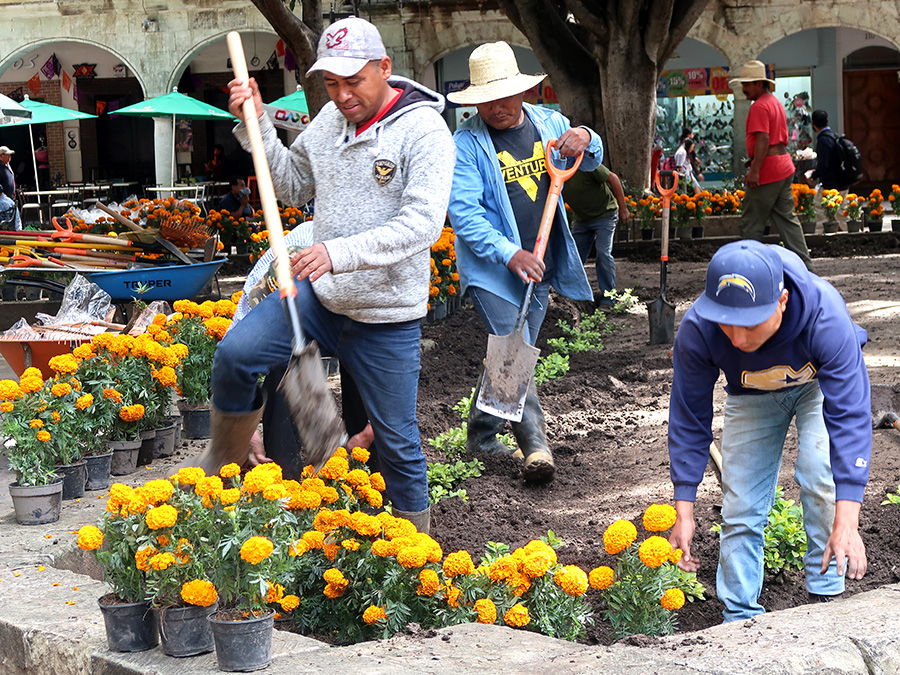
Today the sun (finally) came out and hundreds (thousands?) of pots of cempasúchil (aka, cempoalxóchitl, cempaxochitl, cempoal, zempoal, flor de muertos) arrived in the city center.

IMG_1089

This was a photo op not only for yours truly but also the local press, as they trailed after the wife of Oaxaca’s governor while she viewed the unloading…

IMG_1078_land

and planting of the iconic Día de los Muertos flowers in the beds of the Zócalo and Alameda.

IMG_1076_crop2

The color and fragrance of the cempasúchil provide a lovely setting to sit and contemplate the world (and check your cell phone).

IMG_1077_port

Oaxaca is putting on her best to welcome her difuntos (deceased) along with the thousands of tourists who will soon be arriving.

Read Full Post »

It’s been fifty years since two African American US Olympic medalists, Tommie Smith and John Carlos, cast their eyes downward and raised clenched fists on the medals’ stand during the playing of the “Star Spangled Banner” (national anthem of the USA) at the 1968 Olympics in Mexico City.  Boos and racial epithets were hurled from the stands, both were kicked off the US team, ordered to leave the Olympic Village, and, upon returning to the USA, they received hate mail, death threats and experienced harassment.  However, their gesture became iconic and their stance against racial injustice is celebrated the world over, including Oaxaca.

Taller de Gráfica Experimental de Oaxaca, Calle La Noria at Melchor Ocampo, Oaxaca de Juárez

“I don’t have any misgivings about it being frozen in time. It’s a beacon for a lot of people around the world. So many people find inspiration in that portrait. That’s what I was born for.” –John Carlos (The man who raised a black power salute at the 1968 Olympic Games)

What most of the world didn’t see or hear about — because it was conspicuously absent from the covers of the country’s major newspapers — was that two weeks before, in what came to be known as the Tlatelolco Massacre, somewhere between 300 and 2,000 peacefully protesting students in Mexico City were murdered by Mexican military and police forces.

The echos from 1968 continue today…  Colin Kaepernick continues to be castigated and denied employment as an NFL football player for taking a knee during the playing of the “Star Spangled Banner” and 43 student teachers from Escuela Normal Rural Raúl Isidro Burgos in Ayotzinapa, whose bus was ambushed in Iguala, Guerrero four years ago, continue to be missing.

Read Full Post »

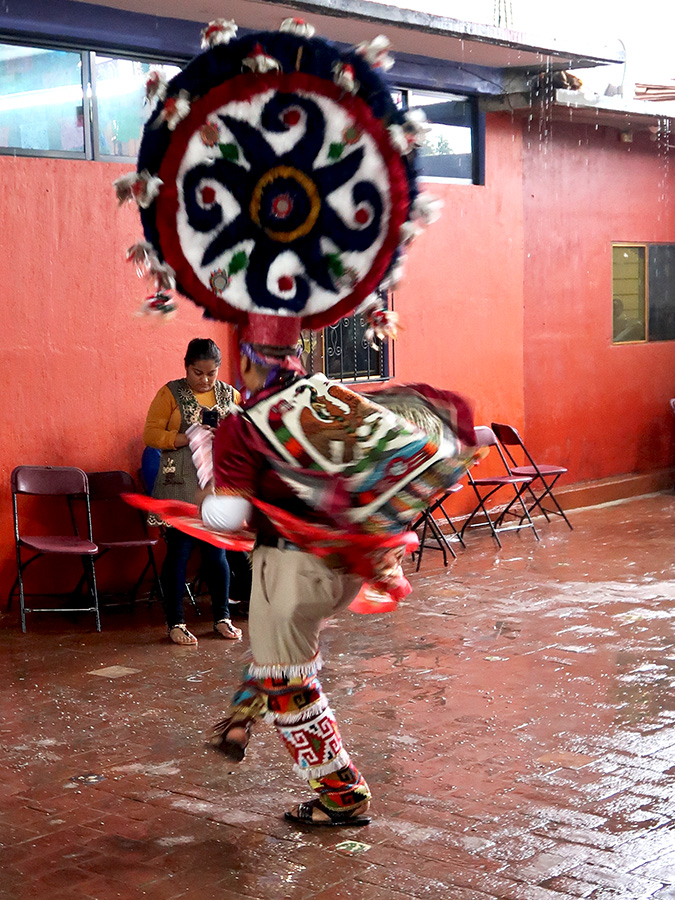
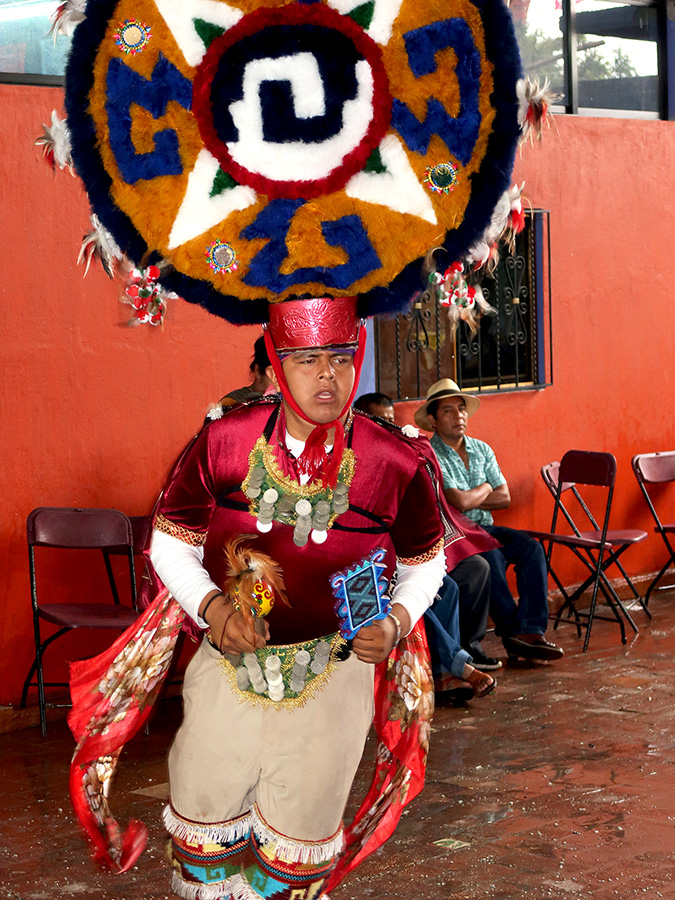
Monday afternoon, in the middle of a fiesta at the home of Danza de la Pluma danzante Juan Pablo González Gutiérrez, a torrential downpour came to Teotitlán del Valle.

IMG_0865

As I’ve mentioned, rain has been scarce this rainy season — a serious situation for a community that relies on subsistence farming.

IMG_3910

So, despite the fact that the dirt road in front of the house became a muddy rushing river and festivities had to be put on hold for awhile as rain blew in through openings in the tented patio, this deluge was good news and people were smiling.

IMG_0872_port

Everyone, including Juan Pablo, waited patiently for the life-giving rain to let up.

IMG_0882

It eventually did and he was able to dance.

IMG_0933

On a wet patio, surrounded by 100+ proud family members, fellow danzantes, and guests, he performed his solo dance.

IMG_0931

Blogger buddy Chris and I felt so incredibly honored to have been invited.  It was a truly memorable experience that we will treasure always.  Muchisimas gracias to Juan and his family and all the members of the Danza de la Pluma Promesa 2016-18 for being so warm and welcoming to us over the past couple of years.  We are going to miss you!

Read Full Post »

While the caption says, “Welcome to Oaxaca,” those clenched fists raised in protest illustrate how the overwhelming majority of women in the United States feel today.

IMG_0669_copy

New mural at the corner of Allende and Tinoco y Palacios by Gran OM, Chauiztle Stencil, and Kloer Kloerk.

Read Full Post »

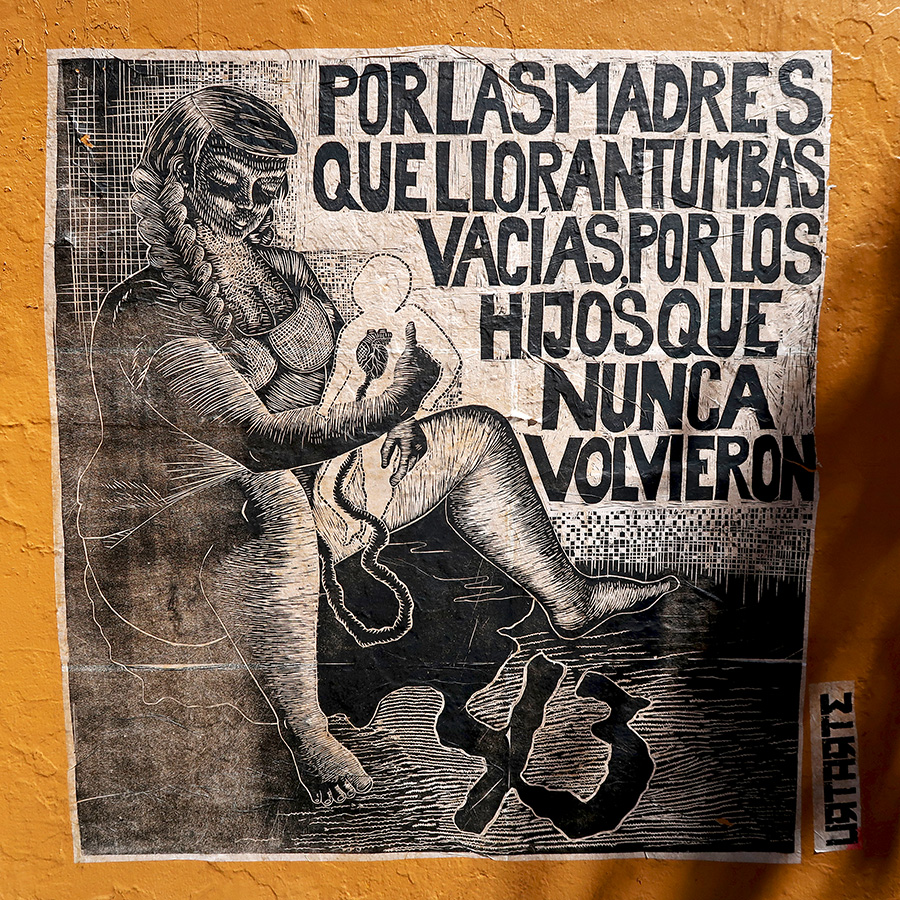
Four years and two days ago, 43 student teachers from Escuela Normal Rural Raúl Isidro Burgos in Ayotzinapa, Guerrero were disappeared in a violent attack on their bus in Iguala.  They still haven’t been found, their families still grieve, and anger surrounding the lack of truth, transparency, and justice continues.

IMG_1394_43

“For mothers who mourn empty graves for children who never returned”

In June of this year, a federal court ordered the creation of a truth and justice commission to undertake a new investigation but the current government has appealed the order.  However, two days ago, on the anniversary of their disappearance, Mexico’s new president-elect, Andrés Manuel López Obrador (AMLO), met with relatives and representatives of the missing students and vowed to discover the truth and implement the court order.  Expectations are high, but skepticism remains.

Read Full Post »

I have returned to my hometown for my 50th high school reunion.  (How could I possibly be that old?!)  Whenever I come up to the USA, I make a point of bringing a little Oaxaca love with me.  So, this trip I brought my three newest textile treasures to wear.

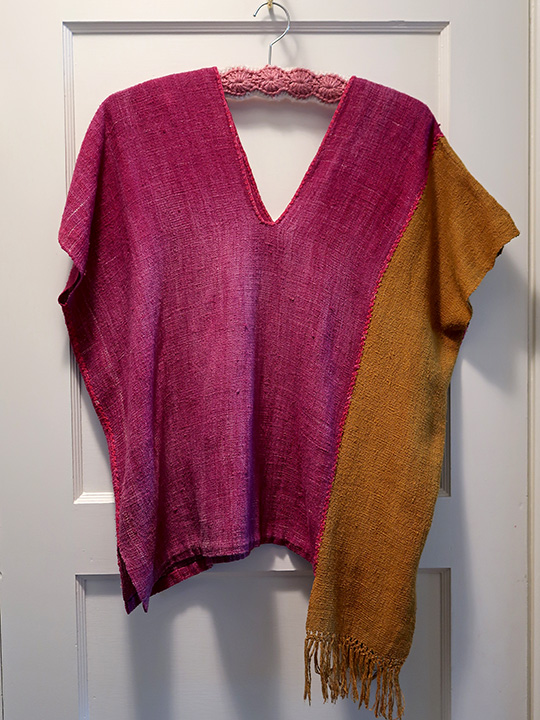
First, a modern asymmetric take on a traditional huipil — designed, dyed, and woven on a backstrap loom by Moisés Martínez Velasco from San Pedro Cajonos in the Villa Alta region of the Sierra Norte.  Villagers cultivate and harvest the silk worms and spin the silk used in making this beautiful piece.

I also packed a recently purchased traditional blusa from the Mixtec village of San Pablo Tijaltepec.  The blouses from this village are made from cotton manta and hand-embroidered with images of birds, animals, plants, and elements of nature in geometric patterns.  The blouses take up to one and a half months to make.  I wore it to the reunion picnic on Sunday and it received several compliments.

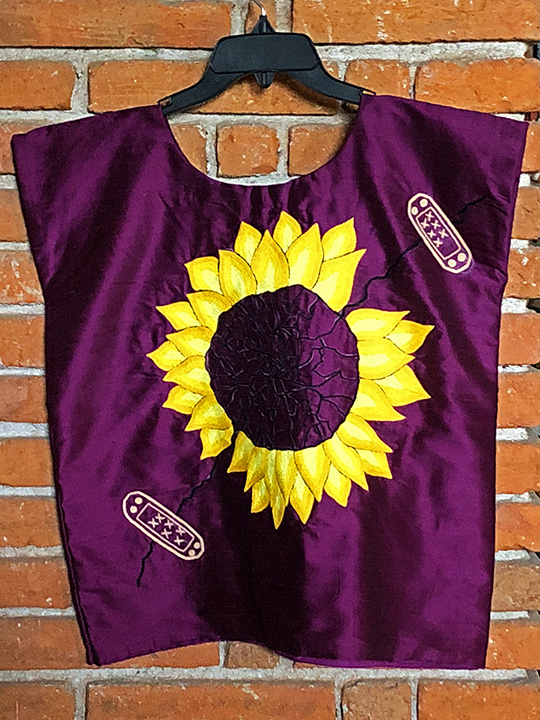
And, last but not least, I brought this elegant silk huipil with cotton chain-stitch hand embroidery designed by celebrated poet, Natalia Toledo.  Honoring the traditional huipiles of her birthplace in Juchitán de Zaragoza in the Isthmus of Tehuantepec region of Oaxaca, yet bringing her own design esthetic to her label Teka, this woman of many talents works with seamstresses and embroiderers from the Isthmus and Central Valleys of Oaxaca to create one-of-a-kind pieces.  I wore this to Saturday night’s reunion at the base of the Golden Gate Bridge beside the San Francisco Bay — and it was perfect!

Besides the designs, colors (lately, I seem to be binging on burgundy), and handmade aspect of the work, I especially appreciate that I was able to meet and purchase each piece directly from its creator.

Read Full Post »

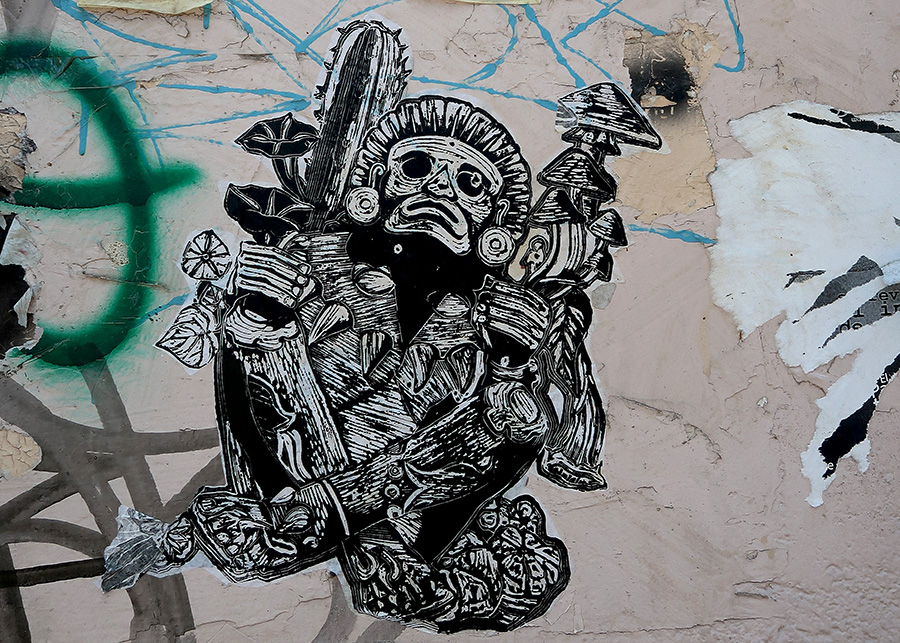
The gods…

IMG_7787 (1)

and superheroes like El Chapulín Colorado have had their day.

IMG_7876

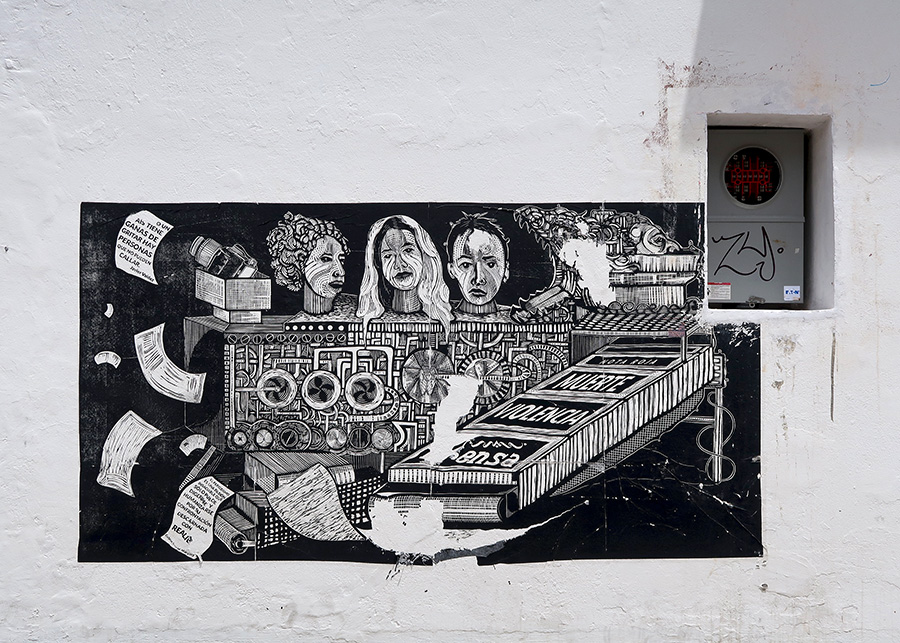
Today, the walls of Oaxaca remind us that it is journalists who are on the front lines — uncovering truth, advocating for justice, and often paying with their lives.

IMG_8350

“Cuando un pais tiene ganas de gritar hay personas que no pueden callar.”  (When a country wants to scream there are people who cannot remain silent.)  — the late Mexican journalist, Javier Valdez.

Journalists in the USA, are you listening?

Read Full Post »

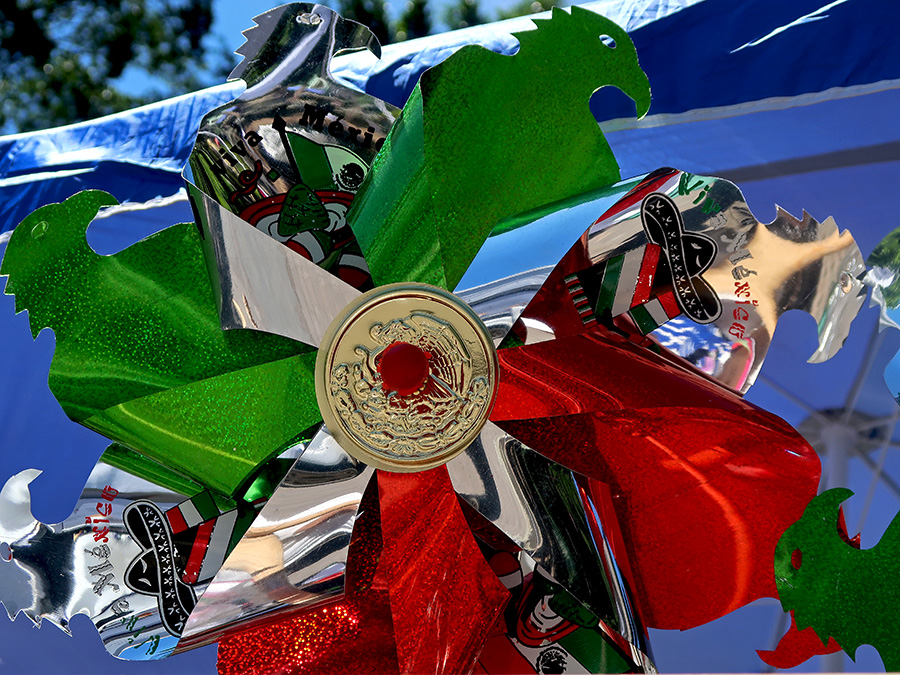
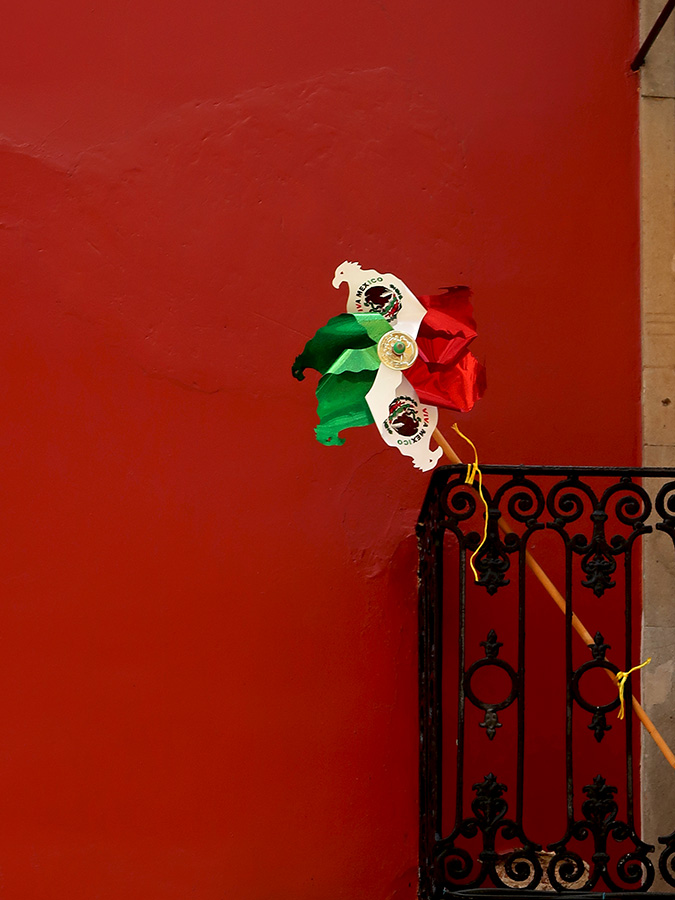
On September 16, Mexico celebrates Día de la Independencia — marking Father Hidalgo’s call to arms (Grito de Dolores) to begin the ten-year war for independence from Spain.  However, the entire month of September is El Mes de la Patria (the month of the homeland) and streets and vendor stalls are awash with the green, white, and red of the Mexican flag.

Last week, walking down to Mercado Benito Juárez to pick up a few last-minute regalitos (little gifts) to bring up to family and friends in el norte, within two blocks I saw…

There is even a very yummy green, white, and red patriotic dish that appears in restaurants in September — Chiles en nogada.  I’m hoping it will still be on the menu when I return at the end of the month from the el norte trip.

Read Full Post »

The very dry rainy season continues and is the major topic of conversation among anyone who has any connection to la tierra (the land).  However, during today’s Fiesta a la Natividad de la Virgen María in Teotitlán del Valle, the Zapotec god Cosijo answered the prayers for rain.

The sky darkened over Templo de la Preciosa Sangre de Cristo

Moctezuma (Sergio Gutiérrez Bautista) danced the story of the Conquest.

Doña Marina (Elizabeth Hernández Gutiérrez) danced her part.

The rain began to seriously fall and the plastic penacho (headdress) covers came out in force, but the danzantes continued to dance.

Comida (lunch break) came just in time, the sun came out, and Malinche (Quetzali del Rayo Santiago Ruiz) graciously posed for photos.

And, Javier Gutiérrez Hernandez (dance master, choreographer, former danzante, and father of Moctezuma) posed with his son’s penacho.

A little means a lot, though probably not enough to salvage this season’s milpa (field of corn, beans, and squash).  But, when your culture dates back at least 2,500 years, you take a long view of history.

Read Full Post »

A local’s guide to Mexico City: 10 tips describes a mural project by Aida Mulato and Jóvenes Artesanos to help rehabilitate her Roma neighborhood following the September 2017 earthquakes.  According to the article, “The colourful murals celebrate indigenous communities and women, who continue to suffer most from the earthquakes.  The project supports the larger goals of Jóvenes Artesanos and gives various support to about 150 artisans with whom Mulato works.  With 15 murals painted already, the goal is to create a circuit of 68, representing the country’s indigenous populations.”

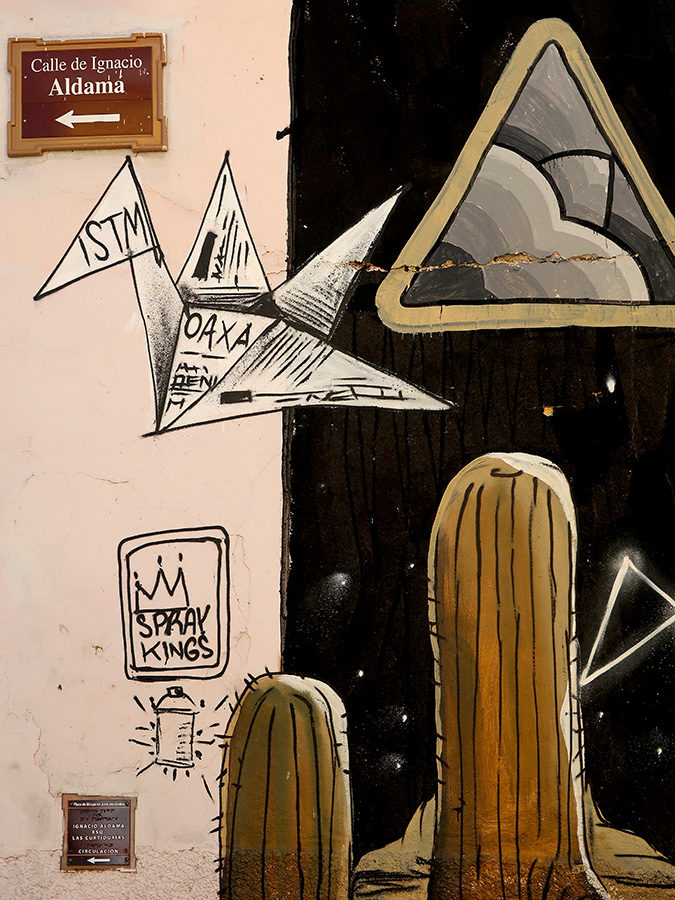
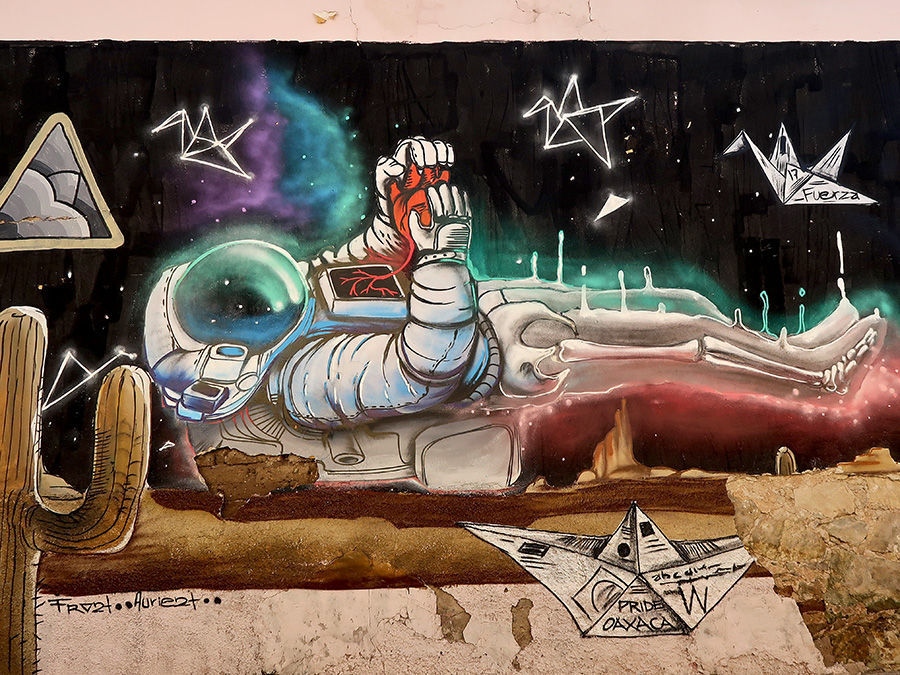
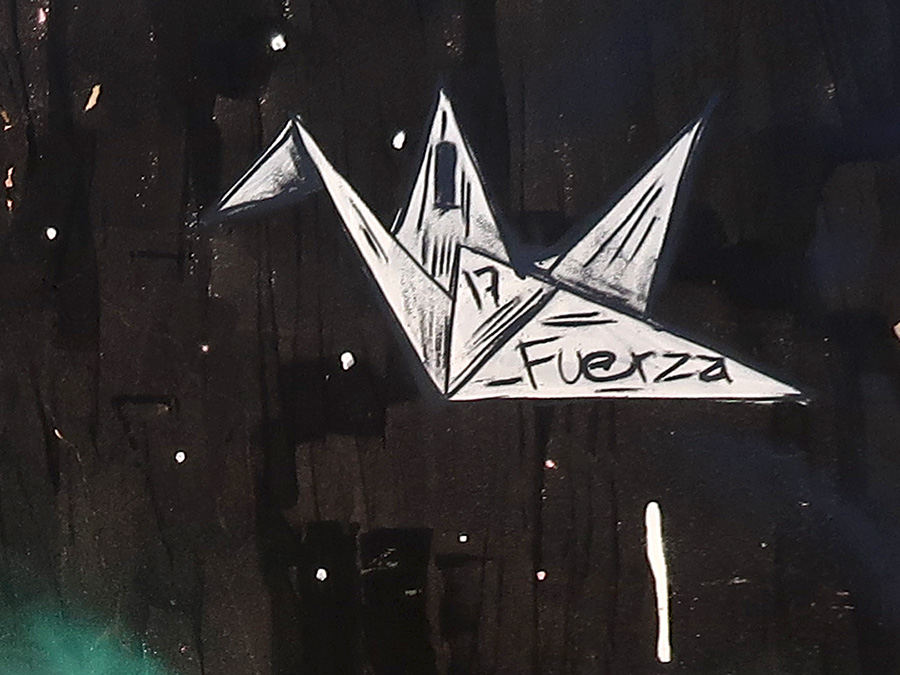
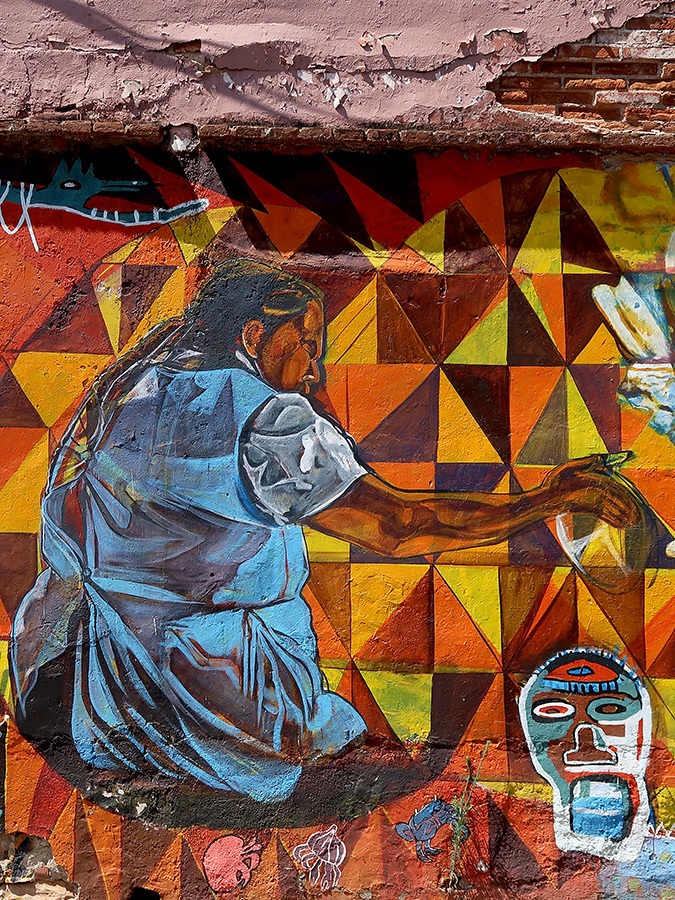
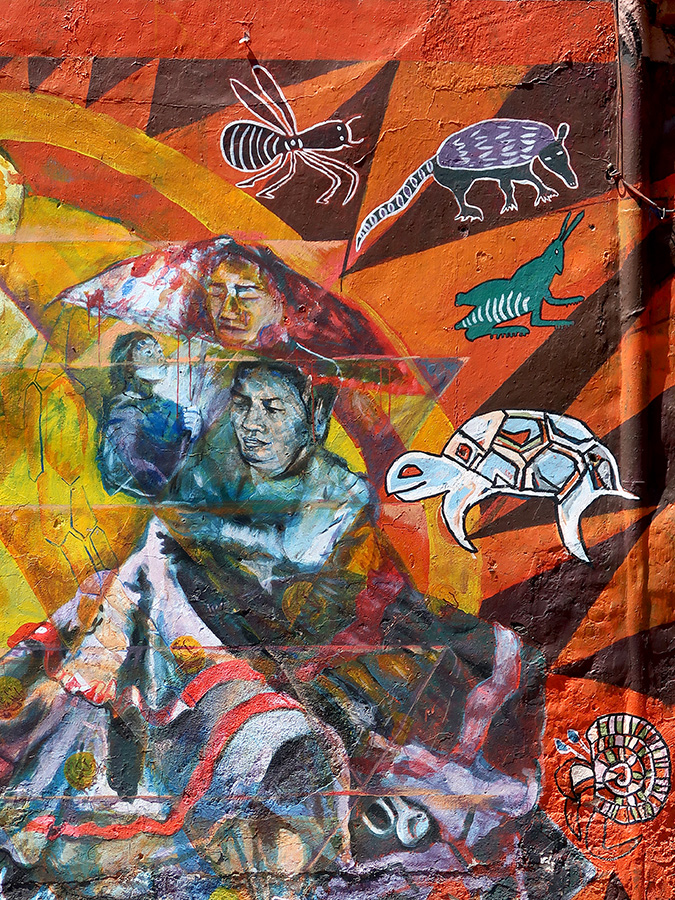
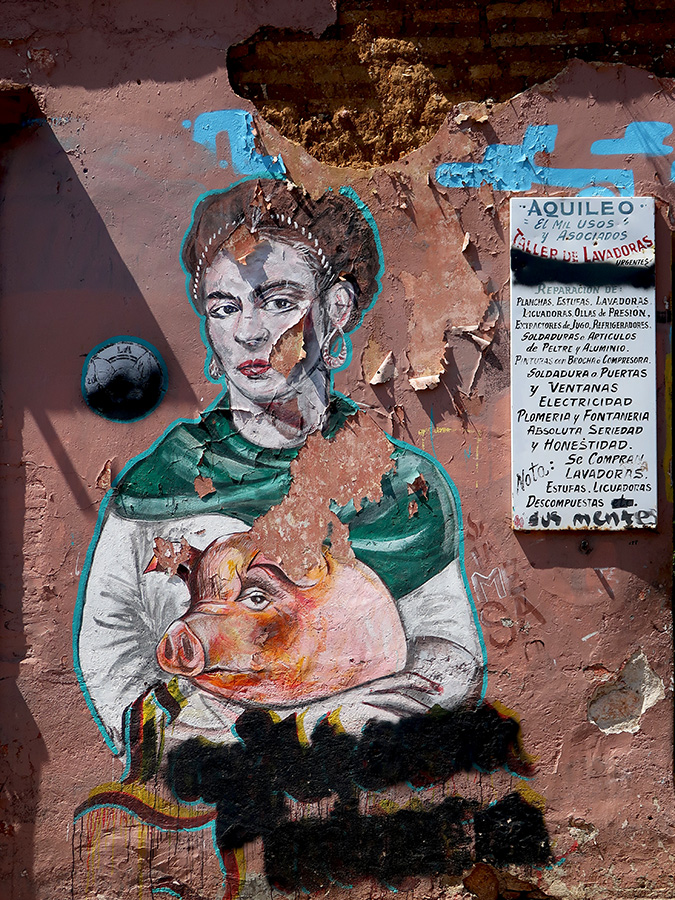
What an enlightened and wonderful contrast to the game of cat and mouse, street mural artists have been facing here in Oaxaca for the past few years, where many (including me) have been asking, are Color and culture, unwelcome?  However, while they may be more ephemeral than we would wish, artists are still at work on the sides of our own crumbling buildings, and murals still can be found on the walls of Oaxaca.

Enjoy them while you can, they may be gone tomorrow.

Read Full Post »

« Newer Posts - Older Posts »