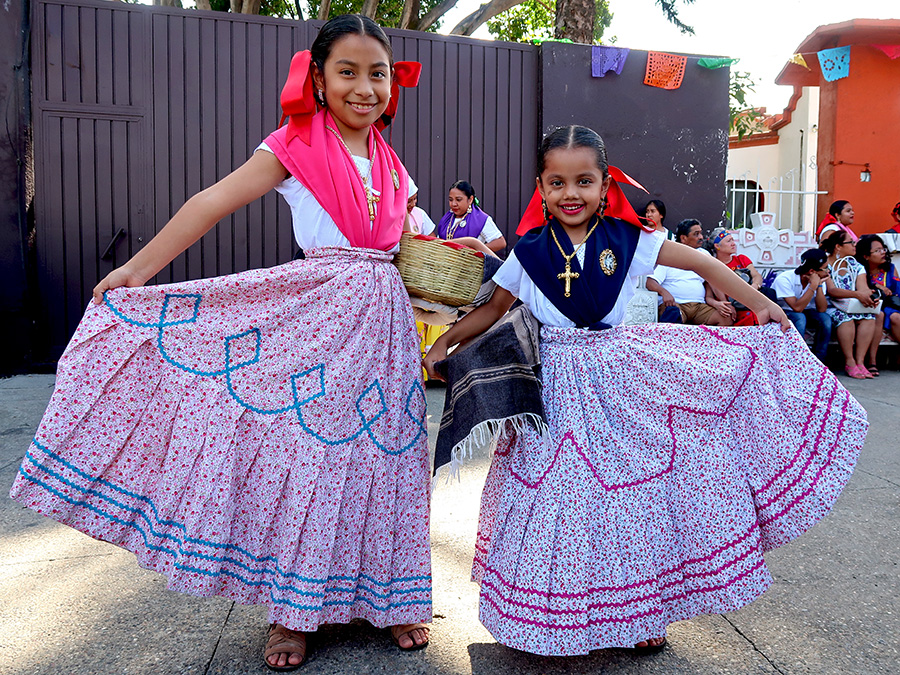
Feeds:
Posts
Comments

Archive for the ‘Culture’ Category

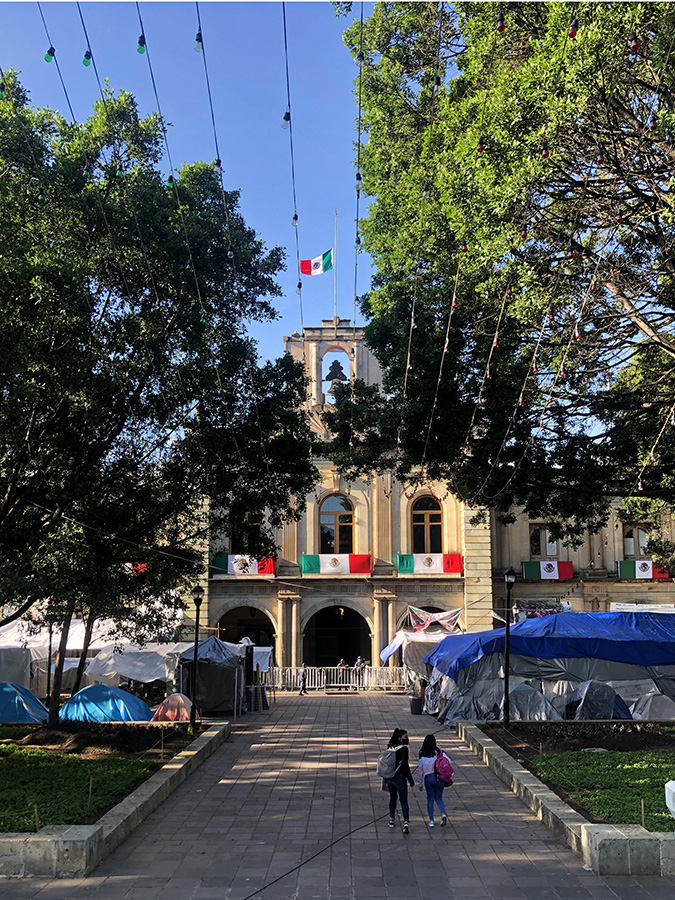
While flags are flying, bunting is up, and carts are selling the usual green, white, and red patriotic paraphernalia, it’s not your usual Mexican Independence celebrations.

It is the night before Independence Day, but there are no crowds gathered in the zócalo to hear the governor re-create the Grito de Dolores from the balcony of the Government Palace. Tomorrow there will be no patriotic parade through the streets of the city of Oaxaca. Mexican Independence celebrations during the time of Covid-19.

However, there is a song from Lila Downs…

(ps) The flags above are flying at half staff because the photos were taken on September 13, 2020, the day Mexico commemorates the legend of the 1847 Niños Héroes — boy cadets martyred during the Mexican-American war.

Read Full Post »

Semáforo amarillo (yellow traffic light), we hardly knew ya. According to this article, due to the resistance and indiscipline of the citizens to maintain prevention measures, as of Monday, September 14, Oaxaca is back in the Covid-19 semáforo naranja (orange traffic light) — meaning a high risk of contagion. Alas, this does not come as a surprise.

As previously mentioned, the semáforo designation is based on ten criteria by the federal government. However, it’s my understanding the implementation is left up to states and municipalities, which means concrete answers as to what this entails is fuzzy — to say the least! Color me orange with big eyes and clenched teeth.

Read Full Post »

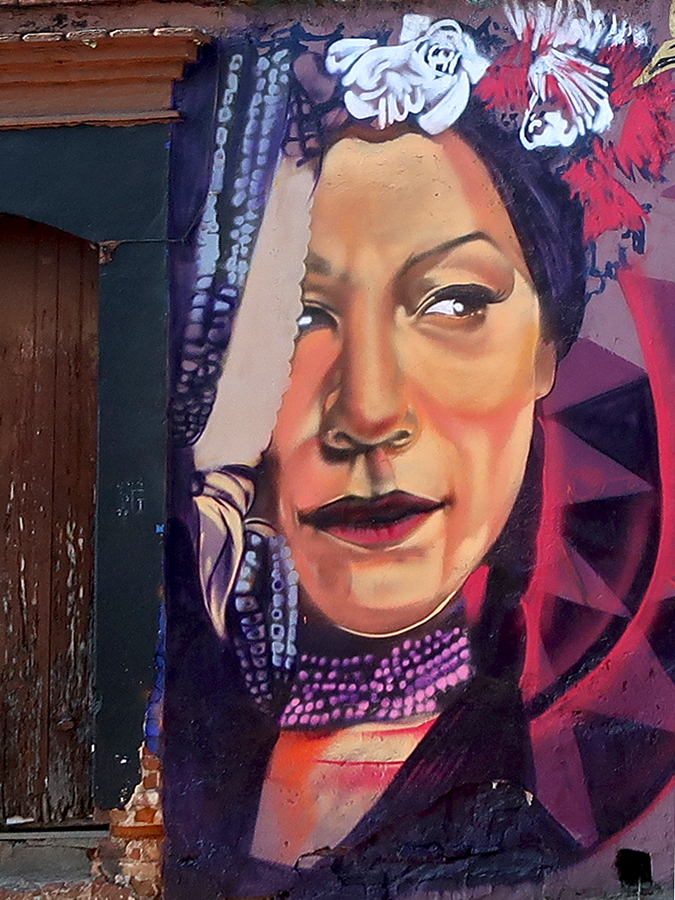
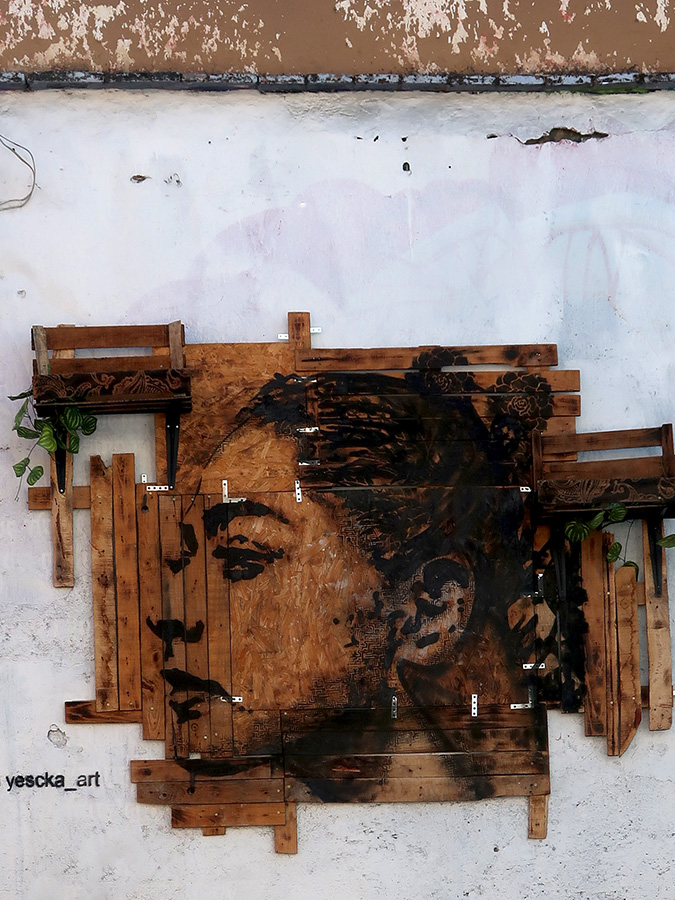
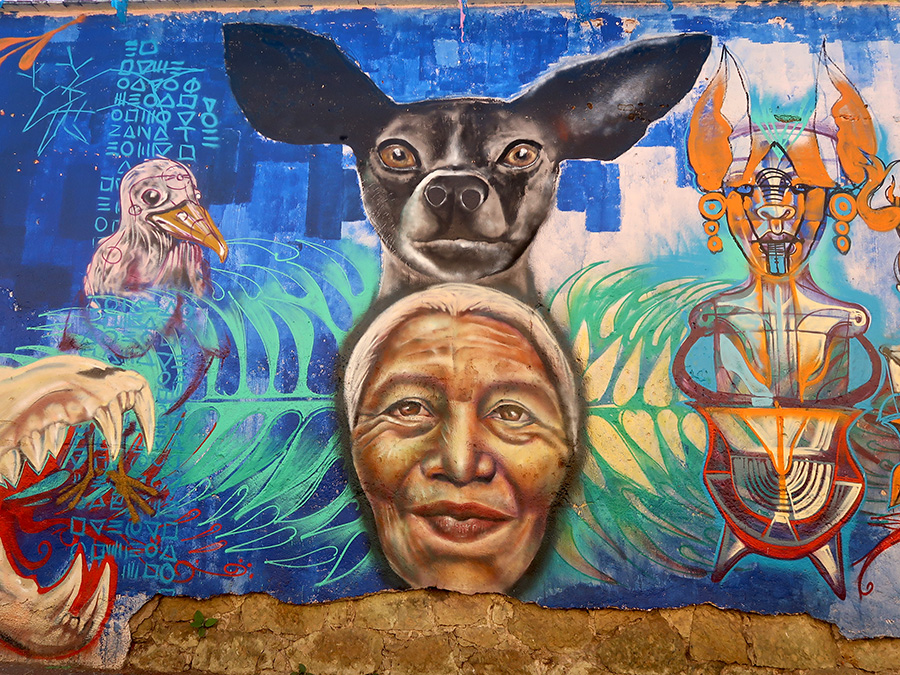
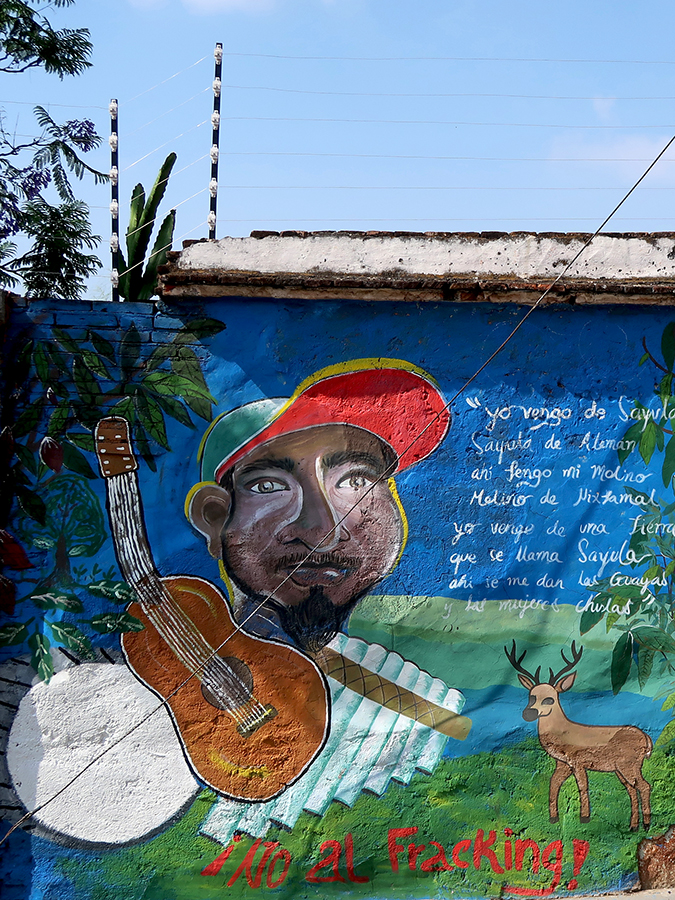
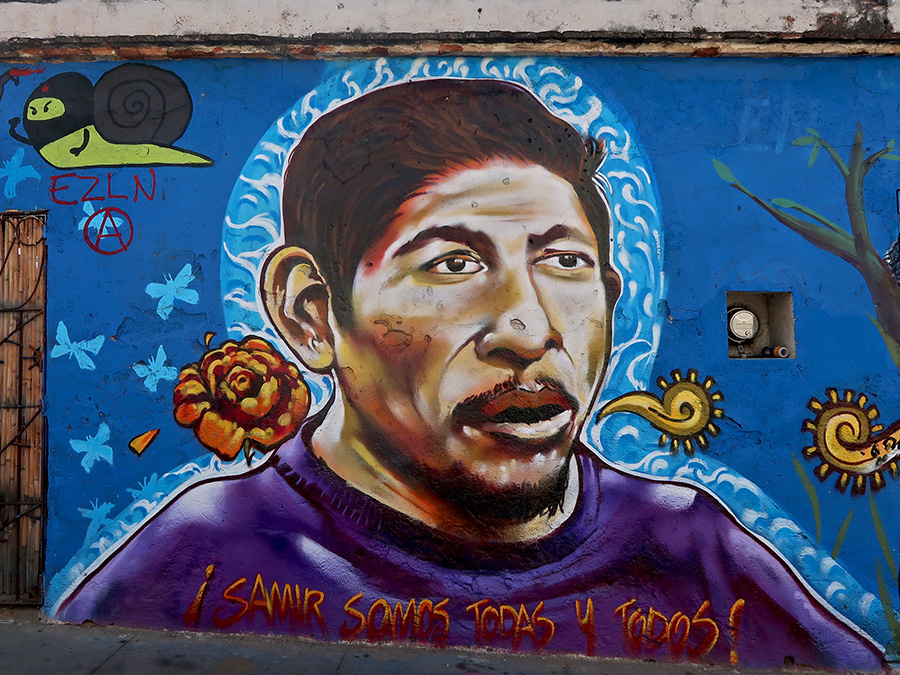
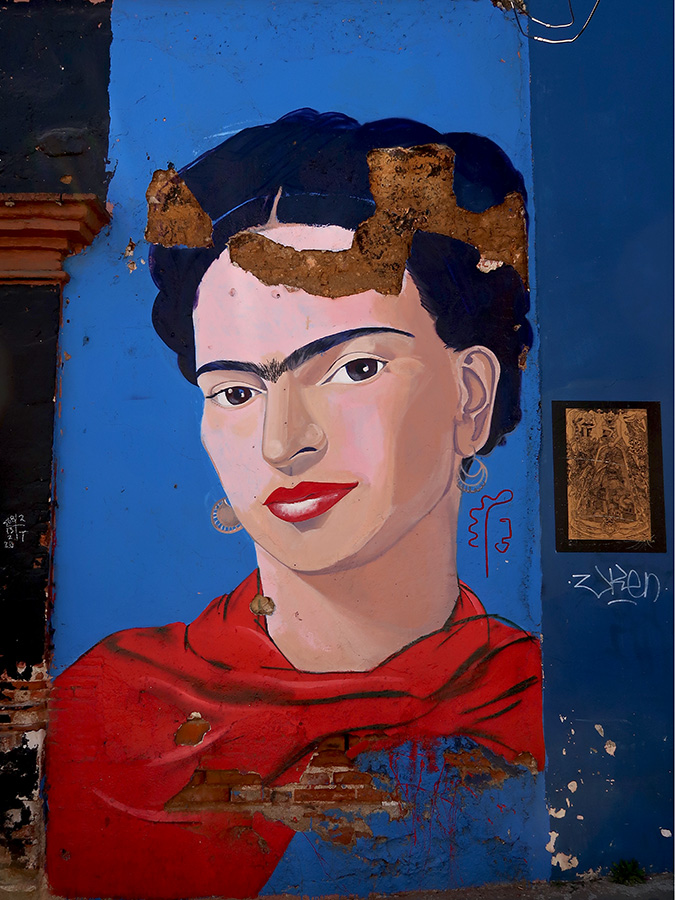
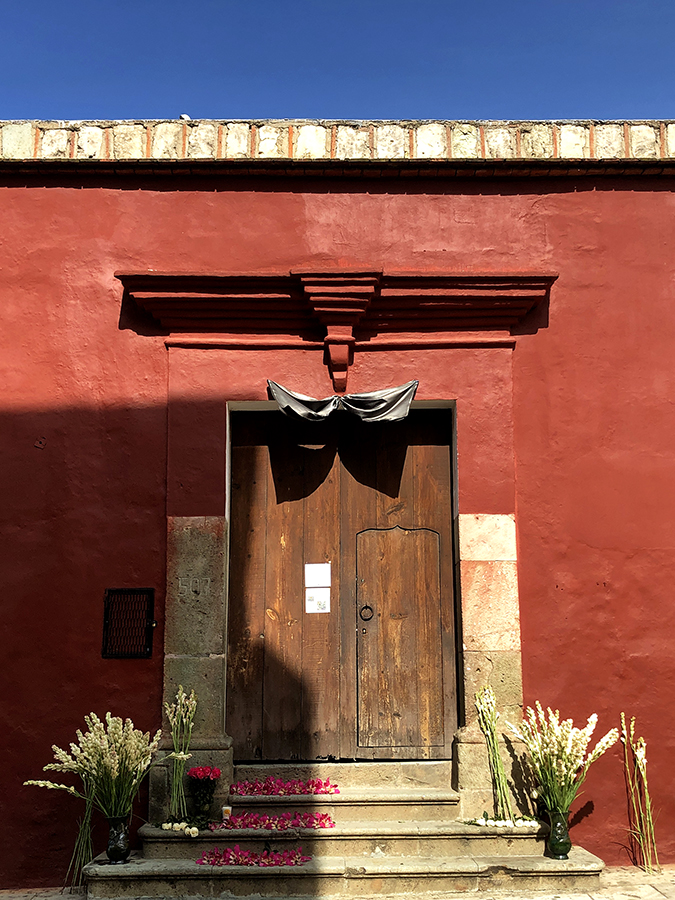
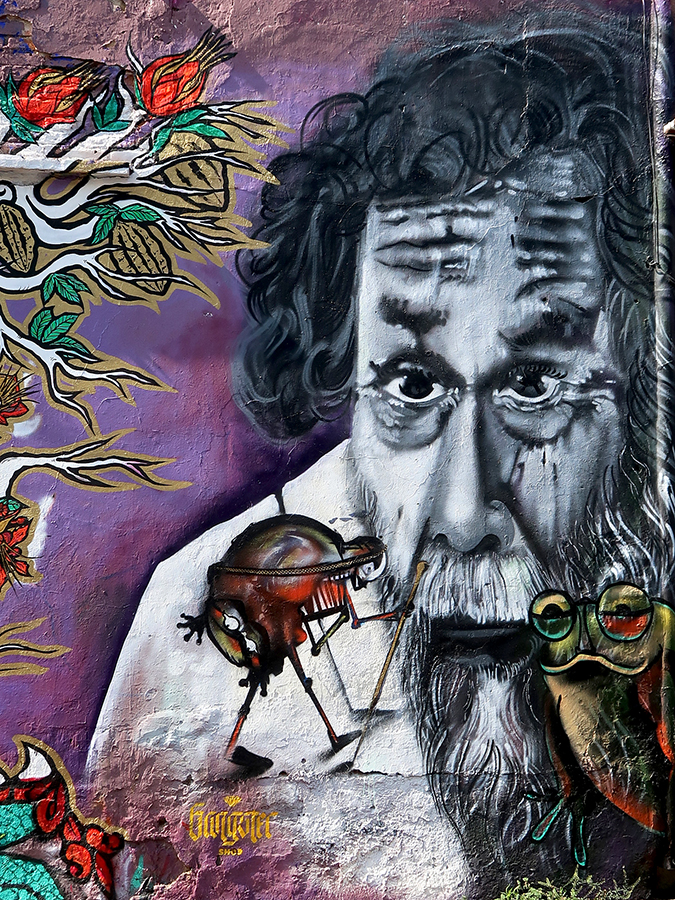
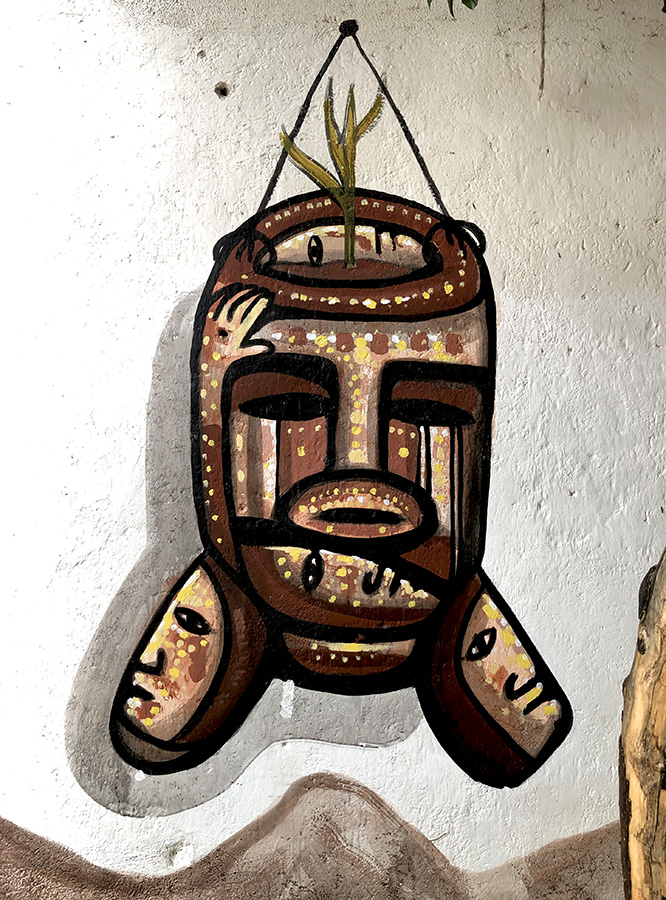
Over these seemingly countless Covid-19 months, instead of frequently running into friends on the streets, these are the familiar faces that make me smile and help keep me feeling rooted to place.

They may not talk, but they do speak to me.

Read Full Post »

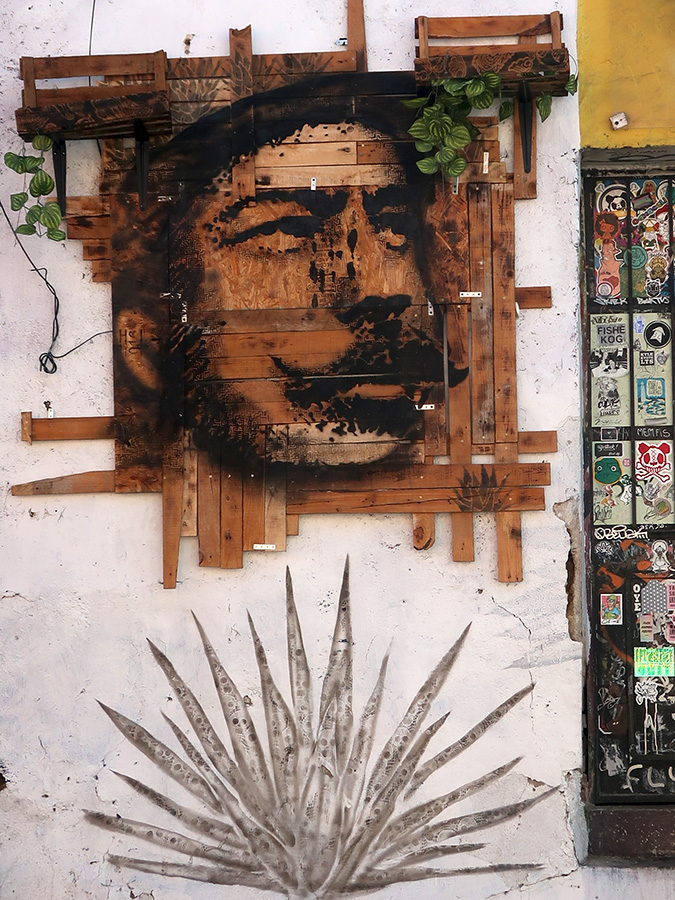
This morning, the steps leading into the Instituto de Artes Gráficas de Oaxaca (IAGO) were a reminder that it was one year ago today that Oaxaca and the world lost artist, philanthropist, and fighter for social justice and the environment, Francisco Toledo.

The Maestro can still be seen along the streets of Oaxaca — his creative spirit lives on.

Read Full Post »

Entering La Cosecha Oaxaca farmer’s market, look to the left and you will see…

… murals by Ulises Martinez celebrating the gift of maíz.

Read Full Post »

Beginning tomorrow, Oaxaca’s Covid-19 status moves down to Semáforo Amarillo (yellow traffic light) — meaning that in the state of Oaxaca one is now at medium risk for contracting the virus. The methodology used by the federal government to go from one color traffic light to another has expanded and is now based on criteria having to do with case numbers, reproduction rates, percentage of positivity, hospitalizations, hospital occupancy rates, and mortality percentage per 100,000 people. However, judging from comments on the Facebook page of the Servicios de Salud de Oaxaca (Oaxaca Health Services), it’s a controversial move (my translation):

  • With so much infected and now we are going to yellow traffic light?
  • They are not real figures, many towns do not appear [on the case list] even though there are new cases.
  • Covid is still active, the only thing that changed is that they gave you permission to go out and look for it.
  • It makes a whole economic political show without caring about the health of the Oaxaqueños.

According to the government’s corona virus website, yellow means all work activities are allowed and public spaces can be open — albeit all activities must continue to be carried out with basic preventive measures (masks, hand hygiene, social distancing) and consideration for people at higher risk. However, it won’t mean the reopening of schools; that has to wait for the green light.

In the meantime, I am thrilled with my new Covid-19 themed clay sculpture by Concepción Aguilar, a member of the iconic Aguilar family of potters from Ocotlán de Morelos. It was a “thank you gift” from the Support for the Folk Artists of Oaxaca, Mexico fundraising effort. The artisans are an integral part of the specialness of Oaxaca. Make a contribution, if you can!

Read Full Post »

What can I say?

I am so…

With…

From yesterday’s walk, the walls seemed to read my mind.

Read Full Post »

Conventional wisdom in Oaxaca: “For everything bad, drink mezcal; for everything good, you also should.”
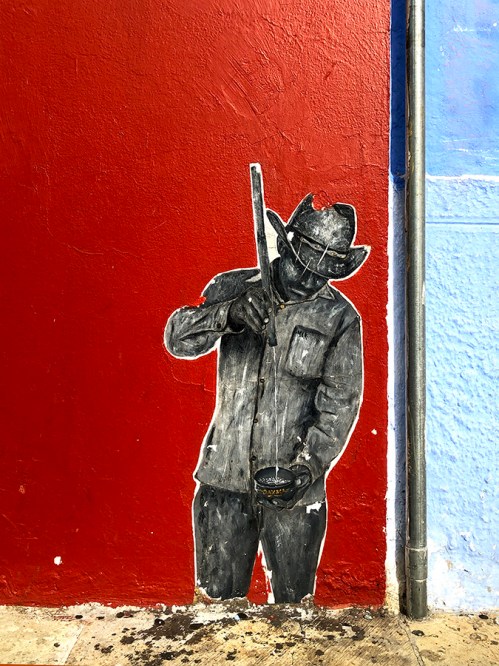
Lest we forget, the walls of Oaxaca are always there to remind us.

My copitas (little cups) by maestro Vicente Hernandez are always ready for a gotita (a little drop) or two on good days, bad days, and especially days when friends stop by.
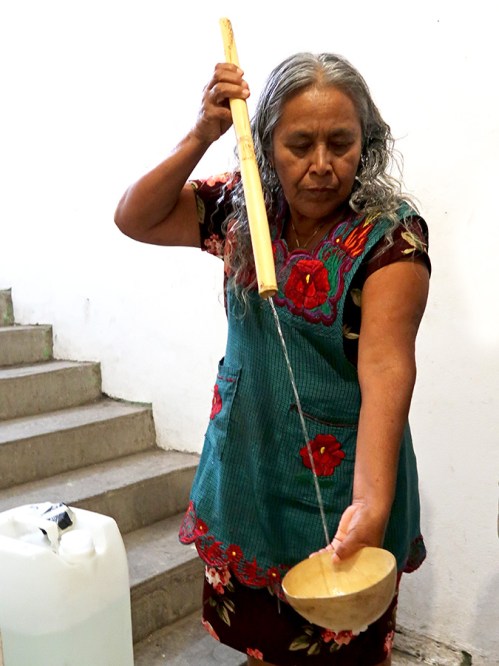
Day trips to my favorite mezcal making villages and their mezcaleros, like Berta Vásquez (above) in San Baltazar Chichicapam, were frequent enough to keep the liquor cabinet stocked with a variety of artisanal mezcal made from one or more kinds of maguey (AKA, agave) — arroqueño, barril, cuixe, espadín, jabalí, tepeztate, tobalá, and tobasiche, to name a few!

Alas, since Covid-19 hit the scene, many of the villages are closed to outsiders and, even if they were open, I wouldn’t go — for their health and safety and mine.

However, mezcal aficionado and tour guide Alvin Starkman came to the rescue. Through him, I was able to buy five bottles of mezcal from several different villages and he delivered!

In the event you are trying to read the labels, left to right: Tobalá, Manuel Méndez, San Dionisio Ocotopec; Mezcal destilado con mota (yes, it’s a thing), Rodolfo López Sosa, San Juan del Río; Arroqueño, Fortunato Hernandez, San Baltazar, Chichicapam; Tepeztate, Manuel Méndez, San Dionisio Ocotepec; Espadín, Celso Martinez, Santiago Matatlán.

¡Para todo mal, mezcal; y para todo bien, tambíen!

(ps) This just in! Mezcal Tour Supports Advancement of Indigenous Women — an article about the wonderful ongoing work the above mentioned Alvin Starkman, his wife Arlene, and Mezcal Educational Excursions of Oaxaca are doing.

Read Full Post »

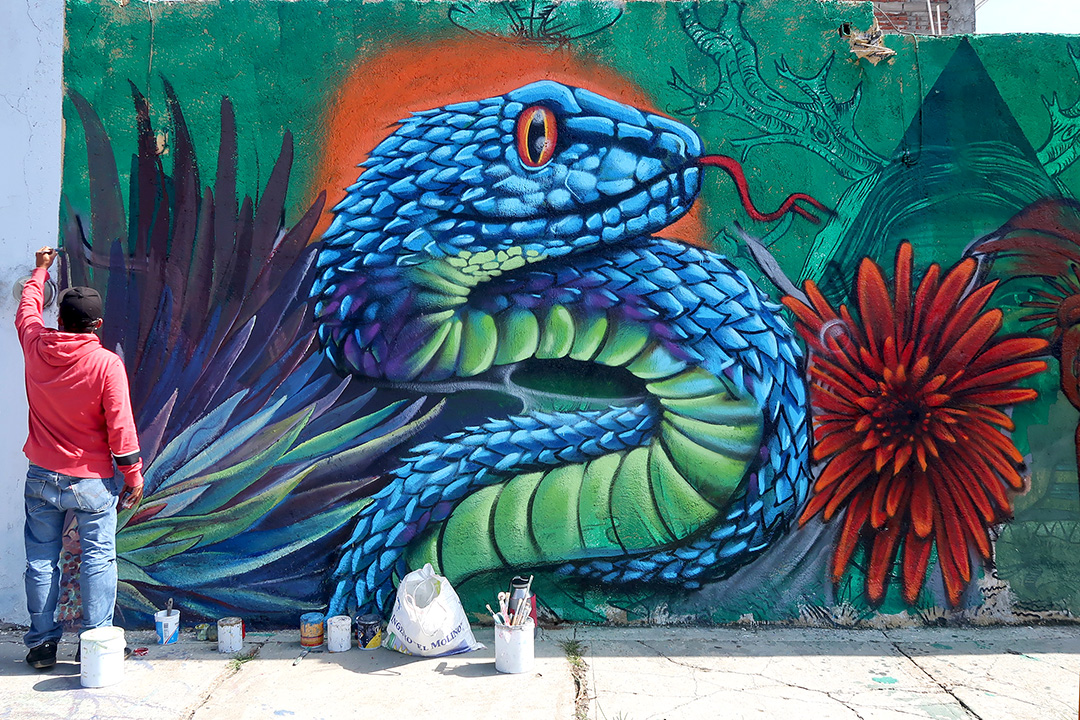
A mural in progress. Jorge kept working…

… while Javier paused to chat and pose.

Also seen August 4, 2020 in Barrio de Jalatlaco, this time on Alianza.

Read Full Post »
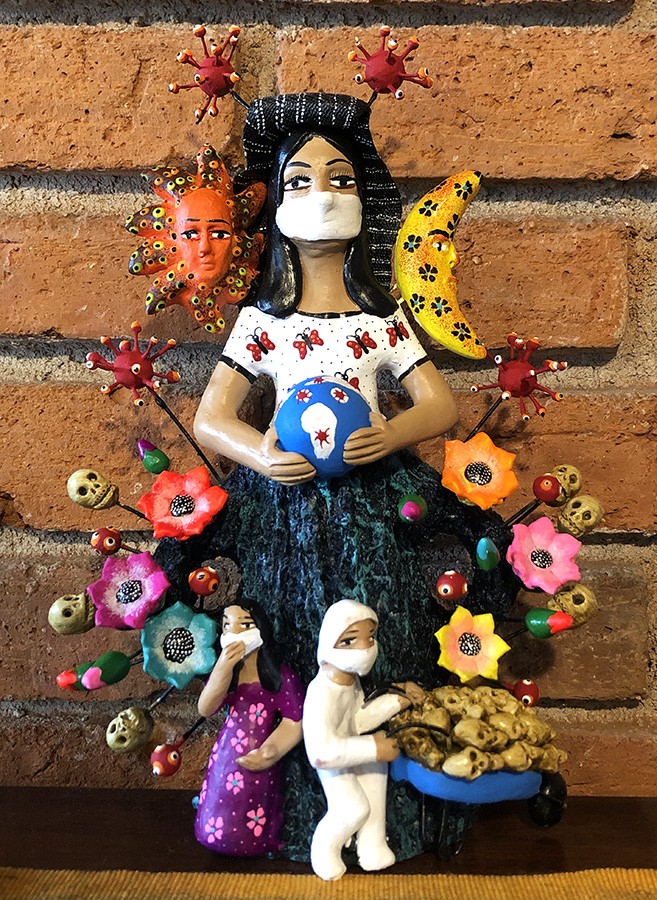
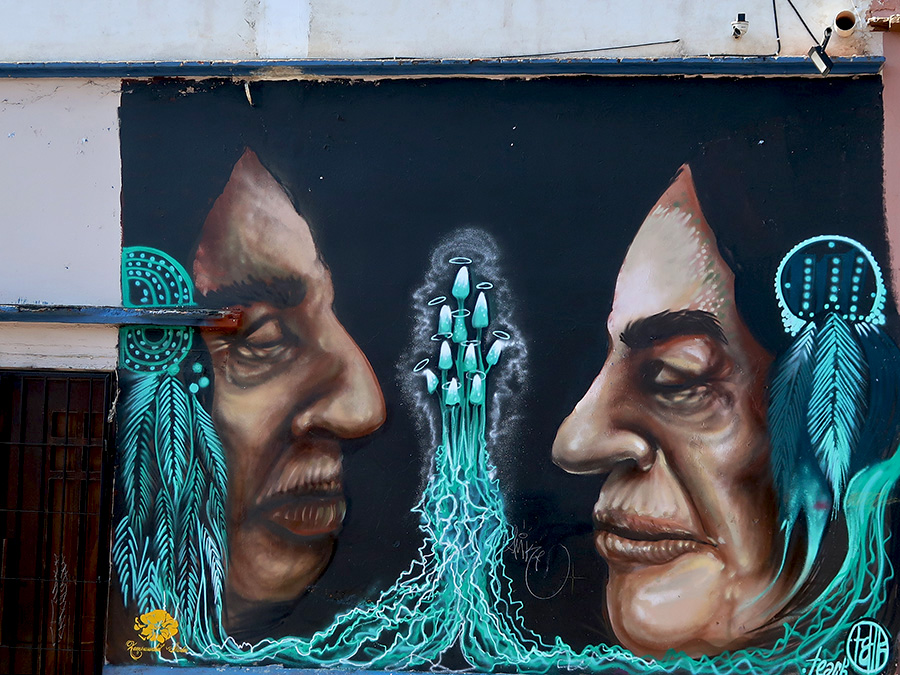
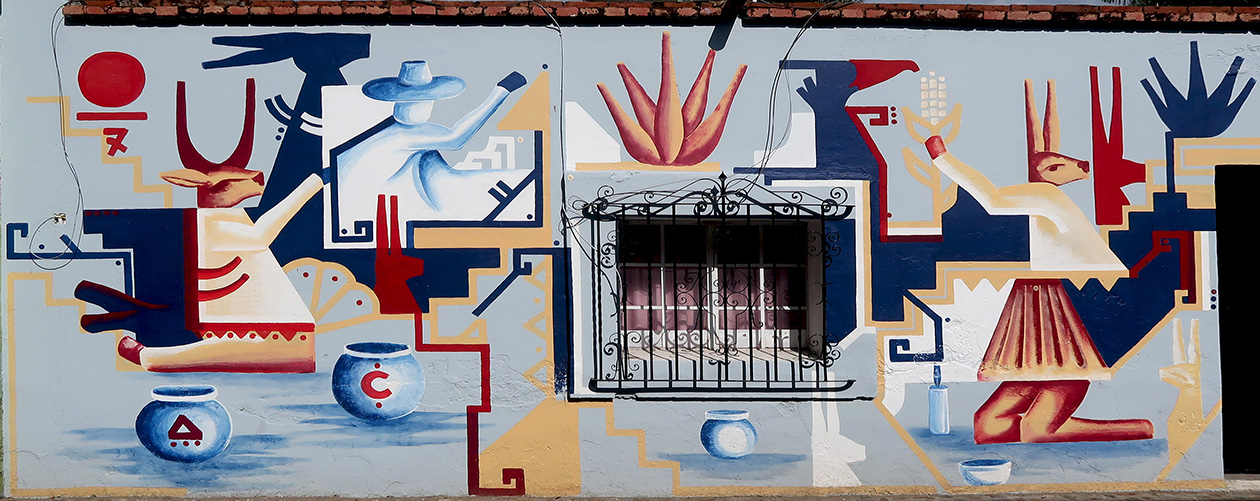
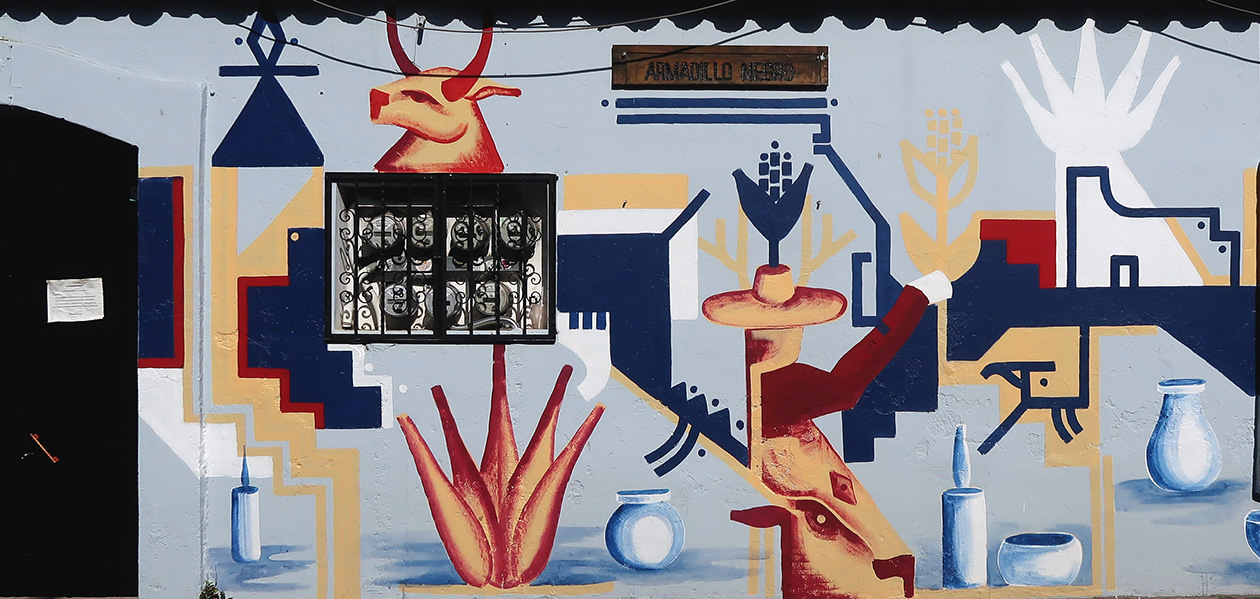
Oaxaca sings in the rainy season. Afternoon clouds gather, the sky darkens, wind picks up, thunder rumbles, heaven sinks closer to earth, and, if Cocijo is answering prayers, the sound of rain falling — El canto del agua; The song of water.

I knew the minute I saw this mural that it was the work of Fabián Calderón Sánchez (Sanez). Over the years, I’ve been captivated by and posted images of his thought provoking, creative, and powerful uses of indigenous imagery. The facade of El Armadillo Negro restaurant on Calle del 5 de mayo 307, Barrio de Jalatlaco, seen on August 4, 2020.

Read Full Post »
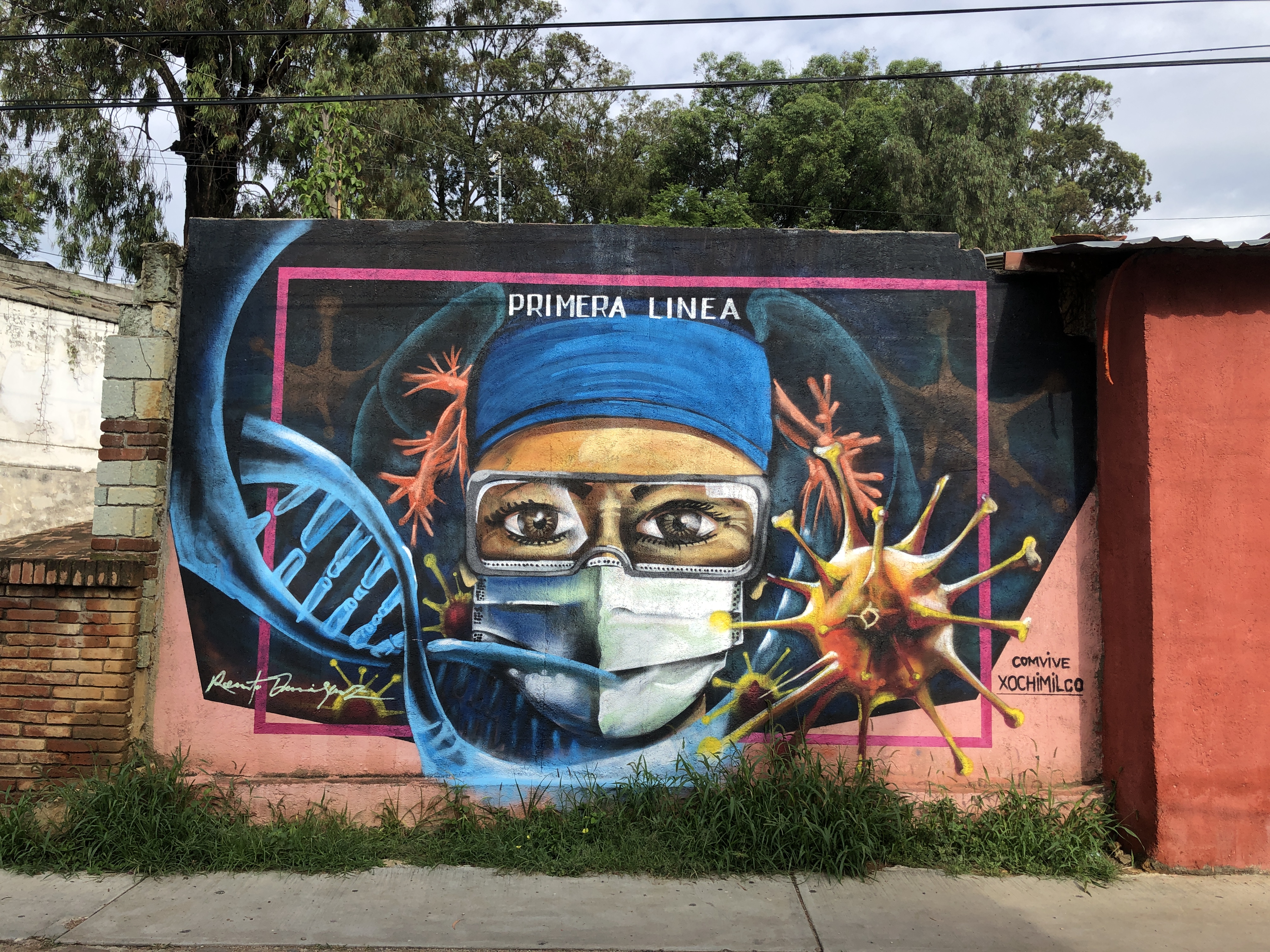
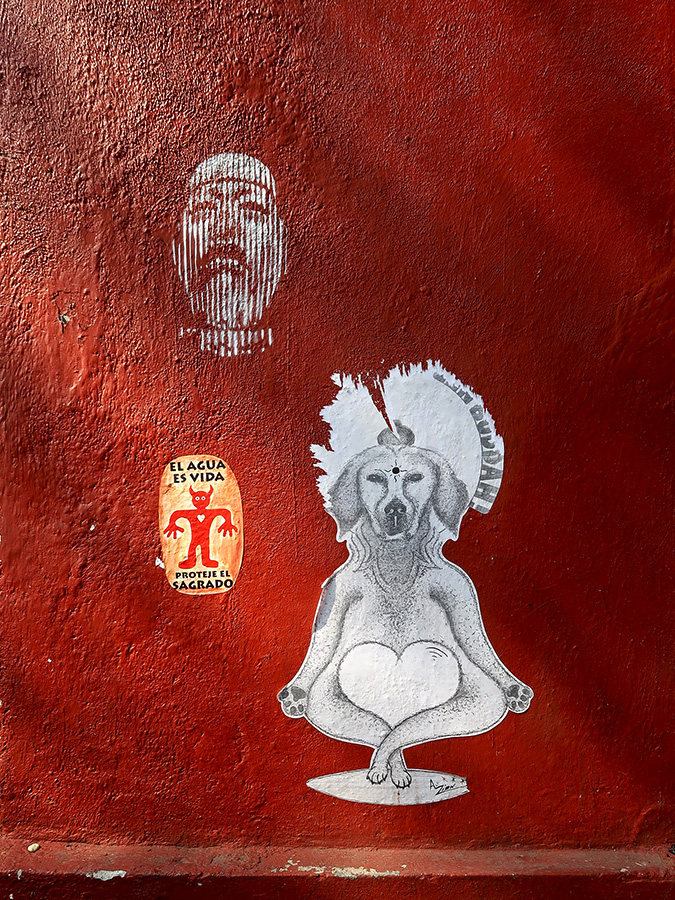
A moment of Zen…

Brought to you by a wall in Oaxaca.

Read Full Post »
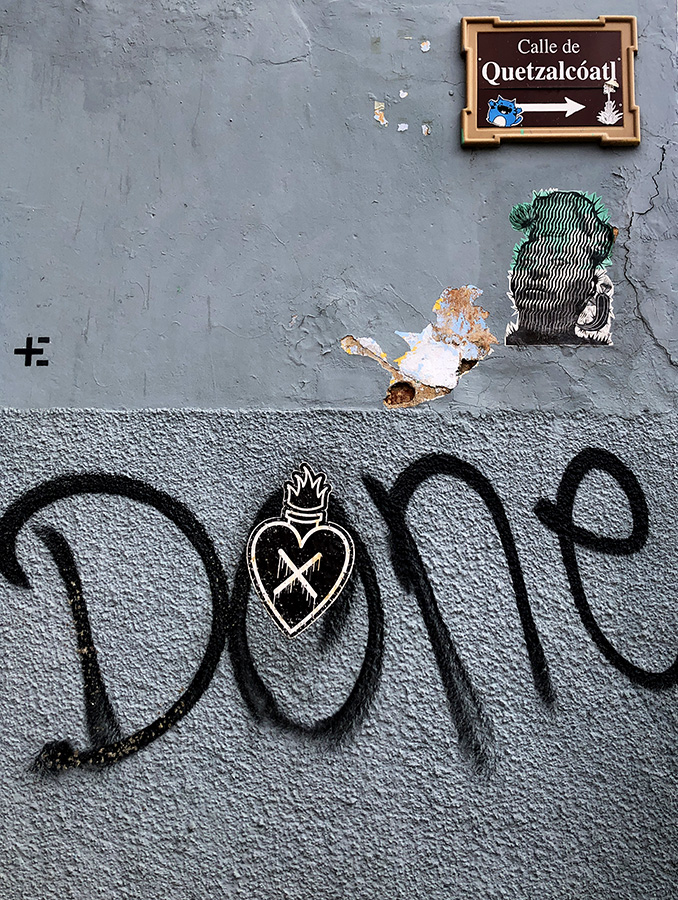
Back in April, I received a message from my hometown library with the request, Help us tell the story of what happened during the COVID-19 pandemic in Mill Valley. A light bulb turned on, my brain went into librarian/archivist mode, and I thought, we should do that here in Oaxaca. What better way to bring the Oaxaca Lending Library community, both here in Oaxaca and those currently scattered around the world, together and provide a venue to share thoughts and feelings, document daily life, and unleash creativity. And, when this nightmare is over, the OLL will have joined an international effort by public and academic libraries, archives, historical societies, and museums to preserve slices of life from this historic time for future community members and researchers to ponder.

Thus, we formed a small committee, met remotely, and issued our own call for submissions. Members and friends, be they here or there, have been asked to submit photographs, stories in prose or verse, and videos. The response has been beyond my wildest dreams and I invite you to view the most recent edition of Archiving the Pandemic in Oaxaca: How will this time be remembered? The contributions are revealing in a variety of happy, sad, challenging, generous, and talented ways.

July 30, 2020 – Calle de Adolfo Gurrión at 5 de mayo, Oaxaca de Juárez.

The project is ongoing; alas, the pandemic’s end is not in sight. However, my heart is lifted in seeing, reading, and sharing experiences with my Oaxaca Lending Library community and knowing we are part of an international effort to help shape the telling of a community story.

(ps) The QR codes on the image above link to the following articles exposing issues medical personnel are facing battling the virus in Oaxaca:

Read Full Post »
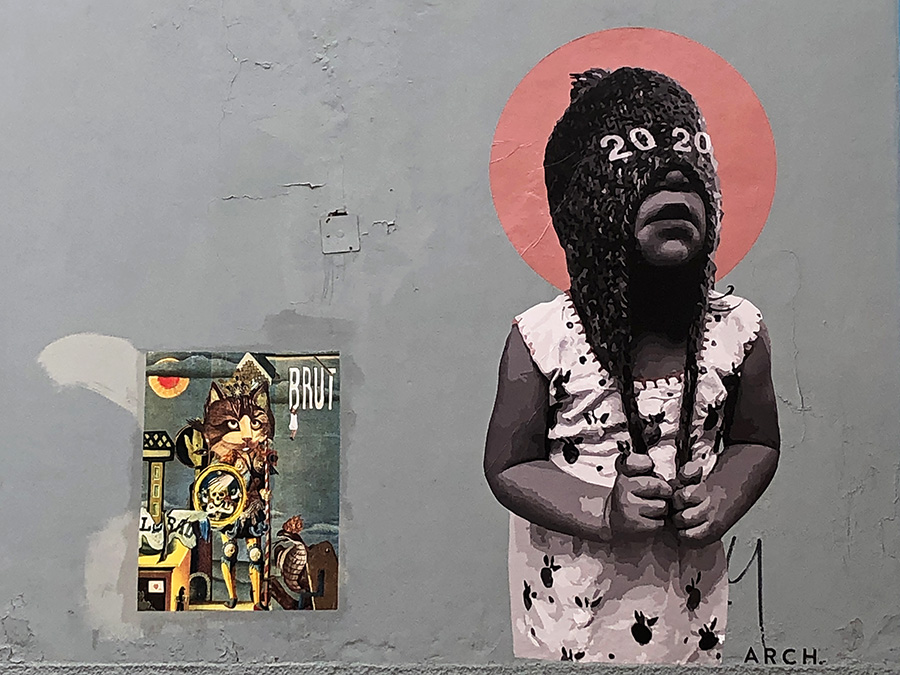
July 2020, living in the time of Covid-19, is almost in the rear view mirror. Oh, how I have been missing July 2019!

July 9, 2019 – Teotitlán de Valle, Patronal festival in honor of La Preciosa Sangre de Cristo.

July 10, 2019 – Teotitlán del Valle, Grupo de la Danza de la Pluma 2019-2021 dancing in honor of La Preciosa Sangre de Cristo.

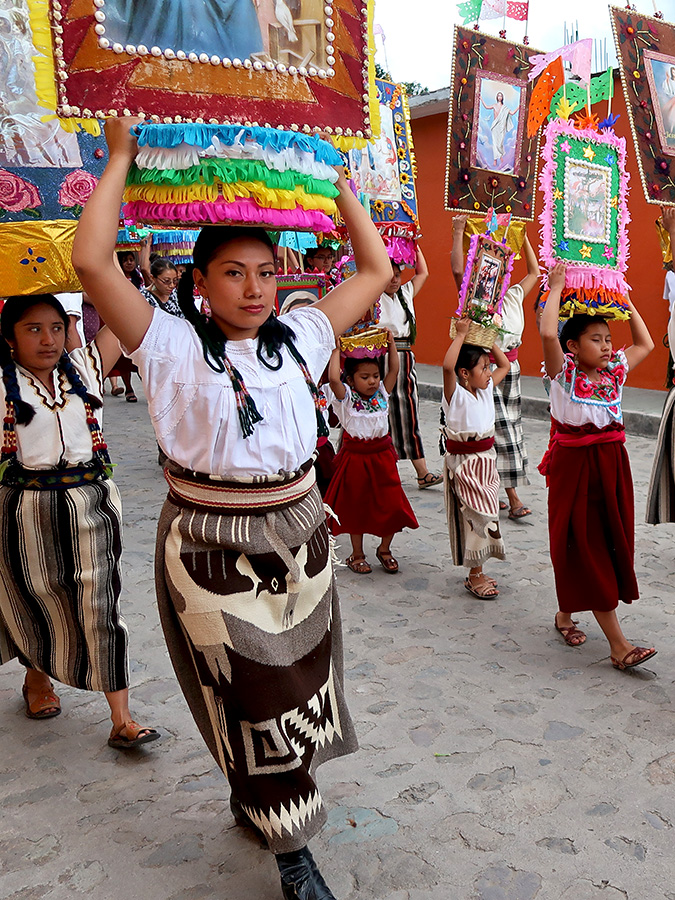
July 12, 2019 – Teotitlán del Valle, Convite inviting everyone to the fiesta celebrating La Preciosa Sangre de Cristo.

July 13, 2019 – Teotitlán del Valle, Grupo de la Danza de la Pluma 2019-2021 dancing in honor of La Preciosa Sangre de Cristo.

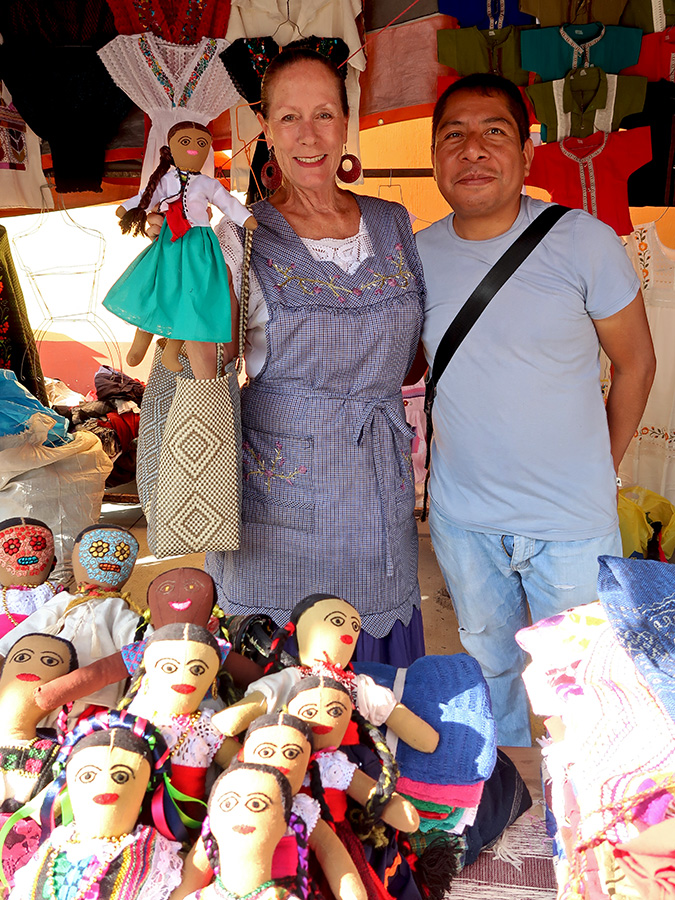
July 14, 2019 – Tlacolula de Matamoros Sunday market, Kalisa Wells at the stall of doll maker, Armando Sosa.

July 16, 2019 – Santa Catarina Minas at the mezcal palenque of Félix Ángeles Arellanes, Mezcal El Minerito.

July 18, 2019 – Oaxaca de Juárez, Carina Santiago at a cocinera tradicional (traditional cook) demonstration.

July 19, 2019 – Oaxaca de Juárez, Mole Festival at the Jardín Etnobotánico (Ethnobotanic Garden).

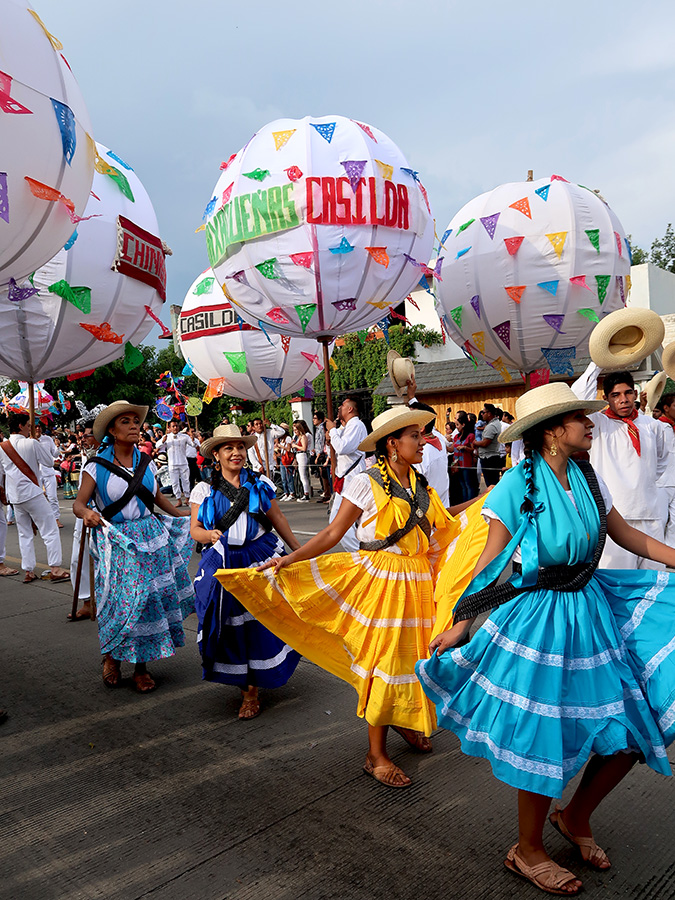
July 20, 2019 – Oaxaca de Juárez, Guelaguetza parade of delegations.

July 21, 2019 – San Antonio Cuajimoloyas, Feria Regional de Hongos Silvestres (Regional Wild Mushroom Fair).

July 22, 2019 – Las Peñitas Reyes Etla, Guelaguetza.

July 25, 2019 – Oaxaca de Juárez, procession announcing the Guelaguetza Muy Especial by the Down’s Syndrome folkloric dance troupe.

July 26, 2019 – Oaxaca de Juárez, procession by the Asoc. de Juchitecos radicados en Oaxaca.

July 27, 2019 – Oaxaca de Juárez, young participants in the second Guelaguetza parade of delegations.

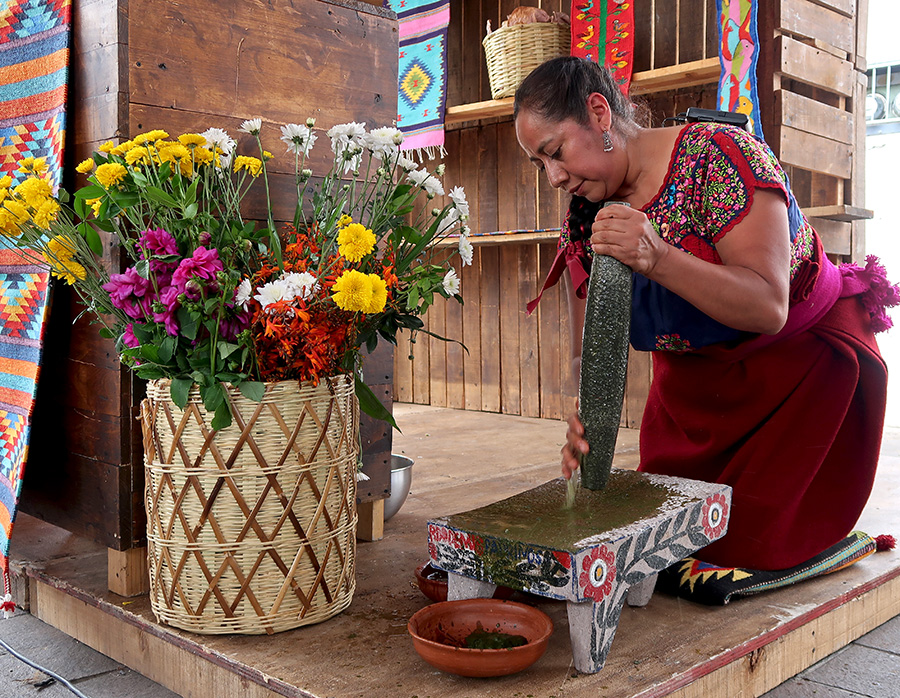
July 31, 2019 – Oaxaca de Juárez, making tejate at the Feria del Tejate y el Tamal in the Plaza de la Danza.

A reminder that we need to appreciate and be present to the present; it will never come this way again.

Read Full Post »

After only two weeks of semáforo naranja (orange traffic light), as of yesterday, the federal government ordered the State of Oaxaca back to semáforo rojo (red traffic light) in the ongoing battle with Covid–19.

To tell the truth, the move to orange had many of us scratching our heads. Closely following the data released by the state health department, we wondered if Oaxaca really was experiencing a downward trend in the four metrics used to move from one traffic light to another: numbers of new cases, hospital occupancy trends, current hospital occupancy, and percentage of positive cases.

As for cubrebocas — a misnomer, if there ever was one for reasons to follow: Sunday’s stroll about town revealed 15% of people not wearing masks; 50% wearing them correctly; 35% wearing the “cubreboca” ONLY over their mouth, just like the name implies. In Cuba they are called “nasobuco,” indicating they need to cover both nose and mouth — a much better name, methinks!

By the way, according to Richard Grabman over at The Mex Files, “85% of Mexicans are wearing masks in public, compared to 67% of people in the US.”

Read Full Post »

The Secretaría de las Culturas y Artes de Oaxaca (Secretariat of the Cultures and Arts of Oaxaca) and the Comité de Autenticidad (Authenticity Committee) have selected this year’s Guelaguetza delegations from video taken from the years 2017 to 2019. The performances will be broadcast by CORTV, both on television and on their Facebook page.

July 20, 2020 – Morning delegations and dances:

7-20 AM

July 20, 2020 – Evening delegations and dances:

7-20 PM

July 27, 2020 – Morning delegations and dances:

7-27 AM

July 27, 2020 – Evening delegations and dances:

7-27 PM

This year’s poster image is the work of Montserrat Alhelí Steck Ortiz and was chosen out of 67 entries. Titled, Trenzando Magía (Braiding Magic), according to this article the artist explained that she wanted to begin with the image of woman as symbol of mother earth and giver of all wealth — exemplified by the peasant working the land and tending Oaxaca’s iconic maguey. The image then illustrates the be-ribboned braids reaching out to capture the joy found in the colors, textures and dances of the eight regions of Oaxaca.

Read Full Post »

« Newer Posts - Older Posts »