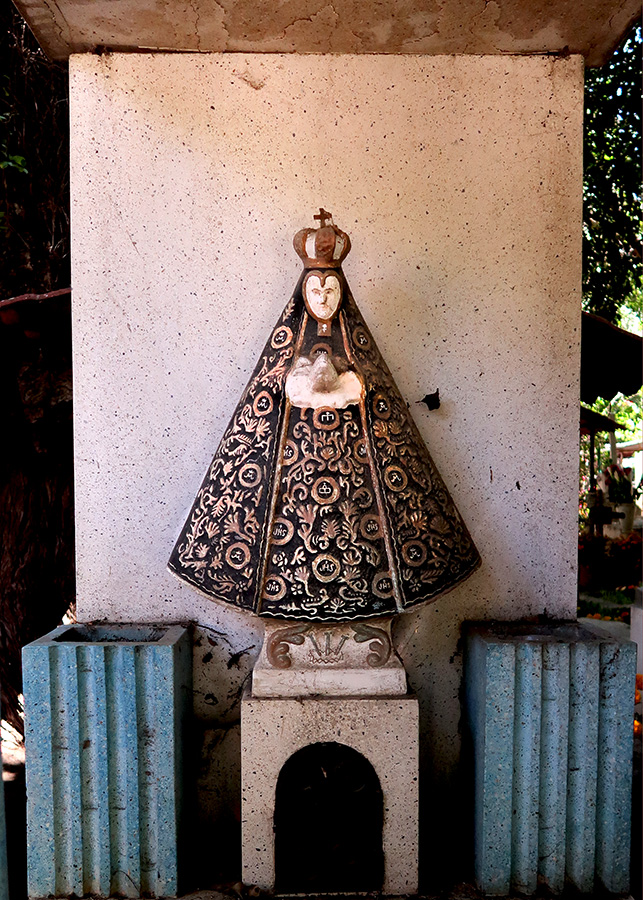
December 18th is a day fit for a queen. It is the day Oaxaca honors her patroness and queen, La Santísima Virgen de la Soledad (Our Lady of Solitude). Always rendered with hands clasped in prayer, this portrayal of the Virgin Mary contemplates the death of her son.
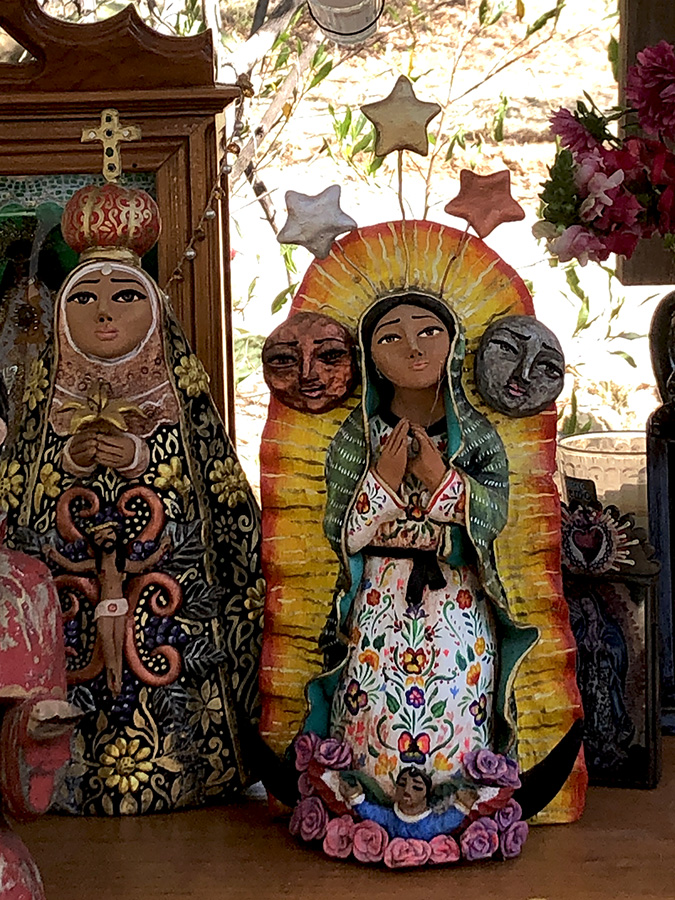
Image of La Virgen de la Soledad on a garden altar at Almú restaurant in San Martín Tilcajete, Oaxaca.
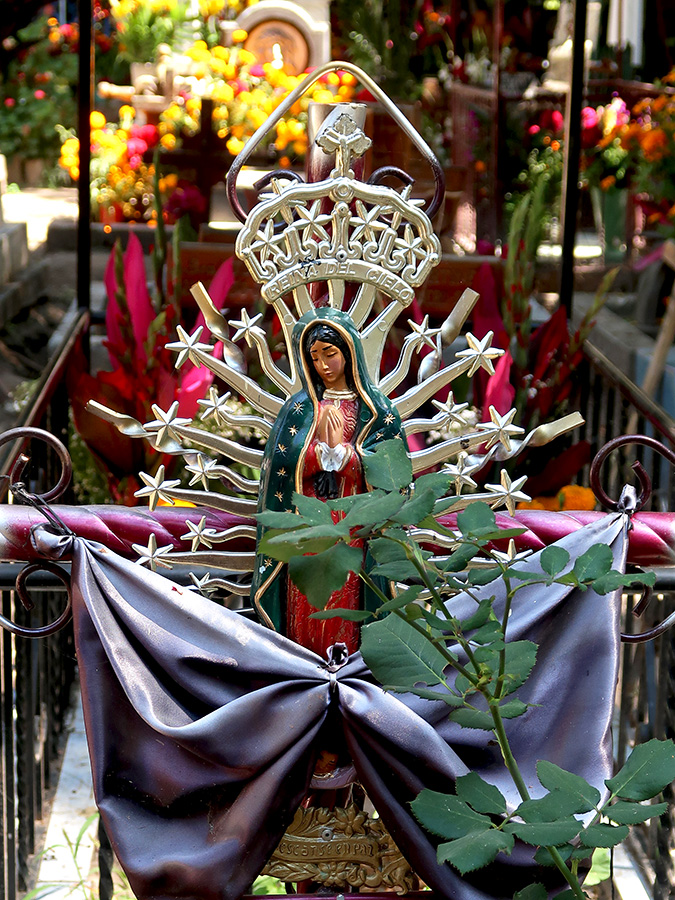
Image of La Virgen de la Soledad at a grave site in Tlacolula de Matamoros, Oaxaca.
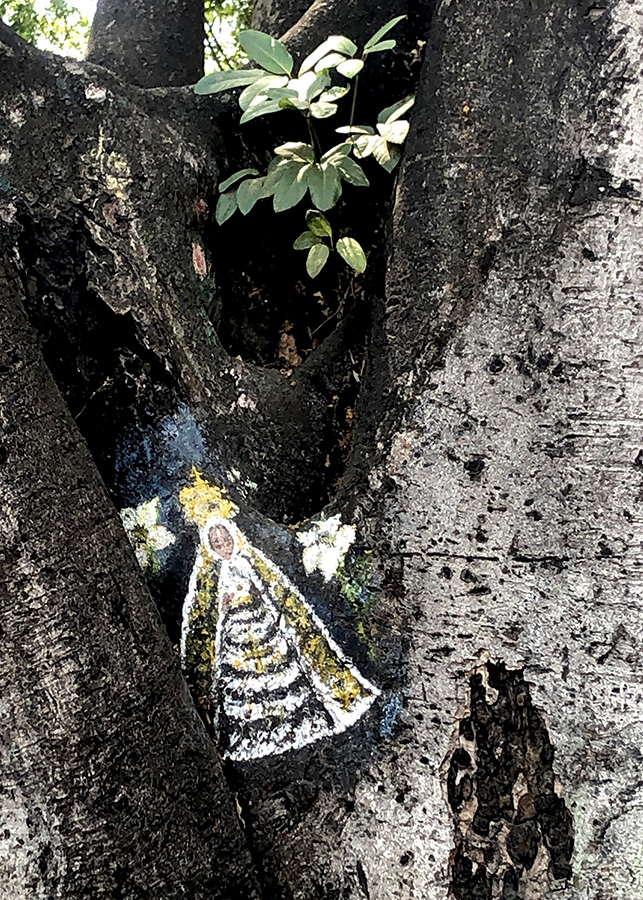
La Virgen de la Soledad painted into the crevice of an Indian Laurel tree in the Zócalo of Oaxaca city.
Though currently 2000 miles away from my Oaxaca home, I’m sending happy feast day wishes to Our Lady of Solitude and the people of Oaxaca.
In Oaxaca, at any time of year, images of la Virgen de Guadalupe (Our Lady of Guadalupe) are never far away.
April 8, 2022 – Wall of a building on Calz. de la República, Oaxaca city.
March 24, 2022 – Wall inside Casa Ocho Regiones, Oaxaca city.
November 2, 2022 – Cemetery in Tlacolula de Matamoros.
February 3, 2022 – Guadalupe (on the right) at the restaurant Almú in San Martín Tilcajete.
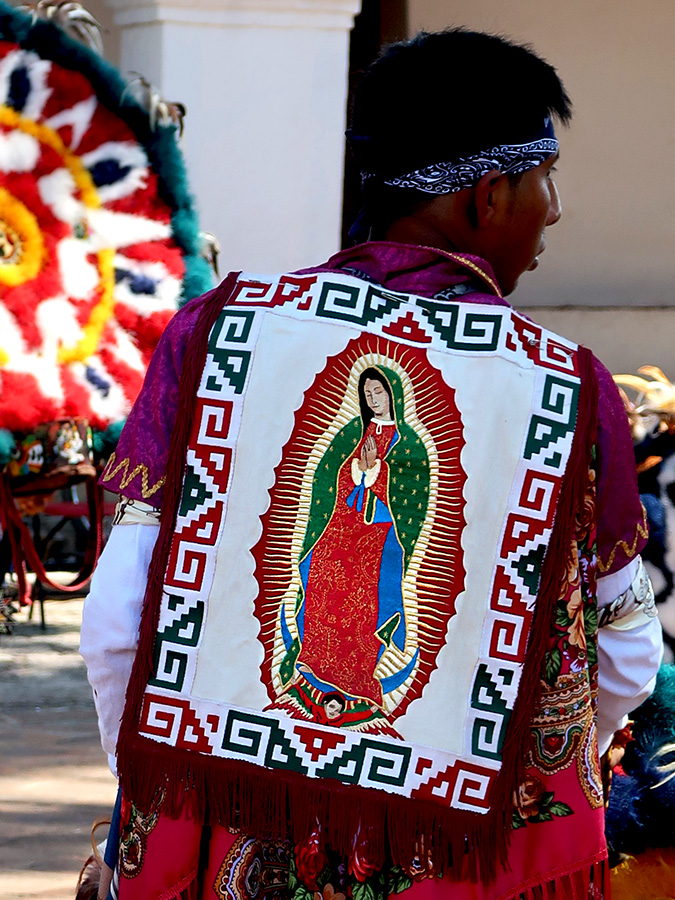
However, today, December 12, is Día de la Virgen de Guadalupe and she and her image are being celebrated — including by the danzantes of Danza de la Pluma Promesa 2022-2024 in Teotitlán del Valle.
The legend of La Virgen de Guadalupe is known to every Mexican, every person of Mexican descent, and probably every foreigner who calls Mexico home. The image of this dark-skinned Virgin Mary who spoke Náhuatl is as imprinted on the national consciousness as she was on Juan Diego’s legendary tilma (cloak).
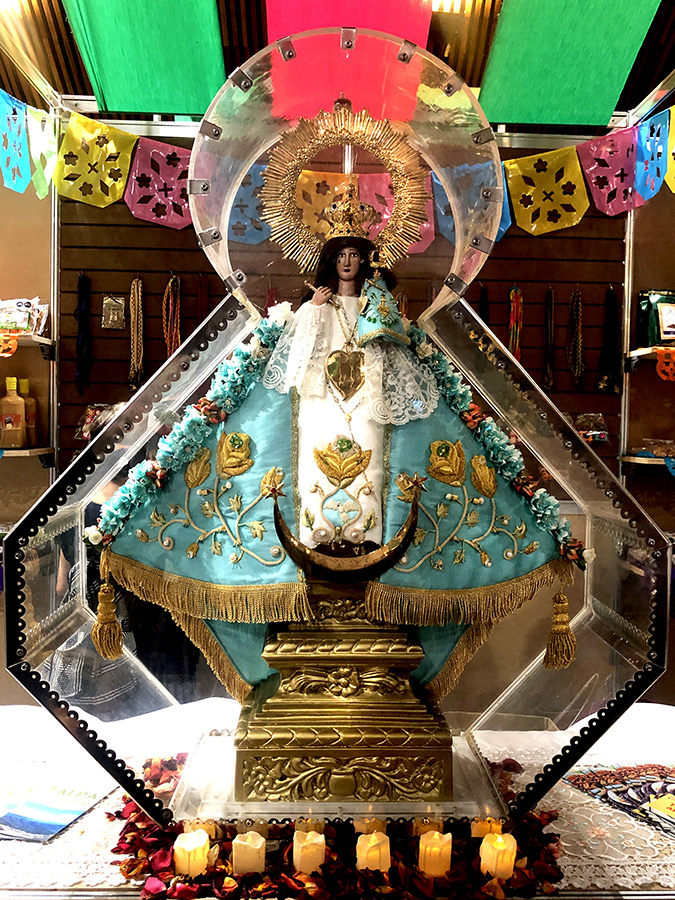
This morning, before dawn broke, the booms of cohetes celebrating Día de la Virgen de Juquila woke me from a dreamy sleep. A rude awakening? Not really. After all these years, the sound makes me smile. The all-bang-no-bling rockets mean something is being celebrated. Since mid November, pilgrims from all over Latin America have been traveling to Santa Catarina Juquila, Oaxaca, Mexico. They arrive by bus, bicycle, motorcycle, on foot, and on their knees to pay homage, give thanks, and ask for blessings in front of the tiny image of la Virgen de Juquila. According to this article, they will continue to make the pilgrimage until December 28.
Image of the Virgin of Juquila on display in the booth of Santa Catarina Juquila at an exposition of Mexico’s Pueblos Mágicos held in Oaxaca.
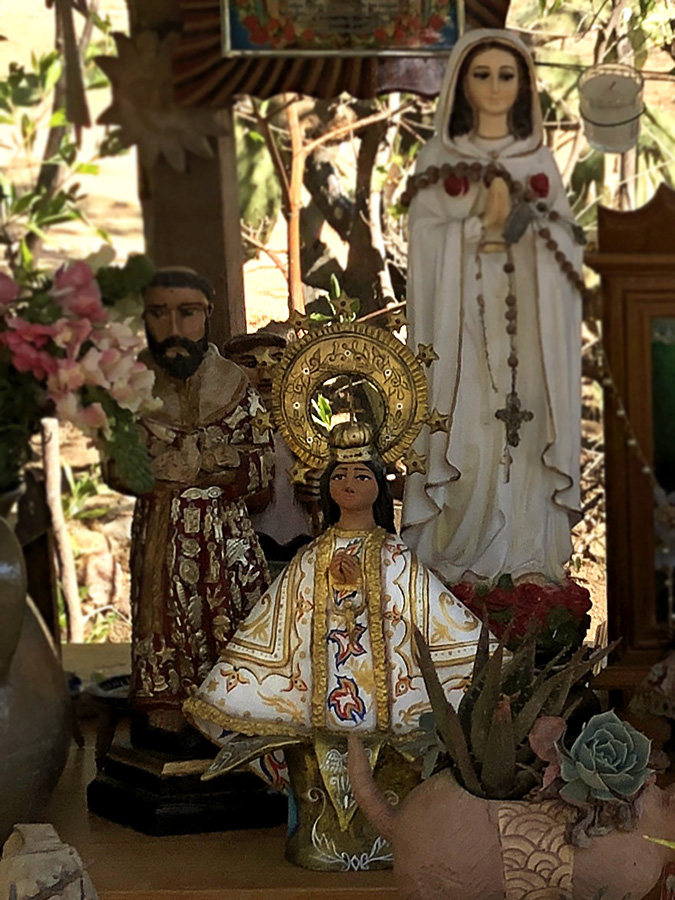
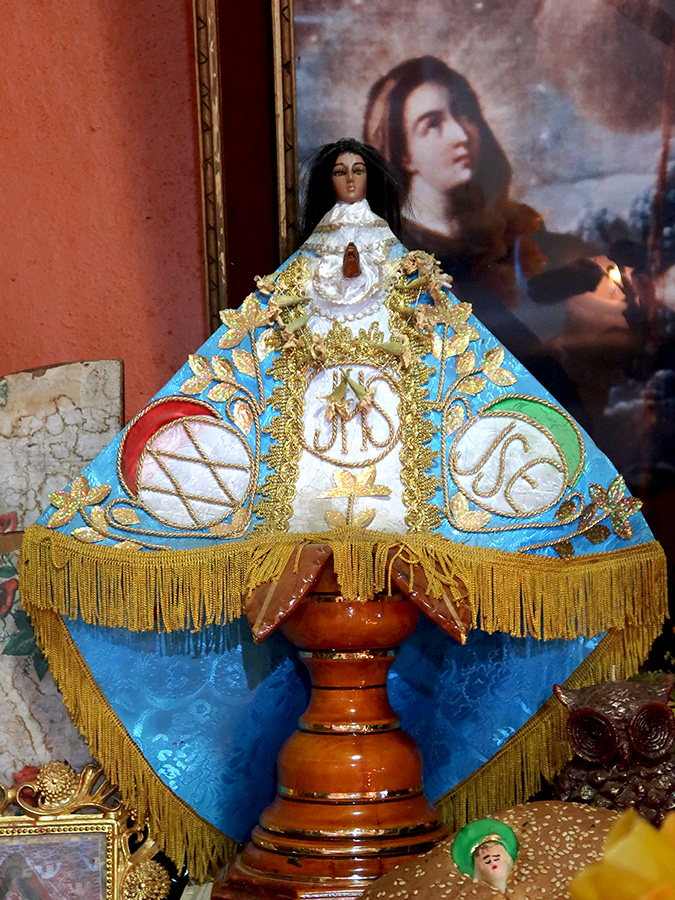
Why do they come? According to legend, in 1633, when a fire burned the Chatino village of Amialtepec to the ground, a small wooden statue of the Virgin Mary was rescued amidst the ashes. She was undamaged, save for her light skin color, which was permanently darkened by the smoke, causing her to more closely resemble the Chatino people, who live in this remote mountainous region between Oaxaca city and the Pacific coast. Local priests declared her survival a miracle and her veneration commenced. However, that wasn’t the end of the story; the priest in the village of Santa Catarina Juquila convinced the “powers that be” that she should be moved to the bigger and better church in Juquila. She, however, had other ideas and returned to Amialtepec. This back and forth continued another three times. Finally, in 1719, La Morenita (the dear dark one), as she had come to be known, gave up her traveling ways and agreed to call Santa Catarina Juquila her permanent home.
Image of the Virgin of Juquila nestled on an altar in the garden of the restaurant Almú in San Martín Tilcajete.
She “is a symbol of love, of protection, of justice, of peace, of respect for human dignity.” And, because of her indigenous roots, “the homage to the Virgin of Juquila is similar to that rendered to the Virgin of Guadalupe, not only in Oaxaca, but also in Puebla, Tlaxcala, State of Mexico, Veracruz and Chiapas, as well as in the United States, for the religiosity of migrants.”
Image of the Virgen of Juquila on the home altar of a family in Teotitlán del Valle.
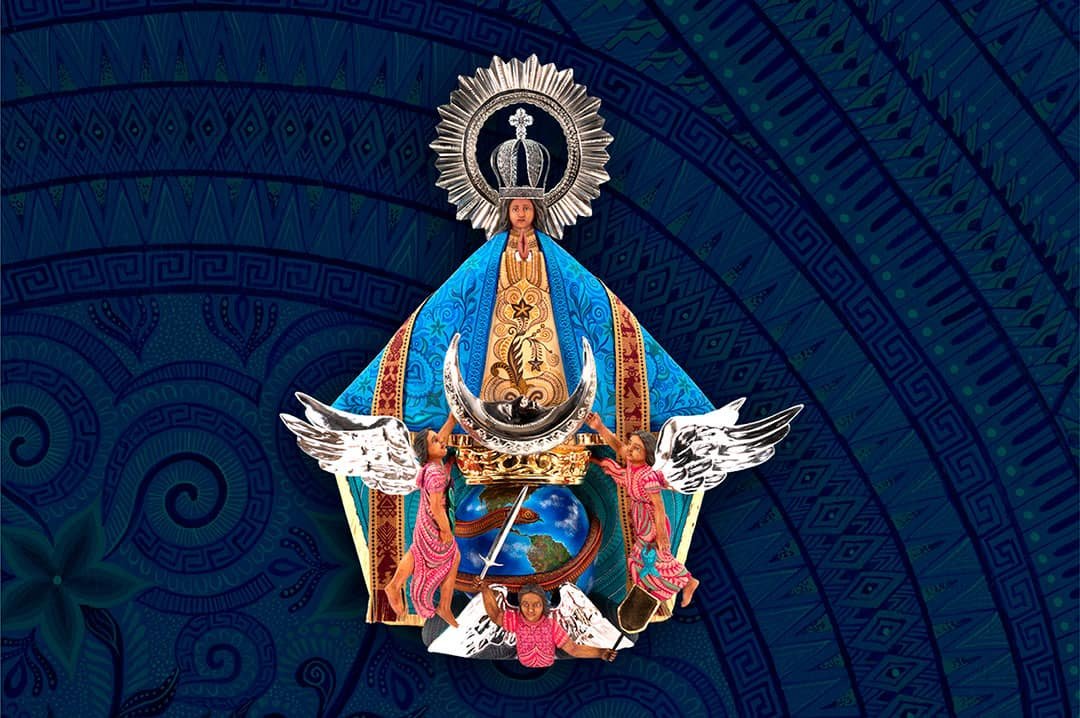
On October 8, 2014, la Virgen de Juquila received a papal coronation — hence the crown seen in images one, two, and four. And, on October 26, 2022, a delegation from Oaxaca traveled to Rome to present Pope Francis with a very special image of la Virgen de Juquila. It was a collaborative work carved and painted in the Jacobo and María Ángeles Workshop in San Martín Tilcajete, with metalwork by Conrado Villegas Alcázar and filigree work by the jeweler José Jorge García García, both from Oaxaca city. Her vestments were made by Elsa Abigail Mendoza Antonio from Santo Tomás Jalietza.
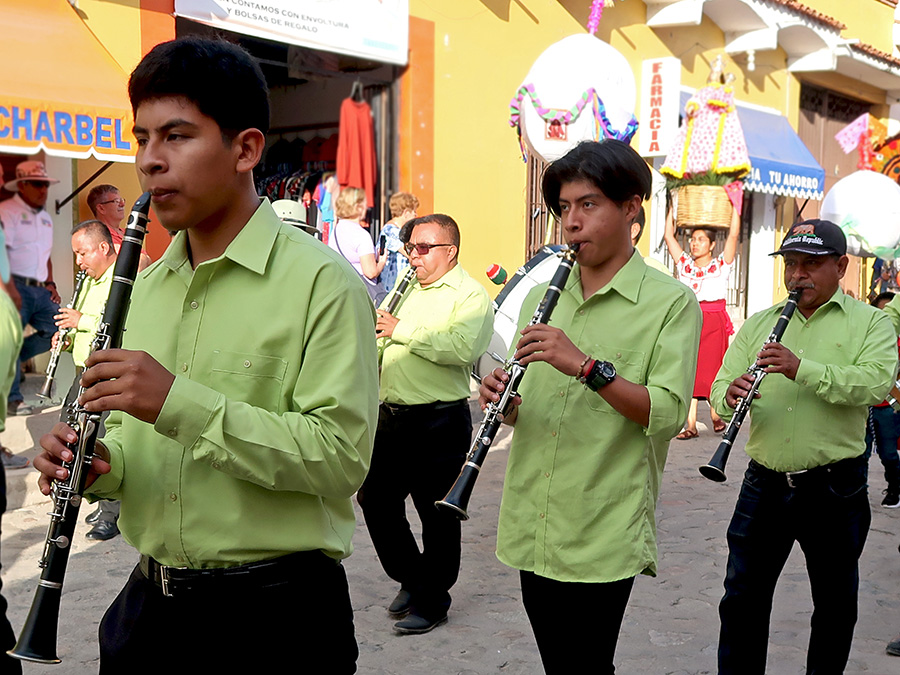
Why I love Oaxaca, reason number 2,022 — music is heard everywhere and seemingly all the time. November 22 is Día de Santa Cecilia who, among other things, is the patron saint of musicians.
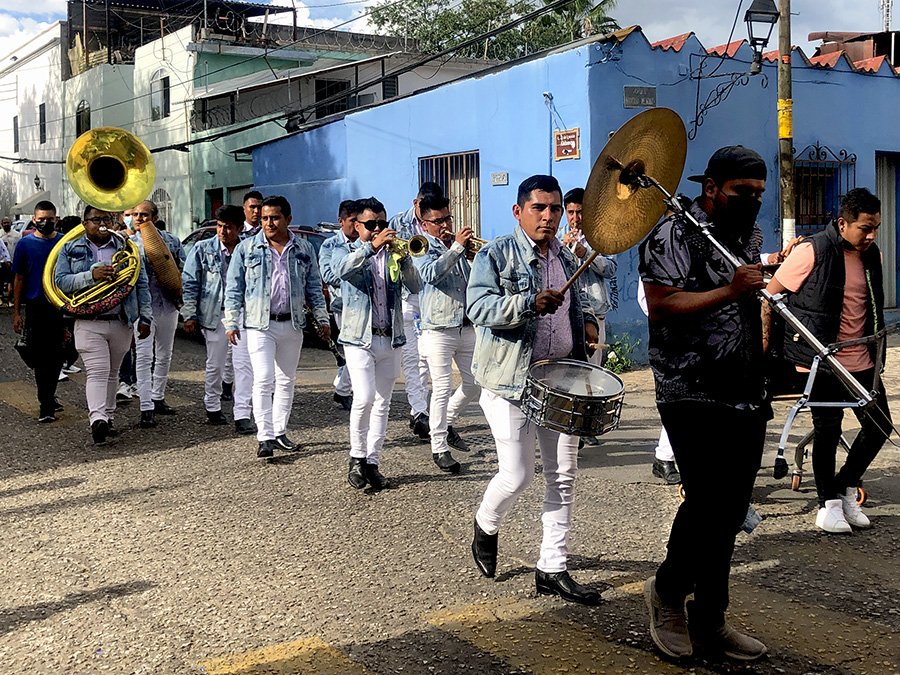
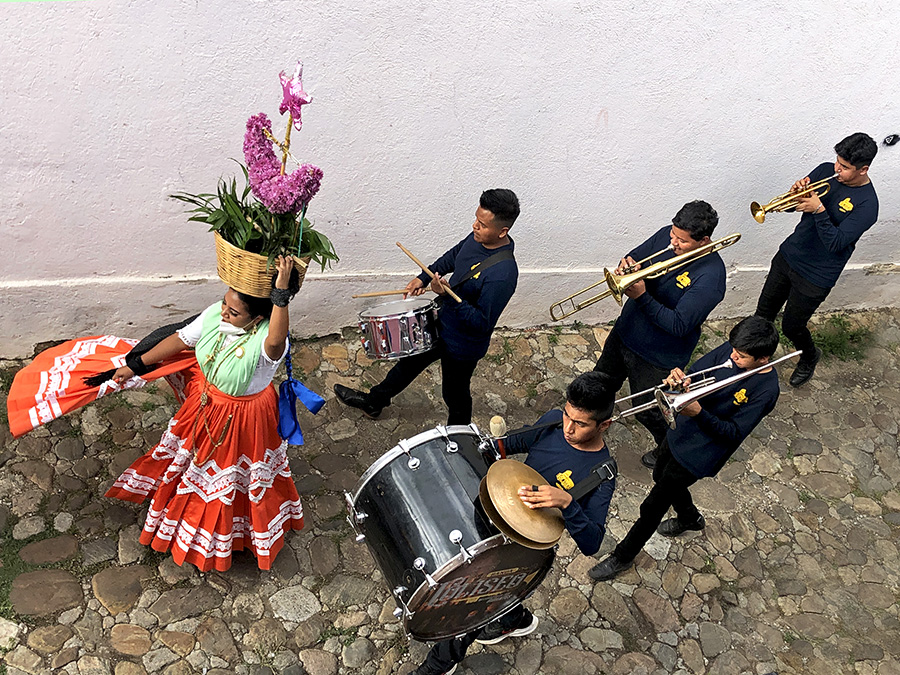
July 4, 2022 – Convite for the Preciosa Sangre de Cristo patronal festival in Teotitlán del Valle
July 23, 2022 – Guelaguetza Desfile Magesterial in Barrio de Jalatlaco
July 9, 2022 – Calenda celebrating the anniversary of La Mano Magica Galería in Oaxaca de Juárez
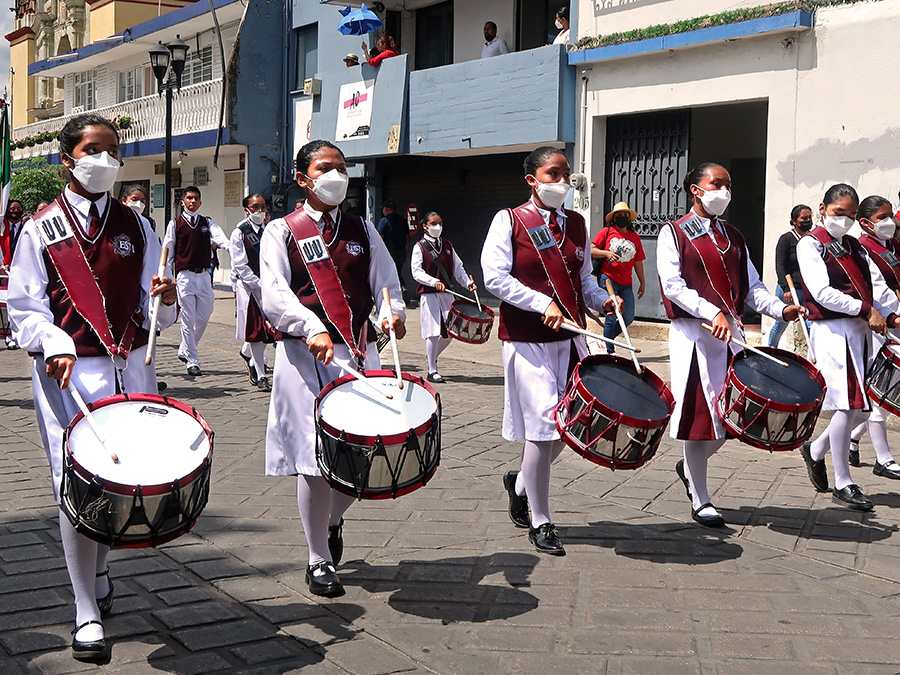
September 16, 2022 – Independence Day parade in Oaxaca de Juárez
August 25, 2022 – 35th birthday celebration in Barrio de Jalatlaco
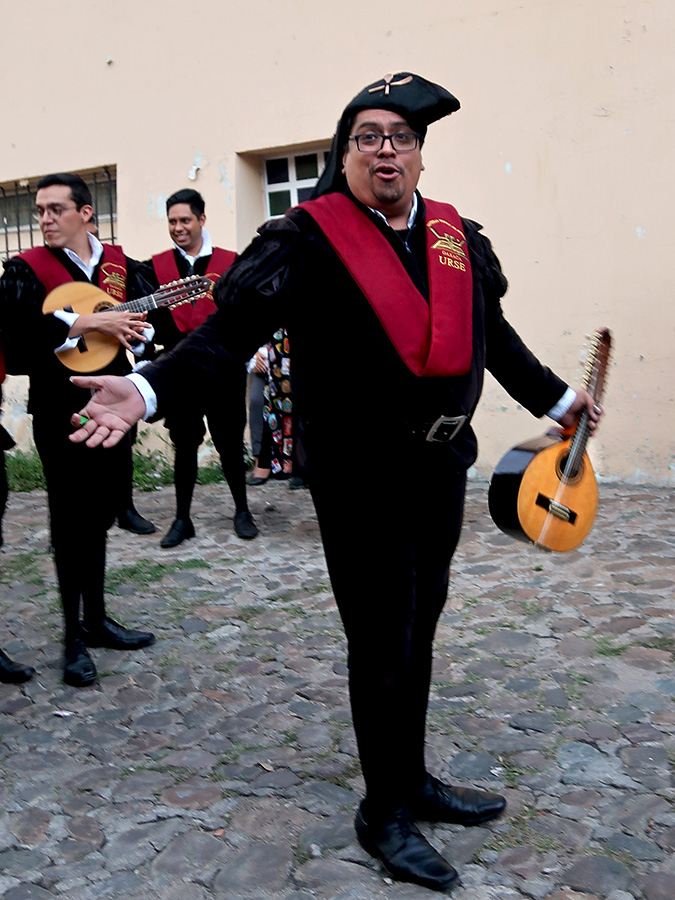
August 20, 2022 – Strolling Tuna Band from URSE in Barrio de Jalatlaco
And, since this post honors musicians, how about a little music…
Traditional teponaxtles and chirimía played outside the panteón of San Antonino Castillo Velasco on Palm Sunday 2022 and brass band in Barrio de Jalatlaco, Oaxaca de Juárez on the 6th Friday of Lent, Viernes de Dolores 2022.
A big muchisimas gracias to musicians all over the world who provide the soundtrack of our lives.
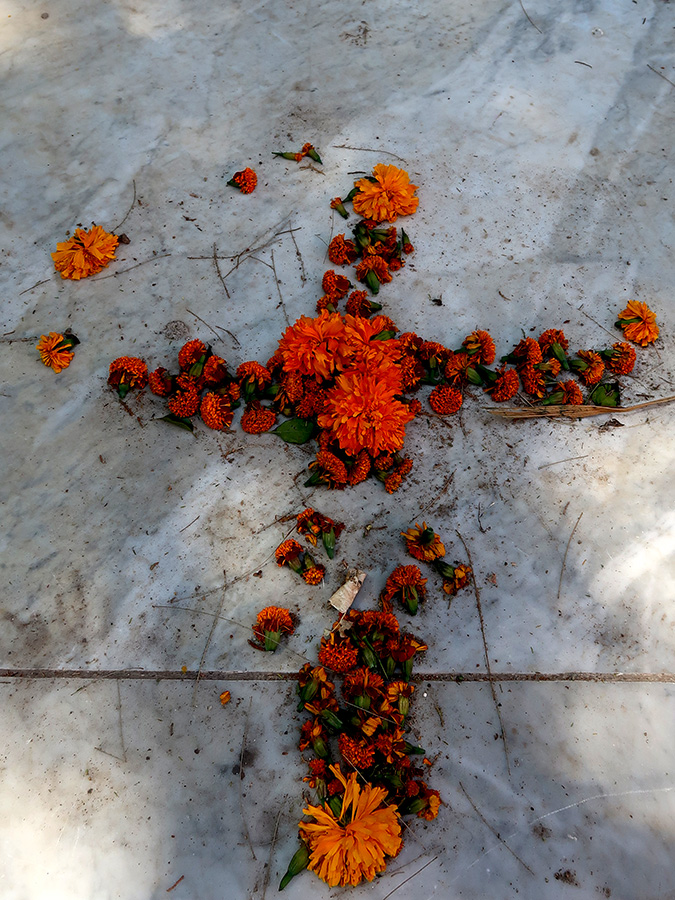
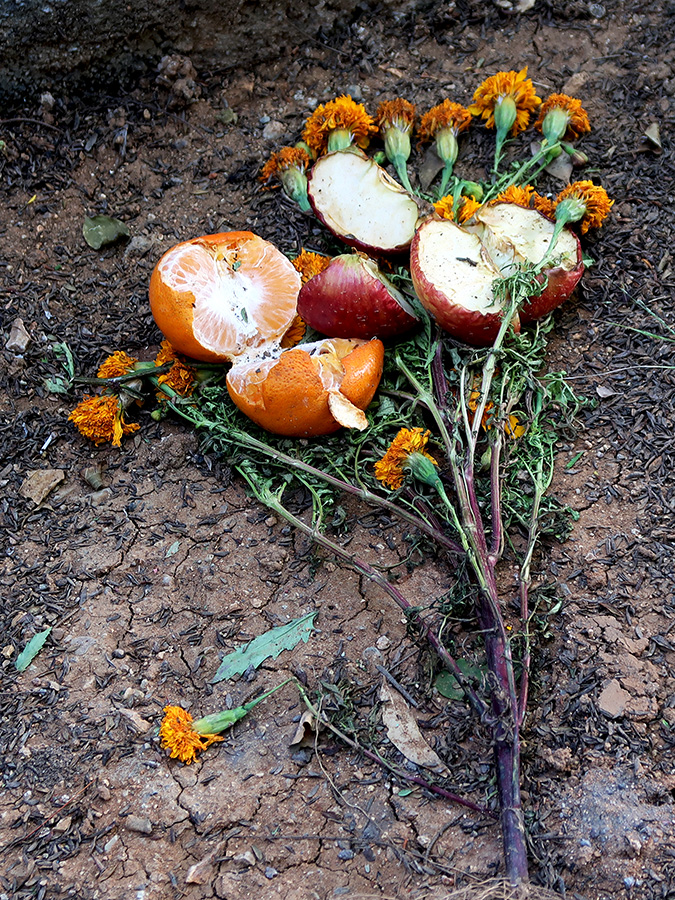
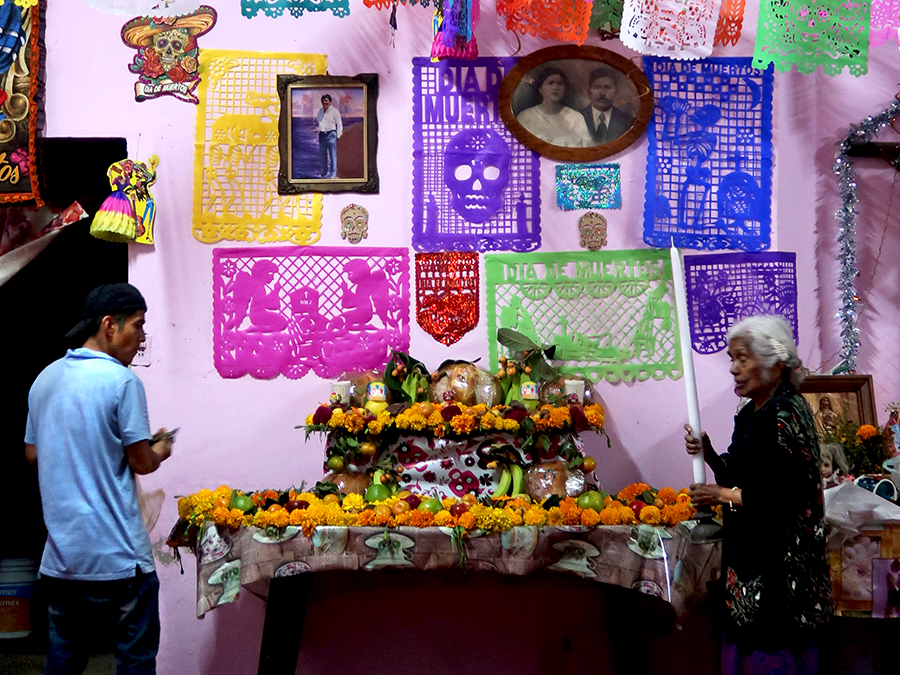
Every Día de Muertos, I love seeing the artistry of public ofrendas, feel honored being welcomed into the homes of friends and placing pan de muertos on their very personal ofrendas, and enjoy assembling my own ofrenda to departed loved ones. (Click on each image to see the details.)
Mitla – Ofrenda in the home of master weaver Arturo Hernandez Quero.
Mitla – Public ofrenda in the main plaza. Note the intricately decorated pan de muertos.
Teotitlán del Valle – Ofrenda of the weaver Pedro Montaño and cocinera Carina Santiago family in the Tierra Antigua restaurant and gallery.
Teotitlán del Valle – Ofrenda in the family home of weaver Zacarias Ruiz and Emilia Gonzalez.
Barrio de Jalatlaco – Private ofrenda open for public viewing at the corner of 5 de mayo and La Alianza.
Barrio de Jalatlaco – Family adding the finishing touches to their ofrenda. (They graciously gave me permission to take the photo.)
Casita Colibrí – My ofrenda in the daylight.
Casita Colibrí – My ofrenda at night awaiting the arrival of my departed.
I love the spicy and welcoming scents of cempasúchitl (marigolds), lacy flor de muerto from the Sierra Norte, pan de muertos, and incense of copal.
For two days following the previously mentioned convite inviting the villagers of Teotitlán del Valle and guests to the festival honoring the Virgen del Rosario (Virgin of the Rosary), the Danza de la Pluma was performed in the atrium of the church. The Danza de la Pluma is a ritual reenactment of the battles between the Aztec and the Spanish conquistadors. There are thirty nine dances that tell the story. This is the Chotis de 4 Reyes– a Schottische performed by the four kings allied with Moctezuma.
As you can see, the dance steps are complex and made all the more challenging by the wind, which comes up most late afternoons this time of year, catching the massive penachos (the headpieces) worn by the dancers. By the way, this day was the actual feast day so they danced for seven hours. I don’t know how they do it!
A BFF since age twelve (don’t ask how long ago that was) and her husband are visiting. I took them to the weaving village of Teotitlán del Valle for the Santísima Virgen del Rosario festival — three days of witnessing the weft of Spanish conquistador Catholicism woven onto the warp of indigenous Zapotec culture. The public festivities began with Friday evening’s convite — a formal 45 minute procession, through the streets of the village, that serves as an invitation to the festival.
Canastas, with images of Mary and Jesus, waiting to be carried on the heads of unmarried young women and girls.
Young boys waiting with marmotas on tall carrizo poles.
Band #1 leads off the convite with a giant Viva la Virgen marmota.
At least 100 young unmarried women and girls, in traditional festival dress, carry canastas on their heads through the cobblestone streets.
Band #2 provides the music for the danzantes who follow.
Danza de la Pluma danzantes, with rattles shaking, march and dance their way through the streets.
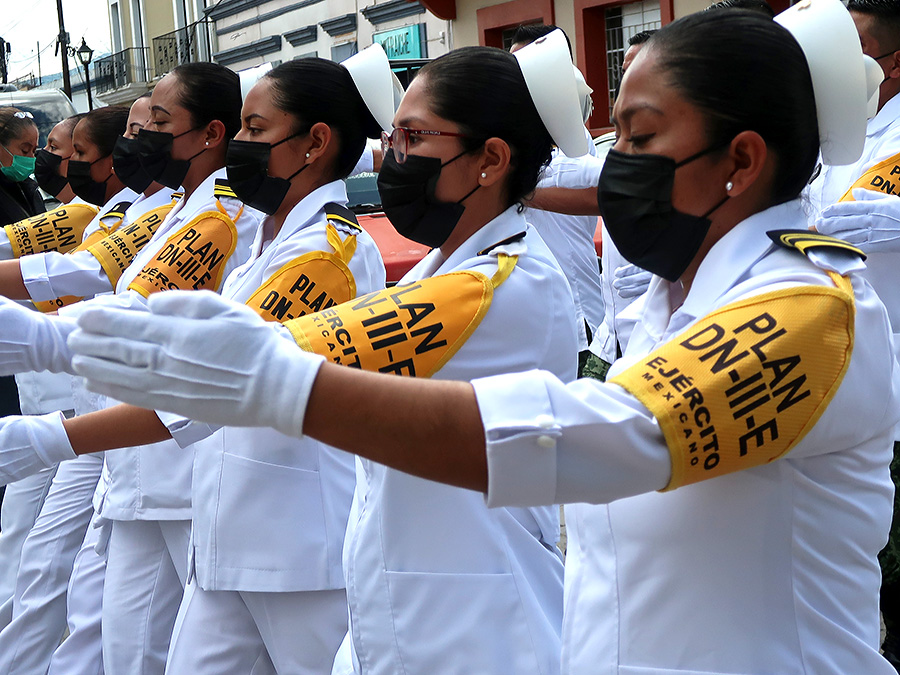
After a two year absence, thanks to the pandemic, Mexico’s Independence Day parade returned to the streets of Oaxaca’s capital. There were lots of drums that had me hearing snare drums in my sleep that night. But, note all the young women drummers! (Click on each image to enlarge.)
Being that this was a civic and military parade, there were the requisite scary guys and gals with guns and military hardware.
But there were also contingents of firefighters, federal disaster relief, and the Red Cross.
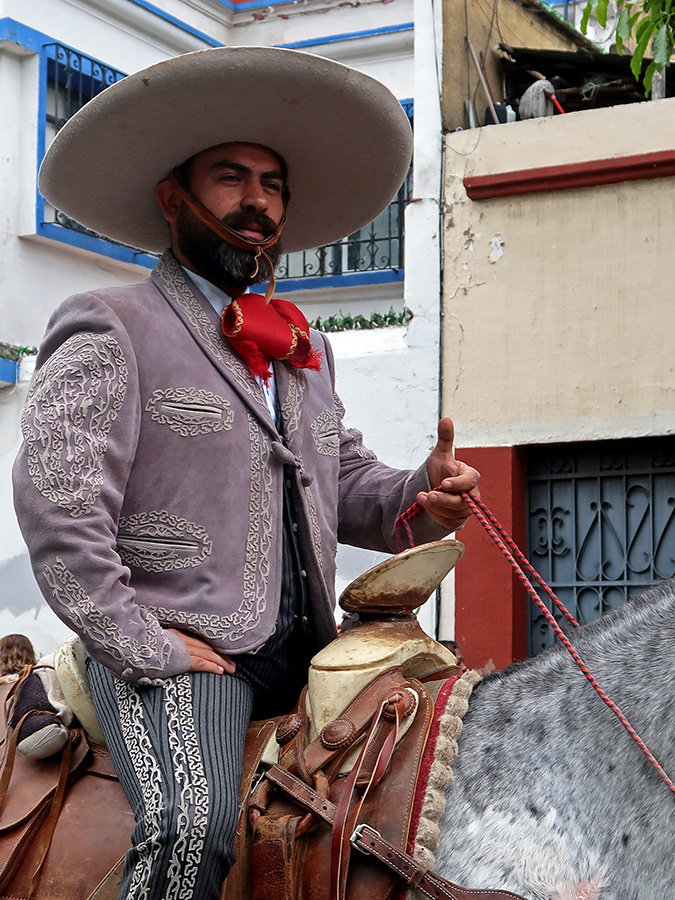
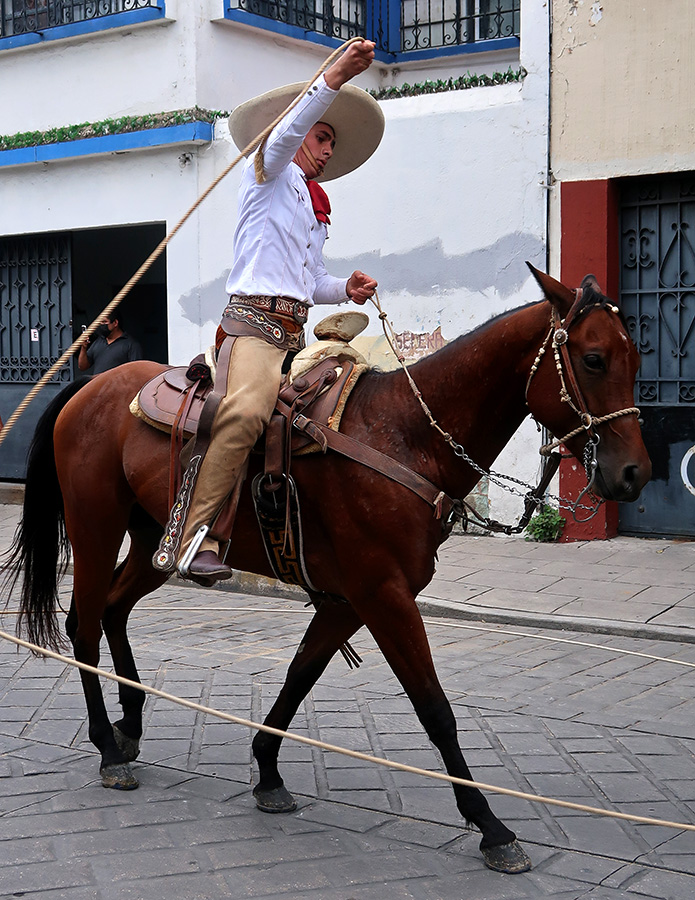
There were horses with stunningly dressed male and female riders.
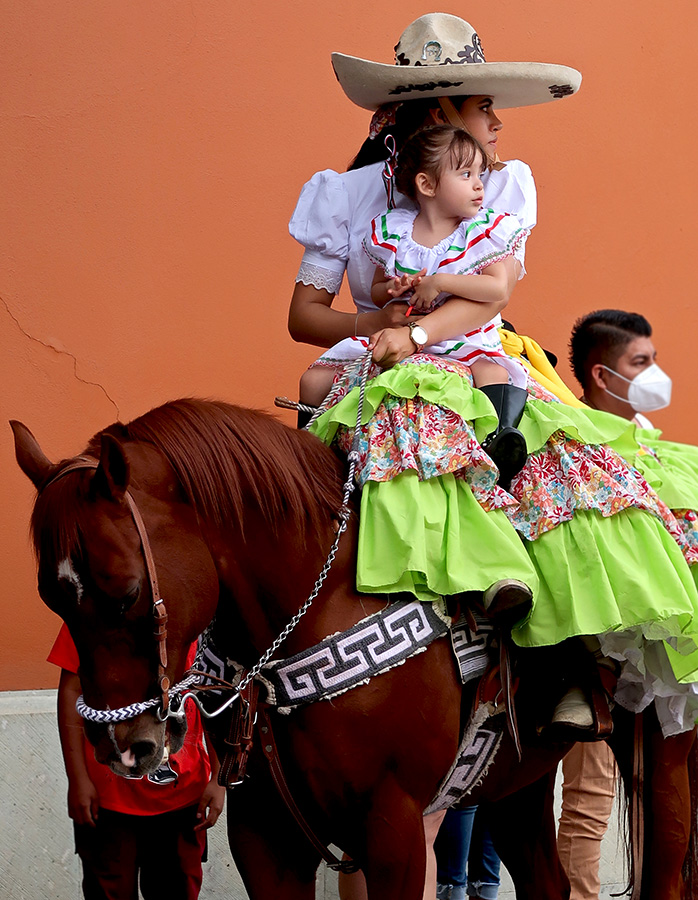
And, there were the young riders… from toddlers to preteens. Did I mention there were lots of horses?
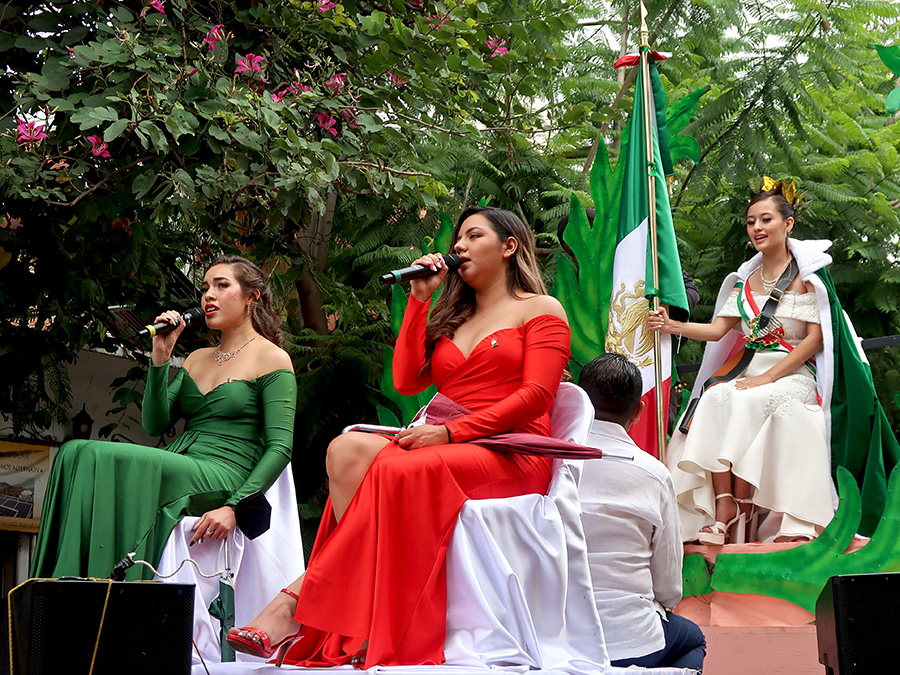
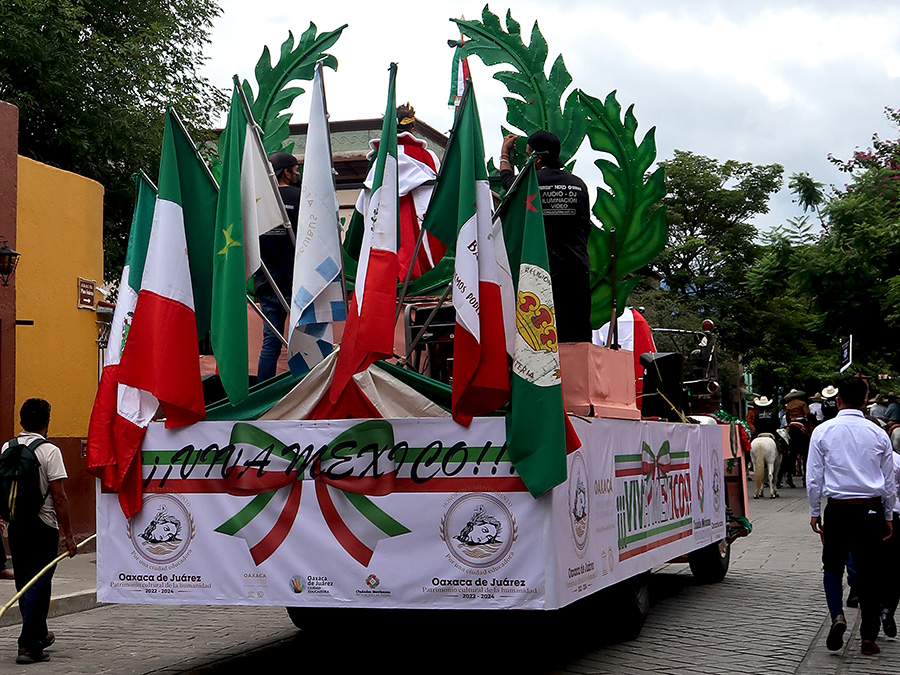
And, to end the parade, there was a patriotic float with beautiful young women, dressed in the green, white, and red of the Mexican flag, singing the national anthem, “Himno Nacional Mexicano.”
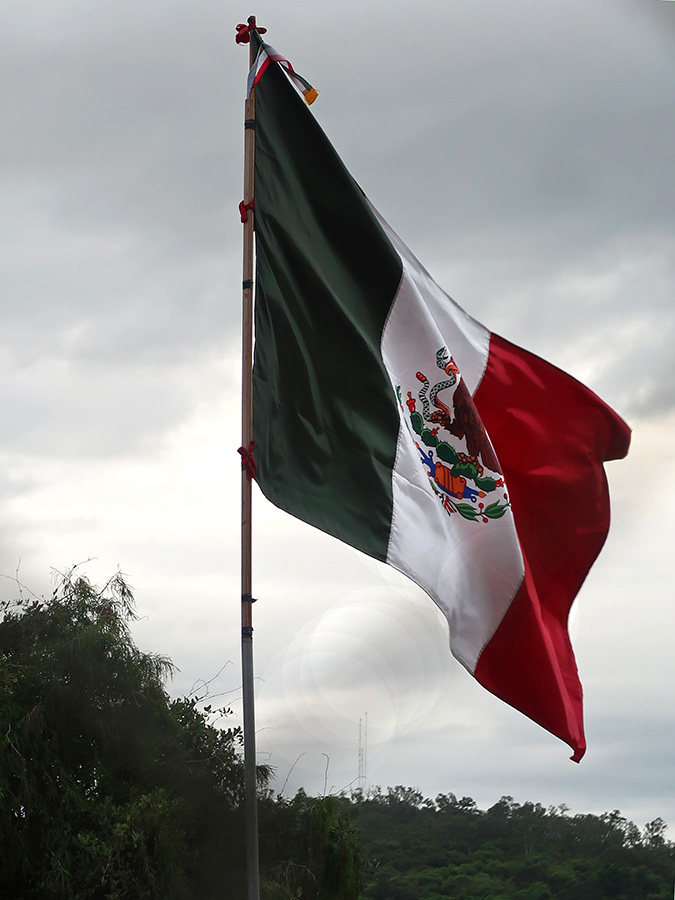
Adding some welcome color to these grey rainy season days, on the first of September my neighbors raised their ginormous flag marking the beginning of the Mes de la Patria — a month-long celebration of Mexico’s War of Independence from Spain.
The war lasted eleven years — from September 16, 1810, with Don Miguel Hidalgo y Costilla’s call to arms (Grito de Dolores), to September 27, 1821, when the Army of Three Guarantees triumphantly marched into Mexico City.
Merchandise in green, white, and red (colors of the Mexican flag) fill store shelves, vendors ply the streets selling flags and tchotchkes, and patriotic displays decorate public and private buildings.
As for me, I’m jonesing for the season’s traditional dish of chiles en nogada. It’s been four years since I savored its complex combination of flavors and textures at Restaurante Catedral (photo above).
Over the past several years, one can’t help but notice that Oaxaca has become much more pet friendly.
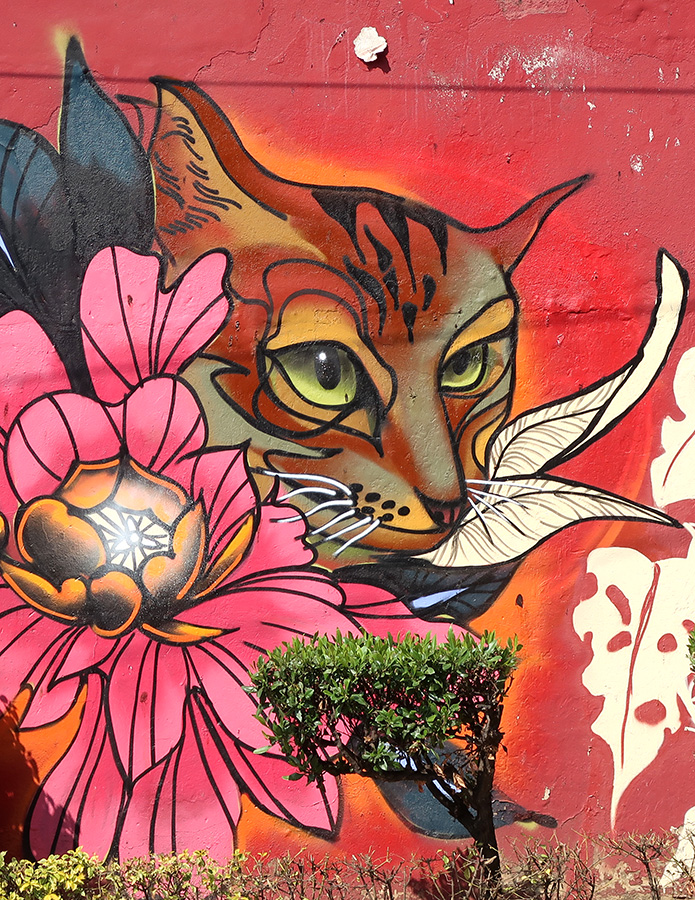
In place of the formerly ubiquitous roof dogs menacingly peering down and barking at pedestrians, images of silent dogs and cats look out from walls along the sidewalks.
Veterinary offices have sprung up all over the city, dog walkers have become a “thing,” many businesses are placing water bowls outside their entrances, and restaurants are welcoming pets — cat photos that follow are from the mural outside La Selva de los Gatos Cat Cafe vegetarian restaurant.
Thanks to the efforts of various sterilization clinics in the valley, one doesn’t encounter nearly as many street dogs and feral cats.
If you are so inclined, Huellas de Ayuda Oaxaca and Teo Tails are a couple of clinics that could use financial and volunteer assistance.
Just look at these faces. What’s not to love?
Of course there is the occasional big cat.
And, not to be overlooked, armadillos are known to appear.
No matter the species of animal, on August 31, in celebration of the feast day of San Ramón Nonato, they can accompany their humans to be blessed at Templo de Nuestra Señora de la Merced at 4:00 PM. If years past are any indication, it should be a colorful and lively event.
In Teotitlán del Valle, the dancers of the Danza de la Pluma (Feather dance), make a solemn commitment to their faith and to their community to dance for three years at each of the four major annual religious festivals in their village. 2022 brings a new group and the festival honoring Preciosa Sangre de Nuestro Señor Jesucristo the first of their public performances for the residents of their village and visitors. They dance four times during this festival — two half days and two full (7 hours) days.
July 5, 2022…
La Malinche (Silvia Melissa González Pérez), Moctezuma (Emmanuel Ruiz Ruiz), and Doña Marina (Youshita Yamilet Vasquez Jim.)
Teotitlán de Valle, Danza de la Pluma promesa 2022-2024.
Danzantes dancing like puppets on a papel picado string.
Subalterno helping Rey 4, Luis Ángel Bazán Ruiz, with his penacho (headdress).
Subalterno taking a selfie with a “borrowed” phone.
July 6, 2022…
Capitán 2, Hugo Félix Santiago Jiménez.
Dancers of the Danza de la pluma promesa 2022-2024.
Moctezuma, Emmanuel Ruiz Ruiz.
Doña Marina, Youshita Yamilet Vasquez Jim.
La Malinche, Silvia Melissa González Pérez.
Danza de la pluma promesa 2022-2024, Teotitlán del Valle.
On the superficial level, the Danza relates the story of the Conquest — the Spanish, Moctezuma, his allies, and Malinche/Doña Maria. But, as is the genius of art, it reaches into our hearts and souls and explores and communicates the truths we know and feel.
In 2022, they will dance again for Natividad de la Virgen María in September, Rosario de la Virgen María in October, and the Fiesta a la Virgen de Guadalupe on December 12.
After a two-year hiatus, La Guelaguetza is back. Papel (actually, plastic) picado, in the colors of the rainbow, is draped over the streets, Tiliches (iconic participants at Carnaval in Putla de Guerrero and this year’s chosen image to represent Guelaguetza) are hanging around on sidewalks, walls, and rooftops, and the streets are filled with tourists, both foreign and domestic.
Decorations hanging above Calle de Miguel Hidalgo in Barrio de Jalatlaco.
Tiliche hanging around Barrio de Jalatlaco.
Principal Guelaguetza 2022 events.
This morning, the dancing will begin at the Guelaguetza Auditorium on Cerro del Fortín. The list of delegations by date, time, and the dance they will be performing follows.
July 25, 2022, 9:00 AM delegations and dances.
July 25, 2022, 5:00 PM list of delegations and dances.
August 1, 2022, 9:00 AM list of delegations and dances.
August 1, 2022, 5:00 PM list of delegations and dances.
Please note, next Monday evening’s performance will include the previously mentioned Teotitlán del Valle, Danza de la Pluma Promesa 2022-2024. If you are not in Oaxaca or, like me, don’t have tickets, you can watch courtesy of CORTV via television, their website, and Facebook live.