Sometimes the sights along the streets of Oaxaca make me chuckle.


And, I just have to stop and record the scene.
Posted in Creativity, Culture, Transportation, Travel & Tourism, tagged car, Mexico, motorcycles, murals, Oaxaca, photos, popular travel destinations, street art, urban art, wall art on April 4, 2024| 4 Comments »
Sometimes the sights along the streets of Oaxaca make me chuckle.
And, I just have to stop and record the scene.
Posted in Celebrations, Creativity, Culture, Holidays, Neighborhoods, Religion, Travel & Tourism, tagged Barrio de Jalatlaco, Good Friday, Holy Week, Jesus, John the Baptist, Mary Magdalene, Mexico, Oaxaca, photos, popular travel destinations, religious processions, Semana Santa, Stations of the Cross, Via Crucis, Viernes Santo, Virgin Mary, Way of the Cross on March 29, 2024| 4 Comments »
Except for the patter of rain and the sound of the occasional car on wet pavement, all is gray and quiet on this Good Friday in my San Francisco Bay Area home. I miss the colorful and creative sights and sounds of Viernes Santo in Oaxaca. Thus, today finds me looking back to the Santo Viacrucis (Holy Way of the Cross) procession last year in Barrio de Jalatlaco on Viernes Santo.


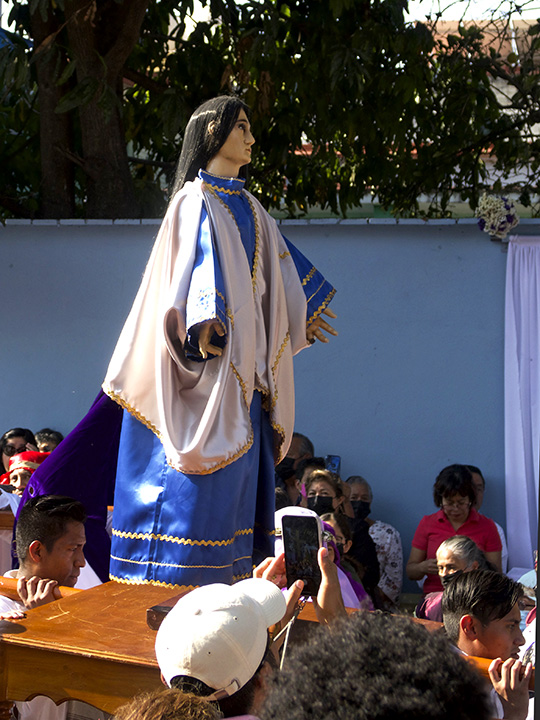

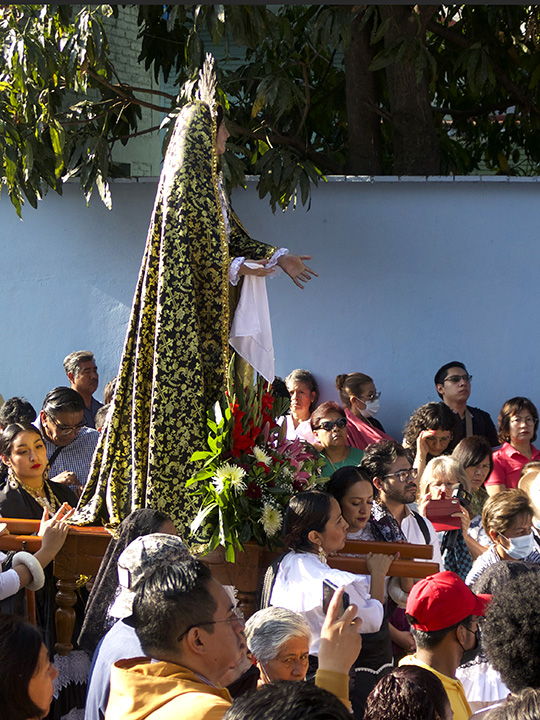
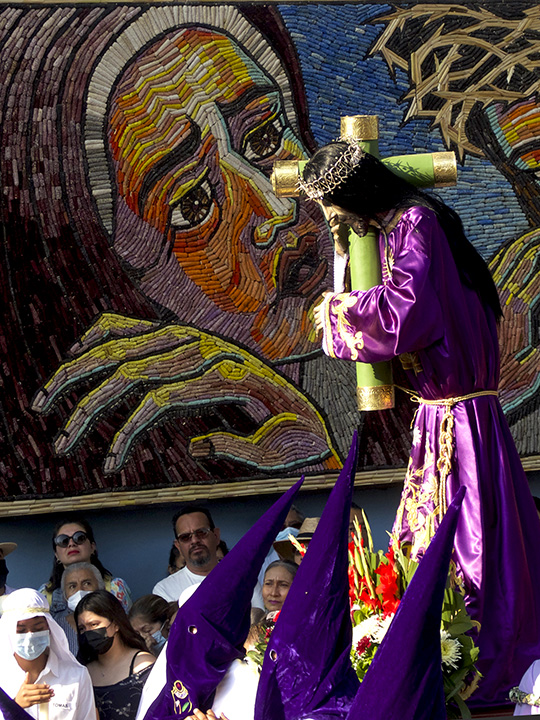

While I don’t subscribe to any religion, the people of Oaxaca, their devotion, and their creativity in celebrating their faith always moves me.
Posted in Children, Creativity, Culture, Holidays, Travel & Tourism, tagged artisans, Day of the Artisan, Day of the Folk Artists, Mexico, Night of the Radishes, Noche de Rábanos, Oaxaca, photos, popular travel destinations, radish carving, young artisans, young talent on March 19, 2024| 2 Comments »
March 19 is Day of the Artisans in Mexico. And so I say, ¡Feliz Día de las Artesanas y los Artesanos! — especially to the budding artists who are appreciating and learning to carry on folk art traditions.
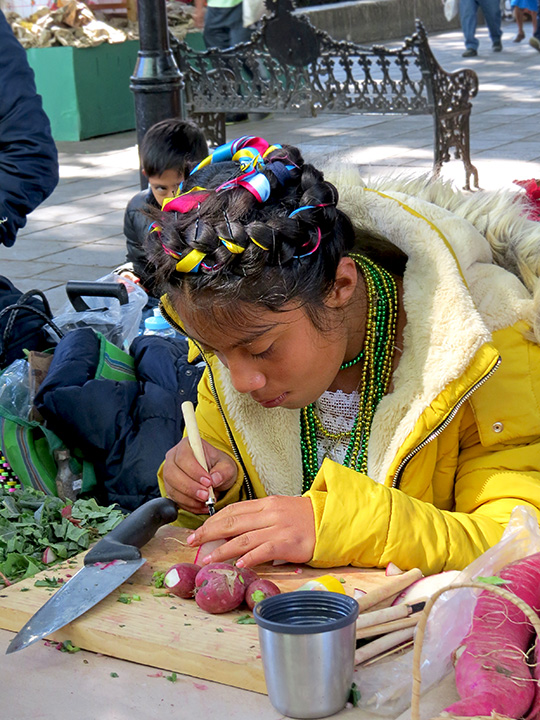


Young artisans at work carving radishes on the morning of the 2023 Noche de Rabanos.
Posted in Creativity, Culture, Holidays, Travel & Tourism, tagged Armarte, Mexico, Oaxaca, photos, political messaging, popular travel destinations, stencil art, street art, urban art, wall art, women graffiti, women's faces on March 8, 2024| Leave a Comment »
Celebrating March 8, International Women’s Day, with women speaking from the walls of Oaxaca.
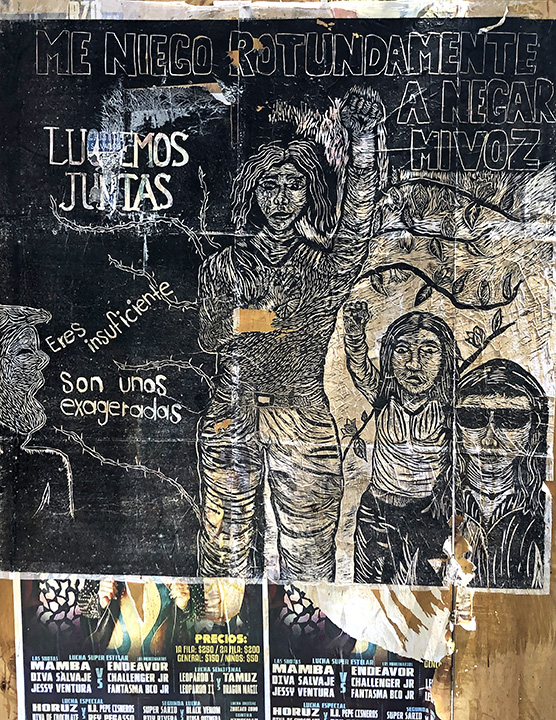

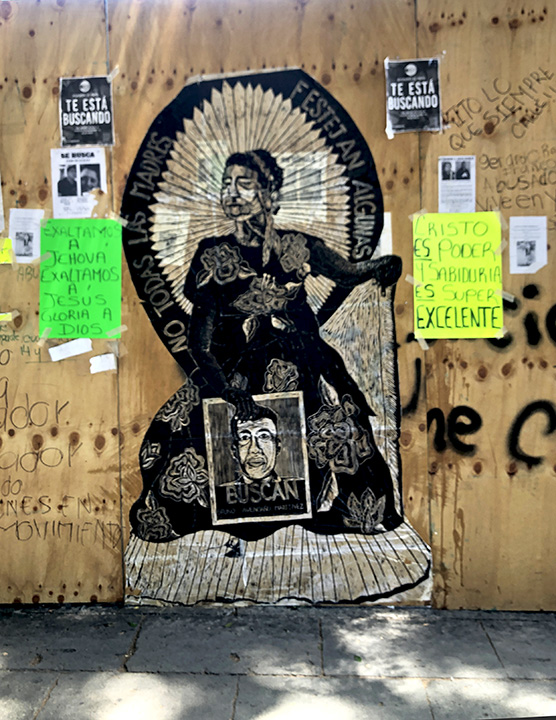
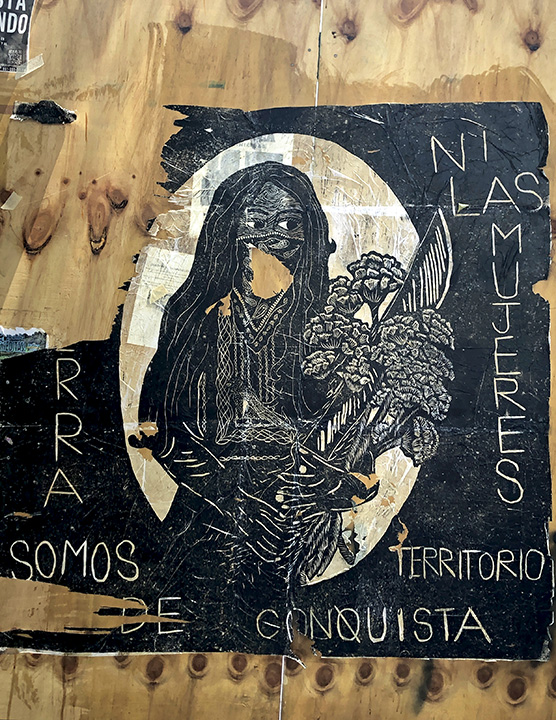
From ARMARTE, a women’s collective dedicated to using the arts as a tool for social transformation.
Posted in Creativity, Culture, Music, Neighborhoods, Travel & Tourism, tagged Barrio de Jalatlaco, Dios nunca muere, Macedonio Alcalá, Mexico, murals, Oaxaca, photos, popular travel destinations, street art, urban art, wall art on February 23, 2024| 4 Comments »
Another mural in progress by Bouler in Barrio de Jalatlaco.

The paint, brushes, and song by Macedonio Alcalá (sung by Javier Solis) may proclaim…
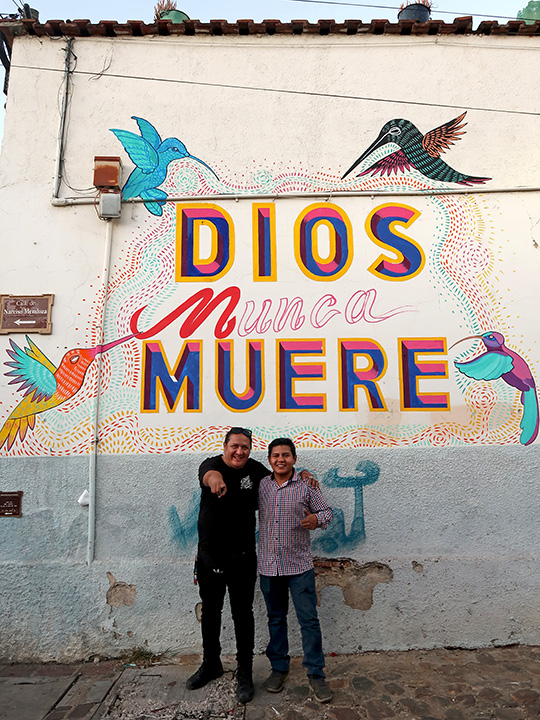
God never dies…

But, I think art never dies.
Posted in Celebrations, Creativity, Culture, Holidays, Travel & Tourism, tagged Day of Love and Friendship, Día del Amor y la Amistad, hearts, Mexico, Noel Gómez Lorenzo, Oaxaca, Paulina Solís Ocampo (choreographer), photos, popular travel destinations, street art, urban art, Valentine's Day on February 14, 2024| Leave a Comment »
On this gray Valentine’s Day in the “City By the Bay,” I left my heart in Oaxaca…
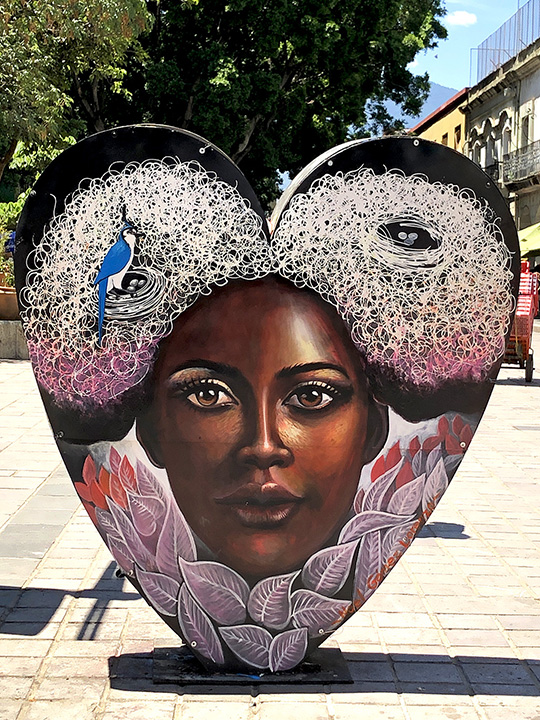

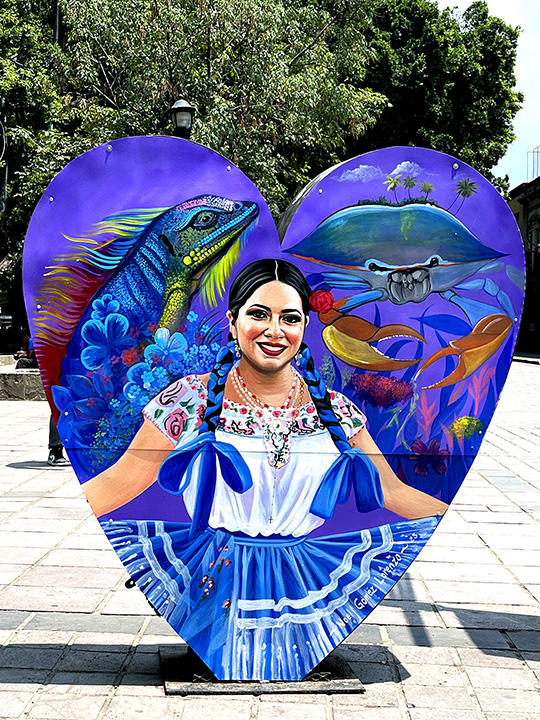
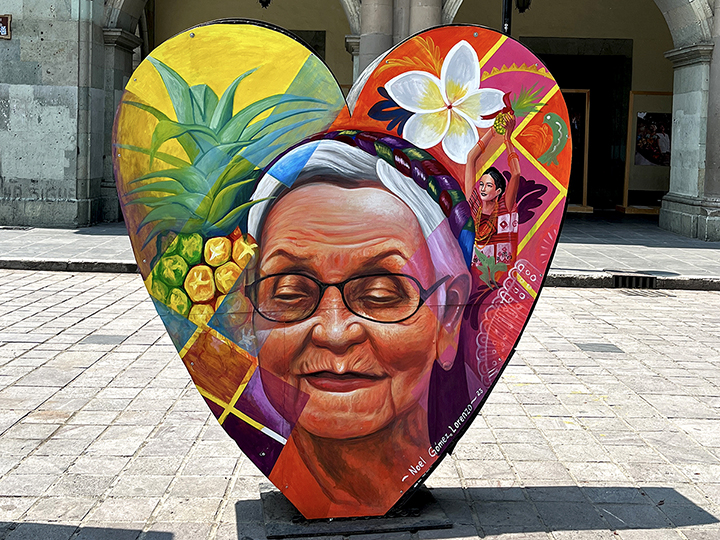
¡Feliz Día del Amor y la Amistad! Happy Day of Love and Friendship!
Posted in Creativity, Culture, Flora, Gardens, Travel & Tourism, tagged botanical gardens, cactus, found objects art, Mexico, Oaxaca, photos, popular travel destinations, recycled objects, Santa Cruz Xoxocotlán, succulents, Vives Verde on February 9, 2024| 3 Comments »
Greetings from cold, gray, windy, and rainy Northern California. I arrived a couple of weeks ago and am still in recovery from a three-day wedding in Teotitlán del Valle right before I departed for winter in the San Francisco Bay Area. Family, friends, frozen fingers, and a severe case of sticker shock have also contributed to no new blog posts for sixteen days. And, please consider this advance warning: I’m going to be in el norte for several months. However, I have many ideas and photos for future Oaxaca focused blog posts — they just may be few and far between. I begin with remembering last February’s return visit to Vives Verde, the labor of love garden created by architect Francisco Martínez.
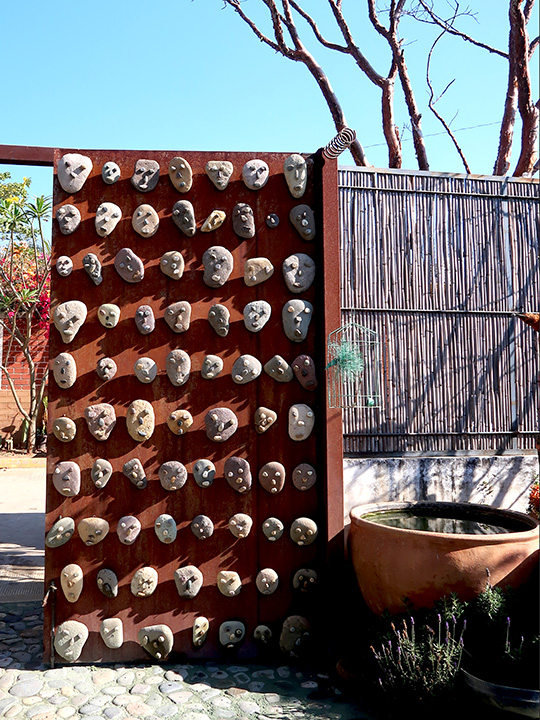


Over fourteen years ago, architect Francisco Martínez began a project of landscaping a former garbage dump into a healing, artistic, and environmental garden — a marriage of plants, recycling, whimsical art, and education.

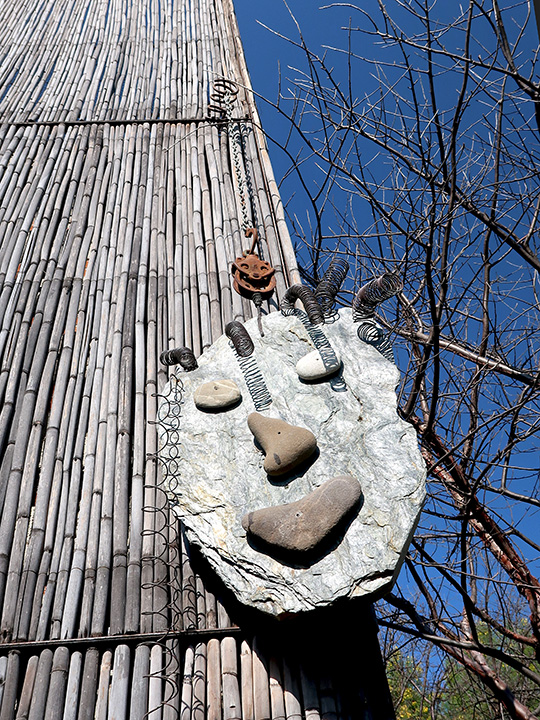
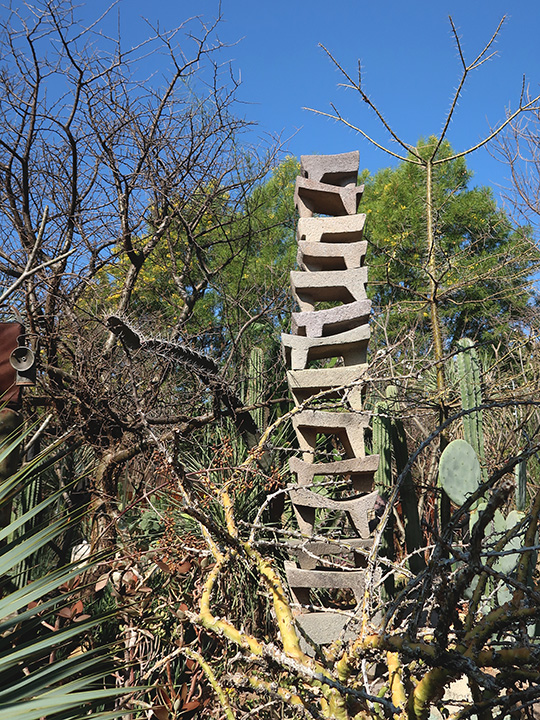
A water catchment system utilizing paths, beds, and ponds irrigate this garden of more than 200 species and 2000 plants — mostly from Oaxaca.
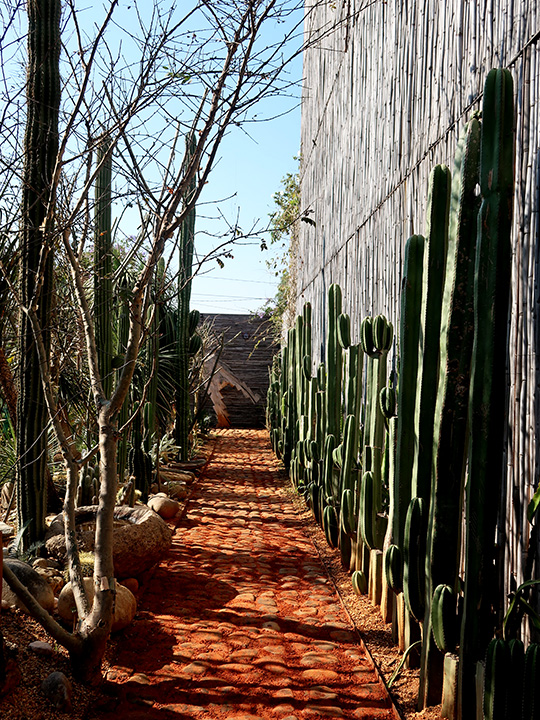
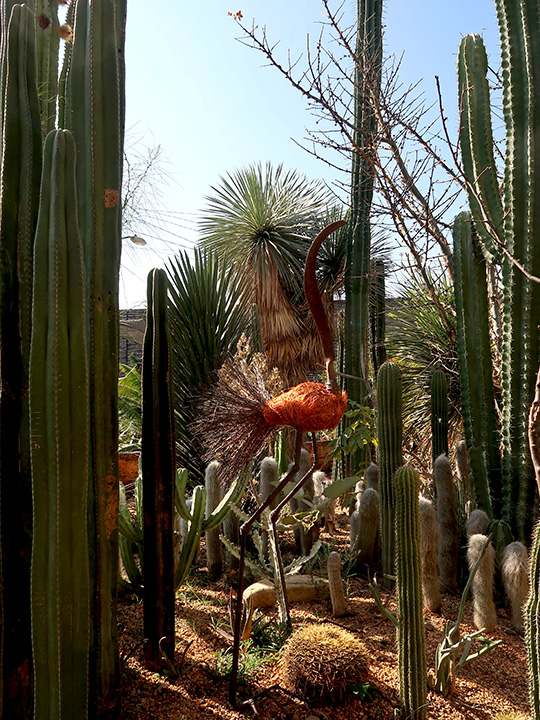

Francisco and his garden are dedicated to raising awareness of preservation and conservation of the sustainable environment. In his effort to fulfill the garden’s mission, he hosts free guided tours — ranging from the architecture faculty of the Universidad Regional del Sureste to students from the Sor Juana Inés de la Cruz primary school.


Vives Verde is located at Calle Tula 627, Colonia las Culturas, Santa Cruz Xoxocotlán, Oaxaca.
Posted in Creativity, Culture, Signs, Travel & Tourism, tagged "blind potter", José García Antonio, Mexico, Oaxaca, photos, popular travel destinations, San Antonino Castillo Velasco on January 24, 2024| Leave a Comment »
Words of wisdom from the hands that see.


Seen in the garden of Don José García Antonio (aka, the blind potter) at his workshop, Taller Manos Que Ven, in San Antonino Castillo Velasco.
Posted in Creativity, Culture, Transportation, Travel & Tourism, tagged Oaxaca, Mexico, photos, popular travel destinations, monos, car, VW, Vocho, wall colors, zebra stripes on January 14, 2024| 7 Comments »
Sometimes artistry is found in everyday street scenes.


It’s all here… light, shadows, color, and creativity. What’s not to love?
Posted in Agriculture, Celebrations, Creativity, Culture, Exhibitions, Food, Holidays, Museums, Sports, Textiles, Travel & Tourism, tagged construction site cross, food festival, José Garcia Antonío, Mexico, Mitla grecas, Oaxaca, photos, popular travel destinations, Teotitlán del Valle, views on December 31, 2023| 13 Comments »
Jean-Baptiste Racine’s quote, “Life is a comedy to those who think, a tragedy to those who feel” comes to mind when I reflect on 2023. Looking at the state of the world, I think many of us have spent the year vacillating between laughing and crying. However, on this New Year’s Eve, I prefer to remember the celebrations and places I experienced with family and friends, old and new. These are the times that nourish my soul and empower me to welcome 2024.
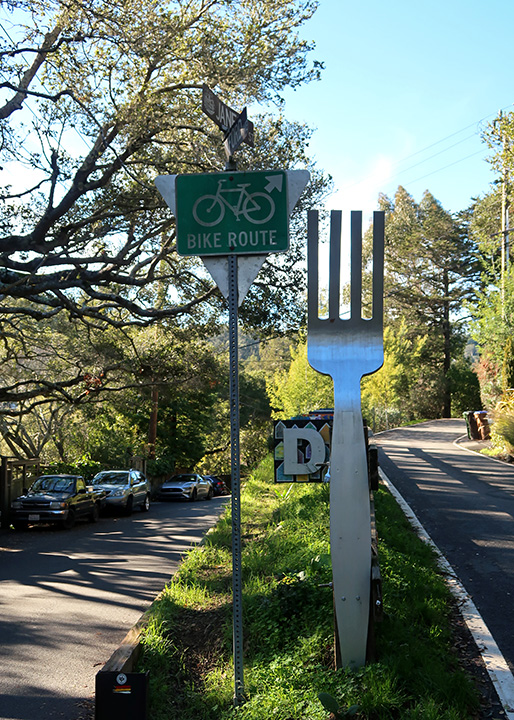
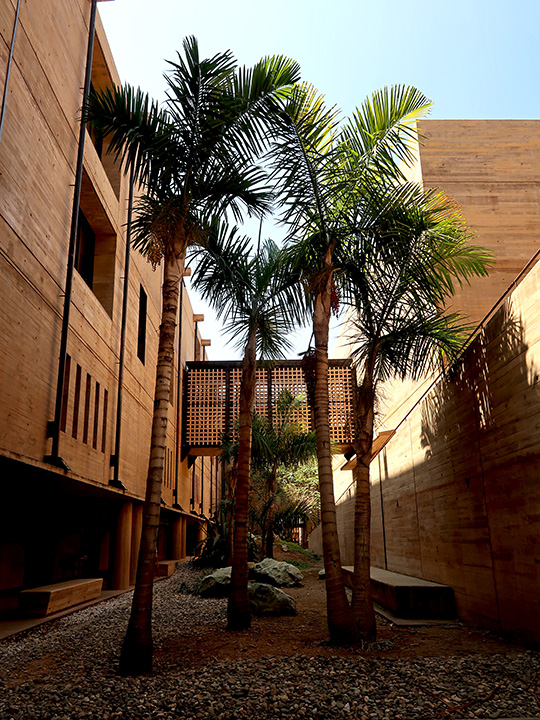
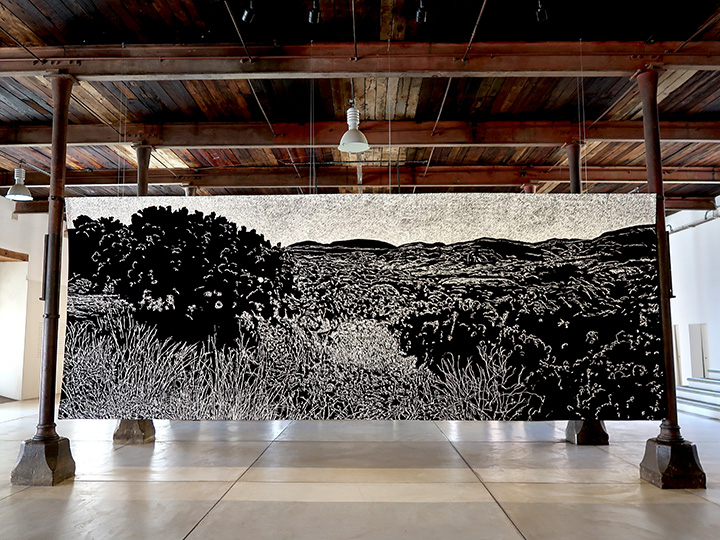
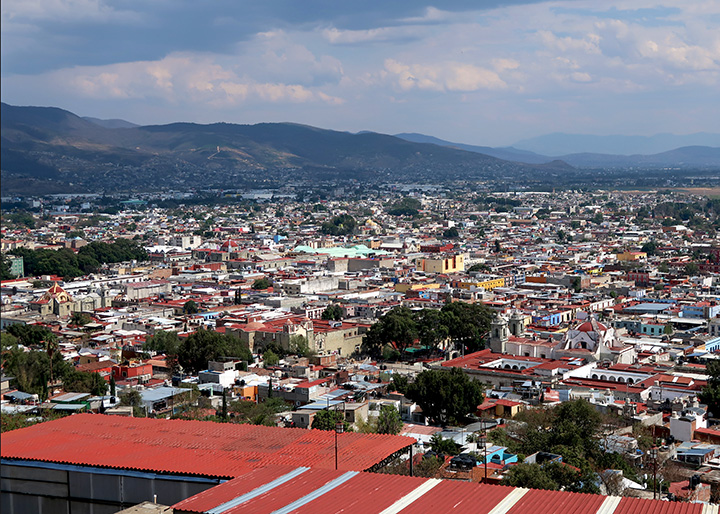
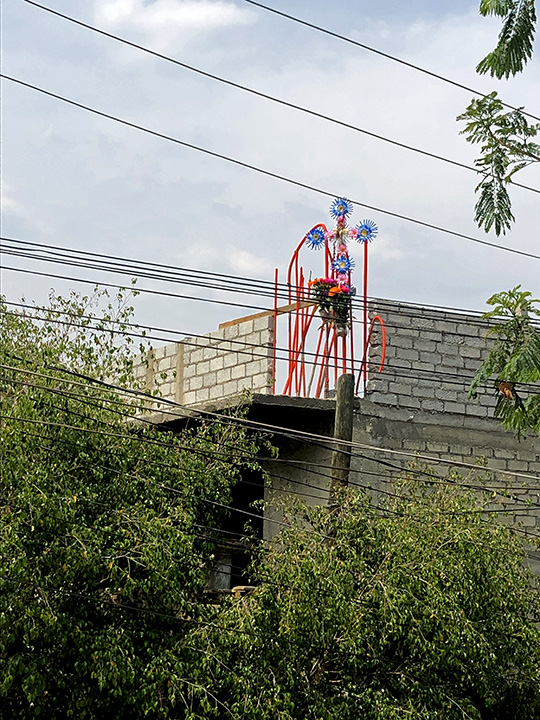
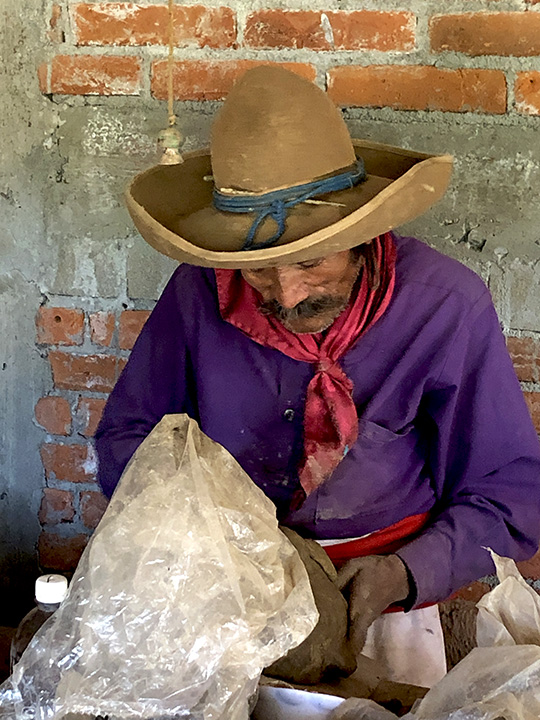
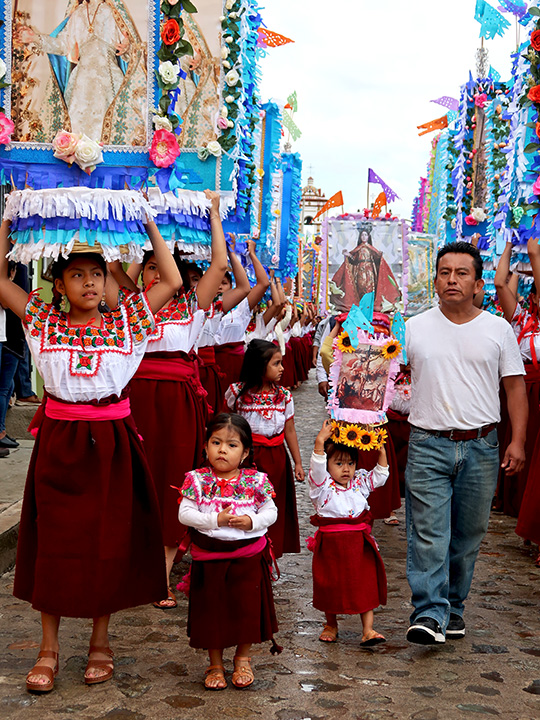
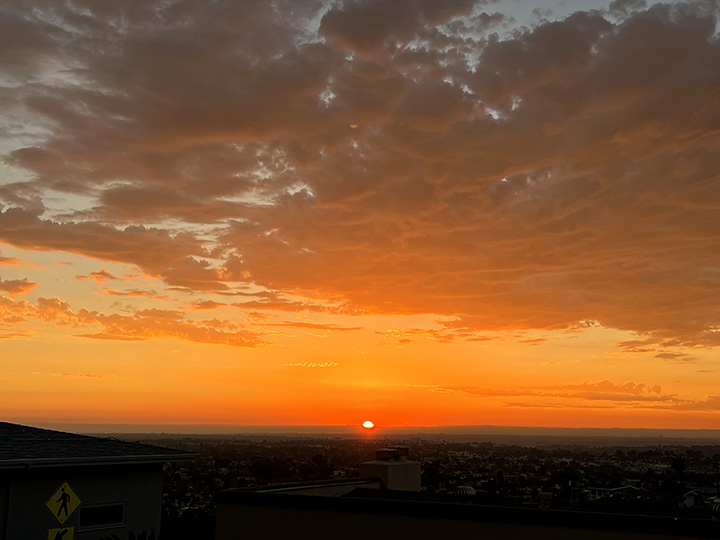
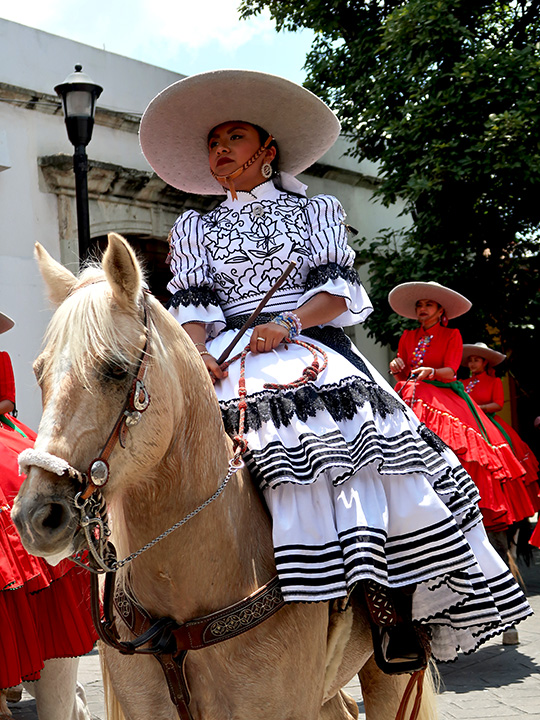

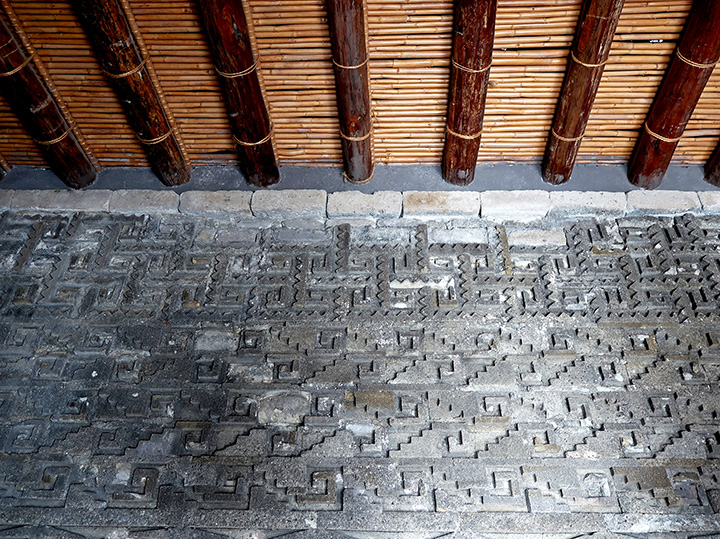
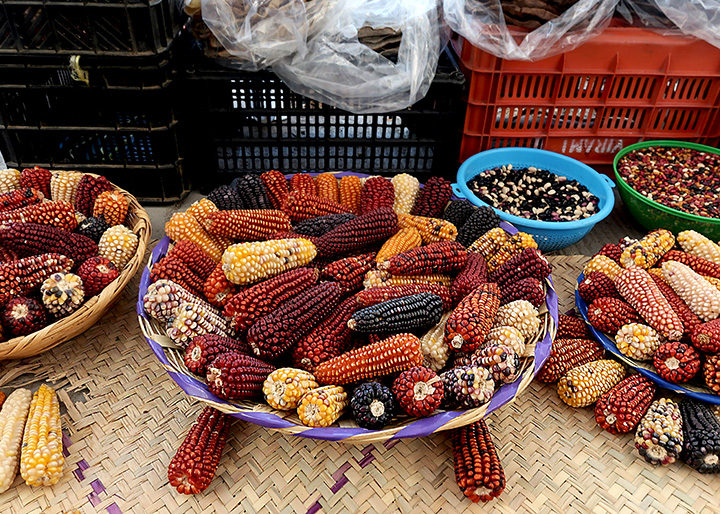
Many thanks to all the wonderful readers of my blog; I am constantly amazed and gratified you choose to stop by. On this New Year’s Eve, with a renewed appreciation for the small things that bring joy and give life meaning, I wish you all, ¡Feliz Año Nuevo!
Posted in Celebrations, Creativity, Culture, Exhibitions, Holidays, Travel & Tourism, tagged Mexico, Night of the Radishes, Noche de Rábanos, Oaxaca, photos, popular travel destinations, radish carving, radishes on December 23, 2023| 7 Comments »
If it’s December 23, it must be the “only in Oaxaca” Noche de Rábanos. I love going in the morning to watch these skilled artists and their imaginations at work creating exquisite sculptures out of radishes — of all things!


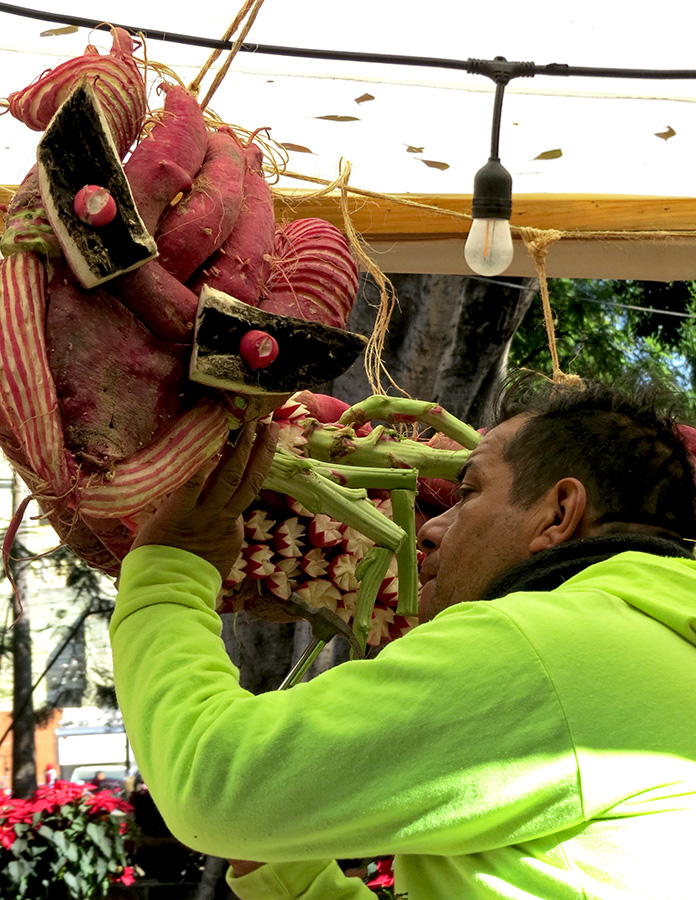
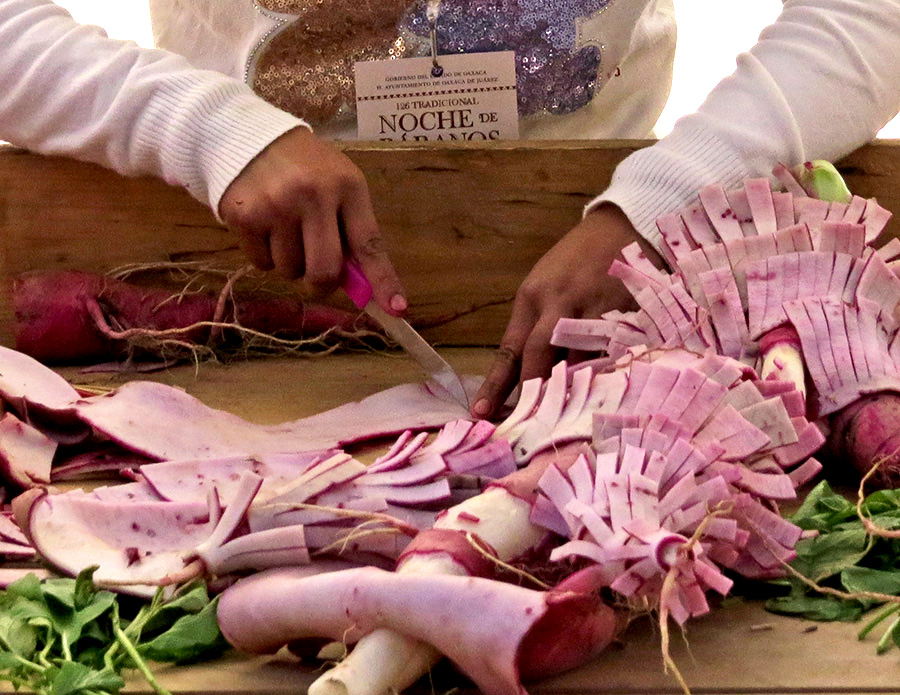
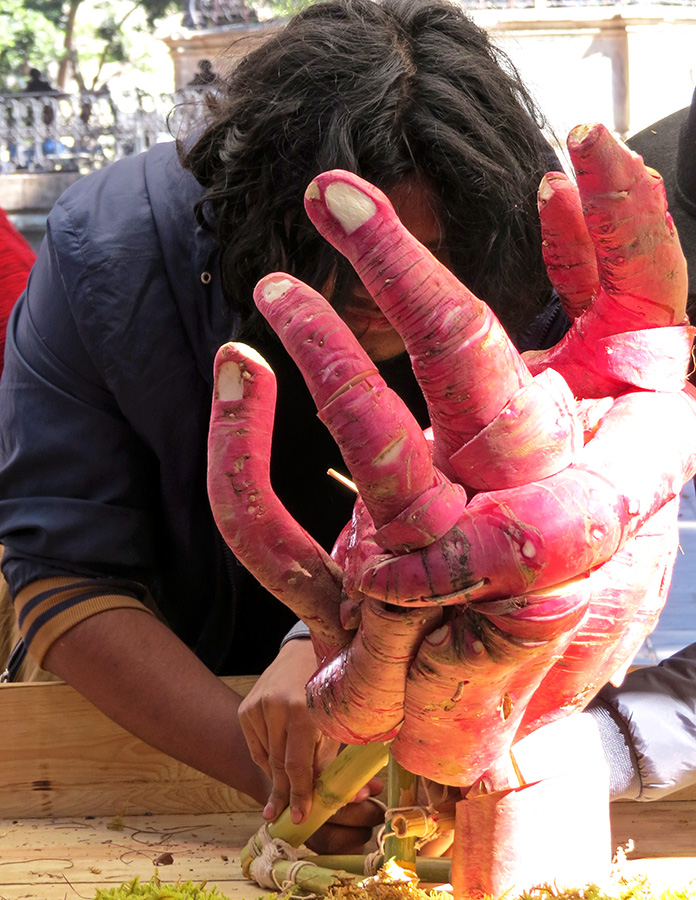

And, there weren’t just radishes. Creations of totomoxle (dried corn husks) and flor inmortal (dried flowers) were also on display. Stay tuned…
Posted in Celebrations, Creativity, Culture, Religion, Travel & Tourism, tagged Danza de la Pluma, Día de Guadalupe, Mexico, Oaxaca, photos, popular travel destinations, Teotitlán del Valle, Virgen de Guadalupe, Virgin of Guadalupe on December 15, 2023| 4 Comments »
All over Mexico on December 12th the country pauses to honor and celebrate the Virgin de Guadalupe, also known as the Queen of Mexico, Empress of America, and patron saint of Mexico. And, there is no place I would rather be on this day than in Teotitlán del Valle watching the Danza de la Pluma. The dance is a ritual reenactment of the battles between the Aztec and the Spanish conquistadors. In this Zapotec village, the dancers make a 3-year religious commitment to perform it at the four major religious festivals each year, including Guadalupe.


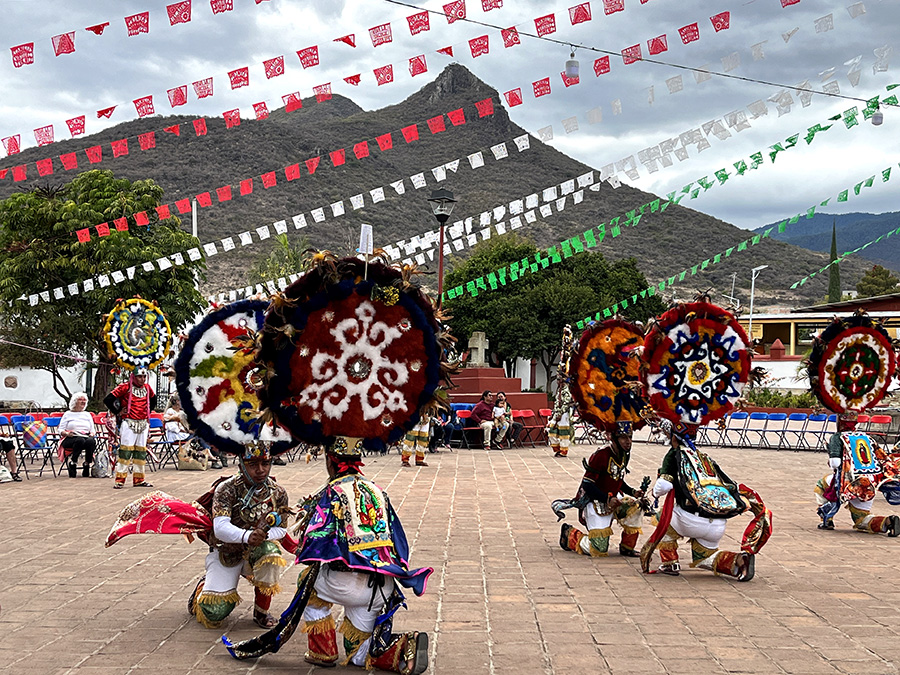
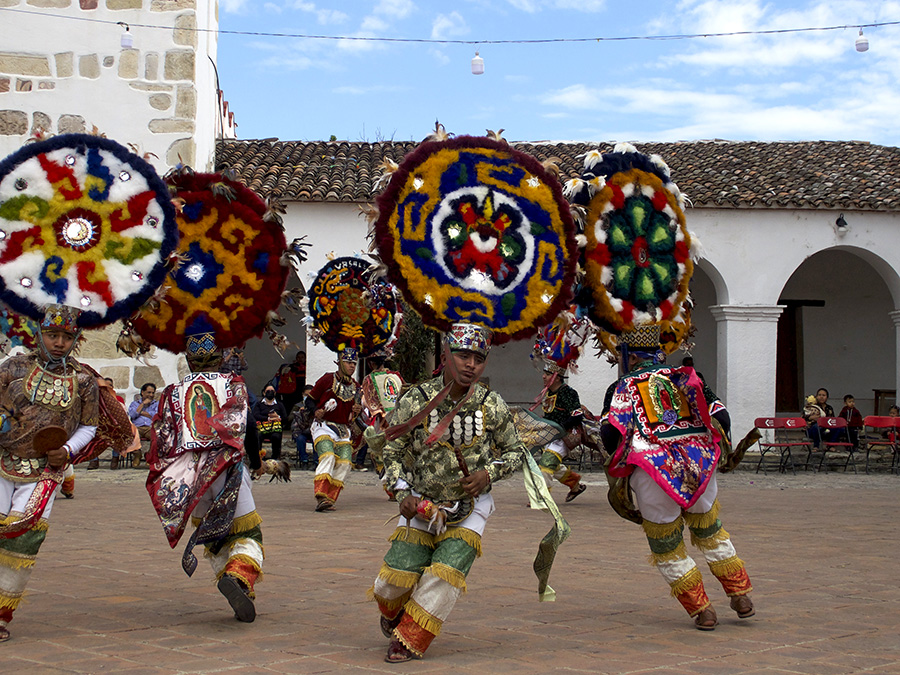


A profound muchisimas gracias to the people of Teotitlán del Valle for always being so warm and welcoming.
Posted in Celebrations, Creativity, Culture, Religion, Travel & Tourism, tagged Día de la Virgen de Guadalupe, Día de la Virgen de Juquila, Mexico, Nuestra Señora de la Soledad, Oaxaca, photos, popular travel destinations, Virgen de La Soledad, Virgin Mary on December 7, 2023| Leave a Comment »
Hanukkah is upon us and Christmas is only weeks away. However, here in Oaxaca, it’s three images of the Virgin Mary who take center stage this month.
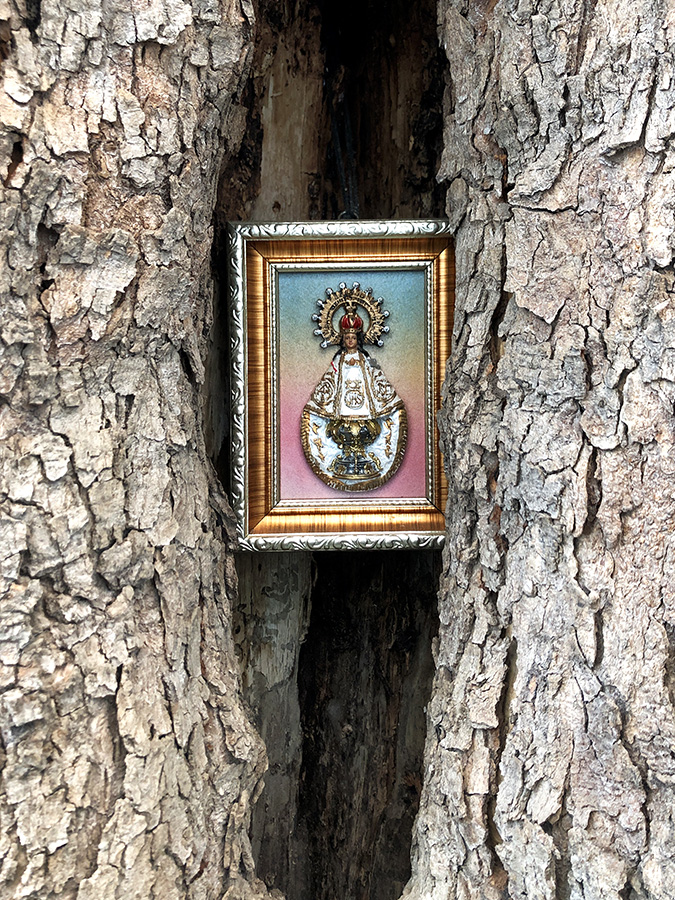
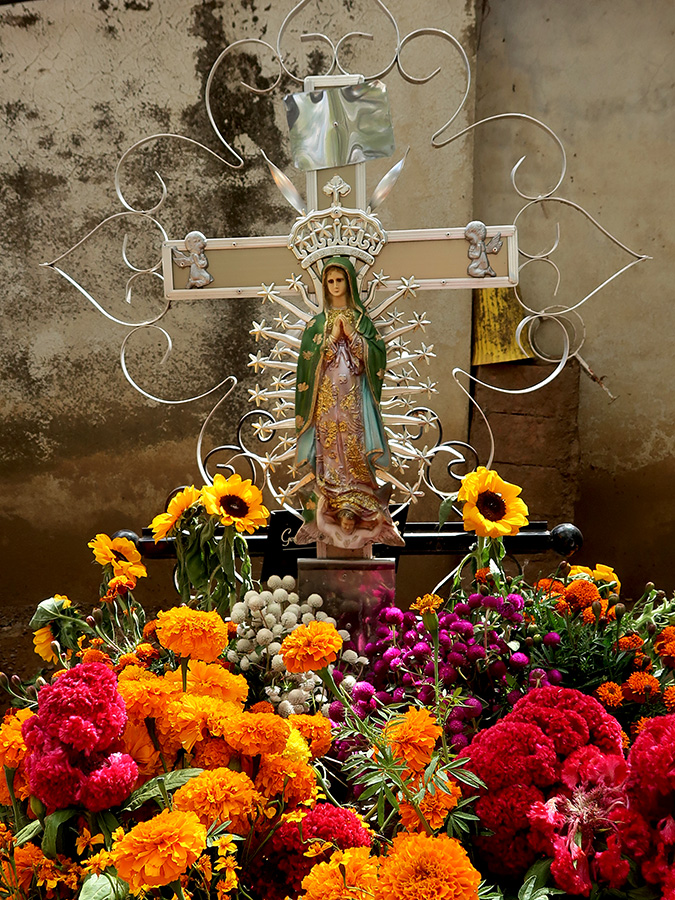
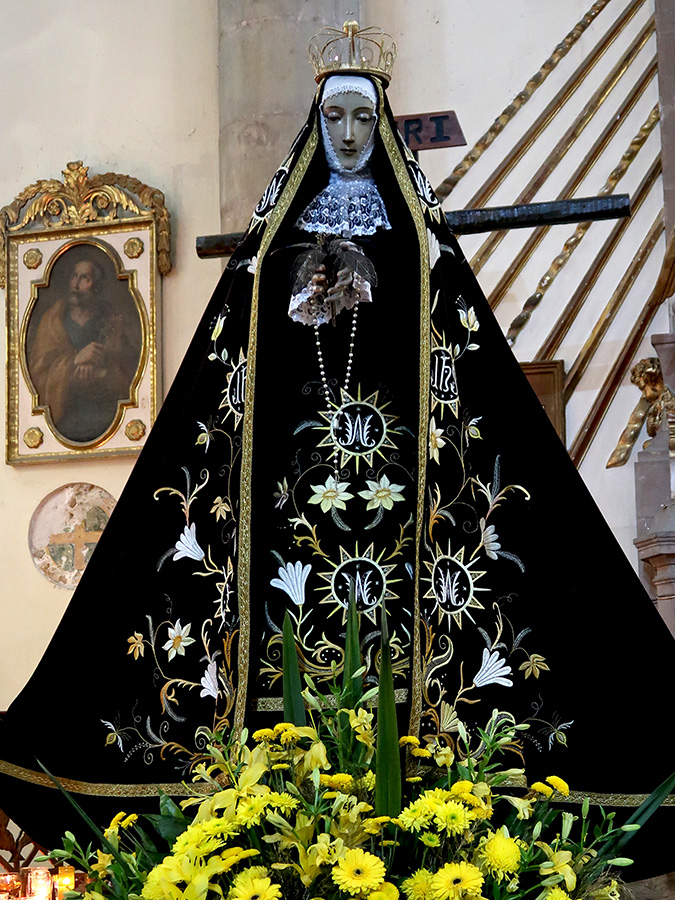
And, if you are in Oaxaca, please know the cohetes (rockets) will be exploding from early morning to late at night.
Posted in Children, Creativity, Culture, Immigration, Travel & Tourism, tagged Amal en Oaxaca, calendas, Centro de Apoyo para Migrantes Universales Collin A.C., immigrants, La Pequeña Amal, Little Amal, Mexico, Oaxaca, parade, photos, popular travel destinations, puppets, refugees on November 29, 2023| 4 Comments »
Walking with Little Amal, known here as La Pequeña Amal, was a remarkable, moving, and hopeful experience. This 3.5 meter tall marionette, representing a 10-year old Syrian refugee girl searching for her mother, has traveled the world in her search — bringing a message of peace, respect, solidarity, and protection for all refugees.
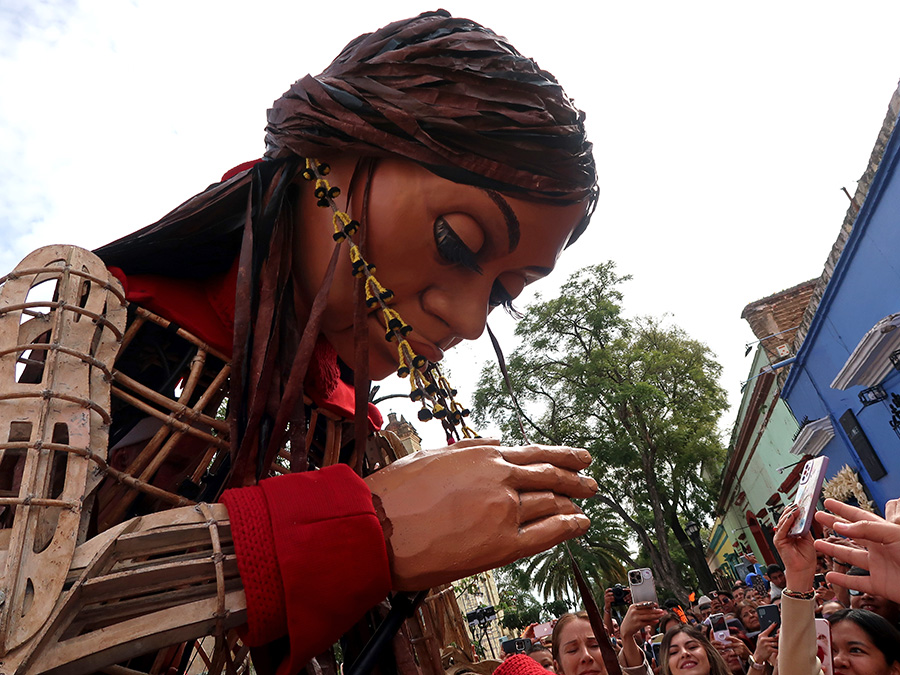

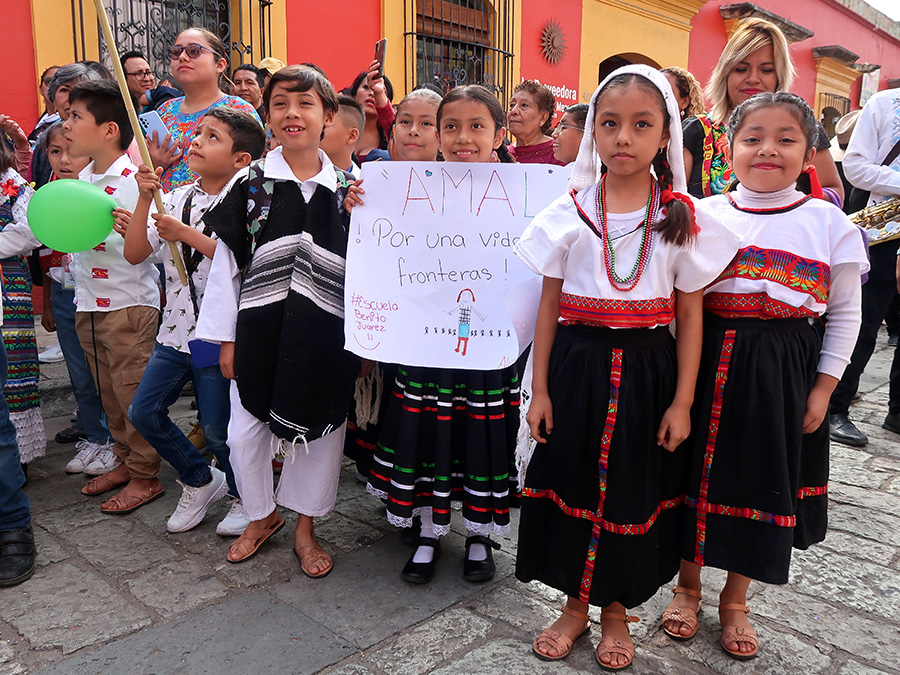

At last Thursday’s calenda (parade), smiling school groups, some wearing traditional dress from the various regions of Oaxaca, held handmade signs proclaiming “Yes to peace no to war,” “Peace is achieved with love and understanding,” and for a “Life without borders.” Giant marmotas whirled, flashing messages of “Welcome” and “Amal, you are not alone” while a band played and China Oaxaqueña dancers danced their way down Oaxaca’s walking street. All the while, an amazingly lifelike Amal waved, shook hands, radiated with gratitude, and carried herself with dignity as she made her way from Santo Domingo to the Cathedral. I wasn’t the only one with tears in my eyes.
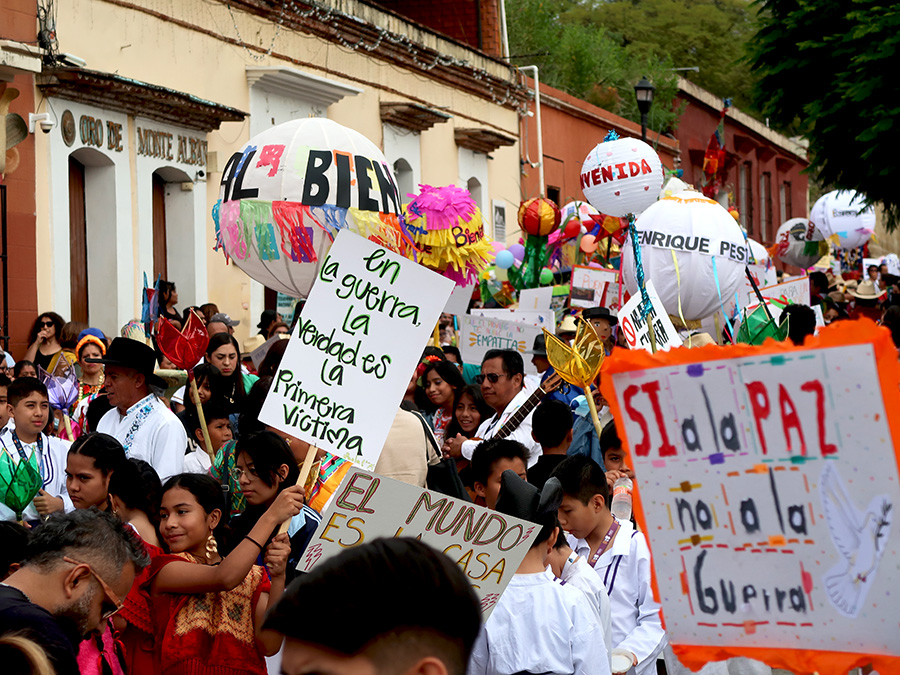
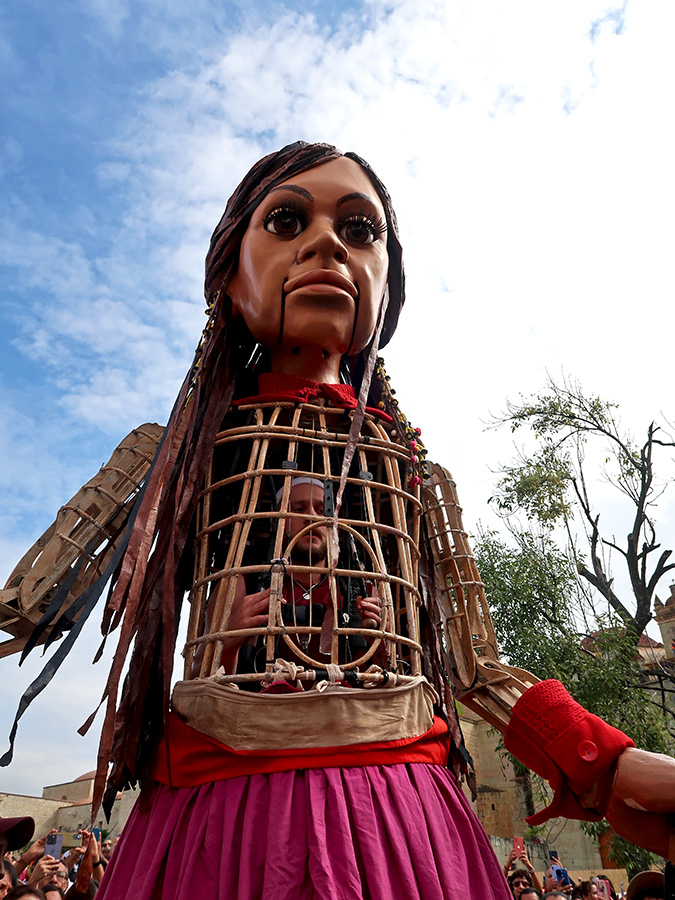


While in Oaxaca, Amal also visited Monte Albán to take in the spectacular archaeological zone, Santa María del Tule to try to hug the largest (in circumference) tree in the world, and 20 de noviembre market to receive a huge loaf of bread — a symbol of alleviating world hunger. Her last stop in Oaxaca was at Parque Morelos to bring her message of hope and support to the migrant families passing through Mexico on their way from Venezuela, Haiti, El Salvador and Nicaragua bound for the USA. It is in this park, a tireless group of volunteers from the non profit, Centro de Apoyo para Migrantes Universales Collin A.C., feed the unrelenting stream of refugees seven days a week. They also accept donations of clothing, blankets, backpacks, toiletries, and money. Click on their website for how and where to donate and/or to volunteer.
Posted in Celebrations, Culture, Holidays, Travel & Tourism, tagged El Día de Acción de Gracias, guajolotes, Little Amal, markets, Mercado Hidalgo, Mexico, Oaxaca, photos, popular travel destinations, produce, Thanksgiving, turkeys on November 23, 2023| 11 Comments »
I’ve always liked Thanksgiving — and not just because, after I turned 12, my aunt would pour a little red wine in a shot glass for my cousin and me. It’s one of the least commercial US holidays, if one discounts the whole “black Friday” phenomenon. And, it isn’t wrapped in flag waving. It’s a day set aside for a communal sharing of Mother Nature’s bounty, counting our blessings, and acknowledging and giving thanks for the assistance of the dark-skinned original human inhabitants of the Americas. What a novel idea!
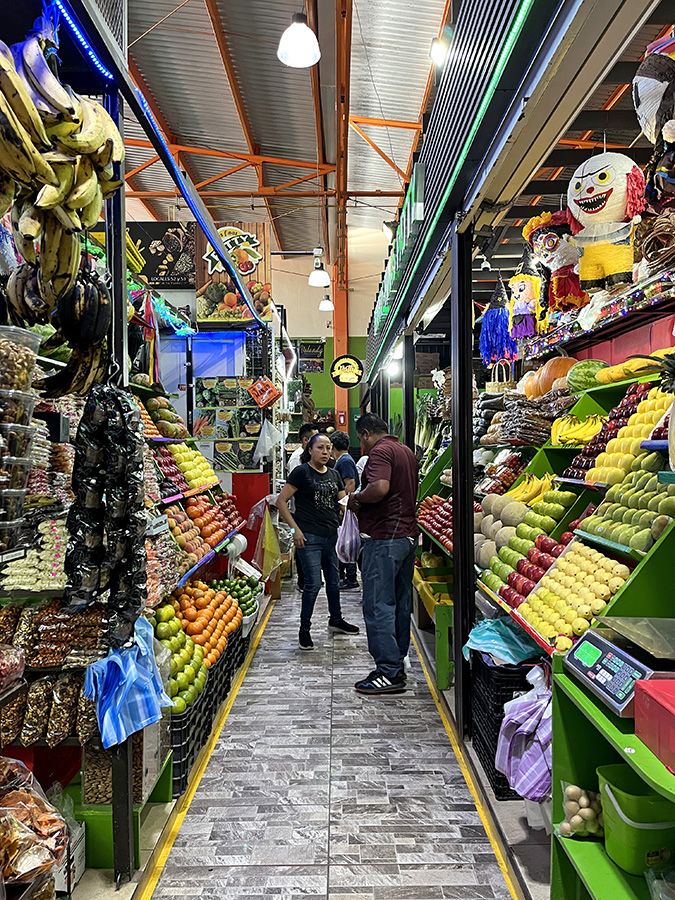
I will be sharing this day with my apartment complex neighbors and some of our favorite friends. We have completed our major shopping expeditions in search of fresh cranberries, brussel sprouts, Vidalia onions, and other ingredients not commonly found in Oaxaca to contribute to our feast. (Thank you, Mercado Hidalgo!) Two small turkeys (2 because none of our ovens are big enough to fit a 20 lb turkey) have been purchased and we will all be contributing a side dish or two. It’s a busy day in this neighborhood!

Besides being thankful for my loving and supportive family, wonderful friends (both old and new), dedicated and encouraging blog readers (Yes, you!), I’m extremely grateful for having the privilege of having a home living among people whose ancestors first cultivated corn 10,000 years ago in this beautiful valley.

And, not only corn, archaeologists have discovered evidence of turkey domestication 1,500 years ago in the valley of Oaxaca’s Mitla Fortress. According to Gary Feinman, Field Museum curator of Mesoamerican anthropology, “It’s a bird very, very similar to what a lot of people are going to eat on Thursday.”

My cranberry/pear relish is in the refrigerator chilling. However, before making the dressing, I’m headed off to join with Little Amal in a calenda down the Macedonio Alcalá from Santo Domingo de Guzmán to Catedral de Nuestra Señora de la Asunción — bringing her message of “hope for displaced people everywhere, especially children who have been separated from their families.”
¡Feliz Día de Acción de Gracias!


 Mexican Peso Converter
 View From Casita Colibrí