Not seeing sights like this up here in el norte…

Ahhh… finding one’s niche in Oaxaca!
Posted in Creativity, Culture, Religion, Travel & Tourism, tagged Jesus, Mexico, niches, Oaxaca, photos, shadows, street scenes, telephone poles on January 3, 2020| 4 Comments »
Not seeing sights like this up here in el norte…
Ahhh… finding one’s niche in Oaxaca!
Posted in Casita Colibrí, Celebrations, Creativity, Culture, Food, Holidays, Travel & Tourism, tagged Ayotzinapa, cactus flowers, candles, cocineras, construction workers, convite, cooking, cooks, Danza de la Pluma, danzantes, Mexico, nacimiento, Nativity scenes, New Year's Eve, Oaxaca, photos, San Juan Guelavía, street art, tamales, Teotitlán del Valle, Tomb 7 treasures on December 31, 2019| 13 Comments »
Looking in the rear view mirror at images from 2019. They bring fond memories of life in Oaxaca — ferias, festivals, food, and friends, not to mention exhibitions, random street scenes, and the unexpected at Casita Colibrí. They were also a reminder of many days and nights spent in Teotitlán del Valle this year.
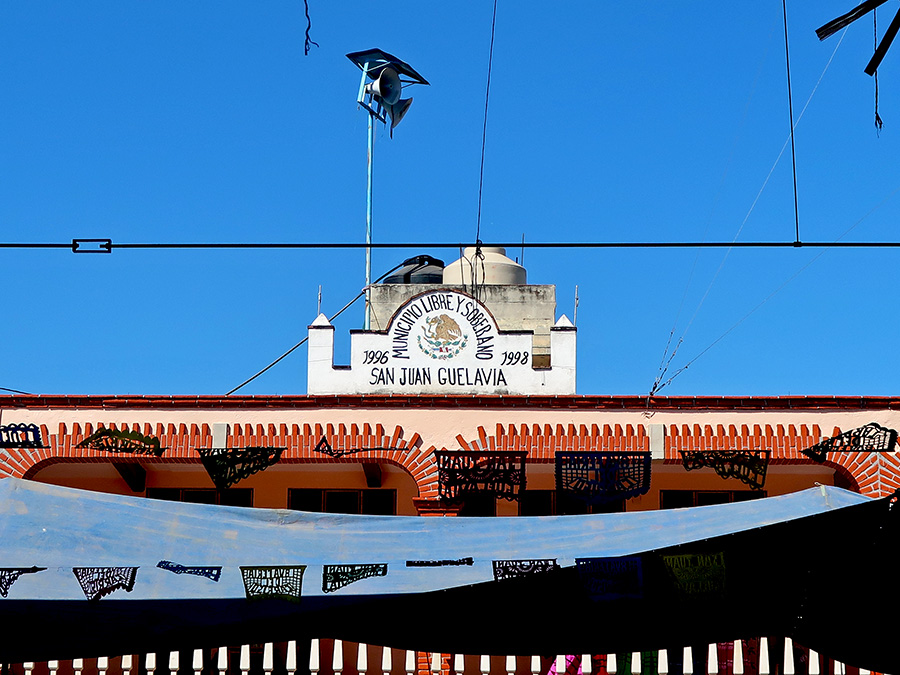
January – San Juan Guelavía town hall.

February – Wall on Niños Heroes, remembering the Ayotzinapa 43.
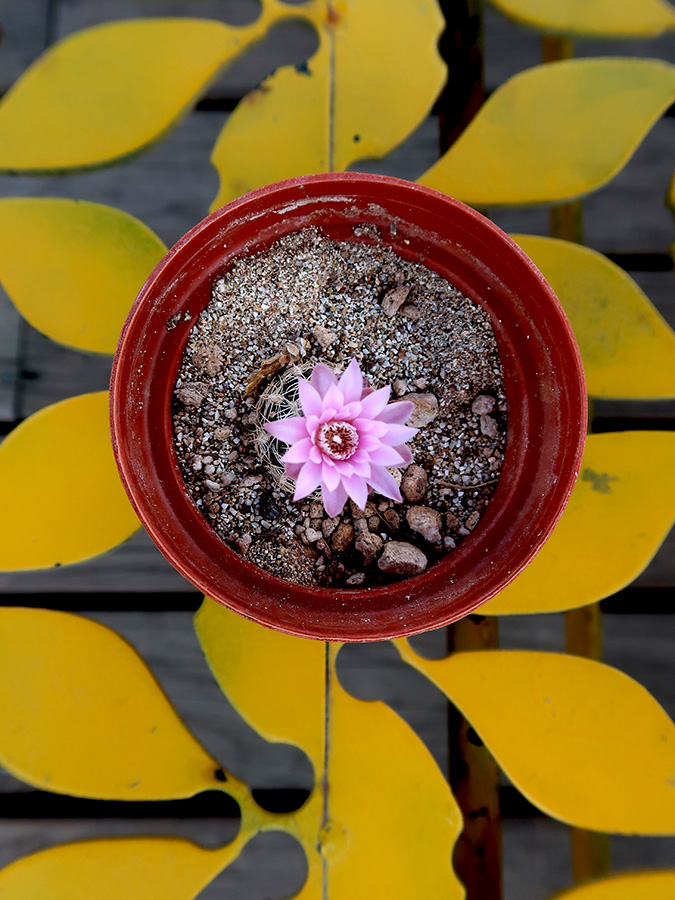
March – Cactus flower on the Casita Colibrí terrace.

April – View from a gas station along Carretera Federal 175.

May – Construction assistance from the balcony of Casita Colibrí.
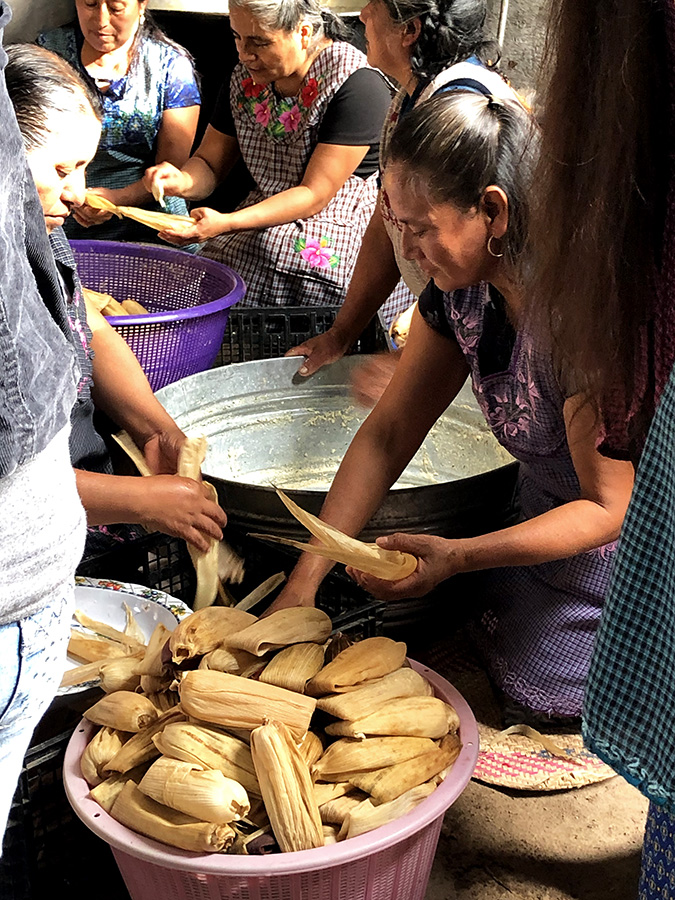
June – The tamales brigade at a 50th birthday fiesta in Teotitlán del Valle.

July – Newly made candles in Teotitlán del Valle.
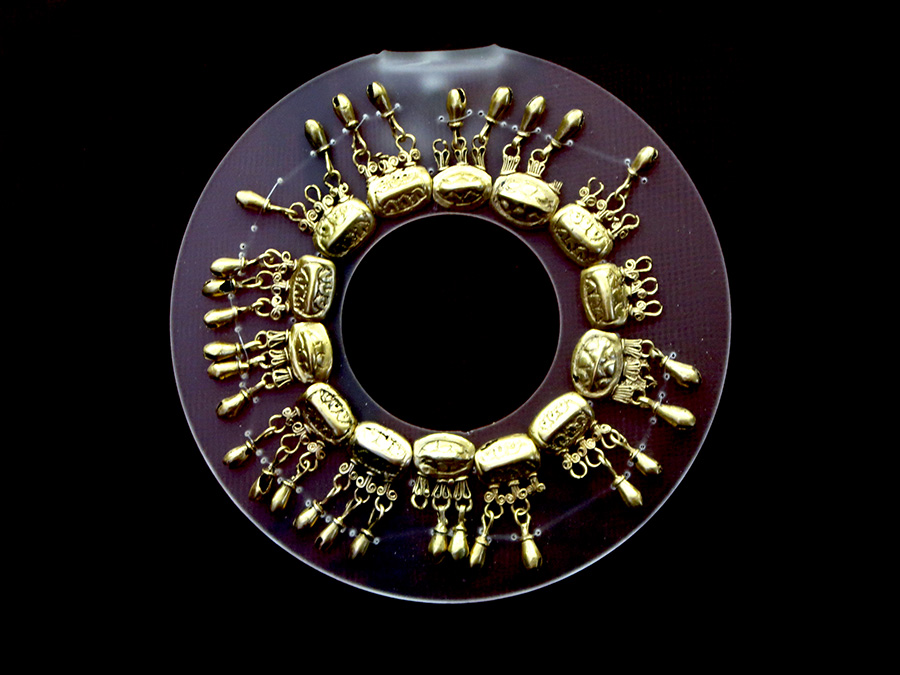
August – Necklace from Monte Albán Tomb 7 exhibition at the Museo de las Culturas de Oaxaca.

September – Convite during the Fiesta a la Natividad de la Virgen María in Teotitlán del Valle.

October – Danza de la Pluma at Fiesta de La Virgen del Rosario in Teotitlán del Valle.
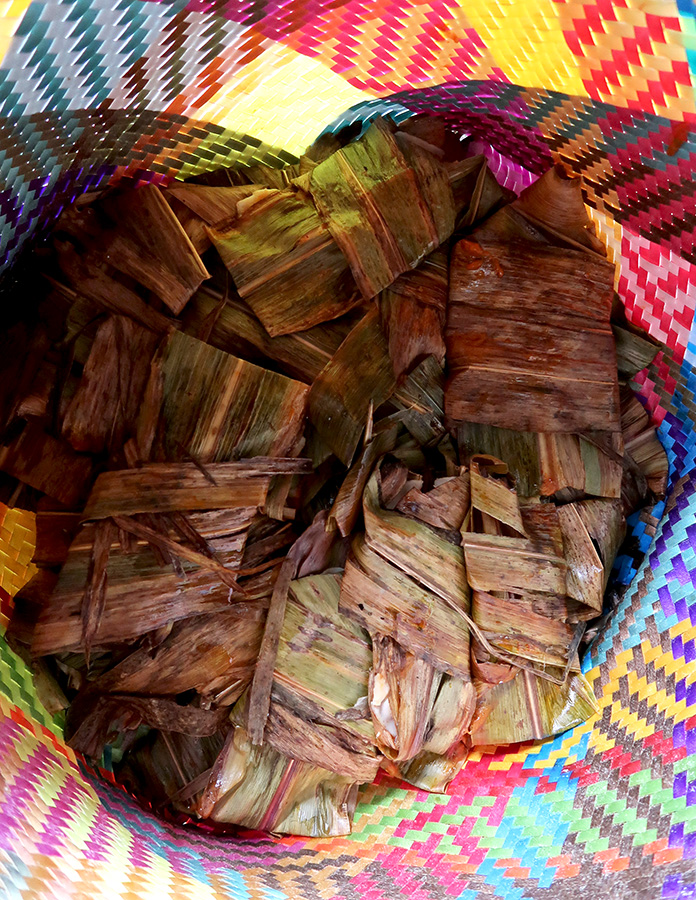
November – Día de Muertos tamales in Teotitlán del Valle.

December – Nacimiento (nativity scene) in the Plaza de la Danza.
Many thanks to all my wonderful blog readers — for reading, for commenting, for sharing, for the opportunity to meet some of you, and for inspiring me to continue blogging from my rooftop terrace in Oaxaca. Wishing you all the very best in 2020!!!
Posted in Creativity, Culture, Markets, Travel & Tourism, tagged art, artisan markets, farmers' market, markets, murals, Oaxaca, organic market, photos, Pochote Organic and Artisan Market, Pochote Xochimilco Mercado Orgánico y Artesanal, popular travel destinations, wall art on December 28, 2019| 4 Comments »
Hidden behind community tables and surrounded by food stalls, produce, textiles, and artesania, is a wall of murals at the newest location of the Pochote Xochimilco Mercado Orgánico y Artesanal.


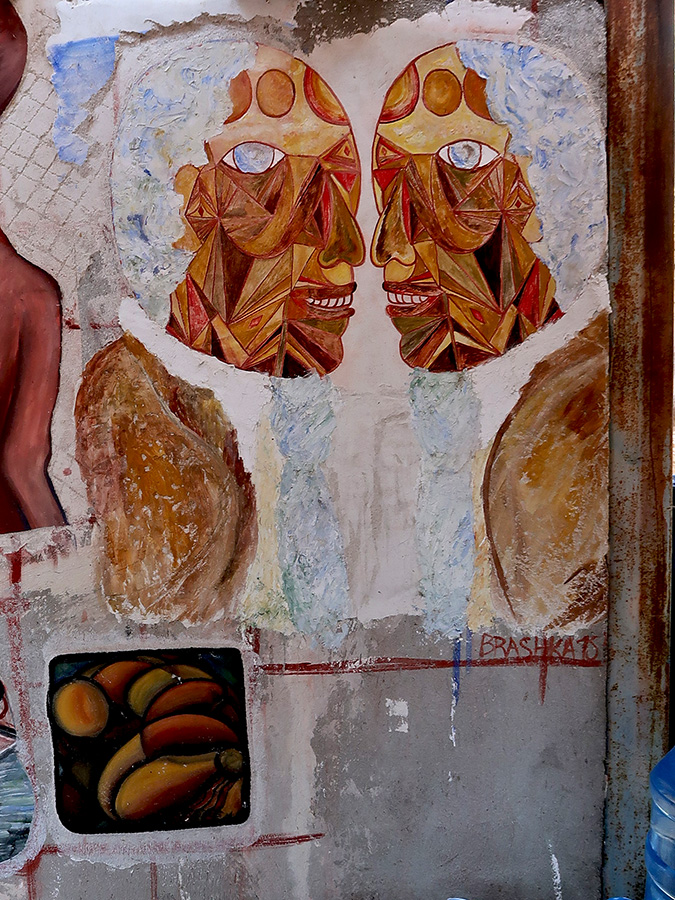
This incarnation of the Pochote Organic and Artisan Market is located in Colonia Reforma at Calle Almendros #417 (between Manuel Ruiz and Heroico Colegio Militar) and is open Friday through Sunday from 8:00 AM to 4:00 PM.
Posted in Celebrations, Creativity, Culture, Holidays, Music, Travel & Tourism, tagged 'Twas the Night Before Christmas, “Lalo” Guerrero, childhood home, Christmas decorations, Christmas lights, Christmas traditions, Christmas trees, Eduardo Guerrero, Mexico, Oaxaca, Pancho Claus, photos, poem, popular travel destinations, Santa Claus on December 24, 2019| 10 Comments »
It’s a quiet Nochebuena (Christmas Eve) in my childhood home here in el norte. There are no sparklers to wave, no nacimiento (nativity scene) stands in the town square, and no posadas have knocked on the front door. Instead, my younger son and I bought a Douglas Fir and decorated it with four generations of Christmas ornaments hauled down from the attic. Stockings hang from the mantle, gifts are piling up, and in our dreams we channel our inner child and await Santa’s arrival.


In Oaxaca, a Christmas tree and holiday lights went up in the zócalo, along with plantings of nochebuenas (poinsettias), at the beginning of December. A nacimiento was constructed in the Plaza de la Danza, and if one looks up a piñata or two might be spotted floating high above.


As has been my blog’s annual Christmas Eve tradition: “Pancho Claus” by the man known as the “father of Chicano music,” Eduardo “Lalo” Guerrero. This year’s version is the original from 1956. The song is a delightful parody of the Clement C. Moore classic, “‘Twas the Night Before Christmas” — and it has inspired real life Tex-Mex Santas.
‘Twas the night before Christmas and all through the casa
Mama she was busy preparing the masa
To make the tamales for the tamalada
And all the ingredients for the enchiladas
Papa in the front room with all the muchachas
Was dancing the mambo and doing the cha cha
My brothers and sisters were out in the hall
Listening to Elvis singing rock ‘n roll
When all of a sudden there came such a racket
I jumped out of bed and I put on my jacket
I looked out the window and in front of the house
Was my old uncle Pedro as drunk as a louse
He ran in the casa he grabbed the guitarra
He let out a yell – “Ay, Ay, Ay” and sang Guadalajara,
“Guadalajara Guadalajara, Guadalajara Guadalajara”
I was starting to wonder as I lay there alone
How old Santa Claus was to visit my home
With all of this noise they would scare him away
When all of a sudden I hear someone say
Hey Pablo, Chuchito Hey! Arriba! Gordito, Jose
Get up there you bums or you don’t get no hay
And then to my wondering eyes did appear
Eight cute little donkeys instead of reindeer
They pulled a carreta that was full of toys
For all of us good little girls and boys
The fat little driver waved his big sombrero
And said Merry Christmas! Feliz Año Nuevo!
That means “Happy New Year”
And then I hear him sing
I am Santa’s cousin from south of the border
My name’s Pancho Claus and I bring you your order
I hear him exclaim as he drove past the porches
“Merry Christmas to all and to all Buenas Noches”
As a gift to us all, this year “Pancho Claus” the book, with illustrations by Bob Mackie, was published, along with “Pancho Claus Volume 2” featuring the lyrics of another Lalo Guerrero Christmas song, “Mario from the Barrio.” (El Paso Herald Post, Dec. 22, 2019) I’ve put them both on my list!
Many thanks for reading my blog. I wish you ¡Felices Fiestas! and peace and joy through the new year.
Posted in Celebrations, Creativity, Culture, Exhibitions, Holidays, Travel & Tourism, tagged dried corn husks, dried flowers, flor inmortal, Land of Cultivated Dreams, Mexico, Night of the Radishes, Noche de Rabanos, Oaxaca, photos, popular travel destinations, radishes, Totomoxtle on December 21, 2019| 1 Comment »
Noche de Rábanos is coming and, while I’m shivering in California, I’m dreaming warm Rábanos, Totomoxtle, and Flor Inmortal dreams. This year promises to be bigger than ever — so big, the exhibition and competition have been extended to two days. December 22, 2019 will be reserved for Flor Inmortal, Totomoxtle, and, in the morning, the children’s category of rábanos.
Category: Flor Inmortal (Dried flowers)…

“Delegación de las Chinas Oaxaqueñas” by Juliana Galicia Péerez (2017)
Category: Totomoxtle Natural (Corn husks, natural color)..

“Esplendidas artesanías de Oaxaca” by Esmeralda Chavez Miguel (2017)
Category: Totomoxle Decorado (Corn husks, colored)…
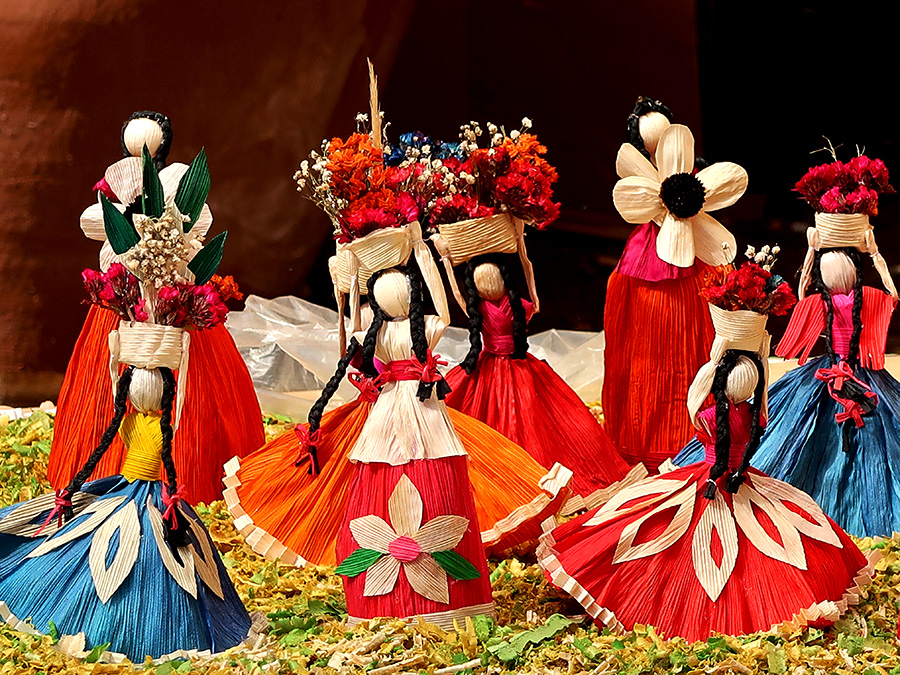
“Chinas Oaxaqueñas de la Guelaguetza” by Pedro Leobardo Díaz Márquez (2017)
And, as is customary, the carved radish exhibition and competition will be held December 23. Get there in the morning to watch the artisans setting up and putting the final touches on their creations or in the late afternoon/evening to see the finished works and award winners.
Category: Rábano Libre (Radishes, non-traditional and contemporary themes)…

“Mirada de la noche” by Concepción del Carmen López Guzmán (2017)
Category: Rábano Tradicional (Radishes, Biblical and traditional Oaxaca themes)…
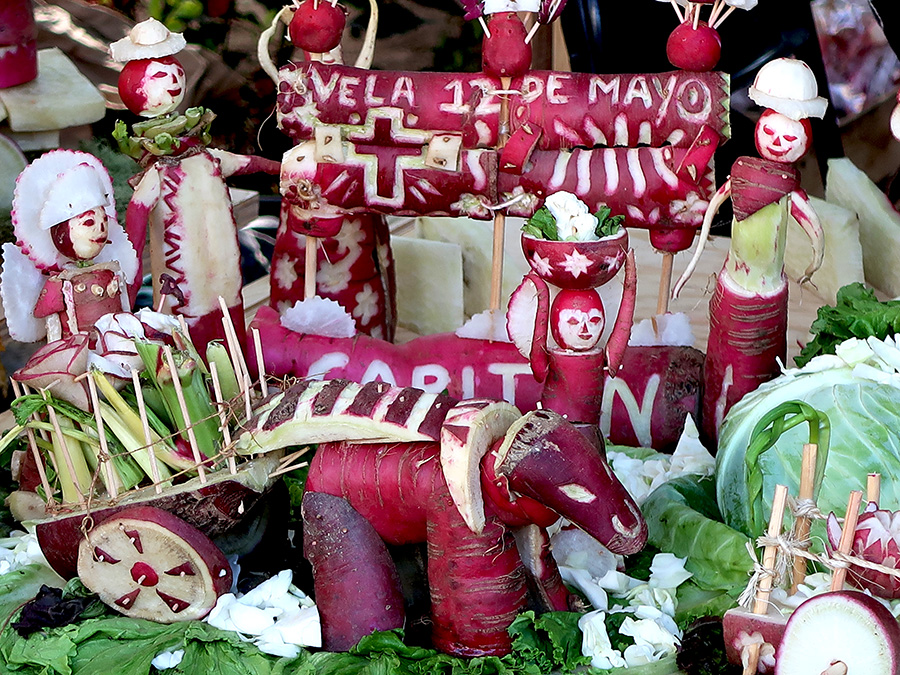
“Regada de la vela 12 de mayo” by Rosa del Alba Miguel Morales (2017)
Category: Rábano Tradicional…
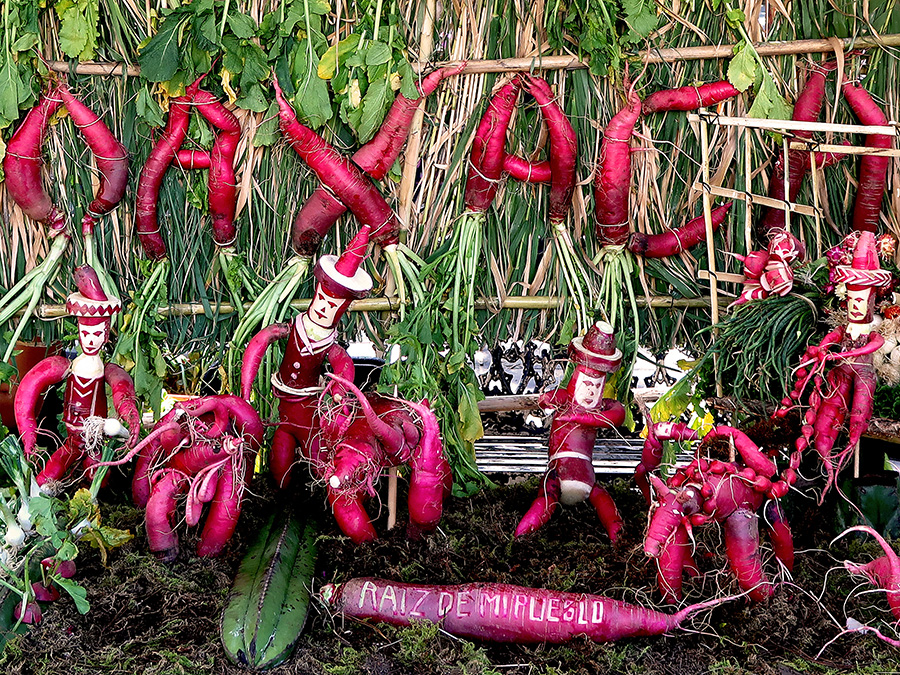
“Raíz de mi pueblo” by Roberto Geovani Aguilar (2017)
To all in Oaxaca, enjoy this year’s, “Oaxaca, Land of Cultivated Dreams!”
Posted in Creativity, Environment, Travel & Tourism, tagged artists taking action, climate action, environmentalism, hearts, Mexico, Noel Gómez Lorenzo, Oaxaca, photos, plastic recycling, recycling, recycling hearts, saving the planet, urban art on December 18, 2019| 7 Comments »
In late October 2019, I stumbled on this installation on the Alcalá in front of Santo Domingo. The message on the heart to the left, in English read, “Knowledge of degradable and biodegradable garbage. I think and therefore recycle.” – Sandra Zárate Garcia
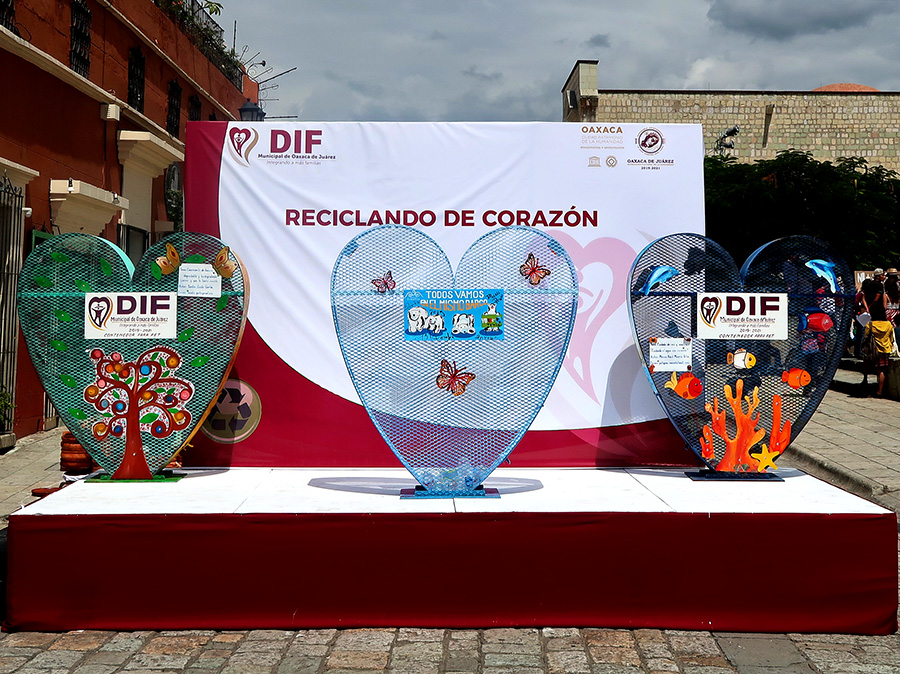
The message on the heart to the right declared, “Care of rivers and seas, ‘Caring for water with a heart.'” – Marcos Raúl Moreno Félix

And, it wasn’t just there. Hearts, enhanced by fifteen artists and waiting to be filled with recyclables, began cropping up in parks and public spaces throughout the city.

Yikes, could it be? Oaxaca is finally joining the world of recycling. ¡Qué milagro!
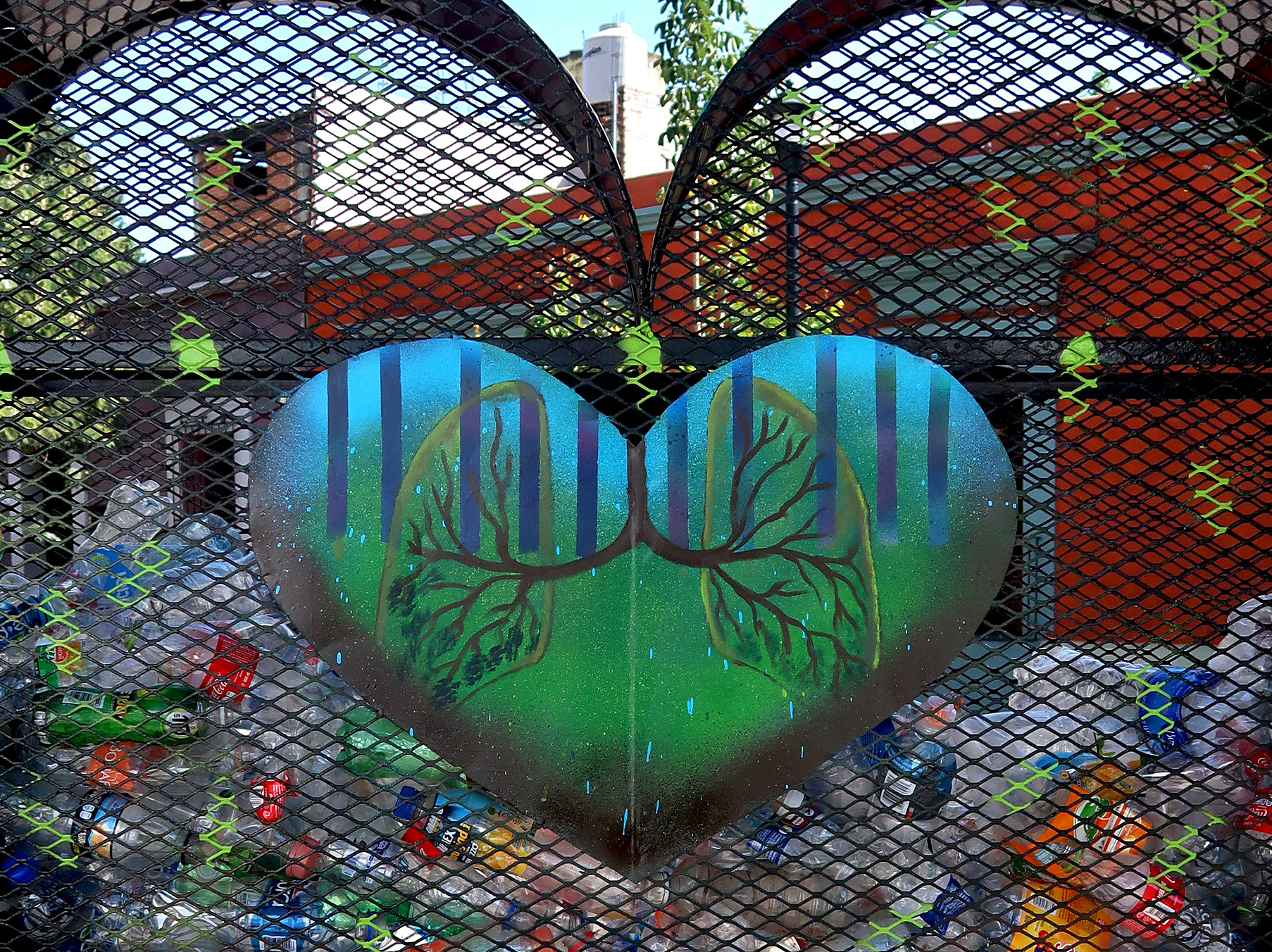
It is a project of the DIF, a governmental agency charged with strengthening and developing the welfare of the Mexican families

According to mayor Oswaldo García Jarquín, “this campaign is the beginning to truly become aware of the importance of caring for our environment; not because of a fashion, not because of a political vocation or sensitivity issue, but because it is an already indispensable issue and Oaxaca must be an example at the national level and worldwide.”

The President of the Consultative Council of the Municipal DIF, Patricia Benfield López, “recalled that, with this initiative, it helps reduce the amount of solid waste and encourage its use, since the resources obtained from the sale of waste will be invested in the manufacture and installation of more structures. While PET caps will be destined to associations dedicated to care for girls and boys with cancer.”
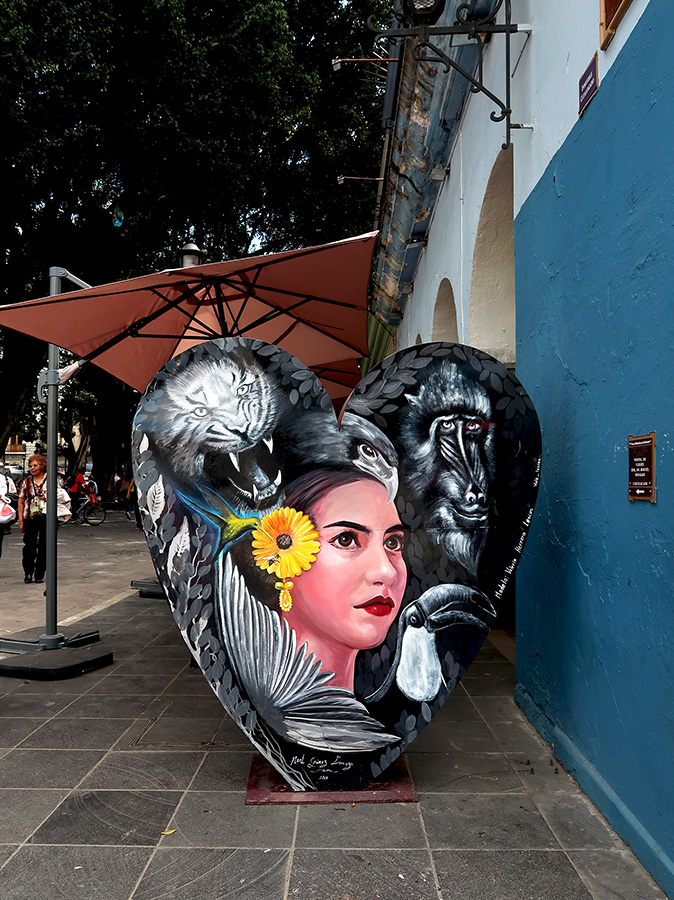
My favorite, by the painter, Noel Gómez Lorenzo, is in a very prominent spot on the zócalo. May the hearts of Oaxaca be filled each and every day!
Posted in Celebrations, Creativity, Culture, Exhibitions, Museums, People, Religion, Travel & Tourism, tagged Día de la Virgen de Guadalupe, Demetrio García Aguilar, exhibitions, Mexico, myths and legends, Oaxaca, photos, Rosas y Revelaciones, Roses and Revelations, sculptures, Tonantzin, Virgen de Guadalupe, Virgin of Guadalupe on December 12, 2019| 6 Comments »
I’m in el norte and it is all quiet on the norther front on this day honoring Our Lady of Guadalupe. In fact, the sound of silence was one of the things that struck me as the taxi drove me and my luggage through the streets of my little hometown at the base of Mount Tamalpais. The Oaxaca I left a few days ago, was a cacophony of rocket booms and bangs, church bells ringing, processions with enthusiastic bands, and barking dog. From my terrace, yesterday and today, I would have been treated to sound on steroids honoring Guadalupe. Funny what one gets used to…
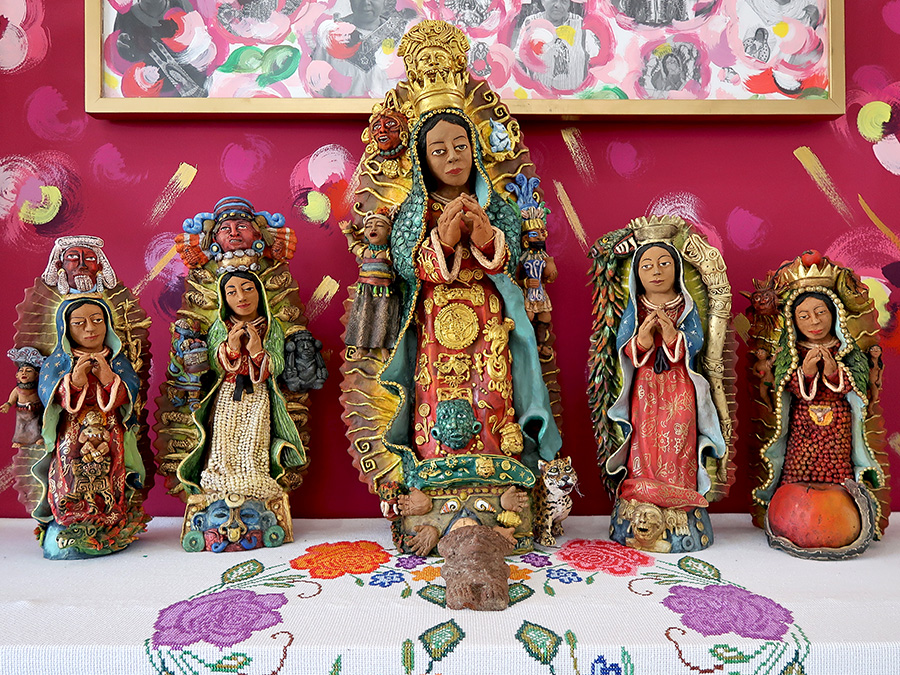
The above images of the Virgin of Guadalupe were created for an altar dedicated to Guadalupe at the Roses and Revelations textile exhibition and are by painter and sculptor, Demetrio Garcia Aguilar, a member of the talented Aguilar family of potters of Ocotlán de Morelos, Oaxaca. The indigenous symbols used pay homage to the pre-Hispanic fertility and earth goddess, Tonantzin (“Our Sacred Mother” in the Nahuatl language), whose temple at the top of Tepeyac Hill had been destroyed by the Spanish conquerors. Syncretically, this became the site where the apparition the Virgin Mary appeared to Juan Diego asking that a church be built on that site and thus the story of the Virgin of Guadalupe began — another step in the blending of the old and new religions and the original peoples and the Spanish newcomers.
By the way, the Roses and Revelations exhibition is on tour and is currently at the Museo Nacional de Culturas Popular in Coyoacán, in Mexico City. It will run to April 19, 2020.
Posted in Creativity, Culture, Religion, Travel & Tourism, tagged Mexico, Oaxaca, photos, popular travel destinations, Virgen de Guadalupe, Virgen de Juquila, Virgen de La Soledad, Virgin of Guadalupe, Virgin of Juquila, Virgin of Solitude on December 7, 2019| 3 Comments »
It began long before dawn this morning; the cohetes (rockets) announcing the celebrations of Oaxaca’s three virgins. First up is the Virgin of Juquila on December 8.
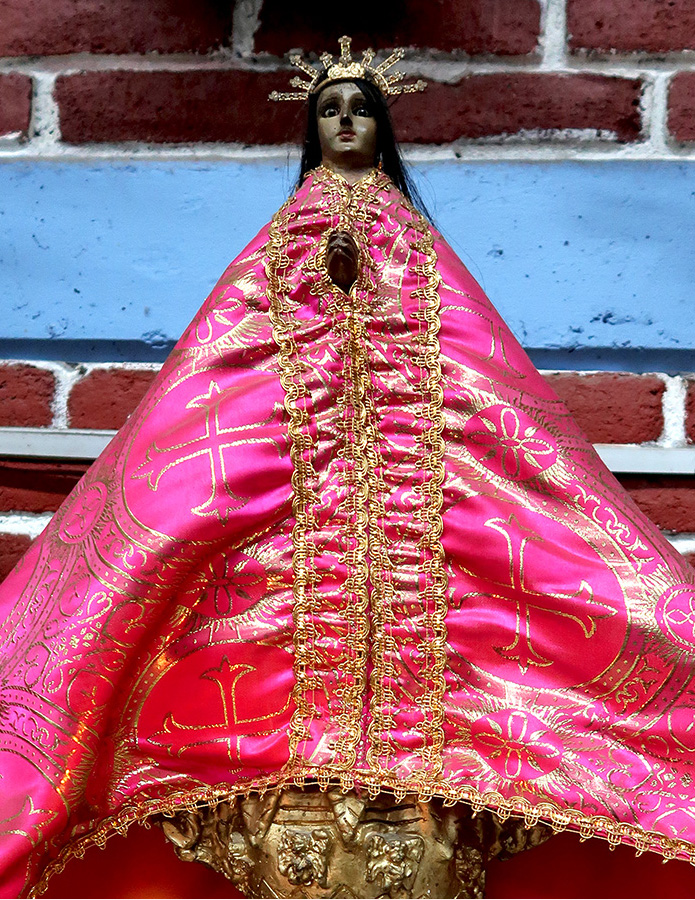
Image of la Virgen de Juquila at a palenque in Santa Catarina Minas.
Next up is the Virgin of Guadalupe on December 12.
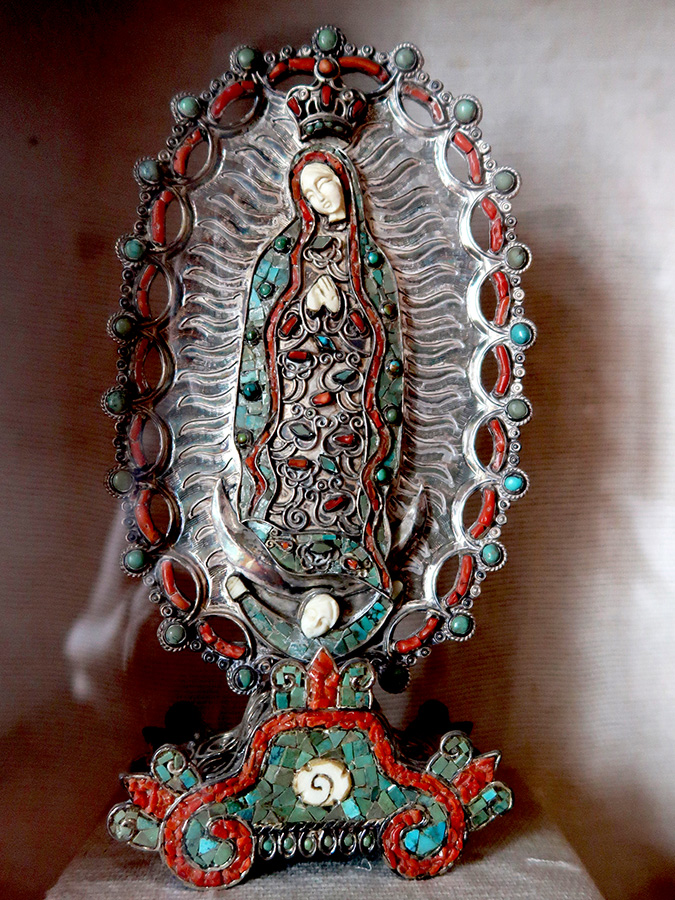
Decorative image of la Virgen de Guadalupe at the Museo Belber.
And, to top the celebrations off, the feast day of the Queen of Oaxaca, the Virgin of Solitude on December 18.
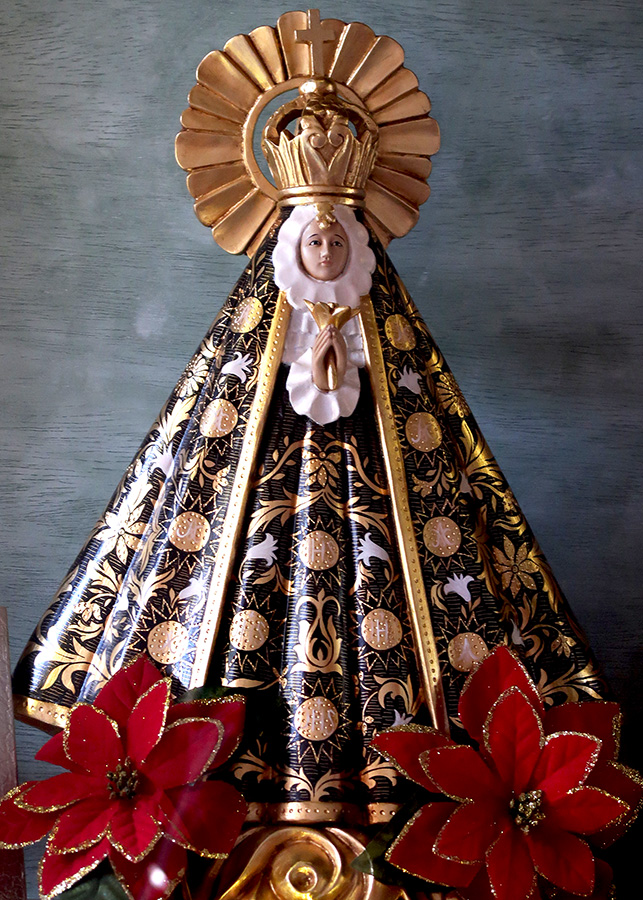
La Virgen de la Soledad through the window of a store on Abasolo.
December may not be quiet, but the celebrations are amazing!
Posted in Food, Markets, Travel & Tourism, tagged grocery shopping, healthy eating, Mexico, Oaxaca, photos, popular travel destinations, salads, shopping baskets, vegetables on December 4, 2019| 6 Comments »
Shopping baskets ready and waiting to be filled…

Bounty from Abastos ready and waiting to be prepared…

Salad ready and waiting to be eaten…

There was more, but I was too busy eating to stop and take photos!
Posted in Creativity, Culture, Travel & Tourism, tagged Mexico, murals, Oaxaca, photos, popular travel destinations, San Martín Tilcajete, street art, Tlacolulokos, urban art, wall art on November 30, 2019| 2 Comments »
Yesterday’s excursion south of the city brought an unexpected surprise.
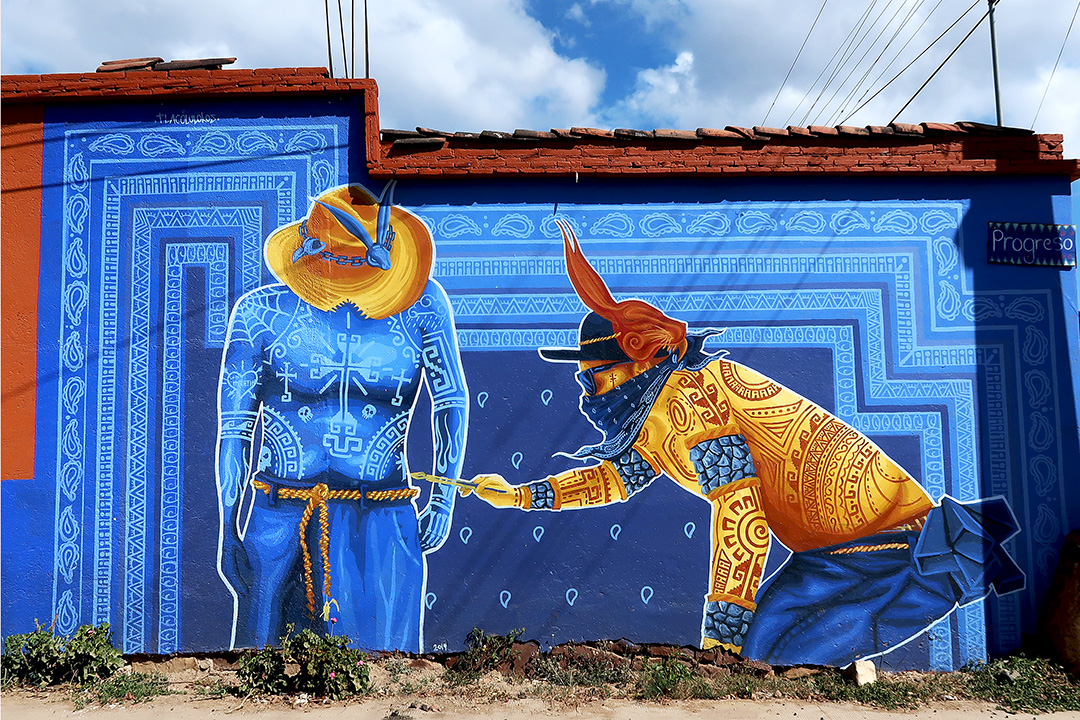
In San Martín Tilcajete…

I spotted a mural by my favorite mural colective.
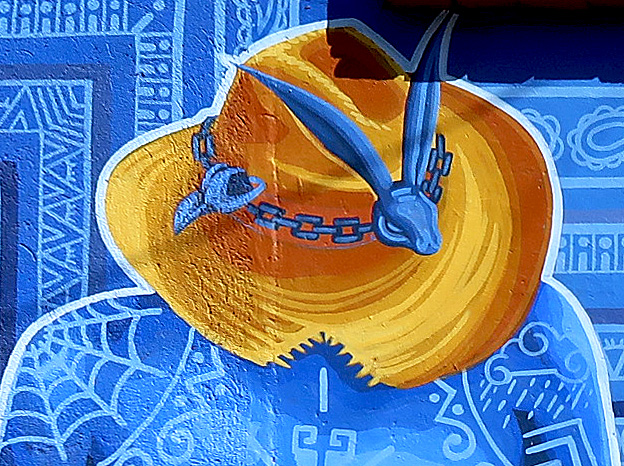
A tip of the hat to the Tlacolulokos of Tlacolula de Matamoros.
Posted in Creativity, Culture, tagged face on brick wall, Mexico, Oaxaca, photos, popular travel destinations, street art, wall art on November 20, 2019| 1 Comment »
Friends have arrived in Oaxaca — lots of time for orienting, eating, shopping, and entertaining, but not much time for blogging.
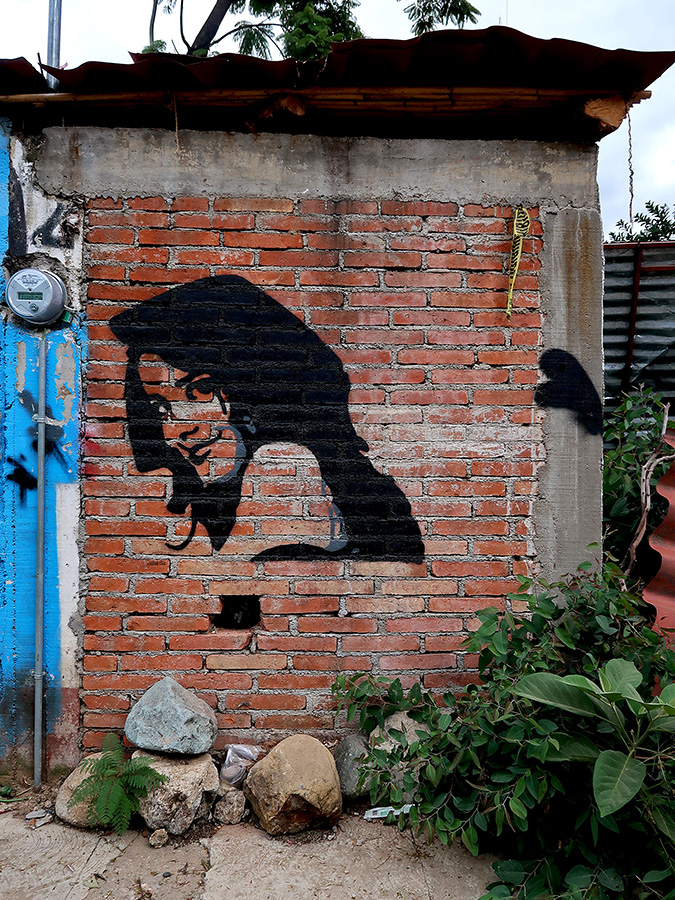
Alas, only time for a come hither look.
Posted in Creativity, Culture, Textiles, Travel & Tourism, tagged Chiapas, El Camino de los Altos, indigenous textiles, Mexico, Oaxaca, photos, textiles on November 16, 2019| 8 Comments »
I always look forward to the arrival of the folks from El Camino de los Altos — the non-profit textile design organization created in 1996 that brings French designers together with Mayan weavers from the highlands of Chiapas. (Click images to enlarge)



Today was the first day of a 3-day expo-venta showcasing their collection that “conserves traditional techniques and motifs while offering fresh designs and a range of refined colors on colorfast cotton.” — El Camino de los Altos brochure



While the 150 weavers use traditional prehispanic backstrap looms, their designs and color palette are contemporary and sophisticated. Their work is of the highest quality — be they tablecloths, pillow shams, bags, rebozos (shawls) that can double as table runners, or coin purses.


If you are nearby and love textiles, I would strongly urge you to make your way over to Niños Heroes 213, Barrio Jalatlaco, Oaxaca city before the show and sale ends on Monday, November 18. The hours are: 11:00 AM to 8:00 PM (Sat. and Sun.) and 11:00 AM to 6:00 PM (Mon.). By the way, the expo-venta space is large, light and airy — all the better to see these beautiful pieces.
Posted in Creativity, Culture, tagged Aler, Dyg'nojoch, Efedefroy, Mexico, Oaxaca, photos, stencil art, street art, Tlacolula de Matamoros, Villa de Zaachila, wall art on November 13, 2019| 4 Comments »
While I continue to sort through, delete, and process the hundreds of Día de Muertos photos, how about a little more art from the walls of Oaxaca, seen during the last month?

Stencil on a wall in Oaxaca city by artist Efedefroy.

Wall in Tlacolula de Matamoros by the Chiapas artist, Dyg’nojoch.
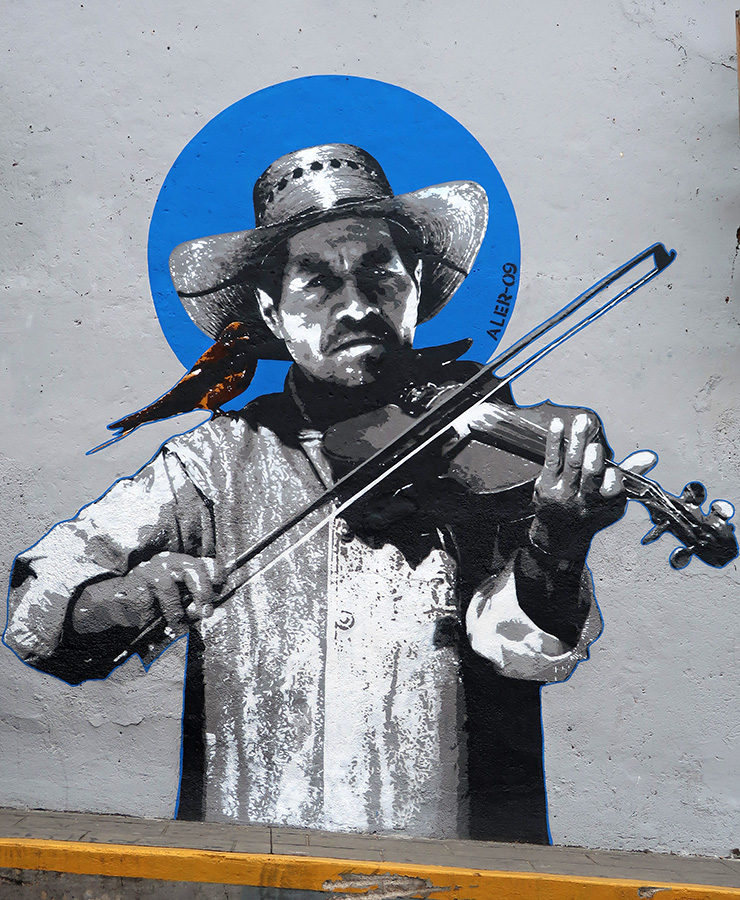
Stencil in Oaxaca city by the artist, Aler.

Seen in Zaachila by unknown artist.
How can one not smile, think a little, and be somewhat intrigued when walking passed art like this?
(ps) If anyone knows who this last piece is by, let me know, so I can give her/him credit.
Posted in Creativity, Culture, Travel & Tourism, tagged Barrio de Jalatlaco, Mexico, molcajetes, mural, Oaxaca, photos, street art, urban art, wall art, woman wearing rebozo, woman with basket on head on November 9, 2019| 4 Comments »

The strength, power, and spirit of Oaxaca seen in a mural on Calzada de la República near Calle La Alianza in Barrio de Jalatlaco.
Posted in Food, Travel & Tourism, tagged comal, cooking, Empanada de Amarillo, empanadas, food, Oaxaca, photos, San Antonino Castillo Velasco, traditional cuisine on November 7, 2019| 4 Comments »
An hour south of Oaxaca city, the Zapotec village of San Antonino Castillo Velasco has much to recommend it. Besides the fields of flowers raised to decorate graves and altars throughout the valley and inspire elaborate floral designs on its blouses and dresses, the cocineras (cooks) of San Antonino serve a distinctive and delicious Empanada de Amarillo — a dish I never miss and one that has earned the village the (perhaps self-proclaimed) title, “world capital of the empanada.”

The main ingredients of the filling are pork broth, chile guajillo, masa, manteca, and cilantro. However, undoubtedly each cook adds her own secret seasoning(s).

Hot off the (tortilla) press, tortillas are placed on the comal to cook.

Once they reach the correct texture, the filling is spooned onto the tortilla and it is folded in half to be cooked, flipped, cooked, and flipped again until ready to serve.

The empanadas are traditionally served on a bed of lettuce and garnished with radishes and lime wedges and there is usually a small dish of pickled onion slices to further enhance the flavor. Yes, I ate the whole thing and it was riquisima!


 Mexican Peso Converter

