… of the night flowering variety. During the hours of darkness, they brighten the terrace with their brilliant white and perfume the air with their sweet scent.

Pitahaya

Cereus

Azucenas
A fleeting gift for the senses, by morning they gone.
Posted in Casita Colibrí, Flora, Gardens, Science & Nature, tagged Azucenas, Cereus, flowers, garden, Mexico, night blooming flowers, Oaxaca, photographs, photos, Pitahaya on June 28, 2015| Leave a Comment »
… of the night flowering variety. During the hours of darkness, they brighten the terrace with their brilliant white and perfume the air with their sweet scent.
Pitahaya
Cereus
Azucenas
A fleeting gift for the senses, by morning they gone.
Posted in Creativity, Culture, People, Tragedy, Travel & Tourism, Violence, tagged #Ayotzinapa9meses, Ayotzinapa, Cristian Tomás Colón Garnica, Escuela Normal Rural Raúl Isidro Burgos, graffiti, Mexico, murals, Normal Rural Ayotzinapa, Oaxaca, photographs, photos, posters, stencil art, street art, teachers’ college, Tlacolula de Matamoros, wall art on June 26, 2015| 4 Comments »
It’s been nine months since 43 students from the Escuela Normal Rural Raúl Isidro Burgos teachers’ college in Ayotzinapa, Guerrero went missing — a traumatic, heartbreaking, and disgraceful anniversary that isn’t going unnoticed. The Missing Mexican Students Case Is Not Closed For 43 Families, nor for the people of Mexico.
Yesterday, in Tlacolula de Matamoros, the signs were impossible to miss, as we walked down the main street. The community continues to remember her son, Cristian Tomás Colón Garnica, one of the Ayotzinapa 43.
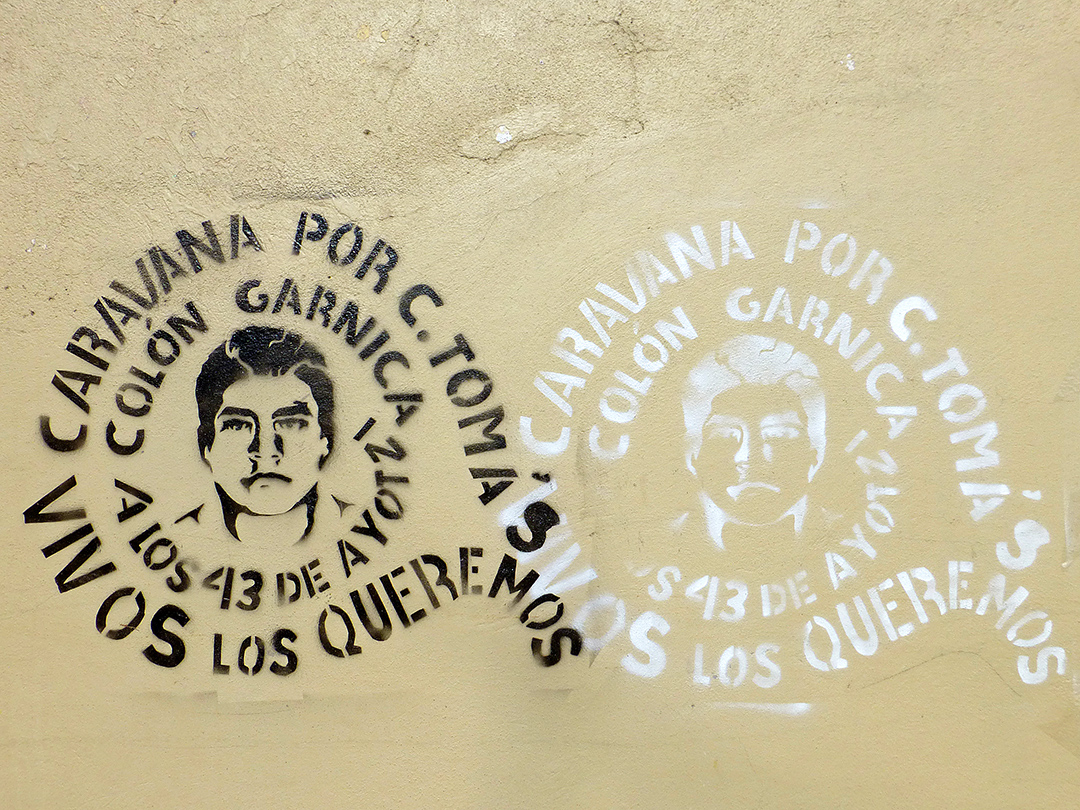 “His father traveled from their land when the abduction of the 43 young normal school students was first reported. ‘I am a day laborer. I make 600 pesos [USD$44.50] weekly, maximum, and that’s when there’s work, because sometimes there is no work. My boy wants to be a teacher. That is the job he wants, but they stopped him, they arrested him … What are we going to do?!'” — from Mexico Voices.
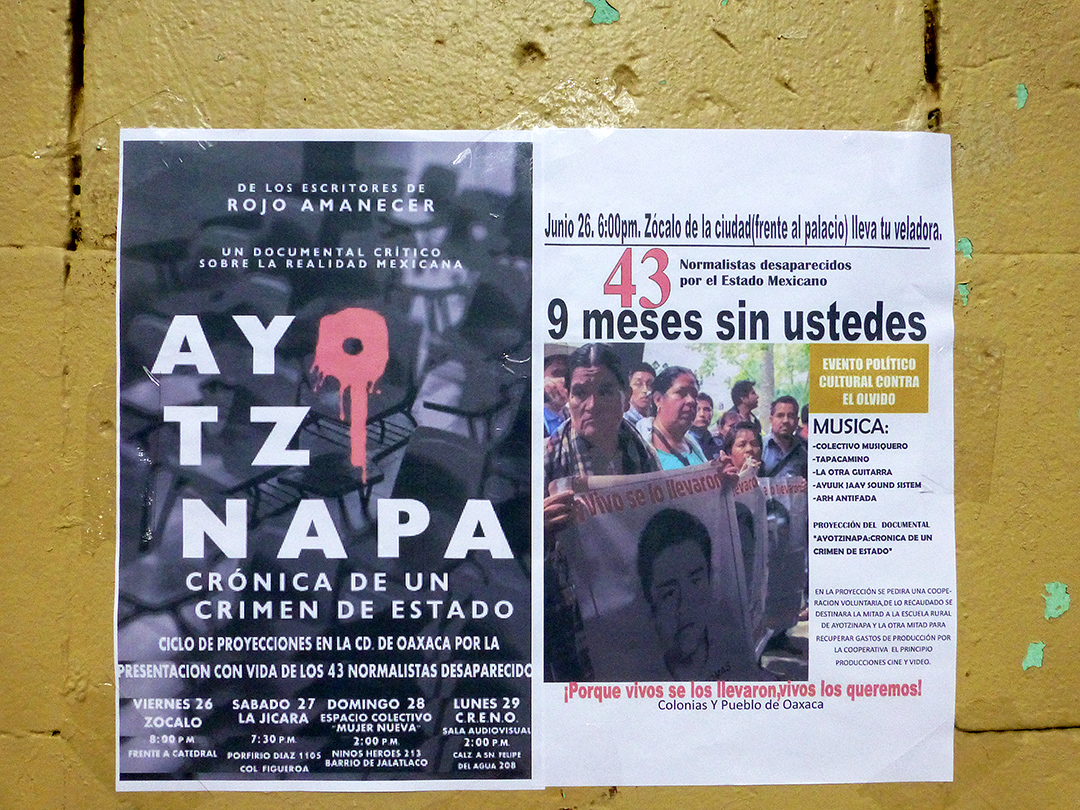 On the wall, near the stencils above, posters announced events in Oaxaca city in remembrance of the students. As the murals at the north entrance to Tlacolula de Matamoros proclaim…
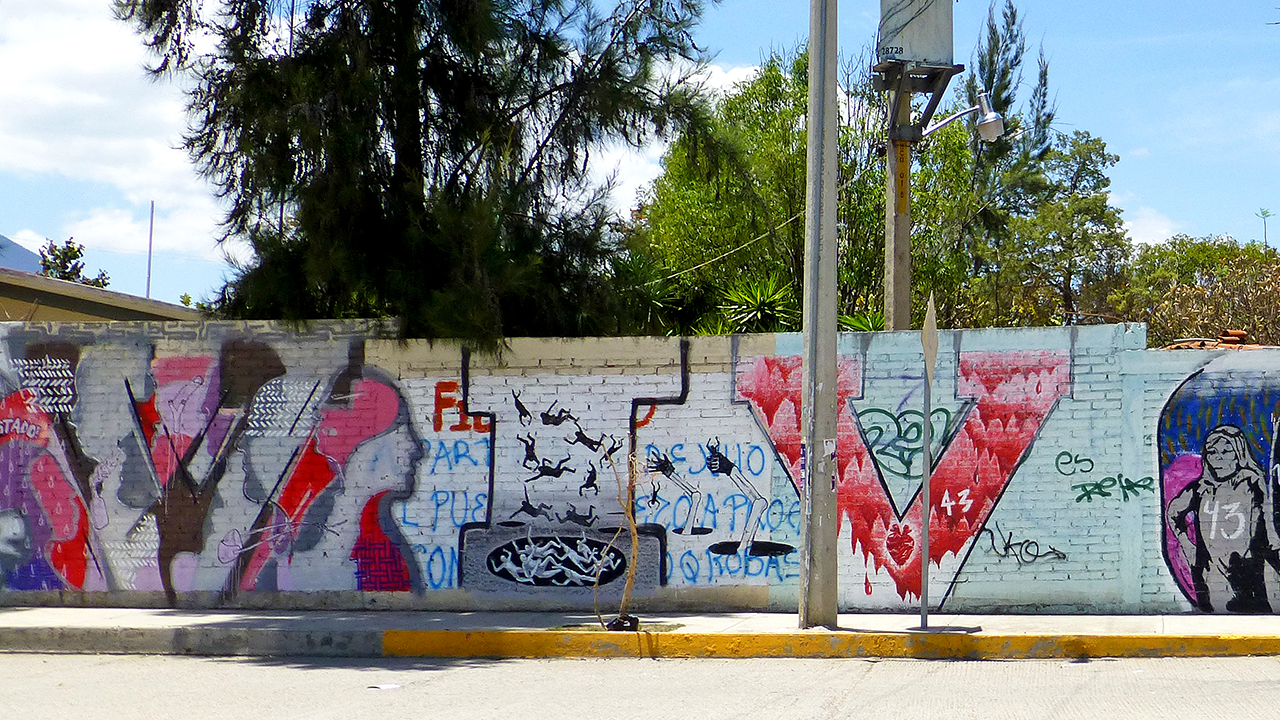


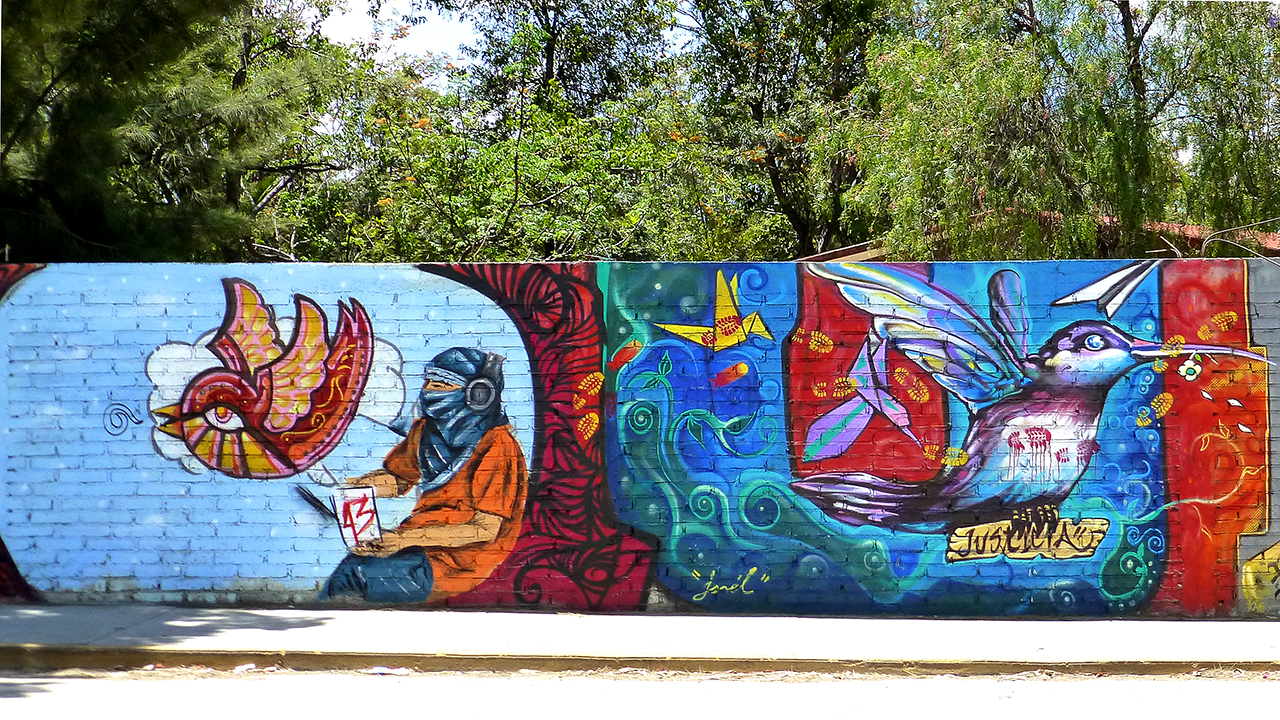


“VIVOS 43 LOS QUEREMOS”
Posted in Creativity, Culture, Transportation, Travel & Tourism, tagged automobiles, cars, Mexico, photographs, photos, popular travel destinations, Volkswagen Beetle, VW bug on June 24, 2015| 1 Comment »
As our journey on Sunday to Santa María Tlahuitoltepec had just gotten underway, Chris and I were engrossed in conversation when I had a whoa-grab-the-camera moment. Across highway 190, just outside the city, a double row of VW Beetles appeared.
 Perhaps, figuring it was safer to pull over rather than having me coming between him and the the steering in an attempt to take photos out the driver side window, Chris offered to pull over.
 Some had been repainted and tricked out, but others had just been lovingly (no doubt) washed and detailed.
 By the time we stopped, we had already passed at least fifty Bugs and the lines continued as we drove off.
 A Classic Car Rally? There was a scattering of other makes of cars, but the Beetles were the overwhelming majority and they ruled!
(Update: Blog reader, shewhodaresnothing, offered the answer. June 22 was Worldwide VW Beetle Day!)
Posted in Creativity, Culture, People, Textiles, Travel & Tourism, tagged blusas, ceñidore, costumes, cultural appropriation, Isabel Marant, Mexico, Mixe, Oaxaca, photographs, photos, popular travel destinations, Santa María Tlahuitoltepec, traditional blouses, traje on June 22, 2015| 18 Comments »
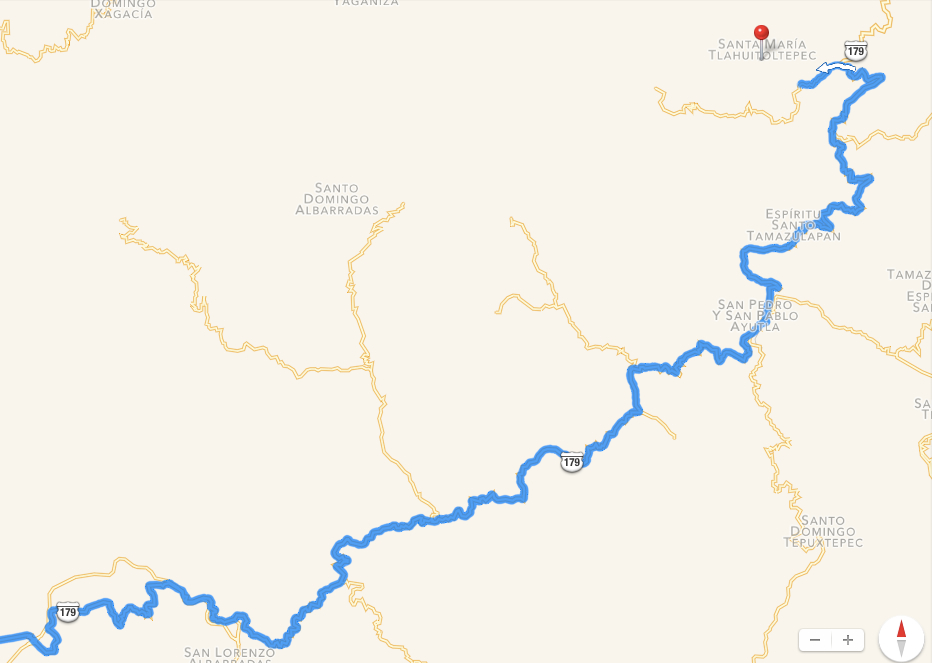
Blogger buddy Chris and I have been talking about returning to Santa María Tlahuitoltepec since our first visit in May 2013. Time flies when you’re having fun and it took the current Theft of a cultural kind controversy to motivate us to hit the long and winding road up into the Mixe. To reach our our journey’s end in the Sierre Norte, our road trip took a little over two and a half hours from the city — on a much improved route 179, I might add.
Reaching the center of town, known for its musical literacy and textiles, Tejas, a youth band, was warming up on the multipurpose municipal basketball court.

Their performance was part of the Domingos de Concierto (concert Sundays). We joined villagers to watch and listen.

Most all of the women “of a certain age” were wearing the traditional dress that is a symbol of this community.

However, our stomachs began grumbling and led us in search of comida. The comedor we had been directed to wasn’t open but there were women sitting under the portales selling tamales. This gal’s amarillo tamales (3 for 10 pesos) were muy sabrosos!
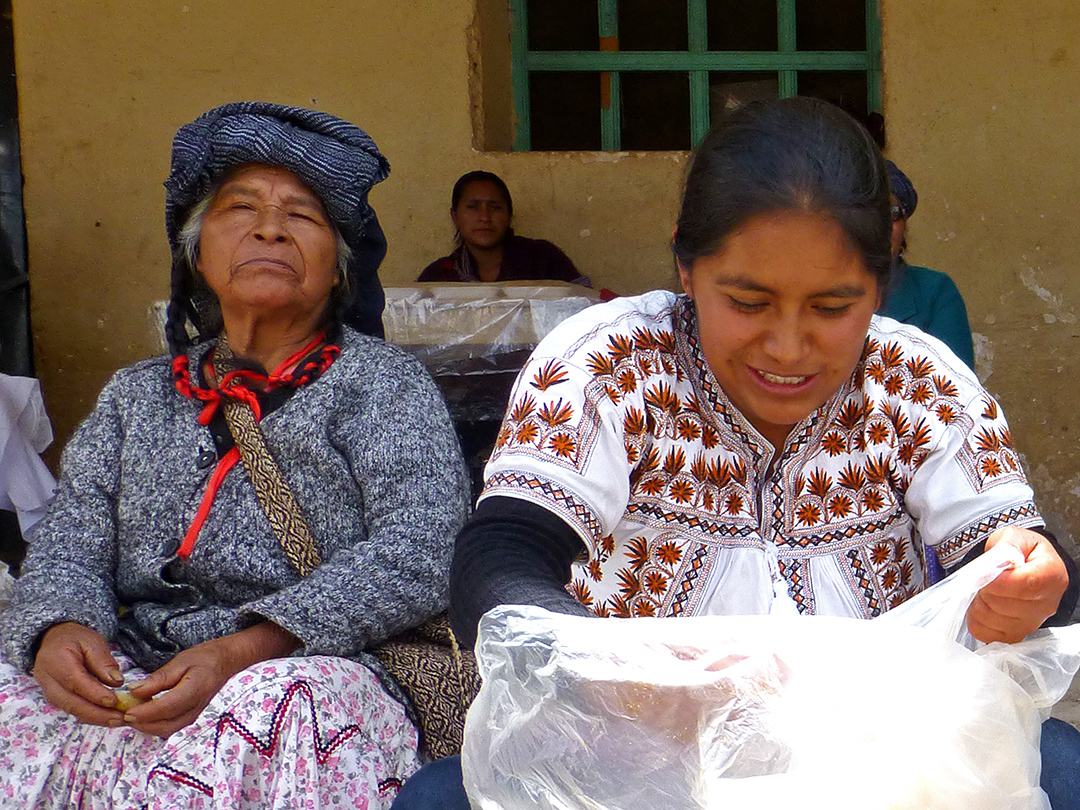
Once we had eaten, fed a couple of street dogs the crumbs (until a woman walking softly and carrying a big stick, chased them away), and our energy levels were restored, we walked across the street to the sextagonal textile kiosk — the day’s destination.
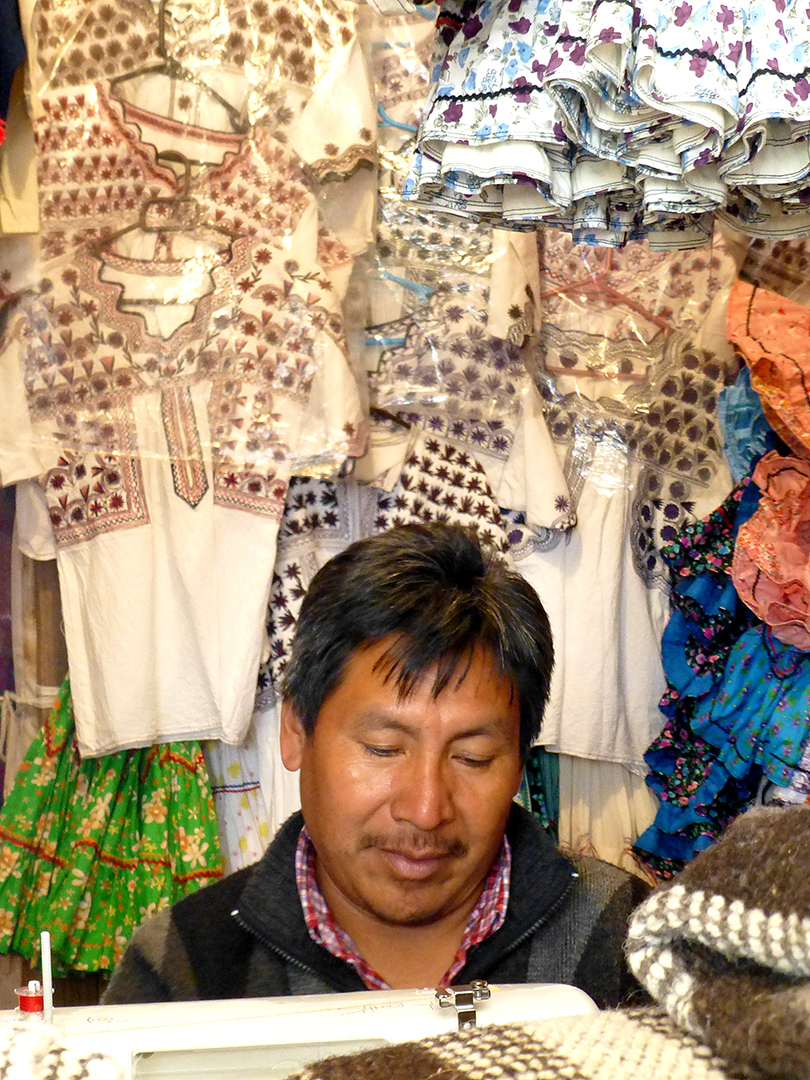
We headed to Artesanias Kojpk Okp, the tiendita of Doña Honorina Gómez Martínez, the embroiderer we had met on our previous visit to Tlahuitoltepec. Ahhh, yes, she was well aware of the Inspiration or plagiarism dispute with French designer, Isabel Marant, that even Vogue UK has covered. As I later discovered, she spoke for the embroiderers at the press conference held at Oaxaca’s Textile Museum ten days ago.

This spirited, strong, and delightful woman has been embroidering for 46 years and, as she explained at the press conference, “my heart tells me what I’m going to embroider because I have it in memory, born with that idea or feeling, experience, it is the daily life as Mixe. It is a representation of blood, food, and nature. ” [translated from the original Spanish]
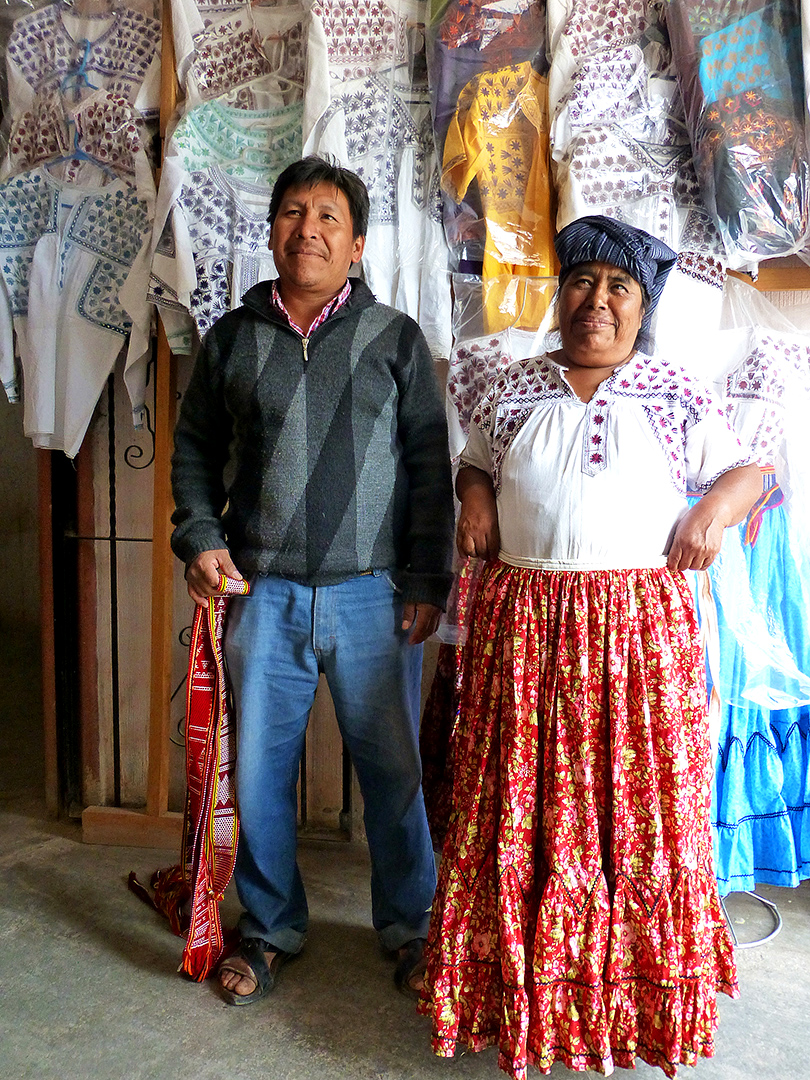
She recognized us and she and her assistant (husband? son?) were more than willing to plunge into piles of her creations, pull down blusas hanging on the walls, and dismantle displays. Here is the blusa and ceñidore I came home with…

Should you be inclined to go to the source, but can’t manage a trip up into the Mixe, as always, she will have a stall in July at the special artisan market in Oaxaca city during La Guelaguetza. She can also be contacted by telephone: 01 283 596 26 05 and cell: 951 198 79 42.
Stay tuned for a blog post on Oaxaca-The Year After… (Chris has a lot more photos to weed through!)
Posted in Celebrations, Holidays, Travel & Tourism, tagged Día del Padre, Father's Day, fathers and children, Mexico, Oaxaca, photographs, photos, popular travel destinations on June 21, 2015| 4 Comments »
To all the loving fathers (biological and adoptive), stepfathers, grandfathers, and father figures everywhere, may you continue to do what you do.
¡Feliz Día del Padre a todos!
Posted in Buildings, Culture, Travel & Tourism, tagged canopy, Guelaguetza Auditorium, Mexico, Oaxaca, photographs, photos, popular travel destinations, velaria on June 18, 2015| 8 Comments »
La Guelaguetza is coming. However, the drama/comedy/telenovela/fairly tale (you take your pick) that is the Guelaguetza Auditorium velaria (canopy) has again grabbed Oaxaca’s headlines. “Why?” you might ask. Good question! Perhaps a little history is in order…
Once upon a time and for a very long time, the auditorium, perched on Cerro del Fortín high above the beautiful city of Oaxaca, was velaria-less — no canopy to protect spectators and performers from sun and rain. However, in 2009 the Big Bad Wolf, who was then the governor and in need of some good PR, decided to spend 104 million pesos to build a roof over the auditorium. The people did not like the governor, they did not like the expense, and they most certainly did not like the design — the word, el pañal (the diaper) frequently tripped off the tongue of many when describing it. Alas, the workmanship left much to be desired and the 2010 Guelaguetza had to be relocated to the university soccer stadium. The people were not happy!
By July 2011, a Prince Charming had replaced the Big Bad Wolf as governor, a new velaria was in place (though it still looked like a diaper), and La Guelaguetza returned to the hill overlooking the city. Cue mild applause.
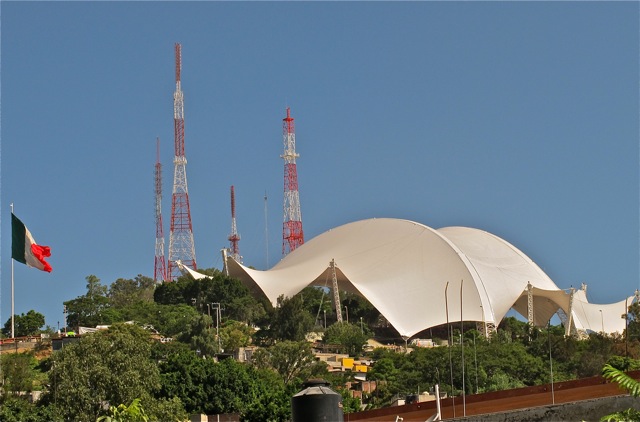 Alas, the lackluster clapping came to an abrupt halt one evening in March 2012, when a moderate wind ripped the right wing (I kid you not) off. A sign?
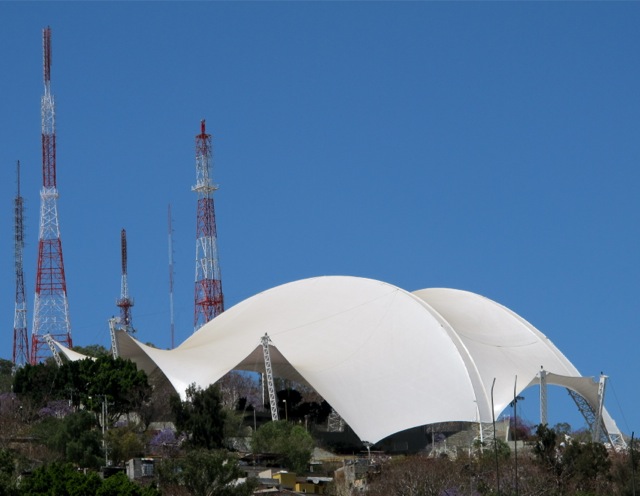 A poll at the time ran 2:1 against replacing the velaria. Of course, no one listens to the people, though a week later, for the safety of all, the left wing of the cover was also removed.
 Guelaguetzas 2012, 2013, and 2014 came and went and not much more came to pass. Yours truly even experienced the abbreviated velaria at last year’s performance, though I kept glancing up at the structure to make sure it was still intact.
 The end of our story? No, of course not! In January, Sinfra (Ministry of Infrastructure and Sustainable Land Management) declared the saga must go on. Thus, in March of this year, it was trumpeted throughout the land that work on a brand new velaria was to commence. There would be no cost to the people, as the original company, the Big Bad Wolf’s friends at Lonas Lorenzo, would be footing the bill, and work would be completed in time for this year’s Guelaguetza. Though the people did not cheer, down came the old…
 Completed in time for this year’s Guelaguetza, did I write? Well, into every tale a little drama must fall — today’s Noticias heralded the news that, alas and alack, due to a labor dispute, the work will not be finished in time for next month’s Guelaguetza performances. The people are not surprised. The world turns and the saga continues…
Posted in Buildings, Creativity, Culture, Museums, Travel & Tourism, tagged Lapiztola, murals, Museo Belber Jimenez, museums, photographs, photos, popular travel destinations, urban art, wall art on June 15, 2015| 3 Comments »
I walk past the Museo Belber Jimenez at least every other day and its brilliant blue walls always make me smile. If you’re in the neighborhood, you can’t miss it! In mid April, not long after undergoing a major renovation, a city bus lost control and crashed into the museum. Fortunately no one was seriously injured, but the window, grating, and wall on the Tinoco y Palacio side of the museum were damaged.
By the time I left in mid May for the trip north, all had been repaired. And then a few days before returning to Oaxaca, blog reader BJ wrote to tell me there was a “beautiful new mural” on the west wall of the museum. She was right — it’s stunning and deeply moving.
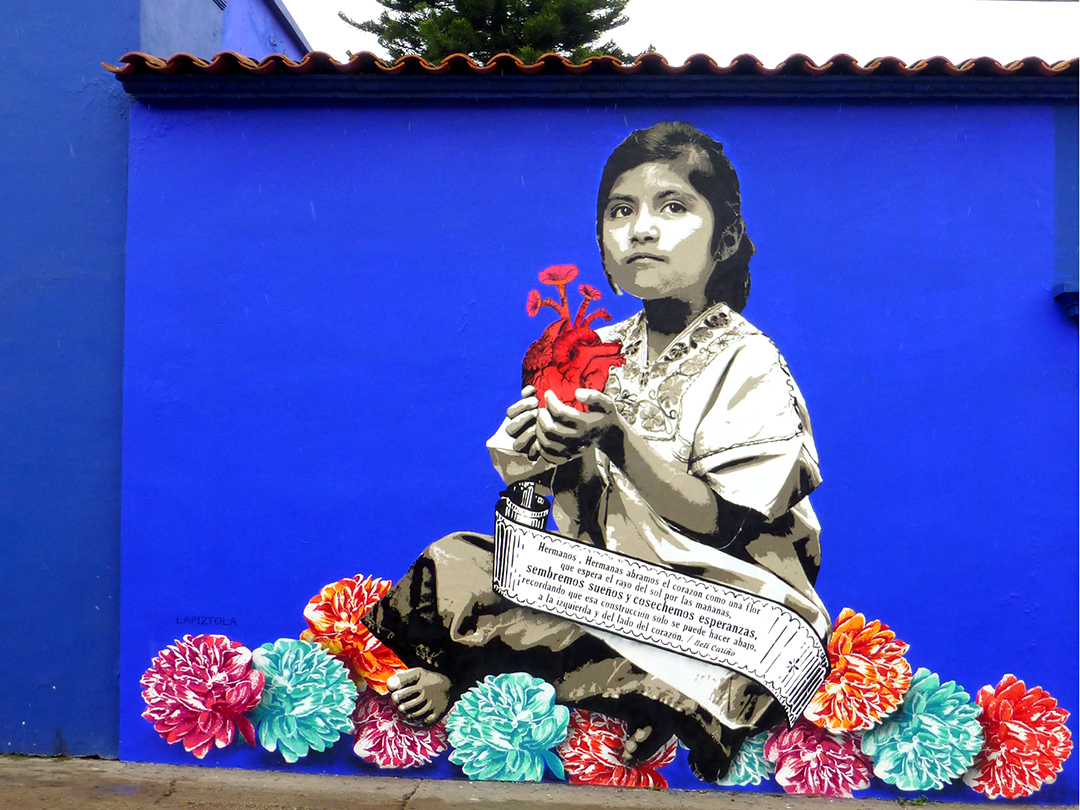

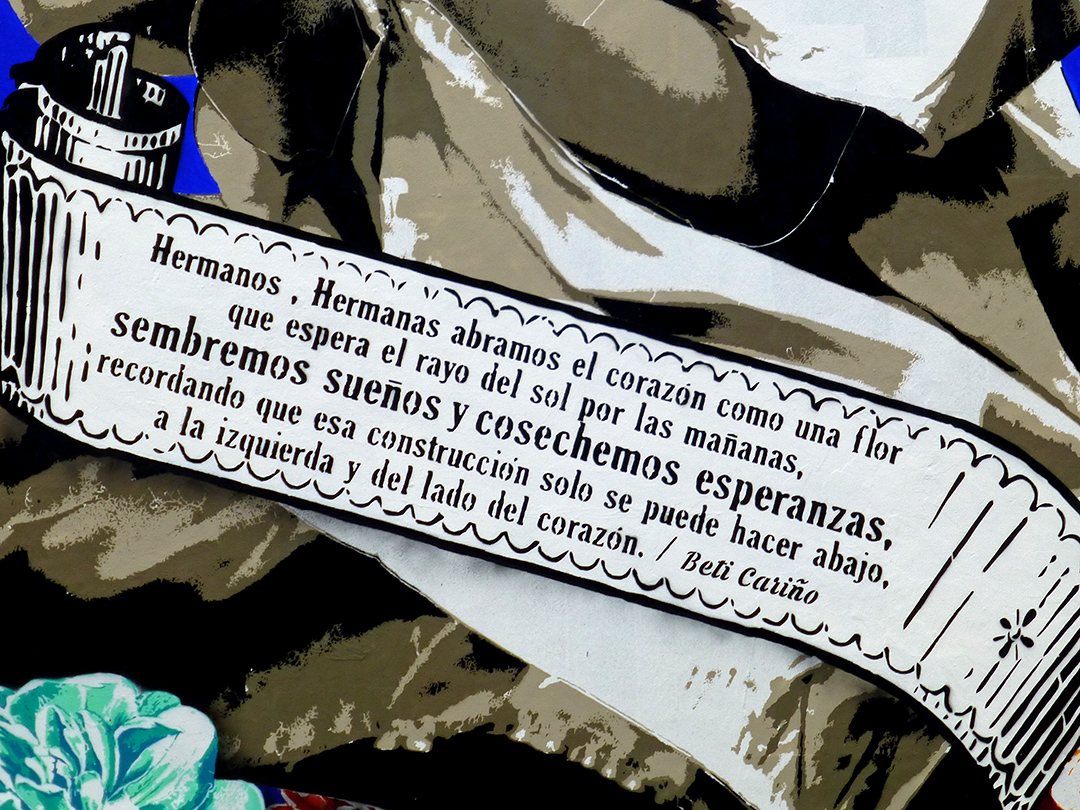 Muchisimas gracias to Museo Belber Jimenez for inviting Lapiztola to enhance the exterior of the museum and our lives with the beautiful mural and its message from Beti Cariño.
Posted in Creativity, Culture, Economics, Education, Labor, Politics, Protests, tagged cantera, graffiti, photographs, photos, plantón, Seccion 22, sidewalks, street art, Teachers union, tents, wall art on June 13, 2015| 4 Comments »
Yesterday, I hibernated at home; a day spent unpacking and recovering. Today, Carlos, now upgraded to a hurricane, is swirling off the coast of southern Mexico and bringing grey skies, chilly temperatures (it hasn’t even hit 70ºF), and a relentless drizzle. It’s not the kind of day that draws one out into the streets. However, the larder needed to be restocked and the cell phone needed to be reactivated, so, with umbrella in hand, I was forced to venture out.
On the upside, the rain brings out the greens of the cantera. Though, I’m not sure where this concrete insert in the sidewalk at the corner of Independencia and Garcia Vigil came from or what it means. (Update: It’s Grupo: Salvando Vidas. Oaxaca — a volunteer group that has taken on the much needed task of repairing the city’s sidewalks muy peligrosas, saving lives and limbs! h/t, Peggy)
 For some mystifying (at least to me) reason, Telcel deactivates my cell phone if I don’t use it for three weeks — this is despite the fact that I have a ridiculously high saldo (balance) in my account. So, my first stop was to add even more pesos in order to reactivate my service. With that chore in the rear view mirror, I crossed Independencia onto the Alameda, on my way to Mercado de Benito Juárez (or, Bennie J’s, as my friend G christened it years ago), only to find much of it covered with tents.
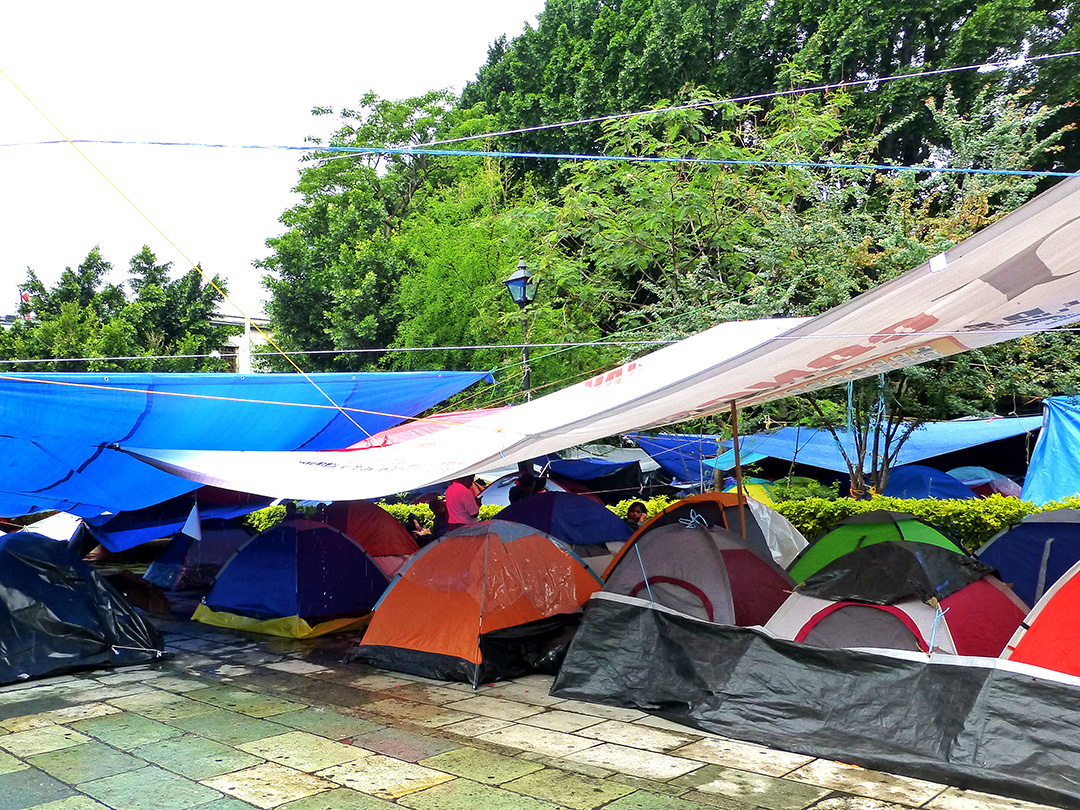 I’d read the news and had steeled myself for the return of ambulantes, but wasn’t prepared for ten times the number of Sección 22 teachers union tents from when I left in mid May. Navigating the ropes tethering the tarps was a challenge and I had to forgo the umbrella. The teachers looked cold and miserable and the restaurants under the portales looked mostly empty. This is definitely not a picnic for anyone. Continuing on to the mercado, I filled my shopping bag and headed for home.
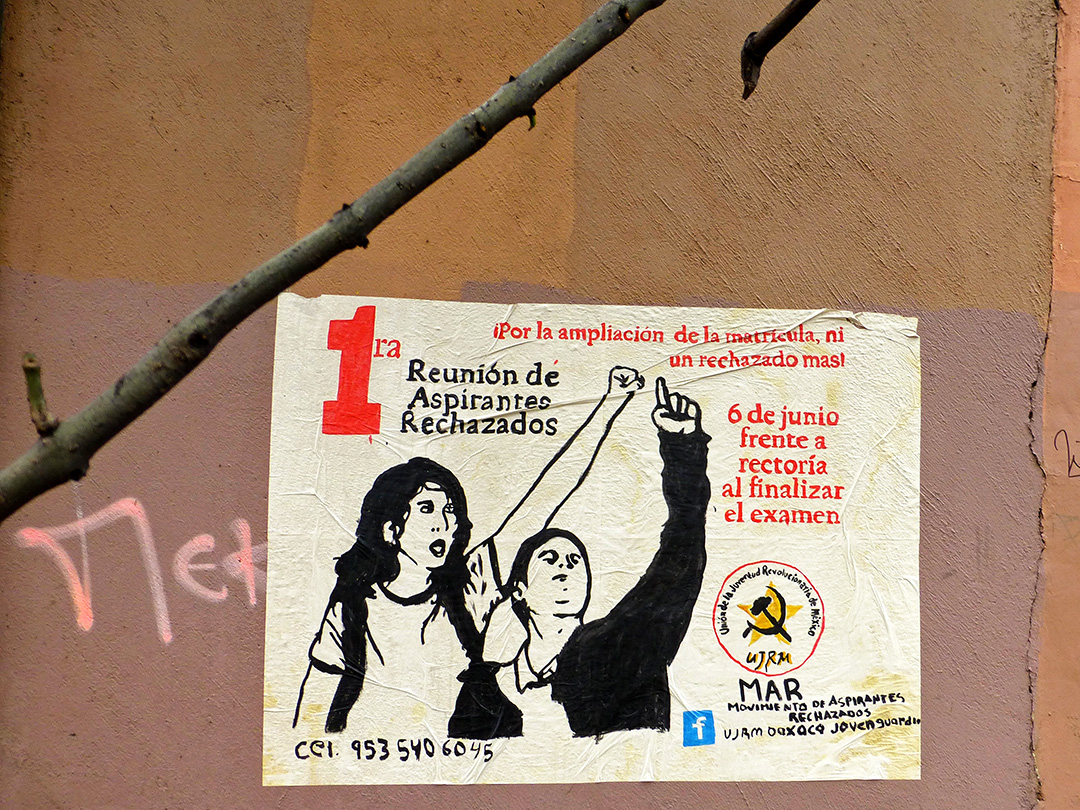 However, the signs of protest are everywhere. In the “Emerald City,” the more things change, the more they stay the same.
Posted in Flora, Gardens, Travel & Tourism, tagged Andrew Zimmern, Bizarre Foods, chicatanas, Night Blooming Cereus, Oaxaca, photographs, photos, popular travel destinations on June 12, 2015| 8 Comments »
I’m baack in home sweet home Oaxaca! Exciting flight — Andrew Zimmern and crew were on the little Embraer from Houston to Oaxaca. I see an episode from Oaxaca on Bizarre Foods in the future. Chicatanas, anyone?
Got home, turned on the lights — indoors and out, threw open the doors and windows, and found a couple of welcome home gifts from my night blooming cereus.

While I’ve been in el norte, Oaxaca’s rainy season has really kicked in. Thus, the garden is blooming, the hills are lush and green, and I had no hot water this morning. Ahhh… it’s good to be home!
Posted in Creativity, Culture, Travel & Tourism, tagged graffiti, Mexico, Oaxaca, photographs, photos, street art, urban art on June 10, 2015| 4 Comments »
Looking forward to tomorrow’s return to Oaxaca, though not sure what I will find. So, in preparation, a little street art, apropos of nothing…

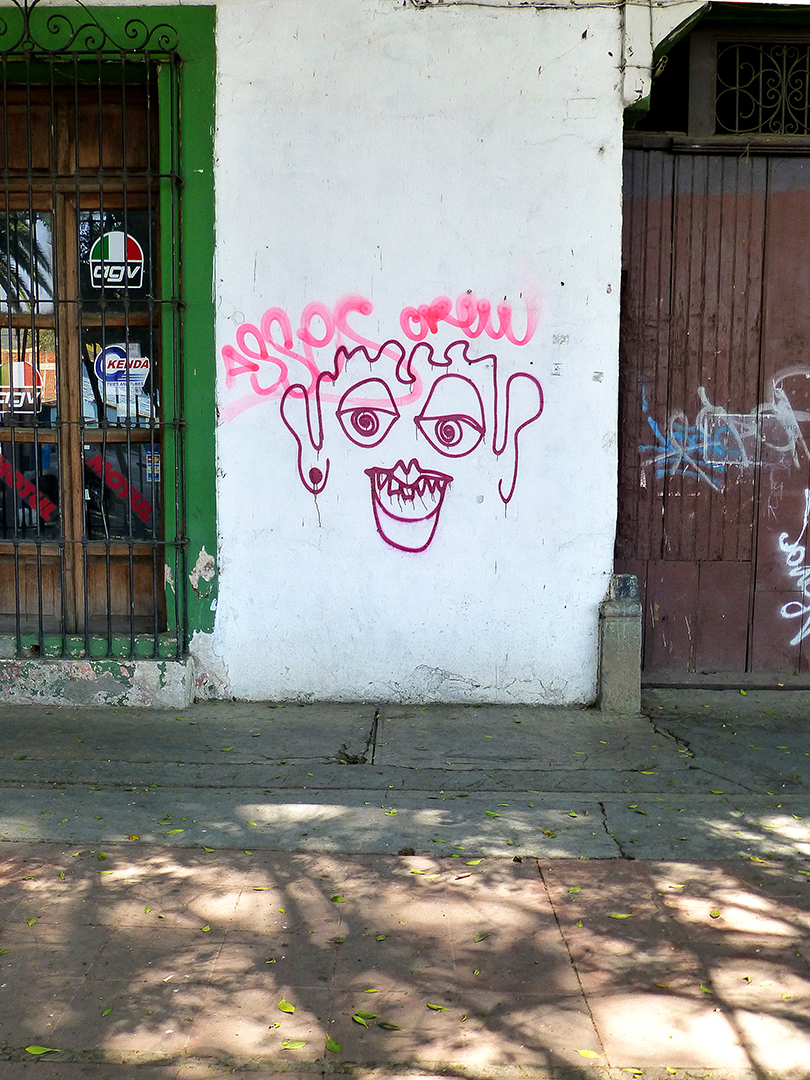
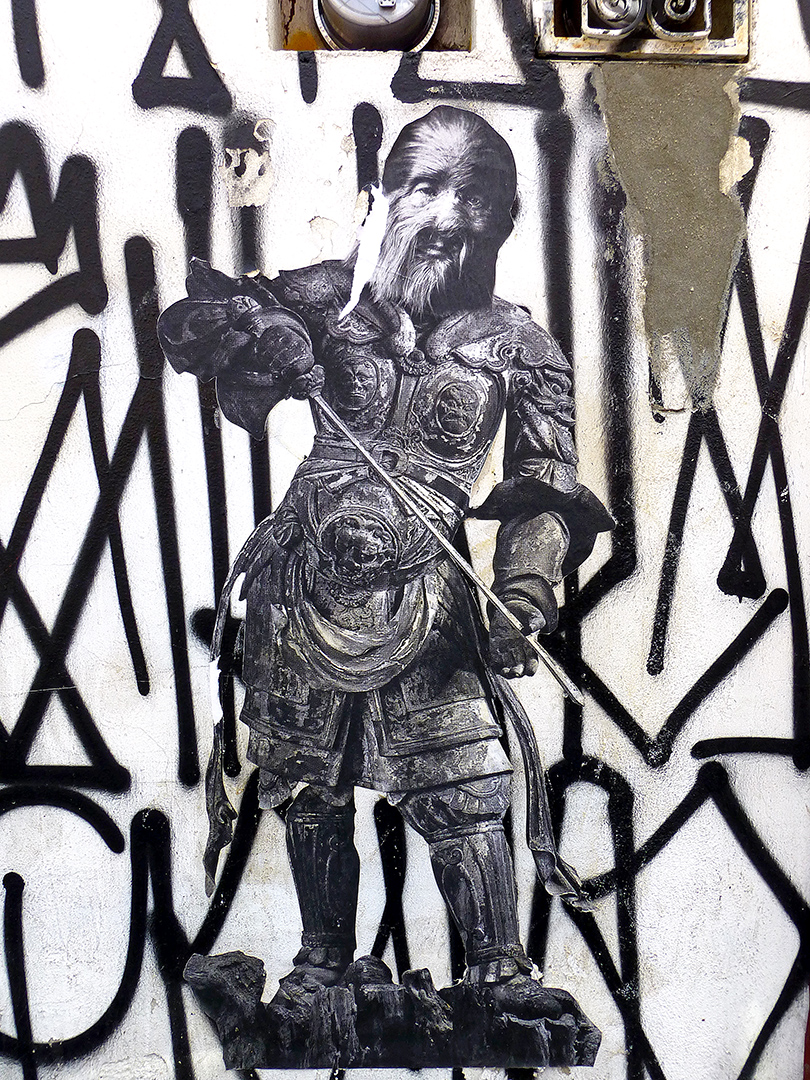

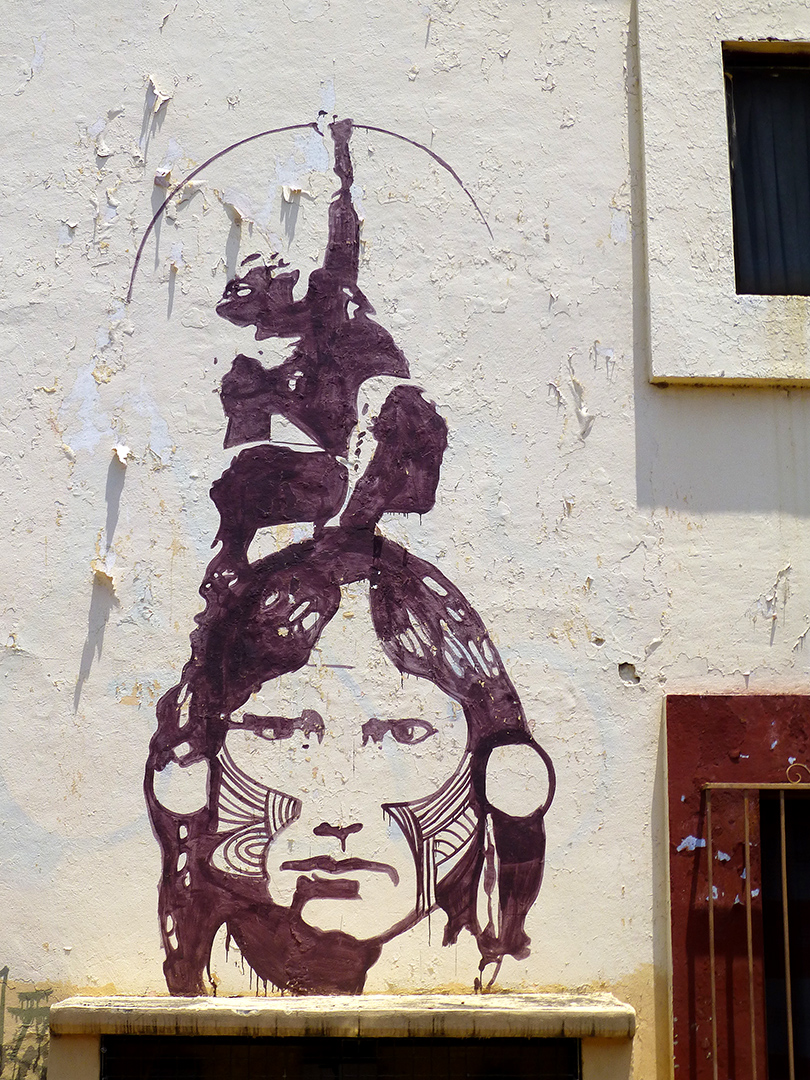

… and everything.
Posted in Creativity, Culture, Transportation, Travel & Tourism, tagged art, Mexico, moto taxis, Oaxaca, photographs, photos, tuk tuk, urban art on June 5, 2015| 11 Comments »
VW Beetles aren’t the only tricked out small vehicles on the road in Oaxaca. While not allowed in the city, tuk-tuks (moto taxis) have become indispensible in ferrying passengers into the villages from bus and colectivo stops along the carreteras and up, down, and around the often narrow and dirt paved streets within villages where cars remain a luxury. You haven’t lived until you’ve ridden one down a rocky embankment, forded a stream, and then climbed back up the bank on the other side — all without tipping over or getting one’s feet wet. Talk about the little engine that could!
Most are utilitarian looking. However, one day these tricked out tuk tuks appeared above the Plaza de la Danza.
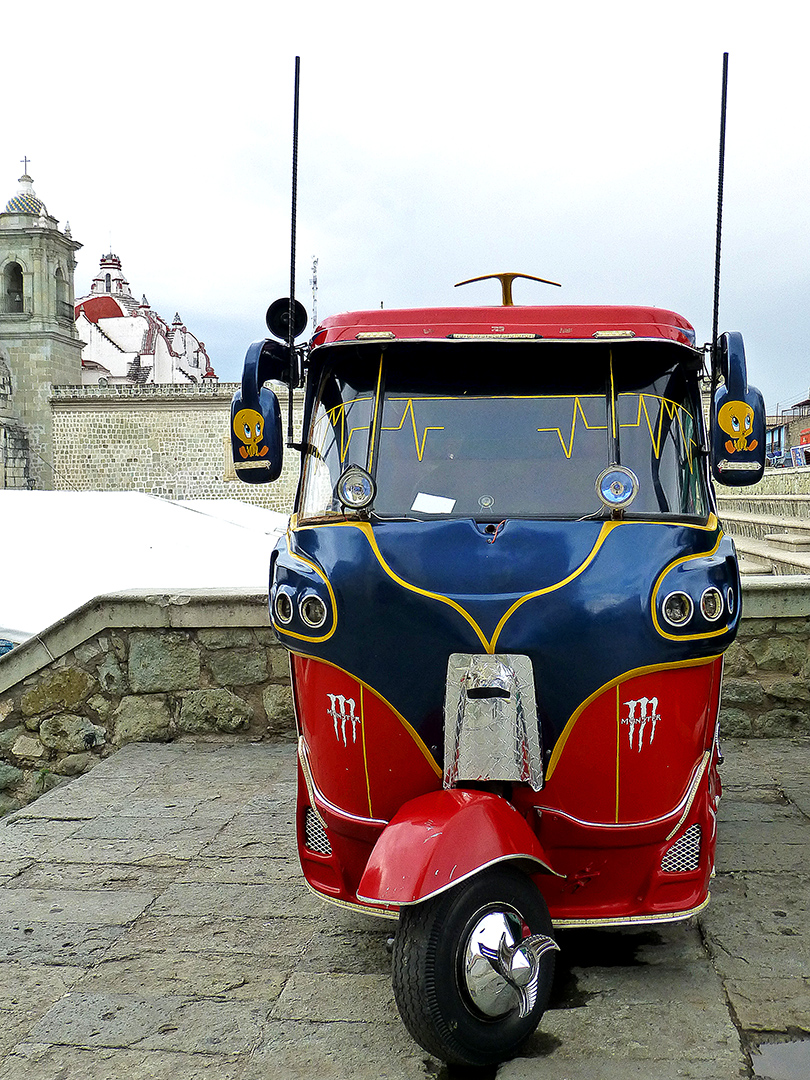

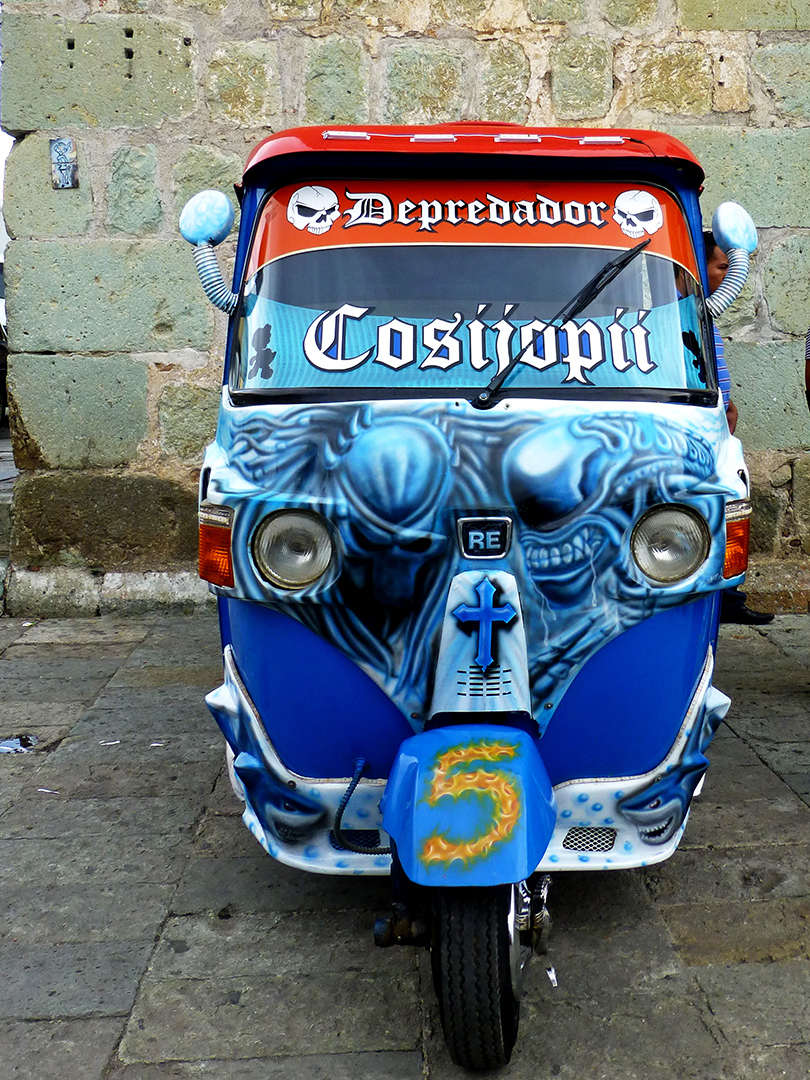
If you’ve got a little money and a large imagination, voilà!
Posted in Creativity, Culture, Travel & Tourism, tagged costumes, cultural appropriation, Isabel Marant, Mexico, Mixe, Oaxaca, photographs, photos, popular travel destinations, ReMezcla, Santa María Tlahuitoltepec, Susana Harp, traje on May 30, 2015| 31 Comments »
High in the mountains of the Sierra Norte, the village of Santa María Tlahuitoltepec sits perched on a ridge top in Oaxaca’s Mixe region. The terrain is rugged and unforgiving; it took rescue crews ten hours, much of it on foot, to reach the municipality following a lethal mudslide at the end of an extremely wet 2012 rainy season. Eight months later, in May of 2013, when blogger buddy Chris and I ventured up there for their Fiesta de Mayo, we still had to detour around the remains of the slide.

Santa María Tlahuitoltepec, May 11, 2013.
Despite the harsh conditions and its remote location, Santa María Tlahuitoltepec is home to the Center for Musical Training and Development of Mixe Culture and it is estimated that 70% of the population can read music and many who can’t, play by ear — a source of great pride.
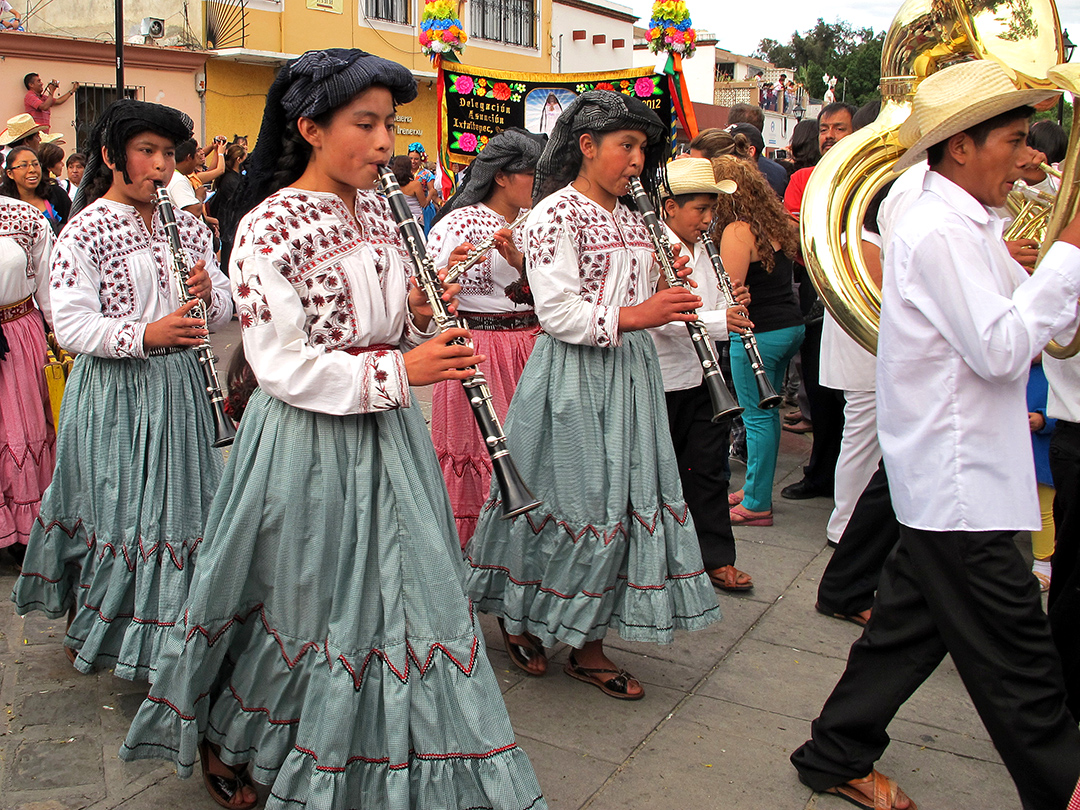
Guelaguetza desfile, July 28, 2012
In addition to the musical talents of its residents, the village is known for the intricately embroidered blouses the women make and wear. The design of both the cut of the blouse and the patterns of embroidery are uniquely Santa María Tlahuitoltepec. If you see someone wearing one on the streets of Oaxaca, you know immediately where it came from. I have a blouse and Chris bought a couple to decorate the walls of his house.
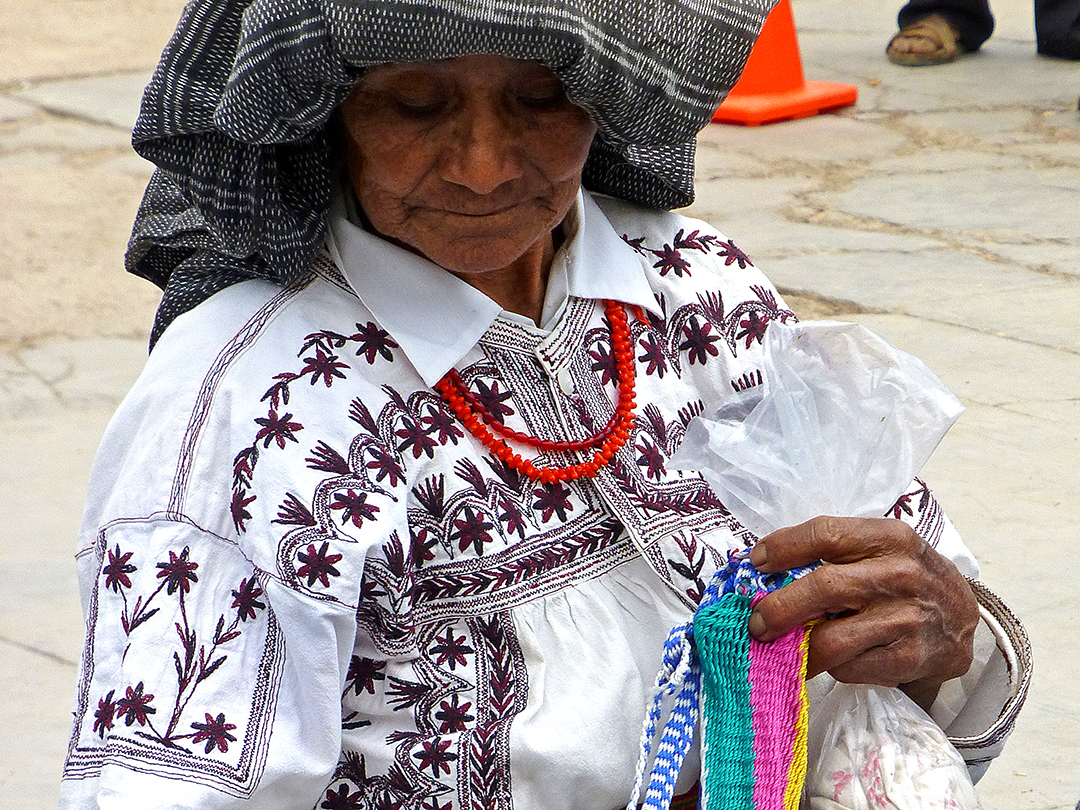
Santa María Tlahuitoltepec, May 11, 2013.
However, in January of this year Oaxaqueña singer Susana Harp raised the alarm when she tweeted her outrage that the exclusive US department store Neiman Marcus was selling identical copies of the blouses of Santa María Tlahuitoltepec for $290 US dollars (six times what the originals cost in Oaxaca) — without even an acknowledgement of the origin of the designs. And, last week ReMezcla (a digital publisher, creative agency, and entertainment company targeting Latino millenials) took up the issue of this kind of cultural appropriation with it’s article, The $290 Isabel Marant Huipil Rip Off That Pissed Off Oaxaca’s Mixe Community noting that, “In the case of Isabel Marant’s new ‘bohemian’ Étoile line, however, it’s hard to even muster a flimsy cultural inspiration defense, since the Oaxacan Mixe culture the clothes were ‘inspired’ by have been completely erased from the narrative.”
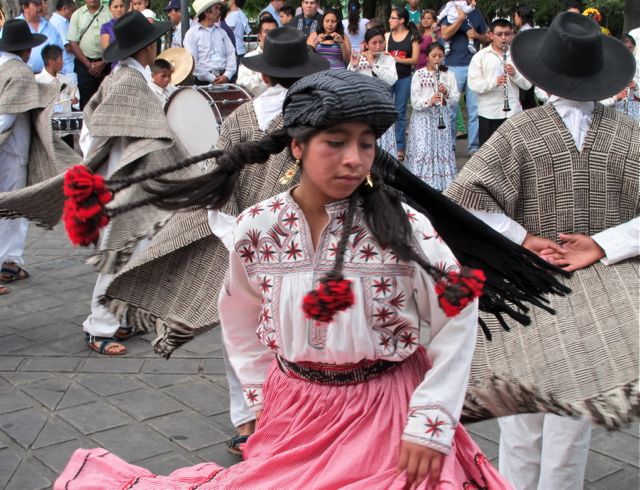
I urge you to forgo these and other high-priced knock-offs. Instead, go to the source and buy originals from the talented artisans who created them. And, a note to ReMezcla, especially given the subject of your article, I would have appreciated credit for your use of my photograph (above) from the Guelaguetza desfile, that I originally posted July 22, 2013.
Update: A press conference by municipal authorities and embroiderers from Santa María Tlahuitoltepec was held on June 3 at at the Textile Museum of Oaxaca protesting the lack of respect by Isabel Marant for the creativity and work by the women of Tlahuitoltepec and the history and worldview that gave birth to their designs.
Posted in Creativity, Culture, Exhibitions, People, Politics, Tragedy, Violence, tagged art, Ayotzinapa, buildings, Carteles por Ayotzinapa, Damian Kłaczkiewicz, Daniela Diaz, Excuela Normal Rural Raúl Burgos, Francisco Toledo, graphic arts, IAGO, Instituto de Artes Gráficas de Oaxaca, International Poster Biennial, México fracturado por Ayotzinapa, Mexico, Normal Rural Ayotzinapa, normalistas, Oaxaca, photographs, photos, poster art, student teachers, students on May 26, 2015| Leave a Comment »
Eight months and counting… Tonight, eight months ago, 43 students from the Escuela Normal Rural Raúl Isidro Burgos teachers’ college in Ayotzinapa, Guerrero went missing. I am sadly resigned that marking this horrific anniversary has become a regular feature on my blog. As a mother, a guest resident of Mexico, and someone who believes that the peoples of the world deserve social justice, I can’t ignore this tragedy.
I dare you to leave Carteles por Ayotzinapa, the current exhibition at Instituto de Artes Gráficas de Oaxaca (IAGO), with a dry eye. The 49 posters on display are only a fraction of the over 700 posters submitted to the First International Poster Biennial 2014 Convocation Ayotzinapa, an initiative of Oaxaca’s internationally renown artist, Francisco Toledo. In addition to Mexico, artists from Argentina to Greece; Iran to Lebanon; and Poland to the USA responded to his call, recognizing as Toledo explained, the tragedy of Ayotzinapa has outraged people from beyond the borders of Mexico.

Photo courtesy of Oaxaca Media
Irwin Homero Carreño Garnica, a graphic design student, originally from Ocotlán de Morelos, Oaxaca, was awarded first prize for his heartbreaking work, “México fracturado por Ayotzinapa” (Mexico fractured by Ayotzinapa). As you can see above, it is a map of Mexico in the shape of a skeleton, with a break in the femur, where Ayotzinapa, Guerrero is located. Like the work of the Tlacolulokos, the use of an iconic image (skeleton) and a primary palette of black, white, and greys, increases the emotional impact, much like Picasso’s, “Guernica.”
Second place was won by Damian Kłaczkiewicz (Poland) and third place went to Daniela Diaz (Mexico). The three winning posters will be reproduced for distribution throughout Mexico.
The exhibition runs through June 26, 2015.
Posted in Creativity, Culture, Exhibitions, Immigration, Museums, Travel & Tourism, tagged artists, Casa de la Ciudad, Con el fuego en las manos, Cosijoesa Cernas, Darío Canul, Mexico, murals, Oaxaca, photographs, photos, popular travel destinations, Tlacolulokos, wall art on May 22, 2015| 4 Comments »
The previously mentioned Tlacolulokos collective has brought their artistry and social commentary to a wall on the upper floor of the Casa de la Ciudad. The mural, “Con el fuego en las manos” shows two young women, almost mirror images of each other or, perhaps, two sides of the same woman.
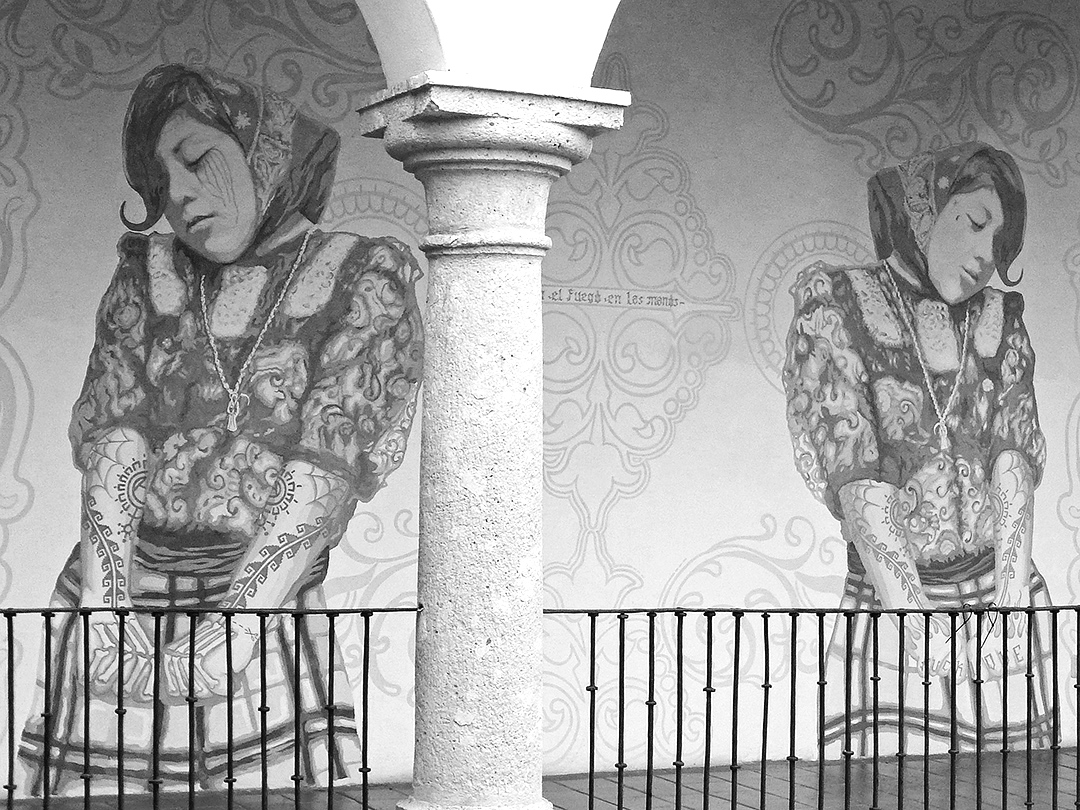
The young women/woman wear the traditional clothing of San Bartolome Quialana, a village near Tlacolula de Matamoros, home of the Tlacolulokos collective. Like communities throughout Oaxaca, much of the male population has migrated to the United States, in search of work leaving the women to carry on alone.


As the introduction to the exhibit on the Casa de la Ciudad website explains, With a critical view towards the current cultural context, Tlacolulokos group, headed by Darío Canul and Cosijoesa Cernas, seeks to question the idealized images of the Oaxacan culture, tourism product discourse, and insights from the reality currently experienced by the people of Oaxaca.


There are elements in her clothing belonging to the Latina culture of the southern United States, as the cholo bandana that she wears on her head, or the tattoos on her arms that add a critical and provocative tinge to this cultural mix, a product of migration. [ Google translation, with a little help from yours truly]


One of the trademarks of the Tlacolulokos group is the power their images acquire and the emotion they elicit by limiting the palette to black, white, and grays. For more background and a better understanding of the mural, a video (en español) of the artists discussing their work can be found here.
“Con el fuego en las manos” is scheduled to run until December 2015 at the Casa de la Ciudad (Porfirio Diaz No. 115, at the corner of Morelos in Oaxaca’s Historic District). Hours are 9:00 AM to 8:00 PM, Monday through Sunday.
Posted in Creativity, Culture, Signs, Travel & Tourism, tagged art, Mexico, Oaxaca, photographs, photos, popular culture, popular travel destinations, stickers, street art, street signs, urban art on May 18, 2015| 4 Comments »
Situated metaphorically at the busy intersection of imagery and content—and informed by history, mass media, commerce, and pop culture—stickers address both the personal and the political. — Street Art Graphics, The Richard F. Brush Art Gallery, St. Lawrence University.
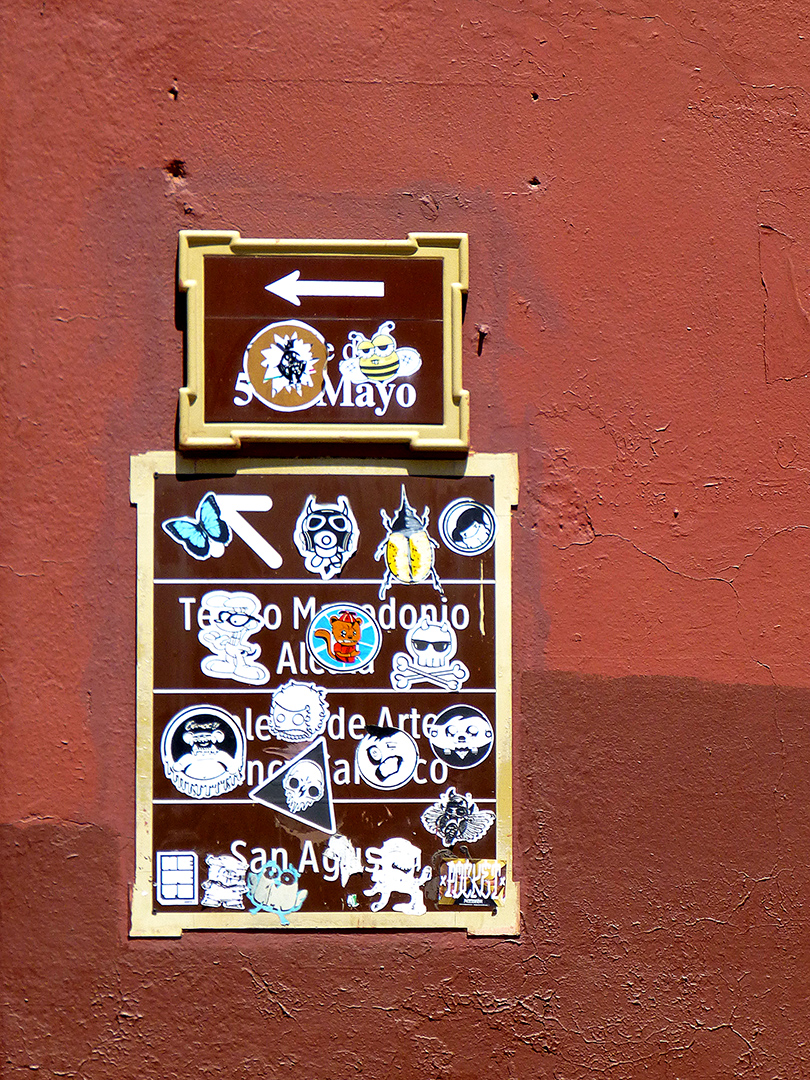
Stick-to-itiveness: the quality that allows someone to continue trying to do something even though it is difficult or unpleasant.

Street art stickers — a metaphor for Mexico, methinks.


 Mexican Peso Converter
 View From Casita Colibrí